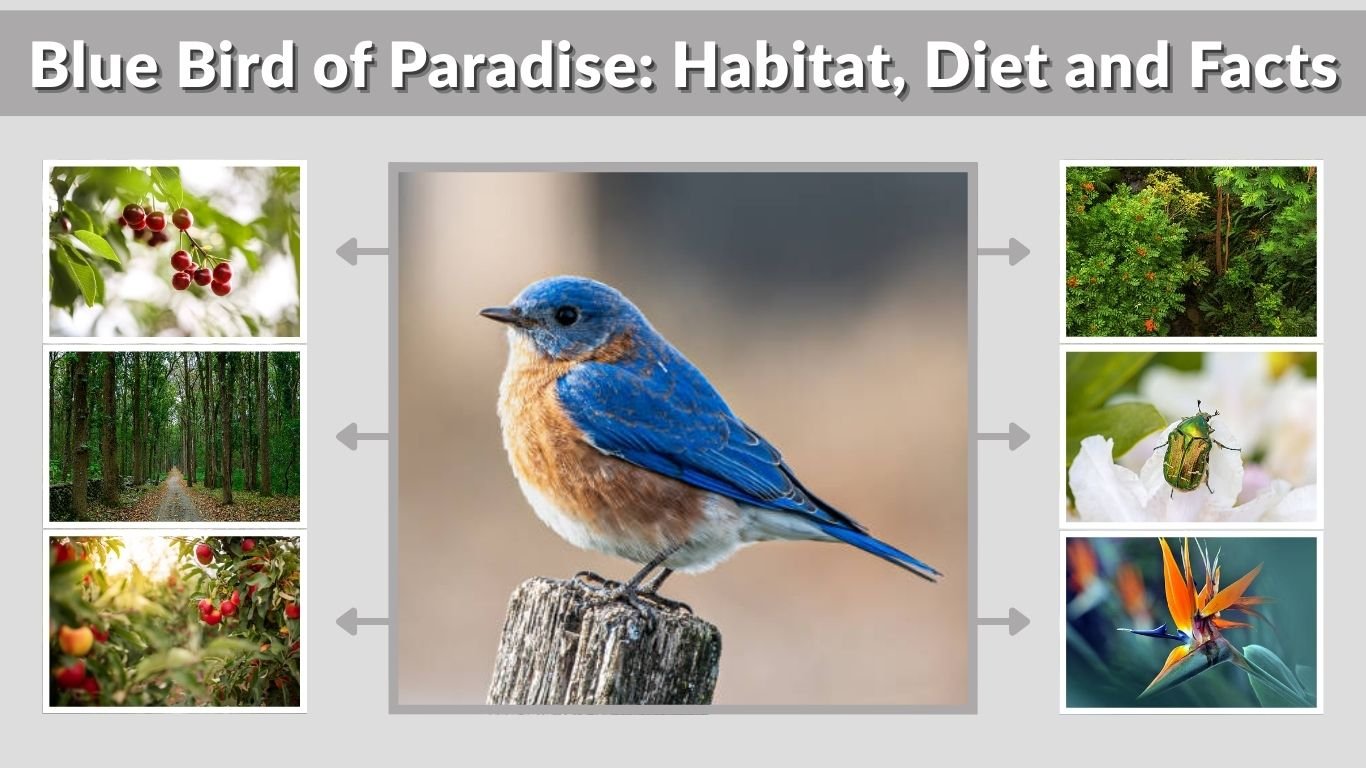
The blue bird of paradise is one of the most captivating birds on Earth, admired for its vivid colors and remarkable courtship displays. Found mainly in the rainforests of Papua New Guinea, this bird represents beauty, rarity, and evolutionary brilliance. Many people search for it because of its striking blue and black feathers and unusual behavior. In this guide, you will learn how to identify it, where it lives, what it eats, and why its mating dance is considered one of nature’s most fascinating spectacles.
What Is a Blue Bird of Paradise?
The blue bird of paradise refers to species within the Paradisaeidae family that display bright blue plumage, most notably the Blue Bird-of-Paradise (Paradisaea rudolphi). These birds are part of a unique group known for their elaborate appearance and complex courtship rituals.
Scientific Classification
- Family: Paradisaeidae
- Genus: Paradisaea
- Native region: Papua New Guinea
Key Characteristics
- Bright blue and black feather patterns
- Long ornamental plumes or tail wires
- Arboreal lifestyle, living mostly in trees
These features make them stand out among tropical birds and contribute to their global fascination.
Blue Bird of Paradise Physical Appearance and Identification
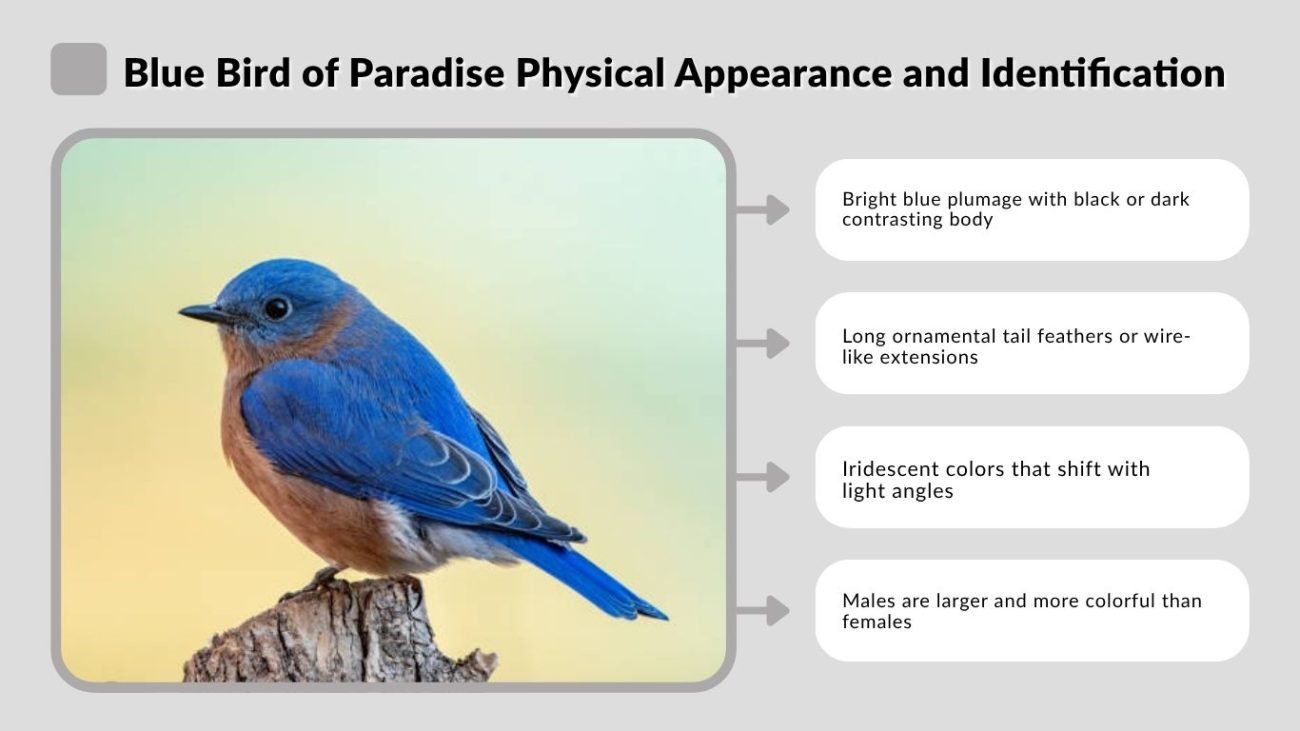
The blue bird of paradise is instantly recognizable for its striking coloration and elegant form. Its appearance is shaped by evolution, especially for attracting mates, which is why males look far more dramatic than females. The combination of vivid blue tones, dark contrasting feathers, and flowing ornamental plumes makes this bird one of the most visually unique species in the world.
- Bright blue plumage with black or dark contrasting body
- Long ornamental tail feathers or wire-like extensions
- Iridescent colors that shift with light angles
- Males are larger and more colorful than females
- Females have dull brown or gray tones for camouflage
- Slender body with strong legs for perching in trees
Blue Bird of Paradise Habitat and Geographic Range
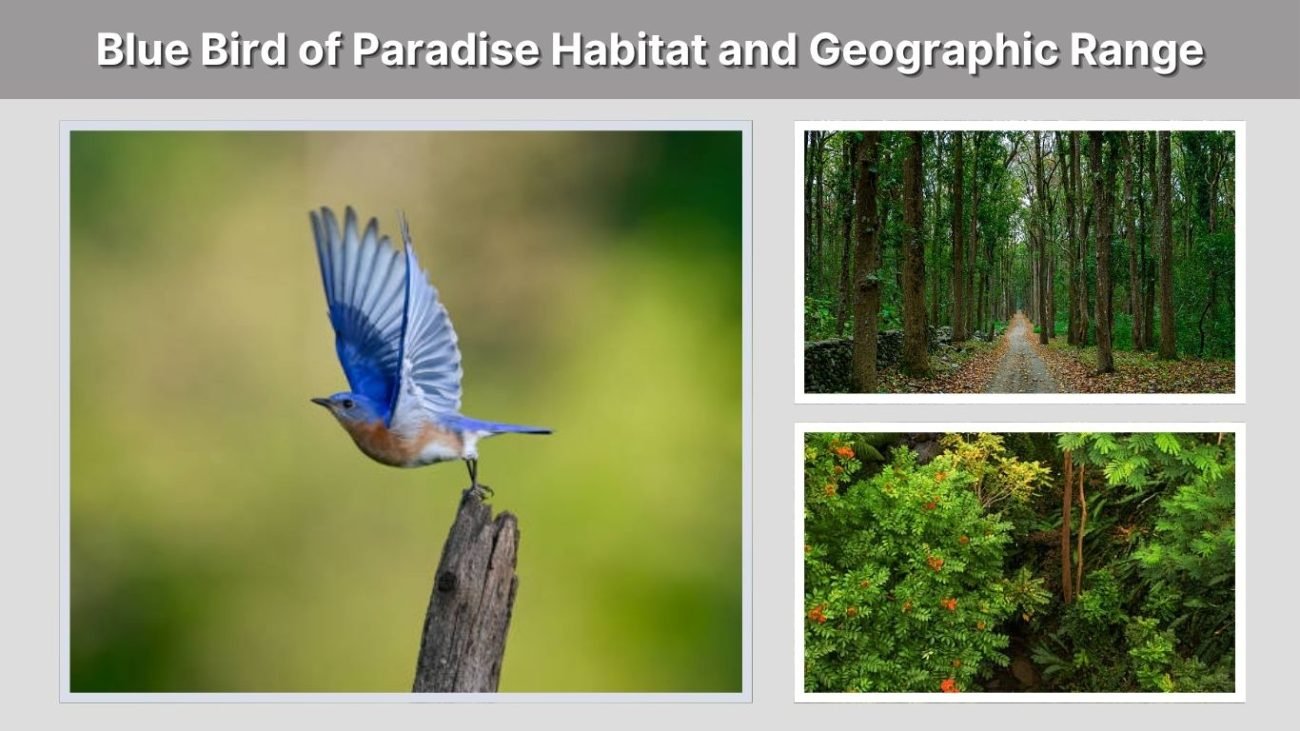
The blue bird of paradise is native to remote tropical regions where dense forests provide food, shelter, and safe breeding grounds. These birds are highly dependent on intact ecosystems, which is why they are rarely seen outside their natural habitat. Their distribution is limited but well-adapted to specific environmental conditions found in rainforest regions.
Where Do Blue Birds of Paradise Live?
- Papua New Guinea (primary and most common location)
- Highland rainforest regions with dense canopy
- Occasionally found in nearby forested islands
Preferred Habitat Conditions
- Thick tropical forests with rich vegetation
- Areas with abundant fruit and insect supply
- Minimal human disturbance for safe breeding
Geographic Range Characteristics
- Restricted to specific forest zones
- Typically found at mid to high elevations
- Non-migratory, staying within a defined territory
Diet: What Do Blue Birds of Paradise Eat?
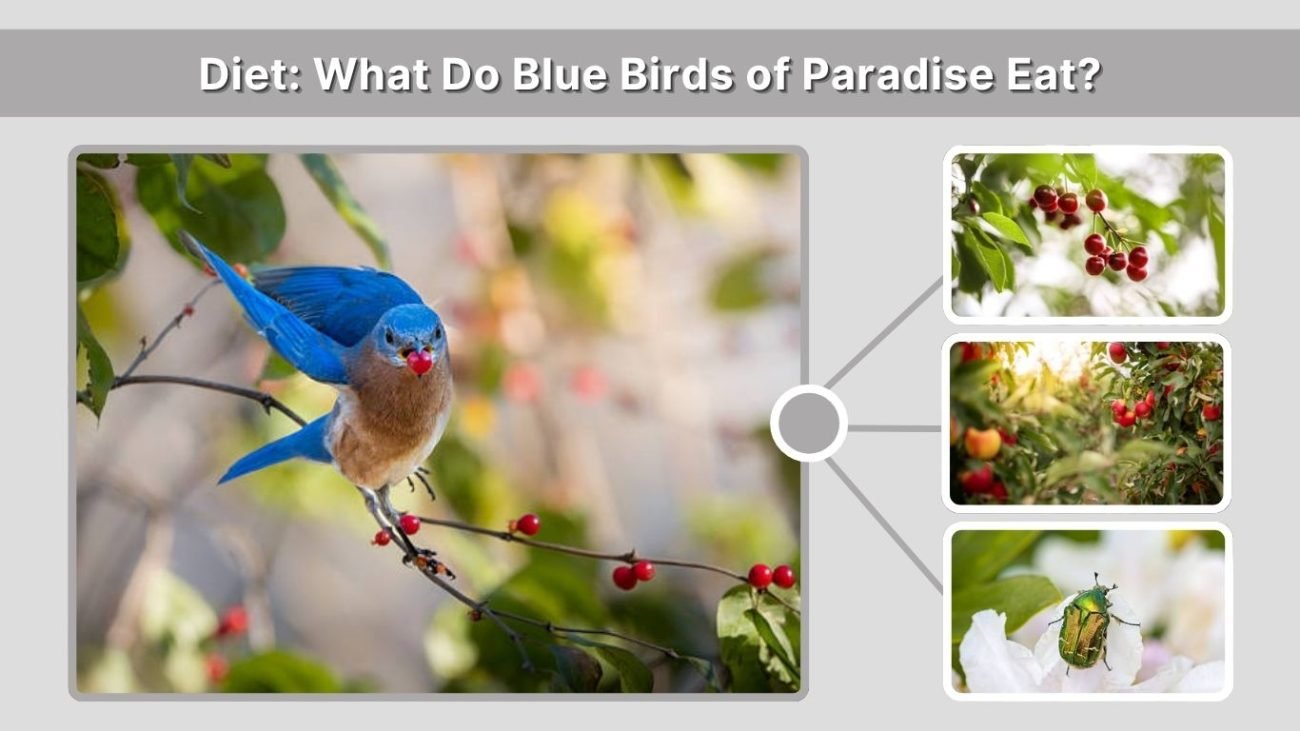
Blue birds of paradise have a varied diet that supports both their daily energy needs and their physically demanding courtship displays. Living in rich rainforest environments, they take advantage of abundant natural food sources found in the canopy. Their feeding habits are flexible, allowing them to consume both plant-based and animal-based foods depending on availability.
Main Food Sources
- Fruits and berries (primary energy source)
- Insects like beetles and ants
- Small invertebrates found on leaves and branches
Feeding Behavior
- Forage mainly in the forest canopy
- Pick fruits directly from trees
- Catch insects while moving between branches
Nutritional Role
- Fruits provide sugars and essential nutrients
- Insects supply protein for strength and growth
- Balanced diet supports mating displays and survival
Mating Dance and Courtship Behavior
The Famous Display Dance
- Males perform complex, repeated dance routines
- Feathers are spread to create dramatic visual effects
- Movements are synchronized to highlight color and shape
Role of Female Choice
- Females observe multiple males before choosing
- Selection is based on display quality and appearance
- Only the most impressive males successfully mate
This process of selection has driven the evolution of their extraordinary appearance and behavior, making them one of the most iconic examples of sexual selection in nature.
Blue Bird of Paradise Sounds and Communication
Blue birds of paradise use a combination of vocal calls and visual signals to communicate within their dense forest habitat. While they are better known for their elaborate mating displays, their sounds play an important role in attracting mates, defending territory, and staying aware of their surroundings.
Common Calls
- Sharp, repeated notes used to announce presence
- Short calls that carry through the forest canopy
Mating Communication
- Males call to attract females during display
- Sounds are timed with movement and feather displays
Territorial Signals
- Calls used to warn other males to stay away
- Helps establish and defend display areas
Alert and Awareness
- Quick sounds used when sensing danger
- Helps maintain awareness in dense habitats
Blue Bird of Paradise Adaptations for Survival
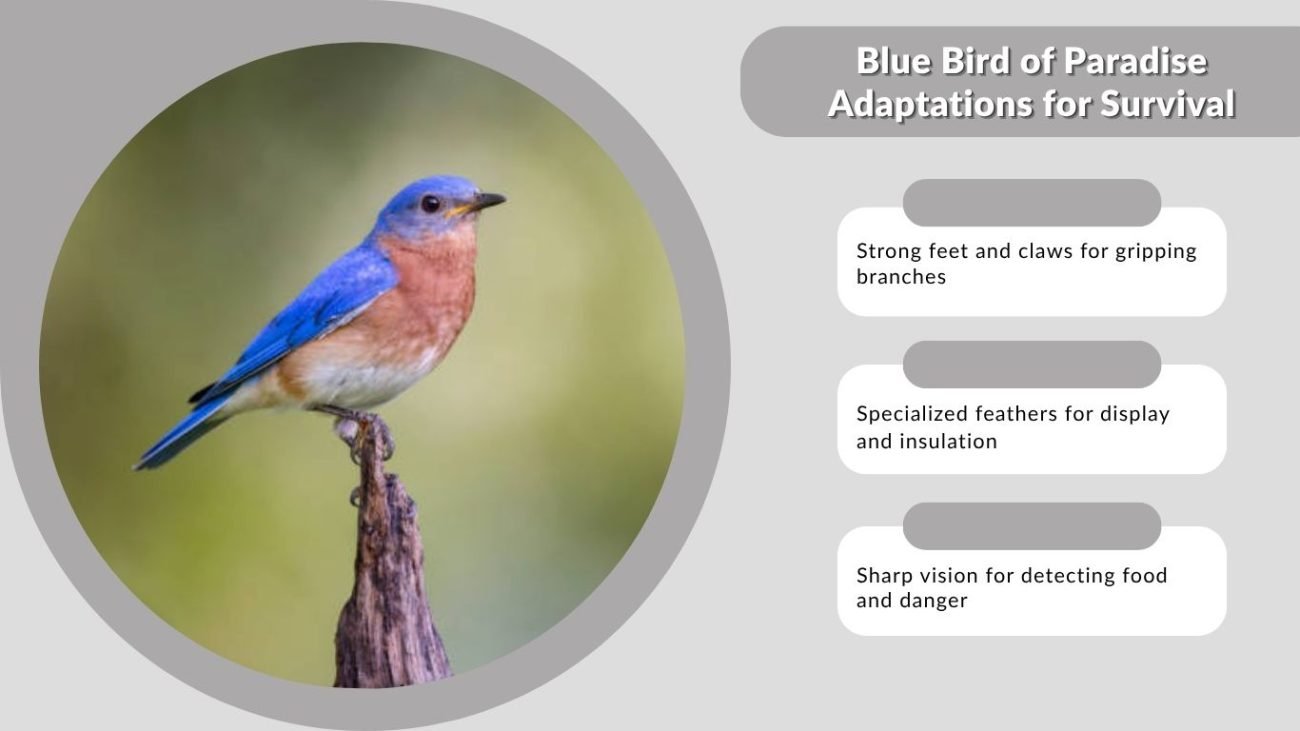
The blue bird of paradise has developed a range of physical and behavioral adaptations that help it survive in dense rainforest environments. These adaptations not only protect it from predators but also support feeding, movement, and reproduction. While males are adapted for display and attraction, females rely more on camouflage and caution to ensure survival.
Physical Adaptations
- Strong feet and claws for gripping branches
- Specialized feathers for display and insulation
- Sharp vision for detecting food and danger
Behavioral Adaptations
- Camouflage in females to avoid predators
- Careful selection of safe display and nesting areas
- Efficient movement through dense forest canopy
Predators and Environmental Threats
Blue birds of paradise face several challenges in their natural habitat. Predators such as birds of prey and tree-climbing snakes pose constant risks, especially to eggs and young chicks. However, the greatest threat comes from environmental changes. Deforestation reduces available habitat, while human activity can disturb breeding areas. Despite this, their remote habitat has helped many populations remain relatively stable compared to other species.
Blue Bird of Paradise vs Bird of Paradise Plant
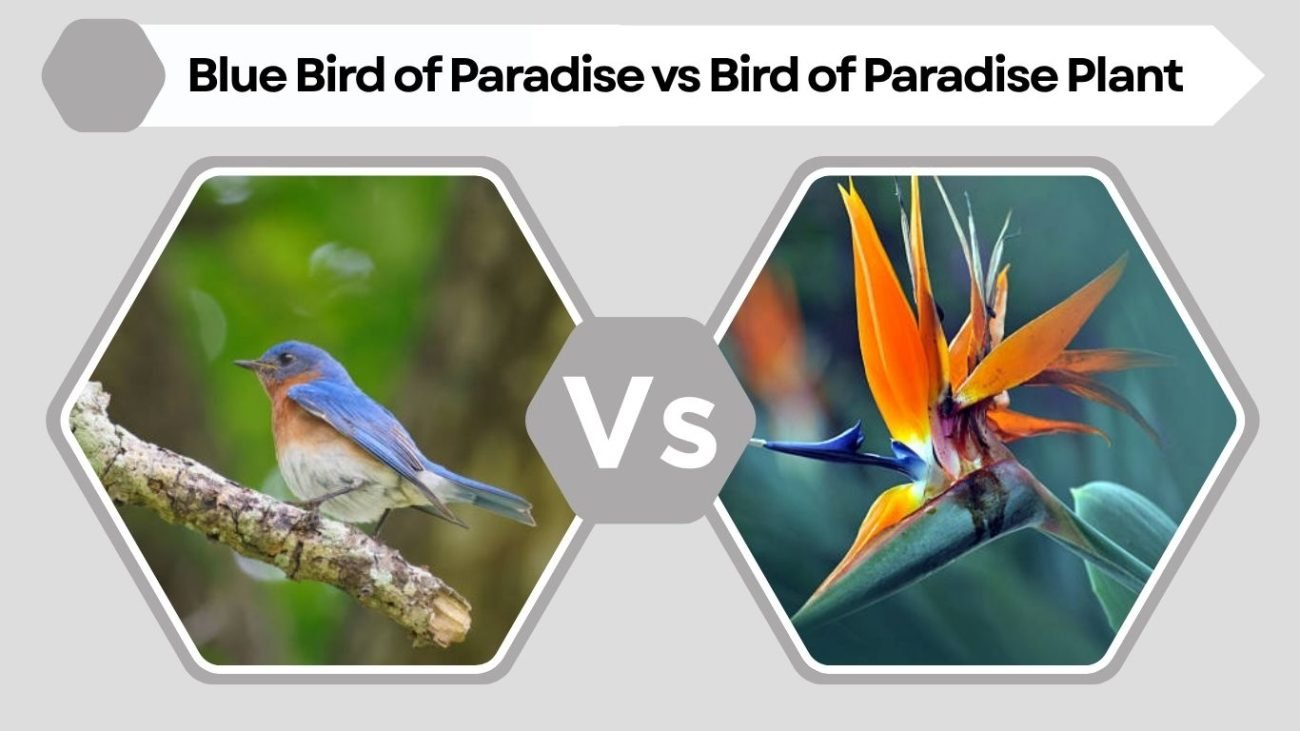
| Feature | Blue Bird of Paradise (Animal) | Bird of Paradise Plant |
| Type | Bird (living animal) | Tropical flowering plant |
| Scientific Group | Family Paradisaeidae | Genus Strelitzia |
| Appearance | Bright blue and black feathers | Orange, blue, or white bird-shaped flowers |
| Movement | Can fly and perform mating dances | Stationary, grows in soil |
| Habitat | Rainforests of Papua New Guinea | Gardens and tropical regions worldwide |
| Purpose of Color | Attract mates | Attract pollinators |
| Behavior | Complex courtship displays | No behavior (plant growth only) |
| Lifespan | Several years in the wild | Can live many years with proper care |
Interesting Facts About Blue Birds of Paradise
- Males can take years to perfect their courtship dance
- They are found only in limited regions of the world
- Their colors may appear brighter depending on light angle
FAQs
What is a blue bird of paradise?
A blue bird of paradise refers to a bird species in the Paradisaeidae family known for its vivid blue plumage and elaborate mating displays. Most commonly, it points to species found in Papua New Guinea that are famous for their beauty and unique behavior in the wild.
Where does the blue bird of paradise live?
These birds are native to Papua New Guinea, where they inhabit dense tropical rainforests. They prefer areas with thick vegetation and minimal human disturbance, allowing them to find food easily and perform courtship displays safely within the forest canopy.
What does the blue bird of paradise eat?
Their diet mainly consists of fruits, berries, and small insects. Fruits provide essential nutrients, while insects supply protein. This balanced diet helps support their daily energy needs and the intense physical effort required for courtship displays.
Why do blue birds of paradise perform mating dances?
Males perform elaborate dances to attract females during the breeding season. These displays showcase their health, strength, and genetic quality. Females carefully observe multiple males and choose the one with the most impressive performance and appearance.
Is the blue bird of paradise a plant or an animal?
The blue bird of paradise is an animal, specifically a bird species. However, confusion arises because there is also a plant called the bird of paradise, known for its colorful flowers. Despite the shared name, they are completely different.