The lesser nighthawk is a quiet, elusive bird often seen at dusk gliding over open landscapes. Despite its name, it is not a hawk but a member of the nightjar family, known for insect hunting and subtle camouflage. Many people notice it only when it flies near lights or emits its soft call. This guide covers how to identify it, what it sounds like, where it lives, and how it differs from similar species you might encounter.
What Is a Lesser Nighthawk?
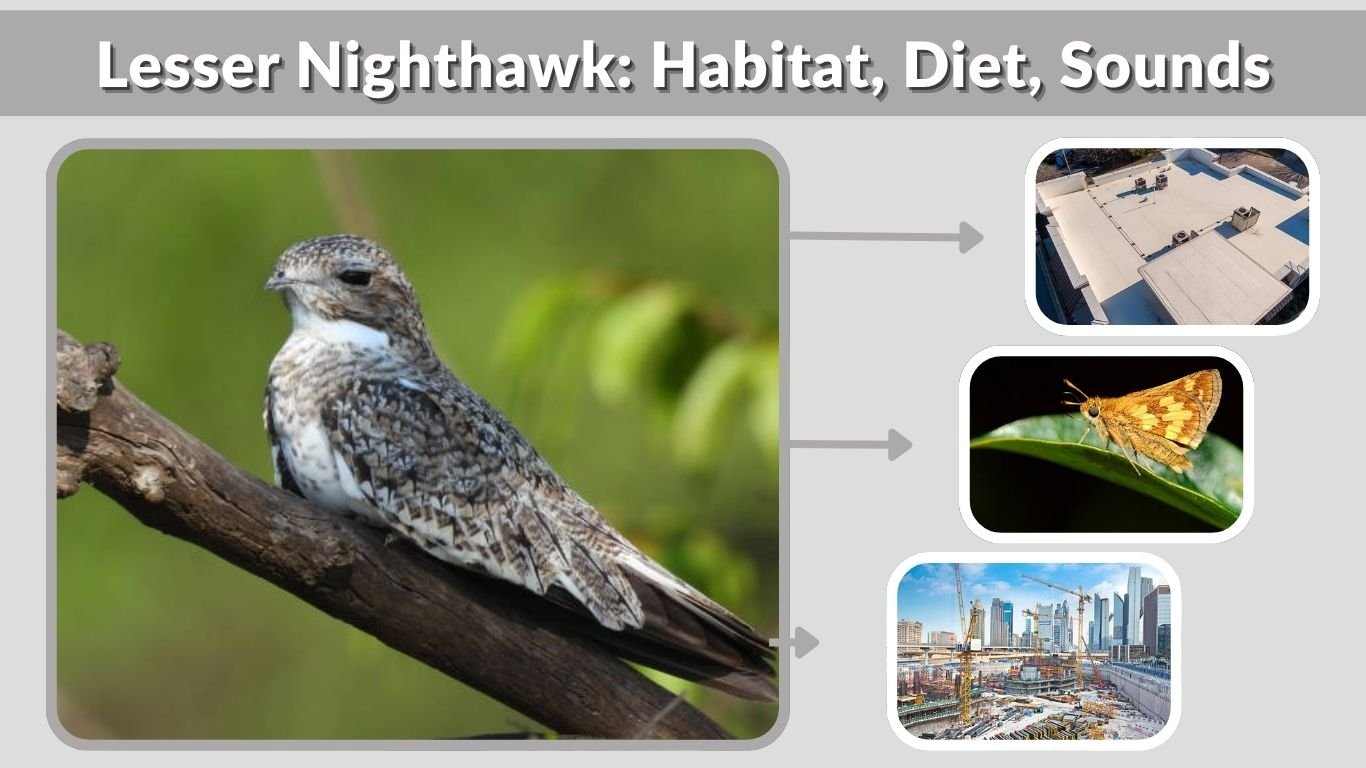
The lesser nighthawk (Chordeiles acutipennis) is a medium-sized nocturnal bird adapted for life in warm, open environments. It belongs to the Caprimulgidae family, which includes nightjars and poorwills. These birds are masters of camouflage, blending into rocky or sandy ground during the day and becoming active as light fades.
Unlike birds that perch visibly, lesser nighthawks tend to stay hidden and rely on flight to feed. Their wide mouths and agile wings allow them to catch insects in mid-air with impressive precision. This makes them an important part of ecosystems where flying insect populations are abundant.
Lesser Nighthawk Physical Characteristics and Size
Appearance
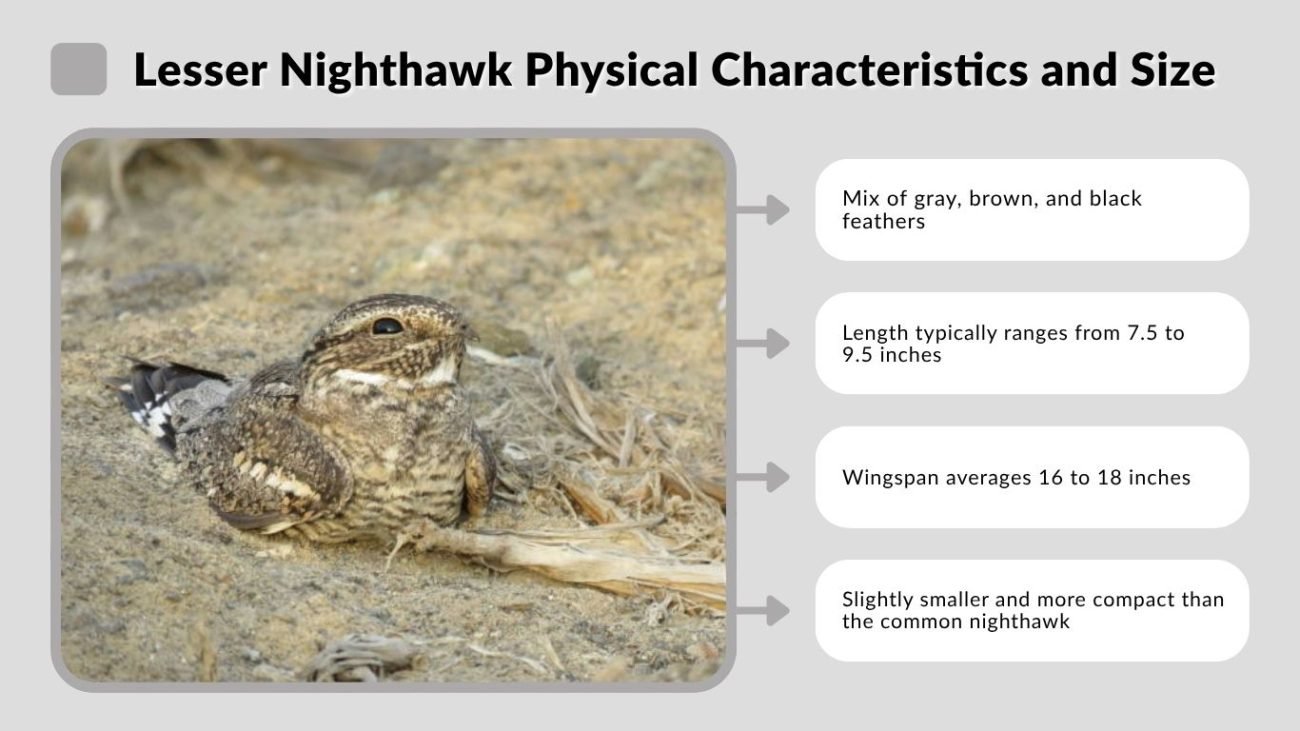
The lesser nighthawk has a mottled mix of gray, brown, and black feathers that help it disappear against natural surfaces. Its body is slim, with long pointed wings that give it a sleek silhouette in flight. Compared to other nighthawks, its markings are more subtle, especially the lighter patches on the wings.
Size and Wingspan
- Length typically ranges from 7.5 to 9.5 inches
- Wingspan averages 16 to 18 inches
- Slightly smaller and more compact than the common nighthawk
These dimensions, combined with its flight style, make it appear delicate yet highly efficient in the air.
Lesser Nighthawk Sounds and Calls
What Does a Lesser Nighthawk Sound Like?
The call of a lesser nighthawk is soft and nasal, often described as a repeated “peent” or “pitik” sound. It is not loud or dramatic, so it can easily blend into background evening noise. Most people hear it during twilight when the bird is actively flying and feeding.
Call vs Flight Behavior
Unlike the common nighthawk, which produces a loud booming sound during steep dives, the lesser nighthawk is quieter overall. Its wings do not create strong audible effects, and its calls are short and understated. This subtle sound profile is one reason the species often goes unnoticed even in areas where it is common.
Lesser Nighthawk vs Common Nighthawk
Key Differences
- Lesser nighthawk has a softer, quieter call
- Wing markings are less bold and harder to see
- Prefers warmer, drier habitats such as deserts
Flight Behavior Comparison
- Flies lower to the ground with erratic, agile movements
- Shows quick turns while chasing insects
- Lacks the dramatic high-altitude dives of its relative
These differences are especially useful for birdwatchers trying to distinguish the two species in low light conditions.
Lesser Nighthawk Habitat and Range
Where Do Lesser Nighthawks Live?
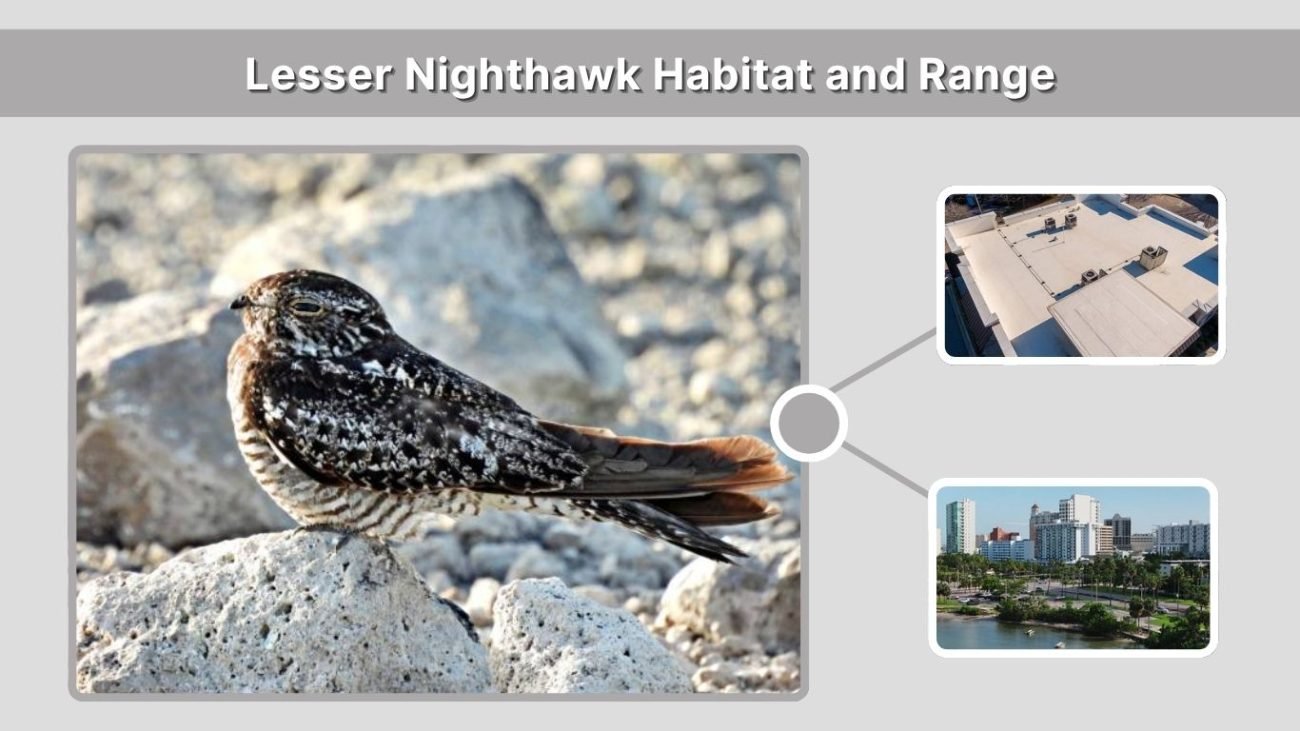
The lesser nighthawk is commonly found in open environments where insects are plentiful. It thrives in warm climates and is especially associated with dry landscapes. During the day, it rests on bare ground, rooftops, or flat surfaces where its coloration provides effective camouflage.
Geographic Range and Movement
This species is widespread across parts of the Americas. It breeds in the southwestern United States and extends through Mexico into Central and South America. Seasonal movement occurs as temperatures change, with birds traveling south during cooler months and returning north to breed.
Migration Patterns
Migration is typically subtle and occurs at night. Rather than forming large visible flocks, lesser nighthawks move quietly between regions. Their timing is closely linked to insect availability, ensuring a steady food supply throughout the year.
Lesser Nighthawk Behavior and Feeding Habits
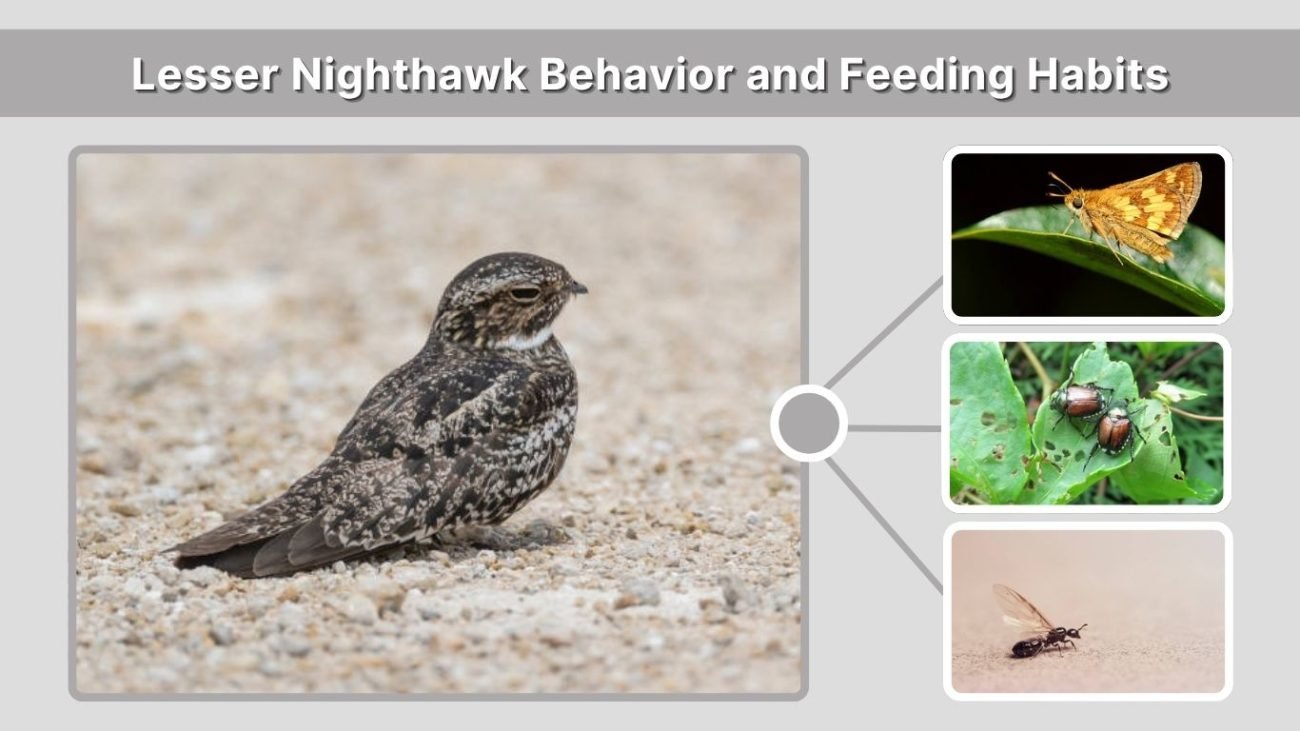
The lesser nighthawk is most active at dawn and dusk, when insect activity peaks. Its flight is smooth yet unpredictable, allowing it to quickly change direction while hunting. It often takes advantage of artificial lighting, where insects gather in large numbers.
- Feeds primarily on moths, beetles, and flying ants
- Hunts by catching prey directly in the air
- Frequently seen circling streetlights or open spaces
This feeding strategy makes it both efficient and adaptable, especially in areas influenced by human activity.
Lesser Nighthawk Nesting and Reproduction
Nesting Habits
Lesser nighthawks do not build traditional nests like many other birds. Instead, they rely on natural camouflage to protect their eggs. They choose flat, open ground such as gravel areas, sandy soil, or even rooftops in urban environments. Their plumage blends so well with surroundings that both adults and eggs are extremely difficult to spot.
Eggs and Chicks
- Usually lay 2 eggs per clutch
- Eggs are speckled to match the ground
- Chicks hatch covered in down and remain still to avoid detection
Development Stages
- Juveniles resemble adults but have duller coloring
- They quickly learn to remain motionless when threatened
- Flight ability develops within a few weeks after hatching
Identification Tips in the Field
How to Recognize a Lesser Nighthawk
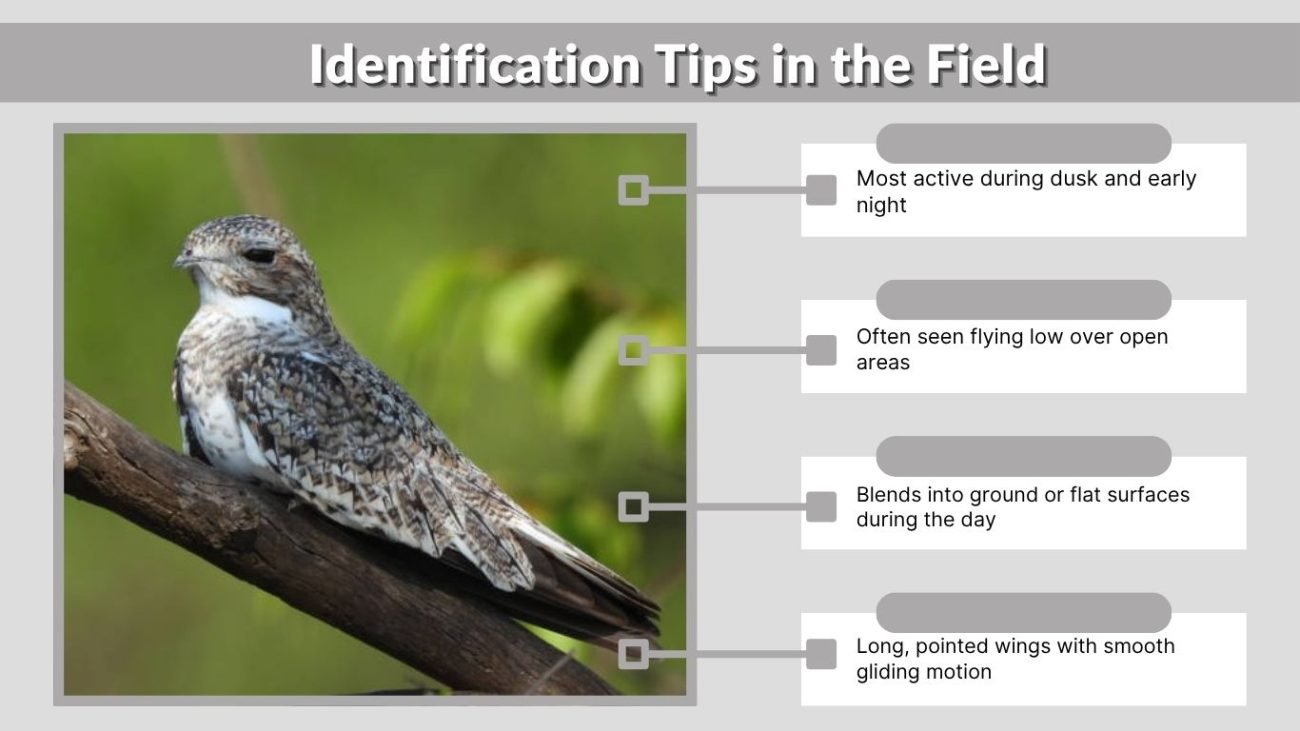
- Most active during dusk and early night
- Often seen flying low over open areas
- Blends into ground or flat surfaces during the day
In-Flight Clues
- Long, pointed wings with smooth gliding motion
- Erratic, bat-like flight pattern
- Subtle wing markings without bold flashes
These features help distinguish it from similar birds, especially in low-light conditions.
Similar Species Comparison
Lesser Nighthawk vs Common Poorwill
The common poorwill is another nightjar species that can be confused with the lesser nighthawk. However, it tends to be smaller and more often seen perched rather than continuously flying. Its call is also more distinct and repeated in a rhythmic pattern, making it easier to detect by sound.
Nightjars and Their Relationship
Lesser nighthawks belong to the broader nightjar family, which includes several species adapted to nocturnal life. While they share traits such as wide mouths and soft plumage, each species has unique behaviors, calls, and habitat preferences that set them apart.
Interesting Facts About Lesser Nighthawks
- They can appear slightly reflective or glowing under artificial lights
- Often mistaken for bats due to their flight style
- Spend most of the day resting motionless on the ground
Conservation Status and Threats
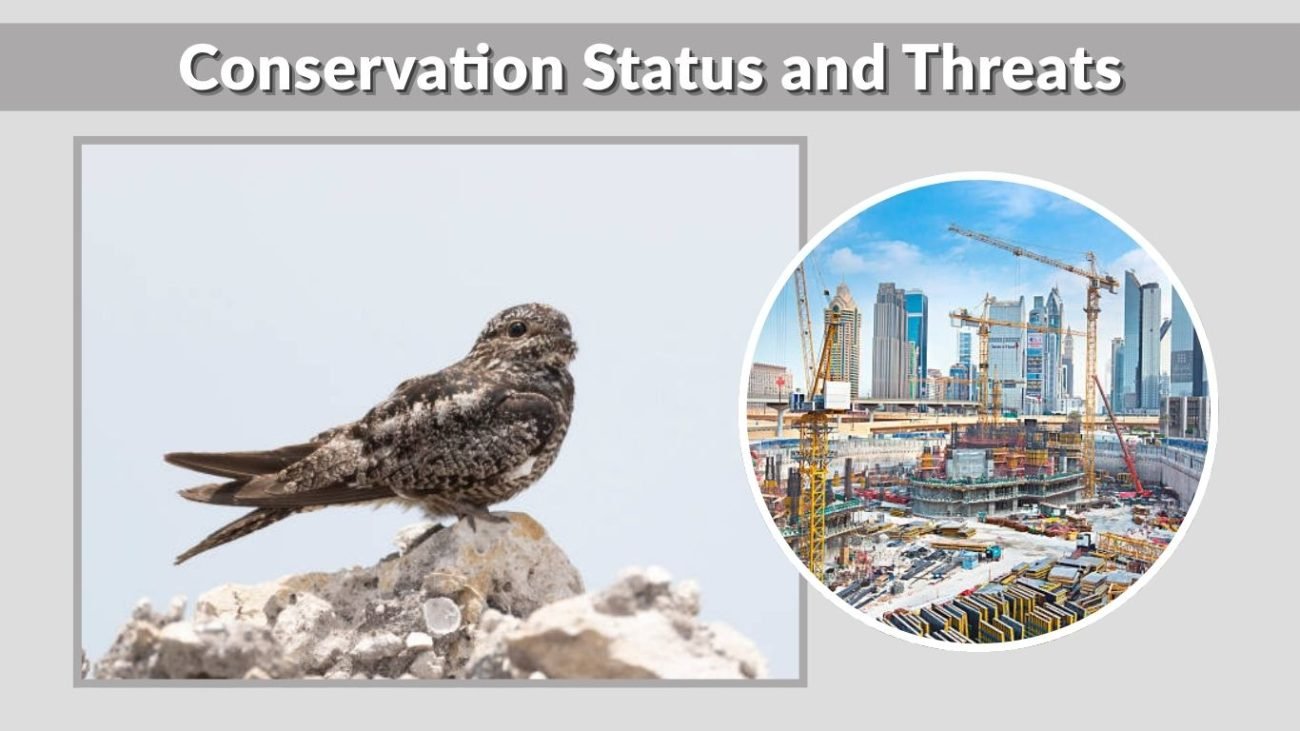
The lesser nighthawk is currently considered a species of low conservation concern across most of its range. However, like many insect-eating birds, it faces subtle environmental pressures. Declining insect populations can directly affect its food supply, while expanding urban development may alter nesting areas.
Despite these challenges, the species has shown adaptability by using urban spaces and artificial lighting to its advantage. Continued monitoring is important to ensure populations remain stable over time.
FAQs
What does a lesser nighthawk sound like?
The lesser nighthawk produces a soft, nasal call often described as a “peent” sound. It is usually heard during dusk when the bird is actively flying. Unlike louder species, its call is subtle and can blend into evening background noise, making it easy to miss.
Where do lesser nighthawks live?
They are commonly found in warm, open habitats such as deserts, grasslands, and urban areas with artificial lights. Their range includes the southwestern United States, Mexico, and parts of Central and South America, where they find plenty of flying insects.
What do lesser nighthawks eat?
Their diet mainly consists of flying insects like moths, beetles, and ants. They catch prey mid-air using agile flight and wide mouths. Artificial lights often attract insects, which makes these areas ideal feeding spots for lesser nighthawks.
How can you identify a lesser nighthawk?
You can identify it by its low, erratic flight at dusk, long pointed wings, and muted wing markings. Its soft call and preference for open habitats also help distinguish it from similar species like the common nighthawk.
Are lesser nighthawks found in Australia?
No, lesser nighthawks are native to the Americas. While Australia has birds in the same family, such as other nightjars, the lesser nighthawk itself does not occur outside North, Central, and South America.