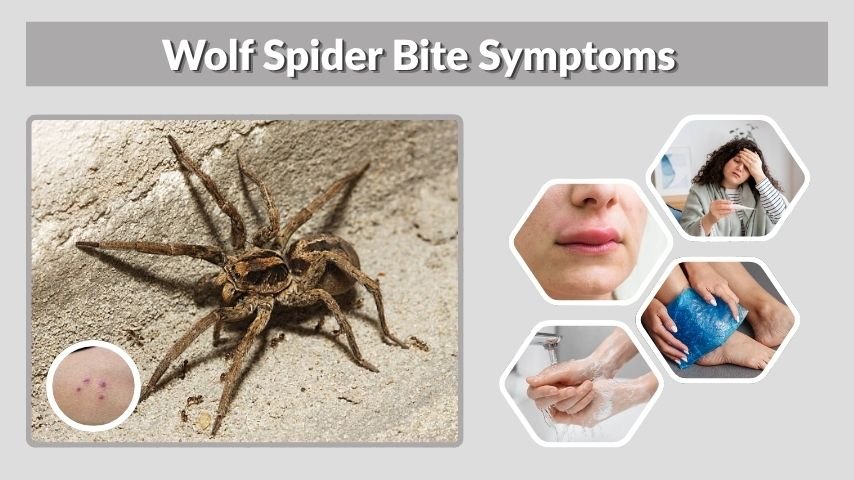
Wolf spider bite symptoms can look scary, especially when the skin becomes red, swollen, itchy, or painful. In most cases, a wolf spider bite is mild and improves with basic home care. However, not every red bump is a confirmed spider bite. Insects, skin irritation, allergies, and infections can look similar. This guide explains common wolf spider bite symptoms in humans, early warning signs, allergic reactions, treatment steps, pet symptoms, and when to seek medical help.
What Are Wolf Spider Bite Symptoms?
Wolf spider bite symptoms usually happen near the bite area. The reaction may feel like a small sting or sharp pinch, followed by redness, swelling, itching, or soreness. Most symptoms are mild and improve over time. A bite that spreads, becomes very painful, drains pus, or causes whole-body symptoms should be checked by a medical professional.
Common Signs and Symptoms
A wolf spider bite may not look dramatic at first. Some people notice pain right away, while others only see a red bump later. The symptoms can depend on skin sensitivity, bite location, scratching, and whether the area becomes irritated.
Common symptoms include:
- Sharp pinch or stinging pain
- Redness around the bite
- Mild swelling
- Itching or tenderness
- Warm skin near the bite
- Small raised bump
- Possible tiny fang marks
- Mild soreness for a few days
How Long Symptoms Usually Last
Mild wolf spider bite symptoms often improve within a few days. Redness and soreness may fade gradually, while itching can last slightly longer as the skin heals. Many simple spider bites heal within about a week.
If symptoms become worse after 24 to 48 hours, the issue may be infection, allergy, irritation, or a different type of bite.
Early Stage Wolf Spider Bite Symptoms
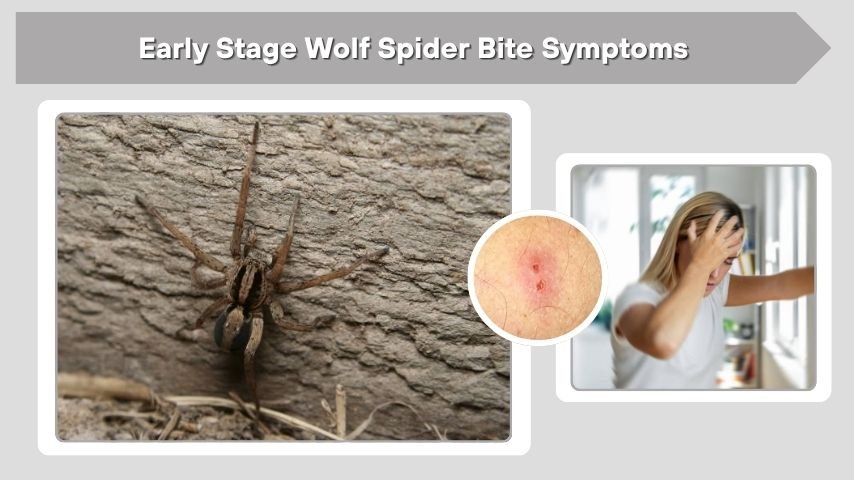
Early stage wolf spider bite symptoms may appear within minutes or hours. The bite may feel like a sting, but the reaction usually stays local. During this stage, the goal is to clean the area, reduce swelling, and watch for changes. Severe or fast-spreading symptoms are not typical and should not be ignored.
First Symptoms After a Bite
The first symptom is often a quick sting or pinching sensation. The area may then become red, slightly swollen, warm, or itchy. Some people notice a small raised bump where the bite happened.
Fang marks are possible but not always visible. A bite on thinner or sensitive skin may look more noticeable than a bite on thicker skin.
Early Stage Bad Symptoms
A bad early reaction may include severe pain, fast swelling, dizziness, nausea, widespread hives, or trouble breathing. These symptoms may point to an allergic reaction or another medical issue.
Do not wait for these symptoms to “settle down.” If breathing changes, throat swelling, fainting, or widespread hives occur, seek emergency medical help.
Wolf Spider Bite Symptoms in Humans
Wolf spider bite symptoms in humans are usually mild, but reactions can vary. Adults, children, and people with sensitive skin may experience different levels of swelling or irritation. The location of the bite also matters. A bite on the hand, arm, face, or foot may feel more uncomfortable because those areas are used often.
Symptoms in Adults
Adults usually notice local redness, pain, swelling, itching, and tenderness. A bite on the arm or leg may feel sore when touched or moved. The discomfort should gradually decrease.
Most adults can manage mild symptoms with cleaning, a cold compress, and monitoring. However, spreading redness, worsening pain, or signs of infection should be checked.
Symptoms in Children
Children may react more strongly because their skin can be more sensitive. A mild bite may still cause visible swelling, itching, or discomfort. Parents should watch the bite closely for changes.
Medical advice is recommended if a child has severe pain, fever, spreading redness, unusual tiredness, breathing trouble, or swelling of the face, lips, or throat.
Symptoms on the Arm
A wolf spider bite on the arm may appear as a red, swollen bump. It may feel warm, itchy, or tender. Mild soreness is common, especially when the arm moves.
If redness travels up the arm, red streaks appear, or the arm becomes very painful, the bite may be infected or more serious than a simple wolf spider bite.
Allergic Reaction Wolf Spider Bite Symptoms
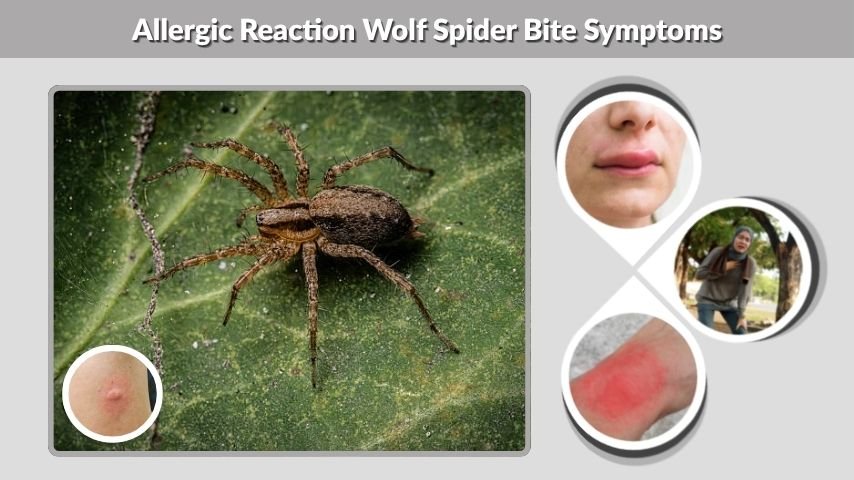
An allergic reaction to a wolf spider bite is not common, but it can happen. Some reactions only affect the skin, while severe reactions can affect breathing or circulation. This section is important because allergy symptoms can worsen quickly. Any breathing problem, throat swelling, or fainting should be treated as urgent.
Mild Allergic Reaction Symptoms
A mild allergic reaction may look stronger than a normal local bite reaction. The bite area may become itchier, more swollen, or more irritated than expected.
Mild allergic symptoms may include:
- Extra itching
- Larger swollen area
- Rash near the bite
- Mild hives
- Skin warmth
- Increased redness
- Tenderness around the bite
Severe Allergic Reaction Symptoms
Severe allergic symptoms need urgent medical attention. They may not be caused by the wolf spider venom itself, but by the body’s reaction to the bite.
Emergency symptoms include:
- Trouble breathing
- Wheezing
- Swelling of lips, tongue, throat, or face
- Widespread hives
- Dizziness or fainting
- Fast heartbeat
- Nausea or vomiting
- Confusion or weakness
When Allergy Symptoms Are an Emergency
Allergy symptoms are an emergency when they affect breathing, swallowing, alertness, or the face and throat. Do not rely on online pictures or wait to see if the bite improves.
If a person has trouble breathing, throat tightness, fainting, or rapidly spreading hives, call emergency services or seek urgent medical care immediately.
Wolf Spider Bite Symptoms and Pictures
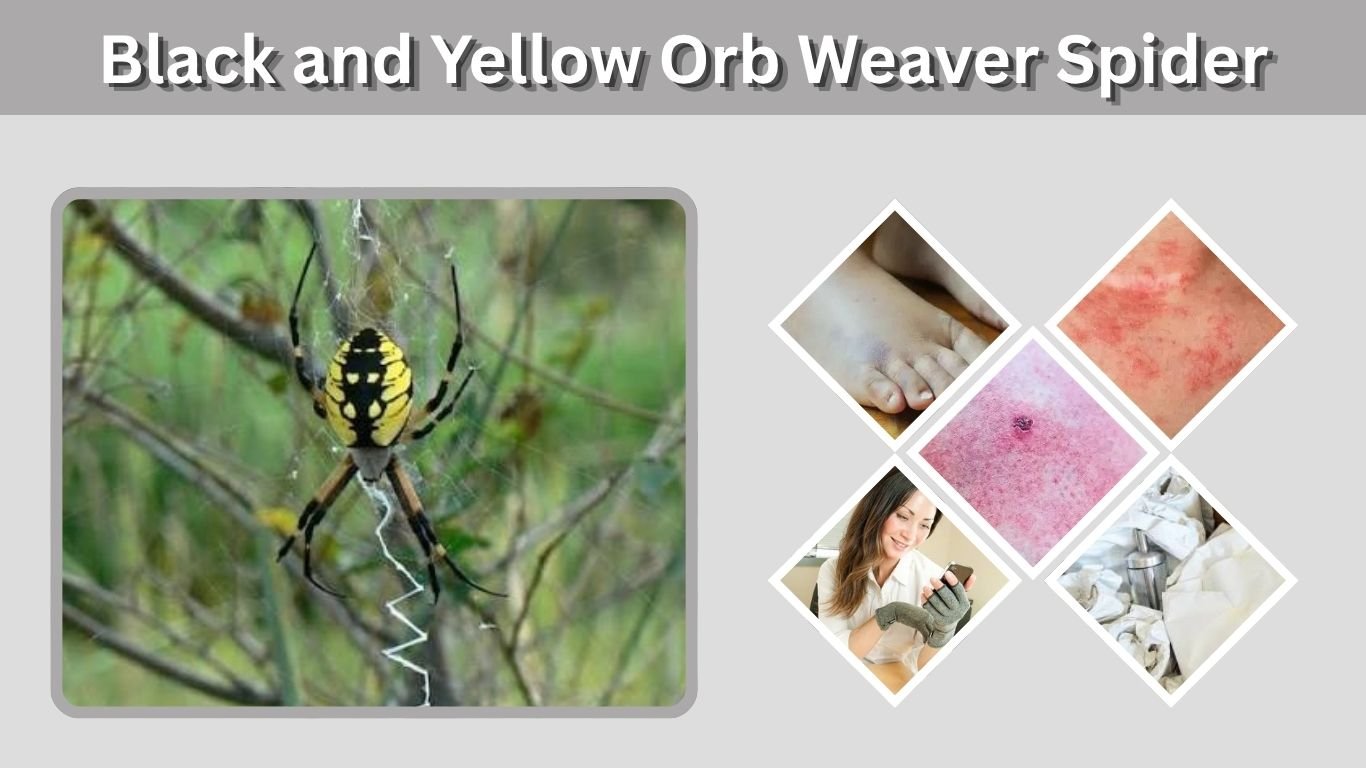
Many people search for wolf spider bite symptoms and pictures because they want to compare their skin with examples online. Pictures may help you track whether redness is spreading or healing, but they cannot confirm the spider species. Many insect bites, allergic reactions, and skin infections can look almost the same.
What a Wolf Spider Bite May Look Like
A possible wolf spider bite may look like a small red bump, a swollen patch, or an irritated area of skin. It may feel sore, itchy, warm, or tender. Sometimes there may be tiny puncture marks, but many bites do not show clear fang marks.
A white bite area can happen with swelling, pressure, or skin irritation. It does not prove the bite came from a wolf spider.
Why Pictures Can Be Misleading
Spider bite pictures can be misleading because many skin problems look similar. Mosquito bites, flea bites, ant stings, tick bites, rashes, and bacterial infections may all appear as red, swollen bumps.
Photos are better for tracking changes than diagnosing the bite. If the mark grows, turns dark, drains fluid, or becomes more painful, seek medical advice.
Bad Wolf Spider Bite Symptoms and Warning Signs
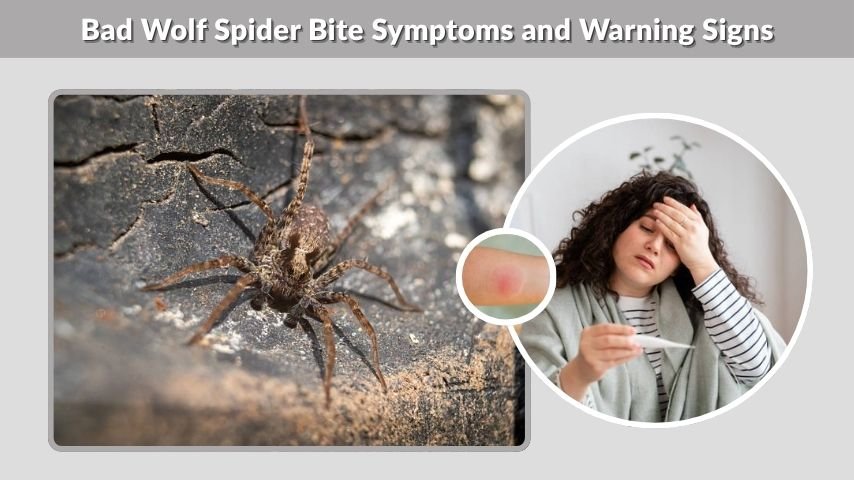
Most wolf spider bites are not dangerous, but bad symptoms should not be dismissed. Worsening pain, spreading redness, pus, fever, or flu-like symptoms can suggest infection or another condition. A dangerous spider bite, such as a brown recluse or black widow bite, may also be mistaken for a wolf spider bite.
Symptoms That Need Medical Care
Medical care is important if the bite does not follow a normal healing pattern. Do not assume every worsening bite is harmless.
Warning signs include:
- Severe or increasing pain
- Spreading redness
- Red streaks from the bite
- Pus, drainage, or bad smell
- Fever or chills
- A wound that grows or opens
- Dark, purple, or dead-looking skin
- Flu-like symptoms
- Trouble breathing or swallowing
Flu-Like Symptoms After a Bite
Flu-like symptoms are not typical for a simple wolf spider bite. Fever, chills, body aches, nausea, weakness, or sweating may suggest infection, allergic reaction, or another type of spider bite.
If these symptoms appear, contact a healthcare provider. This is especially important for children, older adults, and people with weak immune systems.
White Bite Area or Dark Center
A white area near the bite can happen from swelling or skin pressure. However, a bite that turns dark, purple, numb, or opens into a sore should be checked.
A growing wound or dark center is not something to treat casually at home. It may need professional evaluation.
Wolf Spider Bite Symptoms and Treatment
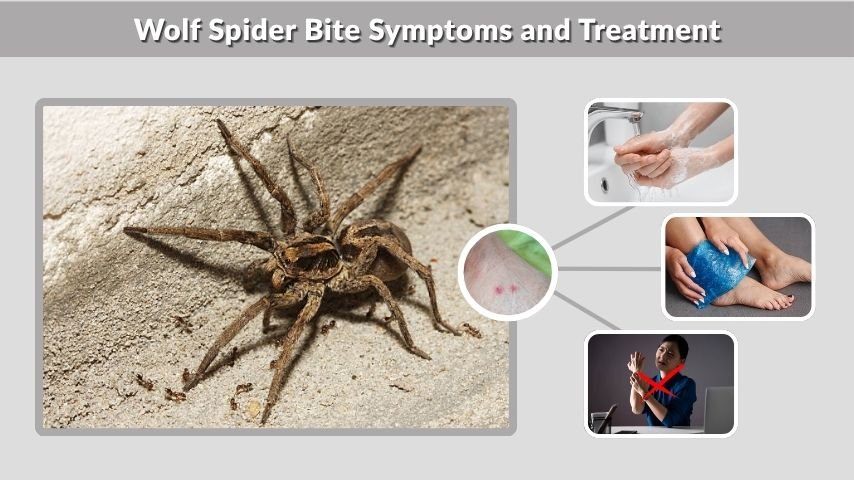
Wolf spider bite symptoms and treatment usually focus on simple first aid. Mild symptoms can often be handled at home by cleaning the skin, cooling the area, and watching for changes. Treatment should help the bite improve. If the bite gets worse, spreads, or shows infection signs, home care is not enough.
Basic Treatment for Mild Symptoms
Start treatment by cleaning the bite gently. Avoid harsh methods that damage the skin or increase infection risk.
Basic treatment steps include:
- Wash the bite with soap and water
- Apply a cold compress
- Elevate the area if swollen
- Keep the bite clean and dry
- Avoid scratching the skin
- Cover with a clean bandage if irritated
- Use pain relief only if safe for you
- Monitor symptoms for 24 to 48 hours
What Not to Do
Do not cut, squeeze, burn, or drain the bite. Do not apply bleach, strong chemicals, or untested home remedies. These can irritate the skin and make healing worse.
Also, do not rely only on wolf spider bite pictures to decide if you are safe. If symptoms worsen, get medical help.
Wolf Spider Bite Symptoms in Dogs and Cats
Dogs and cats may be bitten if they sniff, paw, chase, or eat a wolf spider. Most mild reactions are local, but pets cannot clearly explain pain. Owners should watch swelling, licking, limping, appetite, breathing, and behavior. Puppies, kittens, elderly pets, and sick animals may need faster veterinary advice.
Wolf Spider Bite Dog Symptoms
A dog may lick or chew the bite area, whine, limp, or act restless. The skin may look red, swollen, or tender. If the bite is on the face, swelling may be easier to notice.
Call a veterinarian if your dog has vomiting, weakness, facial swelling, breathing changes, severe pain, or unusual behavior.
Wolf Spider Bite Cat Symptoms
Cats may hide when they are uncomfortable. A cat with a possible bite may lick one spot, avoid touch, seem less active, or show swelling near the bite area.
Because cats often hide pain, contact a veterinarian if swelling grows, appetite drops, breathing changes, or your cat acts unusually tired.
Puppy and Kitten Symptoms
Puppies and kittens are smaller, so symptoms can be more concerning. Watch for swelling, vomiting, weakness, trembling, trouble breathing, or sudden tiredness.
If a young pet may have been bitten and symptoms appear, it is safer to call a veterinarian for guidance.
Different Wolf Spider Types and Symptoms
People often search for rabid wolf spider bite symptoms, Carolina wolf spider bite symptoms, brown wolf spider bite symptoms, grey wolf spider bite symptoms, and Australian wolf spider bite symptoms. In many cases, the symptoms are similar: local pain, redness, swelling, itching, and tenderness. However, location and species confusion can affect risk.
Rabid Wolf Spider Bite Symptoms
A rabid wolf spider is a type of wolf spider. Its bite symptoms are generally similar to other wolf spider bites. The word “rabid” does not mean the spider has rabies.
A bite may cause pain, redness, swelling, itching, and tenderness. Serious symptoms are uncommon but should be checked if they occur.
Carolina, Brown, Grey, and Baby Wolf Spiders
These terms often describe appearance, size, or local names. A baby wolf spider may be smaller, but skin reactions still depend on the person’s sensitivity and whether the bite becomes irritated.
Do not judge seriousness by color name alone. Focus on symptoms and whether they are improving or worsening.
Australian and UK Wolf Spider Bite Symptoms
Australia and the UK both have wolf spiders, but local spider risks differ. In Australia, any uncertain spider bite with severe symptoms should be checked through local medical or poison advice.
In the UK, serious spider bites are uncommon, but infected or worsening bites still need medical attention.
FAQs
What are the symptoms of a wolf spider bite?
A wolf spider bite may cause a sharp sting, redness, mild swelling, itching, warmth, tenderness, and a small raised bump. Symptoms usually stay near the bite and improve over several days. Severe pain, spreading redness, fever, or breathing trouble needs medical care.
What are early stage wolf spider bite symptoms?
Early symptoms may include a pinching feeling, mild pain, redness, swelling, itching, or warmth around the bite. These signs can appear within minutes to hours. Rapid swelling, widespread hives, dizziness, or breathing trouble is not typical and should be checked urgently.
Can a wolf spider bite cause an allergic reaction?
Yes, an allergic reaction is possible, although it is uncommon. Mild reactions may cause extra itching, swelling, or hives. Severe symptoms such as trouble breathing, throat swelling, dizziness, or widespread hives require emergency medical help.
What are wolf spider bite symptoms in dogs?
Dogs may lick or chew the bite area, limp, whine, develop swelling, or seem restless. Most mild reactions are local. Vomiting, weakness, facial swelling, breathing changes, or unusual behavior should be discussed with a veterinarian.
Do wolf spider bite symptoms pictures confirm the bite?
No. Pictures can show redness, swelling, or healing changes, but they cannot confirm that a wolf spider caused the bite. Many insect bites, skin infections, and allergic reactions look similar. Photos are best used to track whether symptoms improve or worsen.