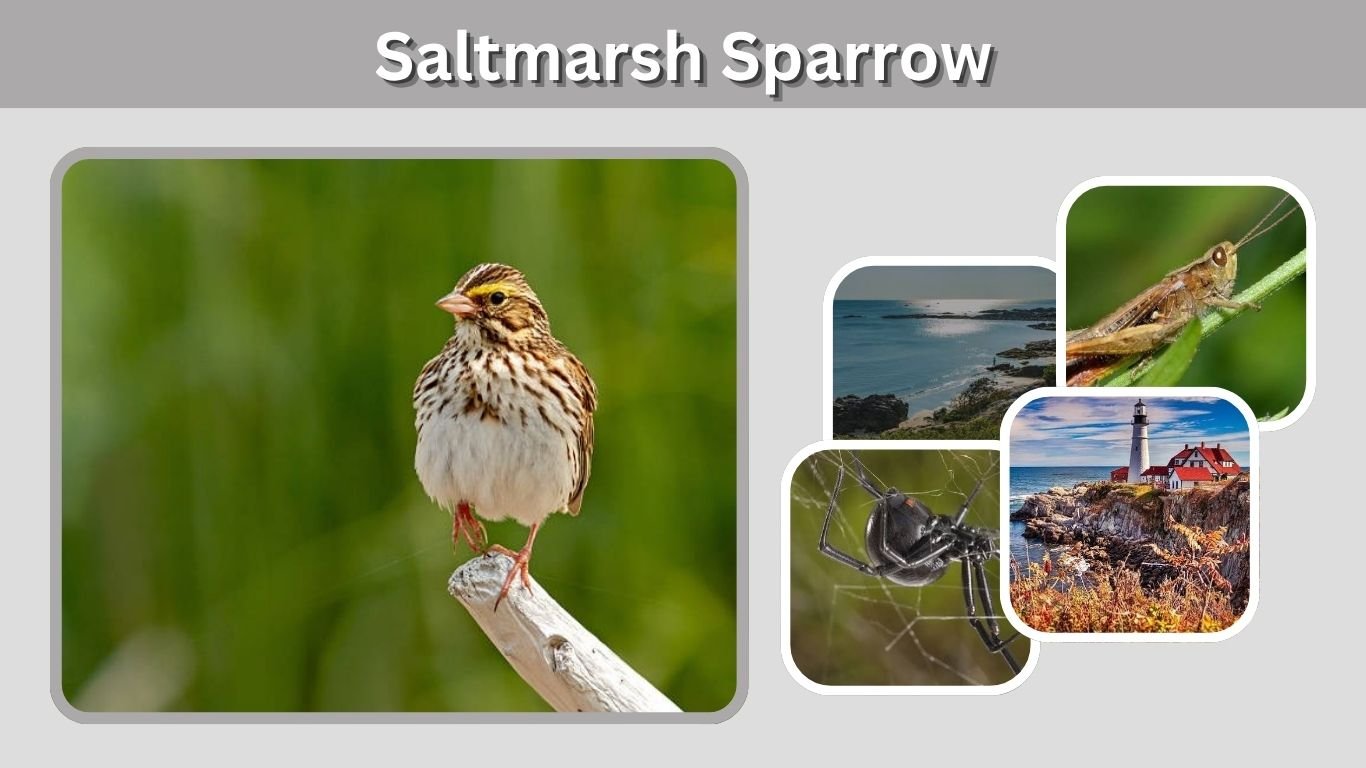
The Saltmarsh Sparrow is a secretive coastal bird found almost entirely within tidal salt marshes of the eastern United States. Its orange facial markings, gray cheeks, streaked breast, and short pointed tail make it distinctive, although it is often confused with Nelson’s Sparrow. Rising sea levels, habitat loss, and increasingly frequent nest flooding have caused a severe population decline. Protecting high-marsh nesting areas is now essential to the species’ survival.
What Is a Saltmarsh Sparrow?
The Saltmarsh Sparrow is a small New World sparrow belonging to the family Passerellidae. Its currently accepted scientific name is Ammospiza caudacuta, although some government resources still use the older name Ammodramus caudacutus. Older field guides may also call it the Saltmarsh Sharp-tailed Sparrow.
| Feature | Description |
| Scientific name | Ammospiza caudacuta |
| Family | Passerellidae |
| Length | About 4.7–5.1 inches |
| Wingspan | About 6.5–7.7 inches |
| Weight | About 0.6–0.8 ounces |
| Main habitat | Tidal salt marsh |
| Primary food | Insects, spiders, amphipods, and seeds |
| Nest location | Low in dense marsh vegetation |
| Migration | Medium-distance coastal migrant |
Saltmarsh Sparrows spend their entire annual cycle in coastal marshes. They rarely use ordinary fields, forests, gardens, or inland wetlands, making them exceptionally dependent on one vulnerable habitat.
Saltmarsh Sparrow Identification
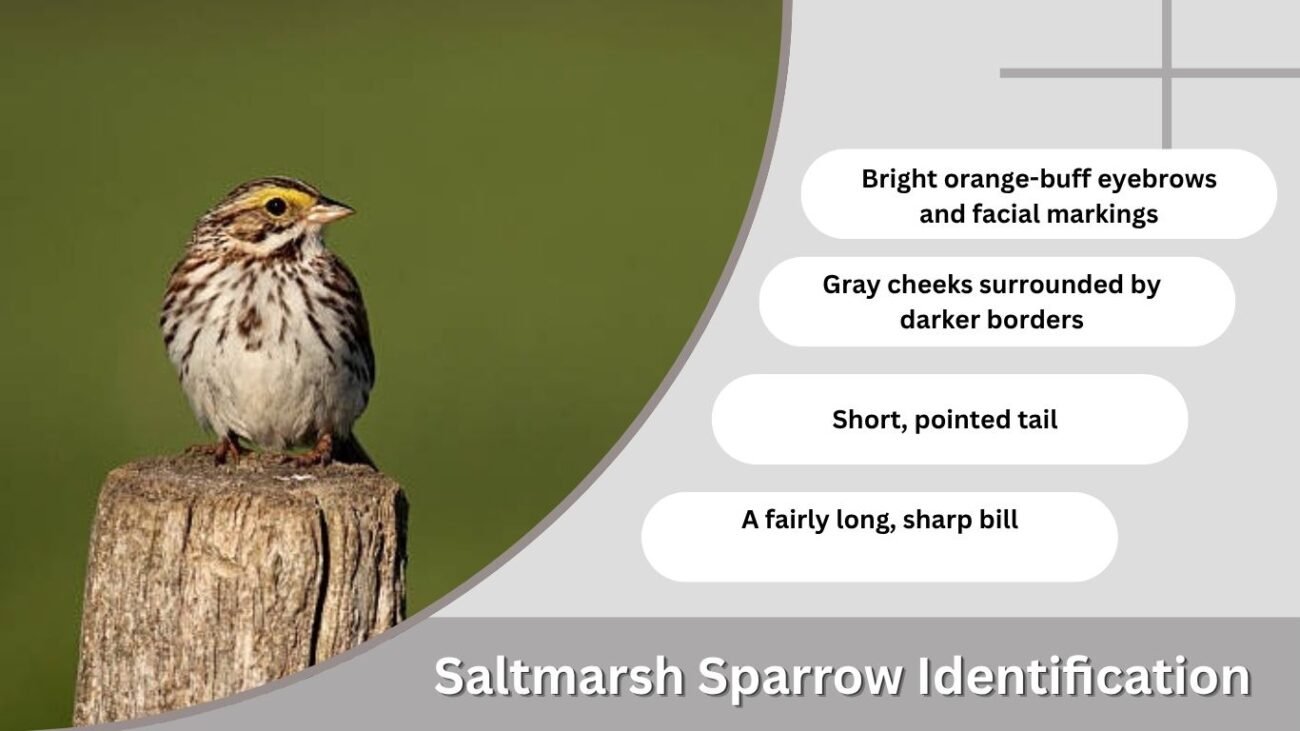
This sparrow is small and compact, with a short tail and a relatively long, pointed bill. Its plumage blends closely with brown, gray, and golden marsh vegetation.
Main Identification Features
Look for these characteristics:
- Bright orange-buff eyebrows and facial markings
- Gray cheeks surrounded by darker borders
- A narrow gray stripe through the center of the crown
- Brown and rusty upperparts with dark streaks
- White breast and belly marked with crisp dark streaks
- Short, pointed tail
- Pinkish legs
- A fairly long, sharp bill
Males and females look similar. Juvenile Saltmarsh Sparrows are generally duller and may show less distinct facial coloring and softer streaking than adults.
Saltmarsh Sharp-Tailed Sparrow
“Saltmarsh Sharp-tailed Sparrow” is an older common name. The former Sharp-tailed Sparrow was divided into the Saltmarsh Sparrow and Nelson’s Sparrow during the 1990s after scientists documented differences in genetics, songs, appearance, and distribution.
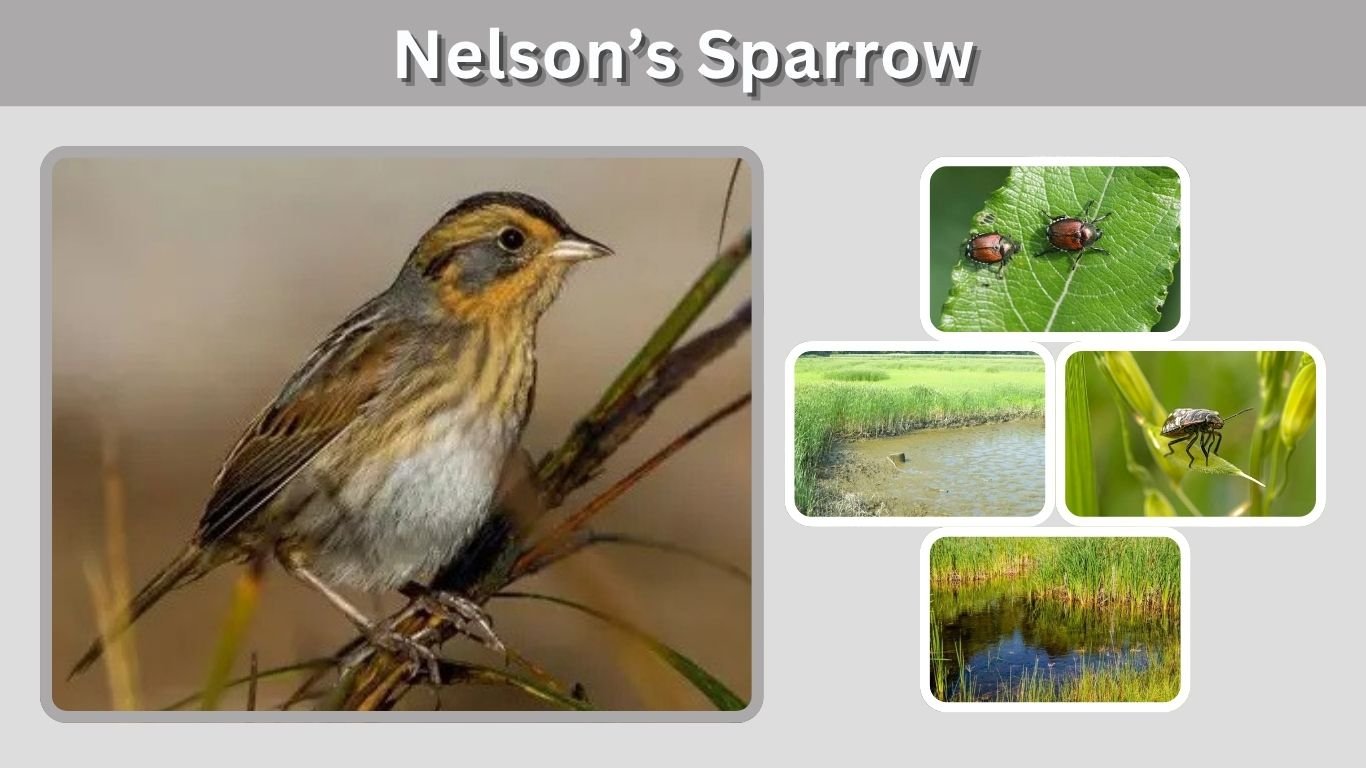
Saltmarsh Sparrow vs Nelson’s Sparrow
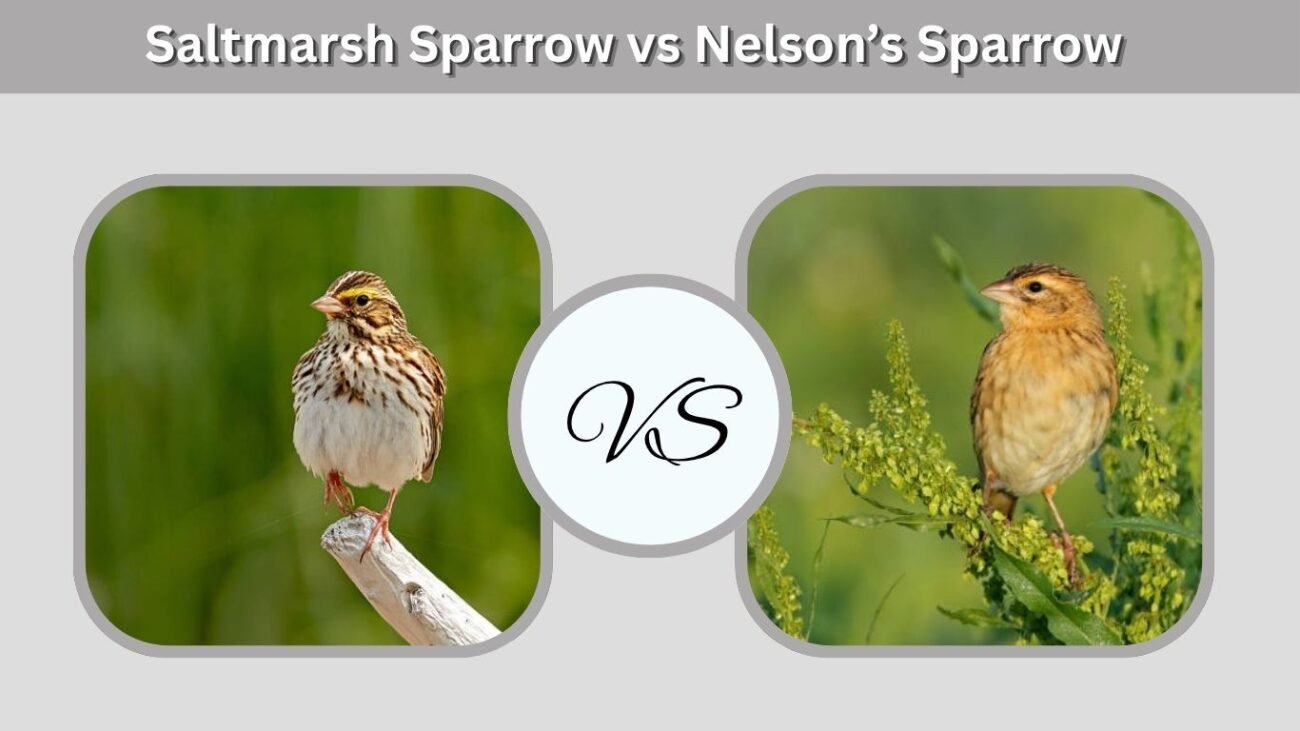
These two closely related birds often occur together during migration and winter. Careful attention to the face, breast, bill, and overall contrast helps separate them.
| Feature | Saltmarsh Sparrow | Nelson’s Sparrow |
| Facial pattern | Strongly contrasting orange and gray | Softer, more evenly orange |
| Breast | White with bold, defined streaks | Buff-colored with finer streaks |
| Bill | Usually longer and heavier | Usually shorter and finer |
| Overall color | Darker and more contrasting | Paler and warmer |
| Main breeding habitat | Atlantic tidal salt marshes | Freshwater and coastal marshes farther north |
| Song | Quiet, variable phrases | Raspy, hissing buzz |
Nelson’s Sparrow often appears warmer and less sharply marked. Its orange coloring commonly extends across the breast, whereas the Saltmarsh Sparrow typically has a whiter breast with darker, clearer streaks. Some individuals and hybrids can be difficult to identify without expert examination.
Where Do Saltmarsh Sparrows Live?
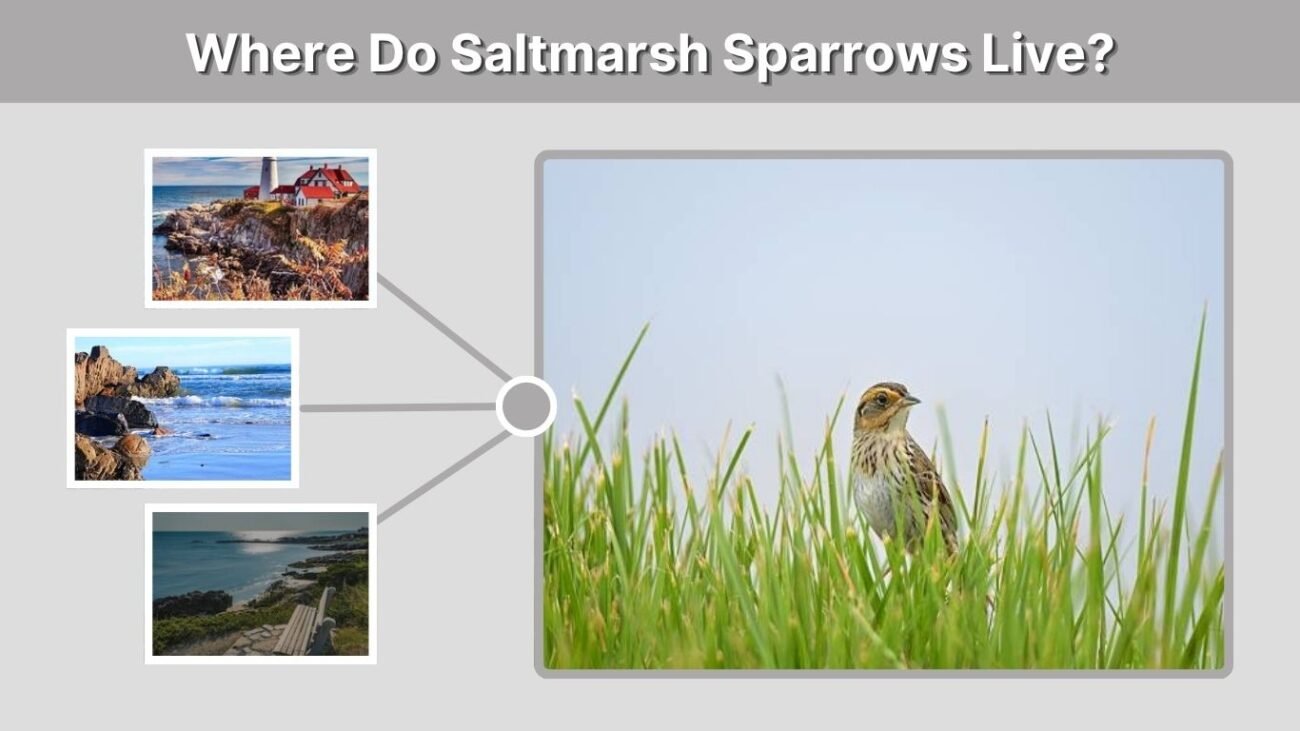
Saltmarsh Sparrows live in tidal salt and brackish marshes along the Atlantic Coast of the United States. They depend on marsh grasses that provide nesting support, food, shelter, and protection from predators.
Breeding Range
The breeding range extends along the Atlantic Coast from southern Maine through coastal Virginia. Important breeding habitats include marshes dominated by saltmeadow cordgrass, saltgrass, smooth cordgrass, and black needlerush.
Winter Range
After breeding, many birds move south. They winter from the southern part of the breeding range through the Carolinas, Georgia, and Florida, including some marshes along Florida’s Gulf Coast.
Do Saltmarsh Sparrows Migrate?
Yes. They are medium-distance migrants that travel mainly at night and stop almost exclusively in tidal marshes. Unlike adaptable migratory birds that use parks or inland fields, Saltmarsh Sparrows remain closely tied to coastal wetlands throughout migration.
Saltmarsh Sparrow Habitat
The bird generally nests in the higher and less frequently flooded sections of a marsh. However, suitable high-marsh habitat has become limited in many developed coastal areas.
Saltmarsh Sparrows use:
- Saltmeadow cordgrass
- Smooth cordgrass
- Saltgrass
- Black needlerush
- Marsh edges and tidal channels
- Shallow marsh pools known as pannes
- Shrubs bordering marshes during extreme flooding
Adults often forage in lower parts of the marsh when falling tides expose mud and vegetation rich in insects. They may retreat into shrubs or tall vegetation when unusually high water covers the marsh.
What Do Saltmarsh Sparrows Eat?
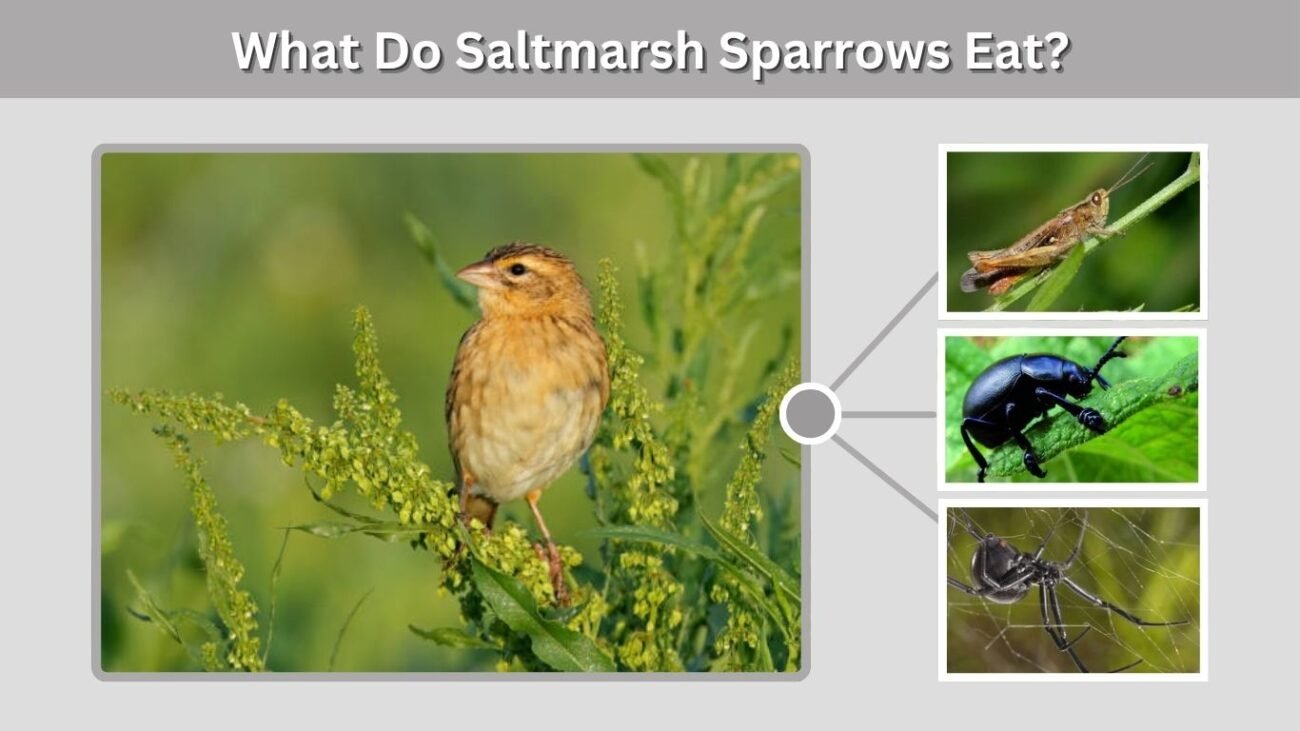
Saltmarsh Sparrows feed primarily on small animals during the breeding season. Their diet becomes more varied after nesting ends.
Common foods include:
- Flies and their larvae
- Moths and caterpillars
- Beetles
- Grasshoppers and crickets
- Spiders
- Amphipods
- Small mollusks
- Occasional tiny fish
- Cordgrass and other marsh seeds
They normally search for food on or near the ground, particularly when falling or low tides expose more of the marsh surface. Nestlings are fed insects and other protein-rich invertebrates.
Saltmarsh Sparrow Nest and Eggs
Nesting is closely synchronized with the tidal cycle. Females must raise their young during the short period between the highest monthly tides.
Nest Construction
The female builds a bulky cup from marsh grasses and reeds, usually less than three feet above the ground. Many nests sit only several inches above the marsh surface and are supported by living stems or mats of dead cordgrass. Some have a partial grass canopy that may help keep floating eggs inside during brief flooding.
Males do not defend conventional territories, build nests, incubate eggs, or help feed the young. Females mate with multiple males and perform all parental care.
Eggs and Development
A typical clutch contains three to six greenish eggs covered with dark speckles. Incubation lasts approximately 11–12 days, and nestlings normally leave after another 9–10 days. Females may attempt a replacement nest when flooding or predation destroys the first one.
Saltmarsh Sparrow Song and Call
The Saltmarsh Sparrow has a quiet, inconsistent song that can be difficult to hear over louder marsh birds. Males produce variable combinations of soft phrases and calls from vegetation or while flying between perches. Songs may continue from several seconds to more than a minute and appear to be associated with nearby females rather than territorial defense.
Its common calls are brief, high-pitched notes described as tsip, tic, or tuc. These calls are similar to those of Nelson’s Sparrow, so sound alone may not always confirm identification.
Is the Saltmarsh Sparrow Endangered?
The Saltmarsh Sparrow is among North America’s most rapidly declining birds. The 2025 State of the Birds report classified it as a Red Alert Tipping Point species, while the U.S. Fish and Wildlife Service reports an estimated 87% population decline since 1998.
Why Is It Disappearing?
Major threats include:
- Rising sea levels
- More frequent nest flooding
- Storm surges
- Coastal development
- Historical ditching and draining of marshes
- Loss of high-elevation nesting habitat
- Marsh fragmentation
- Predation and contamination in some locations
Sea-level rise is especially dangerous because the bird cannot simply move into forests or ordinary grasslands. Coastal roads, seawalls, houses, and other development may also prevent marsh vegetation from shifting inland as water levels rise.
Restoration projects are improving tidal flow, raising marsh surfaces with sediment, controlling invasive vegetation, and protecting undeveloped land where marshes may migrate inland.
FAQs
How rare is the Saltmarsh Sparrow?
It remains present across much of its historical coastal range, but its population has declined dramatically. The bird is difficult to find because it stays hidden in dense vegetation and occupies a narrow habitat extending along tidal marshes.
Where is the best place to see one?
Visit a large Atlantic Coast salt marsh during spring, summer, or migration. Watch muddy marsh margins at low tide or shrubs during exceptionally high tides. Listening for its quiet song may help, although the bird frequently remains concealed.
Do Saltmarsh Sparrows live near the ocean?
Yes. They occupy tidal salt and brackish marshes near the Atlantic Coast and Florida Gulf Coast. They depend on vegetation influenced by ocean tides rather than beaches or open seawater.
Why do their nests flood?
Females build close to the marsh surface, where grasses provide support and concealment. Monthly spring tides, storm surges, and rising sea levels can lift water above the nest, washing away eggs or drowning chicks.
What is the Saltmarsh Sparrow’s four-letter code?
The commonly used four-letter bird-banding and birding abbreviation is SALS. Such codes are convenient shorthand, but observers should still record the full species name when submitting formal or potentially ambiguous records.