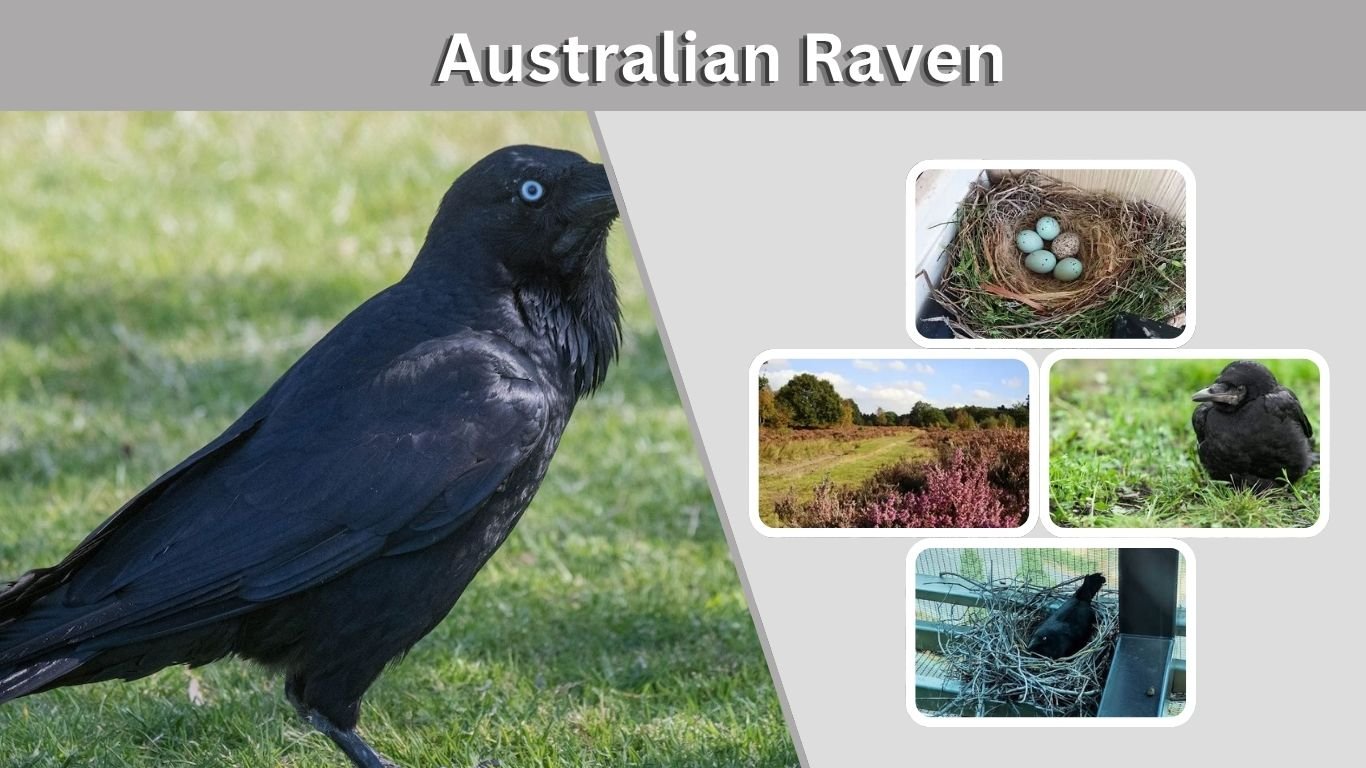
The Australian raven is a large, intelligent black bird found across much of mainland Australia. Adults are recognizable by their pale white eyes, glossy plumage, strong bill, and long throat feathers that form a shaggy “beard” when calling. Although Australians often call any large black corvid a crow, the Australian raven is a distinct species named Corvus coronoides. Its slow, mournful call is one of the most useful ways to separate it from Australia’s similar-looking crows and other ravens.
Australian Raven Quick Facts
Australian ravens belong to Corvidae, the bird family containing ravens, crows, rooks, and jackdaws. They are adaptable omnivores that live in natural landscapes, farmland, parks, and cities.
| Feature | Information |
| Scientific name | Corvus coronoides |
| Family | Corvidae |
| Average length | Approximately 52 cm |
| Average weight | About 650 grams |
| Wingspan | Close to 1 metre |
| Adult eye color | White |
| Young bird’s eye color | Dark brown |
| Diet | Insects, carrion, small animals, fruit, seeds, and scraps |
| Nest | Large stick platform or bowl |
| Conservation status | Least Concern |
BirdLife Australia gives an average size of about 52 centimeters and weight of approximately 650 grams. A New South Wales environmental education profile places the usual length at roughly 46–53 centimeters, with a wingspan close to one metre.
What Does an Australian Raven Look Like?
The Australian raven is a heavy-bodied bird with entirely black plumage. In good lighting, its feathers may show glossy blue, green, or purple highlights.
Identification Features
Look for these characteristics:
- Glossy black body and wings
- Strong, slightly curved black bill
- Pale or white eyes in adults
- Dark eyes in juveniles
- Long throat feathers or hackles
- Broad wings and strong legs
- Heavy, powerful body
- Shaggy throat that expands while calling
The long throat hackles are particularly important. When calling, the raven often stretches its neck, holds its head and body nearly horizontal, and extends these feathers into a prominent beard-like shape. Young ravens have shorter hackles, darker eyes, and may show pink flesh around the base of the bill.
Australian Raven Call
The Australian raven has a distinctive slow and mournful voice. Its territorial call is commonly represented as:
“Ah-ah-ah-aaaaah.”
The final note is noticeably longer than the earlier notes and may sound like a wail, groan, or drawn-out question. The bird frequently lowers its head and raises its throat feathers while producing the call.
Calls are often more useful than body size for identifying Australian corvids. Australia’s raven and crow species are similar in appearance, and their ranges overlap in some regions.
Where Do Australian Ravens Live?
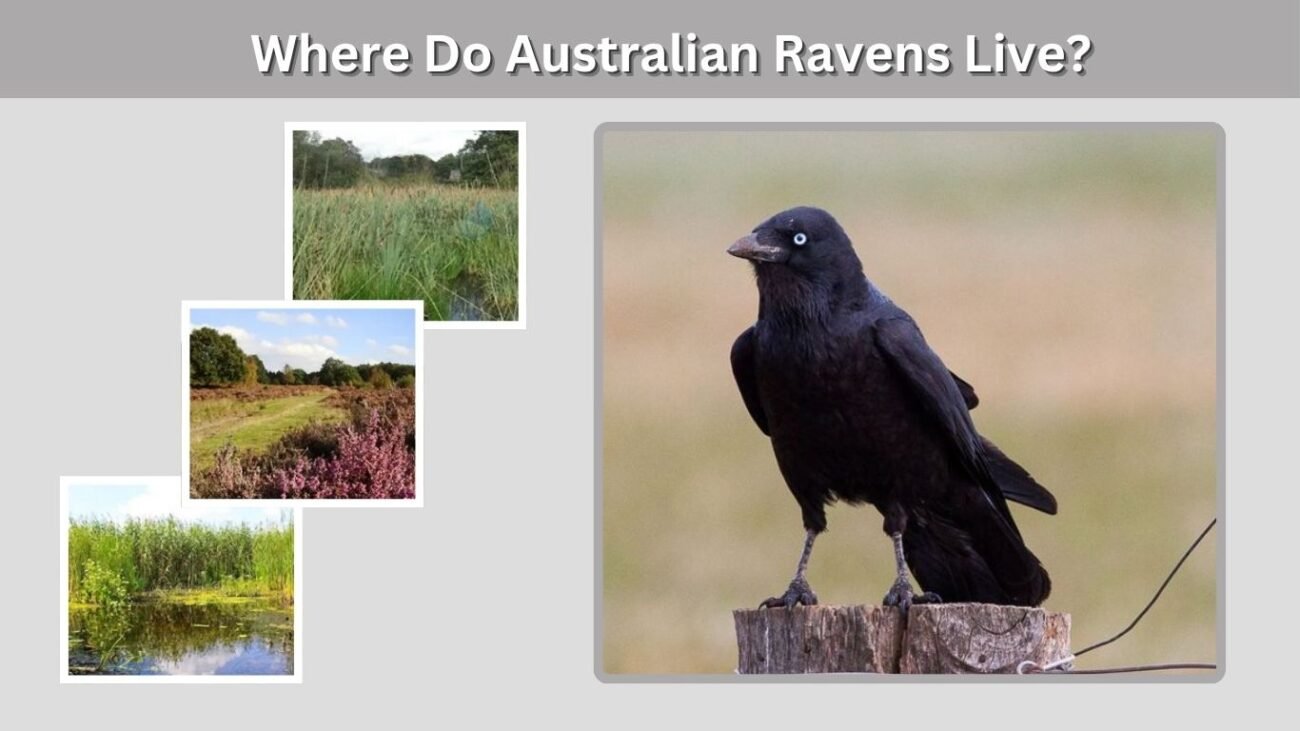
Australian ravens occur across large areas of eastern, southern, and western mainland Australia. They are particularly familiar around Sydney, Canberra, and Perth.
They occupy many habitats, including:
- Open forests
- Woodlands
- Coastal areas
- Heathlands
- Farmland
- Wetlands
- Parks and gardens
- Suburban neighborhoods
- Urban business areas
- Rubbish tips and picnic grounds
They are largely absent from the wettest tropical parts of Queensland and some extremely dry areas of Western Australia. Their ability to use farms, suburbs, and cities has allowed them to remain common despite extensive changes to the Australian landscape.
Australian Ravens in Cities
Urban environments provide ravens with lawns for searching for insects, tall trees for nesting, buildings for observation, and a dependable supply of discarded food.
BirdLife Australia reports that raven numbers in built-up areas have increased as human-generated refuse has become more abundant. Rubbish bins, outdoor eating areas, landfills, pet food, and roadkill provide easy feeding opportunities.
What Do Australian Ravens Eat?
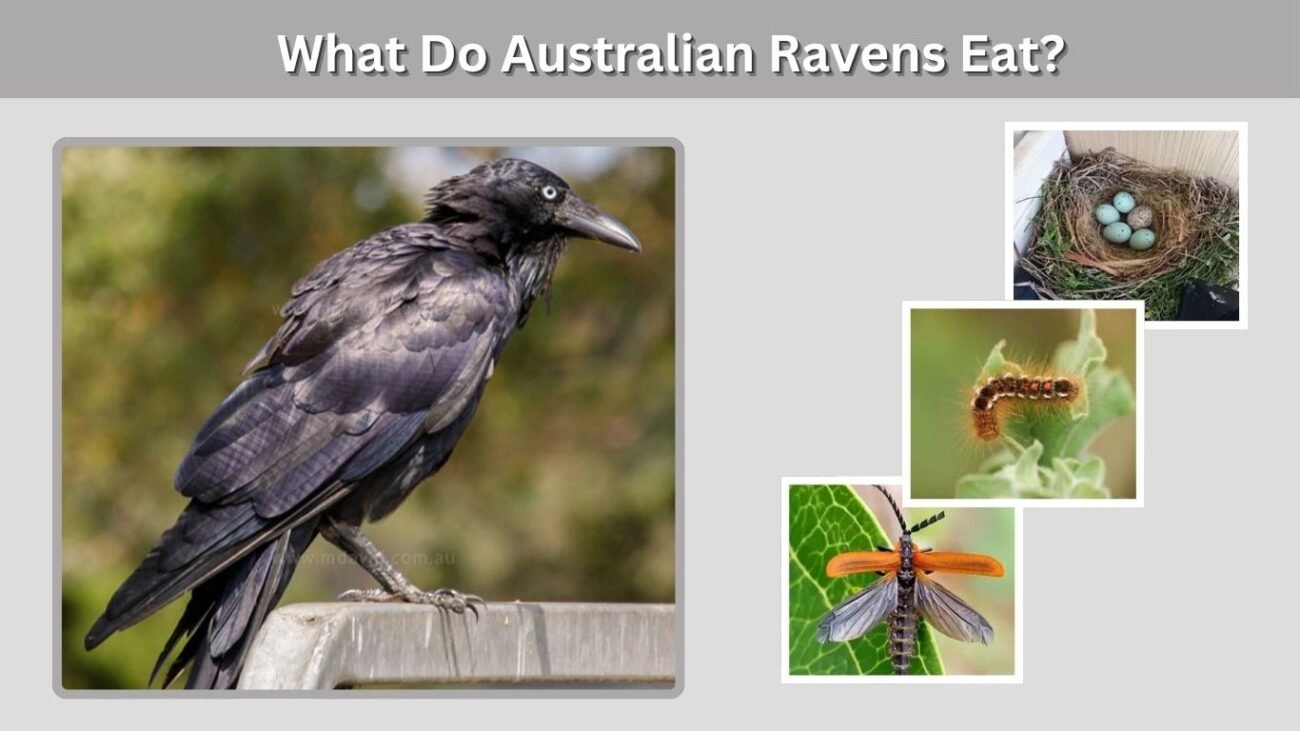
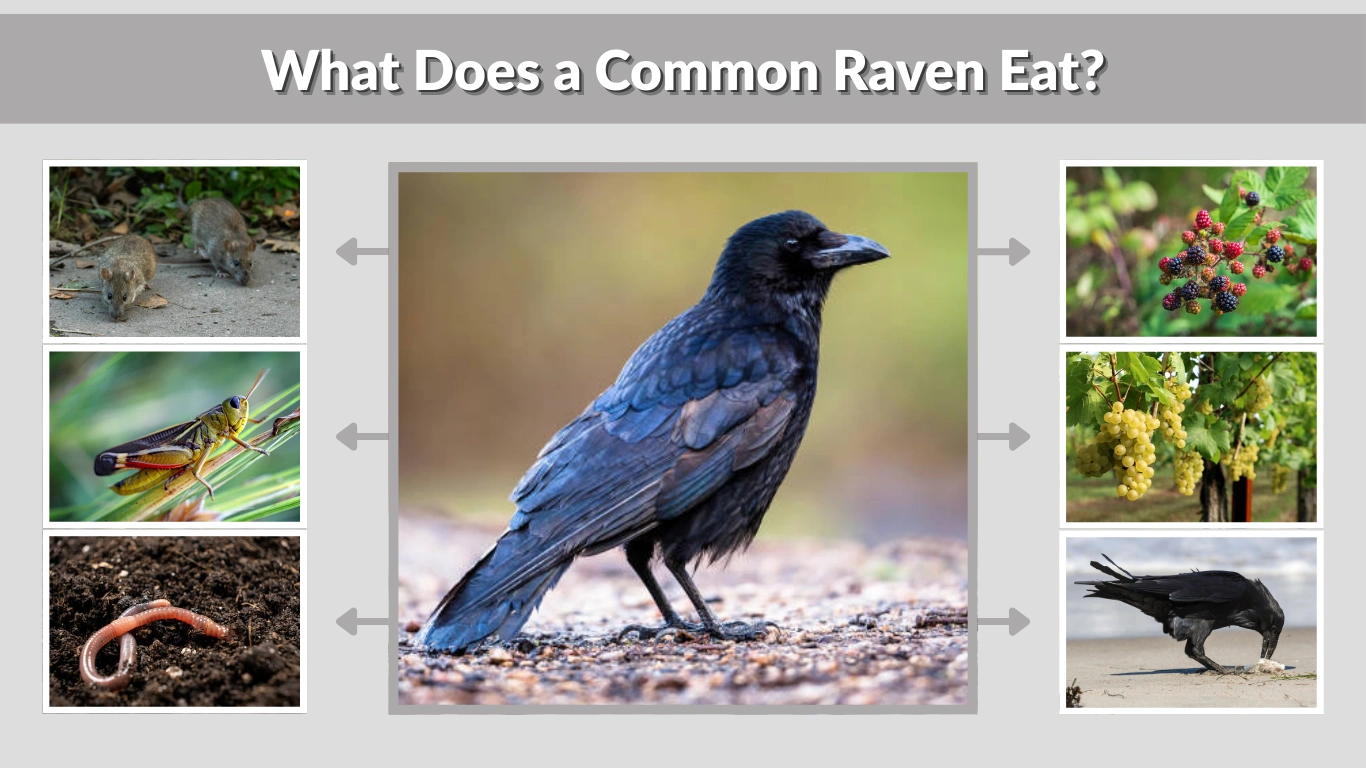
Australian ravens are omnivores, although animal-based food makes up much of their natural diet. BirdLife Australia estimates that only about one-quarter of their food comes from plants.
Common Foods
Their diet can include:
- Beetles and other insects
- Spiders and other invertebrates
- Small reptiles
- Small mammals
- Bird eggs and nestlings
- Carrion
- Seeds and grains
- Fruit
- Human food scraps
- Pet food and rubbish
Ravens frequently search for food on the ground, turning over vegetation and investigating objects. They may feed alone, in pairs, or in larger groups where food is abundant. Pairs also work together while hunting and defending feeding areas.
Although ravens eat dead animals, they are not limited to scavenging. They actively catch insects, reptiles, and other small prey.
Australian Raven Intelligence
Australian ravens are curious and highly adaptable. Like other members of the crow family, they can remember dependable food locations, solve simple problems, investigate unfamiliar objects, and cooperate with their partners.
Their intelligence helps them exploit changing environments. A raven may learn when people leave food behind, how to open loosely covered containers, and which locations are safe for feeding. They can also recognize risks and become cautious around people, animals, or objects associated with danger.
Their behavior should not be interpreted as permission to feed them regularly. Dependence on human food can encourage unnaturally large groups and expose the birds to nutritionally unsuitable foods.
Nesting, Eggs and Breeding
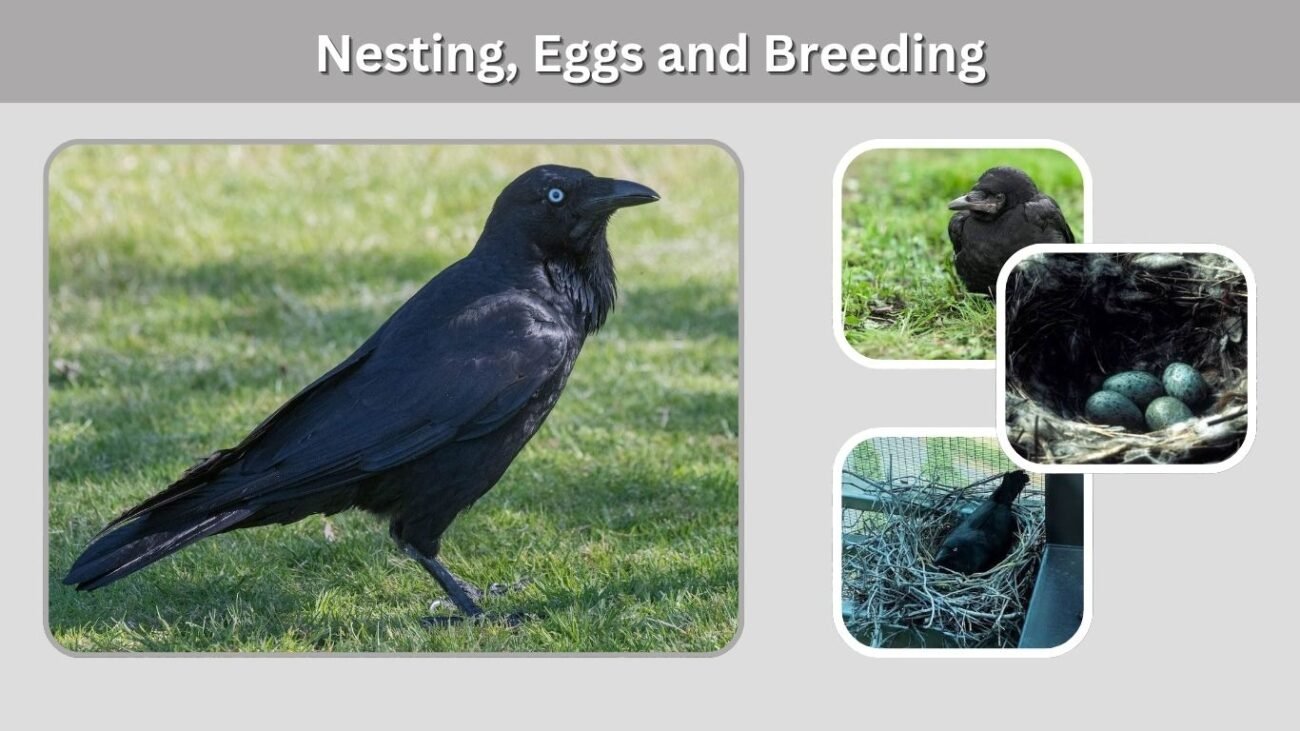
Australian ravens usually form long-term pairs and defend a territory. Their large nests are normally placed high in a tree fork, although suitable artificial structures may occasionally be used.
Australian Raven Nest
Both adults help construct the nest. It usually consists of:
- A large platform or bowl of sticks
- Smaller twigs woven into the structure
- Grass and strips of bark
- Feathers or other soft lining materials
The finished nest may appear untidy from below, but its thick structure supports the eggs, growing chicks, and attending adults.
Eggs and Chicks
The female performs the incubation, while both parents help feed and protect the young. Australian ravens generally raise only one brood each year.
Young birds initially have dark eyes rather than the white eyes of mature adults. After leaving the nest, fledglings may remain near their parents and continue begging loudly for food while learning how to forage independently.
Australian Raven vs. Crow
Australia has five commonly recognized native crow and raven species. They are so similar that location and voice are usually more dependable than body shape.
| Feature | Australian Raven | Torresian Crow |
| Scientific name | Corvus coronoides | Corvus orru |
| Adult eyes | White | White |
| Throat feathers | Very long and shaggy | Shorter |
| Typical call | Slow call ending in a long wail | Flatter, quicker, quacking call |
| Familiar cities | Sydney, Canberra, Perth | Brisbane, Darwin |
| Calling posture | Head and body held horizontally | Less pronounced horizontal posture |
The actual technical difference between Australian crows and ravens involves the color of the down at the base of their feathers. This feature is usually impossible to see in the field, making voice and distribution much more practical.
Australian Raven vs. Little Raven
The little raven is only slightly smaller than the Australian raven, so its name can be misleading. Both have black plumage and pale adult eyes.
The Australian raven has longer throat hackles and normally finishes its call with a prolonged wailing note. The little raven’s call is generally shorter, more regular, and deeper. Little ravens are the familiar urban corvids around Melbourne and Adelaide, while Australian ravens are more typical around Sydney, Canberra, and Perth.
Australian Raven Lifespan
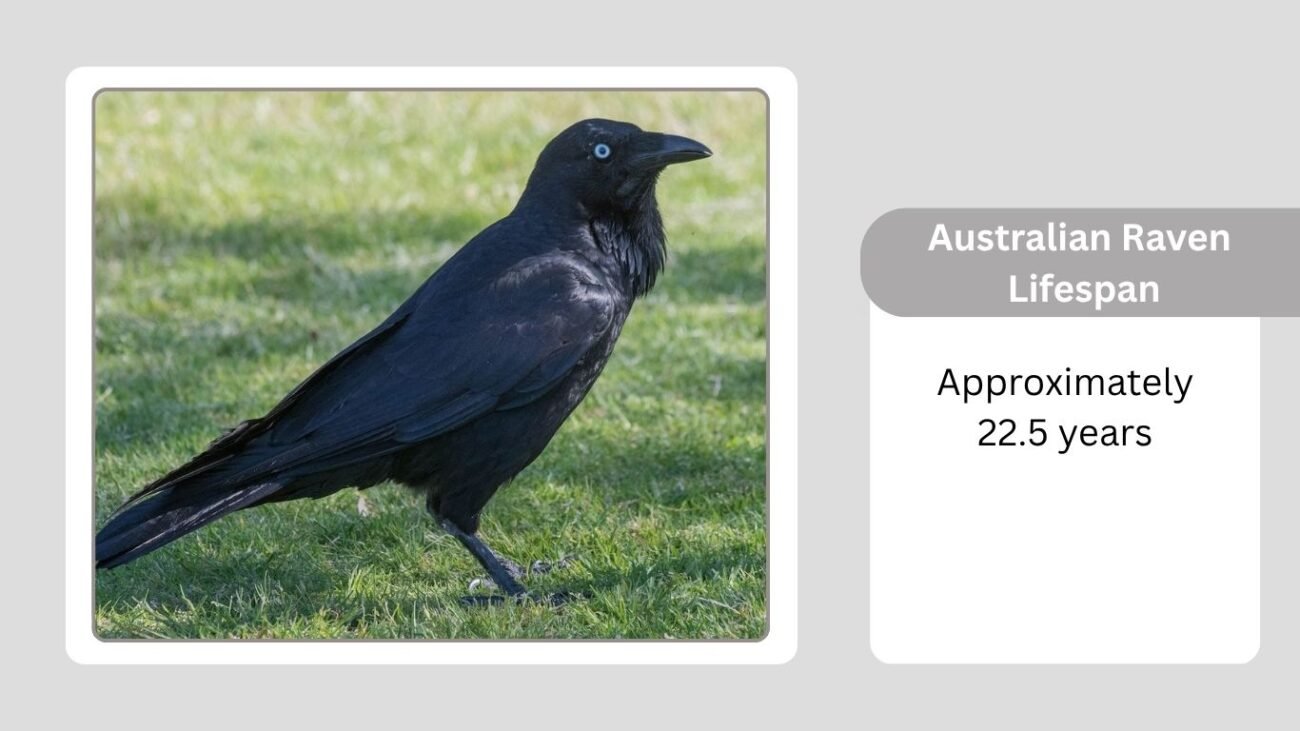
Many wild Australian ravens can live for more than 10 years when they survive the vulnerable juvenile period. Longevity databases include a maximum recorded age of approximately 22.5 years for the species.
Actual lifespan depends on access to food, habitat quality, disease, vehicle collisions, poisoning, and other hazards. Eating poisoned rodents or contaminated carrion can expose ravens to harmful chemicals.
Can You Keep an Australian Raven as a Pet?
Australian ravens are native wildlife rather than domesticated pets. Laws concerning the possession of native birds vary among Australian states and territories.
For example, most native birds in New South Wales are legally protected, and licences are required for many activities involving their capture, possession, trade, or control. A wild raven should never be taken from its nest or captured without authorization. Injured or orphaned birds should be handled through an approved wildlife rescue organization.
Conservation Status
The Australian raven is currently classified as Least Concern by the IUCN. It remains widespread and has successfully adapted to many human-modified environments.
However, local populations can still be affected by habitat clearing, climate-related changes, vehicle strikes, deliberate persecution, and secondary poisoning from rodenticides. Protecting mature nesting trees and reducing wildlife exposure to poisons benefits ravens and many other native birds.
FAQs
Is an Australian raven the same as a crow?
No. It is a true raven species, although Australians commonly use “crow” as a general name for large black corvids. Calls, throat feathers, and location are the most practical identification clues.
What color are an Australian raven’s eyes?
Adult Australian ravens have pale white eyes. Juveniles have dark eyes that gradually become lighter as they mature. Young birds also have shorter throat hackles and may show a pink gape.
Are Australian ravens aggressive?
They generally avoid direct conflict with people. However, breeding adults may defend their nest, partner, or young against animals and other birds they consider threatening.
Is the Australian raven the same as the common raven?
No. The Australian raven is Corvus coronoides, an Australian species. The common raven is Corvus corax, a separate species distributed widely across the Northern Hemisphere.
Are Australian ravens endangered?
No. The species is currently classified as Least Concern. It is common across much of its range and has adapted particularly well to farmland, parks, suburbs, and cities.