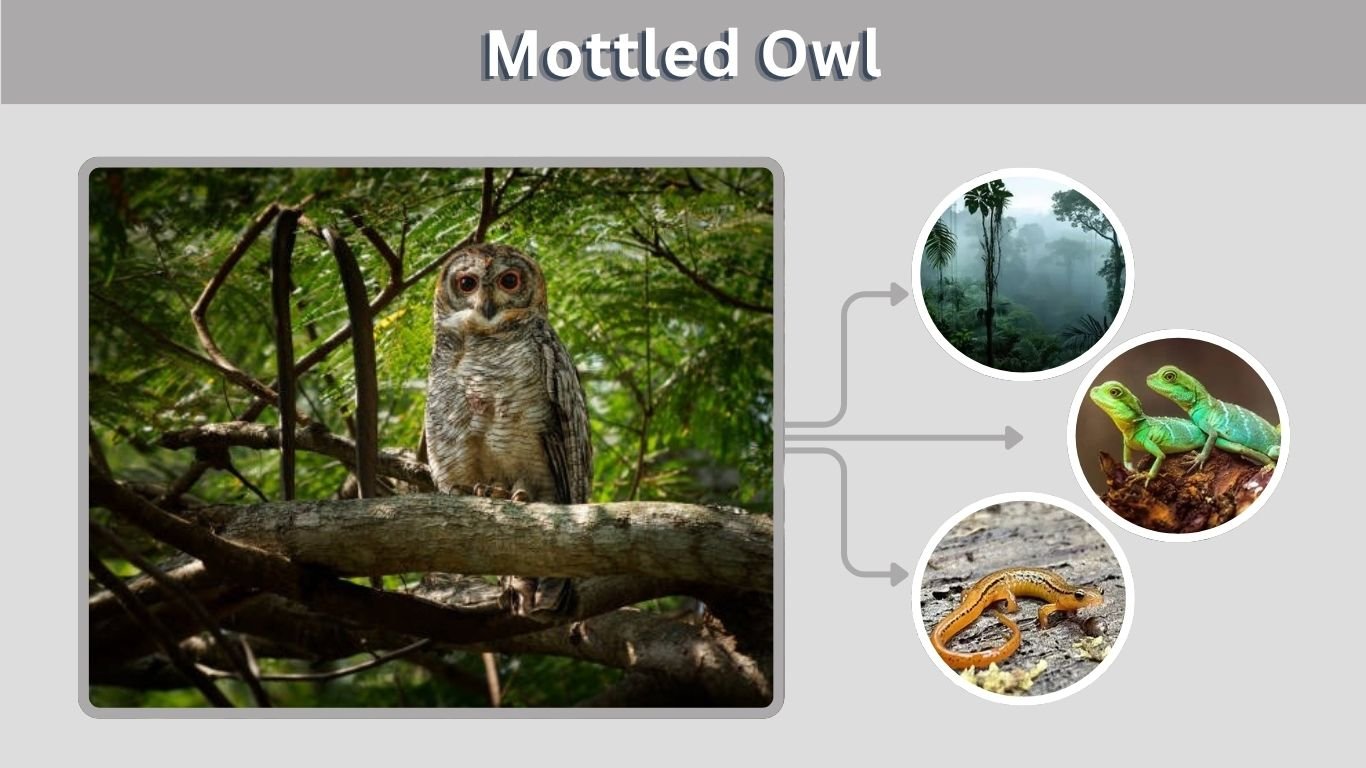
The mottled owl is a medium-sized tropical owl recognized by its brown patterned feathers, rounded head, and dark eyes. It inhabits forests, plantations, gardens, and wooded areas from Mexico through Central America and into South America. This nocturnal predator spends the day concealed among dense leaves and becomes active after sunset. Its rough, hollow call is often heard more frequently than the owl is seen. Here is everything you should know about its appearance, habitat, diet, behavior, breeding, juveniles, and lifespan.
Mottled Owl Overview
The mottled owl belongs to the true owl family, Strigidae. Its accepted scientific name is Strix virgata, although older publications may list it as Ciccaba virgata. The U.S. Fish and Wildlife Service currently places the species in the genus Strix.
| Feature | Description |
| Scientific name | Strix virgata |
| Family | Strigidae |
| Length | Approximately 28–38 cm |
| Weight | Approximately 175–320 grams |
| Wingspan | Roughly 80–95 cm |
| Eye color | Dark brown |
| Diet | Carnivorous |
| Activity | Nocturnal |
| Range | Mexico to northern Argentina |
| Conservation status | Least Concern |
Identification and Appearance
Mottled owls have rounded heads without visible ear tufts. Their cryptic feathers allow them to blend almost perfectly with tree bark and shadowy vegetation.
Color and Feathers
The upperparts are primarily brown or gray-brown with cream, buff, and whitish spots. Their pale underparts have noticeable dark vertical streaks. Some individuals are lighter, while others display a darker reddish-brown appearance.
The facial disc is brownish with pale crescents around the bill and above the eyes. These eyebrow-like feathers are sometimes described as “eyelashes,” but they are part of the owl’s facial plumage rather than long decorative lashes.
Size, Weight and Wingspan
Adults generally measure approximately 28–38 cm long and weigh around 175–320 grams. Females are usually noticeably larger and heavier than males. Their broad, rounded wings may span roughly 80–95 cm, although measurements vary among populations and individual birds.
Male vs Female
Males and females have similar feather patterns, making visual identification difficult. Size provides the strongest clue because females are generally larger. Vocal pitch may also differ, with the smaller male usually producing a slightly higher call.
Mottled Owl Call and Sound
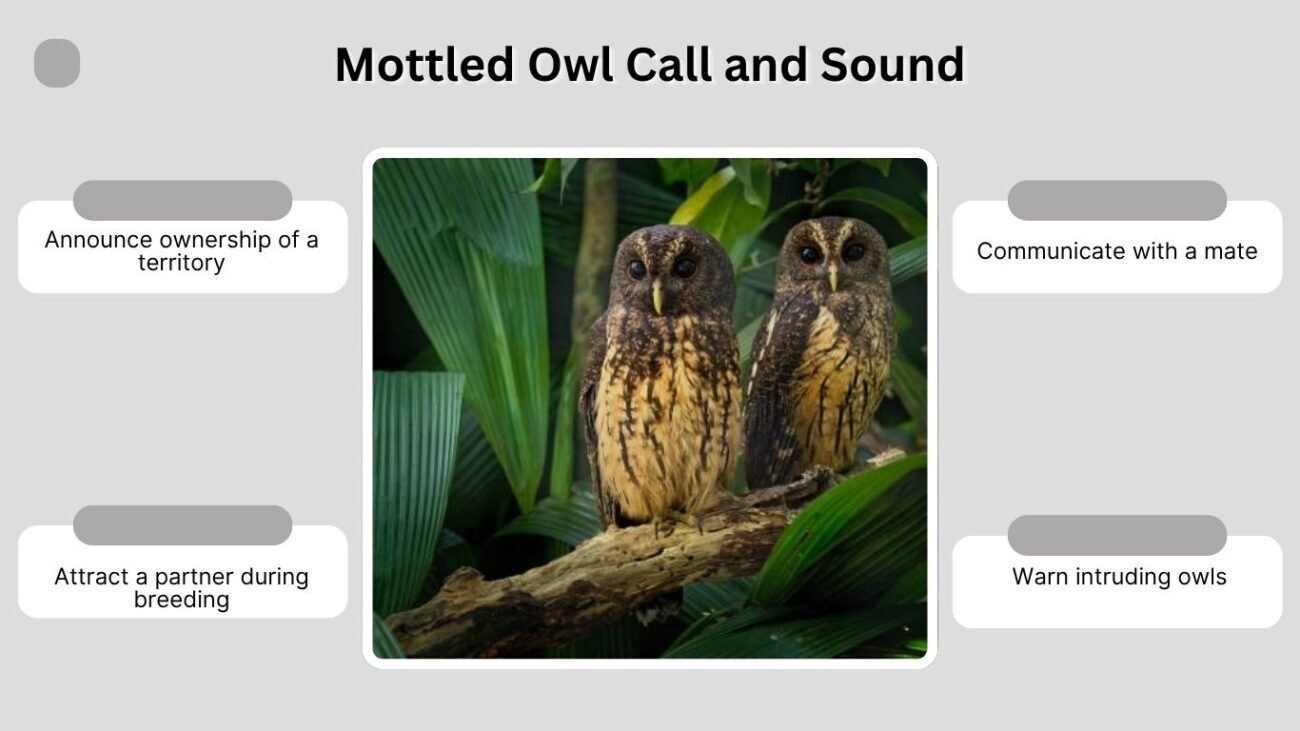
The mottled owl has a distinctive series of deep, rough hoots. Its main call may contain several hollow notes delivered in quick succession. Some calls have a growling or barking quality and may be mistaken for a distant dog or frog.
Mottled owls use their calls to:
- Announce ownership of a territory
- Communicate with a mate
- Attract a partner during breeding
- Warn intruding owls
- Maintain contact at night
Pairs may call back and forth, creating a short nocturnal duet. The species is often easier to identify by sound because its camouflaged plumage makes it difficult to locate during the day. Online bird-recording collections such as Xeno-canto and eBird provide examples of its different regional calls.
Habitat and Geographic Range
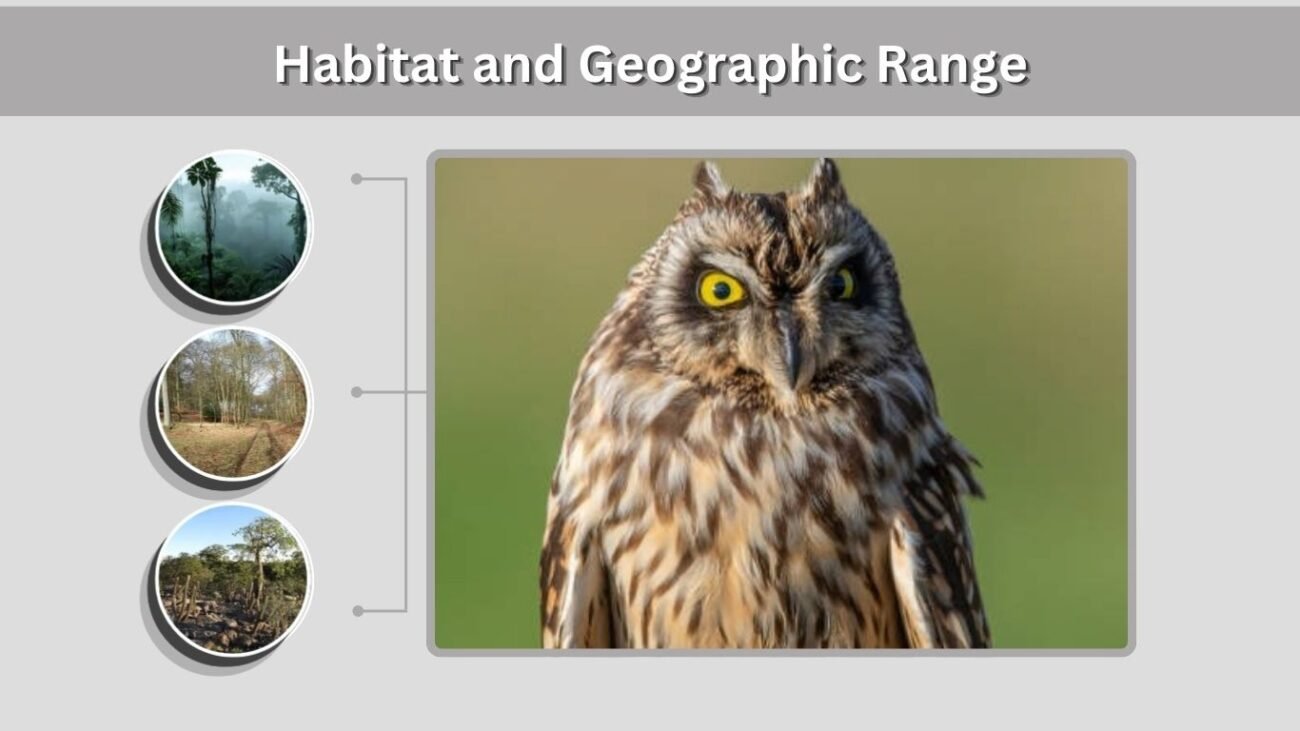
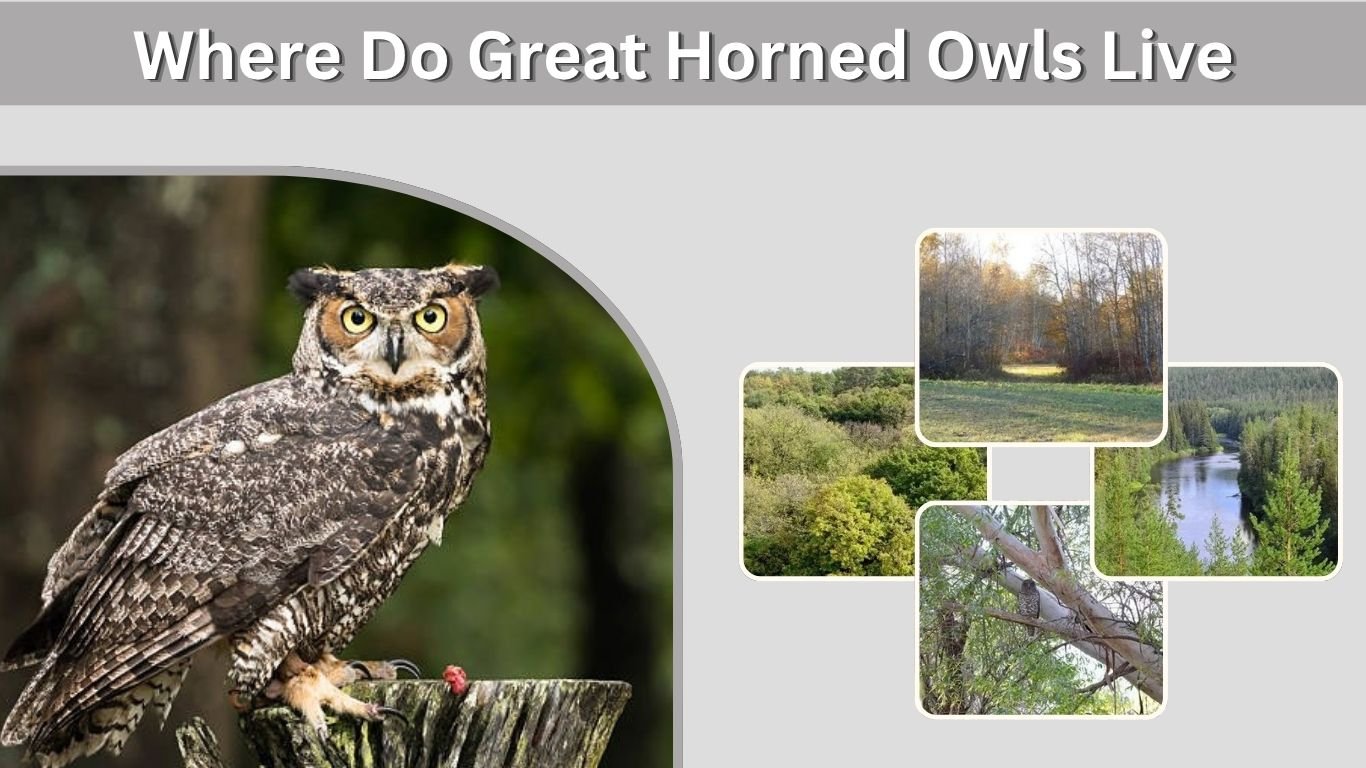
The mottled owl has an extensive range extending from Mexico through Central America and across much of tropical South America, reaching Brazil, Paraguay, and northern Argentina.
It occupies numerous wooded environments, including:
- Tropical rainforests
- Dry and humid forests
- Forest edges and clearings
- Pine-oak woodlands
- Coffee and fruit plantations
- Secondary forests
- Gardens and wooded towns
- Dense riverside vegetation
It occurs from sea level to approximately 2,500 metres in some areas. During daylight, it roosts inside dense vegetation where small birds may discover and mob it.
Mottled Owls in Costa Rica
The mottled owl is a resident species in Costa Rica. It inhabits lowland and foothill forests, plantations, wooded gardens, and secondary growth. Birdwatchers usually locate it by listening for its rough hooting calls after sunset.
Are Mottled Owls Found in Texas?
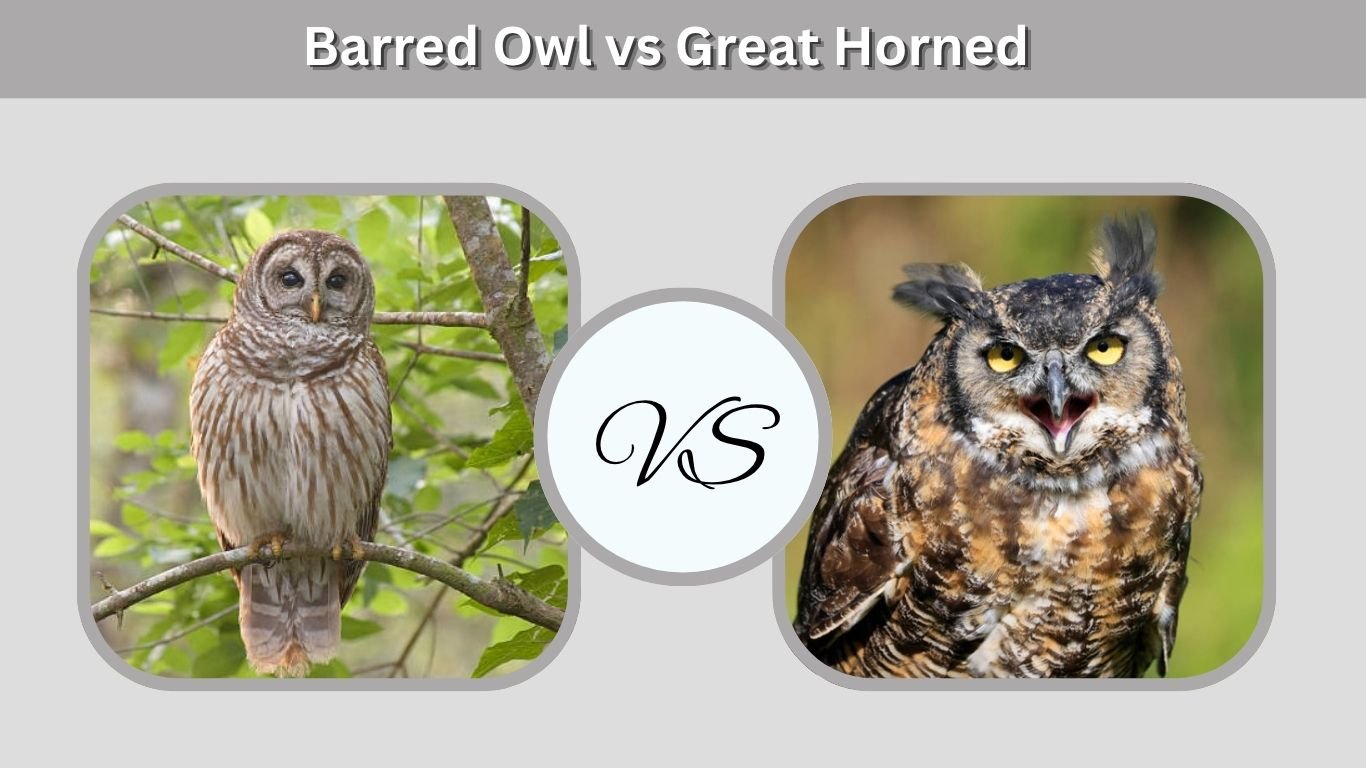
The mottled owl is not considered a regular native bird of Texas. Its normal range begins in Mexico and extends southward. Reports from Texas should be carefully documented because local owls, particularly dark-eyed barred owls, may be misidentified as mottled owls.
Diet and Hunting Behavior
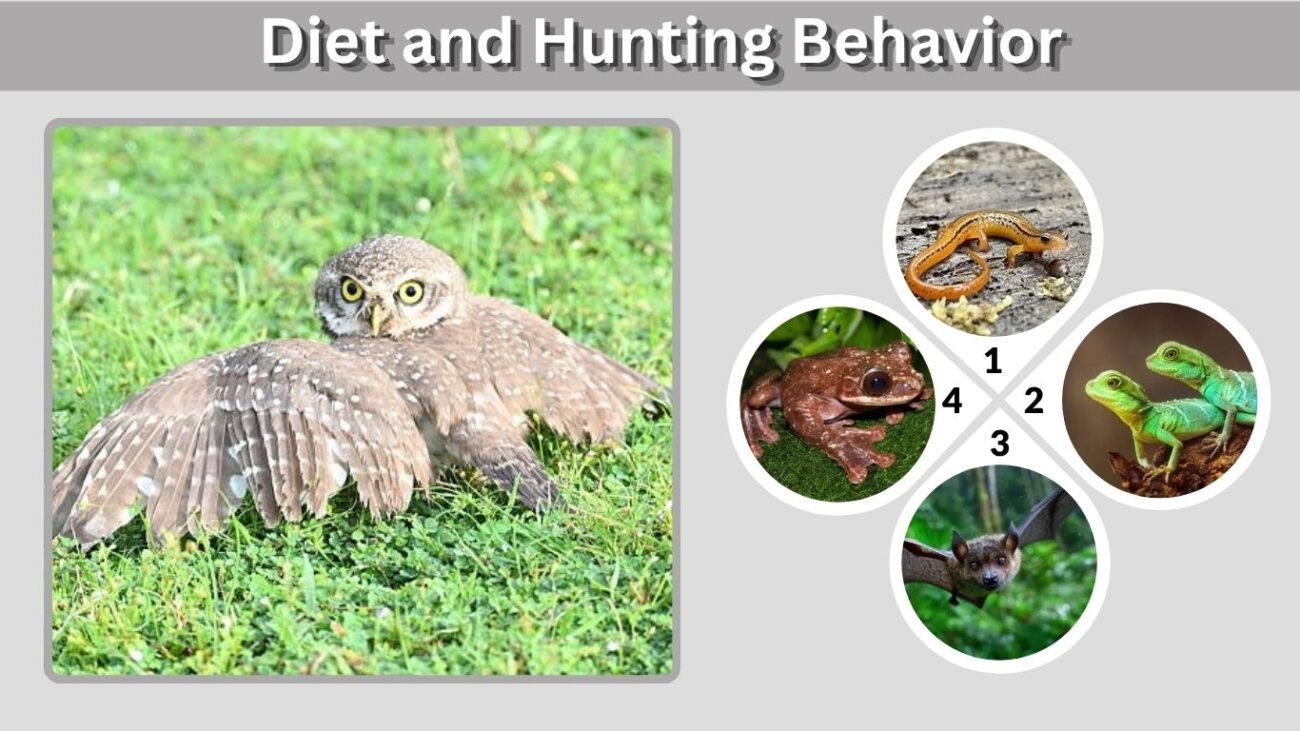
Mottled owls are opportunistic predators that eat animals small enough to capture and carry. They hunt primarily from low or medium-height perches along forest edges, trails, roads, and clearings.
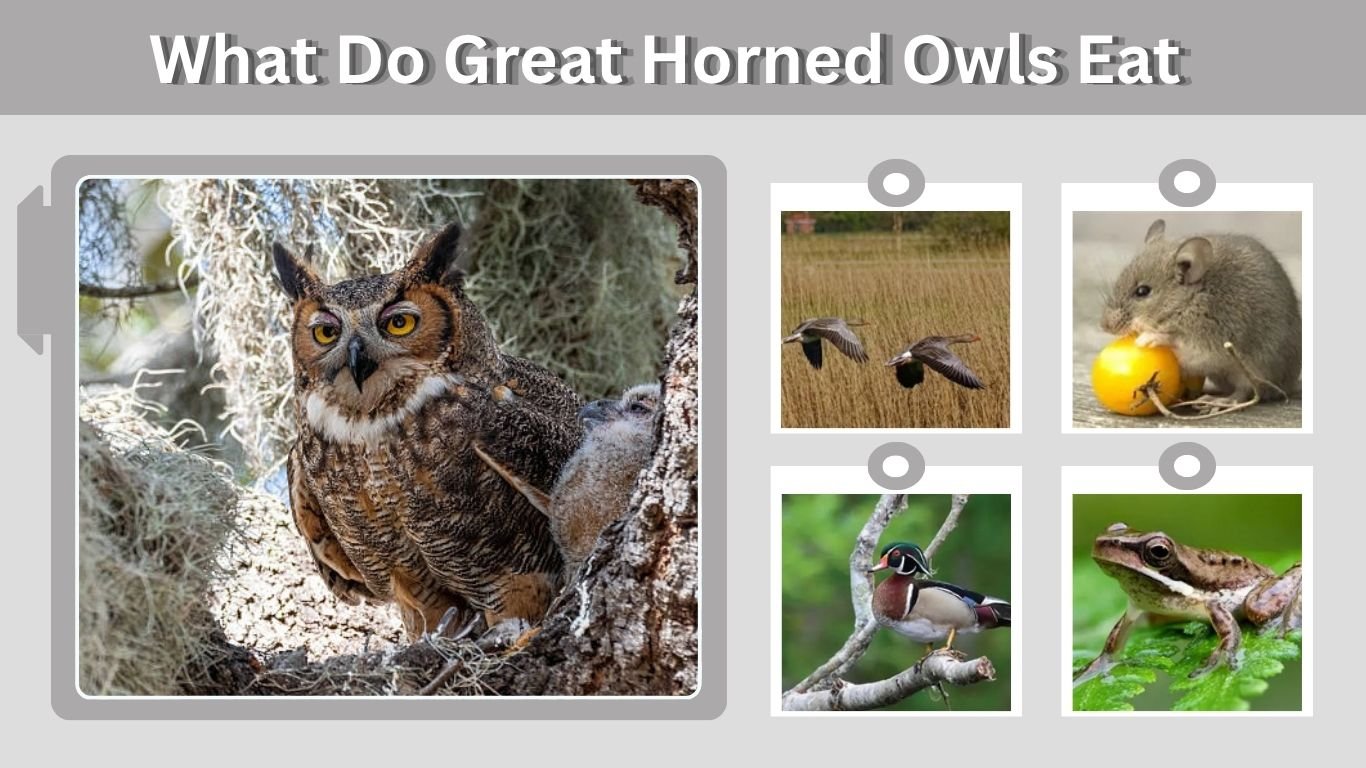
Their diet includes:
- Mice and other small rodents
- Small birds
- Bats
- Lizards and snakes
- Frogs and salamanders
- Beetles and cockroaches
- Grasshoppers and crickets
- Other large insects
After detecting movement or sound, the owl flies silently from its perch and grabs the prey with its talons. It may hunt insects around artificial lights, where beetles and other prey gather. Its diverse diet allows it to survive in both forests and human-modified habitats.
Role in the Food Chain
The mottled owl functions as a secondary or tertiary predator within its food web. It controls populations of rodents, insects, reptiles, and other small animals.
A simple mottled owl food chain may look like this:
Plants → insects or rodents → mottled owl → larger predator
Eggs, nestlings, and occasionally adults may be vulnerable to larger owls, hawks, snakes, and climbing mammals. After death, decomposers return nutrients from the owl’s body to the surrounding ecosystem.
Behavior and Daily Activities
Mottled owls are primarily nocturnal and usually remain solitary outside the breeding season. During the day, they roost quietly against trunks or inside dense foliage. Their mottled feathers make them exceptionally difficult to see.
At night, they perch beside clearings and listen for prey. Their sensitive hearing helps them locate animals moving through vegetation or leaf litter. Specialized wing feathers reduce flight noise, allowing them to approach prey with little warning.
Mottled owls are generally resident birds and do not undertake regular long-distance migrations. Adults defend territories throughout the year.
Breeding and Nesting
Breeding time varies across the owl’s extensive geographic range. In Colombia, nesting activity has been recorded mainly from February to May, while populations farther south may breed during different months.
Mottled owls usually form monogamous pairs during the breeding period. They nest inside natural tree cavities, broken palm trunks, or abandoned nests built by other birds.
Females usually lay one or two white eggs. The female performs most of the incubation while the male supplies food. After hatching, both parents protect and feed the young until they can hunt independently.
Baby and Juvenile Mottled Owls
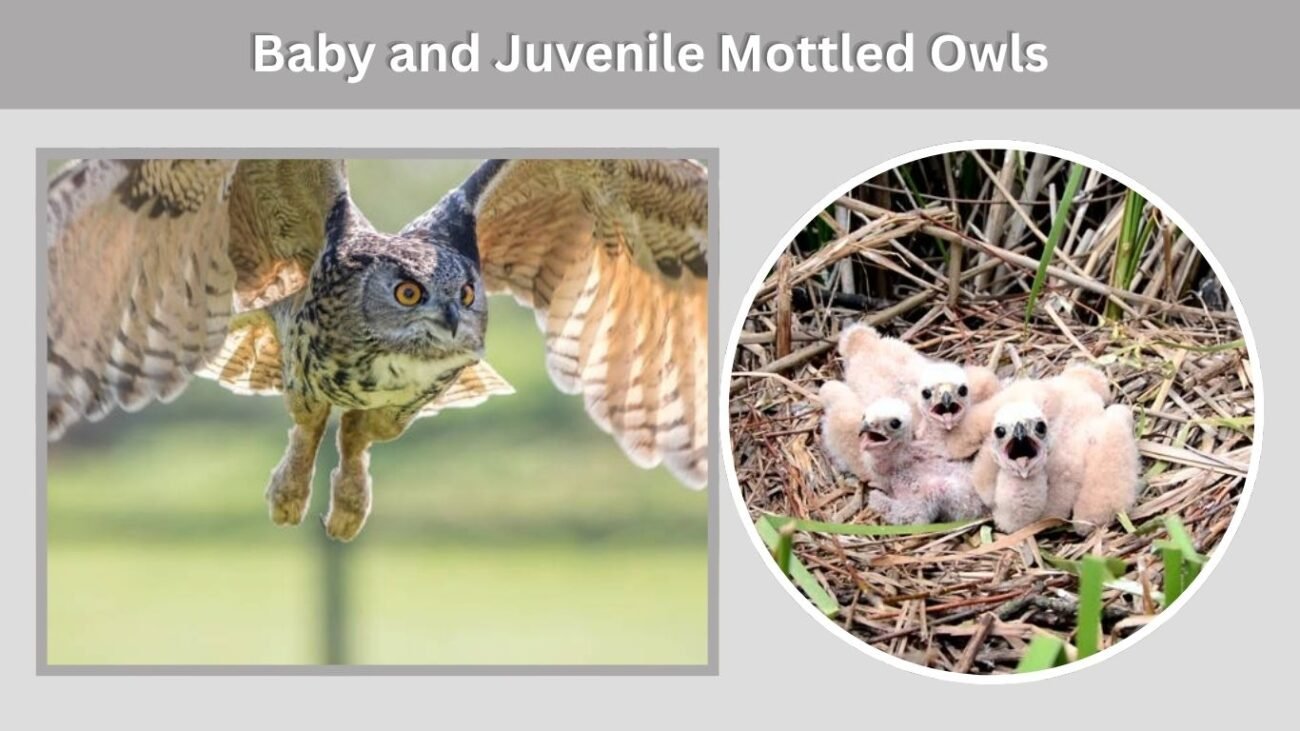
A newly hatched mottled owl is covered in soft, pale or whitish down. Its eyes remain closed initially, and it depends entirely on its parents for warmth, protection, and food.
As the baby develops, darker juvenile feathers replace the pale down. Juveniles may appear fluffier and less clearly patterned than adults. Their wings and tails are shorter, and they remain close to the nesting area while developing their hunting and flying abilities.
Young owls may produce begging calls at night. Even after leaving the nest cavity, they can remain dependent on their parents for several weeks.
Mottled Owl Lifespan
The exact lifespan of wild mottled owls has not been thoroughly documented. Reliable long-term banding and survival records remain limited, so a precise average should not be stated as fact.
Like other medium-sized owls, individuals that survive their vulnerable first year may potentially live for several years. Their survival is influenced by food availability, predators, diseases, vehicle collisions, habitat quality, and human disturbance.
Conservation and Pet Ownership
The mottled owl is currently classified as Least Concern because it has a large geographic range. However, forest clearing, pesticide use, road collisions, and the removal of old nesting trees can affect local populations.
Mottled owls are wild predators and are not suitable pets. They need live hunting opportunities, specialized care, considerable space, and natural nocturnal behavior. Their capture, possession, and international trade may also be legally restricted. Anyone who finds an injured juvenile or adult should contact a licensed wildlife rehabilitator.
FAQs
What does a mottled owl sound like?
A mottled owl produces a short series of deep, rough, hollow hoots. Its call can sound growling, barking, or frog-like. Pairs may answer each other at night, particularly when establishing territories or preparing to breed.
What does a mottled owl eat?
Mottled owls eat small mammals, birds, bats, frogs, lizards, snakes, beetles, grasshoppers, cockroaches, and other insects. They usually watch from a perch before silently flying down to capture prey with their strong feet and talons.
Where does the mottled owl live?
The mottled owl lives from Mexico through Central America and into much of South America. It occupies rainforests, dry forests, woodlands, plantations, gardens, secondary growth, and wooded towns from sea level into mountainous areas.
Is a mottled owl dangerous?
Mottled owls are not normally dangerous to people. They avoid human contact and hunt relatively small animals. However, any wild owl may defend itself with its talons and bill if captured, cornered, or approached near its nest.
Can you keep a mottled owl as a pet?
A mottled owl should not be kept as a pet. It is a specialized nocturnal predator requiring appropriate food, space, and professional care. Capturing or owning a wild owl may also violate wildlife protection laws in many countries.