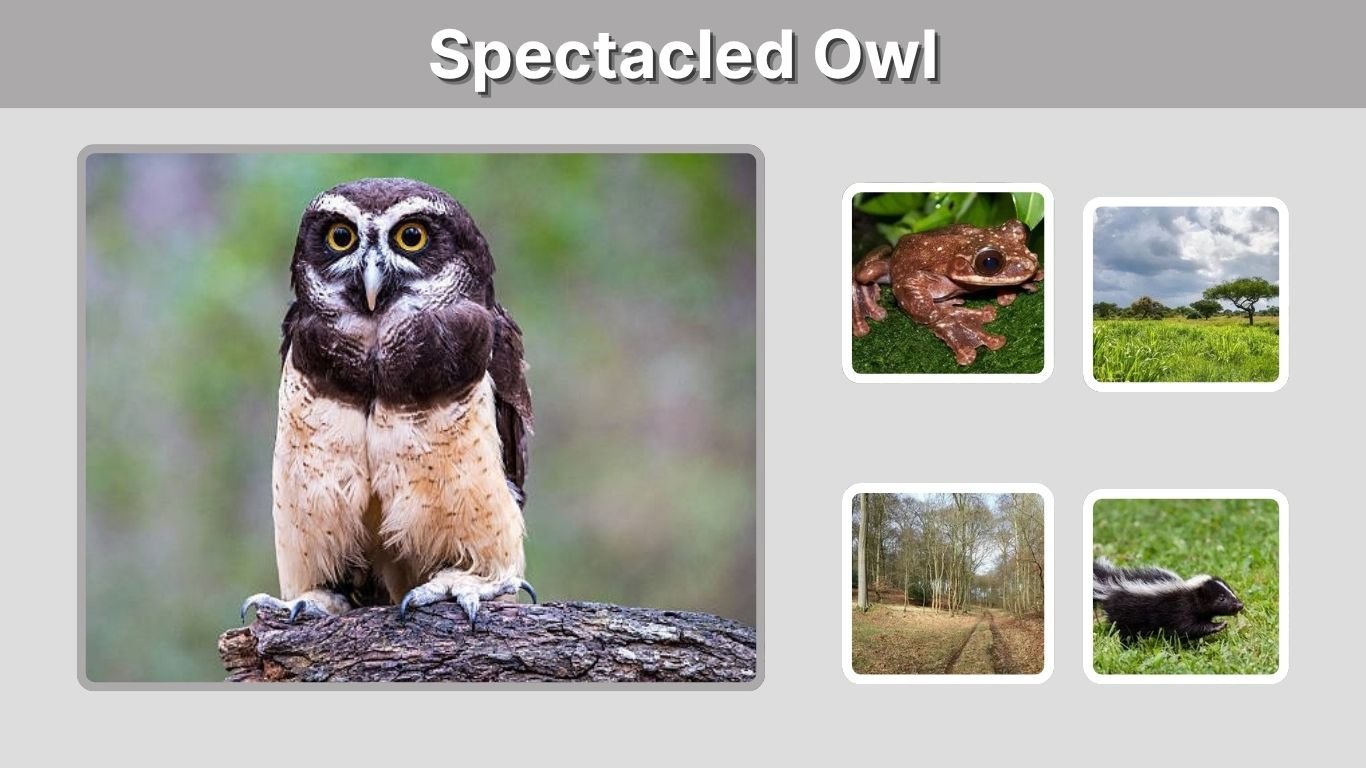
The spectacled owl is a large tropical owl recognized by the pale markings surrounding its bright yellow eyes. Native to Mexico, Central America, and South America, it inhabits rainforests, mature woodlands, plantations, and forest edges. This powerful nocturnal hunter eats rodents, bats, birds, frogs, insects, and other small animals. Although adults are mostly dark brown, young spectacled owls look remarkably different, with fluffy white plumage and a dark facial mask.
Spectacled Owl Overview
The scientific name of the spectacled owl is Pulsatrix perspicillata. It belongs to the true owl family, Strigidae, and is one of the largest owls living in the tropical forests of the Americas.
| Feature | Description |
| Scientific name | Pulsatrix perspicillata |
| Family | Strigidae |
| Length | Approximately 43–52 cm |
| Weight | Approximately 450–1,000 grams |
| Wingspan | Approximately 76–91 cm |
| Eye color | Bright yellow |
| Diet | Carnivorous |
| Activity | Primarily nocturnal |
| Range | Mexico to northern Argentina |
| Conservation status | Least Concern |
Appearance and Identification
The spectacled owl gets its name from the pale facial markings surrounding its eyes. These markings resemble a pair of glasses or spectacles.
Color and Markings
Adults have dark chocolate-brown upperparts, heads, and upper chests. Their underparts are usually cream, pale yellow, or light buff. A broad dark band crosses the upper chest, while a narrow white band may be visible around the throat.
Its most distinctive characteristics include:
- Bright yellow eyes
- White or cream “spectacles” around the eyes
- Dark brown facial disc
- Pale yellow or cream-colored belly
- Rounded head without ear tufts
- Pale or yellowish bill
- Strong, feathered legs and sharp talons
Size, Weight and Wingspan
Adult spectacled owls generally measure approximately 43–52 cm long. Males commonly weigh around 450–700 grams, while females may weigh approximately 680–1,000 grams.
Their wingspan is usually about 76–91 cm. Despite having broad wings, they can maneuver effectively through dense forest vegetation. These measurements vary among subspecies and geographic populations. Animal Diversity Web provides similar measurements for length, weight, and wingspan.
Male vs Female Spectacled Owl
Male and female spectacled owls have nearly identical coloring and markings. The primary difference is size: females are usually larger and heavier than males.
Their calls may also differ slightly in pitch and intensity. Visual identification of sex is difficult without comparing two adult birds directly or taking accurate measurements.
Spectacled Owl Call and Sound
The spectacled owl produces a deep series of hollow hoots that gradually become softer and faster. The call is sometimes described as sounding like a hammer repeatedly striking a hollow tree.
A typical call may sound like:
“BOO—boo-boo-boo-boo”
Males use this call to advertise territories and communicate with females. Females may produce a higher-pitched screech or whistle, particularly during courtship. Pairs sometimes call back and forth in a duet.
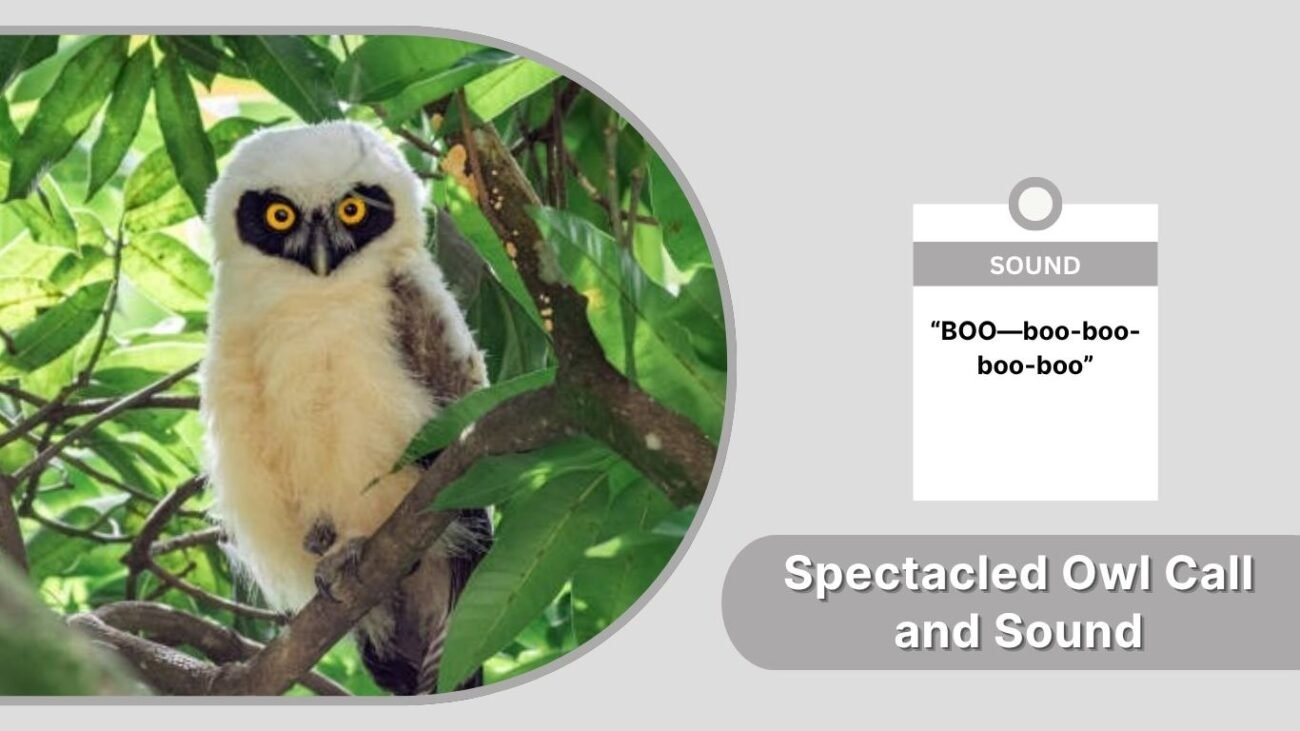
Juvenile spectacled owls make a very different sound. Their begging call is usually a drawn-out whistle or whining cry used to request food from their parents.
Habitat and Range
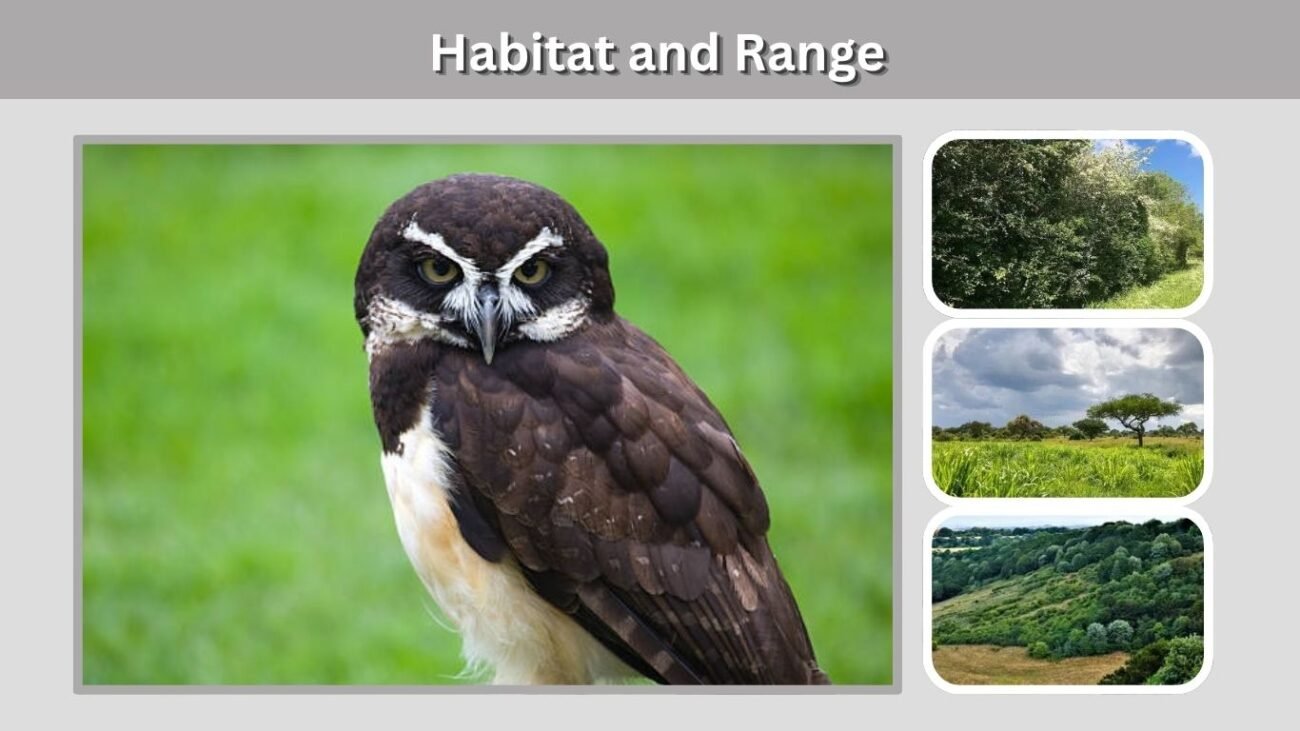
Spectacled owls are found from southern Mexico through Central America and across much of tropical South America. Their range includes Costa Rica, Panama, Colombia, Venezuela, Ecuador, Peru, Bolivia, Brazil, Paraguay, and northern Argentina. They also occur in Trinidad.
Their preferred habitats include:
- Tropical lowland rainforests
- Mature evergreen forests
- Forest edges and clearings
- Wooded savannas
- Mangrove forests
- Plantations with large trees
- Riversides and wetlands
- Secondary forests
They are predominantly lowland birds but have been recorded at elevations of up to approximately 1,500–1,600 metres. Mature trees are especially important because they provide daytime roosts and nesting cavities. The Peregrine Fund describes the species as favoring dense lowland rainforest while also using forest edges, drier forests, and savannas.
Spectacled Owl in the Amazon Rainforest
The Amazon rainforest provides ideal habitat because it contains abundant prey, dense daytime cover, and large trees with natural cavities. Spectacled owls remain concealed among leaves during daylight and move toward forest edges or clearings to hunt after sunset.
Spectacled Owl in Costa Rica
Spectacled owls are resident birds in Costa Rica. They occupy lowland rainforests, foothill forests, plantations, and mature secondary woodland. Because they remain hidden during the day, birdwatchers often locate them by listening for their deep calls at dusk or nighttime.
Are Spectacled Owls Found in Florida?
Spectacled owls do not have an established wild population in Florida. Their natural distribution begins in Mexico and extends southward. An owl seen in Florida is more likely to be a native species, such as a barred owl, or possibly an escaped captive bird.
What Do Spectacled Owls Eat?
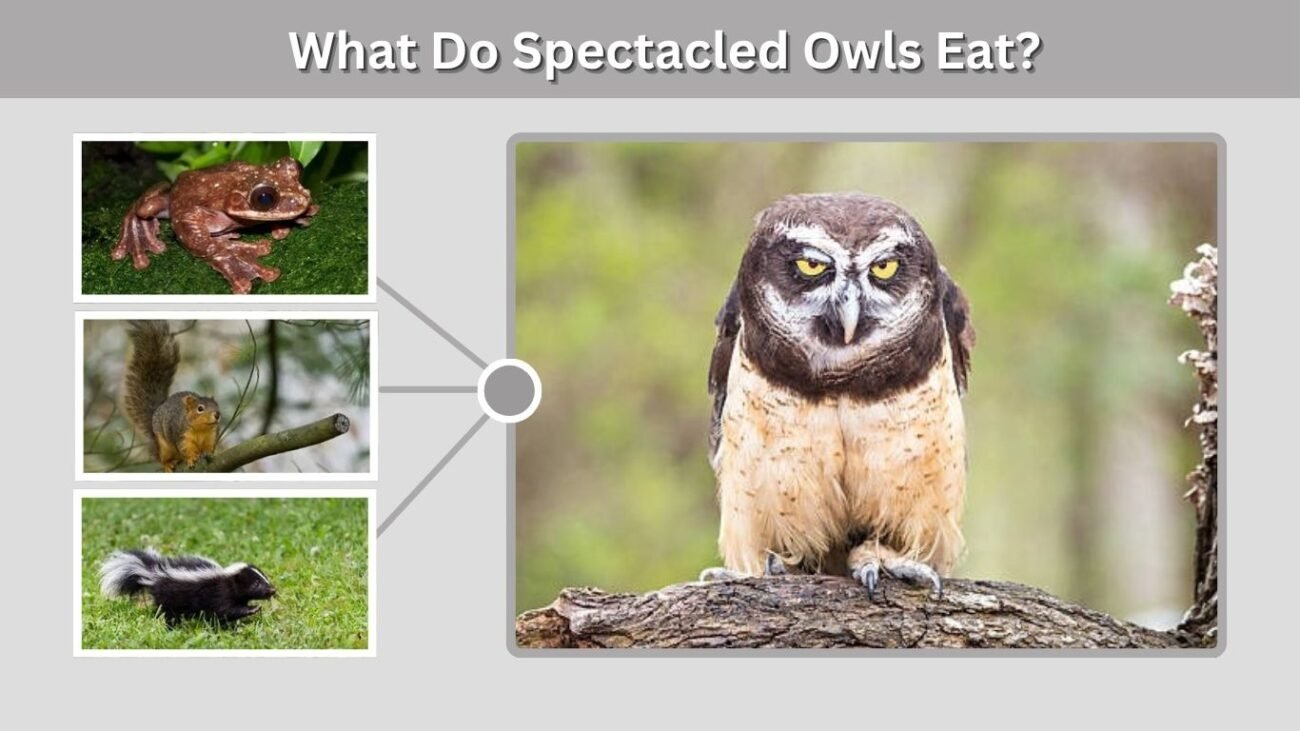
Spectacled owls are opportunistic carnivores capable of capturing a wide variety of prey. Small mammals make up an important portion of their diet, but they also consume birds, amphibians, insects, and crustaceans.
Their diet includes:
- Mice and rats
- Bats
- Opossums
- Small skunks
- Squirrels
- Frogs
- Smaller birds and owls
- Caterpillars
- Beetles and other large insects
- Crabs in mangrove habitats
Although spectacled owls can capture birds, there is no strong evidence that the Amazonian royal flycatcher is a regular or preferred prey species.
How Do Spectacled Owls Hunt?
A spectacled owl usually hunts by sitting quietly on a branch and scanning the forest floor or nearby vegetation. Once prey is located, it drops rapidly from its perch and captures the animal with its talons.
It may also turn sharply in flight to snatch insects, bats, or birds from vegetation or the air. Specialized wing feathers reduce noise during flight, allowing the owl to approach prey with little warning.
Most hunting occurs after sunset, although spectacled owls occasionally hunt during daylight, especially when feeding a chick or when prey is readily available.
Behavior and Flight
Spectacled owls are mainly nocturnal, sedentary, and territorial. They usually roost alone or in pairs inside dense foliage during the day. Their dark plumage provides effective camouflage in shadowy forests.
When flying, the owl uses slow, powerful wingbeats followed by short glides. Its broad wings and rounded tail provide the control needed to move through forests and make rapid turns while pursuing prey.
Spectacled owls do not normally migrate. Adults may remain within the same general territory throughout the year if food, shelter, and suitable nesting sites remain available.
Breeding and Nesting
Spectacled owls are generally monogamous during the breeding period. Breeding often occurs during the dry season or near the beginning of the wet season, although timing varies throughout their extensive range.
The pair typically uses a large natural cavity in a mature tree. They do not construct an elaborate nest. The female usually lays one or two white eggs, which hatch after approximately 35–36 days.
The female performs most of the incubation and brooding, while the male hunts and delivers food. Both parents protect and feed the young as they grow.
Baby and Juvenile Spectacled Owls
A baby spectacled owl looks dramatically different from an adult. Chicks and young juveniles are covered in pale cream or nearly white feathers, with a dark brown or black facial mask around their eyes.
Young birds generally leave the nest cavity at approximately five or six weeks old, sometimes before they can fly confidently. They climb and move among nearby branches while their parents continue delivering food.
Juveniles may remain dependent on their parents for several months and occasionally for close to a year. Their adult brown plumage develops gradually and may take several years to become complete.
Lifespan
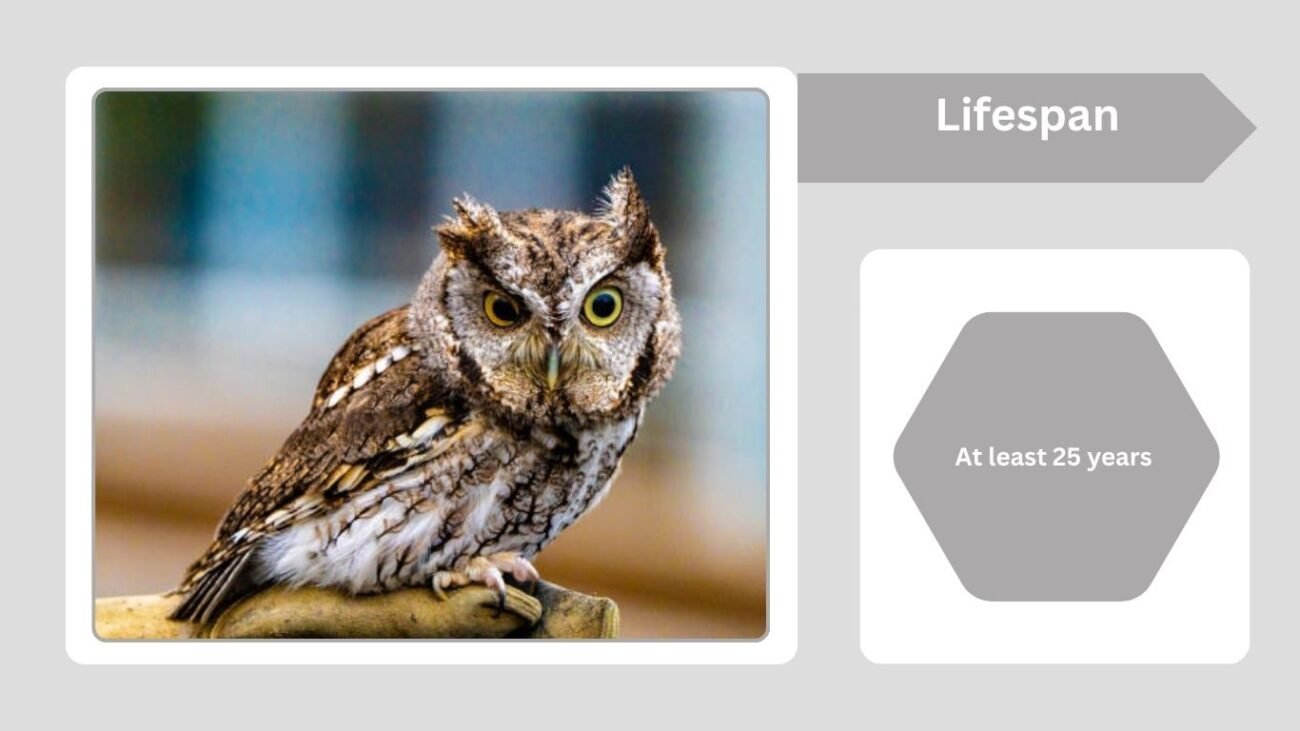
Reliable information about the average lifespan of wild spectacled owls is limited. Documented longevity information shows that individuals can live for at least 25 years under human care. Some wildlife facilities report lifespans approaching 30 years or more.
Wild survival depends on food availability, habitat quality, disease, nesting success, collisions, and human disturbance. Young owls face the greatest risk because they leave the nest before becoming strong, experienced fliers.
Predators and Defense
Healthy adult spectacled owls have relatively few natural predators because of their size, strong talons, nocturnal behavior, and concealed roosting habits. Eggs, chicks, and inexperienced juveniles are more vulnerable to snakes, climbing mammals, and large birds of prey.
Spectacled owls protect themselves by:
- Remaining camouflaged during daylight
- Roosting inside dense vegetation
- Flying silently away from danger
- Clicking their bills or giving warning calls
- Using their powerful feet and talons
- Defending nesting cavities
Are Spectacled Owls Endangered?
The spectacled owl is currently classified as Least Concern because it remains distributed across a very large area. However, populations are believed to be declining in some regions.
Deforestation is its most significant long-term threat. Removing mature trees eliminates nesting cavities, roosting sites, and hunting habitat. Pesticides, vehicle collisions, illegal capture, and human disturbance can also affect local populations.
Can You Keep a Spectacled Owl as a Pet?
Spectacled owls are not suitable pets. They are powerful wild predators requiring specialized food, large spaces, professional veterinary care, and opportunities to express natural nocturnal behavior.
Capturing or purchasing a wild owl may violate national wildlife laws and international trade regulations. Spectacled owls should only be maintained by properly licensed zoos, conservation centers, or wildlife rehabilitators.
Fun Facts About Spectacled Owls
- Their pale facial markings resemble eyeglasses.
- Juveniles are mostly white, unlike the dark adults.
- Females are noticeably larger than males.
- They sometimes hunt crabs in mangrove habitats.
- Young owls may depend on their parents for nearly a year.
- They can occasionally capture bats in flight.
- Their deep call becomes softer and faster toward the end.
- They may require several years to develop full adult plumage.
You have not enough Humanizer words left. Upgrade your Surfer plan.
FAQs
1. Why is it called a spectacled owl?
The spectacled owl gets its name from the pale cream or white feathers surrounding its bright yellow eyes. These curved facial markings resemble a pair of eyeglasses or spectacles, making the species easy to recognize among other tropical owls.
2. Are spectacled owls nocturnal?
Spectacled owls are primarily nocturnal. They rest inside dense foliage during daylight and become active around sunset. Most hunting and territorial calling occur at night, although an owl may occasionally hunt during the day when food is readily available.
3. How big does a spectacled owl get?
An adult spectacled owl generally measures 43–52 cm long and has a wingspan of approximately 76–91 cm. Its weight usually ranges from 450 grams to about one kilogram. Females are normally larger and heavier than males.
4. What does a baby spectacled owl look like?
A baby spectacled owl has soft white or cream-colored plumage and a contrasting dark facial mask. This appearance is very different from the brown plumage of an adult. Juveniles gradually develop their mature coloring over several years.
5. How long do spectacled owls live?
The average lifespan of a wild spectacled owl is not precisely known. Individuals living under professional human care can survive for at least 25 years, with some facilities reporting longer lifespans. Habitat quality, food, disease, and human activity influence survival.