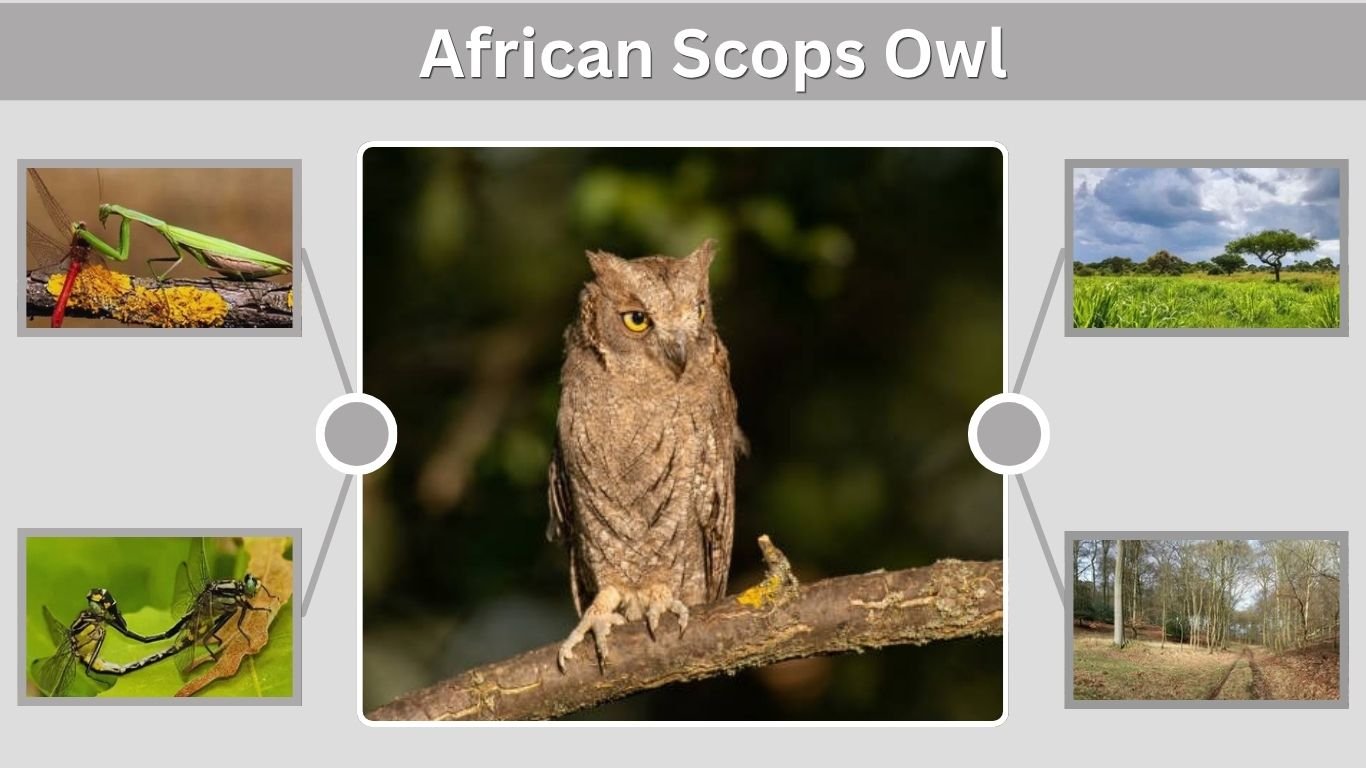
The African scops owl is a tiny nocturnal owl found across much of sub-Saharan Africa. Its mottled gray-brown feathers provide outstanding camouflage, making the bird resemble a piece of bark when resting against a tree. Although it is difficult to see, its repetitive purring call is commonly heard in savannas and woodlands after sunset. This small predator primarily eats insects but can also capture spiders, scorpions, reptiles, rodents, and small birds.
African Scops Owl Overview
The African scops owl’s scientific name is Otus senegalensis. It belongs to the true owl family, Strigidae, and is one of the smallest owl species found in Africa.
| Feature | Description |
| Scientific name | Otus senegalensis |
| Family | Strigidae |
| Length | Approximately 15–19 cm |
| Weight | Approximately 45–100 grams |
| Wingspan | Approximately 40–45 cm |
| Eye color | Yellow |
| Diet | Mainly insectivorous |
| Activity | Nocturnal |
| Range | Sub-Saharan Africa |
| Conservation status | Least Concern |
Appearance and Identification
The African scops owl has a compact body, rounded wings, a short tail, and small feather tufts on its head. These tufts are commonly called ear tufts, but they are not the owl’s actual ears.
Color and Markings
Most African scops owls are gray or gray-brown, although some individuals have warmer brown or reddish coloring. Their feathers are covered with dark streaks, spots, and wavy markings.
Important identification features include:
- Mottled gray-brown plumage
- Bright yellow eyes
- Small, pointed ear tufts
- Gray facial disc with a narrow dark border
- Black or dark-colored bill
- Pale brown or gray feet
- White patches along the shoulders
- Dark streaking across the chest
Males and females look almost identical. Females may be slightly larger, but the difference is difficult to observe in the field.
Size, Weight and Wingspan
African scops owls normally measure approximately 15–19 cm long, making them smaller than most pigeons. Adults generally weigh between 45 and 100 grams and have a wingspan of around 40–45 cm.
Their small bodies allow them to move efficiently through branches and capture insects in confined woodland environments. Oiseaux.net lists a typical length of about 19 cm, a wingspan near 45 cm, and an average weight of approximately 67 grams.
African Scops Owl Call and Sound
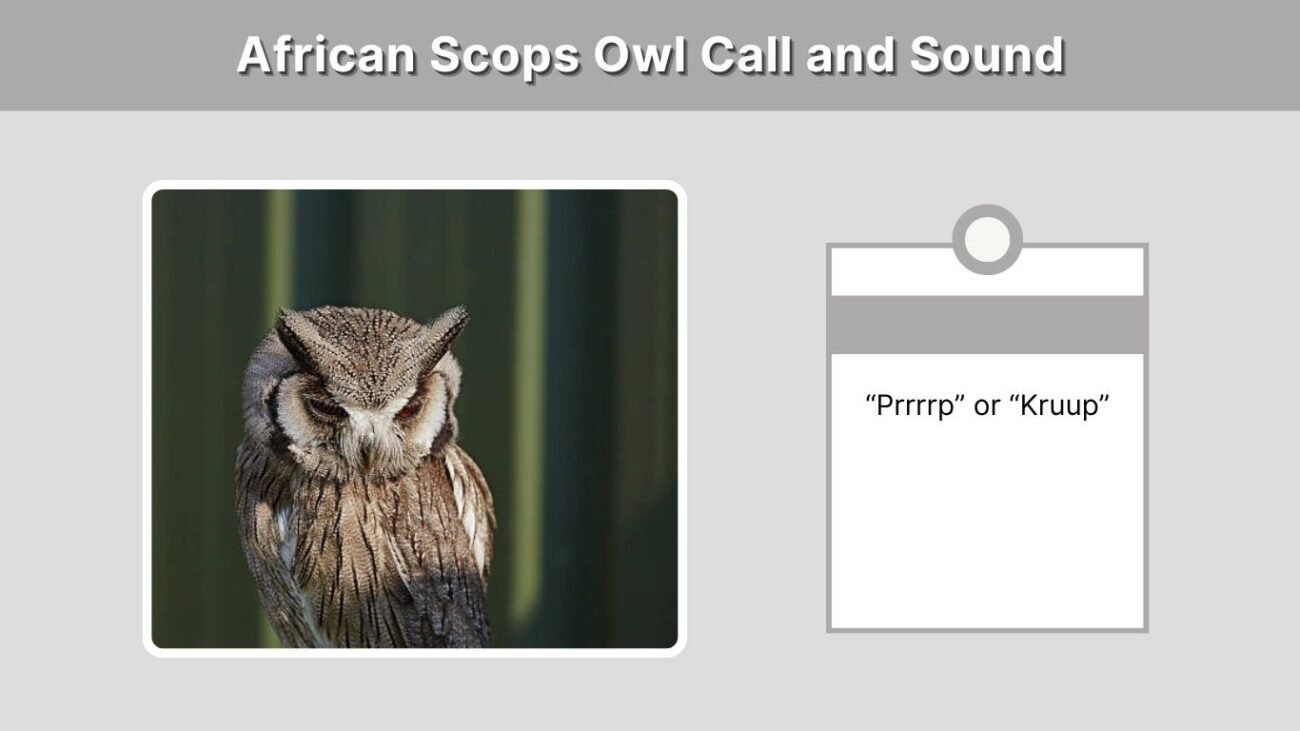
The African scops owl produces a short, vibrating call that is usually written as:
“Prrrrp” or “Kruup”
A single note is repeated every five to eight seconds, sometimes continuing for long periods. The sound resembles a frog, insect, or soft mechanical vibration, which can make the owl difficult to recognize by voice alone.
Both males and females call, and pairs may answer one another in a duet. Calls are used to:
- Advertise a territory
- Maintain contact between mates
- Attract a breeding partner
- Communicate after dark
- Warn other scops owls
When frightened or defending itself, the owl may also hiss, growl, click its bill, or produce sharper alarm sounds.
Habitat and Distribution
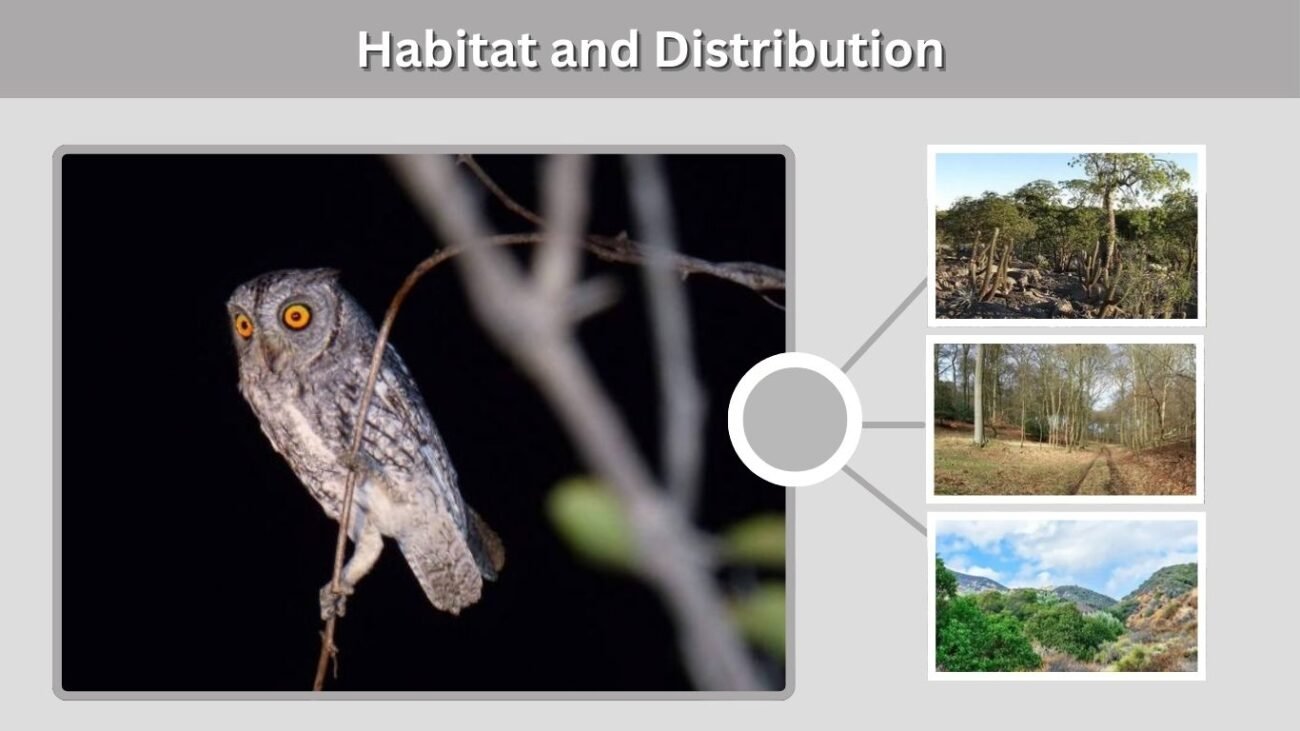
African scops owls are widely distributed across sub-Saharan Africa. Their range extends from West Africa through eastern and southern Africa. They are generally absent from extremely arid deserts and the deepest parts of the Congo Basin’s dense equatorial rainforest.
They inhabit:
- Dry savanna woodland
- Mopane and acacia woodland
- Thornveld and bushveld
- Forest edges and clearings
- Wooded riverbanks
- Mangrove forests
- Rural gardens
- Parks containing mature trees
- Lightly wooded urban areas
They can occur from sea level to approximately 2,000 metres, although they are most frequently associated with warmer lowland woodlands.
African Scops Owl in South Africa
In South Africa, the species is most common in northern and eastern regions containing suitable bushveld and savanna woodland. It can be found in and around Kruger National Park and other reserves with mature mopane or acacia trees.
The owl is generally easier to hear than see. Visitors may hear its repeated purring call around camps and wooded areas after sunset. During daylight, it remains almost motionless against a tree trunk.
Camouflage and Daytime Roosting
The African scops owl has one of the most effective camouflage displays among small owls. When resting during the day, it presses its body against a trunk or branch, closes its bright eyes, stretches upward, and raises its ear tufts.
This posture makes the owl resemble a broken branch. Its streaked feathers imitate the colors and patterns of bark, allowing it to avoid predators and remain unnoticed by small birds that might mob it.
It may use the same daytime roost repeatedly, especially when the location provides shade and protection. Pairs sometimes rest near one another but remain extremely difficult to detect.
Diet and Feeding Habits
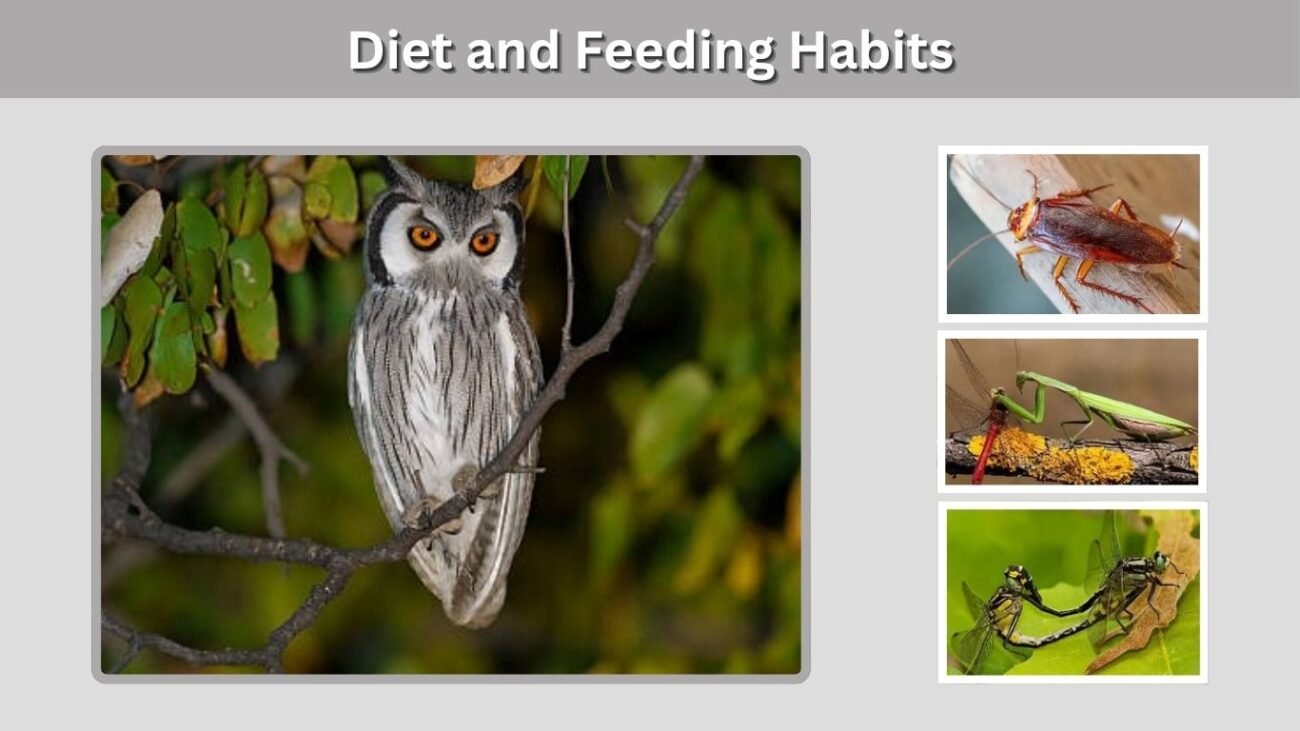
African scops owls are primarily insectivorous. Their diet changes depending on the season and availability of prey.
Common foods include:
- Beetles
- Moths and caterpillars
- Grasshoppers
- Crickets
- Cockroaches
- Praying mantises
- Dragonflies
- Centipedes and millipedes
- Spiders and scorpions
- Small lizards and geckos
- Frogs
- Small rodents and birds
The owl’s small feet and talons are better suited to catching insects and other small animals than large vertebrate prey.
Hunting Behavior
African scops owls usually hunt from a low perch. The owl sits quietly while watching and listening for movement, then drops onto an insect or other animal on the ground.
It may also capture flying insects in the air or pick prey from leaves and branches. Some individuals walk along the ground while searching for beetles, spiders, and other invertebrates.
Hunting begins after dusk and continues throughout the night. The owl’s large eyes, sensitive hearing, and quiet flight help it locate prey in darkness.
Breeding and Nesting
African scops owls form monogamous breeding pairs. The timing of breeding varies geographically and is often influenced by rainfall and insect availability.
They usually nest inside:
- Natural tree cavities
- Abandoned woodpecker holes
- Old barbet nests
- Artificial nest boxes
- Occasionally protected ground-level cavities
The female typically lays two to four white eggs. She performs most of the incubation while the male hunts and brings food. Incubation lasts approximately 22–27 days.
After the eggs hatch, the male continues delivering prey while the female feeds and protects the chicks. Young owls leave the nest at approximately 25–30 days old but may remain near their parents while improving their hunting and flying skills. South Africa’s Biodiversity Explorer similarly reports cavity nesting, two to four eggs, and a nestling period of roughly 25–28 days.
Predators and Defense
Because of its small size, an African scops owl may be vulnerable to larger owls, hawks, eagles, snakes, climbing mammals, and other predators. Eggs and chicks face additional danger from animals that enter nesting cavities.
Hornbills may compete with scopus owls for tree cavities and have occasionally killed adults or chicks during nesting disputes.
The owl protects itself through:
- Bark-like camouflage
- Motionless daytime roosting
- Concealing its bright eyes
- Hissing and bill-clicking
- Rapid, quiet flight
- Using its bill and talons when cornered
Its first defense is usually remaining hidden rather than confronting a predator.
African Scops Owl vs White-Faced Owl
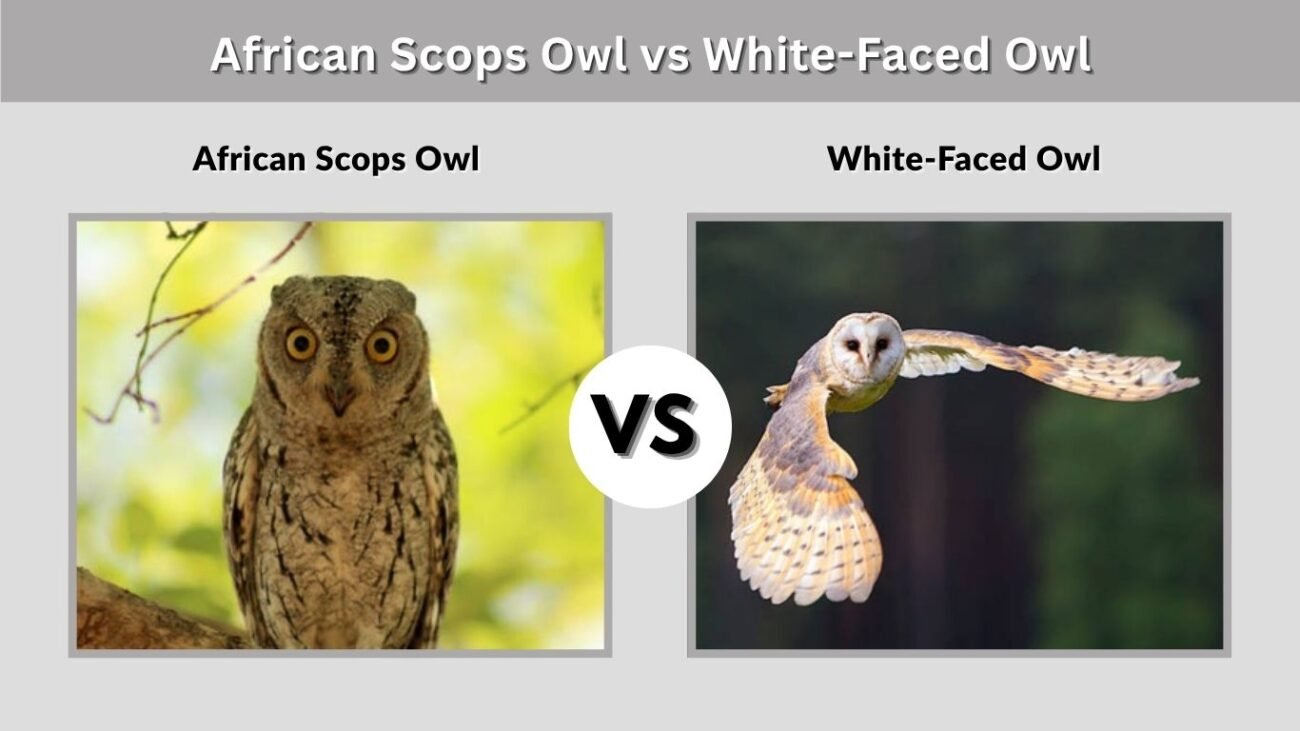
The African scops owl is frequently confused with the southern white-faced owl, formerly called the southern white-faced scops owl. However, they are different species.
| Feature | African scops owl | Southern white-faced owl |
| Scientific name | Otus senegalensis | Ptilopsis granti |
| Length | 15–19 cm | Approximately 24–28 cm |
| Weight | 45–100 grams | Approximately 185–275 grams |
| Eye color | Yellow | Orange to red |
| Facial disc | Gray with dark border | Bold white face with black border |
| Ear tufts | Small | Long and prominent |
| Main food | Insects | Insects and small vertebrates |
The collared scops owl is another separate species group found primarily in Asia, not Africa. “African giant scops owl” is not a recognized common name.
Lifespan
The lifespan of wild African scops owls is not well documented. Available records suggest that some individuals may survive for at least seven years, while carefully managed captive birds could potentially live longer.
Survival depends on food availability, nesting sites, predators, disease, pesticide exposure, habitat quality, and collisions with vehicles or buildings.
Conservation Status
The African scops owl is classified as Least Concern because it has an extensive range and remains locally common in suitable habitats. However, woodland clearing, removal of old cavity-bearing trees, pesticide use, and declining insect populations can affect local numbers.
Leaving mature trees and natural cavities in place helps provide nesting and daytime roosting sites.
Can an African Scopus Owl Be a Pet?
African scops owls are wild birds and are not suitable pets. They require live or whole-animal food, specialized veterinary care, secure flying space, and opportunities to hunt and behave naturally at night.
Capturing, selling, or keeping one may be illegal without wildlife permits. Anyone encountering an injured owl should contact a licensed wildlife rehabilitator instead of attempting to keep or sell it.
Symbolism
There is no single meaning attached to the African scops owl across all African cultures. Owls may represent wisdom, secrecy, protection, warning, or the supernatural, depending on the community. These interpretations are cultural traditions rather than characteristics of the owl itself.
FAQs
1. How big is an African scops owl?
The African scops owl measures approximately 15–19 cm long, weighs around 45–100 grams, and has a wingspan of about 40–45 cm. It is one of Africa’s smallest owls and is considerably smaller than the southern white-faced owl.
2. What does an African scops owl sound like?
Its main call is a short, vibrating “prrrp” or “kruup” repeated every five to eight seconds. The call can resemble a frog or insect. Pairs sometimes answer each other, creating a repetitive nighttime duet in woodland habitats.
3. What do African scops owls eat?
African scops owls mainly eat beetles, moths, grasshoppers, crickets, caterpillars, spiders, scorpions, centipedes, and other invertebrates. They may occasionally capture small lizards, frogs, rodents, or birds when suitable prey becomes available.
4. Where do African scops owls live?
African scops owls inhabit sub-Saharan Africa, including parts of South Africa. They prefer savannas, bushveld, mopane and acacia woodland, wooded riverbanks, mangroves, gardens, and parks. They generally avoid deserts and dense equatorial rainforest.
5. Are African scops owls endangered?
African scops owls are currently classified as Least Concern because they have an extensive distribution and remain common in suitable habitats. However, local populations may be affected by woodland clearing, pesticide exposure, reduced insect numbers, and the removal of nesting trees.