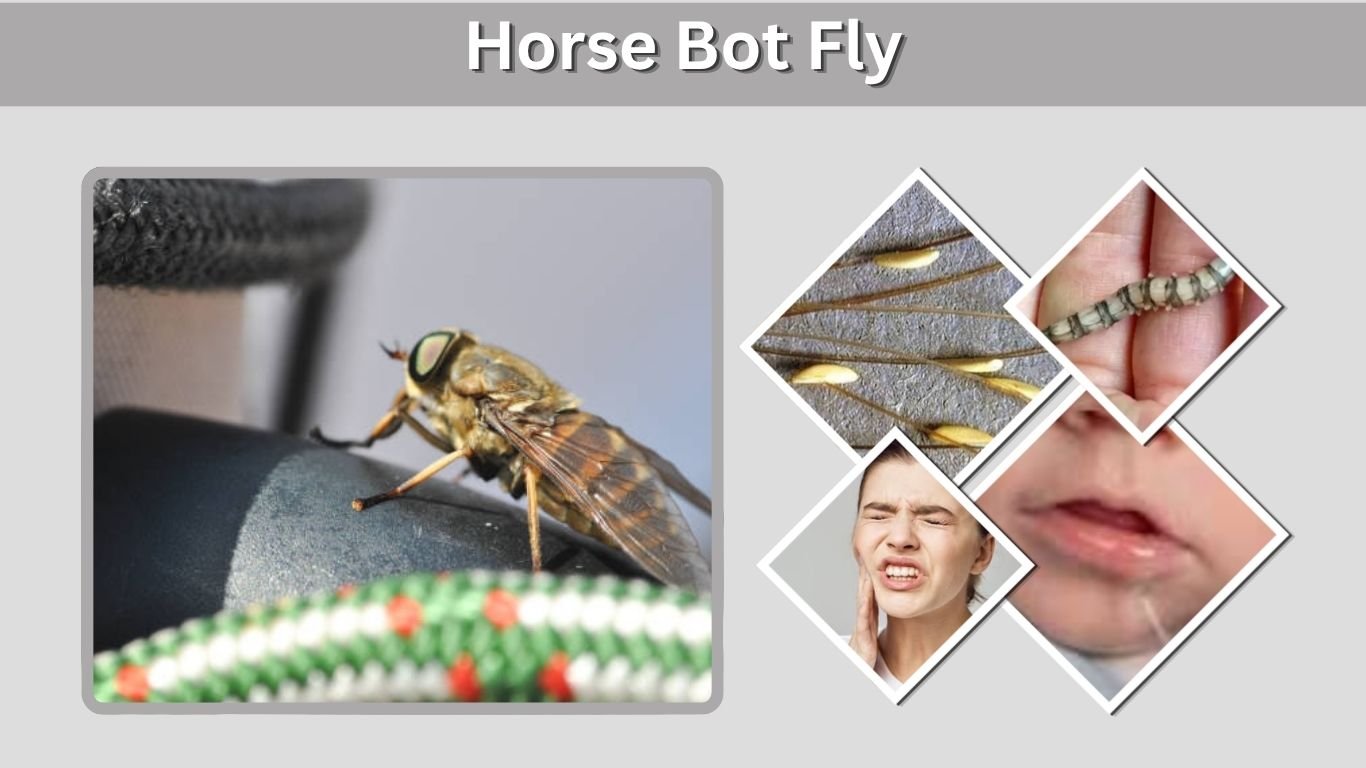
The horse bot fly is a bee-like fly whose larvae develop as internal parasites of horses, donkeys, and mules. Adult bot flies do not bite or feed, but females attach small yellow or cream-colored eggs to a horse’s hair. When the horse licks affected areas, newly hatched larvae enter the mouth, remain briefly in oral tissues, and later attach to the stomach lining. Many infected horses show few obvious symptoms, although heavy infestations may cause mouth irritation, eating difficulty, stomach inflammation, or ulceration. Regular egg removal and a veterinarian-approved parasite-control program help interrupt the bot fly life cycle.
What Is a Horse Bot Fly?
Horse bot flies belong to the genus Gasterophilus. The common horse bot, Gasterophilus intestinalis, is the species most frequently found on domestic horses. Other species include the throat bot, G. nasalis, and the nose bot, G. haemorrhoidalis.
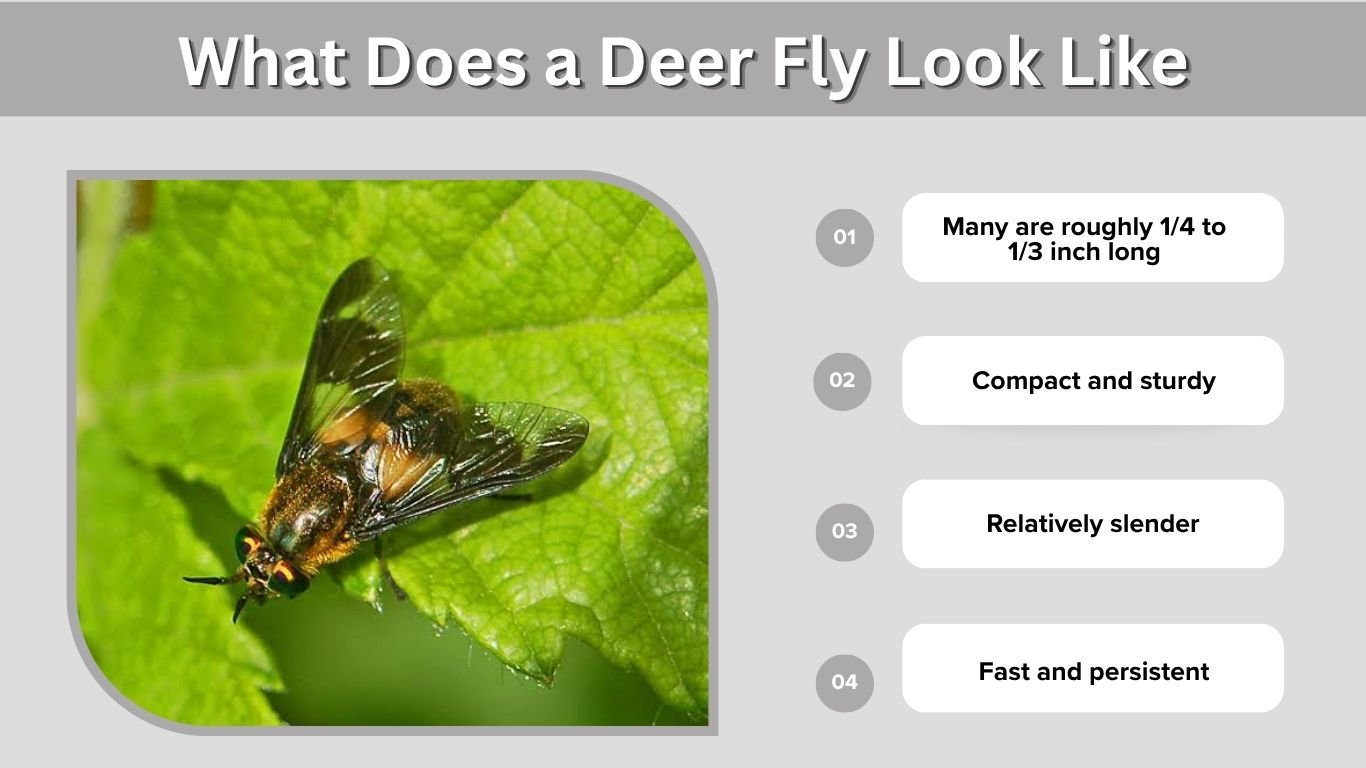
Adult bot flies resemble honeybees or bumblebees. They fly rapidly around horses while attaching eggs to individual hairs. The adults lack functional mouthparts, so they neither bite horses nor drink their blood. The damaging stage is the larva, commonly called a bot, which spends several months inside the horse.
| Feature | Horse bot fly |
| Scientific group | Gasterophilus species |
| Adult appearance | Hairy, bee-like fly |
| Does the adult bite? | No |
| Egg color | Yellow, cream, orange, or dark, depending on species |
| Main egg locations | Legs, shoulders, neck, jaw, lips, or mane |
| Larval location | Mouth, stomach, or upper small intestine |
| Life-cycle length | Approximately one year |
What Do Bot Fly Eggs Look Like on Horses?
Bot fly eggs look like tiny yellow, cream, orange, or occasionally dark grains attached firmly to individual hairs. They are generally about 1–2 millimeters long and cannot usually be removed with ordinary brushing.
Common Egg Locations
- Forelegs: Especially around the knees, cannon bones, and shoulders
- Neck and withers: Common sites for G. intestinalis
- Under the jaw: Typical of the throat bot
- Around the lips: Associated with the nose bot
- Mane, chest, belly, and flanks: Possible secondary locations
Egg location varies because each bot fly species attempts to place eggs where they can hatch or reach the horse’s mouth. Eggs on the legs are commonly stimulated by warmth, moisture, and friction when the horse licks or bites its coat.
Horse Bot Fly Life Cycle
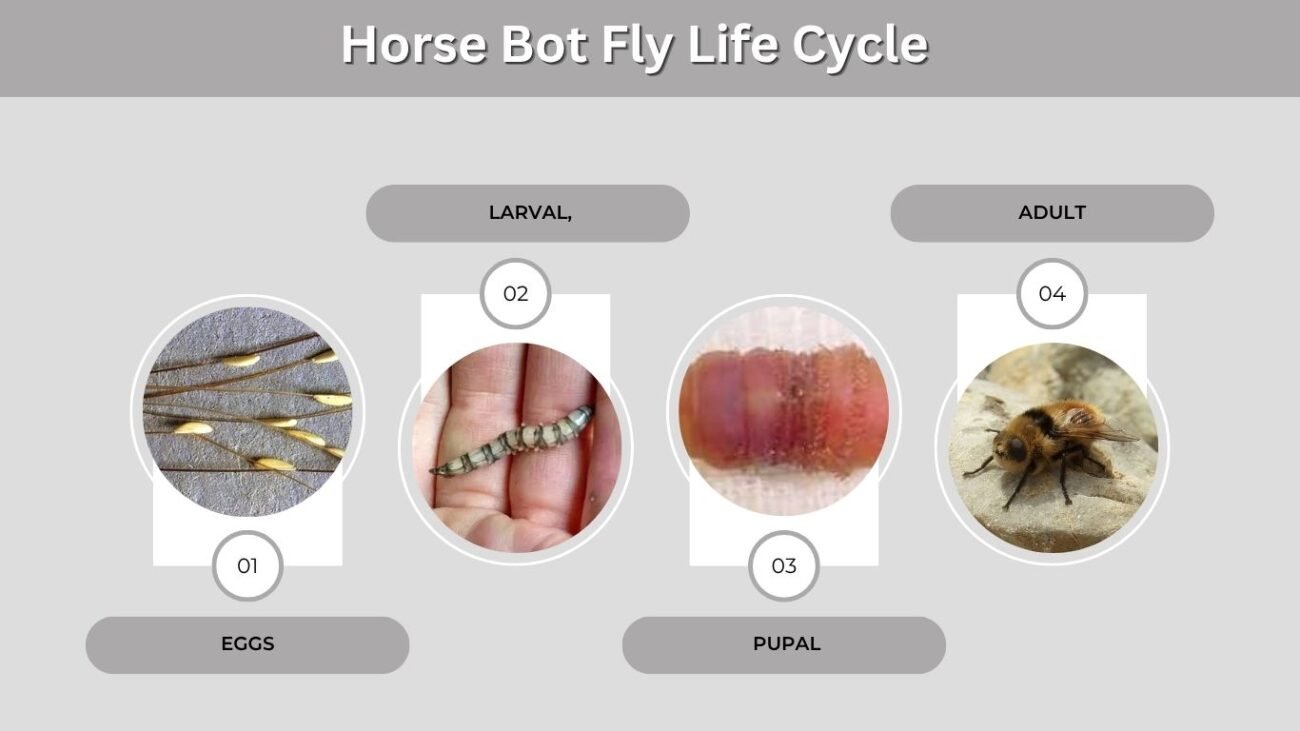
The horse bot fly completes an egg, larval, pupal, and adult cycle. Most of this approximately year-long development occurs inside the horse.
Egg and Oral Stages
Female flies glue eggs to the horse’s hair during warmer months. After hatching, the small larvae enter the mouth when the horse grooms itself or migrate directly toward the lips.
The larvae may remain within the tongue, gums, or spaces around the teeth for approximately three to four weeks. Oral migration can produce inflammation, small wounds, excessive salivation, head shaking, and discomfort while chewing.
Stomach Stage
The larvae are swallowed and attach to particular areas of the stomach or nearby intestine with hooked mouthparts. They develop there for as long as eight to ten months.
Mature larvae eventually detach, travel through the digestive tract, and leave the horse in its manure. They then burrow into the soil, pupate, and emerge as adult flies several weeks later.
Horse Bot Fly Symptoms
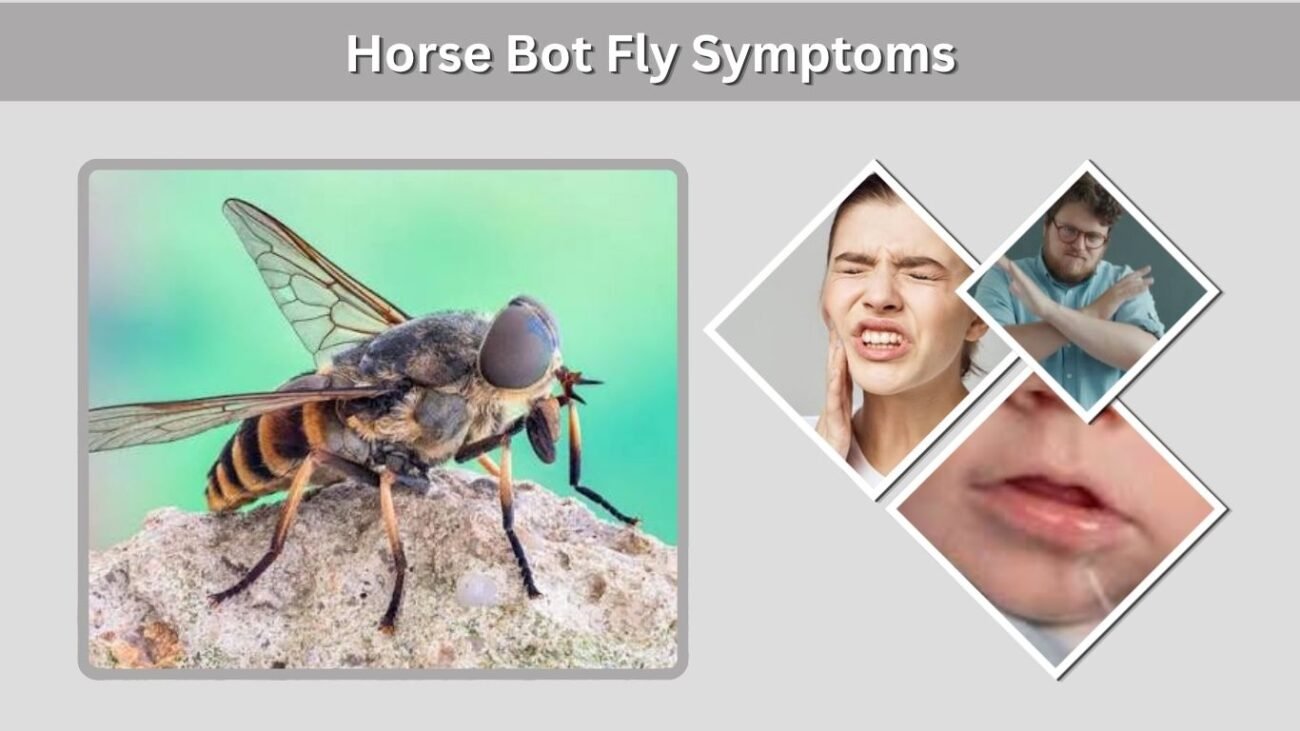
Many horses carrying stomach bots show no visible symptoms. A large number of larvae may be present without causing obvious illness. Nevertheless, attached larvae can produce inflammation, erosions, and ulceration in the mouth or stomach.
Possible signs include:
- Excessive salivation
- Head shaking
- Difficulty or pain while chewing
- Reduced appetite
- Irritation around the mouth
- Weight loss
- Mild abdominal discomfort
- Recurrent colic-like signs
- Bot larvae appearing in manure
Severe complications, including digestive obstruction, esophageal impaction, or stomach perforation, have been reported but are uncommon. A veterinarian should evaluate persistent eating problems, weight loss, drooling, or abdominal pain because many other dental and digestive conditions produce similar symptoms.
Do Bot Flies Bite Horses?
Adult horse bot flies do not bite horses. They have no functional biting mouthparts and survive on energy stored from the larval stage.
Their rapid buzzing and egg-laying behavior can still frighten horses. A horse may run, kick, rub, or injure itself while attempting to escape the fly. Actual painful bites around a horse’s legs or body are more likely to come from horse flies, deer flies, stable flies, or biting midges.
Horse Bot Fly vs. Horse Fly
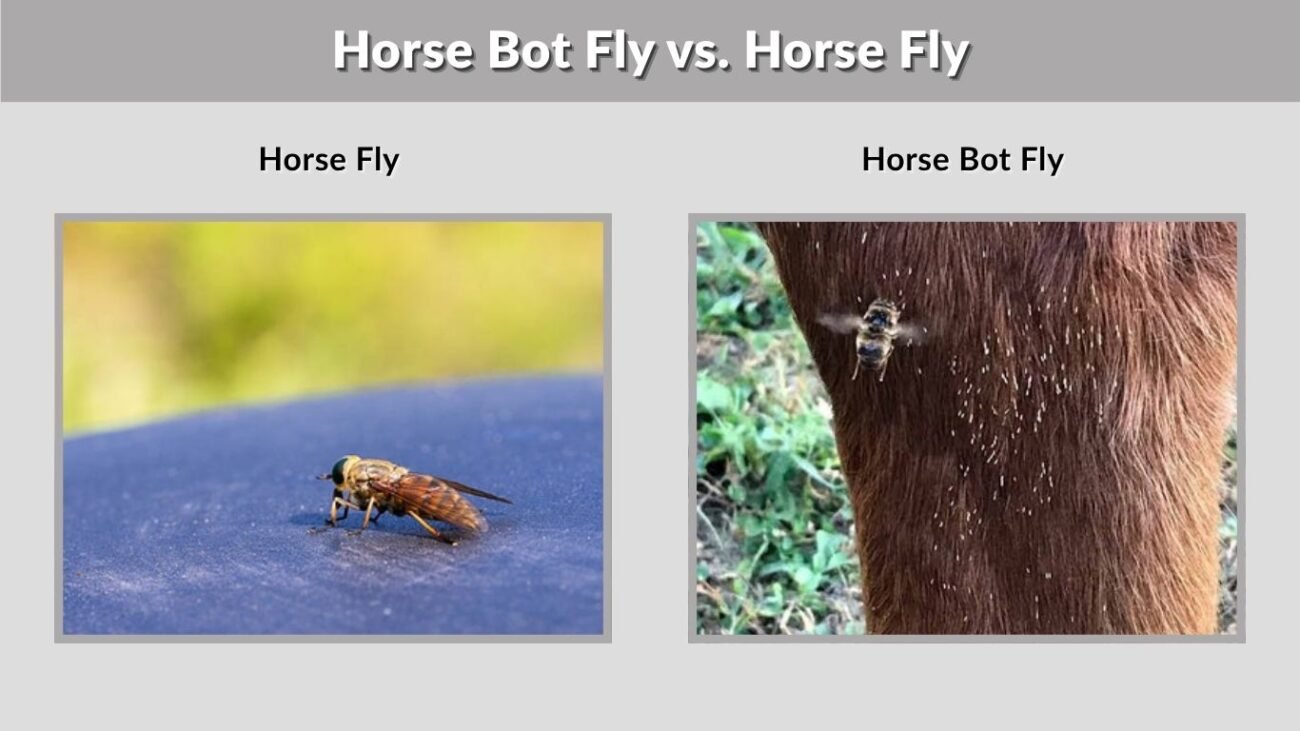
Bot flies and horse flies are completely different insects despite their similar names.
| Feature | Horse bot fly | Horse fly |
| Adult feeding | Does not feed | Female drinks blood |
| Bite | No | Painful bite |
| Appearance | Hairy and bee-like | Large-bodied with prominent eyes |
| Eggs | Attached to horse hair | Usually laid near wet areas |
| Harmful stage | Internal larva | Blood-feeding adult female |
| Larval habitat | Horse’s mouth and digestive tract | Mud or aquatic environments |
A bleeding welt is not a normal sign of a bot fly. Horse fly bites cut the skin and create painful wounds, while horse bot flies deposit eggs without biting.
How to Remove Bot Fly Eggs From a Horse
Inspect the horse regularly during bot fly season, paying particular attention to the legs, shoulders, neck, jaw, mane, and lips. Early removal reduces the number of larvae that may enter the mouth.
Using a Bot Egg Knife
A bot knife has a lightly serrated edge designed to scrape eggs from the hair. Hold it at an angle and carefully pass it over affected hair without pressing hard enough to injure the skin.
A grooming stone or suitable clipping tool may also remove eggs. Clean the tool afterward, collect removed hair and eggs, and dispose of them where horses cannot lick or ingest them. Egg removal must be repeated because adult females can deposit new eggs daily during active periods.
Safety During Removal
Wear gloves and avoid touching your eyes or mouth while handling eggs. Wash your hands and grooming tools afterward. Horse bot flies are not considered normal zoonotic parasites, but careful hygiene prevents accidental contact with newly hatched larvae.
Do not apply household insecticides, gasoline, kerosene, or unapproved chemicals to the horse. Warm water may stimulate some eggs to hatch, so scraping or clipping is generally a more controlled removal method.
Horse Bot Fly Treatment
Removing eggs prevents some new larvae from entering the horse, but it does not eliminate larvae already present in the mouth or stomach.
Ivermectin is highly effective against oral and gastric stages of Gasterophilus. Moxidectin can also control stomach stages, although its effectiveness against bots may be less consistent. Other dewormer classes do not necessarily kill horse bots, so the product label and active ingredient matter.
Treatment timing should be based on local bot fly activity, the horse’s age and health, other parasites present, previous medication use, and veterinary guidance. Do not guess the dose or repeatedly administer dewormers without a planned parasite-control program.
Standard fecal egg counts cannot reliably diagnose bots because bot flies do not produce parasite eggs inside the horse’s intestine. A veterinarian may identify larvae through oral examination, gastroscopy, or observation of mature bots in manure.
Is a Bot Fly Wound on a Horse Normal?
Horse bots may create small lesions in the mouth or irritation where larvae attach internally. However, a visible skin wound containing maggots is not the typical horse bot fly life cycle.
Maggots inside an open skin wound may indicate fly strike, also called wound myiasis. This requires prompt veterinary attention. Treatment may involve removing larvae, cleaning damaged tissue, managing infection, and protecting the wound from further fly activity. Do not attempt to pull deeply embedded larvae from a wound without professional guidance.
How to Prevent Bot Flies on Horses
Complete prevention of adult bot fly activity may be difficult, but several practices can reduce exposure:
- Examine the coat regularly and remove eggs promptly.
- Follow a veterinarian-designed deworming schedule that includes bot control when appropriate.
- Keep accurate records of treatment dates and active ingredients.
- Dispose of removed eggs and contaminated hair safely.
- Remove manure regularly and maintain clean paddocks and stalls.
- Use fly sheets, boots, or approved repellents for general fly comfort, understanding that they may not completely stop bot fly egg-laying.
A broad fly-management plan should combine coat inspection, parasite treatment, manure management, physical barriers, and properly labeled products rather than relying on one spray.
FAQs
Are both fly eggs harmful to horses?
The eggs themselves cause little direct harm, but they hatch into larvae that migrate through the mouth and attach inside the stomach. Removing eggs reduces the chance that horses will ingest the larvae while grooming.
What kills bot fly larvae in horses?
Veterinary dewormers containing ivermectin are highly effective against oral and stomach stages. Moxidectin may also control gastric bots. Product selection, timing, and dosing should be discussed with a veterinarian.
Can humans get bot flies from horses?
Horse bot flies are not considered normal human parasites and cannot complete their life cycle in people. Nevertheless, wear gloves and wash your hands after removing eggs to prevent accidental contact with the eyes or mouth.
When should horses be treated for bot flies?
Treatment is often planned after seasonal bot fly activity declines, but there is no universal date suitable for every region. A veterinarian can select appropriate timing based on climate, fly activity, and the horse’s parasite-control history.
Can bot flies live under a horse’s skin?
Typical horse bot species migrate through oral tissues and later attach inside the stomach or intestine. A lump or maggot-filled skin wound may involve another fly species and should be examined by a veterinarian.