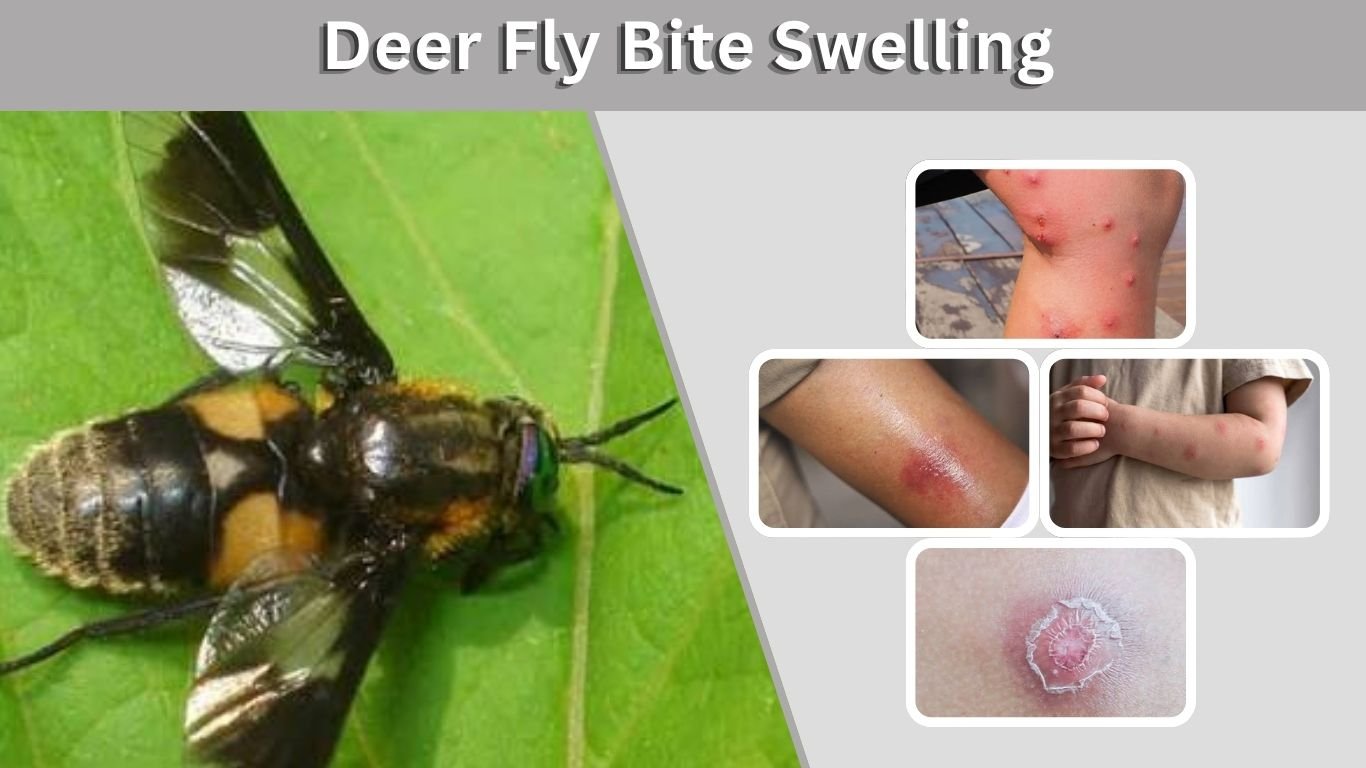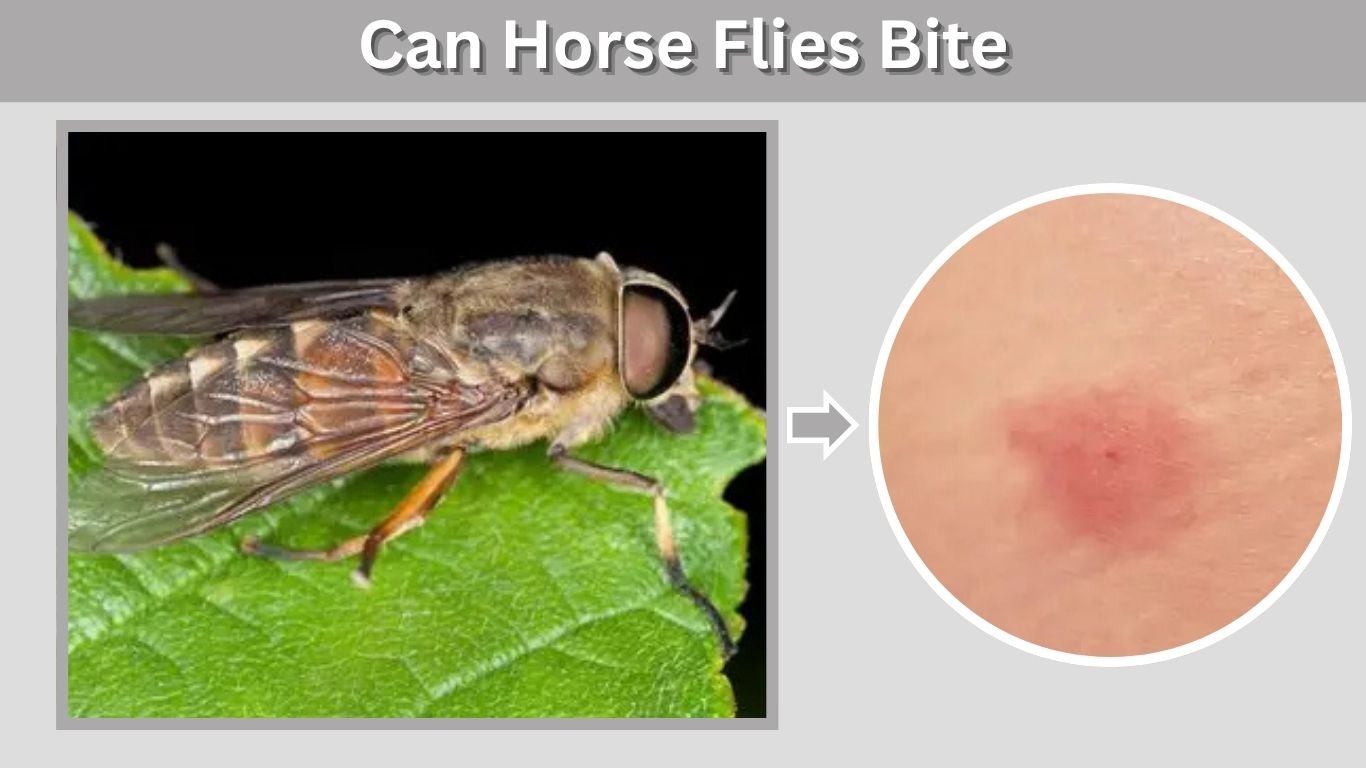
Yes, horse flies can bite humans, horses, dogs, livestock, and other warm-blooded animals. Only adult females bite because they need protein from blood to develop their eggs. Males feed on nectar and other plant sugars.
A horse fly bite is usually immediately painful because the fly does not gently pierce the skin like a mosquito. Instead, it uses blade-like mouthparts to cut the skin and then feeds on the blood that collects around the wound. The bite may cause redness, swelling, itching, bruising, or a firm raised lump.
Horse Fly Facts at a Glance
Horse flies belong to the Tabanidae family, which also includes deer flies. They are strong, persistent daytime fliers commonly found around wetlands, pastures, ponds, farms, woodland edges, and livestock.
| Feature | Description |
| Family | Tabanidae |
| Typical size | About 10–30 mm |
| Largest species | Up to approximately 35 mm |
| Biting sex | Female |
| Male diet | Nectar and plant sugars |
| Female diet | Nectar and blood |
| Bite type | Cutting rather than stinging |
| Active period | Mainly warm daylight hours |
| Common habitat | Wetlands, pastures, and woodland edges |
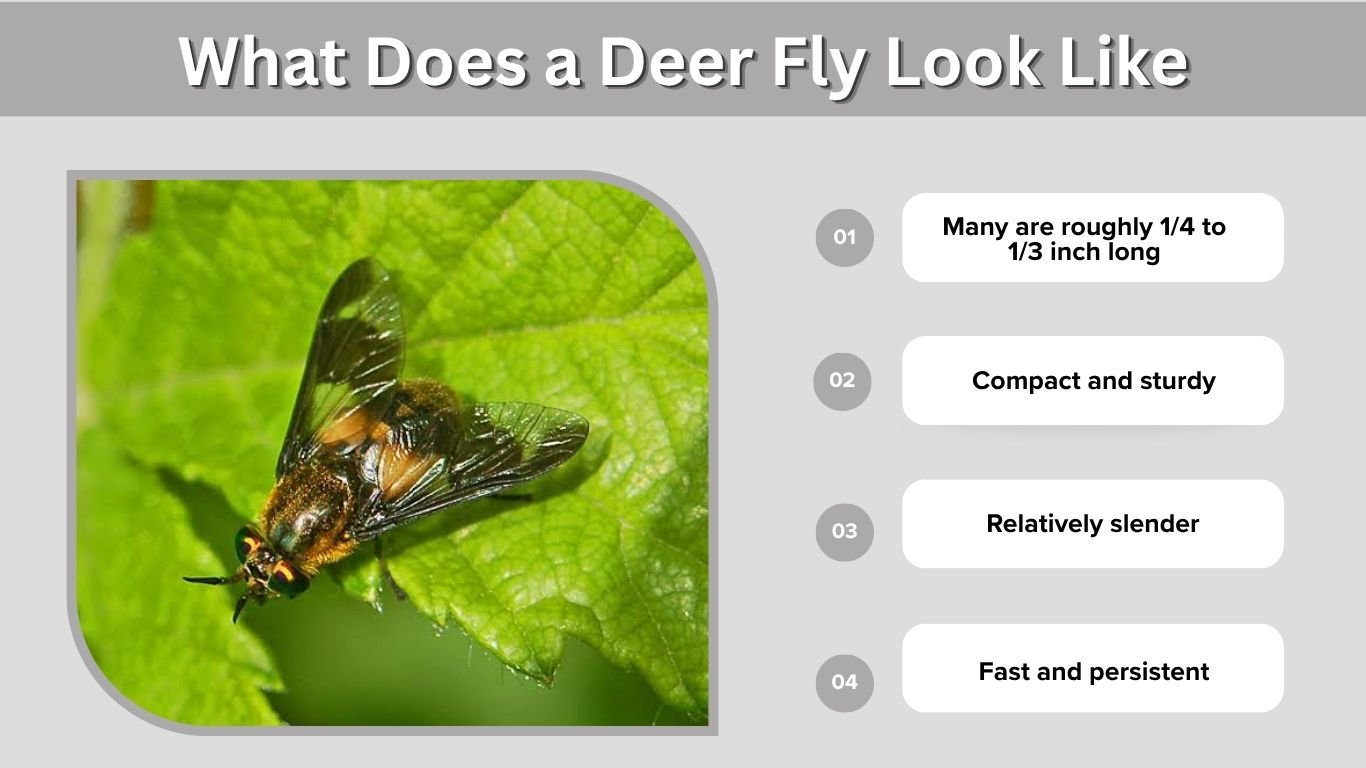
Horse flies are generally larger and more robust than house flies. Some species have large metallic green, purple, or striped eyes, while their bodies may be black, gray, brown, or yellowish.
Why Do Horse Flies Bite?
Female horse flies require nutrients from blood to produce viable eggs. They commonly feed on horses, cattle, deer, and other large mammals, but they readily bite humans when the opportunity arises.
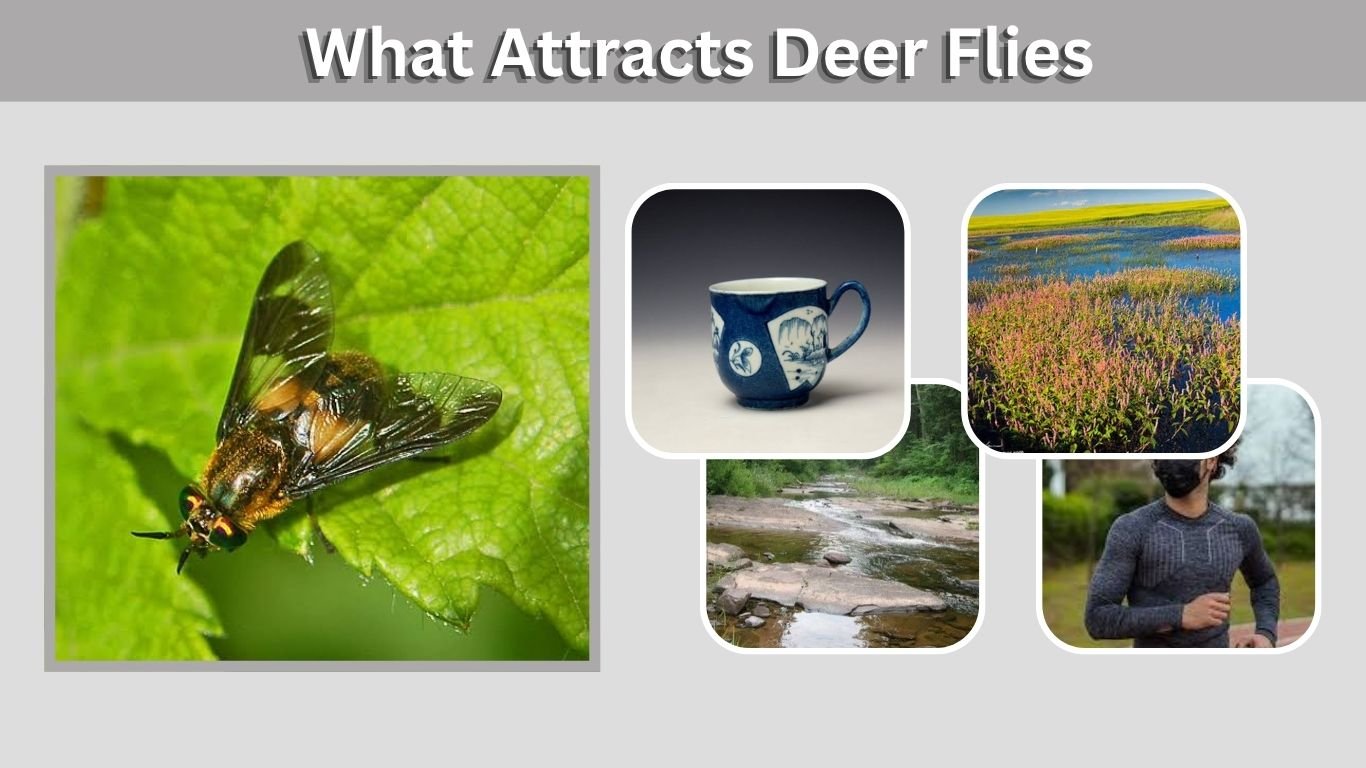
Horse flies locate potential hosts through movement, contrast, body warmth, odors, and exhaled carbon dioxide. Dark-colored moving objects may be particularly noticeable to these visually oriented insects.
Once a female begins searching for a blood meal, she can be persistent. She may circle a person or animal, repeatedly attempt to land, and follow the target for a short distance.
How Does a Horse Fly Bite?
A horse fly has cutting mouthparts rather than the needle-like feeding tube used by a mosquito. The female slices the skin, releases saliva that helps prevent blood from clotting, and absorbs the pooling blood.
This feeding method explains why the bite often:
- Hurts immediately
- Produces a visible wound
- Bleeds slightly
- Causes more swelling than a mosquito bite
- Feels sore or bruised afterward
Horse flies bite rather than sting. They do not possess a stinger like a bee, wasp, or hornet.
What Does a Horse Fly Bite Look Like?
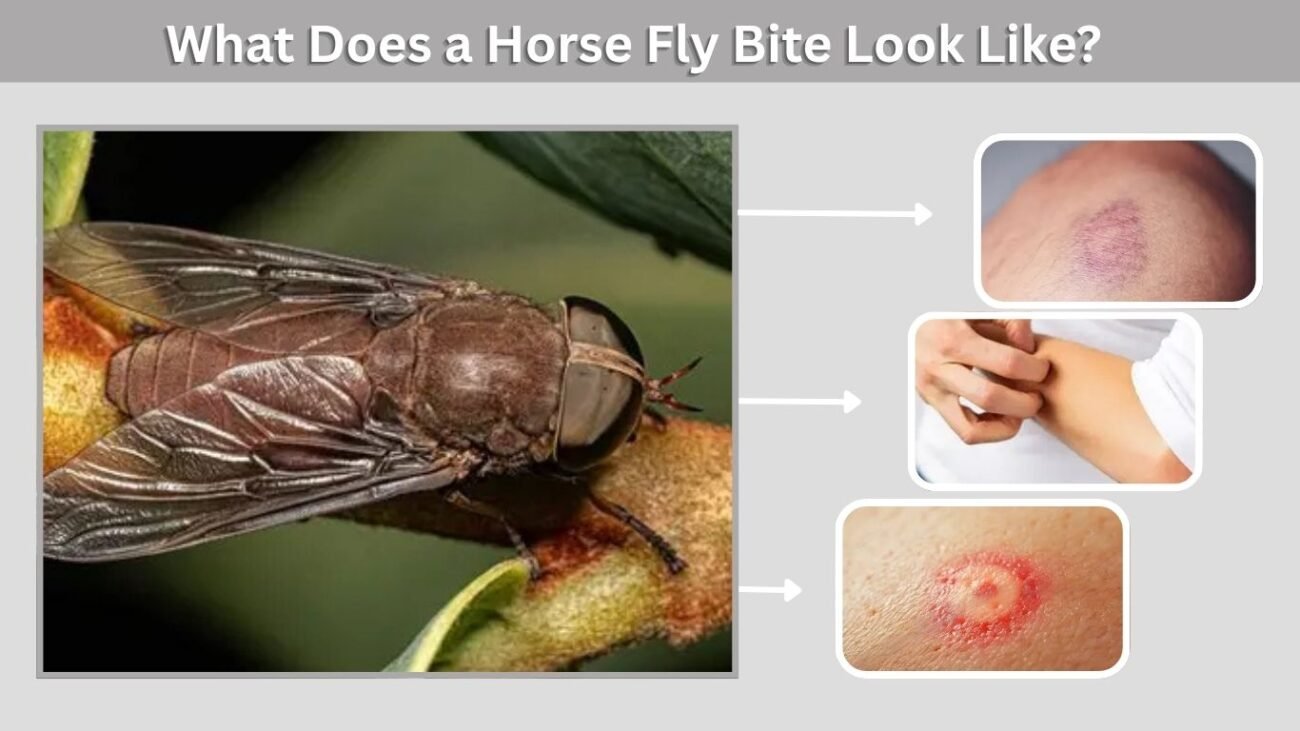
A fresh horse fly bite usually appears as a red, painful bump with swelling around it. A small cut or bleeding point may be visible in the center.
Common symptoms include:
- Sudden sharp or burning pain
- Redness around the bite
- Localized swelling
- Itching
- Warmth and tenderness
- A firm raised lump
- Mild bruising
- A small amount of bleeding
Symptoms may become more noticeable during the first several hours. Most uncomplicated insect bites improve within several days, although swelling or itching may sometimes last longer.
Can a Horse Fly Bite Cause a Rash?
A bite can produce a localized red or itchy rash around the wound. People who are particularly sensitive to insect saliva may develop a larger area of redness and swelling.
A rash that spreads rapidly, covers multiple areas of the body, or appears with breathing difficulty, dizziness, or facial swelling may indicate a serious allergic reaction and requires emergency medical attention.
Can a Horse Fly Bite Cause Bruising?
Bruising is possible because the fly cuts the skin and damages tiny blood vessels near the surface. Mild discoloration around the bite is not always a sign of a serious problem.
However, extensive bruising, severe pain, uncontrolled bleeding, or rapidly worsening swelling should be assessed by a healthcare professional.
Can Horse Flies Bite Through Clothing?
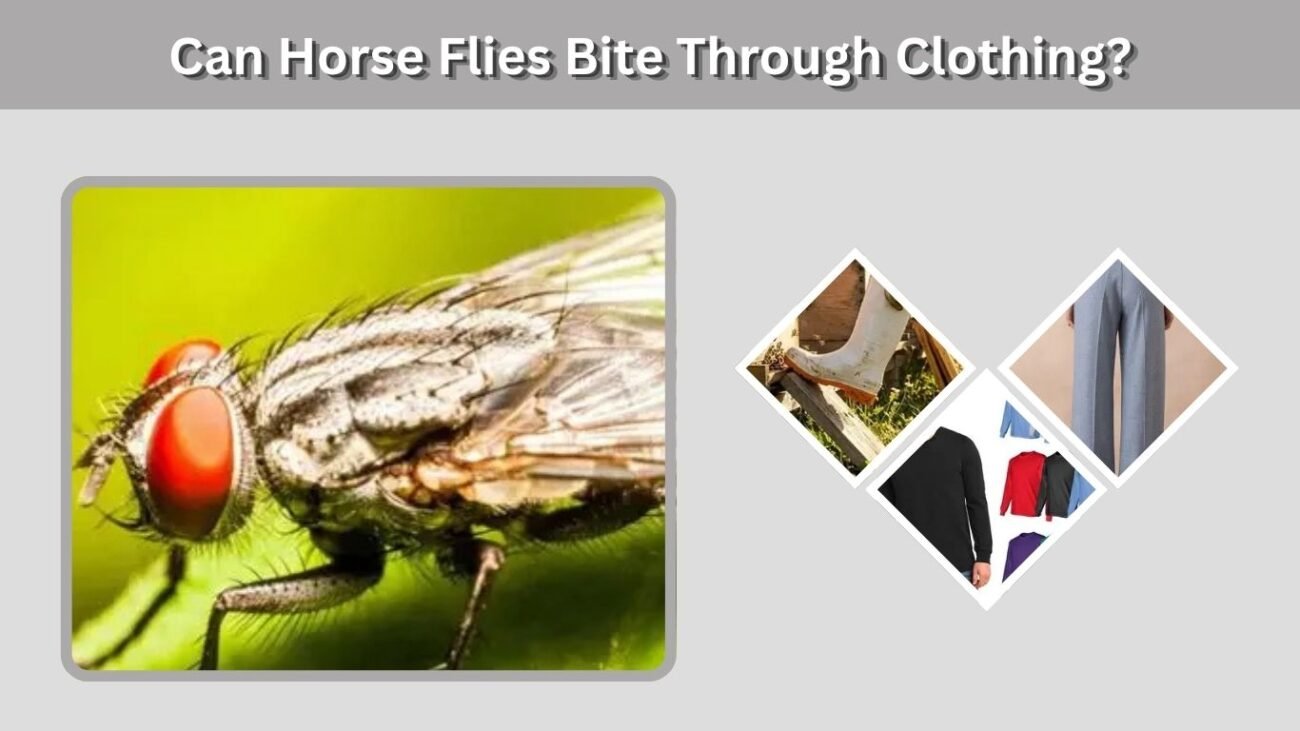
Horse flies may reach the skin through very thin material or clothing stretched tightly against the body. They can also crawl beneath loose openings around sleeves, collars, waistbands, or trouser legs.
Dense, loose-fitting clothing provides better protection. When entering areas with many biting flies, wear:
- Long-sleeved shirts
- Long trousers
- Closed shoes
- Socks covering the ankles
- A hat
- Light-colored clothing
Clothing reduces exposed skin but does not guarantee complete protection. An insect repellent suitable for human use may provide additional defense when applied according to the label. Long sleeves and trousers are generally recommended for reducing exposure to outdoor biting insects.
How Big Can a Horse Fly Get?
Most adult horse flies measure approximately 10–30 mm long. Some large species can reach about 35 mm, making them among the largest robust flies commonly encountered around people and livestock.
One extension reference describes horse flies as approximately three-quarters to one-and-a-quarter inches long. Their broad bodies, powerful wings, and loud flight may make them appear even larger.
How Fast Can Horse Flies Fly?
Horse flies are powerful and swift fliers capable of pursuing moving animals. One often-cited exceptional record attributes a speed of approximately 145 km/h to Hybomitra hinei. However, this should not be treated as the normal flight speed of every horse fly species.
For practical purposes, their persistence, maneuverability, and ability to arrive from distant breeding areas are more important than a single maximum-speed estimate.
Can Horse Flies Bite More Than Once?
A female horse fly can make repeated biting attempts. If she is interrupted before obtaining enough blood, she may land again on the same host or move to another host.
This interrupted feeding behavior matters for livestock because large numbers of biting flies can cause substantial irritation and blood loss. Animals may bunch together, stamp, shake their heads, or stop grazing while trying to escape the flies.
Can Horse Fly Bites Be Dangerous?
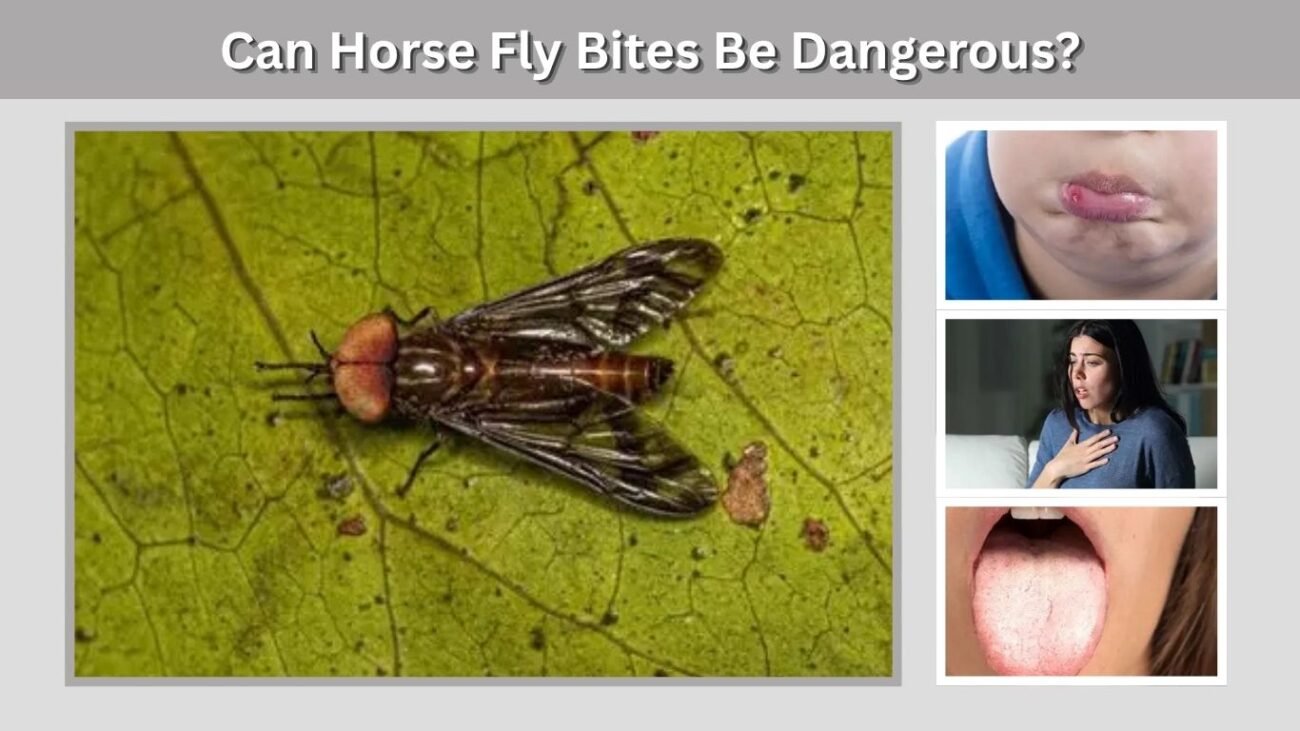
Most horse fly bites are painful but not dangerous. They generally improve with cleaning, cold compresses, and protection from scratching.
Potential complications include:
Allergic Reaction
Some people react strongly to proteins in horse fly saliva. Warning signs of a severe allergic reaction include:
- Difficulty breathing
- Wheezing
- Swelling of the lips, tongue, face, or throat
- Faintness or severe dizziness
- Confusion
- A widespread raised rash
These symptoms require immediate emergency care.
Secondary Infection
Scratching can break the skin and introduce bacteria. Possible signs of infection include increasing pain, spreading redness, warmth, pus, red streaks, fever, or feeling generally unwell.
Most insect bites do not require antibiotics. Antibiotics are used when there is evidence that the skin has become infected.
Can a Horse Fly Bite Kill You?
Death from a horse fly bite is exceptionally rare. The main life-threatening risk is anaphylaxis, a severe allergic reaction that can affect breathing and circulation.
A bite should not normally be considered deadly, but emergency symptoms must never be ignored.
Can Horse Flies Spread Disease?
Horse flies can mechanically carry certain animal pathogens when interrupted during feeding and moving between hosts. Their importance as disease carriers varies by species, location, host, and pathogen. They are more significant as mechanical vectors among livestock than as routine disease vectors for humans.
Tularemia is a rare bacterial illness that may be spread through bites from infected ticks and biting flies in certain regions. Symptoms can include fever, chills, headaches, swollen lymph nodes, and an ulcer near the bite. Anyone who becomes ill after a suspected biting-fly exposure should contact a medical professional.
Can Horse Flies Transmit Lyme Disease?
Horse flies are not recognized as Lyme disease vectors. The CDC states that there is no credible evidence that Lyme disease is spread through the bites of flies, mosquitoes, fleas, or lice. Lyme disease is transmitted to humans through infected blacklegged ticks.
Can Horse Flies Lay Eggs in Human Skin?
Horse flies do not normally lay eggs in people or beneath human skin. Females deposit egg masses on vegetation and other surfaces near water or wet ground. After hatching, the larvae move into mud, wet soil, or aquatic and semi-aquatic habitats.
Horse flies should not be confused with bot flies, whose larvae have different life cycles and may parasitize animals.
How to Treat a Horse Fly Bite
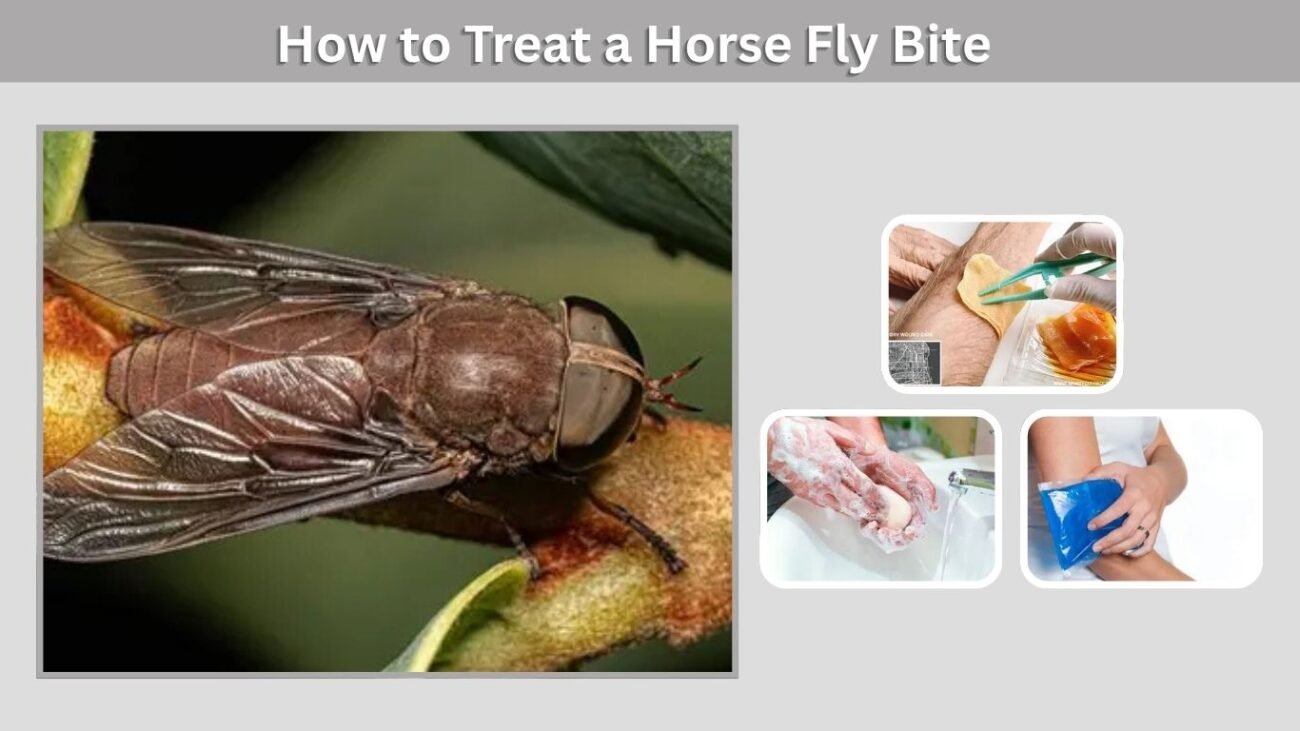
Most bites can be managed with basic first aid.
Immediate Care
- Wash the area gently with soap and water.
- Apply a cold compress wrapped in cloth for 10–20 minutes.
- Keep the wound clean and dry.
- Avoid scratching or squeezing it.
- Ask a pharmacist about an appropriate antihistamine, anti-itch treatment, or pain reliever.
Seek medical advice when the bite becomes increasingly painful, hot, swollen, or red; releases fluid or pus; or is accompanied by fever or illness.
Call emergency services immediately for trouble breathing, facial or throat swelling, fainting, or other signs of anaphylaxis.
How to Prevent Horse Fly Bites
Wear loose, long clothing and reduce exposed skin when walking, farming, fishing, or riding near wetlands and pastures. Light-colored clothing may be preferable because many horse flies are visually attracted to large, dark, moving objects.
Use only insect repellents intended for people and follow their label instructions. Never apply horse or livestock fly spray to yourself unless its label specifically says it is approved for human skin.
For horses, physical barriers such as fly masks and fly sheets can reduce exposure. Traps may lower horse fly numbers around a limited area, but they rarely eliminate the insects because adults can arrive from surrounding wetlands.
FAQs
Can horse flies bite humans?
Yes. Female horse flies regularly bite humans and other mammals to obtain blood for egg development. Males do not bite and feed mainly on nectar and plant sugars.
Can horse flies bite dogs?
Yes. Horse flies may bite dogs, particularly around areas with thin fur. Do not use horse fly spray on a dog unless the label clearly approves it for dogs or a veterinarian recommends it.
Can horse flies sting you?
No. Horse flies do not have stingers. Females cut the skin with sharp mouthparts and feed on the blood that collects at the wound.
Can horse flies make you sick?
Most bites cause only localized pain, redness, itching, and swelling. Illness may occur if the wound becomes infected, the person has a serious allergic reaction, or—rarely—a pathogen is transmitted.
Can horse flies see in the dark?
Horse flies are mainly daytime insects that depend heavily on vision to find hosts. They are generally much less active at night than they are during warm, bright daylight.