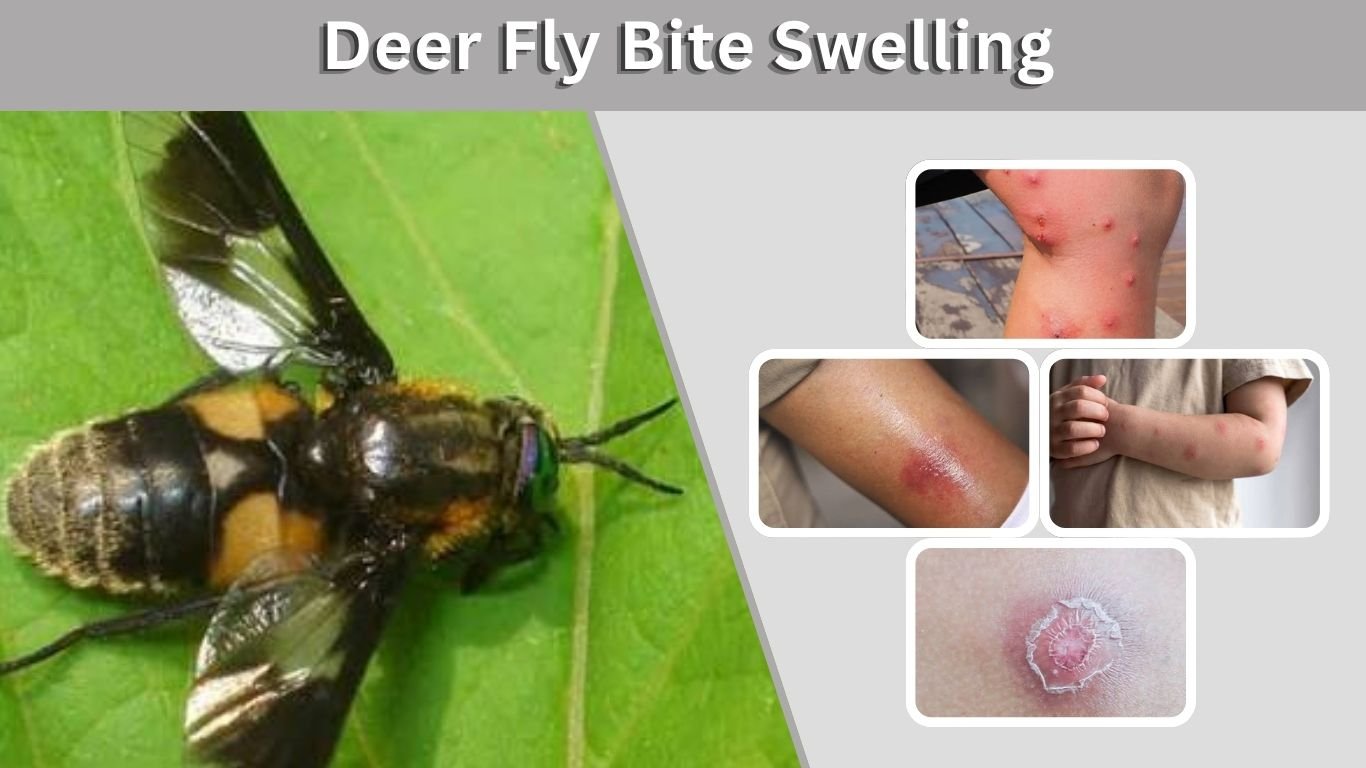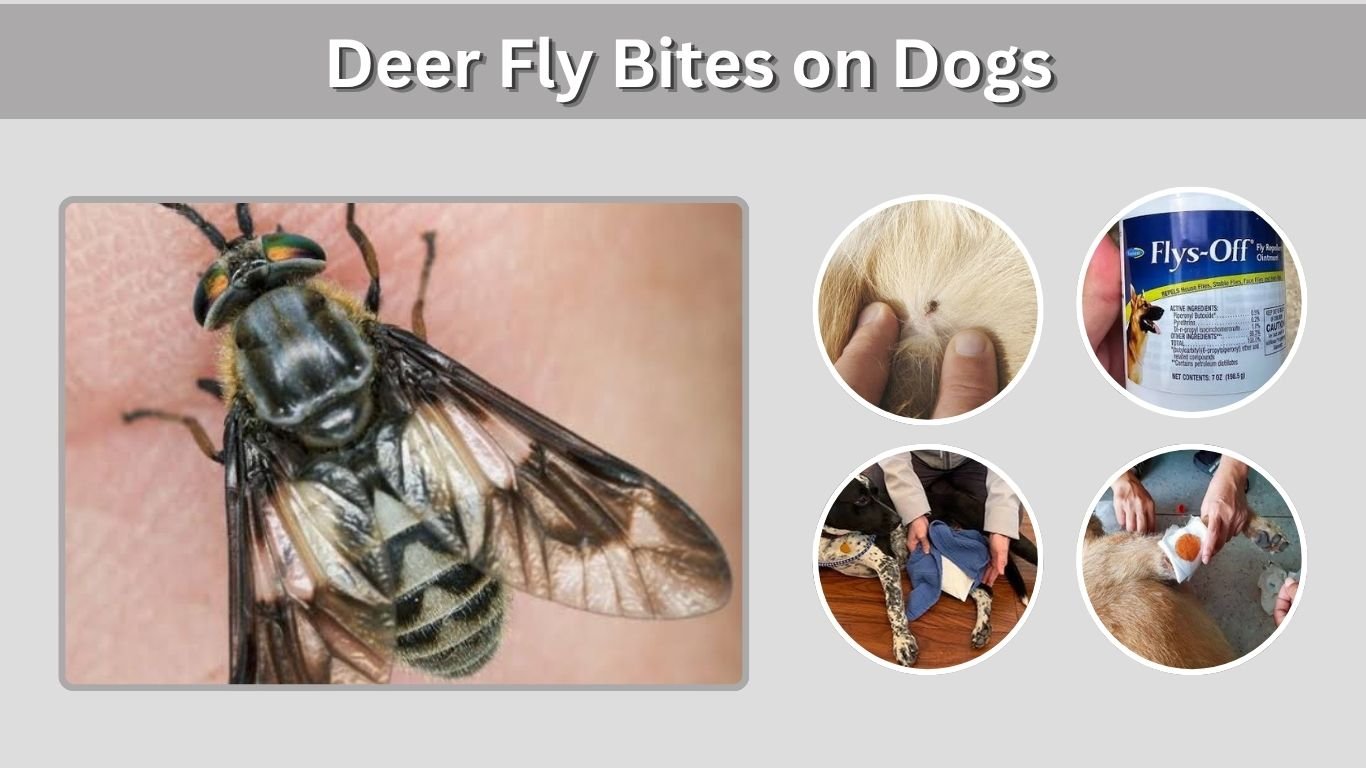
Deer fly bites on dogs can be painful and irritating, especially during warm months when these aggressive biting flies are active around wetlands, woods, ponds, and streams. Female deer flies feed on blood and may target a dog’s ears, belly, legs, nose, or other areas where the coat is thin. A bite can leave a small bleeding wound, red welt, swelling, or itching. Most uncomplicated bites improve with basic care, but severe swelling, infection, persistent irritation, or an allergic reaction requires veterinary attention.
Do Deer Flies Bite Dogs?
Yes. Deer flies can and do bite dogs.
Deer flies belong mainly to the genus Chrysops. Only females take blood meals; males feed primarily on nectar and pollen. Female deer flies have cutting mouthparts that lacerate the skin rather than simply inserting a needle-like mouthpart.
This makes their bites particularly painful.
Dogs may attract deer flies because the flies respond to characteristics of warm-blooded animals, including body heat, movement, and carbon dioxide.
Common Bite Locations
Deer flies may target areas with thinner hair, including:
- Ear edges
- Around the face
- Belly
- Inner thighs
- Legs
- Groin
- Nose or muzzle
A thick coat provides some protection, but it does not guarantee that a dog will avoid bites.
What Does a Deer Fly Bite Look Like on a Dog?
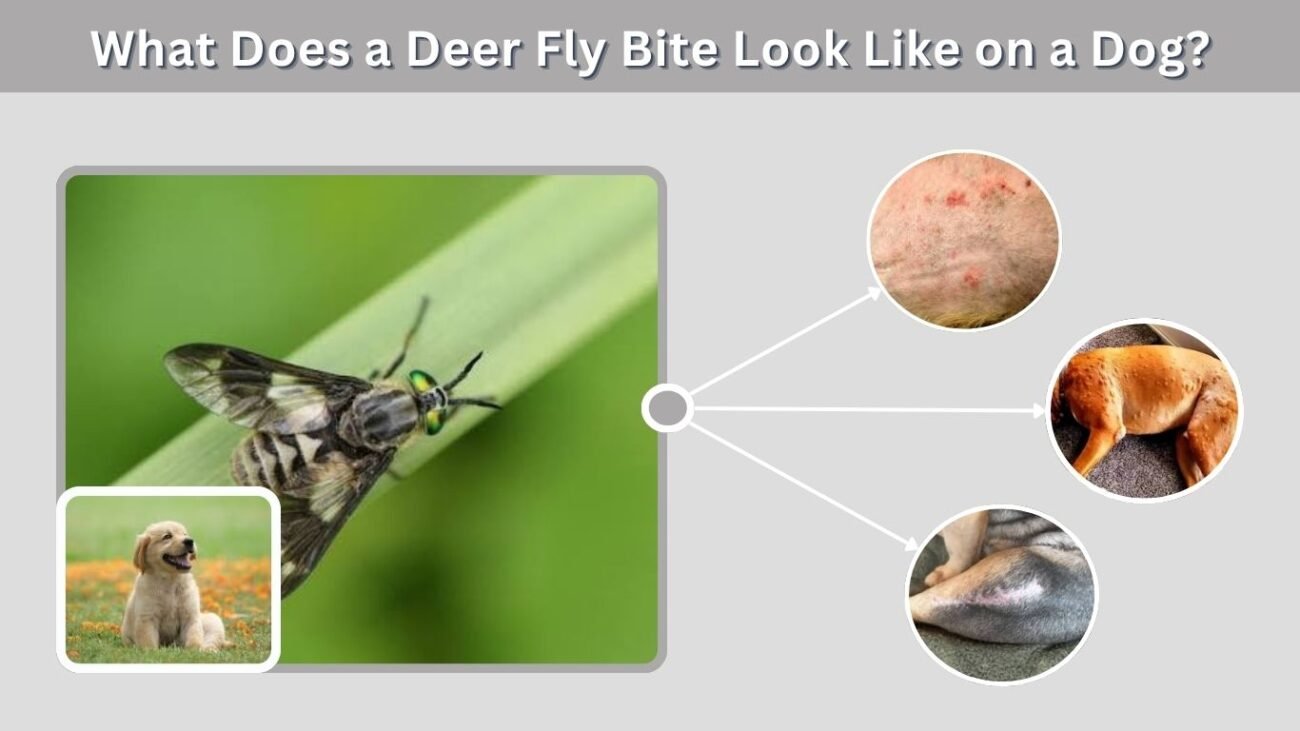
The appearance varies depending on the dog’s sensitivity and how many times it was bitten.
Common signs include:
- Small red bumps
- Raised welts
- Local swelling
- Small amounts of bleeding
- Red or irritated skin
- Itching
- Excessive licking
- Scratching
- Tenderness when touched
- Small scabs as the bite heals
Because deer flies cut the skin to obtain blood, a fresh bite may continue oozing briefly after the fly leaves. Merck Veterinary Manual notes this feeding behavior in horse and deer flies.
Multiple bites can make a dog restless and uncomfortable.
Are Deer Fly Bites Dangerous to Dogs?
Most isolated deer fly bites are more painful and irritating than dangerous.
Merck notes that biting flies are generally not dangerous to dogs unless attacks are extremely numerous, an allergic reaction develops, or disease transmission is involved.
The more common problems are irritation and scratching.
Secondary Infection
A dog may repeatedly lick, bite, or scratch an itchy area.
That trauma can break the skin further and allow bacteria to enter, potentially causing an infection.
Watch for:
- Increasing redness
- Warm skin
- Pus or discharge
- Bad odor
- Expanding swelling
- Increasing pain
- A wound that does not heal
Allergic Reaction
Some dogs react more strongly to insect bites.
Seek veterinary care promptly if your dog develops significant facial swelling, widespread hives, or other unusual symptoms after being bitten. Similar hypersensitivity reactions are recognized with biting-fly exposure in dogs.
Difficulty breathing, collapse, or rapidly progressing facial/throat swelling is an emergency and requires immediate veterinary care.
How to Treat Deer Fly Bites on Dogs
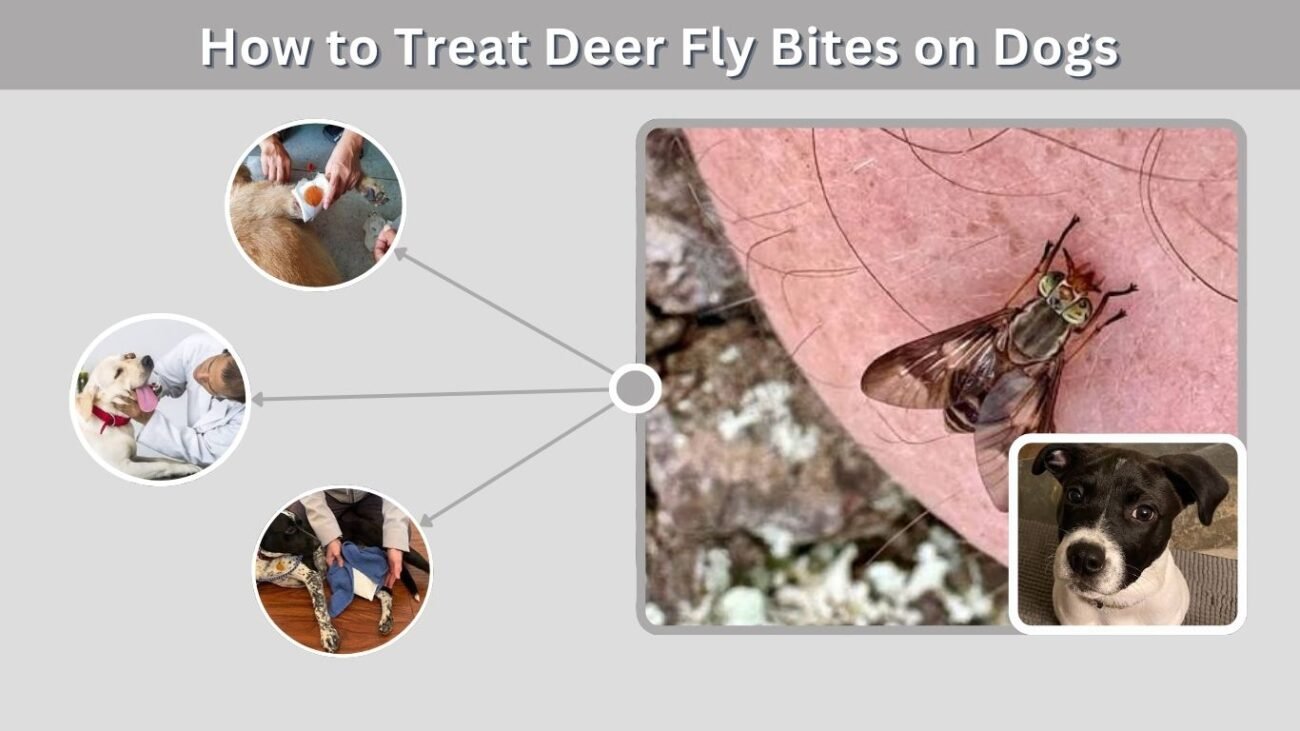
Minor bites can often be managed with simple supportive care.
1. Move Your Dog Away From the Flies
First, bring your dog indoors or into a screened area.
Preventing additional bites is especially important when numerous deer flies are present.
2. Examine the Bite
Part the fur and check the skin carefully.
Look for:
- Bleeding
- Swelling
- Scratches
- Broken skin
- Multiple bites
- Signs of infection
Make sure you are dealing with a superficial bite rather than a deeper wound, embedded tick, abscess, or another skin problem.
3. Gently Clean the Area
Minor insect bites can generally be cleaned using cool or lukewarm water and mild soap.
Avoid harsh chemicals that could further irritate the skin.
Veterinary advice for biting-fly lesions commonly emphasizes keeping affected areas clean.
4. Use a Cool Compress
A cool compress applied gently for several minutes may help reduce minor swelling and discomfort.
Do not apply ice directly to the dog’s skin.
5. Stop Excessive Licking and Scratching
Persistent licking can turn a minor bite into a larger wound.
Depending on the location, your veterinarian may recommend an Elizabethan collar or another protective barrier while the area heals.
Don’t Give Human Medication Without Veterinary Advice
Do not automatically give your dog:
- Benadryl or other antihistamines
- Ibuprofen
- Aspirin
- Acetaminophen
- Human steroid creams
- Antibiotic ointments
Even medications commonly used in people can have inappropriate doses or ingredients for pets.
Ask your veterinarian before administering medication.
When Should You Call a Veterinarian?
Contact your veterinarian if a deer fly bite:
- Becomes increasingly swollen
- Continues bleeding
- Produces pus or discharge
- Appears infected
- Is close to an eye
- Causes severe pain
- Does not begin improving
- Causes persistent scratching or licking
- Occurs in large numbers
You should also call if your dog becomes unusually tired, loses appetite, develops fever-like symptoms, or otherwise behaves abnormally.
PetMD recommends veterinary evaluation when fly bites become red or ooze or when the dog does not seem like itself.
How to Keep Deer Flies Off Dogs
Preventing bites is easier than treating repeated attacks.
Avoid High-Risk Areas
Deer flies are strongly associated with aquatic and semi-aquatic environments because their immature stages develop around wet habitats.
They commonly occur near:
- Marshes
- Swamps
- Lakes
- Ponds
- Streams
- Wet woodland
- Muddy wetland edges
Merck recommends moving animals away from horse- and deer-fly habitat when possible because these flies are particularly difficult to control.
If flies are swarming heavily, choose another walking location.
Use Protective Dog Clothing
Lightweight dog shirts or jackets can help protect:
- Belly
- Chest
- Back
- Sides
This can be particularly useful for short-haired breeds.
Protective clothing is also recommended as a physical barrier against other biting flies that target dogs.
Best Deer Fly Repellent for Dogs
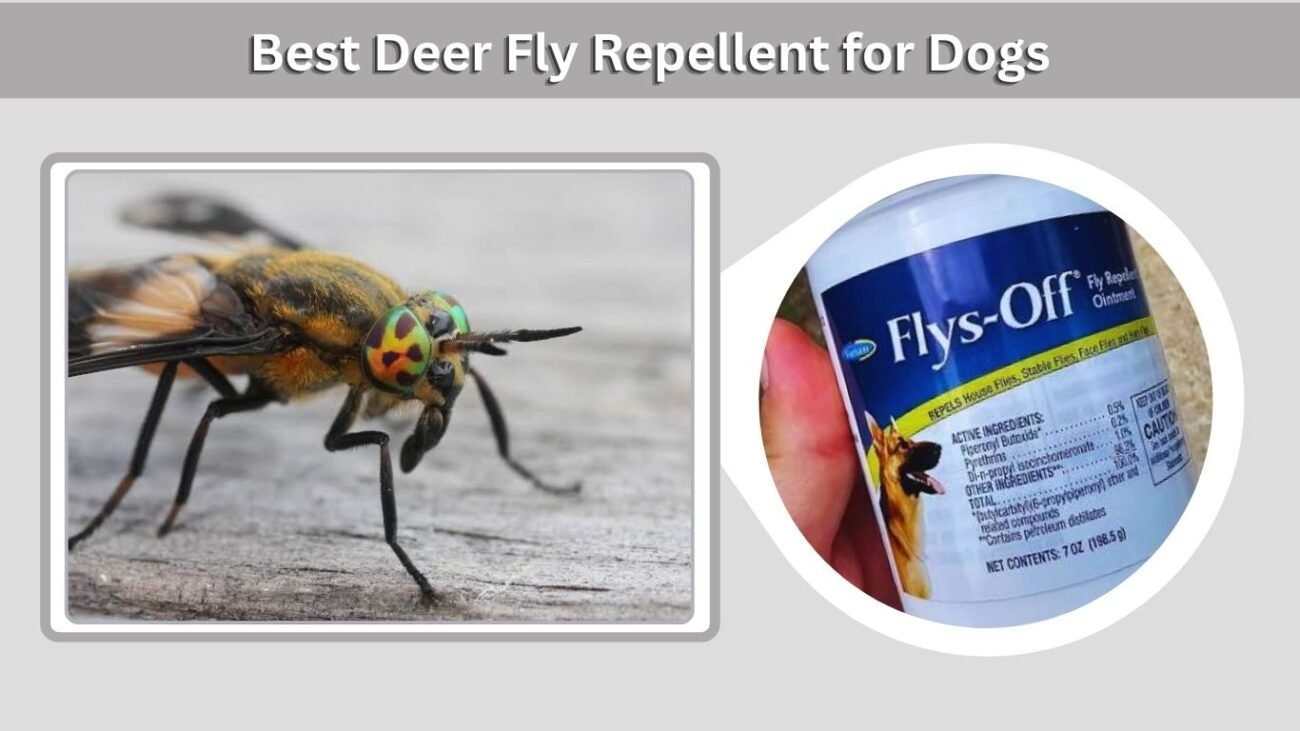
The safest option is a repellent specifically labeled for use on dogs and appropriate for your pet’s age, weight, and health.
Your veterinarian can recommend a suitable product.
Some veterinary parasite-control products have repellent activity against biting insects, but their ingredients and directions vary significantly.
Never assume that a product intended for humans, horses, livestock, or outdoor surfaces is safe for your dog.
Can You Use DEET on Dogs?
Do not use human DEET insect repellent on a dog unless specifically instructed by a veterinarian.
AKC warns that dogs and cats can be sensitive to DEET and that exposure can cause serious neurological problems.
Products designed for humans should therefore not automatically be sprayed onto:
- Dog fur
- Collars
- Harnesses
- Bedding
- Paws
Choose products specifically intended for pets instead.
Be Careful With Permethrin Products
Some properly formulated dog products contain permethrin and can be safe when used according to their labels.
However, concentrated products or those designed for other animals should never be improvised for use on dogs.
Permethrin is also particularly dangerous to cats, so households containing both cats and dogs require additional caution.
Natural Deer Fly Repellent for Dogs
“Natural” does not automatically mean pet-safe.
Homemade recipes often contain highly concentrated essential oils.
PetMD specifically cautions that ingredients found in some homemade repellents—including tea tree oil, citronella, geranium oil, limonene, and garlic oil—can be toxic to dogs.
Avoid putting homemade essential-oil mixtures directly onto your dog’s coat unless your veterinarian has approved the formulation.
Safer nonchemical approaches include:
- Avoiding deer-fly hotspots
- Shortening walks during severe infestations
- Using protective clothing
- Keeping your dog inside when flies are abundant
- Using screens around porches and kennels
How to Protect a Dog’s Ears From Deer Flies
Ear margins can be vulnerable because they contain relatively little protective hair.
Repeated bites may cause:
- Crusting
- Scabbing
- Bleeding
- Irritation
- Secondary infection
A veterinarian may recommend a dog-labeled fly repellent appropriate for use around the ears.
Never place insecticide inside the ear canal or near the eyes unless the product specifically allows it.
If ear edges are already raw or bleeding, have your veterinarian check them before applying additional products.
Deer Fly Bite vs. Tick Bite on a Dog
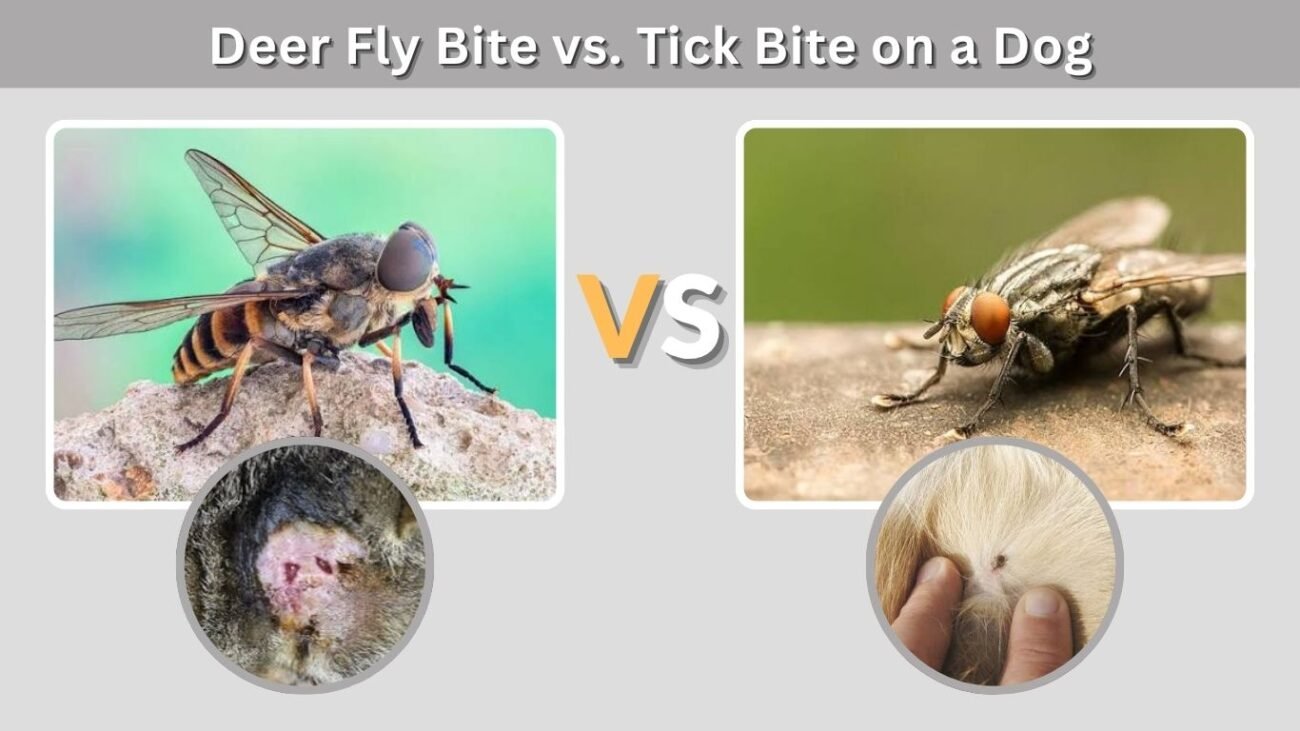
A deer fly does not stay attached after feeding.
A tick generally attaches firmly and may remain on the dog for hours or days.
| Feature | Deer Fly Bite | Tick |
| Insect remains attached | No | Usually yes |
| Bite sensation | Often immediately painful | Often unnoticed |
| Bleeding | Can occur | Usually minor |
| Multiple quick bites | Possible | Less typical |
| Main immediate problem | Pain and irritation | Parasite attachment/disease risk |
A circular red mark alone cannot reliably identify what bit your dog.
If you find an attached parasite, identify it before assuming the mark is from a deer fly.
FAQs
1. Do deer flies bite dogs?
Yes. Female deer flies feed on the blood of vertebrate animals and can bite dogs. Their cutting mouthparts make the bite painful and can leave a small bleeding wound, red bump, swelling, or irritated area.
2. How do I treat a deer fly bite on my dog?
Move your dog away from the flies, gently clean the affected area, and consider a cool compress for minor swelling. Prevent excessive licking or scratching. Contact your veterinarian if swelling worsens, infection develops, or your dog appears unwell.
3. What is the best deer fly repellent for dogs?
Use only an insect repellent specifically labeled as safe for dogs and ideally recommended by your veterinarian. The best product depends on your dog’s age, weight, health, and other parasite-prevention medications.
4. Can I put DEET on my dog?
Human DEET repellents should not be applied to dogs. DEET exposure can cause serious adverse effects in pets. Use a dog-specific product and follow its label carefully rather than using human bug spray.
5. Can deer fly bites make a dog sick?
Most bites cause only localized pain and irritation, but complications can include allergic reactions and secondary skin infections caused by scratching or licking. Multiple severe bites or unusual symptoms should be evaluated by a veterinarian.