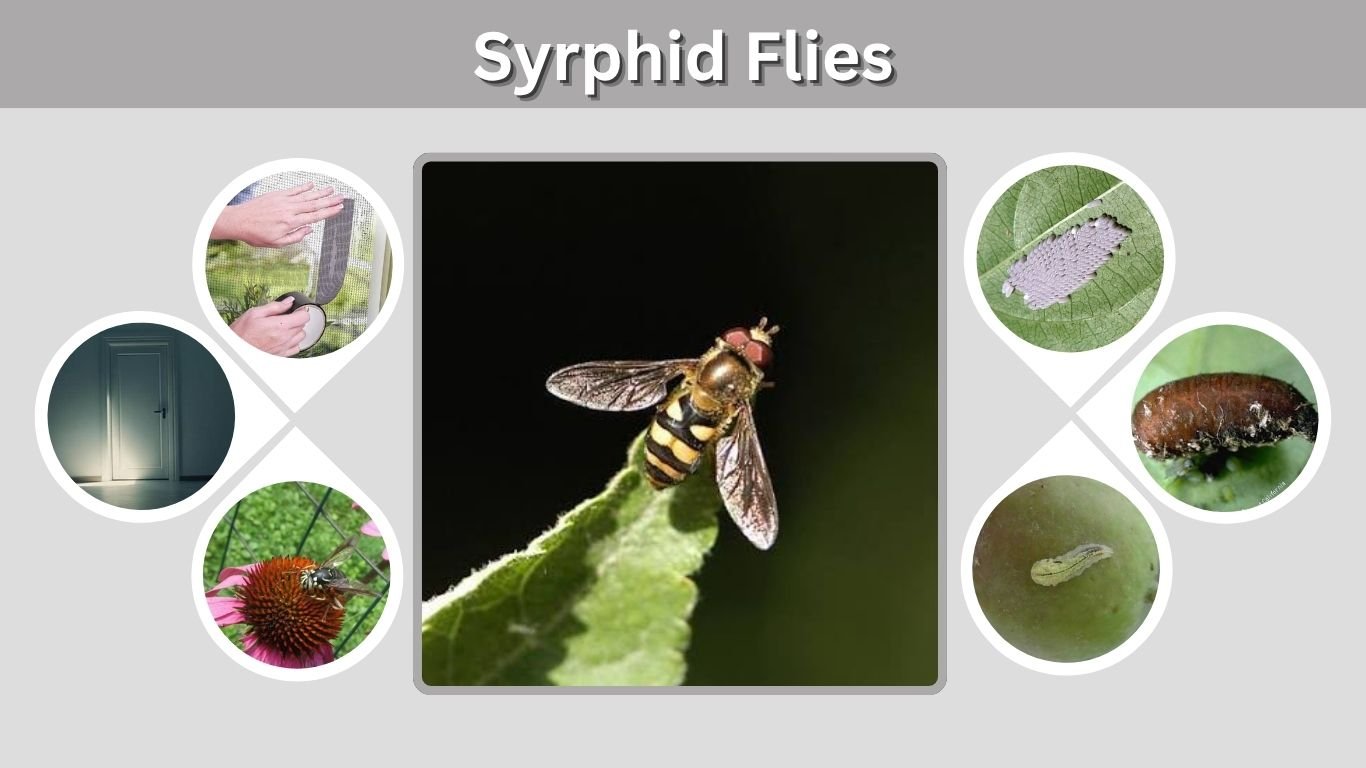
Syrphid flies are fascinating insects commonly seen hovering around flowers, gardens, and flowering shrubs. Also known as hover flies or flower flies, they belong to the family Syrphidae and often resemble bees or wasps because of their yellow-and-black markings. Despite this intimidating appearance, syrphid flies are generally harmless to people. Many species are valuable pollinators, while their larvae can help gardeners by feeding on aphids and other soft-bodied pests. Understanding their identification, life cycle, diet, and behavior makes it easier to appreciate these beneficial insects.
What Are Syrphid Flies?
Syrphid flies are members of the large fly family Syrphidae, which contains thousands of species worldwide. They are commonly called hover flies because adults can remain almost motionless in the air before suddenly darting sideways or forward.
Many syrphid fly species have evolved colors and patterns that resemble bees, yellowjackets, or wasps. This resemblance helps discourage predators even though the flies themselves lack functional stingers.
Syrphid Fly Identification
Common characteristics used for syrphid fly identification include:
- One functional pair of wings
- Large compound eyes
- Yellow, orange, white, or black body markings
- Short antennae compared with many bees
- Ability to hover almost motionlessly
- Rapid, darting flight movements
- No narrow wasp-like waist
- A distinctive wing vein called the spurious vein in many species
Their appearance varies considerably. Some are small yellow and black syrphid flies, while others may appear orange, dark brown, metallic, or nearly black.
Syrphid Fly vs. Bee or Wasp
Syrphid flies are excellent bee and wasp mimics, but there are important differences. Bees and wasps have two pairs of wings, whereas syrphid flies possess only one functional pair.
Bees also tend to have longer antennae and often have visibly hairy bodies. A syrphid fly may hover around a person or land on exposed skin, but it cannot use a stinger like a bee or wasp.
Syrphid Fly Larvae
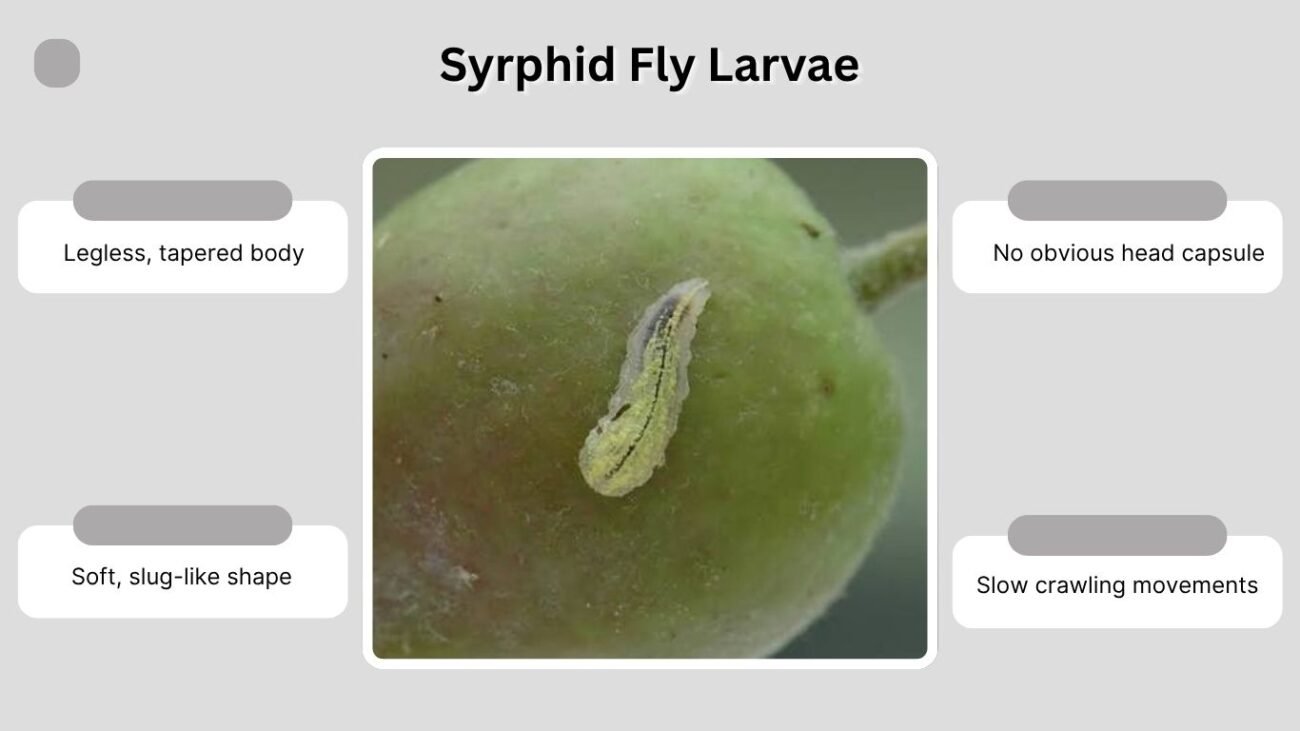
Syrphid fly larvae look completely different from adults. Depending on the species, they may live on plants, in decaying organic material, in water, or around insect colonies.
The larvae of several important garden species are predators. These larvae can consume significant numbers of aphids before reaching adulthood, making them valuable natural pest-control organisms.
What Do Syrphid Fly Larvae Look Like?
Predatory syrphid fly larvae often have a distinctive appearance:
- Legless, tapered body
- Soft, slug-like shape
- Green, cream, brown, or translucent coloration
- Approximately caterpillar-like at first glance
- No obvious head capsule
- Slow crawling movements
A long green syrphid fly larva found near aphid colonies is therefore often beneficial rather than harmful.
Do Syrphid Fly Larvae Eat Aphids?
Yes. Larvae of many syrphid species are important aphid predators.
They search leaves and stems for aphids and other soft-bodied insects. After catching prey, the larva pierces it and consumes its body fluids. Individual larvae may eat many aphids during development.
Their prey may also include:
- Scale insect crawlers
- Thrips
- Small caterpillars
- Mealybugs
- Other soft-bodied arthropods
Because of this behavior, syrphid flies can complement ladybugs and lacewings in gardens and agricultural environments.
Syrphid Fly Life Cycle
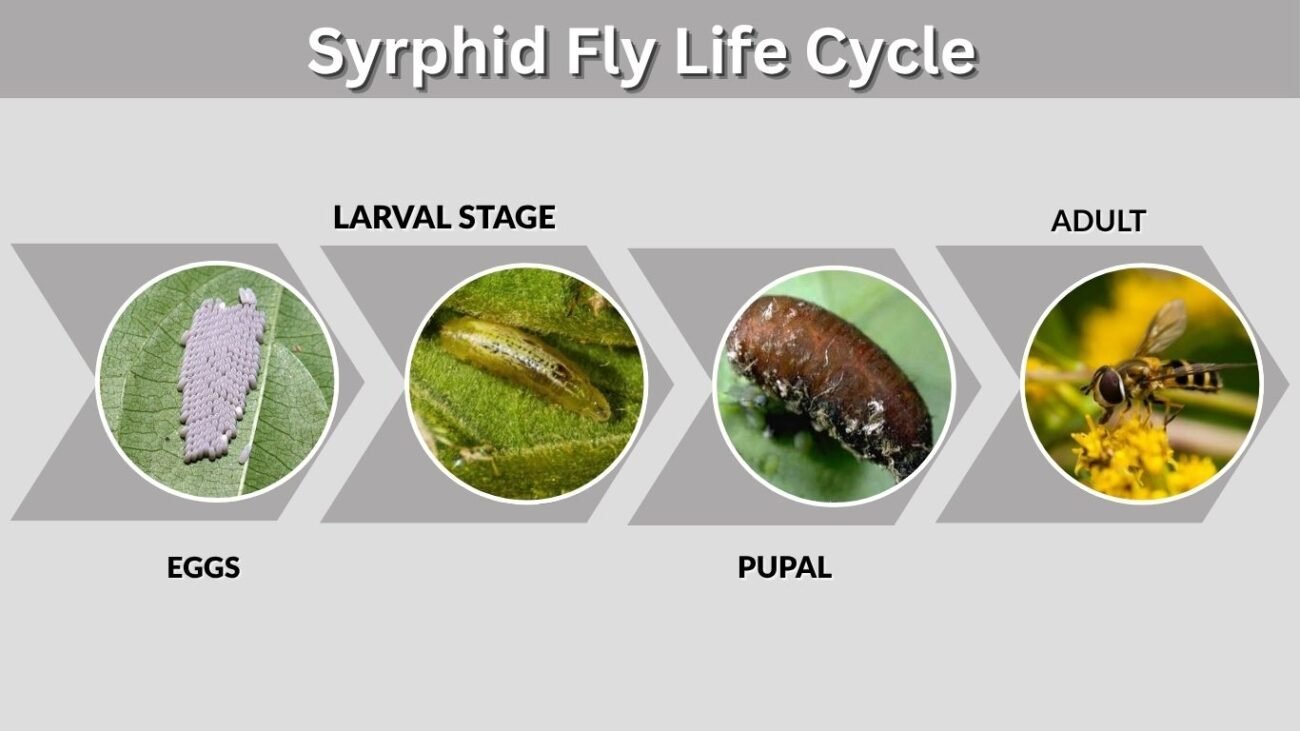
Syrphid flies undergo complete metamorphosis. Their development includes four distinct stages: egg, larva, pupa, and adult.
The duration of the syrphid fly life cycle varies depending on species, temperature, food availability, and environmental conditions.
Syrphid Fly Eggs
Female syrphid flies usually select egg-laying sites that provide suitable food for their larvae. Predatory species frequently deposit tiny eggs close to colonies of aphids.
The eggs are typically pale, elongated, and extremely small. Placing them near prey gives newly hatched larvae immediate access to food.
Larval Stage
After hatching, syrphid fly larvae begin feeding. Predatory larvae move through vegetation searching for aphids, while species with different lifestyles may consume decaying plants, microorganisms, fungi, or other organic material.
The larvae grow through several developmental stages before becoming mature enough to pupate.
Syrphid Fly Pupa
A mature larva eventually forms a pupa. The pupal case is often teardrop-shaped or oval and may be attached to a leaf, stem, or another protected surface.
Major transformation takes place inside the pupa as the insect develops its adult wings, legs, eyes, and other structures.
Adult Syrphid Fly
The adult emerges from the pupal case and begins searching for flowers. Adults commonly consume nectar for energy and pollen for nutrients.
Eventually, males and females mate, and females search for appropriate places to deposit their eggs, beginning another generation.
Are Syrphid Flies Beneficial?
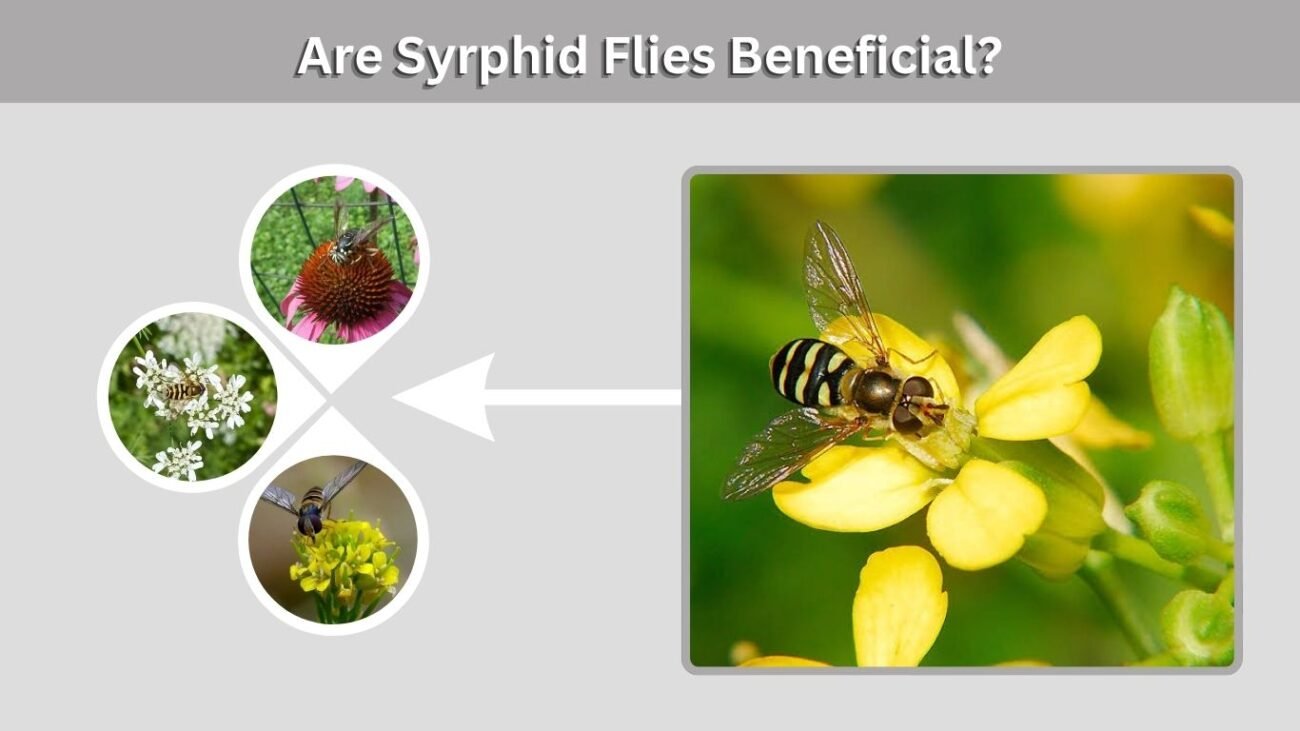
Syrphid flies are considered some of the most useful insects in gardens and natural ecosystems. Their importance comes primarily from their roles as pollinators and, in many species, biological pest-control agents.
Adults frequently visit flowers, while predatory larvae help suppress populations of plant-feeding insects.
Pollination
Adult syrphid flies feed heavily on flower nectar and pollen. As they travel from flower to flower, pollen can be transferred between plants.
They visit many types of flowering vegetation, including agricultural crops, garden plants, and native wildflowers. Their pollination activity can be particularly important in environments where several groups of insects contribute to pollination.
Natural Aphid Control
Aphid-eating syrphid fly species are especially valued by gardeners. Adult females detect aphid-infested plants and lay eggs nearby.
When larvae hatch, they attack the aphids. Encouraging syrphid flies can therefore reduce dependence on broad-spectrum insecticides that might otherwise kill beneficial insects along with pests.
How to Attract Syrphid Flies
You can make a garden more attractive to syrphid flies by providing continuous sources of nectar and pollen.
Helpful plants include small, accessible flowers from groups such as:
- Alyssum
- Dill
- Fennel
- Yarrow
- Cilantro
- Parsley
- Queen Anne’s lace
- Native asters and other wildflowers
Maintaining a mixture of flowering plants throughout the growing season provides adult flies with dependable food.
Do Syrphid Flies Bite or Sting?
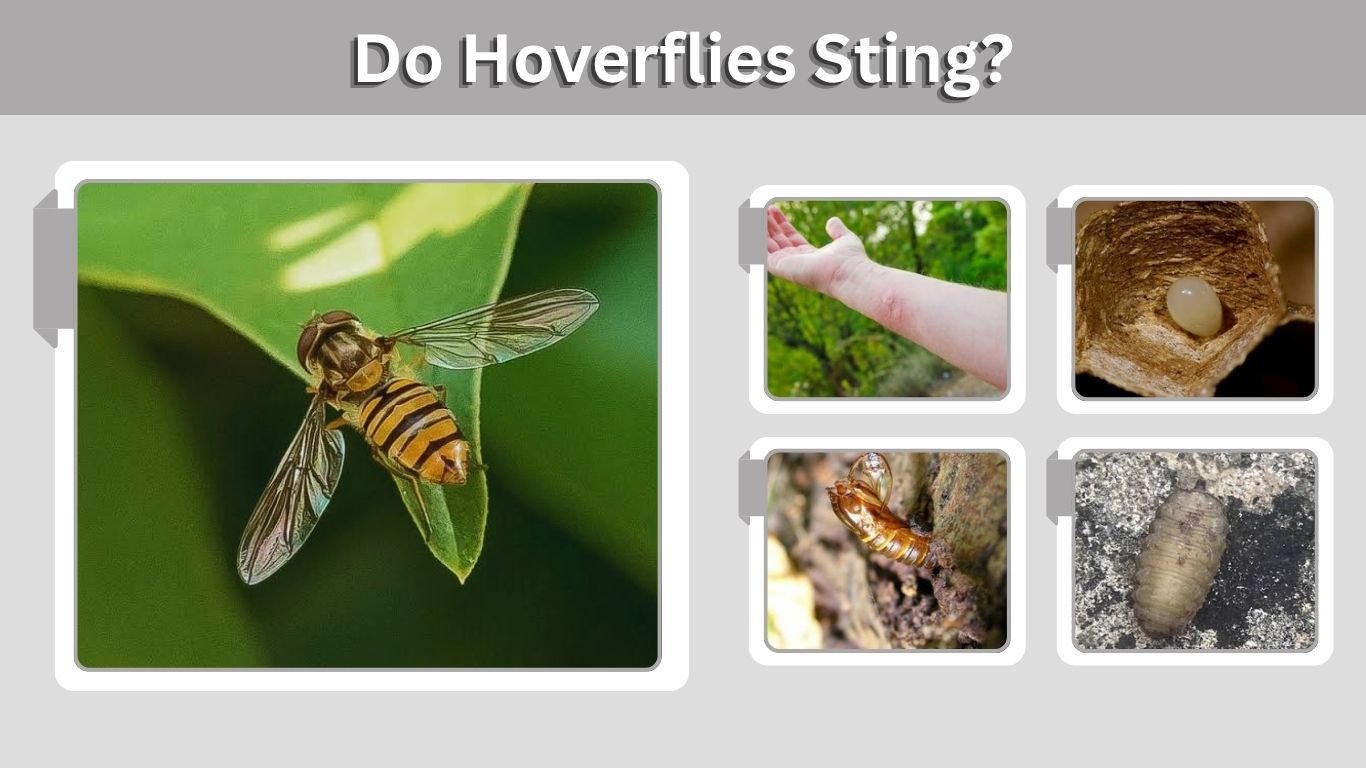
Syrphid flies do not sting. Their bee-like or wasp-like appearance is defensive mimicry rather than evidence that they possess a dangerous stinger.
People sometimes become concerned when several hover flies repeatedly approach them, but this behavior normally poses no threat.
Do Syrphid Flies Bite?
Syrphid flies are not considered biting insects of medical importance. Adults primarily have mouthparts adapted for feeding on nectar, pollen, and related foods rather than attacking humans.
Occasionally, a fly may land on a person’s skin, particularly when attracted by moisture, sweat, or salts. This can feel irritating, but it should not be confused with the painful bite of a horse fly or deer fly.
Do Syrphid Flies Sting?
No. Syrphid flies cannot sting people because they lack the stinging apparatus of bees and wasps.
Their yellow-and-black coloration simply makes predators think twice before attacking them. This type of resemblance to a harmful species is known as mimicry.
How to Get Rid of Syrphid Flies
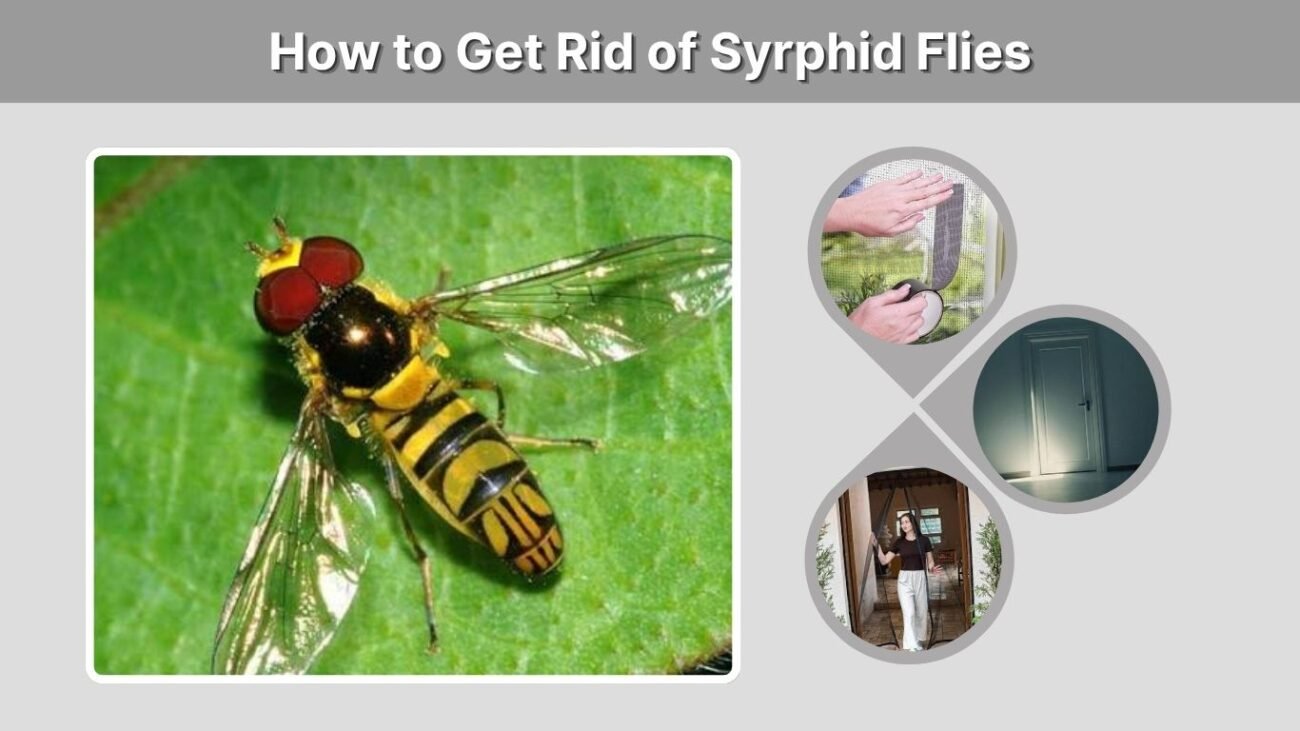
In most situations, there is no need to eliminate syrphid flies. They generally do not damage homes, plants, people, or pets, and many species provide valuable ecological benefits.
If unusually large numbers are appearing indoors, controlling what attracts them is better than applying pesticides.
Managing Syrphid Flies Around the Home
If syrphid flies become troublesome:
- Repair damaged window and door screens.
- Keep doors closed when possible.
- Remove decaying organic material near entrances.
- Avoid leaving overly ripe fruit exposed indoors.
- Check drains or consistently wet organic matter if fly activity persists.
- Use screens and physical exclusion instead of broad insecticide treatments.
Outdoor syrphid flies visiting flowers should normally be left alone.
Heavy pesticide use can actually be counterproductive because it may kill syrphid larvae and other natural enemies that help keep aphid populations under control.
Common Types of Syrphid Flies
Syrphidae is a very diverse family, so syrphid flies occur in numerous colors, shapes, and sizes.
Oblique Syrphid Fly
The oblique syrphid fly is recognized by its distinctive yellow abdominal markings. Adults visit flowers, while the larvae of related species can be predators of aphids and other small insects.
Common Oblique Syrphid Fly
The common oblique syrphid fly is another familiar flower visitor in parts of North America. Its wasp-like pattern can make it look intimidating, although it is harmless to humans.
Masquerading Syrphid Fly
Some species, including members of groups such as Helophilus, have particularly convincing bee or wasp-like patterns. These flies demonstrate how effectively syrphids use mimicry for protection.
Drone Flies
Drone flies are larger syrphids that often resemble honeybees. Some have aquatic larvae commonly called rat-tailed maggots because they possess a long breathing tube.
Despite their unusual larvae, adult drone flies are harmless flower visitors.
FAQs
What is the scientific name of a syrphid fly?
Syrphid flies belong to the family Syrphidae within the insect order Diptera. Individual species have their own scientific names.
Are syrphid flies good for gardens?
Yes. Adult syrphid flies can pollinate flowers, while larvae of many species eat aphids and other plant pests.
Why do syrphid flies look like wasps?
Their resemblance to wasps and bees is protective mimicry. Predators may avoid attacking them because they mistake the harmless flies for insects capable of stinging.
Where do syrphid flies lay their eggs?
Predatory species commonly lay eggs on leaves or stems near aphid colonies. Other species choose habitats appropriate for the particular food required by their larvae.
Should I kill syrphid flies?
Usually not. Syrphid flies are harmless and often beneficial. Unless they are creating an unusual indoor nuisance, allowing them to remain in gardens can support pollination and natural pest control.