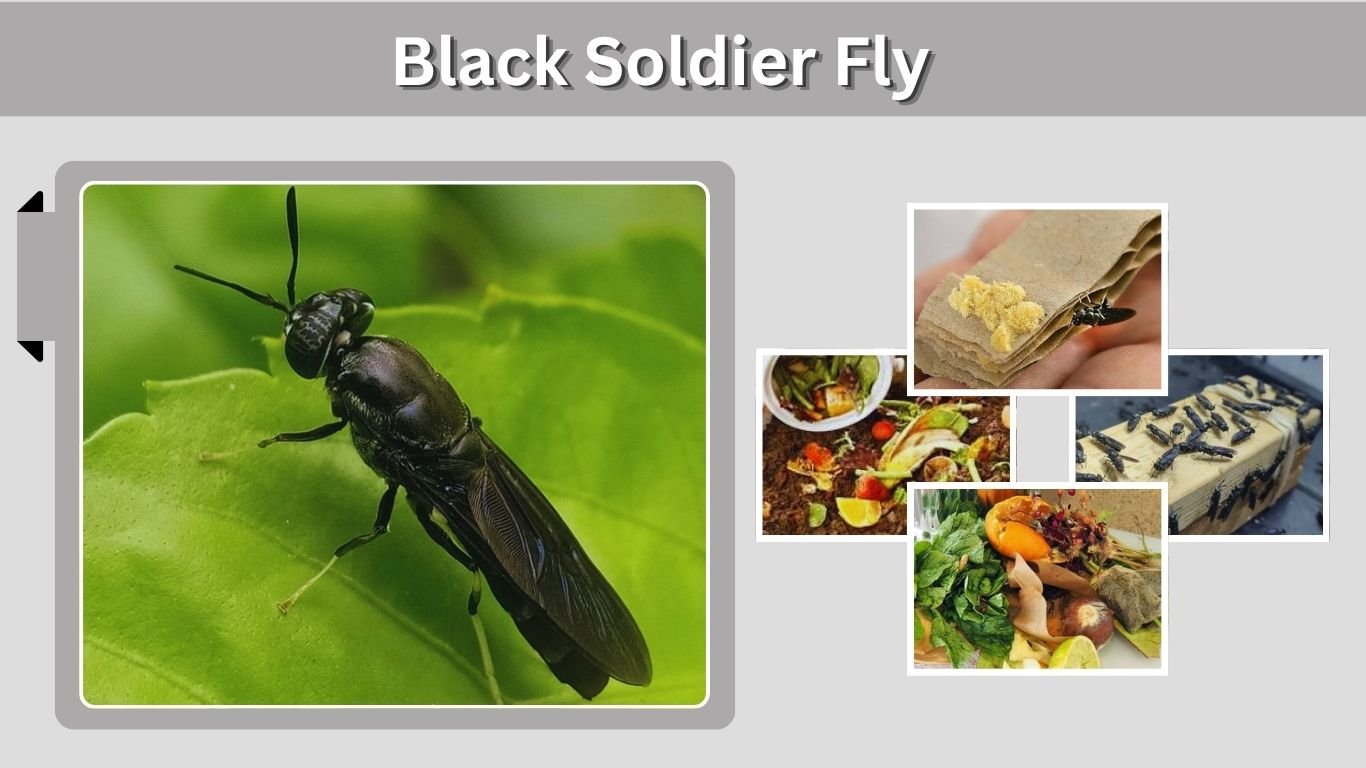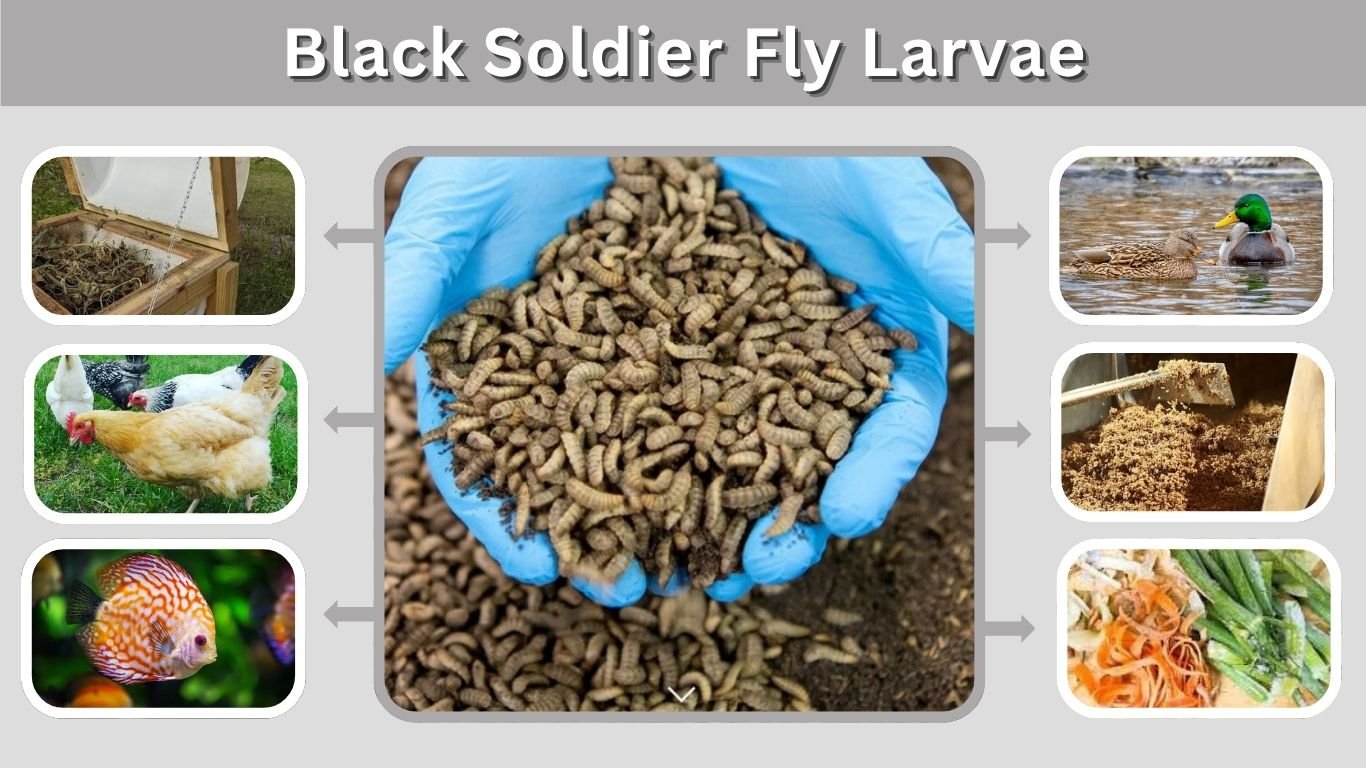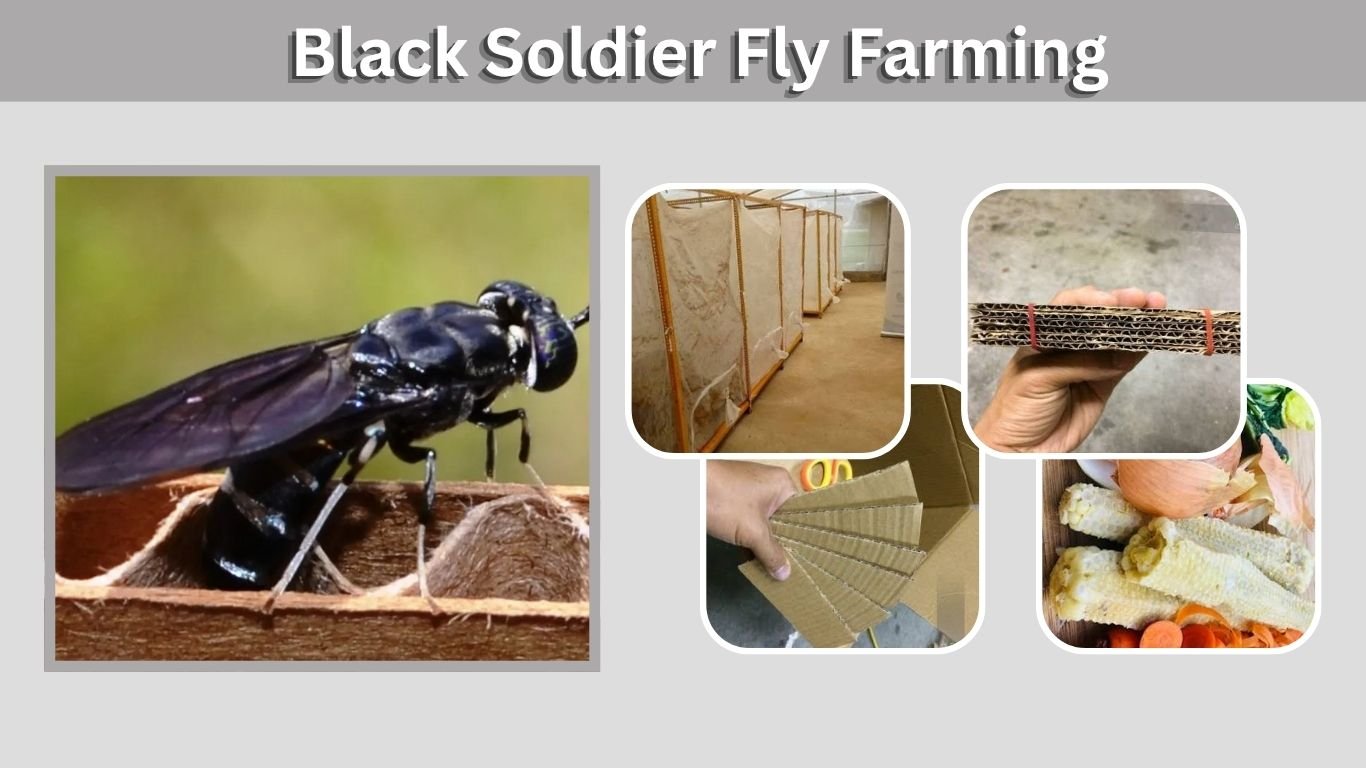
Black soldier fly farming is a practical way to turn organic materials into valuable insect protein, especially for poultry, fish, and other animal-feed systems. The larvae of the black soldier fly (Hermetia illucens) grow rapidly on many organic substrates and can also produce a nutrient-rich residual material useful in soil applications where permitted. From a simple backyard bin to an automated commercial facility, successful farming depends on good breeding conditions, suitable feed, moisture control, efficient harvesting, and reliable markets.
What Is Black Soldier Fly Farming?
Black soldier fly farming involves breeding adult black soldier flies and raising their larvae on suitable organic materials. The larvae consume and convert organic matter into insect biomass containing valuable protein and fat. Farmers can harvest the larvae for animal-feed applications while also recovering the remaining processed substrate. This combination makes BSF farming attractive for both waste management and feed production.
Why Black Soldier Fly Larvae Are Farmed
Farmers primarily raise BSF larvae because they can process a wide range of organic materials while producing useful biomass.
Common benefits include:
- Converting suitable organic waste into useful products
- Producing larvae for animal feed
- Reducing the amount of organic material requiring disposal
- Producing residual material that may have fertilizer value
- Creating potential income from otherwise low-value materials
- Supporting more circular farming systems
BSF larvae have been studied particularly for poultry and aquaculture feed because of their nutritional value.
Black Soldier Fly Farming Equipment
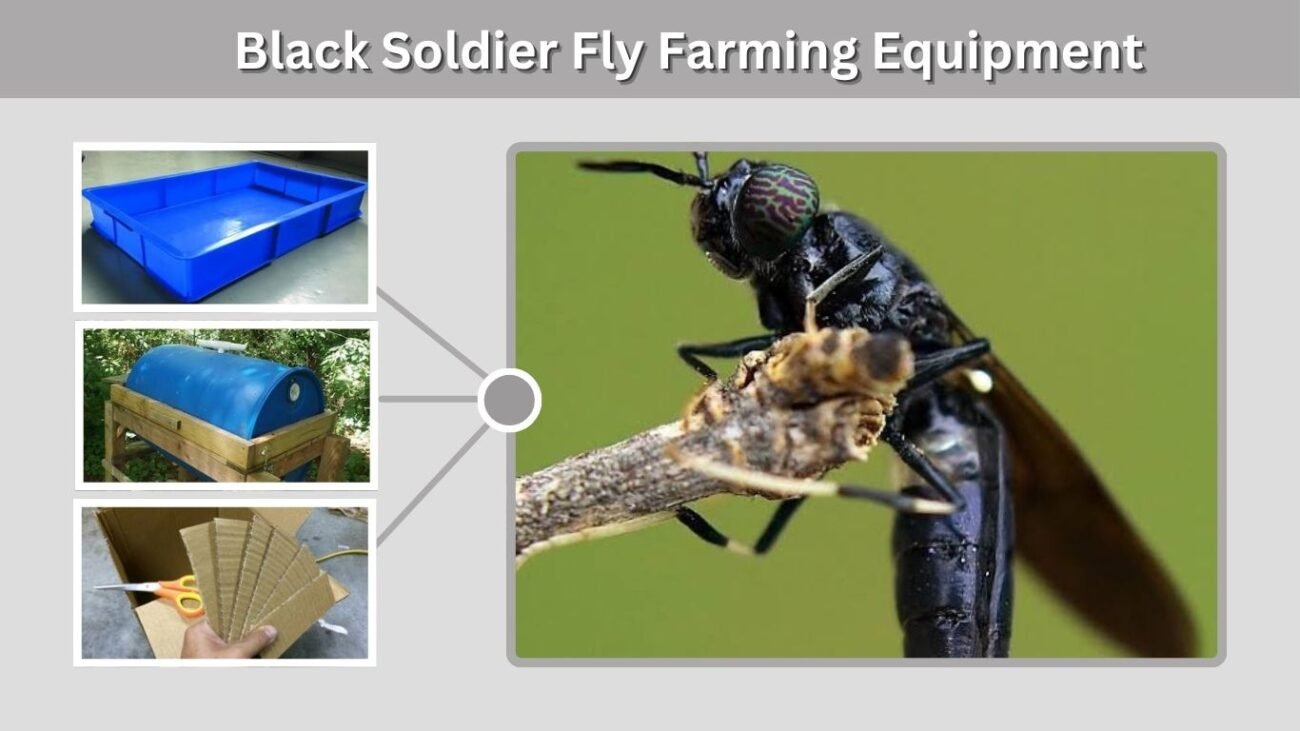
A beginner does not need an expensive automated facility. A small operation can start with plastic containers, basic breeding cages, and simple harvesting equipment. Commercial farms use more advanced environmental controls, mechanical feeding systems, separators, dryers, and processing machinery.
Essential Equipment
A basic BSF farm may require:
- Adult fly breeding cage
- Egg-laying blocks or strips
- Egg collection containers
- Nursery trays
- Larvae-growing bins or trays
- Organic feed containers
- Thermometer
- Humidity monitor
- Water or misting system
- Sieves or screening equipment
- Harvesting containers
- Scales
- Protective gloves
- Cleaning equipment
Maintaining suitable temperature, humidity, substrate moisture, and aeration is important for productive larval growth.
Black Soldier Fly Farming Bin
Small farms frequently use plastic bins or trays for growing larvae.
A good container should provide sufficient surface area, drainage where necessary, ventilation, and enough depth to hold feed without becoming excessively compacted. The substrate should remain moist without becoming waterlogged.
Overcrowding can increase heat inside the larval mass, so farmers should monitor both larval density and temperature. Research shows that dense groups of larvae can generate measurable additional heat.
Black Soldier Fly Farming Step by Step]
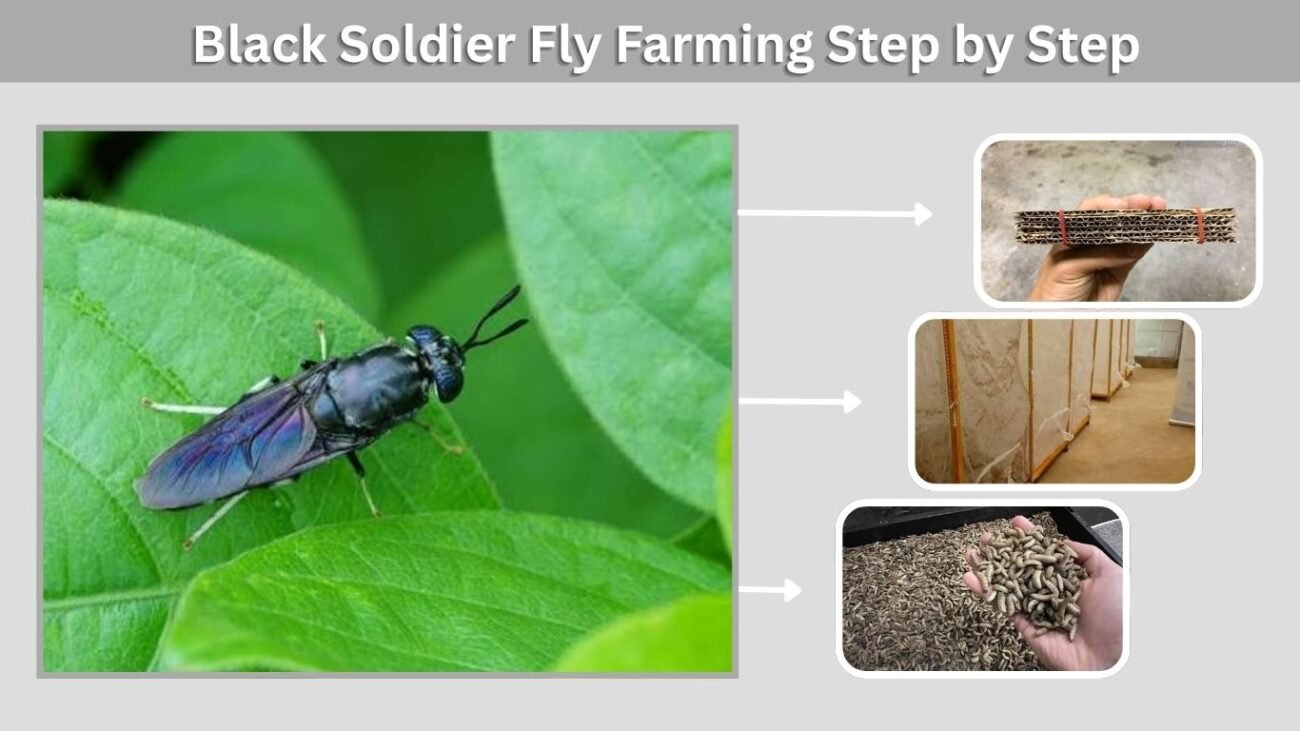
Successful BSF production requires maintaining a continuous life cycle. Some larvae are harvested for use or sale, while others must be allowed to become pupae and adult flies so they can reproduce and provide eggs for the next generation.
1. Establish a Breeding Colony
Start with BSF eggs, young larvae, prepupae, or an established breeding colony.
Allow selected larvae to mature into darker prepupae and pupae. Adults eventually emerge and should be kept in a suitable breeding enclosure.
Adult black soldier flies mate and females lay eggs near attractive organic material rather than directly in wet feed.
2. Collect the Eggs
Provide small dry cracks where females can deposit eggs.
Corrugated cardboard, thin wooden strips, or purpose-built egg-laying blocks can work well. Position them near an attractive substrate while keeping the egg-laying surface relatively dry.
Collecting eggs makes production easier to organize because farmers can place known quantities into nursery containers.
3. Hatch and Raise Young Larvae
After hatching, the tiny larvae need finely textured, moist feed that is easy to consume.
Nursery management is particularly important because young larvae are more sensitive than larger larvae. Keep their substrate moist but not flooded and protect them from temperature extremes.
4. Transfer Larvae to Growing Trays
As larvae become larger, transfer them to production bins or trays containing suitable organic feed.
Avoid putting excessive amounts of material into a single container. Deep, compact feed can develop poor aeration and excessive heat.
5. Harvest Mature Larvae
Larvae can be harvested once they reach the desired size. Those approaching the prepupal stage become darker and begin leaving the feeding substrate.
Some farm designs use sloped ramps that allow migrating prepupae to crawl automatically into collection containers.
Always retain enough individuals to become adults if you want a self-sustaining breeding colony.
What Do Black Soldier Fly Larvae Eat?
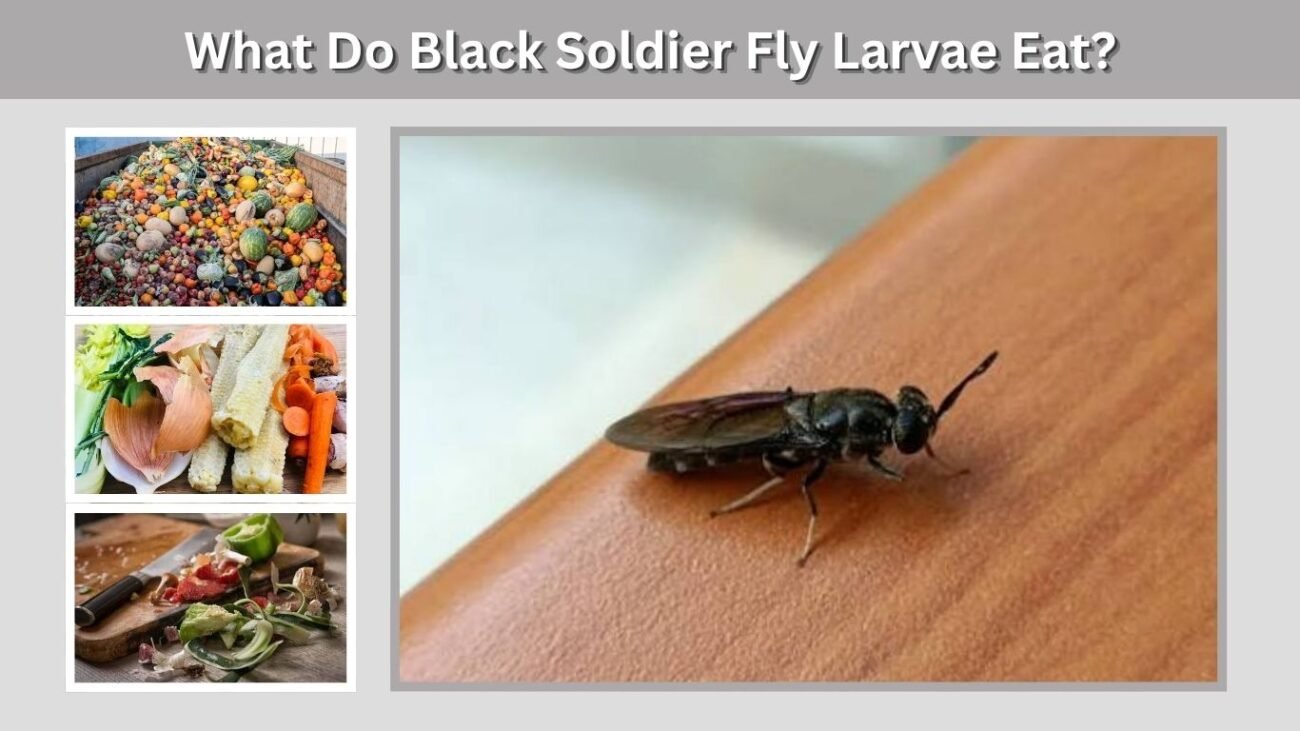
One of the major advantages of BSF larvae is their ability to consume many organic materials. However, larvae do not perform equally well on every substrate. Diet composition, moisture, temperature, density, and feeding rate all affect development and final nutritional composition.
Common Feeding Materials
Depending on local regulations and the intended use of the larvae, substrates may include:
- Fruit waste
- Vegetable scraps
- Market waste
- Food-processing residues
- Brewery by-products
- Grain residues
- Selected agricultural by-products
- Suitable kitchen food scraps
- Certain livestock manures
FAO sources describe BSF larvae as capable of processing materials ranging from food and market waste to agricultural organic residues.
Keep the Feed Moist but Not Watery
Substrate moisture strongly affects growth.
Research has reported good BSF performance around roughly 60–70% substrate moisture in many production systems, although the ideal level varies with substrate and farm design. Very dry material limits feeding, while excessively wet material can reduce aeration and create management problems.
Best Conditions for Black Soldier Fly Farming
BSF are warm-climate insects, making tropical and subtropical regions naturally favorable for production. Controlled farms can also operate successfully in cooler climates using heating, lighting, and humidity management.
Temperature
A temperature around the upper 20s Celsius is commonly used for BSF rearing. Research and reviews frequently report strong performance around approximately 26–29°C, although the insects tolerate a wider range.
Temperature should also be measured inside the larval substrate rather than only in the surrounding room because dense feeding populations generate heat.
Humidity
Moderate to relatively high humidity generally supports BSF production.
Around 60–70% relative humidity is commonly cited for controlled rearing, though conditions required by adult flies and larvae may differ somewhat.
Light
Larvae generally prefer protected, darker feeding environments, whereas adult flies require appropriate light for normal activity and successful reproduction.
Commercial breeding rooms may therefore use natural or artificial lighting while keeping larval production trays relatively shaded.
Black Soldier Fly Farming for Chickens
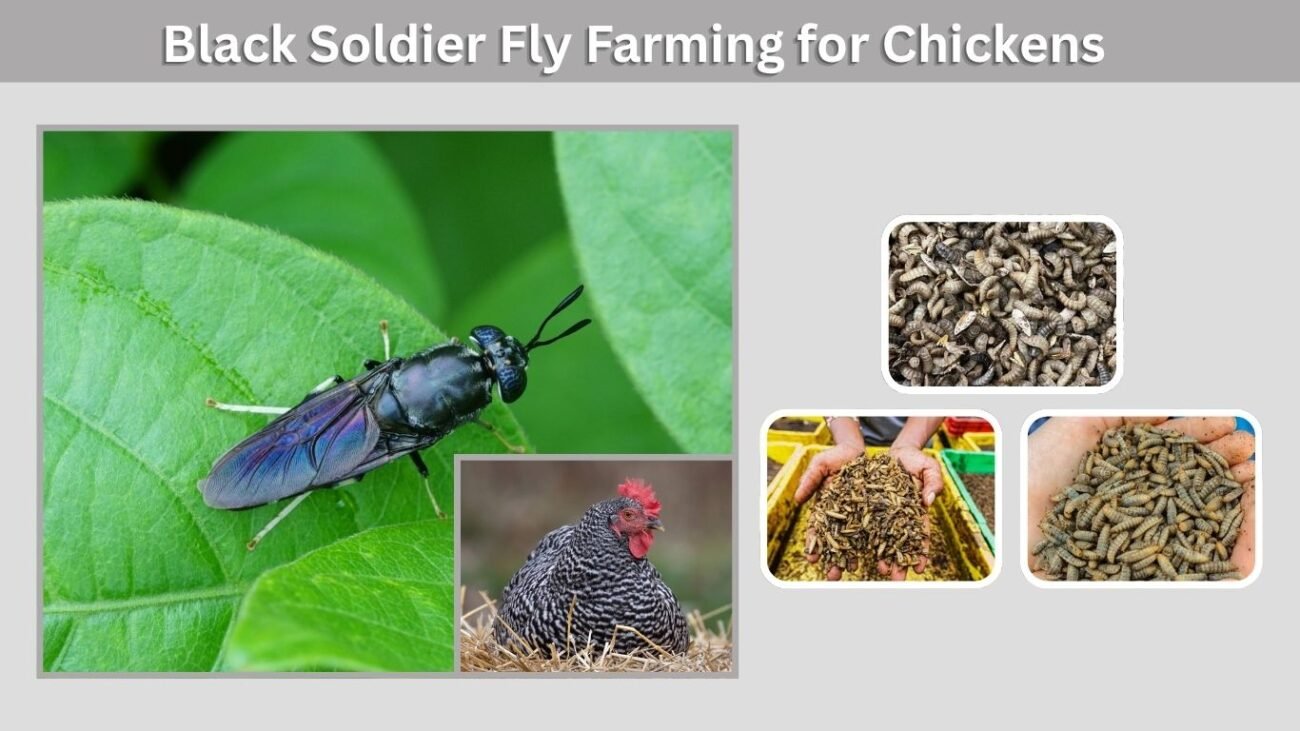
BSF larvae are especially popular among poultry keepers because chickens readily consume them. They can be offered fresh, dried, or processed into feed ingredients depending on the production system and applicable feed regulations.
Ways to Prepare Larvae
Farmers may use larvae as:
- Fresh live larvae
- Dried whole larvae
- Ground insect meal
- Processed protein ingredients
- Ingredients in formulated poultry diets
The appropriate inclusion rate depends on the nutritional formulation of the overall diet. BSF larvae should not automatically be treated as a complete replacement for balanced poultry feed. Research continues to evaluate how different BSF inclusion levels affect poultry performance and nutrition.
DIY vs Commercial Black Soldier Fly Farming
A backyard farmer and a commercial producer operate on the same biological principles, but equipment and management differ considerably.
DIY Black Soldier Fly Farm
A small system can use inexpensive bins, homemade breeding cages, locally available organic materials, and manual harvesting.
DIY production is useful for:
- Backyard chickens
- Small fish farms
- Composting suitable food scraps
- Learning BSF breeding techniques
- Testing a business idea before investing heavily
Starting small allows farmers to understand temperature, feeding rate, odor control, moisture, and colony management.
Commercial Black Soldier Fly Farm
Large-scale production may include:
- Climate-controlled breeding rooms
- Automated feeding
- Large larval trays
- Mechanical separation
- Egg-production systems
- Drying machines
- Grinding equipment
- Oil extraction
- Automated monitoring
- Packaging systems
Automation reduces labor but requires significantly greater capital, maintenance, power, and technical management.
Is Black Soldier Fly Farming Profitable?
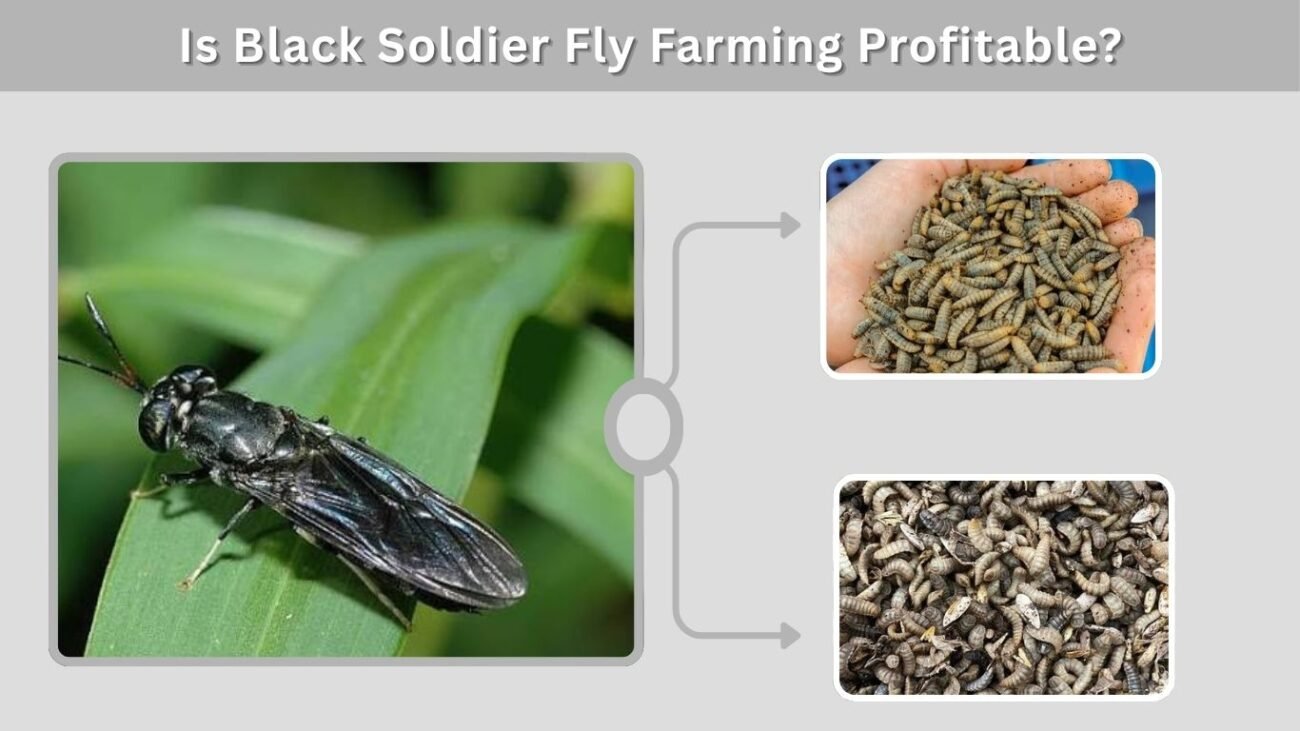
Black soldier fly farming can become a commercial business, but profitability is not automatic. The economics depend heavily on feedstock cost, production efficiency, labor, energy use, mortality, processing expenses, regulations, and the selling price of final products.
Potential Products
A farm may generate income from:
- Live larvae
- Dried larvae
- Insect meal
- Larval oil
- Eggs or starter colonies
- Breeding stock
- Processed residual substrate
- Organic-waste management services
Businesses located near inexpensive organic feed sources may reduce transportation and raw-material costs.
Commercial operators should calculate production cost per kilogram rather than simply estimating revenue from larvae.
Common Black Soldier Fly Farming Problems
Beginners often experience inconsistent production because the larvae are treated like ordinary compost worms. BSF farming requires closer control over the breeding cycle, moisture, temperature, feed quality, and larval density.
Problems to Watch For
Common difficulties include:
- Feed becoming too wet
- Substrate becoming too dry
- Overcrowded larvae
- Excessive heat
- Poor ventilation
- Strong anaerobic odors
- Ant infestations
- Rats or other predators
- Low egg production
- Poor adult mating
- Mold problems
- Inconsistent feed quality
- Failure to save enough breeding stock
Daily observation helps identify problems before an entire batch is affected.
FAQs
How do I start black soldier fly farming?
Begin with a small breeding colony or purchased eggs or larvae. Set up nursery and grow-out containers, provide suitable organic feed, control moisture and temperature, and reserve part of each generation for breeding.
What is the best temperature for black soldier fly farming?
Around 26–29°C is commonly used for productive BSF rearing, although exact optimal conditions depend on life stage, substrate, and production system.
What can black soldier fly larvae eat?
They can process many organic materials, including suitable fruit and vegetable waste, food-processing residues, agricultural by-products, brewery waste, and some manures. The substrate used for feed-producing insects must comply with applicable local regulations.
Can I farm black soldier flies for chickens?
Yes. BSF larvae are widely investigated and used as a poultry-feed ingredient. They can be offered or processed in several forms as part of an appropriately balanced feeding program.
Is black soldier fly farming good for beginners?
Yes, especially when started on a small scale. A simple bin and breeding setup can help beginners learn feeding, harvesting, moisture management, and reproduction before investing in commercial equipment.