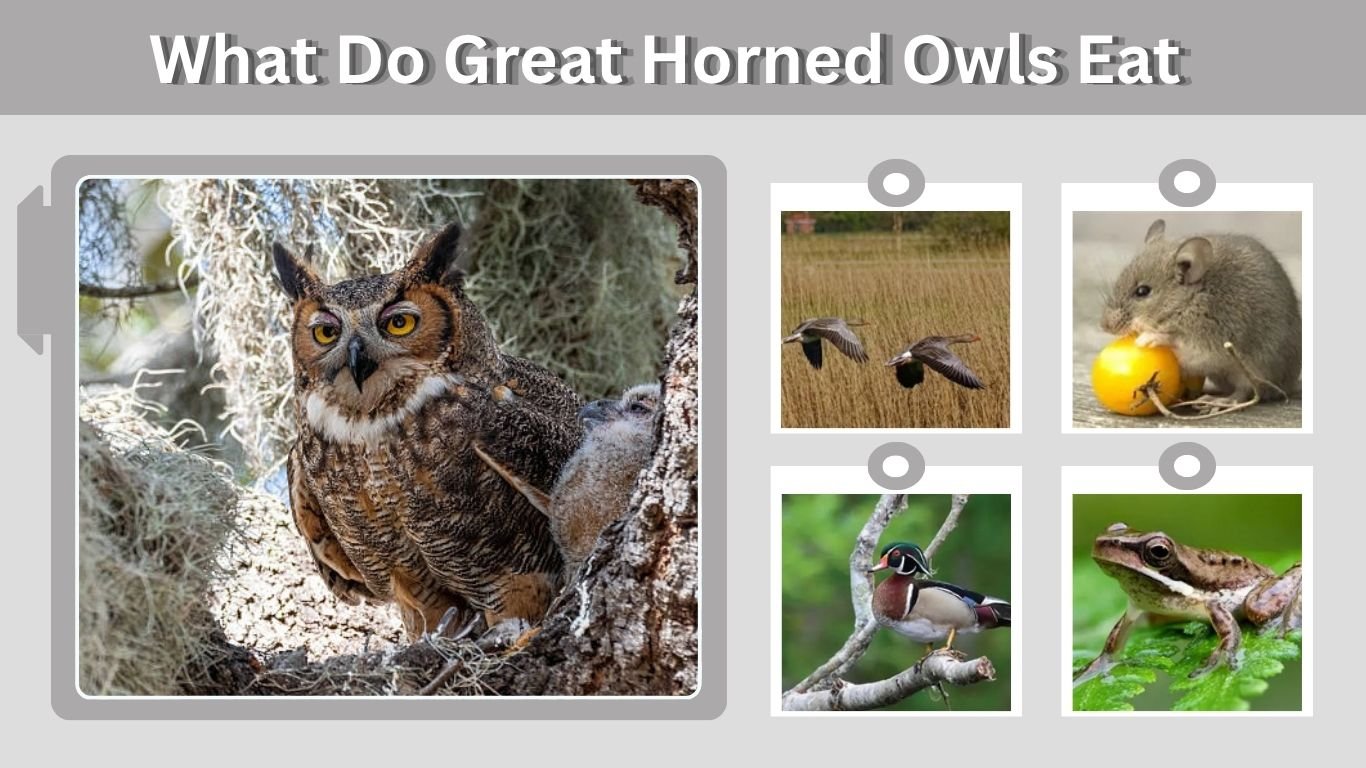
Owls are skilled nocturnal hunters with a surprisingly varied diet. From tiny insects to larger mammals like rabbits and skunks, these birds of prey adapt their menu based on habitat, size, and species. While rodents like mice and rats are staple foods, owls also eat amphibians, reptiles, birds, and even fish. In this guide, we’ll explore 20 different animals that owls commonly eat, detailing how, when, and where these stealthy predators catch their meals.
1. Mice
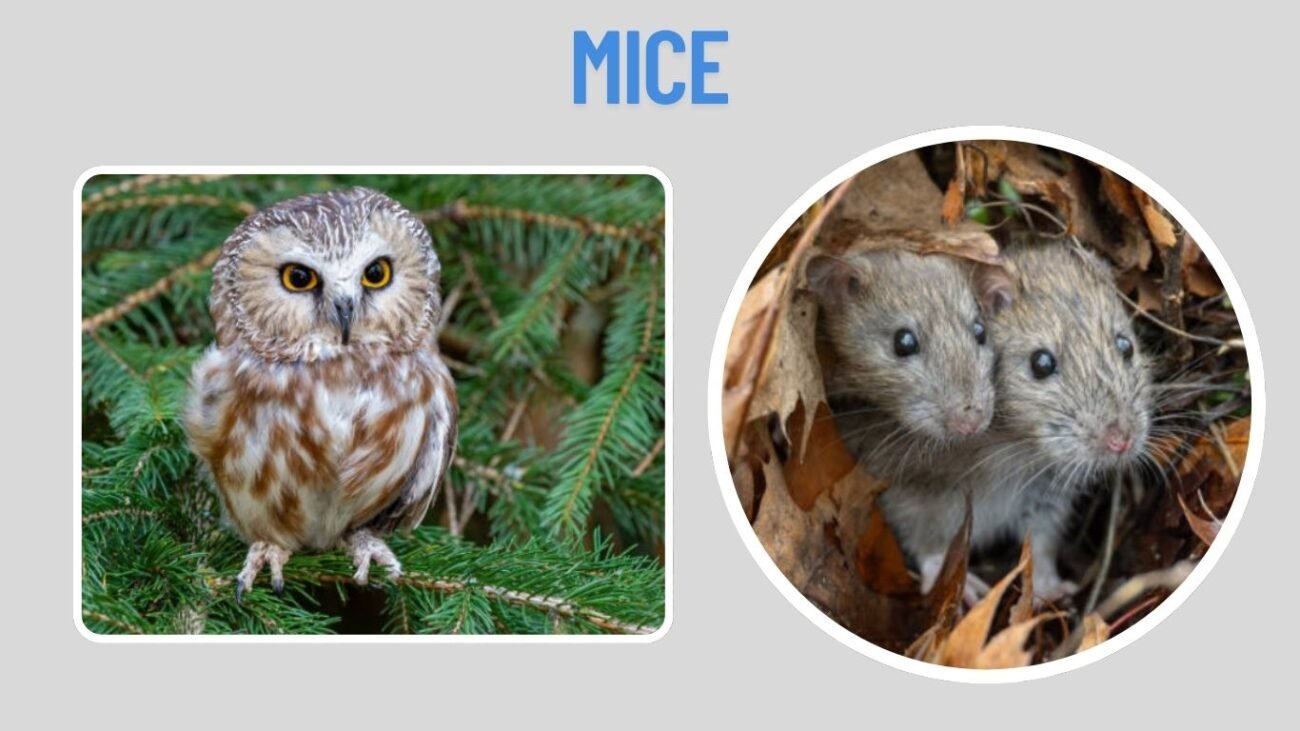
Owls commonly prey on mice, which are abundant, small, and easy to catch. Mice form a significant part of an owl’s diet, especially for barn owls and screech owls, offering high protein and energy.
How Owls Hunt Mice
Owls use their exceptional hearing and silent flight to locate and catch mice, even under snow or in total darkness. They rely on precise timing and swift strikes using their sharp talons.
When Are Mice Hunted Most?
Mice are primarily hunted at night when they are most active. Owls with nocturnal habits, like barn owls, patrol fields and barns just after dusk.
Where Do Owls Find Mice?
Mice are typically found in open fields, meadows, farms, and even around human homes. Owls often hunt near grassy areas or barnyards where mouse populations thrive.
Why Mice Are a Preferred Prey
Mice are small enough for most owl species to swallow whole. They’re rich in nutrients and found in nearly every environment, making them an ideal and frequent meal.
2. Rats
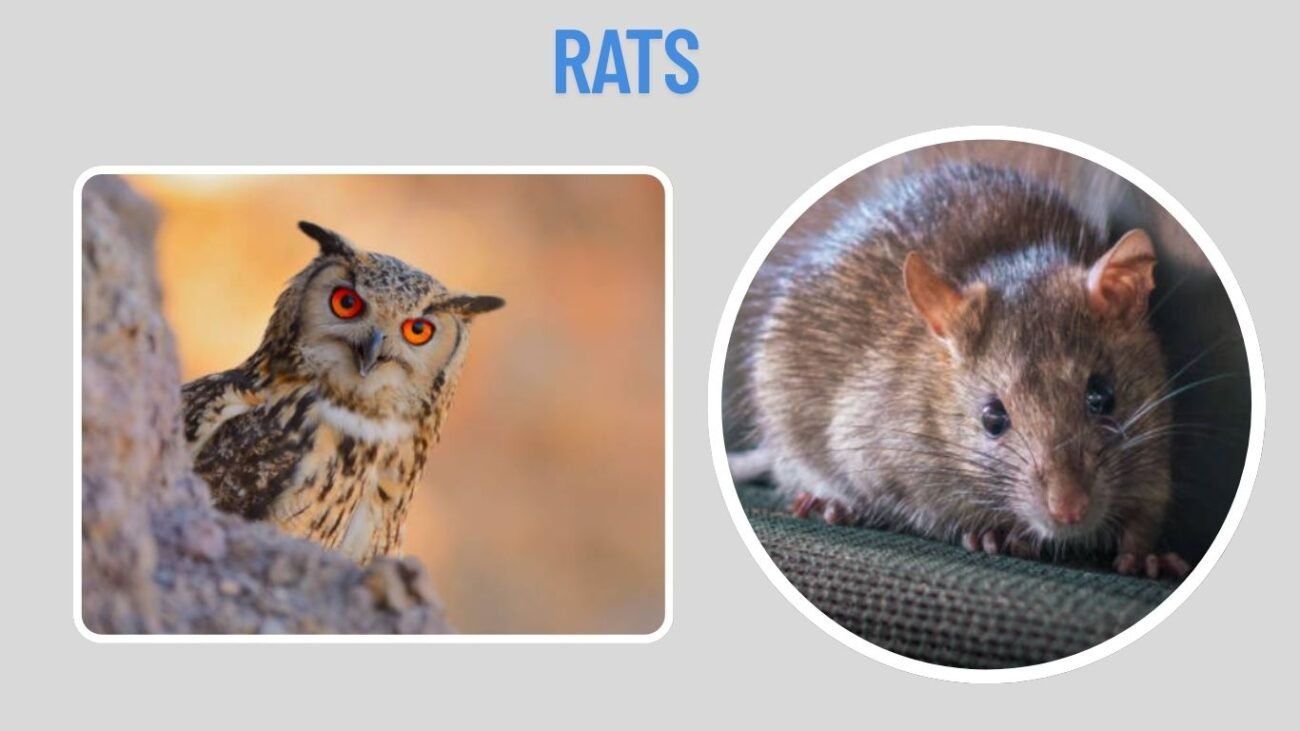
Rats are larger than mice but still a common and nutritious prey for many owl species. Great horned owls, barn owls, and barred owls frequently hunt them in urban and rural areas.
Hunting Tactics for Rats
Owls silently glide and ambush rats using their powerful talons. Their excellent low-light vision allows them to strike with precision, even from a distance.
Most Active Hunting Times
Owls typically hunt rats during the night, especially in the early evening and before dawn when rats emerge to forage.
Common Rat Habitats for Hunting
Rats are found near garbage areas, sewers, barns, and crop fields. Owls perch on rooftops, trees, or fence posts to scout for them.
Why Rats Are Valuable Prey
Due to their size, one rat can provide a full meal for an owl. They are widely available and help owls survive in human-influenced environments.
3. Voles
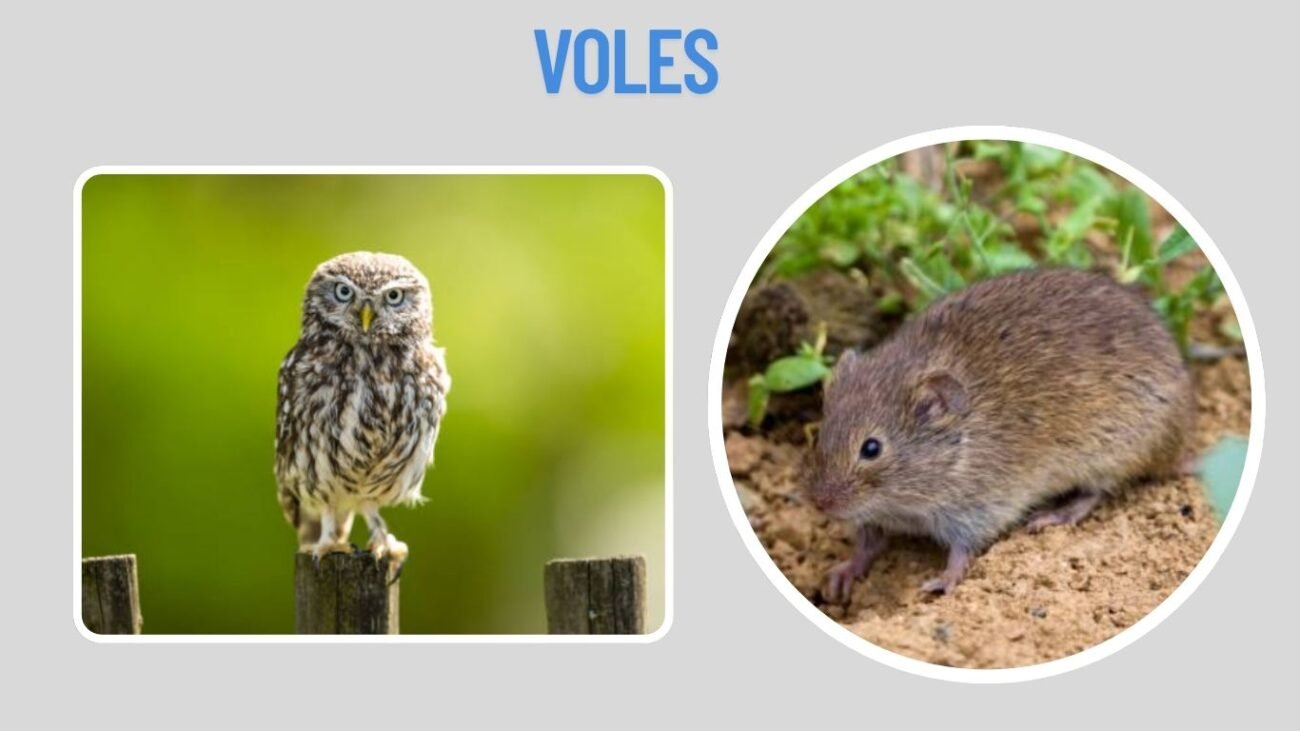
Voles are small, ground-dwelling rodents that resemble mice but have shorter tails and stouter bodies. They are among the top food choices for owls in grasslands and woodlands.
How Owls Capture Voles
Owls detect voles by sound and swoop down silently to grab them through vegetation or even under light snow cover.
Best Time to Hunt Voles
Owls target voles at dusk and during nighttime hours when voles venture above ground to feed on plants and roots.
Where Owls Find Voles
Voles thrive in meadows, wetlands, and forest floors. Owls often hunt them from low perches overlooking grassy areas.
Nutritional Value of Voles
Voles are easy to digest and provide a reliable protein source. Some owl species may consume multiple voles in one night, depending on availability.
4. Shrews
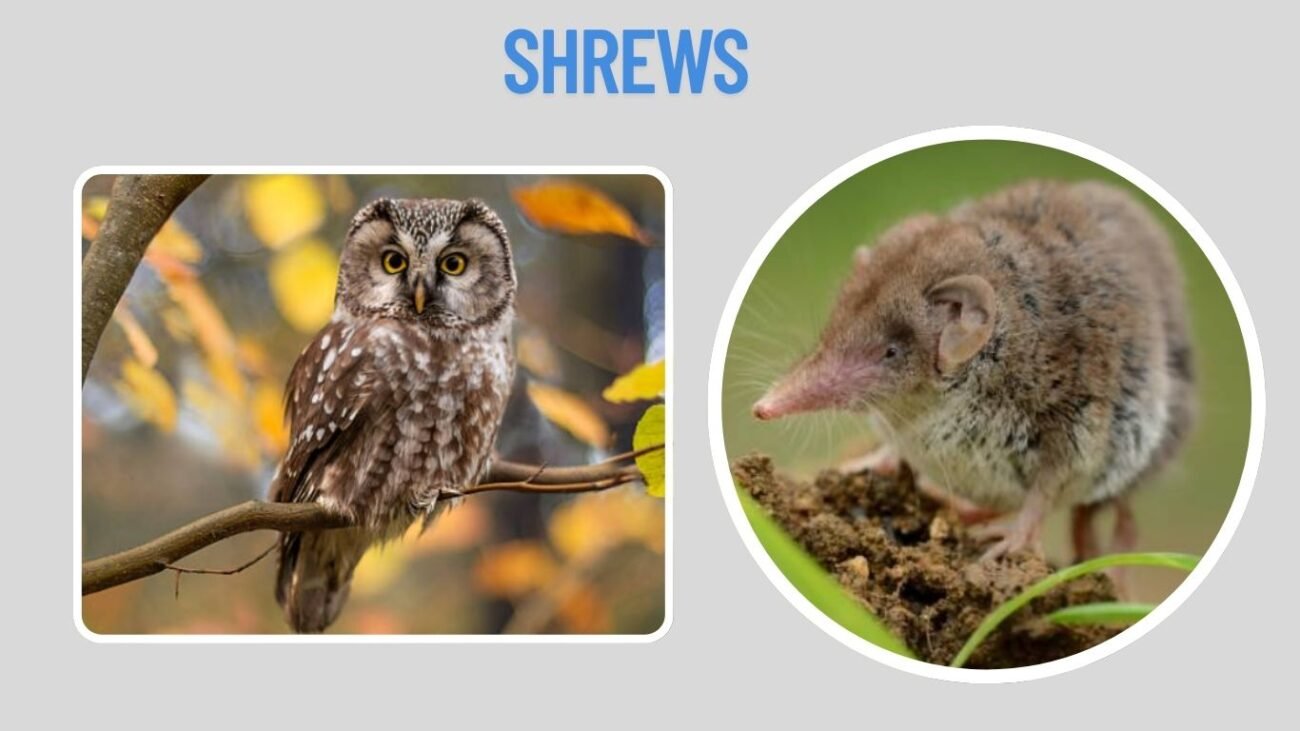
Shrews are tiny, insect-eating mammals that are often mistaken for mice. Despite their small size, owls frequently prey on them due to their abundance and constant movement.
Hunting Behavior Toward Shrews
Owls rely heavily on their acute hearing to detect shrews rustling beneath leaves or snow. Their quick dives and accurate strikes make them efficient shrew hunters.
When Owls Prefer Hunting Shrews
Shrews are active both day and night, but owls usually catch them after sunset when shrews are more exposed and easier to detect.
Typical Shrew Habitats
Shrews live in damp woodlands, underbrush, and grassy fields. Owls search for them in areas with thick ground cover and moist soil.
Benefits of Eating Shrews
Shrews are small but numerous, offering owls a steady food supply. They help fill the diet when larger prey like mice or voles are less available.
5. Rabbits
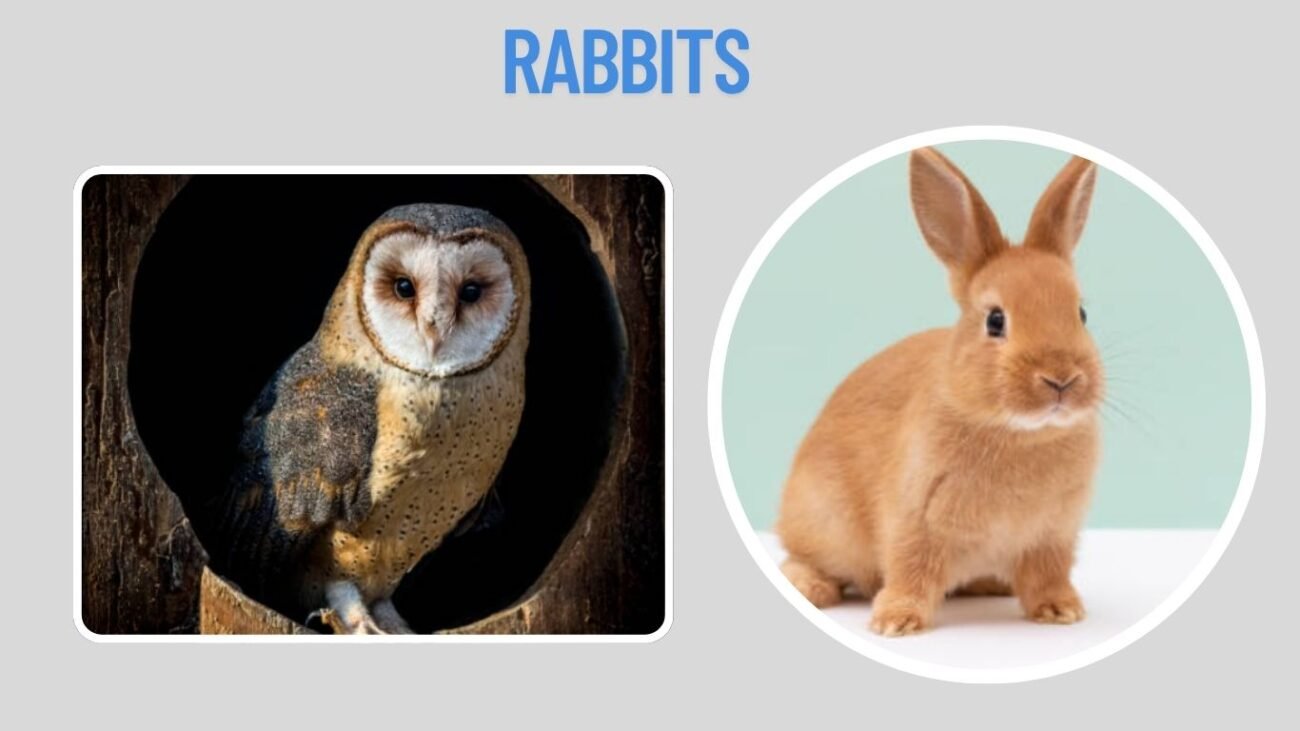
Rabbits are much larger than typical owl prey, but larger owls—such as great horned owls and eagle owls—are capable of taking them down. These powerful birds can handle prey nearly equal to their own weight.
How Owls Hunt Rabbits
Owls silently approach from above and strike with great force using strong talons. They may crush the rabbit’s spine instantly or carry it away if possible.
Time of Day for Rabbit Hunts
Rabbits are crepuscular, meaning they’re most active during dawn and dusk. Owls often take advantage of low light conditions during these hours.
Where Rabbits Are Caught
Owls find rabbits in open fields, forest edges, and brushy areas. They often perch silently on low branches or fence posts to observe rabbit movements.
Why Owls Target Rabbits
Rabbits provide a large, energy-rich meal. Even though they’re more challenging to catch, they can satisfy an owl’s hunger for an entire day or more.
6. Squirrels

Squirrels, especially juveniles, are sometimes hunted by larger owls like barred owls and great horned owls. While not a primary food source, they offer a good meal when other prey is scarce.
How Owls Catch Squirrels
Owls often ambush squirrels by waiting silently near tree branches or striking while the squirrel is on the ground. The element of surprise is key, as squirrels are agile and fast.
Best Time for Hunting Squirrels
Owls usually target squirrels early in the morning or late evening, when the squirrels are active and visibility is low.
Common Squirrel Habitats
Squirrels live in wooded areas, parks, and urban trees. Owls that live near forests or neighborhoods have frequent access to them.
Value of Squirrels as Prey
Though harder to catch, squirrels offer a substantial meal. Their high fat content makes them a good energy source, especially during colder months.
7. Bats
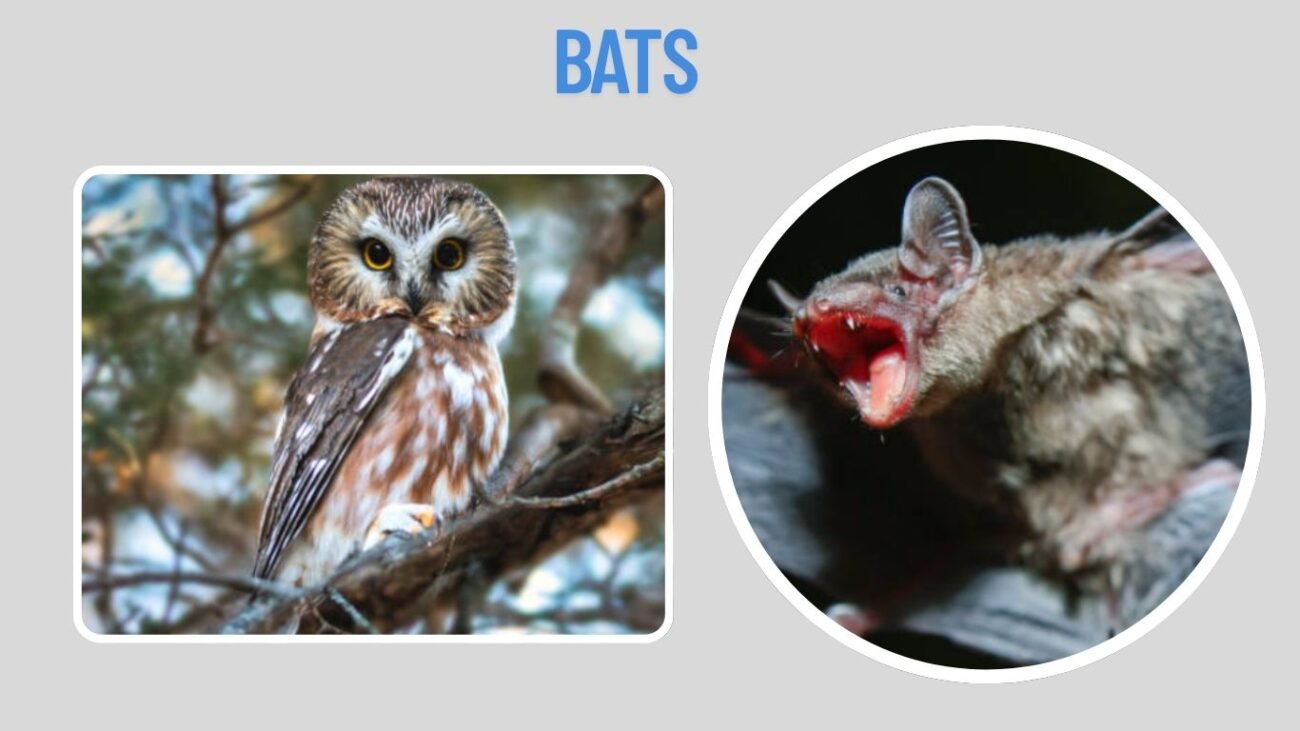
Bats may seem like unlikely owl prey, but many owls—especially those that hunt near caves or forests—occasionally catch them in mid-air.
Techniques for Hunting Bats
Owls use aerial ambush tactics, intercepting bats as they fly out of roosts. Their silent flight and fast reflexes allow them to snatch bats with precision.
When Do Owls Hunt Bats?
Bats emerge around dusk, the same time many owls begin hunting. This overlap creates the perfect opportunity for owls to catch them during flight.
Where Are Bats Found?
Owls hunt bats near caves, hollow trees, and even abandoned buildings. These areas serve as exit points for bat colonies at nightfall.
Nutritional Benefits of Eating Bats
Bats are rich in protein and fat, making them a valuable energy source. Though they’re not common in every owl’s diet, they’re a smart catch when the timing is right.
8. Frogs
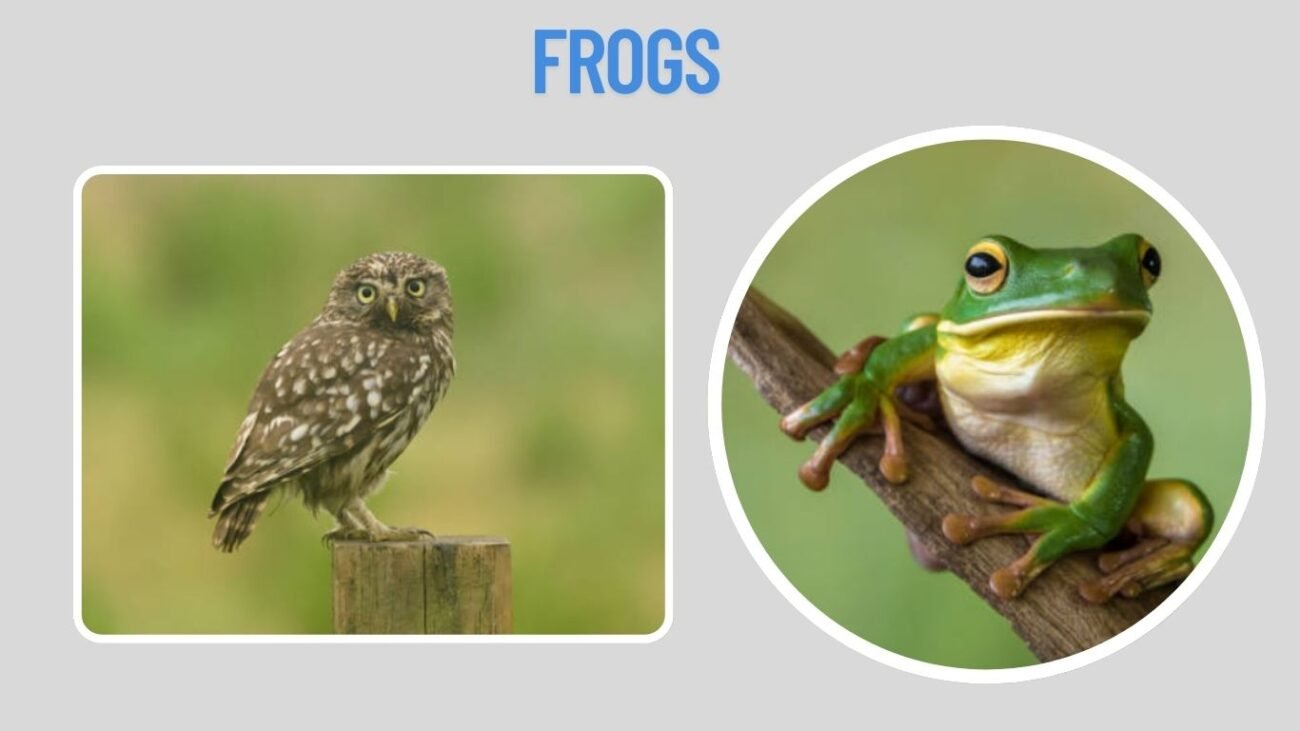
Frogs are a favorite food source for many owl species, especially those living near wetlands, ponds, or forested streams. Their slow movement and vocal croaks make them easy targets.
How Owls Hunt Frogs
Owls locate frogs by their calls and movements. They swoop down silently and grab them directly from the ground, water edges, or vegetation.
Time of Frog Hunting
Frogs are most vocal and active during warm evenings and rainy nights. Owls take advantage of this activity to hunt them with ease.
Typical Frog Habitats
Frogs are found near water bodies like ponds, marshes, and creeks. Owls that inhabit these areas often perch nearby and wait for sounds or movements.
Why Frogs Are Part of Owl Diet
Frogs are soft-bodied, easy to swallow, and abundant during breeding seasons. They provide hydration and nutrition, making them a valuable seasonal food.
9. Toads

Toads, similar to frogs, are another amphibian prey that owls often target. Their slower movement and nocturnal behavior make them ideal for nighttime predators.
Owl Strategy for Catching Toads
Owls watch the ground for movement and rely on sound to locate toads. They usually strike from low branches or fence posts close to ground level.
When Do Owls Eat Toads?
Toads come out after dark, especially during rainy or humid nights. Owls seize this opportunity for easy hunting when toads gather to feed or mate.
Preferred Toad Habitats
Toads live in gardens, fields, forest floors, and areas with loose soil. They often emerge after rain, making them easy for owls to detect.
Importance of Toads in Owl Diet
Toads are nutrient-rich and offer hydration, which is helpful in dry environments. While not a primary food, they are a good supplement during wet seasons.
10. Snakes
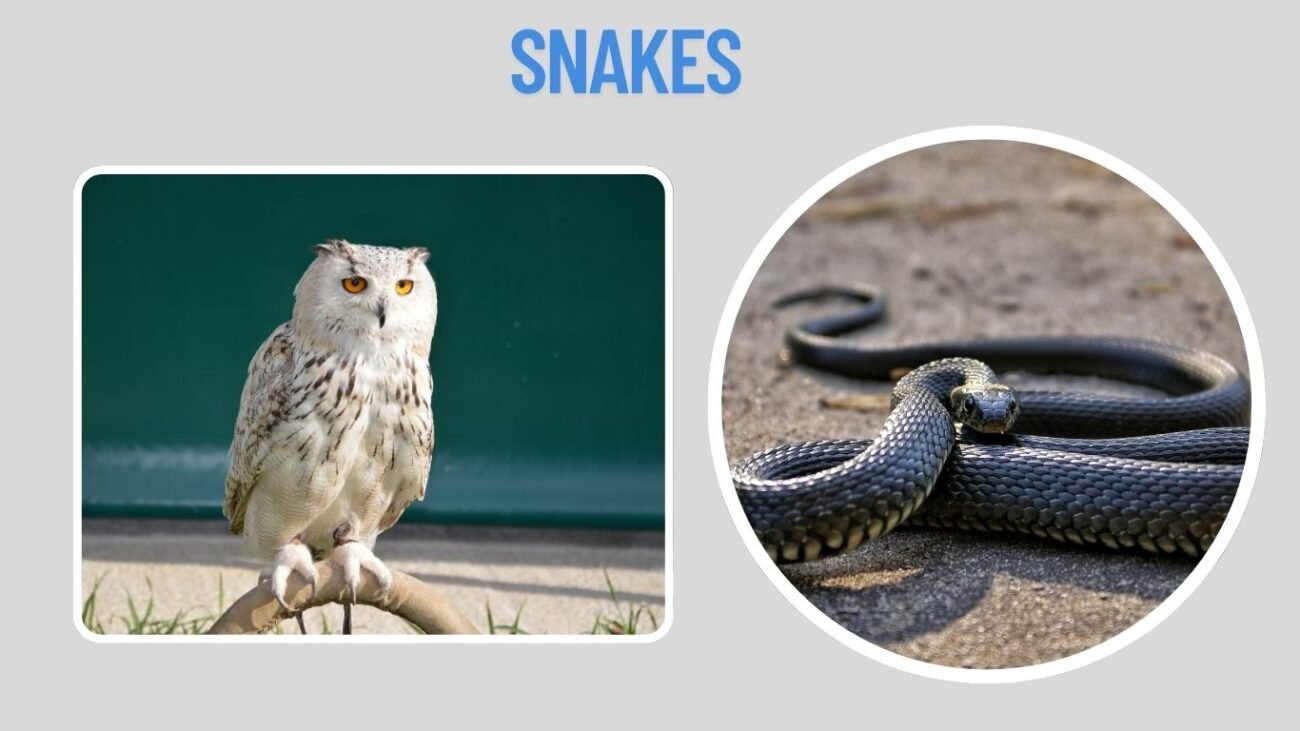
Snakes are part of the diet for larger owl species like great horned owls and eagle owls. Owls hunt both small and medium-sized snakes, including venomous ones in some cases.
How Owls Handle Snake Hunts
Owls strike quickly and aim to immobilize the snake’s head with a crushing grip. Their thick feathers help protect them from potential bites during the struggle.
When Are Snakes Hunted?
Owls typically hunt snakes during warm evenings or early mornings when snakes are most active on the ground or basking in open areas.
Snake Habitats Owls Target
Snakes are found in grasslands, forests, deserts, and near water. Owls use their elevated view from perches to scan for movement below.
Why Snakes Are Hunted
Snakes offer a high-protein, filling meal. Their long bodies are manageable for owls to swallow whole or tear apart, making them efficient to consume.
11. Lizards
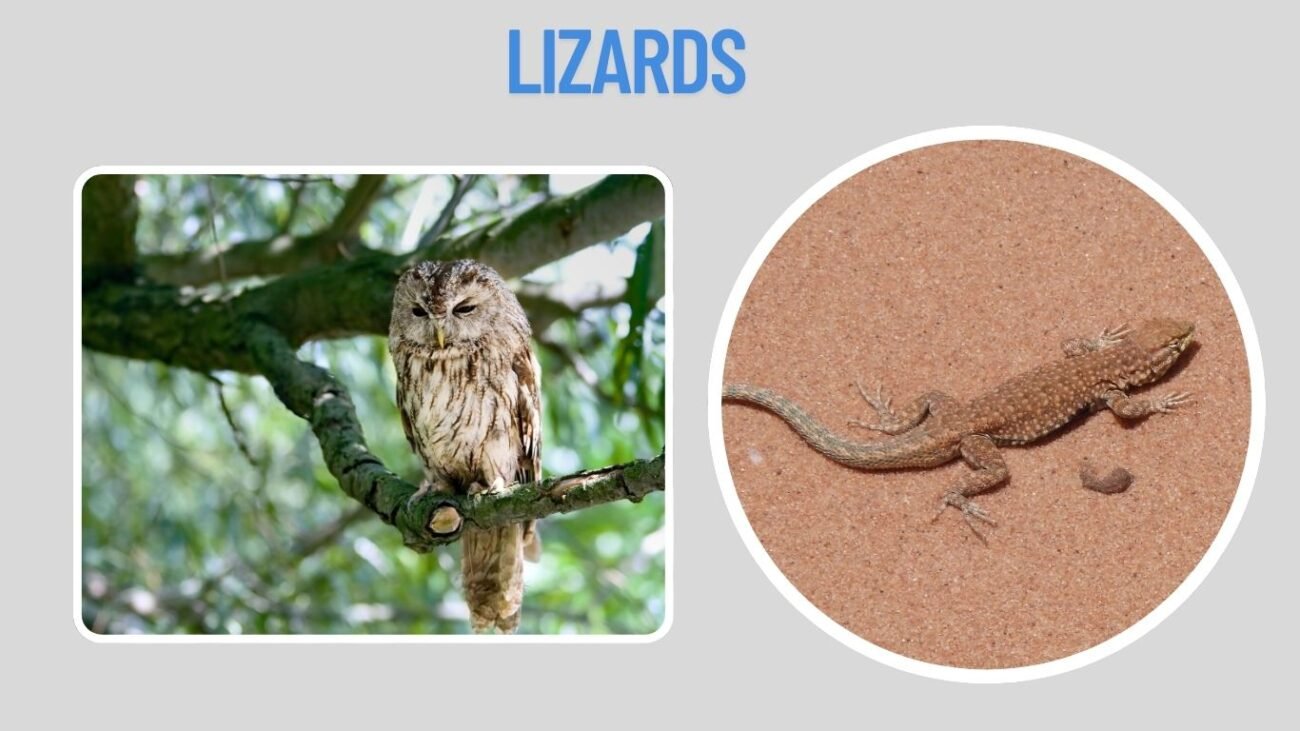
Lizards, especially small and ground-dwelling species, are frequently eaten by owls in warm and arid climates. Burrowing and sunbathing lizards are especially vulnerable.
Tactics for Hunting Lizards
Owls observe lizards from above, then dive down swiftly when the lizard moves into open ground. Their talons grip and immobilize the reptile instantly.
When Do Owls Hunt Lizards?
Lizards are most active during daylight, but some are crepuscular or nocturnal. Owls tend to hunt them at dusk or early dawn, catching them off-guard.
Common Locations for Lizards
Lizards live in deserts, rocky hillsides, forest edges, and even urban gardens. Owls near these areas take advantage of exposed lizards on warm surfaces.
Benefits of Eating Lizards
Lizards provide lean protein and are easy to digest. They help owls diversify their diet, especially in regions with fewer small mammals.
12. Insects

Insects are a major food source for smaller owl species like screech owls, elf owls, and burrowing owls. They are especially important during warmer months when insects are most active.
How Owls Hunt Insects
Owls catch insects both in flight and on the ground. Some species fly low to snatch beetles or moths midair, while others pounce on grasshoppers or crickets.
Ideal Times for Insect Hunting
Insects are most active at dusk and night, aligning perfectly with the hunting schedule of nocturnal owls.
Where Do Owls Find Insects?
Open fields, meadows, gardens, and forest edges are full of insects. Streetlights also attract insects, drawing owls to suburban areas.
Why Insects Matter in Owl Diets
Insects are easy to find, quick to catch, and packed with nutrients. For smaller owls and juvenile birds, insects are essential for survival and growth.
13. Spiders
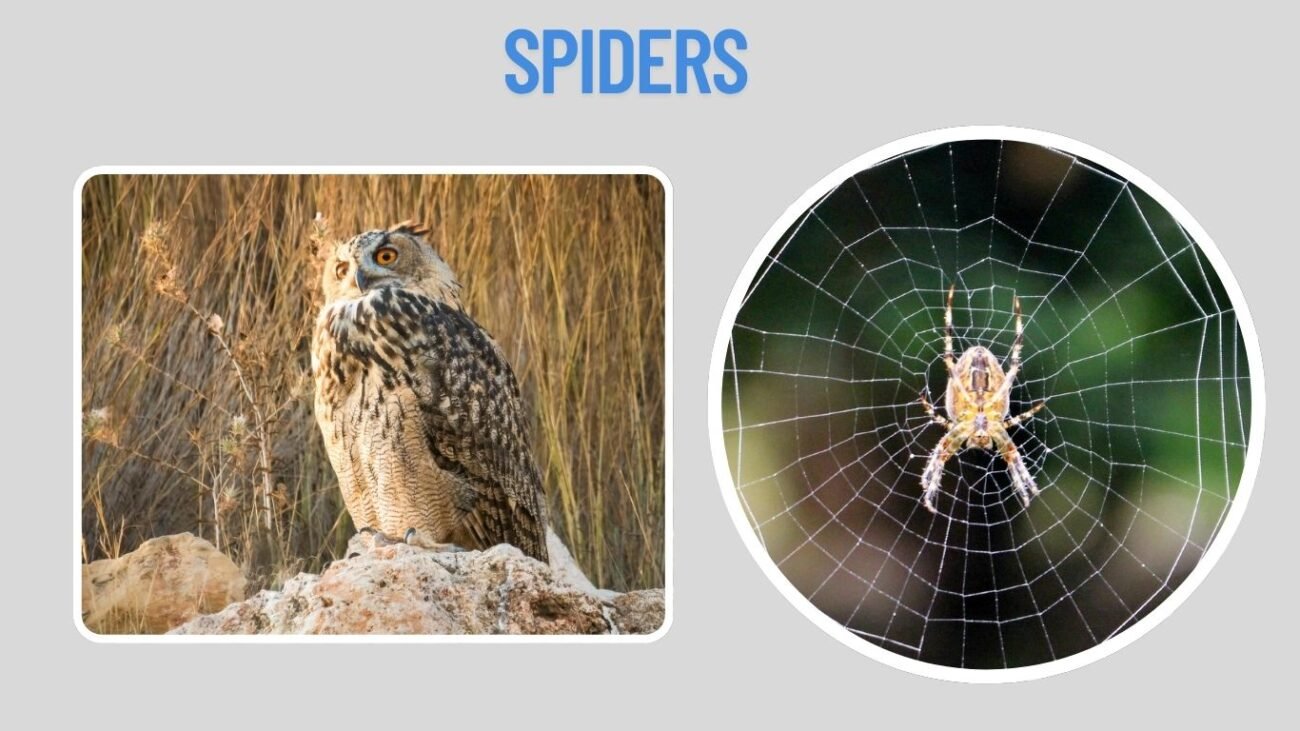
Though not a primary food, spiders—especially large ground-dwelling species—are sometimes eaten by smaller owl species. This is more common in tropical regions.
How Owls Catch Spiders
Owls swoop down on spiders crawling on the ground or perched on surfaces. Their precision and quick strike make it easy to capture slow-moving spiders.
When Do Owls Hunt Spiders?
Spiders are usually caught during nighttime hunting sessions, especially when owls are targeting a wide range of crawling invertebrates.
Spider Habitats That Attract Owls
Owls find spiders in leaf litter, around fallen logs, tree bark, or near homes in warmer climates. They often hunt in gardens and forest floors.
Are Spiders Valuable Prey?
Spiders provide minor nutrition but help fill in dietary gaps. They’re especially useful when other insect or rodent populations are low.
14. Earthworms
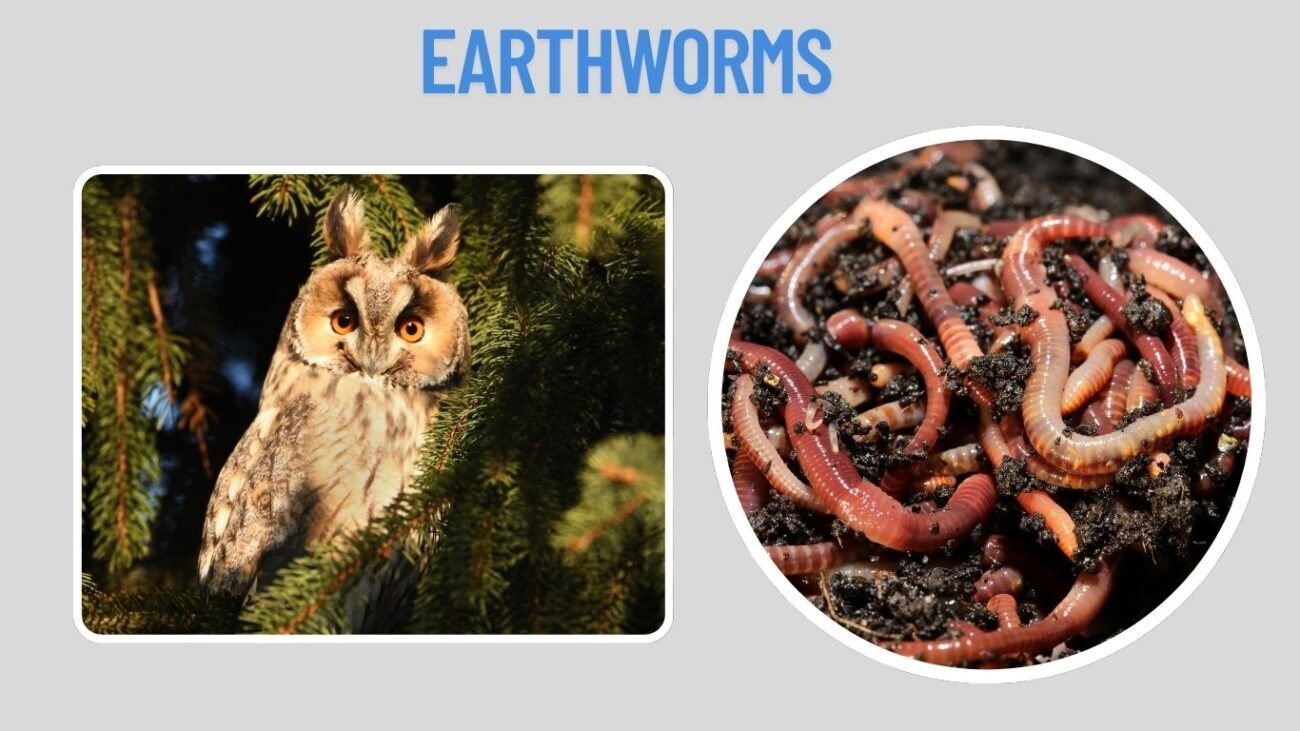
Earthworms are a soft and protein-rich food source, especially for burrowing owls and other small species living in grassy or open habitats. They’re commonly consumed during wet seasons.
How Owls Hunt Earthworms
Owls detect earthworm movement by sound or sight, especially after rain when worms emerge on the surface. They snatch them quickly with their beak or talons.
When Earthworms Are Hunted
Earthworms are most accessible at night after rainfall or during damp, cool evenings. Owls take advantage of this window for easy hunting.
Where Owls Find Earthworms
Open lawns, gardens, farmland, and moist forest floors are prime locations. Burrowing owls often forage on the ground in these areas.
Nutritional Role of Earthworms
Though small, earthworms are packed with moisture and protein, making them a great supplementary food—especially for fledgling or nesting owls.
15. Fish
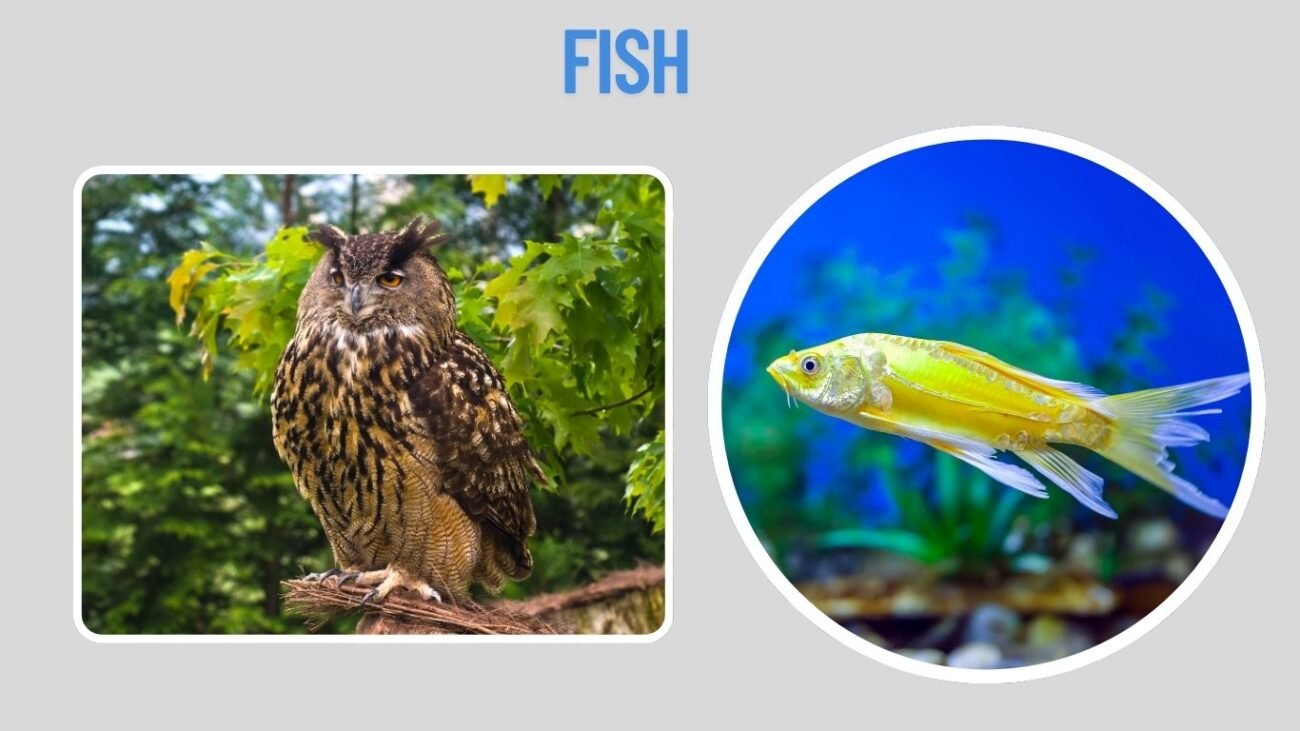
Some owl species, like the Eastern Grass Owl or the African Fishing Owl, specialize in catching fish. This diet is more common in owls that live near rivers, lakes, or wetlands.
How Owls Catch Fish
Owls swoop low over water, snatching fish with sharp talons. They rely on keen eyesight and patience, waiting for just the right moment.
Best Time for Fishing
Dawn and dusk are ideal for fishing, as many fish species come close to the surface during these cooler periods, making them easier targets.
Typical Fishing Grounds
Shallow streams, lakeshores, mangroves, and swamps provide excellent fishing spots. Owls often perch nearby and monitor the water quietly.
Benefits of Fish in the Owl Diet
Fish are rich in protein and healthy fats. For species adapted to this hunting style, fish serve as a primary and energy-dense food source.
16. Crayfish
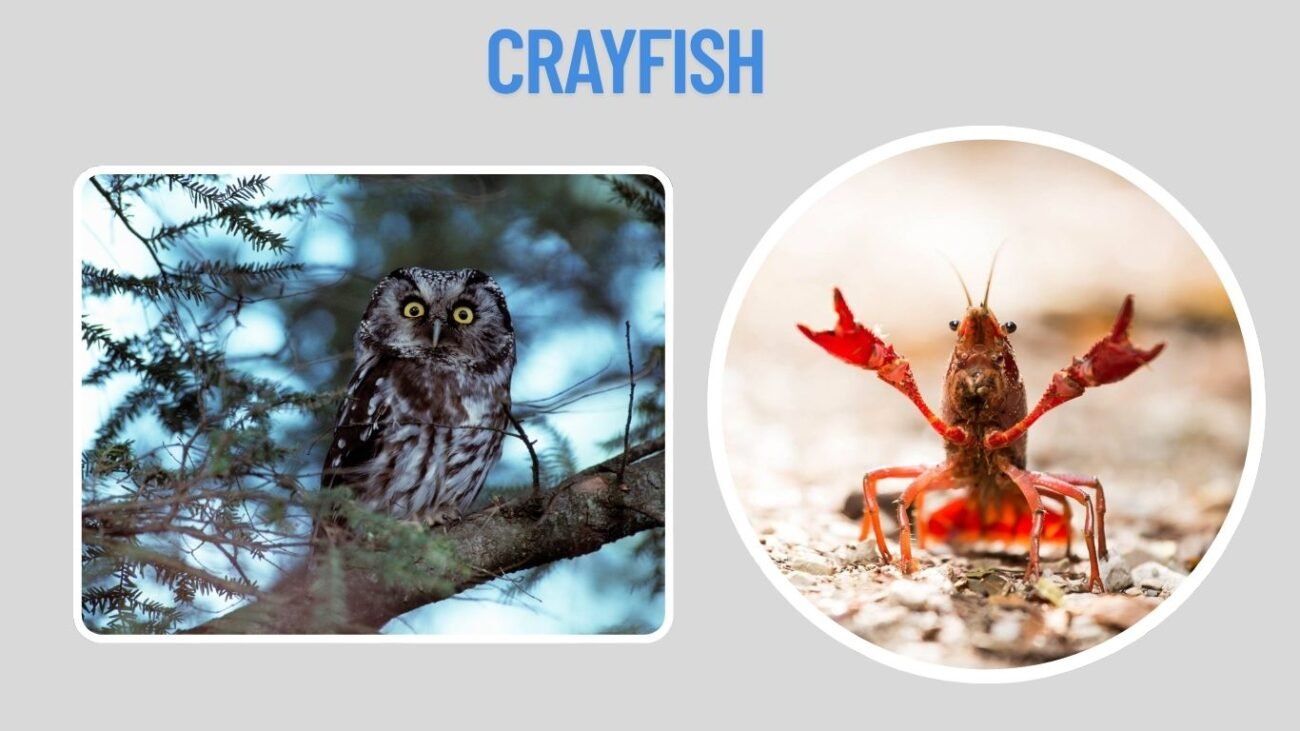
Crayfish are freshwater crustaceans that owls—especially those living near streams and wetlands—occasionally feed on. They’re more commonly consumed by species like the barred owl.
How Owls Hunt Crayfish
Owls spot crayfish crawling near the water’s edge or under shallow water. With a swift pounce, they grab them using their strong talons and often de-shell them before eating.
When Are Crayfish Hunted?
Crayfish are nocturnal, making them ideal prey during the owl’s hunting hours—typically from dusk until midnight when crayfish come out to forage.
Where Crayfish Are Found
Shallow creeks, ponds, and muddy riverbanks are common crayfish habitats. Owls hunt them by scanning the ground or shallow water near their roosts.
Why Owls Eat Crayfish
Though not as commonly eaten as rodents, crayfish are rich in minerals and protein. They offer a crunchy, filling meal, especially in aquatic environments.
17. Small Birds
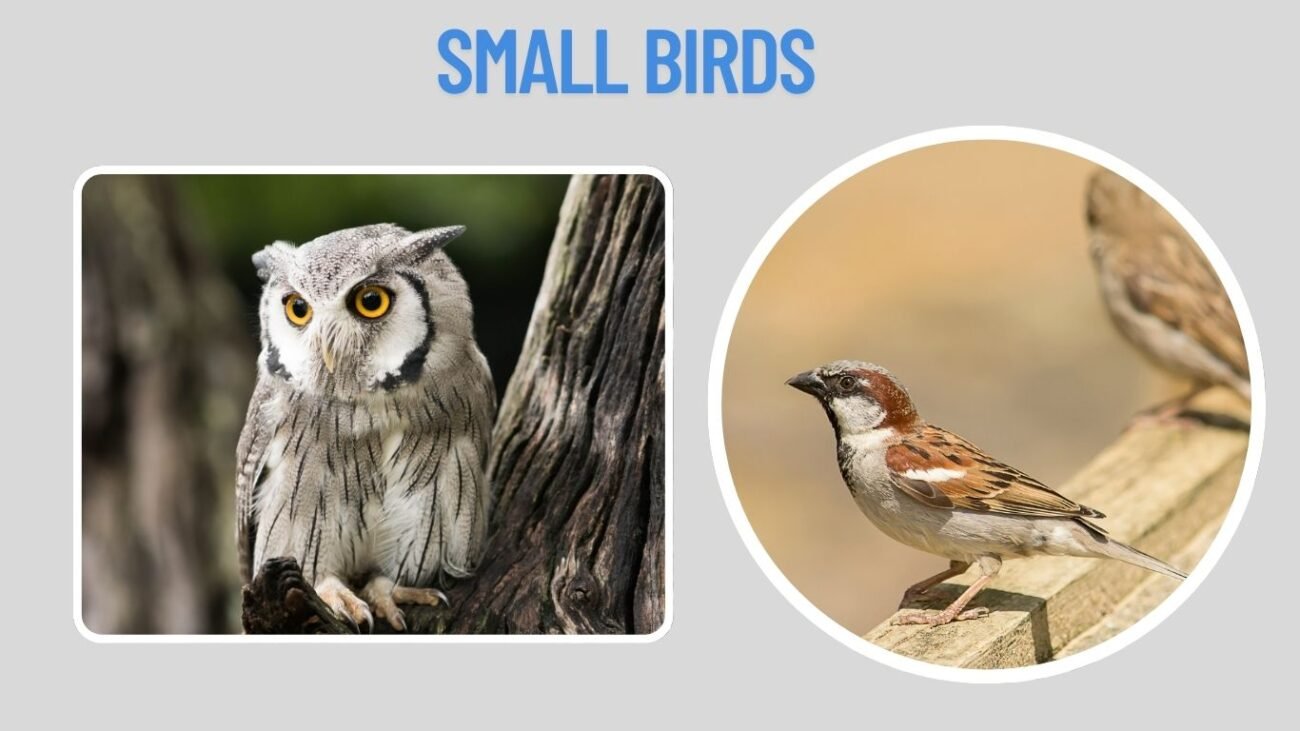
Owls, particularly larger ones like the great horned owl and northern hawk owl, do prey on smaller birds, including finches, sparrows, and even crows.
Hunting Technique for Small Birds
Owls may ambush birds while they’re roosting at night or surprise them in mid-flight. They use their stealth and speed to overpower the bird before it can escape.
When Do Owls Hunt Birds?
Owls typically hunt birds at night while they are asleep and most vulnerable. Some crepuscular species also hunt during early morning hours.
Where Small Birds Are Found
Birds roost in trees, shrubs, or dense thickets. Owls often memorize these spots and silently approach during the night.
Reasons Owls Target Birds
Birds are a nutritious, high-protein food source. Though harder to catch than rodents, they add diversity to an owl’s diet and can be especially valuable in winter.
18. Skunks
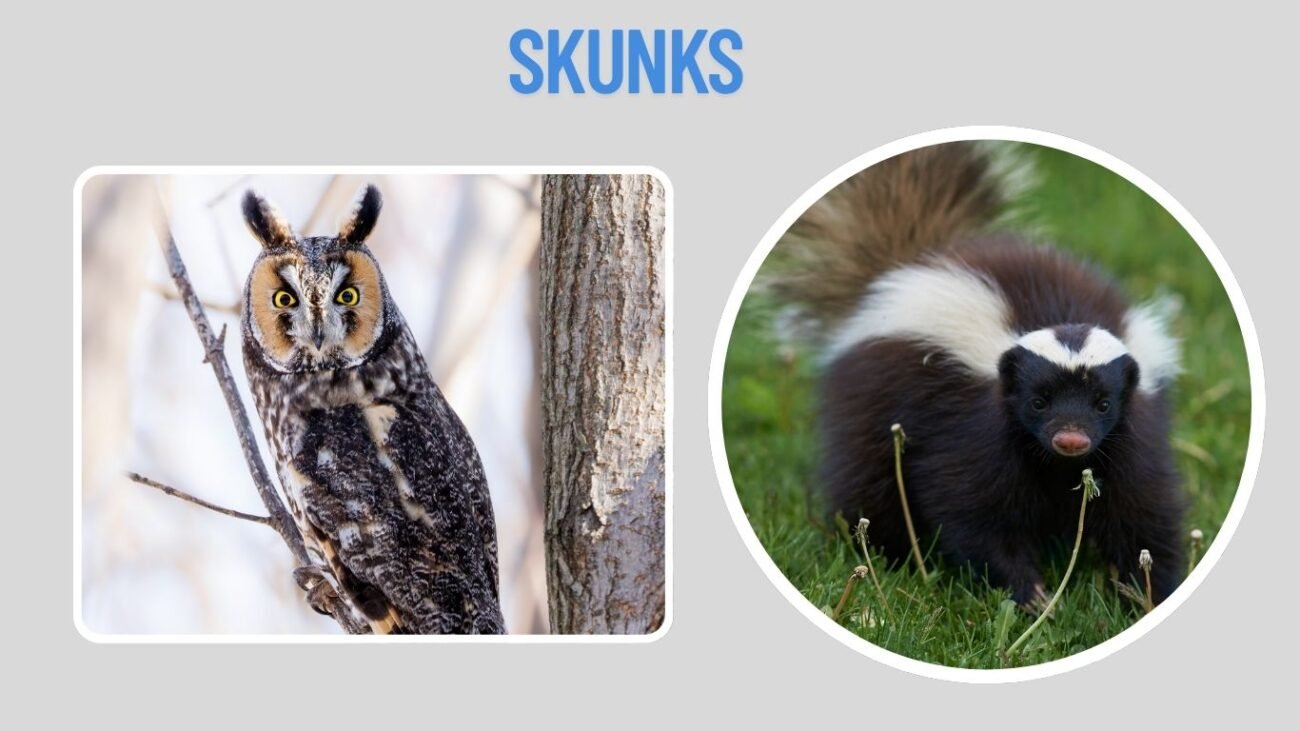
Though rare and risky, large owls like the great horned owl are one of the few predators that regularly hunt skunks. Their poor sense of smell helps them tolerate skunk spray.
How Owls Hunt Skunks
Owls ambush skunks from above, aiming to disable them quickly with a powerful grip. They often go for a head or neck strike to end the fight fast.
When Skunks Are Hunted
Skunks are mostly nocturnal, which overlaps perfectly with the owl’s hunting hours. Owls usually hunt them late at night when the skunks are foraging alone.
Where Skunks Are Found
Skunks live in open fields, woodlands, and even suburban areas. Owls often catch them near forest edges, roadsides, or farm fields.
Why Skunks Are on the Menu
Skunks are meaty and high in fat, making them a filling meal. Since few other predators hunt them, owls benefit from less competition for this food source.
19. Weasels
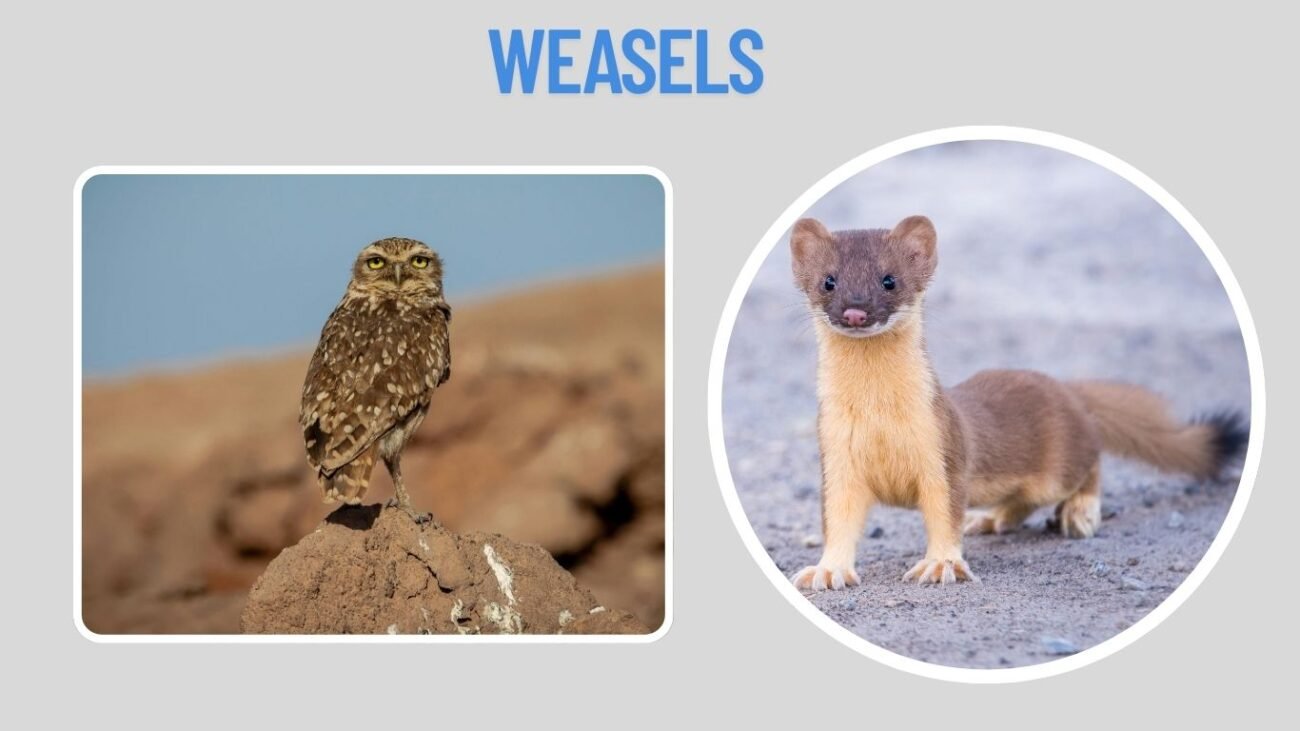
Weasels are agile and aggressive, but some owl species still manage to catch them, especially juveniles. They’re not a common prey but are targeted when other food is scarce.
Owl Hunting Strategy for Weasels
Owls rely on patience and precision, striking weasels when they are distracted or crossing open terrain. A quick and deadly grip prevents the weasel from fighting back.
When Weasels Are Most Vulnerable
Weasels are active during dusk and night, putting them directly in the owl’s hunting schedule. Winter months can increase encounters as prey becomes scarce.
Weasel Habitats for Owl Hunts
Weasels live in wooded areas, grasslands, and farmlands. Owls usually catch them while they move between burrows or hunt rodents.
Why Owls Hunt Weasels
Though harder to catch, weasels provide a rich protein source. Hunting them requires effort, but the reward can support a large owl for an extended period.
20. Beetles
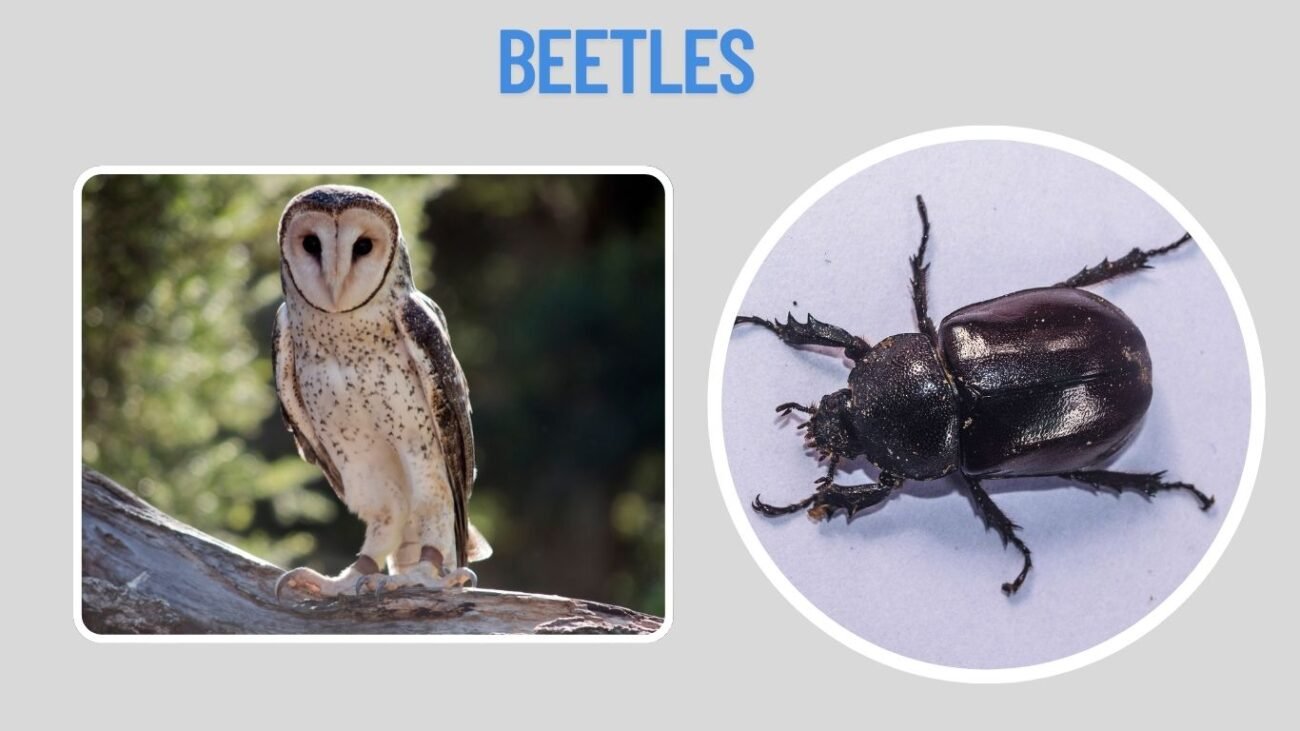
Beetles are a common insect prey for smaller owl species, especially screech owls and burrowing owls. They’re plentiful, easy to catch, and active during the night.
How Owls Hunt Beetles
Owls detect beetles by movement and sound. They often forage on the ground or swoop down from low perches to grab beetles crawling in leaf litter or on open soil.
When Beetles Are Hunted
Beetles are most active at dusk and during nighttime, aligning well with the owl’s natural hunting rhythm. Summer months provide the highest beetle availability.
Where Owls Find Beetles
Beetles are found in gardens, forests, fields, and even deserts. Owls often scout areas with loose soil, decaying wood, or lights that attract insects.
Why Beetles Are Good Prey
Beetles are protein-rich, easy to digest, and available in large numbers. For small owls and young fledglings, they’re an ideal and consistent food source.