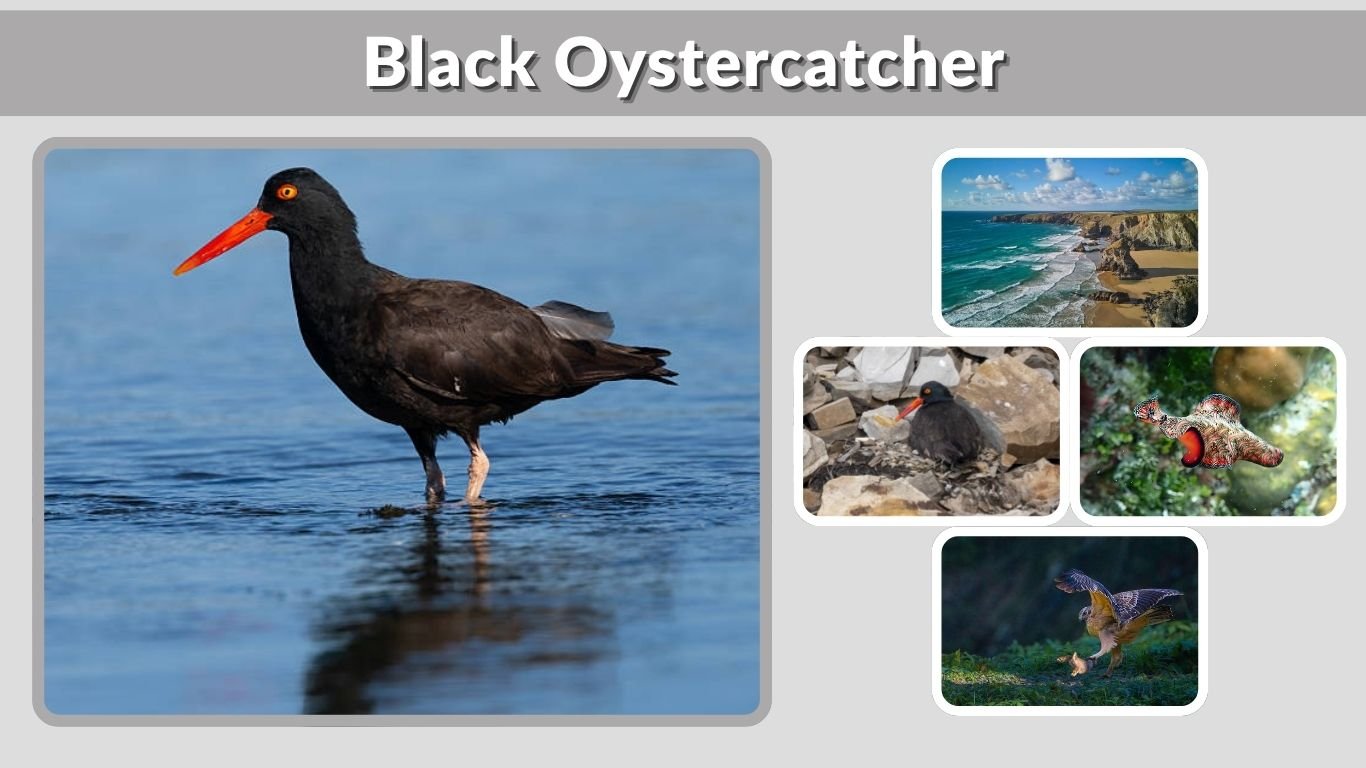
The Black Oystercatcher is a striking coastal bird known for its dark plumage and bright, powerful bill. Found along rocky shorelines in different parts of the world, including North America and southern Africa, this bird is highly adapted to life in the intertidal zone. Its scientific names, such as Haematopus bachmani and Haematopus moquini, reflect its classification among shorebirds. With its strong feeding skills and territorial behavior, the Black Oystercatcher plays an important role in maintaining balance in coastal ecosystems.
What Is a Black Oystercatcher?
The Black Oystercatcher is a medium-sized shorebird belonging to the oystercatcher family. It is best known for its ability to feed on shellfish along rocky coasts, using its strong bill to pry open prey.
Physical Appearance
- Dark black or brownish-black plumage covering the entire body
- Bright orange or red bill that stands out clearly
- Sturdy legs adapted for walking on rocks
Black Oystercatcher Size
- Body length typically ranges from 40 to 45 cm
- Wingspan can reach around 80 to 85 cm
- Compact body designed for stability in coastal winds
Black Oystercatcher Habitat and Range
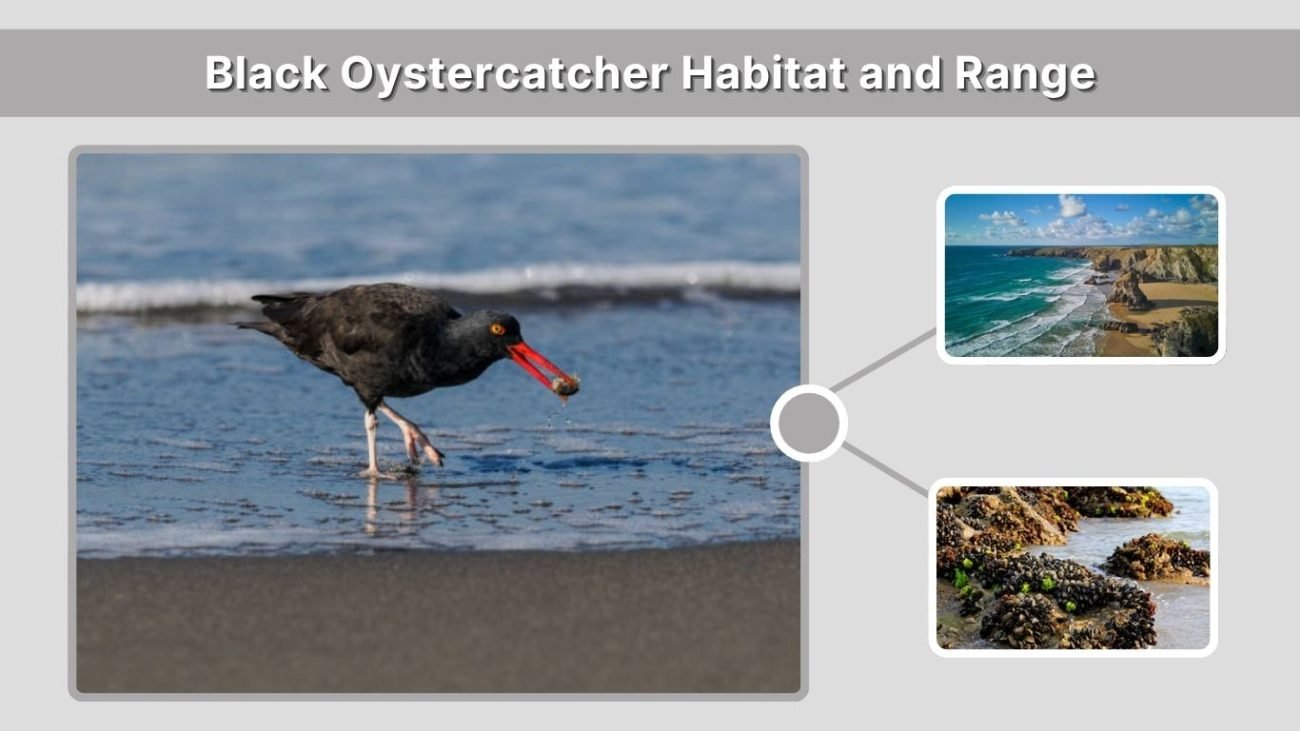
The Black Oystercatcher is closely tied to coastal environments, especially rocky shorelines where food is abundant. It prefers areas where tides expose shellfish and other marine life. These birds are rarely found far from the ocean, making them true specialists of coastal ecosystems.
Preferred Habitat
- Rocky shores and coastal cliffs
- Intertidal zones rich in shellfish
- Offshore islands and remote coastlines
Global Distribution
- American Black Oystercatcher along the Pacific coast of North America
- African Black Oystercatcher along southern African coasts
- Related species found in regions like New Zealand
Black Oystercatcher Diet and Feeding Behavior
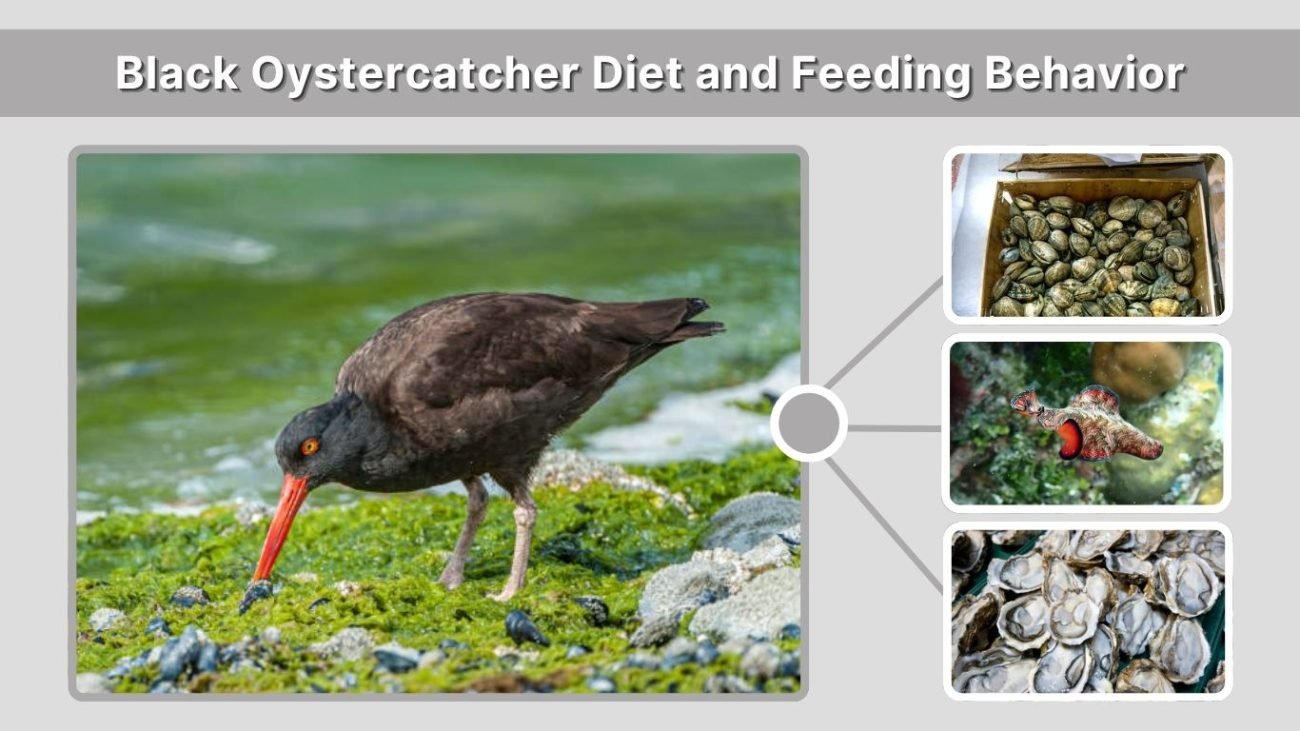
The Black Oystercatcher is a highly specialized feeder that relies on marine life found in the intertidal zone. Its strong bill is perfectly adapted to handle tough shells, allowing it to access food that many other birds cannot.
Black Oystercatcher Diet
- Mussels, clams, and oysters
- Marine worms and small crustaceans
- Other intertidal invertebrates
Feeding Techniques
- Uses its bill to pry open shells
- Feeds during low tide when prey is exposed
- Carefully selects feeding spots along rocky surfaces
Behavior and Lifestyle
The Black Oystercatcher is known for its territorial and loyal nature. It often stays in the same area for long periods, defending its feeding and nesting grounds from other birds. Usually seen in pairs or small groups, it forms strong bonds with its mate. This bird is active during the day and spends most of its time searching for food along the shoreline. Its movements are steady and purposeful, reflecting its adaptation to a challenging coastal environment.
Black Oystercatcher Breeding and Nesting Behavior
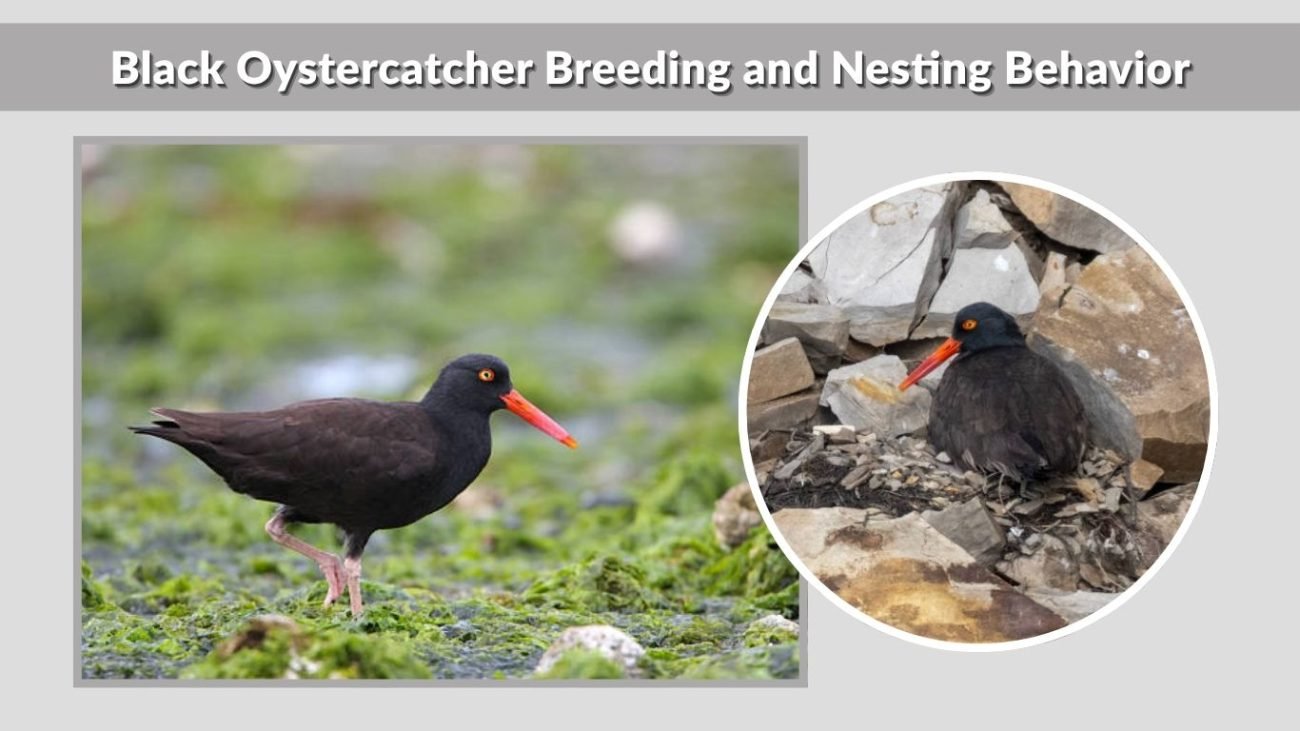
Breeding takes place along coastal areas where the birds can find safe nesting sites close to food sources. The Black Oystercatcher relies on simple but effective nesting strategies to protect its eggs.
Nesting Habits
- Nests are shallow scrapes on rocky ground
- Often located above the high-tide line
- Minimal materials used for construction
Eggs and Chicks
- Usually lays 2 to 3 eggs per clutch
- Eggs are well camouflaged with speckled patterns
- Chicks are active soon after hatching and stay close to parents
Breeding Season
- Timing varies depending on region
- Both parents share incubation duties
- Strong defense of nesting territory
Black Oystercatcher Sound and Communication
The Black Oystercatcher is known for its loud, sharp calls that echo along rocky coastlines. These vocalizations are especially noticeable during the breeding season when birds defend their territory or communicate with their mate. The calls are often described as high-pitched whistles or piercing notes, making them easy to recognize. Sound plays an important role in maintaining pair bonds and warning other birds to stay away from nesting areas. Even outside the breeding season, these calls help birds stay connected in their coastal environment.
African Black Oystercatcher
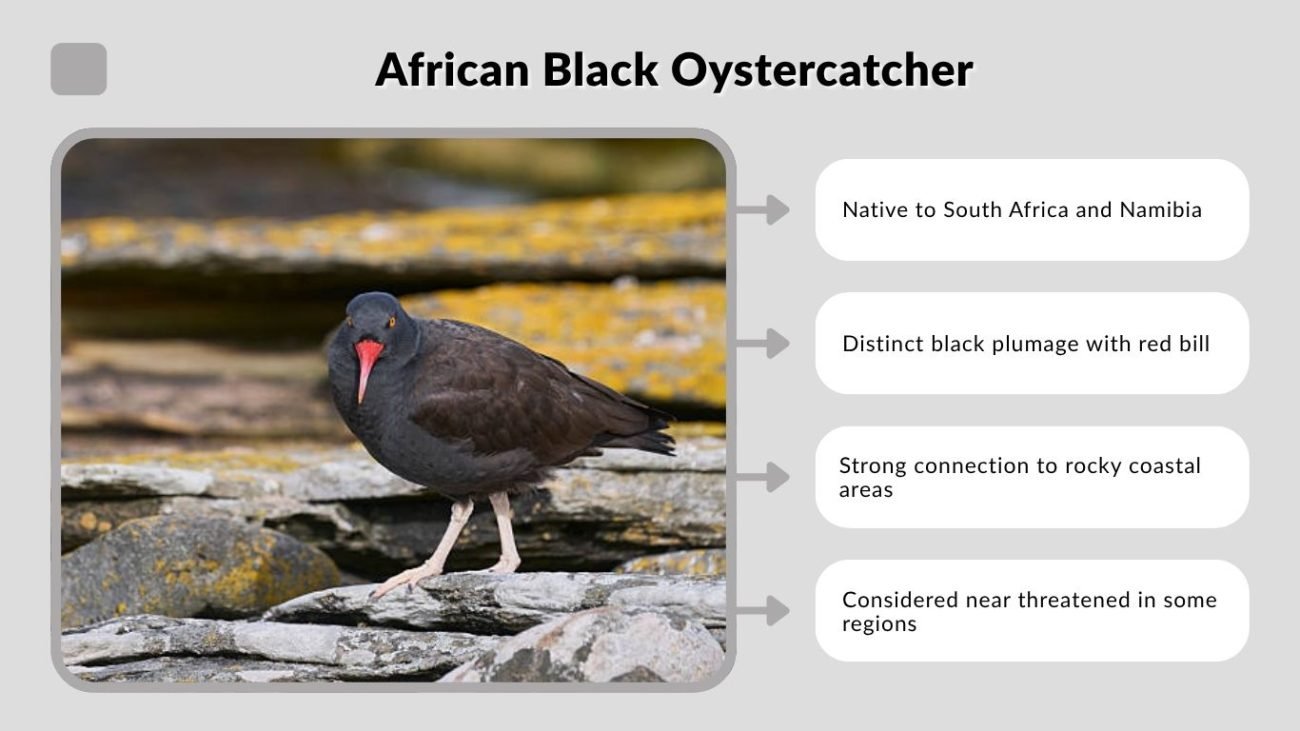
The African Black Oystercatcher (Haematopus moquini) is native to the southern coasts of Africa. It shares many similarities with its American relatives but has gained attention due to its conservation status.
Key Characteristics
- Native to South Africa and Namibia
- Distinct black plumage with red bill
- Strong connection to rocky coastal areas
Conservation Status
- Considered near threatened in some regions
- Protected through conservation programs
- Population has improved due to protection efforts
Black Oystercatcher Predators and Threats
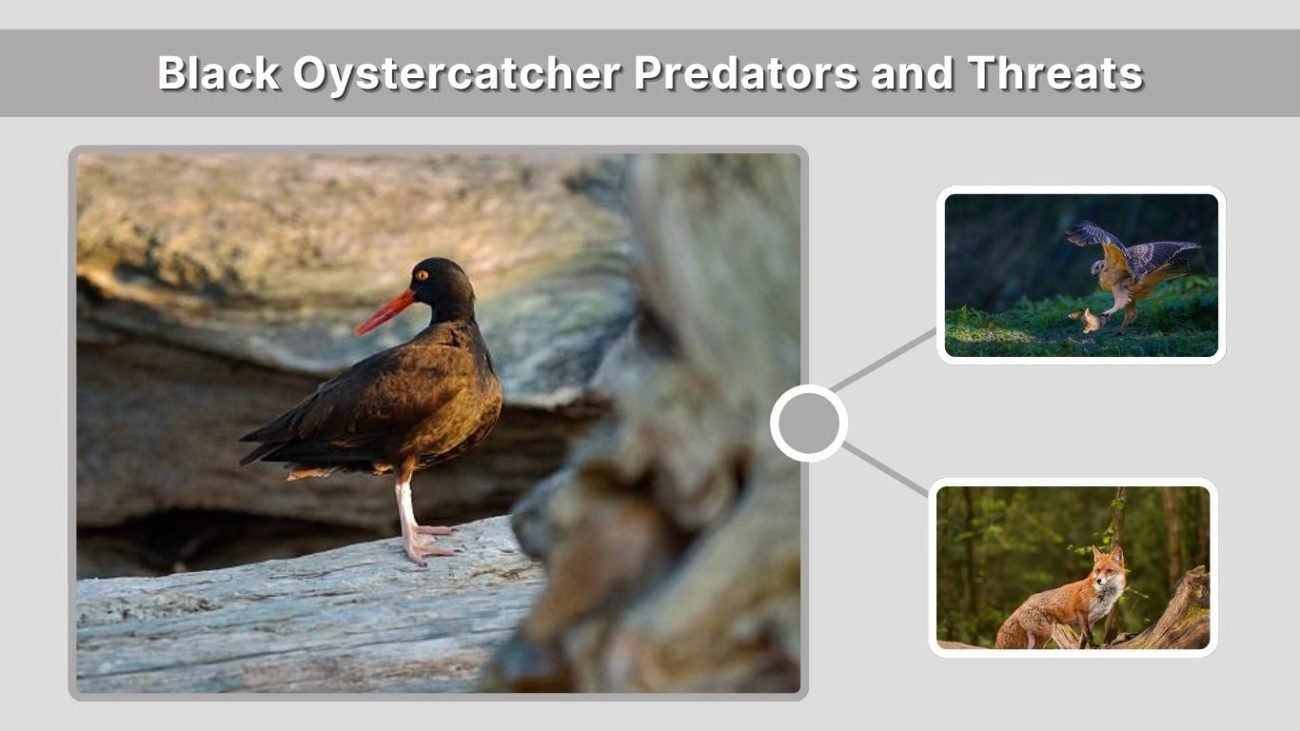
Black Oystercatchers face both natural and human-related challenges that can affect their survival. While adult birds are relatively strong, their eggs and chicks are more vulnerable.
Natural Predators
- Birds of prey such as eagles and hawks
- Coastal mammals like foxes
- Larger seabirds that may target eggs
Human-Related Threats
- Coastal development reducing nesting areas
- Pollution affecting marine food sources
- Disturbance from tourism and human activity
Adaptations and Anatomy
The Black Oystercatcher is perfectly adapted to life along rocky coastlines. Its strong, chisel-like bill allows it to open shells and access food that other birds cannot reach. Its sturdy legs help it maintain balance on uneven rocks, even in rough coastal conditions. The bird’s dark plumage provides natural camouflage against rocky backgrounds, helping it avoid predators. These adaptations make it a highly specialized and efficient coastal species.
FAQs
What is the scientific name of the Black Oystercatcher?
The American Black Oystercatcher is known as Haematopus bachmani, while the African Black Oystercatcher is Haematopus moquini. Both belong to the oystercatcher family.
What do Black Oystercatchers eat?
They mainly eat shellfish such as mussels, clams, and oysters, along with marine worms and crustaceans found in intertidal zones.
Where do Black Oystercatchers live?
They live along rocky coastlines and intertidal zones, especially in North America, southern Africa, and similar coastal regions.
Are Black Oystercatchers endangered?
Some populations, such as the African Black Oystercatcher, are considered near threatened, while others are stable but still face environmental risks.
What sound does the Black Oystercatcher make?
They produce loud, sharp, and high-pitched calls that are commonly heard along coastlines, especially during breeding and territorial interactions.