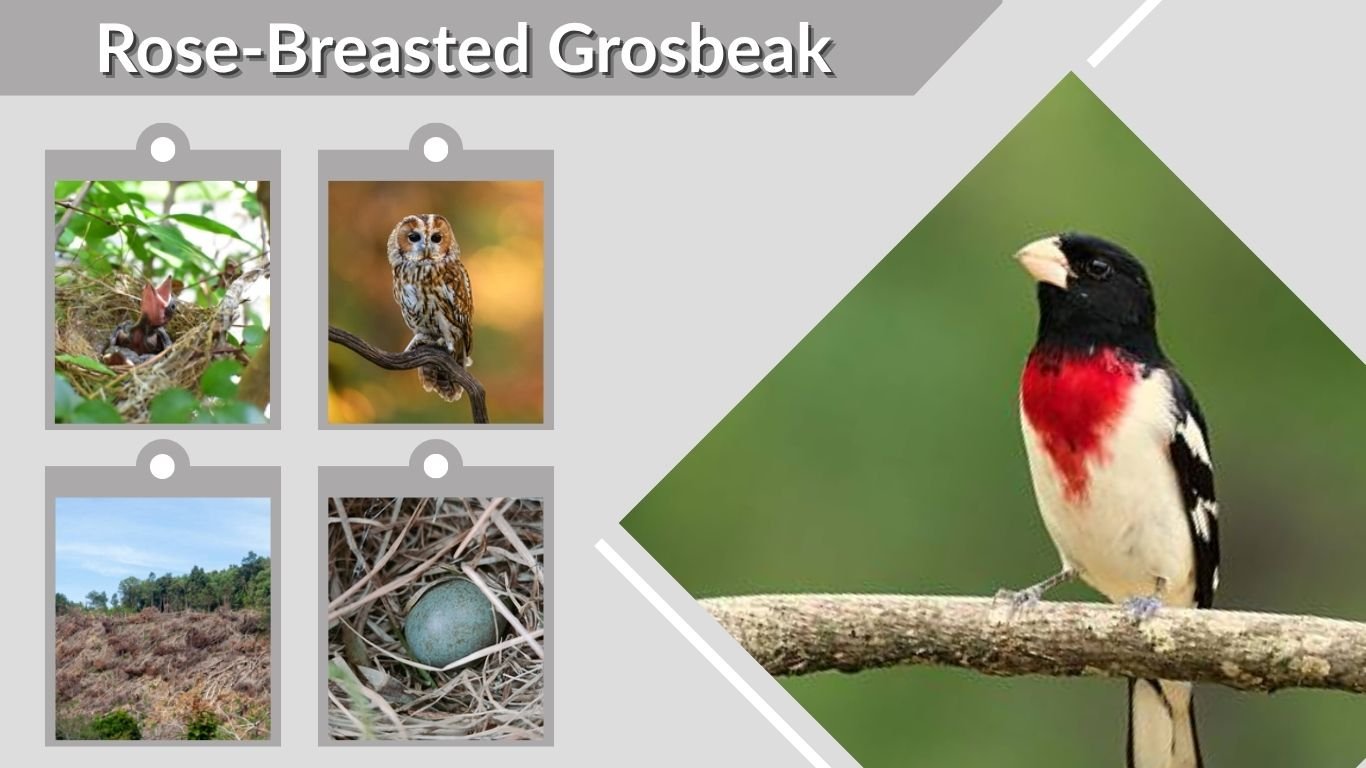
The Rose-breasted Grosbeak (Pheucticus ludovicianus) is a striking songbird known for its bold colors and beautiful, melodic voice. Found mainly in North America during the breeding season, this bird is a favorite among birdwatchers and backyard enthusiasts. The male’s bright red chest patch contrasts sharply with its black-and-white body, while the female has a more subtle, streaked appearance. Beyond its beauty, this species plays an important role in controlling insects and dispersing seeds across its habitat.
What Is a Rose-Breasted Grosbeak?
The Rose-breasted Grosbeak is a medium-sized songbird belonging to the cardinal family. It is known for its thick, powerful bill, which helps it crack seeds and feed on a variety of foods.
Physical Appearance
- Thick, conical bill adapted for cracking seeds
- Strong wing patterns with black and white contrast
- Seasonal color changes, especially in males
Rose-Breasted Grosbeak Size
- Body length typically ranges from 18 to 22 cm
- Wingspan can reach about 30 to 33 cm
- Medium-sized bird compared to other songbirds
Male vs Female Rose-Breasted Grosbeak
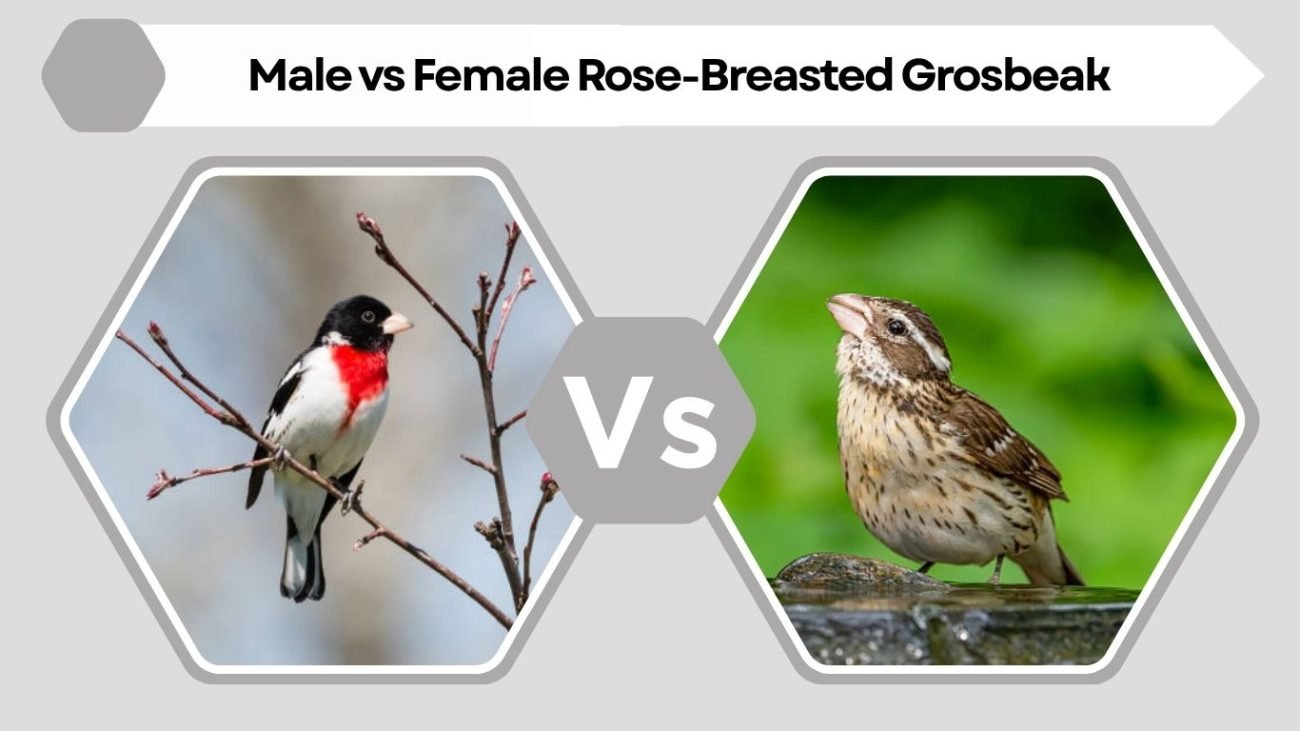
The difference between male and female Rose-breasted Grosbeaks is one of the most noticeable features of this species. Their contrasting appearances make identification easier, even for beginners.
Male Rose-Breasted Grosbeak
- Black head and back with white underparts
- Bright red patch on the chest
- Bold and highly visible plumage
Female Rose-Breasted Grosbeak
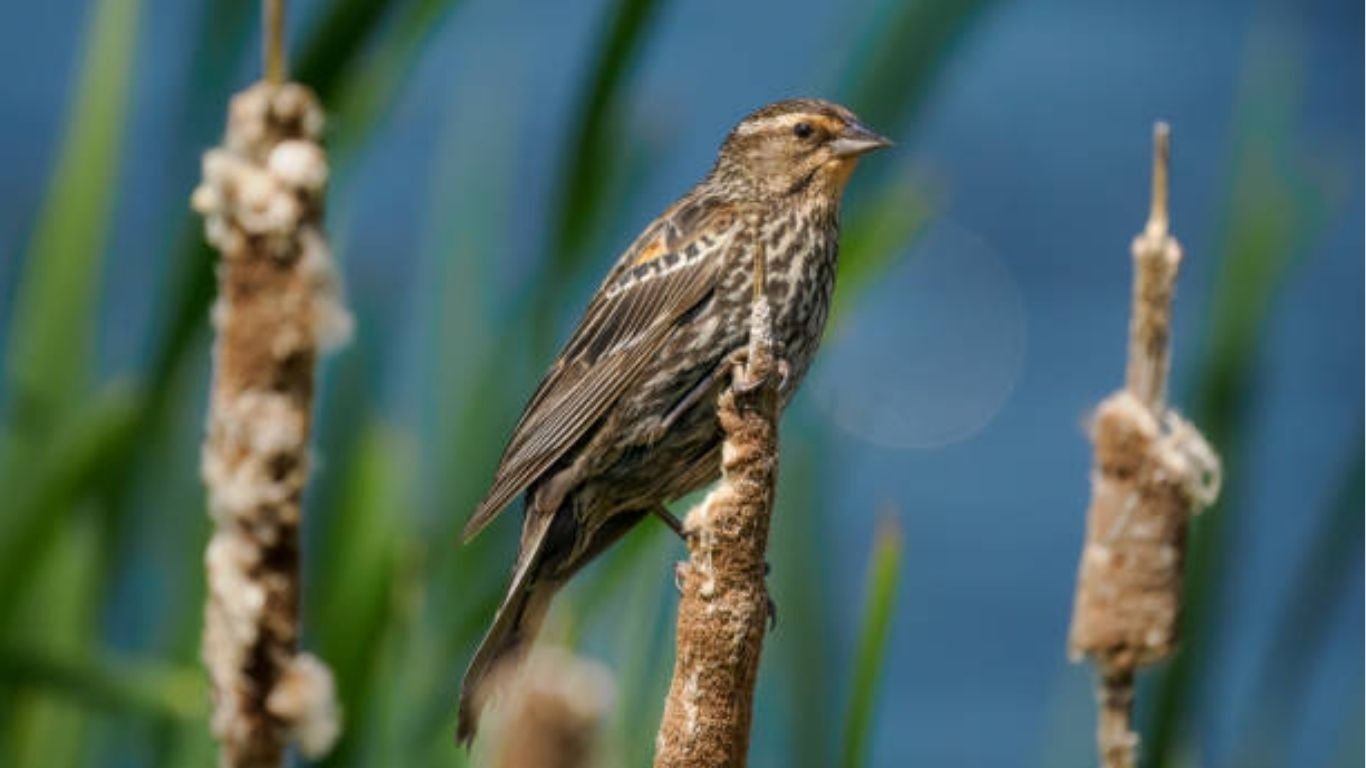
- Brown and heavily streaked feathers
- Pale eyebrow stripe above the eye
- Resembles a large sparrow
Juvenile and Immature Birds
- Similar in appearance to females
- Duller coloration without bright contrasts
- Gradual development of adult plumage
Rose-Breasted Grosbeak Habitat and Range
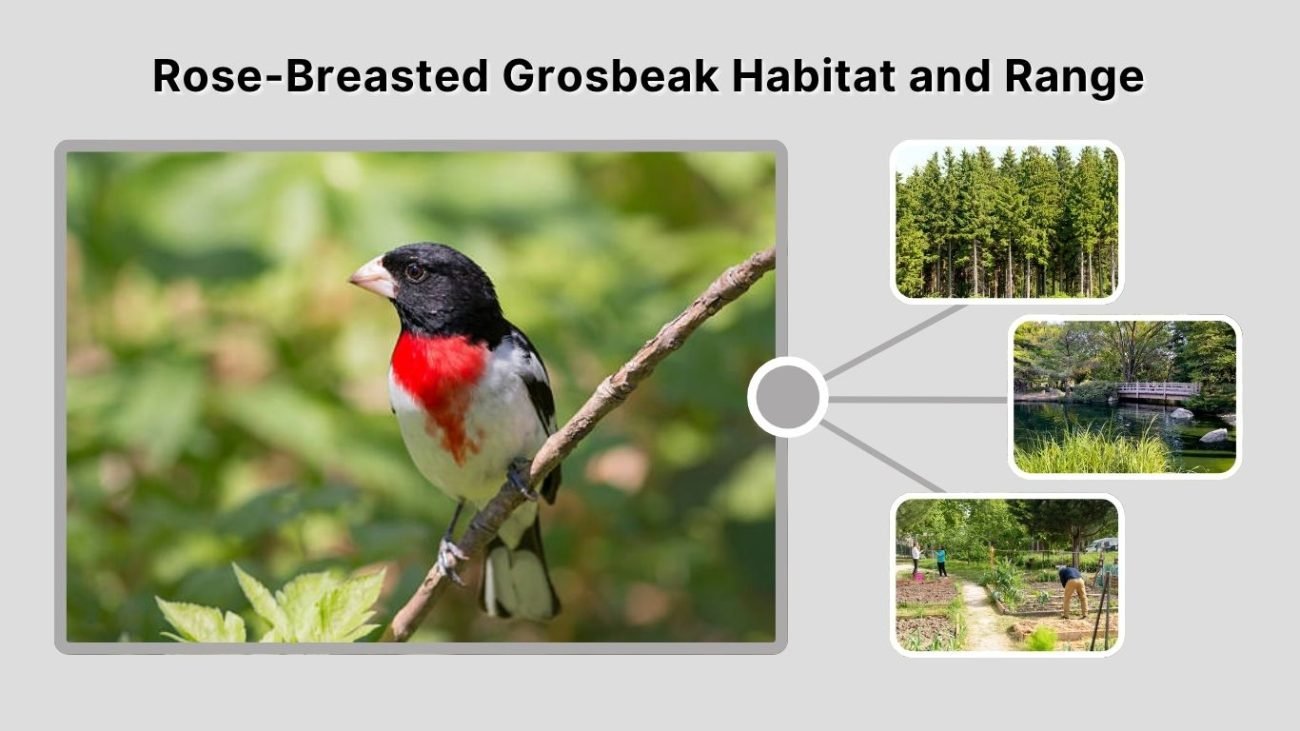
The Rose-breasted Grosbeak prefers environments where trees and shrubs are abundant. It thrives in both natural forests and areas influenced by human activity, such as gardens and parks. Its wide range and adaptability make it a common sight in many parts of North America during warmer months.
Where Do Rose-Breasted Grosbeaks Live?
- Deciduous forests and woodland edges
- Suburban gardens and parks
- Open areas with scattered trees
Range Overview
- Breeding range in eastern and central North America
- Wintering range in Central and South America
- Found in a variety of temperate environments
Migration Patterns
- Long-distance migrant traveling thousands of kilometers
- Moves south during fall and returns in spring
- Uses forested corridors during migration
Rose-Breasted Grosbeak Diet and Feeding Behavior

The Rose-breasted Grosbeak has a varied diet that changes with the seasons. Its strong bill allows it to eat both plant and animal matter, making it an adaptable feeder.
What Do Rose-Breasted Grosbeaks Eat?
- Insects such as beetles and caterpillars
- Seeds and grains
- Fruits and berries
Feeding Behavior
- Forages in trees and shrubs
- Uses bill to crack seeds and shells
- Frequently visits backyard feeders
How to Attract Rose-Breasted Grosbeaks
Many bird enthusiasts enjoy attracting Rose-breasted Grosbeaks to their yards. Providing the right food and environment can increase the chances of seeing these beautiful birds up close.
Best Foods for Feeders
- Sunflower seeds
- Peanuts
- Fresh fruit such as oranges
Feeder Tips
- Use platform or tray feeders
- Place feeders in quiet, sheltered areas
- Provide clean water for drinking and bathing
Behavior and Lifestyle
The Rose-breasted Grosbeak is generally calm and easygoing, often seen alone or in pairs rather than large flocks. It spends much of its time feeding, resting, or singing from tree branches. During the breeding season, males become more vocal as they defend territory and attract mates. Despite its striking appearance, this bird can be surprisingly shy, often staying hidden among foliage.
Rose-Breasted Grosbeak Nesting and Reproduction
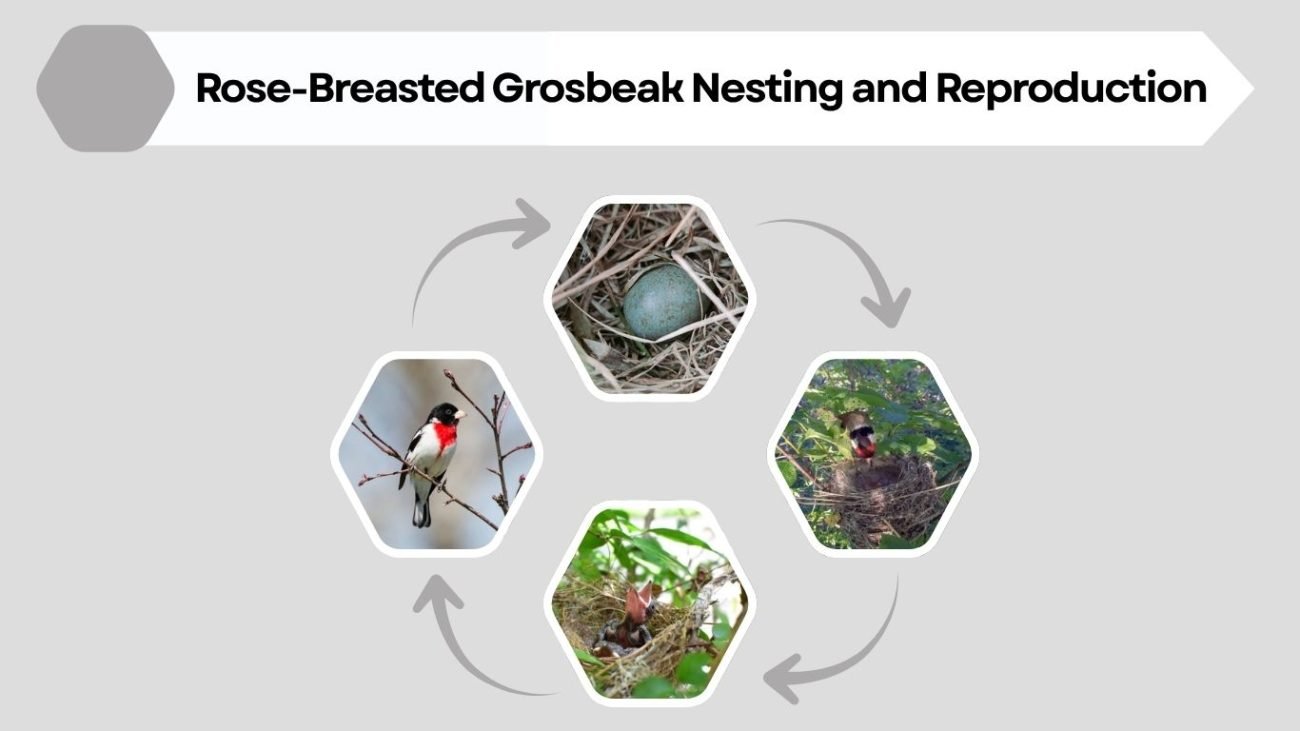
The Rose-breasted Grosbeak breeds during the warmer months when food is abundant. It builds nests in trees or shrubs, often hidden among leaves for protection. Both the male and female take part in raising their young, showing strong parental cooperation.
Nesting Habits
- Cup-shaped nests made from twigs, grass, and leaves
- Built on tree branches or dense shrubs
- Usually placed a few meters above ground
Eggs and Chicks
- Typically lays 3 to 5 eggs per clutch
- Eggs are pale with brown or gray markings
- Both parents incubate and feed the chicks
Rose-Breasted Grosbeak Song and Sound
The Rose-breasted Grosbeak is famous for its rich, musical song. Often compared to a robin’s melody, its song is sweeter and more flowing. Males sing frequently during the breeding season to attract mates and defend their territory. Their calls are softer and shorter, used mainly for communication between mates or as warning signals. This bird’s vocal abilities make it one of the most enjoyable species to hear in forest and garden environments.
Comparison with Similar Birds
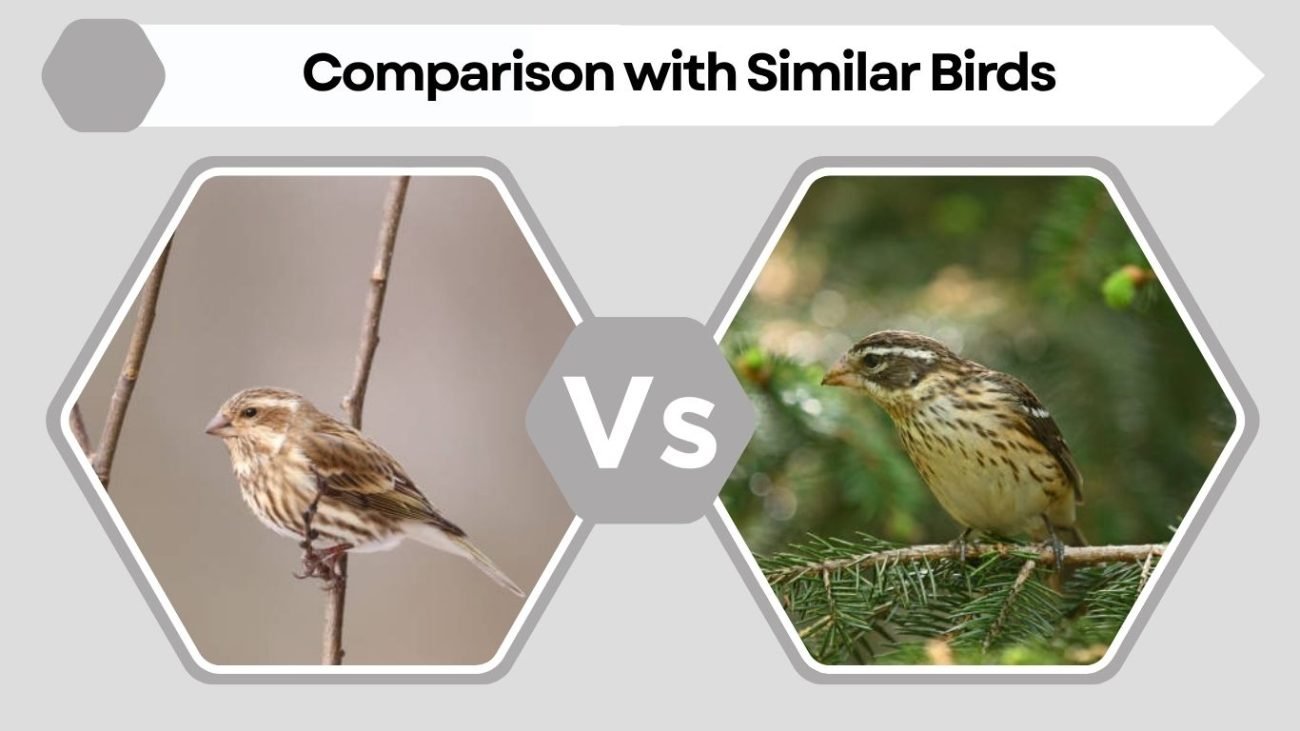
The Rose-breasted Grosbeak can sometimes be confused with other songbirds, especially when identifying females or juveniles. Knowing key differences helps in accurate identification.
Female Purple Finch vs Female Grosbeak
- Grosbeak has a larger, thicker bill
- Finch shows more uniform coloring
- Grosbeak has a clearer eyebrow stripe
Black-Headed Grosbeak Comparison
- Black-headed Grosbeak has orange underparts
- Rose-breasted has a red chest patch (in males)
- They overlap slightly in range and may hybridize
Rose-Breasted Grosbeak Predators and Threats
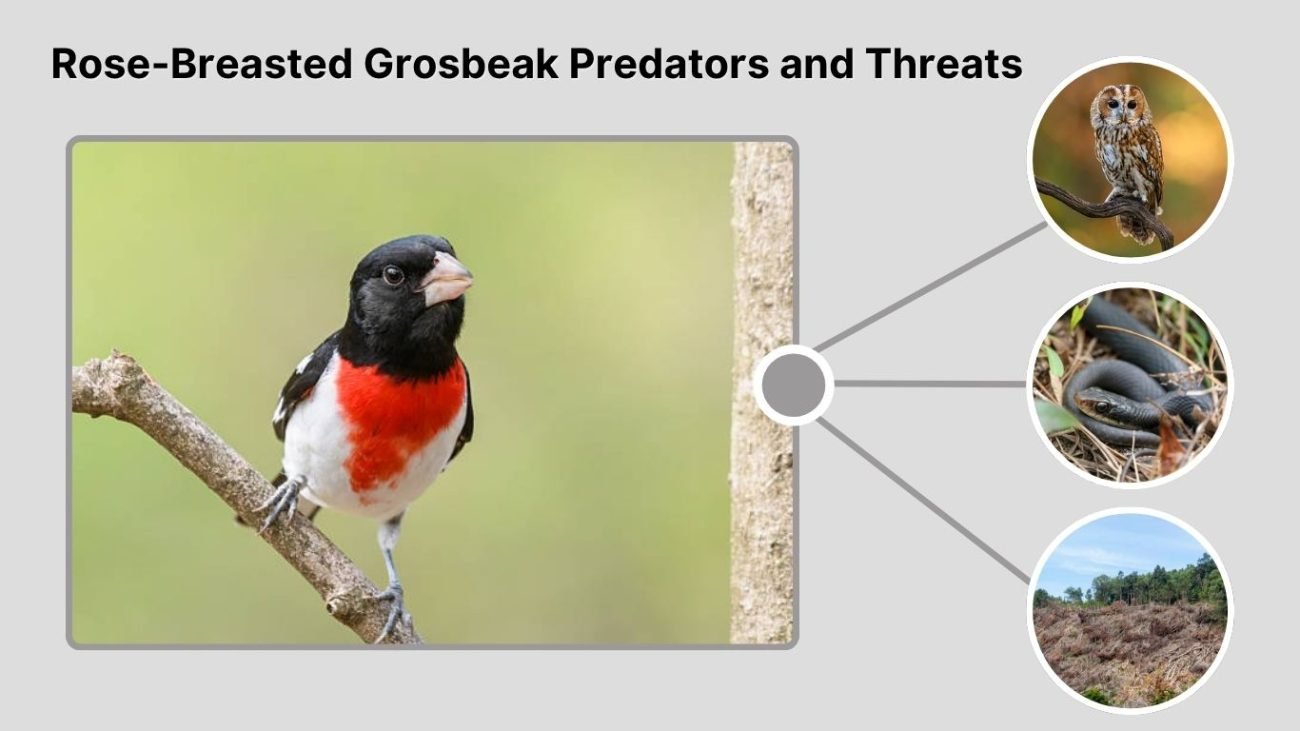
Like many songbirds, the Rose-breasted Grosbeak faces threats from both natural predators and human activity. While adult birds can often escape danger, eggs and chicks are more vulnerable.
Natural Predators
- Hawks and owls
- Snakes
- Small mammals
Human-Related Threats
- Habitat loss due to deforestation
- Window collisions
- Climate change affecting migration patterns
Interesting Rose-Breasted Grosbeak Facts
This bird has several fascinating traits that make it unique among songbirds.
- Known for its beautiful, flute-like song
- Can eat toxic insects like tent caterpillars
- Migrates long distances each year
- Both parents share responsibilities in raising chicks
Conservation Status and Importance
The Rose-breasted Grosbeak is currently considered a species of least concern, but it still depends on healthy forest habitats for survival. It plays an important ecological role by controlling insect populations and helping disperse seeds. Its presence in an area often indicates a balanced environment. Continued conservation of forests and green spaces is essential to ensure this species remains common and thriving in the future.
FAQs
What do Rose-Breasted Grosbeaks eat?
They eat a mix of insects, seeds, fruits, and berries. Their strong bill allows them to crack seeds and feed on a wide variety of foods.
Where do Rose-Breasted Grosbeaks live?
They live in forests, woodland edges, and suburban areas in North America during breeding and migrate to Central and South America in winter.
How can you tell male vs female Rose-Breasted Grosbeak?
Males have black-and-white plumage with a bright red chest patch, while females are brown and streaked with a pale eyebrow stripe.
Do Rose-Breasted Grosbeaks migrate?
Yes, they are long-distance migrants, traveling between North America and Central or South America each year.
What does a Rose-Breasted Grosbeak sound like?
Their song is rich, melodic, and flute-like, often compared to a robin but more musical and flowing.