







Herons are among the most graceful and skillful hunters in the bird world. With their long legs, dagger-like bills, and patient hunting style, these elegant wading birds thrive in wetlands, marshes, lakes, and even urban ponds. Found across every continent except Antarctica, herons have adapted to a wide range of habitats and food sources.
So, what do herons eat? The answer depends on the species and environment—but one thing remains constant: herons are opportunistic carnivores. From fish and frogs to snakes and crabs, their diet reflects both skill and adaptability. This article explores what herons eat, how they hunt, and how their diets vary across habitats and species.
General Diet of Herons

Main Food Groups
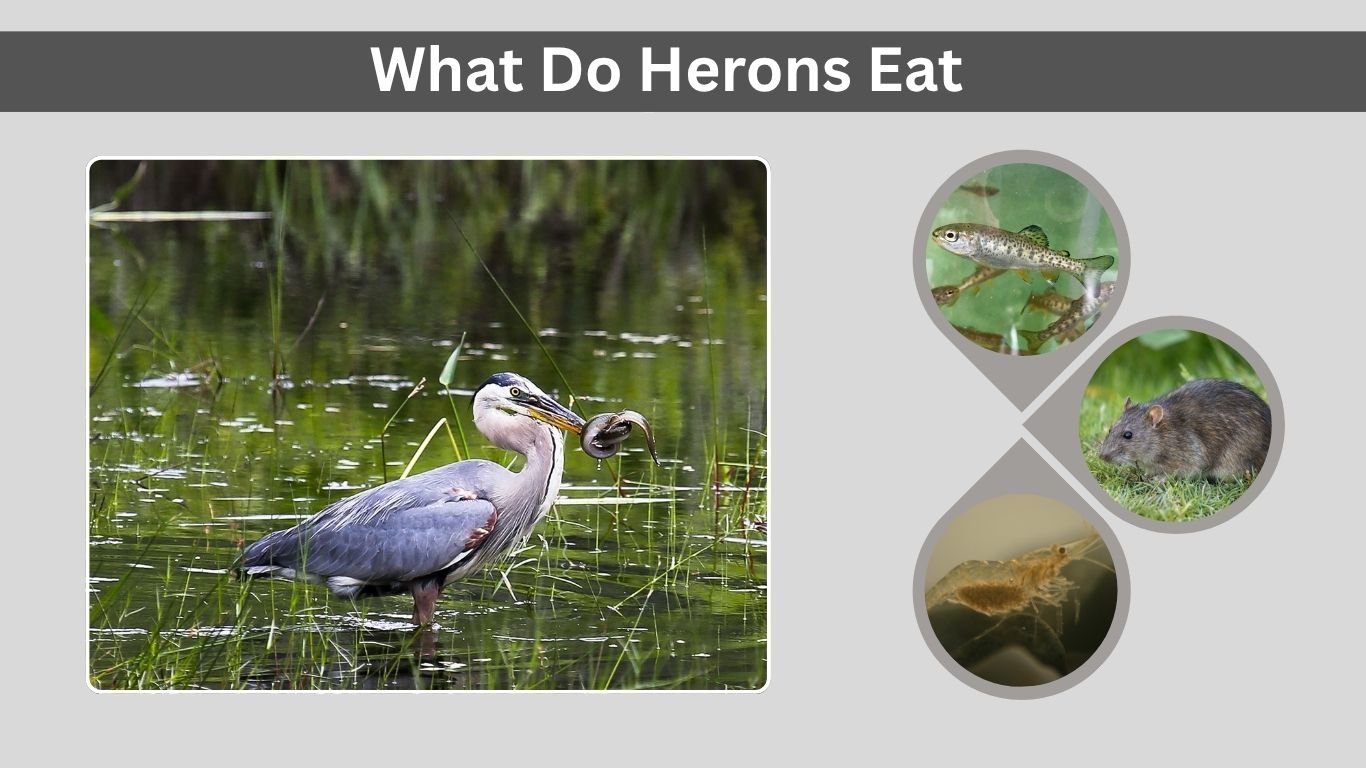
Herons are carnivorous birds that feed primarily on live prey. Their diet is diverse and flexible, allowing them to thrive in both freshwater and coastal ecosystems.
- Fish form the bulk of their diet, especially small, slow-moving species.
- Amphibians like frogs, tadpoles, and salamanders are common in freshwater habitats.
- Crustaceans such as crabs, shrimp, and crayfish are preferred in coastal or marsh environments.
- Insects including dragonflies, grasshoppers, and beetles provide extra protein during summer months.
- Reptiles and mammals—small snakes, lizards, mice, and voles—are occasional meals.
While herons are primarily fish-eaters, their true advantage lies in adaptability. They consume whatever prey is most abundant, ensuring survival even when food sources fluctuate with the seasons.
How They Hunt
Herons are masters of stealth and patience. Their hunting method—often called the “stand-and-wait” technique—involves standing motionless in shallow water or grass, waiting for prey to move within striking distance.
When the moment comes, the heron strikes with lightning speed, using its sharp bill to spear or grab the prey. Once captured, the prey is flipped head-first and swallowed whole, a method that prevents fins or claws from catching in the throat.
Most species hunt alone, staking out territories along shorelines or marsh edges. Their solitary nature helps reduce competition and allows them to focus entirely on movement and timing.
Diet by Species
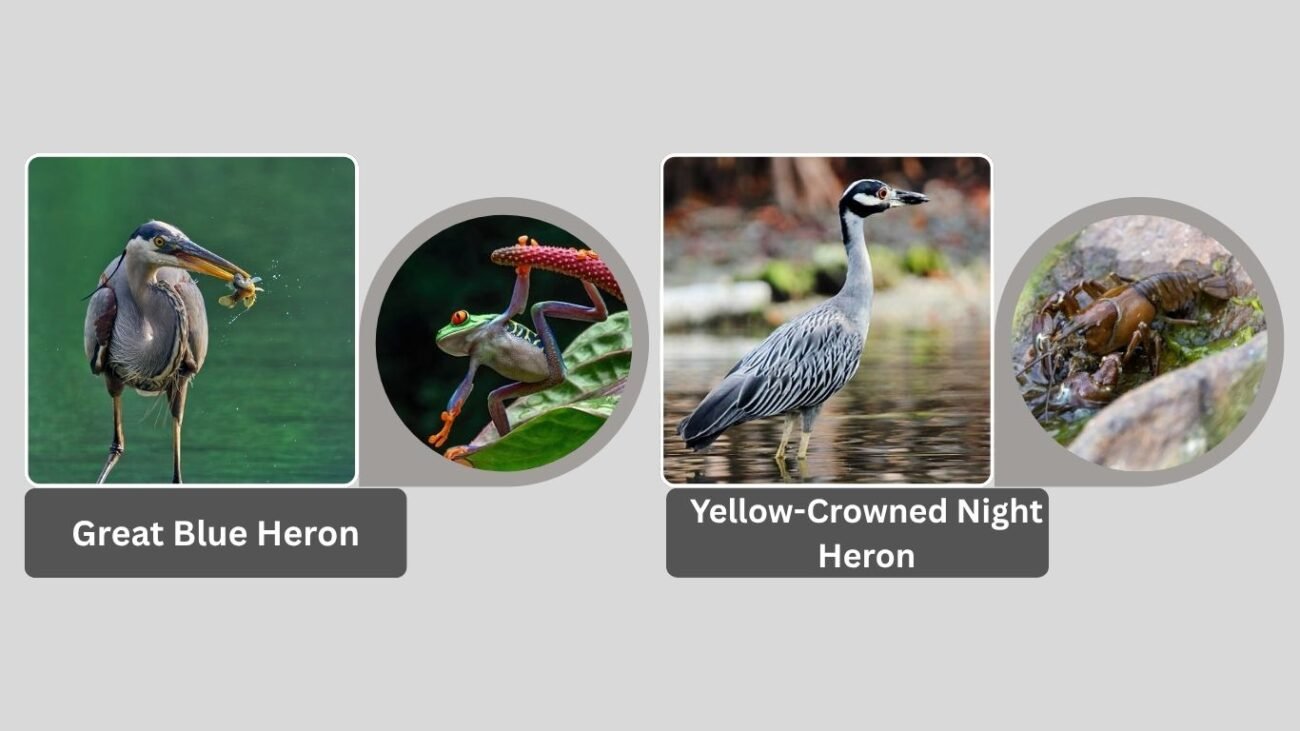
Great Blue Heron
The Great Blue Heron (Ardea herodias) is North America’s largest heron and one of the most versatile hunters. Its diet includes:
- Fish: perch, sunfish, trout fry, and catfish.
- Amphibians: frogs and toads.
- Reptiles: small snakes.
- Mammals: voles, mice, and sometimes small birds or ducklings.
During winter or in coastal areas, Great Blue Herons switch to crustaceans and shrimp, especially in mangroves and tidal flats. This flexibility allows them to live year-round across much of the continent.
Green Heron
The Green Heron (Butorides virescens) is small but intelligent. It eats minnows, small fish, frogs, aquatic insects, and crustaceans. What makes this bird unique is its tool use—it’s one of the few bird species known to use bait. Green Herons drop twigs, feathers, or even insects on the water’s surface to lure curious fish closer before striking.
This clever behavior shows how herons combine instinct with learned hunting strategies, adapting perfectly to different environments.
Yellow-Crowned Night Heron
The Yellow-Crowned Night Heron (Nyctanassa violacea) specializes in crabs and crayfish. Its strong black bill is built for cracking tough shells, and it hunts mostly at night or twilight, when crustaceans are more active.
Unlike other herons that wade during the day, the Yellow-Crowned Night Heron prefers quiet marshes and mangroves after sunset, relying on stealth and excellent night vision.
Black-Crowned Night Heron
The Black-Crowned Night Heron (Nycticorax nycticorax) has a broader diet, feeding on fish, amphibians, insects, and even small birds. It often hunts at dawn or dusk, using its short, stocky build to stalk prey silently along the water’s edge.
These herons are also known for nesting in colonies, often near urban wetlands, where they have access to a steady supply of fish and insects.
Gray (or Grey) Heron
The Gray Heron (Ardea cinerea) is the European counterpart to the Great Blue Heron. It feeds primarily on fish and frogs, but in colder months when water bodies freeze, it hunts mice and voles in open fields. This adaptability has helped it survive harsh winters in northern Europe.
White Heron / Great Egret
White herons or Great Egrets (Ardea alba) share similar feeding habits. They prefer fish and amphibians, occasionally catching insects or reptiles. Graceful and elegant, they often feed in groups in tidal shallows, using their long necks and sharp bills to pick off prey with surgical precision.
Diet by Habitat
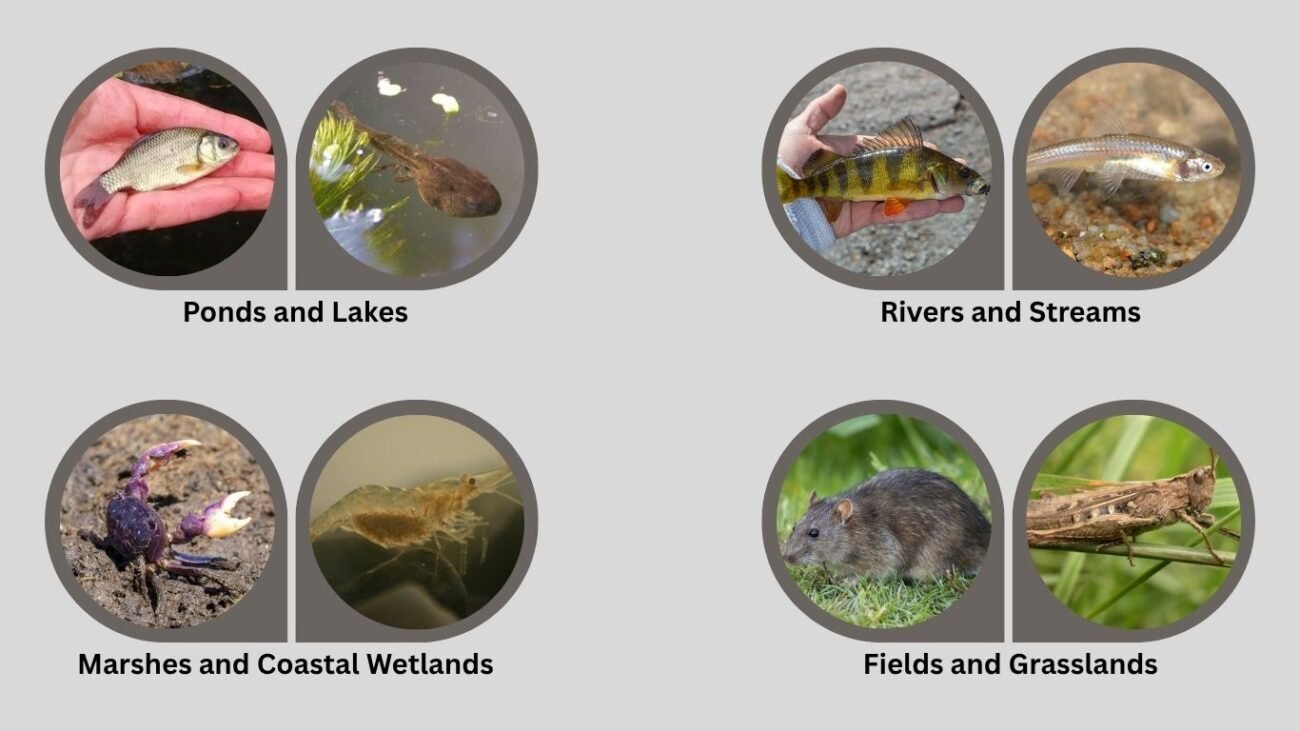
Ponds and Lakes
In still waters like ponds and lakes, herons hunt small fish, tadpoles, and dragonflies. Garden ponds sometimes attract Great Blues or Little Blues looking for an easy meal of koi or goldfish.
Rivers and Streams
Along rivers and streams, herons feed on perch, minnows, trout fry, crayfish, and small snakes. They move carefully along the banks, striking at anything that breaks the surface.
Marshes and Coastal Wetlands
In tidal marshes, the diet shifts to crabs, shrimp, mollusks, and aquatic insects. Night herons and Yellow-Crowned species dominate these zones, where they thrive on crustaceans hidden in the mud.
Fields and Grasslands
When wetlands dry out or freeze, herons move inland to feed on mice, voles, grasshoppers, and frogs. This seasonal migration highlights their ability to survive even far from water.
What Fish Do Herons Eat?
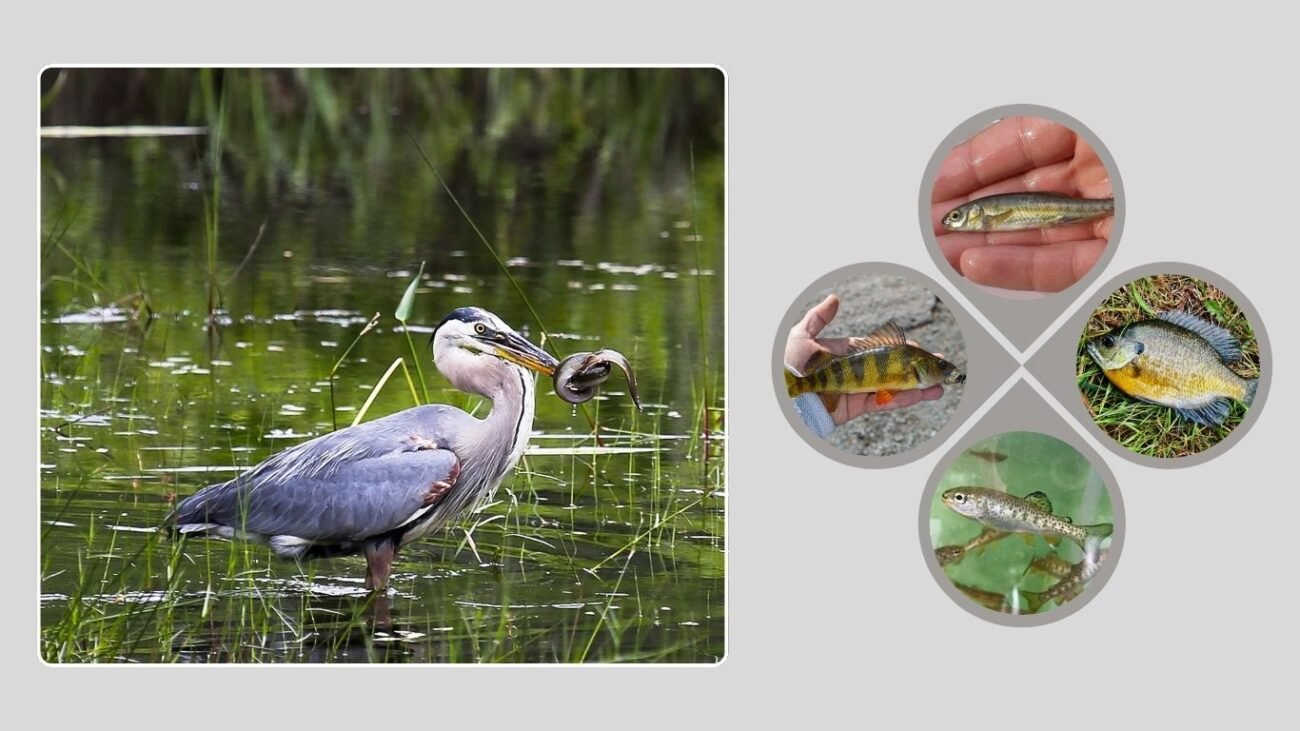
Fish make up the largest portion of most herons’ diets. Because herons are found across a wide variety of climates, their preferred fish species depend on location and water type.
In freshwater ponds and rivers, they eat minnows, perch, catfish, bluegill, trout fry, and carp. In brackish and coastal areas, they feed on mullet, anchovies, small eels, and juvenile sea bass. Most fish are between 3 and 6 inches long, small enough to be swallowed whole.
Herons have incredibly fast reflexes and excellent binocular vision, allowing them to strike with stunning accuracy. Larger species like the Great Blue Heron can catch and swallow fish weighing over half a pound, though most of their meals are smaller. Juvenile herons start with tiny prey, such as minnows or tadpoles, before developing the strength and coordination needed to tackle larger fish.
Do Herons Eat Other Animals?
Although fish dominate their diet, herons are opportunistic hunters and won’t hesitate to eat other animals if the chance arises.
Small Mammals and Reptiles
Herons sometimes move away from water to hunt mice, voles, lizards, and small snakes, especially during colder months when ponds freeze. Great Blue and Gray Herons are strong enough to grab and swallow these small terrestrial creatures whole. Their long beaks and flexible throats make them surprisingly capable of eating land-dwelling prey.
Birds and Ducklings
It may come as a surprise, but large herons occasionally prey on ducklings or small birds. Such events are rare but have been documented, particularly in Great Blue Herons. They typically target weakened or slow-moving chicks near shorelines.
Myths and Misunderstandings
There are occasional myths claiming that herons attack domestic pets such as cats or small dogs. In reality, herons do not target healthy mammals of that size. Their diet is limited by what they can catch and swallow whole—usually much smaller animals.
What Do Baby Herons Eat?

Baby herons, called chicks or nestlings, rely completely on their parents for food during the first few weeks of life. Adult herons regurgitate partially digested food into the nest, which the chicks eagerly consume.
During the earliest days, this food consists mainly of small fish, tadpoles, and insects. As chicks grow stronger, parents bring larger prey, including small frogs or young fish. By the time they are ready to fledge—usually around 6 to 7 weeks old—juvenile herons can catch and swallow small prey on their own.
Young herons continue to follow their parents for a short period, observing hunting techniques before becoming fully independent. This learning phase is vital; it’s where they develop the patience and precision that define the species.
Feeding Behavior and Adaptations
Patience and Precision
The heron’s most famous hunting trait is stillness. They can stand motionless for minutes or even longer, perfectly camouflaged in the reeds, waiting for an unsuspecting fish to swim close. Once prey is within range, the heron’s lightning-fast strike leaves little chance of escape.
This hunting style conserves energy while maximizing success—a perfect example of nature’s efficiency. It’s also a form of behavioral adaptation, allowing herons to thrive even in low-prey environments.
Tool Use
The Green Heron has earned a special reputation among ornithologists. It is one of the very few bird species known to use tools. By dropping bits of bread, insects, or twigs onto the water, it lures curious fish to the surface. This remarkable display of intelligence highlights the adaptability of herons as hunters.
Environmental Adaptability
Herons are highly adaptable, capable of feeding in saltwater marshes, freshwater ponds, or even urban drainage canals. Their long legs allow them to wade into deeper water, while their broad wings enable quick flight between feeding areas.
Some species, like the Yellow-Crowned Night Heron, have evolved to specialize in certain prey—such as crabs—while others, like the Great Egret, remain generalists, feeding on whatever is abundant.
Swallowing Mechanics
A heron’s throat can expand to accommodate surprisingly large prey. They always swallow head-first to prevent spines or limbs from catching. After swallowing, the heron will often stand quietly to let its food slide down the esophagus before resuming the hunt.
Seasonal and Regional Variations
The heron’s diet changes with the seasons and available resources.
- Spring and Summer: Abundant fish, insects, and amphibians.
- Autumn: Herons shift toward crustaceans and small mammals as insects decline.
- Winter: In temperate regions, many water sources freeze, forcing herons inland to hunt mice, voles, or small reptiles.
- Tropical areas: Year-round access to fish and crustaceans, meaning little seasonal variation.
Regional differences are equally striking.
- In Florida and the Gulf Coast, herons feed heavily on crabs, shrimp, and small saltwater fish.
- In northern states or Europe, they rely on freshwater fish during warmer months and rodents or insects in winter.
- In Asia and Africa, herons have adapted to eat frogs, eels, and even insects from rice paddies.
Their ability to adjust diet according to climate and geography makes herons one of the most resilient bird families in the world.
Ecological Importance
Herons play a vital role in maintaining the balance of aquatic ecosystems. By feeding on fish, frogs, and invertebrates, they help regulate prey populations and support biodiversity. Healthy heron populations are often an indicator of clean, functioning wetlands.
However, pollution, overfishing, and habitat loss threaten many of their feeding grounds. Conservation of wetlands, rivers, and coastal areas ensures not only the survival of herons but also the stability of the ecosystems they inhabit.


