










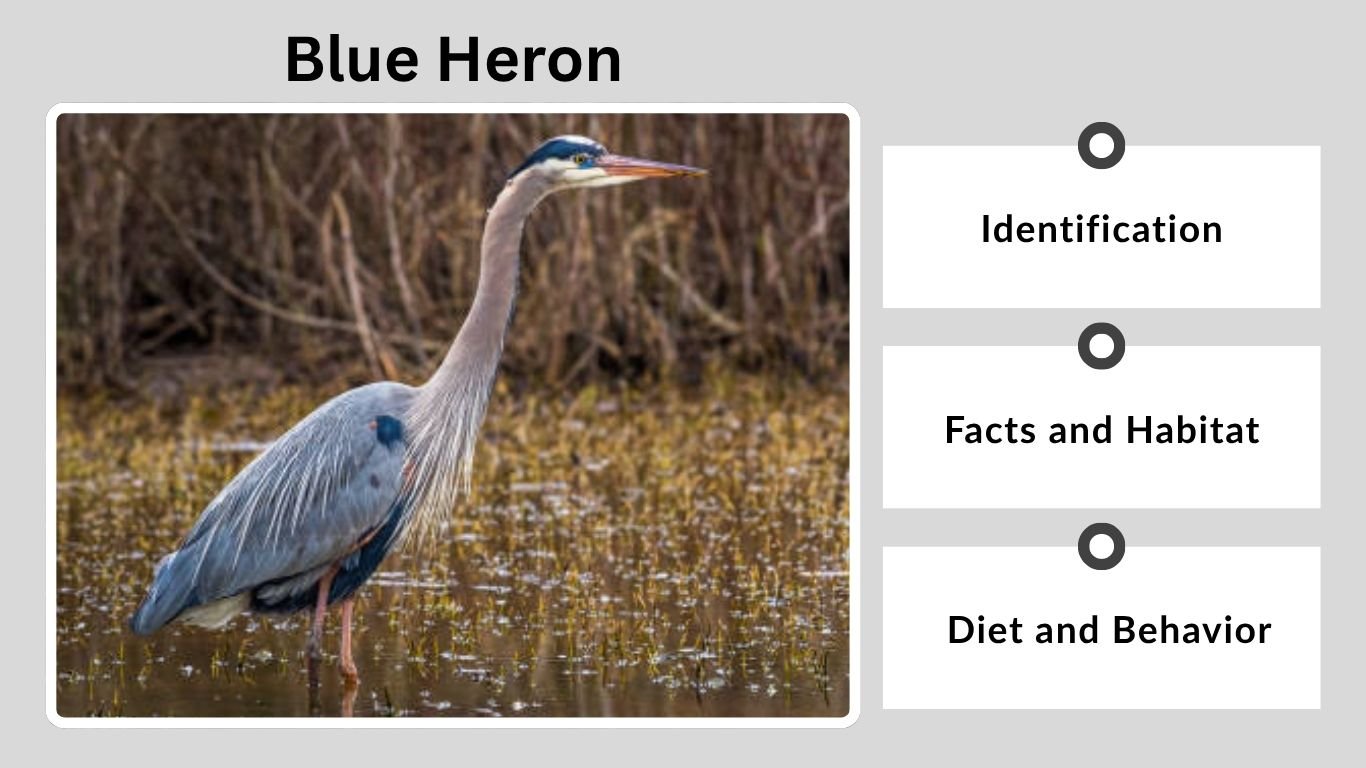
The Blue Heron is a striking wading bird admired for its grace, beauty, and hunting precision. Found across North America, these tall, slender birds thrive in wetland habitats and play a vital role in maintaining ecosystem balance. Known for their patience and elegant movements, Blue Herons have fascinated birdwatchers, artists, and naturalists alike for centuries. Their adaptability and symbolism make them one of the most recognized waterbirds in the world.
Physical Identification

Appearance
The Blue Heron stands out for its long legs, curved neck, and sharp, spear-like bill. Its bluish-gray plumage blends beautifully with water and vegetation, providing excellent camouflage while hunting. The feathers on its head form a black plume, and its eyes are yellow, giving it a piercing gaze. On average, adult Blue Herons reach heights of 3.5 to 4.5 feet with an impressive wingspan of up to 6 feet. Males are generally larger, but both sexes share similar coloring and features.
Juvenile vs Adult Blue Herons
Juvenile Blue Herons are typically duller in color, showing brownish or grayish tones rather than the distinct blue-gray of adults. They also lack the long head plumes seen in mature herons. As they age, their feathers become more refined, and their hunting skills improve. Juveniles often spend time alone, learning to fish and survive before joining larger heron gatherings during migration.
Great Blue Heron vs Little Blue Heron
Although the Great Blue Heron and the Little Blue Heron share similar habitats, they differ in size and appearance. The Great Blue Heron is larger, with a gray-blue body, black crown plumes, and a yellowish bill. In contrast, the Little Blue Heron is smaller, with a darker blue coloration and a more delicate build. Young Little Blue Herons start out white before molting into their mature blue plumage.
| Feature | Great Blue Heron | Little Blue Heron |
| Size | Up to 4.5 ft tall | Around 2 ft tall |
| Color | Gray-blue with black plumes | Deep slate-blue |
| Bill | Thick and yellowish | Slender and gray |
| Habitat Range | Widespread in North America | Found in southeastern U.S. and Central America |
Habitat and Range
Preferred Environments
Blue Herons are most commonly found near bodies of water—lakes, rivers, marshes, ponds, and coastal shorelines. They prefer shallow waters where they can wade easily and hunt for fish and amphibians. Their nests are typically built in tall trees near water, often in colonies known as rookeries. These nesting sites provide both safety from predators and easy access to feeding grounds.
Migration Patterns
Not all Blue Herons migrate; those living in warmer climates tend to stay year-round, while northern populations move south during colder months. Migration usually begins in late summer or early fall, with herons traveling alone or in loose groups. They may journey thousands of miles to reach tropical regions of Central and South America, returning to their breeding grounds in spring.
Diet and Hunting Behavior

Feeding Habits
The Blue Heron is a master hunter. It feeds primarily on fish but also consumes frogs, insects, small rodents, and even snakes. Using its long neck and lightning-fast reflexes, it spears prey with a quick thrust of its beak. Often, it stands motionless in shallow water, waiting for the perfect moment to strike. This hunting method demonstrates both patience and precision—key traits that make it an efficient predator.
Predators and Threats
Adult Blue Herons have few natural predators, but eggs and chicks are vulnerable to raccoons, crows, and larger birds of prey. Human activities such as habitat destruction, pollution, and wetland draining pose significant threats to their populations. Despite this, Blue Herons remain widespread and are currently not endangered, thanks to their adaptability and conservation efforts focused on wetland protection.
Breeding and Nesting
Courtship and Mating
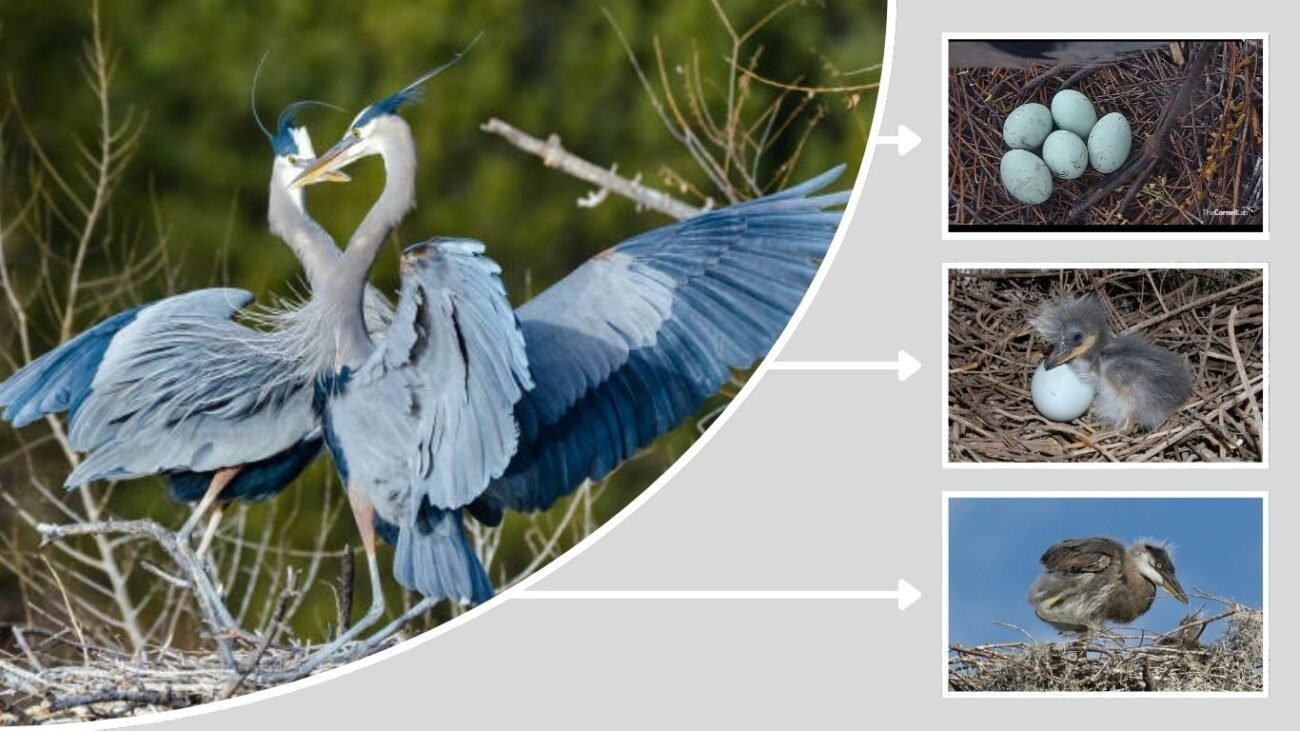
Breeding season begins in early spring, marked by elaborate courtship displays. Males attract females by stretching their necks, clapping their bills, and offering sticks for nest building. Once paired, they build large nests made of twigs high in trees near water. These nests are reused and expanded each year, often forming large colonies that can include dozens of pairs.
Chicks and Parenting
Females typically lay 3 to 5 pale blue eggs. Both parents take turns incubating the eggs for about 25 to 30 days. After hatching, the chicks rely on their parents for food and protection. The young herons remain in the nest for nearly two months before learning to fly and hunt on their own.
Behavior and Adaptations
Flying and Movement
The Blue Heron’s flight is slow, graceful, and powerful. With deep, rhythmic wingbeats, it glides elegantly above the water, neck tucked in an “S” shape, and long legs trailing behind. This posture helps reduce air resistance and maintain balance. When landing, the heron spreads its wings wide and descends softly—an impressive sight for birdwatchers. During hunting, it moves silently, demonstrating agility and stealth, key to catching prey unnoticed.
Communication and Sounds
Blue Herons are mostly quiet birds, but they produce harsh croaking calls, especially during flight or when alarmed. Their deep “fraaank” sound can often be heard echoing across wetlands. They use body language—such as head movements and wing displays—for courtship or to defend territories. While they are typically solitary feeders, Blue Herons gather in colonies during breeding, showing both independence and social adaptability.
Cultural and Symbolic Meaning
Spiritual Significance
Across many cultures, the Blue Heron symbolizes tranquility, self-reliance, and patience. Native American tribes regard the bird as a sign of wisdom and determination, representing the ability to stand still and wait for the right opportunity. In Eastern symbolism, it embodies balance and calmness, encouraging mindfulness and grace under pressure. Spotting a Blue Heron is often seen as a reminder to stay steady and trust one’s instincts.
In Art and Literature
Artists and writers have long admired the Blue Heron’s beauty and poise. Its image frequently appears in landscape paintings, nature photography, and poetry, symbolizing serenity and reflection. From Japanese prints to modern art, the heron’s silhouette against a setting sun captures both elegance and solitude, reminding observers of nature’s quiet strength and resilience.
Conservation and Protection

Population and Conservation Status
The Blue Heron remains one of the most widespread heron species in North America. It is listed as a species of “Least Concern” by conservation organizations, meaning populations are stable overall. However, local declines can occur due to pollution, habitat loss, and human disturbance near nesting sites. Wetland conservation initiatives and protected reserves have helped maintain healthy breeding areas and support long-term survival.
How to Support Blue Heron Habitats
Individuals can play an active role in Blue Heron conservation by protecting wetland environments and reducing water pollution. Supporting organizations that restore marshes, reduce pesticide runoff, and promote sustainable fishing practices can greatly benefit heron populations. Observers should also respect nesting colonies and maintain a safe distance to avoid stress or nest abandonment.
FAQs
What does a Blue Heron eat?
Blue Herons mainly eat fish, but their diet also includes frogs, insects, crustaceans, and small mammals. They hunt by standing still in shallow water, waiting for prey to come close before striking with incredible speed and precision using their sharp bill.
Where do Blue Herons live?
These herons live in wetlands, lakes, ponds, and coastal regions across North and Central America. They prefer shallow waters where fish and amphibians are abundant. Blue Herons often build their nests high in trees near these habitats to stay close to food sources.
What is the difference between a Blue Heron and a Great Blue Heron?
The Great Blue Heron is the largest heron species in North America, with gray-blue feathers and black head plumes. Smaller Blue Herons, like the Little Blue Heron, have darker blue plumage and lack the distinct black crown. Both share similar behaviors and environments.
How long do Blue Herons live?
In the wild, Blue Herons typically live between 15 and 20 years. Their lifespan depends on environmental conditions and predator threats. With protected habitats and abundant food, some have been known to live even longer, showing remarkable resilience and adaptability.
What does seeing a Blue Heron symbolize?
Seeing a Blue Heron often symbolizes patience, independence, and inner peace. Many believe it represents the ability to stay calm and grounded in uncertain situations. The heron’s graceful stance reminds people to wait for the right moment before taking action.


