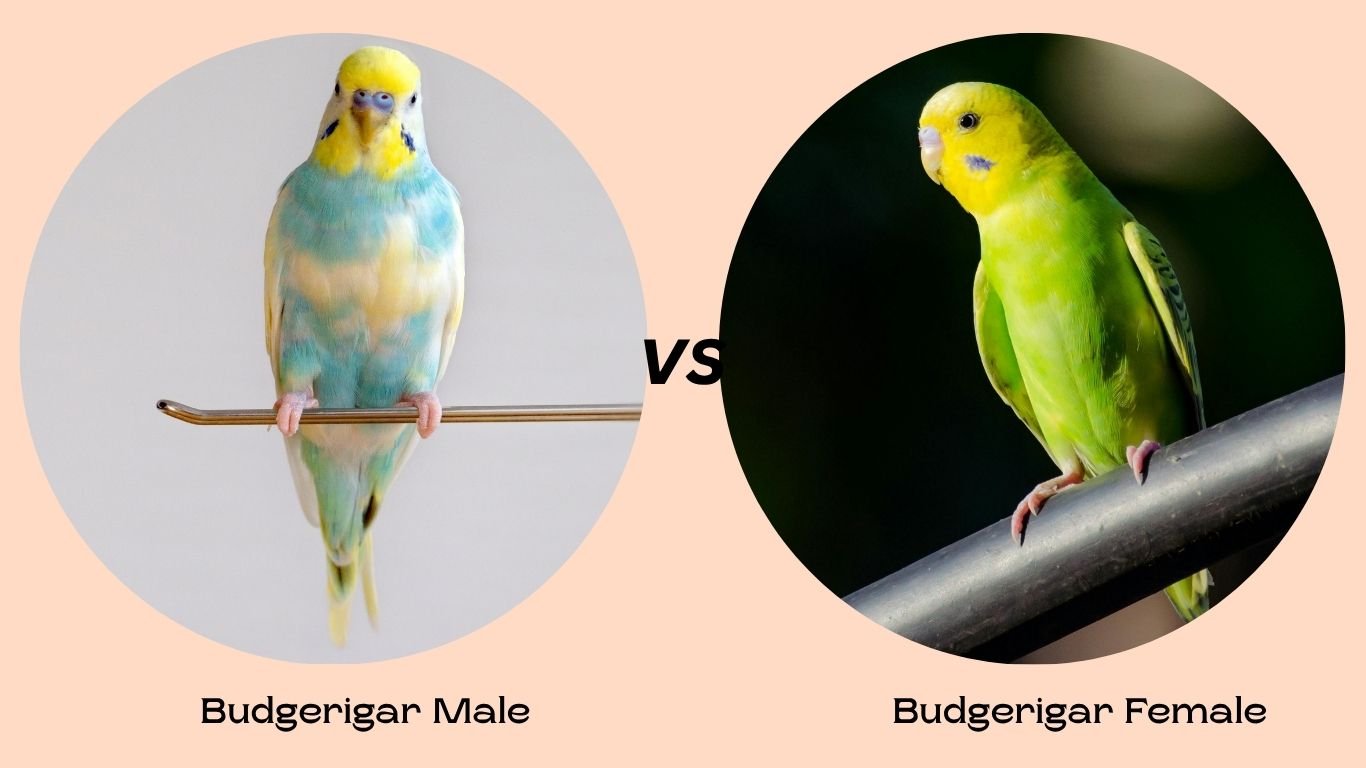
Budgerigars, or budgies, are among the most popular pet birds worldwide. These cheerful, intelligent little parrots are loved for their colors, chirping, and playful personalities. However, telling a male from a female can be tricky—especially for first-time owners. Knowing their sex can help with bonding, training, and breeding decisions. In this guide, we’ll cover the 7 key differences between male and female budgies to help you identify your feathered friend with confidence.
Comparison Table: Budgerigar Male vs Female
| Feature | Male Budgerigar | Female Budgerigar |
| Cere Color | Bright blue (mature), pink in juveniles | Tan, brown, or white (mature females) |
| Behavior | Friendly, sociable, sings often | More assertive, territorial, quieter |
| Talking Ability | Better mimics, more vocal | Rarely mimics, limited vocalization |
| Nesting Behavior | Doesn’t nest, may court female | Shows nesting instincts, chews surfaces |
| Body Shape | Leaner body, longer tail feathers | Stockier, broader build |
| Voice Pitch | Softer, melodious voice | Sharper, louder, more abrupt sounds |
| Mirror/Toy Interaction | Talks to mirror, playful with toys | May attack mirror, chews toys |
1. Cere Color: The Easiest Visual Clue

The cere—the fleshy area above a budgie’s beak where the nostrils are—is the most reliable way to tell males from females, especially in adult birds.
Male Cere
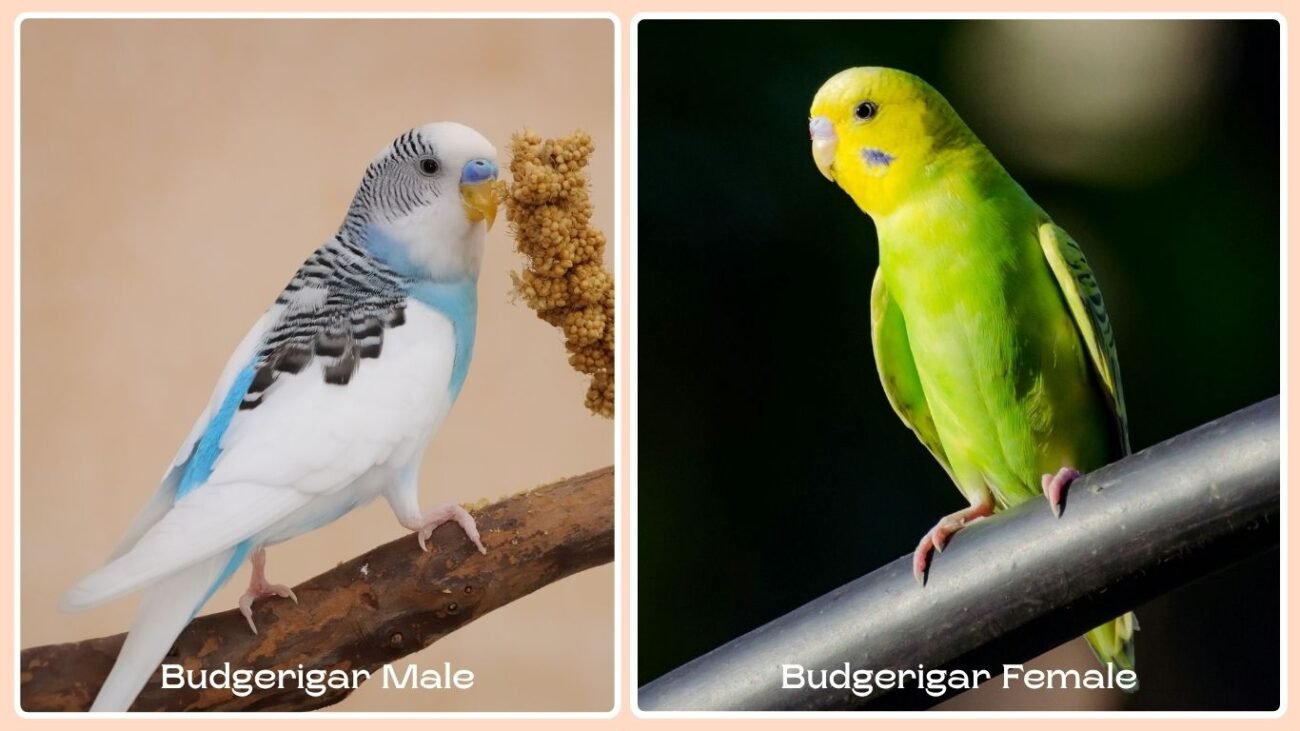
In mature male budgerigars, the cere is typically a bright, bold blue. Juvenile males may have a purplish or pinkish cere that turns blue as they grow older. This color becomes more vivid during mating season.
Female Cere
Female budgies usually have a white, beige, or light blue cere when young, which turns brown and crusty during breeding season. It may also look rough or textured compared to the male’s smoother cere.
Changes With Age and Hormones
Hormonal changes can affect cere color, especially in females. A brown cere doesn’t always mean maturity—some females develop brown cere early depending on lighting, diet, and health.
2. Behavior and Temperament Differences
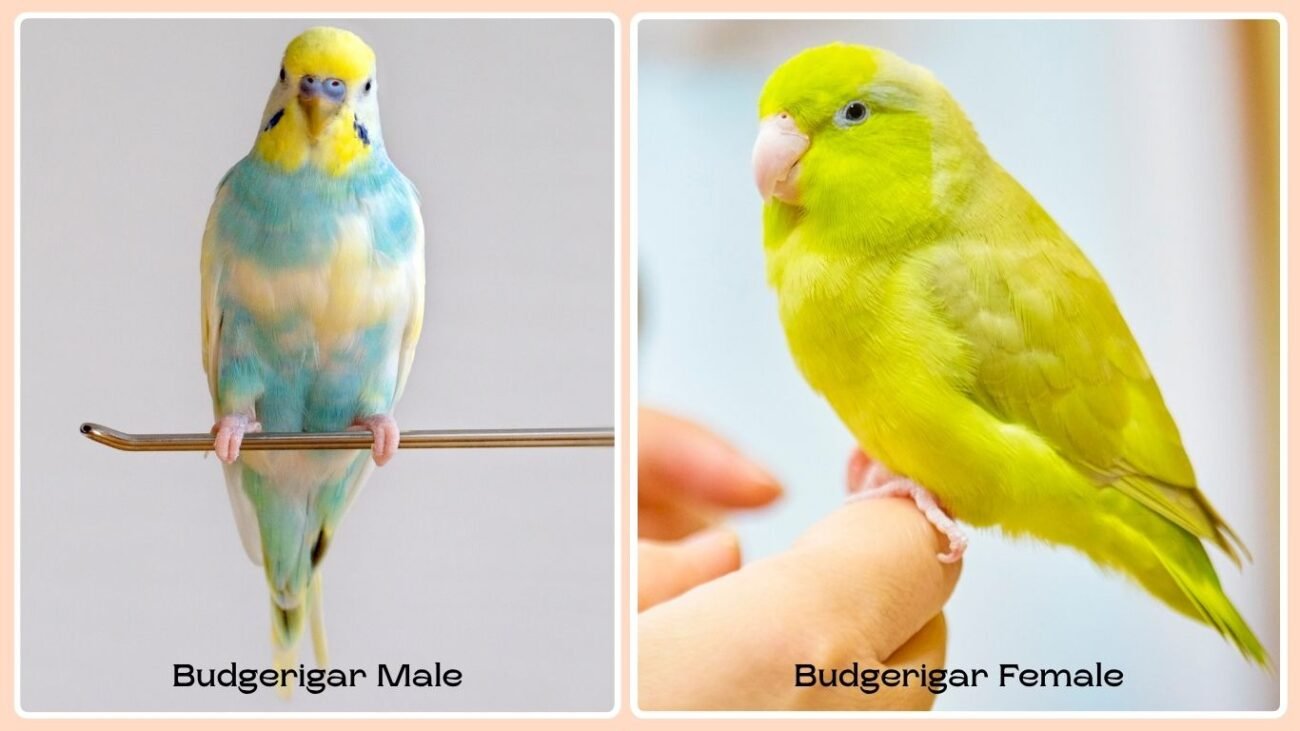
Budgies have distinct personalities, and their gender can influence how they interact with you and their environment.
Male Personality Traits
Males are typically more outgoing, sociable, and playful. They enjoy interacting with people and other birds, and they often sing or chatter cheerfully. This makes them ideal companions for those wanting a more interactive bird.
Female Personality Traits
Females tend to be more cautious and territorial. They can be assertive, especially around nesting spots or new birds. Some females are quieter and may show dominance if kept in a shared cage.
Aggression or Dominance
While both sexes can nip or defend themselves, females are more prone to show dominance by lunging or biting. In contrast, males usually rely on vocal displays and courtship behavior to express themselves.
3. Talking and Mimicking Ability
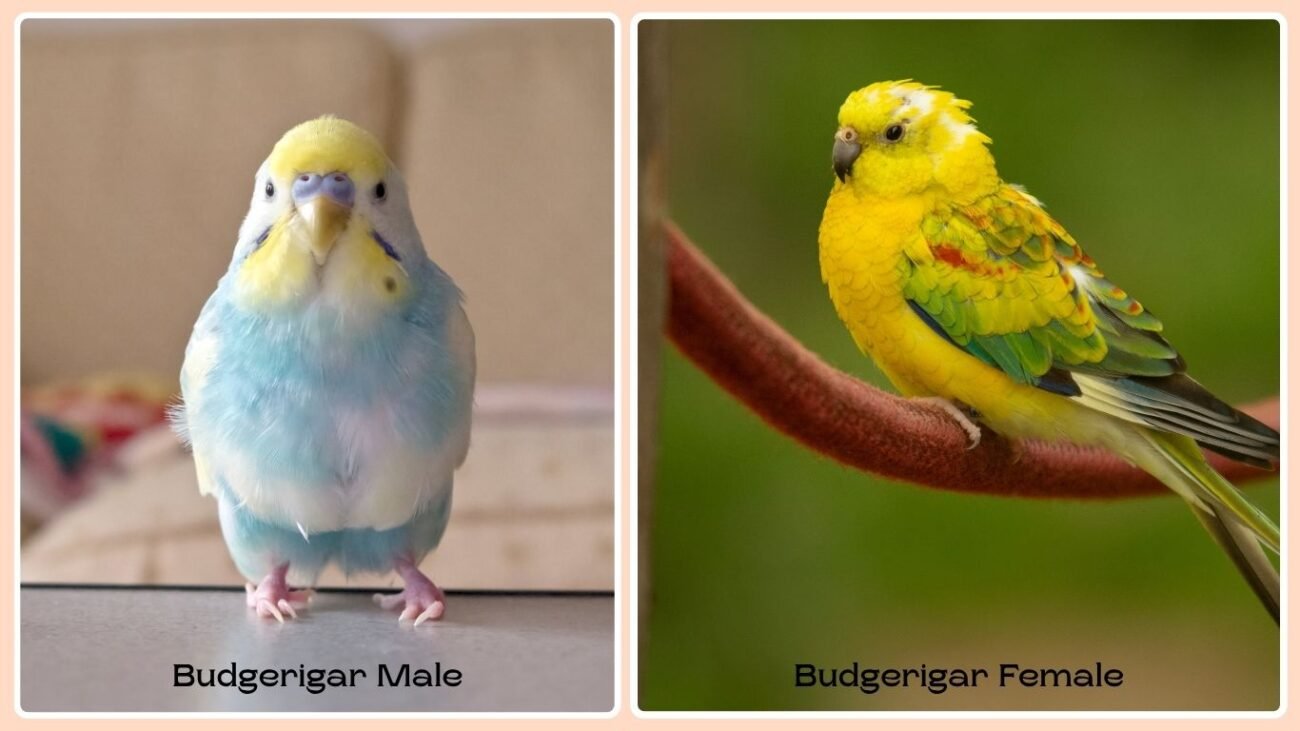
One of the reasons budgies are so beloved is their ability to mimic sounds and human speech—but not all budgies are equal in this talent.
Males Are Better Talkers
Male budgerigars are far more likely to mimic words, whistles, and sounds. They love to chatter and often try to copy their owner’s voice. Some males can develop a vocabulary of 50–100 words with proper training.
Females Can Learn Too
Though less common, female budgies can mimic sounds. However, they generally have a limited vocabulary and aren’t as interested in vocal repetition. Their speech, if any, may be less clear than that of males.
Why the Difference?
Hormonal and neurological differences are believed to contribute to this gap. In the wild, male budgies use singing to attract mates, while females rely more on behavior and physical cues.
4. Nesting Behavior and Instincts
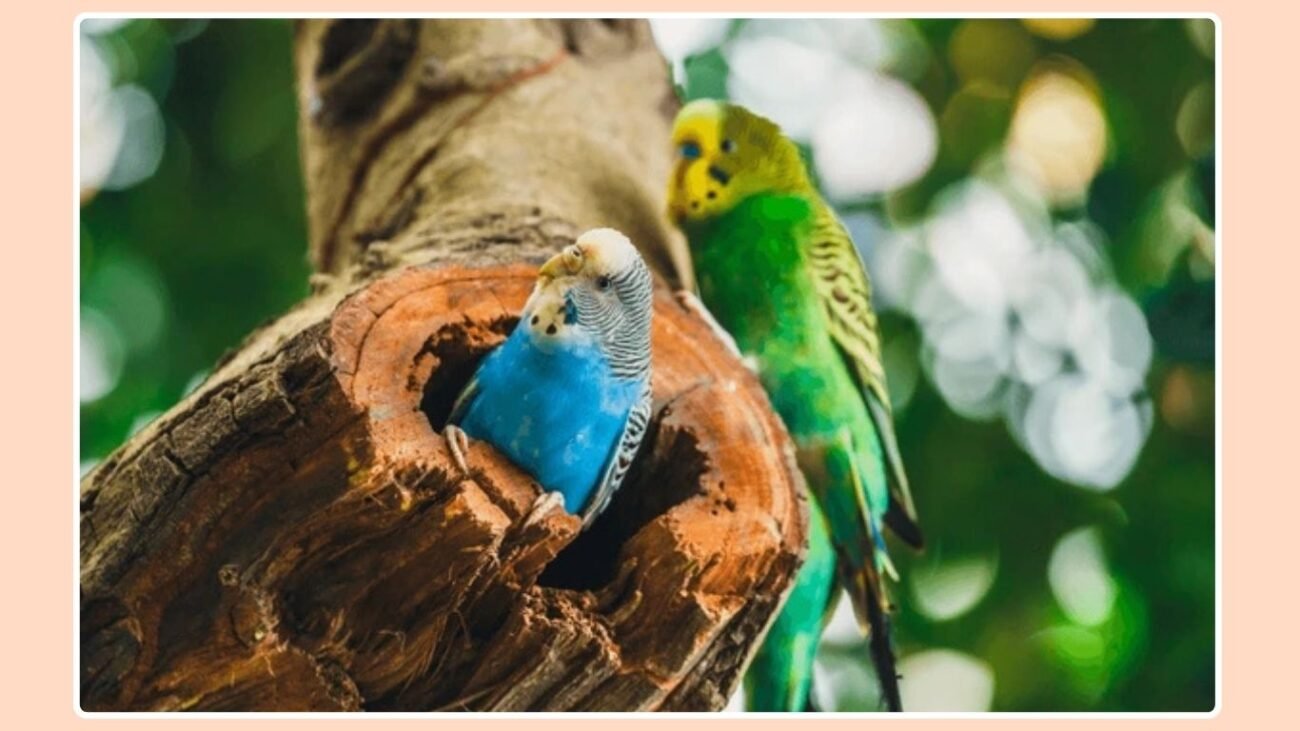
Nesting behavior is a major clue in identifying the gender of mature budgies, especially during breeding season.
Female Nesting Instinct
Female budgies often show strong nesting behaviors. They chew wood, shred paper, and explore dark spaces looking for nesting sites. This behavior increases when they’re in breeding condition—even if no male is present.
Male Supportive Behavior
Males do not show nesting instinct but may court the female by feeding her or guarding her while she investigates nesting areas. They are active during bonding but do not build or maintain nests.
Importance for Breeders
Observing these behaviors helps breeders distinguish sex in bonded pairs or colonies, especially when cere color is unclear.
5. Physical Structure and Size
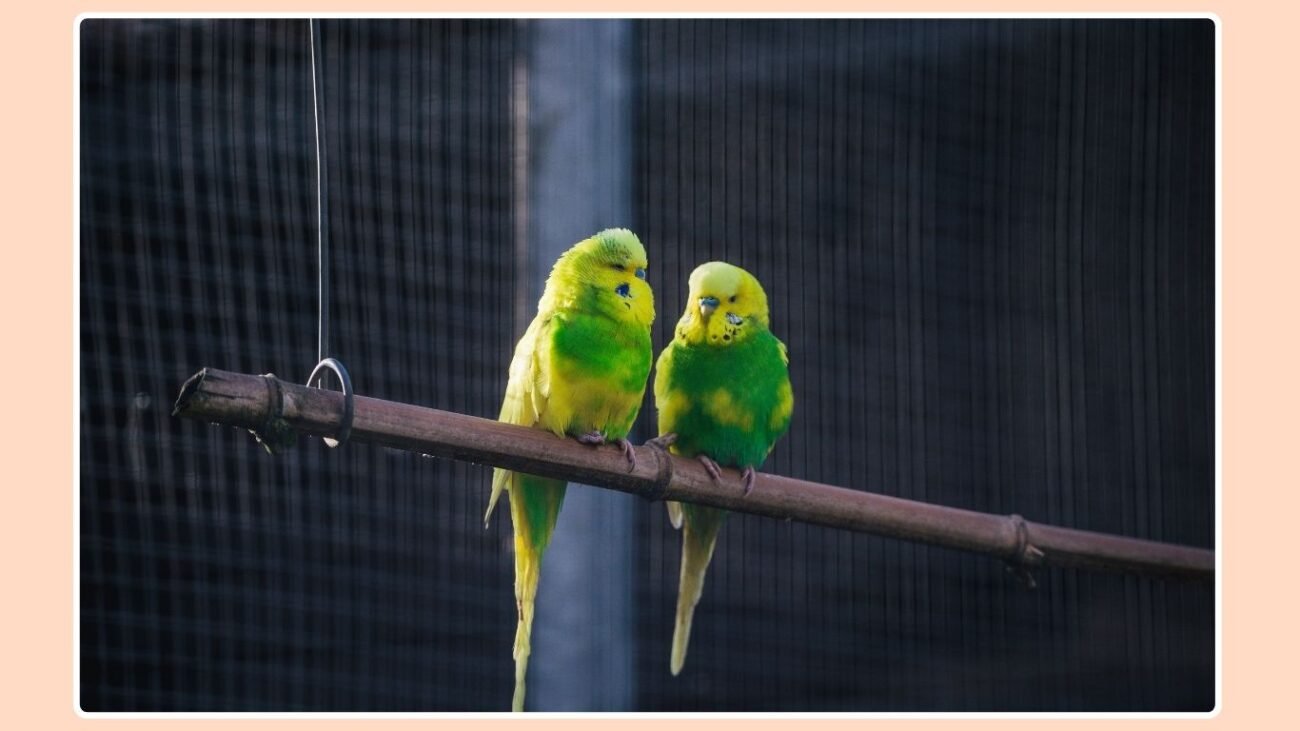
Though subtle, there are slight physical differences between male and female budgies when viewed side-by-side.
Males Are Slightly Slimmer
Male budgies tend to have a leaner body with a more streamlined look. Their tail feathers may appear slightly longer and their body more slender.
Females Are Sturdier
Female budgies usually have a wider, stockier build, especially around the vent and hips. This broader shape helps accommodate egg-laying.
Visual Comparison Tips
These differences are often only noticeable when comparing a male and female together. Lighting, posture, and mutations can also influence how obvious these traits appear.
6. Voice and Vocal Pitch
Aside from words and mimicry, male and female budgies also differ in how they sound in general conversation.
Male Voice
Males typically have a softer, melodic tone. Their vocalizations include chirping, singing, and long strings of chatter. They often sound cheerful and rhythmic, especially when happy or courting.
Female Voice
Females tend to produce sharper, louder, and more abrupt sounds. Their chirps are often shorter and less melodic. Some owners describe female budgies as having a “squawkier” voice.
Use Sound to Help Identify
If cere color is unclear, vocal patterns can be a helpful secondary clue. Birds that constantly chatter, sing to mirrors, or mimic sounds are usually males.
7. Reaction to Mirrors and Toys
Budgies often show their personality through the way they interact with objects—especially mirrors and toys.
Male Interaction
Males usually treat mirrors as companions. They may talk, sing, or feed the reflection. They’re also more likely to play with toys, swing, or mimic social behaviors toward inanimate objects.
Female Interaction
Females often show less interest in mirrors. Some may ignore or even attack their reflection, displaying territorial behavior. With toys, they are more likely to chew or shred than cuddle or play.
Toy Behavior Clues
Play patterns provide valuable insights. A budgie that’s affectionate with toys and mirror-obsessed is likely a male, while one that chews and guards is probably a female.
Bonus Tip: DNA Testing for Accurate Results
While physical and behavioral clues are helpful, they aren’t always foolproof—especially with young or color-mutation budgies. The most reliable method to determine a budgie’s sex is a DNA test. This non-invasive test uses a feather or blood sample and provides near 100% accuracy. Breeders often rely on this for rare color variations where cere color doesn’t follow standard patterns.
Conclusion
Telling the difference between a male and female budgerigar can seem tricky at first, but with a closer look at their cere color, behavior, voice, and play habits, the signs become clearer. Males usually boast a bright blue cere, chat more often, and interact lovingly with toys and mirrors. Females lean toward assertive behavior, nesting instincts, and subtler or sharper vocalizations.
Understanding your budgie’s gender not only deepens your bond but also helps you manage their care, training, and potential breeding needs more effectively.
FAQs:
Can a female budgie have a blue cere?
In rare cases, young females may have a bluish-white cere, but it’s usually lighter than a male’s. Some color mutations can also make cere color less distinct.
At what age can you tell a budgie’s gender?
You can often tell between 6 to 12 weeks of age by observing the cere, but final color may not appear until around 4 to 6 months. Behavior becomes more gender-typical after maturity.
Can male budgies be aggressive too?
Yes, while males are generally friendlier, they can show aggression if threatened or poorly socialized. However, they’re less likely to be territorial than females.
Do male or female budgies live longer?
There’s no significant difference in lifespan based on sex. Both males and females can live 8–15 years with proper care, diet, and mental stimulation.
Is it better to keep a male or female budgie as a pet?
For first-time owners, male budgies are often preferred due to their sociable nature and mimicry ability. However, female budgies can also make fantastic companions with the right handling and attention.