











Turkeys aren’t just the centerpiece of holiday dinners—they come in many fascinating varieties. From powerful wild turkeys roaming North American forests to rare heritage breeds like the Chocolate and Bourbon Red, each type has unique traits, behaviors, and appearances. In this guide, you’ll discover 20 distinct turkey types, including wild subspecies and domestic breeds raised for meat, beauty, or preservation.
1. Eastern Wild Turkey
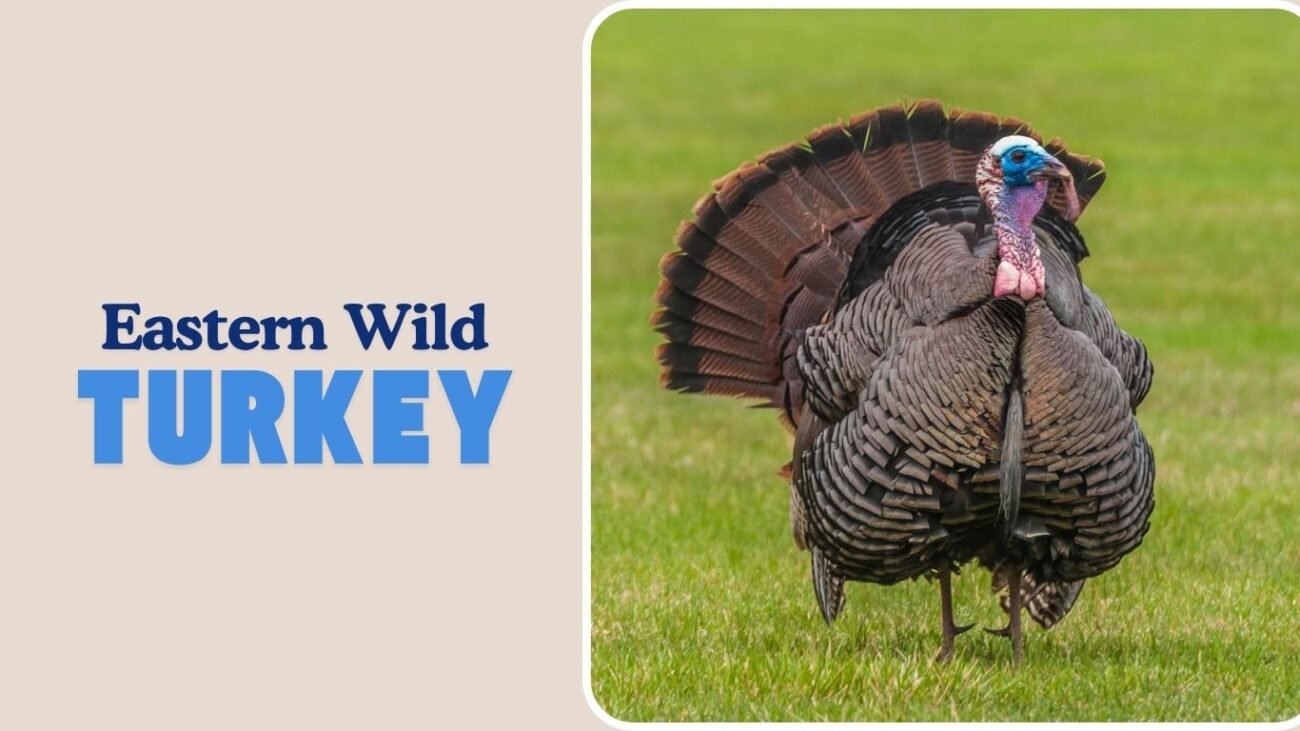
The Eastern Wild Turkey is the most widespread and commonly seen wild turkey in North America. Native to the eastern United States, it is known for its dark brown feathers, white-edged tail, and loud gobble. These birds are agile, alert, and excellent at flying short distances and roosting in trees.
Habitat and Range
Eastern Wild Turkeys are commonly found in hardwood and mixed forests, particularly areas with mature trees, open fields, and brushy cover. Their range includes most of the eastern United States and parts of Canada.
Behavior
They are known for being cautious and highly aware of their surroundings. Males (toms) perform elaborate gobbling and strutting displays during the breeding season to attract females (hens). They typically feed in the early morning and late afternoon.
Diet
Eastern Wild Turkeys eat a varied diet depending on the season. They consume:
- Acorns and nuts
- Seeds and berries
- Insects and small reptiles
- Leaves and grasses
Identification
- Large body with dark, chestnut-brown feathers
- White-edged tail feathers
- Bare, reddish-blue head
- Long legs built for walking and running
- Adult males have a beard (a tuft of coarse feathers on the chest)
2. Osceola (Florida) Wild Turkey

The Osceola Wild Turkey, also known as the Florida Wild Turkey, is a smaller, slimmer subspecies native only to the Florida peninsula. It is admired by hunters for its elusive nature and is recognized by its darker plumage and reduced barring on the wings.
Habitat and Range
Found exclusively in Florida, particularly in pine flatwoods, palmetto thickets, and scrubland, the Osceola Wild Turkey adapts well to the state’s warm, humid environment.
Behavior
These turkeys are shy and often remain hidden in dense vegetation. Males are aggressive during mating season and will strut and gobble to attract females. They prefer early morning movement and often roost in trees at night.
Diet
Their diet includes berries, seeds, small reptiles, and insects. They also feed on plant shoots and roots depending on seasonal availability.
Identification
- Smaller body size compared to the Eastern Wild Turkey
- Darker feathers with an iridescent green-purple sheen
- Narrower white wing bars
- Longer legs adapted for movement through thick brush
- Typically lacks the strong white tail feather edges seen in other subspecies
3. Rio Grande Wild Turkey
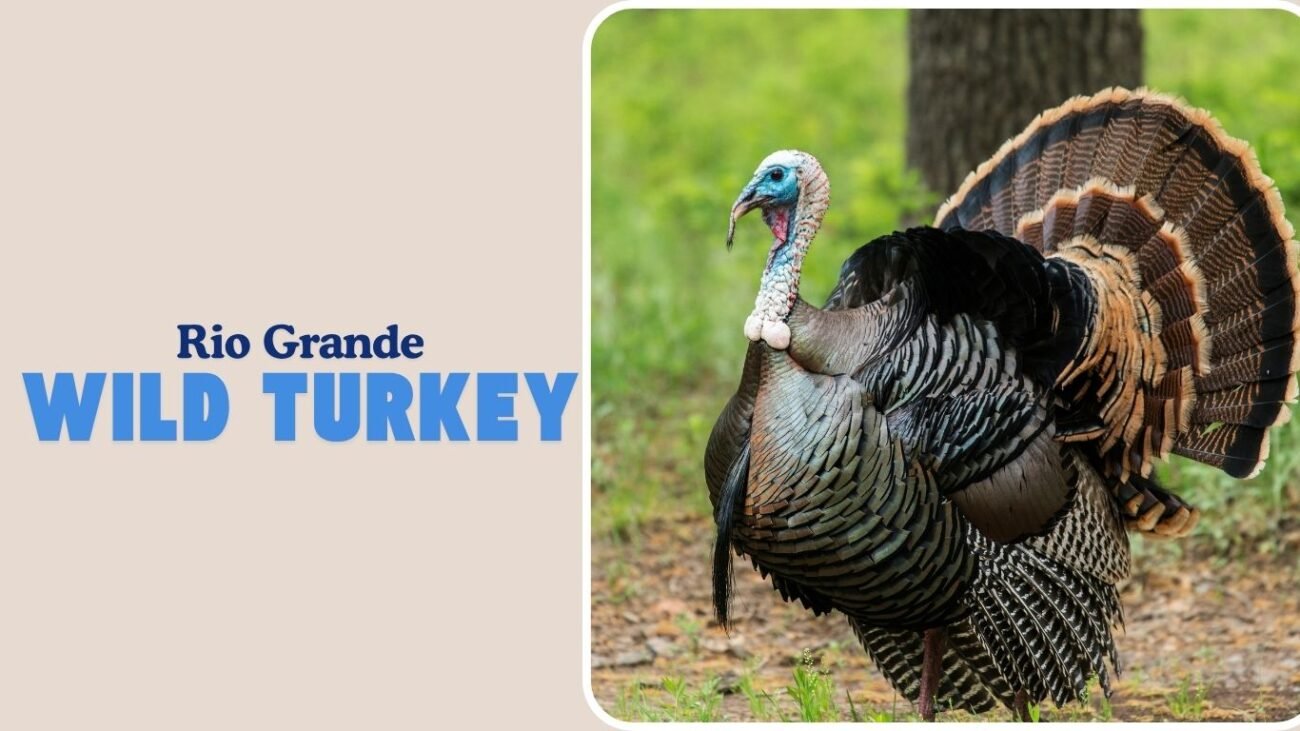
The Rio Grande Wild Turkey inhabits the central plains and southwestern regions of the United States. It is known for its long legs, lighter coloration, and preference for open habitats.
Habitat and Range
These turkeys are found in Texas, Oklahoma, Kansas, and parts of Mexico. They prefer scrubland, river valleys, and agricultural fields, often roosting in trees near water sources.
Behavior
They are highly adaptive and may form large flocks. Males display traditional gobbling and strutting, while hens nest on the ground in grassy areas. They are more visible during the breeding season.
Diet
They feed on insects, seeds, nuts, and crops like corn and wheat. During spring and summer, they eat more protein-rich insects; in fall and winter, they shift to grains and plant matter.
Identification
- Light tan tips on tail feathers
- Legs longer than other subspecies
- Pale body feathers with bronze-green sheen
- Light buff-colored wing coverts
- Slimmer frame adapted for warmer, drier climates
4. Merriam’s Wild Turkey
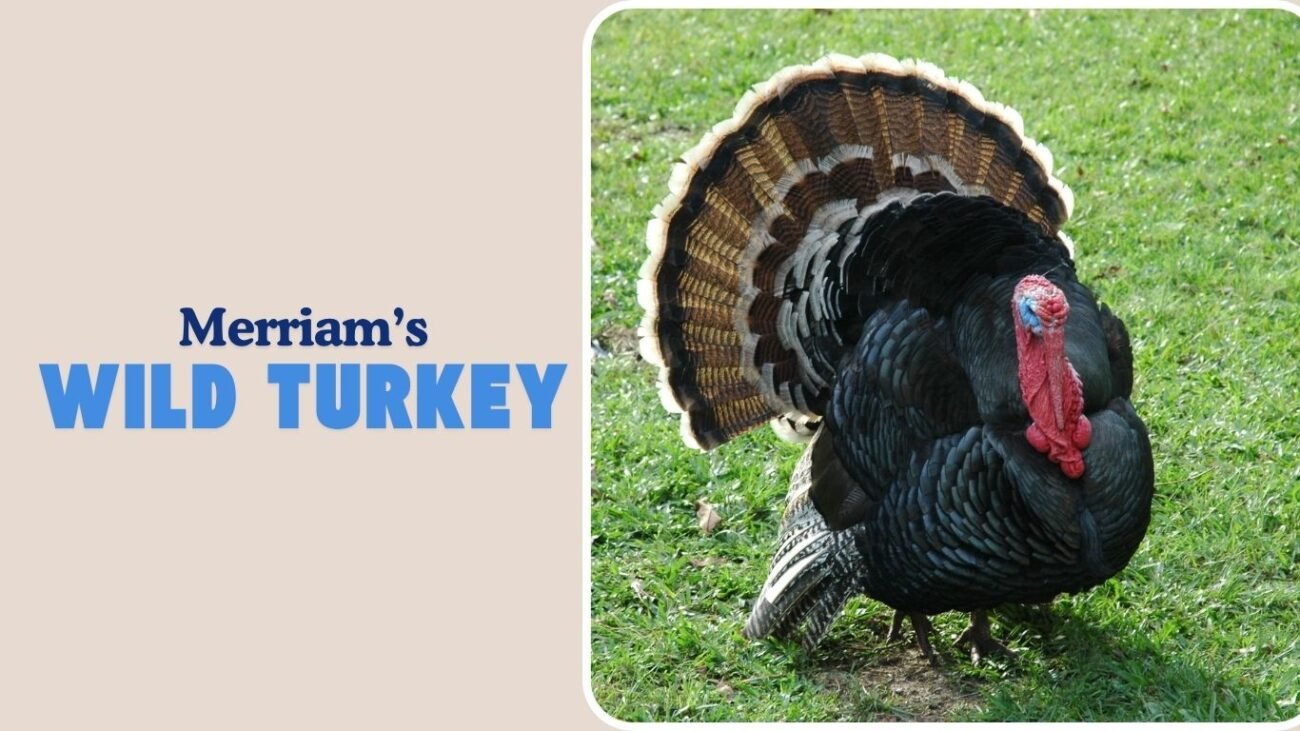
The Merriam’s Wild Turkey is a mountain-dwelling subspecies found in the western United States. Known for its beautiful white-tipped tail feathers and iridescent plumage, it thrives in forested and high-altitude regions.
Habitat and Range
It primarily inhabits the ponderosa pine forests, mountain meadows, and scrublands of states like Colorado, New Mexico, and parts of the Rocky Mountains.
Behavior
Merriam’s turkeys are hardy birds that roost in tall pines and travel long distances for food. Males gobble loudly during spring, and hens build nests on the ground, often hidden in underbrush or against stumps.
Diet
Their diet is seasonally varied, including pine nuts, insects, grasses, and fruits. During snowy winters, they scratch through snow layers to reach food.
Identification
- Snow-white tail feather tips
- Iridescent plumage with blue, bronze, and violet tones
- Larger wings adapted for mountainous flight
- Legs well-suited for steep, rocky terrain
- Shorter beard compared to Eastern turkeys
5. Gould’s Wild Turkey
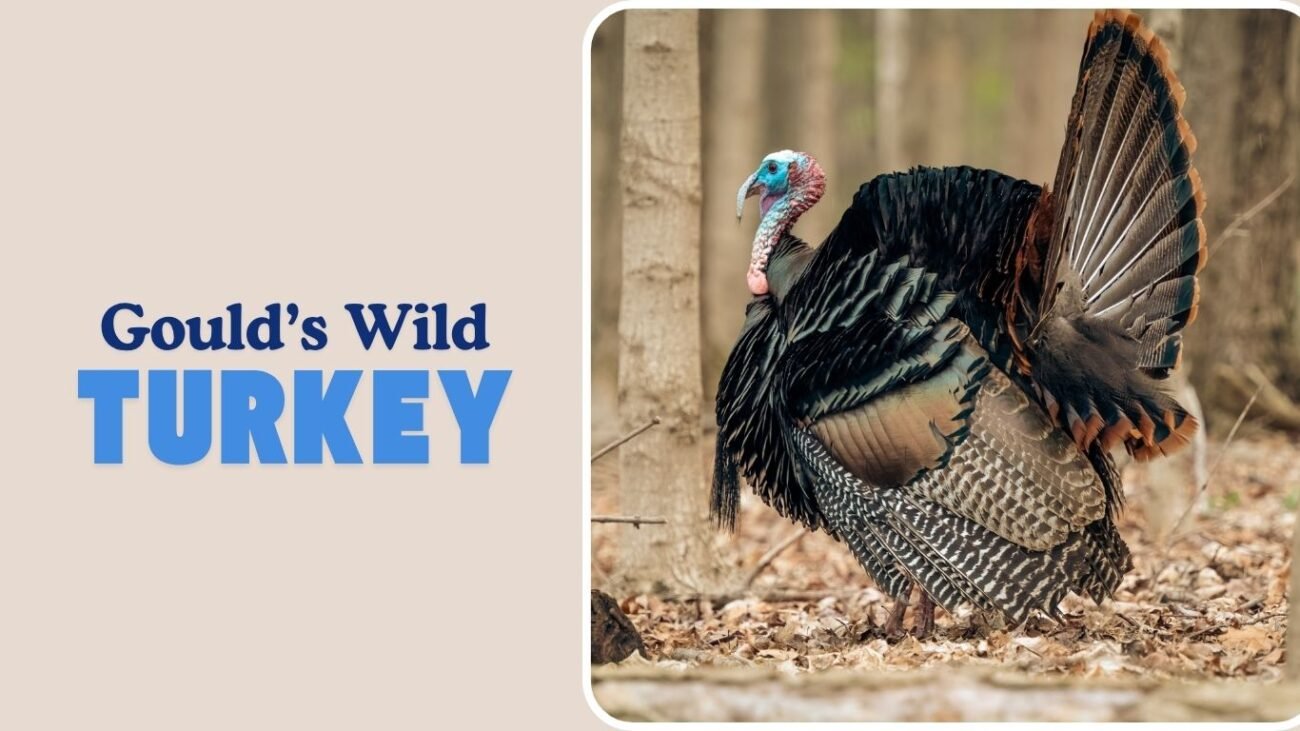
The Gould’s Wild Turkey is the largest and rarest of all wild turkey subspecies in North America. It is native to northern Mexico and the southern edge of Arizona and New Mexico.
Habitat and Range
This turkey lives in rugged mountainous regions, including oak-pine woodlands and desert canyons. It is less common than other types due to its limited range and isolated habitat.
Behavior
These turkeys are social but wary, forming flocks outside the breeding season. Males strut and gobble during spring. Due to the remote habitat, their behavior is less studied than other types.
Diet
They consume acorns, grasses, and a wide range of seeds and berries. Insects and small invertebrates are part of the diet during warmer months.
Identification
- Long legs and large body
- Bright white tail and rump feathers
- Coppery-gold and green iridescent body
- Pale tips on secondary wing feathers
- Taller and more slender than other wild subspecies
6. South Mexican Wild Turkey

The South Mexican Wild Turkey (Meleagris gallopavo gallopavo) is considered the ancestral bird from which all domestic turkeys were bred. Native to central and southern Mexico, this subspecies is rare in the wild today but historically important.
Habitat and Range
It inhabits tropical forests, dry woodlands, and grassland edges in southern Mexico. Its historical range once extended widely before habitat loss reduced its wild population.
Behavior
This turkey was among the first birds to be domesticated by ancient Mesoamerican civilizations. In the wild, it behaves similarly to other wild turkeys—cautious, ground-nesting, and active during early morning and dusk.
Diet
Their diet includes wild fruits, nuts, insects, and grasses. Seasonal availability influences their feeding habits, with more animal protein consumed during spring and early summer.
Identification
- Dark bronze plumage with subtle iridescence
- Smaller than most other wild subspecies
- White-edged tail feathers
- Slim body with long legs
- Foundation stock for domestic turkey breeds
7. Broad Breasted White
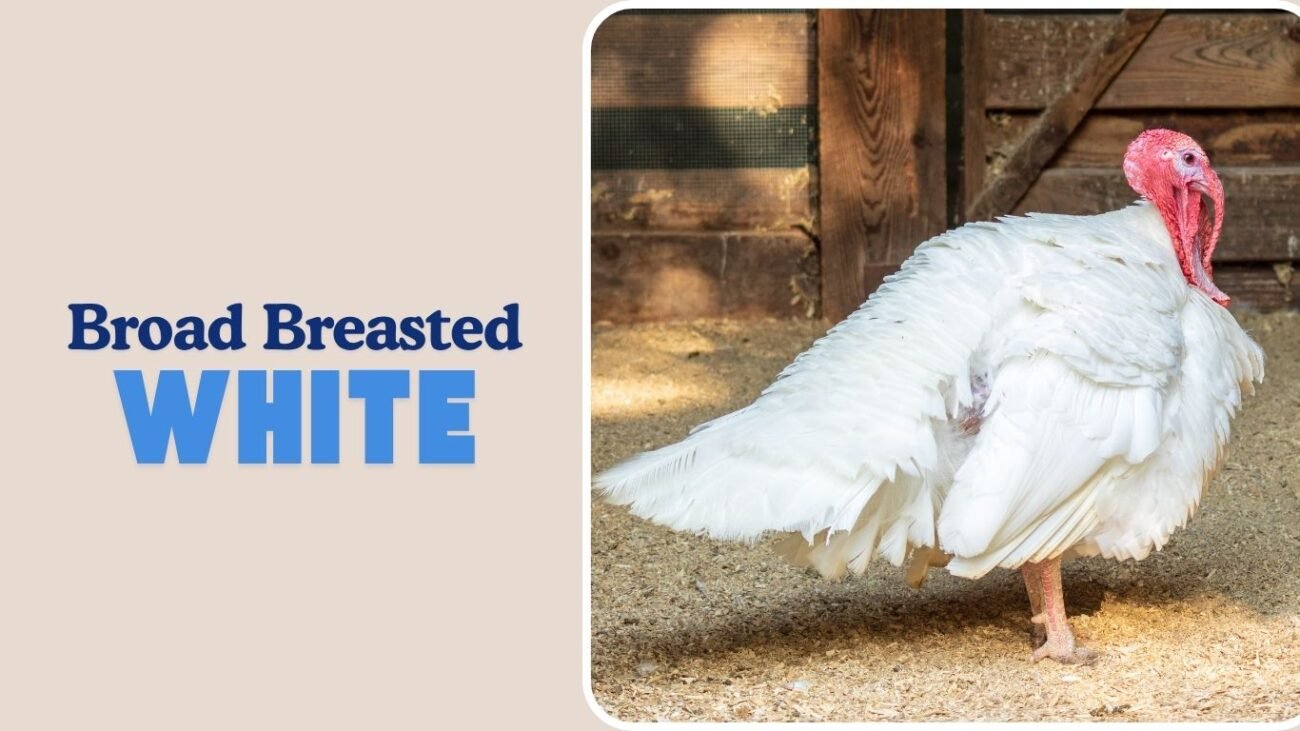
The Broad Breasted White is the most common commercial breed of domestic turkey, raised primarily for meat production. It is unable to fly and must be artificially inseminated due to its large breast size.
Habitat and Range
These turkeys are entirely domesticated and do not exist in the wild. They are raised on farms and commercial facilities across the world, especially in the United States.
Behavior
They are docile and slow-moving. Selective breeding has made them dependent on human care for reproduction and survival. They are not agile or self-sufficient like wild turkeys.
Diet
Their diet is specially formulated by poultry farmers and includes protein-rich feeds, grains, and supplements for optimal growth and health. They do not forage naturally.
Identification
- Pure white feathers for cleaner carcass appearance
- Extremely large breast muscles
- Short legs relative to body size
- Broad body with limited mobility
- Commercially bred for fast growth and high meat yield
8. Broad Breasted Bronze
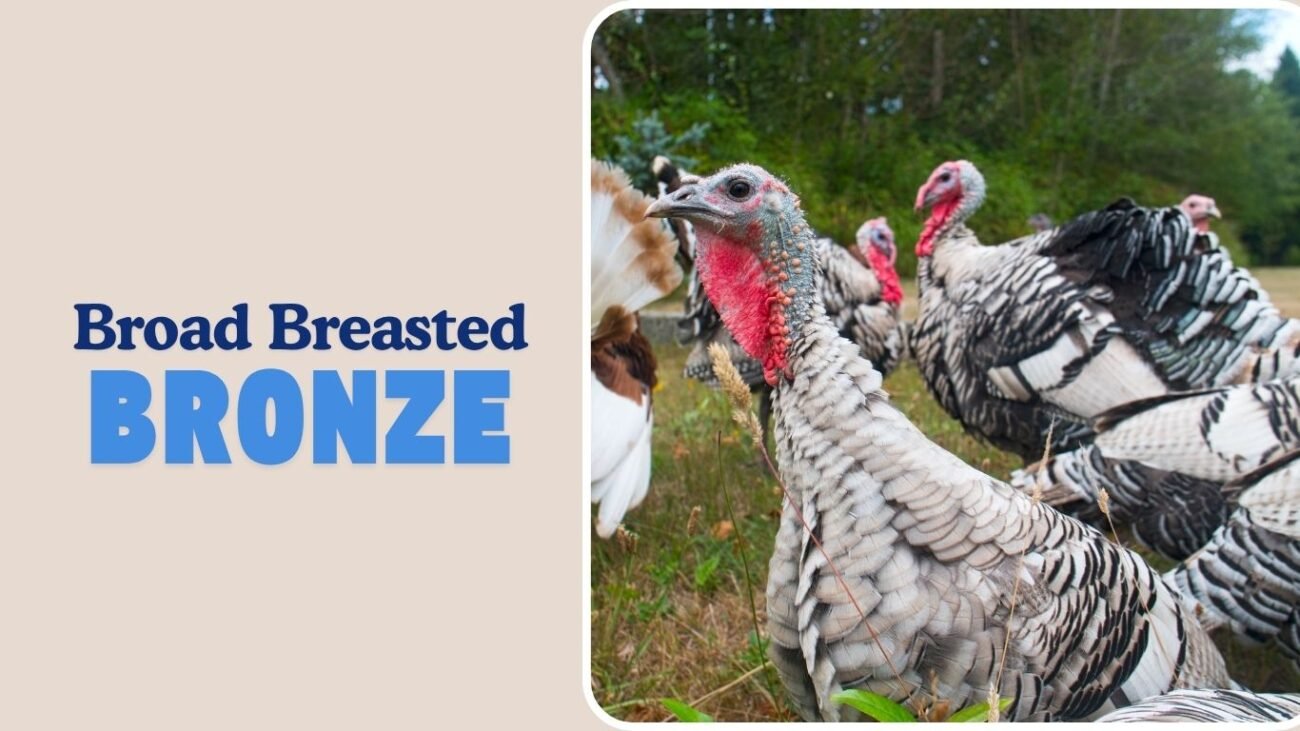
The Broad Breasted Bronze turkey is a domestic breed developed for meat production, combining the size of commercial breeds with the rich, dark feather color of traditional bronze turkeys. It is one of the largest turkey breeds raised in the past.
Habitat and Range
This breed is farm-raised and not found in the wild. It was once popular in North America before being largely replaced by the Broad Breasted White due to processing efficiency.
Behavior
Like other commercial breeds, they are heavy-bodied, unable to fly, and bred for meat rather than survival skills. They are calm and raised under controlled conditions.
Diet
They are fed a balanced, protein-rich diet, often including corn, soy, and vitamin supplements to encourage muscle development and weight gain.
Identification
- Metallic bronze to copper-colored plumage
- Very large breast and body
- Short neck and legs relative to size
- Docile and easy to manage
- Cannot mate naturally due to size
9. Standard Bronze
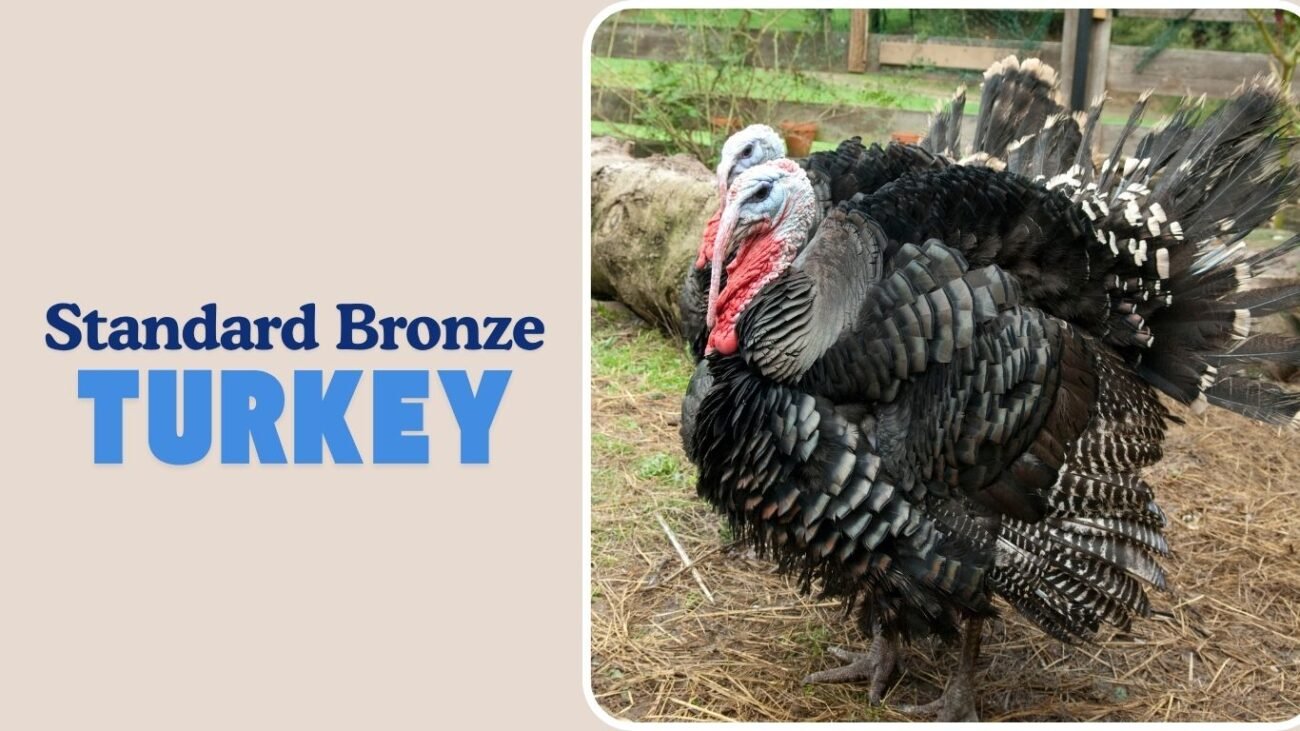
The Standard Bronze is a heritage breed known for its beauty and historical importance. It is one of the oldest American turkey breeds, developed from crossing domestic turkeys with wild Eastern turkeys.
Habitat and Range
Standard Bronze turkeys are raised on farms or homesteads and are recognized for their ability to breed naturally, unlike their broad-breasted counterparts.
Behavior
They are more active and agile than commercial breeds. These turkeys can fly short distances, forage, and reproduce without human assistance, making them suitable for free-range environments.
Diet
They feed on grains, seeds, insects, and pasture greens. When allowed to forage, they supplement their diet naturally like wild turkeys.
Identification
- Shimmering bronze and green feathers
- Narrower body compared to Broad Breasted Bronze
- Capable of flight and natural mating
- Long legs and alert posture
- Traditionally used for both meat and show
10. Bourbon Red

The Bourbon Red is a heritage turkey breed known for its rich, chestnut-red plumage and high-quality meat. It originated in Bourbon County, Kentucky, in the 1800s and is prized by small farmers and backyard poultry keepers.
Habitat and Range
Bourbon Reds are raised on farms and homesteads, especially in North America. They adapt well to free-range systems and small flocks.
Behavior
They are active foragers, good flyers, and capable of natural reproduction. Their calm and curious nature makes them popular among heritage breed enthusiasts.
Diet
Their diet consists of grains, foraged seeds, insects, and green plants. They thrive when allowed to range freely and find supplemental food.
Identification
- Deep red-brown plumage with white flight and tail feathers
- Light-colored beak and legs
- Medium to large body size
- Capable of mating naturally
- Traditional American heritage breed
11. Narragansett
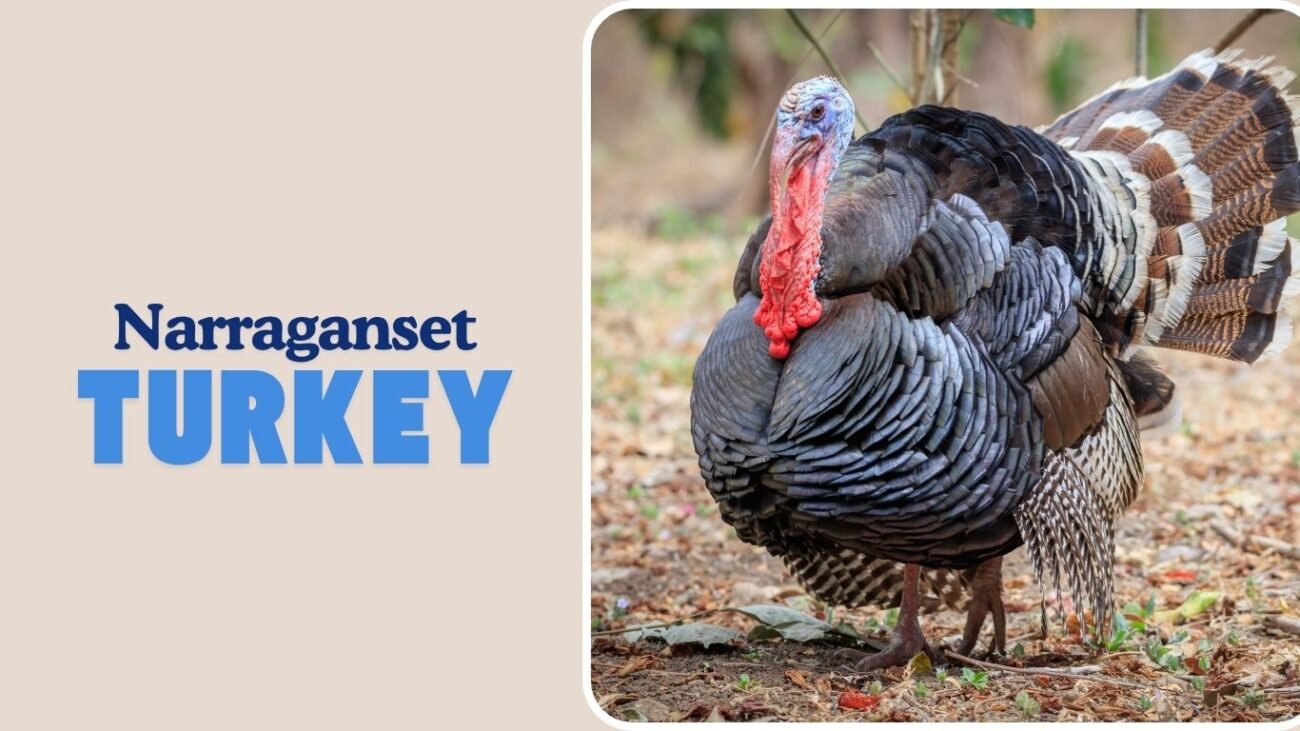
The Narragansett turkey is a heritage breed developed in the United States from wild turkeys and European stock. It is named after Narragansett Bay in Rhode Island and valued for both meat quality and hardiness.
Habitat and Range
Found mostly on small farms and homesteads in the U.S., especially in the Northeast. They adapt well to free-range, pasture-based farming.
Behavior
Narragansetts are calm, hardy, and excellent foragers. They breed naturally, fly well, and are alert and self-sufficient when kept in open spaces.
Diet
They eat a variety of foods including grains, insects, and green vegetation. Access to pasture improves their health and meat quality.
Identification
- Grayish-black body with white and tan barring
- Black tail with horizontal bands
- Pink to gray legs and a slender frame
- Less metallic sheen than Bronze breeds
- Easily distinguishable due to unique feather pattern
12. Royal Palm
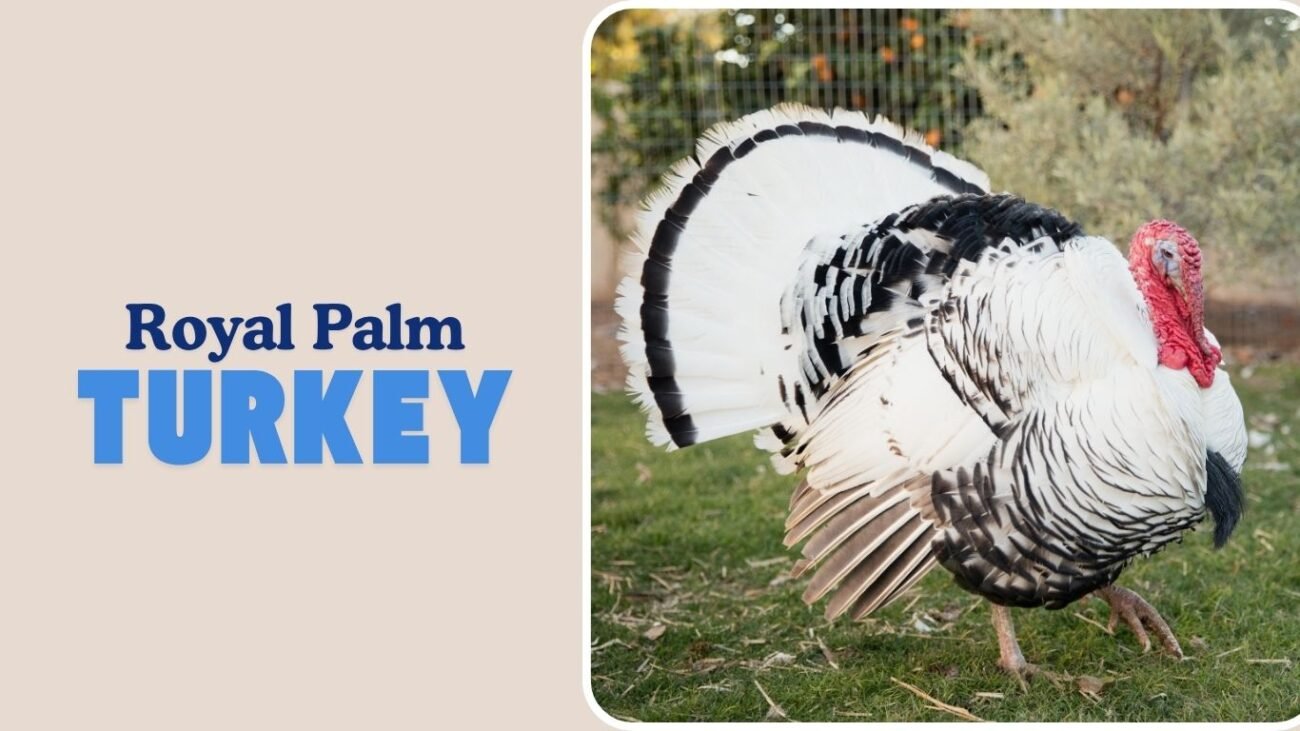
The Royal Palm is a striking heritage breed known more for its ornamental beauty than meat production. It originated in the United States, likely from crosses between Black, Bronze, Narragansett, and native turkeys. This breed is popular among hobbyists, show breeders, and small-scale poultry keepers.
Habitat and Range
Royal Palms are typically raised on small farms or homesteads and are not found in commercial meat production. They thrive in pasture-based systems and require space to roam and forage. Their hardiness allows them to adapt to various climates across North America and Europe.
Behavior
This breed is active, alert, and excellent at foraging. Unlike many larger domestic turkeys, Royal Palms are capable of flight and natural mating. They tend to be social but require safe enclosures due to their agility and ability to fly into trees or escape pens.
Diet
Royal Palms eat grains, insects, grasses, and wild seeds. They benefit from a combination of commercial poultry feed and free-range foraging, which helps maintain their health and vibrant plumage.
Identification
- Bright white plumage with distinct metallic black edging on feathers
- Tail feathers sharply banded with black and white
- Light pink to bluish head and legs
- Small to medium body size
- Highly ornamental; not typically raised for meat yield
13. Blue Slate
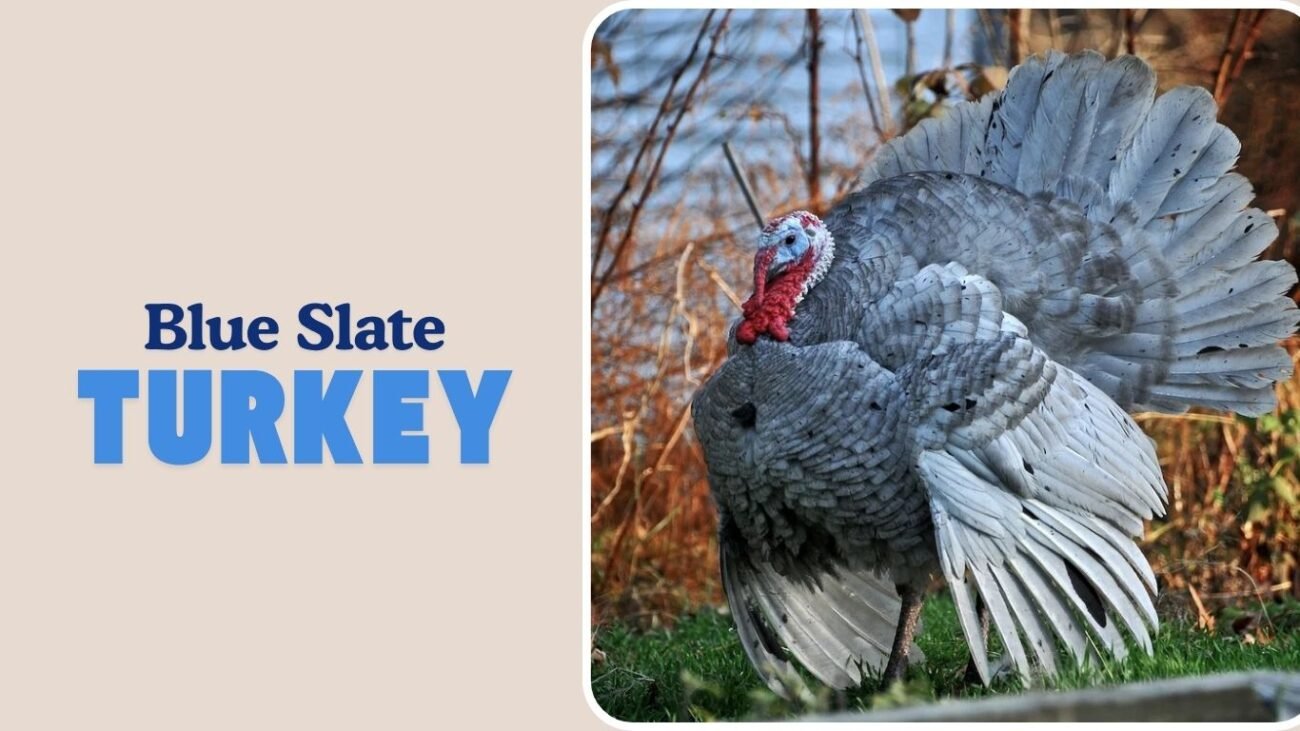
The Blue Slate turkey, also known simply as the Slate turkey, is a heritage breed recognized for its beautiful bluish-gray feathers and calm temperament. It is considered a threatened breed by conservation organizations and is raised by enthusiasts preserving genetic diversity.
Habitat and Range
Blue Slates are raised on heritage farms and backyard flocks across the U.S. and some parts of Europe. They are not used in commercial farming and require space to roam, making them best suited for small farms and free-range environments.
Behavior
They are docile, easy to manage, and relatively quiet. Blue Slates are good foragers and can breed naturally. Their calm demeanor makes them a good choice for beginners or mixed flocks.
Diet
These turkeys feed on mixed grains, insects, and foraged vegetation. Their diet should be balanced with supplemental feed to ensure proper development, especially during breeding or egg-laying seasons.
Identification
- Soft slate-blue to lavender-gray feathers, sometimes with speckling
- Some individuals show black or ash-colored patches
- Medium-sized, well-proportioned body
- Pink to gray legs and a moderately long neck
- Attractive and rare breed, often kept for preservation and small-scale meat production
14. Black Spanish
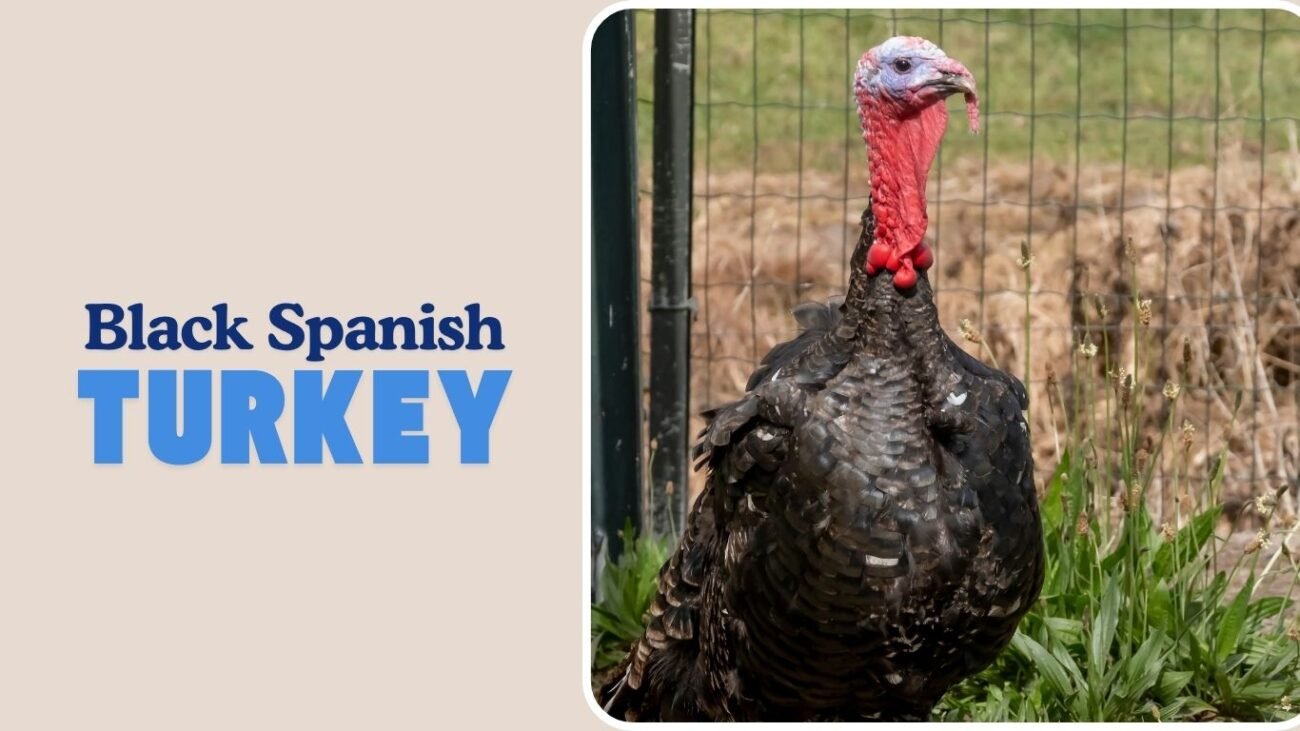
The Black Spanish turkey, also called the Norfolk Black, is one of the oldest domestic turkey breeds. It originated in Europe from birds brought by Spanish explorers and was later introduced to America. Known for its deep black sheen, this breed is valued for both meat quality and ornamental appeal.
Habitat and Range
Black Spanish turkeys are found on heritage farms and among breeders focused on preserving traditional livestock. They do best in spacious, natural environments and are not suited to industrial farming due to their need for exercise and foraging.
Behavior
They are active, wary, and capable of flying. These turkeys are known for their alertness and can be more independent than some other domestic breeds. They are naturally breeding and good mothers when allowed to hatch their own eggs.
Diet
Their diet consists of insects, pasture greens, seeds, and grains. They benefit from free-ranging environments where they can forage for additional nutrition, which improves both health and meat flavor.
Identification
- Glossy black plumage with a greenish or purplish sheen
- Medium to large body size
- Slim legs and long neck
- Dark beak and legs
- Elegant and historic appearance, often used in traditional farming
15. White Holland
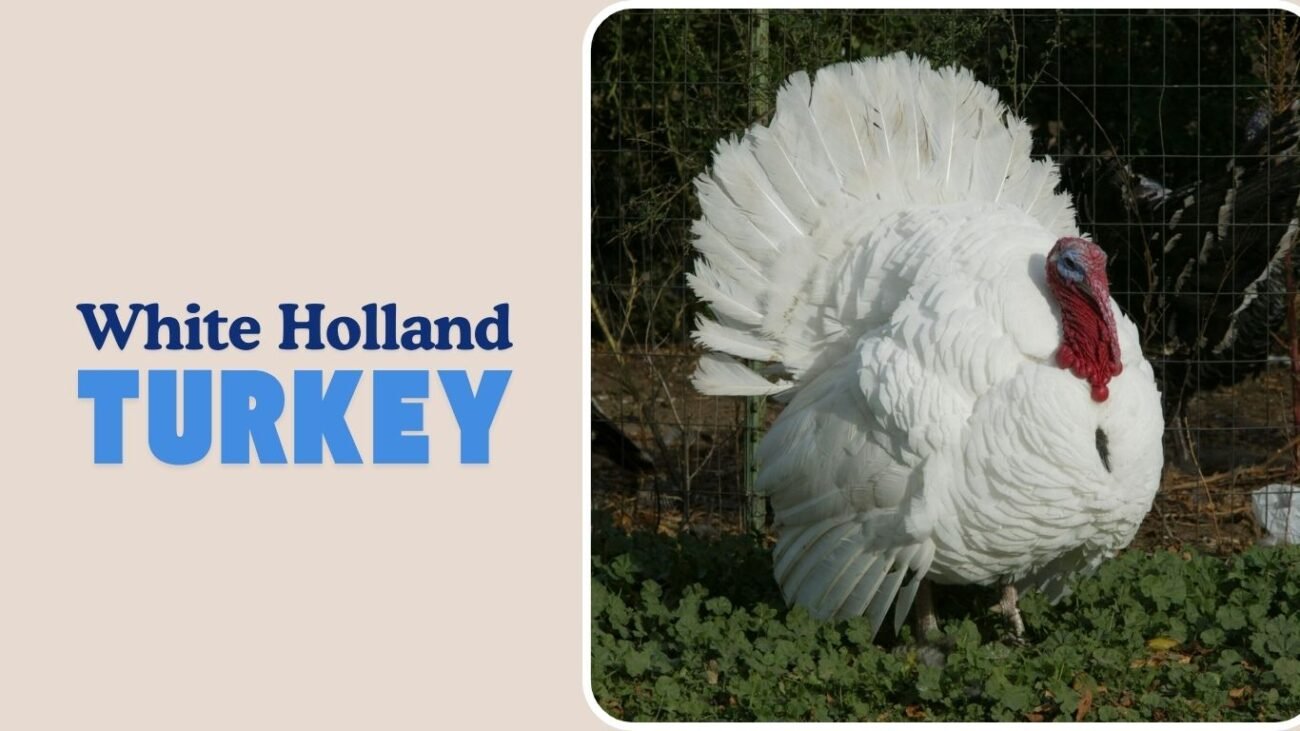
The White Holland is a heritage turkey breed known for its calm temperament, white plumage, and historical significance. It was once one of the most popular meat turkeys in the U.S. before being replaced by the Broad Breasted White in commercial farming.
Habitat and Range
White Hollands are found primarily on small farms and among conservation breeders. They are suitable for pasture-based systems and can adapt to various climates with proper care.
Behavior
They are calm, friendly, and easy to handle. White Hollands can breed naturally and are attentive parents. They are less flighty than many heritage breeds, making them ideal for hobby farms and educational environments.
Diet
They consume a mix of formulated turkey feed, forage plants, seeds, and insects. Access to pasture improves muscle tone and meat texture, contributing to their reputation for flavorful, well-marbled meat.
Identification
- Pure white plumage with soft, rounded feathers
- Smaller and more refined than Broad Breasted White
- Pink or reddish legs and a smooth, curved beak
- Balanced body size suitable for traditional table use
- Maintains historical importance as one of America’s early turkey breeds
16. Midget White
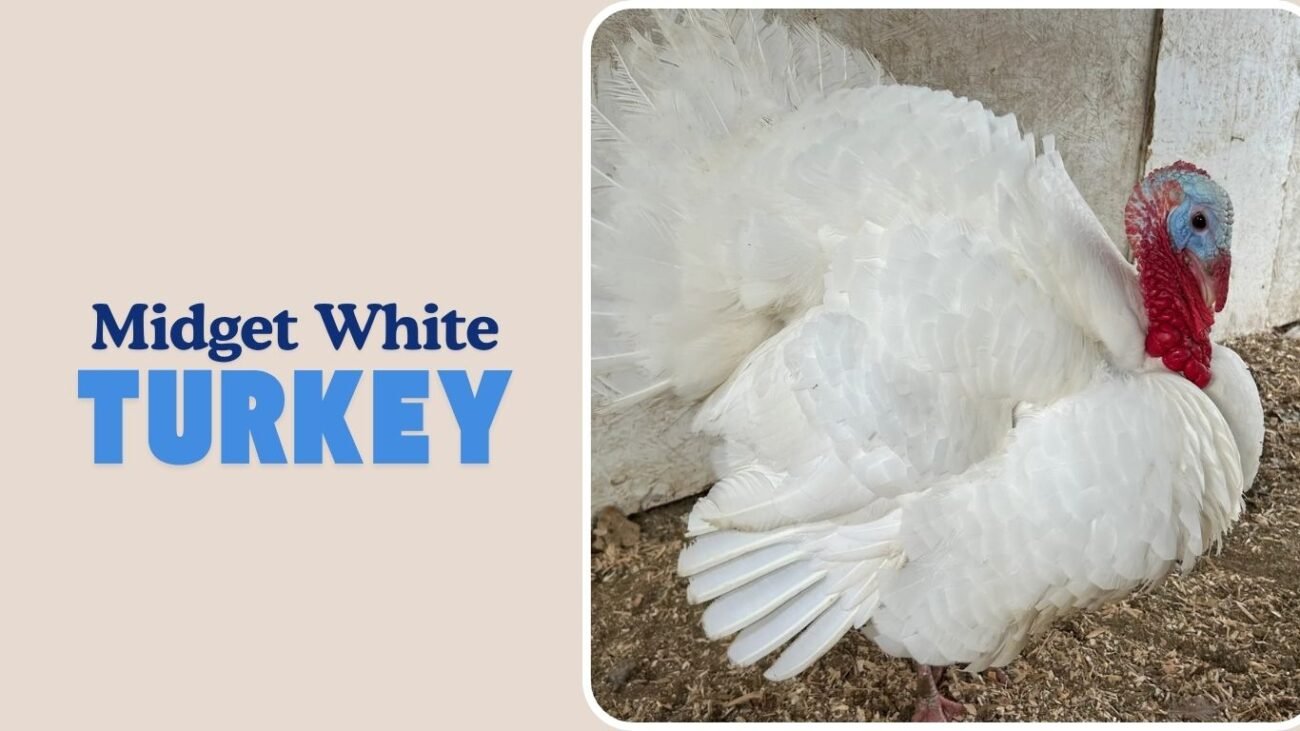
The Midget White is a small, heritage breed developed in the 1960s by Dr. J. Robert Smyth at the University of Massachusetts. It was designed to offer a compact bird with excellent meat quality, making it ideal for smaller households and farms.
Habitat and Range
This breed is well-suited for backyard flocks, homesteads, and small farms. Midget Whites thrive in free-range environments and adapt well to colder climates due to their feather density and resilience.
Behavior
Midget Whites are friendly, calm, and easy to handle. They are excellent foragers, can breed naturally, and are attentive parents. Their manageable size makes them less demanding in terms of space and feed.
Diet
They eat grains, grass, bugs, and kitchen scraps when allowed to forage. Supplemented with a balanced poultry feed, they maintain a healthy weight and strong growth.
Identification
- Pure white feathers with compact, rounded body
- Pinkish-white legs and beak
- Smallest of all turkey breeds
- Gentle disposition
- Ideal for families or small-scale farming
17. Beltsville Small White
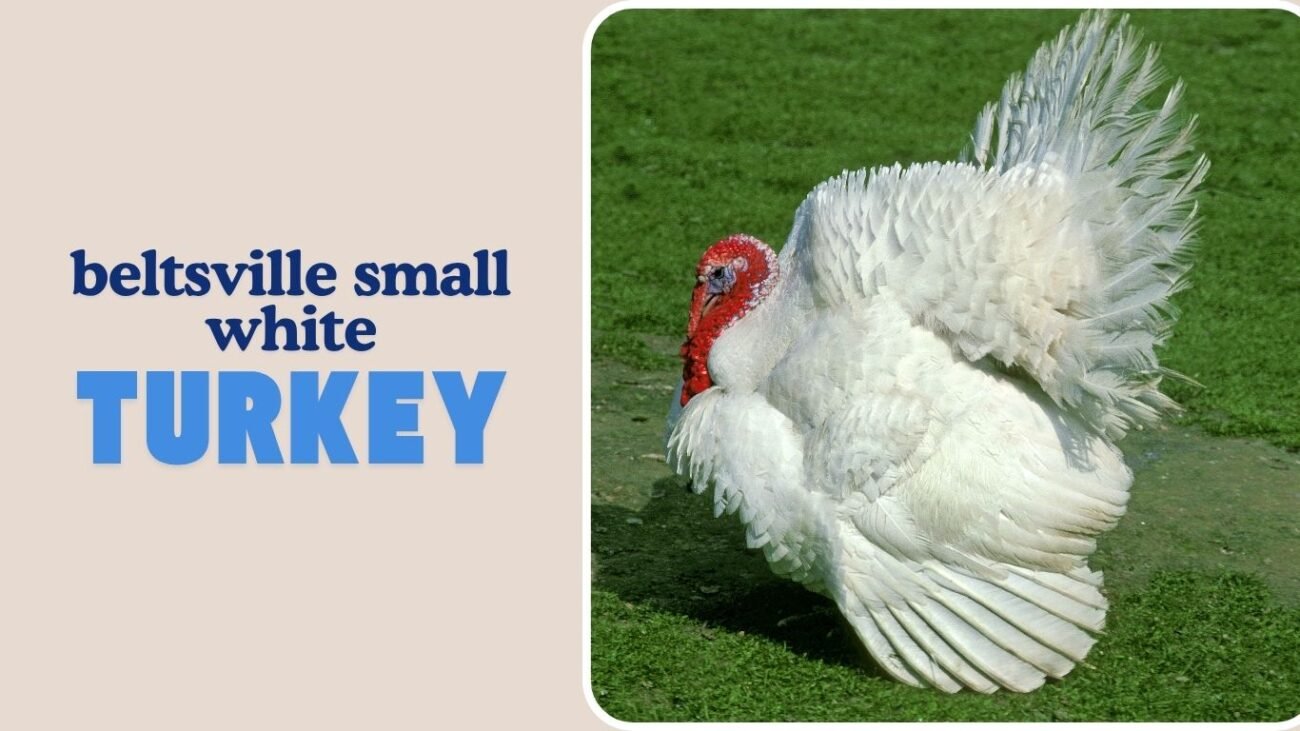
The Beltsville Small White is a heritage turkey developed in the 1930s at the USDA Beltsville Research Center. It was created to meet consumer demand for smaller turkeys with more white meat and a cleaner carcass.
Habitat and Range
Beltsville Small Whites are rare today but still maintained by breeders and conservationists. They are suitable for small farms and thrive in free-range or semi-intensive environments.
Behavior
These turkeys are docile and quiet, making them suitable for backyard settings. They are able to mate naturally and are known for their good fertility and broodiness.
Diet
Their diet includes commercial feed, fresh greens, seeds, and bugs. A diverse, protein-rich diet ensures consistent growth and good meat quality.
Identification
- Short, stocky body with pure white plumage
- Broad breast for high white meat yield
- Light pink legs and a short neck
- Clean carcass appearance due to feather color
- Practical and efficient for small-scale meat production
18. Jersey Buff
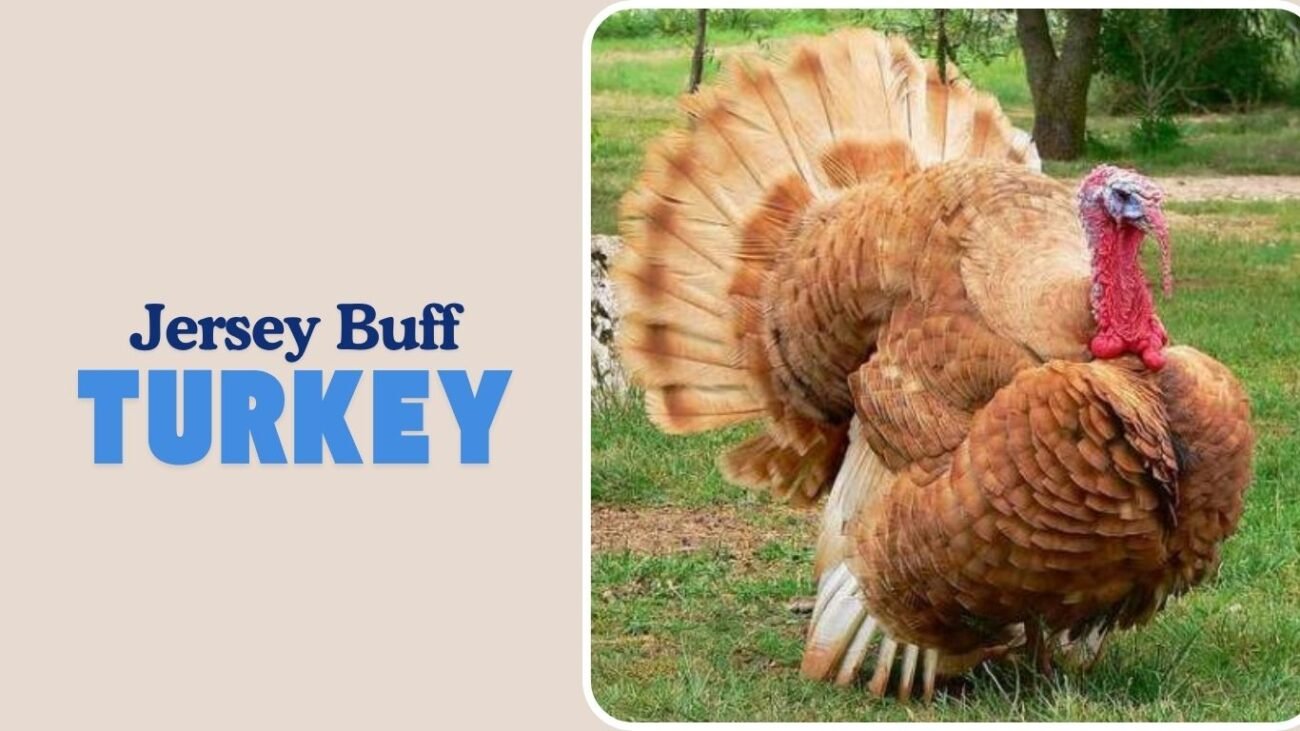
The Jersey Buff is a rare heritage breed known for its warm, reddish-buff plumage and calm nature. It was developed in the United States during the 1800s and named after the state of New Jersey. Though nearly extinct by the mid-20th century, the breed has seen a small revival among poultry enthusiasts.
Habitat and Range
Jersey Buffs are raised on heritage farms and homesteads, especially by breeders focused on preserving rare poultry genetics. They do well in spacious areas with access to shelter and pasture.
Behavior
They are friendly, easy to manage, and capable of natural reproduction. Jersey Buffs are moderate flyers and show good maternal instincts, often raising their own poults in natural conditions.
Diet
Their diet includes pasture plants, grains, insects, and supplemental feed. Regular access to fresh greens and natural protein improves their growth and overall health.
Identification
- Rich, light reddish-buff feathers throughout the body
- Pale pink legs and beak
- Medium body size with balanced proportions
- Distinct soft coloring that stands out among other turkeys
- Valued for meat and ornamental appearance
19. Auburn
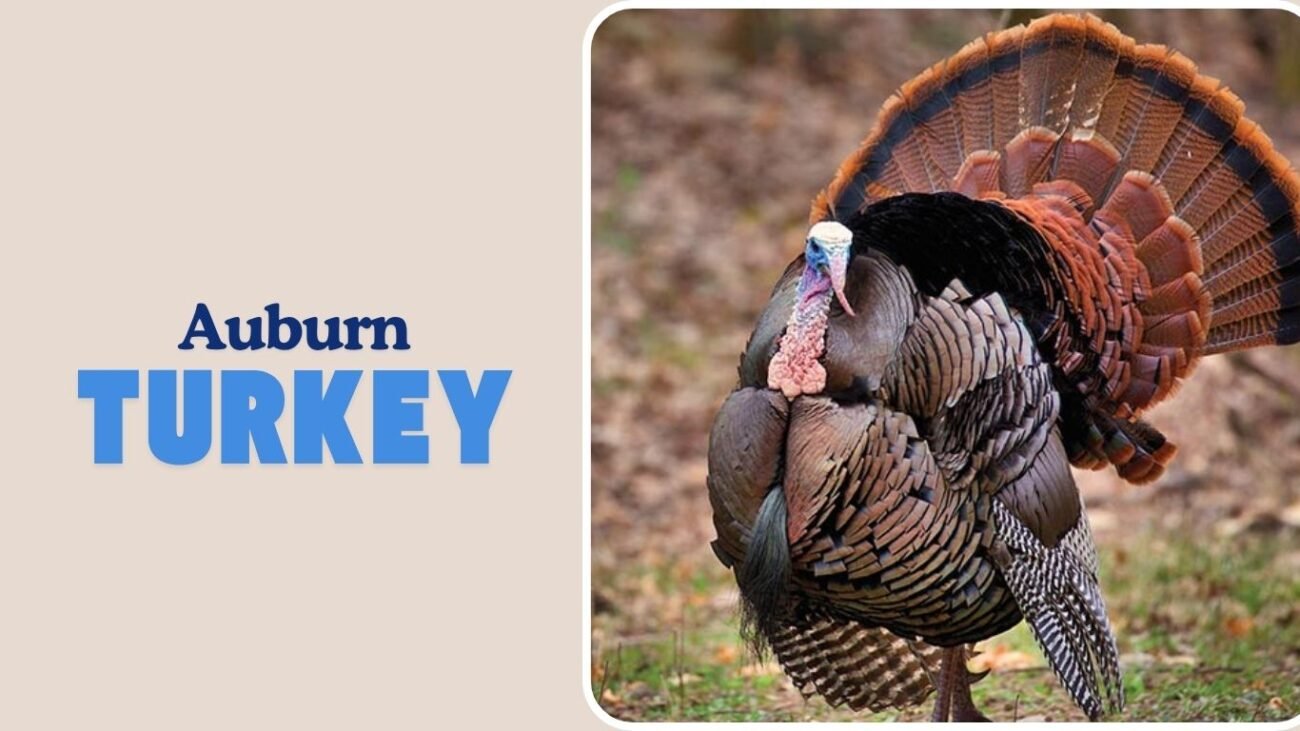
The Auburn turkey is an extremely rare and historically significant breed, known for its soft, reddish-brown plumage. It is primarily kept for conservation purposes and is believed to be one of the oldest color variants among domestic turkeys.
Habitat and Range
This breed is mostly found in private collections, heritage farms, or with specialty breeders. Due to its rarity, it is not common in commercial or even small-scale farming.
Behavior
Auburn turkeys are gentle and naturally breeding. They are good foragers and show calm, predictable behavior, making them easy to care for when raised in open spaces.
Diet
They thrive on a varied diet of seeds, insects, weeds, and farm feed. Providing access to fresh forage improves feather quality and supports their slower growth rate.
Identification
- Light reddish-brown plumage with white flight feathers
- Pale skin and pink legs
- Unique feather color easily distinguishes them from other breeds
- Small to medium build
- Mostly raised for conservation, show, or educational purposes
20. Chocolate Turkey
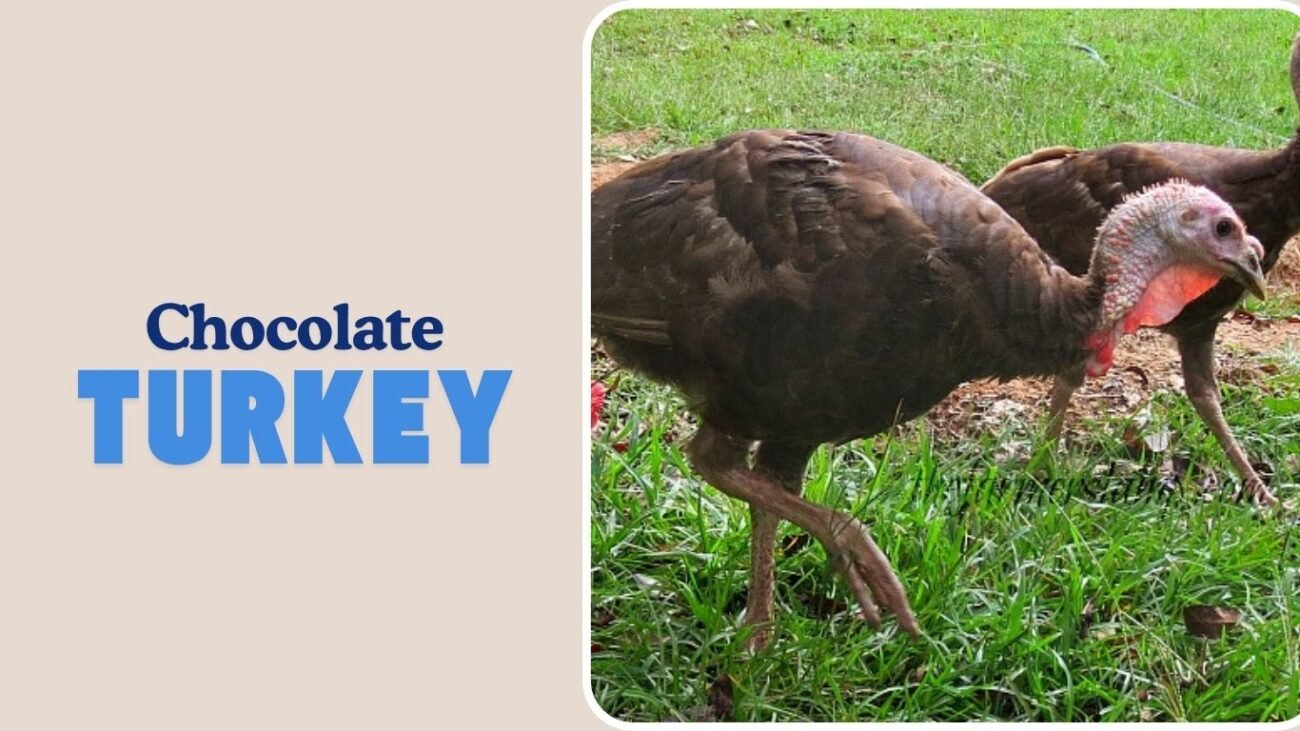
The Chocolate Turkey is a rare heritage breed known for its rich, dark brown plumage that resembles the color of milk chocolate. It dates back to the 1800s and was particularly common in the southern United States before nearly disappearing in the 20th century.
Habitat and Range
Today, Chocolate Turkeys are found on heritage farms and among poultry conservationists. They are suited for warm to temperate climates and do well in free-range or pasture-based systems.
Behavior
These turkeys are docile, naturally breeding, and capable of flight. They are good mothers, often hatching and raising their own poults. Their calm nature makes them ideal for smaller flocks.
Diet
They eat a combination of grains, pasture plants, insects, and supplemental feed. Foraging improves their health and supports natural behaviors like scratching and pecking.
Identification
- Deep chocolate-brown feathers with a soft, velvety sheen
- Lighter brown edging on wing and tail feathers
- Medium to large body size
- Pinkish legs and pale beak
- Extremely rare; maintained mainly for historical preservation and breeding programs


