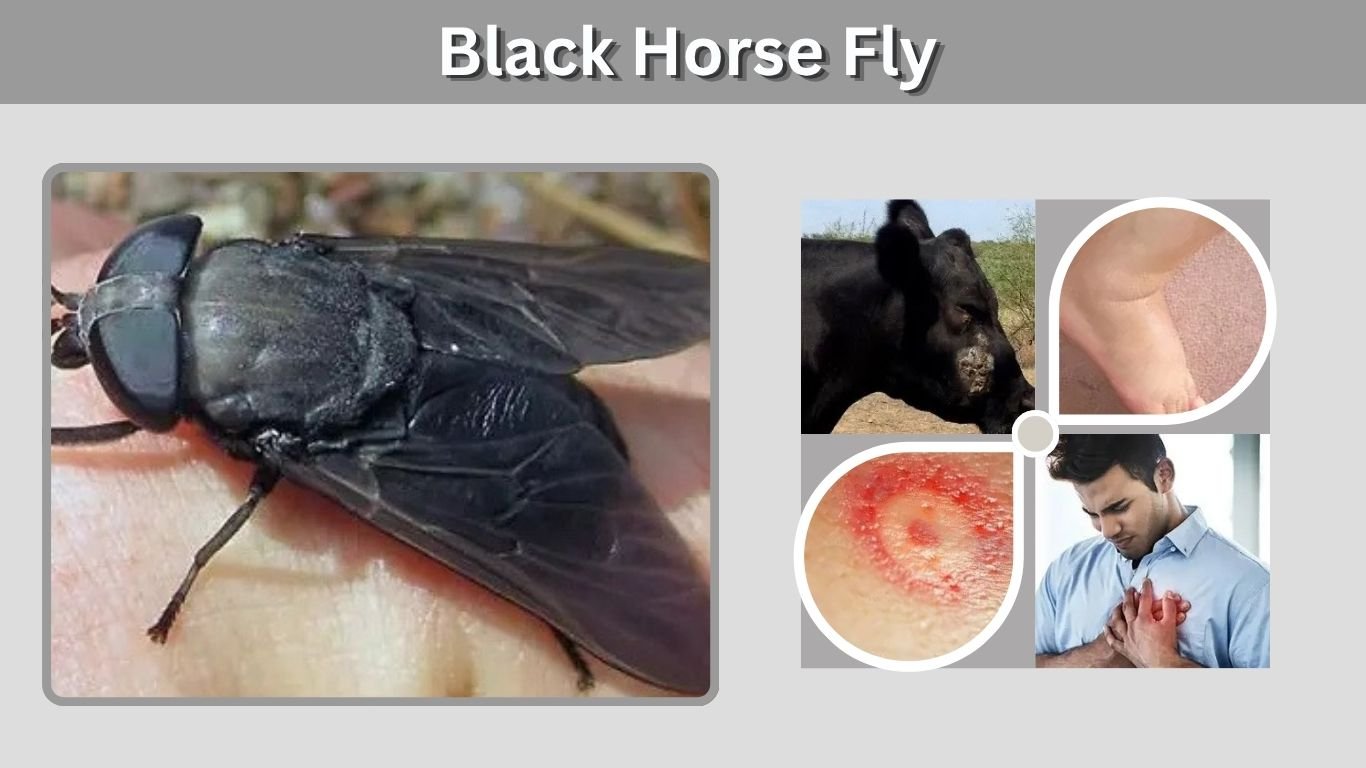
The black horse fly is a large, dark-colored biting fly found across much of eastern and central North America. Its glossy black body, smoky wings, powerful flight, and unusually large eyes make it easy to notice—and sometimes intimidating. The name usually refers to Tabanus atratus, although people may casually call other dark horse fly species “black horse flies.” Adult females feed on mammalian blood, while males survive mainly on nectar and plant juices.
Black Horse Fly Facts
The black horse fly belongs to the Tabanidae family, which includes horse flies and deer flies. Its scientific name, Tabanus atratus, refers to its dark appearance; “atratus” means clothed or dressed in black.
| Feature | Description |
| Scientific name | Tabanus atratus |
| Family | Tabanidae |
| Order | Diptera |
| Adult size | About 20–28 mm |
| Color | Black to dark brown or purplish black |
| Wings | Smoky brown to nearly black |
| Activity | Mainly during daylight |
| Female diet | Nectar and mammalian blood |
| Male diet | Nectar and plant juices |
| Larval habitat | Wet soil, mud, pond edges, and ditches |
Although their heavy bodies can make them look enormous, most adults are approximately 0.8–1.1 inches long. Some individuals appear larger because of their broad thorax, thick abdomen, long legs, and wide wings.
How to Identify a Black Horse Fly
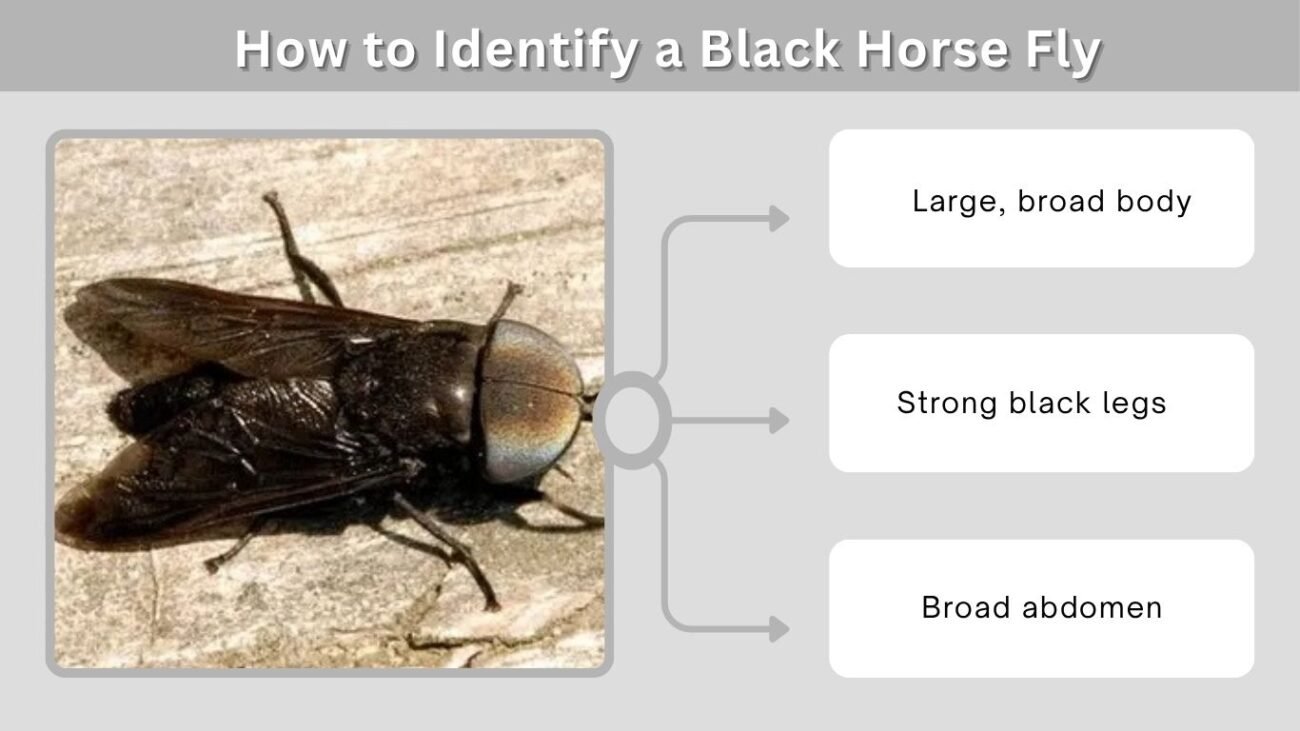
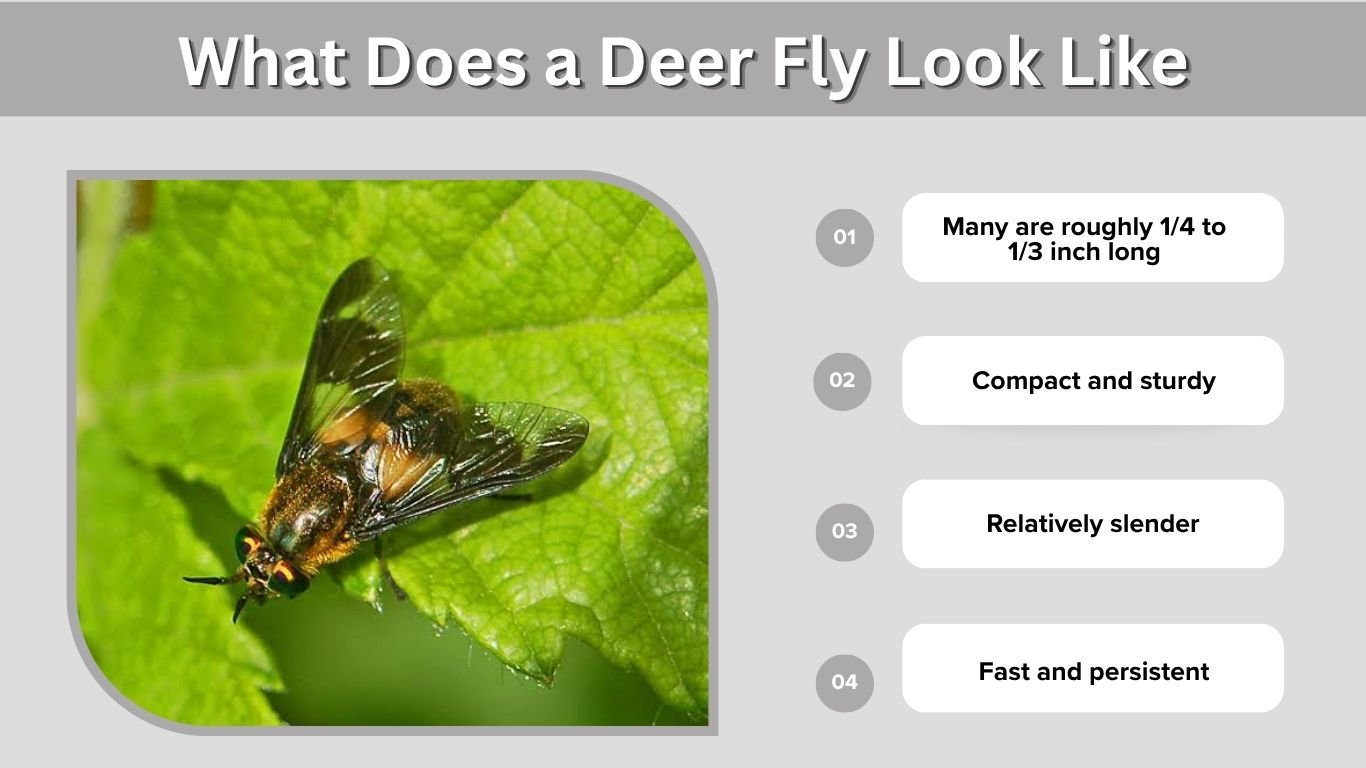
A black horse fly has a robust body rather than the narrow or delicate build seen in many other flies. Its entire body may be velvety black, charcoal gray, dark brown, or slightly purplish. The wings are also unusually dark.
Identification Features
- Large, broad body
- Mostly black or dark brown coloration
- Dark, heavily veined wings
- Very large compound eyes
- Short, thick antennae
- Strong black legs
- Broad abdomen
- Loud, powerful flight
- Prominent mouthparts on females
The black horse fly should not be confused with the black soldier fly, which has a narrower, wasp-like body and does not bite people or animals. It is also different from ordinary black flies, which are much smaller and often have humpbacked bodies.
Black and White or Black and Yellow Horse Flies
Not every dark horse fly is Tabanus atratus. Some related species have pale abdominal markings, yellow hairs, white spots, banded eyes, or patterned wings.
A horse fly described as black and white may be another Tabanus species or a deer fly. Clear identification often requires close photographs of the eyes, antennae, wings, abdomen, and side of the head.
How Big Is a Black Horse Fly?
Adult Tabanus atratus typically measures approximately 20–28 mm long. This makes it considerably larger than a house fly and usually larger than most deer flies. Mature larvae may reach about 50 mm, meaning the larval stage can be nearly twice as long as the adult.
| Insect | Approximate size | General appearance |
| Black horse fly | 20–28 mm | Large, broad, and nearly all black |
| Typical horse fly | 10–28 mm | Gray, brown, black, or patterned |
| Deer fly | 6–13 mm | Smaller with patterned wings |
| Black fly | 1–5 mm | Tiny with a humpbacked body |
| House fly | 6–7 mm | Gray with four dark thoracic stripes |
People sometimes describe black horse flies as “giant” or “huge,” especially when one enters a building or lands nearby. However, size alone cannot confirm the species because several horse flies and robber flies can also grow relatively large.
Do Black Flies Bite?
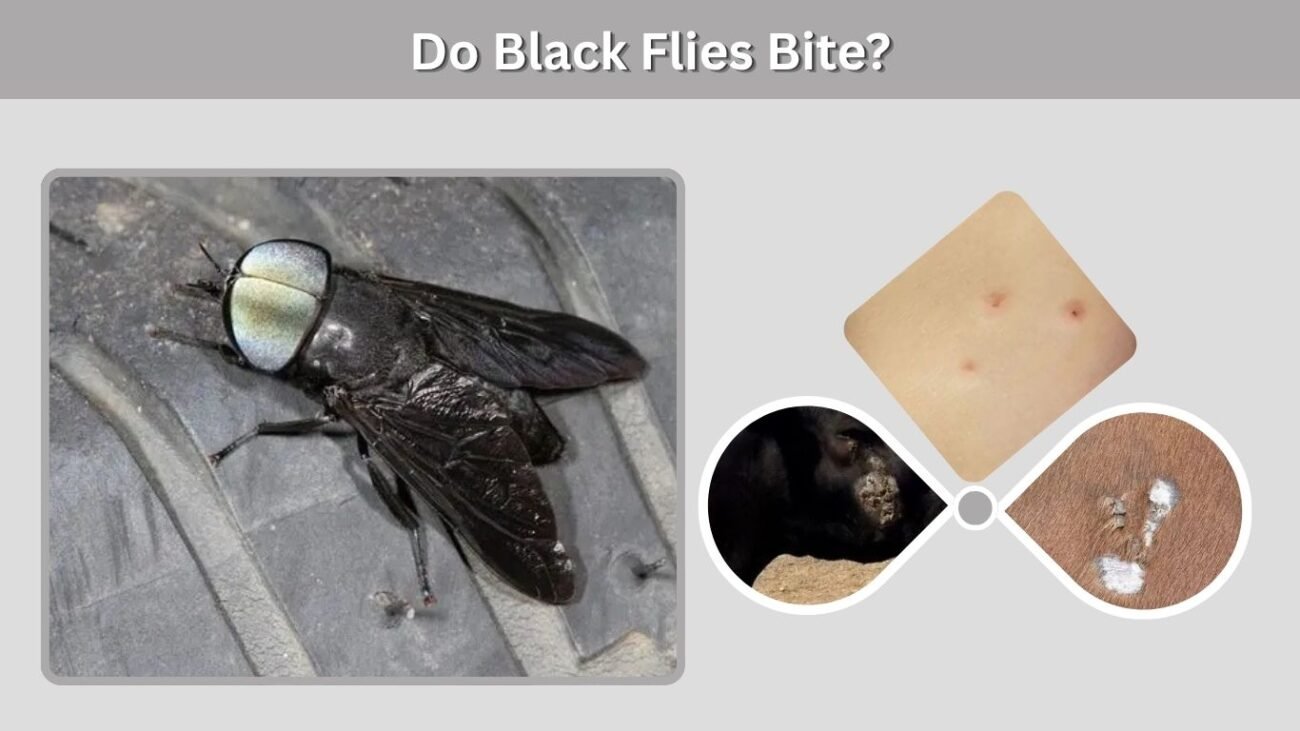
Female black horse flies can bite humans, horses, cattle, deer, dogs, and other mammals. They need nutrients from blood to support egg production. Males lack the same cutting mouthparts and feed mainly on nectar and other plant liquids.
The female does not sting. She uses blade-like mandibles and maxillae to cut the skin and rupture small blood vessels. She then laps up the blood that pools at the surface. This feeding method makes the bite immediately painful and sometimes causes minor bleeding.
Male vs Female Black Horse Fly
The eyes provide one of the clearest visible differences:
- Male: The eyes touch or nearly touch at the top of the head.
- Female: A noticeable space separates the eyes.
Only females take blood meals. Males may look equally large and intimidating, but they do not bite mammals.
What Does a Black Horse Fly Bite Look Like?
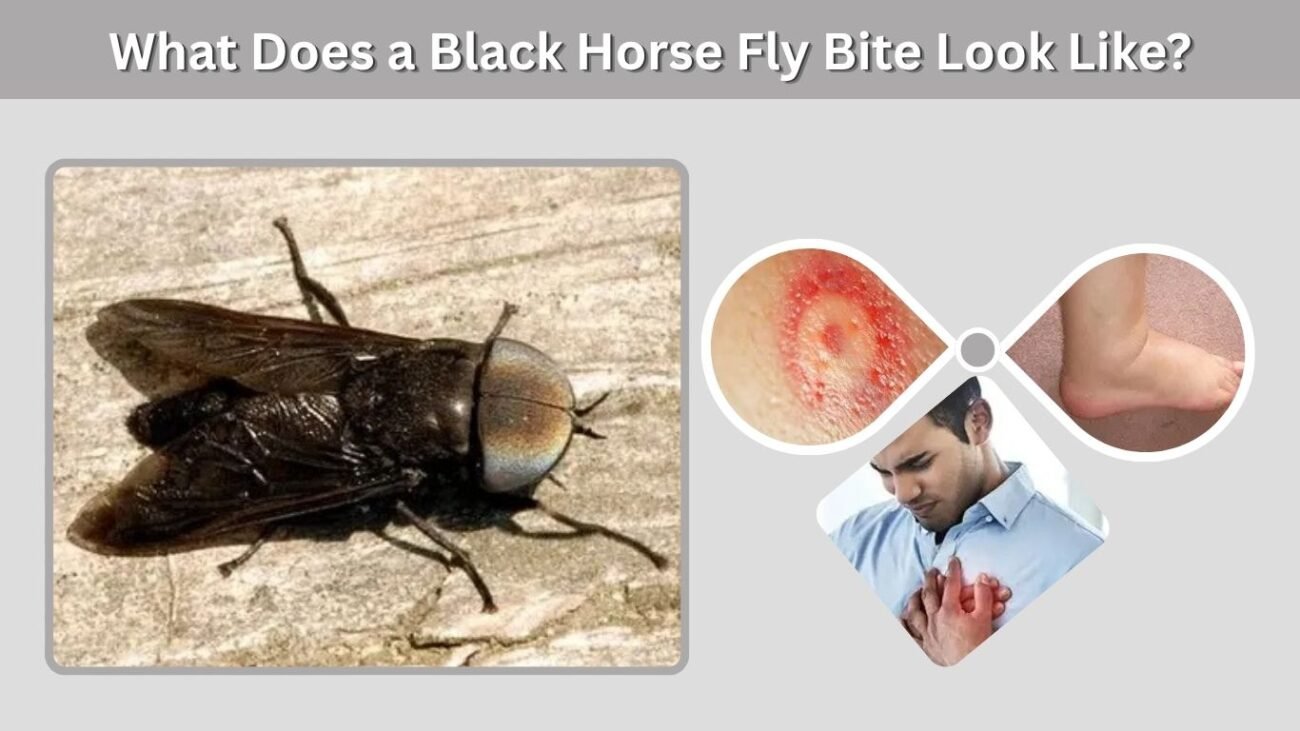
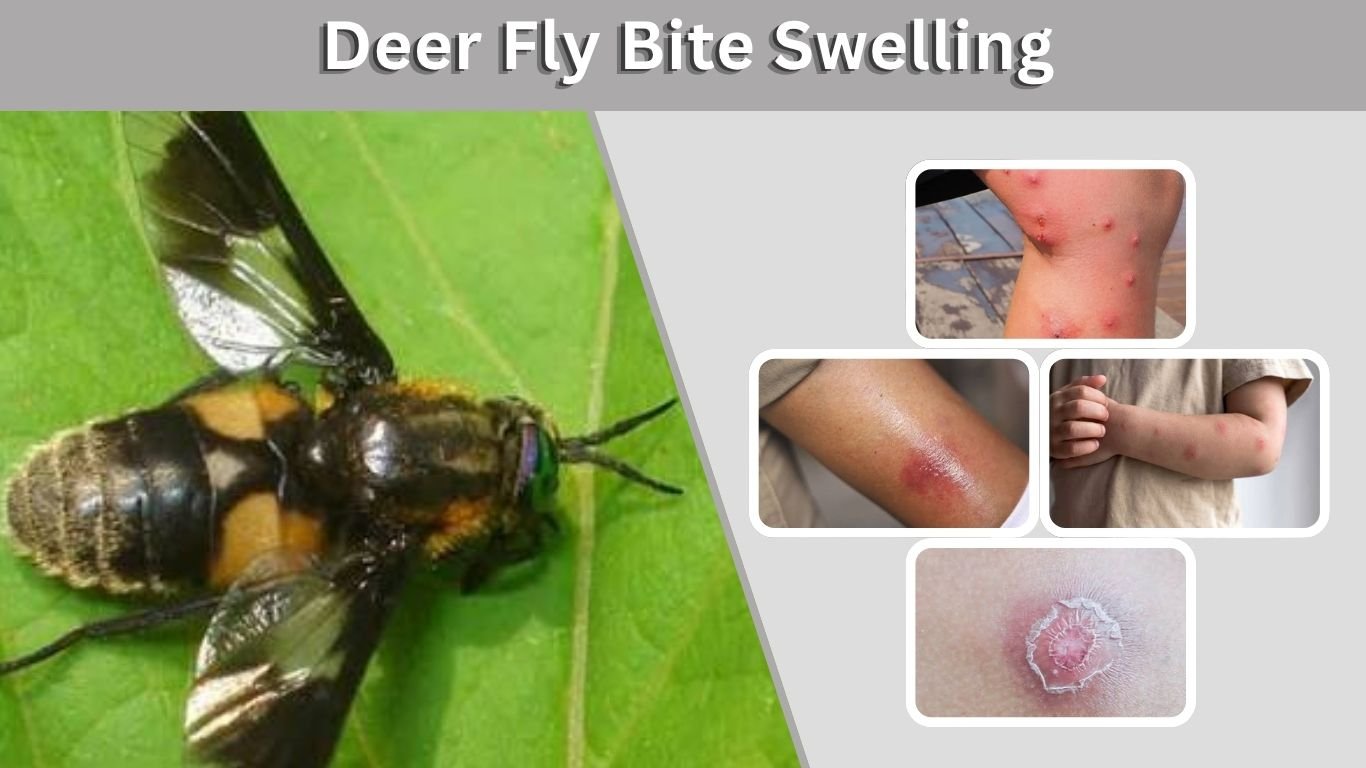
A bite may leave a painful red bump, swollen patch, small central cut, or slight bleeding. The surrounding skin may become warm, itchy, tender, or bruised.
Common symptoms include:
- Sudden sharp pain
- Redness
- Local swelling
- Itching
- Tenderness
- A firm raised lump
- Mild bruising or bleeding
Horse fly bites can become infected, especially when scratched. Wash the area with soap and water, apply a wrapped cold pack, and avoid scratching. Seek medical help if redness spreads, pain worsens, pus appears, or you develop fever or swollen glands. Emergency care is necessary for breathing difficulty, faintness, or swelling of the face or throat.
Are Black Horse Flies Dangerous?
A single black horse fly is usually more painful and annoying than dangerous. Serious reactions are uncommon, but some people may experience significant swelling or an allergic response.
The greater concern occurs when many flies repeatedly attack livestock. Frequent biting can cause stress, interrupted grazing, reduced feeding, blood loss, and lower productivity. Horse flies may also mechanically carry certain animal pathogens between hosts when interrupted during feeding.
Black horse flies are not known for chasing people over great distances. However, a female searching for a meal may repeatedly circle, follow, or attempt to land on a moving person or animal.
Black Horse Fly Habitat and Range
Tabanus atratus is primarily an eastern North American species. Its documented range extends from southeastern Canada through the eastern United States to Florida, Texas, and northern Mexico. Records also exist from other parts of the continental United States.
They may be encountered in Florida, Texas, Illinois, Wisconsin, Maryland, Pennsylvania, and many other states where suitable wet breeding habitats occur.
Where Do Black Horse Flies Live?
Adults may be found around:
- Pond and lake margins
- Marshes and wetlands
- Muddy ditches
- Slow-moving streams
- Wet forests
- Pastures
- Farms and livestock areas
- Trails near water
The species depends on moist environments for reproduction. Adults are often encountered within a relatively limited distance of the wetlands where they developed, although horse flies are capable of flying several miles.
Black Horse Fly Eggs and Larvae
The female places groups of eggs on sedges, grasses, leaves, or other vegetation hanging over water or wet soil. After hatching, the larvae drop into mud, water, decaying vegetation, or saturated ground.
What Do the Larvae Look Like?
Black horse fly larvae are long, slender, and pale, with dark bands around the body. They have tapered ends, segmented bodies, and strong mouthparts.
The larvae are predators that may eat:
- Aquatic insect larvae
- Worms
- Snails and other mollusks
- Small crustaceans
- Other horse fly larvae
- Occasionally tiny vertebrates
They can bite defensively when handled, so an unidentified large larva from wet soil should not be picked up with bare hands.
Black Horse Fly Life Cycle
The black horse fly undergoes complete metamorphosis through four stages:
- Egg
- Larva
- Pupa
- Adult
Larvae develop through several growth stages in wet environments. In colder regions they may overwinter before moving into drier soil to pupate. The pupal period can last approximately one to three weeks, but the complete life cycle may require up to two years.
Adults emerge during warmer months. Males are generally short-lived, while females may survive longer as they seek blood meals and suitable egg-laying sites.
Black Fly vs Black Horse Fly
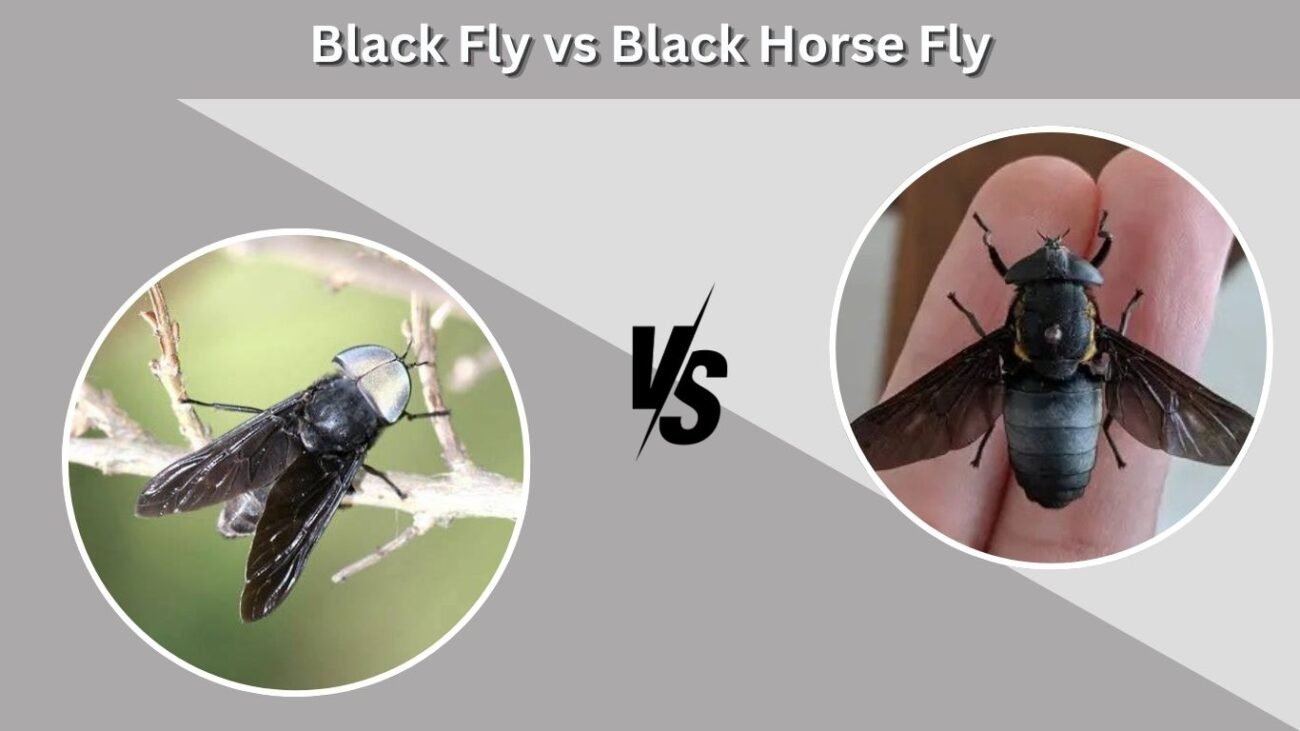
Despite their similar names, black flies and black horse flies are completely different insects.
| Feature | Black Horse Fly | Black Fly |
| Family | Tabanidae | Simuliidae |
| Size | Large, often near one inch | Usually only a few millimeters |
| Body | Broad and robust | Small and humpbacked |
| Wings | Dark and strongly veined | Clear, short, and broad |
| Bite | Deep, cutting, immediately painful | Small bite that may itch and swell |
| Larval habitat | Mud and wetland margins | Flowing streams and rivers |
Black flies often gather in groups and target the head, ears, and neck. Black horse flies are usually seen individually and produce a larger, more immediately painful wound.
How to Keep Black Horse Flies Away
Wear loose, long clothing and use an insect repellent labeled for biting flies. Horse flies are active mainly during warm daylight hours, so moving outdoor activities to cooler or darker periods may reduce exposure.
Large dark-ball, box, and panel traps can capture horse flies around barns or paddocks. However, completely eliminating them is difficult because adults can arrive from distant wetlands. Protective clothing and correctly used repellents generally provide more practical personal protection.
FAQs
Are black horse flies aggressive?
Females can be persistent when seeking a blood meal, but they do not attack in defense of a nest like wasps. Their behavior is driven by feeding rather than territorial aggression.
Do all black horse flies bite?
No. Only females bite mammals. Males feed mainly on nectar and can be recognized by their eyes, which meet at the top of the head.
Why are horse flies attracted to black objects?
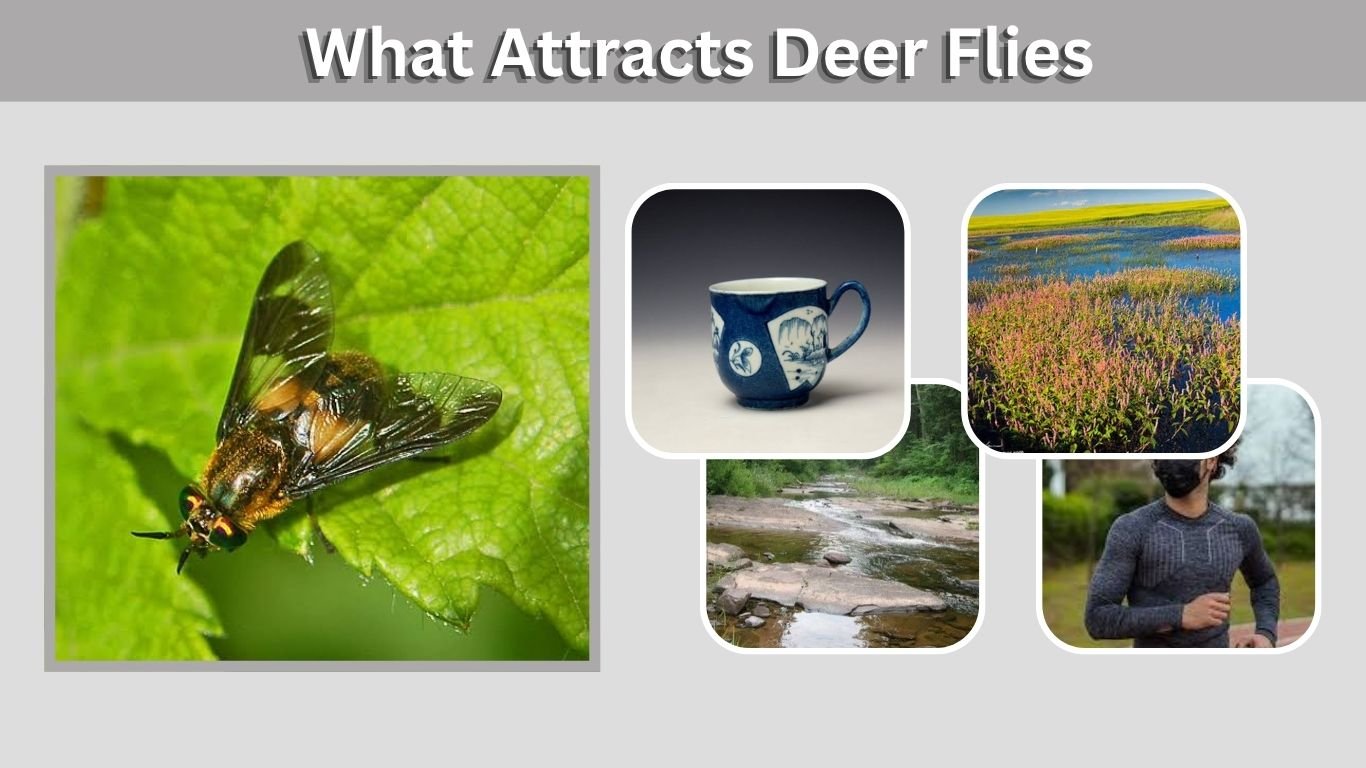
Female horse flies use visual contrast, movement, heat, and carbon dioxide to locate hosts. Large, dark moving objects may resemble animals and therefore attract their attention.
Can black horse flies enter houses?
Yes, an adult may accidentally fly through an open door or window, especially when attracted to movement or light. They do not normally establish breeding populations inside homes.
Are black horse flies and black flies the same?
No. Black horse flies are large members of the Tabanidae family. Black flies are tiny, humpbacked insects belonging to the Simuliidae family.