











Donkeys come in a wide range of breeds, each shaped by its environment, history, and purpose. From tall, powerful working breeds to small, gentle companions, these animals have supported human life for thousands of years. This guide highlights 27 unique donkey types found across the world, covering their identification, habitats, behaviors, and diets to help you better understand the diversity and heritage of these remarkable animals.
1. Andalusian Donkey
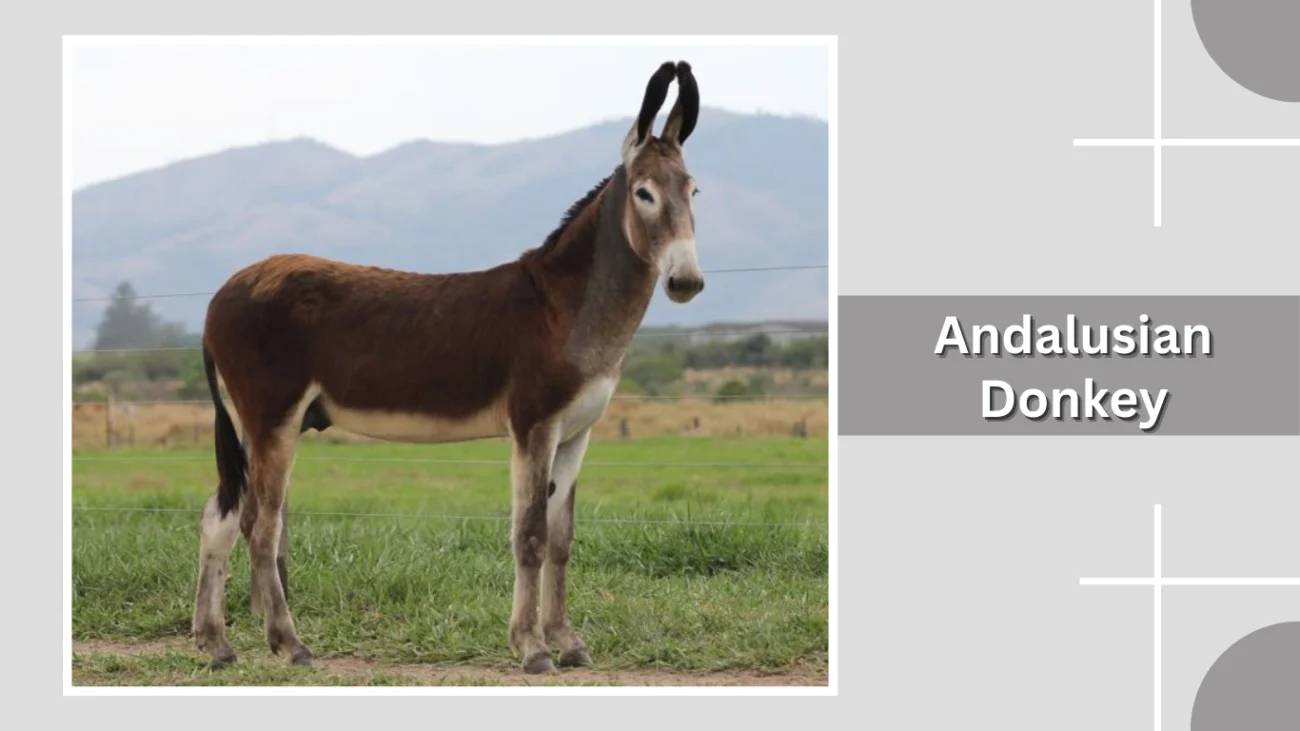
The Andalusian Donkey, originating from southern Spain, is one of the oldest and tallest donkey breeds. Known for its strong build, gentle temperament, and historical role in agriculture, this breed remains culturally significant and is often kept for conservation and heritage purposes.
Identification
- Large, sturdy body with long legs
- Typically gray, brown, or black coat
- Long ears with dark edging
- Straight back and strong neck
- Average height: 12–14 hands
Habitat
The Andalusian Donkey traditionally comes from the warm, dry regions of Andalusia, Spain. It thrives in open farmland, olive groves, and semi-arid hillsides. Today, it is mostly kept on farms, sanctuaries, and conservation centers where it can comfortably graze.
Behaviors
This breed is known for its calm, patient, and cooperative nature. Andalusian Donkeys are intelligent, easy to train, and form strong bonds with handlers. Historically used for carrying loads and farm work, they remain active, attentive animals that enjoy routine and gentle interaction.
Diet
Their diet consists primarily of grasses, hay, straw, and shrubs. They also thrive on low-sugar forage typical of Mediterranean climates. Fresh water and occasional mineral supplements help maintain their health, especially in hotter environments.
2. Asinara Donkey
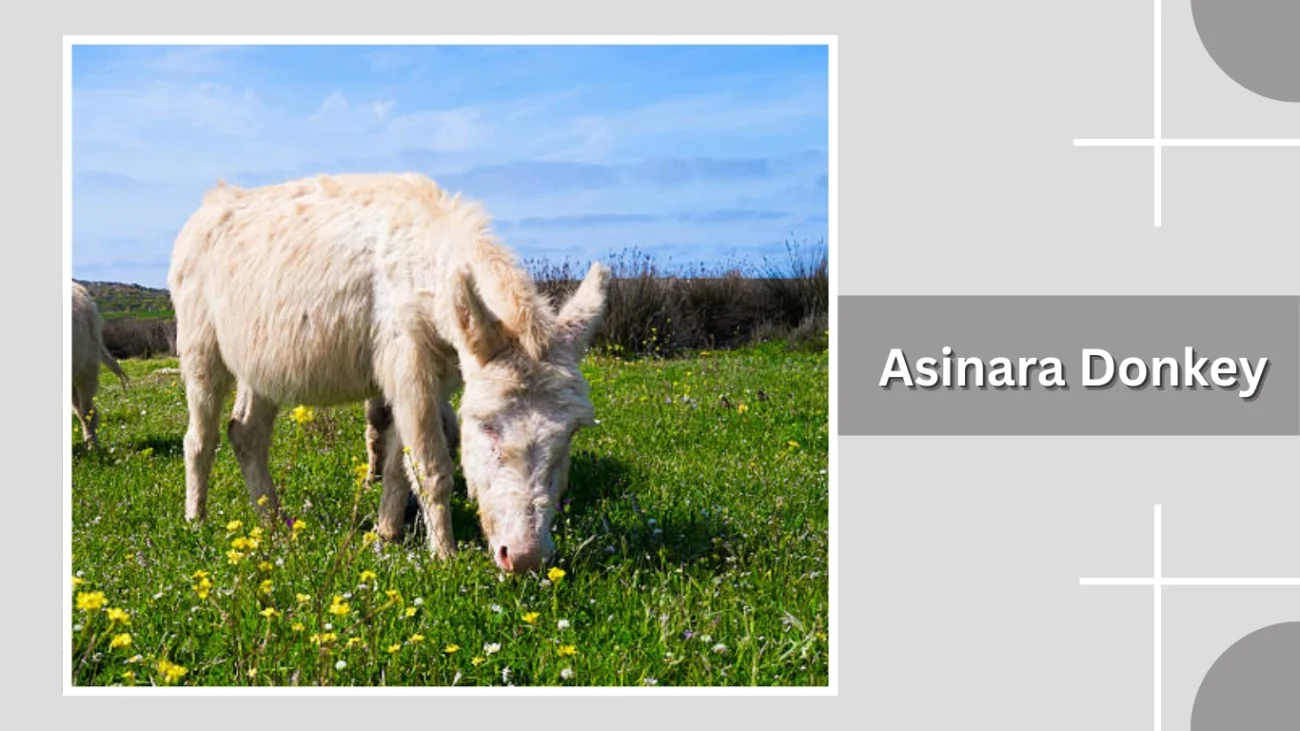
The Asinara Donkey is a rare and unique breed native to Asinara Island in Italy. Best known for its striking white coloration and small size, this donkey is a symbol of the island’s wildlife and is protected due to its limited population and distinctive genetic traits.
Identification
- Small, compact body
- Pure white or pale cream coat (albino-like appearance)
- Pink skin with light-colored hooves
- Medium-length ears
- Average height: 10–11 hands
Habitat
The Asinara Donkey lives primarily on Asinara Island, a national park with rocky terrain, Mediterranean shrublands, and coastal plains. It thrives in open, dry environments where it roams freely as part of the island’s semi-wild population.
Behaviors
This donkey is known for being gentle, cautious, and somewhat shy due to its limited human contact. Living mostly in the wild, Asinara Donkeys are highly adaptable, form small social groups, and depend on natural grazing patterns to survive.
Diet
Their diet includes wild grasses, shrubs, herbs, and low-growing coastal vegetation. Because of the island’s limited resources, they have adapted to thrive on sparse forage and require minimal supplementation when living in protected reserves.
3. Balearic Donkey
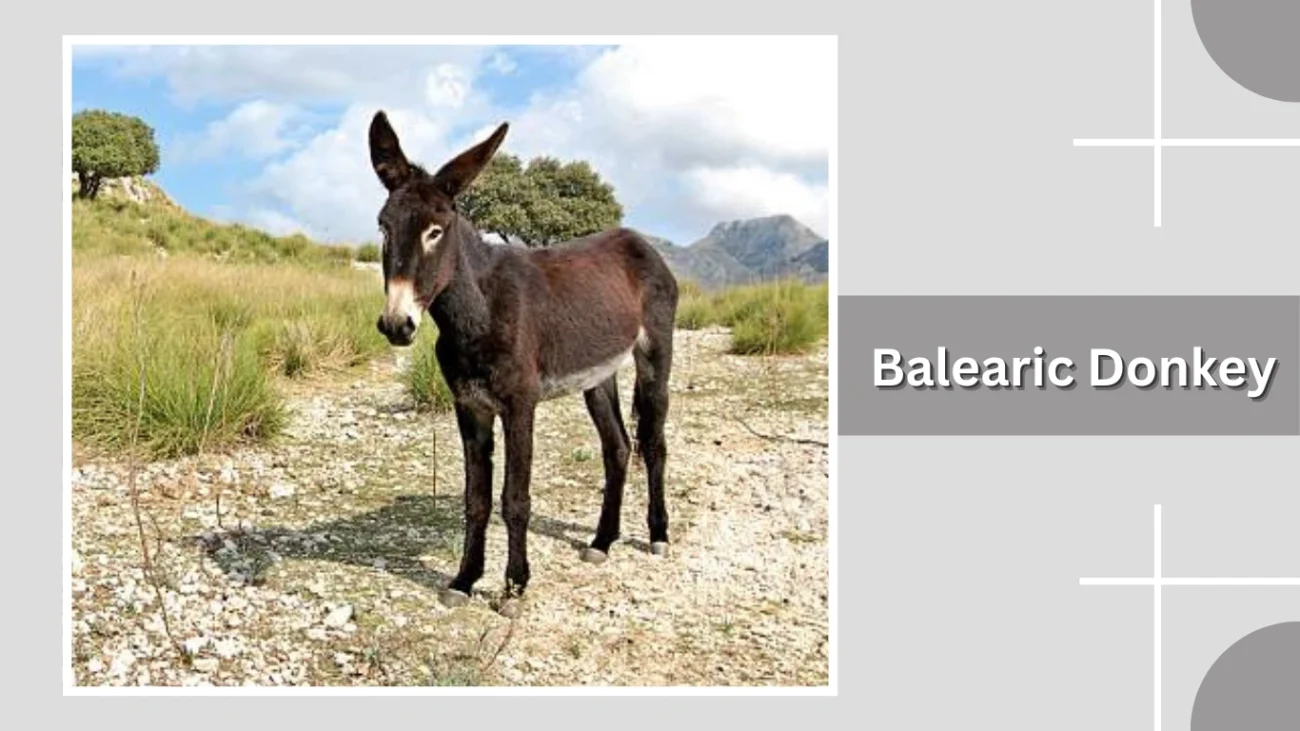
The Balearic Donkey, originating from the Balearic Islands of Spain, is a sturdy, dark-coated breed historically used for farm work and transport. Known for its strength and endurance, it remains a culturally significant donkey still preserved in small numbers.
Identification
- Medium to large body size
- Dark brown to black coat
- Light-colored muzzle and underbelly
- Strong legs and broad chest
- Average height: 11–13 hands
Habitat
The Balearic Donkey traditionally inhabits the Balearic Islands, thriving in Mediterranean climates with rocky terrain, dry fields, and agricultural landscapes. Today, it is mainly found on farms and in conservation programs across the islands.
Behaviors
This donkey is known for its hardworking, calm, and resilient temperament. Historically used for pulling carts and carrying loads, the Balearic Donkey is dependable, cooperative, and well-suited for rugged environments. It also exhibits strong social behaviors when kept in groups.
Diet
Its diet consists primarily of grasses, hay, shrubs, and crop residues. Due to its adaptation to dry Mediterranean regions, it can thrive on limited forage and requires only moderate supplementation when kept domestically.
4. Catalan Donkey
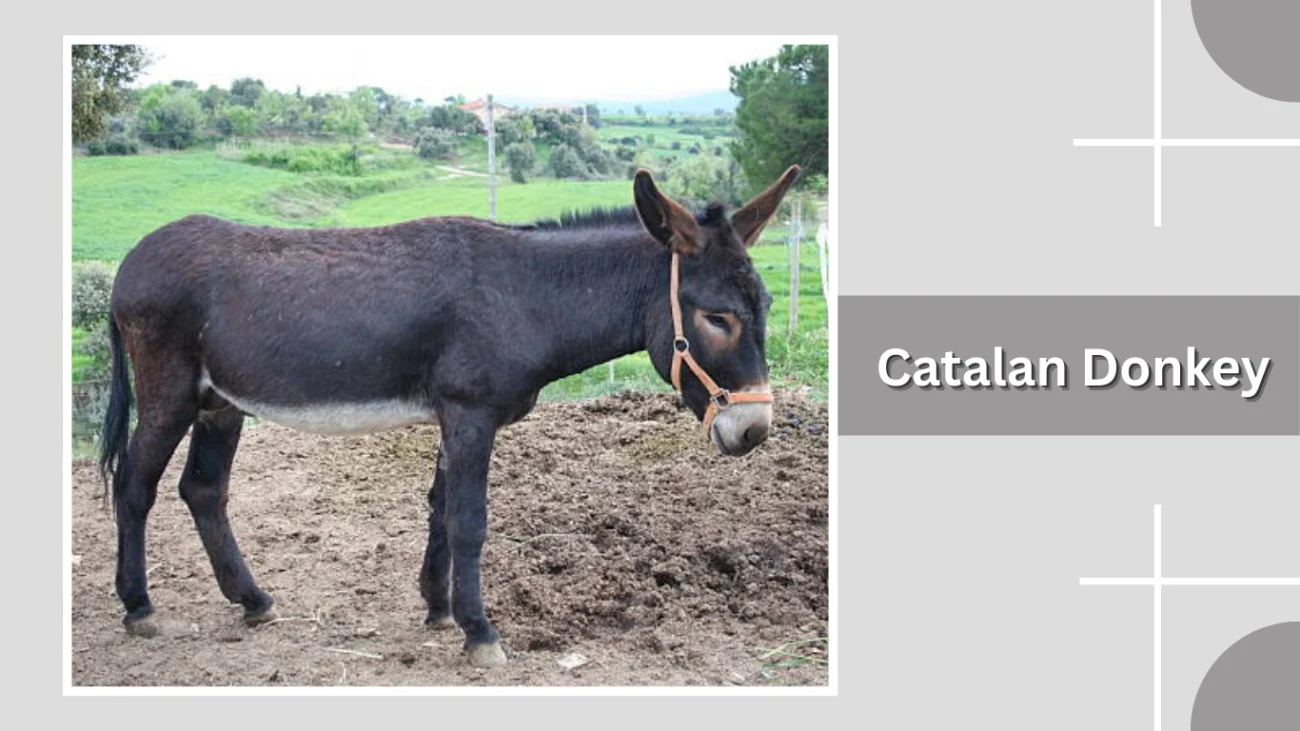
The Catalan Donkey, native to Catalonia in northeastern Spain, is a tall, elegant, and robust breed known for its endurance and historical role in agriculture. It is considered one of Spain’s most iconic donkey breeds and is now carefully preserved through breeding programs.
Identification
- Tall, long-legged body
- Dark brown to nearly black coat
- Light-colored muzzle and eye rings
- Long, upright ears
- Average height: 13–14.5 hands
Habitat
The Catalan Donkey originates from Catalonia’s rural farmlands, where the terrain includes open fields, rolling hills, and dry Mediterranean landscapes. Today, it is commonly kept on farms, breeding centers, and cultural heritage sites throughout Spain.
Behaviors
Known for its intelligent, steady, and hardworking nature, the Catalan Donkey was traditionally used for draft work and breeding mule lines. It is calm, easy to train, and forms strong bonds with caretakers, making it suitable for both labor and conservation roles.
Diet
Its diet includes grasses, hay, straw, and Mediterranean shrubs. Catalan Donkeys do well on high-fiber, low-sugar forage and may also consume crop leftovers and mineral supplements when kept in managed environments.
5. Corsican Donkey
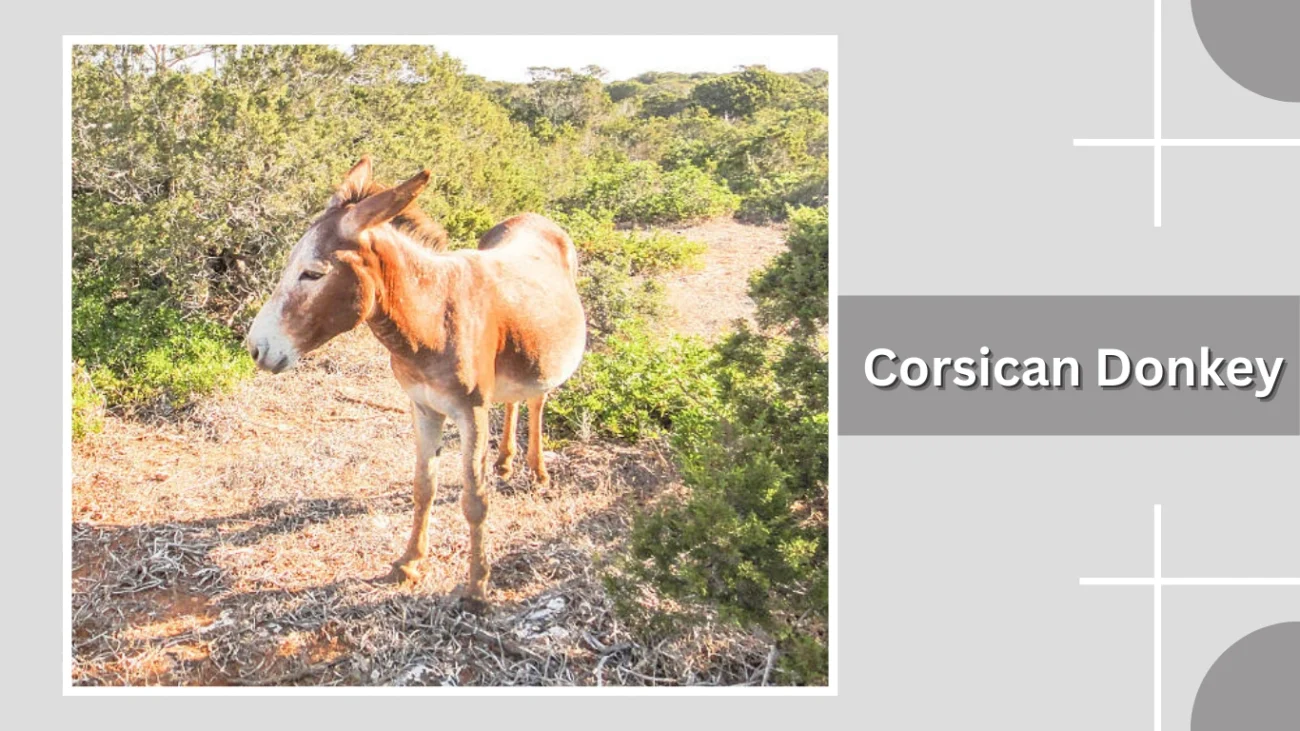
The Corsican Donkey, native to the island of Corsica, is a small, hardy breed valued historically for its ability to navigate rugged terrain. Once a common helper in transporting goods, it is now protected as an important part of Corsican cultural heritage.
Identification
- Small, compact body
- Gray to dark brown coat
- Distinct dorsal stripe and shoulder cross
- Short, sturdy legs
- Average height: 9–11 hands
Habitat
The Corsican Donkey thrives in Corsica’s mountainous landscapes, including rocky hillsides, shrublands, and rural farmlands. Its natural environment is dry, rugged, and well-suited for grazing on sparse vegetation typical of Mediterranean islands.
Behaviors
This donkey is known for being sure-footed, resilient, and independent. Historically working on steep terrains, it developed strong adaptability and calm behavior. Although gentle with familiar caretakers, Corsican Donkeys can be cautious around strangers due to their semi-feral history.
Diet
Their diet includes wild grasses, shrubs, herbs, and coarse forage. They have adapted to limited resources and do well on low-nutrient vegetation, requiring only basic supplementation when kept in domestic settings.
6. Cyprus Donkey
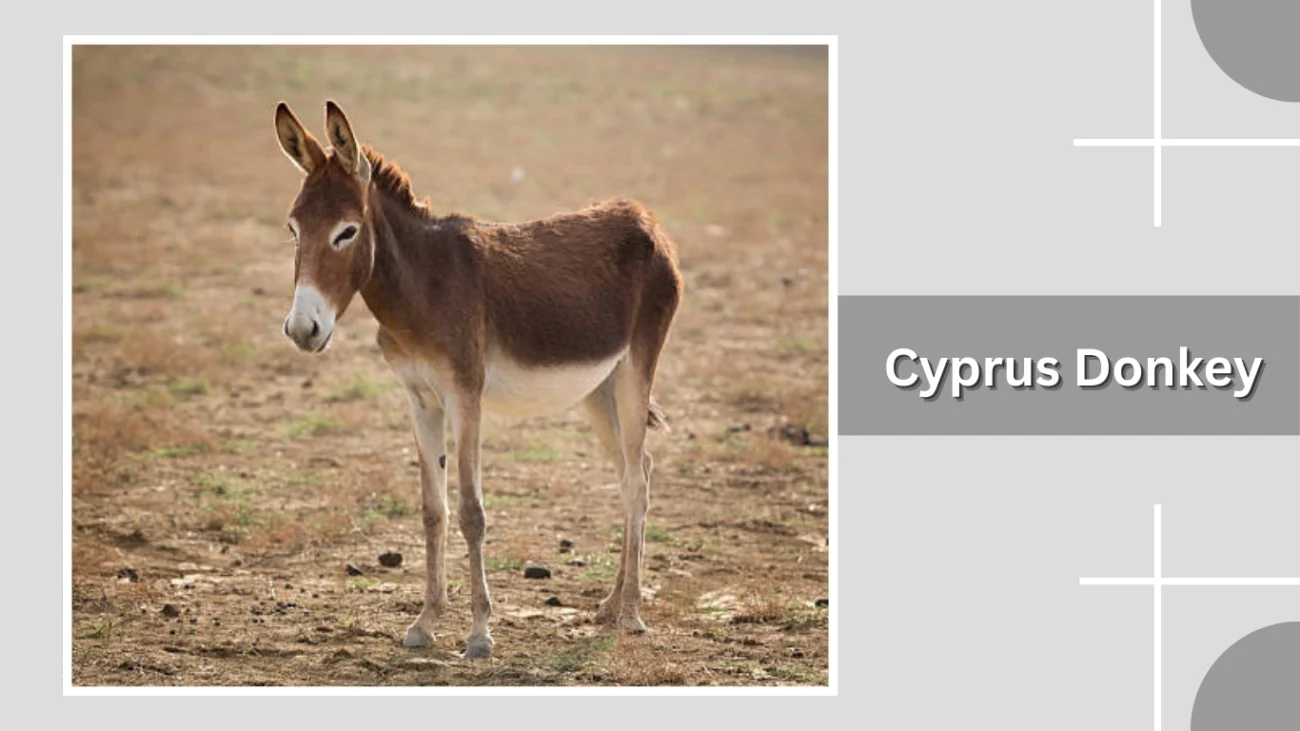
The Cyprus Donkey, native to the island of Cyprus, is a well-known Mediterranean breed valued for its stamina and friendly nature. Historically used for transport and farming, it remains an important cultural symbol and continues to live both domestically and in semi-wild herds.
Identification
- Medium-sized, strong body
- Gray, brown, or black coat
- Light-colored muzzle and belly
- Long ears with darker tips
- Average height: 11–13 hands
Habitat
Cyprus Donkeys inhabit rural farmlands, dry hills, and coastal plains throughout Cyprus. Many live in semi-wild groups, especially in the Karpas Peninsula, where they roam freely across scrublands and rocky terrain typical of the island’s climate.
Behaviors
This breed is known for its gentle, social, and hardworking disposition. Cyprus Donkeys are intelligent and cooperative, historically serving as pack and farm animals. In semi-wild conditions, they form small herds, show strong group bonds, and follow natural grazing patterns.
Diet
Their diet consists mainly of mediterranean grasses, shrubs, leaves, and agricultural leftovers. They tolerate sparse forage well and can thrive in dry environments with limited vegetation, requiring only occasional supplementation when managed by caretakers.
7. Ethiopian Donkey
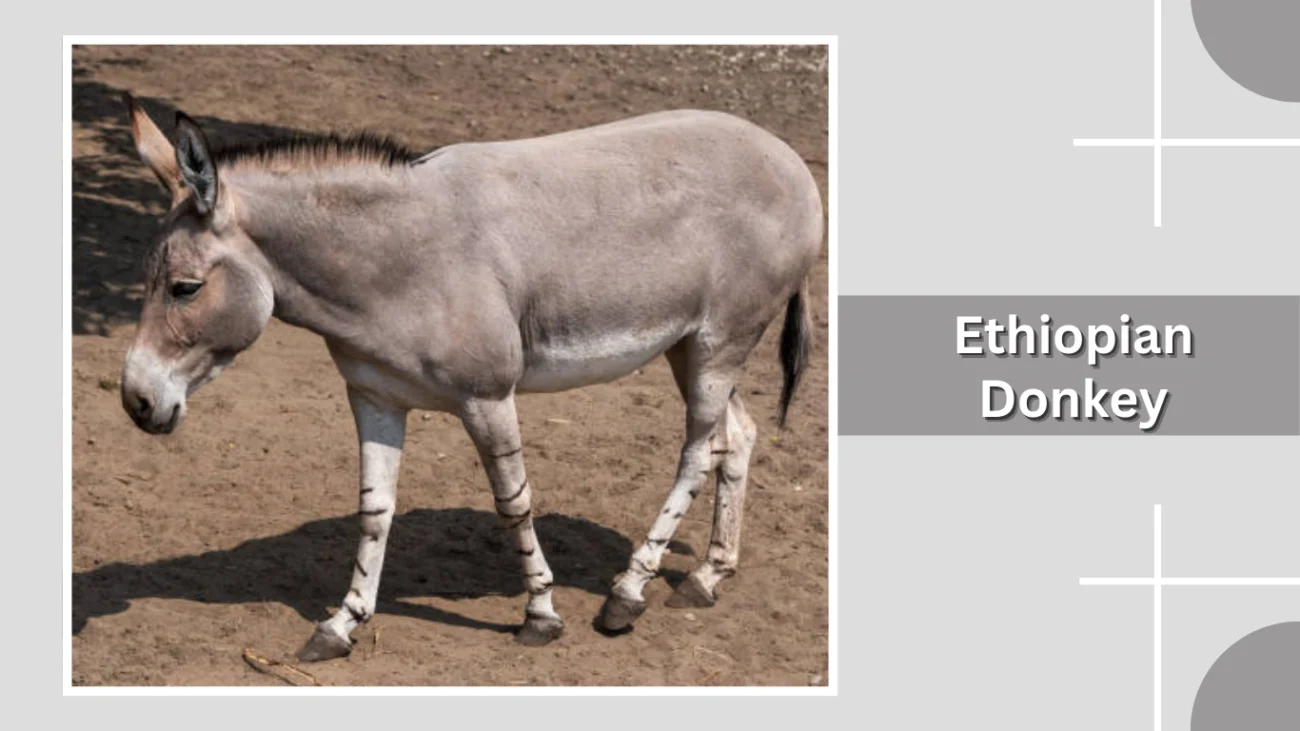
The Ethiopian Donkey is one of the most widespread working animals in Ethiopia, vital for transport, farming, and daily labor. Known for its endurance and resilience in harsh climates, this donkey plays an essential role in rural communities across the country.
Identification
- Medium, muscular body
- Gray or brown coat with possible dorsal stripe
- Short, sturdy legs
- Long ears and narrow face
- Average height: 10–12 hands
Habitat
Ethiopian Donkeys live across highland plateaus, dry lowlands, and agricultural villages. They adapt well to variable climates, from hot, arid regions to cooler mountainsides. Most are kept in rural settings where they have access to open grazing areas.
Behaviors
These donkeys are known for being tough, hardworking, and highly adaptable. They often work long hours carrying loads or pulling carts. Despite their demanding environment, Ethiopian Donkeys exhibit calm behavior and strong endurance, making them reliable working companions.
Diet
Their diet includes dry grasses, crop residues, hay, and available forage. In many regions, forage quality is low, but Ethiopian Donkeys have adapted to survive on minimal, coarse vegetation. Supplementation is occasionally provided when food resources are scarce.
8. Grand Noir du Berry
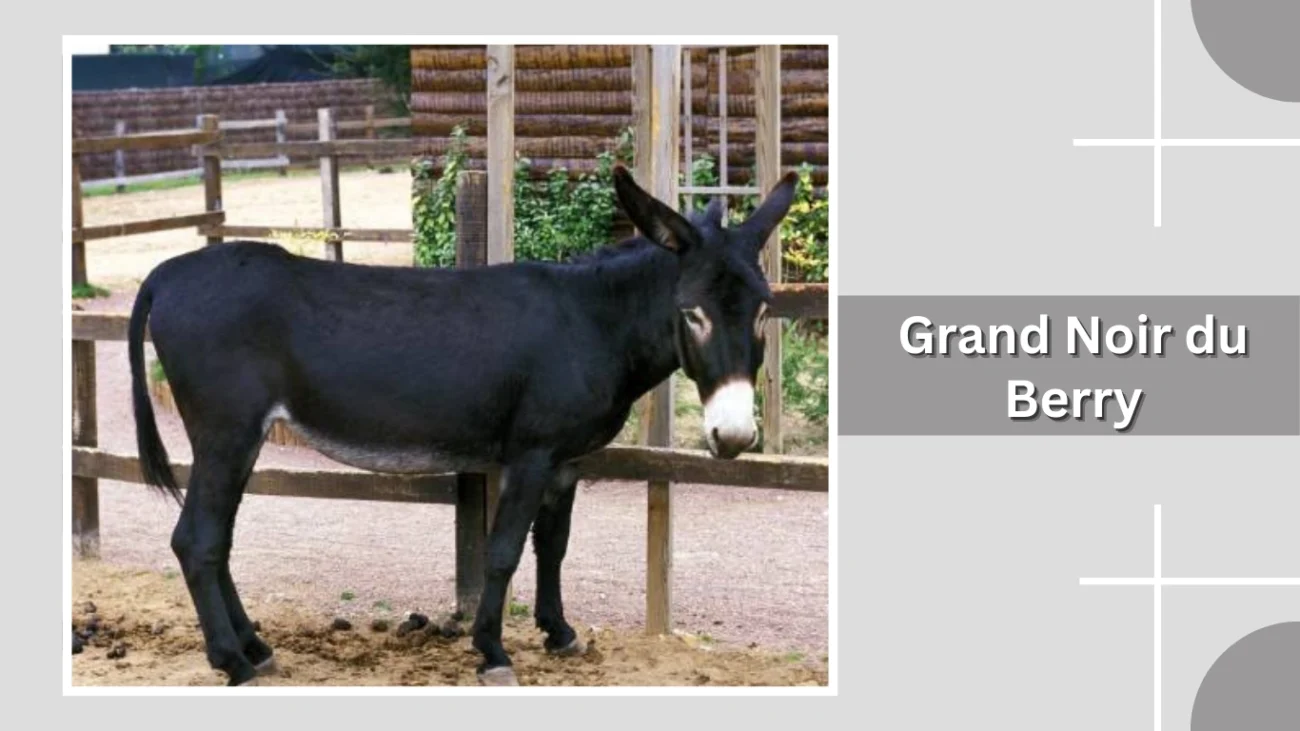
The Grand Noir du Berry is a large, elegant French donkey breed known for its impressive size and calm temperament. Originating from central France, it has been used historically for transportation, farm labor, and producing high-quality mules.
Identification
- Large, tall body
- Dark black or deep brown coat
- Light-colored muzzle and inner ears
- Strong, muscular build
- Average height: 13–15 hands
Habitat
This breed traditionally inhabits farmlands, meadows, and rural regions of central France, especially the Berry area. It thrives in temperate climates with open pastures, where it can graze freely and perform agricultural tasks.
Behaviors
The Grand Noir du Berry is known for its gentle, patient, and dependable disposition. Historically valued for pulling carts and heavy loads, it remains easy to train and cooperative. These donkeys bond well with caretakers and show calm group behavior when kept in herds.
Diet
Their diet includes lush grasses, hay, clover, and low-sugar forage. Because of their size, they require more feed than smaller breeds but still benefit from high-fiber, moderate-quality vegetation typical of European pastures.
9. Iranian Donkey
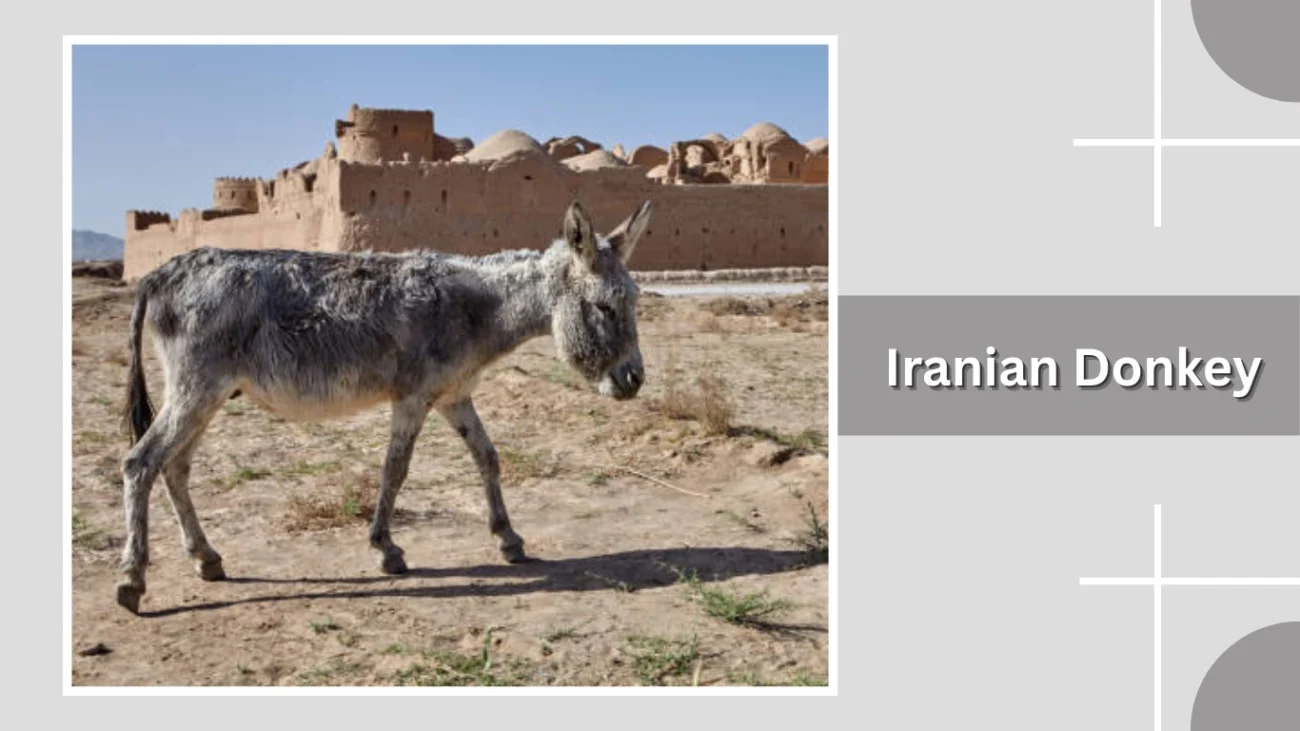
The Iranian Donkey is a versatile and hardy breed commonly found throughout Iran’s rural and desert regions. Known for its adaptability and endurance, it has long served communities in transportation, farming, and everyday labor.
Identification
- Medium-sized, sturdy body
- Gray, brown, or white coat variations
- Distinct dorsal stripe in many individuals
- Long ears and narrow face
- Average height: 10–12 hands
Habitat
Iranian Donkeys inhabit arid deserts, rocky hills, agricultural valleys, and village outskirts. Their ability to tolerate extreme heat and limited water makes them well-suited to Iran’s diverse but often harsh environments.
Behaviors
This breed is recognized for its calm, strong, and resilient temperament. Used traditionally for carrying loads and pulling carts, Iranian Donkeys exhibit steady behavior under demanding conditions. They are also social animals that form small groups when free-ranging.
Diet
Their diet consists of dry grasses, shrubs, desert plants, hay, and crop residues. Adapted to sparse forage, they can survive on low-nutrient vegetation but benefit from supplemental feed and minerals when kept in domestic settings.
10. Irish Donkey
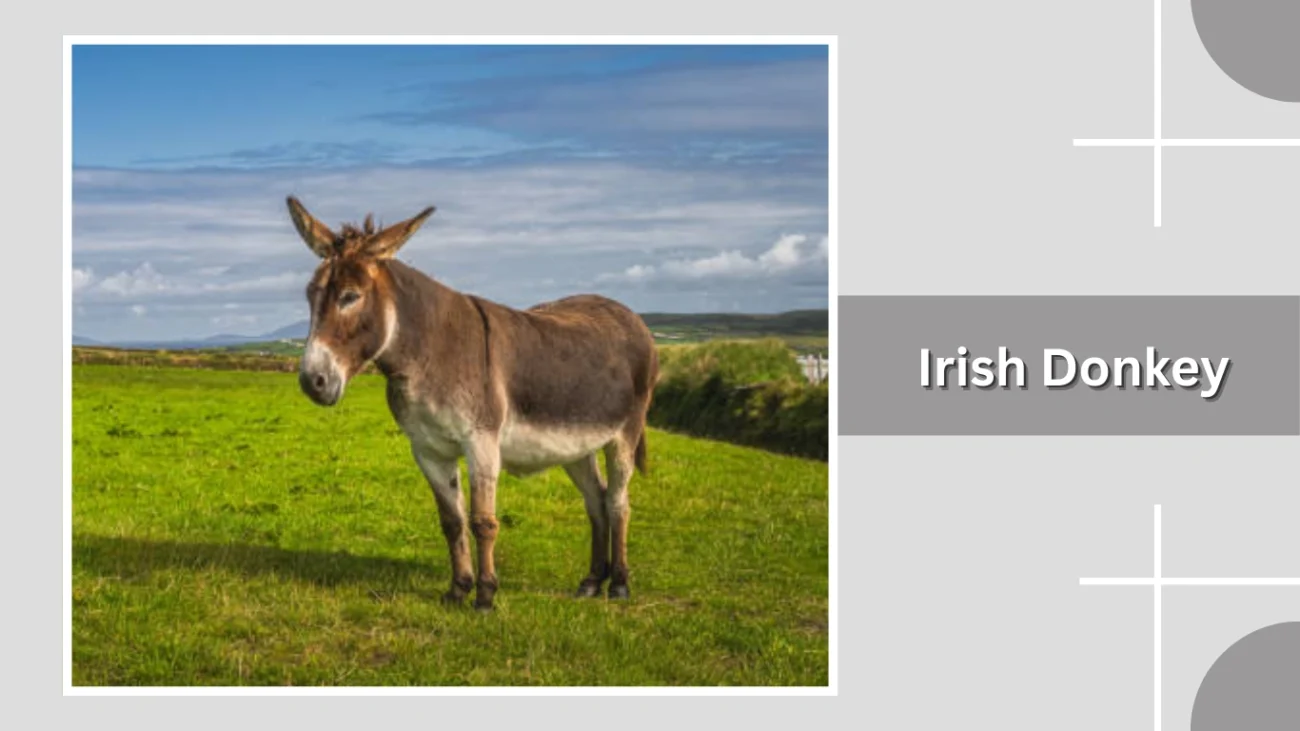
The Irish Donkey is a beloved and traditional breed found throughout rural Ireland. Known for its friendly nature and historical role in farming and transport, it remains a cherished part of Irish heritage and is often kept as a companion or conservation animal today.
Identification
- Medium-sized, sturdy body
- Gray or brown coat, sometimes with a dorsal stripe
- Long ears and soft facial features
- Thick coat suitable for cooler climates
- Average height: 10–12 hands
Habitat
Irish Donkeys live in green pastures, farmlands, and rolling countryside across Ireland. They thrive in cooler, wetter climates and are commonly seen grazing in open fields or living on small family farms.
Behaviors
This breed is known for its gentle, social, and patient personality. Irish Donkeys bond strongly with humans and other animals. Historically used for carrying loads and light farm work, they are now popular for therapy programs, tourism, and companionship.
Diet
Their diet includes grasses, hay, clover, and low-sugar forage. Irish Donkeys benefit from consistent grazing but may require supplementation with hay during winter when pasture growth is limited.
11. Italian Donkey
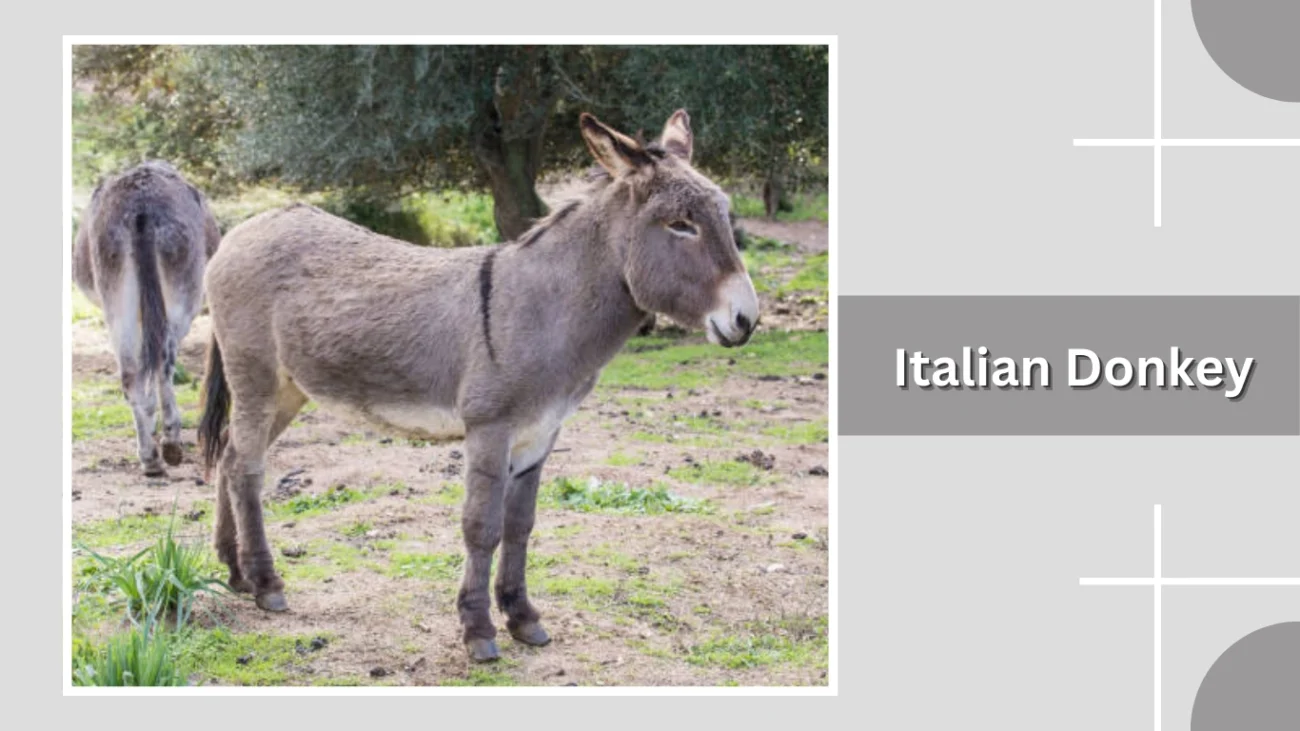
The Italian Donkey represents several regional donkey types found throughout Italy, valued for their versatility, strength, and long history in agriculture. These donkeys have adapted to both mountainous terrain and farm environments, making them dependable working animals.
Identification
- Medium to large body size
- Gray, brown, or black coat depending on region
- Often shows a dorsal stripe and shoulder cross
- Long ears and strong limbs
- Average height: 10–13 hands
Habitat
Italian Donkeys inhabit rural farmlands, olive groves, vineyards, and mountainous regions. Their adaptability allows them to thrive in both Mediterranean lowlands and steep, rocky landscapes across Italy.
Behaviors
This breed is known for its calm, hardworking, and cooperative temperament. Italian Donkeys have long served as pack animals, cart pullers, and farm helpers. They are intelligent, social, and form strong bonds within small herds or with their handlers.
Diet
Their diet includes Mediterranean grasses, hay, straw, shrubs, and agricultural leftovers. They thrive on high-fiber, low-calorie forage and may also receive mineral supplements in managed environments.
12. Mammoth Jackstock
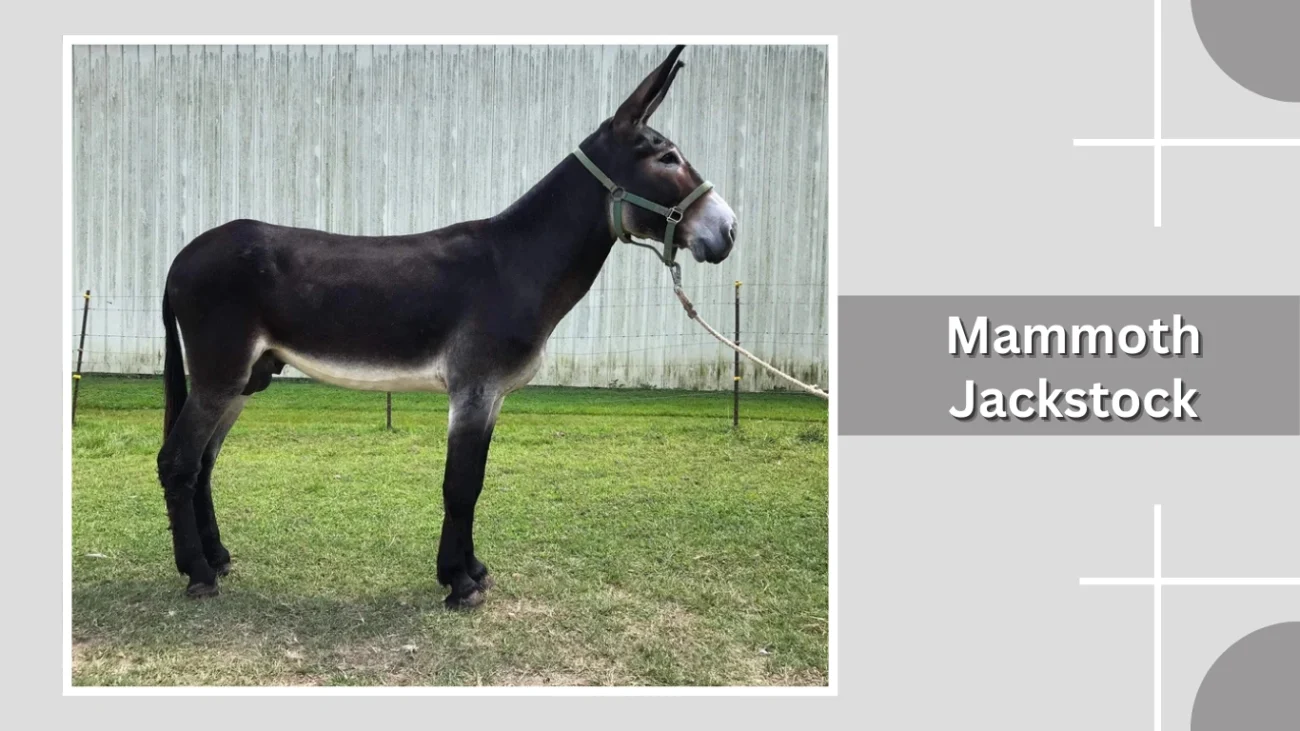
The Mammoth Jackstock is the largest donkey breed in the world, developed in the United States for producing strong, high-quality mules. Known for its impressive size and power, this breed is prized for its strength, endurance, and calm temperament.
Identification
- Very large, muscular body
- Height commonly 14–16 hands (some taller)
- Black, brown, bay, or roan coat
- Long, strong legs and broad chest
- Large, upright ears
Habitat
Mammoth Jackstock donkeys are found primarily on farms, ranches, and breeding operations across the United States. They thrive in open pastures with space to move, graze, and develop their strong physical build.
Behaviors
This breed is known for being gentle, intelligent, and highly trainable. Despite their size, Mammoth Jackstock are calm and easy to handle. They were historically bred for mule production but are now also used for riding, driving, and show purposes.
Diet
Their diet includes high-quality grasses, hay, forage mixes, and mineral supplements. Because of their large size, they require more feed than average donkeys but still benefit from high-fiber, low-sugar diets to maintain steady energy and overall health.
13. Maltese Donkey
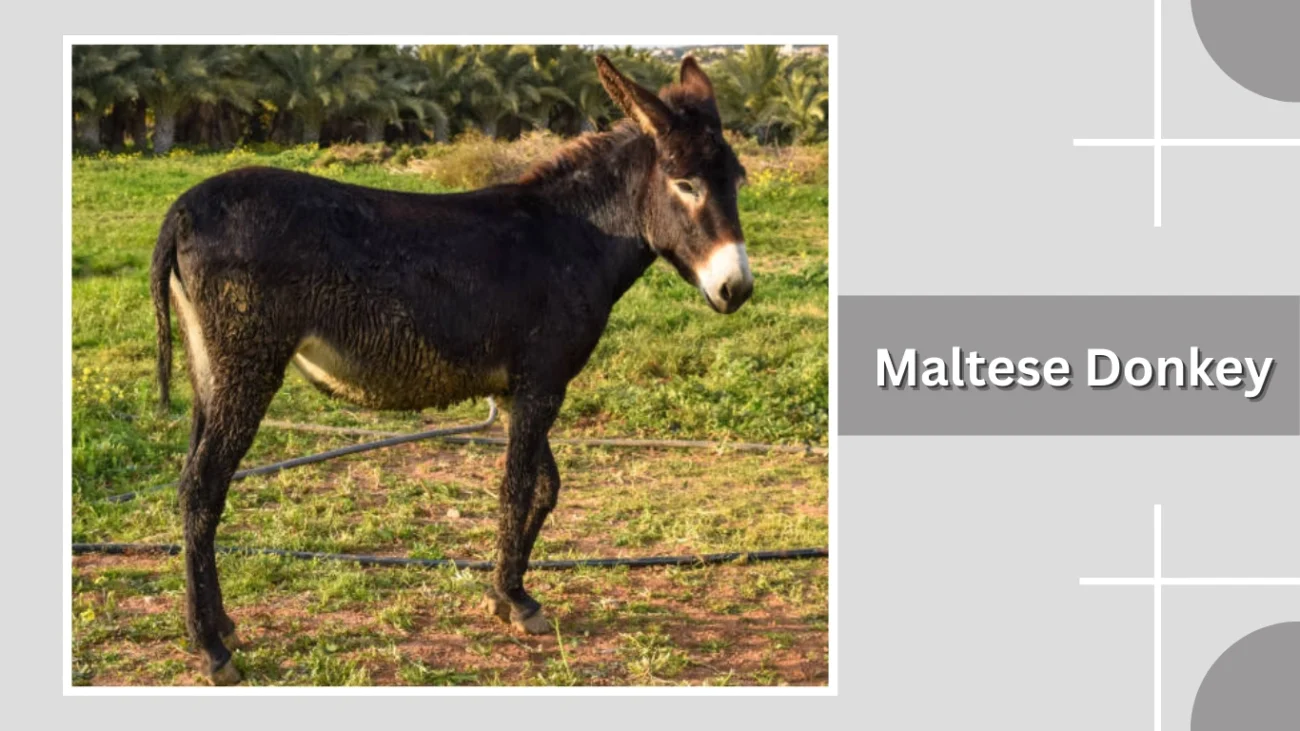
The Maltese Donkey, originating from the island of Malta, is a rare Mediterranean breed known for its strength, compact build, and valued history in agriculture and transportation. Once common on the islands, it is now considered endangered and protected through conservation programs.
Identification
- Medium-sized, robust body
- Dark brown or black coat
- Light muzzle and underbelly
- Strong legs and muscular frame
- Average height: 11–12 hands
Habitat
The Maltese Donkey originally lived in rural farmlands, rocky hills, and coastal plains of Malta. Adapted to dry Mediterranean environments, it thrives in warm climates with sparse vegetation. Today, it is mostly kept in farms, breeding centers, and conservation facilities.
Behaviors
This breed is known for its calm, hardworking, and cooperative nature. Historically used for carrying loads and farm labor, the Maltese Donkey is dependable and intelligent. It adapts well to training and shows strong social behavior, especially when kept in small groups.
Diet
Their diet includes Mediterranean grasses, hay, barley straw, shrubs, and forage plants. Maltese Donkeys are efficient grazers and can thrive on limited resources, although monitored supplementation is helpful in managed environments.
14. Mexican Burro
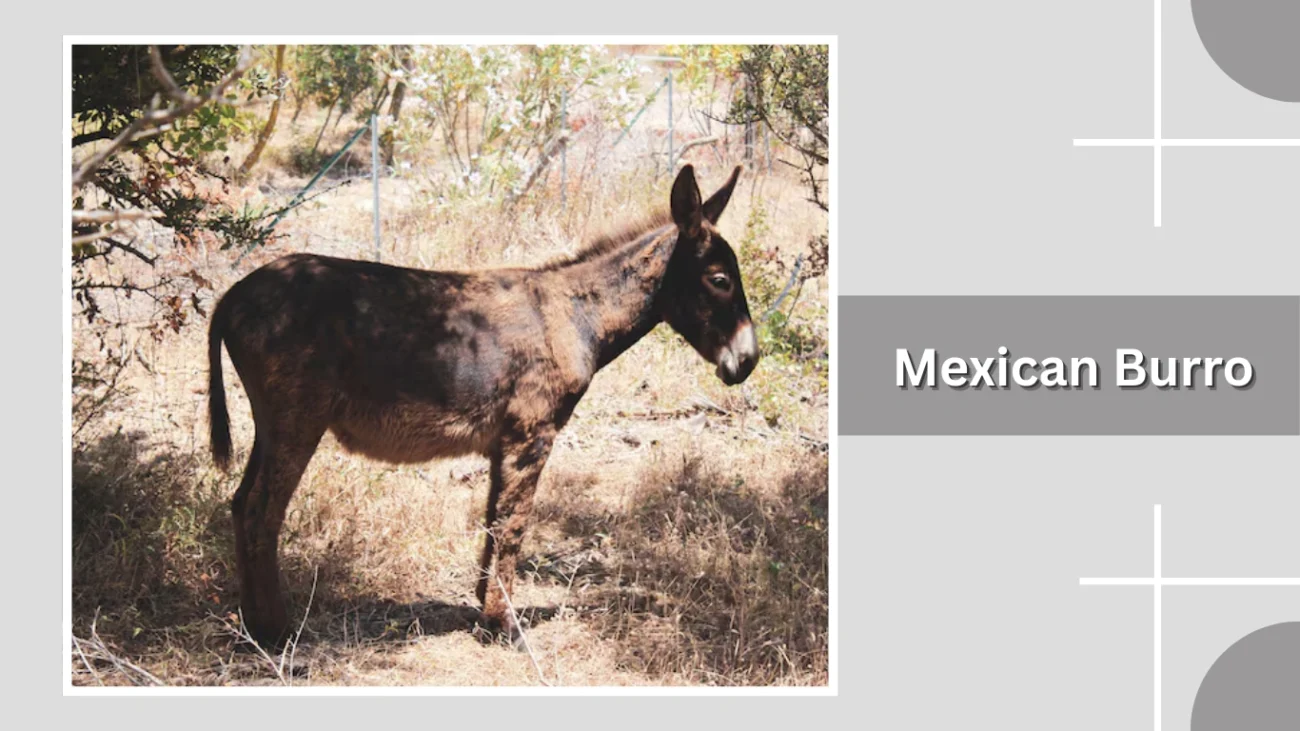
The Mexican Burro is a small, hardy donkey widely used throughout rural Mexico for transportation, farming, and daily labor. Known for its toughness and adaptability, it remains an essential working animal in many communities.
Identification
- Small to medium size
- Gray or brown coat, often with dorsal stripe
- Short, sturdy legs
- Narrow face with long ears
- Average height: 9–12 hands
Habitat
Mexican Burros inhabit rural villages, farmlands, arid plains, and mountainous regions across Mexico. They are well adapted to hot climates, rocky terrain, and environments with limited forage, making them versatile in diverse landscapes.
Behaviors
This breed is known for being resilient, hardworking, and calm under pressure. Mexican Burros often carry loads, pull carts, and navigate rough trails. They form strong bonds with handlers and show steady, dependable behavior in demanding work conditions.
Diet
Their diet consists of dry grasses, shrubs, cactus pads, hay, and agricultural leftovers. Adapted to arid environments, they can thrive on coarse, low-nutrient vegetation while requiring minimal supplementation.
15. Miniature Mediterranean Donkey
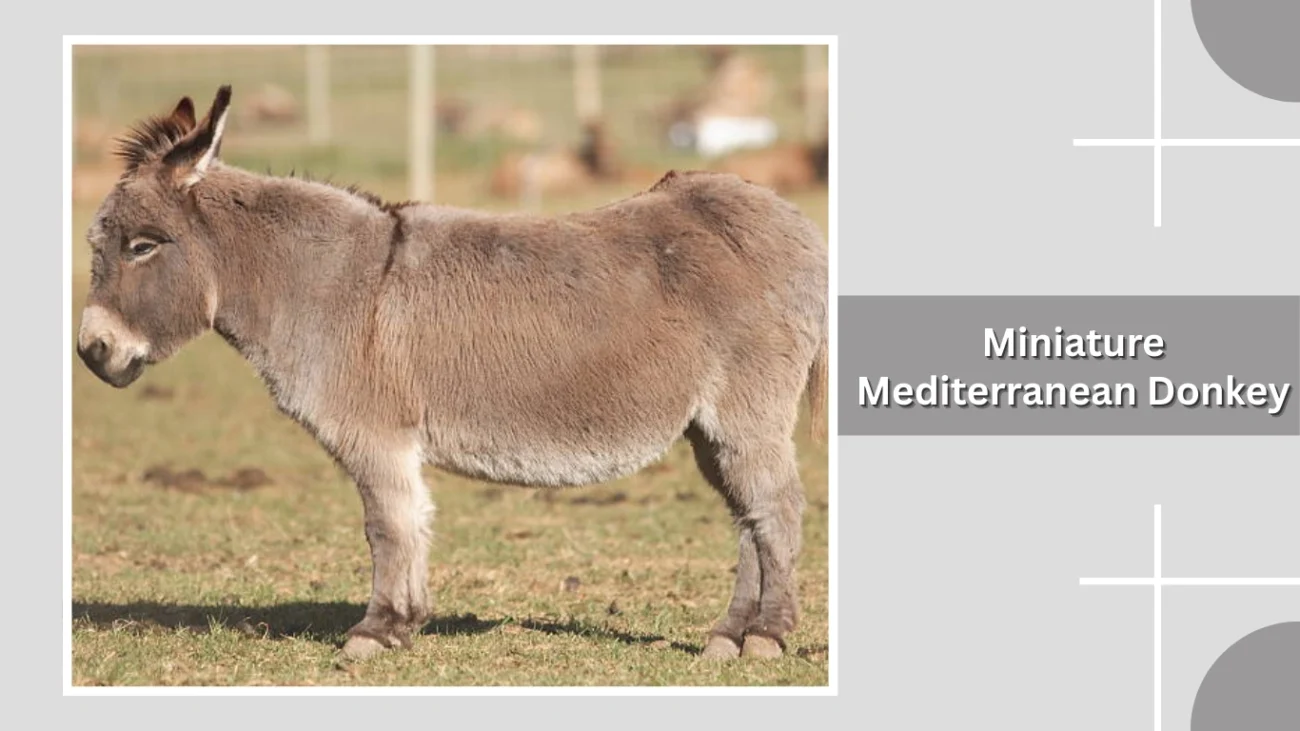
The Miniature Mediterranean Donkey is a small, friendly breed originating from the Mediterranean islands of Sardinia and Sicily. Today it is popular as a companion animal due to its gentle nature, manageable size, and charming appearance.
Identification
- Very small body size
- Gray, brown, black, or spotted coat
- Average height: under 9 hands
- Short legs and compact frame
- Long ears and expressive eyes
Habitat
These donkeys originally lived in the Mediterranean’s rocky, dry terrains, where they adapted to sparse vegetation and warm climates. Today, they are commonly found on small farms, homesteads, and hobby properties worldwide.
Behaviors
Miniature Mediterranean Donkeys are known for their affectionate, social, and gentle personality. They enjoy human interaction, making them popular therapy and companion animals. They bond strongly in pairs or small groups and thrive on routine care and attention.
Diet
Their diet includes grasses, hay, low-sugar forage, and occasional vegetables. Due to their small size, they require careful portion control to avoid obesity but still rely on high-fiber feed and consistent grazing opportunities.
16. Norman Donkey
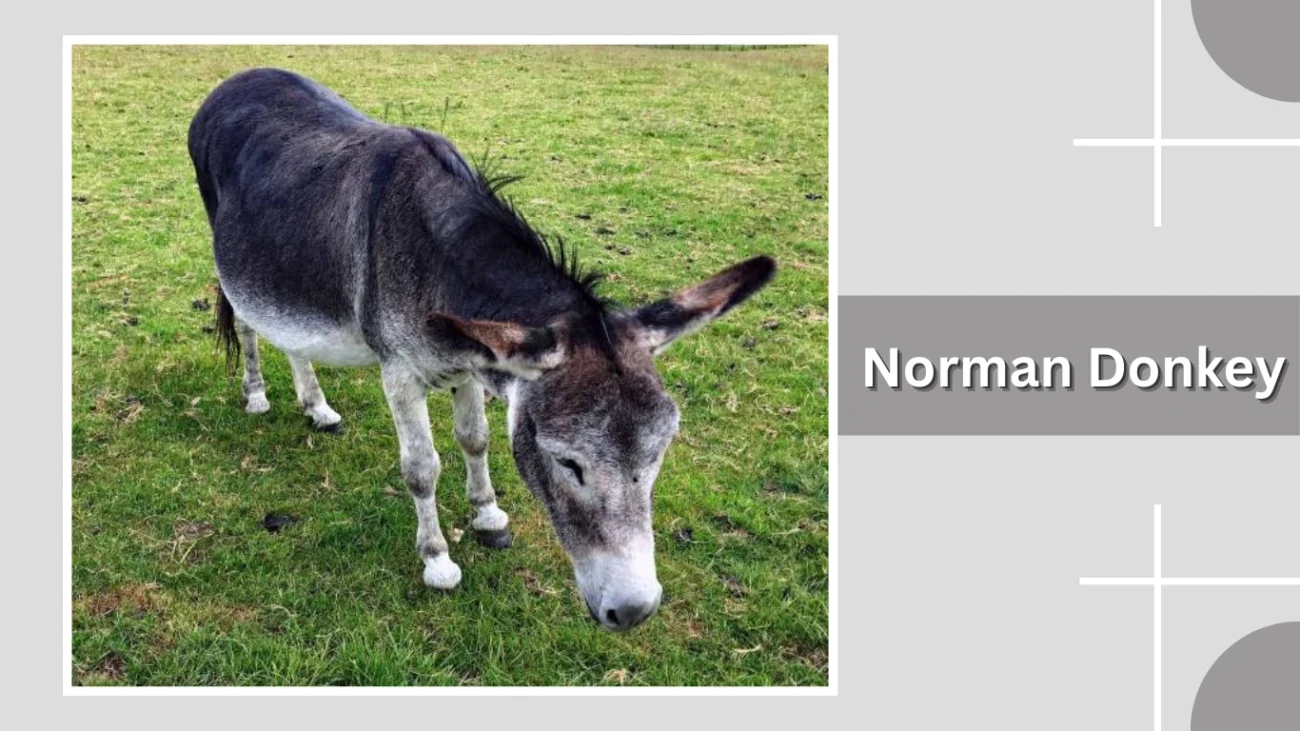
The Norman Donkey, originating from Normandy in northern France, is a sturdy and hardworking breed historically used for farm labor and transport. It is known for its strength, calm disposition, and importance in regional agricultural traditions.
Identification
- Medium to large body
- Gray or brown coat with a dorsal stripe
- Thick, shaggy hair in colder seasons
- Strong legs and broad frame
- Average height: 11–13 hands
Habitat
Norman Donkeys thrive in temperate farmlands, meadows, and rolling countryside across Normandy. They adapt well to cooler, wetter climates and are commonly found on farms, rural homesteads, and conservation centers.
Behaviors
This breed is known for its gentle, steady, and reliable nature. Historically used for pulling carts and carrying loads, the Norman Donkey remains patient and cooperative. It forms strong social bonds, enjoys group living, and responds well to training.
Diet
Their diet includes pasture grasses, hay, clover, and high-fiber forage. They benefit from consistent grazing and may require additional hay during winter months when grass growth slows.
17. Nubian Donkey
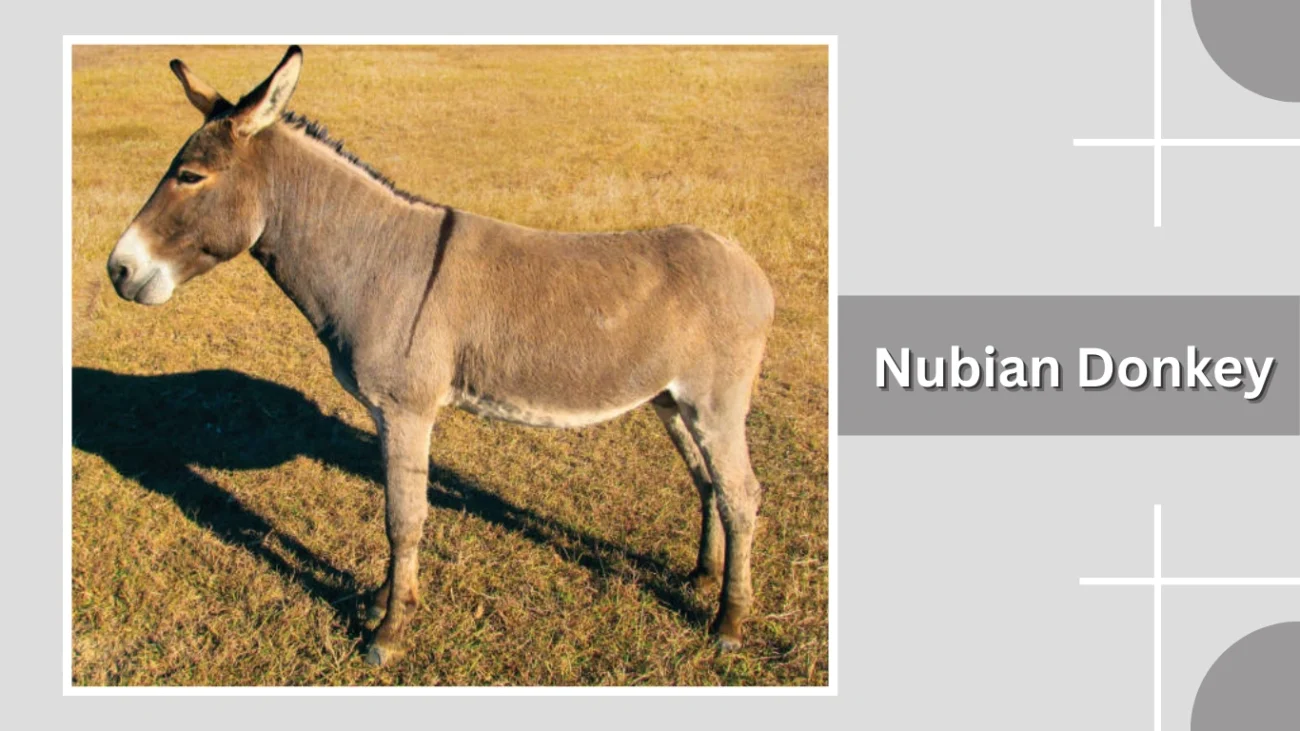
The Nubian Donkey, originating from the Nubian region of northeast Africa, is a resilient and historically important breed known for its endurance and ability to thrive in extremely hot climates. It has long served as a pack and transport animal in desert environments.
Identification
- Medium-sized, lean body
- Gray or light brown coat
- Prominent dorsal stripe in many individuals
- Long, narrow ears
- Average height: 10–12 hands
Habitat
Nubian Donkeys inhabit arid deserts, dry savannas, and rural settlements across Sudan, Eritrea, and surrounding areas. They are well adapted to intense heat, limited water, and sparse vegetation typical of desert landscapes.
Behaviors
This breed is known for being tough, alert, and highly adaptable. Nubian Donkeys are steady workers capable of traveling long distances with loads. They form small social groups and rely on efficient water use and heat tolerance to survive harsh conditions.
Diet
Their diet includes dry grasses, acacia leaves, shrubs, and desert plants. Adapted to low-quality forage, Nubian Donkeys can survive on minimal vegetation but benefit from hay and mineral supplements when managed by humans.
18. Poitou Donkey
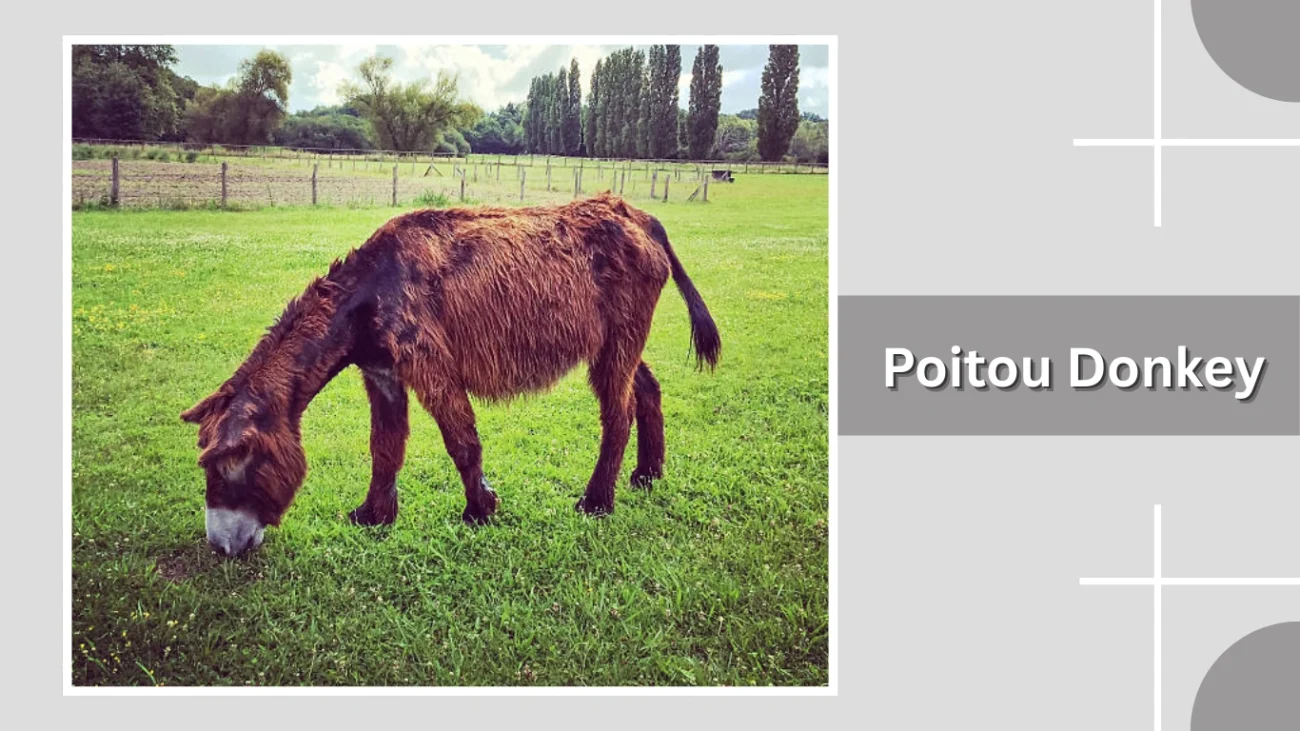
The Poitou Donkey, also known as the Baudet du Poitou, is one of France’s oldest and most distinctive donkey breeds. Famous for its long, shaggy coat and large size, it was traditionally bred to produce strong mules. Today, it is a rare and protected breed.
Identification
- Large, powerful body
- Long, thick shaggy coat (“corded” hair)
- Dark brown to black coloring
- Long ears covered in hair
- Average height: 13–15 hands
Habitat
The Poitou Donkey originates from western France, particularly the Poitou region. It thrives in temperate farmland areas with ample pasture. Modern conservation herds are kept on rural farms and breeding centers across France and Europe.
Behaviors
Poitou Donkeys are known for their gentle, calm, and highly sociable temperament. Despite their size, they are approachable and easy to handle. Historically valued for mule breeding, they remain cooperative, intelligent, and comfortable living in groups.
Diet
Their diet includes grasses, hay, clover, and high-fiber forage. Due to their heavy build, they require consistent grazing and quality roughage, along with mineral supplementation to support healthy growth and coat condition.
19. Provence Donkey
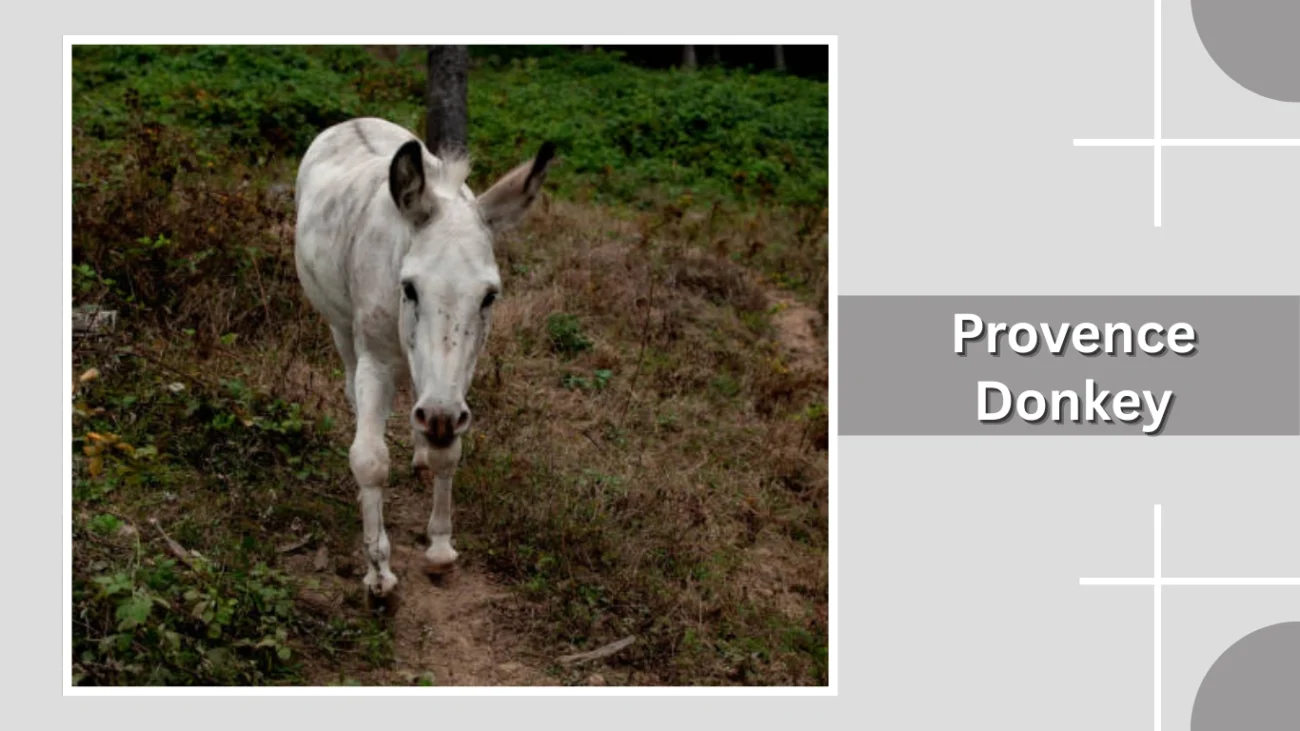
The Provence Donkey, also known as the Âne de Provence, is a traditional French breed from the Provence region. Known for its endurance, gentle nature, and role in shepherding, it remains an important cultural symbol and working animal in southern France.
Identification
- Medium-sized body
- Gray to light brown coat with a dorsal stripe
- Distinctive shoulder cross in many individuals
- Strong legs and compact frame
- Average height: 11–13 hands
Habitat
Provence Donkeys thrive in Mediterranean climates, including dry hills, lavender fields, rocky scrublands, and open farmland. They are well adapted to hot summers and mild winters typical of southern France.
Behaviors
This breed is known for its calm, cooperative, and steady temperament. Historically used by shepherds to carry supplies, the Provence Donkey remains hardworking and sure-footed. It bonds closely with caretakers and does well in both solitary tasks and small herd settings.
Diet
Their diet includes Mediterranean grasses, hay, shrubs, and forage herbs. Provence Donkeys excel on high-fiber, low-sugar diets and naturally browse on the region’s hardy vegetation, needing only moderate supplementation.
20. Pyrenean Donkey
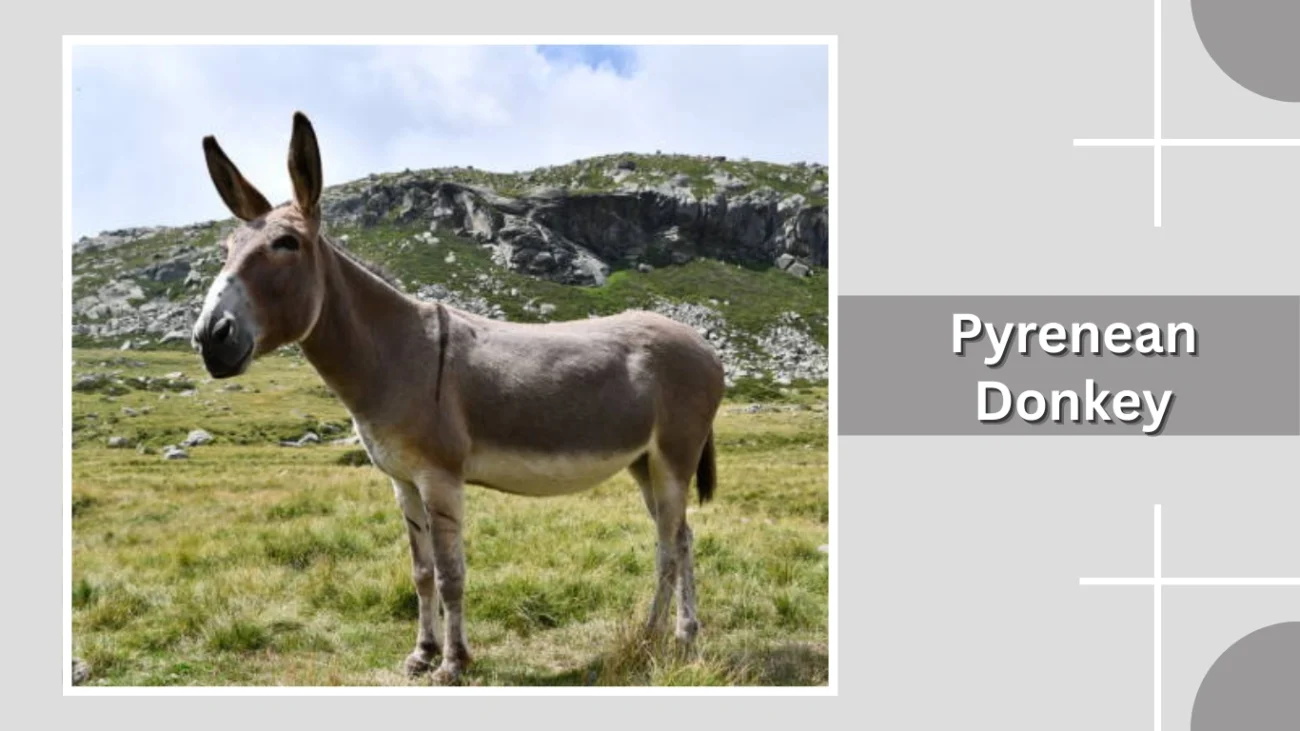
The Pyrenean Donkey, also known as the Âne des Pyrénées, comes from the Pyrenees region spanning France and Spain. Known for its strength and sure-footedness in mountain terrain, it has long been used for pack work and farm labor.
Identification
- Medium to large body
- Dark brown or black coat
- Light muzzle and underbelly
- Long ears and strong legs
- Average height: 12–14 hands
Habitat
Pyrenean Donkeys live in mountain valleys, hilly pastures, and rural farmlands within the Pyrenees. They are well adapted to rugged terrain, cool mountain climates, and open grazing environments.
Behaviors
This breed is known for being strong, calm, and highly adaptable. Historically used for transport across steep trails, Pyrenean Donkeys are steady, reliable, and sure-footed. They form social groups and respond well to patient, consistent handling.
Diet
Their diet includes mountain grasses, hay, alpine shrubs, and forage plants. They thrive on high-fiber diets suited to cooler climates and benefit from mineral supplements when grazing vegetation is limited.
21. Sardinian Donkey
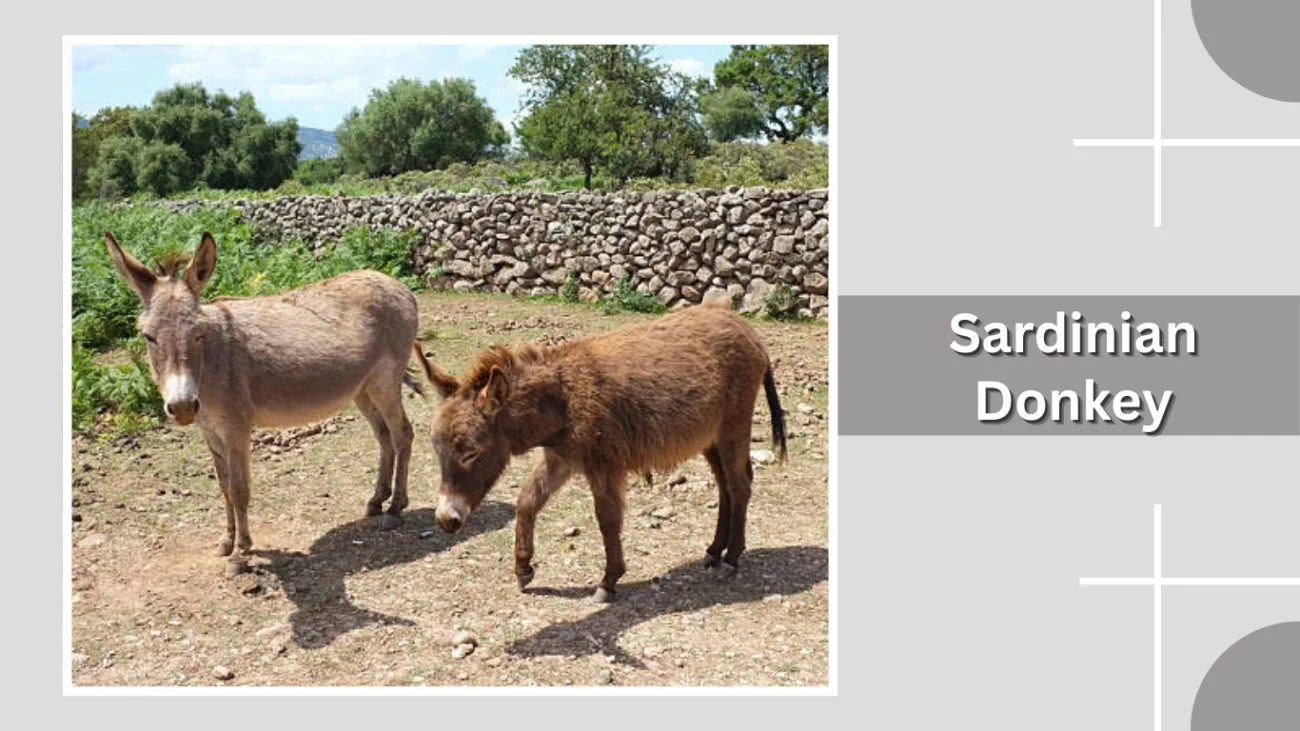
The Sardinian Donkey, native to the island of Sardinia in Italy, is a small, hardy Mediterranean breed known for its agility and gentle temperament. Once widely used for farm work and transport, it is now valued for conservation and companionship.
Identification
- Small, compact body
- Gray or brown coat
- Often features a dorsal stripe and shoulder cross
- Short, sturdy legs
- Average height: 9–11 hands
Habitat
Sardinian Donkeys thrive in rocky hills, dry pastures, and rural farmlands across Sardinia. Adapted to warm, arid Mediterranean climates, they do well in landscapes with limited forage and rugged terrain.
Behaviors
This breed is known for its calm, friendly, and adaptable nature. Historically used for carrying loads and working small farms, Sardinian Donkeys are cooperative and easy to manage. They are social animals and do well in pairs or small groups.
Diet
Their diet includes Mediterranean grasses, hay, straw, shrubs, and herbs. Sardinian Donkeys can maintain good health on modest forage and benefit from mineral supplements when vegetation is sparse.
22. Sicilian Donkey
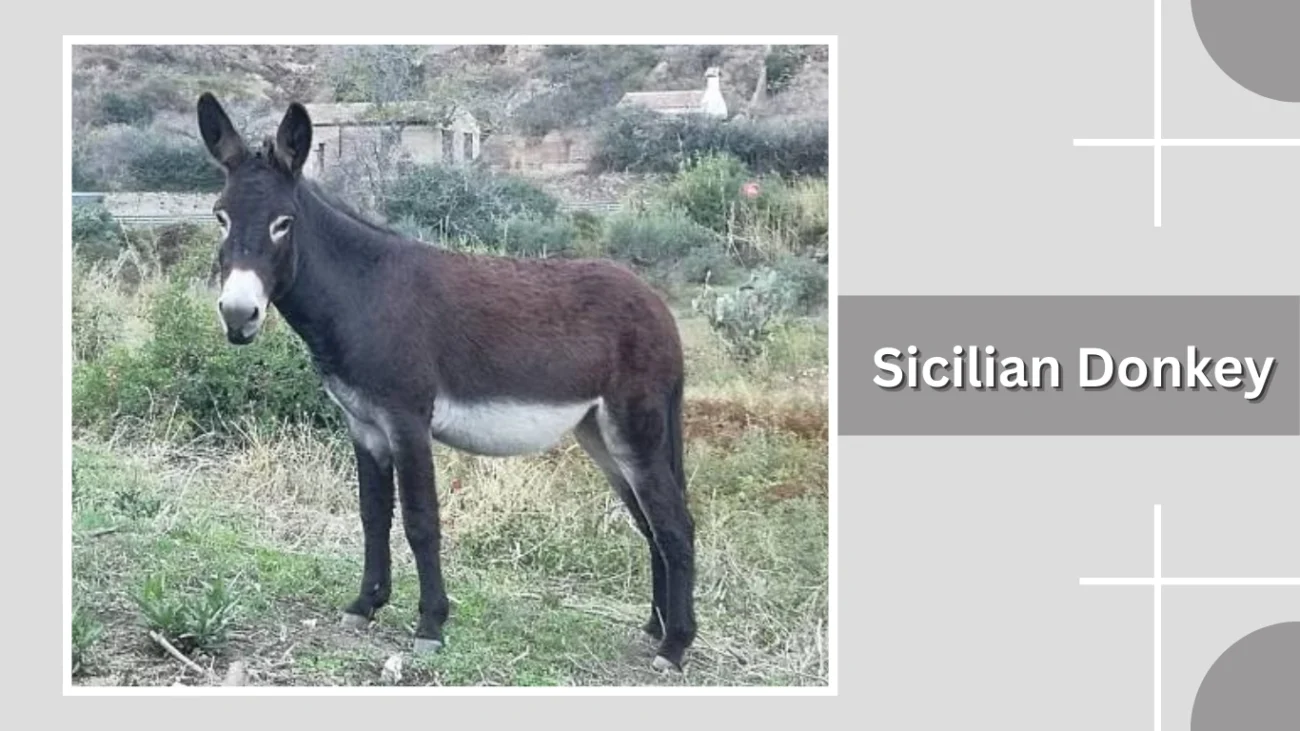
The Sicilian Donkey, also known as the Sicilian Miniature, is a small Mediterranean breed originally from Sicily. Known for its charming appearance and gentle personality, it has become popular worldwide as a companion and show animal.
Identification
- Small, compact body
- Gray or dark brown coat
- Distinct dorsal stripe and shoulder cross
- Short legs and rounded frame
- Average height: 9–11 hands
Habitat
Sicilian Donkeys originate from Sicily’s dry hills, rocky fields, and rural farmlands. They are well adapted to warm Mediterranean climates with sparse vegetation. Today, they are commonly kept on hobby farms and in conservation breeding programs.
Behaviors
This breed is known for its friendly, docile, and highly social temperament. Historically used for small-scale farm work and transport, Sicilian Donkeys are now appreciated for their companionship value. They bond strongly with caregivers and thrive in small herds.
Diet
Their diet consists of grasses, hay, low-sugar forage, and Mediterranean shrubs. Because of their small size, they require careful feed management to prevent overeating but benefit from steady access to high-fiber forage.
23. Somali Wild Ass
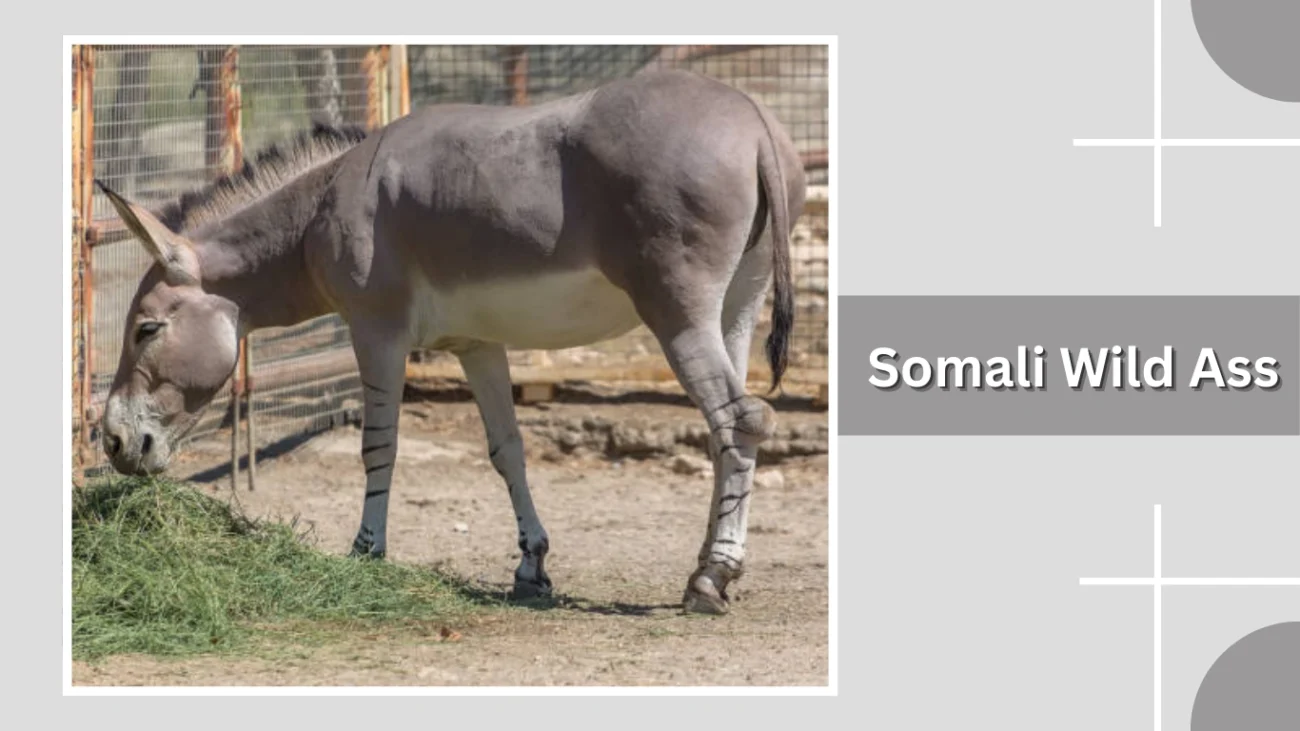
The Somali Wild Ass is a critically endangered wild donkey native to the Horn of Africa. Known for its striking leg stripes and exceptional speed, it is one of the closest living relatives to the ancestor of domestic donkeys.
Identification
- Slender, athletic body
- Light gray coat with white underside
- Distinct black horizontal stripes on legs
- Upright ears and narrow face
- Average height: 12–13 hands
Habitat
Somali Wild Asses inhabit arid deserts, rocky plains, and dry scrublands in Somalia, Ethiopia, and Eritrea. They survive in extremely harsh environments with very little water, relying on sparse vegetation and rugged terrain to stay safe from predators.
Behaviors
This species is known for being alert, fast, and highly independent. Typically living in small groups or solitary, they can travel long distances in search of food and water. Their shy and cautious behavior helps them survive in open, predator-prone landscapes.
Diet
Their diet includes desert grasses, acacia leaves, shrubs, and hardy drought-resistant plants. They can survive on very low-nutrient forage and are capable of going long periods without water, making them one of the most drought-adapted equids.
24. Spanish Andalusian Donkey

The Spanish Andalusian Donkey, sometimes simply called the Zamorano-Andalusian type, is a traditional Spanish breed known for its strength, tall stature, and gentle temperament. Historically valued for agriculture and mule production, it remains an important heritage breed in Spain.
Identification
- Large, sturdy frame
- Gray, dark brown, or black coat
- Light-colored muzzle and eye rings
- Long ears with dark edging
- Average height: 13–14.5 hands
Habitat
Spanish Andalusian Donkeys thrive in southern Spain’s rural farmlands, dry plains, and olive-growing regions. They are well adapted to warm, semi-arid Mediterranean climates and are often kept in breeding farms and conservation centers.
Behaviors
This breed is known for its calm, cooperative, and intelligent nature. Historically used for draft work and mule breeding, Andalusian Donkeys are easy to train and bond strongly with handlers. They show steady, predictable behavior in both work and social settings.
Diet
Their diet includes Mediterranean grasses, hay, straw, shrubs, and forage herbs. They thrive on high-fiber, low-sugar diets and may also consume crop residues and mineral supplements when kept domestically.
25. Tibetan Donkey
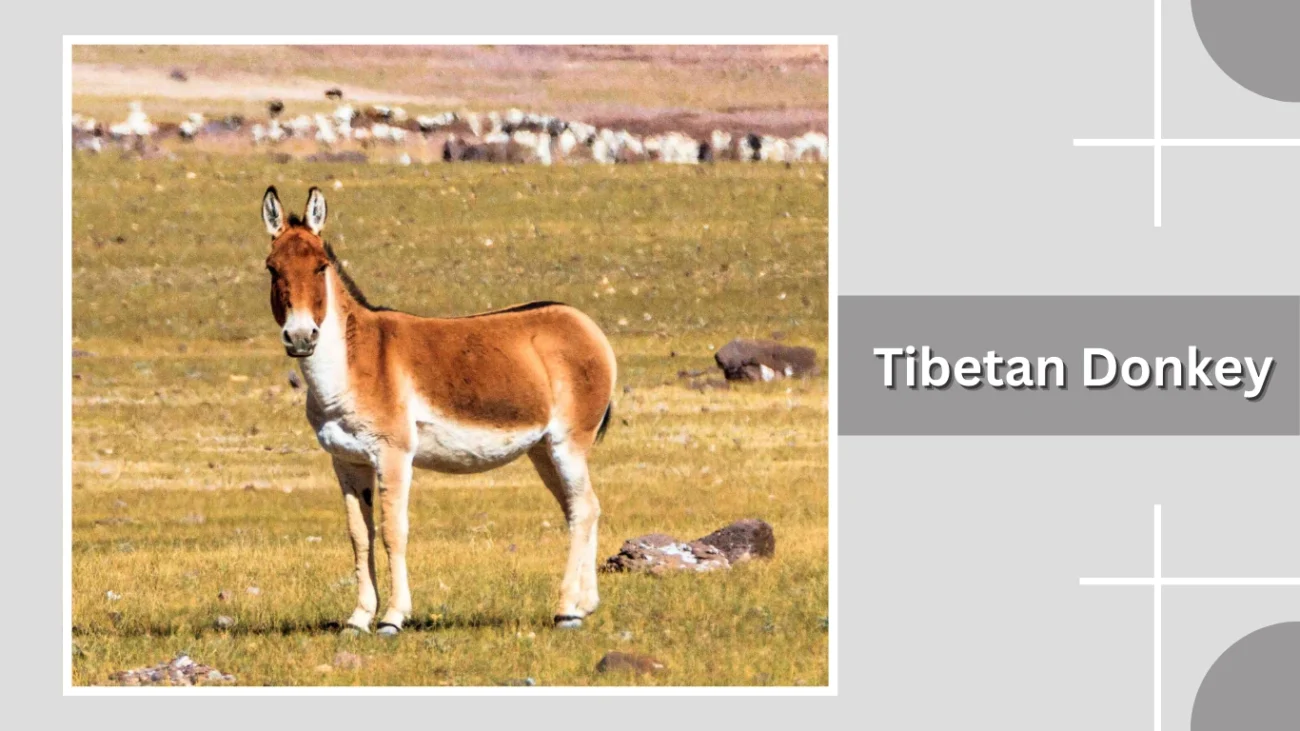
The Tibetan Donkey is a hardy, mountain-adapted breed native to the high-altitude regions of Tibet. Known for its stamina, resilience, and ability to survive in cold, rugged environments, it has long been used as a pack and transport animal.
Identification
- Small to medium-sized body
- Gray, brown, or black coat with thick fur
- Short, strong legs for climbing
- Long ears and compact frame
- Average height: 10–12 hands
Habitat
Tibetan Donkeys inhabit high-altitude plateaus, rocky mountain paths, and cold grasslands across Tibet. They are well adapted to extreme temperatures, thin air, and limited forage found in the Himalayan region.
Behaviors
This breed is known for its sure-footed, tough, and adaptable nature. Tibetan Donkeys are steady workers capable of traveling long distances carrying loads. They are calm but alert, often living in small herds and cooperating well with human handlers.
Diet
Their diet includes alpine grasses, hardy shrubs, hay, and forage plants. Adapted to environments with limited vegetation, they can thrive on coarse, low-quality forage and benefit from supplemental hay during winter.
26. Ukrainian Donkey
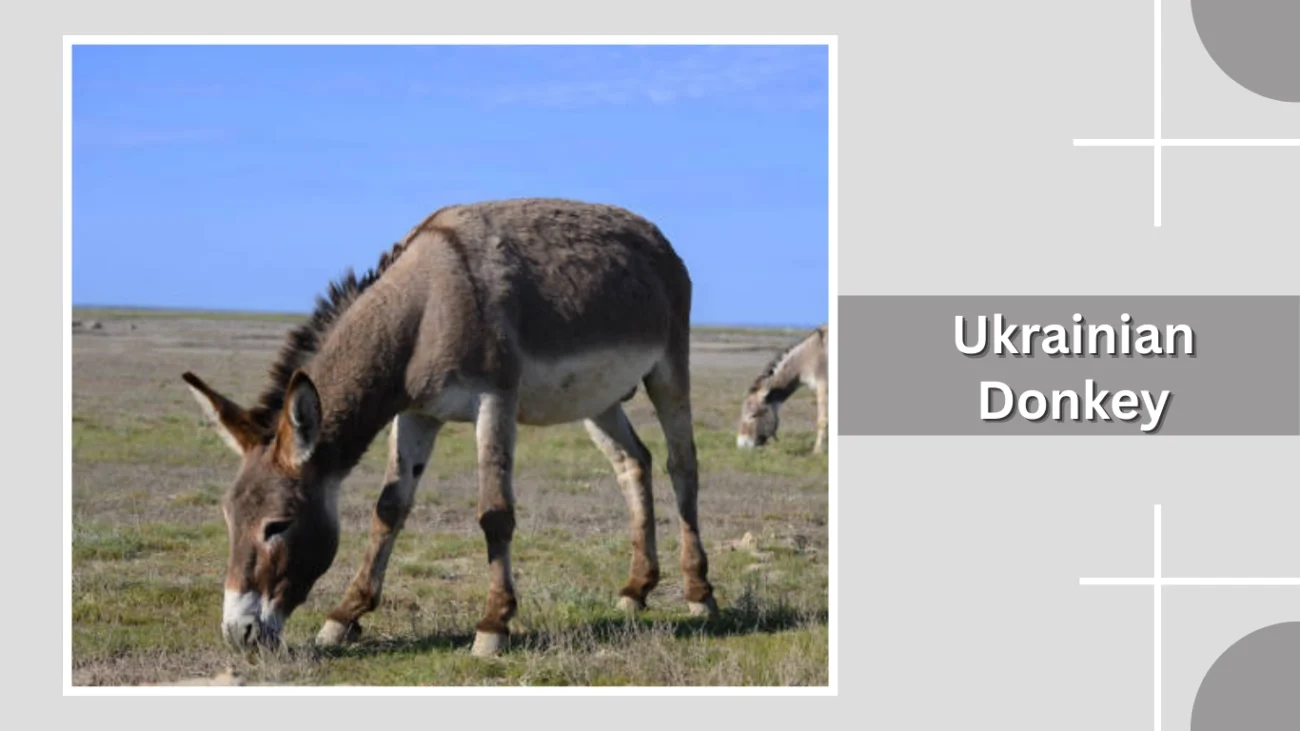
The Ukrainian Donkey is a regional type found throughout rural Ukraine, valued for its strength, calm nature, and usefulness in small-scale farming. While not a formally standardized breed, it represents a longstanding working donkey population in Eastern Europe.
Identification
- Medium-sized, sturdy frame
- Gray, brown, or black coat
- Often shows a dorsal stripe and shoulder cross
- Strong legs suited for farm tasks
- Average height: 10–12 hands
Habitat
Ukrainian Donkeys thrive in farmlands, open fields, and rural villages across Ukraine. They adapt well to temperate climates with cold winters and warm summers, making them ideal for seasonal agricultural work and grazing.
Behaviors
This donkey is known for its gentle, patient, and hardworking temperament. Ukrainian Donkeys are steady work animals, often used for light transport and pulling carts. They are social, easy to manage, and bond well with caretakers.
Diet
Their diet includes pasture grasses, hay, clover, and agricultural leftovers. They thrive on high-fiber forage and may require additional hay and minerals during winter when grazing is limited.
27. Zamorano-Leonés Donkey
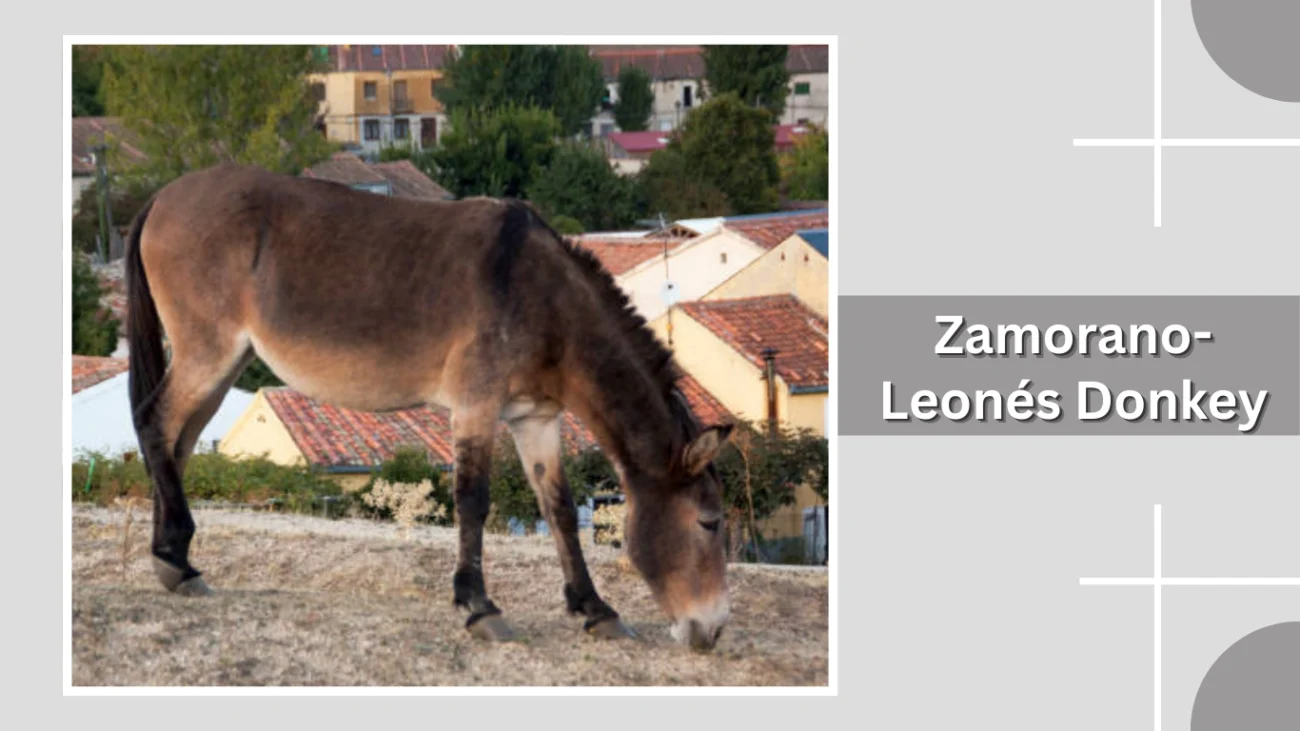
The Zamorano-Leonés Donkey is a large, ancient Spanish breed originating from the provinces of Zamora and León. Known for its dark coat, strength, and gentle nature, it is one of Spain’s most iconic donkey breeds and is currently protected due to its rarity.
Identification
- Large, powerful body
- Dark brown to nearly black coat
- Light muzzle, eye rings, and belly
- Long, wide ears with dark tips
- Average height: 13–15 hands
Habitat
Zamorano-Leonés Donkeys thrive in northwestern Spain’s rural landscapes, including farmlands, meadows, and rolling hills. They are well adapted to mild, temperate climates and are commonly kept in breeding programs, farms, and conservation centers.
Behaviors
This breed is known for being gentle, calm, and highly cooperative. Traditionally used for agricultural work and mule production, the Zamorano-Leonés Donkey remains intelligent and easy to train. It enjoys social living and bonds well with handlers.
Diet
Their diet includes grasses, hay, forage herbs, and low-sugar roughage. Because of their size, they require steady access to quality fiber but do well on traditional Mediterranean grazing and supplemented hay.
FAQs
1. What is the most common type of donkey in the world?
The most common type of donkey globally is the Domestic Donkey, which includes many regional varieties such as the Ethiopian, Mexican Burro, and Italian Donkey. These donkeys are widely used for transport, farming, and daily work in rural communities worldwide, making them the most numerous and versatile.
2. Which donkey breed is the largest?
The Mammoth Jackstock is the largest donkey breed, often standing 14–16 hands tall or more. Developed in the United States for producing strong mules, it is known for its impressive size, muscular build, and gentle temperament.
3. What donkey breed is the smallest?
The Miniature Mediterranean Donkey, originally from Sardinia and Sicily, is the smallest breed, typically under 9 hands tall. Its compact size and friendly nature make it popular as a companion and therapy animal.
4. Are all donkeys suitable for cold climates?
Not all donkeys are naturally suited for cold climates. Breeds like the Irish Donkey and Tibetan Donkey tolerate colder temperatures well due to their thick coats. Others from hot regions, such as the Somali Wild Ass or Nubian Donkey, may need extra shelter and care in colder environments.
5. What do donkeys typically eat?
Donkeys primarily eat high-fiber, low-sugar forage, including grasses, hay, straw, and shrubs. Their digestive system is adapted to coarse, dry vegetation, especially in arid climates. Supplemental minerals and fresh water help maintain overall health, especially for working or larger breeds.


