










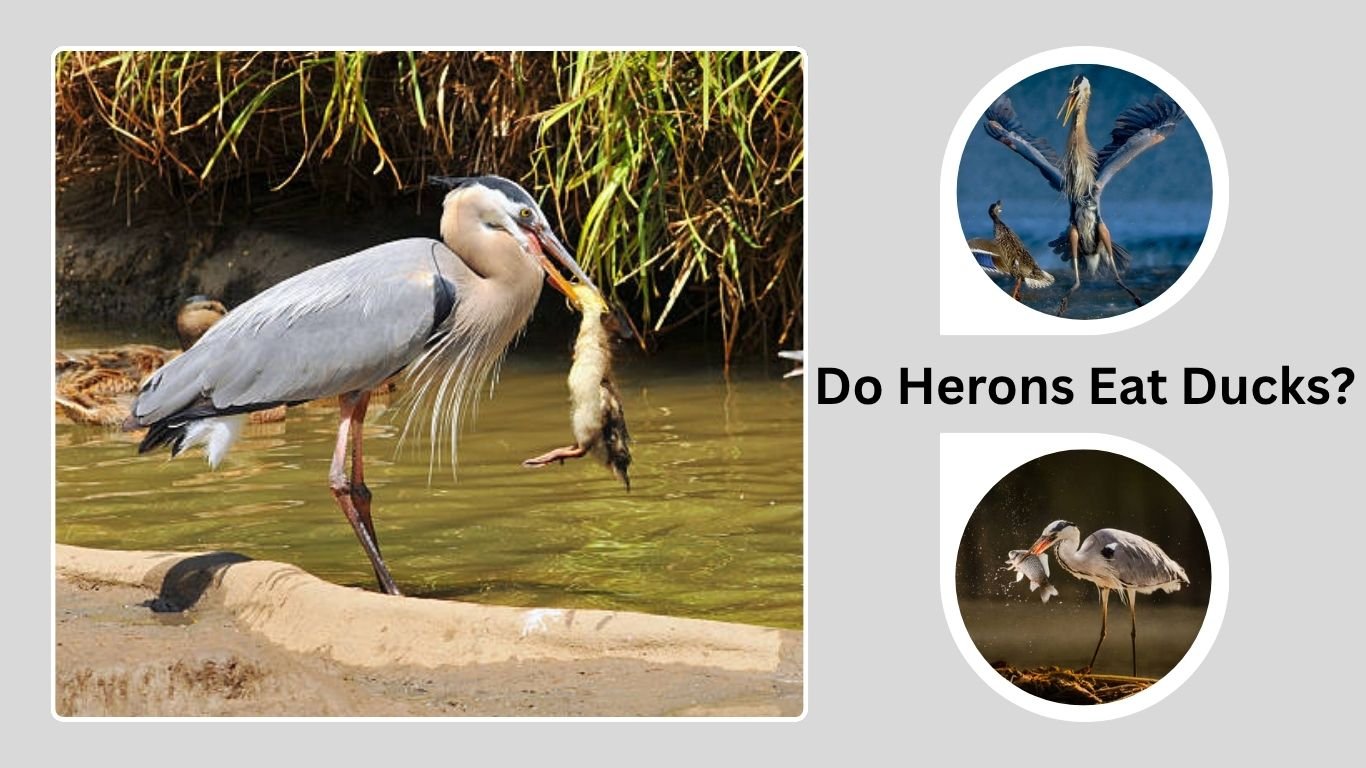
Herons are among the most fascinating wetland birds in the world — elegant, patient, and incredibly skilled hunters. Known for their slow movements and sharp precision, they typically prey on fish, frogs, and small aquatic creatures. But an interesting question often arises among bird watchers: Do herons eat ducks? While the answer might surprise you, the truth is that certain large heron species occasionally hunt and eat ducklings or smaller birds. Let’s explore how and why this happens.
Overview of Herons as Hunters
Understanding the Heron Family
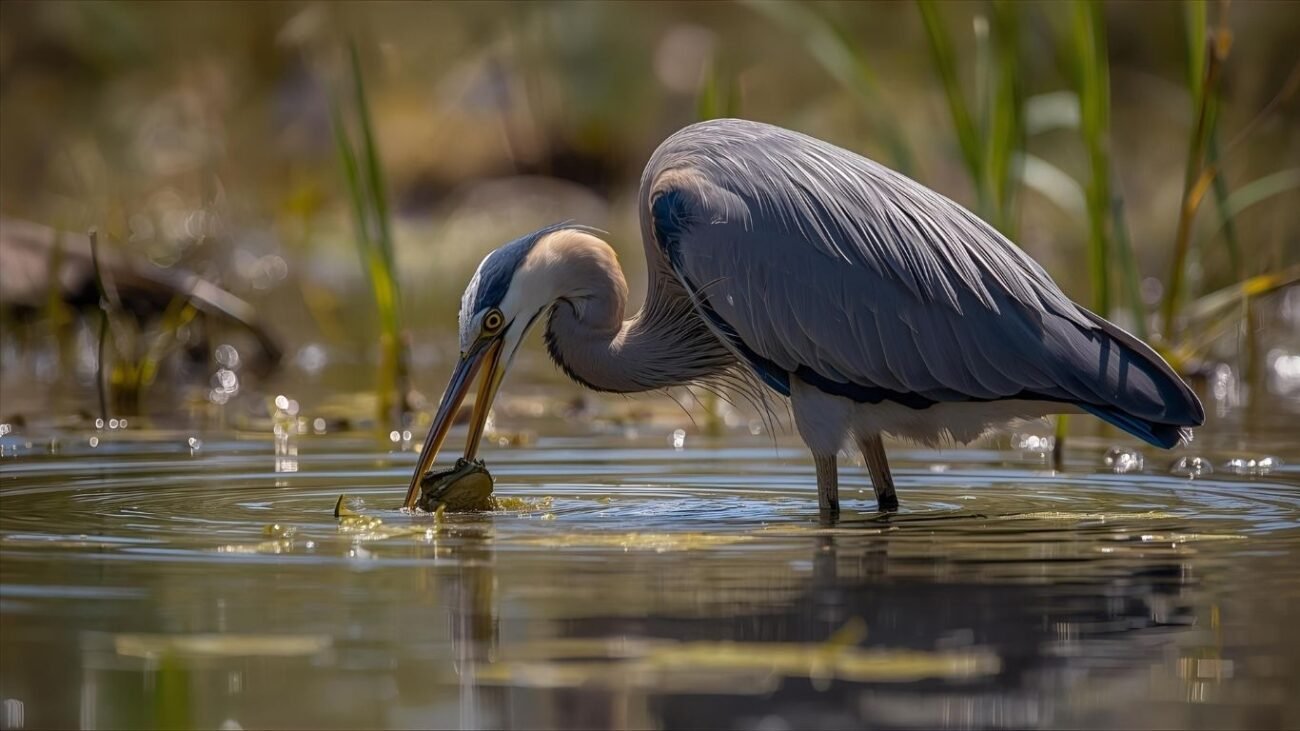
Herons belong to the Ardeidae family, which also includes egrets and bitterns. They are found on every continent except Antarctica and are easily recognized by their long legs, slender necks, and sharp beaks. Common species include the Great Blue Heron, Grey Heron, Great Egret, and Little Egret.
Each species adapts to its environment — from freshwater lakes to saltwater marshes — but all share the same key hunting traits: patience, precision, and stealth.
General Diet
Herons are carnivorous and opportunistic feeders. Their diet mainly consists of:
- Fish
- Frogs and tadpoles
- Crustaceans
- Small reptiles and snakes
- Insects and mollusks
They eat almost anything they can catch and swallow. Though ducks are not their usual prey, herons are known to take advantage of opportunity — and that sometimes includes ducklings or small adult ducks near shallow water.
Do Herons Eat Ducks?
The Short Answer
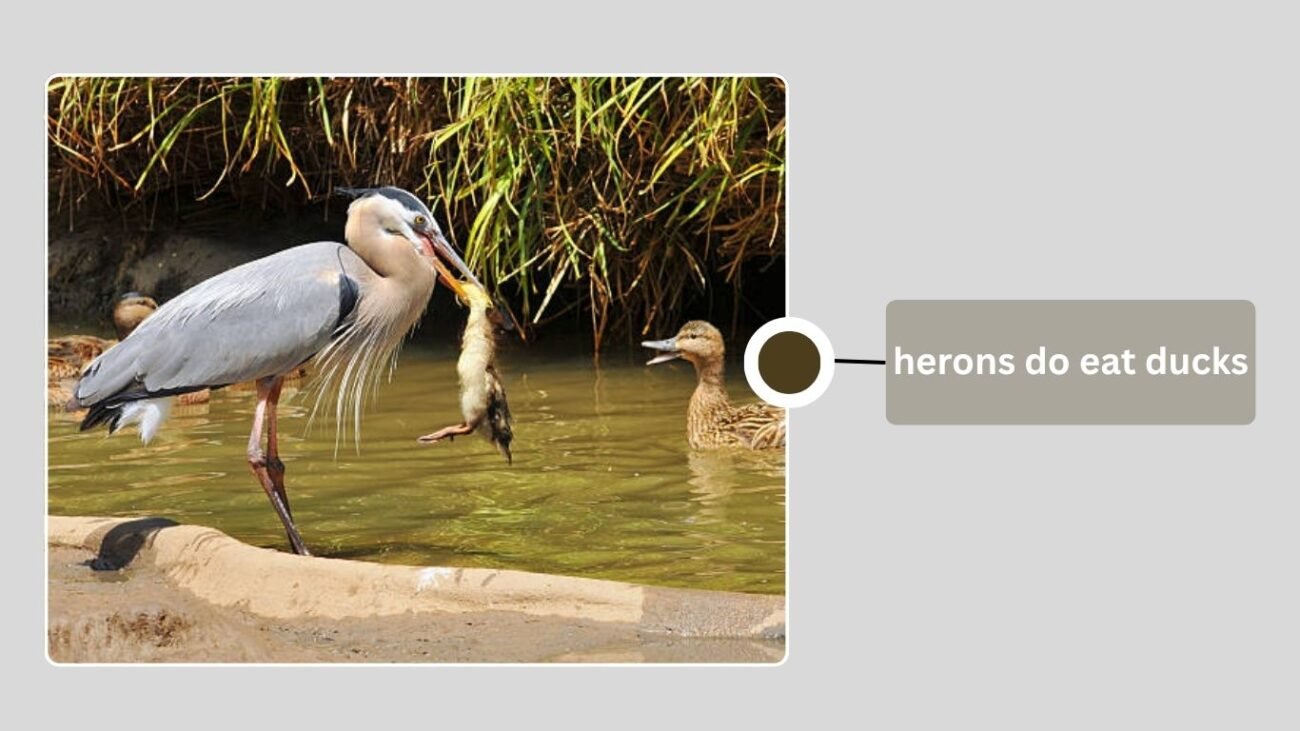
Yes, herons do eat ducks, but this behavior is rare and opportunistic. It is mainly observed in larger species such as the Great Blue Heron or Grey Heron. These birds are powerful enough to catch and swallow small ducks or ducklings whole.
In most cases, herons will only attack ducks when other prey sources like fish or frogs are scarce. Ducklings wandering too far from their mother are especially vulnerable to these stealthy predators.
Why It Happens
Herons are not specialized duck hunters — they are opportunists. When a hungry heron spots an easy meal, it won’t hesitate.
- Food scarcity: During dry seasons or cold months, fish and amphibians become less available.
- Opportunity: Ducklings near the water’s edge are easy targets.
- Hunting instinct: Herons strike by reflex when something small moves in their field of vision.
This adaptability helps herons survive in various environments and maintain their position as top wetland predators.
How Do Herons Eat Ducks?
The Hunting Technique
Herons rely on stealth and precision. They stand motionless for long periods, watching for movement. Once a target comes within range, the heron strikes lightning-fast with its long, dagger-like bill.
For fish and frogs, this usually means a quick stab — but for ducklings, the heron may grab the prey and swallow it whole, starting with the head to prevent wings or legs from catching.
Digestive Ability
One of the heron’s most fascinating traits is its ability to swallow prey much larger than expected. Their long necks and expandable esophagus stretch to accommodate prey nearly half their body size.
They digest bones, feathers, and organs efficiently, later regurgitating indigestible parts as pellets — much like owls do. This digestive flexibility allows herons to exploit a wide variety of food sources, especially during lean seasons.
Do Great Blue Herons Eat Ducks?
Predatory Power
The Great Blue Heron (Ardea herodias) is the largest heron in North America, standing nearly four feet tall with a wingspan over six feet. Its sheer size gives it the power to capture prey that smaller herons can’t handle.
While fish make up most of its diet, wildlife experts have documented Great Blue Herons catching and eating ducklings, small birds, rodents, and even snakes.
Documented Behavior
There are several confirmed sightings of Great Blue Herons swallowing ducklings whole in ponds and wetlands. In one observation, a heron was filmed consuming a duckling nearly half its size — a clear demonstration of the bird’s adaptability and skill.
While shocking to witness, this behavior is entirely natural. Herons are survivalists — they won’t pass up a meal if the opportunity presents itself.
Size Limit
Even the powerful Great Blue Heron has its limits. Adult ducks, especially mallards or larger waterfowl, are too heavy and strong to be swallowed or subdued. Herons typically target only small or young birds that can be managed safely.
Do Herons Eat Baby Ducks and Eggs?
Ducklings as Prey
The most frequent victims of heron predation are baby ducks, also known as ducklings. Their small size, lack of flight ability, and tendency to swim near the surface make them easy prey.
A heron will often wait near the edge of the pond until a duckling strays from the group — then strike in a fraction of a second. Once caught, the duckling is quickly swallowed whole.
Duck Eggs
Herons are not nest raiders by nature. They prefer live prey that moves and triggers their hunting reflex. However, if a heron encounters an unguarded nest or broken egg, it may consume the contents for nutrition.
Compared to mammals like raccoons or gulls, herons rarely target eggs intentionally.
Do Herons Eat Adult Ducks?

Rare but Possible
Although herons are capable hunters, eating adult ducks is extremely rare. Most adult ducks are simply too large and strong to be subdued or swallowed by a heron.
However, in isolated cases, large species like the Great Blue Heron or Grey Heron have been observed attacking smaller or weakened adult ducks. This usually happens when the bird is desperate for food or the duck is injured.
Conditions That Make It Possible
- Food shortages: In droughts or cold months when fish populations drop.
- Weakened ducks: Injured, sick, or molting ducks near shallow water.
- Smaller species: Small adult ducks, such as teals, may fall within a heron’s prey range.
These incidents are exceptions rather than the rule. In general, herons prefer easier and smaller prey, conserving energy for successful hunts rather than risky struggles.
Hunting Style and Behavior
Stealth and Strategy
Herons are masters of patience. Their hunting style is based on stillness and timing, allowing them to approach prey without being detected. They often stand motionless for several minutes before striking.
Their muted plumage and slow movements make them blend perfectly with the surrounding reeds and reflections on the water.
Once within reach, they use a rapid stab-and-grab motion, impaling or seizing prey with their strong bill. The entire act is so swift that even fast-moving creatures like fish or frogs rarely escape.
Swallowing Large Prey
When a heron catches large prey such as a duckling or mouse, it must position it correctly before swallowing. The heron always turns the prey headfirst to prevent limbs or feathers from catching in the throat.
The bird’s flexible neck and expandable esophagus allow it to gulp prey whole, followed by several minutes of immobility while it digests.
Herons are occasionally seen regurgitating prey that proves too large — a reminder that even nature’s most efficient hunters sometimes miscalculate their limits.
Documented Cases of Herons Eating Ducks
Real-Life Observations
Numerous wildlife observations and videos have documented herons eating ducklings or small birds.
- In North America, Great Blue Herons have been filmed swallowing ducklings, chipmunks, and even small rabbits.
- In Europe, Grey Herons have occasionally been seen eating small waterfowl, such as coots or moorhen chicks.
- Observers in local parks have reported herons ambushing young ducks near shallow ponds.
While shocking to some, these moments illustrate how adaptable and opportunistic herons can be when survival demands it.
Expert Insights
Ornithologists classify this as “opportunistic predation.”
Herons don’t actively hunt ducks; instead, they exploit easy opportunities when young or small birds venture too close.
This adaptability is part of what makes herons so successful — they can thrive in various climates and food conditions, from tropical wetlands to frozen lakesides.
Ecological Impact

Role in the Food Chain
Herons play a crucial role in maintaining the balance of wetland ecosystems. By feeding on fish, amphibians, and occasionally ducklings, they prevent overpopulation and promote biodiversity.
Their predation on young ducks, though rare, is a natural process that helps control local waterfowl numbers.
Healthy heron populations are often signs of a thriving environment, as they require clean water and abundant prey. A wetland rich in herons typically supports balanced aquatic life.
Natural Balance
Despite their occasional predation on ducks, herons are not a threat to overall duck populations. Ducks reproduce rapidly, and their natural survival strategies balance out these losses.
Predation keeps ecosystems healthy by ensuring no single species dominates the habitat — a principle nature has perfected over millions of years.
Myths vs Facts
| Myth | Fact |
| Herons frequently eat ducks | They mainly eat fish; duck predation is rare |
| Herons kill for sport | Herons only hunt for food or survival |
| Ducks avoid areas with herons | Ducks often coexist safely with herons in shared wetlands |
| Herons can’t eat large prey | They can swallow prey up to half their body size, including ducklings |
Herons are opportunistic, not malicious. They play their part in nature’s balance, even when their actions seem brutal to human eyes.
FAQs
Do herons eat baby ducks?
Yes. Ducklings are small enough for larger herons, such as Great Blue or Grey Herons, to swallow whole. It happens occasionally but isn’t their main food source.
Can a heron swallow a full-grown duck?
Rarely. Most adult ducks are too large, though smaller or injured ones may sometimes fall victim to large herons.
How do herons kill ducks?
They use a sharp, stabbing bill to pierce or grab their prey, then swallow it whole, usually headfirst to aid digestion.
Do herons eat duck eggs?
Not typically. Herons prefer live prey but may consume an unguarded egg if other food is scarce.
Are herons dangerous to waterfowl?
Not significantly. They may eat young ducks occasionally, but overall, they do not pose a threat to duck populations.


