











The Little Blue Heron (Egretta caerulea) is one of the most graceful and mysterious wading birds in North America. Known for its calm demeanor, deep blue plumage, and patient hunting style, it embodies quiet elegance in wetlands and marshes. Interestingly, this heron starts life as a pure white juvenile before maturing into a striking slate-blue adult — a transformation that makes it one of the most fascinating birds to observe. Beyond its beauty, the Little Blue Heron plays a vital ecological role and carries deep symbolic meaning of transformation and balance.
Overview of the Little Blue Heron
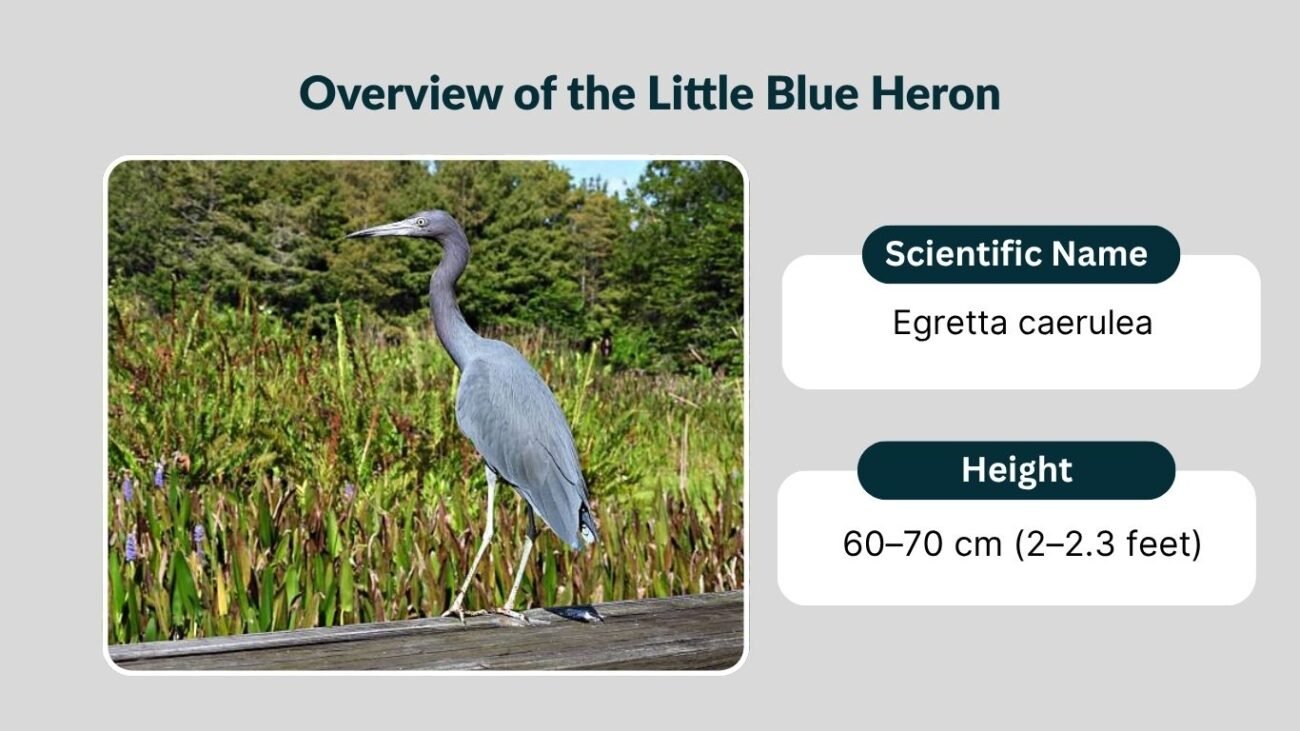
Scientific Classification
- Scientific Name: Egretta caerulea
- Family: Ardeidae (Herons and Egrets)
- Genus: Egretta
- Conservation Status: Near Threatened (IUCN)
- Average Lifespan: 10–15 years in the wild
Quick Facts
- A medium-sized wading bird found in freshwater and coastal wetlands.
- Distinctive transformation from white juvenile to slate-blue adult.
- Commonly mistaken for Snowy Egrets when young.
- Known for its slow, deliberate movements and gentle temperament.
The Little Blue Heron is often spotted alone, moving quietly through shallow waters, waiting patiently before striking at its prey. Unlike more aggressive or noisy herons, it hunts with a composed rhythm that reflects the stillness of the waters it inhabits.
Identification and Appearance
Adult Characteristics
Adult Little Blue Herons have a unique beauty marked by their rich blue-gray plumage and purple-maroon head and neck. They feature long, slender legs that range from greenish to dark gray, and a distinctive two-toned bill — pale blue at the base and black at the tip.
- Height: 60–70 cm (2–2.3 feet)
- Wingspan: Around 100 cm (3.3 feet)
- Weight: Approximately 325–400 grams
In flight, the bird appears elegant and sleek, with its neck curved into an “S” shape and its long legs trailing behind. Its overall appearance is graceful yet understated compared to the flashier egrets it often shares habitats with.
Juvenile and Immature Stages
One of the most striking features of this species is the color change during growth. Juvenile Little Blue Herons are entirely white — a feature that often causes confusion with Snowy Egrets. As they mature, their feathers gradually shift to pale gray, creating a patchy or “calico” phase of blue and white. This transition usually completes within their first year.
The white plumage of young herons is thought to be an evolutionary advantage, allowing them to blend with groups of white egrets for safety and to feed with less aggression from older birds. By adulthood, the transformation to blue signifies maturity and independence.
Breeding Plumage
During the breeding season, Little Blue Herons display subtle yet beautiful changes. They develop delicate blue filament plumes on the back of their head and neck. The lores (the skin area between the bill and eyes) turn a deeper cobalt blue, and their legs darken in color. These features make them particularly striking during courtship, though their displays are quiet and refined compared to other heron species.
Habitat and Distribution

Preferred Habitat
Little Blue Herons thrive in freshwater and brackish environments. They can be found wading through:
- Marshes and swamps
- Lagoons and ponds
- Estuaries and mangroves
- Rice fields and shallow lakes
They prefer calm, shallow waters where prey is plentiful and vegetation provides cover. Their slow pace and solitary behavior make them excellent hunters in still wetlands.
Geographic Range
These herons are native to the southeastern United States and can be seen across Florida, Texas, Louisiana, and the Gulf Coast. They also extend through Central America, the Caribbean, and northern South America.
In the U.S., some populations migrate seasonally, reaching northern areas such as Ohio and Michigan during warm months. However, in tropical regions, they remain year-round residents.
Range Map Insights
- Year-Round Range: Gulf states and coastal Florida.
- Breeding Range: Southeastern U.S. and lower Midwest.
- Winter Range: Caribbean islands and Central America.
- Migratory Behavior: Northern birds travel south for winter, while southern populations stay local.
Their distribution depends heavily on wetland quality — areas with healthy aquatic ecosystems and abundant prey support thriving populations.
Behavior and Flight
General Behavior
Little Blue Herons are known for their patient and deliberate hunting style. Unlike the quick and darting Snowy Egret, this heron stands motionless for long periods, waiting for fish or amphibians to come within striking distance. It’s often seen foraging alone but may also be found alongside egrets, ibises, or other heron species in shared feeding grounds.
This bird’s calm and calculated behavior reflects an evolutionary strategy for efficiency — conserving energy and striking only when success is certain.
Flight Pattern
When in flight, the Little Blue Heron tucks its neck in and trails its legs straight behind, forming a clean, aerodynamic shape. Its wingbeats are smooth and measured, giving it a gliding, graceful motion over water. From a distance, its solid blue coloration makes it easy to distinguish from white-plumed species.
Sounds
The Little Blue Heron is generally quiet compared to other herons. Its calls are low and harsh, consisting of short croaks or grating “grrk” sounds. These vocalizations are usually heard during nesting or when the bird is startled. In flight, it may emit a short guttural note to communicate with nearby mates or juveniles.
Diet and Feeding Habits

What Little Blue Herons Eat
The Little Blue Heron is a carnivorous wetland feeder with a diet that includes a variety of aquatic creatures. Its menu often consists of:
- Small fish
- Frogs and tadpoles
- Crustaceans like crayfish and shrimp
- Aquatic insects and larvae
- Small reptiles, such as tiny lizards
- Occasionally, snails and amphibians
Their slow, deliberate feeding style contrasts sharply with the active foraging of the Snowy Egret, which often runs through shallow waters chasing prey. Instead, the Little Blue Heron relies on patience and precision, standing still for long periods before striking quickly when prey passes within reach.
Hunting Style
This heron’s foraging behavior is a model of efficiency. It uses its long neck and dagger-like bill to spear or snatch prey with remarkable accuracy. The calm approach minimizes water disturbance, giving the bird a stealth advantage.
When feeding alongside white egrets, the Little Blue Heron may blend in more easily, reducing competition and predation risk — a possible evolutionary benefit of its early white plumage.
Nesting and Breeding

Breeding Season
Breeding typically occurs from March through July, depending on the region. Warmer areas like Florida see earlier nesting, while northern populations begin later in spring.
Nesting Sites
Little Blue Herons prefer to nest in colonies, often with other heron and egret species. They choose secluded areas with trees or shrubs near water, such as mangroves, willow thickets, or cypress swamps.
- Nests are made of sticks and lined with soft vegetation.
- Both male and female participate in building the nest.
- Nests are usually placed 1–6 meters above ground or water.
Eggs and Chicks
The female lays 3–5 pale blue eggs, which are incubated by both parents for about three weeks.
Chicks hatch covered in white down and are fed by regurgitation. They grow quickly and begin climbing within two weeks, eventually fledging at around 30–35 days old.
As they mature, their feathers gradually shift from white to soft gray — the first sign of the transformation that will mark their adulthood. The transition is symbolic of both physical growth and independence within the heron’s life cycle.
Little Blue Heron vs Similar Species
Little Blue Heron vs Great Blue Heron
- Size: The Little Blue is much smaller (2 ft tall) compared to the Great Blue (4 ft tall).
- Color: Great Blue Herons have a grayish-blue color, while Little Blues are deeper, slate-blue.
- Habitat: Little Blues prefer calm wetlands; Great Blues often hunt in larger rivers or coastlines.
Little Blue Heron vs Snowy Egret
This is the most common confusion for birdwatchers.
- Juvenile Little Blue: All-white with dull greenish legs.
- Snowy Egret: White with black legs and bright yellow feet.
- Behavior: Snowy Egrets are fast and energetic hunters, while Little Blues are calm and slow.
Little Blue Heron vs Tricolored Heron
- Tricolored Heron: Has white belly and streaked neck.
- Little Blue Heron: Solid slate-blue all over as an adult.
- Tricolored Herons also tend to forage in more open, saltier areas.
Little Blue Heron vs Reddish Egret
- Reddish Egret is larger and has shaggy plumage with a reddish neck.
- Little Blue is sleeker, smoother, and smaller.
- Reddish Egrets are more aggressive and animated while hunting.
Little Blue Heron vs Green Heron
- Green Heron is shorter and stockier, with a darker crown and neck.
- Little Blue Heron is taller and more elegant with longer legs.
Conservation Status

Current Status
The Little Blue Heron is listed as Near Threatened by the IUCN.
While still relatively widespread, its population has been declining due to habitat loss and pollution.
Major Threats
- Wetland destruction: Urban development and agricultural expansion reduce nesting areas.
- Pollution: Runoff and pesticides contaminate water sources, affecting fish availability.
- Human disturbance: Noise and habitat encroachment during nesting can lead to nest abandonment.
Conservation Efforts
Conservation organizations like the Audubon Society and Florida Fish and Wildlife Conservation Commission are working to restore wetlands and protect breeding colonies.
- Legal protection: Covered under the U.S. Migratory Bird Treaty Act.
- Public education: Encouraging wetland preservation and responsible birdwatching.
- Habitat restoration: Replanting native vegetation and managing water quality.
Protecting the Little Blue Heron ultimately protects an entire ecosystem — as wetlands are home to countless fish, amphibians, and other bird species.
Symbolism and Spiritual Meaning
Cultural Symbolism
In many cultures, the heron is a symbol of peace, patience, and balance. The Little Blue Heron’s deep blue color is associated with serenity, introspection, and emotional clarity.
Because of its slow, deliberate movements, it often represents mindfulness — the art of waiting calmly for the right opportunity.
Transformation Symbolism
Perhaps the most remarkable symbolism lies in its color change from white to blue.
- The white juvenile stage symbolizes innocence and purity, a new beginning.
- The blue adult phase represents maturity, wisdom, and emotional depth.
Spiritually, this transformation reflects personal growth and self-awareness — a reminder that change, though gradual, brings beauty and strength.
The Little Blue Heron teaches us the importance of patience, grace, and the quiet power of transformation in both nature and life.
Interesting Facts About the Little Blue Heron
- Juveniles are white during their first year before turning blue.
- The transition stage, known as the calico phase, features patches of blue and white feathers.
- They often feed alongside egrets for protection and easier access to prey.
- Once known as the Louisiana Heron in early naturalist records.
- Play a vital ecological role in controlling fish and insect populations.
- Can live up to 17 years in protected environments.
- Featured in Audubon’s bird illustrations as a symbol of calm wetlands.
FAQs
Why are young Little Blue Herons white?
Juvenile Little Blue Herons are white to blend with flocks of Snowy Egrets. This camouflage offers safety from predators and less competition for food.
Where do Little Blue Herons live?
They live in wetlands, marshes, and lagoons across the southeastern U.S., Central America, and parts of South America.
What do Little Blue Herons eat?
They feed on small fish, frogs, crustaceans, and aquatic insects, which they catch with precise, slow movements.
Are Little Blue Herons endangered?
They are considered Near Threatened, mainly due to wetland loss and pollution. Conservation efforts are underway to protect their habitats.
What does the Little Blue Heron symbolize spiritually?
It symbolizes transformation, patience, and emotional balance — a reminder to trust life’s quiet rhythm and gradual growth.


