The Kagu bird is one of the most mysterious and enchanting creatures in the bird world. Found only in New Caledonia, this flightless, ghost-grey bird with a raised crest and haunting calls is unlike any other species alive today. From its unique nasal flaps to its monogamous lifestyle and ancient evolutionary lineage, the Kagu captivates scientists and nature lovers alike.
In this article, we’ll uncover 25 detailed facts and FAQs about the Kagu—covering its behavior, biology, threats, and conservation efforts to help preserve this rare island bird.
24 FAQs and Facts
1. What is a Kagu bird?

The Kagu (Rhynochetos jubatus) is a rare, flightless bird found only in New Caledonia. It’s known for its pale grey feathers, striking crest, and red-orange legs. It is the only surviving member of its family and genus, making it an evolutionary one-of-a-kind species.
2. Can the Kagu fly?

No, the Kagu is a flightless bird, even though it has fully developed wings. It uses its wings for balance, display, and gliding from low branches. Its flightlessness evolved due to the absence of land predators in New Caledonia before humans introduced invasive species.
3. Where does the Kagu live?

The Kagu lives in the dense forests and mountain ranges of New Caledonia, particularly in humid valleys and upland rainforest areas. It prefers places with thick leaf litter, which helps it hunt for invertebrates. Habitat preservation is vital for this endangered species’ survival.
4. Why is the Kagu endangered?
The Kagu is endangered due to habitat loss and the introduction of predators such as cats, dogs, and rats. These threats were not present in its natural ecosystem before humans arrived. Conservation efforts now include predator control and habitat protection to save the species.
5. What makes the Kagu unique?
The Kagu has nasal corns, a rare feature among birds—flaps that protect its nostrils while digging in soil. It also has a haunting, flute-like call and shows loyalty by forming lifelong monogamous pairs. These distinct traits set the Kagu apart from almost all other birds
6. What does the Kagu eat?

The Kagu is a carnivorous forager that hunts on the forest floor. Its diet includes worms, insects, larvae, spiders, and small reptiles. Using its sharp bill, it digs through leaf litter and soft soil. Its excellent hearing helps it detect even the slightest underground movement of prey.
7. How does the Kagu communicate?

The Kagu is highly vocal. It produces loud, echoing calls—often described as howls or yelps—especially in the early morning. These calls are used for territory defense and mate bonding. Mated pairs often engage in duets, making the Kagu’s vocal behavior one of its most fascinating features.
8. What is the Kagu’s conservation status?
The Kagu is currently classified as Endangered by the IUCN. Its population is estimated at around 1,000 individuals in the wild. Ongoing threats include predation by invasive mammals and limited breeding range. Conservation actions such as protected reserves and predator control have helped stabilize numbers in some areas.
9. Does the Kagu have any predators?
Yes, though the Kagu evolved in a predator-free environment, human introduction of dogs, cats, rats, and pigs brought serious threats. These predators attack adults, chicks, and eggs. The Kagu’s inability to fly makes it particularly vulnerable, especially during nesting when it’s easily detected on the ground.
10. How does the Kagu raise its young?

Kagu pairs are monogamous and typically raise one chick per year. Both parents share responsibilities like incubating the egg and feeding the chick. Interestingly, their offspring may remain with the parents for several years, helping to care for new chicks—a rare example of cooperative breeding among birds.
11. What does the Kagu’s call sound like?
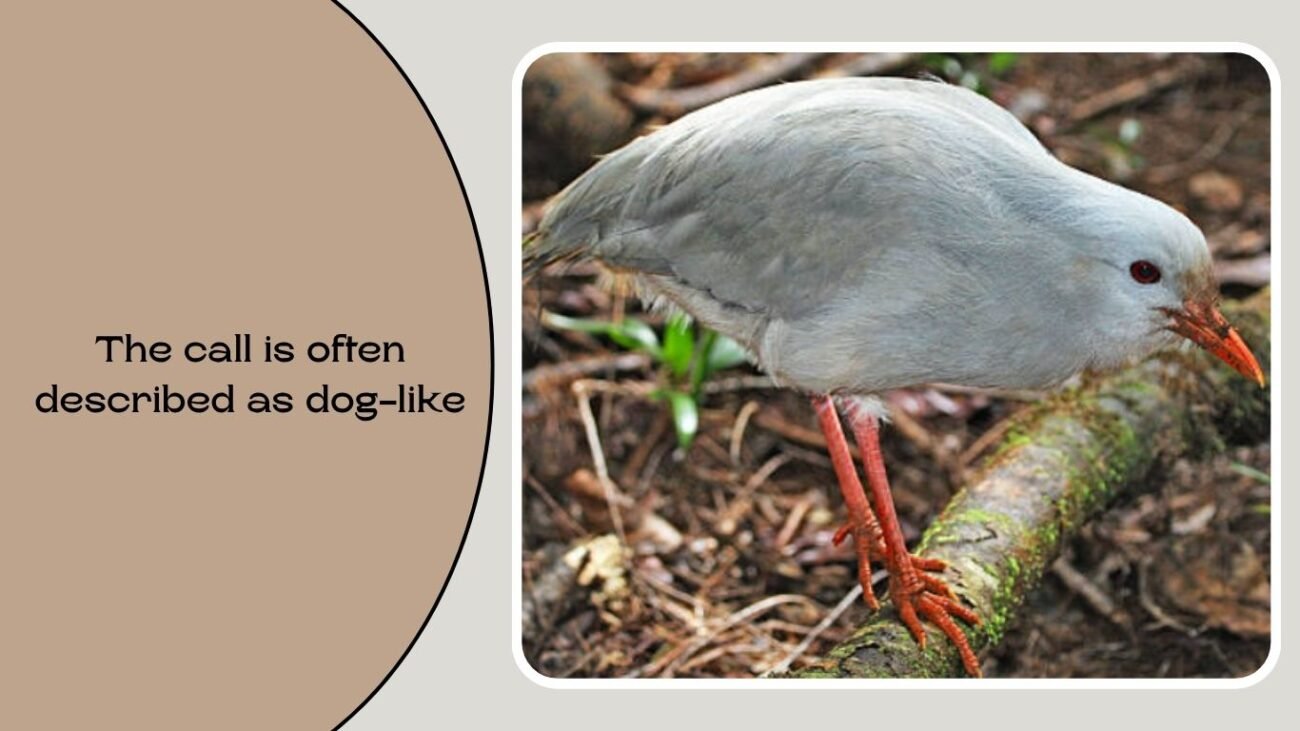
The Kagu’s call is a loud, haunting series of nasal “kow-kow-kow” notes. Both males and females produce calls, often duetting in the early morning. Their calls carry far through the dense forest and are used to communicate territory ownership, alert others, or strengthen pair bonds.
12. What is the Kagu’s scientific classification?
The Kagu’s scientific name is Rhynochetos jubatus. It belongs to the family Rhynochetidae and is the only living member of this family. Its uniqueness makes it a taxonomic island relic, meaning it has no close living relatives among birds worldwide, a result of millions of years of isolation.
13. Does the Kagu migrate or travel?

No, the Kagu is a non-migratory bird. It stays within a restricted range in the forested regions of New Caledonia. These birds are territorial and prefer to stay in familiar areas. Limited movement combined with habitat loss makes them vulnerable to localized disturbances or changes in their environment.
14. What is the Kagu’s role in New Caledonian culture?
The Kagu is a symbol of national pride in New Caledonia. It is featured on banknotes, stamps, and official emblems. Local people admire it for its beauty, rarity, and uniqueness. Some indigenous traditions respect the bird spiritually, and it plays a role in environmental education and awareness.
15. How large is a Kagu?

An adult Kagu measures about 55 cm (21.5 inches) long and weighs around 1 kg (2.2 lbs). It has a large crest, long reddish-orange legs, and soft, pale grey feathers. Despite its size and wingspan, its muscles are not built for flight—only for balance and gliding.
16. Is the Kagu active during the day or night?
The Kagu is diurnal, meaning it is active during daylight hours. It spends most of the day walking quietly through leaf litter, foraging for food. Early mornings are the most active period, especially for calling and feeding. At night, it sleeps hidden on the forest floor.
17. How long do Kagus live?

Kagus can live up to 25 years in captivity, and wild individuals may live 15–20 years if protected from predators. Their long lifespan, combined with low reproductive rates (one chick per year), makes population recovery slow and sensitive to even minor environmental threats.
18. What is the Kagu’s crest used for?
The Kagu’s crest is made of long, elegant feathers that fan upward. It raises this crest during courtship, territorial disputes, or when alarmed. The display makes the bird appear larger and more intimidating to rivals or predators, and also plays a role in mating rituals.
19. Are there any Kagu conservation programs?
Yes. Programs include habitat protection in areas like Rivière Bleue Park, predator eradication, and population monitoring. Captive breeding has occurred in local and international zoos, such as the Nouméa Zoo and San Diego Zoo. These efforts aim to stabilize and eventually grow the wild population.
20. What threats do Kagu eggs face?

Kagu eggs are usually laid on the ground and are highly vulnerable to predators like rats, pigs, and feral dogs. These animals may eat the eggs or disturb the nest. Because Kagus lay only one egg per year, the loss of even a single egg can be devastating.
21. How do Kagus defend their territory?

Kagus are territorial and use loud vocalizations to announce and defend their space. Mated pairs often duet in the early morning, warning neighboring birds. If threatened, the Kagu raises its crest, spreads its wings, and may lunge to scare off intruders, although it rarely engages in physical combat.
22. Do Kagus bathe or clean themselves?
Yes, Kagus love bathing. They often take dust baths or wash in shallow water, shaking their feathers and preening afterward. This behavior helps maintain feather health and remove parasites or dirt. Their frequent bathing is part of their daily routine and contributes to their clean, soft-looking appearance.
23. Are Kagus aggressive birds?

Kagus are generally calm and quiet, but they can be defensive when protecting territory or a nest. During breeding season, they may show aggressive displays such as wing-flaring and crest-raising. However, they are not known for attacking other animals or birds unless provoked or cornered.
24. Can Kagus be seen in zoos?

Yes, but very rarely. A few conservation zoos, such as the San Diego Zoo and Nouméa Zoo, have successfully kept Kagus. These birds are extremely sensitive to changes in environment, so only institutions committed to Kagu conservation and habitat simulation can manage them successfully in captivity.
25. Why is the Kagu considered a living fossil?
The Kagu is often called a “living fossil” because it has no close relatives and represents a lineage millions of years old. Its evolutionary path is isolated, with no other modern bird sharing its family. This ancient uniqueness makes it extremely valuable for biodiversity and scientific study.