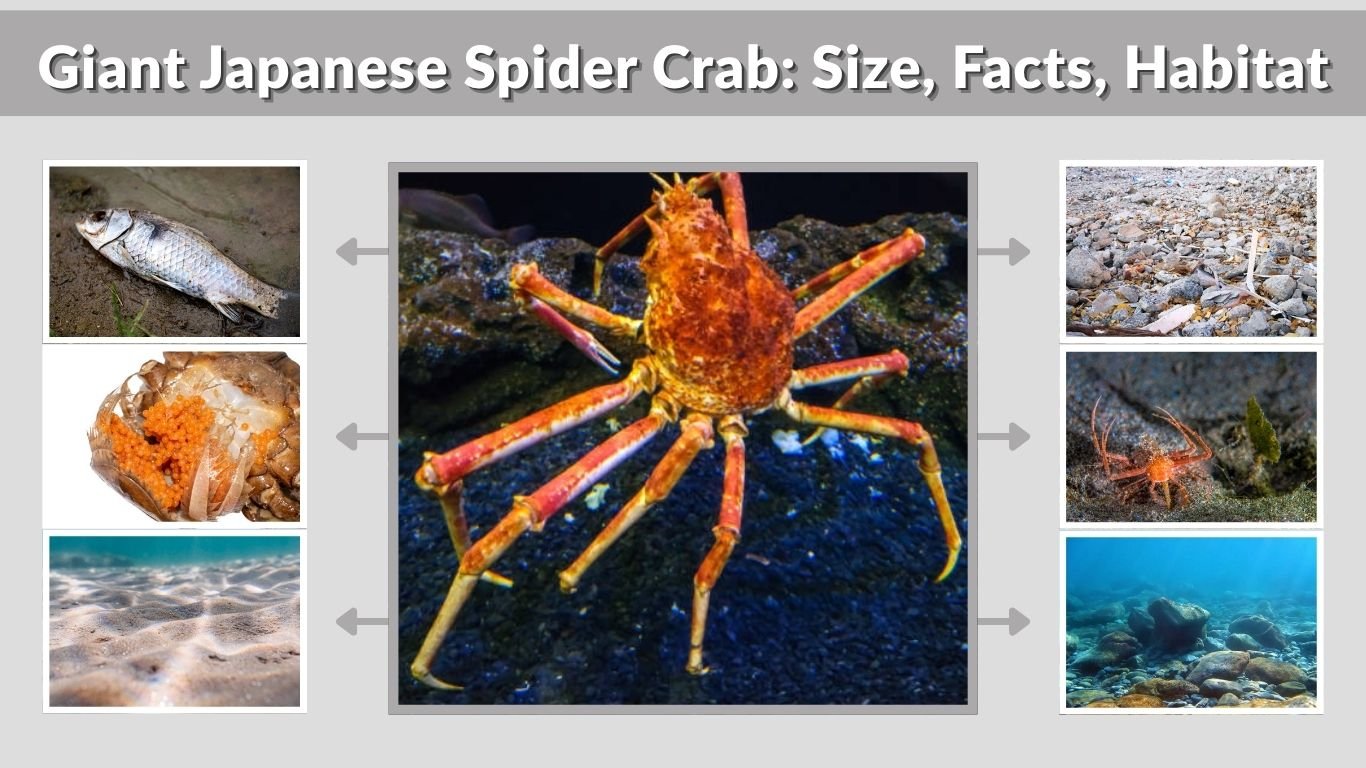
The giant Japanese spider crab is one of the most extraordinary creatures found in the ocean. Known scientifically as Macrocheira kaempferi, this species is famous for being the largest crab in the world in terms of leg span. Native to the waters around Japan, it belongs to a group of marine crustaceans that live deep beneath the ocean’s surface.
Despite its intimidating name and appearance, the giant spider crab is not actually related to spiders. It gets its name from its extremely long, thin legs that resemble those of a spider. These legs give it a unique and somewhat eerie look, making it one of the most recognizable deep-sea animals.
Unlike typical crabs, which are compact and broad, the giant spider crab has a relatively small body compared to its massive leg span. This unusual structure allows it to move efficiently across the ocean floor.
Giant Japanese Spider Crab Size (How Big Is It?)
One of the most fascinating aspects of this creature is its enormous size. Many people wonder: how big is a giant spider crab?
A fully grown giant Japanese spider crab can reach a leg span of up to 3.7 meters (12 feet) from claw to claw. This makes it the largest arthropod on Earth in terms of leg span.
Size Breakdown:
- Leg span: up to 12 feet (3.7 meters)
- Body width: around 30–40 cm (12–16 inches)
- Weight: up to 15–20 kg (33–44 pounds)
Although its body is not very large, its legs make it appear enormous and somewhat intimidating.
Largest Giant Spider Crab Recorded
The largest specimens ever recorded reach close to the maximum leg span of 12 feet. While some exaggerated claims online suggest much larger sizes, there is no scientific evidence supporting those myths.
Giant Spider Crab Compared to Human
When compared to a human, the giant spider crab’s size becomes even more impressive. If its legs are fully extended, it can be wider than an average adult human is tall.
This comparison often shocks people when they first see images or videos of the crab. However, despite its size, the crab is not dangerous and does not pose a threat to humans.
Its long legs are actually quite fragile and can break if damaged, so the crab relies more on caution than aggression for survival.
Giant Spider Crab Habitat (Where Do They Live?)
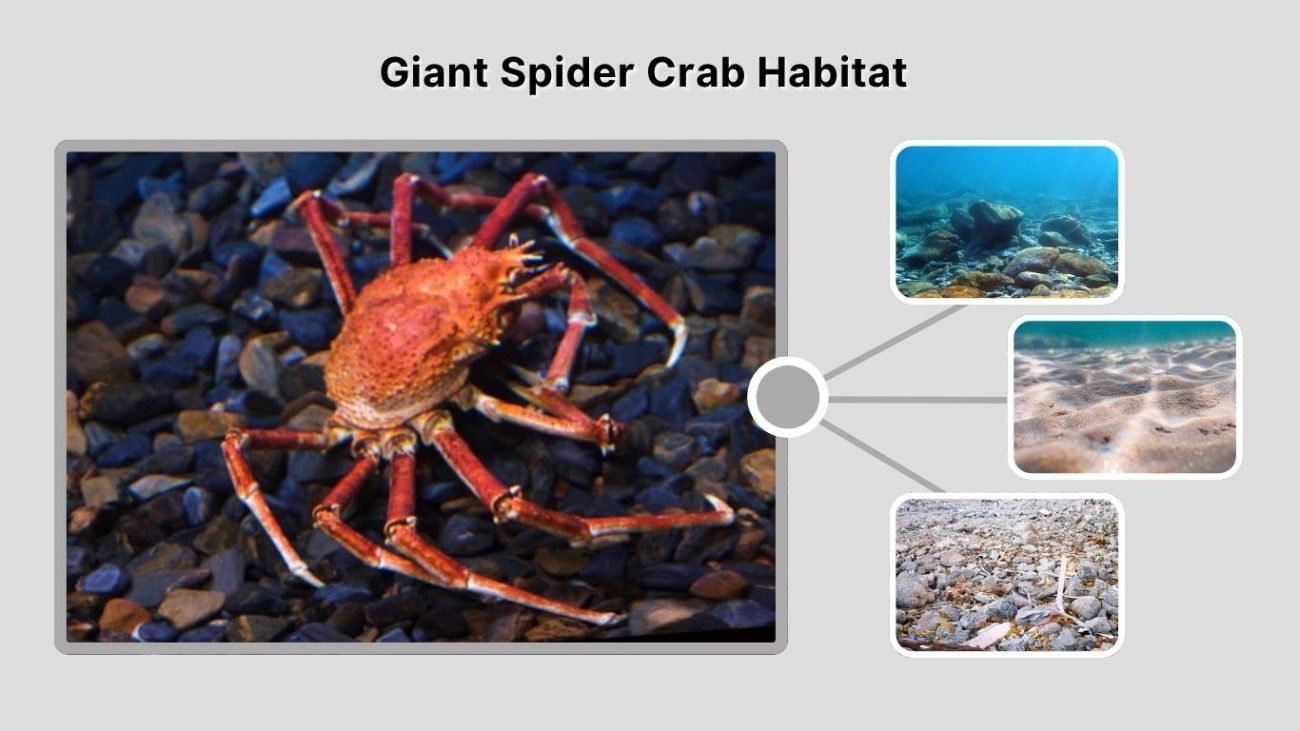
The giant spider crab habitat is located in the deep waters of the Pacific Ocean, particularly around Japan. They are commonly found near areas such as:
- Honshu Island
- Sagami Bay
- Suruga Bay
Deep Sea Giant Spider Crab Environment
These crabs live at depths ranging from 150 to 300 meters (500 to 1,000 feet). At these depths, sunlight is limited, and the environment is cold and stable.
Their preferred habitats include:
- Rocky seabeds
- Sandy ocean floors
- Areas with debris and marine growth
Living in the deep sea helps them avoid many predators and provides a consistent environment for survival.
Deep Sea Giant Spider Crab Adaptations
The giant spider crab has developed several unique adaptations that allow it to survive in the deep ocean.
Key Adaptations:
1. Long Legs for Movement
Their long legs help them walk efficiently across the ocean floor and cover large distances while searching for food.
2. Camouflage
They often attach sponges, algae, and other materials to their shells. This helps them blend into their surroundings and avoid predators.
3. Slow Metabolism
Living in deep water means limited food availability. Their slow metabolism allows them to survive longer without frequent feeding.
4. Strong Exoskeleton
Their hard outer shell provides protection from predators and environmental conditions.
What Do Giant Spider Crabs Eat?
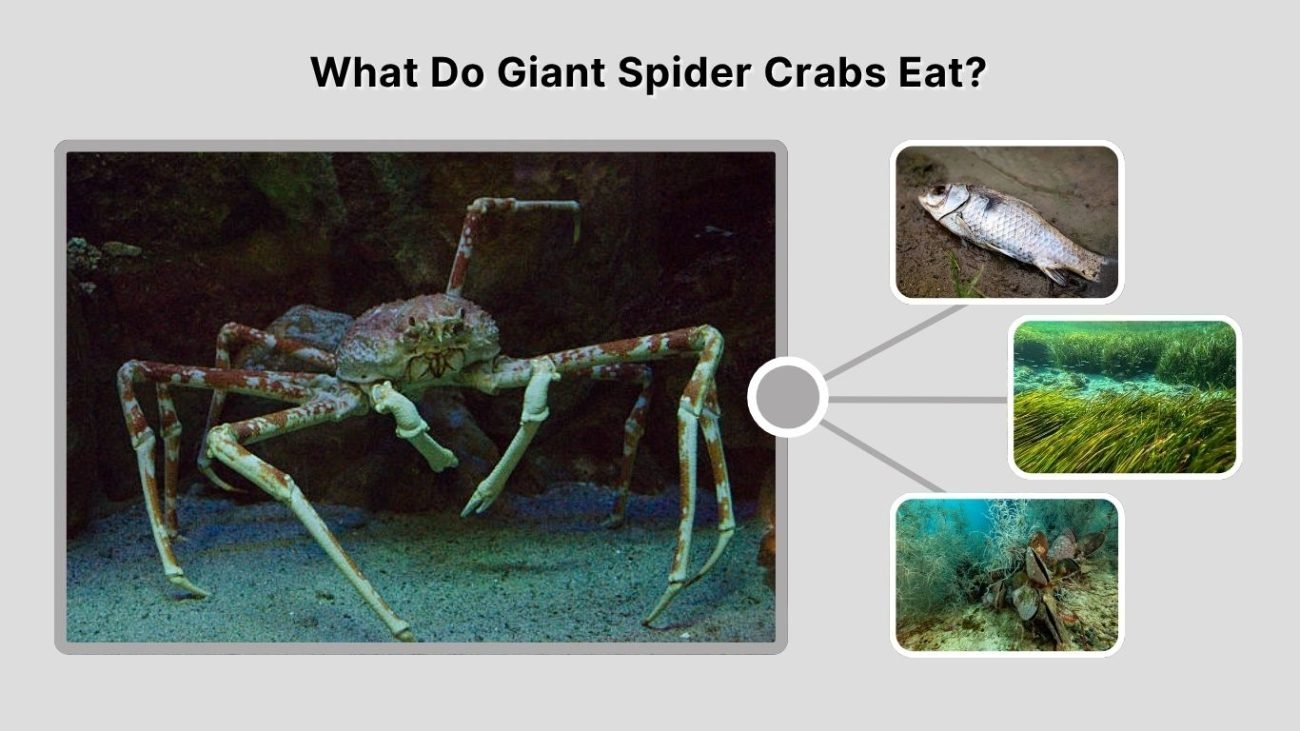
The giant spider crab is primarily a scavenger, meaning it feeds on dead and decaying matter found on the ocean floor.
Giant Spider Crab Diet Includes:
- Dead fish
- Mollusks and shellfish
- Sea plants
- Small marine organisms
Rather than actively hunting, these crabs rely on whatever food they can find. They use their claws to pick up and consume organic material from the seabed.
Role in the Ecosystem
By feeding on dead organisms, giant spider crabs play an important role in maintaining the health of the ocean ecosystem. They act as natural cleaners, helping to recycle nutrients and keep the ocean floor free of waste.
Giant Spider Crab Life Cycle
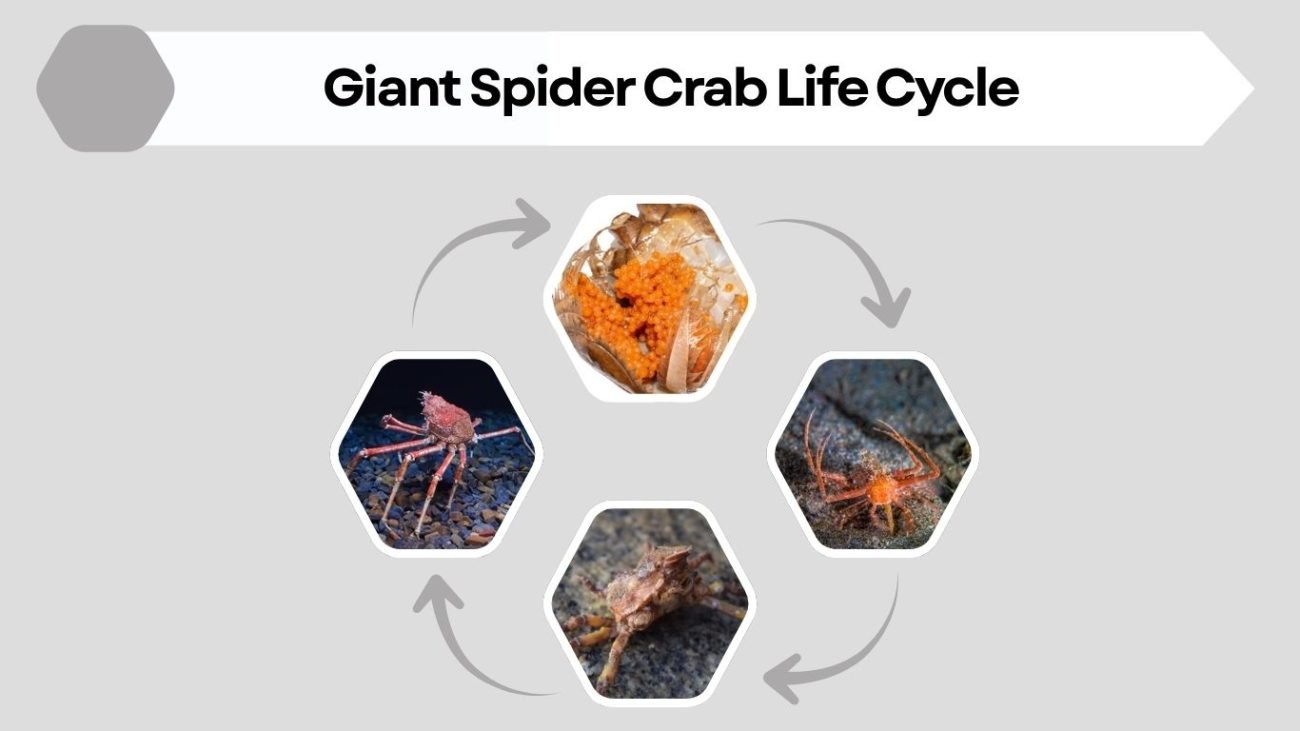
The life cycle of the giant spider crab begins when the female lays thousands of eggs. These eggs hatch into tiny larvae that float freely in the ocean as plankton.
Life Stages:
- Eggs
- Larvae (plankton stage)
- Juvenile crab
- Adult crab
As they grow, they gradually settle on the ocean floor and begin developing their long legs and hard shells.
Giant Spider Crab Molting & Growth
Like other crustaceans, giant spider crabs grow through a process called molting. This involves shedding their old exoskeleton and forming a new, larger one.
During molting:
- The crab becomes soft and vulnerable
- It hides to avoid predators
- A new shell hardens over time
Molting allows the crab to increase in size and regenerate lost limbs if necessary.
humans.
These crabs are:
- Non-aggressive
- Slow-moving
- More defensive than offensive
They do have strong claws, which they use to handle food and protect themselves. If provoked, they may pinch, but this is rare and not life-threatening.
In most cases, giant spider crabs prefer to avoid humans entirely and will retreat if they sense danger.
Can You Eat Giant Spider Crabs?
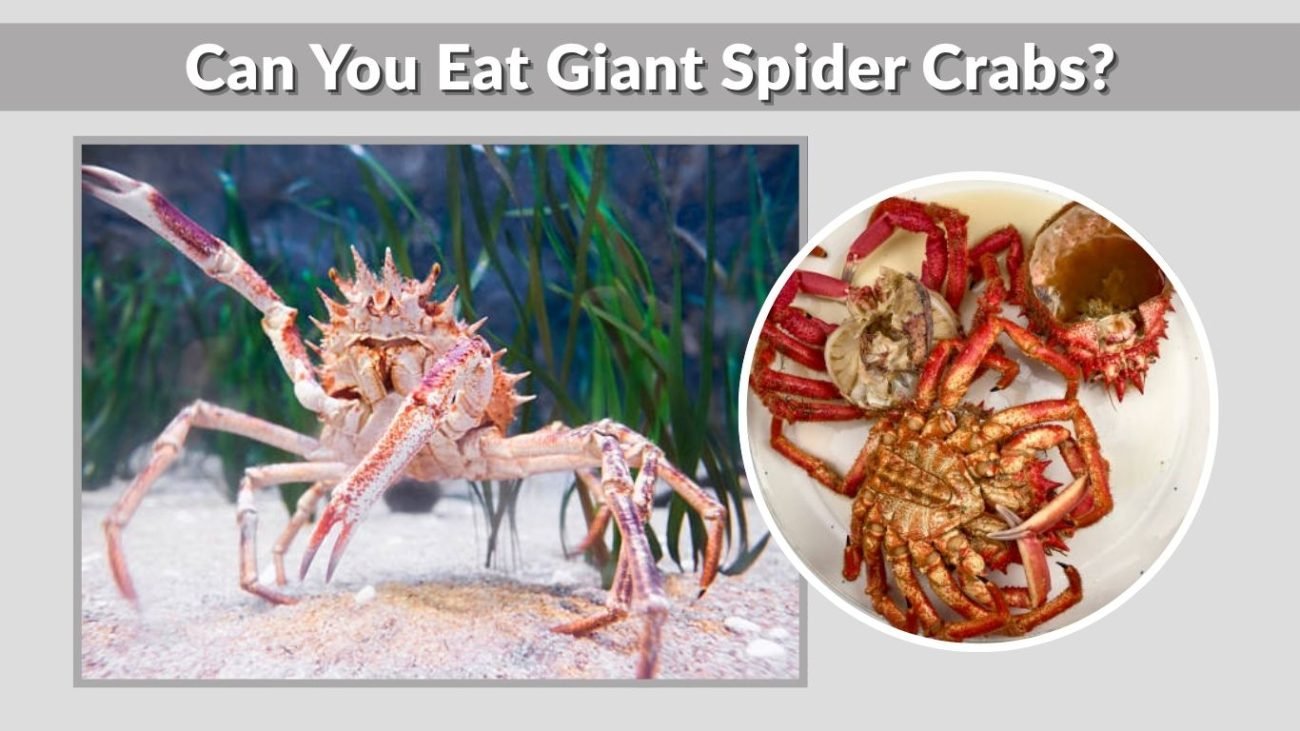
Yes, giant spider crabs are edible, and in Japan, they are considered a delicacy.
Are Giant Spider Crabs Good to Eat?
Their meat is:
- Sweet
- Tender
- Similar to other crab varieties
They are often prepared in traditional Japanese dishes such as:
- Steamed crab
- Hot pot (nabe)
- Grilled seafood meals
However, they are not widely consumed around the world because:
- They are rare
- Fishing is regulated
- They grow slowly
Can You Eat Giant Japanese Spider Crab?
Absolutely. While not commonly found in everyday markets, they are sometimes available in specialty seafood restaurants in Japan.
Giant Spider Crab Price & Availability
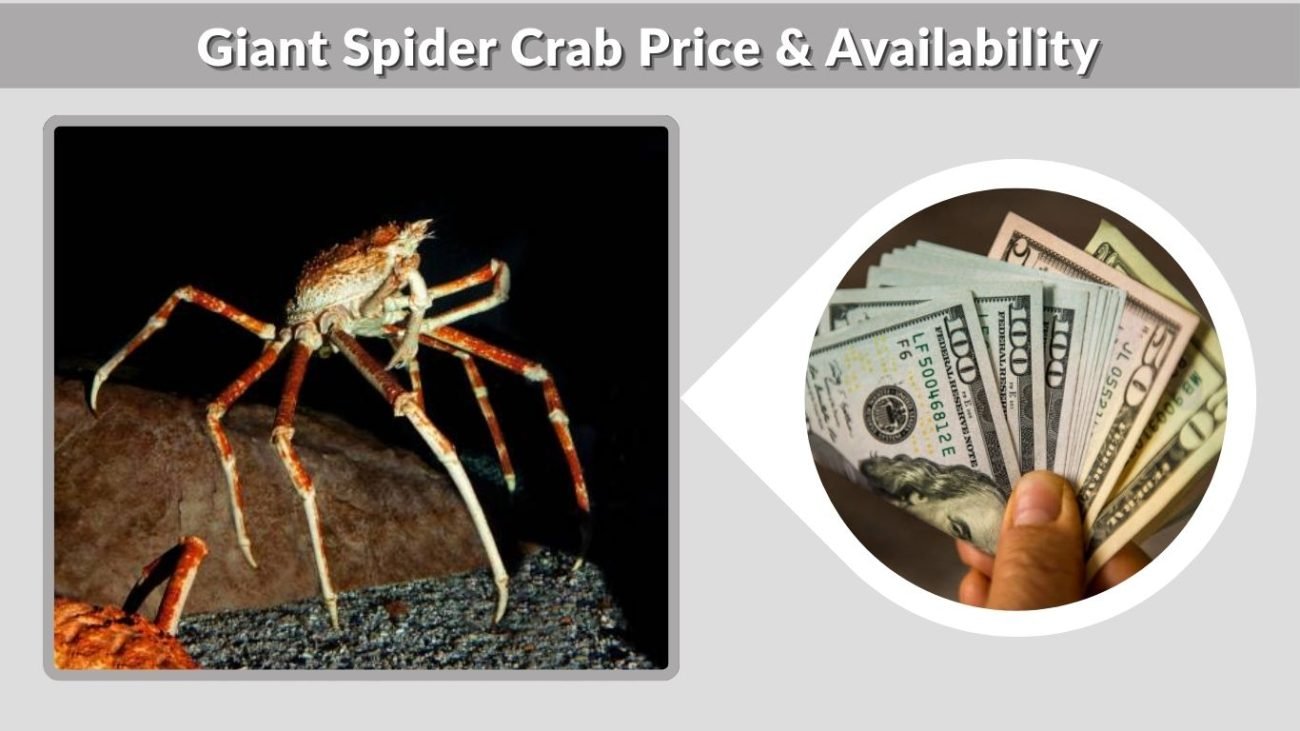
The giant spider crab price can vary significantly depending on size, freshness, and location.
Because they are not mass-produced or widely farmed, they tend to be:
- Expensive
- Rare
- Available mainly in Japan
In high-end seafood markets or restaurants, large specimens can cost a premium due to their size and uniqueness.
Interesting Giant Spider Crab Facts
Here are some fascinating facts about giant spider crabs:
- They have the longest leg span of any arthropod on Earth
- Their legs can stretch up to 12 feet wide
- They can live for up to 100 years
- They decorate their shells with sponges and algae for camouflage
- They grow through molting, shedding their shell multiple times
- They play a key role as scavengers in the ocean
These unique traits make them one of the most interesting creatures in the deep sea.
Giant Spider Crab Images & Videos
The giant spider crab often becomes popular online due to its unusual and almost alien-like appearance.
Searches for:
- giant spider crab pictures
- giant spider crab images
- giant spider crab video
are very common because people are amazed by how large and strange this creature looks.
When seen underwater, their long legs and slow movements can appear both graceful and eerie. Images comparing them to humans often go viral due to their massive size.
Why Are Giant Spider Crabs So Big?
The enormous size of the giant spider crab is mainly due to a phenomenon known as deep-sea gigantism.
Reasons for Their Size:
1. Stable Environment
Deep-sea conditions change very little, allowing organisms to grow slowly and steadily.
2. Fewer Predators
At greater depths, there are fewer threats, enabling larger body sizes.
3. Slow Metabolism
They conserve energy and grow over long periods, sometimes living up to a century.
4. Evolutionary Advantage
Larger size helps them travel across the ocean floor and access more food sources.
Giant Spider Crab vs Other Crabs
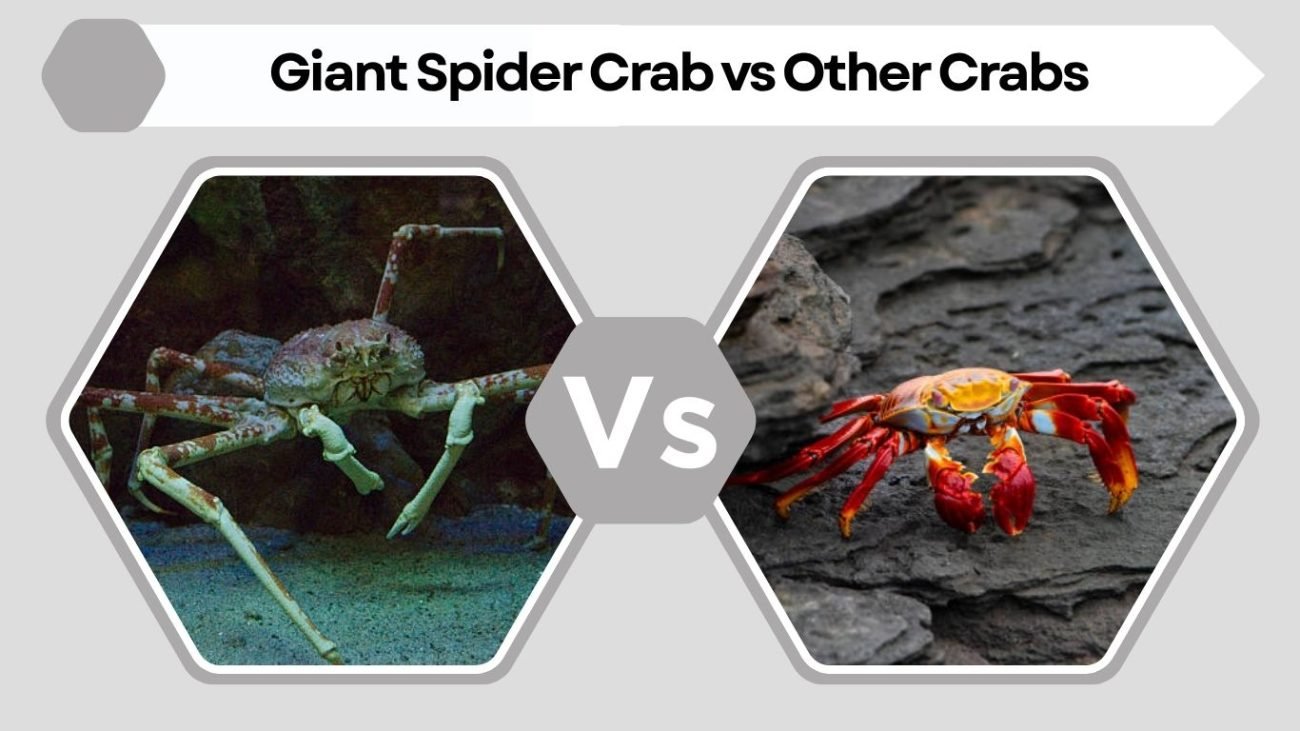
Compared to other crab species, the giant spider crab stands out in several ways:
| Feature | Giant Spider Crab | Typical Crab |
| Leg Span | Up to 12 feet | Usually under 2 feet |
| Habitat | Deep sea | Coastal/shallow waters |
| Lifespan | Up to 100 years | 3–10 years |
| Diet | Scavenger | Omnivore |
This comparison highlights just how unique and specialized the giant spider crab is.
FAQs
1. How big is a giant spider crab?
A giant spider crab can reach a leg span of up to 12 feet (3.7 meters), making it the largest crab in the world.
2. Are giant spider crabs dangerous?
No, giant spider crabs are not dangerous. They are calm, non-aggressive, and prefer to avoid humans.
3. Can you eat giant spider crabs?
Yes, they are edible and considered a delicacy in Japan, though they are rare and expensive.
4. Where do giant spider crabs live?
They live in the deep waters of the Pacific Ocean around Japan, typically at depths of 150–300 meters.
5. What do giant spider crabs eat?
They are scavengers that feed on dead fish, shellfish, plant material, and small marine organisms.