The Great Horned Owl (Bubo virginianus) is one of North America’s most iconic raptors, known for its deep hoots and piercing yellow eyes. Adaptable and powerful, this owl thrives in deserts, forests, and even city parks. Its life cycle is a remarkable journey from a small white egg to a skilled nocturnal hunter. Understanding its stages of growth and survival gives insight into the endurance of this magnificent bird.
Physical Characteristics
Identification
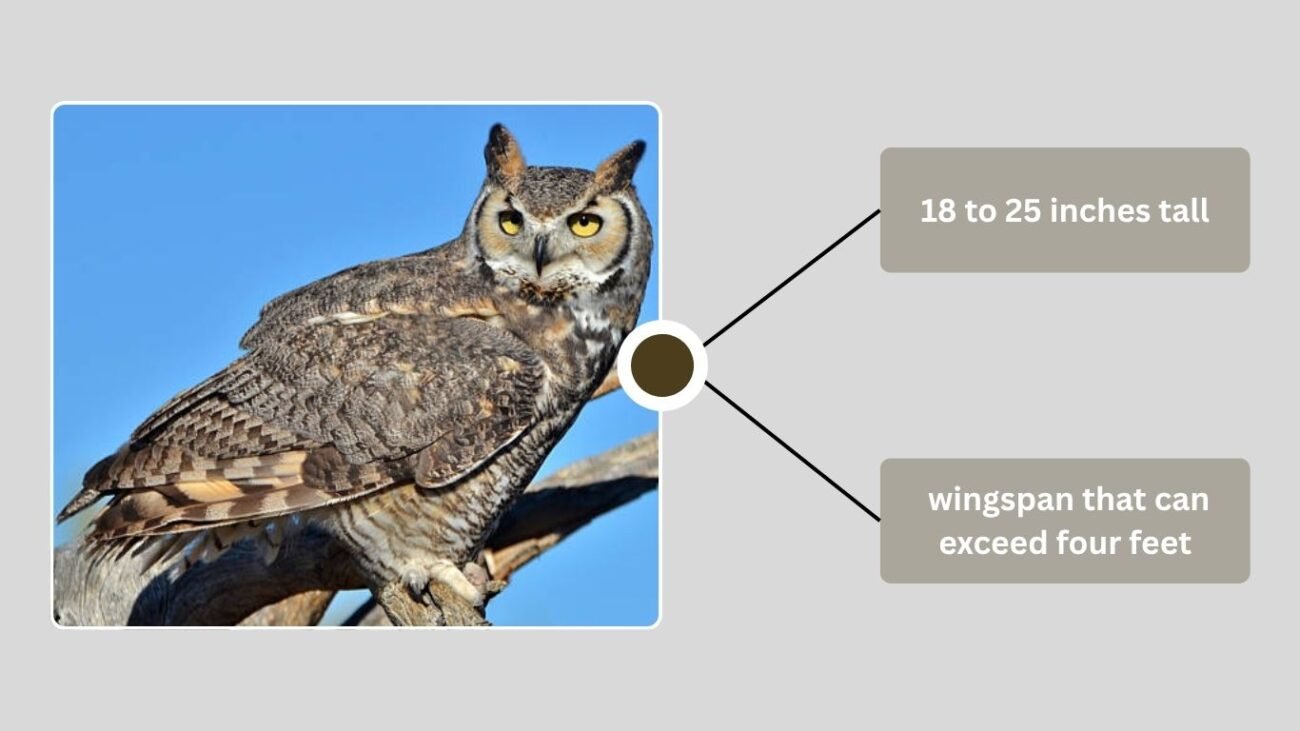
The Great Horned Owl stands about 18 to 25 inches tall, with an impressive wingspan that can exceed four feet. Its feathered tufts—often mistaken for ears—are its most recognizable feature. The plumage blends gray, brown, and black, helping it camouflage perfectly among trees and rocks. Its sharp talons and curved beak are built for grasping and tearing prey efficiently.
Sexual Dimorphism
Females are generally larger and heavier than males, a trait common among raptors. While both sexes share similar markings, females often have darker plumage. This size advantage allows females to protect the nest and young more effectively while the male hunts and provides food.
Breeding and Nesting Behavior
Mating Season
Great Horned Owls begin their mating rituals in late winter, usually from January to February. Their haunting calls echo through the night as pairs establish territories. Once bonded, the pair often remains together for many years. Courtship includes hooting duets, bowing displays, and mutual preening that strengthens their partnership.
Nesting Sites
Instead of building their own nests, Great Horned Owls prefer to occupy abandoned ones built by other birds such as hawks or crows. They also nest in tree hollows, cliff ledges, or even old buildings. The chosen site is typically elevated, offering both concealment and protection from ground predators.
Egg Stage
Egg Laying and Incubation
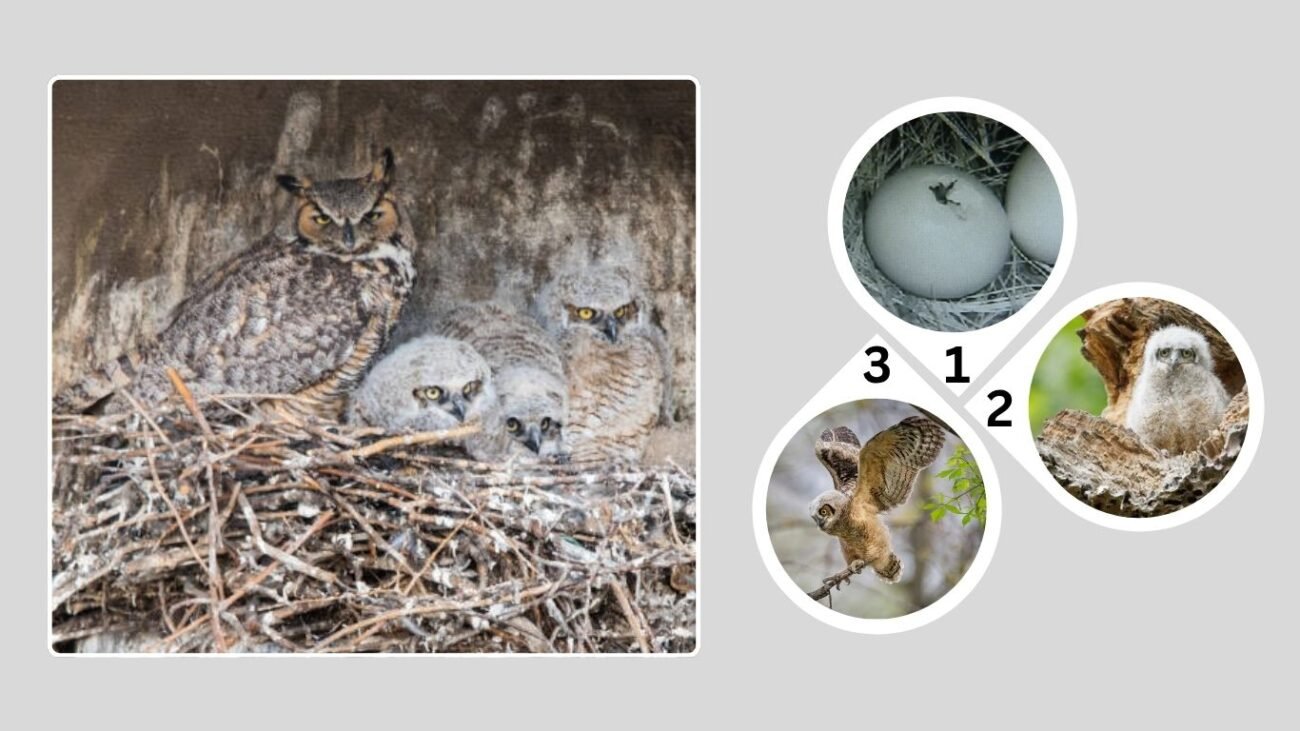
The female lays one to four eggs, spaced several days apart. Incubation begins immediately after the first egg is laid and lasts around 30 to 35 days. The female remains on the nest almost constantly, keeping the eggs warm, while the male brings her food. During this stage, the pair becomes extremely defensive of their territory, driving away any intruders.
Environmental Influence
Weather and food availability significantly affect the breeding success of Great Horned Owls. In harsh winters with limited prey, fewer eggs may hatch or chicks may not survive. Warmer climates, abundant prey, and safe nesting locations all increase the chances of successful rearing.
Chick Development
Hatching and Early Growth
Owlets hatch covered in soft white down and rely entirely on their parents for warmth and food. Both parents feed them small prey, tearing it into manageable pieces. Within a few weeks, the chicks’ eyes open, and they begin to develop stronger feathers, preparing for their next stage of growth.
Fledging Process
By the time the young owls reach six to seven weeks old, they begin to climb around the nest and stretch their wings. Although they can’t fly yet, they practice by fluttering between branches in what’s called “branching.” True flight usually occurs around nine to ten weeks. Even after fledging, the juveniles stay near their parents for several more weeks, learning to hunt and navigate their surroundings.
Juvenile to Adult Transition
Learning to Hunt
Once they leave the nest completely, juvenile Great Horned Owls start to practice hunting. They first target small, slow-moving prey such as insects or mice. With time, their accuracy and strength improve, allowing them to take down larger animals like rabbits and skunks. These early lessons are crucial for survival, as successful hunting determines their independence.
Dispersal
After several months of guidance, the young owls disperse to find their own territories. This phase can be risky, as they face competition from older owls and predators. Many do not survive their first year, but those that do are strong, skilled hunters capable of defending their own territories and attracting mates.
Adult Life
Diet and Hunting Habits
Great Horned Owls are apex nocturnal predators with diverse diets. They primarily hunt mammals such as rodents, rabbits, and squirrels but will also capture birds, reptiles, and even other owls. Their keen hearing and silent flight make them formidable hunters. Using powerful talons, they can crush prey instantly, swallowing smaller animals whole and tearing larger ones apart.
Territorial Behavior
Adults are highly territorial and mark their domains with deep, resonant hoots. These calls warn rivals to stay away. Mated pairs often share the same territory year after year, maintaining strong bonds. During nesting season, they become especially aggressive, defending their young with fierce determination.
Lifespan and Mortality
Average Lifespan
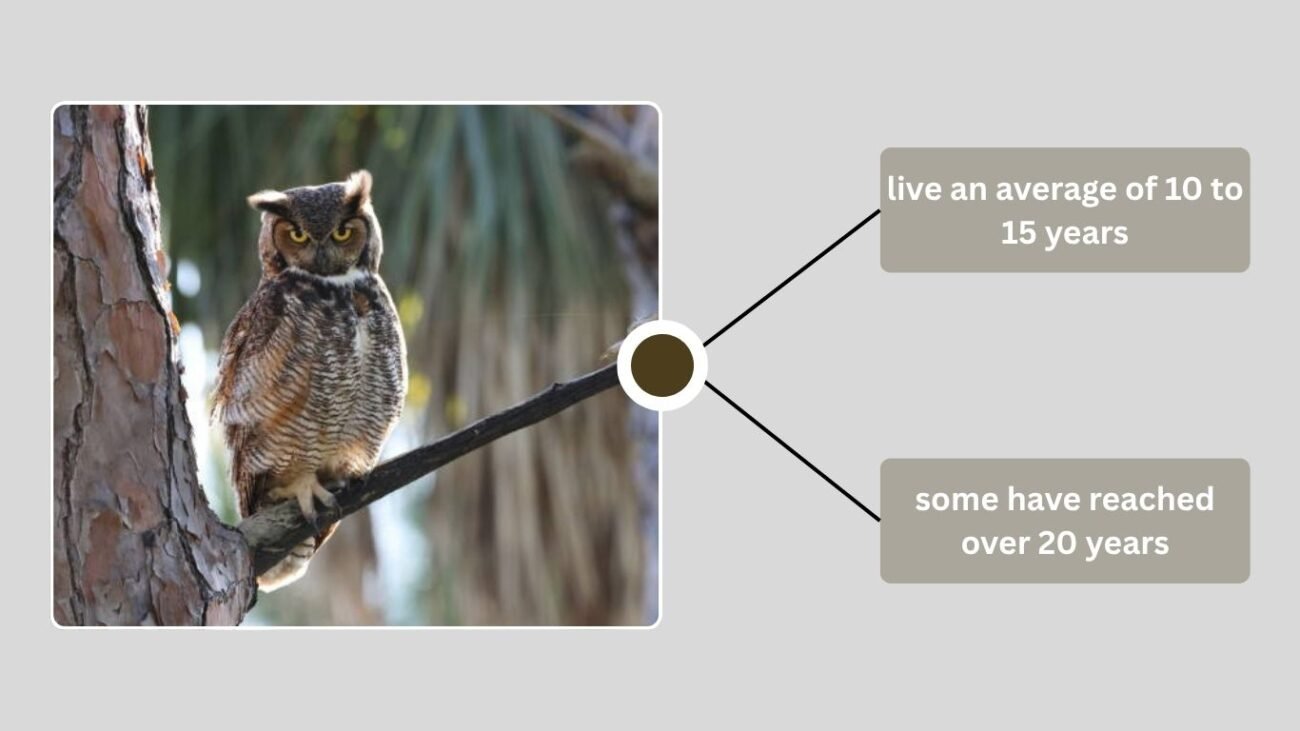
In the wild, Great Horned Owls live an average of 10 to 15 years, though some have reached over 20 years. In captivity, where threats are minimal and food is consistent, they can live up to 30 years. Survival rates are highest for adults that have secured stable territories with abundant prey.
Threats and Survival Factors
Despite being top predators, Great Horned Owls face dangers such as vehicle collisions, electrocution from power lines, and loss of habitat. Young owls are also vulnerable to starvation and predation. Conservation efforts that protect forest habitats and reduce environmental hazards help increase their lifespan.
Role in the Ecosystem
The Great Horned Owl plays a vital ecological role by controlling populations of rodents and other small animals. This balance prevents overgrazing and crop damage, benefiting both natural and human-managed ecosystems. Their presence is a sign of a healthy environment and biodiversity.
FAQs
How long do Great Horned Owls live in the wild?
In the wild, Great Horned Owls typically live between 10 and 15 years. However, under ideal conditions with plentiful food and minimal human interference, some individuals have been known to survive beyond 20 years. Captive owls may live even longer due to safer environments and veterinary care.
At what age do Great Horned Owls start breeding?
These owls reach sexual maturity at about two years old. Once mature, they form monogamous pairs that often last for many years. Breeding usually begins in late winter when both partners strengthen their bond through hoots, mutual grooming, and territorial displays before nesting.
How many eggs does a Great Horned Owl usually lay?
A typical clutch consists of one to four eggs, though two is most common. The female incubates the eggs for about a month, relying on the male to supply food. Factors such as food availability and environmental conditions can influence the number of eggs laid each season.
What predators threaten Great Horned Owl chicks?
Young owlets face threats from raccoons, crows, and even other owls. If left unguarded, predators may attack eggs or chicks. Parents defend the nest aggressively, using their size and strength to ward off intruders, ensuring the survival of their young.
Do Great Horned Owls mate for life?
Yes, most Great Horned Owl pairs remain together year after year. They often return to the same nesting area and renew their bond each breeding season. Even outside the nesting period, they maintain their partnership and defend their shared territory together.