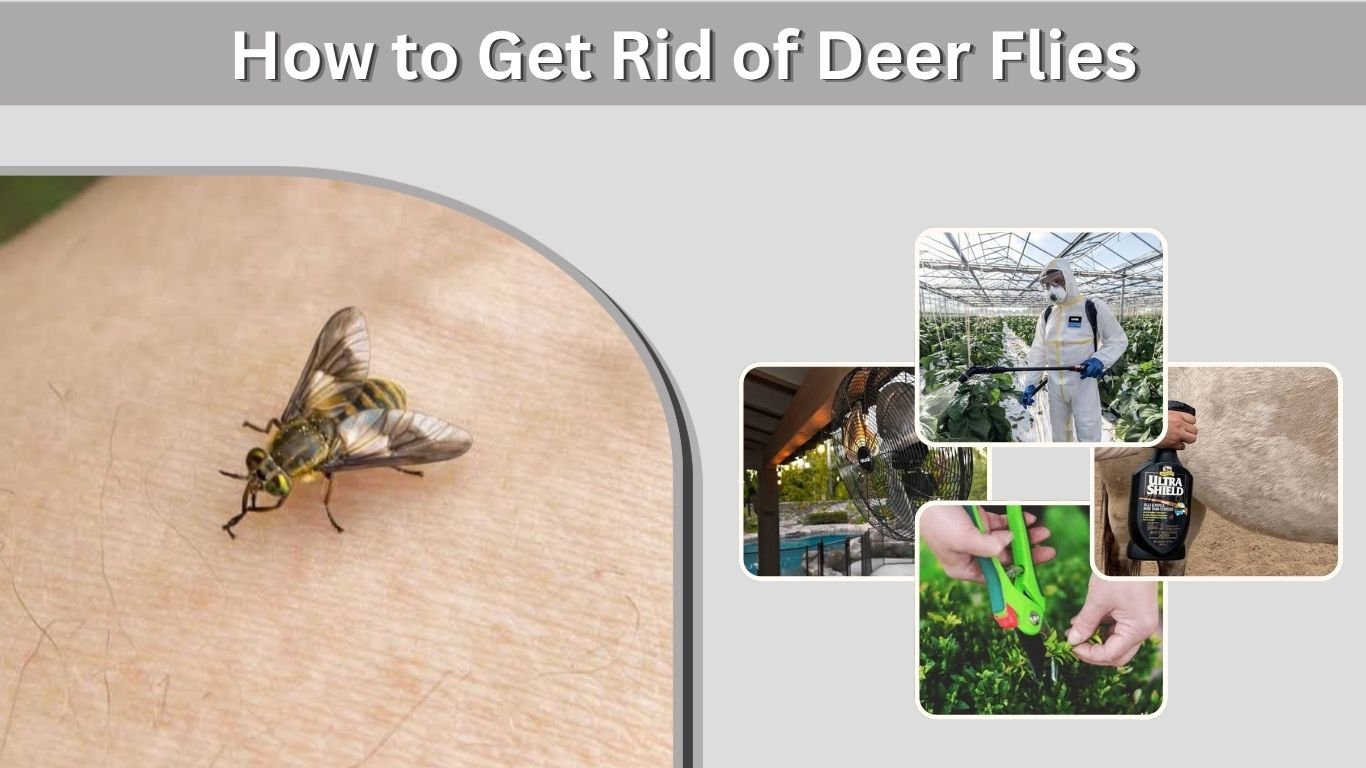
Deer flies are persistent biting insects commonly found near wetlands, wooded areas, ponds, livestock fields, and swimming pools. Female deer flies feed on blood and can repeatedly circle people, pets, and horses before delivering a painful bite. Completely eliminating them from a large outdoor area is difficult because their larvae develop in wet soil and shallow water. However, traps, protective clothing, habitat management, and targeted repellents can significantly reduce deer fly activity around your yard, pool, home, and animals.
Why Are Deer Flies Around Your Property?
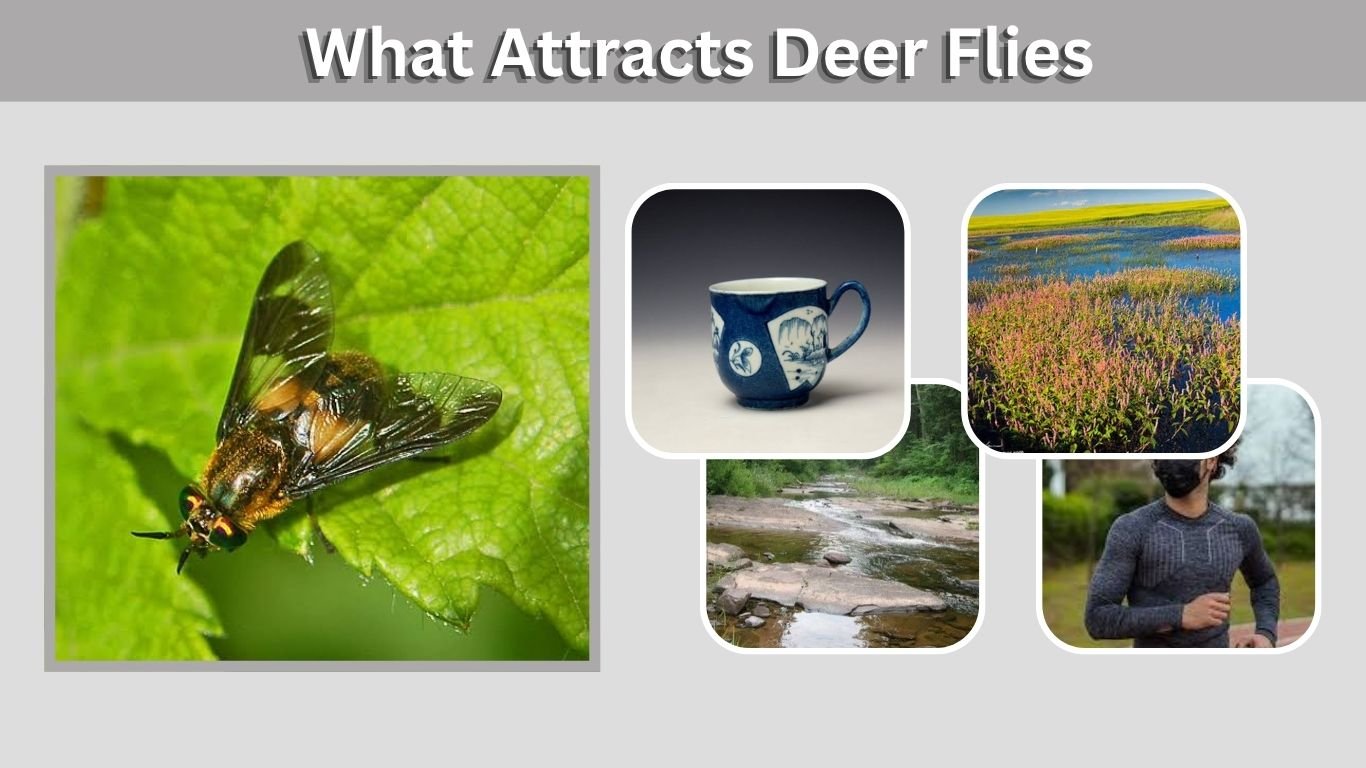
Deer flies are attracted to movement, body heat, carbon dioxide, and dark colours. These signals help females locate animals or people from which they can obtain a blood meal.
Your property may attract deer flies when it is close to:
- Marshes, ponds, streams, or swampy ground
- Wooded trails and shaded vegetation
- Muddy areas and poorly drained soil
- Swimming pools and other reflective surfaces
- Horses, cattle, deer, or other large animals
- Tall grass and dense vegetation
Adult deer flies are strongest during warm, sunny weather. Unlike mosquitoes, they are usually active during the daytime.
How to Get Rid of Deer Flies Outside
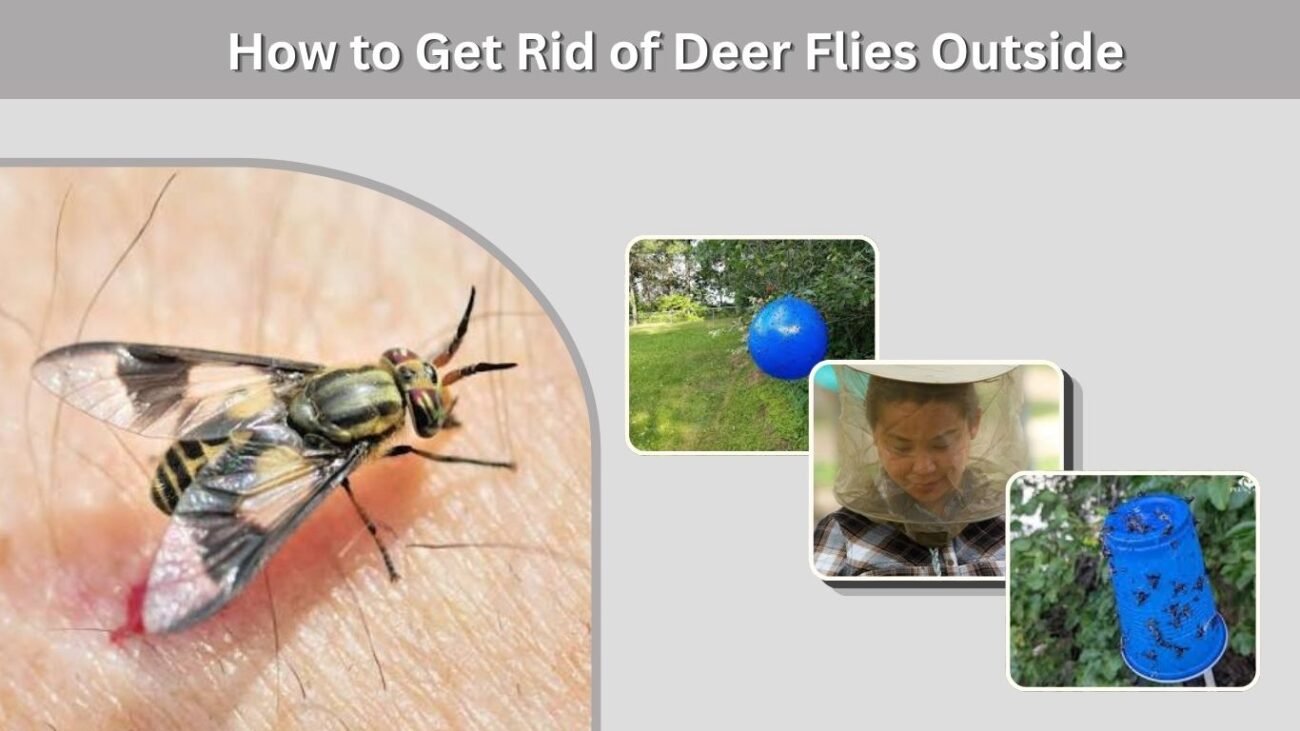
Large-scale spraying is rarely the most effective solution. Adult deer flies can travel into a property from surrounding natural habitats, while their larvae may be spread across wet areas that are difficult to treat.
1. Use Deer Fly Traps
Visual traps are among the most practical ways to reduce deer flies in a limited outdoor area. Deer flies are strongly attracted to moving, dark objects.
A basic deer fly trap can include:
- A dark blue or black ball
- A pole or hanging support
- A sticky insect-trapping surface
- Placement near the edge of the active area
As the ball moves in the wind, deer flies may approach it as though it were an animal. They then become trapped on the sticky surface.
Place traps away from doors, seating areas, playgrounds, and pool edges. Positioning a trap directly beside people could attract flies closer before capturing them.
2. Wear Light-Coloured Clothing
Dark blue, black, and other deep colours can attract deer flies. Wear light-coloured shirts, trousers, and hats when working outside during deer fly season.
Loose-fitting, tightly woven clothing provides better protection than thin fabric because deer flies may bite through lightweight clothing.
3. Apply an Appropriate Repellent
An insect repellent labelled for biting flies may reduce the number of deer flies landing on exposed skin. Apply it according to the product instructions and avoid contact with the eyes, mouth, damaged skin, and hands of young children.
Repellents may not provide complete protection because deer flies are aggressive. Combining repellent with long clothing and a head net usually works better than relying on one method alone.
4. Use a Head Net
Deer flies frequently circle the head and may bite the scalp, neck, ears, or shoulders. A fine-mesh head net attached to a wide-brimmed hat can provide reliable physical protection.
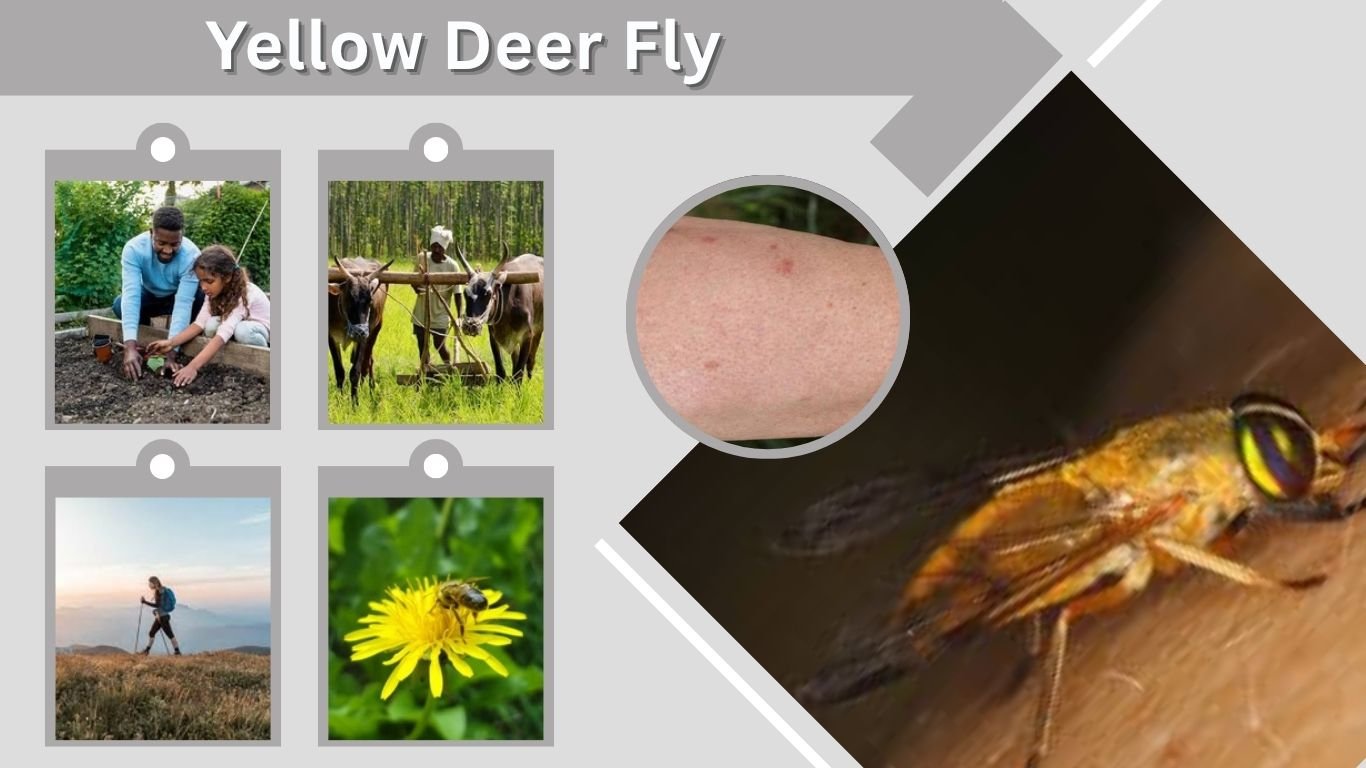
This method is particularly useful when gardening, hiking, fishing, or caring for livestock.
How to Get Rid of Deer Flies in Your Yard
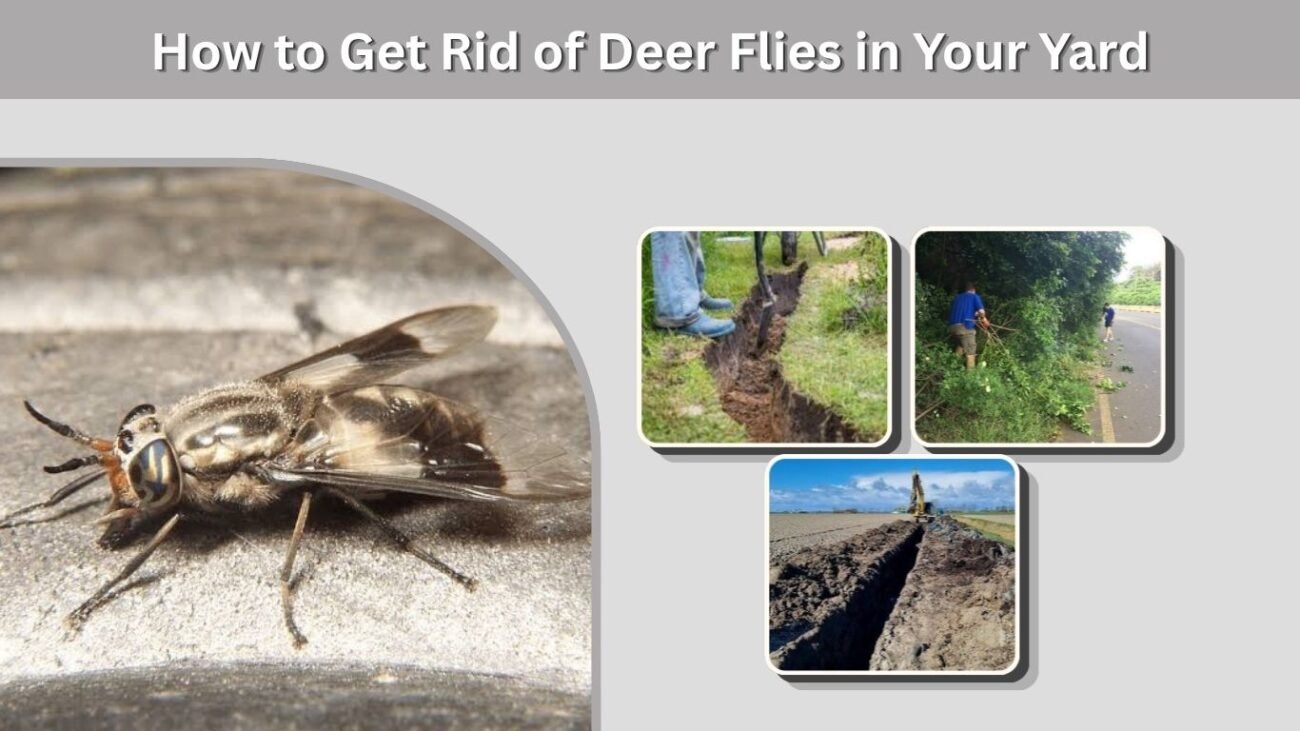
Yard management can make the area less favourable, although it may not remove flies arriving from nearby wetlands or woods.
Improve Drainage
Deer fly larvae often develop in damp soil, marshy ground, and shallow water. Repair leaking outdoor taps, clear blocked drains, and fill low areas where water remains for long periods.
Do not drain or chemically treat natural wetlands without checking local environmental rules. Wetlands are valuable habitats, and many are legally protected.
Cut Back Dense Vegetation
Trim overgrown grass, weeds, and shrubs around patios, paths, animal shelters, and play areas. This improves airflow and removes some shaded resting locations.
Maintain a clear, sunny buffer between frequently used parts of the yard and nearby woodland when possible.
Use Outdoor Fans
Deer flies are strong fliers, but continuous airflow can make it harder for them to land accurately. A powerful outdoor fan may help protect a small patio, porch, or seating area.
Aim the airflow across the area where people are sitting rather than toward nearby vegetation.
Plan Activities Carefully
Deer flies are generally more active on hot, bright, calm days. Move gardening, exercise, and outdoor work to cooler or windier periods when fly activity appears lower.
| Yard-control method | Best use | Main limitation |
| Moving visual trap | Property boundaries and trails | Covers a limited area |
| Outdoor fan | Patios and porches | Requires electricity |
| Light clothing | Personal protection | Does not reduce fly numbers |
| Repellent | Exposed skin | Requires reapplication |
| Drainage improvement | Wet areas in the yard | Cannot control nearby wetlands |
| Vegetation trimming | High-use outdoor spaces | Flies may still enter the property |
How to Get Rid of Deer Flies Around a Swimming Pool
Deer flies are often noticed near swimming pools because pools are open, sunny spaces where people provide movement, heat, and carbon dioxide. The water may also reflect light and attract curious insects.
Keep Traps Away From Swimmers
Place dark moving traps along the outer boundary of the pool area rather than beside lounge chairs or the water. This may draw flies away from swimmers.
Check sticky traps frequently and replace them when they become covered with insects, leaves, or dust.
Create Strong Air Movement
Use outdoor fans around sitting areas, dining tables, and covered pool sections. Fans work best for small spaces and should be protected from water.
Remove Nearby Standing Water
Empty water from buckets, toys, covers, wheelbarrows, and clogged gutters. This will not necessarily eliminate deer flies, but it can reduce mosquitoes and other biting insects around the pool.
Use Physical Barriers
A screened pool enclosure offers stronger protection than repellents or occasional spraying. Repair holes in screens and ensure doors close tightly.
How to Get Rid of Deer Flies Naturally
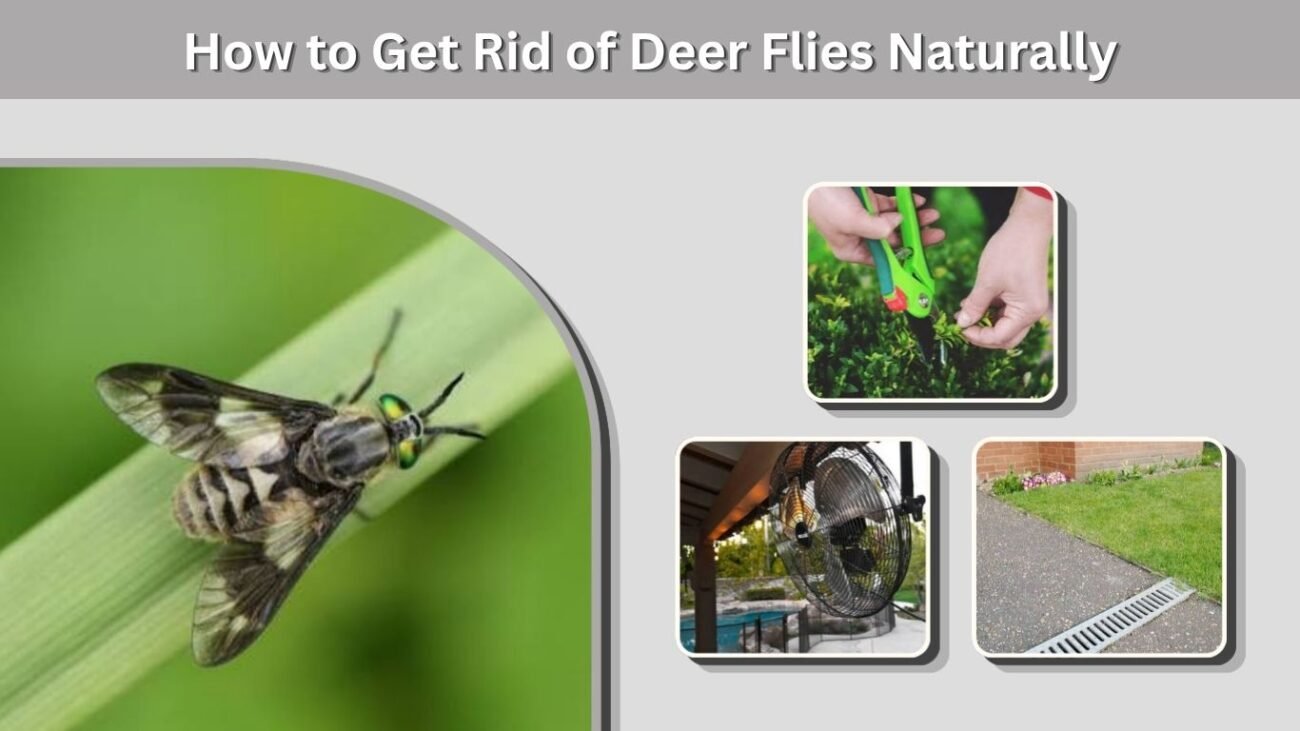
Natural control focuses on traps, barriers, clothing, airflow, and habitat management rather than widespread insecticide use.
Helpful natural methods include:
- Hanging moving visual traps
- Wearing light-coloured clothing
- Using fine-mesh head nets
- Installing screens around patios or pools
- Running outdoor fans
- Improving drainage around buildings
- Trimming dense vegetation
- Avoiding peak activity periods
Essential oils and homemade sprays may produce inconsistent results. Some concentrated oils can irritate the skin, harm pets, or damage plants. Do not apply homemade mixtures directly to people or animals unless their ingredients are proven safe for that use.
How to Get Rid of Deer Flies in the House
Deer flies usually enter houses accidentally. They do not normally establish indoor infestations because their larvae require suitable wet outdoor habitats.
Remove Individual Flies
Use a cup and stiff paper to capture the fly, or remove it with a vacuum cleaner. Avoid handling it with bare hands because a female may bite.
Block Entry Points
Inspect and repair:
- Torn window screens
- Gaps around doors
- Open attic vents
- Damaged weather stripping
- Unscreened windows
- Cracks around utility lines
Keep exterior doors closed during periods of heavy fly activity. Reducing bright light near open windows may also help prevent flying insects from entering at night.
How to Get Rid of Deer Flies on Horses
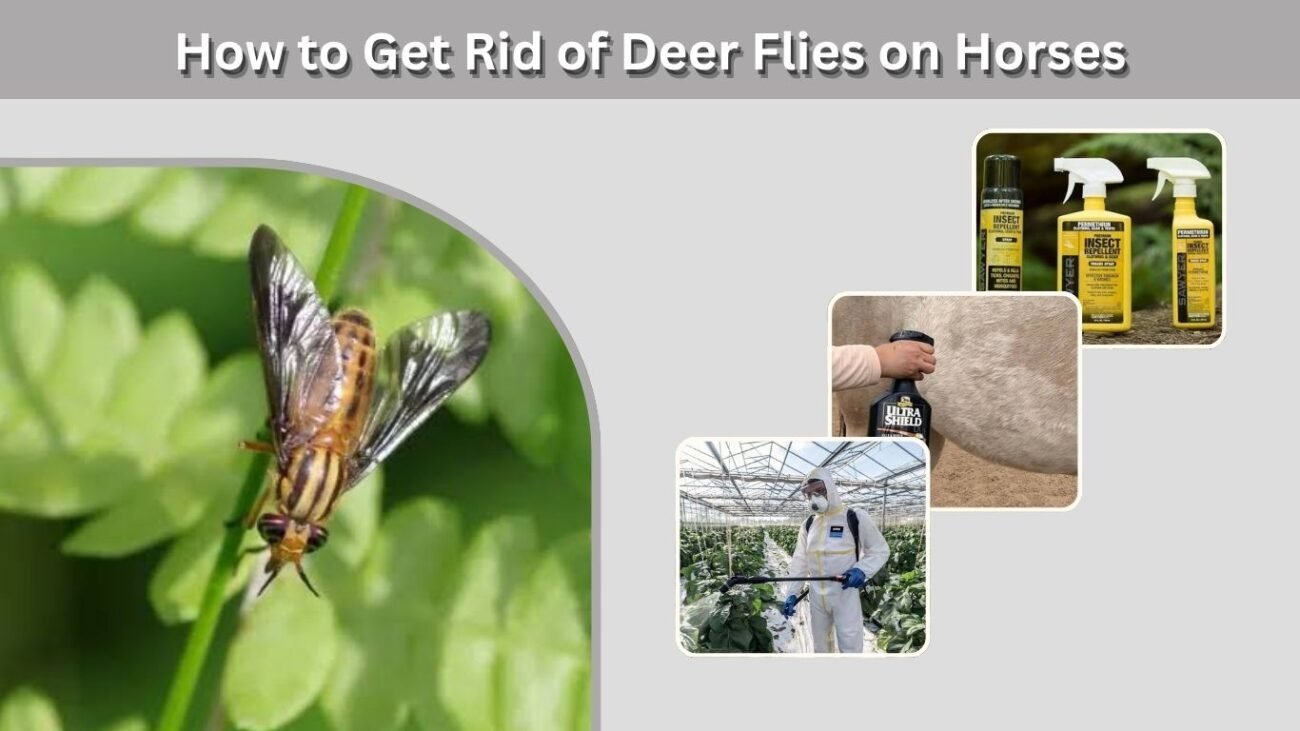
Horses are major targets for deer flies because of their size, movement, warmth, and dark body areas.
Use Protective Equipment
Fly sheets, neck covers, leg wraps, and fly masks can reduce exposed skin. Equipment should fit properly and be checked frequently for rubbing or trapped insects.
Apply Horse-Safe Repellent
Choose a product specifically labelled for use on horses and follow all application directions. Avoid the eyes, nostrils, mouth, and irritated skin.
Reapplication may be necessary after sweating, bathing, or rainfall.
Adjust Turnout Times
Keep horses indoors or in screened shelters when deer fly activity is especially intense. Open fields may expose horses to fewer flies than shaded woodland edges, although conditions vary by property.
Position traps away from stalls and feeding areas so they do not attract additional flies toward the horses.
How to Get Rid of Deer and Horse Flies Together
The same general methods can help manage both insects because deer flies and horse flies share similar behaviours. However, horse flies are usually larger and may be attracted to bigger visual traps.
For combined control:
- Place dark moving traps around property boundaries
- Protect animals with fly sheets and approved repellents
- Use fans inside shelters and covered patios
- Maintain screens on buildings
- Improve drainage near high-use areas
- Avoid outdoor activity during intense fly periods
Routine lawn insecticide applications usually provide limited control because these flies can travel considerable distances from their breeding habitats.
How to Treat Deer Fly Bites
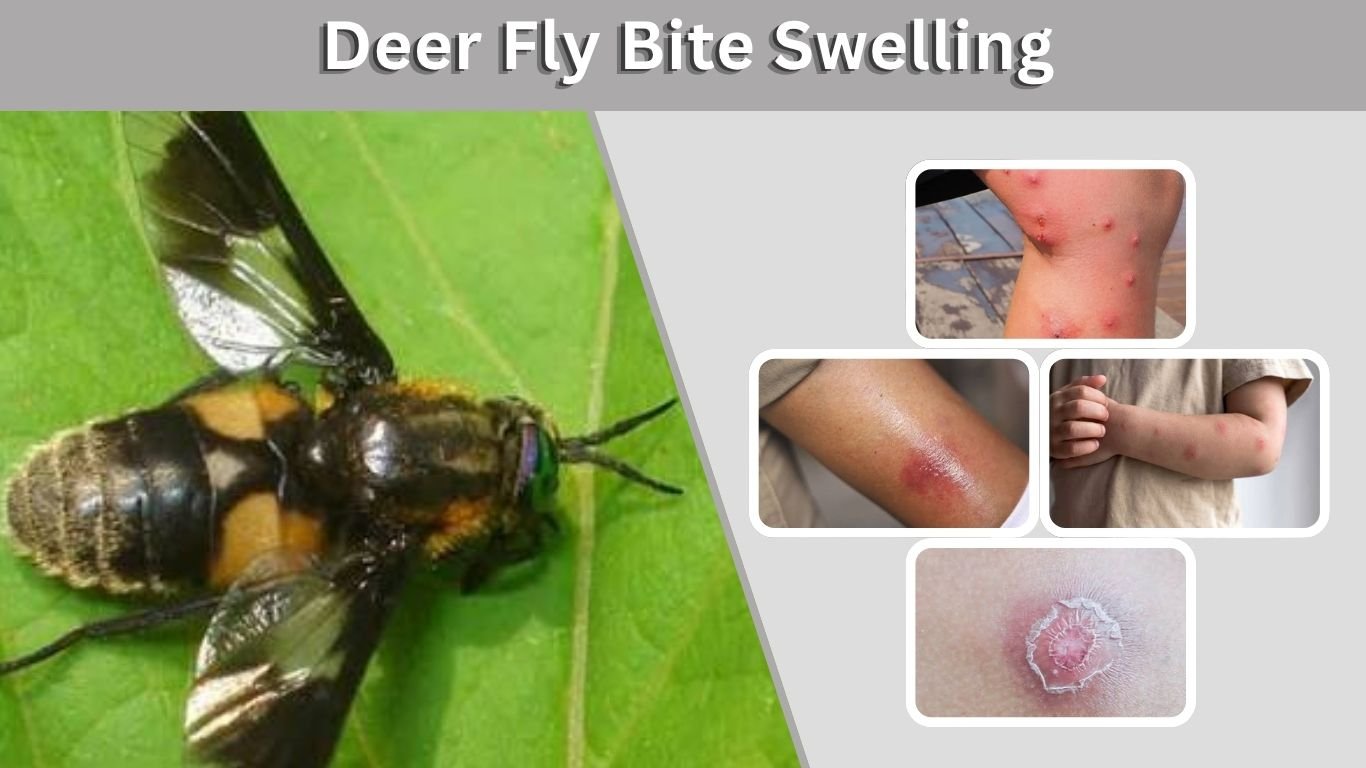
A deer fly bite often causes immediate pain, redness, itching, and swelling. The fly cuts the skin rather than piercing it like a mosquito.
Wash the bite with soap and water, then apply a cold compress wrapped in cloth for approximately 10–20 minutes. Avoid scratching because broken skin can become infected.
Seek medical attention when swelling continues to spread, the wound becomes increasingly painful or warm, pus appears, or fever develops. Breathing difficulty, dizziness, widespread hives, or swelling of the face, lips, or throat requires emergency care.
FAQs
What is the fastest way to get rid of deer flies?
Moving visual traps are one of the fastest ways to reduce deer flies in a small outdoor area. Place traps along the property boundary and combine them with light clothing, repellent, outdoor fans, and physical barriers for better protection.
Why are deer flies so bad in my yard?
Your yard may be near wetlands, wooded areas, ponds, muddy soil, or wildlife habitats. Deer flies can also be attracted by people, pets, livestock, dark objects, movement, heat, and carbon dioxide.
Do deer fly traps really work?
Visual traps can capture many deer flies when correctly designed and positioned. However, they protect only a limited area and may not eliminate flies entering from surrounding land. Several strategically placed traps may provide better results.
Will vinegar get rid of deer flies?
Vinegar is not considered a dependable deer fly control method. Deer flies locate hosts mainly through movement, visual contrast, warmth, and carbon dioxide. Moving dark-object traps are generally more suitable than vinegar-based traps.
What time of day are deer flies most active?
Deer flies are primarily active during daylight and are often most troublesome during warm, sunny, relatively calm conditions. Their activity may decrease during heavy rain, strong wind, cooler temperatures, or after sunset.