










The ostrich, the world’s largest bird, has several fascinating subspecies spread across Africa and the Arabian Peninsula. Each type adapts uniquely to its environment, showing variations in size, neck color, and behavior. From the majestic Red-necked ostrich of the Sahara to the extinct Arabian ostrich, these subspecies reveal the incredible diversity and resilience of this flightless bird across deserts, plains, and savannas.
1. Somali Ostrich (Struthio molybdophanes)
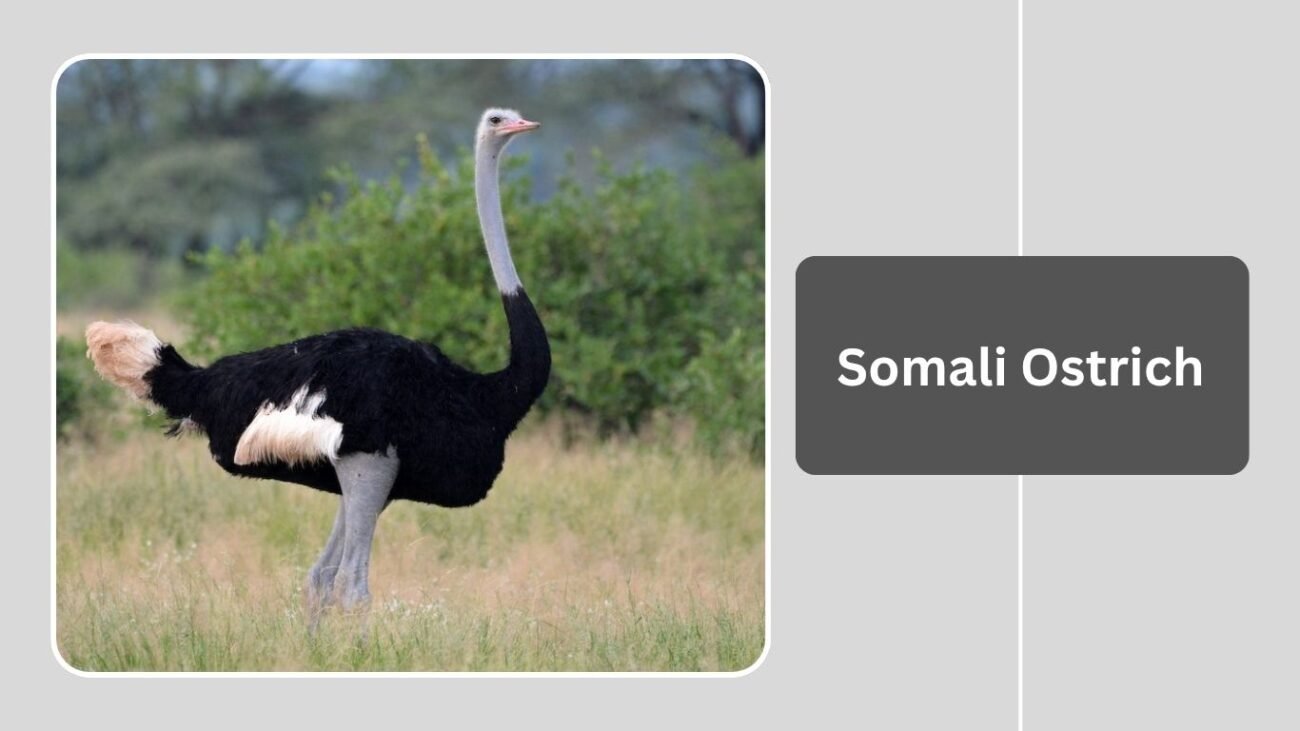
The Somali ostrich, also known as the blue-necked ostrich, is a distinct species native to the Horn of Africa. Recognized by its bluish-gray neck and legs, it thrives in arid regions and scrublands. Unlike other ostrich subspecies, it has unique plumage patterns and behaviors adapted to dry, hot environments.
Identification
- Scientific Name: Struthio molybdophanes
- Common Name: Somali Ostrich or Blue-necked Ostrich
- Neck and Legs: Bluish-gray with lighter patches during breeding season
- Feathers: Males have glossy black feathers with white wingtips; females are brownish-gray
- Height: Around 2.5 meters (8 feet) tall
- Weight: Between 90–130 kg (200–285 lbs)
- Eyes: Large and dark, adapted for desert visibility
- Distinctive Trait: Narrower neck and more vivid coloration than other ostrich species
Habitat
The Somali ostrich is found across Ethiopia, Kenya, Somalia, and parts of Djibouti. It prefers dry savannas, open plains, and thornbush scrublands, where it can spot predators easily. Its physiology allows it to withstand high temperatures and long periods without direct water sources, drawing moisture from plants it consumes.
Behaviors
Somali ostriches are generally solitary or live in small flocks of up to five individuals. Males are territorial, especially during mating season, when they display dramatic wing-flapping and booming calls. They are known for their incredible running speed, reaching up to 70 km/h (43 mph) to escape predators. During breeding, males dig shallow nests in the sand for females to lay eggs.
Diet and Lifecycle
These ostriches are omnivorous, eating a mix of plants, seeds, roots, and insects. They can survive without water for weeks, obtaining hydration from vegetation. Females lay 7–15 eggs per clutch, which are incubated by both parents — males at night and females during the day. Chicks grow quickly and can run within days of hatching, becoming self-sufficient within six months.
2. North African Ostrich (Struthio camelus camelus)
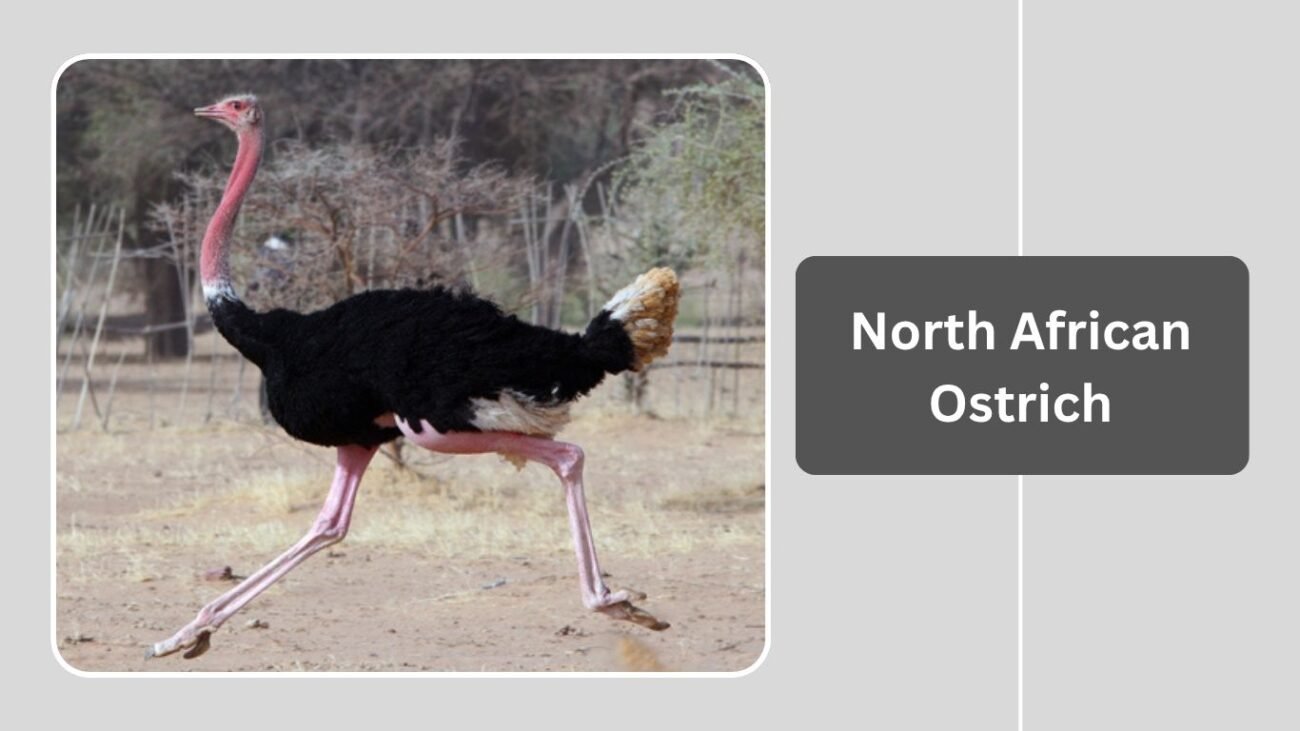
The North African ostrich, also known as the red-necked ostrich or Barbary ostrich, is the largest and most powerful of all ostrich subspecies. Once widespread across North Africa, it now survives in small, protected populations. Its striking red neck and legs make it easily recognizable, especially during breeding season when the colors intensify.
Identification
- Scientific Name: Struthio camelus camelus
- Common Name: North African Ostrich, Red-necked Ostrich, or Barbary Ostrich
- Neck and Legs: Bright red to pinkish-red, especially vivid in males
- Feathers: Males have bold black plumage with white wing and tail feathers; females are light brown
- Height: Up to 2.8 meters (9 feet) tall — the tallest of all ostriches
- Weight: Around 140–160 kg (310–350 lbs)
- Eyes: Large and deep-set, providing wide desert vision
- Distinctive Trait: Brilliant red skin and long legs built for endurance running
Habitat
The North African ostrich inhabits Saharan and Sahel regions, spanning Chad, Niger, Mali, and Sudan. It thrives in semi-arid plains, desert edges, and open savannas, where it uses its height to spot threats from a distance. Once roaming from Morocco to Egypt, its population has drastically declined due to hunting and habitat loss.
Behaviors
These ostriches are highly territorial during breeding seasons. Males perform impressive courtship dances involving rhythmic wing movements and booming sounds. Outside mating periods, they travel in small groups or join mixed herds of antelopes and zebras for protection. They can sprint up to 72 km/h (45 mph) and maintain stamina over long distances to escape predators.
Diet and Lifecycle
The North African ostrich feeds primarily on dry grasses, desert shrubs, seeds, and small insects. It can survive extreme heat by conserving water and obtaining moisture from plants. Females lay 10–15 eggs in communal nests, which are the dominant male guards. Chicks hatch after about 42 days, growing rapidly and achieving near-adult size within one year.
3. Masai Ostrich (Struthio camelus massaicus)
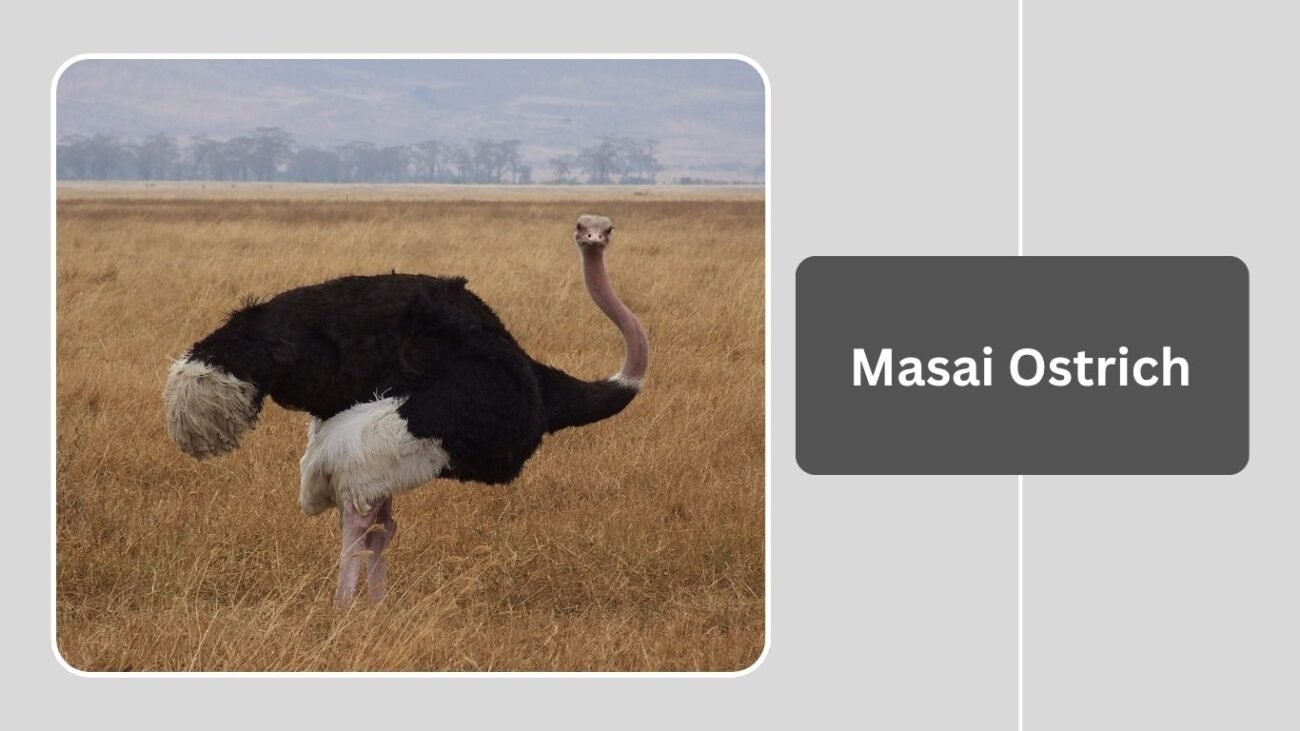
The Masai ostrich, also known as the pink-necked ostrich or East African ostrich, is native to the open grasslands and savannas of East Africa. It is famous for its vibrant pink neck and legs, particularly in males during breeding season. This subspecies is slightly smaller than the North African ostrich but highly adaptable and fast.
Identification
- Scientific Name: Struthio camelus massaicus
- Common Name: Masai Ostrich or Pink-necked Ostrich
- Neck and Legs: Bright pink in males, light grayish-pink in females
- Feathers: Males display black plumage with white tail feathers; females are gray-brown
- Height: Around 2.5–2.7 meters (8–9 feet)
- Weight: Between 100–145 kg (220–320 lbs)
- Distinctive Trait: Pinkish neck and legs with slightly more delicate body structure than northern subspecies
- Distribution: Predominantly found in Kenya, Tanzania, and southern Ethiopia
Habitat
Masai ostriches inhabit open grasslands, dry plains, and savanna woodlands. They are commonly seen in Serengeti National Park, Amboseli, and Tsavo. Their preference for open habitats allows them to detect predators easily, while tall grasses provide cover for nesting and protection of chicks.
Behaviors
These ostriches are highly social, living in small groups or large flocks depending on the season. Males are territorial and engage in striking courtship displays, lowering their wings and stamping the ground to attract females. Masai ostriches are excellent runners, reaching speeds of 70 km/h (43 mph). They also exhibit cooperative breeding, where multiple females may lay eggs in one nest guarded by a dominant pair.
Diet and Lifecycle
Masai ostriches are omnivorous, feeding on a mix of plants, seeds, small lizards, and insects. They can survive long dry periods by extracting moisture from food. Females lay 10–20 eggs in communal nests, which hatch after 42–46 days. The chicks are well-camouflaged and grow rapidly under the protection of both parents.
4. Southern Ostrich (Struthio camelus australis)
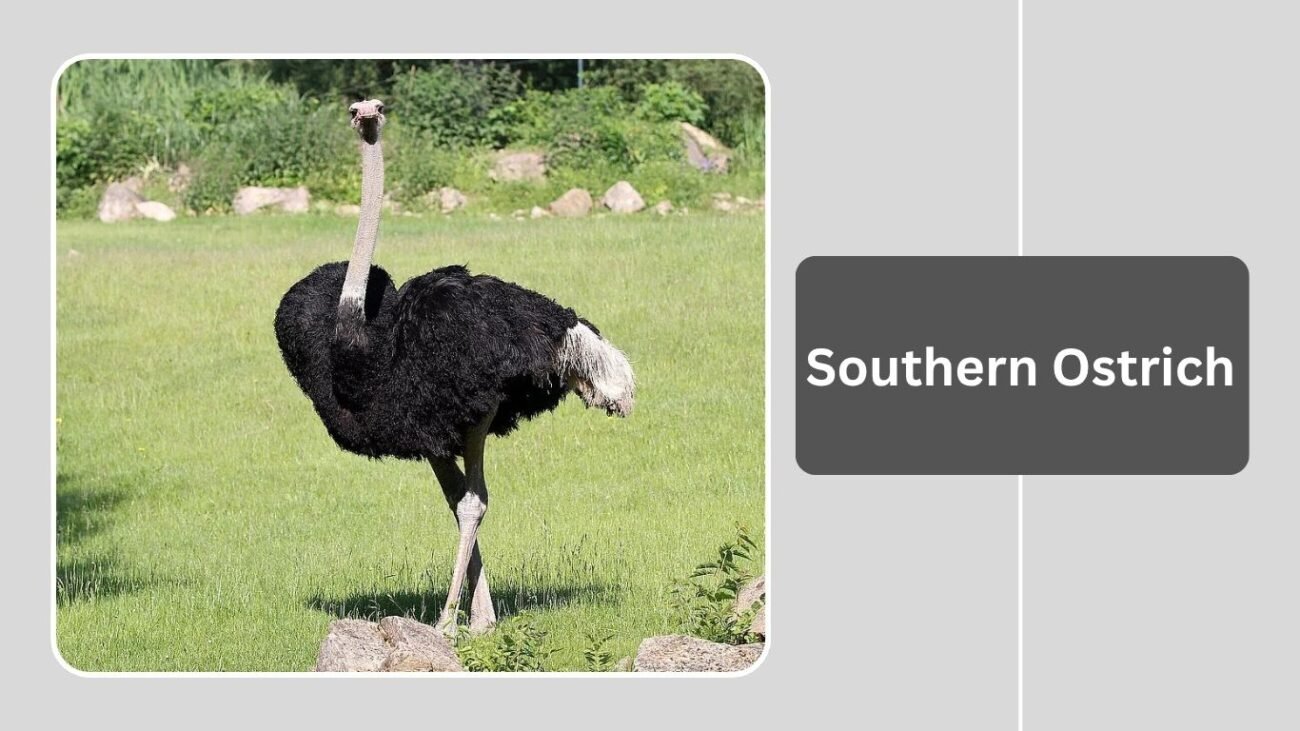
The Southern ostrich, often called the South African ostrich or black-necked ostrich, is the most common and commercially farmed subspecies. Found throughout southern Africa, it is known for its strong build, calm temperament, and economic value for leather, feathers, and meat production.
Identification
- Scientific Name: Struthio camelus australis
- Common Name: Southern Ostrich or South African Ostrich
- Neck and Legs: Light grayish-blue with minimal color change in males
- Feathers: Males have dense black feathers with white plumes; females are dull gray-brown
- Height: Up to 2.6 meters (8.5 feet)
- Weight: About 120–150 kg (265–330 lbs)
- Distinctive Trait: Compact body and softer temperament compared to wild northern subspecies
- Primary Range: South Africa, Namibia, Botswana, and Zimbabwe
Habitat
The Southern ostrich prefers open plains, semi-arid regions, and farmlands. It adapts well to managed environments, making it ideal for ostrich farming. In the wild, it lives in small family groups that roam across grasslands, often near waterholes or agricultural areas.
Behaviors
Southern ostriches are less aggressive than northern types, especially those bred in captivity. Males perform rhythmic mating dances and protect nests from predators such as jackals and mongooses. They communicate through deep booming calls, wing signals, and posture. When threatened, they run at high speeds or crouch low to blend with the landscape.
Diet and Lifecycle
Their diet includes grasses, leaves, roots, flowers, and small invertebrates. Being efficient foragers, they graze during cooler hours and rest in the heat. In farms, they are fed nutrient-rich grains and greens. Females lay 10–18 eggs per clutch, with incubation lasting around 42 days. Chicks mature quickly and are ready for breeding within 18–24 months.
5. Arabian Ostrich (Struthio camelus syriacus)
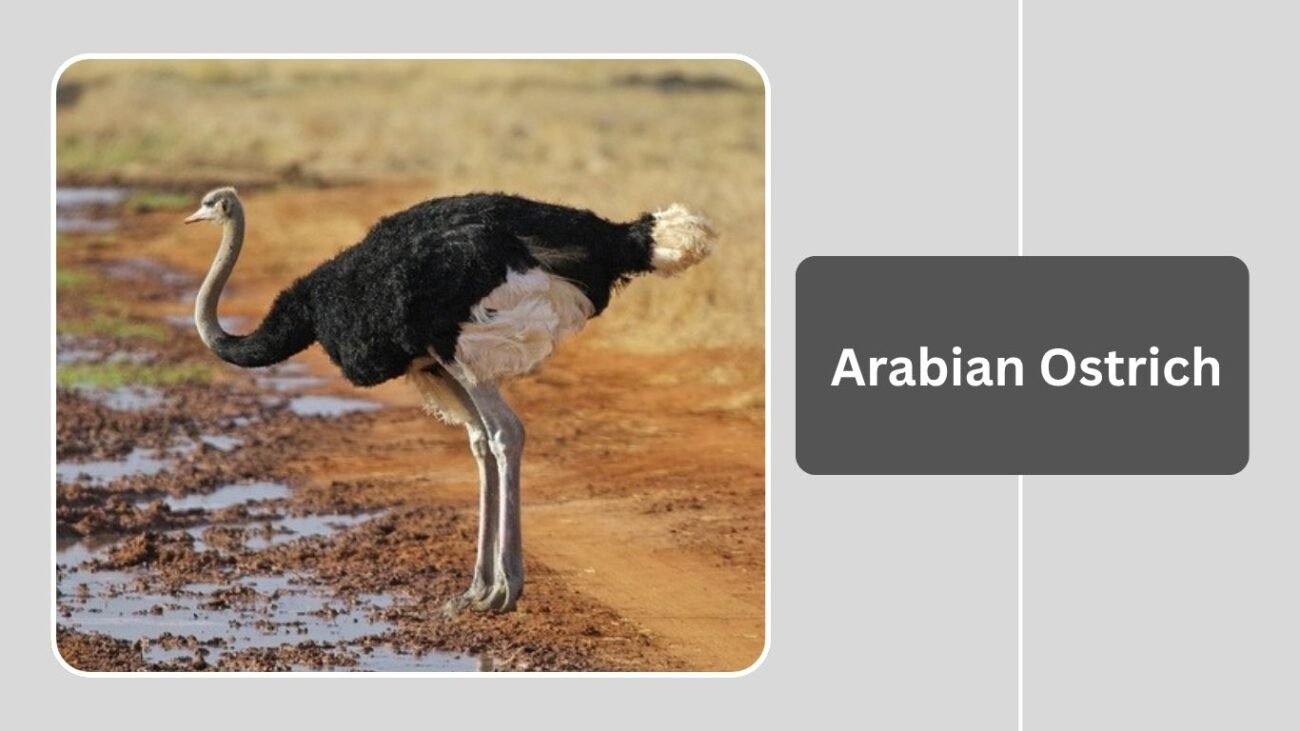
The Arabian ostrich, also known as the Syrian ostrich, was once native to the Arabian Peninsula and parts of the Middle East. Sadly, this subspecies became extinct in the mid-20th century due to overhunting, egg collection, and habitat destruction. It was smaller than its African relatives but shared many of the same adaptive traits for desert life.
Identification
- Scientific Name: Struthio camelus syriacus
- Common Name: Arabian Ostrich or Syrian Ostrich
- Neck and Legs: Pale pinkish-gray with lighter tones
- Feathers: Males had black plumage with white wing edges; females were sandy brown
- Height: Around 2.3 meters (7.5 feet)
- Weight: Approximately 90–110 kg (200–240 lbs)
- Distinctive Trait: Slender body and pale coloration suited for desert environments
- Status: Extinct (last confirmed sighting in the 1940s)
Habitat
The Arabian ostrich once roamed the Arabian deserts, Iraq, Syria, and Jordan, thriving in open dunes, semi-desert plains, and scrublands. These regions offered ample space and sparse vegetation, which helped camouflage the birds from predators. However, expanding human settlements and overhunting led to their extinction.
Behaviors
Like other ostriches, the Arabian species was nomadic, moving with seasonal rains to find food. Males were territorial during breeding seasons, performing elaborate dances to attract females. They were known for their high endurance and ability to survive on minimal water by relying on moisture from food sources.
Diet and Lifecycle
Arabian ostriches fed mainly on dry grasses, desert herbs, seeds, and insects. They likely laid 10–15 eggs per clutch in shallow sand nests, incubated by both parents. Their chicks matured quickly, though little direct data exists due to early extinction. Today, conservationists use genetic studies from museum specimens to understand their connection to living ostrich species.
6. Barbary Ostrich (Struthio camelus camelus)
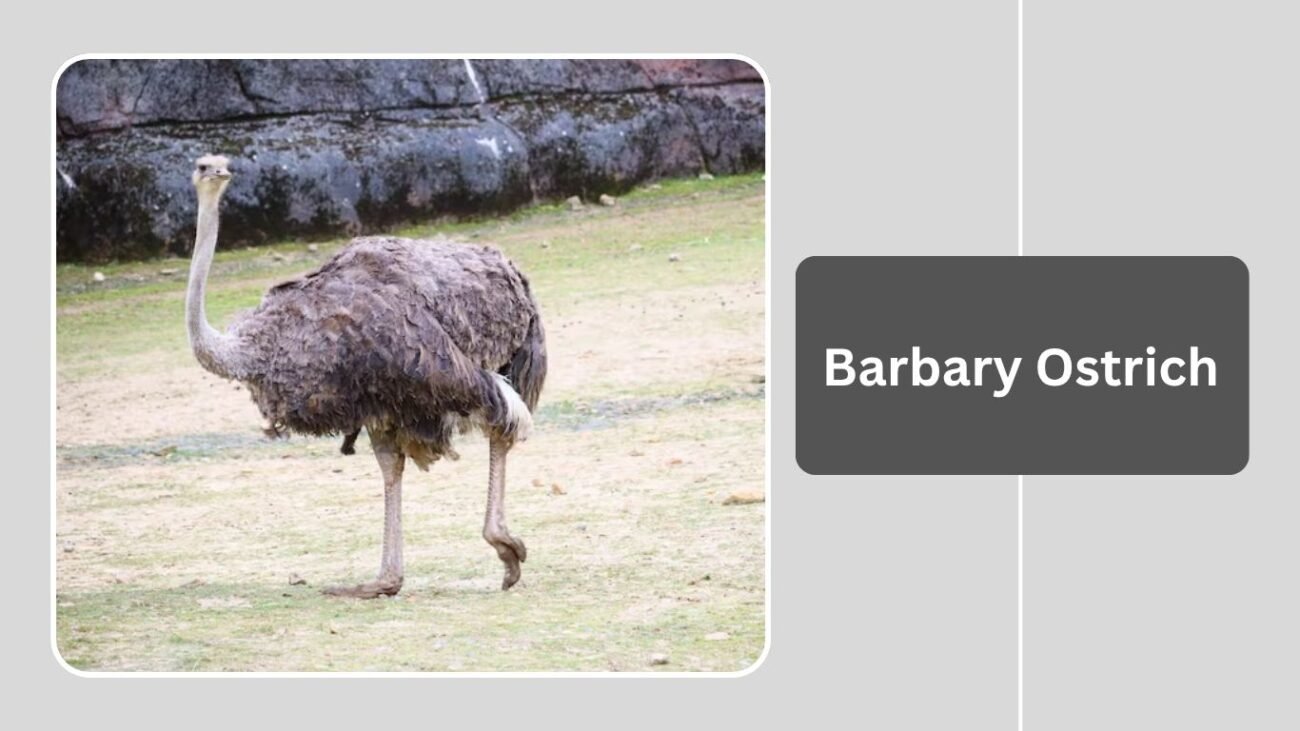
The Barbary ostrich, often considered a population of the North African ostrich, once inhabited vast areas across the Sahara and North Africa. It is renowned for its striking red neck and powerful build. Despite severe population decline, reintroduction programs have brought this subspecies back to several protected regions.
Identification
- Scientific Name: Struthio camelus camelus
- Common Name: Barbary Ostrich or Red-necked Ostrich
- Neck and Legs: Deep red in males, pinkish-red in females
- Feathers: Males feature bold black plumage with white tails; females are dusty brown
- Height: Up to 2.7 meters (9 feet)
- Weight: Around 130–150 kg (285–330 lbs)
- Distinctive Trait: Brilliant red coloring and exceptional leg strength
- Distribution: Native to Morocco, Algeria, and Chad; now mostly in protected reserves
Habitat
The Barbary ostrich is adapted to Saharan semi-desert zones, preferring grassy oases and desert edges where food is accessible. It tolerates extreme temperatures and can travel long distances in search of water. Today, rewilding projects in Morocco and Tunisia have helped re-establish stable populations in protected parks.
Behaviors
These ostriches are territorial during mating seasons, with males defending areas through loud calls and visual displays. Outside the breeding period, they live in small herds of 5–10 individuals. Their powerful legs make them exceptional runners, reaching speeds over 70 km/h (43 mph), and they can deliver lethal kicks to predators when cornered.
Diet and Lifecycle
Barbary ostriches consume shrubs, roots, seeds, and small insects, relying heavily on desert vegetation for moisture. Breeding occurs after rainy seasons when food is abundant. Females lay 10–18 eggs in shallow nests guarded by the dominant male. Chicks hatch after six weeks, and both parents share duties of care and defense. Their lifespan in the wild can reach 40–45 years under favorable conditions.
7. Red-necked Ostrich (Struthio camelus camelus)
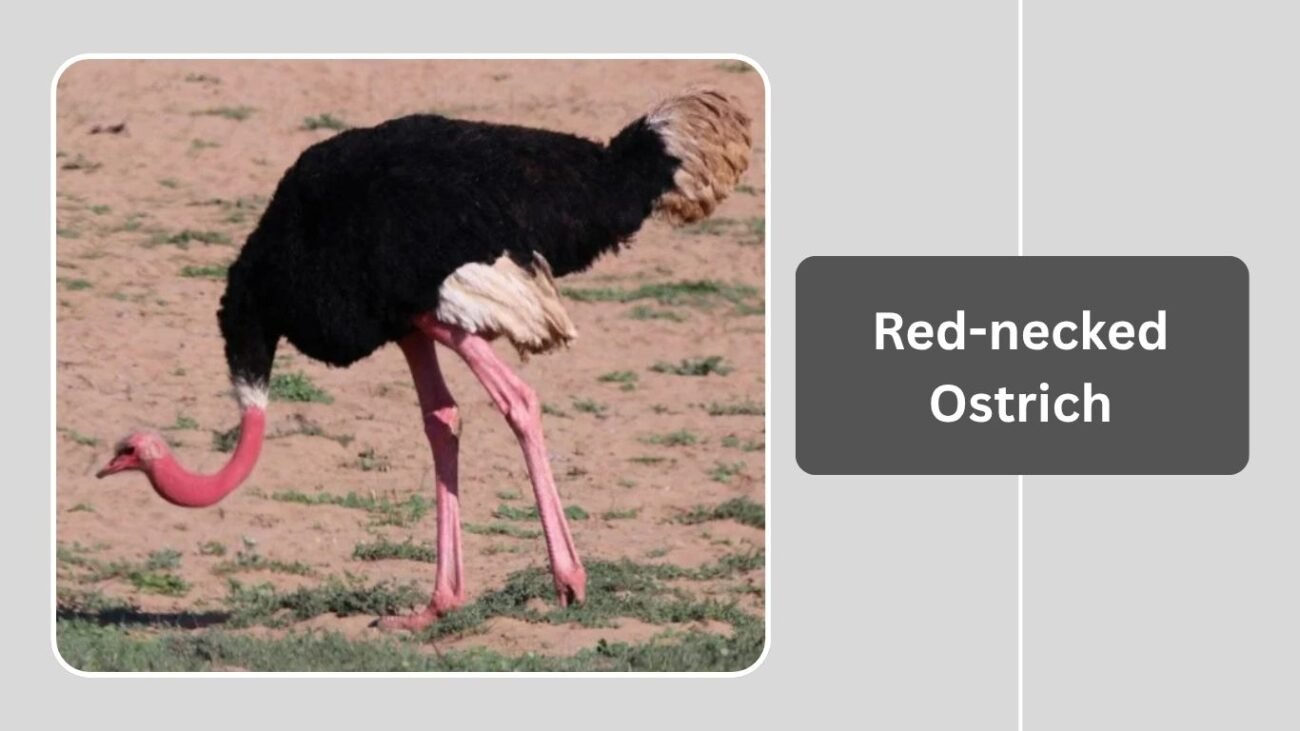
The Red-necked ostrich is one of the most recognizable and largest ostrich subspecies. Known for its vivid red neck and legs, it thrives across parts of central and northern Africa. This subspecies is also referred to as the Sahel or North African ostrich, often overlapping geographically with the Barbary ostrich.
Identification
- Scientific Name: Struthio camelus camelus
- Common Name: Red-necked Ostrich or North African Ostrich
- Neck and Legs: Bright red to pinkish-red, especially vivid during mating season
- Feathers: Males are jet black with white wing and tail plumes; females appear sandy brown
- Height: Up to 2.8 meters (9 feet) — the tallest ostrich subspecies
- Weight: Around 145–160 kg (320–350 lbs)
- Distinctive Trait: Strong, muscular legs and red skin coloration
- Primary Range: Chad, Niger, Sudan, Mali, and northern Cameroon
Habitat
Red-necked ostriches live primarily in Sahelian and semi-desert grasslands, areas that border the Sahara Desert. They favor open plains and dry savannas where visibility is excellent for detecting predators. Adapted to extreme heat, they are capable of surviving long periods without water, drawing moisture from the vegetation they eat.
Behaviors
This ostrich is territorial and solitary during breeding, but may form loose flocks during migration or dry seasons. Males perform spectacular dances to attract females — kneeling, spreading wings, and producing low booming sounds. They are extremely fast runners, using their long strides and strong legs to evade threats.
Diet and Lifecycle
Red-necked ostriches eat dry grasses, desert fruits, seeds, and insects. They can also ingest small stones to help grind food internally. Breeding occurs during rainy periods, when resources are abundant. Females lay 10–20 eggs in communal nests, incubated by both sexes. Chicks mature quickly, reaching independence within 6–8 months and full maturity by 2–3 years.
8. Black-necked Ostrich (Struthio camelus australis)
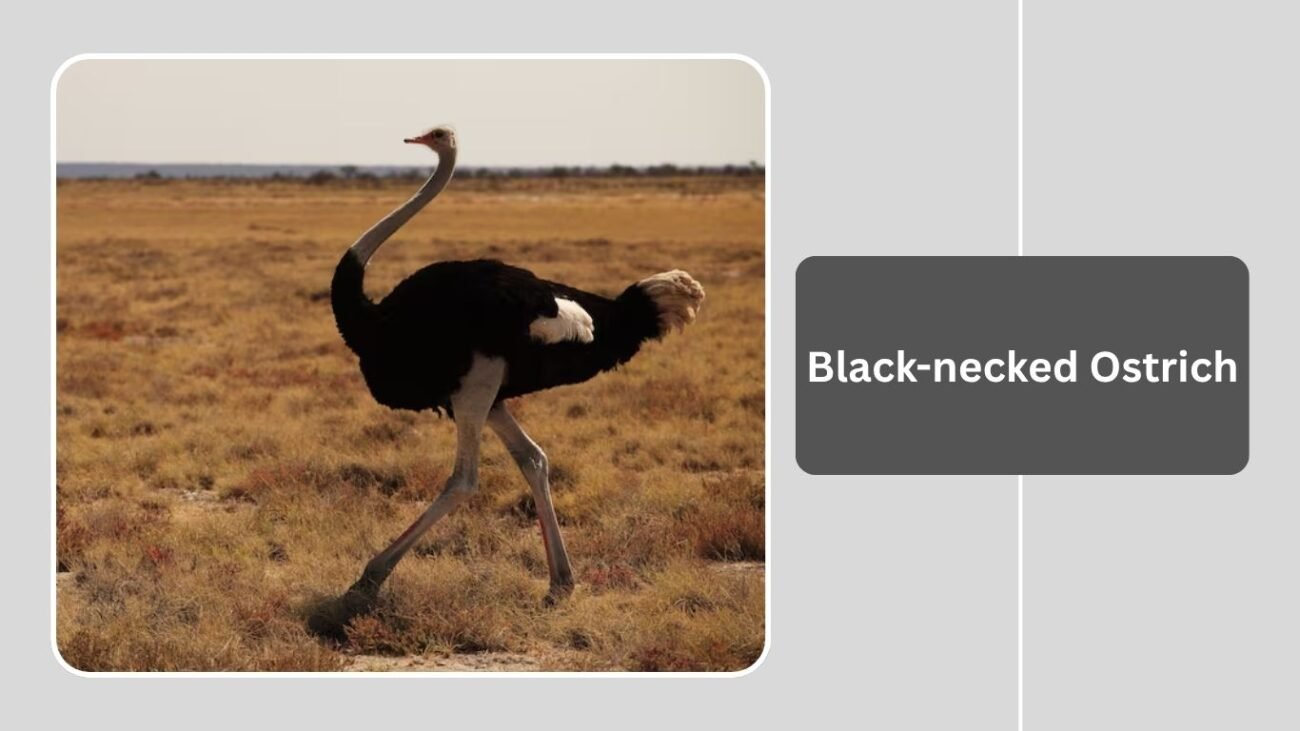
The Black-necked ostrich, commonly associated with southern Africa, is one of the most domesticated and farmed subspecies. Known for its calm temperament and adaptability, it is a cornerstone of the ostrich farming industry. Despite its name, its neck color is grayish-blue rather than true black.
Identification
- Scientific Name: Struthio camelus australis
- Common Name: Black-necked Ostrich or South African Ostrich
- Neck and Legs: Grayish-blue with darker shading, especially in males
- Feathers: Males are black with white tails and wings; females are dull brown-gray
- Height: Approximately 2.6 meters (8.5 feet)
- Weight: Around 120–145 kg (265–320 lbs)
- Distinctive Trait: Calm temperament and suitability for domestication
- Primary Range: South Africa, Namibia, and Botswana
Habitat
Black-necked ostriches inhabit open grasslands, farmland regions, and semi-arid plains. They are well-suited to both wild and managed environments. On farms, they thrive in open enclosures where they can graze freely. In the wild, they prefer areas with sparse vegetation for easy visibility and predator avoidance.
Behaviors
These ostriches are generally docile and sociable, often forming small family groups. Males are known for their rhythmic mating displays and deep booming calls. Unlike some other subspecies, the black-necked ostrich adapts easily to human presence and can coexist peacefully in agricultural settings.
Diet and Lifecycle
Their diet consists mainly of plants, grasses, flowers, seeds, and insects. On farms, they are fed supplemental grains, greens, and minerals to enhance egg production and feather quality. Females lay 10–15 eggs per clutch, with incubation lasting 42–45 days. Hatchlings grow rapidly and are often raised under controlled temperatures for better survival. In ideal conditions, they can live over 40 years.
9. Blue-necked Ostrich (Struthio camelus massaicus)
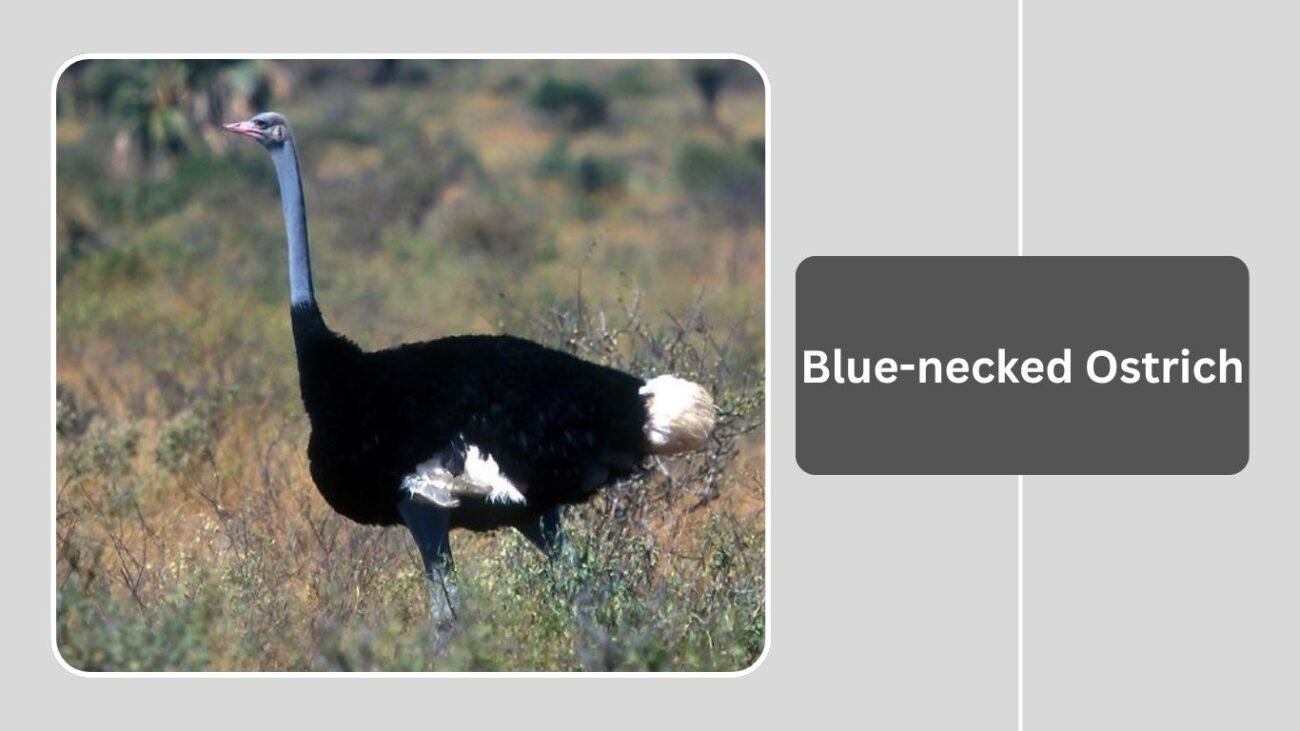
The Blue-necked ostrich, also known as the East African ostrich, is a vibrant subspecies distinguished by its bluish-gray neck and legs. Found throughout the savannas of Kenya and Tanzania, it is both powerful and graceful, representing one of the most visually striking ostrich types in Africa.
Identification
- Scientific Name: Struthio camelus massaicus
- Common Name: Blue-necked Ostrich or East African Ostrich
- Neck and Legs: Pale blue to bluish-gray, especially prominent in males
- Feathers: Males are black with bright white wings and tails; females are brown-gray
- Height: Around 2.5–2.7 meters (8–9 feet)
- Weight: 100–130 kg (220–285 lbs)
- Distinctive Trait: Bluish neck and legs with sleek body proportions
- Primary Range: Kenya, Tanzania, and southern Ethiopia
Habitat
The Blue-necked ostrich thrives in open grasslands, dry plains, and acacia woodlands. It favors areas with sparse vegetation where it can easily detect predators. Its strong legs and long stride make it perfectly suited to the vast East African plains, where it can travel great distances in search of food.
Behaviors
These ostriches are social and mobile, often seen in mixed groups with antelope and zebras. Males establish territories during breeding seasons, performing elegant courtship dances that include wing displays and rhythmic bowing. Outside the mating season, they form larger flocks to migrate across feeding grounds.
Diet and Lifecycle
The Blue-necked ostrich is omnivorous, feeding on leaves, grass, seeds, roots, and small insects. It can survive long periods without direct water intake by absorbing moisture from plants. Females lay 10–18 eggs per nesting cycle, and chicks hatch after 42–44 days. Young birds grow quickly, reaching near-adult size by six months and sexual maturity within 18 months.
10. Kenyan Ostrich (Struthio camelus massaicus)
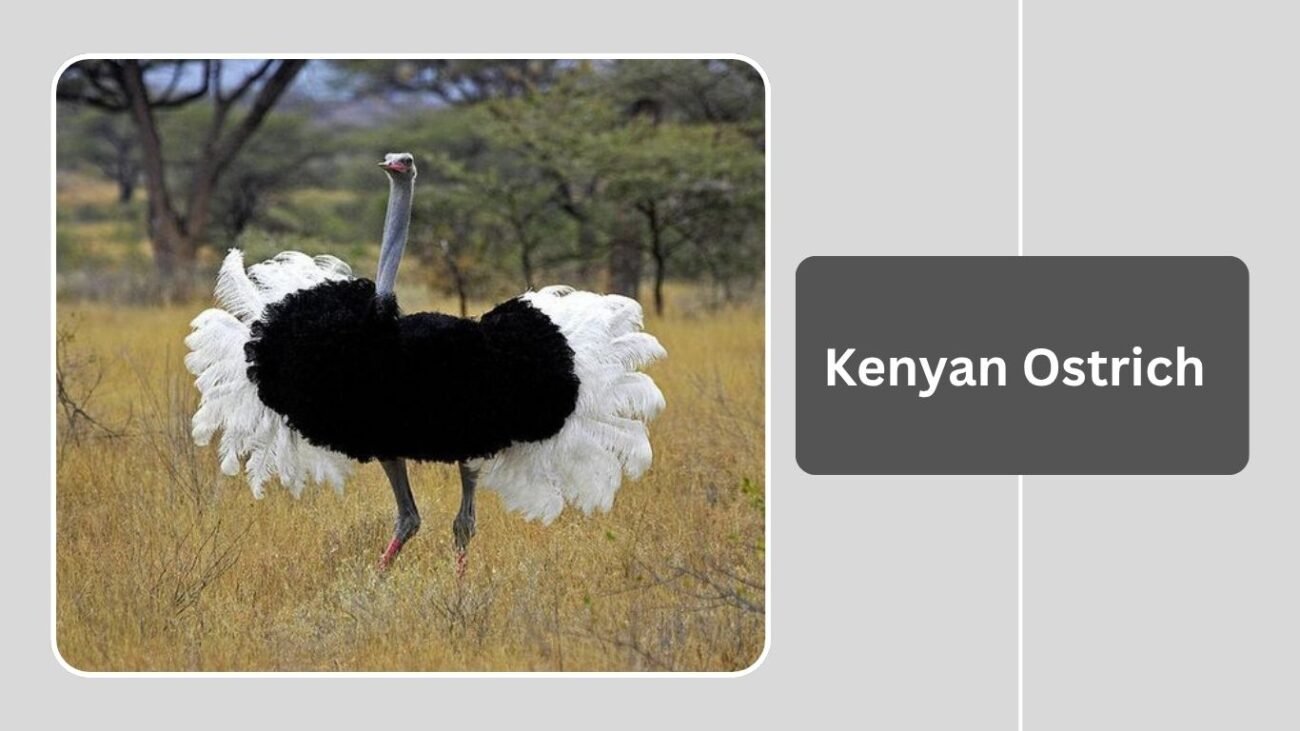
The Kenyan ostrich is a regional population of the East African (Blue-necked) ostrich, primarily found across Kenya’s savannas and open grasslands. It is admired for its dazzling blue neck, long stride, and strong adaptability to various climates. The subspecies plays an important role in Kenya’s wildlife tourism and conservation programs.
Identification
- Scientific Name: Struthio camelus massaicus
- Common Name: Kenyan Ostrich or East African Ostrich
- Neck and Legs: Light to deep blue in males; duller gray-blue in females
- Feathers: Males are glossy black; females have brown-gray plumage
- Height: 2.6 meters (8.5 feet) on average
- Weight: Around 120–145 kg (265–320 lbs)
- Distinctive Trait: Blue neck coloration with long, powerful legs
- Distribution: Widely found in Nairobi National Park, Tsavo, Samburu, and Amboseli
Habitat
Kenyan ostriches inhabit savannas, shrublands, and semi-arid grasslands. They prefer regions with scattered trees and tall grasses, providing both food and nesting cover. Their population thrives within national parks, wildlife conservancies, and even large private ranches, where they are protected from hunting and habitat loss.
Behaviors
Kenyan ostriches are active runners and social birds, often moving in pairs or small family units. During breeding season, males become territorial and perform impressive courtship rituals involving dance-like wing movements and booming calls. Outside mating periods, they may mix with grazing animals for protection and food efficiency.
Diet and Lifecycle
Their diet includes seeds, grasses, flowers, roots, and small invertebrates. They are able to survive long dry spells without drinking water by obtaining moisture from plants. Nests are shallow scrapes in sandy soil, where females lay 10–16 large eggs. The dominant male incubates them at night, while females take turns during the day. Chicks hatch after six weeks and grow rapidly under close parental supervision.
11. Tanzanian Ostrich (Struthio camelus massaicus)
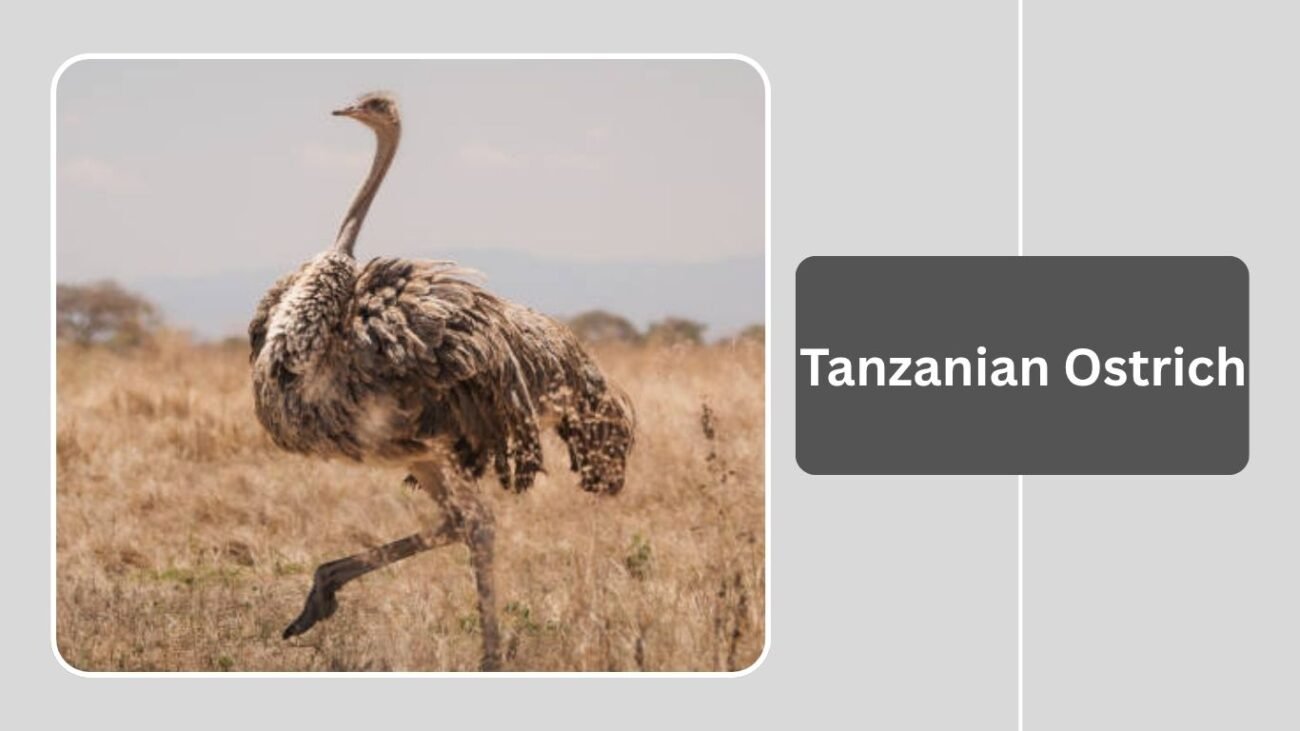
The Tanzanian ostrich, a regional variant of the East African or Blue-necked ostrich, thrives across the plains of Tanzania. This subspecies is a familiar sight in national parks such as the Serengeti and Ngorongoro. Its elegant blue neck, large size, and swift running ability make it one of Africa’s most iconic birds.
Identification
- Scientific Name: Struthio camelus massaicus
- Common Name: Tanzanian Ostrich or East African Ostrich
- Neck and Legs: Blue-gray in males; lighter gray in females
- Feathers: Males have deep black plumage with white tails; females are sandy brown
- Height: Around 2.5–2.7 meters (8–9 feet)
- Weight: 110–140 kg (240–310 lbs)
- Distinctive Trait: Long, graceful neck and strong, muscular legs
- Distribution: Found across Serengeti, Tarangire, Ngorongoro, and Lake Manyara regions
Habitat
Tanzanian ostriches inhabit savannas, grasslands, and arid plains, often alongside zebras, wildebeest, and gazelles. They prefer open terrain where visibility is high, helping them detect predators early. Seasonal migration patterns align with rainfall, as they follow vegetation growth across regions.
Behaviors
These ostriches are social and nomadic, often forming flocks of 10–50 individuals. Males are territorial during mating seasons, performing energetic courtship dances involving wing-flapping and booming calls. They are excellent runners, reaching speeds of 70 km/h (43 mph), and can maintain strong endurance over long distances.
Diet and Lifecycle
Tanzanian ostriches feed on grasses, seeds, flowers, roots, and insects. They also swallow small stones to grind food in their gizzards. Females lay 10–18 eggs in communal nests, which are incubated for about 42 days. Chicks are precocial, walking and running shortly after hatching. They reach full maturity within 18–24 months, living up to 40 years in the wild.
12. Namibian Ostrich (Struthio camelus australis)
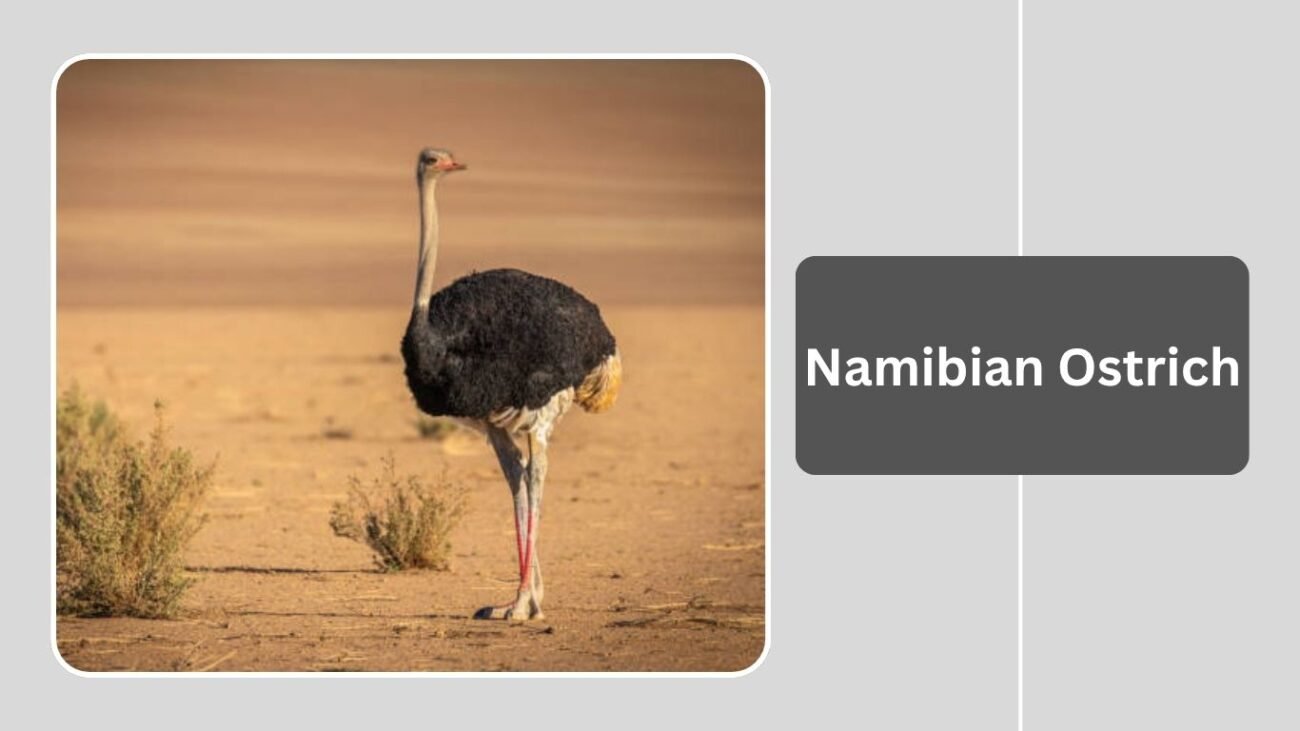
The Namibian ostrich, a southern African variant of the Southern or Black-necked ostrich, is well adapted to desert and semi-arid environments. It is a resilient bird that thrives in Namibia’s hot, dry climate, where few large animals can survive year-round.
Identification
- Scientific Name: Struthio camelus australis
- Common Name: Namibian Ostrich or Southern Ostrich
- Neck and Legs: Pale grayish-blue with slight dark shading
- Feathers: Males are deep black with white plumes; females are dusty gray-brown
- Height: Around 2.5 meters (8 feet)
- Weight: 100–135 kg (220–300 lbs)
- Distinctive Trait: Tough skin and extreme heat tolerance
- Primary Range: Found in Namibia, Botswana, and parts of Angola
Habitat
Namibian ostriches inhabit desert plains, savannas, and semi-arid scrublands, particularly in regions like the Namib Desert and Etosha National Park. They are highly adaptive, capable of surviving without direct water sources for long periods, relying instead on moisture-rich plants and morning dew.
Behaviors
These ostriches are nomadic desert dwellers, moving long distances in search of food. They are typically seen alone or in small family groups. During breeding, males construct shallow nests in sandy soil and perform elaborate dances to attract females. They also use wind direction and shade to keep eggs cool during incubation in hot climates.
Diet and Lifecycle
Namibian ostriches feed mainly on dry grasses, succulents, roots, and desert herbs, occasionally consuming insects for protein. They can regulate body temperature effectively to prevent overheating. Females lay 8–15 eggs per clutch, and chicks hatch after about 6 weeks. Despite the harsh environment, the young adapt quickly, learning to conserve energy and water early in life.
13. South African Ostrich (Struthio camelus australis)
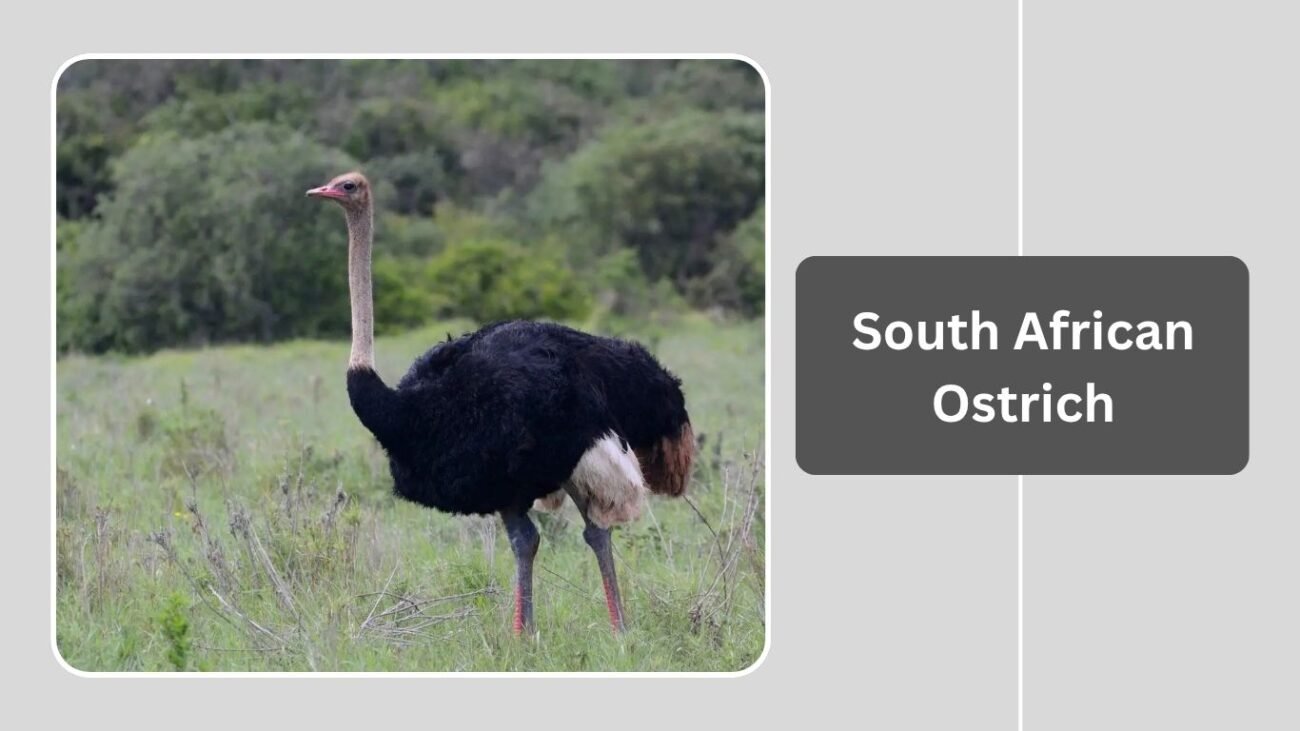
The South African ostrich is the most commercially farmed and globally recognized ostrich subspecies. Native to the southern regions of Africa, it is valued for its high-quality feathers, leather, and meat. Known for its calm temperament and adaptability, it thrives both in the wild and in controlled farm environments.
Identification
- Scientific Name: Struthio camelus australis
- Common Name: South African Ostrich or Cape Ostrich
- Neck and Legs: Light grayish-blue, sometimes pinkish during breeding
- Feathers: Males are glossy black with white tails and wings; females are brownish-gray
- Height: About 2.6 meters (8.5 feet)
- Weight: 120–150 kg (265–330 lbs)
- Distinctive Trait: Domestication-friendly temperament and consistent size
- Distribution: Found in South Africa, Lesotho, Botswana, and southern Namibia
Habitat
This ostrich favors open grasslands, dry plains, and semi-arid farmland regions. It adapts easily to human-managed environments, making it ideal for breeding and farming. In the wild, it forms small herds that graze alongside other herbivores, benefiting from shared predator detection.
Behaviors
South African ostriches are social and docile, especially in captivity. Males engage in rhythmic mating dances, extending wings and lowering their necks to attract females. They are powerful runners, capable of reaching 70 km/h (43 mph). On farms, they display less aggression due to selective breeding and regular human interaction.
Diet and Lifecycle
Their diet includes grasses, shrubs, seeds, flowers, and small insects. On farms, they are fed specialized grain mixes and greens to maintain healthy growth and egg production. Females lay 10–18 eggs per clutch, incubated for around 42 days. Chicks grow quickly, often reaching full size within a year. Their lifespan ranges from 40 to 50 years in captivity.
14. Ethiopian Ostrich (Struthio molybdophanes)
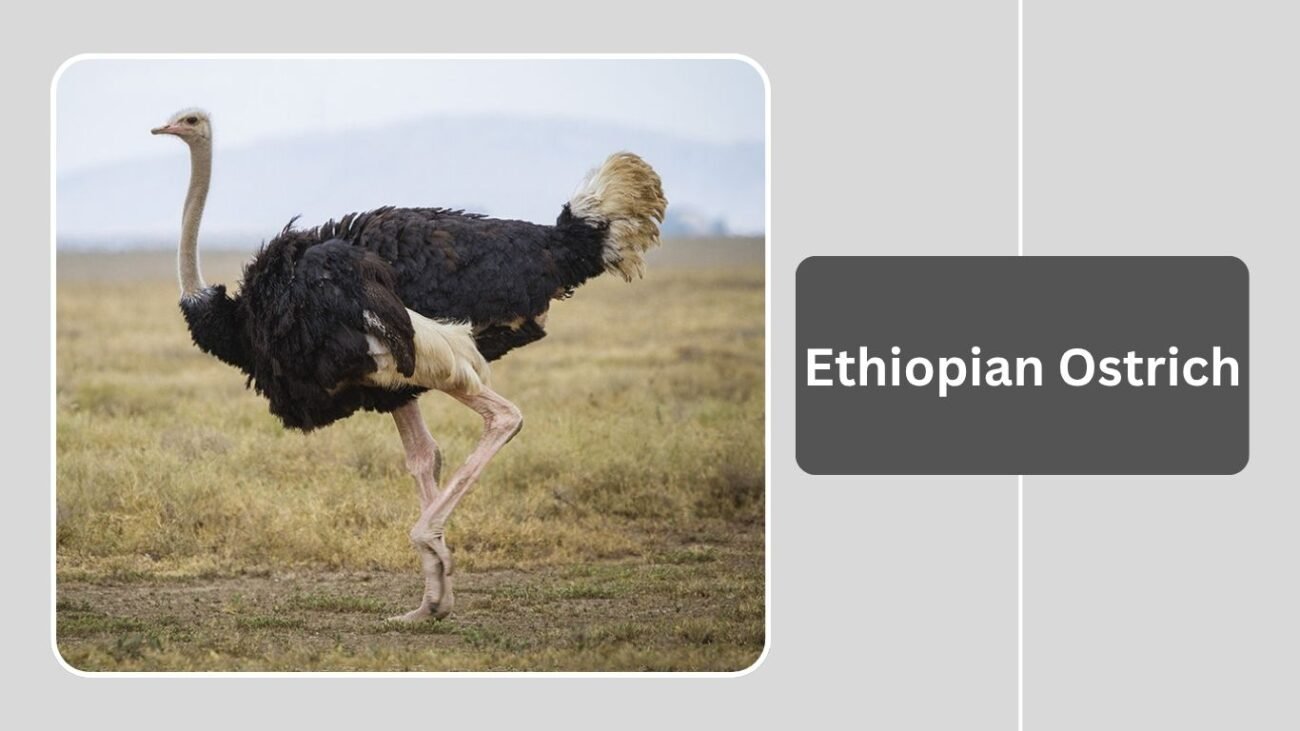
The Ethiopian ostrich, also known as the Horn of Africa ostrich, is a regional population of the Somali ostrich species. Distinguished by its bluish-gray neck and slender body, it is perfectly adapted to arid landscapes and scrub-covered plains. This subspecies plays an essential role in local ecosystems and has growing conservation importance.
Identification
- Scientific Name: Struthio molybdophanes
- Common Name: Ethiopian Ostrich or Horn of Africa Ostrich
- Neck and Legs: Bluish-gray with lighter tones during breeding
- Feathers: Males are black with white-tipped wings; females are brownish-gray
- Height: 2.4–2.6 meters (8–8.5 feet)
- Weight: 90–130 kg (200–285 lbs)
- Distinctive Trait: Blue neck and legs with leaner frame
- Distribution: Found in Ethiopia, Somaliland, and northern Kenya
Habitat
Ethiopian ostriches inhabit semi-arid scrublands, thornbush plains, and dry savannas. They prefer open terrain that allows for clear visibility against predators. Their adaptability helps them survive prolonged dry seasons, where water sources are scarce, by feeding on moisture-rich vegetation.
Behaviors
These ostriches are alert and fast, often seen traveling alone or in small flocks. Males are highly protective during nesting periods, defending eggs and chicks with aggressive postures and loud hissing. During courtship, males display vivid neck coloration and perform elaborate wing-fluttering dances to impress females.
Diet and Lifecycle
Their diet includes dry grasses, acacia leaves, seeds, fruits, and insects. Ethiopian ostriches can survive long periods without drinking water by metabolizing moisture from plants. Females lay 7–15 eggs, which hatch after 42 days of incubation. Chicks grow rapidly, reaching independence within six months and full maturity by two years. The species contributes significantly to seed dispersal in dry ecosystems.
15. Sudanese Ostrich (Struthio camelus camelus)
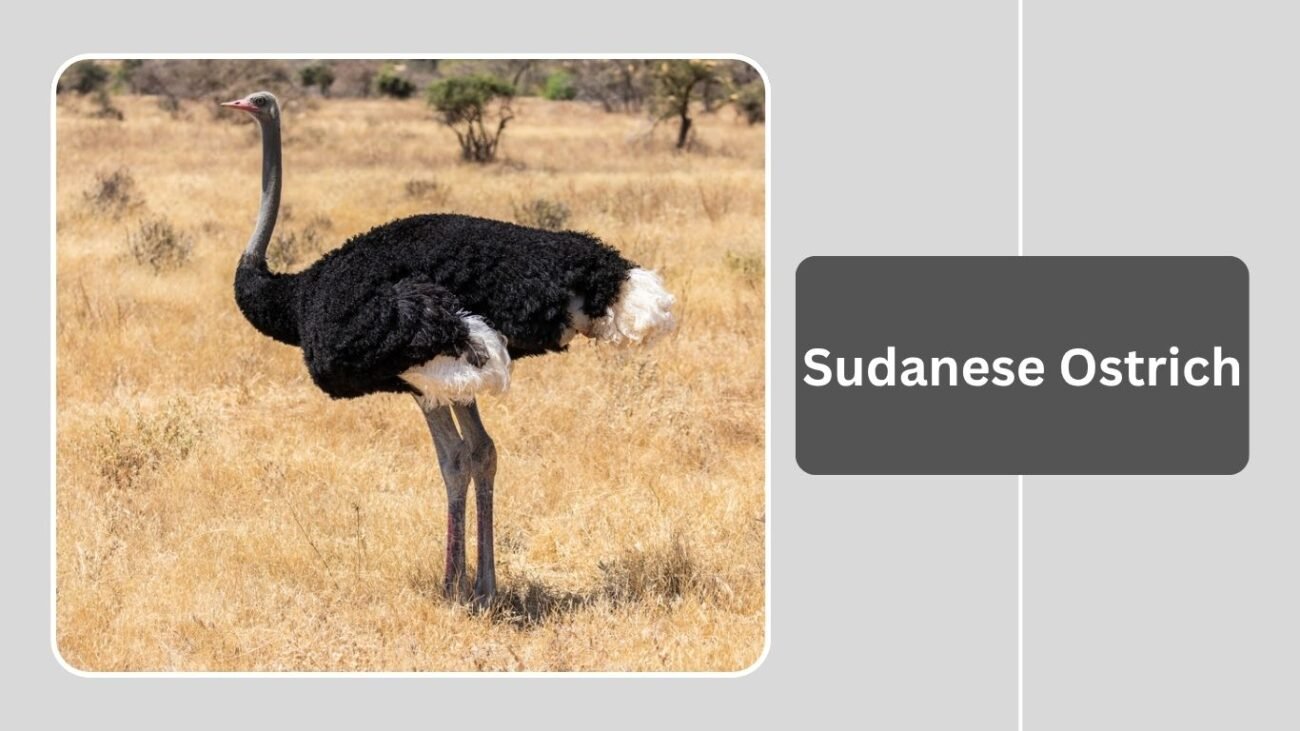
The Sudanese ostrich is a regional population of the North African (Red-necked) ostrich, found mainly in the Sahel and savanna regions of Sudan and South Sudan. Known for its striking red neck and strong build, it thrives in warm, open landscapes where visibility is high, helping it evade predators effectively.
Identification
- Scientific Name: Struthio camelus camelus
- Common Name: Sudanese Ostrich or Red-necked Ostrich
- Neck and Legs: Deep reddish-pink, intensifying during breeding seasons
- Feathers: Males are jet black with white tails and wing tips; females are light brown or sandy gray
- Height: 2.7–2.8 meters (9 feet)
- Weight: Around 145–160 kg (320–350 lbs)
- Distinctive Trait: Brilliant red skin and powerful, long legs suited for endurance running
- Distribution: Found across Sudan, South Sudan, Chad, and northern Central African Republic
Habitat
The Sudanese ostrich thrives in semi-arid grasslands, Sahelian plains, and open savannas. It prefers flat, dry terrain with scattered vegetation for feeding and nesting. During extreme heat, it uses shaded acacia areas or burrows in shallow dust baths to cool off. Its long legs allow it to travel vast distances across open plains in search of food.
Behaviors
This ostrich is territorial and dominant during breeding periods. Males attract females through rhythmic dances and deep booming calls. Outside the mating season, they form small flocks or join mixed herds of antelope for safety. The Sudanese ostrich can run at speeds of 70 km/h (43 mph) and uses its strong legs for both attack and defense when threatened.
Diet and Lifecycle
Sudanese ostriches are omnivorous, consuming dry grasses, leaves, seeds, roots, and small insects. They are well adapted to dry climates, capable of surviving long periods without direct water intake. Females lay 10–18 eggs per clutch, incubated by both parents for about 42 days. Chicks grow rapidly and begin foraging independently within a few weeks. Their lifespan in the wild averages 40–45 years.
16. Chadian Ostrich (Struthio camelus camelus)
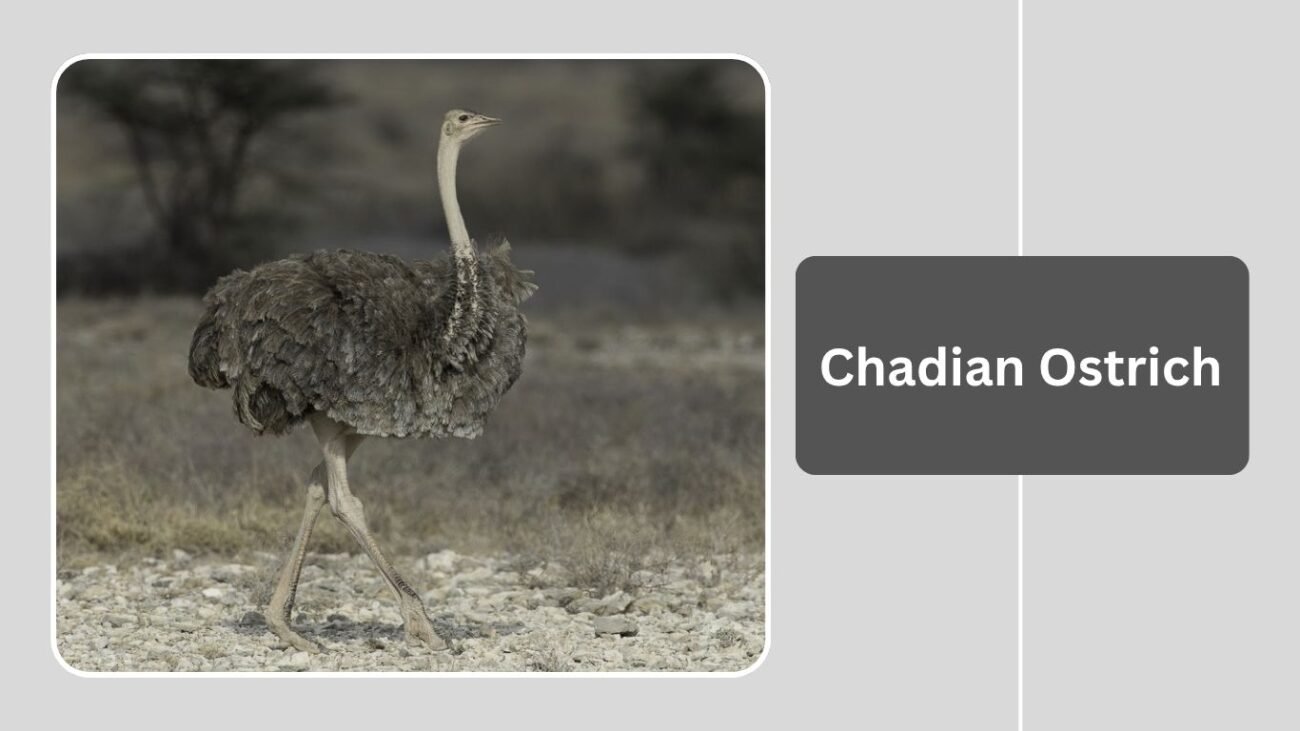
The Chadian ostrich is another population of the North African ostrich, native to the vast open plains and deserts of Chad and surrounding countries. Known for its endurance and adaptability, it has become a symbol of resilience in harsh desert environments. Conservation programs in the Sahara focus on restoring its dwindling population.
Identification
- Scientific Name: Struthio camelus camelus
- Common Name: Chadian Ostrich or Sahel Ostrich
- Neck and Legs: Bright red in males; dull pinkish in females
- Feathers: Males are black with white wing plumes; females are sandy brown
- Height: Around 2.6–2.8 meters (8.5–9 feet)
- Weight: 130–150 kg (285–330 lbs)
- Distinctive Trait: Long, muscular legs adapted for desert terrain
- Distribution: Chad, Niger, and northern Cameroon
Habitat
Chadian ostriches inhabit Sahelian grasslands, semi-desert regions, and dry river valleys. These birds are highly mobile, traveling long distances following seasonal rains and vegetation growth. They prefer areas with sparse trees and abundant open ground, which provides visibility and reduces ambush threats from predators.
Behaviors
They are nomadic and highly vigilant, often seen in pairs or small family groups. During mating, males perform elaborate dances while spreading their wings and producing low booming calls. The Chadian ostrich is particularly known for its long-distance endurance, capable of running for extended periods across sandy terrain without fatigue.
Diet and Lifecycle
Their diet consists of grasses, shrubs, seeds, and small insects, supplemented by pebbles that aid digestion. They can survive without standing water, extracting moisture from plants. Females lay 8–15 eggs in a communal nest guarded by a dominant male. Hatchlings emerge after six weeks of incubation and quickly learn survival skills under parental guidance. This subspecies can live up to 45 years in the wild if protected from poaching and habitat loss.
17. West African Ostrich (Struthio camelus camelus)
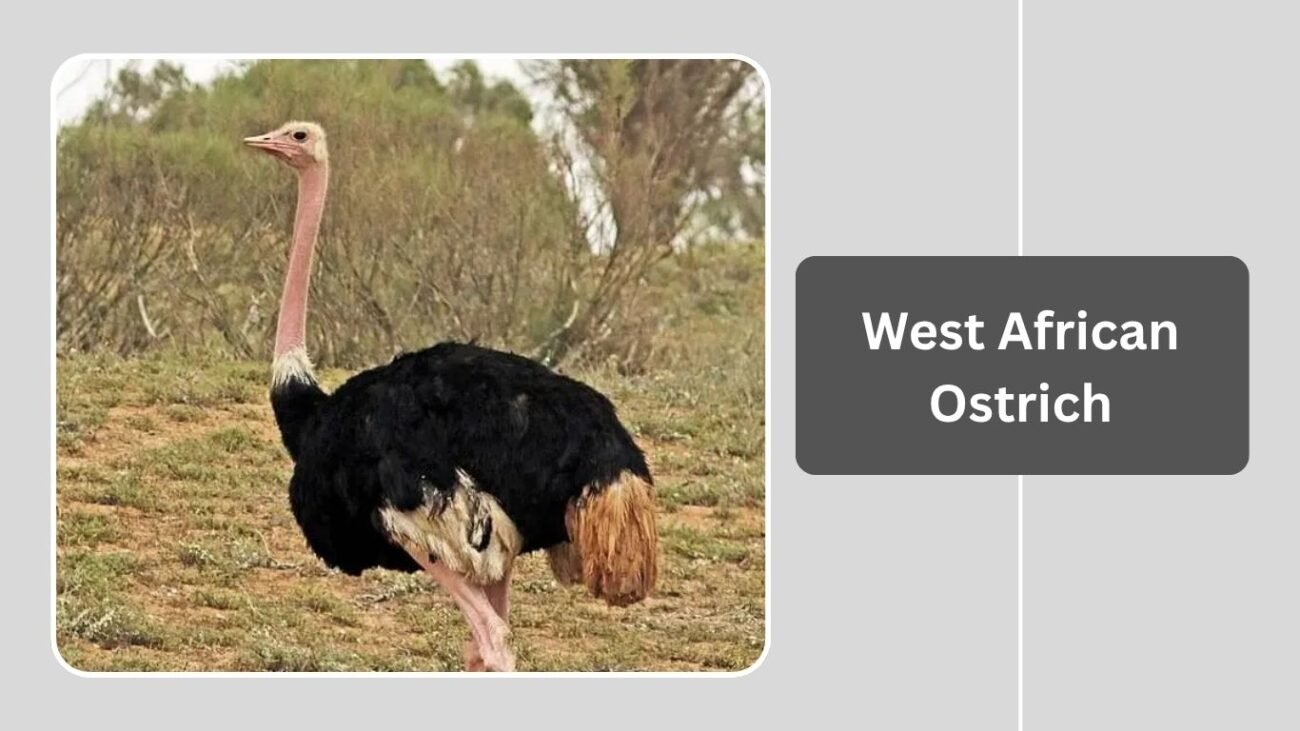
The West African ostrich, a regional form of the North African (Red-necked) ostrich, once roamed extensively across the Sahel and savanna regions of West Africa. Known for its vibrant red neck and large size, this subspecies is now endangered due to hunting and habitat fragmentation, though reintroduction efforts are underway in parts of Niger and Senegal.
Identification
- Scientific Name: Struthio camelus camelus
- Common Name: West African Ostrich or Sahel Ostrich
- Neck and Legs: Bright reddish-pink in males; duller rose in females
- Feathers: Males have deep black plumage with white wing and tail tips; females are sandy brown
- Height: Up to 2.7 meters (9 feet)
- Weight: 140–160 kg (310–350 lbs)
- Distinctive Trait: Prominent red neck and exceptional endurance in dry climates
- Distribution: Mali, Niger, Senegal, and Burkina Faso
Habitat
The West African ostrich inhabits open savannas, Sahelian grasslands, and desert margins. It is well adapted to arid conditions, tolerating high daytime temperatures and surviving without direct access to water. These birds typically roam in wide, open plains, using their excellent eyesight to spot predators from afar.
Behaviors
These ostriches are highly alert and territorial, especially during breeding season. Males perform dramatic courtship displays involving kneeling, feather spreading, and rhythmic wing movements. Flocks are typically small—5 to 10 birds—but may gather in larger groups during migration or after rainfall. Their defensive kicks are powerful enough to deter large predators like hyenas or jackals.
Diet and Lifecycle
The West African ostrich feeds on dry grasses, shrubs, seeds, flowers, and small insects. During droughts, they rely on moisture-rich plants for hydration. Females lay 10–16 eggs in shallow sandy nests, which are incubated by both parents for about 42 days. Chicks hatch fully feathered and can run within hours, reaching maturity within 18–24 months. Their average lifespan is 40–45 years in the wild.
18. East African Ostrich (Struthio camelus massaicus)
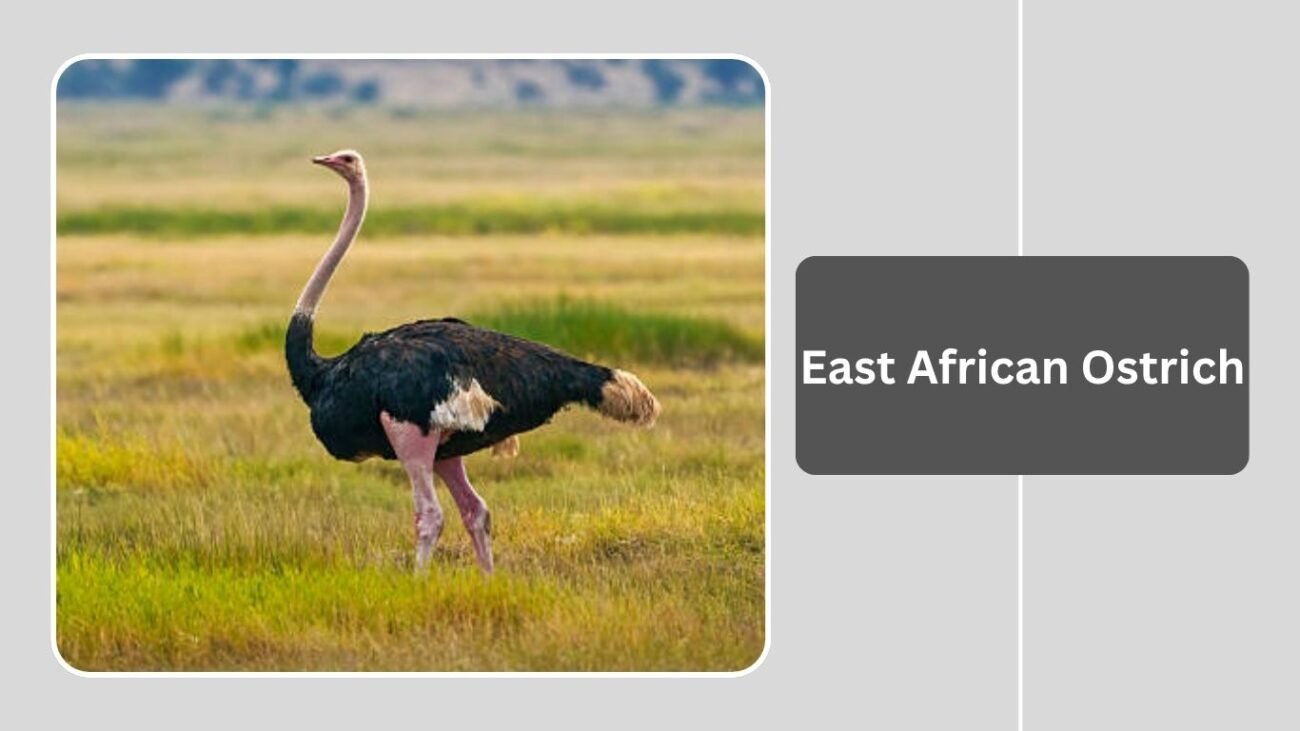
The East African ostrich, also known as the pink-necked ostrich, is one of the most widely distributed and well-studied ostrich subspecies. Found across Kenya, Tanzania, and parts of Uganda, it is famous for its brilliant pink neck and long stride, making it a highlight of East Africa’s iconic savannas.
Identification
- Scientific Name: Struthio camelus massaicus
- Common Name: East African Ostrich or Pink-necked Ostrich
- Neck and Legs: Bright pink in males, especially during mating; gray-pink in females
- Feathers: Males have striking black plumage with white tails; females are brownish-gray
- Height: 2.5–2.7 meters (8–9 feet)
- Weight: 110–140 kg (240–310 lbs)
- Distinctive Trait: Pink neck and legs with sleek, tall posture
- Distribution: Kenya, Tanzania, Uganda, and southern Ethiopia
Habitat
East African ostriches live in savannas, open grasslands, and arid shrublands. They prefer vast open areas with low vegetation, which allows them to detect predators easily. They are particularly abundant in the Serengeti, Amboseli, and Tsavo ecosystems, where they coexist with zebras and antelopes.
Behaviors
East African ostriches are highly social and often move in small groups or pairs. Males are territorial during breeding and perform elaborate courtship dances involving wing spreading, neck lowering, and rhythmic head movements. Outside of mating seasons, they may join mixed grazing groups for protection and food access.
Diet and Lifecycle
Their diet includes grasses, leaves, seeds, flowers, and insects, making them true omnivores. They can survive for weeks without drinking water, relying on moisture from food. Females lay 10–18 eggs in communal nests, which are incubated for 42–46 days. Chicks are cared for by both parents, growing rapidly and reaching independence within six months. Lifespan typically ranges between 40–50 years.
19. Arabian Desert Ostrich (Struthio camelus syriacus)
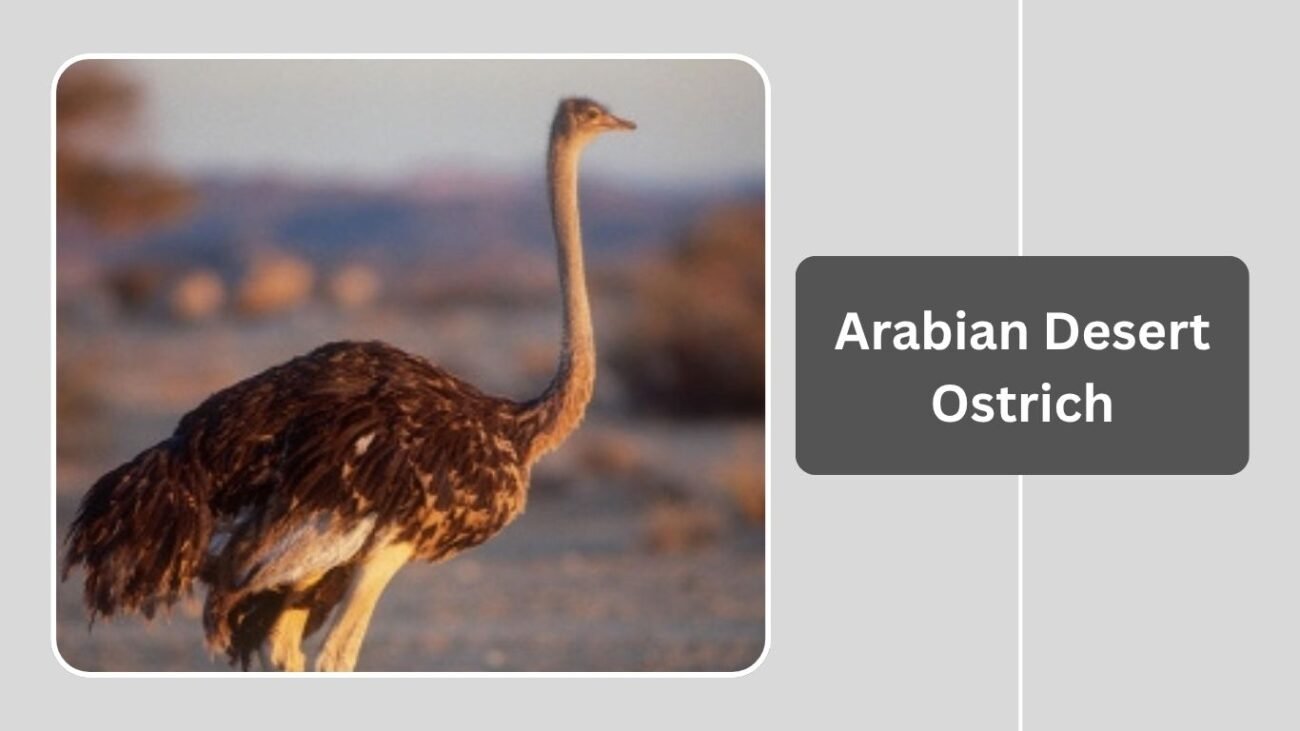
The Arabian Desert ostrich, a regional population of the Arabian or Syrian ostrich, once roamed across the deserts of the Arabian Peninsula. Adapted to harsh desert life, it was smaller and lighter than African ostriches, built for endurance in extreme heat. Sadly, this subspecies is now extinct, with the last confirmed sighting in the 1940s.
Identification
- Scientific Name: Struthio camelus syriacus
- Common Name: Arabian Desert Ostrich or Syrian Ostrich
- Neck and Legs: Pale grayish-pink with lighter tones
- Feathers: Males were black with white wing tips; females were sandy brown
- Height: About 2.3 meters (7.5 feet)
- Weight: 90–110 kg (200–240 lbs)
- Distinctive Trait: Slender frame, light plumage suited for desert camouflage
- Status: Extinct (mid-20th century)
- Former Range: Saudi Arabia, Iraq, Syria, Jordan, and Palestine
Habitat
The Arabian Desert ostrich thrived in arid plains, rocky deserts, and dry valleys of the Arabian Peninsula. It fed on hardy desert vegetation and could endure long periods without water. The bird was well adapted to high temperatures, conserving moisture efficiently and resting during the hottest hours of the day.
Behaviors
This ostrich was solitary or lived in small family groups. Males were known to patrol large territories during breeding season and to perform graceful dances to attract mates. They relied on camouflage and speed rather than aggression for survival. Unfortunately, overhunting and egg collection during the early 1900s led to its extinction.
Diet and Lifecycle
Arabian Desert ostriches fed on dry grasses, roots, desert herbs, and insects. They likely laid 8–15 eggs in shallow sand nests, incubated by both parents. Chicks matured rapidly to survive the harsh conditions. Today, genetic evidence shows this subspecies was closely related to African ostriches, prompting interest in potential reintroduction using hybrid populations.
20. Nubian Ostrich (Struthio camelus camelus)
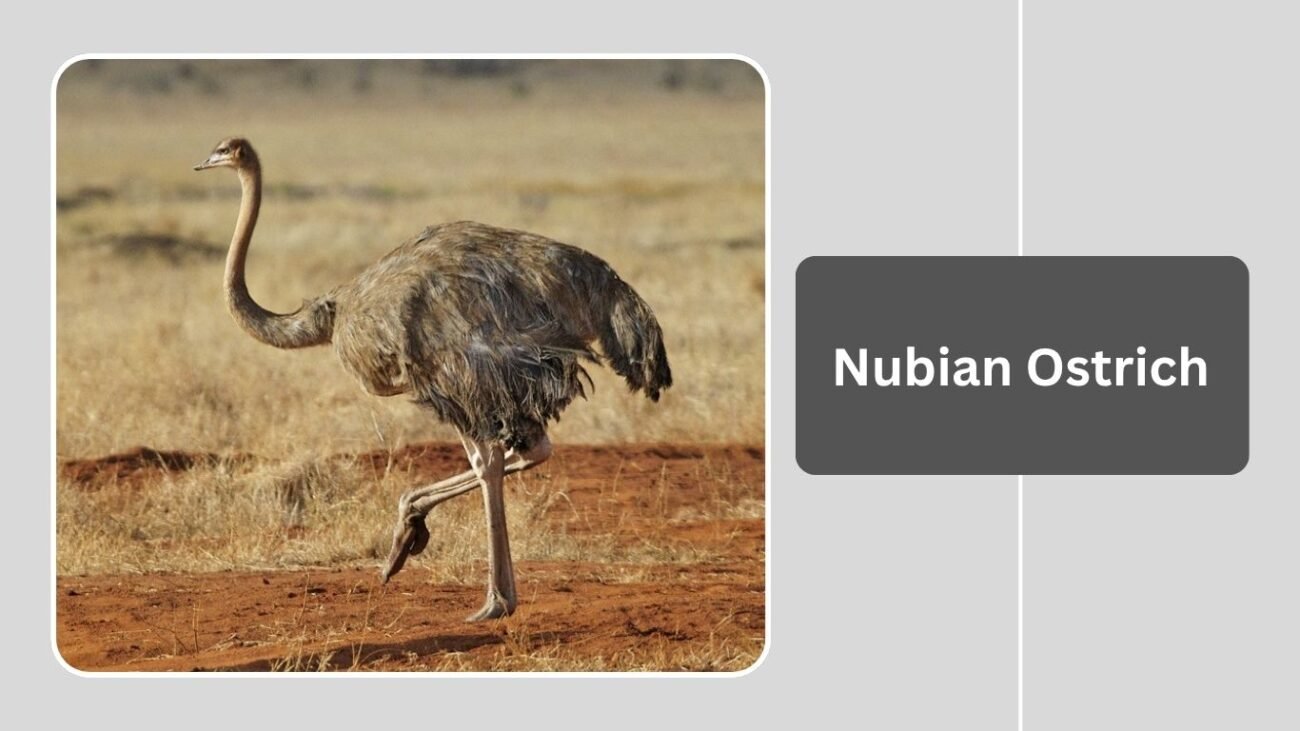
The Nubian ostrich, another form of the North African red-necked ostrich, once inhabited the Nile Valley and eastern Sudan. Distinguished by its bright red neck and tall stature, it played a vital role in the ecosystems of northeastern Africa. Although now rare, conservation efforts aim to restore its historical range through protected breeding programs.
Identification
- Scientific Name: Struthio camelus camelus
- Common Name: Nubian Ostrich or Nile Ostrich
- Neck and Legs: Bright red, especially during breeding in males
- Feathers: Males have black bodies with white tails and wings; females are light brown
- Height: 2.7–2.8 meters (9 feet)
- Weight: 140–160 kg (310–350 lbs)
- Distinctive Trait: Strong build with vivid red neck coloration
- Distribution: Sudan, Egypt (historically), and Eritrea
Habitat
Nubian ostriches inhabit semi-desert plains, dry grasslands, and river valley regions. They favor areas with sparse vegetation and access to open ground for nesting. Once common along the Nile, their populations declined drastically due to hunting and agricultural expansion but are now being reintroduced in controlled reserves.
Behaviors
These ostriches are alert, fast, and territorial, especially during mating periods. Males engage in dramatic displays, lowering their wings and swaying their necks while producing booming calls. They often form pairs or small family flocks. When threatened, they rely on high running speeds—up to 70 km/h (43 mph)—to escape predators.
Diet and Lifecycle
Nubian ostriches feed on grasses, seeds, flowers, fruits, and small insects. Their diet provides sufficient moisture to survive without drinking water for extended periods. Females lay 10–18 eggs per clutch, which hatch after 42 days of incubation. Both parents protect the chicks, which reach maturity within 18–24 months. With ongoing conservation efforts, the Nubian ostrich may once again thrive in its native lands.


