











The ostrich is the world’s largest bird and one of the most extraordinary animals on Earth. Native to Africa, it stands tall on the open plains and deserts, relying on strength, speed, and intelligence for survival. From its enormous eggs to its powerful legs, the ostrich is a true marvel of evolution — an ancient bird perfectly adapted to life on land rather than in the sky.
General Ostrich Facts
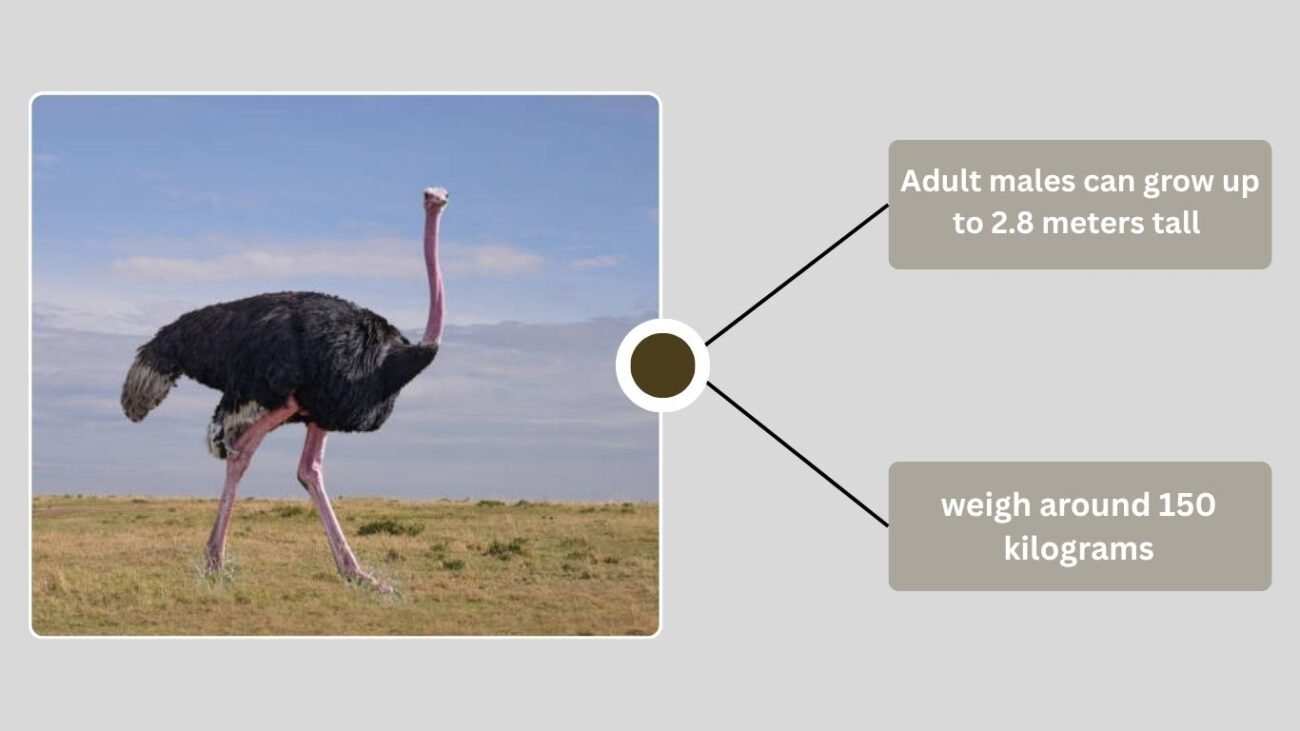
The World’s Largest Bird
The common ostrich (Struthio camelus) holds many records in the bird kingdom. Adult males can grow up to 2.8 meters tall and weigh around 150 kilograms. Despite being flightless, it’s the fastest bird on land, sprinting up to 70 km/h (43 mph) using its long, muscular legs.
Ostriches roam across sub-Saharan Africa, thriving in deserts, grasslands, and savannas where food is plentiful and open spaces help them detect predators from afar.
Unique Features
Unlike most birds, ostriches have only two toes on each foot, which helps them run faster and maintain balance. Their large eyes — about 5 centimeters in diameter — are the biggest of any land animal, giving them excellent long-distance vision.
Feathers on an ostrich are soft and loose, designed not for flight but for temperature control, shading them from the heat by day and trapping warmth at night. Together, these traits make the ostrich one of nature’s most efficient survivors.
Habitat and Adaptation

Natural Habitat
Ostriches prefer open grasslands, savannas, and semi-desert regions. They are most common in South Africa, Namibia, Botswana, and Kenya. The open terrain gives them clear visibility and space to run when danger approaches.
They coexist peacefully with grazing animals such as zebras and antelopes, often benefitting from shared predator warnings in the wild.
Adaptations for Survival
Ostriches are masters of adaptation. Their long necks and excellent eyesight allow them to scan the horizon for predators, while their feather structure regulates body temperature. They can survive for days without direct water, absorbing moisture from plants and the dew on morning leaves.
When threatened, an ostrich can either run at full speed or deliver a deadly kick with its powerful legs, capable of injuring even large predators like lions.
Physical Characteristics
Body and Skeleton
The ostrich’s large body is supported by a lightweight but strong skeleton. Hollow bones make the body less heavy, while dense leg muscles provide strength for running. Each stride can cover up to five meters, allowing the bird to escape threats quickly.
Their small wings act as balancing tools during fast runs and are also used in courtship displays. Male ostriches use their wings to fan out dramatically when attracting females.
Eyes, Feet, and Feathers
Ostriches have the largest eyes of any land animal, giving them almost 360-degree vision. Their thick eyelashes protect against dust and sandstorms. The feet, equipped with two toes, are built for power and endurance rather than grasping or perching.
Feathers serve as both insulation and camouflage. Males have striking black and white plumage, while females are brownish-gray, blending into the landscape to guard nests from predators.
Behavior and Lifestyle
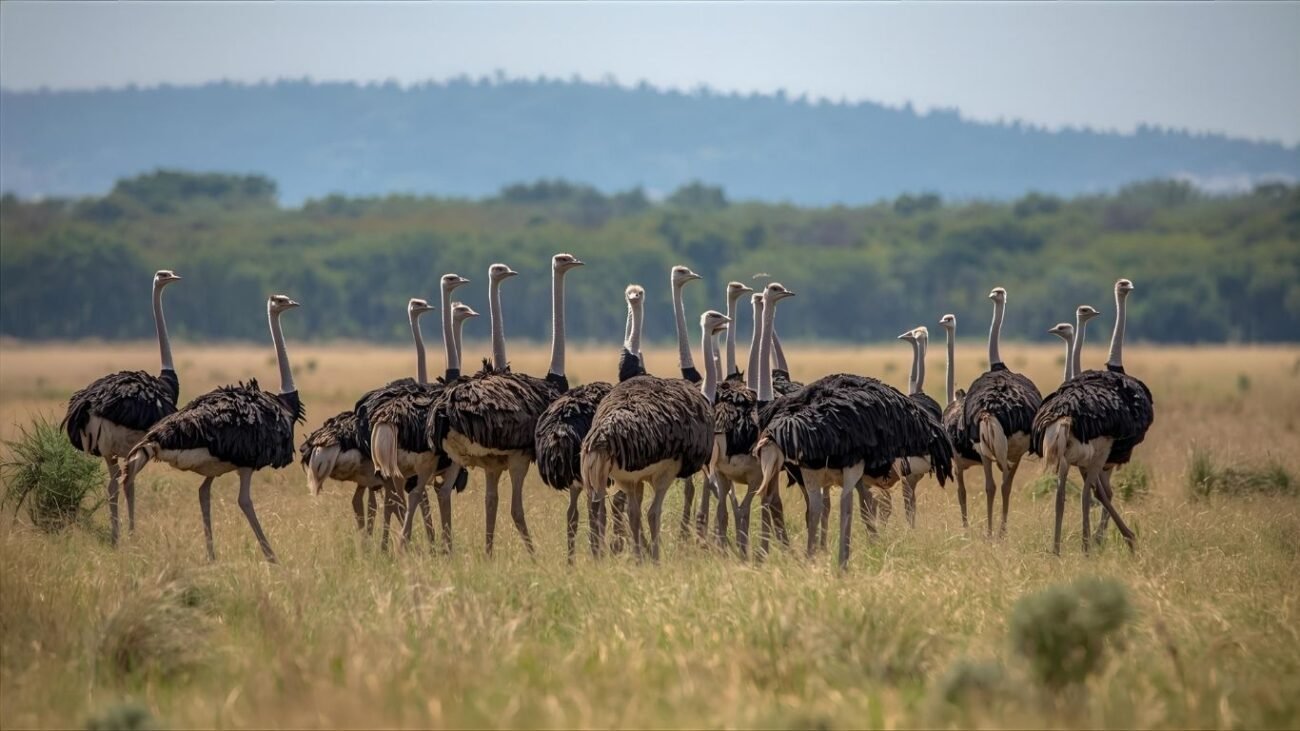
Social Habits
Ostriches live in flocks of 10 to 20 birds, often led by a dominant male and his mate. These groups work together to watch for predators and raise young. During migration or feeding seasons, flocks may merge, creating larger herds that move across the plains.
Daily Routine
Ostriches spend most of their day foraging for food, eating plants, seeds, insects, and small animals. They rest during the hottest hours and take dust baths to remove parasites. At dusk, they remain alert, sleeping lightly with one eye open to sense danger.
Their communication includes booming calls, hisses, and body movements, all used to warn the group or attract mates.
Diet and Feeding Habits
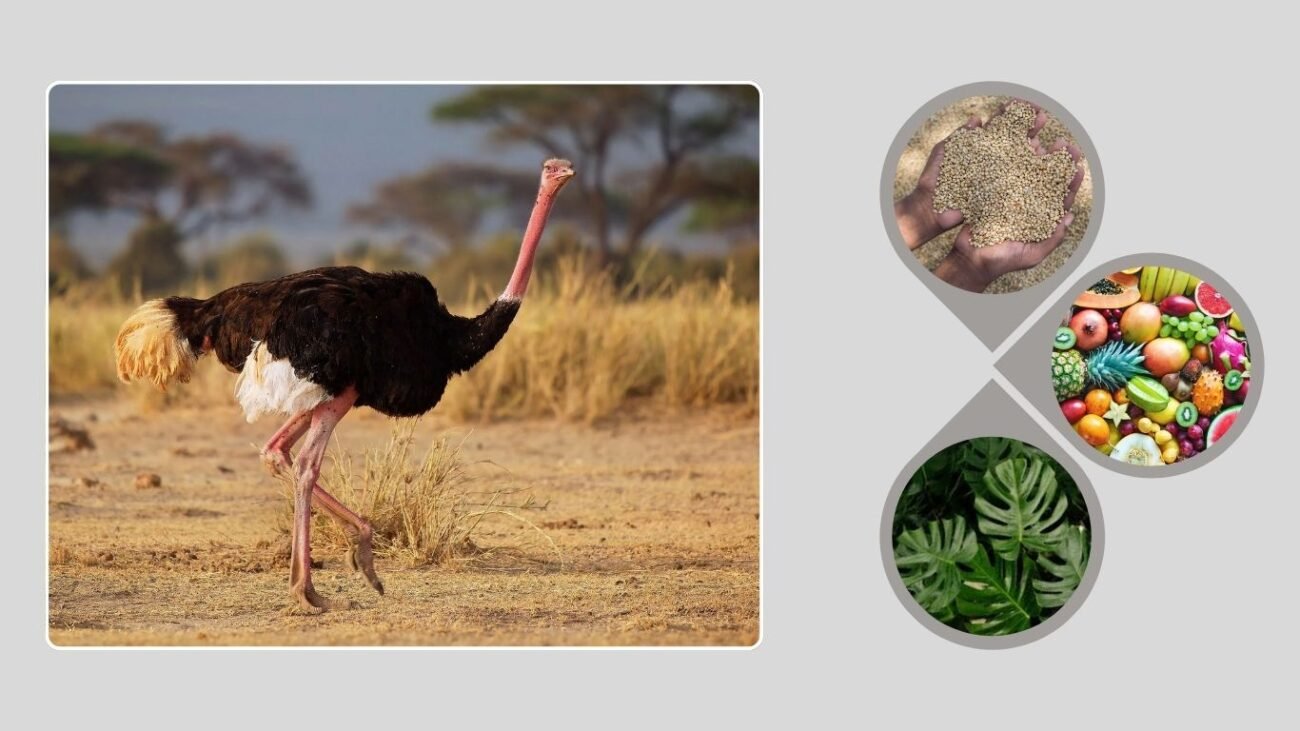
Natural Diet
Ostriches are omnivores, feeding mainly on plants, grasses, roots, seeds, and fruits. Occasionally, they eat insects, lizards, or small rodents for protein. Their gizzards grind food with the help of small pebbles and sand they intentionally swallow.
This diverse diet not only keeps them healthy but also helps the ecosystem — ostriches play a role in seed dispersal, spreading plant life across wide grasslands.
Farm Diet
On farms, ostriches are fed a carefully balanced diet that includes grains, vegetables, and vitamin supplements. Farmers ensure they get enough calcium for strong eggshells and protein for muscle growth. The controlled diet helps maintain the quality of ostrich meat and eggs, which are valuable exports worldwide.
Ostrich Meat and Nutritional Value
Ostrich Meat Nutrition
Ostrich meat is becoming increasingly popular for its health benefits. It’s a red meat similar in taste to beef but with far less fat and cholesterol. A 100-gram serving contains about 26 grams of protein and only 2–3 grams of fat, making it one of the leanest meats available.
It’s rich in iron, vitamin B12, and zinc, promoting energy and muscle strength. Because of these qualities, ostrich meat is often recommended for people seeking a heart-healthy alternative to beef.
Health Benefits
Ostrich meat’s low fat content makes it perfect for athletes and those on high-protein diets. It cooks quickly and remains tender without requiring excess oil or seasoning. Its sustainability also adds value — ostrich farming uses less land and water than cattle ranching, making it an eco-friendly source of protein.
Ostrich Egg Nutrition and Facts
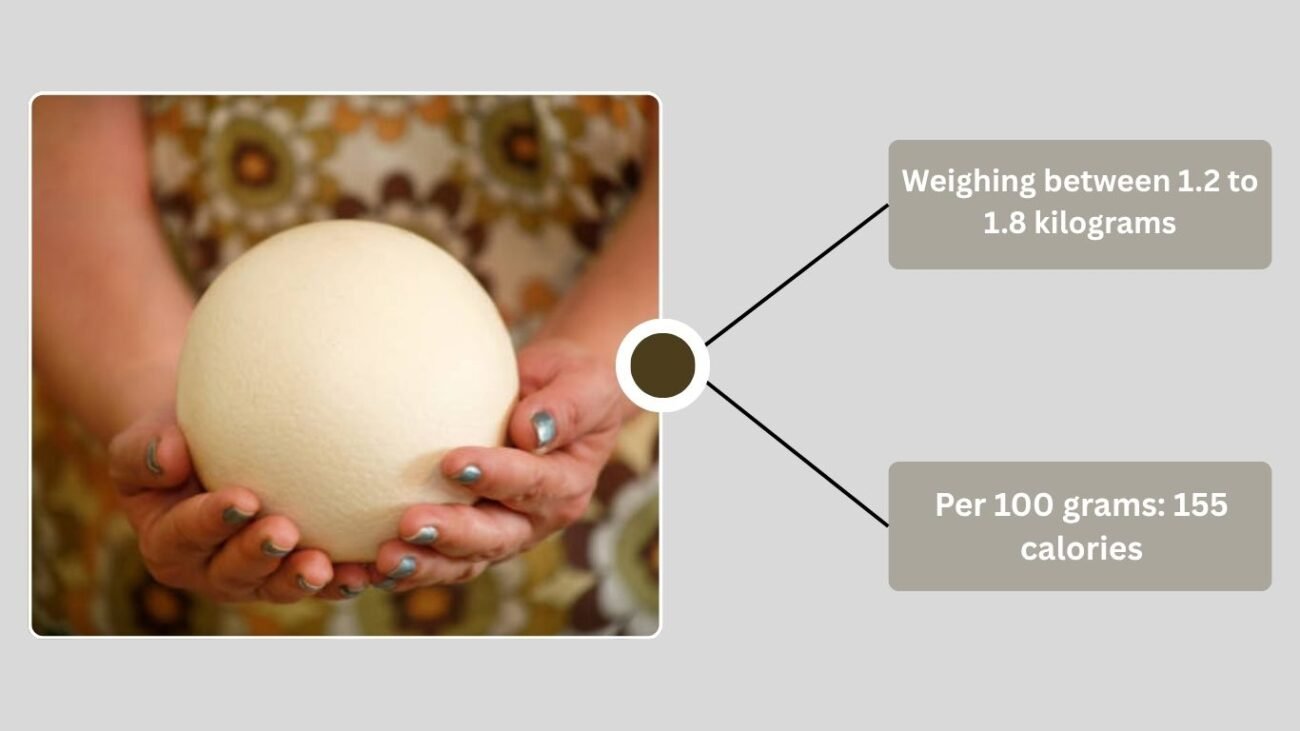
Nutritional Composition
An ostrich egg is a true natural wonder — both in size and nutrition. Weighing between 1.2 to 1.8 kilograms, one ostrich egg equals about 24 chicken eggs in volume. It contains a rich blend of protein, healthy fats, and essential vitamins.
Per 100 grams, ostrich eggs provide around:
- 155 calories
- 13 grams of protein
- 11 grams of fat
- 1 gram of carbohydrates
They are high in vitamin A, vitamin E, and iron, which support immune health and energy production. The egg yolk is also rich in healthy unsaturated fats that promote heart health.
Interesting Egg Facts
The ostrich egg’s shell is incredibly tough — 3 millimeters thick — strong enough to support the weight of an adult human. The shell is smooth, glossy, and ivory-colored, making it a favorite material for decorative art and carvings in Africa.
In many African cultures, ostrich eggs symbolize fertility, prosperity, and new life. They are often used in traditional ceremonies and, more recently, in gourmet cooking. One egg can serve a meal for an entire family, making it both a nutritional and cultural treasure.
Reproduction and Nesting
Mating Behavior
Ostriches have a fascinating and complex mating system. During the breeding season, males perform an elaborate courtship dance, bowing, shaking their feathers, and making deep booming calls to attract females. Their necks turn a bright red or pink as a sign of dominance and readiness to mate.
A single dominant male mates with several females but pairs most closely with a “major” female. Together, they share responsibility for guarding and incubating the eggs.
Nesting and Parental Care
The communal nest is a shallow pit dug into the ground and shared by multiple females. The major female’s eggs are placed in the center, while others are arranged around them. This strategy increases the survival chances of her chicks.
Both parents participate in incubation — the female during the day and the male at night. After about 42 days, the chicks hatch, covered in soft down feathers. They can walk within hours and follow the male, who protects them fiercely from predators. The family remains together for several months, forming a strong social bond that helps young ostriches learn survival skills.
Scientific and Evolutionary Facts
Ostrich in the Bird Family Tree
Ostriches belong to a unique group of flightless birds called ratites, which includes emus, rheas, cassowaries, and kiwis. They evolved millions of years ago and have adapted to life on open ground rather than in the air.
Their powerful legs, large bodies, and reduced wings reflect this evolutionary path. Ostriches are believed to have ancient relatives that once lived across Africa, Arabia, and parts of Asia — making them one of the oldest bird species still in existence today.
Fossil and Research Insights
Fossil evidence shows ostriches existed over 20 million years ago, with early ancestors even larger than modern species. Scientists study ostriches to understand how flightless birds evolved differently around the world. Their efficient cardiovascular system and muscle structure also make them valuable in studies of speed and energy conservation in animals.
Fun and Amazing Facts About Ostriches
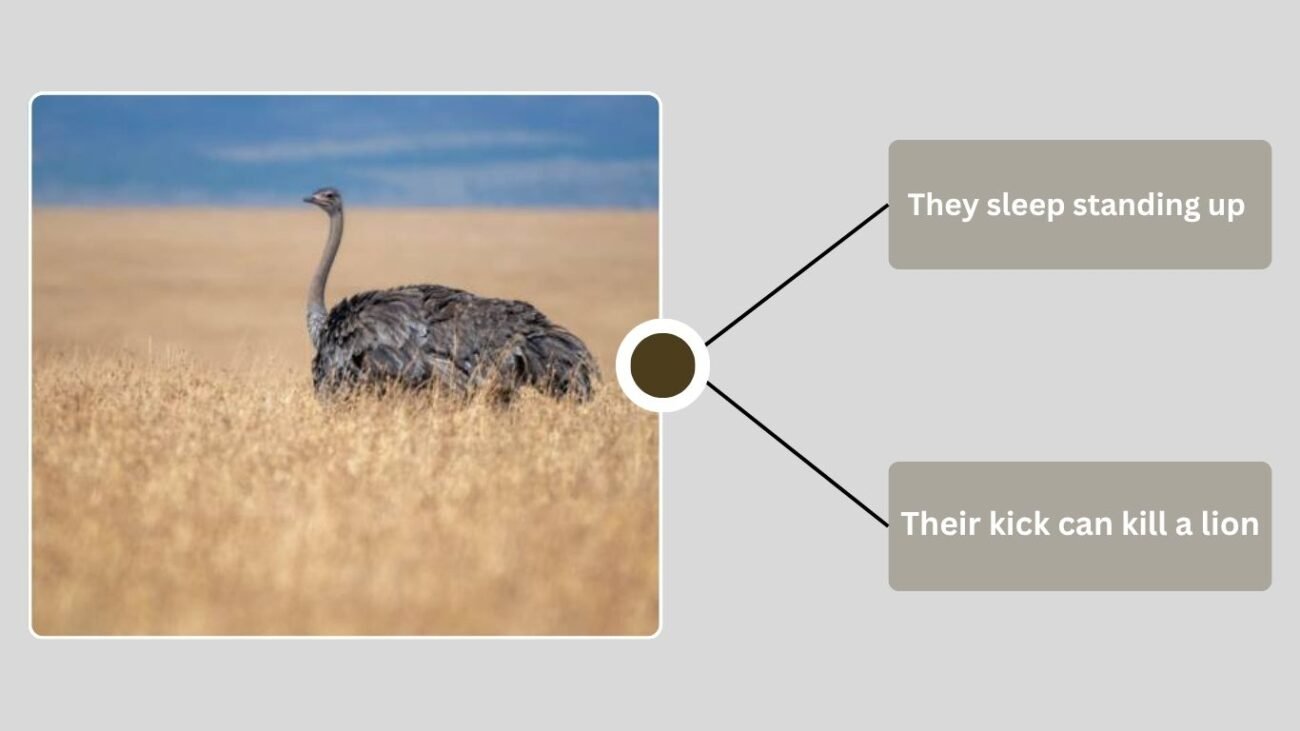
Surprising Behaviors
- Ostriches do not bury their heads in the sand — that’s a myth! They lower their heads to turn eggs or check for threats.
- Their kick can kill a lion — the legs deliver enough force to break bones.
- They use their wings for balance and shade, not flight.
- Ostriches can go days without water, getting hydration from plants and dew.
- Males can produce a deep booming call that can be heard several kilometers away.
Cool and Funny Facts
- An ostrich’s eyes are bigger than its brain, each about the size of a golf ball.
- They sleep standing up and keep one eye open for safety.
- Each bird can eat small stones to aid digestion — sometimes swallowing shiny objects out of curiosity.
- Ostriches run in a zigzag pattern to confuse predators.
- Their eyelashes can grow up to 5 centimeters, protecting them from dust storms.
Educational and Kid-Friendly Facts
Ostriches are a favorite subject in classrooms due to their impressive size and unique life cycle. Children learn that these birds are the fastest runners, the largest egg layers, and among the best parents in the bird world.
They’re also an important part of Africa’s ecology, helping spread seeds and maintain grassland biodiversity. Learning about ostriches encourages curiosity about wildlife, adaptation, and conservation.
Conclusion
The ostrich is much more than a flightless bird — it’s a symbol of speed, endurance, and natural intelligence. From its enormous eggs to its sustainable farming value, the ostrich continues to impress scientists and nature enthusiasts worldwide. Its balance of power and grace, along with its nutritional and ecological importance, makes it one of the most remarkable species on Earth.
FAQs
What are 5 interesting facts about ostriches?
Ostriches are the largest birds on Earth, lay the biggest eggs, run up to 70 km/h, have eyes larger than their brains, and can survive without water for days.
How nutritious is an ostrich egg?
A single ostrich egg provides up to 2,000 calories, with high protein, iron, and vitamin A content. It’s low in cholesterol compared to other large eggs, making it a healthy choice.
Where do ostriches live in Africa?
Ostriches live across sub-Saharan Africa, especially in dry grasslands and savannas in countries like South Africa, Botswana, Kenya, and Namibia.
How fast can an ostrich run?
Ostriches can sprint up to 70 km/h (43 mph), making them the fastest-running birds on land. They use their wings for steering while running.
Do ostriches really hide their heads in the sand?
No, that’s a myth. Ostriches lower their heads to check their eggs or blend into the terrain when threatened, which makes it look like they’re hiding their heads.


