











strich Egg vs Chicken Egg: Size, Taste, and Nutrition Com
The ostrich and the chicken may both be birds, but their eggs couldn’t be more different. From size and shell strength to taste and nutrition, the ostrich egg stands as one of nature’s most impressive creations. Understanding how these two eggs compare helps us appreciate their unique values in both culinary and nutritional terms.
The Giant vs the Common Egg
Ostrich Egg Size and Weight
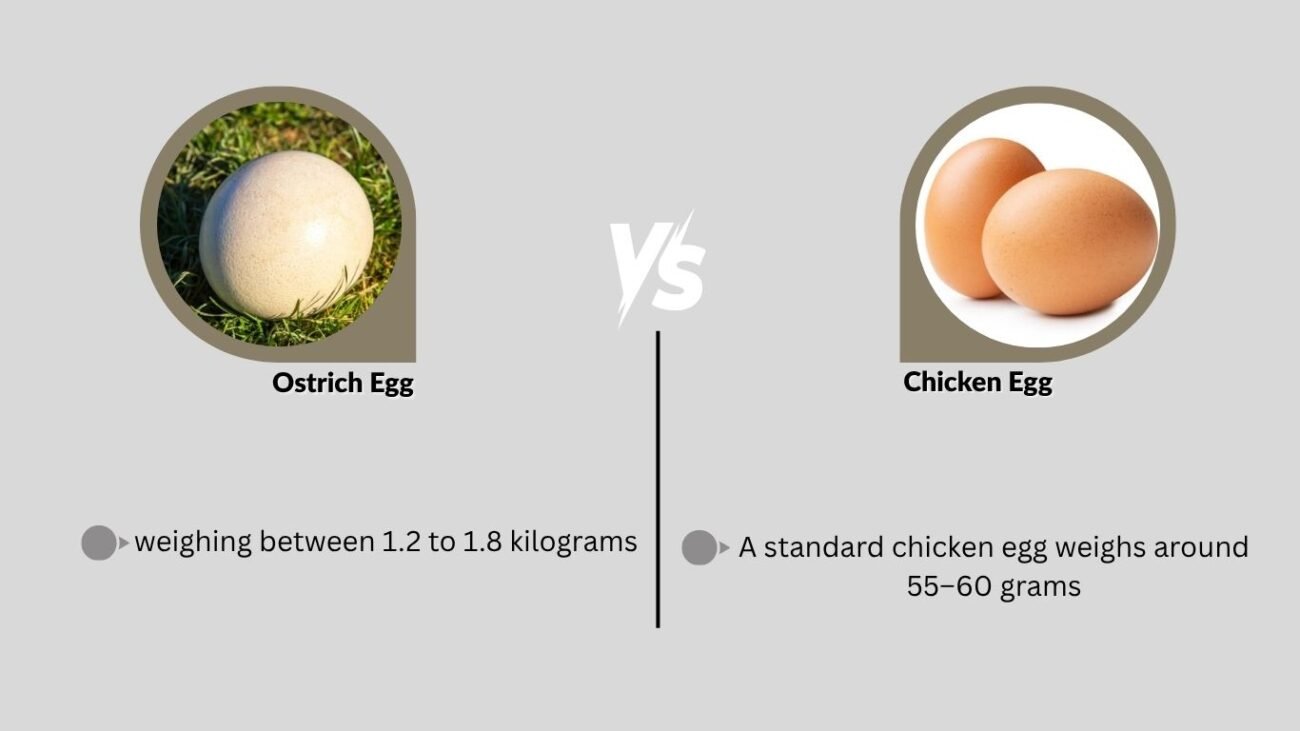
The ostrich lays the largest egg in the world. Measuring about 15 centimeters long and weighing between 1.2 to 1.8 kilograms, one ostrich egg equals nearly two dozen chicken eggs in volume. The shell is thick and glossy, about 3–4 millimeters strong, making it durable enough to support an adult’s weight.
Ostrich eggs are typically ivory-colored and oval, prized not only as food but also as decorative art pieces. Due to their massive size, a single egg can easily feed a large family or group.
Chicken Egg Size and Weight
A standard chicken egg weighs around 55–60 grams. Its shell is thin and easy to crack, with color variations ranging from white to brown depending on the breed. Chickens can lay nearly one egg per day, which makes them the most common egg source in the world.
In contrast, ostriches lay far fewer eggs each year, making them rarer and much more valuable.
How Many Chicken Eggs Equal One Ostrich Egg?
When comparing the two, one ostrich egg is roughly equivalent to 20–24 chicken eggs in size and nutritional volume. To put it in perspective, an ostrich egg omelet could easily feed 8 to 10 people.
A fun fact: boiling an ostrich egg can take 60 to 90 minutes, while a chicken egg takes only about 10 minutes. This makes ostrich eggs more of a culinary spectacle — used for large meals, special events, or luxury dining experiences rather than everyday cooking.
Shell and Structure Comparison
Shell Thickness and Strength
The ostrich egg’s shell is one of nature’s strongest. With its thickness of up to 4 mm, it can withstand up to 100 kilograms of pressure before breaking. The surface is smooth, glossy, and slightly porous, allowing limited air exchange. Because of its strength and beauty, ostrich eggshells are often carved or painted as works of art.
In comparison, a chicken egg’s shell is thin and fragile, designed for quick hatching and frequent production. Its lighter shell makes it ideal for daily consumption and quick cooking.
Yolk and Egg White Ratio
The yolk of an ostrich egg is proportionally larger than that of a chicken egg, accounting for nearly half the egg’s contents. It has a creamier texture and higher fat content, which gives it a slightly richer flavor. The egg white, on the other hand, is less dense and spreads wider when cooked.
Chicken eggs have a more balanced yolk-to-white ratio, making them better suited for baking and recipes that require consistency.
Taste and Culinary Experience
Do Ostrich Eggs Taste Like Chicken Eggs?
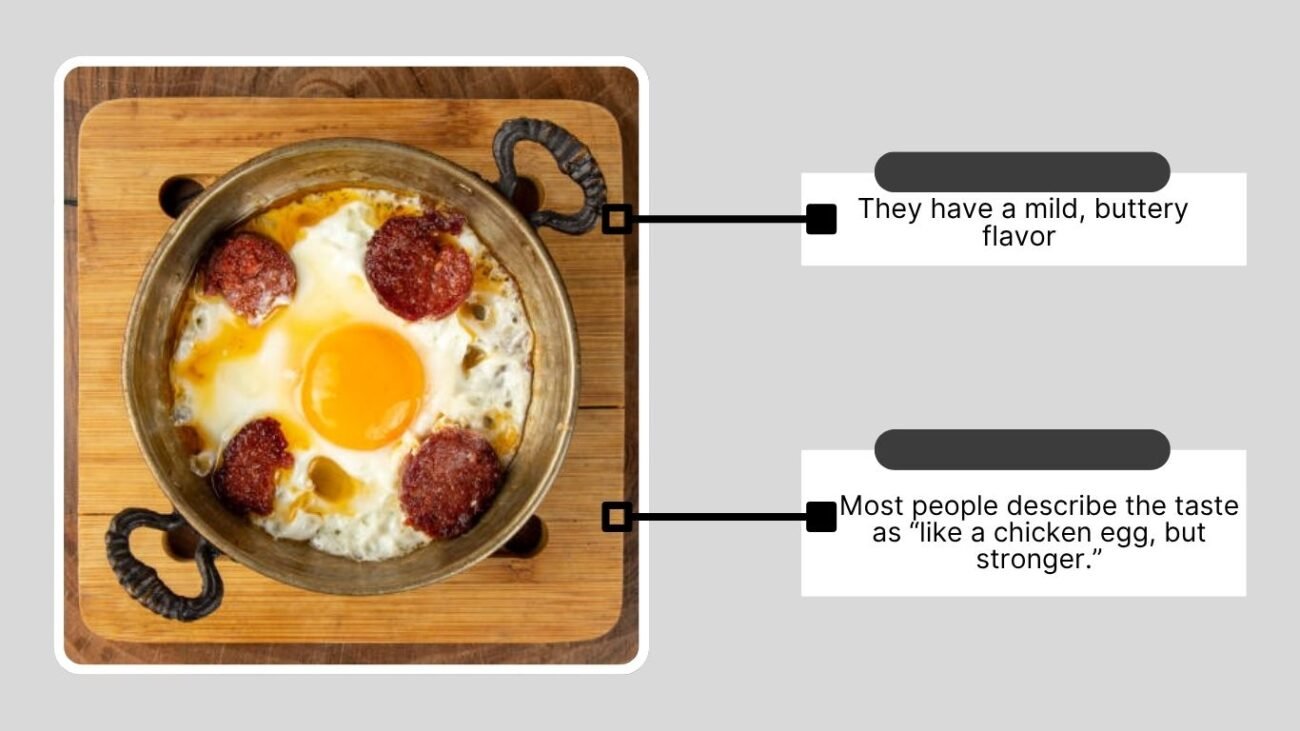
Despite their differences, ostrich eggs taste surprisingly similar to chicken eggs. They have a mild, buttery flavor but a richer and creamier texture due to the higher fat content. Most people describe the taste as “like a chicken egg, but stronger.”
The biggest difference lies in texture: ostrich eggs are denser and slightly firmer when scrambled or boiled. This makes them popular in luxury restaurants where they’re featured as novelty dishes or gourmet omelets.
Cooking and Preparation
Cooking an ostrich egg requires patience. Because of its thick shell and size, it takes much longer to cook than chicken eggs. A whole ostrich egg can be boiled, baked, or used to make large omelets and pancakes.
One ostrich egg can replace two dozen chicken eggs in any recipe — from cakes to quiches. However, once cracked open, it must be used immediately, as storing such a large raw egg can be difficult.
Nutritional Comparison: Ostrich Egg vs Chicken Egg
Ostrich Egg Nutrition (per 100g)
Ostrich eggs are nutrient-dense and packed with essential vitamins and minerals.
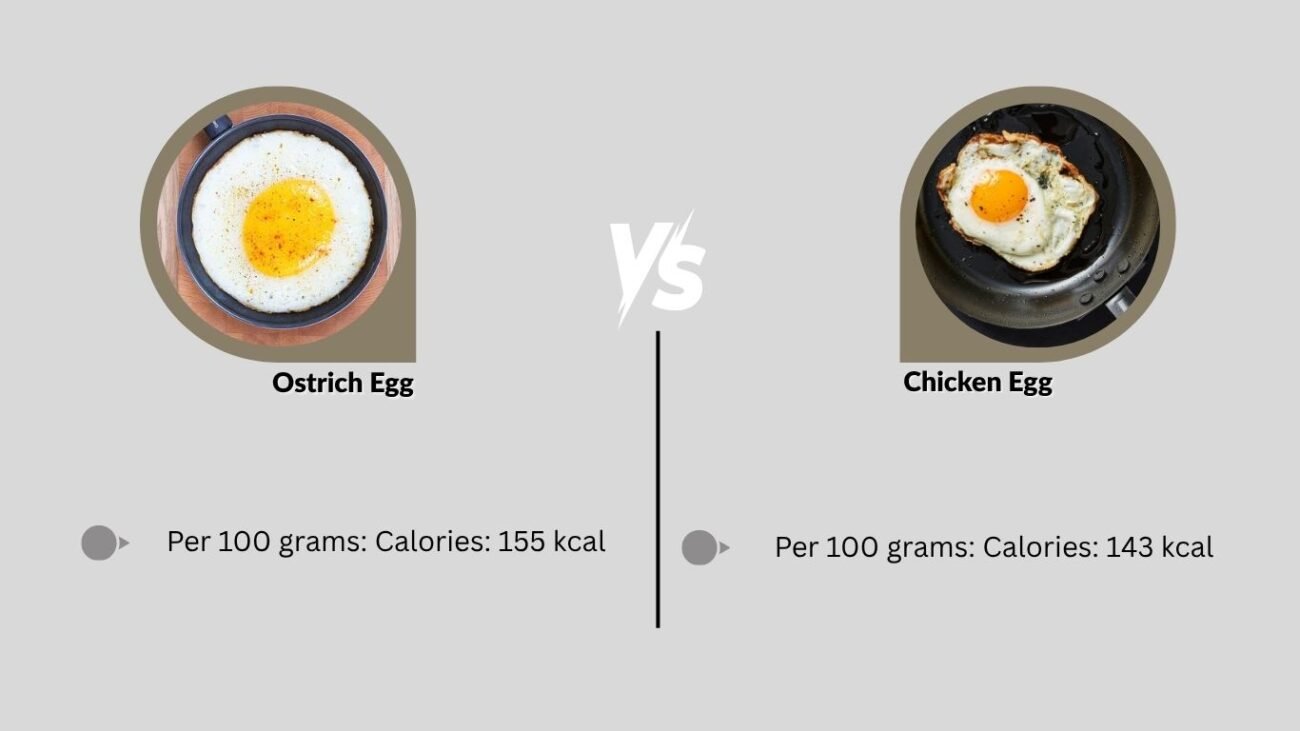
Per 100 grams, they contain roughly:
- Calories: 155 kcal
- Protein: 13g
- Fat: 11g
- Carbohydrates: 1g
- Vitamins: A, E, B12, and riboflavin
- Minerals: Iron, calcium, and phosphorus
Their lower cholesterol content makes them a healthy alternative to chicken eggs, especially for people monitoring heart health.
Chicken Egg Nutrition (per 100g)
A chicken egg, while smaller, is also an excellent source of nutrients.
Each 100 grams provides about:
- Calories: 143 kcal
- Protein: 12g
- Fat: 10g
- Carbohydrates: 1g
- Vitamins: B2, B6, D, and selenium
Chicken eggs are more accessible and widely consumed, offering a reliable source of protein for billions worldwide.
Health and Diet Benefits
Are Ostrich Eggs Healthier?
Ostrich eggs are considered a nutrient powerhouse. They contain less cholesterol and saturated fat than chicken eggs while providing higher levels of iron, calcium, and vitamin A. The protein quality is excellent, supporting muscle repair and energy production.
Because of their balanced fat profile, ostrich eggs are often recommended for heart-healthy diets and for athletes who need long-lasting energy. The egg’s richness in antioxidants, especially vitamin E, also supports skin and immune health.
Who Should Eat Ostrich Eggs?
Ostrich eggs are ideal for people seeking high-protein, low-cholesterol foods. They’re especially beneficial for bodybuilders, athletes, and those with higher protein requirements. However, because of their size, they’re not an everyday food — more a special nutritional treat than a regular breakfast option.
Cost and Availability
Price Differences
Chicken eggs are inexpensive and globally available, making them a dietary staple. Ostrich eggs, however, are luxury items, usually costing between $30 and $60 per egg, depending on size and location. Their high price reflects both rarity and the labor involved in ostrich farming.
Because one ostrich egg equals nearly two dozen chicken eggs, they are often sold to gourmet restaurants or eco-tourism farms rather than grocery stores.
Where to Find Ostrich Eggs
Ostrich farms in South Africa, the United States, and Australia are the main suppliers. In some regions, you can order fresh or blown (empty) eggs online. Farmers often sell decorative eggshells as souvenirs or for art projects. For culinary use, fresh eggs must be refrigerated and cooked soon after purchase.
Ostrich Chicks and Egg Production
Hatching and Reproduction
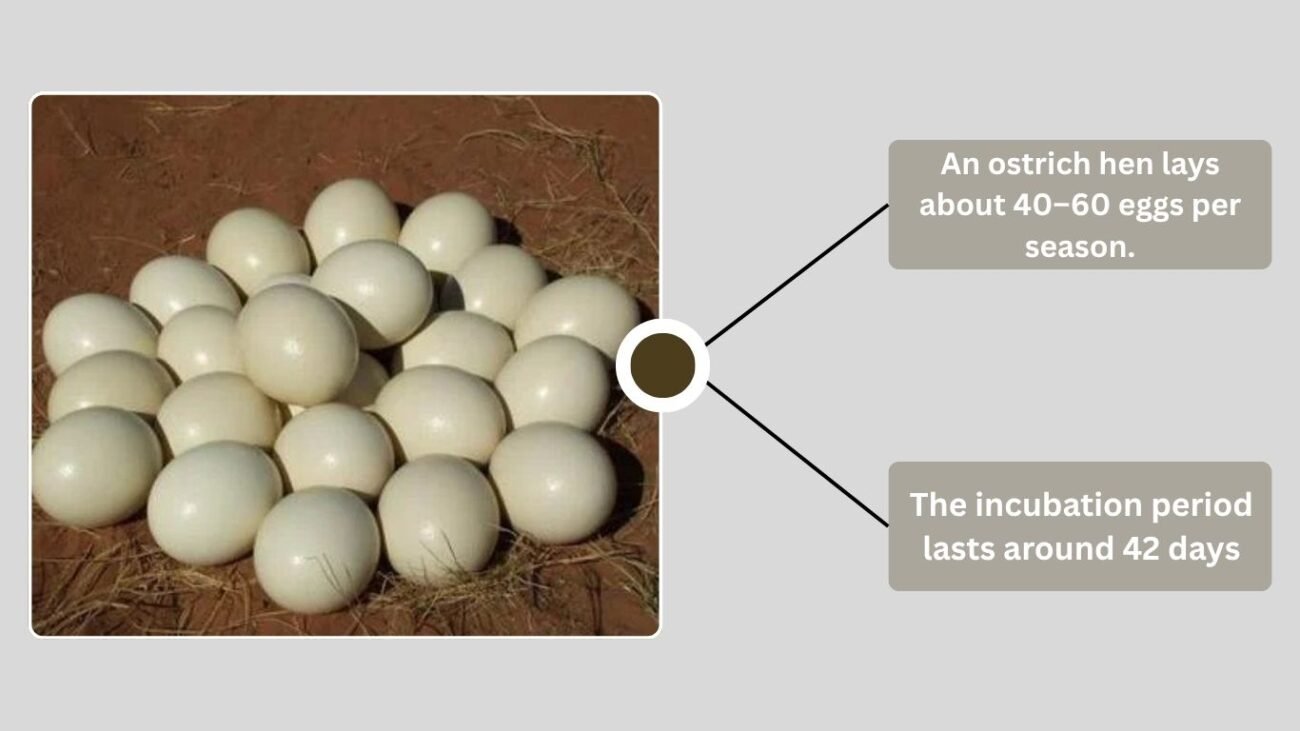
An ostrich hen lays about 40–60 eggs per season, which the dominant male incubates along with her. The incubation period lasts around 42 days. Once hatched, the chicks stand about 25 centimeters tall and weigh roughly one kilogram.
These chicks grow rapidly, reaching adult height in just six months. Their survival depends heavily on parental protection during early life, as they are vulnerable to predators like jackals and eagles.
Raising Ostrich Chicks
Farmers raising ostrich chicks must provide a warm, dry environment and a balanced diet of greens, grains, and protein supplements. Clean water, sunlight, and proper fencing are essential for healthy growth. Chicks develop quickly and require minimal intervention once established.
Because of their value, each chick can sell for $300 to $1,000, depending on age and breed quality. Ostrich farming is therefore a profitable business for those with space and expertise.
Ostrich vs Chicken: Key Differences Beyond Eggs
Bird Characteristics
| Feature | Ostrich | Chicken |
| Height | Up to 2.8 m | 30–40 cm |
| Weight | 120–150 kg | 2–3 kg |
| Flight | Flightless | Short flight |
| Speed | 70 km/h | 15 km/h |
| Habitat | Savannas & deserts | Farms & backyards |
The ostrich is built for endurance and speed, relying on strong legs and sharp eyesight, while chickens are smaller, ground-dwelling birds adapted for frequent egg-laying and domestic environments.
Farming and Economic Uses
Ostrich farming provides multiple products — meat, leather, feathers, and eggs. The leather is prized for its texture and durability, while the meat is a lean red-meat alternative. Chickens, in contrast, are raised mainly for meat and eggs.
Ostrich farming is also more sustainable than cattle farming; it requires less land, less feed, and produces lower greenhouse emissions per kilogram of protein.
Fun and Interesting Facts
Amazing Egg Facts
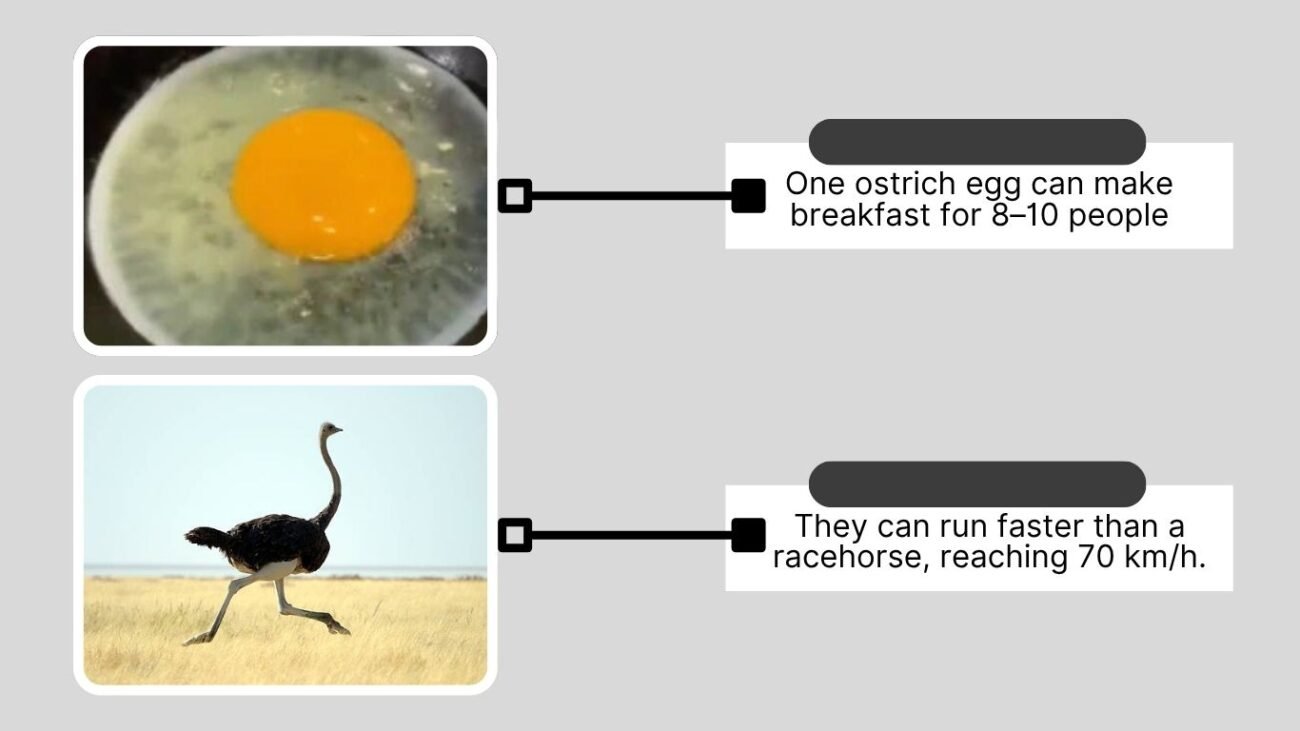
- One ostrich egg can make breakfast for 8–10 people.
- The eggshell can hold up to 100 kg before cracking.
- Ostrich eggs are used in art, lamps, and jewelry because of their beauty and strength.
- The yolk color is a rich golden yellow, ideal for gourmet dishes.
Fascinating Bird Facts
- Ostriches do not bury their heads in the sand — they lower them to check their eggs or hide from predators.
- They can run faster than a racehorse, reaching 70 km/h.
- Their eyes are larger than their brains, giving them exceptional vision.
- An ostrich kick can kill large predators, including lions.
- Despite being flightless, they use wings for balance and display.
FAQs
How many chicken eggs equal one ostrich egg?
One ostrich egg equals roughly 20–24 chicken eggs in size and nutritional content.
Do ostrich eggs taste like chicken eggs?
Yes, they taste quite similar but have a richer, creamier flavor due to higher fat content.
Are ostrich eggs healthier than chicken eggs?
Ostrich eggs are lower in cholesterol and higher in iron, calcium, and vitamin A, making them a healthy, nutrient-dense choice.
How long does it take to cook an ostrich egg?
Boiling takes about 60–90 minutes, while frying or scrambling requires extended heating because of its volume.
How much does an ostrich chick cost?
Depending on age and location, an ostrich chick can cost between $300 and $1,000, reflecting its farming and breeding value.


