











A baby ostrich, often called a chick, is among the most captivating young birds on Earth. From its massive egg to its lightning-fast growth and playful personality, everything about an ostrich chick is fascinating. Understanding how these unique birds hatch, feed, and adapt helps us appreciate their remarkable survival abilities in the wild and on farms.
Understanding Baby Ostriches

What Is a Baby Ostrich Called?
A baby ostrich is called a chick. The term is similar to that used for chickens and other birds. Ostrich chicks hatch from some of the largest eggs in the animal kingdom, weighing nearly 3 pounds each. Immediately after hatching, these chicks can walk and follow their parents, a key instinct for survival in the wild.
Physical Appearance and Early Development
At birth, a baby ostrich stands about 10 inches tall and weighs around 2.5 pounds. Covered with soft, brownish-grey down feathers, it blends perfectly into the savanna environment. Within weeks, their legs lengthen and strengthen rapidly, allowing them to run at impressive speeds to avoid predators. They grow approximately one foot per month in their first six months.
Life Cycle and Growth Stages

From Egg to Hatchling
The female ostrich lays her eggs in a communal nest, which can contain up to 20 eggs. Both the male and female take turns incubating them—females during the day and males at night. After about 42 days, the chicks hatch. They are precocial, meaning they are born with open eyes and can move independently soon after birth.
Growth Timeline
During the first month, ostrich chicks rely heavily on their parents for protection. By the third month, they begin to feed more independently and develop stronger legs and feathers. At six months, they can reach 5 feet tall and weigh nearly 100 pounds. They continue growing until around 12–14 months when they achieve their full adult size and independence.
Habitat and Natural Behavior
Where Baby Ostriches Live
In the wild, baby ostriches are commonly found across African savannas, grasslands, and semi-desert regions. These open areas allow them to use their powerful legs to escape predators. Ostrich families live in groups, with dominant males leading the herd and protecting the young from threats like lions and hyenas.
Behavioral Traits
Baby ostriches are curious and social. They often mimic adult behavior—dust bathing, running, and pecking at objects to explore their surroundings. Despite their size, they rely heavily on camouflage and group coordination for safety. They can run up to 30 miles per hour by the time they are six months old, showcasing the remarkable agility of this flightless bird.
Diet and Feeding
What Do Baby Ostriches Eat?
In their early days, chicks eat a mix of seeds, grasses, flowers, and insects. Their digestive system develops quickly, allowing them to process fibrous plants. They also swallow small stones or pebbles to help grind food inside their gizzards, which acts like natural teeth for birds.
Feeding Practices in Captivity
On ostrich farms, chicks are fed specialized starter feeds rich in protein, calcium, and vitamins to support their rapid bone growth. Farmers ensure they have constant access to clean water and sunlight, as vitamin D helps strengthen their skeletal system. Feeding schedules are closely monitored to prevent obesity and leg deformities, which can occur from improper nutrition.
Care, Adoption, and Sale
Raising Baby Ostriches
Caring for baby ostriches requires patience and proper setup. They need large, clean enclosures with soft ground and shelter from extreme weather. Temperature control is vital during the first few weeks, as chicks can easily become chilled. Proper care ensures high survival rates and healthy growth in both private farms and conservation centers.
Buying or Adopting a Baby Ostrich
Baby ostriches are sometimes available for sale from licensed breeders. However, potential buyers must ensure local regulations permit exotic bird ownership. Ethically bred ostriches come with health certificates and proper diet guidance. Adoption programs through wildlife reserves also allow individuals to support ostrich conservation efforts without physically owning the birds.
Baby Ostrich vs. Baby Emu
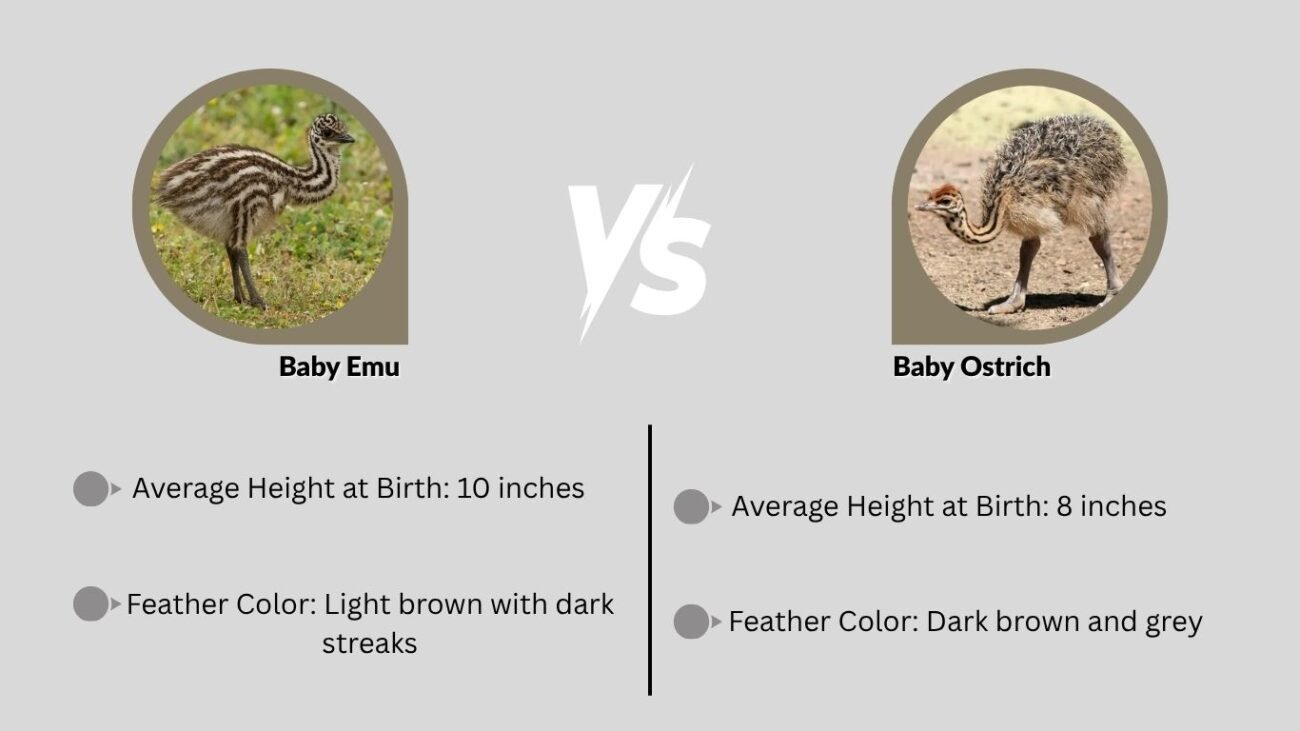
The baby ostrich and baby emu are often compared because both are large, flightless birds with similar early-life characteristics. However, they differ in appearance, habitat, and temperament. Ostriches originate from Africa, while emus come from Australia. Ostrich chicks are generally larger at birth, standing around 10 inches tall, while emu chicks are slightly smaller and darker in color.
| Feature | Baby Ostrich | Baby Emu |
| Native Region | Africa | Australia |
| Average Height at Birth | 10 inches | 8 inches |
| Feather Color | Light brown with dark streaks | Dark brown and grey |
| Temperament | Alert and active | Calm and shy |
| Running Speed (Juvenile) | Up to 30 mph | Up to 25 mph |
Key Behavioral Differences
Baby ostriches tend to be more social and curious, often seen running or exploring in groups. Baby emus, in contrast, stay close to their parents for longer periods and show more cautious behavior. Both species are intelligent, but ostriches adapt more easily to farming environments due to their strong group instincts.
Interactions with Other Animals
Playful and Curious Nature
Baby ostriches are known for their friendly and inquisitive behavior. Videos often capture them playing with dogs, zebras, or even giraffes. Their natural curiosity helps them learn quickly about their surroundings. They enjoy chasing insects, pecking at shiny objects, and following human movements, which makes them both amusing and unpredictable.
Human Encounters
Humans find baby ostriches both adorable and fascinating. Viral clips online show babies feeding ostriches from cars or laughing as ostriches poke their heads into windows at safari parks. These encounters reveal the chick’s gentle yet bold personality. However, in close settings, supervision is crucial — even young ostriches have strong legs capable of delivering powerful kicks when startled.
Cultural Mentions and Media Appearances
Famous Pop Culture Moments
Baby ostriches have appeared in several pop culture scenes. In Mika and the Witch’s Mountain, a charming animated baby ostrich symbolizes innocence and freedom. The “Atlas Baby Ostrich” meme also went viral, drawing attention for its humorous depiction of a tiny chick facing life’s challenges. From television appearances on “Conan” to short animated clips, these birds have carved a niche in popular entertainment.
Dream Symbolism
In dreams, a baby ostrich often represents curiosity, growth, and new beginnings. Some cultures interpret it as a sign of overcoming fear and moving forward courageously, while others see it as a reminder to stay grounded despite rapid progress. These symbolic meanings reflect the chick’s ability to adapt quickly to life’s obstacles.
Fashion and Collectibles
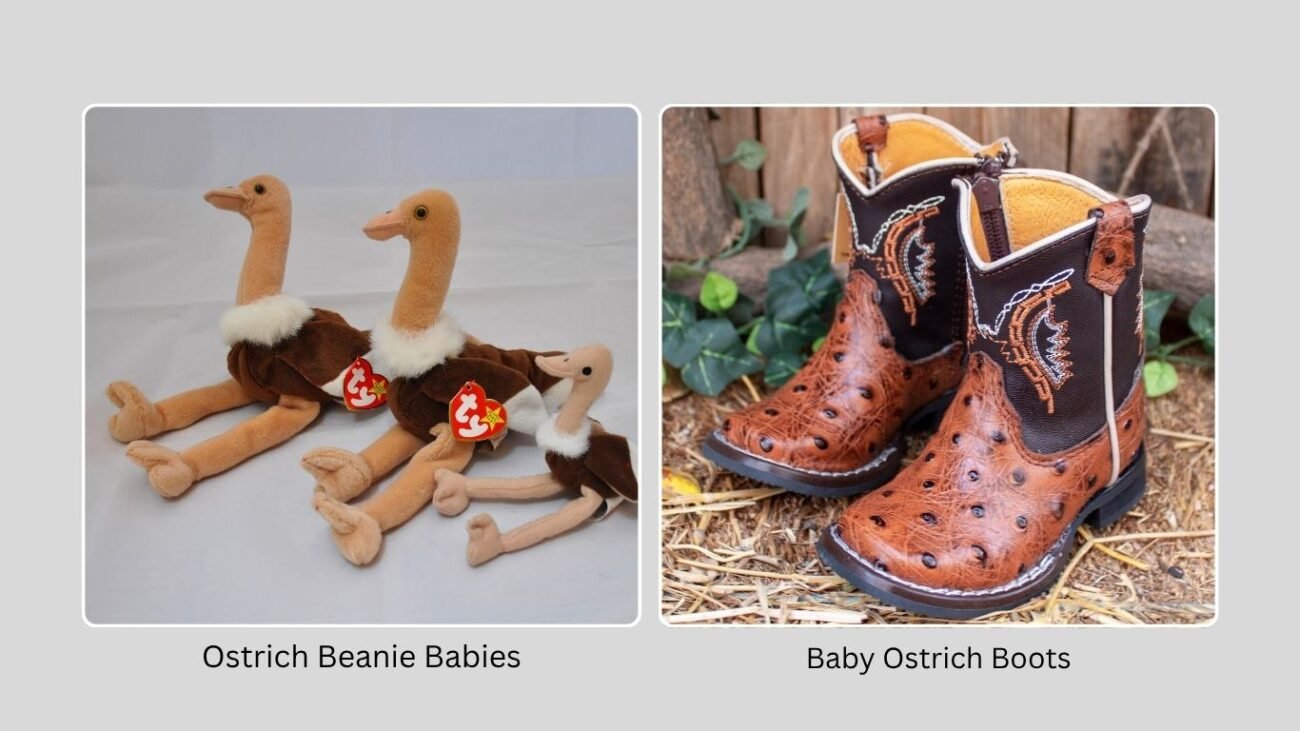
Baby Ostrich Boots
Ostrich leather is one of the most luxurious materials in the fashion industry. Ariat and other brands produce “fat baby ostrich” boots in various colors, such as pink and baby blue. These boots are prized for their texture, durability, and comfort. However, ethical sourcing is vital — many buyers now choose faux ostrich leather as a cruelty-free alternative.
Ostrich Beanie Babies
Collectors fondly remember the Stretchy the Ostrich Beanie Babies from the 1990s. Versions include the 1993 original, 1997 edition, and 1999 McDonald’s collaboration. These toys have become nostalgic treasures, with some limited releases fetching high resale values among toy collectors and vintage enthusiasts.
Visual and Creative Inspirations
Art and Animation
Baby ostriches inspire artists and animators alike. Their expressive faces, fluffy feathers, and playful personalities make them perfect subjects for children’s books, illustrations, and animated shorts. Coloring pages, digital art, and crafts featuring baby ostriches are popular among kids and wildlife educators.
Photography and Media
High-definition photos of baby ostriches (such as 1920×1080 images) capture their innocence and beauty. Wildlife photographers often focus on their interactions with adult ostriches, emphasizing family bonds and protective instincts. These visuals not only entertain but also raise awareness about conservation and ethical breeding practices.
FAQs
What is a baby ostrich called?
A baby ostrich is called a chick. It hatches after about 42 days of incubation and can walk within hours of birth. The name “chick” is used for many young birds, but in ostriches, it highlights their early independence and ability to survive in harsh environments.
How fast do baby ostriches grow?
Baby ostriches grow rapidly, reaching 5 feet tall and around 100 pounds in just six months. Their growth rate is one of the fastest among birds, supported by a high-protein diet and constant activity. By one year, they are nearly the size of adults and capable of running great distances.
What do baby ostriches eat?
They eat a mix of plants, insects, and seeds. In captivity, specialized feeds provide essential nutrients like calcium and protein. They also swallow small pebbles to aid digestion, as ostriches have no teeth. Balanced nutrition ensures proper bone development and healthy feather growth.
How many babies do ostriches have?
Ostriches can lay 10–20 eggs per clutch, often in shared nests. Both parents guard and incubate the eggs, taking shifts during day and night. This teamwork results in strong family structures and high survival rates for chicks in protected environments.
Can you own a baby ostrich?
Yes, but strict conditions apply. Owners need large open spaces, proper fencing, and specialized feed. Ostriches are exotic animals that require care similar to livestock. Those interested in supporting these birds without owning them can participate in adoption programs through wildlife sanctuaries.


