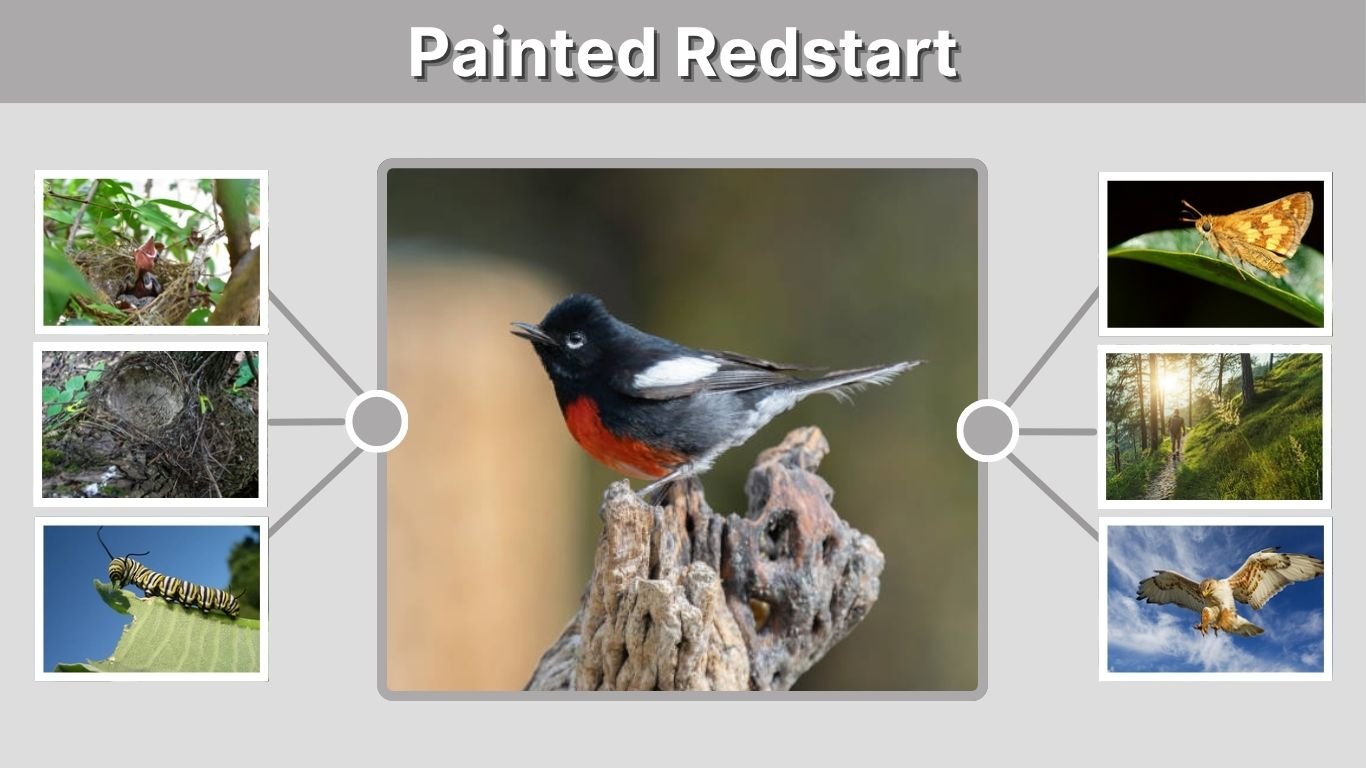
The Painted Redstart (Myioborus pictus) is a small but striking songbird known for its bold black, red, and white coloration. Commonly found in the forests of the southwestern United States and parts of Central America, this bird stands out not only for its appearance but also for its energetic behavior. It is especially famous for its unique tail-fanning technique, which helps it catch insects. Despite its beauty, the Painted Redstart is often overlooked due to its preference for wooded habitats and constant movement among branches.
What Is a Painted Redstart?
The Painted Redstart is a member of the warbler family, a group of small, active birds known for their insect-eating habits. It is recognized for its agility and distinctive feeding style.
Physical Appearance
- Black body with a bright red belly and chest
- White wing patches and outer tail feathers
- Slim, lightweight build suited for quick movement
Painted Redstart Size
- Body length typically ranges from 13 to 15 cm
- Wingspan averages around 20 to 22 cm
- Small and agile compared to many forest birds
Painted Redstart Habitat and Range
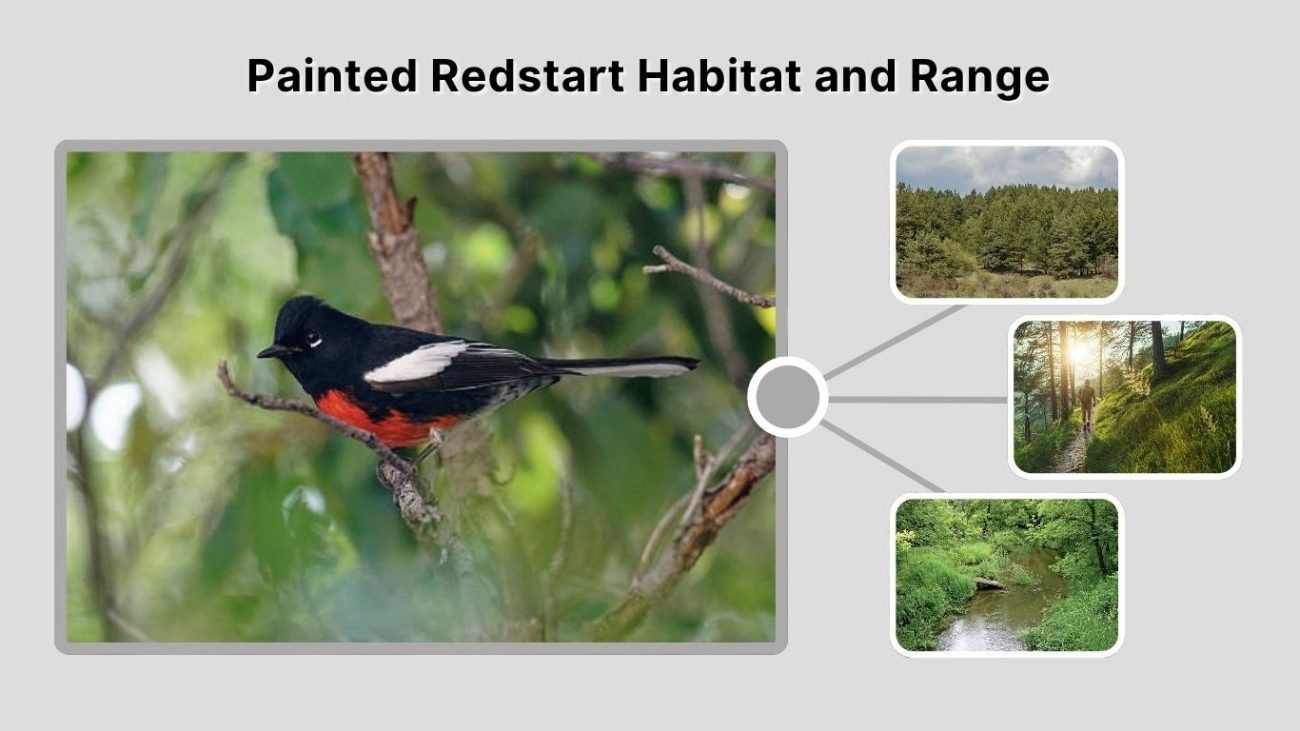
The Painted Redstart prefers forested environments where it can easily find food and shelter. It is most commonly found in mountainous regions with a mix of trees and open spaces. Its distribution is somewhat limited but well-defined within suitable habitats.
Preferred Habitat
- Pine-oak forests with dense vegetation
- Mountain woodlands and canyon areas
- Riparian zones near streams
Painted Redstart Range
- Southwestern United States, especially Arizona and New Mexico
- Mexico and parts of Central America
- Seasonal movement within elevation zones
Range Map Overview
- Breeds mainly in higher elevations
- Moves to lower areas during colder months
- Distribution depends on food availability and climate
Painted Redstart Diet and Feeding Behavior
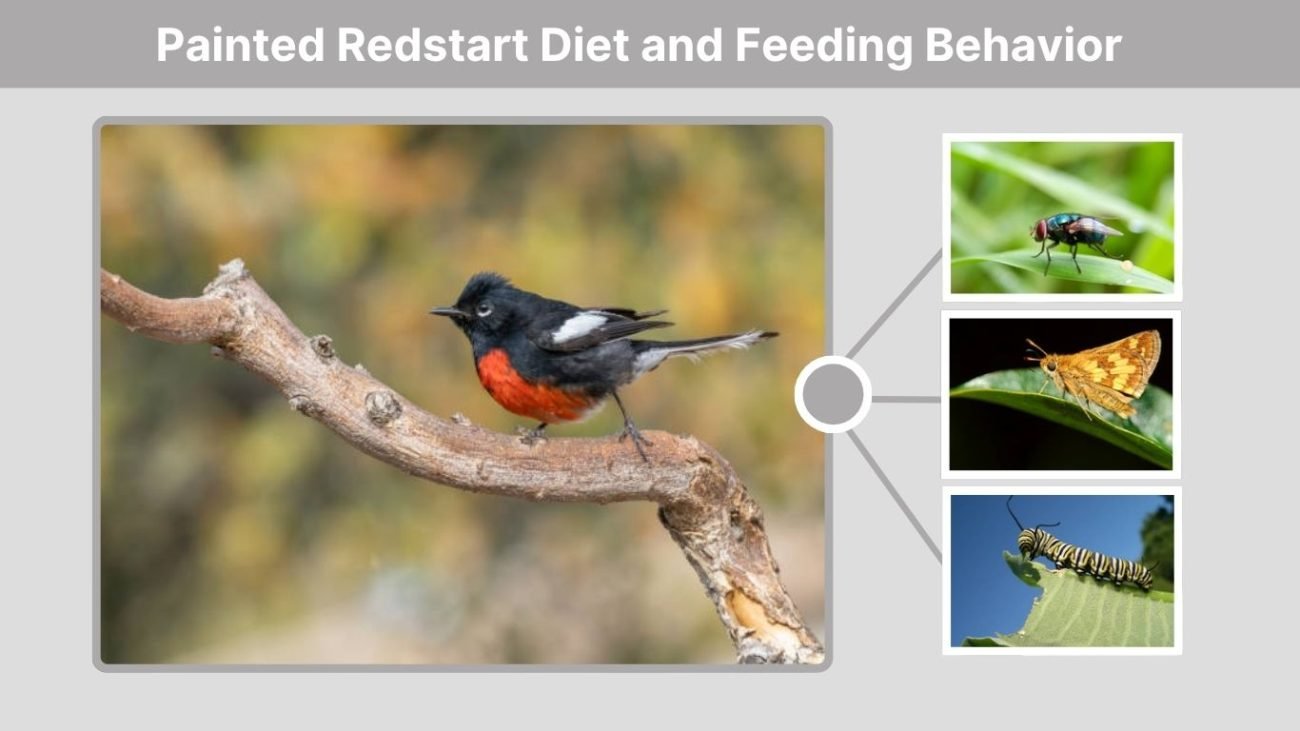
The Painted Redstart is primarily insectivorous, relying on a diet of small insects and arthropods. Its feeding behavior is highly active and visually distinctive, making it easier to identify in the wild.
Painted Redstart Diet
- Flying insects such as flies and moths
- Larvae and caterpillars
- Small arthropods found on leaves and branches
Feeding Techniques
- Uses tail-fanning to flush insects from hiding
- Actively pursues prey in mid-air
- Moves quickly between branches while foraging
Painted Redstart Behavior and Lifestyle
The Painted Redstart is a lively and energetic bird that rarely stays still for long. It spends most of its time hopping between branches, constantly searching for food. Its tail-fanning behavior is not only useful for feeding but also adds to its distinctive appearance. This bird is usually seen alone or in pairs, especially during the breeding season. It is alert and responsive to its surroundings, often reacting quickly to any signs of danger. Its adaptability allows it to thrive in forest environments with varying conditions.
Painted Redstart Adaptations
The Painted Redstart has developed several unique adaptations that help it survive and thrive in its environment. These adaptations are both physical and behavioral, making it an efficient predator of insects.
Physical Adaptations
- Bright coloration that may help startle prey
- Tail structure designed for fanning movements
- Lightweight body for quick, agile flight
Behavioral Adaptations
- Constant tail-fanning to flush hidden insects
- Rapid movement between branches
- Active hunting rather than passive feeding
Defense Mechanisms and Predators
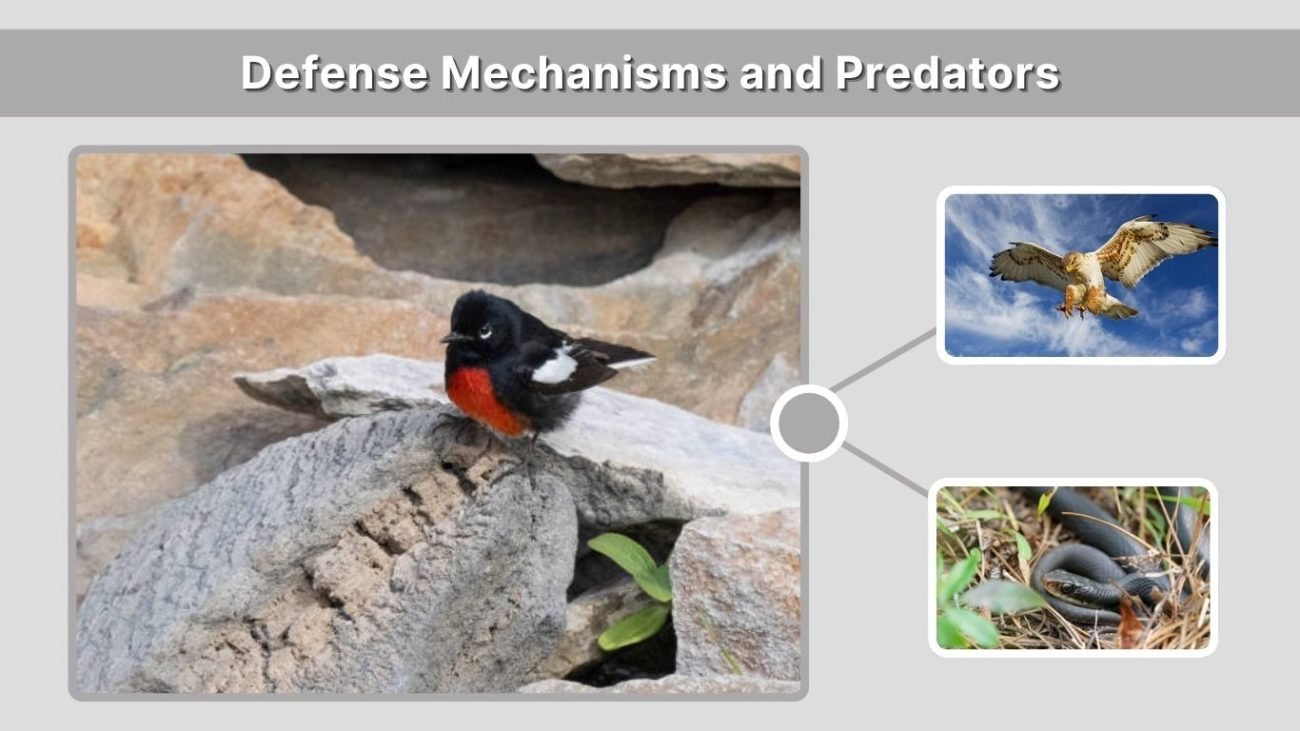
The Painted Redstart relies more on speed and awareness than aggression to survive. Its quick movements and alert behavior allow it to avoid danger effectively in dense forest environments.
Defense Strategies
- Rapid flight to escape predators
- Use of dense vegetation for cover
- Constant alertness to detect threats early
Natural Predators
- Birds of prey such as hawks
- Snakes that target nests
- Small mammals that hunt chicks
Painted Redstart Call and Sound
The Painted Redstart produces sharp, high-pitched calls that are often heard in forested areas. Its song consists of repeated notes that can sound musical but slightly abrupt compared to other songbirds. These vocalizations are most common during the breeding season, when males use them to attract mates and defend territory. While not as melodic as some warblers, their calls are distinctive and help birdwatchers identify them even when hidden in foliage.
Painted Redstart Nesting and Reproduction
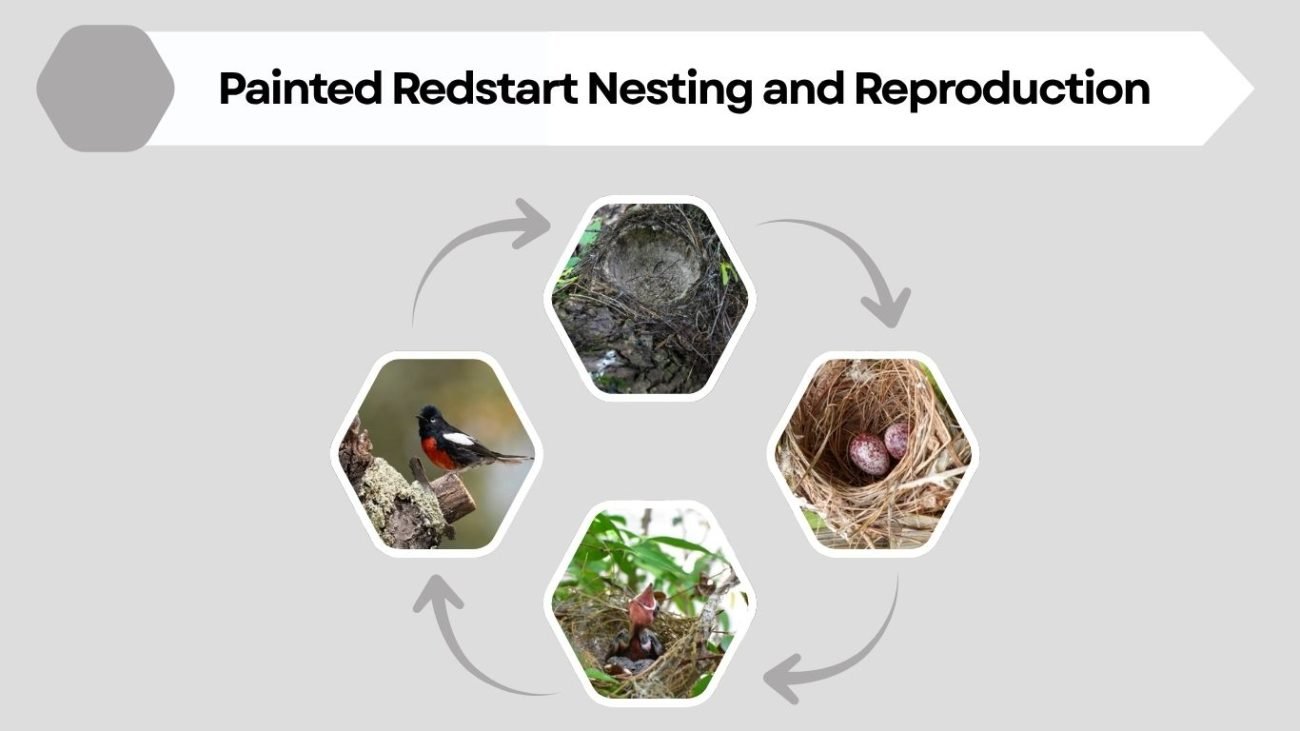
The Painted Redstart builds its nest in sheltered locations where it can remain hidden from predators. Nesting usually occurs during the warmer months when food is abundant, ensuring better survival for the chicks.
Nesting Habits
- Nests built close to the ground or in low vegetation
- Made from moss, grass, and plant fibers
- Often hidden among roots, rocks, or dense foliage
Eggs and Chicks
- Typically lays 3 to 4 eggs per clutch
- Eggs are light-colored with small markings
- Both parents may assist in feeding the chicks
Interesting Painted Redstart Facts
The Painted Redstart is a fascinating bird with several unique traits that set it apart from other warblers.
- Known for its constant tail-fanning display
- One of the most colorful warblers in its range
- Spends most of its time actively hunting insects
- Plays an important role in controlling insect populations
Painted Redstart in the Food Chain
The Painted Redstart plays an important role in maintaining ecological balance within its habitat. As an insectivore, it helps regulate insect populations, preventing outbreaks that could harm vegetation. In turn, it serves as prey for larger predators, making it an essential link in the forest food chain. Its presence indicates a healthy ecosystem where both plant and animal life are thriving together.
FAQs
What is a Painted Redstart?
The Painted Redstart is a small, colorful warbler known for its black body, red belly, and white wing patches. It is also recognized for its active feeding behavior and tail-fanning movements.
Where does the Painted Redstart live?
It lives in pine-oak forests and mountainous regions in the southwestern United States, Mexico, and Central America.
What do Painted Redstarts eat?
They mainly eat insects and small arthropods, using active hunting techniques and tail-fanning to catch prey.
What makes the Painted Redstart unique?
Its tail-fanning behavior, used to flush insects from hiding, is one of its most distinctive and easily recognizable traits.
Are Painted Redstarts aggressive?
They are not dangerous to humans but can be territorial during breeding season and may defend their space from other birds.