











The Striated Heron (Butorides striata) is a small, versatile wading bird found across tropical and subtropical regions of the world. Known for its stealthy hunting tactics and remarkable intelligence, this heron often surprises birdwatchers with its ability to use tools, such as bait, to catch fish. Its adaptability allows it to thrive in mangrove forests, estuaries, and coastal wetlands, making it one of the most widespread and fascinating members of the heron family.
Identification

Scientific Classification
The Striated Heron belongs to the family Ardeidae, which includes egrets, bitterns, and other herons. Its scientific name, Butorides striata, reflects its finely streaked plumage. It is known by several regional names, including Green-backed Heron, Mangrove Heron, and Striated Pond Heron. This bird exhibits slight morphological variations across its range, resulting in multiple recognized subspecies.
Physical Description
The Striated Heron measures around 35–48 centimeters in length, with a wingspan of approximately 60–70 centimeters. It features a dark greenish-black crown and back, a greyish body, and yellow legs. Its sharp, black-tipped bill is perfectly adapted for fishing. A faint white line runs from the throat down to the breast, giving it a striated appearance that inspired its common name.
Juvenile and Female Differences
Juveniles differ notably from adults, displaying brown-streaked plumage with a softer pattern and duller tones. Females are slightly smaller and paler than males, though the differences can be subtle. Juvenile Striated Herons gradually acquire the adult’s striking coloration and pattern as they mature, typically within their first year.
Distribution and Range
The Striated Heron is found throughout Africa, Asia, Australia, and South America, making it one of the most geographically widespread herons. It is a resident bird in most regions, though local movements may occur depending on food availability and seasonal water levels.
In Australia, the Striated Heron is commonly seen along mangrove-lined coasts and tidal flats, often perching on roots or rocks near the water. In Southeast Asia, including Singapore, Malaysia, and the Philippines, it is a familiar species in both natural and urban wetlands.
A particularly fascinating population inhabits the Galápagos Islands, where it has evolved into a unique subspecies known as the Lava Heron (B. s. sundevalli). This bird’s plumage is darker and more suited to the volcanic landscapes of the islands. Meanwhile, populations in Mauritius, India, and the Maldives maintain the typical grey and green tones, showing the adaptability of this species to various climates and conditions.
Habitat and Environment

The Striated Heron prefers wetland environments with abundant vegetation and shallow water, where it can hunt effectively. It is most commonly found in mangroves, estuaries, riverbanks, ponds, lagoons, and tidal creeks. Its presence near human settlements is not unusual, as it readily adapts to artificial wetlands and fishponds.
In the Maldives, for example, the Striated Heron is a regular sight near lagoons and resort islands, often perching quietly on coral debris. In Singapore and the Philippines, it thrives in mangrove reserves and urban nature parks. On platforms like eBird, it is frequently recorded by birdwatchers who appreciate its calm demeanor and distinctive appearance.
Despite its wide range, this heron is usually solitary and secretive, preferring to hunt alone rather than in flocks. Its ability to remain motionless for long periods makes it difficult to spot, especially when it blends into the muddy backgrounds of its habitat.
Behavior and Feeding
Diet
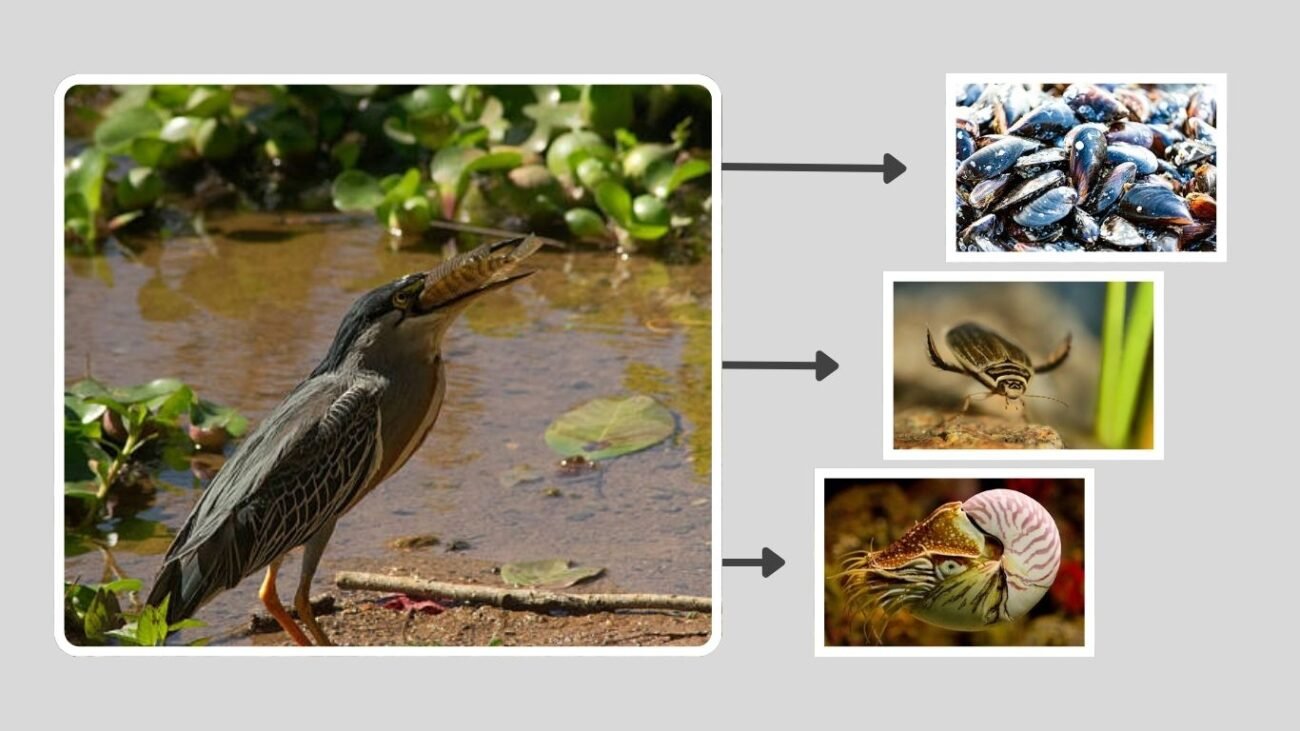
The Striated Heron’s diet mainly consists of small fish, but it also feeds on crustaceans, frogs, aquatic insects, and mollusks. It hunts by standing still at the water’s edge or slowly stalking prey before striking with lightning speed.
Remarkably, this heron is one of the few birds known to use tools. It has been observed dropping objects—such as insects, feathers, or pieces of bread—onto the water’s surface to attract fish. Once a fish investigates the bait, the heron swiftly seizes it. This “bait-fishing” behavior showcases an advanced level of problem-solving and intelligence rare among birds.
Fishing Behavior
The Striated Heron employs a “stand-and-wait” technique, remaining motionless until prey approaches within striking distance. It often hunts during low tide when fish are trapped in shallow pools. Its precision and patience make it an efficient predator.
When disturbed, the heron emits a sharp, raspy call before flying low over the water to another perch. It typically forages alone, though pairs may be seen during breeding season.
Sound and Communication
The Striated Heron’s vocalizations are distinct yet infrequent. It typically emits a harsh, “kyow” or “skew” call, especially when startled or defending territory. During the breeding season, its calls become more frequent and slightly softer, used to maintain pair bonds or alert mates to potential threats. The alarm call is sharper and shorter, often followed by a quick flight to a nearby perch. Despite its quiet nature, experienced birders can easily recognize this sound in mangrove habitats.
In Flight and Movement
When in flight, the Striated Heron displays slow, deliberate wingbeats, maintaining a low altitude over the water. Its short neck and compact body give it a characteristic silhouette, distinct from larger herons that fly with extended necks. The species rarely travels long distances, preferring short bursts of flight between perching spots.
It often perches on mangrove roots, jetty poles, or rocks, scanning the water for prey. The bird’s stealthy movements and still posture make it a master of camouflage. Even when disturbed, it doesn’t soar high but glides gracefully to a new vantage point just a few meters away.
Subspecies and Regional Variations
The Striated Heron has several regional subspecies, each adapted to local environments.
- Australian Striated Heron (B. s. stagnatilis) – Found along northern and eastern coasts of Australia; darker plumage and preference for tidal mangroves.
- Galápagos Lava Heron (B. s. sundevalli) – Endemic to the Galápagos Islands; slate-grey color blends with volcanic rock; less wary of humans.
- Asian populations (B. s. javanica) – Spread across Southeast Asia and the Indian subcontinent; brighter greenish tones and yellowish legs.
- African populations (B. s. atricapilla) – Distributed through sub-Saharan wetlands; more bluish plumage with longer bills.
These variations highlight the species’ incredible adaptability, evolving traits that suit local climates, diets, and landscapes.
Comparison With Similar Species
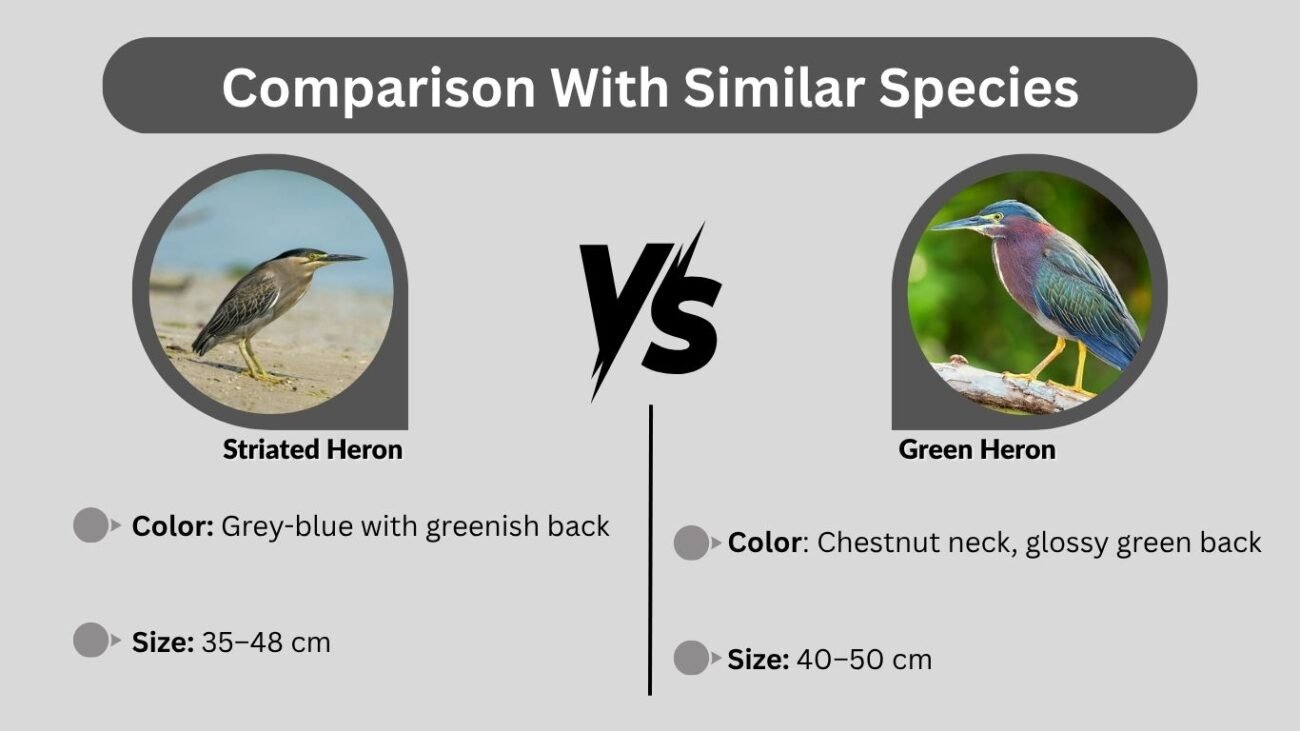
The Striated Heron is often compared to the Green Heron (Butorides virescens), a close relative found in the Americas. Both share similar size and behavior, but distinct coloration and range set them apart.
| Feature | Striated Heron | Green Heron |
| Range | Africa, Asia, Australia, Galápagos | North & Central America |
| Color | Grey-blue with greenish back | Chestnut neck, glossy green back |
| Size | 35–48 cm | 40–50 cm |
| Habitat | Mangroves, estuaries, tidal creeks | Freshwater marshes, ponds |
| Behavior | Uses bait to fish | More reliant on stalking techniques |
The Lava Heron is sometimes mistaken for a different species, but it is a Galápagos subspecies of the Striated Heron. Its darker color and isolation have given it unique traits, making it an example of island evolution in action.
Conservation Status
According to the IUCN Red List, the Striated Heron is classified as Least Concern. Its wide distribution and adaptability to diverse environments help maintain stable populations. However, localized threats such as habitat destruction, mangrove clearing, and water pollution pose risks in certain areas.
In regions like Singapore, the Maldives, and India, conservation efforts focus on protecting mangroves and wetlands, which are vital breeding and feeding habitats for this species. The Striated Heron’s resilience and behavioral flexibility make it one of the few waders capable of thriving near urban environments.
Cultural and Ecological Significance
The Striated Heron plays an essential role in maintaining wetland ecosystems by controlling fish and insect populations. In several cultures, especially across Asia and the Pacific, herons are symbols of patience, balance, and precision—traits perfectly embodied by this bird’s calculated hunting style.
The heron’s unique fishing methods have made it a favorite among wildlife photographers and nature enthusiasts. On platforms like eBird and HBW, birdwatchers worldwide share sightings and images, helping to expand knowledge about its range and behavior.
FAQs
What is the scientific name of the Striated Heron?
The scientific name of the Striated Heron is Butorides striata. It belongs to the family Ardeidae and is widely known by several names, such as the Green-backed Heron or Mangrove Heron. The term “striated” refers to its fine streaks along the neck and breast.
Where can the Striated Heron be found?
The Striated Heron is found in tropical and subtropical regions of Africa, Asia, Australia, and South America. It prefers mangroves, estuaries, lagoons, and tidal flats. Populations also exist in the Galápagos Islands, Mauritius, and the Maldives, making it a truly global species.
What does a juvenile Striated Heron look like?
Juvenile Striated Herons have brown-streaked plumage with softer patterns and duller coloring compared to adults. Their bills are lighter and shorter, and they gradually develop the darker greenish tones and sharp markings characteristic of adults within their first year.
How does the Striated Heron fish?
The Striated Heron uses an advanced hunting technique known as “bait fishing.” It places objects like feathers, insects, or even bread on the water’s surface to lure fish closer. Once the fish takes interest, the heron strikes quickly—demonstrating remarkable intelligence and patience.
How is the Striated Heron different from the Green Heron?
While both belong to the same genus (Butorides), the Striated Heron has a wider global range and greyer plumage. The Green Heron, mainly found in the Americas, shows more chestnut coloration. Both share similar feeding behavior, but the Striated Heron is more coastal in its habitat preferences.


