Flesh flies (family Sarcophagidae) are a diverse group of insects known for their association with carrion, waste, and decomposing organic matter. They play a vital ecological role by recycling nutrients and accelerating decomposition. Many species are of forensic significance due to their rapid arrival at corpses. This guide explores 18 notable species, providing key details on their identification, habitat, behavior, diet, and lifecycle for both scientific and practical understanding.
1. Sarcophaga carnaria
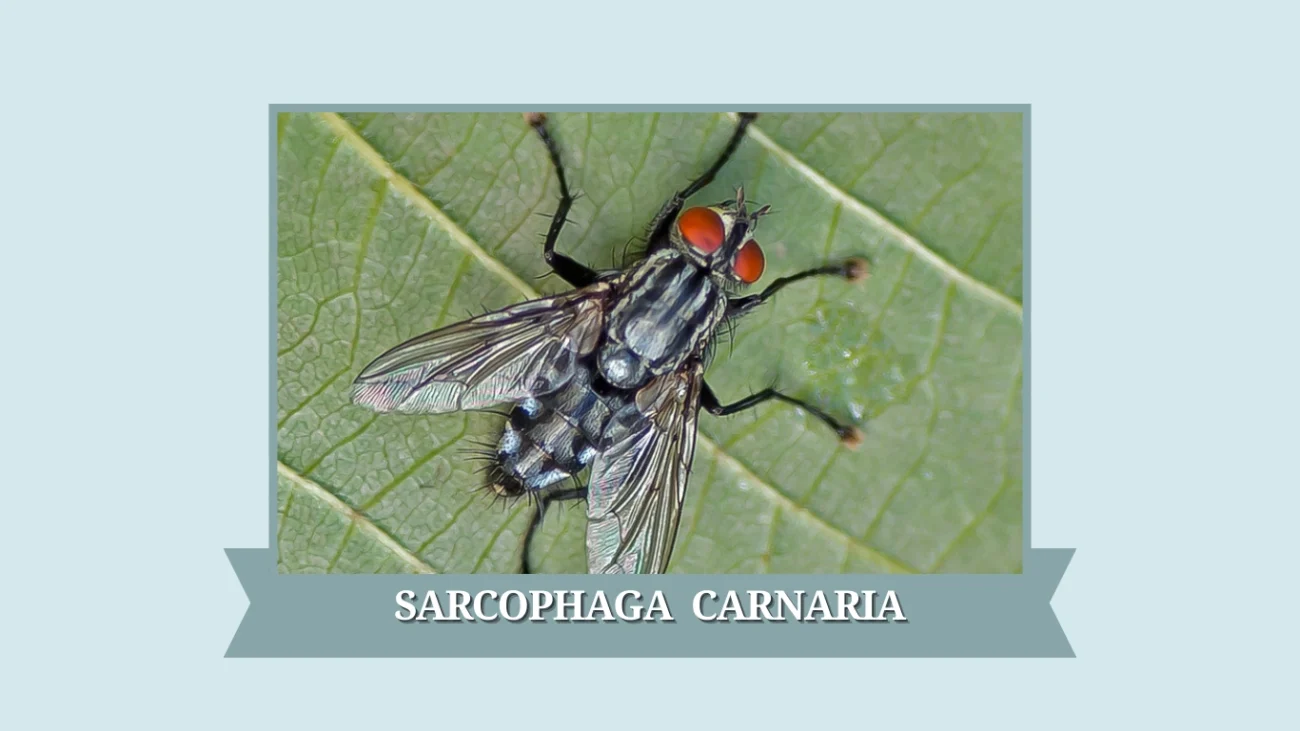
Sarcophaga carnaria is one of the most well-known flesh flies in Europe. It plays a significant role in decomposition and is often studied in forensic entomology. This species is recognized for its large size, grayish appearance, and unique life cycle strategy of depositing larvae instead of eggs.
Identification
- Medium to large-sized fly (10–14 mm).
- Thorax with three distinct black stripes.
- Abdomen gray with checkerboard pattern.
- Red compound eyes.
- Bristly body with strong setae.
Habitat
Sarcophaga carnaria is commonly found in urban areas, forests, meadows, and near carrion. It prefers warm, sunny environments and is frequently seen resting on walls, fences, or tree trunks.
Behavior
This species is viviparous, meaning it lays larvae directly onto decaying material rather than eggs. Adults are active during the day and are strong fliers. They are also attracted to garbage and excrement, making them frequent in human settlements.
Diet
Adult Sarcophaga carnaria feed mainly on nectar, decaying organic matter, and fluids from carcasses, while their larvae consume carrion, decomposing flesh, and occasionally parasitize earthworms.
Lifecycle
The female deposits live larvae onto carrion, dung, or other decaying matter. Larvae undergo several instar stages before pupating in the soil. The complete cycle from larva to adult may take just a few weeks, depending on environmental conditions.
2. Sarcophaga haemorrhoidalis

Sarcophaga haemorrhoidalis is a cosmopolitan flesh fly species, frequently associated with decaying organic matter. It is commonly found near human settlements and plays a significant role in decomposition processes, making it important in medical and forensic entomology.
Identification
- Size ranges between 10–13 mm.
- Gray thorax with three longitudinal black stripes.
- Abdomen with checkerboard-like gray and black patterns.
- Distinctive red eyes with short antennae.
- Covered with strong bristles, especially on the legs and thorax.
Habitat
This species thrives in urban and rural environments, particularly in areas where decaying organic material is abundant. It is often found around garbage dumps, animal carcasses, manure piles, and occasionally inside houses.
Behavior
Sarcophaga haemorrhoidalis is viviparous, laying larvae directly on decomposing material or feces. Adults are strong fliers and can quickly locate carrion and waste. They are diurnal and often rest on sunlit walls, fences, and vegetation.
Diet
Adult flies feed on nectar, excrement, and fluids from decaying organic substances, while the larvae consume carrion, dung, and other decomposing matter.
Lifecycle
The female lays live larvae on carrion, feces, or decaying material. These larvae undergo three instar stages, feeding intensively before pupating in the soil. The full life cycle can be completed within a few weeks under favorable conditions, contributing to rapid population growth.
3. Sarcophaga africa

Sarcophaga africa is a widespread species of flesh fly, especially common in warmer regions. Known for its association with carrion and decaying matter, it contributes significantly to the decomposition process and is often of interest in forensic studies.
Identification
- Medium-sized fly, usually 9–14 mm in length.
- Thorax gray with three distinct black stripes.
- Abdomen gray-black with a checkerboard pattern.
- Red compound eyes with short, bristly antennae.
- Body covered in coarse black bristles.
Habitat
This species is typically found in warm climates, especially in Africa and parts of Asia. It thrives in open fields, meadows, garbage sites, and near carcasses, but it can also be seen around human dwellings.
Behavior
Sarcophaga africa is viviparous, depositing larvae directly onto carrion or excrement. The adults are diurnal, active fliers that are often observed basking in the sun or resting on vegetation and walls. Their strong sense of smell allows them to locate decomposing material rapidly.
Diet
Adults feed on nectar, excrement, and fluids from decomposing organic matter, while larvae feed primarily on carrion and dung, playing an important role in nutrient recycling.
Lifecycle
The female gives birth to live larvae on suitable decaying material. Larvae pass through three instar stages while feeding, then pupate in the soil. The full development from larva to adult may be completed within three to four weeks, depending on environmental conditions.
4. Sarcophaga dux

Sarcophaga dux is a widely distributed flesh fly species found across Asia and other warm regions. It is commonly associated with carrion and organic waste, contributing significantly to decomposition and nutrient recycling. Due to its habits, it is often encountered in both rural and urban environments.
Identification
- Medium to large-sized fly, typically 10–15 mm long.
- Thorax gray with three dark longitudinal stripes.
- Abdomen patterned with a gray-and-black checkerboard appearance.
- Distinct red compound eyes.
- Strong bristles covering body and legs.
Habitat
Sarcophaga dux prefers warm, humid areas and is frequently observed in open fields, markets, garbage dumps, and near carcasses. It is also common around human settlements where organic waste is abundant.
Behavior
This species is viviparous, depositing larvae rather than eggs on carrion, feces, or decomposing organic matter. Adults are active during the daytime and can often be seen basking in the sun. They are strong fliers and quickly locate food sources through scent.
Diet
Adults primarily feed on nectar, fluids from decomposing matter, and animal excrement, while larvae consume carrion and rotting organic waste, accelerating the breakdown process.
Lifecycle
The female lays live larvae directly on decomposing matter, ensuring immediate access to food. Larvae pass through three instar stages before pupating in soil or sheltered areas. Depending on temperature and food supply, the life cycle can complete in about three to four weeks.
5. Sarcophaga crassipalpis
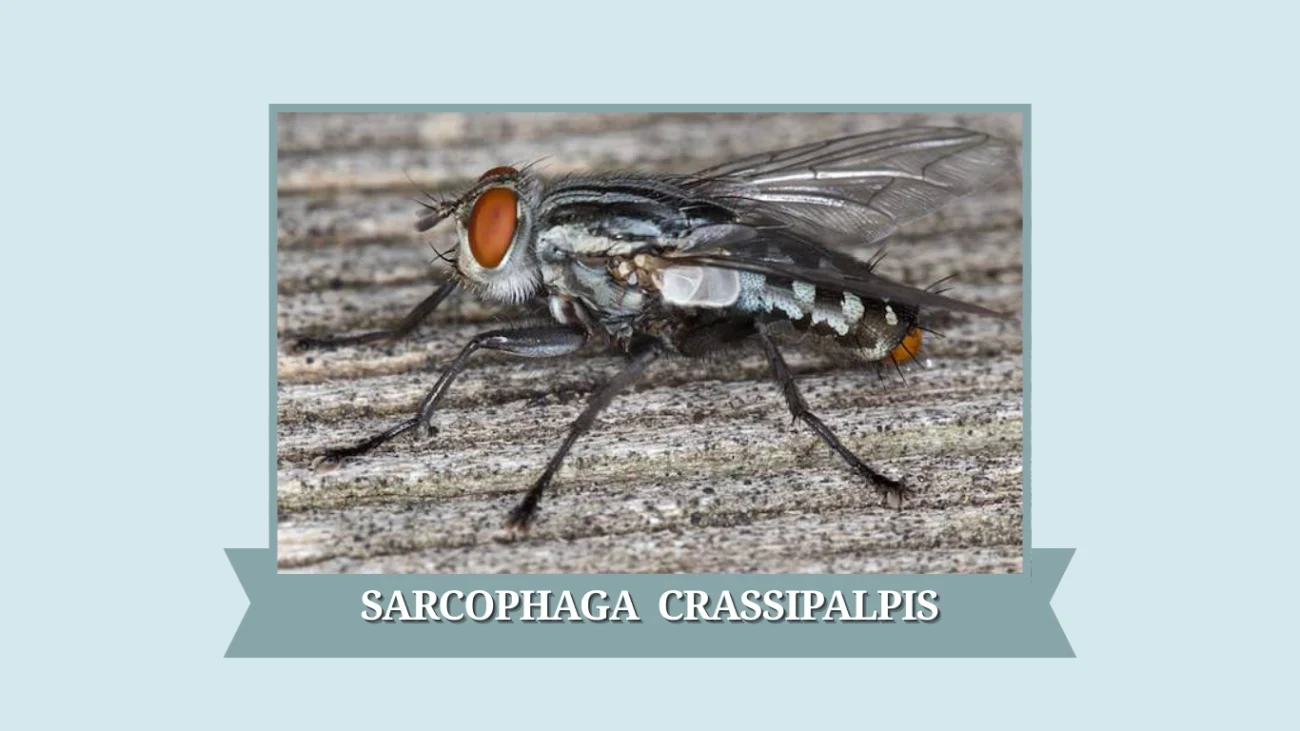
Sarcophaga crassipalpis is a well-studied species of flesh fly, often used in laboratory research because of its ease of breeding and distinctive developmental cycle. It is distributed across many regions and plays a role in the decomposition of organic material.
Identification
- Adult body length is about 10–14 mm.
- Thorax gray with three clear black stripes.
- Abdomen checkered with alternating gray and black patches.
- Red eyes with short antennae.
- Strong setae (bristles) on thorax and legs.
Habitat
This species is found in diverse habitats such as grasslands, woodlands, agricultural fields, and urban areas. It is particularly abundant where carrion, waste, or manure is present.
Behavior
Sarcophaga crassipalpis is viviparous, with females depositing live larvae on carrion, dung, or decaying matter. Adults are active during the daytime, resting on walls, fences, or vegetation when not feeding. They are strong fliers and are quick to exploit fresh organic material.
Diet
Adults feed on nectar, animal waste, and fluids from decaying organic matter. The larvae feed exclusively on carrion and other decomposing organic substrates, aiding in the recycling of nutrients.
Lifecycle
The female deposits live larvae directly on suitable decaying material. These larvae progress through three instar stages, feeding actively before burrowing into soil to pupate. Under favorable conditions, the complete life cycle can be finished within three to four weeks, making it a fast-reproducing species.
6. Sarcophaga bullata

Sarcophaga bullata is a common North American species of flesh fly, often studied in laboratories for its predictable life cycle and ease of rearing. It plays a significant role in decomposition and is considered important in forensic entomology.
Identification
- Adult size ranges from 10–15 mm.
- Thorax gray with three longitudinal black stripes.
- Abdomen with distinct gray-and-black checkerboard pattern.
- Reddish compound eyes.
- Covered with coarse bristles, especially on the thorax and legs.
Habitat
This species is widely distributed across North America and thrives in rural, suburban, and urban habitats. It is frequently encountered near carrion, garbage sites, manure piles, and occasionally inside human dwellings.
Behavior
Sarcophaga bullata is viviparous, laying live larvae directly onto decomposing material. Adults are diurnal and strong fliers, often resting on sunny walls, fences, and vegetation when not searching for food. Their rapid response to carrion makes them valuable for forensic time-of-death estimations.
Diet
Adult flies feed on nectar, excrement, and fluids from decomposing organic matter. The larvae feed primarily on carrion and dung, making them important in decomposition and nutrient recycling.
Lifecycle
The female deposits larvae directly on carrion or waste. Larvae undergo three instar stages while feeding, after which they pupate in the soil. The life cycle is completed in about three weeks under favorable conditions, allowing multiple generations per year.
7. Sarcophaga peregrina

Sarcophaga peregrina is a widely distributed species of flesh fly found in Asia, Africa, and parts of the Pacific region. It is often associated with carrion, excrement, and decomposing organic matter, making it ecologically important as well as relevant in forensic investigations.
Identification
- Adult body length between 10–14 mm.
- Thorax gray with three prominent black stripes.
- Abdomen patterned with a gray-and-black checkerboard design.
- Large reddish compound eyes.
- Strong, bristly body with dense setae.
Habitat
This species thrives in warm and tropical regions and is commonly seen around garbage dumps, carcasses, and manure piles. It is also found near human settlements where organic waste is abundant.
Behavior
Sarcophaga peregrina is viviparous, laying live larvae directly onto decaying matter. Adults are active during the day and are known for their rapid flight. They are strongly attracted to carrion and animal waste, often arriving soon after death, which makes them valuable in forensic studies.
Diet
Adult flies feed on nectar, fecal matter, and juices from decomposing substances. The larvae feed mainly on carrion and excrement, playing a crucial role in decomposition and nutrient cycling.
Lifecycle
Females deposit live larvae on carrion, dung, or decomposing organic matter. The larvae pass through three instar stages before pupating in the soil. The complete development from larva to adult usually takes about three to four weeks in favorable conditions, allowing populations to expand quickly.
8. Sarcophaga similis

Sarcophaga similis is a species of flesh fly distributed across Europe and parts of Asia. Like other members of the Sarcophagidae family, it is closely associated with carrion and decaying organic material, contributing to natural recycling and forensic studies.
Identification
- Medium-sized fly, typically 9–13 mm in length.
- Thorax gray with three dark longitudinal stripes.
- Abdomen gray-black with a distinctive checkerboard pattern.
- Reddish compound eyes.
- Strong bristles covering the thorax and legs.
Habitat
This species prefers temperate regions and is often found in open fields, meadows, woodlands, and urban environments. It is frequently encountered near carcasses, waste sites, and manure piles, where it locates food and breeding material.
Behavior
Sarcophaga similis is viviparous, depositing larvae rather than eggs. Adults are diurnal and exhibit rapid, strong flight. They are commonly seen basking in sunny areas or resting on fences, vegetation, and walls when inactive.
Diet
Adult flies feed on nectar, waste fluids, and juices from decomposing organic matter. Larvae feed primarily on carrion and feces, accelerating the breakdown of organic material and contributing to nutrient cycling.
Lifecycle
Females lay live larvae directly on decomposing organic substrates. The larvae progress through three instar stages, consuming carrion before burrowing into soil to pupate. Under favorable conditions, the life cycle is completed in about three weeks, allowing several generations per year.
9. Sarcophaga tibialis

Sarcophaga tibialis is a widespread species of flesh fly found across Europe and Asia. It is often observed around carrion, waste, and decaying organic matter, contributing significantly to natural decomposition and serving as a species of forensic interest.
Identification
- Adult body length is about 9–14 mm.
- Thorax gray with three distinct black longitudinal stripes.
- Abdomen with a gray-and-black checkerboard pattern.
- Reddish compound eyes with short antennae.
- Notable bristles along the thorax, legs, and abdomen.
Habitat
This species inhabits diverse environments such as meadows, farmlands, woodlands, and urban areas. It is commonly found near garbage dumps, carcasses, and manure, often close to human activity.
Behavior
Sarcophaga tibialis is viviparous, depositing live larvae onto suitable decomposing material. Adults are strong daytime fliers and are often seen resting in sunny spots, on walls, fences, or low vegetation. They respond rapidly to carrion, arriving shortly after death occurs.
Diet
Adults feed on nectar, animal waste, and fluids from decomposing material, while larvae feed primarily on carrion and excrement, playing a vital role in organic recycling.
Lifecycle
Females release live larvae onto carrion, dung, or rotting organic matter. Larvae pass through three instar stages before burrowing into soil to pupate. The full cycle from larva to adult is completed in about three to four weeks, enabling multiple generations per year.
10. Sarcophaga variegata
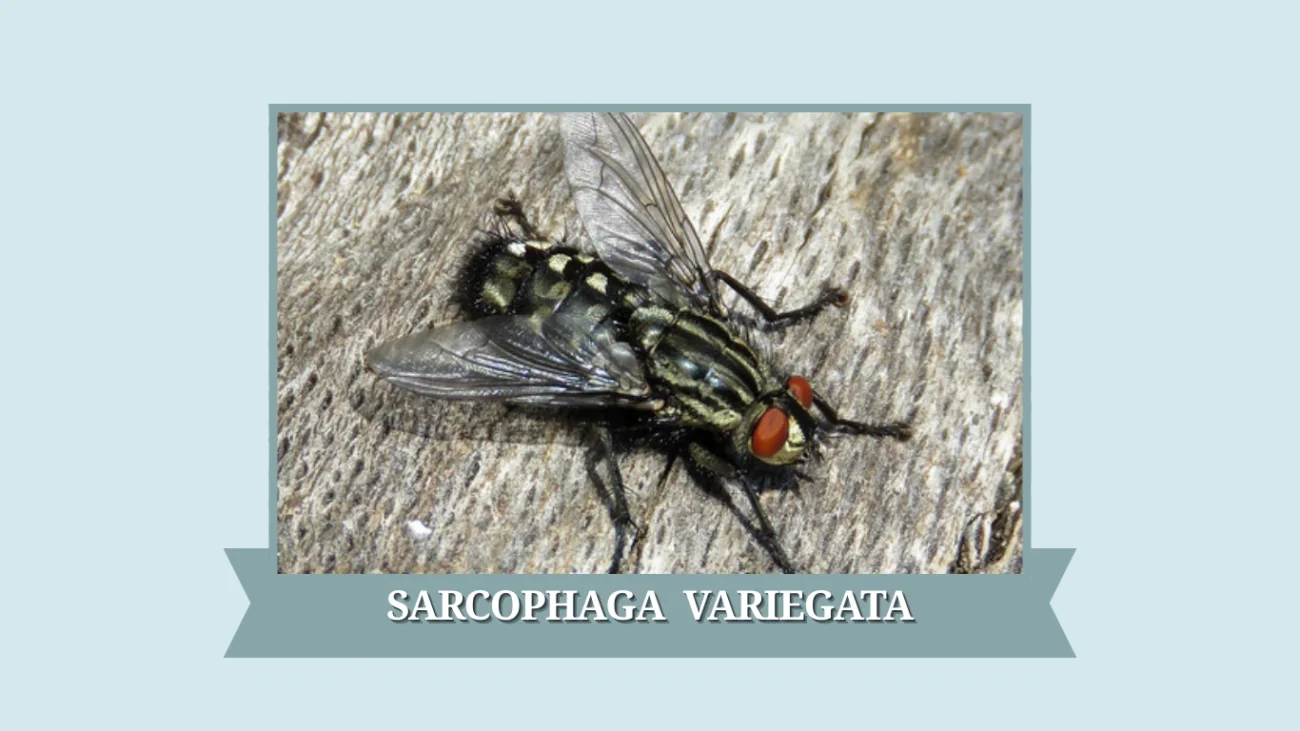
Sarcophaga variegata is a species of flesh fly commonly found in Europe and parts of Asia. Like other members of the Sarcophagidae family, it is strongly associated with carrion and decomposing organic matter, making it ecologically and forensically important.
Identification
- Adult size generally 10–14 mm.
- Thorax gray with three prominent black stripes.
- Abdomen with a patterned gray-and-black checkerboard design.
- Large red compound eyes.
- Robust body with coarse bristles, especially on legs and thorax.
Habitat
This species inhabits temperate regions, often occurring in meadows, farmlands, and near human settlements. It is commonly seen around garbage dumps, manure piles, and animal carcasses, where it finds suitable breeding sites.
Behavior
Sarcophaga variegata is viviparous, producing live larvae instead of laying eggs. Adults are diurnal and strong fliers, quickly attracted to carrion and waste. They are also seen basking on sunlit walls, fences, or vegetation.
Diet
Adults feed on nectar, waste fluids, and juices from decaying matter. The larvae consume carrion, dung, and decomposing organic substrates, accelerating the recycling of nutrients.
Lifecycle
Females deposit live larvae directly on carrion or decomposing material. The larvae develop through three instar stages, feeding intensively before pupating in the soil. The complete development cycle usually takes three to four weeks, depending on temperature and food supply.
11. Sarcophaga misera
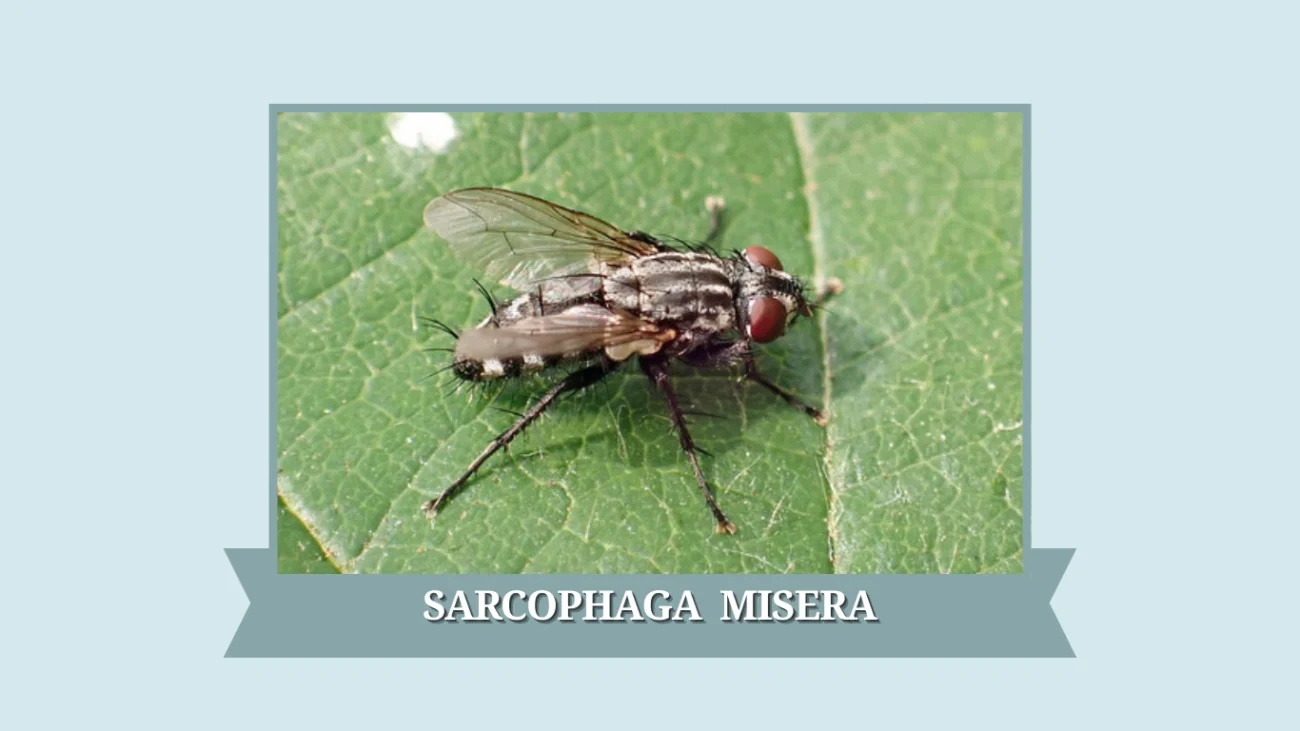
Sarcophaga misera is a species of flesh fly distributed across parts of Asia and other warm regions. Like its relatives, it plays an essential role in decomposition and is often encountered in environments rich in organic waste.
Identification
- Adult size ranges from 9–13 mm.
- Thorax gray with three dark longitudinal stripes.
- Abdomen with a gray-and-black checkerboard pattern.
- Red compound eyes with short antennae.
- Covered with stiff bristles, particularly on thorax and legs.
Habitat
This species is commonly found in warm and subtropical areas. It thrives around garbage dumps, manure piles, open fields, and carcasses. It is also frequently present near human settlements where waste accumulates.
Behavior
Sarcophaga misera is viviparous, laying live larvae directly on carrion or excrement. Adults are diurnal, with rapid and strong flight, and are known for quickly detecting decomposing organic matter. They often rest on walls, fences, or sunny surfaces when inactive.
Diet
Adults feed on nectar, excrement, and fluids from carrion or decaying organic matter. The larvae consume carrion and dung, playing a critical role in the breakdown and recycling of organic material.
Lifecycle
Females deposit live larvae on suitable substrates such as carrion or feces. Larvae undergo three instar stages before pupating in the soil. The development from larva to adult usually takes three to four weeks, allowing multiple generations per year in favorable climates.
12. Sarcophaga melanura
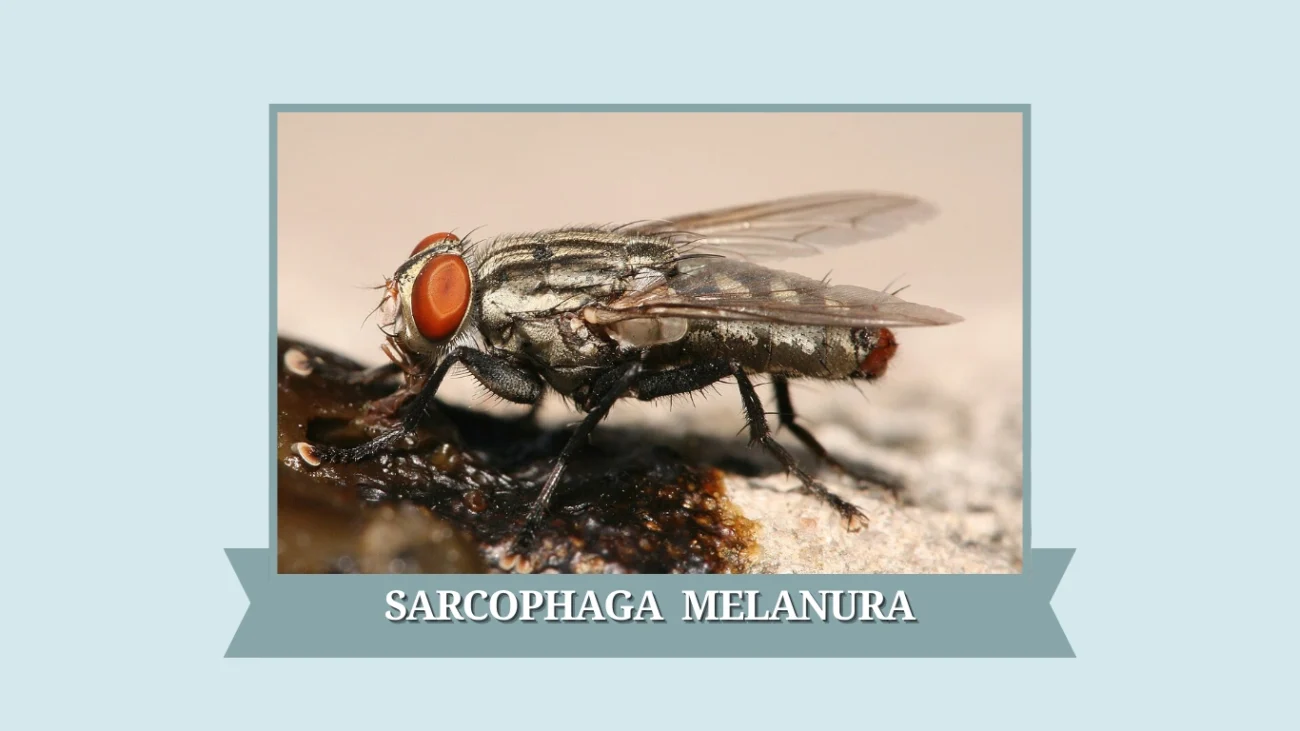
Sarcophaga melanura is a widespread species of flesh fly found across Europe, Asia, and parts of North America. It is closely tied to carrion and decomposing organic matter, making it significant in both ecology and forensic entomology.
Identification
- Adult size about 10–14 mm.
- Thorax gray with three distinct black stripes.
- Abdomen patterned with a gray-and-black checkerboard design.
- Large red compound eyes.
- Body robust with dense, coarse bristles.
Habitat
This species is common in temperate and subtropical environments. It is typically found in meadows, woodlands, farmland, garbage sites, and near animal carcasses. It is also seen in urban areas where waste is abundant.
Behavior
Sarcophaga melanura is viviparous, depositing live larvae directly onto carrion or dung. Adults are active during the day, often resting on walls, tree trunks, fences, or sunlit vegetation. Their strong flight and keen sense of smell allow them to locate decomposing matter quickly.
Diet
Adults feed on nectar, waste fluids, and juices from decomposing substances. The larvae feed on carrion, dung, and rotting organic substrates, playing a crucial role in nutrient recycling.
Lifecycle
Females deposit live larvae onto suitable decaying material. The larvae pass through three instar stages while feeding, then burrow into soil to pupate. The life cycle is generally completed in about three to four weeks, depending on climate and food availability.
13. Sarcophaga albiceps
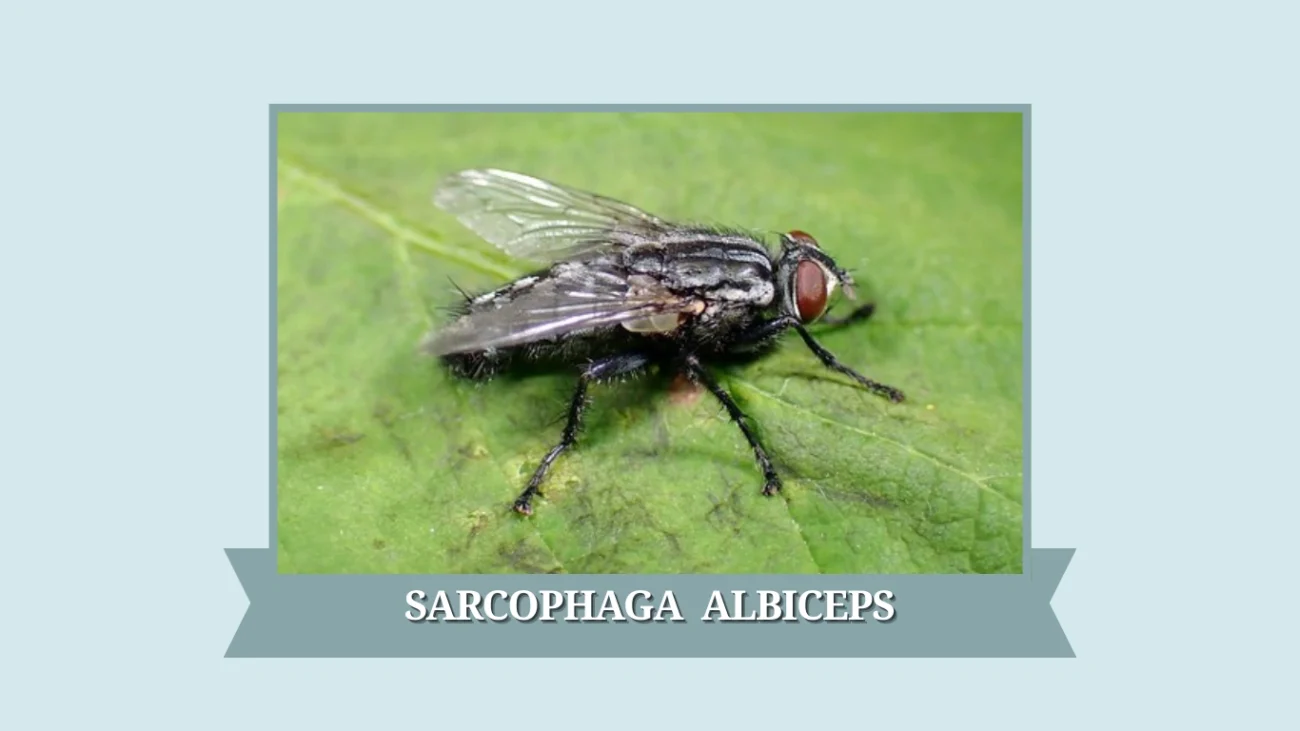
Sarcophaga albiceps is one of the most widely distributed and well-known flesh fly species. It is common in Europe, Asia, Africa, and the Americas, making it an important species for forensic entomology due to its quick arrival at carrion.
Identification
- Adult body length about 10–14 mm.
- Thorax gray with three bold black longitudinal stripes.
- Abdomen with a gray-and-black checkerboard pattern.
- Reddish compound eyes.
- Characterized by strong bristles on thorax, abdomen, and legs.
Habitat
This species thrives in both urban and rural environments. It is commonly seen around animal carcasses, garbage dumps, manure piles, and areas of high organic waste. It also occurs in agricultural and suburban regions.
Behavior
Sarcophaga albiceps is viviparous, producing larvae directly on carrion or excrement. Adults are highly active during the day, with fast, strong flight. They are among the earliest insects to reach carrion, making them forensically significant for estimating postmortem intervals.
Diet
Adult flies feed on nectar, excrement, and juices from decomposing organic material. The larvae feed on carrion, dung, and rotting organic matter, contributing to nutrient recycling and ecological balance.
Lifecycle
Females deposit live larvae onto carrion or waste. The larvae pass through three instar stages while feeding before pupating in soil. The complete development cycle from larva to adult takes about three to four weeks under favorable conditions, allowing multiple generations each year.
14. Sarcophaga ruficornis
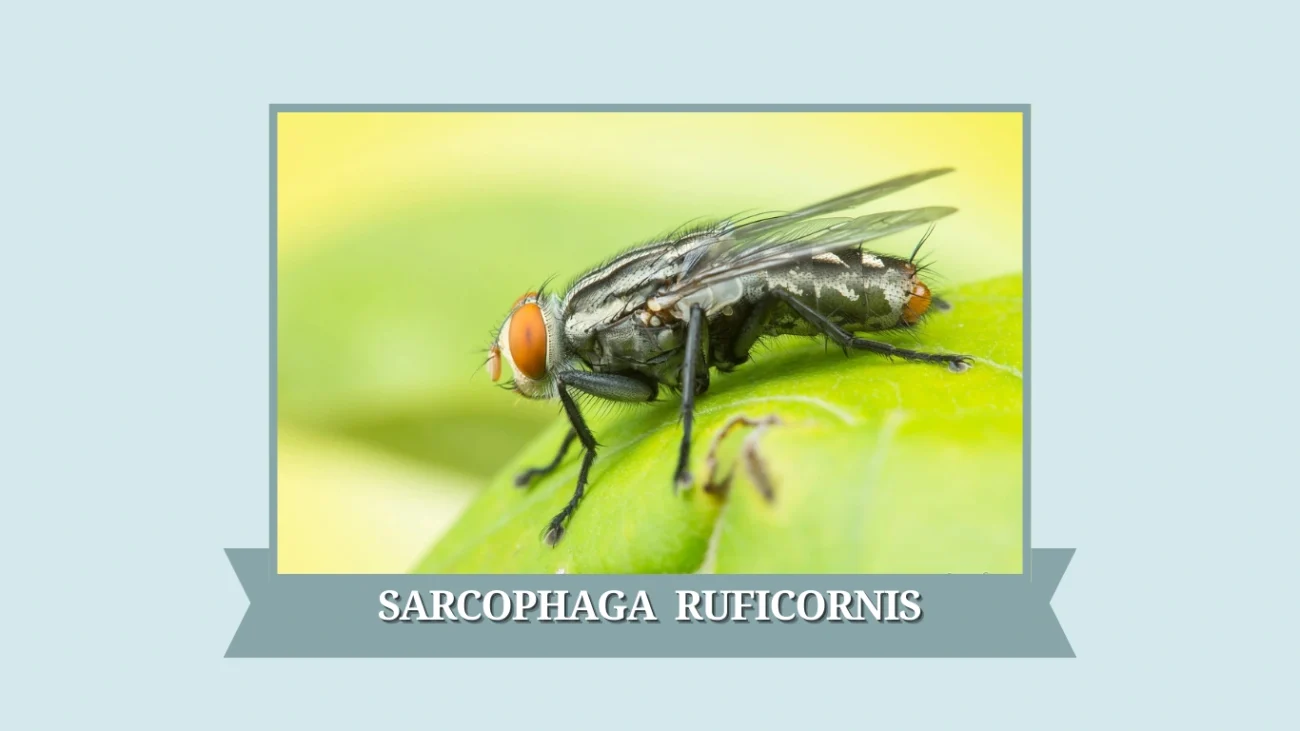
Sarcophaga ruficornis is a widely distributed species of flesh fly, particularly common in Asia and tropical regions. It is strongly associated with carrion and decomposing matter, and it is often studied in forensic entomology due to its rapid colonization of corpses.
Identification
- Adult size ranges between 10–15 mm.
- Thorax gray with three dark longitudinal stripes.
- Abdomen patterned in a gray-and-black checkerboard style.
- Distinct reddish antennae, a key identifying feature.
- Strong bristles on thorax, abdomen, and legs.
Habitat
This species prefers warm, humid climates and is frequently found around carrion, animal waste, garbage dumps, and market areas. It is especially common near human activity where organic waste is abundant.
Behavior
Sarcophaga ruficornis is viviparous, producing larvae directly onto decomposing organic matter. Adults are active during the day, often resting on sunny walls, fences, or vegetation. They are strong fliers and among the earliest species to arrive at carrion.
Diet
Adult flies feed on nectar, animal excrement, and fluids from decomposing matter. Larvae consume carrion, dung, and rotting organic material, accelerating decomposition and recycling nutrients back into the ecosystem.
Lifecycle
Females deposit live larvae on carrion, feces, or other decaying matter. The larvae pass through three instar stages while feeding before pupating in soil. The full life cycle typically takes three to four weeks, with multiple generations occurring annually in warm climates.
15. Sarcophaga hirtipes

Sarcophaga hirtipes is a species of flesh fly commonly found across Europe and parts of Asia. Like its relatives, it plays an important role in decomposition and is occasionally referenced in forensic entomology due to its association with carrion.
Identification
- Medium-sized adult, usually 9–14 mm long.
- Thorax gray with three black longitudinal stripes.
- Abdomen gray-and-black checkerboard pattern.
- Reddish compound eyes.
- Notably hairy (as the name hirtipes suggests), with dense bristles on legs and body.
Habitat
This species is found in meadows, woodlands, farmlands, and urban areas. It is commonly encountered near garbage sites, manure, and animal carcasses, often close to human settlements.
Behavior
Sarcophaga hirtipes is viviparous, depositing live larvae onto carrion, dung, or other decomposing matter. Adults are active in daylight, resting on vegetation, walls, or fences when not flying. They are attracted quickly to fresh carrion.
Diet
Adults feed on nectar, animal waste, and juices from decomposing material. The larvae rely heavily on carrion and excrement, accelerating the decomposition process and aiding in nutrient cycling.
Lifecycle
Females produce live larvae directly on decaying organic substrates. The larvae pass through three instar stages while feeding before pupating in soil. Under favorable conditions, the development from larva to adult is completed in three to four weeks, enabling several generations per year.