Buzzards are powerful birds of prey belonging to the genus Buteo, known for their keen eyesight, soaring flight, and adaptability across diverse landscapes. Found on nearly every continent, they play an important role in maintaining ecological balance by hunting rodents, reptiles, and small birds. From the widespread Common Buzzard of Europe to the rare Galápagos Hawk, these raptors display an incredible variety in plumage, habitat preference, and hunting behavior across 23 distinct species.
1. Common Buzzard (Buteo buteo)

The Common Buzzard is one of the most widespread raptors in Europe and parts of Asia, often seen soaring over fields and woodlands. Known for its variable plumage and adaptability, it thrives in a variety of habitats, from farmlands to mountainous regions. Its broad wings and short tail give it a distinctive flight profile, making it easily recognizable to birdwatchers and nature enthusiasts.
Identification
- Medium to large bird of prey (40–58 cm long, wingspan 110–130 cm)
- Plumage highly variable: shades of brown, with streaked or mottled patterns
- Pale underparts with dark belly band (in many individuals)
- Broad wings with rounded tips
- Short, fan-shaped tail with fine barring
- Yellow legs and hooked beak
Habitat and Distribution
The Common Buzzard inhabits Europe, parts of North Africa, and stretches across Asia. It is particularly abundant in the UK and central Europe. It prefers mixed landscapes of woodlands and open fields, where it can perch on trees or fence posts to spot prey.
Behavior and Diet
A versatile predator and scavenger, the Common Buzzard feeds on small mammals, birds, reptiles, and carrion. It hunts by soaring and scanning the ground or by ambushing from a perch. During migration and winter, it often gathers in loose groups where food is abundant. Its mewing call is one of the most familiar raptor sounds across Europe.
2. Steppe Buzzard (Buteo buteo vulpinus)

The Steppe Buzzard is a subspecies of the Common Buzzard, recognized for its lighter, more reddish-brown plumage and migratory lifestyle. It breeds in eastern Europe and across central Asia, then migrates to Africa and southern Asia for the winter. This wide-ranging raptor is especially noted for its adaptability to open landscapes, from grasslands to semi-deserts.
Identification
- Slightly smaller and slimmer than the Common Buzzard
- Plumage often reddish-brown with rufous tones, especially on the tail
- Underparts paler, sometimes with streaks on the chest
- Tail usually reddish with faint barring
- Broad wings but less rounded than Common Buzzard
- Yellow legs and dark hooked bill
Habitat and Distribution
The Steppe Buzzard breeds in the grasslands, steppes, and forest edges of eastern Europe, Russia, and central Asia. In winter, it migrates to sub-Saharan Africa, the Middle East, and South Asia, traveling long distances in large numbers.
Behavior and Diet
This buzzard is highly opportunistic, preying on rodents, insects, small reptiles, and carrion. It often hovers or soars low over open fields in search of prey. During migration, Steppe Buzzards can form large flocks, especially at key crossing points like the Bosporus and the Rift Valley.
3. Forest Buzzard (Buteo trizonatus)

The Forest Buzzard is a raptor native to southern Africa, closely related to the Common Buzzard but adapted to forested habitats. It is often confused with the Steppe Buzzard, which migrates into the same region, but the Forest Buzzard is resident and has distinct features. Preferring wooded mountain slopes and forest edges, it is a relatively localized bird of prey compared to other buzzards.
Identification
- Medium-sized buzzard with broad wings and rounded tips
- Plumage generally brown with lighter underparts
- Chest often whitish with faint streaking
- Tail pale grayish with narrow dark bands
- Stocky build with shorter wings compared to migratory Steppe Buzzard
- Yellow legs and hooked beak with dark tip
Habitat and Distribution
The Forest Buzzard is primarily found in South Africa and parts of Eswatini. It inhabits montane forests, forest edges, and nearby grasslands. Unlike the wide-ranging Steppe Buzzard, it is more restricted to forested zones and nearby open habitats.
Behavior and Diet
This buzzard hunts from perches or while soaring, preying on small mammals, birds, reptiles, and large insects. It is generally solitary or seen in pairs. Breeding occurs in tall forest trees, where nests are built high above the ground. Its population is considered stable, though limited in range.
4. Long-legged Buzzard (Buteo rufinus)
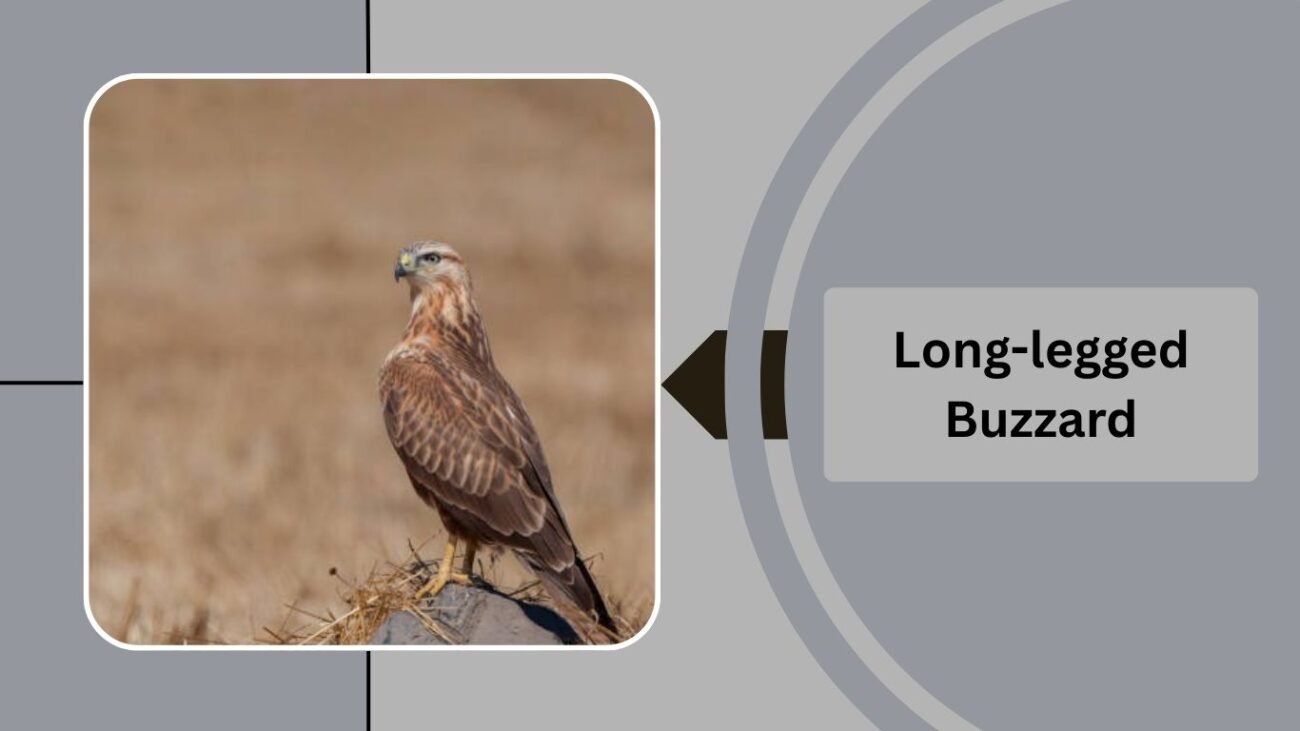
The Long-legged Buzzard is a powerful raptor of open landscapes, particularly steppes, semi-deserts, and mountainous regions. Its name comes from its noticeably longer legs compared to other buzzards, giving it a slightly taller appearance. Found across southern Europe, North Africa, and much of Asia, this bird is admired for its strength and ability to adapt to harsh, arid environments.
Identification
- Large buzzard with a wingspan of 135–160 cm
- Plumage highly variable: pale cream, rufous, or dark brown morphs
- Long feathered legs, more prominent than most buzzards
- Broad wings with dark flight feathers contrasting with paler coverts
- Tail usually rufous or pale with faint barring
- Heavy bill and yellow legs
Habitat and Distribution
The Long-legged Buzzard occurs in southeastern Europe, North Africa, the Middle East, and across Asia into India and western China. It favors dry open landscapes such as grasslands, deserts, steppes, and rocky hillsides, often nesting on cliffs or rocky outcrops.
Behavior and Diet
This species hunts mainly by soaring or hovering over open terrain. Its diet consists of rodents, small mammals, reptiles, and birds. It is also known to follow plows or grass fires to capture prey exposed by human or natural activity. Though mostly solitary, it may be seen in pairs during breeding season.
5. Rough-legged Buzzard (Buteo lagopus)
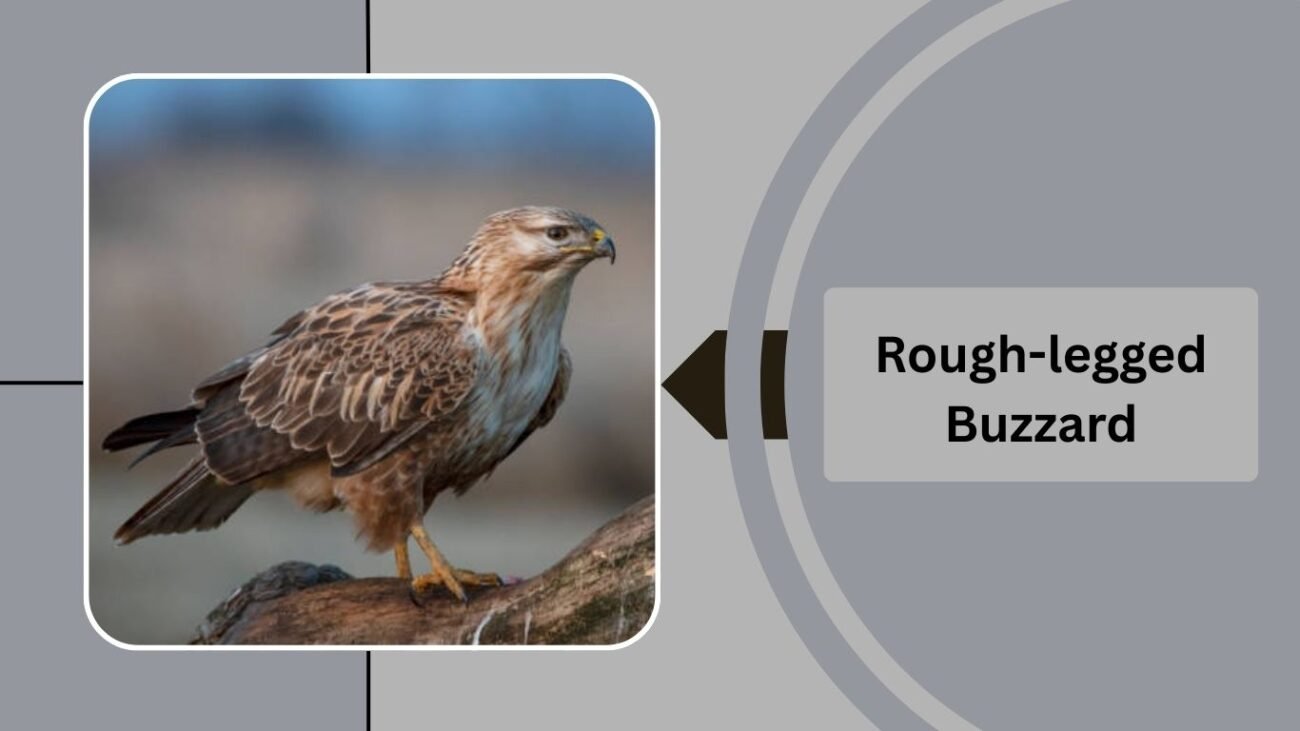
The Rough-legged Buzzard is a striking raptor of the far north, breeding in Arctic tundra regions and migrating south during winter. Unlike many buzzards, it has feathered legs all the way down to the toes, an adaptation for surviving in freezing climates. Graceful in flight, it is often seen hovering over open fields in search of prey, resembling a large kestrel in behavior.
Identification
- Medium to large buzzard with a wingspan of 120–140 cm
- Feathered legs down to the toes (key feature)
- Pale underparts with dark belly patch and carpal “wrist” markings
- Tail typically white with a broad dark terminal band
- Plumage comes in light and dark morphs
- Rounded wings with distinct patterning visible in flight
Habitat and Distribution
This species breeds in the tundra of Scandinavia, Russia, Alaska, and Canada. In winter, it migrates southward to Europe, Asia, and North America, favoring open habitats like fields, marshes, and grasslands. Its presence is strongly tied to rodent population cycles, especially lemmings.
Behavior and Diet
The Rough-legged Buzzard is a rodent specialist, feeding mainly on voles and lemmings. It hunts by soaring and hovering with wings held in a shallow “V.” Outside the breeding season, it is often solitary, though small groups may form in rich hunting areas. It nests on cliffs, rocky outcrops, or in trees in the far north.
6. Himalayan Buzzard (Buteo refectus)
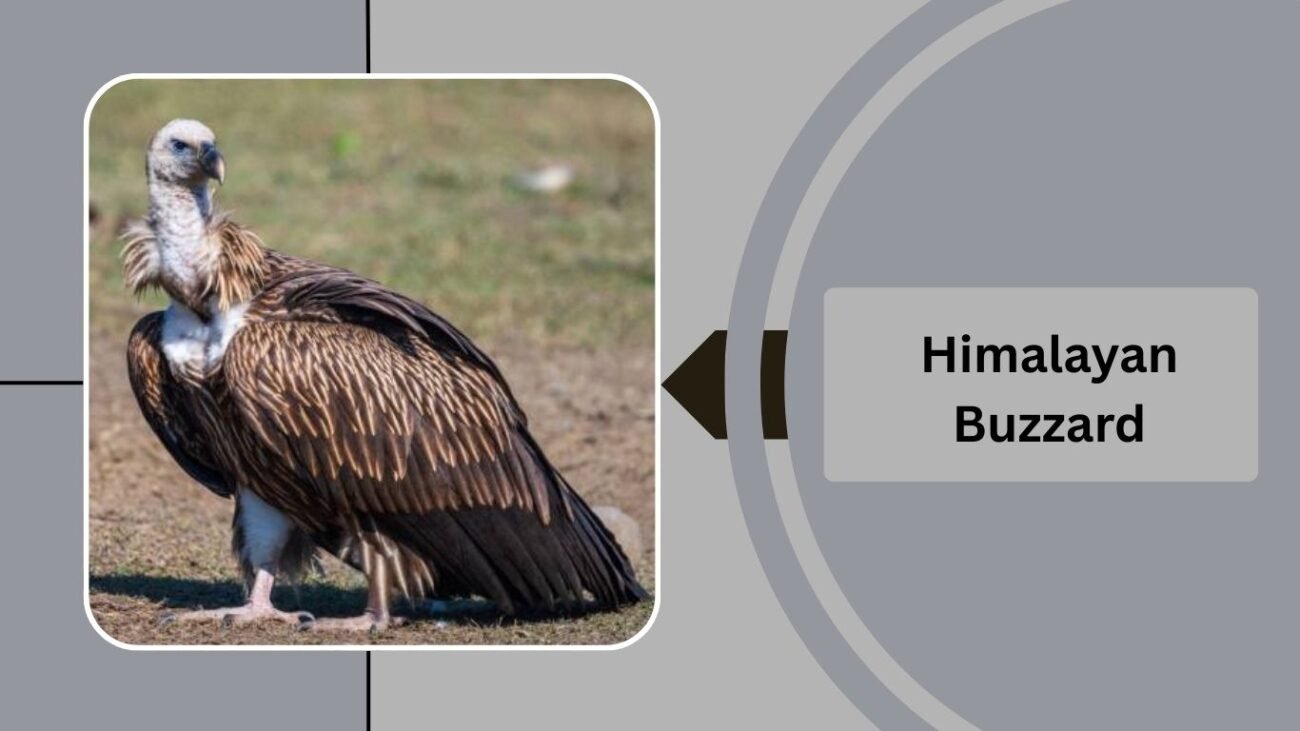
The Himalayan Buzzard is a large raptor of the high-altitude regions of the Himalayas, often regarded as a close relative of the Common Buzzard. Adapted to rugged mountain environments, it soars powerfully along ridges and valleys, taking advantage of thermal currents. This species is relatively scarce compared to other buzzards, making sightings in its remote habitat especially notable for birdwatchers.
Identification
- Medium to large buzzard with broad, rounded wings
- Plumage variable: typically dark brown above with lighter underparts
- Chest often streaked with brown markings
- Tail pale grayish-brown with fine dark bands
- Stocky build, similar to Common Buzzard but slightly larger
- Yellow cere and legs, hooked dark bill
Habitat and Distribution
The Himalayan Buzzard inhabits the mountainous regions of the Himalayas, ranging across Nepal, Bhutan, northern India, and Tibet. It is found in alpine meadows, forested valleys, and rocky slopes, usually at elevations between 1,200–4,000 meters.
Behavior and Diet
This buzzard feeds on small mammals, birds, reptiles, and large insects, often hunting by soaring and scanning the ground below. It is typically solitary or seen in pairs. During breeding, nests are built on cliffs or tall trees, with vantage points over valleys. Unlike migratory buzzards, it is largely sedentary, though some altitudinal movements occur with the seasons.
7. Red-tailed Buzzard (Buteo jamaicensis)
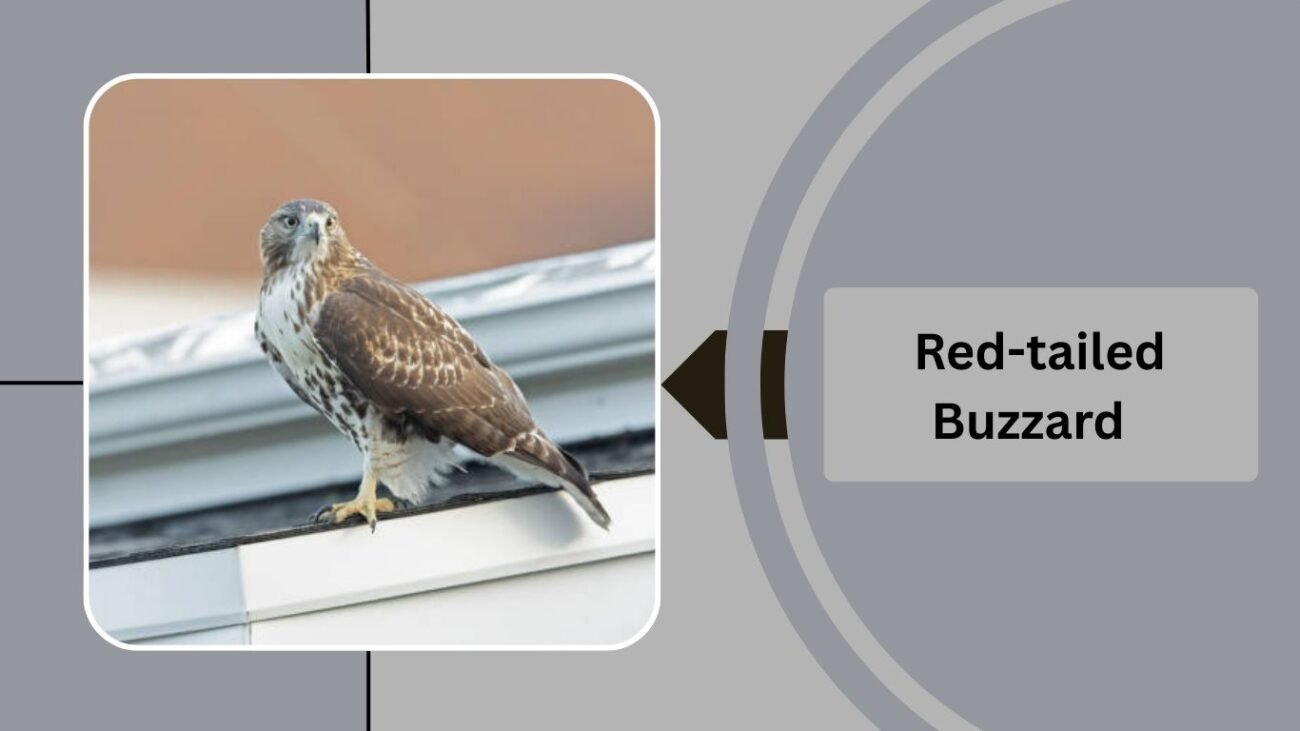
The Red-tailed Buzzard, also widely known as the Red-tailed Hawk, is one of the most familiar raptors in North America. With its broad wings, commanding presence, and distinctive reddish tail, it is often seen soaring above fields, highways, and forests. Adaptable and widespread, this species thrives in a variety of habitats, making it one of the most observed buzzards in the world.
Identification
- Large buzzard with a wingspan of 110–145 cm
- Plumage variable: most commonly brown above and pale below with dark streaked belly band
- Distinctive rufous-red tail, especially in adults
- Broad rounded wings with dark patagial bars (near leading edge)
- Yellow legs and feet, hooked bill with dark tip
- Juveniles have brown, banded tails rather than red
Habitat and Distribution
The Red-tailed Buzzard ranges across North America, from Alaska and Canada down through the United States and into Central America. It is found in diverse habitats including forests, deserts, grasslands, and urban areas. It often nests in tall trees, cliffs, or even on human structures.
Behavior and Diet
This buzzard is a versatile hunter, feeding on small mammals, birds, reptiles, and occasionally carrion. It hunts by soaring in wide circles, perching on vantage points, or hovering briefly before diving onto prey. Known for its piercing scream, it is often used as the archetypal “hawk cry” in films. Pairs are territorial and return to the same nesting sites year after year.
8. Augur Buzzard (Buteo augur)
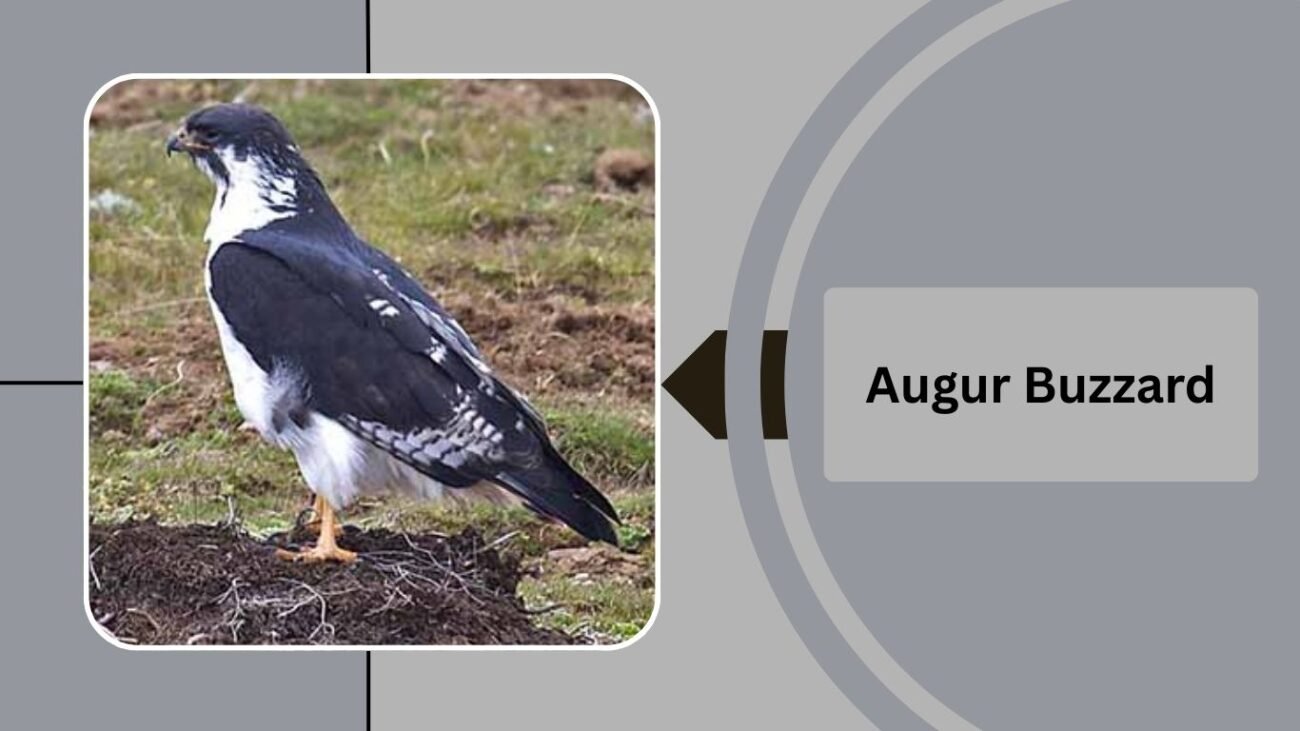
The Augur Buzzard is a striking raptor native to eastern and southern Africa. Known for its bold black-and-white plumage, it is one of the most easily recognized buzzards in the region. Its dramatic appearance, coupled with its soaring flight, makes it a prominent bird of open landscapes. In many African cultures, its call is associated with omens, giving rise to its name “Augur.”
Identification
- Medium to large buzzard with a wingspan of 120–160 cm
- Adults: striking black upperparts, white underparts, and rufous-red tail
- Wings broad and rounded with contrasting black flight feathers and white panels
- Juveniles are brownish with streaked underparts and barred tails
- Strong yellow legs and cere with hooked dark bill
Habitat and Distribution
The Augur Buzzard inhabits mountainous and open grassland areas of eastern Africa, from Ethiopia and Sudan southwards through Kenya, Tanzania, Uganda, and into southern Africa. It favors cliffs, highlands, and savannahs, often nesting on rocky outcrops or tall trees near escarpments.
Behavior and Diet
This buzzard is primarily a perch-and-soar hunter, feeding on small mammals, birds, reptiles, and large insects. It is often seen perched on poles or rocks, scanning for prey before launching into a powerful glide. Its loud, wailing call is a common sound in the African highlands. Augur Buzzards are territorial and form monogamous pairs, often reusing nesting sites year after year.
9. Madagascar Buzzard (Buteo brachypterus)
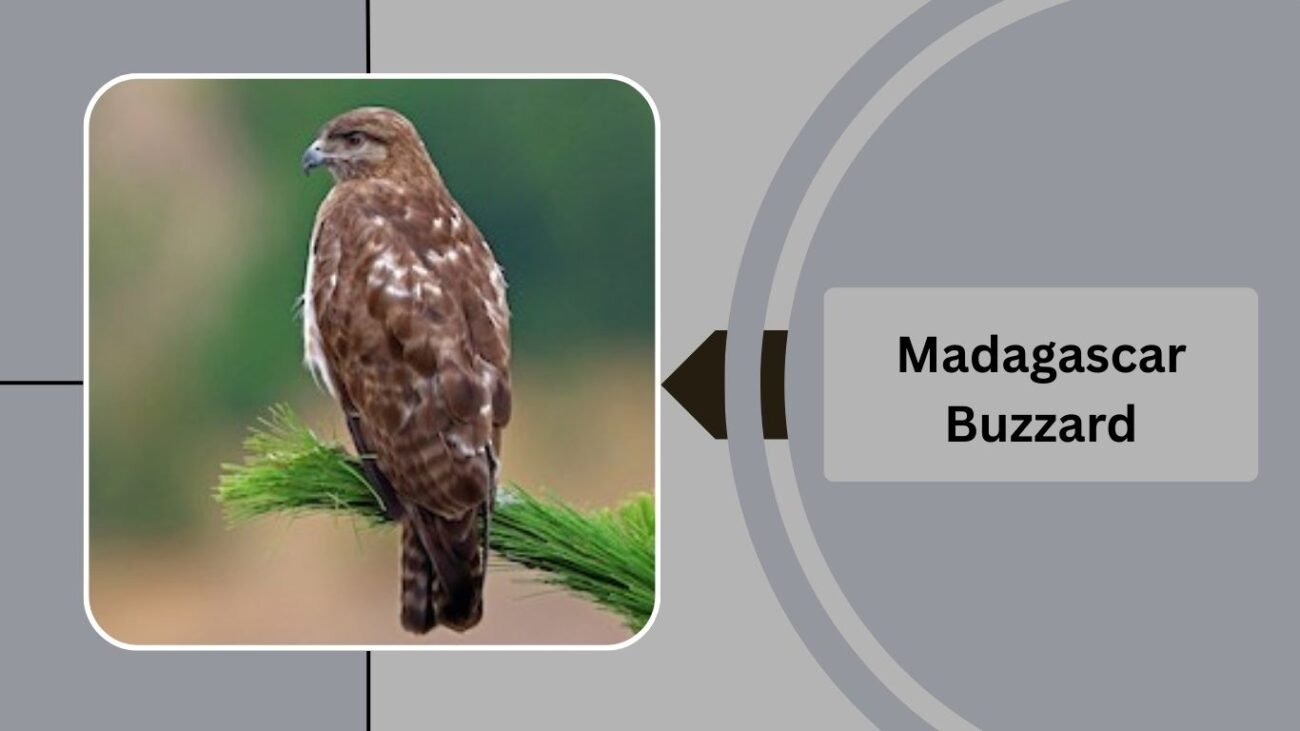
The Madagascar Buzzard is a medium-sized raptor endemic to Madagascar, making it one of the island’s most distinctive birds of prey. Often seen perched along forest edges or soaring above valleys, this buzzard plays an important role in controlling small vertebrate populations. It has adapted well to Madagascar’s varied habitats, from dense rainforests to dry woodlands, and remains one of the island’s more common raptors.
Identification
- Medium buzzard with a wingspan of 110–125 cm
- Dark brown upperparts with lighter streaks
- Underparts cream to buff with brown streaking on chest and belly
- Tail short, with broad dark bands against a lighter background
- Broad wings with rounded tips, giving a compact look in flight
- Yellow cere and legs with a hooked dark bill
Habitat and Distribution
As an island endemic, the Madagascar Buzzard is found only in Madagascar. It inhabits forests, wooded savannas, rocky cliffs, and agricultural areas, showing remarkable adaptability. It is commonly seen at mid- to high-elevations but can also occur in coastal lowlands.
Behavior and Diet
This buzzard is an opportunistic hunter, feeding on small mammals, birds, reptiles, and large insects. It hunts from perches or by soaring and scanning for prey. During the breeding season, it builds stick nests in tall trees or on cliffs, laying one to two eggs. Vocal and territorial, it defends its nesting areas aggressively against intruders, including other raptors.
10. Long-legged Buzzard (Buteo rufinus)
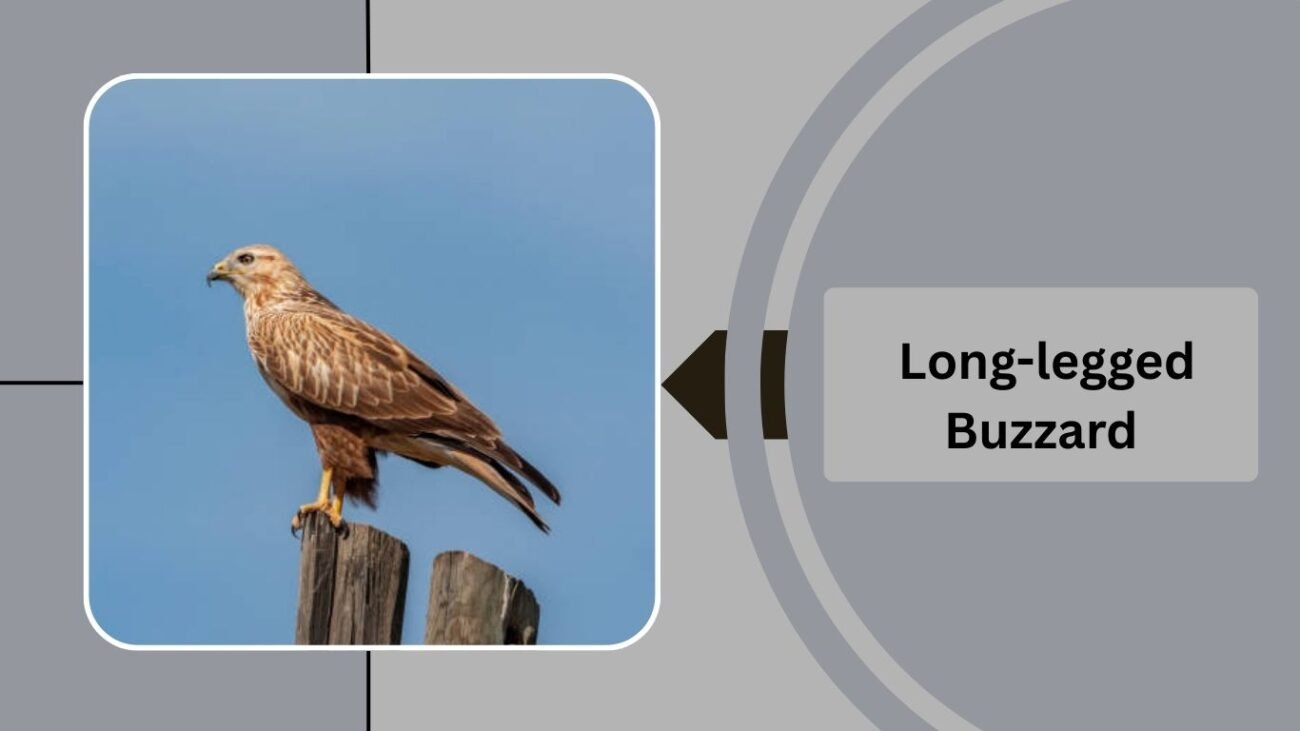
The Long-legged Buzzard is a powerful raptor that thrives in arid and open landscapes. Known for its pale coloration and wide range across parts of Europe, Asia, and North Africa, this species is often mistaken for larger eagles when seen soaring high. Its adaptability to semi-desert and mountainous regions has made it a notable predator in areas where vegetation is sparse.
Identification
- Large buzzard with wingspan 135–160 cm
- Plumage variable: generally pale brown to rufous above with lighter underparts
- Legs feathered down to the toes, giving a “long-legged” look
- Tail pale with fine dark bands, sometimes reddish
- Broad wings with dark trailing edges and carpal patches
- Yellow cere and legs with a strong, hooked bill
Habitat and Distribution
The Long-legged Buzzard occurs across southern Europe, North Africa, the Middle East, Central Asia, and into western China. It prefers semi-deserts, rocky hillsides, steppe regions, and open mountain slopes. In some regions, it overlaps with the Common Buzzard, though it favors drier habitats.
Behavior and Diet
This buzzard preys on small mammals, birds, reptiles, and occasionally large insects. It hunts by soaring and gliding over open terrain or by watching from elevated perches before swooping down. During breeding, it nests on cliffs, rocky outcrops, or tall trees, using large stick platforms. Territorial and fierce, it defends its nest vigorously against intruders.
11. Rough-legged Buzzard (Buteo lagopus)
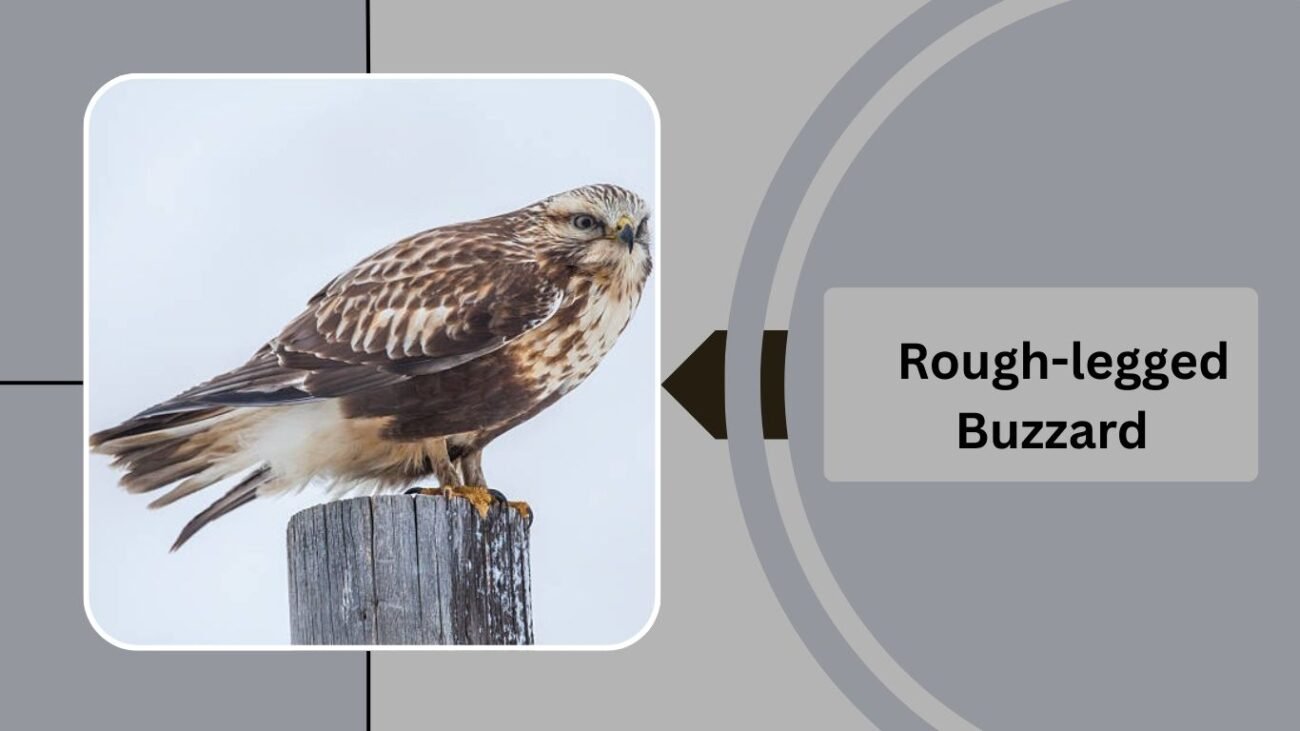
The Rough-legged Buzzard is a striking raptor adapted to the cold tundra and taiga regions of the Northern Hemisphere. Known for its feathered legs that extend down to the toes, it is well-insulated for life in harsh climates. This buzzard is a long-distance migrant, breeding in the Arctic and moving south during winter, where it is often spotted in open fields and farmlands.
Identification
- Large buzzard with a wingspan of 120–153 cm
- Plumage highly variable: light and dark morphs exist
- Light morph: pale head and underparts with dark belly patch and carpal “wrist” markings
- Dark morph: mostly dark brown to blackish with pale flight feathers
- Tail white with broad dark terminal band
- Fully feathered legs (unique feature)
- Yellow cere and legs, dark hooked bill
Habitat and Distribution
The Rough-legged Buzzard breeds in the Arctic tundra across North America, Europe, and Asia. In winter, it migrates southward to open fields, marshes, and agricultural lands, often seen perched on fence posts or hovering while hunting.
Behavior and Diet
This buzzard primarily preys on small mammals such as voles and lemmings, which dominate its diet in breeding grounds. It hunts by hovering with steady wingbeats, scanning for movement before diving. During breeding season, it nests on cliffs, rocky ledges, or ground mounds, laying two to five eggs. Its movements are strongly tied to rodent population cycles, with irruptions occurring in peak vole years.
12. Upland Buzzard (Buteo hemilasius)
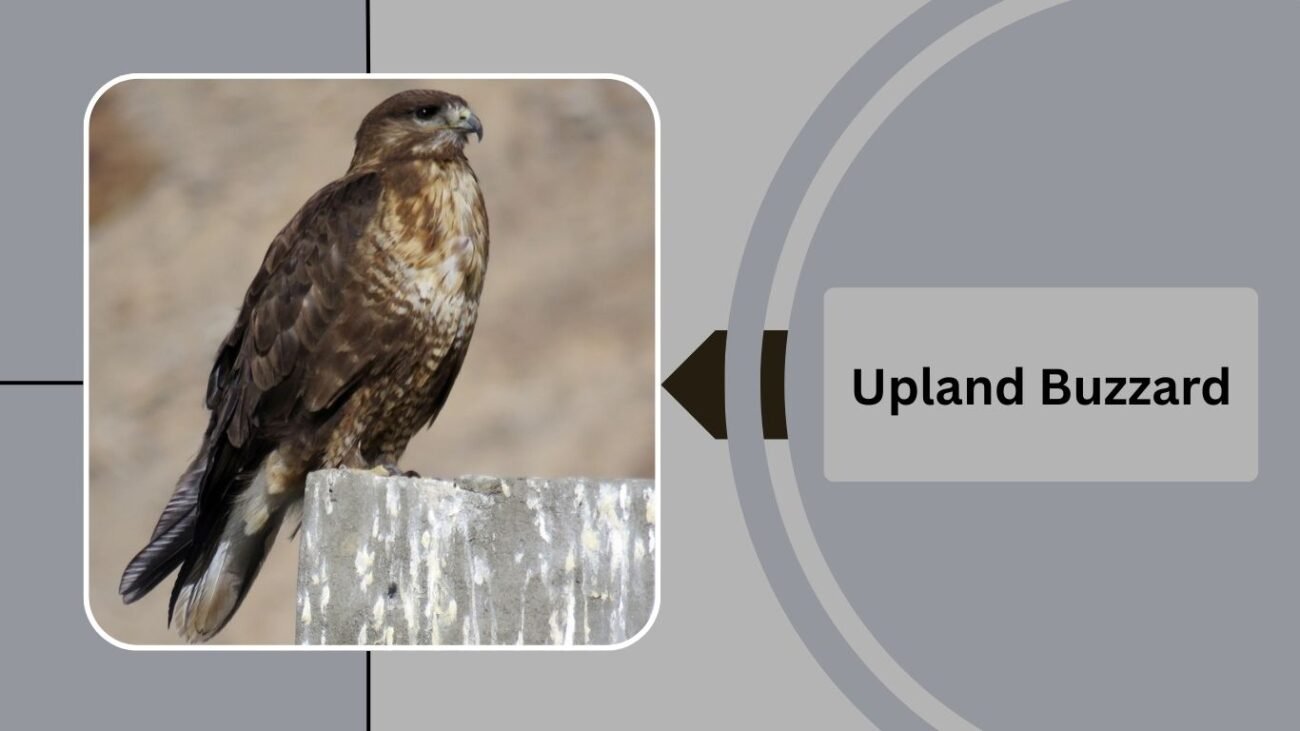
The Upland Buzzard is the largest of all buzzard species, a powerful raptor of the high-altitude steppes and mountains of Central Asia. Its impressive size, broad wings, and pale coloration distinguish it from other buzzards. Adapted to rugged and remote habitats, this bird is a skilled hunter, soaring over vast landscapes where prey can be scarce.
Identification
- Very large buzzard, wingspan 145–165 cm (largest in genus Buteo)
- Plumage variable, often pale brown to whitish with darker streaking
- Tail pale with fine gray or brown bars
- Broad wings with dark flight feathers and pale panels
- Legs feathered partially, but not as fully as Rough-legged Buzzard
- Powerful hooked bill with yellow cere and strong talons
Habitat and Distribution
The Upland Buzzard inhabits high-altitude grasslands, semi-deserts, and mountain ranges across Mongolia, Tibet, western China, and Central Asia. It prefers open terrain, rocky slopes, and alpine meadows, usually at elevations above 3,000 meters. Its range overlaps with eagles, but it remains a distinct, specialized buzzard.
Behavior and Diet
This buzzard hunts small mammals, especially ground squirrels, pikas, and voles, as well as birds and reptiles. It is often seen soaring low over grasslands or perched on rocky outcrops. Unlike some other buzzards, it builds large stick nests on cliffs or tall structures, reusing them for many years. Its slow, powerful flight and commanding presence make it an apex predator of its habitat.
13. Red-tailed Hawk (Buteo jamaicensis)
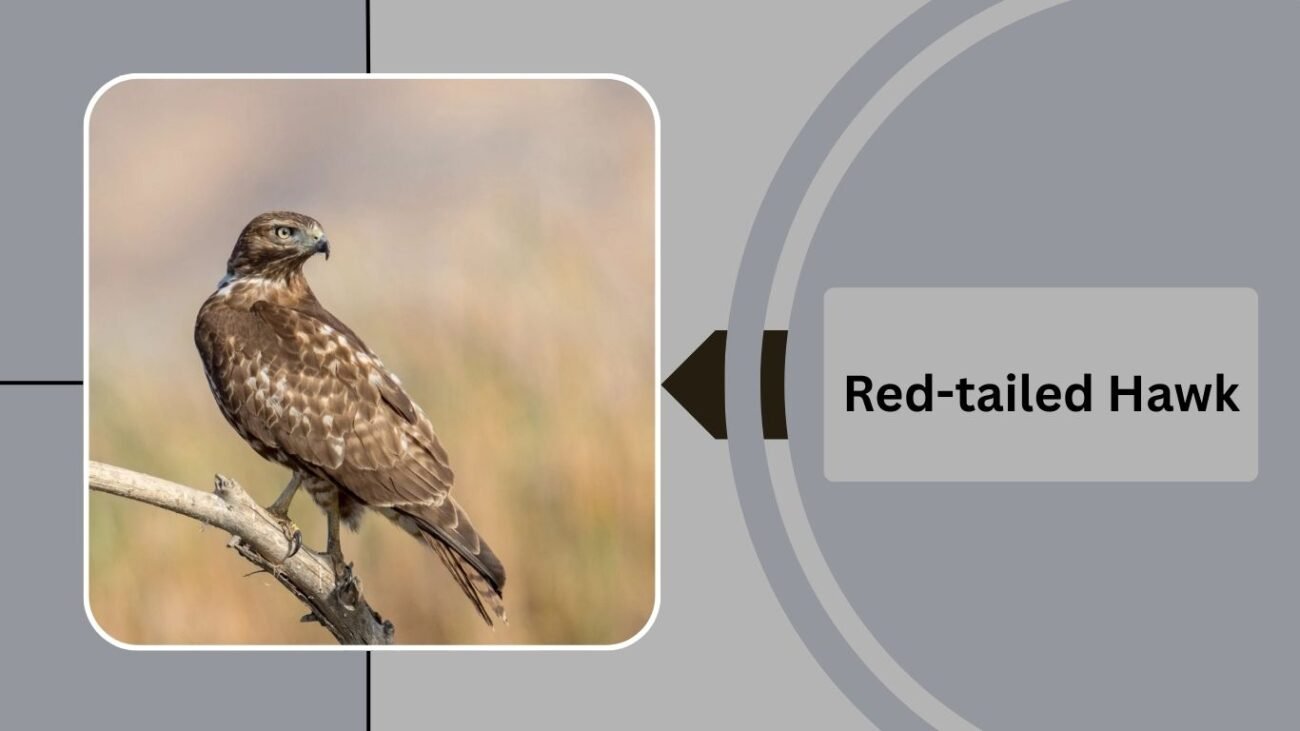
The Red-tailed Hawk, often referred to as the “buzzard” in Europe, is one of the most widespread and recognizable raptors in North America. Its signature red tail makes it easy to identify, and its adaptability allows it to thrive in diverse habitats. Known for its piercing call, this species is often seen soaring high in the sky, patrolling open landscapes.
Identification
- Medium-to-large buzzard, wingspan 114–133 cm
- Distinctive reddish-brown tail, especially in adults
- Plumage variable: from light morphs with pale underparts to dark morphs almost entirely brown
- Broad, rounded wings with dark patagial (shoulder) markings
- Strong, hooked bill with yellow cere
- Yellow legs with sharp talons
Habitat and Distribution
The Red-tailed Hawk is found across North America, from Alaska and Canada down through the United States into Central America and the Caribbean. It inhabits open fields, deserts, forests, mountains, and urban areas, making it one of the most versatile raptors.
Behavior and Diet
An opportunistic hunter, the Red-tailed Hawk feeds mainly on small mammals like rodents, rabbits, and squirrels, but also preys on birds, reptiles, and carrion. It hunts by soaring and scanning from above or by perching on poles, trees, and fence posts. Its loud, raspy scream is often used in movies to represent the “sound of an eagle,” highlighting its iconic status.
14. Ferruginous Hawk (Buteo regalis)
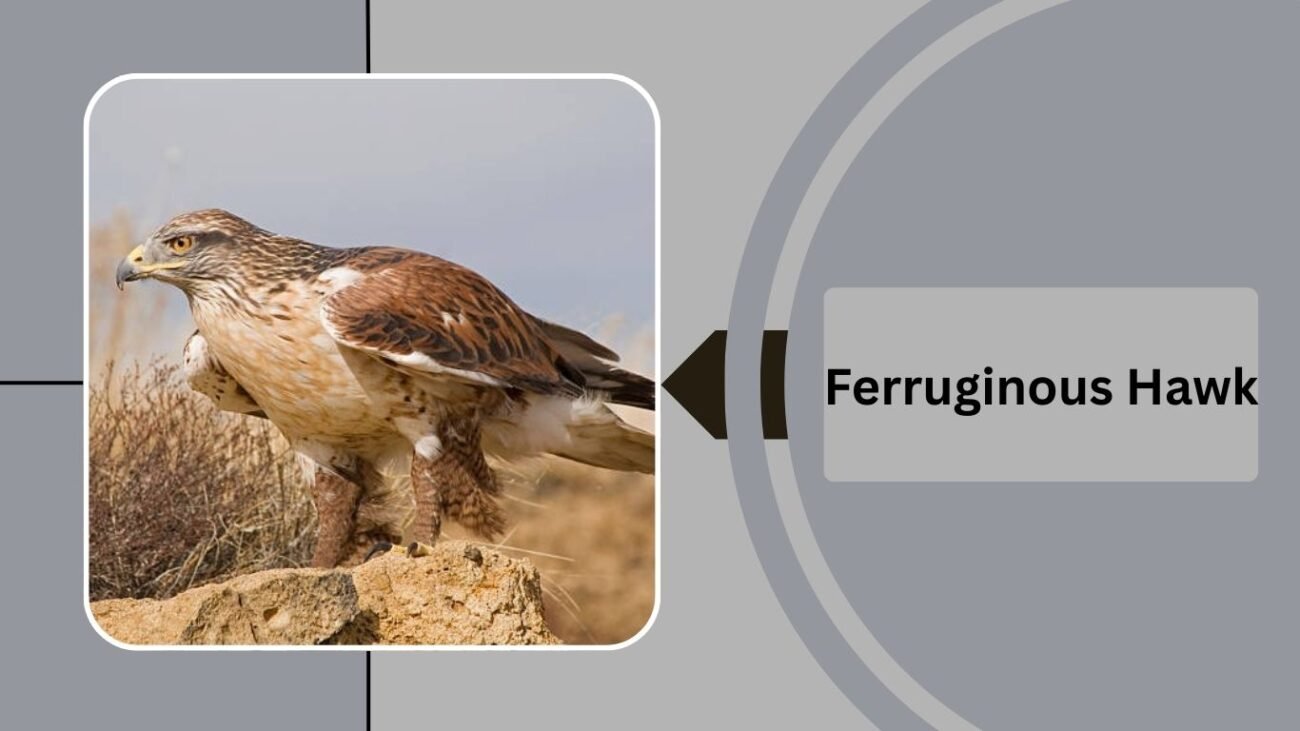
The Ferruginous Hawk, the largest hawk in North America, is often considered a buzzard due to its close relation within the Buteo genus. Its name “ferruginous” refers to its rusty-colored plumage. This majestic raptor dominates the open plains and grasslands, where its size, power, and striking appearance set it apart from other birds of prey.
Identification
- Very large buzzard, wingspan 133–152 cm
- Plumage varies from light to dark morphs
- Light morph: whitish underparts, rusty streaks on legs and shoulders, pale head
- Dark morph: mostly dark brown with lighter flight feathers
- Large gape (mouth opening) that extends beyond the eye
- Feathered legs, unlike most other North American hawks
Habitat and Distribution
The Ferruginous Hawk is found in open habitats across western North America, from the Great Plains to deserts and plateaus. It prefers wide grasslands, shrublands, and arid regions where small mammals are abundant. Its breeding range extends into southern Canada, while in winter it migrates as far south as northern Mexico.
Behavior and Diet
This hawk specializes in hunting ground-dwelling mammals, particularly prairie dogs, jackrabbits, and ground squirrels. It hunts both by soaring and by waiting on the ground before ambushing prey. Known for its adaptability, it may hunt cooperatively in areas with abundant prey. Its nests are large stick structures built on cliffs, trees, or even artificial platforms.
15. Jackal Buzzard (Buteo rufofuscus)
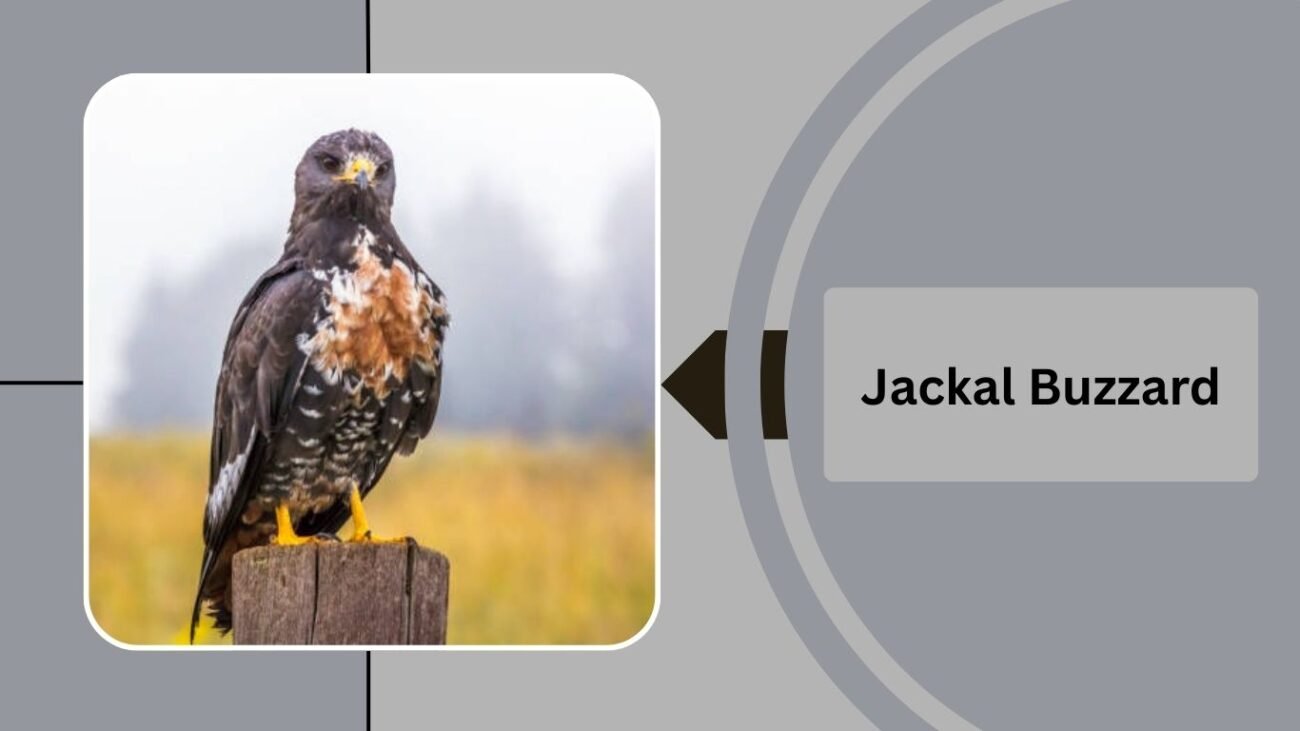
The Jackal Buzzard is a striking raptor native to southern Africa, easily recognized by its bold plumage and powerful build. Its name comes from its call, which is similar to that of a black-backed jackal. This bird of prey dominates the skies over grasslands, mountains, and open savannas, showcasing both beauty and strength.
Identification
- Medium-to-large buzzard, wingspan 127–143 cm
- Dark brown to black head, chest, and back
- Rich rufous (reddish-brown) belly and upper tail coverts
- White throat patch and grayish tail with dark bands
- Broad wings with contrasting white underparts and black tips
- Yellow cere and legs with strong black talons
Habitat and Distribution
The Jackal Buzzard is found across southern Africa, particularly in South Africa, Lesotho, Namibia, and Zimbabwe. It favors mountainous areas, rocky hillsides, grasslands, and open savannas. This buzzard often soars high in search of prey but also perches conspicuously on rocks and poles.
Behavior and Diet
It feeds on a wide range of prey, including small mammals, birds, reptiles, and carrion. The Jackal Buzzard is an opportunistic hunter, using both soaring flight and ambush strategies. Pairs are territorial and often seen circling together. Their distinctive, yelping call echoes across valleys and hills, making them one of the most iconic raptors of southern Africa.
16. Mountain Buzzard (Buteo oreophilus)
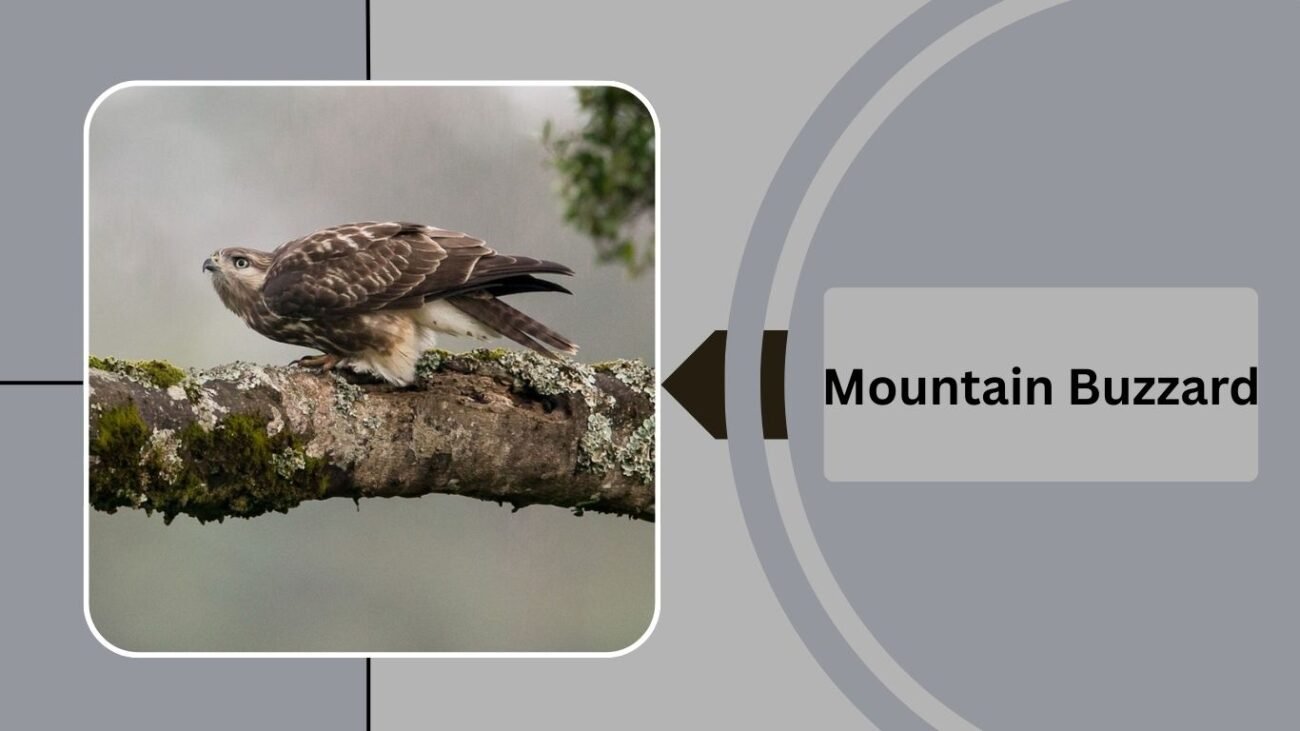
The Mountain Buzzard is a rare and localized raptor of the highlands of eastern and central Africa. Unlike many other buzzards that prefer open plains, this species is closely tied to montane forests and woodland edges. Its preference for higher elevations makes it a unique member of the Buteo genus.
Identification
- Medium-sized buzzard, wingspan about 100–120 cm
- Dark brown upperparts with a slightly mottled appearance
- Underparts whitish with heavy brown streaking on the breast and belly
- Tail dark with faint barring, rounded at the end
- Broad wings with dark flight feathers and lighter underwing coverts
- Yellow legs and cere with sharp, hooked bill
Habitat and Distribution
The Mountain Buzzard inhabits montane and submontane forests of eastern and central Africa, particularly in Ethiopia, Kenya, Uganda, Tanzania, Rwanda, and the eastern Democratic Republic of Congo. It is often found along forest edges, clearings, and nearby grasslands, usually between 1,800 and 3,000 meters above sea level.
Behavior and Diet
This species is less conspicuous than many other buzzards, spending much of its time perched quietly or soaring above forested slopes. Its diet consists mainly of small mammals, birds, reptiles, and large insects. It hunts from perches or by gliding low over the forest canopy. Because of habitat loss and fragmentation, the Mountain Buzzard faces conservation pressures in some regions.
17. Forest Buzzard (Buteo trizonatus)
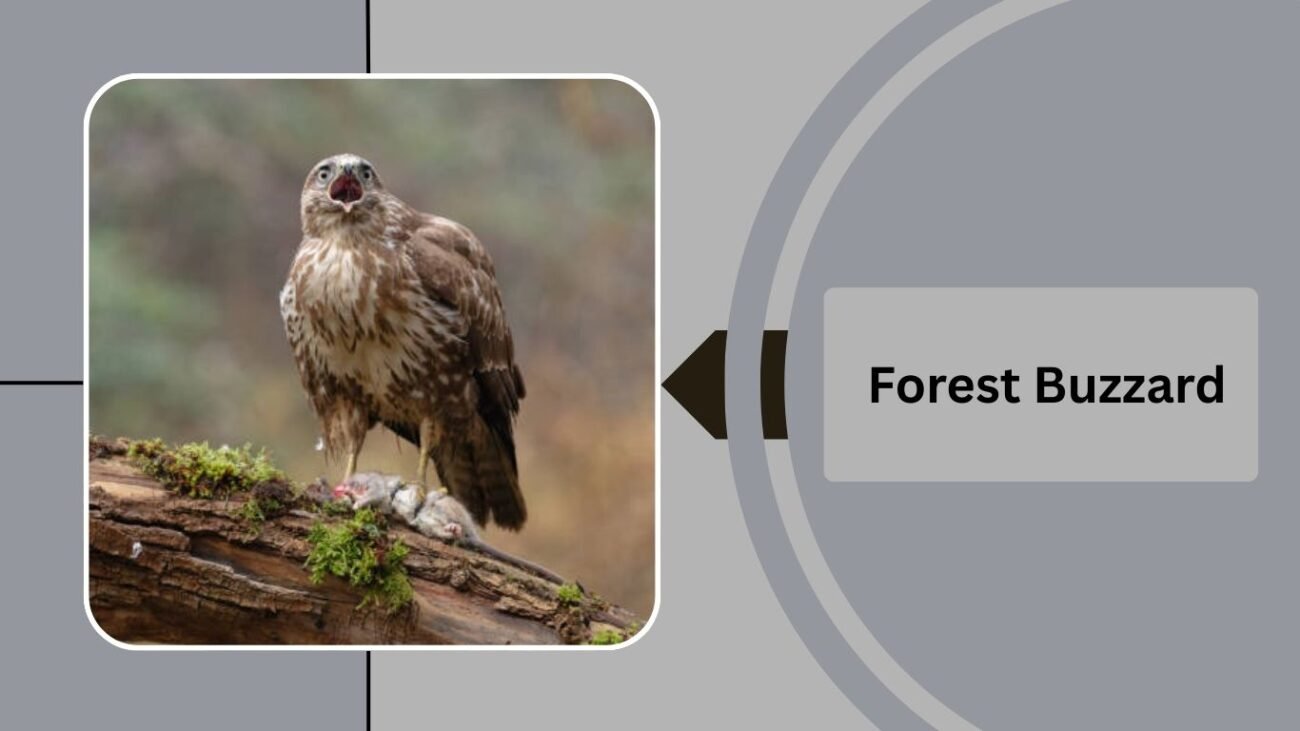
The Forest Buzzard is a medium-sized raptor native to South Africa, and it is often confused with the migratory Steppe Buzzard. Unlike its migratory relatives, the Forest Buzzard is largely sedentary, staying within its range year-round. It is adapted to life in montane forests and forest edges, making it one of the few buzzards specialized for woodland habitats.
Identification
- Medium-sized buzzard with broad, rounded wings
- Plumage generally brown above, with lighter and streaked underparts
- Tail pale grayish with narrow dark bars
- Stocky build compared to Steppe Buzzard
- Distinct white throat patch, often streaked
- Yellow legs and hooked bill with dark tip
Habitat and Distribution
The Forest Buzzard occurs mainly in South Africa and Eswatini, inhabiting montane forests, forest edges, and nearby open grasslands. It is considered a regional endemic, with its range restricted compared to more widespread buzzards. Its preference for wooded habitats sets it apart from most other African buzzards.
Behavior and Diet
This buzzard hunts from a perch or while soaring, feeding primarily on small mammals, birds, reptiles, and insects. It is a territorial raptor, usually seen singly or in pairs. Nests are built high in forest trees, where the female lays and raises her young. Though relatively uncommon, its population is stable, and it is not currently considered threatened.
18. Rough-legged Buzzard (Buteo lagopus)
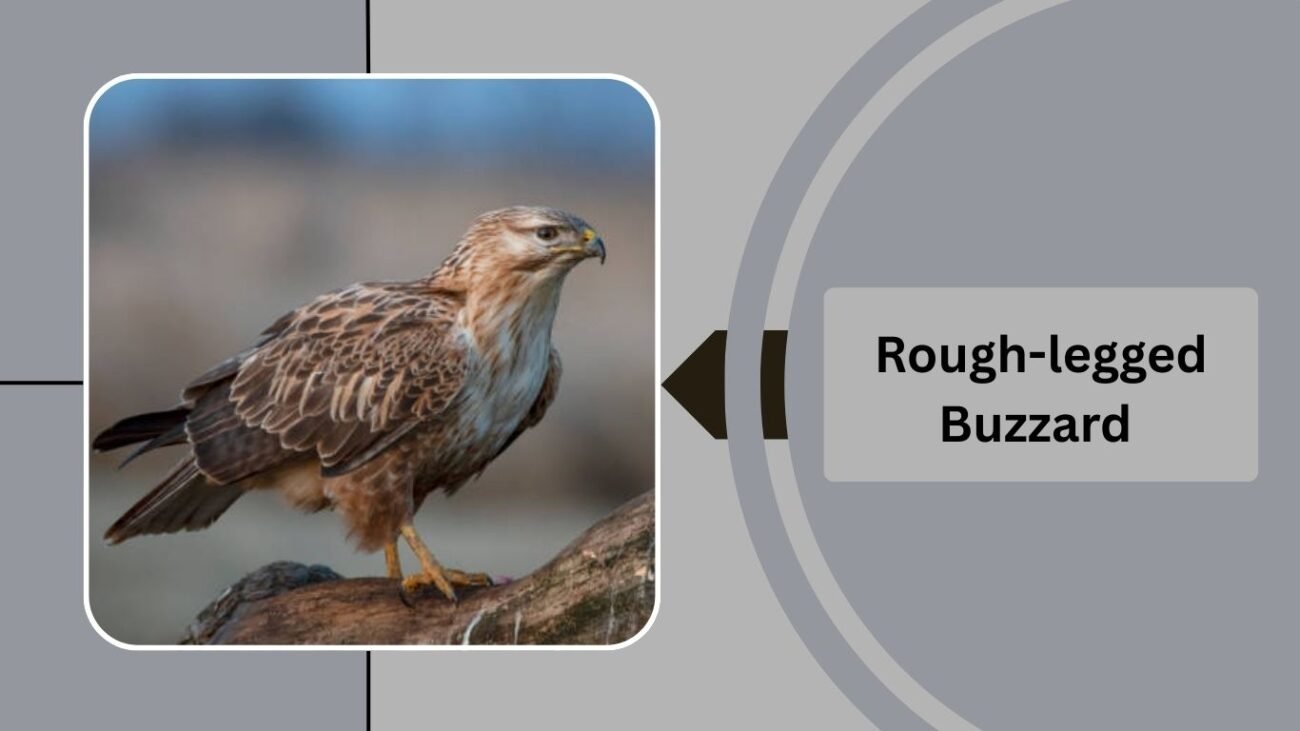
The Rough-legged Buzzard, also known as the Rough-legged Hawk in North America, is a striking bird of prey adapted to the cold tundra and northern climates. Unlike many buzzards, it spends much of its life in Arctic and sub-Arctic regions, migrating southward only in winter. Its feathered legs, which extend all the way down to the toes, are a key feature that helps it endure freezing temperatures.
Identification
- Medium-to-large buzzard with a wingspan of 120–153 cm
- Feathered legs (unusual among buzzards, similar to eagles)
- Plumage variable: dark and light morphs
- Light morphs: pale head and underparts with dark belly band
- Dark morphs: overall chocolate brown with paler flight feathers
- Tail usually white with a dark terminal band
- Long wings with distinct dark patches at the carpal (wrist) area
Habitat and Distribution
The Rough-legged Buzzard breeds in the Arctic tundra across North America, Europe, and Asia. During the non-breeding season, it migrates south into temperate regions, including the northern United States, southern Canada, and parts of Europe and Asia. It prefers open landscapes such as tundra, moorlands, fields, and marshes.
Behavior and Diet
This buzzard hunts mainly by hovering in the air with wings held in a V-shape, scanning the ground for prey. Its diet consists largely of small mammals such as voles and lemmings, supplemented with birds and carrion when available. It builds nests on cliffs, rocky outcrops, or low ground mounds in the tundra. Its population numbers fluctuate depending on rodent abundance, showing strong ties to prey cycles in the Arctic.
19. Broad-winged Buzzard (Buteo platypterus)
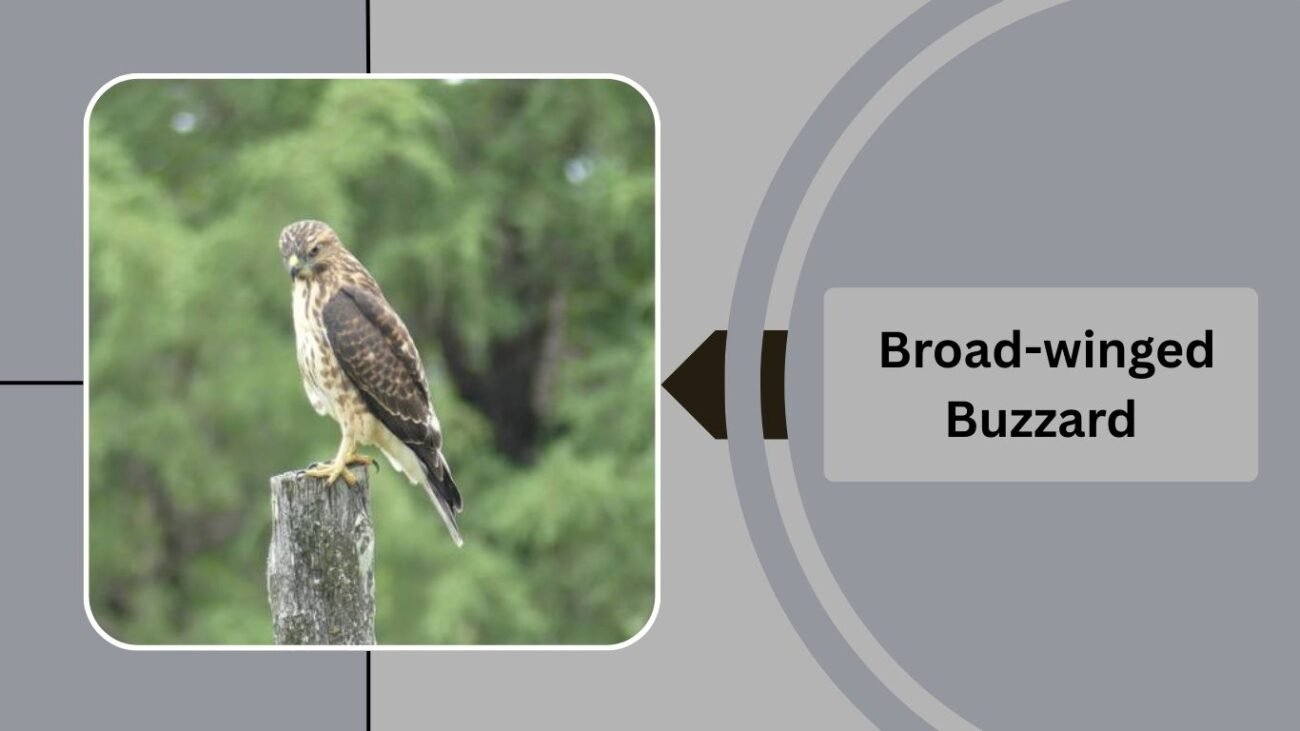
The Broad-winged Buzzard, often called the Broad-winged Hawk in North America, is a small but powerful raptor most famous for its spectacular migratory gatherings. Each autumn, tens of thousands form swirling flocks known as kettles, creating one of the most impressive raptor migrations in the world. Despite its smaller size, it is a strong flier and a highly effective predator.
Identification
- Small to medium-sized buzzard, wingspan 80–100 cm
- Short, broad wings with rounded tips
- Brown upperparts with lighter streaking
- Underparts pale with brown barring
- Tail short with broad dark bands and a distinctive wide white band
- Compact body compared to larger Buteo species
Habitat and Distribution
The Broad-winged Buzzard breeds in North America, especially in eastern forests, woodlands, and mixed landscapes. During migration, it travels in massive groups to Central and South America, where it spends the winter in tropical forests and open habitats. It is among the most migratory of all Buteo species.
Behavior and Diet
This species hunts from perches or while soaring, feeding on small mammals, amphibians, reptiles, and large insects. During migration, it relies heavily on thermal updrafts, allowing it to glide long distances with minimal wingbeats. Breeding pairs are territorial, nesting in tall trees and raising 1–3 young each season. Its population is considered stable, and its migratory behavior makes it one of the most widely observed raptors.
20. Gray Hawk (Buteo plagiatus)
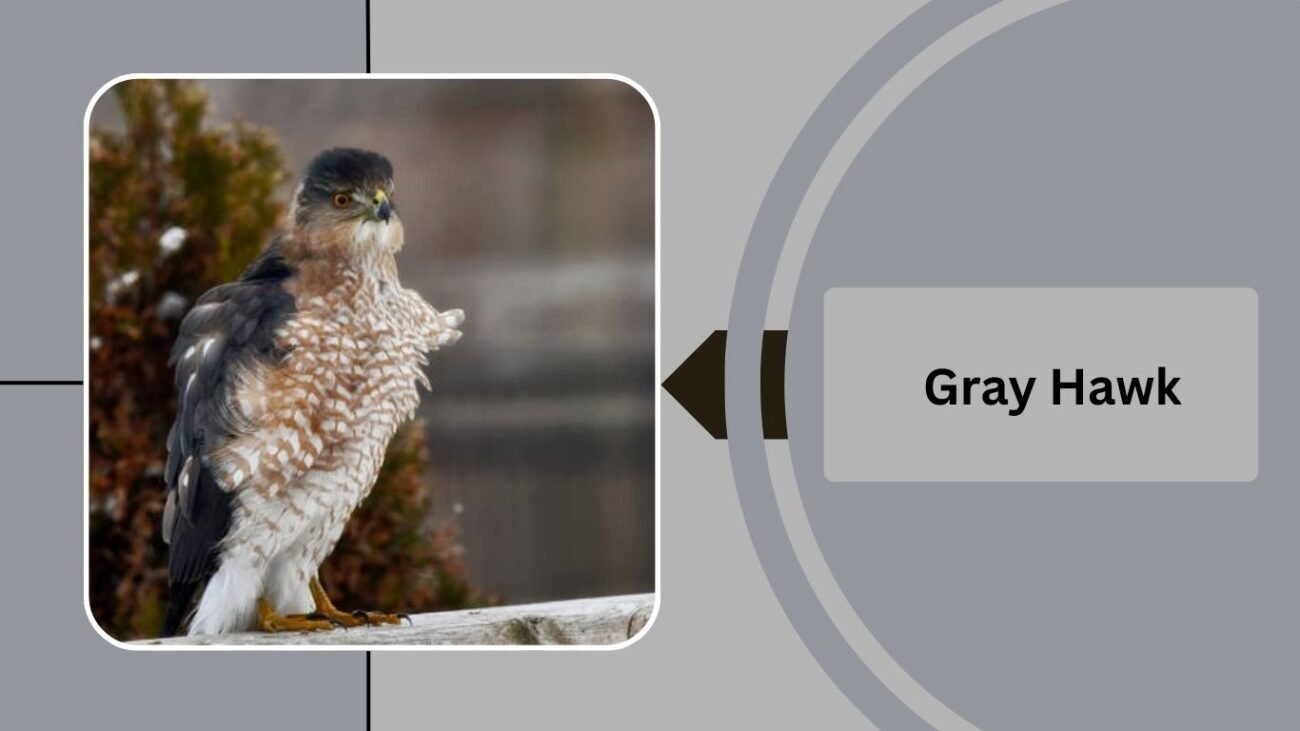
The Gray Hawk is a striking, medium-sized raptor found in the southwestern United States, Mexico, and parts of Central America. Unlike many other buzzards, it favors riverine woodlands and forest edges, often near water. With its elegant gray plumage and sharp hunting style, it is an easily recognized bird of prey in its range.
Identification
- Medium-sized buzzard with a wingspan of 90–110 cm
- Uniform pale gray body and head
- Fine white barring across underparts
- Tail black with three bold white bands
- Yellow legs and cere
- Broad, rounded wings suited for soaring
Habitat and Distribution
The Gray Hawk inhabits riparian forests, savannas, and open woodlands from the southwestern U.S. (Arizona, Texas, New Mexico) through Mexico into Central America. It prefers areas near rivers and streams where tall trees provide nesting sites and hunting perches.
Behavior and Diet
This buzzard hunts mainly from perches, swooping down quickly to catch prey. Its diet is dominated by reptiles, particularly lizards and snakes, but it also takes small mammals, birds, and large insects. Pairs are territorial, often returning to the same nesting sites year after year. Their call is a high-pitched whistle, which makes them noticeable during the breeding season.
21. White-tailed Hawk (Buteo albicaudatus)
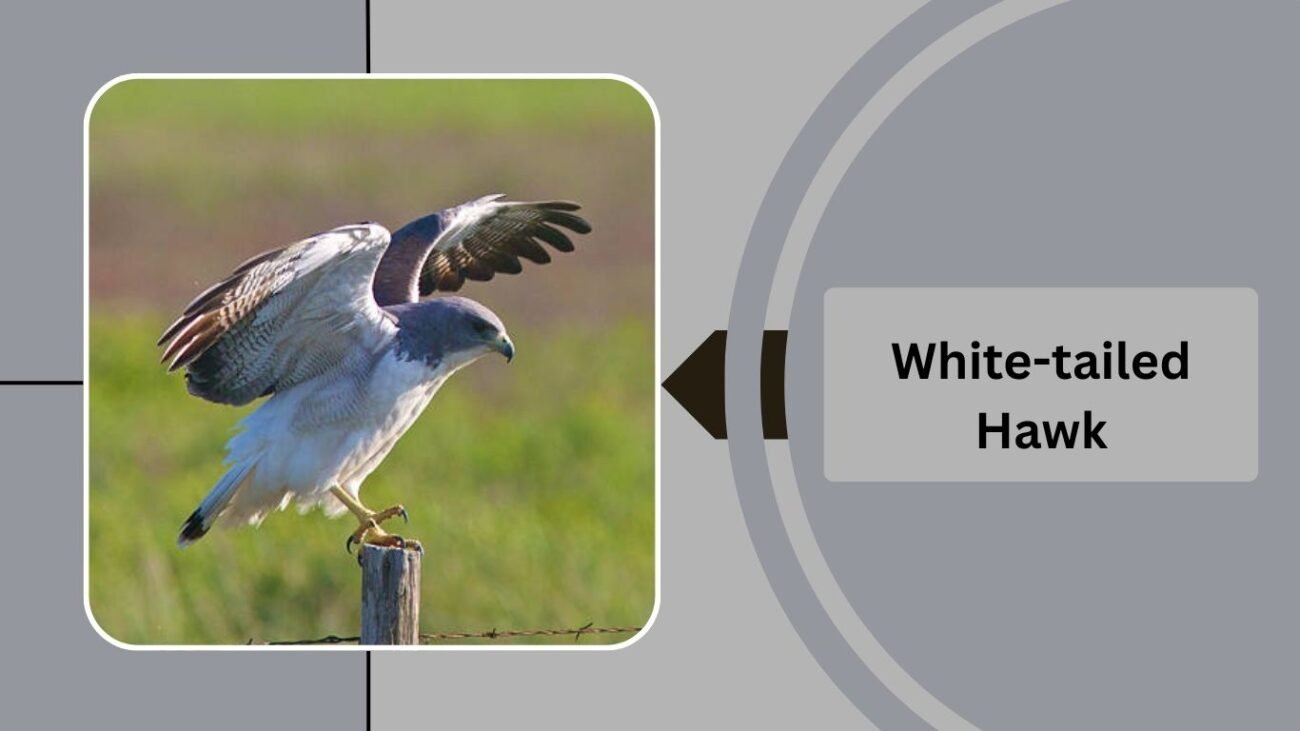
The White-tailed Hawk is a powerful and striking raptor of the Americas, known for its long wings and distinctive white tail. It is highly adaptable, inhabiting a wide range of open country habitats and displaying impressive aerial hunting skills. With its bold contrasting plumage and predatory behavior, this buzzard stands out among its relatives.
Identification
- Large buzzard with a wingspan of 115–143 cm
- White underparts and tail, with a broad dark terminal band on the tail
- Upperparts dark gray to brownish
- Shoulders often chestnut or rufous in adults
- Long wings with black primaries visible in flight
- Yellow legs and cere, hooked black bill
Habitat and Distribution
The White-tailed Hawk ranges from the southern United States (Texas) through Mexico, Central America, and much of South America, especially in Brazil and Argentina. It thrives in grasslands, savannas, scrublands, and coastal plains, preferring open habitats where hunting is efficient.
Behavior and Diet
This hawk hunts mainly by soaring high and scanning open landscapes, diving quickly when prey is spotted. Its diet consists of small mammals, reptiles, birds, and insects, with occasional carrion. It is often seen hovering like a kestrel when searching for prey, an unusual behavior for a Buteo. White-tailed Hawks are solitary hunters but may gather in small groups where prey is abundant.
22. Galápagos Hawk (Buteo galapagoensis)
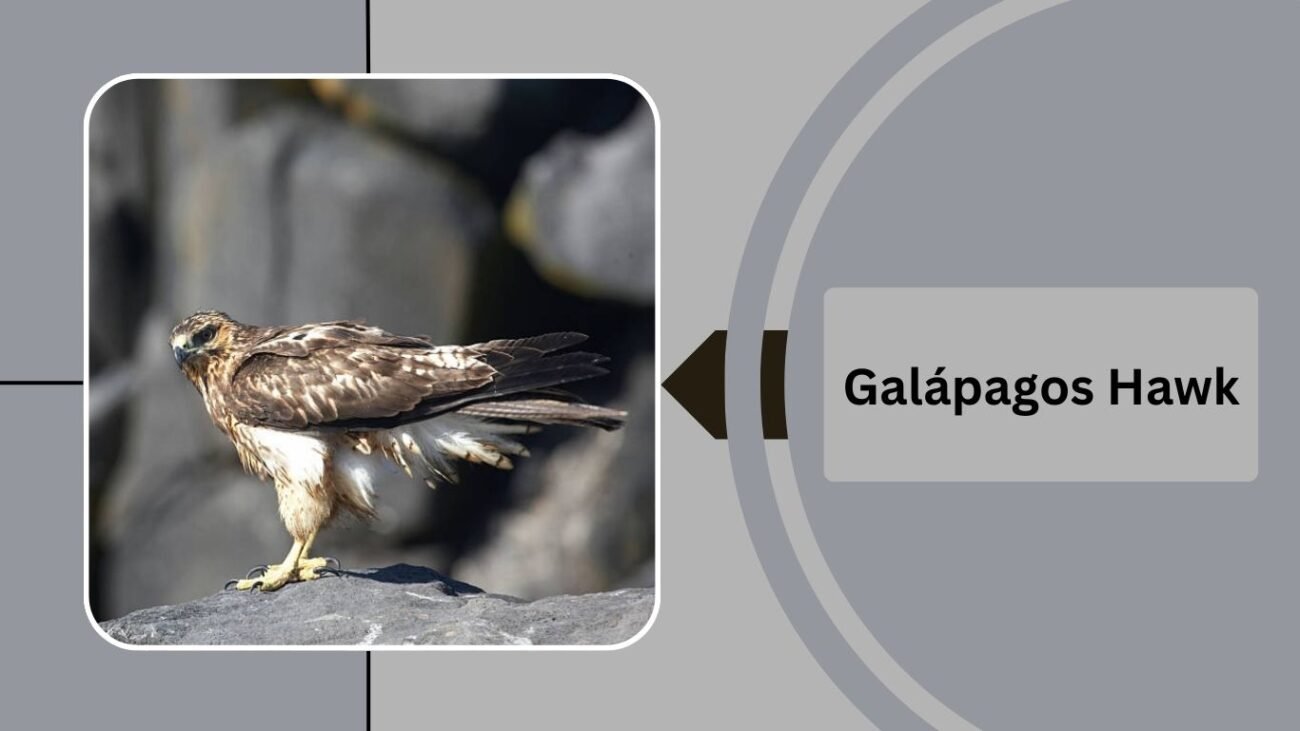
The Galápagos Hawk is one of the rarest and most unique buzzards, found only on the Galápagos Islands. As an apex predator in this isolated ecosystem, it plays a critical role in maintaining ecological balance. Its fearlessness around humans and cooperative breeding system make it particularly fascinating among raptors.
Identification
- Medium-sized buzzard, wingspan 120–140 cm
- Dark brown to sooty black plumage overall
- Legs and cere bright yellow
- Tail broad and square-tipped
- Juveniles show mottled brown and buff plumage
- Strong hooked bill and broad wings suited for soaring
Habitat and Distribution
Restricted to the Galápagos Islands, this species inhabits coastal areas, arid scrub, and open highlands. Once more widespread across the archipelago, its population is now fragmented and limited to a few islands due to habitat loss and human activity.
Behavior and Diet
Unlike most buzzards, the Galápagos Hawk practices cooperative breeding, with several males often helping one female raise her chicks. It feeds on lizards, snakes, insects, young seabirds, and carrion, making it a top predator in the islands’ food web. Known for its bold nature, it often perches visibly and shows little fear of people. The species is considered vulnerable, with strict protection efforts in place to conserve its population.
23. Red-shouldered Hawk (Buteo lineatus)
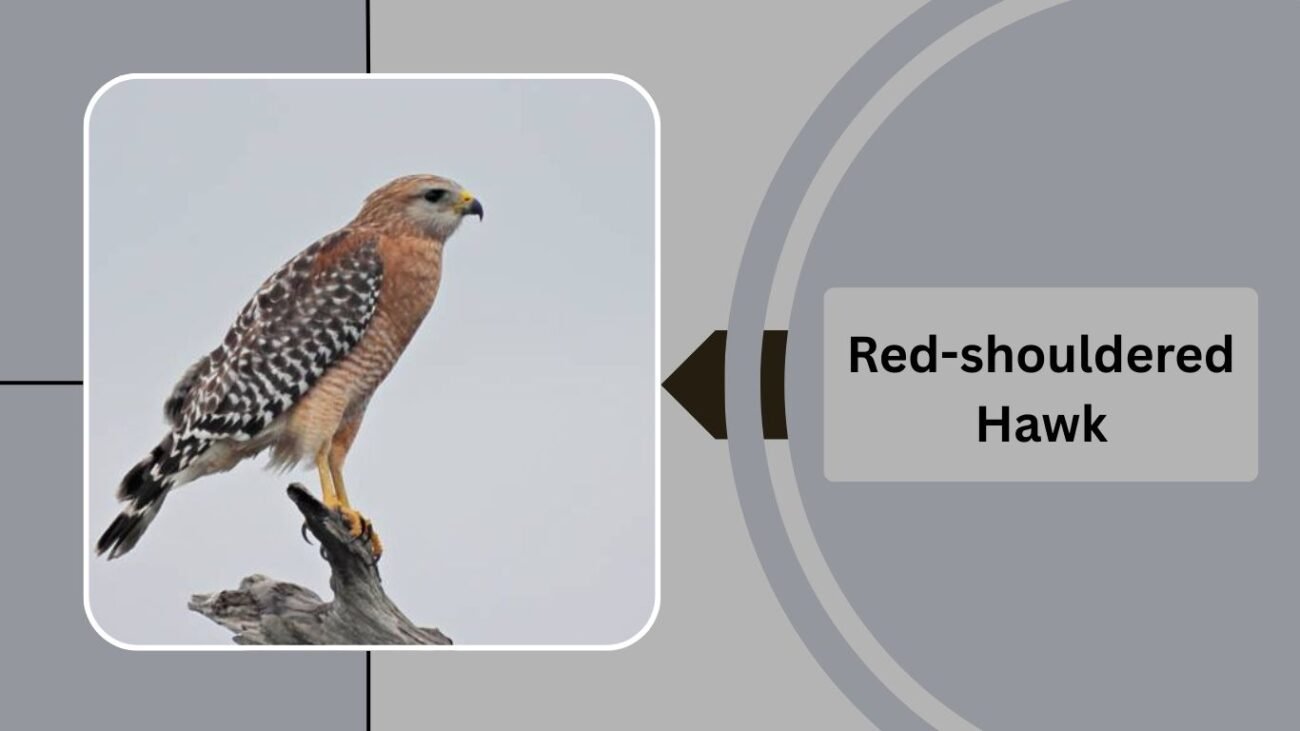
The Red-shouldered Hawk is a woodland buzzard native to North America, particularly noted for its striking plumage and loud, distinctive call. Unlike many open-country buzzards, it thrives in forests near rivers and wetlands, where it hunts stealthily from perches. Its adaptability has allowed it to coexist near suburban areas, making it one of the more familiar raptors in the eastern U.S.
Identification
- Medium-sized buzzard, wingspan 90–110 cm
- Rich rufous-red shoulders and underparts with fine white barring
- Black-and-white checkered wings
- Long tail with broad white bands
- Bright yellow legs and cere, hooked black bill
- Distinctive “kee-rah” scream, often heard before seen
Habitat and Distribution
The Red-shouldered Hawk is found across eastern North America, from Canada through the U.S. and into Mexico. A separate population also exists in California. It prefers riparian forests, swamps, and wooded suburban landscapes, where tall trees provide both hunting perches and nesting sites.
Behavior and Diet
This buzzard hunts from a perch, waiting patiently before swooping down on prey. Its diet includes small mammals, amphibians, reptiles, birds, and occasionally large insects. Known for its strong territorial instincts, it aggressively defends nesting areas. Red-shouldered Hawks are monogamous and often return to the same nesting site year after year. Their population is currently stable, benefiting from protection laws and adaptability to human-altered landscapes.