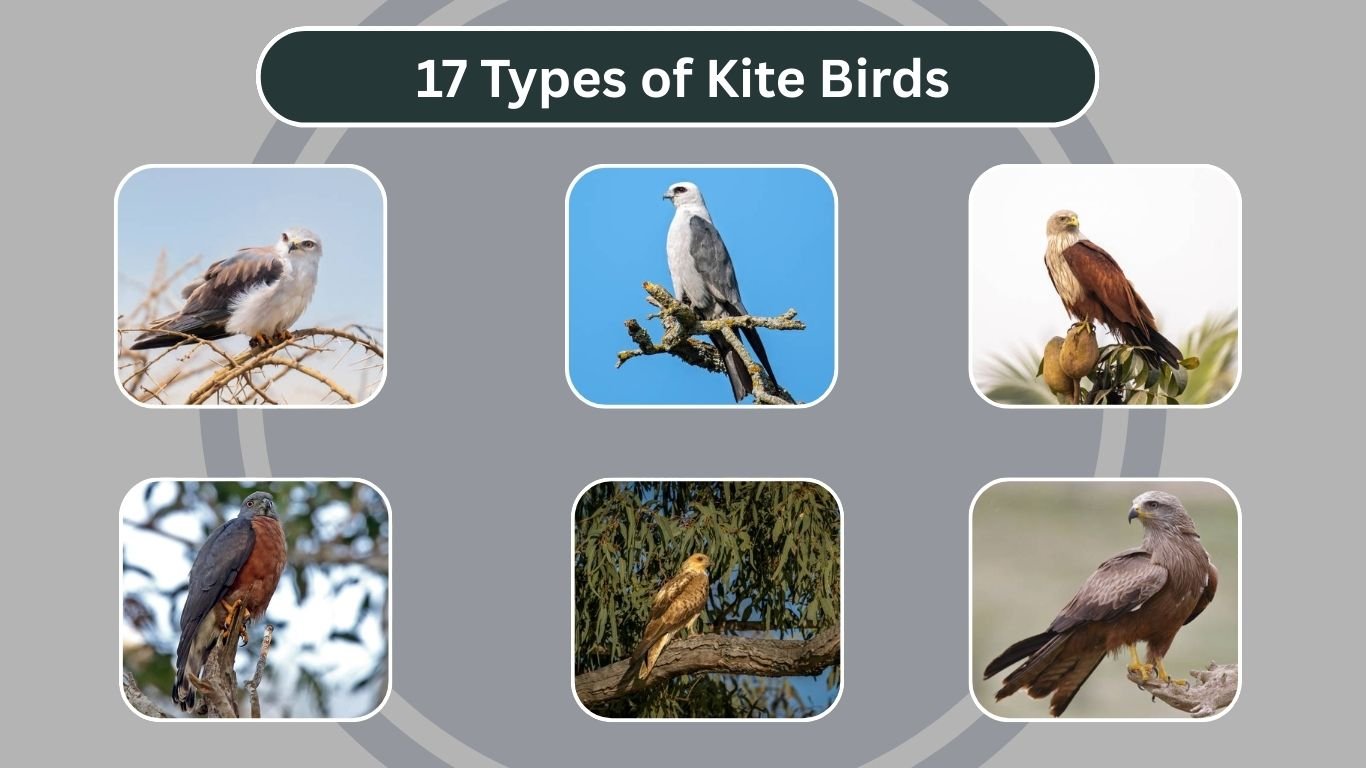
Kite birds are among the most graceful raptors, admired for their soaring flight and keen hunting abilities. Found across continents, these birds of prey vary in size, color, and behavior but share an elegance that makes them captivating to watch. From the familiar Black Kite to the striking Swallow-tailed Kite, each species has unique traits that highlight the adaptability and beauty of this remarkable group of birds.
1. Black Kite (Milvus migrans)
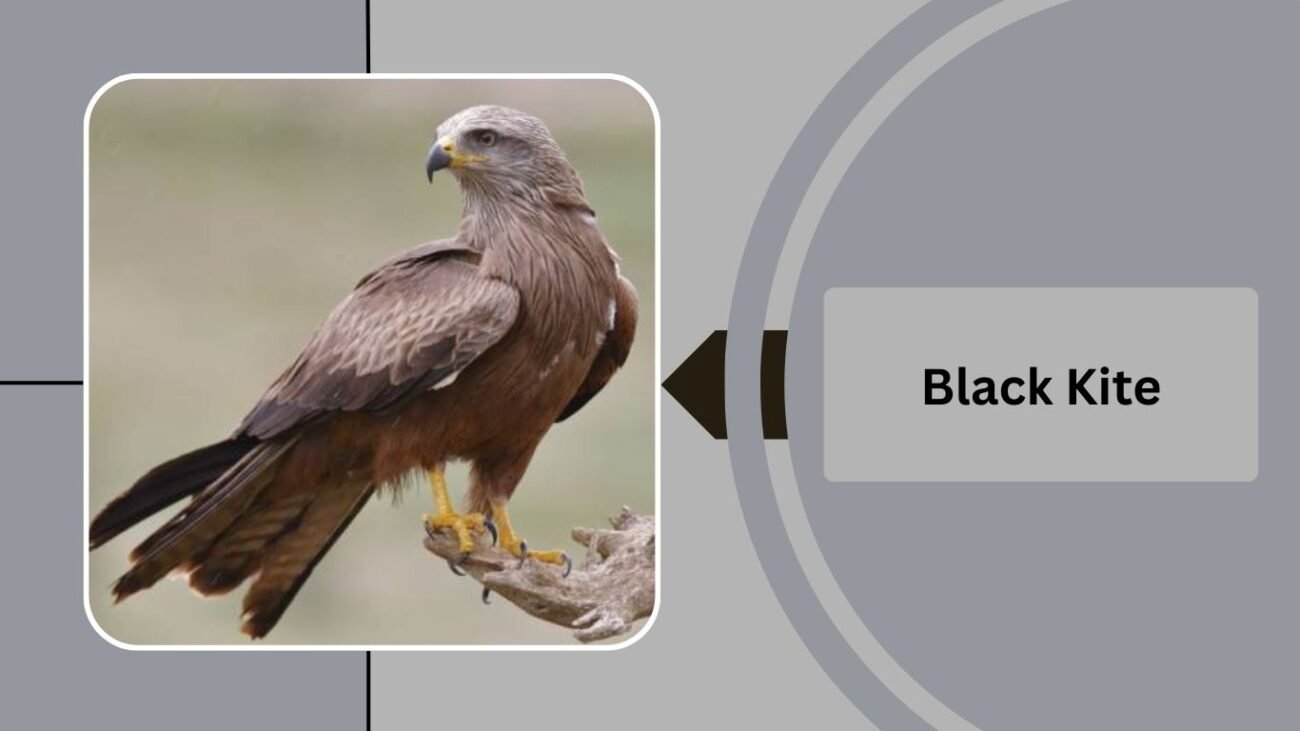
The Black Kite is one of the most widespread raptors in the world, found across Europe, Asia, Africa, and Australia. Known for its adaptability, it thrives in both rural and urban environments. It often soars gracefully in large flocks, scavenging around human settlements and wetlands, making it a familiar bird of prey to many people globally.
Identification
- Medium-sized raptor with a wingspan of 150–180 cm
- Dark brown plumage overall with lighter streaks on the head and neck
- Distinctive forked tail, though less pronounced than in the Red Kite
- Long wings with slightly splayed tips, ideal for soaring
- Yellow cere and legs, hooked black bill
- Emits a sharp, whistling “pii-eee” call
Habitat and Distribution
Black Kites are found in a variety of habitats, including grasslands, wetlands, woodlands, farmlands, and even cities. They are especially common near rivers, lakes, and garbage dumps, where food is abundant. Their wide range makes them one of the most numerous birds of prey in the world.
Behavior and Diet
These opportunistic hunters and scavengers feed on fish, small mammals, carrion, and scraps from human activity. They are agile flyers, often seen swooping down to snatch food from the ground or water surface. Social by nature, Black Kites often roost and soar in large flocks. Their adaptability to human-altered environments has allowed their populations to remain strong in many regions.
2. Red Kite (Milvus milvus)

The Red Kite is a striking bird of prey native to Europe, easily recognized for its graceful flight and deeply forked tail. Once near extinction in some regions due to persecution, conservation efforts have led to a remarkable recovery, especially in the UK and parts of Western Europe. Its elegance in the sky and adaptability make it a symbol of successful wildlife protection.
Identification
- Large raptor with a wingspan of 175–195 cm
- Reddish-brown plumage with lighter streaking
- Pale head with streaks of grey and white
- Deeply forked rust-colored tail, a key feature
- Long, slender wings with white patches underneath
- High-pitched, mewing “weee-oo” call
Habitat and Distribution
Red Kites prefer open countryside, farmlands, and woodland edges where they can hunt in open skies. They are commonly found across Western and Southern Europe, with strong populations in Spain, Germany, France, and the UK. Reintroduction programs have successfully expanded their range in recent decades.
Behavior and Diet
This species is a skilled scavenger, feeding on carrion, roadkill, and discarded food, but also hunts small mammals, birds, and invertebrates. They are agile in the air, known for their effortless soaring and circling. Red Kites often gather in communal roosts during winter, especially in areas with abundant food. Their recovery is celebrated as one of Europe’s greatest conservation successes.
3. Brahminy Kite (Haliastur indus)
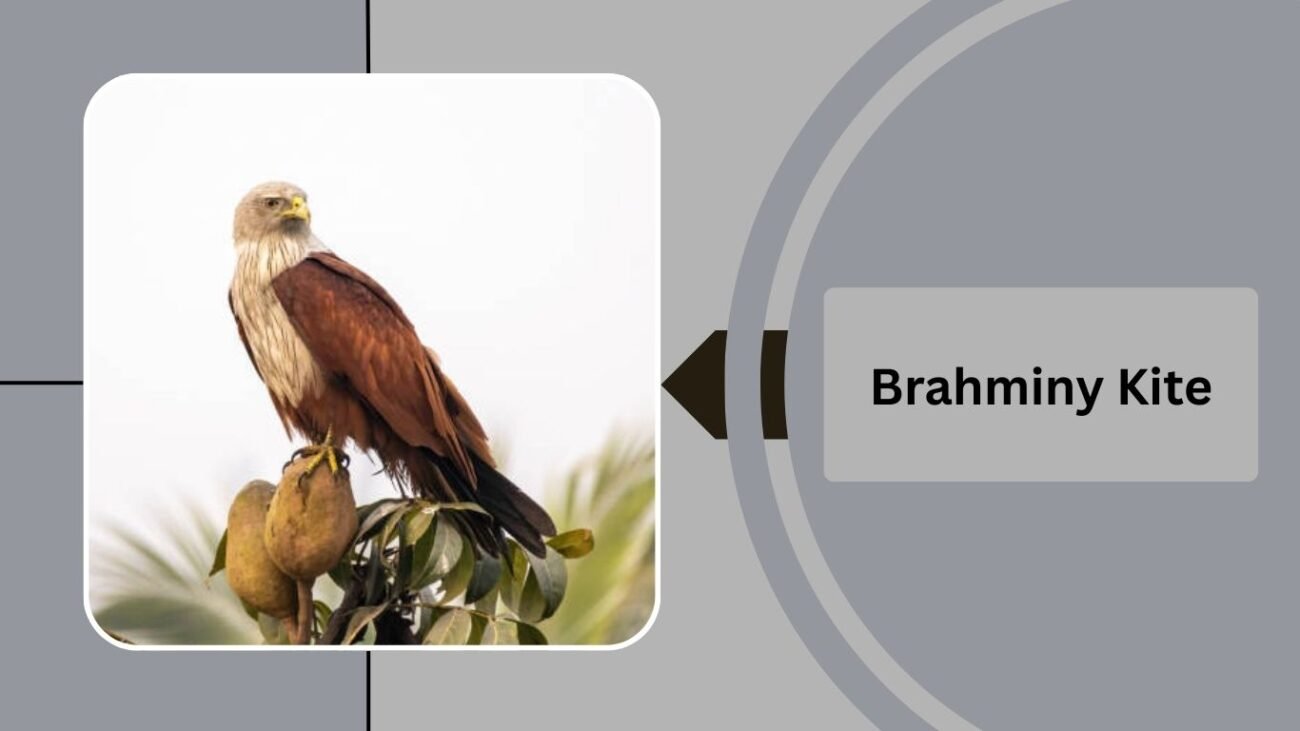
The Brahminy Kite is a medium-sized raptor admired for its striking chestnut and white plumage. Revered in many Asian cultures, this bird is often associated with spiritual symbolism and coastal life. Commonly seen soaring gracefully near rivers, lakes, and shorelines, the Brahminy Kite is a familiar sight across South and Southeast Asia, where it thrives in wetlands and mangrove habitats.
Identification
- Medium-sized bird of prey with a wingspan of 110–125 cm
- Distinctive white head, neck, and breast contrasting with chestnut body and wings
- Short, slightly rounded tail with a reddish-brown hue
- Dark eyes and a strongly hooked yellow bill
- Broad wings with rounded tips, ideal for gliding
- Emits a high-pitched, whistling call often heard near water bodies
Habitat and Distribution
The Brahminy Kite inhabits coastal areas, estuaries, mangroves, and inland wetlands. Its range extends from the Indian subcontinent through Southeast Asia to Australia. It is often found near fishing villages and riverbanks, where it readily scavenges.
Behavior and Diet
Primarily a scavenger, this kite feeds on dead fish, carrion, and food scraps, but it also hunts small mammals, reptiles, and insects. It is an agile flyer, often seen gliding effortlessly over water surfaces in search of prey. Known for its tolerance of human activity, it frequently nests in tall trees near villages and towns. The Brahminy Kite is celebrated in folklore and is the official bird of Jakarta, Indonesia.
4. Whistling Kite (Haliastur sphenurus)

The Whistling Kite is a medium-sized raptor native to Australia and parts of New Guinea. It is named for its distinctive, clear whistling call that echoes across wetlands and open landscapes. Known for its adaptability, this bird thrives in a variety of habitats, from rivers and coasts to farmlands. Its graceful soaring flight and opportunistic feeding habits make it a familiar bird of prey in its range.
Identification
- Medium-sized raptor with a wingspan of 120–145 cm
- Plumage is pale brown to buff with darker streaks
- Long wings held in a slight “V” shape during flight
- Tail is slightly rounded and often fanned while gliding
- Pale head and underparts with streaking give it a mottled look
- Emits a clear, whistling “pee-ooo-wee” call, especially while circling
Habitat and Distribution
The Whistling Kite inhabits wetlands, open forests, farmlands, and coastal areas. It is common throughout most of Australia, except in the driest desert interiors. They are also found in southern New Guinea. Their presence is strongly tied to water sources such as rivers, estuaries, and lakes.
Behavior and Diet
Opportunistic feeders, Whistling Kites consume carrion, fish, reptiles, mammals, and large insects. They are often seen scavenging near roadkill or following fires to catch fleeing prey. Known for their aerial skill, they can snatch food mid-air and may also harass other birds to steal their catch. They are highly adaptable and often nest in tall trees close to water or open countryside.
5. Mississippi Kite (Ictinia mississippiensis)
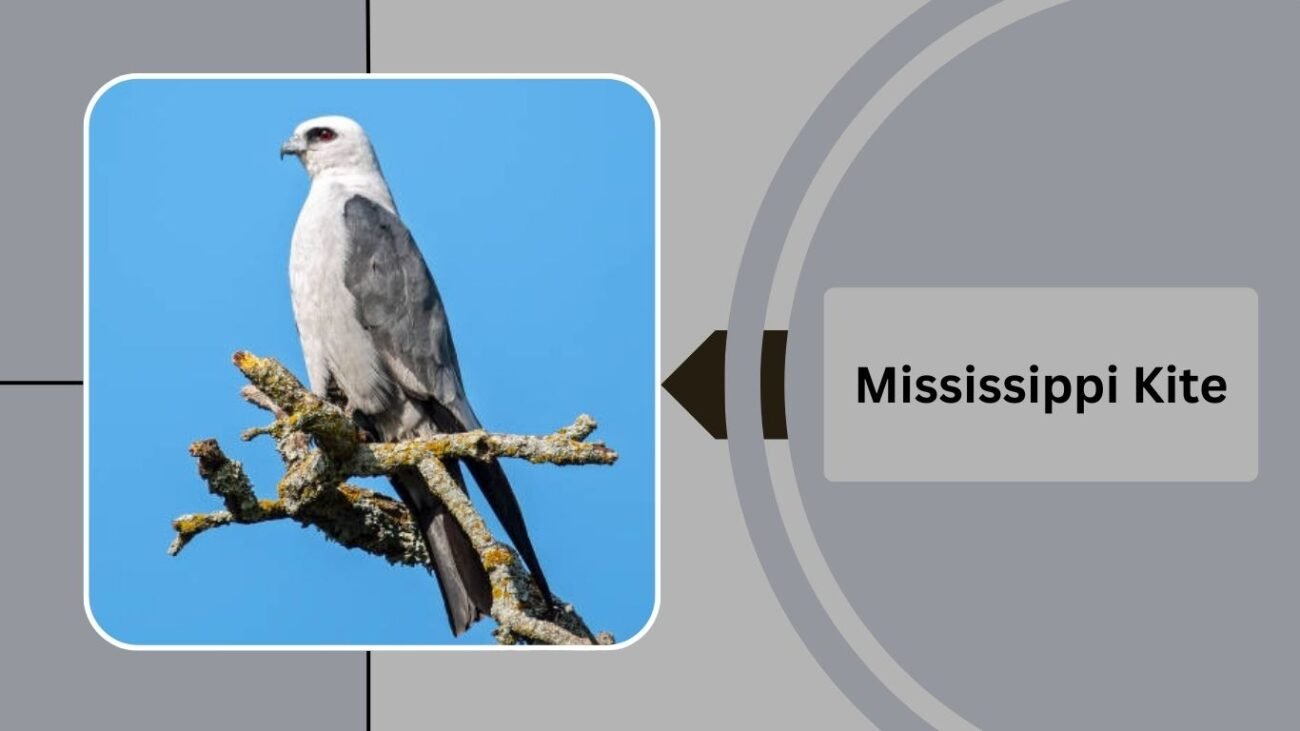
The Mississippi Kite is a slender, graceful raptor native to North and South America. Known for its acrobatic flight and elegant long wings, this kite is often seen gliding effortlessly in summer skies across the southern United States. Migratory by nature, it travels in large flocks to Central and South America for the winter, making it a fascinating bird for both birdwatchers and researchers.
Identification
- Medium-sized kite with a wingspan of 90–105 cm
- Slim, streamlined body with long, pointed wings
- Gray plumage overall with darker wings and lighter head
- Black wingtips stand out clearly in flight
- Long, square-tipped tail
- Distinct, high-pitched “kee-ee” or “pii-uu” calls during flight
Habitat and Distribution
The Mississippi Kite breeds in the southern United States, especially in states like Texas, Oklahoma, and Mississippi, and as far east as the Carolinas. During migration, they form large flocks and travel to Central and South America, often reaching Argentina. Their preferred habitats include open woodlands, prairies, and urban areas where tall trees are available for nesting.
Behavior and Diet
These kites are agile hunters, catching most of their prey while flying. They feed primarily on large insects such as cicadas, grasshoppers, and dragonflies, but may also consume small birds, reptiles, and mammals. Known for their cooperative nesting behavior, multiple pairs may nest in close proximity, and they are highly protective of their nest sites, often swooping at intruders. Their aerial displays and graceful movements make them a remarkable raptor species.
6. Plumbeous Kite (Ictinia plumbea)

The Plumbeous Kite is a graceful, medium-sized raptor found across Central and South America. It is named for its slate-gray plumage, which gives it a lead-like appearance. Known for its effortless gliding flight, this kite is often spotted soaring above tropical forests and open woodlands. Migratory in some regions, it is admired for its elegance and adaptability to different environments.
Identification
- Medium-sized kite with a wingspan of 85–95 cm
- Overall slate-gray plumage with slightly paler head and underparts
- Long, narrow wings with rounded tips and dark primaries
- Tail is long, slightly notched, and marked with faint gray bands
- Red eyes and a small, hooked black bill add to its distinct look
- Emits sharp, high-pitched whistles during flight, especially in breeding season
Habitat and Distribution
The Plumbeous Kite inhabits tropical and subtropical forests, savannas, and woodland edges. It ranges widely from southern Mexico through Central America and into South America, reaching Brazil, Peru, and northern Argentina. During migration, northern populations move southward, often forming small flocks.
Behavior and Diet
This kite is an aerial insectivore, specializing in catching large insects such as dragonflies, cicadas, and grasshoppers in flight. It may also feed on small reptiles and amphibians when available. During the breeding season, pairs nest high in trees, often reusing old nests of other birds. Its slow, buoyant flight, combined with sudden dives to snatch prey mid-air, makes it an efficient and elegant hunter.
7. Double-toothed Kite (Harpagus bidentatus)

The Double-toothed Kite is a small forest raptor of Central and South America, recognized for its unique bill structure. Unlike many kites that favor open spaces, this species prefers dense tropical forests, where it relies on stealth and camouflage. Its name comes from the two small “teeth” along the edge of its upper bill, which help it grip slippery prey.
Identification
- Small kite with a wingspan of 60–70 cm
- Dark gray upperparts with paler gray underparts
- Narrow, barred tail with three to four light bands
- Bright yellow eyes and legs
- Bill shows distinctive “double-tooth” notches
- Soft, whistling “wheee” call, often repeated in pairs
Habitat and Distribution
The Double-toothed Kite is found from southern Mexico through Central America and deep into South America, including the Amazon Basin and the Guianas. It inhabits humid lowland and foothill forests, often perching quietly in the canopy. It prefers closed forests and is less commonly seen in open areas.
Behavior and Diet
This species is a clever opportunist. It often follows troops of monkeys through the forest, snatching insects and small vertebrates flushed out by their movement. Its diet includes lizards, frogs, small birds, and insects. Despite being a kite, it relies less on soaring and more on still-hunting, waiting patiently before making swift, precise strikes. This behavior makes it one of the most secretive and specialized kites.
8. Grey-headed Kite (Leptodon cayanensis)
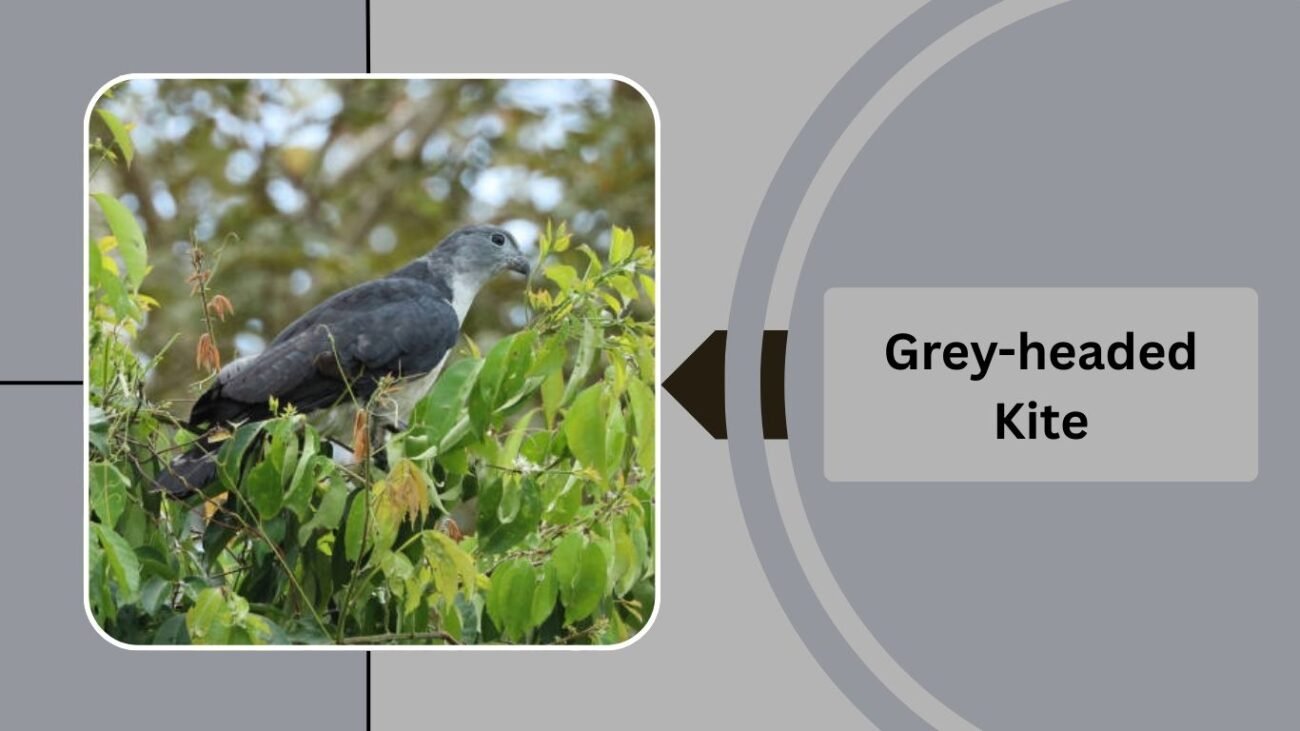
The Grey-headed Kite is a striking bird of prey from the Neotropics, admired for its elegant plumage and graceful flight. Unlike many other kites, it is more forest-dwelling, often perching silently within the canopy. Its unique coloration, particularly the pale body contrasted with a gray head, makes it one of the most distinctive kites of South America.
Identification
- Medium-sized raptor with a wingspan of 80–95 cm
- Pale white underparts and chest with a contrasting gray head and neck
- Dark wings with broad, rounded tips
- Tail is dark with bold white bands
- Bright yellow cere and legs
- Soft, high-pitched whistles, often given during flight or near nests
Habitat and Distribution
The Grey-headed Kite ranges from southern Mexico through Central America and across much of South America, including the Amazon Basin, the Guianas, and eastern Brazil. It favors tropical and subtropical forests, riverine woodlands, and forest edges. It is rarely seen in open areas, usually staying close to dense cover.
Behavior and Diet
This kite primarily hunts reptiles such as lizards, snakes, and tree frogs, although it will also take insects and small mammals when available. It often perches quietly, waiting to ambush prey with swift, controlled dives. Known for its secretive nature, it is less frequently observed in flight compared to other kites. During breeding, it constructs platform nests high in tall trees, where both parents share feeding duties.
9. Black Kite (Milvus migrans)

The Black Kite is one of the most widespread raptors in the world, found across Europe, Asia, Africa, and Australia. Known for its adaptability, it thrives in both wild habitats and urban environments. Its dark plumage, distinctive forked tail, and graceful soaring flight make it a recognizable bird of prey.
Identification
- Medium-sized raptor with a wingspan of 150–170 cm
- Overall dark brown plumage with lighter streaks on the head and body
- Long, narrow wings with finger-like tips
- Distinctive forked tail, often twisted during flight maneuvers
- Yellow legs and cere with a sharp, hooked bill
- Emits a whistling, mewing call, especially when soaring
Habitat and Distribution
The Black Kite has one of the widest distributions of any raptor. It is found throughout Europe, Asia, Africa, and parts of Australia. It adapts to a variety of habitats, including forests, grasslands, wetlands, agricultural lands, and even large cities. It is highly migratory in northern regions but resident in tropical areas.
Behavior and Diet
This kite is an opportunistic feeder, often seen soaring over open areas in search of food. It feeds on fish, small mammals, reptiles, and insects but is particularly famous for scavenging. In urban environments, it feeds on garbage and carrion, sometimes gathering in large flocks near landfills. Its graceful, buoyant flight allows it to glide for long periods with minimal wingbeats, making it an efficient hunter and scavenger.
10. Yellow-billed Kite (Milvus aegyptius)

The Yellow-billed Kite is a close relative of the Black Kite, but it is distinct in both appearance and range. Found widely across sub-Saharan Africa, it is one of the most common raptors in the region. This bird is easily recognized by its bright yellow bill, which sets it apart from its darker-billed cousin.
Identification
- Medium-sized raptor with a wingspan of 150–160 cm
- Plumage dark brown with lighter streaks on the head and body
- Long, narrow wings with splayed, finger-like tips
- Distinctive forked tail, often twisted in flight
- Bright yellow bill, cere, and legs
- Emits high-pitched whistling calls, especially when soaring in groups
Habitat and Distribution
The Yellow-billed Kite is widespread throughout Africa, occurring across savannas, wetlands, forests, grasslands, and urban environments. It is one of the most common raptors seen near towns and villages, often gliding overhead or perching near water bodies. It tends to avoid extremely arid deserts but thrives in most other ecosystems.
Behavior and Diet
Like its relative, the Black Kite, the Yellow-billed Kite is an opportunistic feeder. It feeds on small vertebrates, carrion, fish, and insects, and is well-known for scavenging near human settlements. Its agile and buoyant flight allows it to snatch food in midair or from the ground with great precision. During migration, large flocks may be seen soaring together, forming a spectacular aerial display.
11. Whistling Kite (Haliastur sphenurus)

The Whistling Kite is a medium-sized raptor native to Australia, New Guinea, and nearby islands. True to its name, it is best known for its distinctive whistling call, often heard as it soars above open landscapes. This kite is an adaptable hunter and scavenger, frequently spotted gliding low over rivers, wetlands, and farmlands.
Identification
- Medium-sized bird with a wingspan of 120–145 cm
- Light brown plumage with darker streaks and pale underparts
- Long wings held in a shallow “V” while soaring
- Slightly rounded tail, not as deeply forked as other kites
- Pale head and face with a hooked bill
- High-pitched, drawn-out whistling call, often repeated in flight
Habitat and Distribution
The Whistling Kite is widespread across much of Australia, including Tasmania, and also found in New Guinea. It thrives in open country, wetlands, river valleys, woodlands, and even agricultural areas. Unlike some kites, it avoids dense forests, preferring habitats with open visibility and easy hunting access.
Behavior and Diet
This kite is highly opportunistic, feeding on a mix of carrion, fish, small mammals, reptiles, and birds. It is often seen patrolling along rivers and coastlines, snatching fish from shallow waters or scavenging near farms and roadsides. Known for its graceful gliding, it conserves energy by riding thermals with minimal wingbeats. Breeding pairs build large stick nests in tall trees, often reusing the same nest year after year.
12. Brahminy Kite (Haliastur indus)
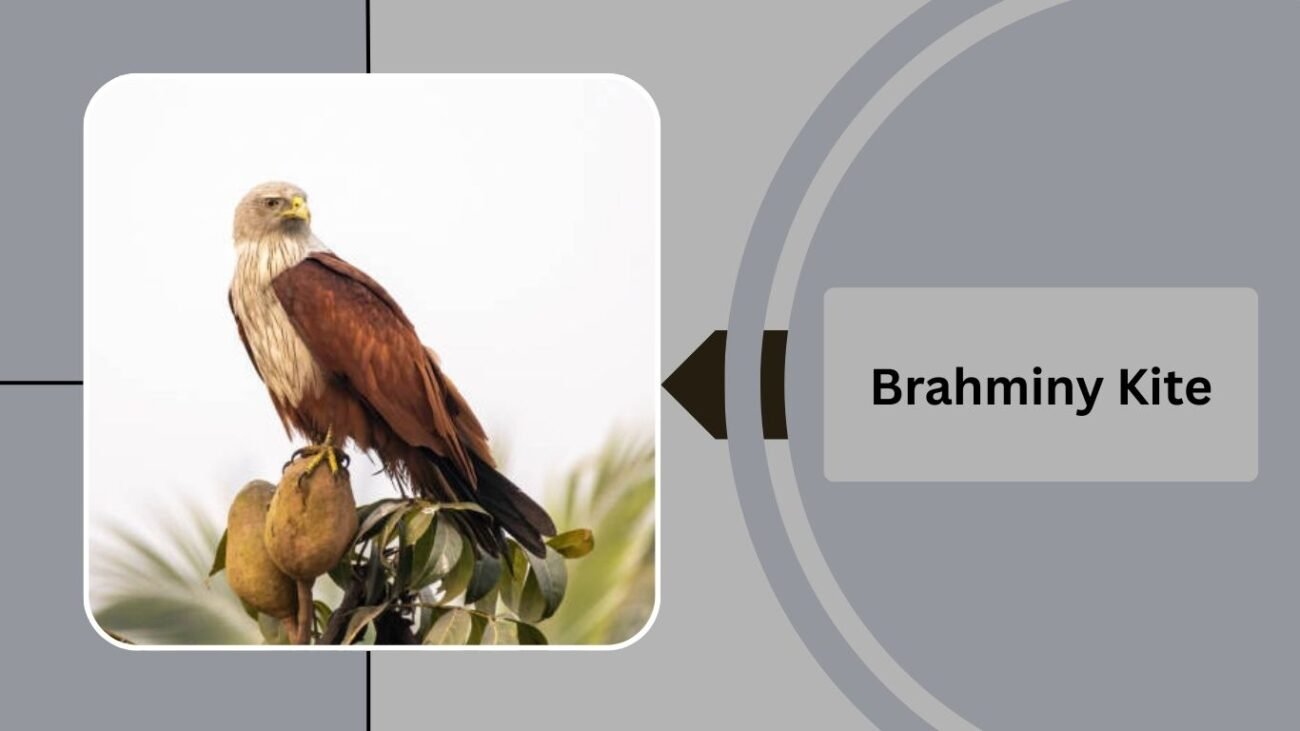
The Brahminy Kite is one of the most striking kite species, known for its bold chestnut body and contrasting white head and breast. It is often regarded as a symbol of grace and strength in many Asian cultures. This medium-sized raptor is common in coastal regions, rivers, and wetlands across South and Southeast Asia, as well as Australia.
Identification
- Medium-sized bird with a wingspan of 110–125 cm
- Rich chestnut body, wings, and tail with sharp contrast against a white head, neck, and breast
- Rounded wings and a short, fan-shaped tail (not forked)
- Yellow legs and cere with a hooked dark bill
- Distinctive mewing or high-pitched call, often heard when in flight or near nesting areas
Habitat and Distribution
The Brahminy Kite is widespread from the Indian subcontinent through Southeast Asia to northern Australia. It favors wetlands, mangroves, estuaries, rivers, and coastal shorelines. It is often seen perched on tall trees near water or soaring slowly over beaches and mudflats in search of prey.
Behavior and Diet
Unlike some other kites that rely heavily on active hunting, the Brahminy Kite is both a hunter and scavenger. Its diet includes fish, crabs, small reptiles, and carrion. It is often seen swooping down gracefully to snatch prey from shallow waters. In urban areas, it adapts well by scavenging near fishing harbors or garbage dumps. Pairs are strongly territorial and build large stick nests high in trees, usually near water sources.
13. Hook-billed Kite (Chondrohierax uncinatus)
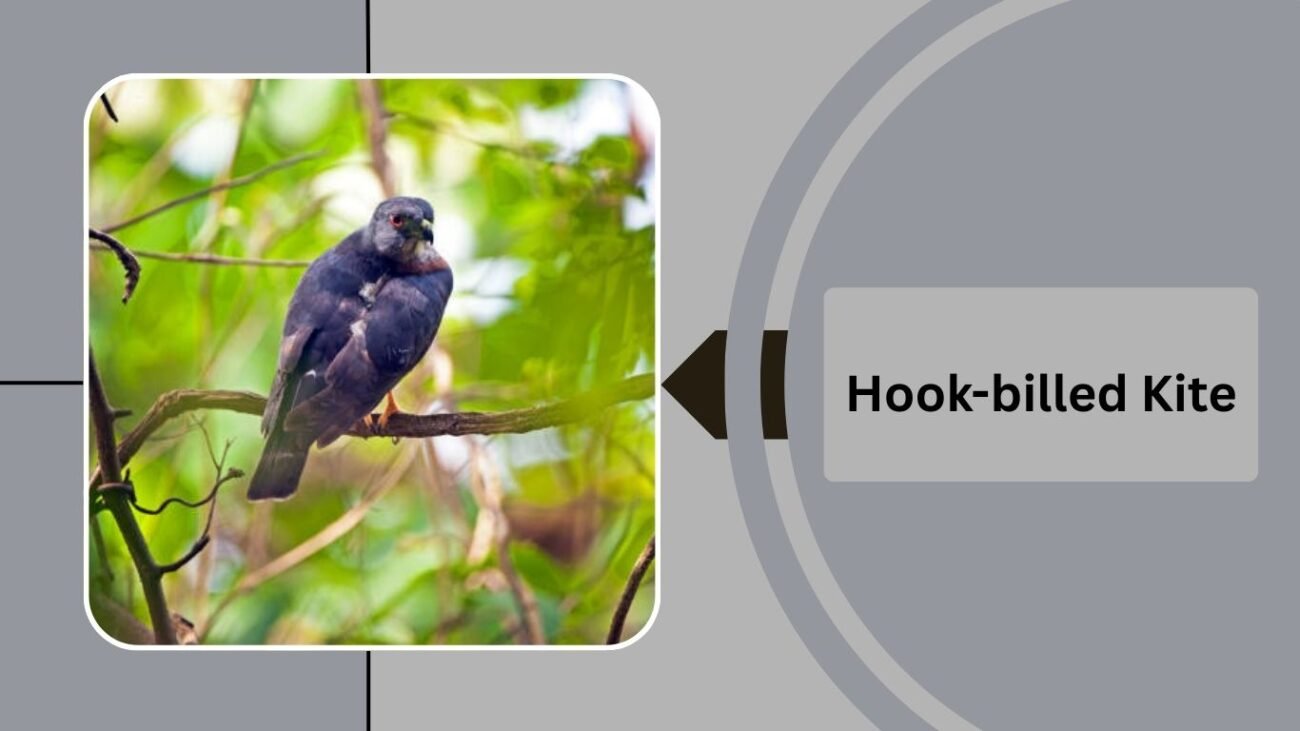
The Hook-billed Kite is a unique raptor with a strikingly curved beak that sets it apart from other kites. Specially adapted for feeding on snails, this medium-sized bird is found mainly in the tropical and subtropical forests of the Americas. It is secretive and not often seen in open skies, preferring to stay within dense canopies.
Identification
- Medium-sized raptor with a wingspan of 80–95 cm
- Plumage varies: gray to brownish above with paler underparts
- Strongly hooked bill, perfectly designed for extracting snails
- Short, broad wings and a rounded tail with dark banding
- Eye color ranges from red to yellow depending on maturity
- Distinct whistling or piping calls, often soft and high-pitched
Habitat and Distribution
This kite inhabits tropical forests, woodlands, and wetlands, where its main prey, snails, is abundant. Its range extends from southern Texas and Mexico down through Central America and into parts of South America, including Brazil, Peru, and Bolivia. It prefers lowland and mid-elevation forests and is rarely found in open country.
Behavior and Diet
Unlike most kites that are agile hunters in open air, the Hook-billed Kite specializes in foraging among vegetation. It primarily feeds on tree snails, using its uniquely shaped bill to extract them from shells. It may also consume insects, frogs, and small reptiles. These kites are relatively sluggish fliers, often perching quietly within the forest canopy and only moving when necessary. They are generally solitary or seen in pairs, keeping a low profile compared to more conspicuous kite species.
14. Double-toothed Kite (Harpagus bidentatus)
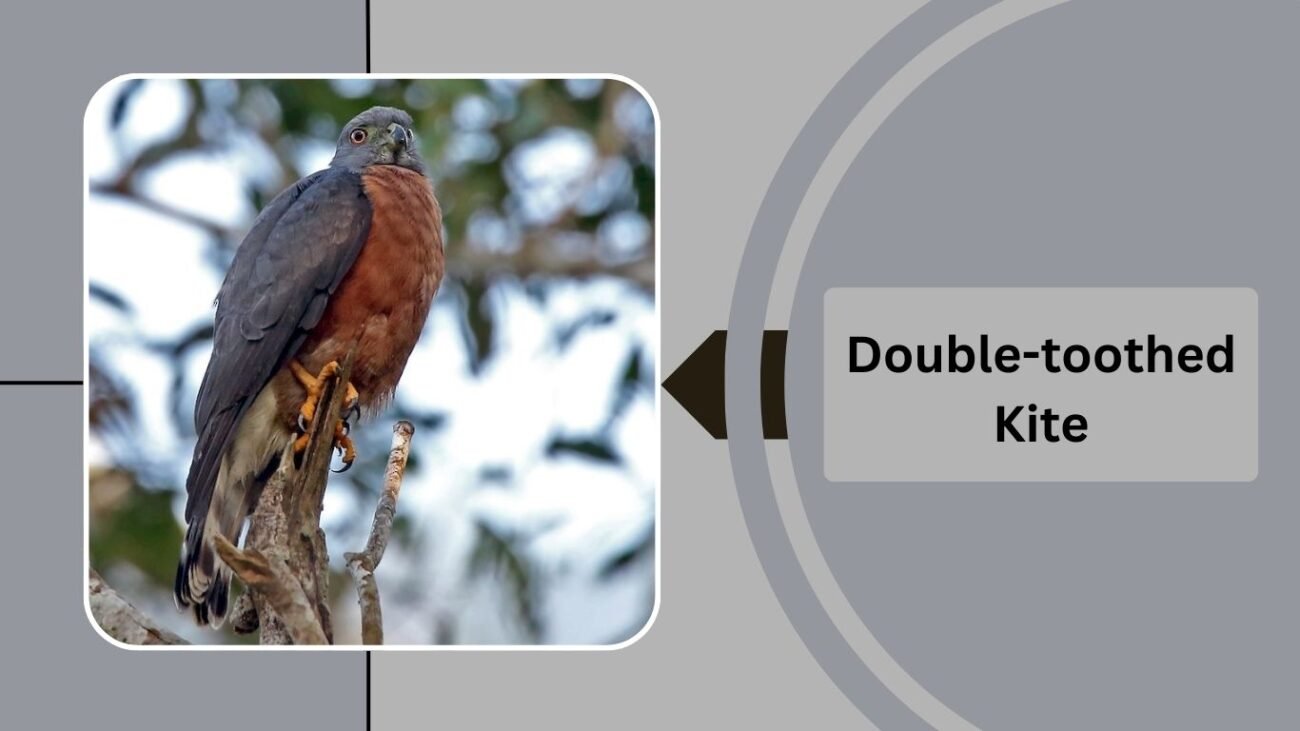
The Double-toothed Kite is a small, forest-dwelling raptor that gets its name from the two “tooth-like” notches on its upper bill. Though called a kite, it resembles a small hawk in both shape and behavior. It is most notable for its unique habit of following monkeys through the canopy to capture insects they disturb.
Identification
- Small kite with a wingspan of 50–60 cm
- Slate-gray upperparts with lighter gray underparts streaked in white
- Broad, rounded wings and a long, barred tail
- Distinctive hooked bill with two tooth-like notches near the tip
- Eyes are bright yellow to orange, giving it a piercing look
- Soft whistles and high-pitched calls are common in its dense habitat
Habitat and Distribution
This kite is a resident of tropical forests in Central and South America, ranging from southern Mexico to northern Argentina. It inhabits dense rainforests and secondary growth areas, usually staying under the canopy rather than soaring in open skies. It is more often heard or seen perched quietly rather than actively flying.
Behavior and Diet
The Double-toothed Kite is famous for its “monkey-following” behavior. It often trails troops of capuchin or howler monkeys, taking advantage of insects and small animals flushed from the vegetation. Its diet mainly consists of insects, small reptiles, and frogs. Unlike larger kites, it rarely scavenges. Its secretive habits and reliance on forest ecosystems make it harder to spot compared to open-country kites.
15. Plumbeous Kite (Ictinia plumbea)
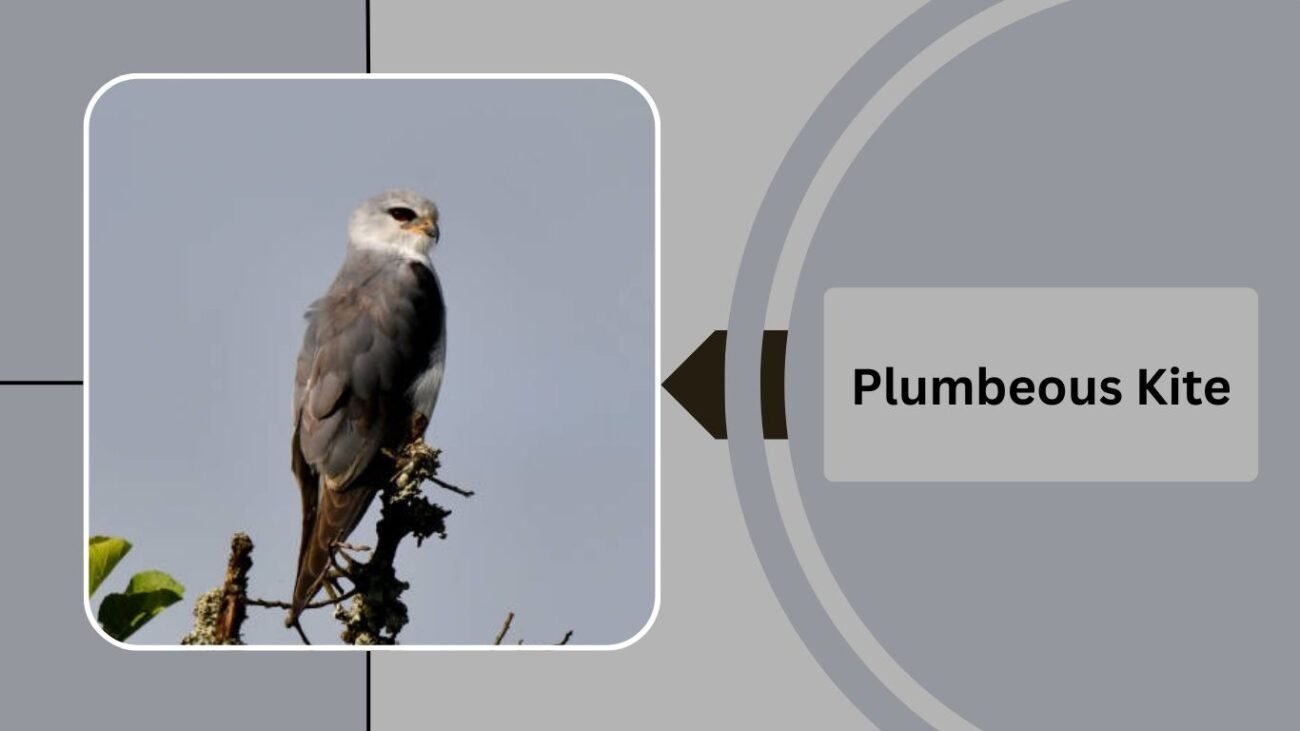
The Plumbeous Kite is a slender, elegant raptor often seen soaring gracefully over tropical forests. Named for its lead-gray plumage, this species is one of the most widespread kites in Central and South America. It is especially noticeable during the rainy season when it becomes more active, gliding effortlessly across forest edges and river valleys.
Identification
- Medium-sized kite with a wingspan of 75–85 cm
- Uniform slate-gray to lead-colored plumage
- Long, pointed wings with black tips
- Tail is dark with faint pale banding, squared at the end
- Bright red eyes contrast sharply with the gray body
- Thin, hooked bill with a pale base
Habitat and Distribution
The Plumbeous Kite inhabits lowland forests, open woodlands, and savannas throughout Central and South America. Its range extends from southern Mexico and Central America through Brazil, Bolivia, and into northern Argentina. It is a partial migrant in some regions, moving seasonally in response to food availability.
Behavior and Diet
This kite is an agile hunter, often foraging on the wing. Its primary diet consists of large flying insects, including cicadas, grasshoppers, and beetles, which it snatches mid-air. Occasionally, it may take small vertebrates such as lizards or frogs. Known for its buoyant flight, it spends long periods soaring and circling high above the canopy, giving birdwatchers an excellent view of its graceful movements.
16. Mississippi Kite (Ictinia mississippiensis)
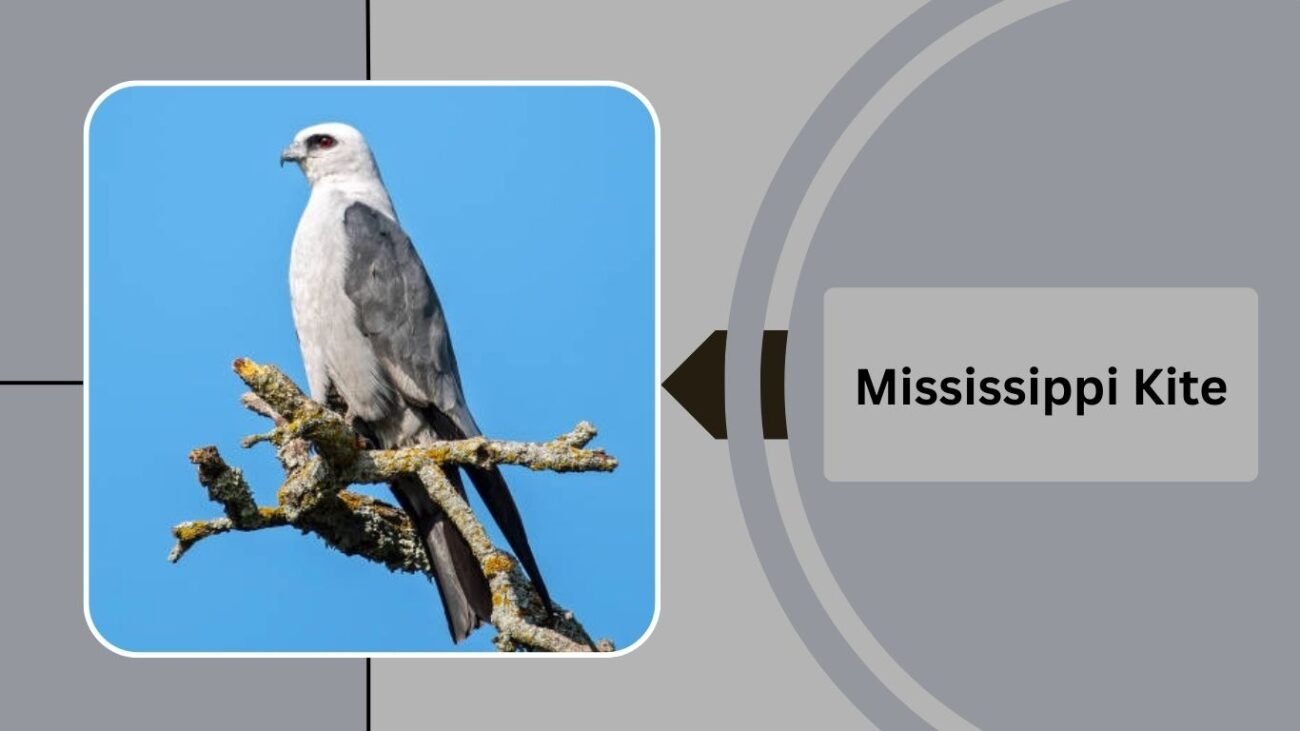
The Mississippi Kite is a graceful raptor that glides effortlessly across the southern skies of North America. Known for its acrobatic flight and communal roosting habits, this kite is especially visible during summer in the United States before migrating to South America. Its elegant, falcon-like appearance and insect-catching skills make it a favorite among birdwatchers.
Identification
- Medium-sized raptor with a wingspan of 90–105 cm
- Sleek, gray plumage with darker wingtips
- Pale gray to whitish head contrasting with the darker body
- Long, pointed wings adapted for swift aerial maneuvers
- Red eyes, adding intensity to its sharp gaze
- Slim, hooked bill with a yellow base
Habitat and Distribution
The Mississippi Kite breeds in the southern and central United States, especially in open woodlands, river valleys, and urban parks with tall trees. After breeding, it migrates in large flocks to South America, with many wintering in Argentina and surrounding regions. During migration, it can be seen in impressive groups soaring high overhead.
Behavior and Diet
This kite is an exceptional aerial hunter, feeding mainly on large insects such as cicadas, dragonflies, grasshoppers, and beetles. It captures prey in mid-air with remarkable precision and sometimes even eats while flying. In addition to its hunting prowess, it shows strong social behavior, often nesting in loose colonies and roosting communally. Mississippi Kites are protective parents and have been known to swoop at intruders near their nesting sites.
17. Black-winged Kite (Elanus caeruleus)
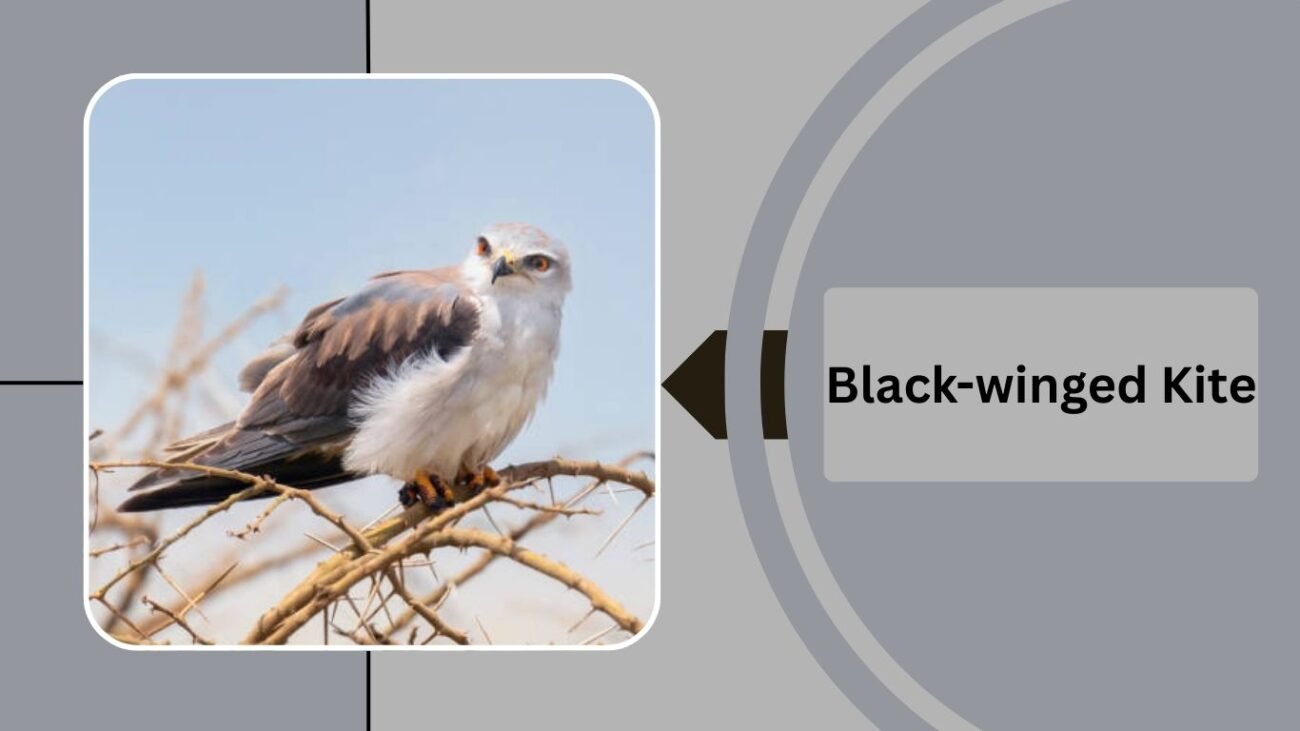
The Black-winged Kite is a striking raptor known for its hovering flight and piercing red eyes. Unlike many other kites, it often hovers in place, similar to a kestrel, before swooping down on prey. Its graceful flight and striking plumage make it one of the most easily recognized kites in open habitats across parts of Europe, Africa, and Asia.
Identification
- Medium-sized kite with a wingspan of 80–95 cm
- Pale gray to white plumage with contrasting black shoulder patches and wingtips
- Long, narrow wings giving it an elegant, falcon-like silhouette
- Bright red eyes stand out against its white head and face
- Tail is short, square, and pale gray
- Hooked black bill with a yellow cere at the base
Habitat and Distribution
The Black-winged Kite inhabits open grasslands, farmlands, and savannas. It is widespread across Africa, southern Europe, the Middle East, the Indian subcontinent, and parts of Southeast Asia. It prefers areas with scattered trees or shrubs, which provide perching sites near hunting grounds.
Behavior and Diet
This kite is a skilled hunter, specializing in small mammals such as rodents, which it spots from the air before dropping down in a swift strike. It also eats birds, reptiles, and insects when available. Unlike many kites that soar continuously, the Black-winged Kite often hovers motionless before diving on its prey. Its hovering behavior, sharp eyesight, and distinctive plumage make it an iconic raptor of open landscapes.