Calico cats are not a separate breed, but a striking coat-color pattern found in domestic cats of the species Felis catus. What makes calicos special is their three-color combination—white with black (or blue) and orange (or cream)—arranged in endless unique patterns. Across the world, calico cats are known by different names and appear in several visual variations, from bold classic patches to soft dilute tones and high-white forms. This guide explores the main types of calico cats, including pattern-based styles and regional naming variations.
1. Classic Calico Cat (American Type)

The classic calico cat is the most widely recognized calico variation, especially in North America. Instead of being a separate breed, “classic calico” refers to a coat pattern made up of large, clearly defined patches of white, black, and orange. These cats belong to the domestic cat species, Felis catus, and can appear in many different breeds, from short-haired house cats to long-haired pedigrees. What makes the classic calico special is the bold contrast between colors and the high amount of white.
Identification
- White is the dominant base color, often covering the chest, belly, legs, and face
- Black and orange appear in large, clearly separated patches, not blended
- Patches are uneven and unique on every cat, like a natural mosaic
- Coat may be short, medium, or long depending on the breed
- Most classic calicos are female due to coat-color genetics
- Nose leather and paw pads are often pink, sometimes mixed with black
Coat Pattern and Color Distribution
In a classic calico, the white areas usually come first genetically, with black and orange patches laid over them. The colors are solid and bold, unlike tortoiseshell cats where shades blend together. Many classic calicos have white faces with colored “masks,” split-color faces, or large saddle-like patches across the back. No two classic calicos are ever identical, which is why they are often considered visually striking and highly individual.
Temperament and General Traits
Classic calico cats do not share a fixed personality, since calico is a color pattern, not a breed. However, owners often describe them as confident, expressive, and independent. Their behavior is shaped more by genetics from their actual breed and by upbringing than by coat color. A classic calico may be calm and affectionate like a Persian, or active and vocal like an American Shorthair.
Distribution and Common Breeds
Classic calico coloring appears worldwide wherever domestic cats live, but the term “calico” itself is most commonly used in the United States and Canada. This pattern is frequently seen in American Shorthair, Domestic Shorthair, Maine Coon, Persian, Manx, Japanese Bobtail, and British Shorthair cats. Because it is a color pattern, breeders can produce classic calicos in many established breeds, as well as in mixed-breed house cats.
2. Dilute Calico Cat

The dilute calico is a softer, pastel version of the classic calico pattern. Instead of strong black and orange patches, dilute calicos display blue-gray and cream areas combined with white. This color change is caused by a dilution gene that lightens the original pigments. Like all calicos, dilute calicos belong to the domestic cat species, Felis catus, and the pattern can appear in many different cat breeds.
Identification
- White base coat with blue-gray and cream patches instead of black and orange
- Colors appear soft, misty, or pastel rather than bold
- Patches are clearly separated, not blended
- Coat can be short, medium, or long
- Usually female, due to coat-color genetics
- Nose and paw pads are often pale pink, gray, or mixed
Coat Pattern and Color Characteristics
Dilute calicos have the same patchwork layout as classic calicos, but the colors look washed or powdered. Black becomes blue-gray, and orange becomes cream. The white areas are often extensive, covering the legs, chest, and belly. From a distance, a dilute calico may look light overall, but up close the soft contrast between colors becomes clear. This gentle palette makes dilute calicos especially popular among people who prefer subtle-looking cats.
Temperament and General Traits
There is no specific “dilute calico personality,” since the pattern is not a breed. Their behavior depends on their genetic background and life experience. Many dilute calico owners describe their cats as affectionate, observant, and calm, but these are anecdotal impressions rather than scientific traits. A dilute calico Maine Coon, for example, may act very differently from a dilute calico domestic shorthair.
Distribution and Common Breeds
Dilute calicos are found worldwide, but they are less common than classic calicos because both calico coloring and the dilution gene must occur together. This pattern is seen in breeds such as Persian, Maine Coon, British Shorthair, Scottish Fold, American Shorthair, Ragdoll, and Japanese Bobtail, as well as in mixed-breed cats.
3. Caliby (Calico Tabby Cat)

A caliby is a calico cat whose colored patches show tabby striping instead of solid color. The name “caliby” comes from combining calico and tabby. These cats still have the three-color look—white plus dark and warm tones—but the black areas appear as brown, gray, or black tabby stripes, and the orange areas also show clear tabby markings. Like all domestic calicos, the species is Felis catus.
Identification
- White base coat with tabby-striped dark patches
- Orange or cream areas also show tabby lines or swirls
- Visible “M” marking on the forehead is common
- Pattern appears marbled, striped, or spotted rather than solid
- Coat length varies by breed
- Most are female due to coat-color genetics
Coat Pattern and Visual Appearance
In caliby cats, the white areas are solid, but the colored sections look patterned instead of flat. You may see classic tabby swirls, narrow mackerel stripes, or even spotted tabby designs inside the darker and orange patches. This gives calibies a more detailed, textured look than classic calicos. From a distance, they still appear tricolored, but close up, the tabby structure becomes very clear.
Temperament and General Traits
Because caliby is a color-and-pattern combination rather than a breed, temperament varies widely. Their behavior reflects their breed mix, genetics, and socialization. Many caliby owners describe their cats as curious, alert, and playful, but these impressions differ from cat to cat. There is no proven behavioral difference between a caliby and other calico types.
Distribution and Common Breeds
Caliby cats are found worldwide wherever tabby-pattern genes and calico coloration overlap. They are especially common among Domestic Shorthair and Domestic Longhair cats but also appear in breeds such as Maine Coon, American Shorthair, Bengal, Oriental Shorthair, and British Shorthair. Any breed capable of tabby markings and calico coloring can produce a caliby.
4. Tortoiseshell-and-White Calico

The tortoiseshell-and-white calico, often shortened to “tortie and white,” is a calico variation where the colored areas are more blended and broken, similar to a tortoiseshell pattern, but still combined with clear white sections. Instead of large, solid black and orange blocks, the dark and warm colors are mixed in fine patches, streaks, or speckles. Like all domestic calicos, this type belongs to the species Felis catus.
Identification
- Distinct white areas mixed with blended black and orange coloring
- Colored patches look marbled, speckled, or flame-like
- White usually appears on the chest, belly, face, and paws
- Pattern is more mixed than classic calico, not solid blocks
- Coat may be short or long
- Most individuals are female
Coat Pattern and Color Blending
In this variation, the dark and orange pigments are interwoven rather than clearly separated. The result is a mottled or smoky appearance in the non-white areas. Some cats may have small white socks and a chest blaze, while others show large white panels across the body. This pattern is genetically between a classic calico and a tortoiseshell, making it one of the most visually complex tricolor styles.
Temperament and General Traits
Tortoiseshell-and-white calicos do not share a single temperament, because the pattern can appear in many different breeds. Their personality depends on genetics, environment, and early handling. Some owners claim “tortitude,” meaning a bold or strong-willed nature, but this is a popular belief rather than a scientifically proven trait.
Distribution and Common Breeds
This calico variation is widespread across the world and is very common in mixed-breed domestic cats. It also appears in many pedigreed breeds, including Persian, Maine Coon, Cornish Rex, Exotic Shorthair, Manx, and British Shorthair. Wherever tortoiseshell genes and white spotting genes meet, tortoiseshell-and-white calicos can occur.
5. Van-Pattern Calico
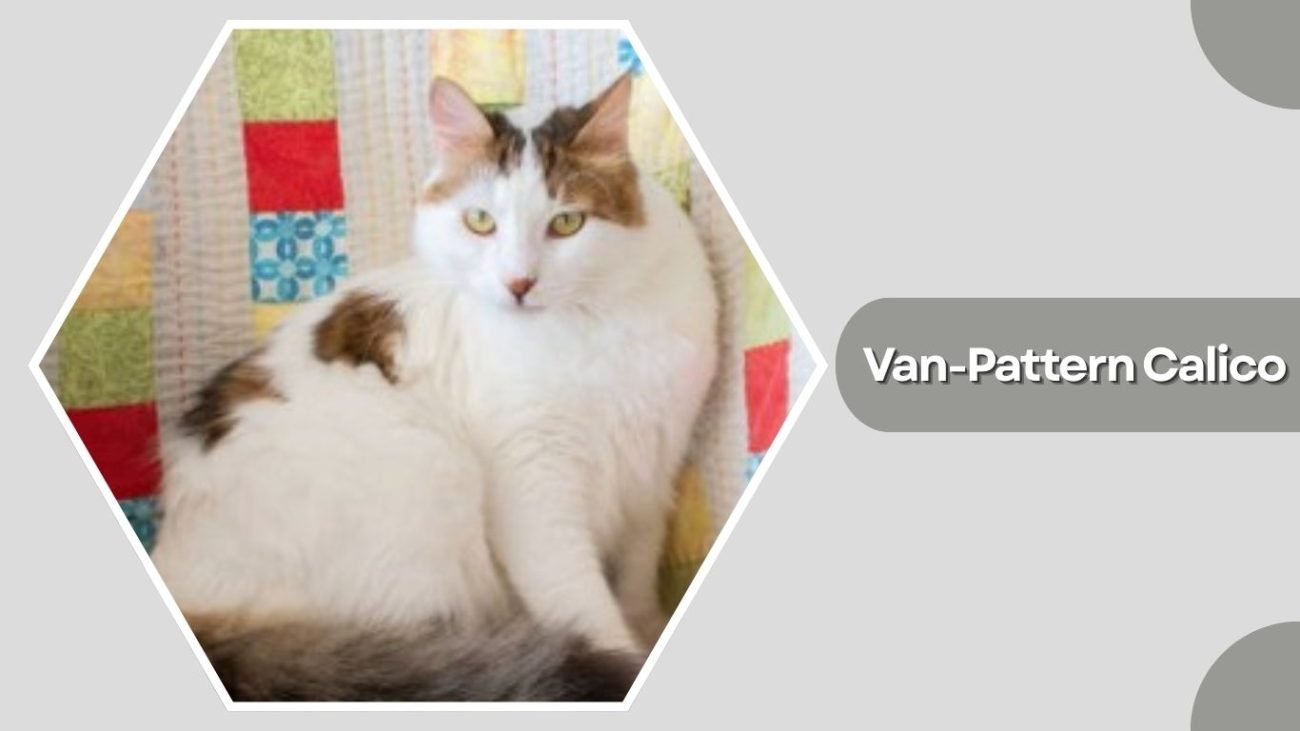
The van-pattern calico is a striking calico variation where most of the body is pure white, and color is mainly restricted to the head and tail, sometimes with only a few small spots on the back. This pattern is named after the famous “Van pattern” seen in Turkish Van–type cats, though van-pattern calicos can appear in many breeds. Like all calico cats, the species is Felis catus.
Identification
- Body is mostly white with color limited to head and tail
- Small isolated patches may appear on the back
- Black/blue and orange/cream areas form calico coloring
- High contrast between white coat and colored zones
- Coat can be short or long
- Most are female due to genetics
Coat Pattern and Color Placement
In van-pattern calicos, the white spotting gene is very strong, pushing pigment away from most of the body. The result is a bright white cat with color “caps” on the head and a fully colored tail, often called a “painted tail.” The head may show symmetrical or split-color markings, making each cat look very distinctive. This pattern is rarer than classic calico and is especially eye-catching.
Temperament and General Traits
There is no fixed temperament linked to the van-pattern calico look. Personality depends on the cat’s breed background and upbringing. A van-pattern calico domestic shorthair may be energetic and playful, while a long-haired van-pattern calico may be calm and affectionate. Coat pattern alone does not determine behavior.
Distribution and Common Breeds
Van-pattern calicos are found worldwide but are less common than other calico styles because they require an extreme expression of the white-spotting gene. They may appear in Turkish Van-type cats, Japanese Bobtails, Domestic Shorthairs, Maine Coons, Persians, and British Shorthairs, as well as mixed-breed cats.
6. High-White Calico
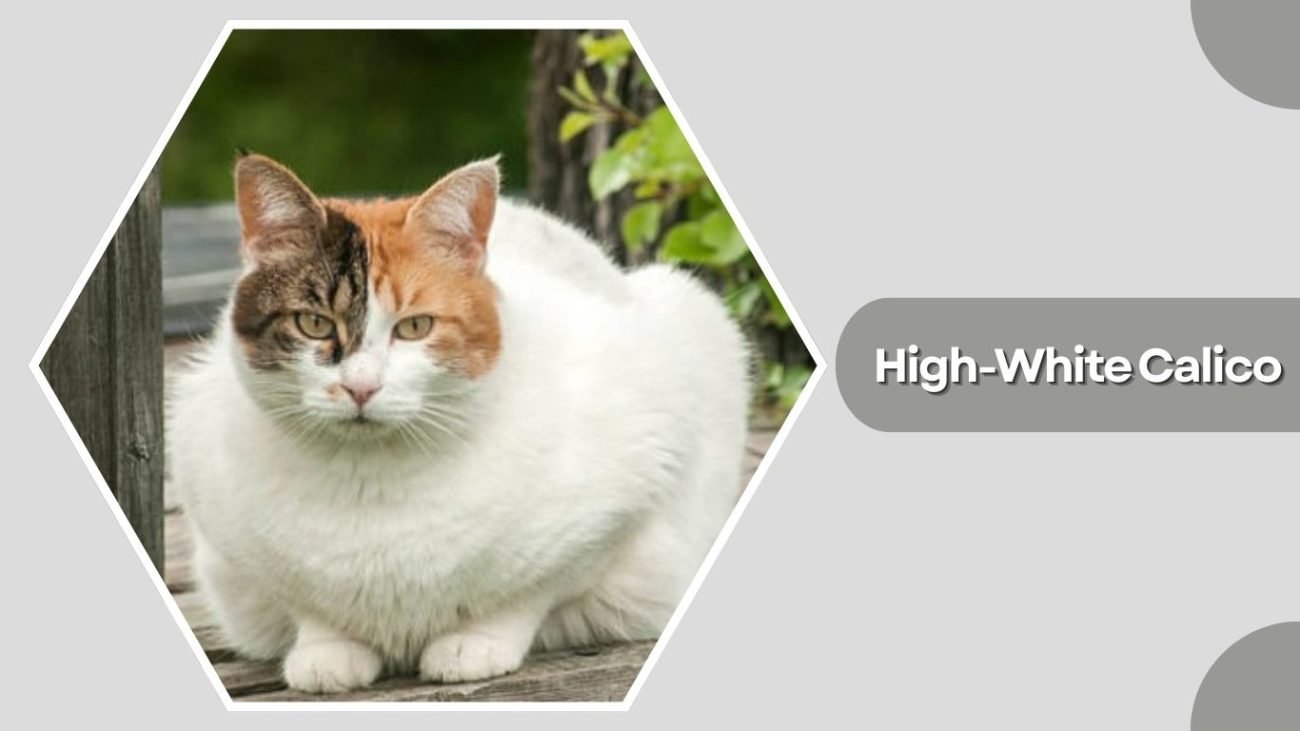
A high-white calico is a calico variation where white covers most of the body, but more color is present than in the van pattern. Black (or blue) and orange (or cream) patches appear on the back, sides, and head, yet the overall look is still very light. This pattern is created by a strong white-spotting gene and, like all calicos, belongs to the domestic cat species Felis catus.
Identification
- White is the dominant color over most of the body
- Black/orange or blue/cream patches are limited and scattered
- Legs, chest, and belly are usually fully white
- Colored areas often appear on head and upper back
- Coat length varies by breed
- Most individuals are female
Coat Pattern and Overall Appearance
High-white calicos sit between classic calicos and van-pattern calicos. They have more color than van types but far more white than low-white or classic calicos. The colored patches may be rounded, cloud-like, or broken into smaller islands across the back. Many high-white calicos have attractive facial markings, such as one colored ear, a half-mask, or a small colored cap on the head.
Temperament and General Traits
High-white calicos do not have unique personality traits tied to their coat pattern. Their temperament is influenced mainly by breed genetics, early socialization, and living environment. Some may be outgoing and people-oriented, while others are shy or independent. The amount of white in the coat does not predict behavior.
Distribution and Common Breeds
High-white calicos are found all over the world and are common among mixed-breed cats. They also appear in many recognized breeds, including Japanese Bobtail, Persian, Scottish Fold, Maine Coon, Ragdoll, and American Shorthair. Any breed capable of calico coloring and strong white spotting can produce high-white calicos.
7. Low-White Calico
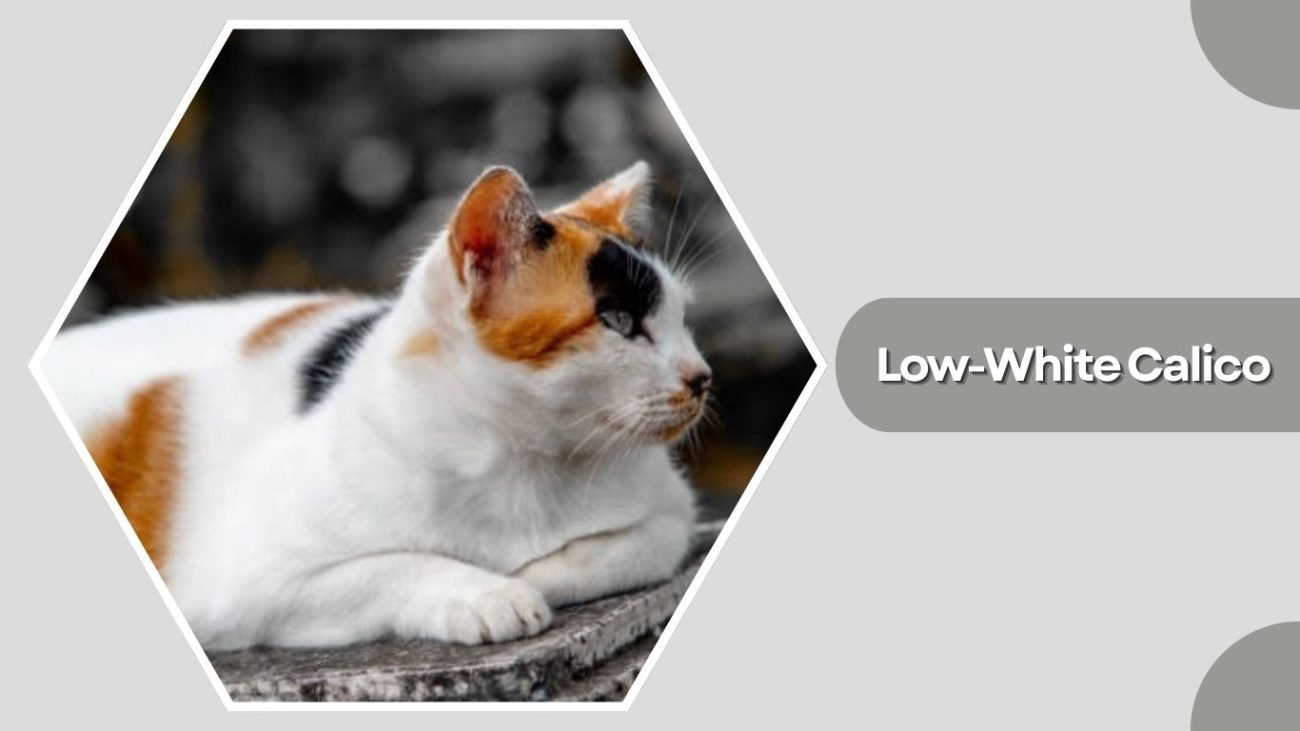
The low-white calico is a calico variation where white is present but limited, making the cat appear closer to a tortoiseshell, yet still clearly tricolored. Instead of large white areas, the white may show as a small chest patch, belly spot, facial blaze, or socks on the paws. This pattern belongs to the domestic cat species Felis catus and occurs across many breeds.
Identification
- Small, limited white areas on chest, belly, face, or paws
- Majority of coat shows black and orange (or blue and cream)
- White never fully disappears but remains clearly visible
- Pattern looks richer and darker than classic calico
- Coat can be short or long
- Most individuals are female
Coat Pattern and Color Balance
Low-white calicos have a stronger presence of dark and warm pigments, with white acting more like an accent color than a base. The black and orange areas may appear in bold blocks or in slightly blended patches, depending on whether the cat leans more toward classic calico or tortoiseshell-and-white. Because the white areas are small, these cats are sometimes mistaken for pure tortoiseshells until the white markings are noticed.
Temperament and General Traits
There is no proven temperament linked specifically to low-white calicos. Their behavior depends on breed influence, genetics, and how they are raised. Some may be highly active and playful, while others are calm lap cats. The calico pattern itself does not determine personality, though many owners enjoy associating these cats with bold or expressive behavior.
Distribution and Common Breeds
Low-white calicos are found worldwide and are especially common among mixed domestic cats. They also appear in many breeds, including American Shorthair, Cornish Rex, Devon Rex, Persian, Maine Coon, and Exotic Shorthair. Any breed capable of producing calico coloring with minimal white spotting can show this variation.
8. Tricolor Calico (European Usage)
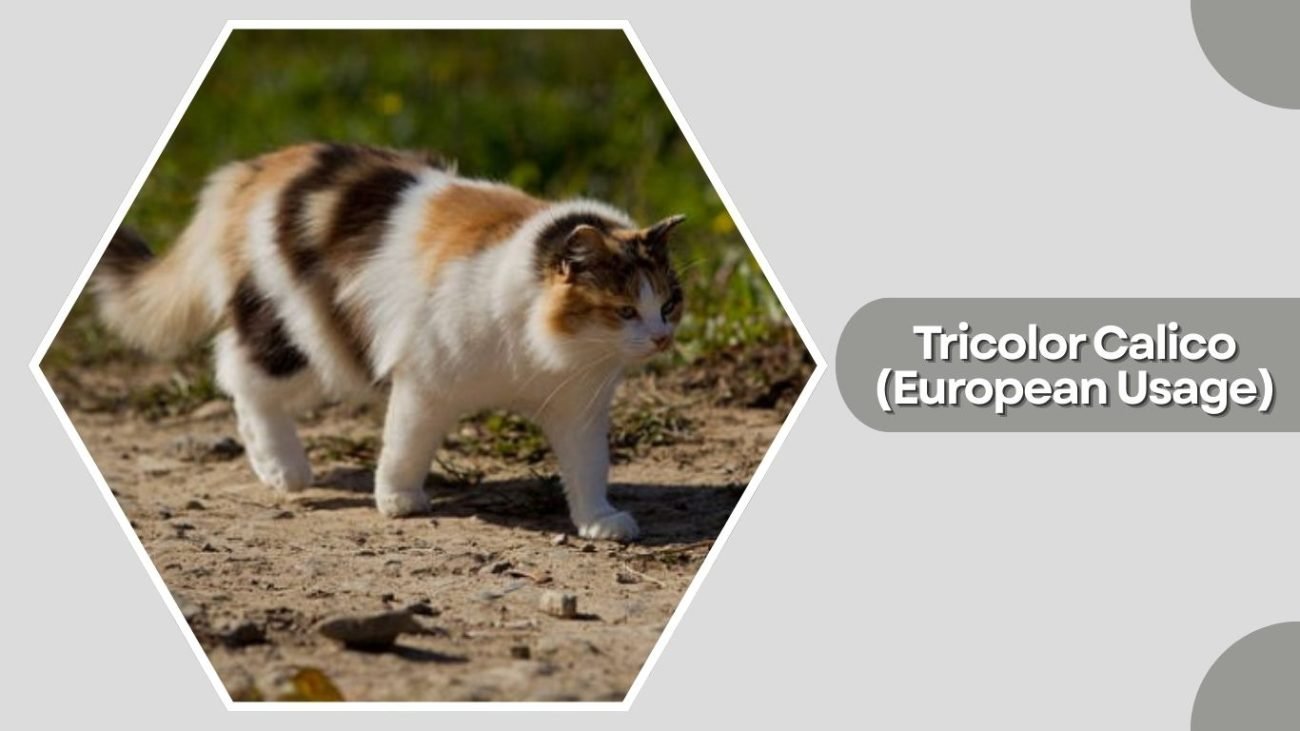
In many parts of Europe and other regions, calico cats are more commonly called “tricolor cats.” This variation is not genetically different from classic calico, but the term reflects regional naming rather than a new pattern. Tricolor calicos show three distinct colors—white, black (or blue), and orange (or cream)—arranged in patches across the body. Like all domestic calicos, the species is Felis catus.
Identification
- Three clearly visible colors: white, black/blue, and orange/cream
- White usually forms a strong base color
- Colored patches are uneven and well defined
- Pattern is not blended like a tortoiseshell
- Coat length varies by breed
- Most individuals are female
Coat Pattern and Regional Meaning
The tricolor calico looks very similar to what Americans call a “classic calico.” The difference lies mainly in language and cultural usage. In countries such as France, Germany, and the UK, people are more likely to describe a cat as “tricolore” or “tricolour” rather than calico. The coat pattern still follows the same genetic rules, with white spotting combined with black- and orange-based pigments.
Temperament and General Traits
Tricolor calicos do not have unique behavioral traits connected to the regional term. Personality is shaped by breed background, environment, and individual development. Some tricolor cats may be affectionate and social, while others are reserved or independent. The naming convention has no effect on temperament or health.
Distribution and Common Breeds
Tricolor calicos are widespread across Europe and are found globally wherever domestic cats live. They appear frequently in European Shorthairs, British Shorthairs, Domestic Shorthairs, Persians, and Maine Coons, as well as in non-pedigree cats. The term “tricolor” is often used in show descriptions and everyday language in European countries.
9. Mi-ke (Japanese Calico)
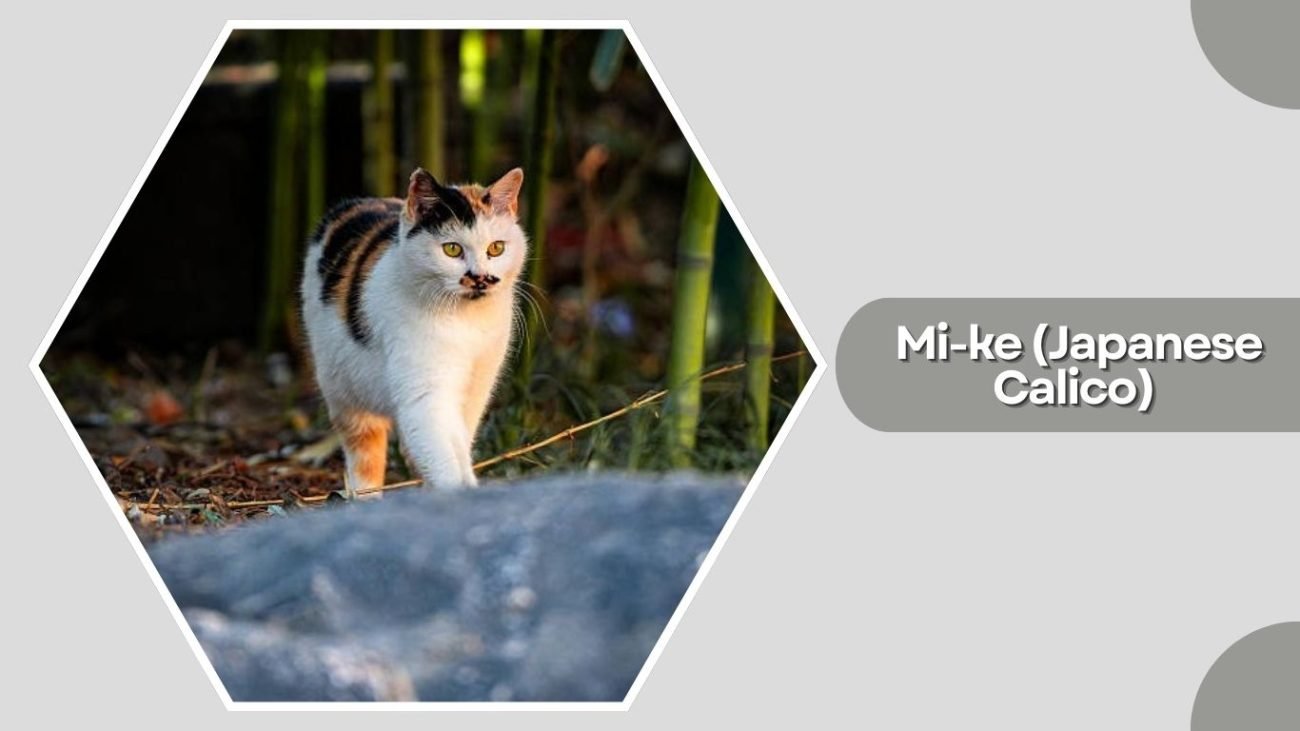
“Mi-ke” (sometimes written Mike) is the Japanese name for calico cats and means “three-fur” or “three colors.” In Japan, mi-ke cats are culturally significant and are often associated with good luck. The pattern itself is genetically the same as a classic calico—white combined with black (or blue) and orange (or cream). Like all domestic cats, mi-ke calicos belong to the species Felis catus.
Identification
- Three visible colors: white, black/blue, and orange/cream
- White commonly forms a strong base coat
- Colored patches are clear and irregular
- Face often shows attractive split-color or mask patterns
- Coat can be short or long
- Most are female
Coat Pattern and Cultural Importance
Mi-ke cats usually show bold, well-separated patches similar to classic calicos. What makes them special is not a unique genetic pattern, but their cultural role in Japan. The famous maneki-neko (beckoning cat) figurines are often modeled after mi-ke calicos, symbolizing prosperity and protection. Because of this, mi-ke cats are especially cherished as household pets and shop mascots.
Temperament and General Traits
There is no scientific evidence that mi-ke calicos behave differently from other calicos. Their temperament depends on breed type, environment, and socialization. Many Japanese cat owners describe mi-ke cats as expressive, alert, and people-aware, but these descriptions reflect individual experience rather than a proven personality type.
Distribution and Common Breeds
Mi-ke calicos are most strongly associated with Japan, where the term is widely used, but they occur worldwide. They are especially common in Japanese Bobtails, Domestic Shorthairs, and Domestic Longhairs, though the pattern also appears in breeds such as Persian, Maine Coon, and British Shorthair.
10. Chat Tricolore (French Calico)
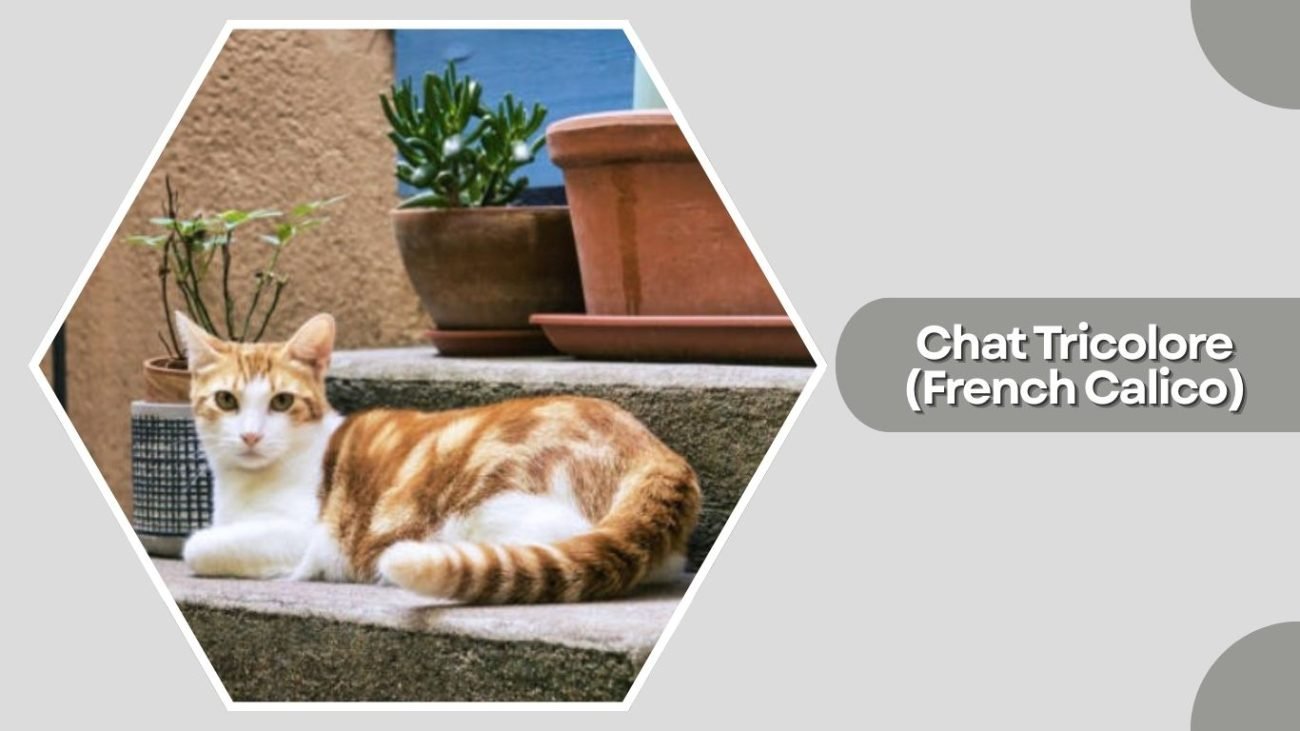
“Chat tricolore” is the French term used for calico or tricolor cats. It refers to domestic cats that display three distinct colors—white, black (or blue), and orange (or cream). The pattern is genetically the same as a classic calico, but the name reflects regional language and cultural usage rather than a separate biological type. Like all domestic cats, chat tricolore belong to the species Felis catus.
Identification
- Three clearly visible colors: white, black/blue, and orange/cream
- White commonly covers large areas of the body
- Colored patches are irregular and well defined
- Coat pattern is not blended like tortoiseshell
- Fur may be short, medium, or long
- Most individuals are female
Coat Pattern and Regional Usage
In France and other French-speaking regions, people usually say “chat tricolore” instead of calico. These cats often resemble what Americans would call classic calicos, with white as the base and bold black and orange patches across the back, head, and sides. The distribution of color varies widely, creating unique facial masks, saddles, or split-face designs.
Temperament and General Traits
Chat tricolore cats do not share a specific temperament linked to the regional name. Their personalities depend on breed heritage, early handling, and living conditions. Some may be affectionate lap cats, while others are energetic and independent. The term “chat tricolore” describes appearance only, not behavior.
Distribution and Common Breeds
This calico naming style is most common in France, Belgium, Switzerland, and parts of Canada. Chat tricolore cats appear in many breeds, including European Shorthair, British Shorthair, Persian, Maine Coon, and Domestic Shorthair, as well as mixed-breed cats.
11. Gata Tricolor (Spanish-Region Calico)
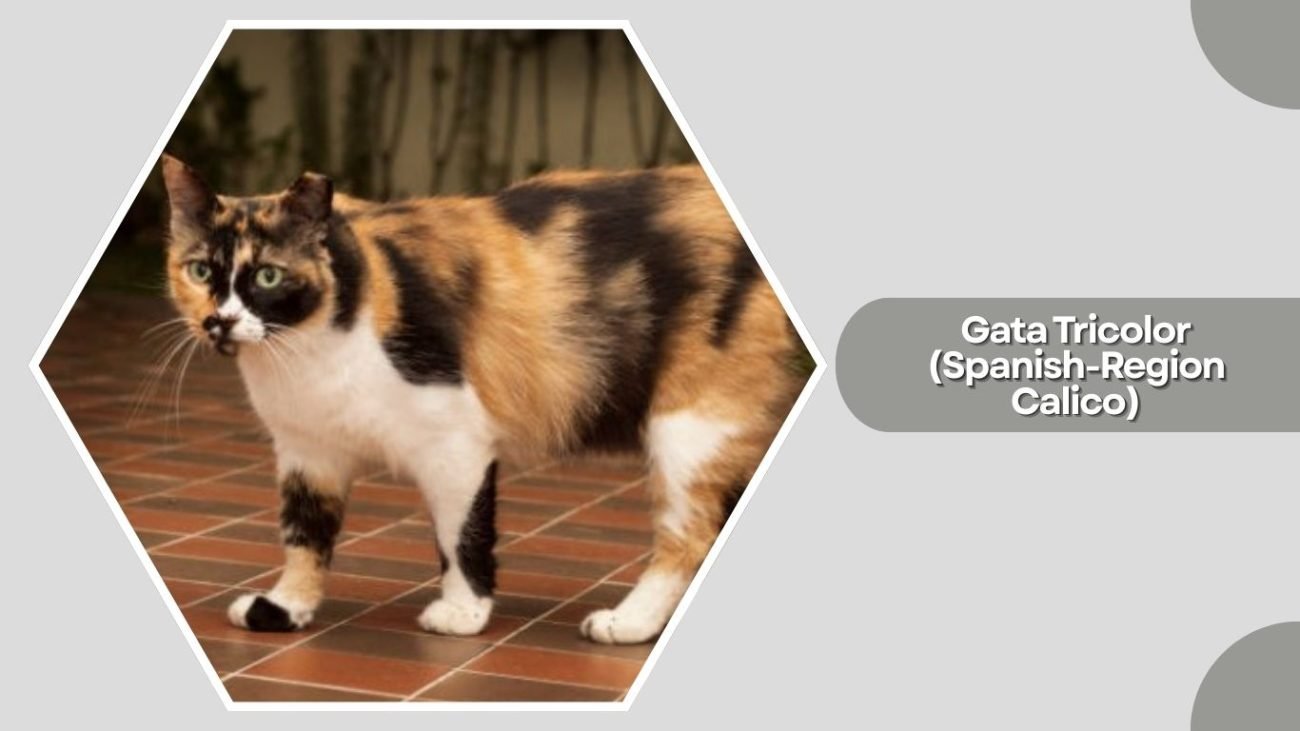
“Gata tricolor” is the Spanish term used for calico or tricolor cats in Spain and many Latin American countries. It describes domestic cats with three visible coat colors—white, black (or blue), and orange (or cream). This is not a separate genetic type, but a regional naming variation of the calico pattern. The species remains the same: Felis catus.
Identification
- Three distinct colors: white, black/blue, and orange/cream
- White often forms a noticeable base color
- Colored patches are irregular and clearly separated
- Pattern is not blended like tortoiseshell
- Coat may be short or long
- Most individuals are female
Coat Pattern and Regional Usage
In Spanish-speaking regions, people are more likely to say “tricolor” rather than calico. Gata tricolor cats usually look like classic calicos, with bright white areas broken by bold, uneven patches of darker and warm colors. Many have striking facial markings, including half-and-half faces, colored ears, or white blazes running down the nose.
Temperament and General Traits
There is no specific temperament associated with gata tricolor cats. Their behavior reflects their breed mix, environment, and social experiences. Some may be calm and affectionate, while others are active and playful. The regional term refers only to coat appearance, not to personality.
Distribution and Common Breeds
Gata tricolor is widely used in Spain, Mexico, Central America, South America, and Caribbean regions. These calico-patterned cats appear in many breeds such as Domestic Shorthair, European Shorthair, Persian, Maine Coon, and British Shorthair, as well as in non-pedigree cats.
12. Gatto Tricolore (Italian Calico)
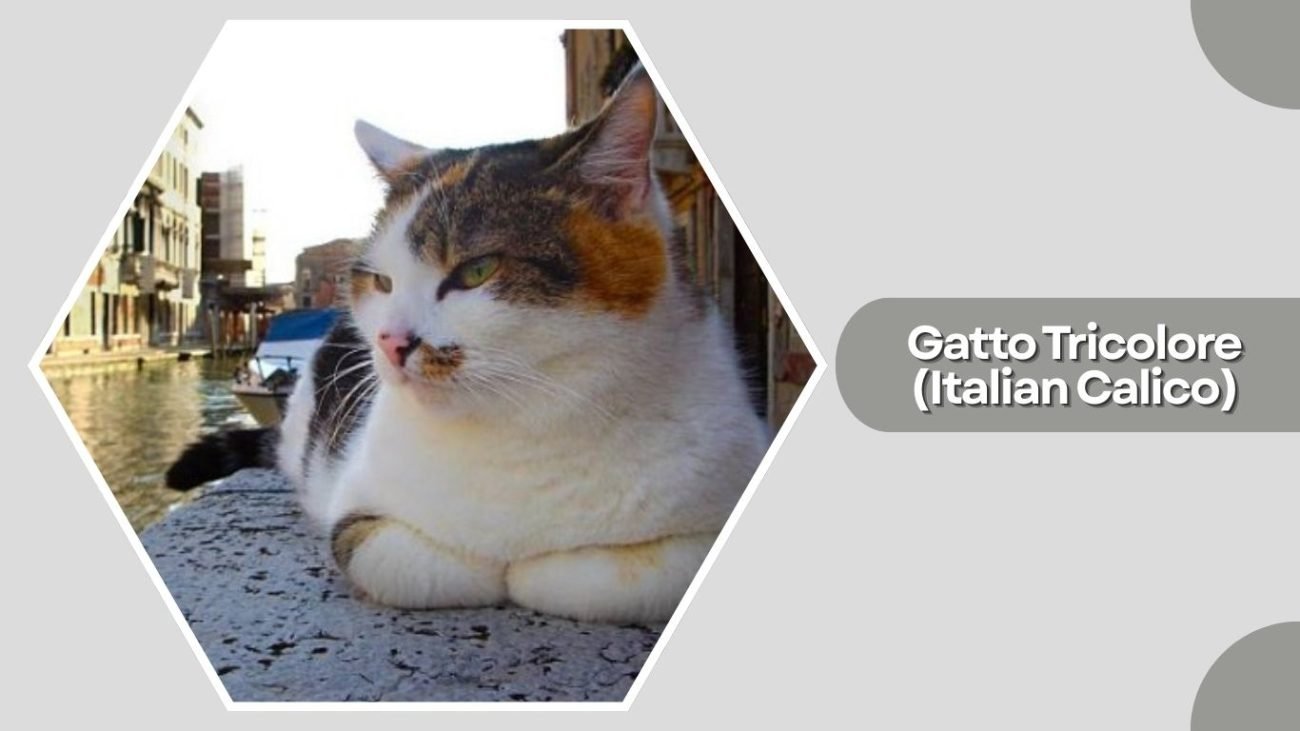
“Gatto tricolore” is the Italian term for calico or tricolor cats. It refers to domestic cats showing three distinct coat colors—white, black (or blue), and orange (or cream). This is not a separate biological type, but a regional naming variation of the calico pattern. Like all domestic cats, gatto tricolore belong to the species Felis catus.
Identification
- Three visible colors: white, black/blue, and orange/cream
- White often forms a strong base coat
- Colored patches are irregular and clearly separated
- Pattern is patchy, not blended like tortoiseshell
- Fur length varies by breed
- Most individuals are female
Coat Pattern and Regional Usage
In Italy, calico cats are more often called tricolore. These cats usually resemble classic calicos, with white dominating the underside and legs, while black and orange patches decorate the back, head, and tail. Some gatto tricolore cats show dramatic split-color faces or saddle-shaped patches, making each cat visually unique.
Temperament and General Traits
There is no scientifically proven temperament linked to the gatto tricolore label. Personality depends on breed heritage, socialization, and environment. Some may be gentle and affectionate companions, while others are independent and highly active. The term “gatto tricolore” describes coat color only, not behavior.
Distribution and Common Breeds
Gatto tricolore is commonly used in Italy and Italian-speaking communities. These calico-patterned cats are found in many breeds, including European Shorthair, Persian, Maine Coon, British Shorthair, and Domestic Shorthair, as well as mixed-breed cats.