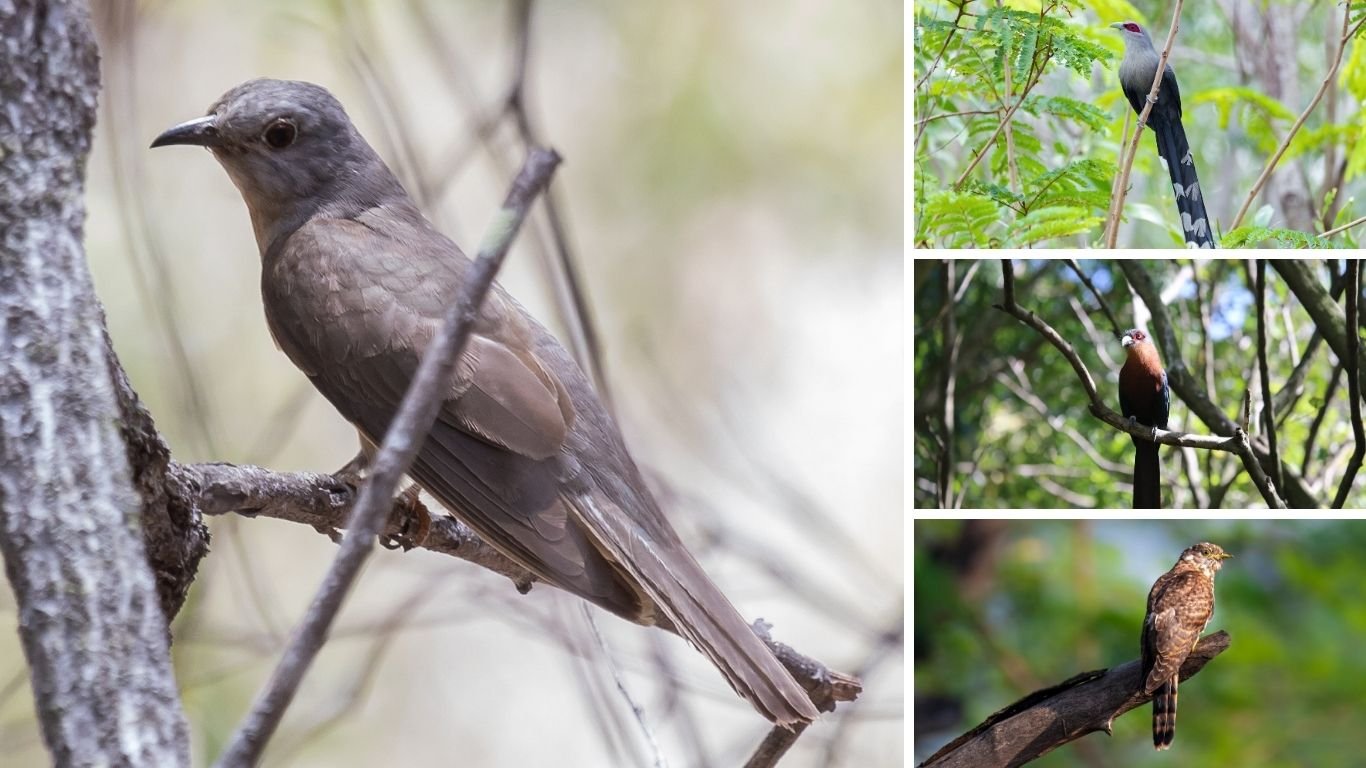
Cuckoo birds are known for their loud calls and smart nesting tricks. Some lay eggs in other birds’ nests, while others raise their own chicks. They live in forests, gardens, and even near cities. This list gives you 35 common cuckoo types with simple info—how they look, where they live, and what sounds they make. Great for bird lovers who want to spot or learn more about cuckoos.
1. Common Cuckoo (Cuculus canorus)
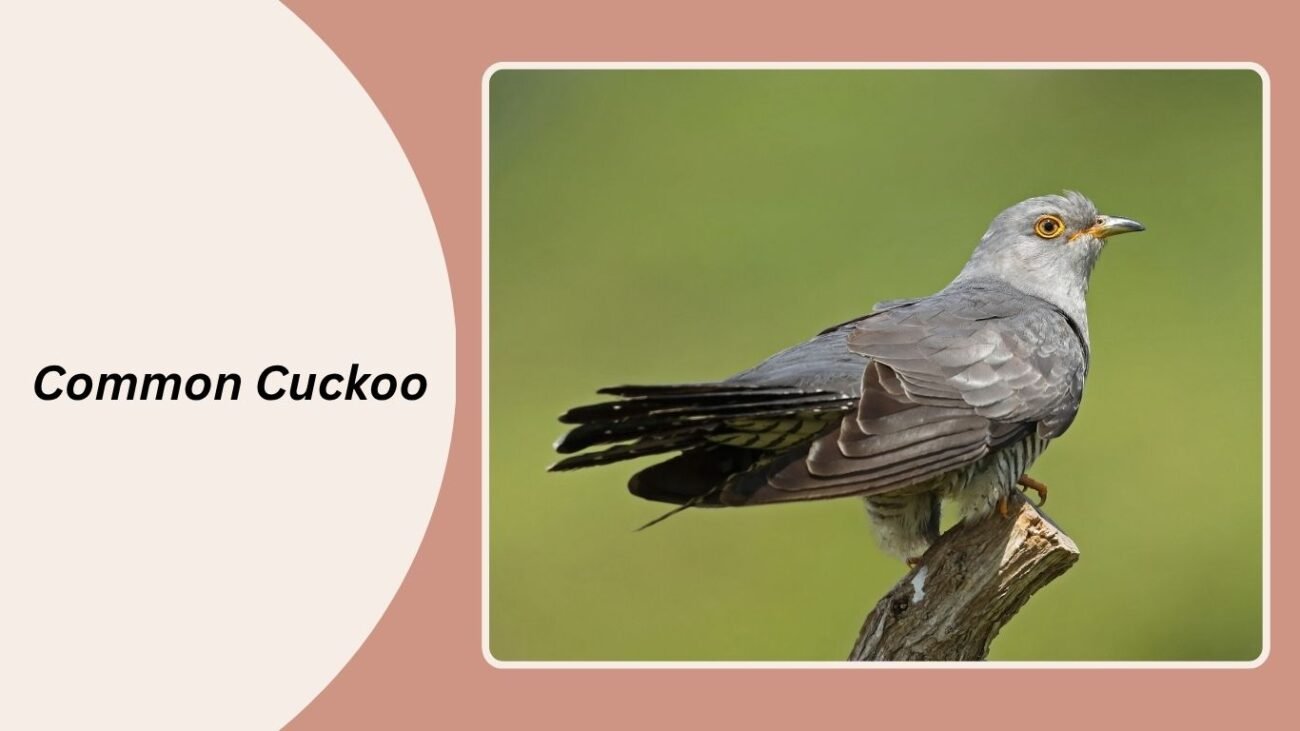
The Common Cuckoo is one of the most well-known cuckoo species in Europe and Asia. Famous for its distinctive “cu-coo” call, this migratory bird is a brood parasite—laying its eggs in the nests of other bird species. It’s often heard before it is seen, especially during spring and early summer.
Identification
- Medium-sized bird (32–34 cm long)
- Greyish-blue head and upperparts
- Whitish belly with dark horizontal barring
- Long, graduated tail with white tips
- Slender body and pointed wings
- Eyes have a yellow orbital ring
Behavior
The Common Cuckoo is best known for its brood parasitism. The female lays eggs that mimic the host bird’s eggs, tricking them into raising the cuckoo chick. The young cuckoo then ejects the host’s eggs or chicks to monopolize care.
Habitat
Found in open woodlands, moorlands, and farmlands across Europe, Asia, and parts of Africa during winter migration. Prefers areas with tall trees and shrubs.
Vocalization
Its iconic “cu-coo” call is most common during the breeding season and is usually made by males to attract females and mark territory.
2. Asian Koel (Eudynamys scolopaceus)
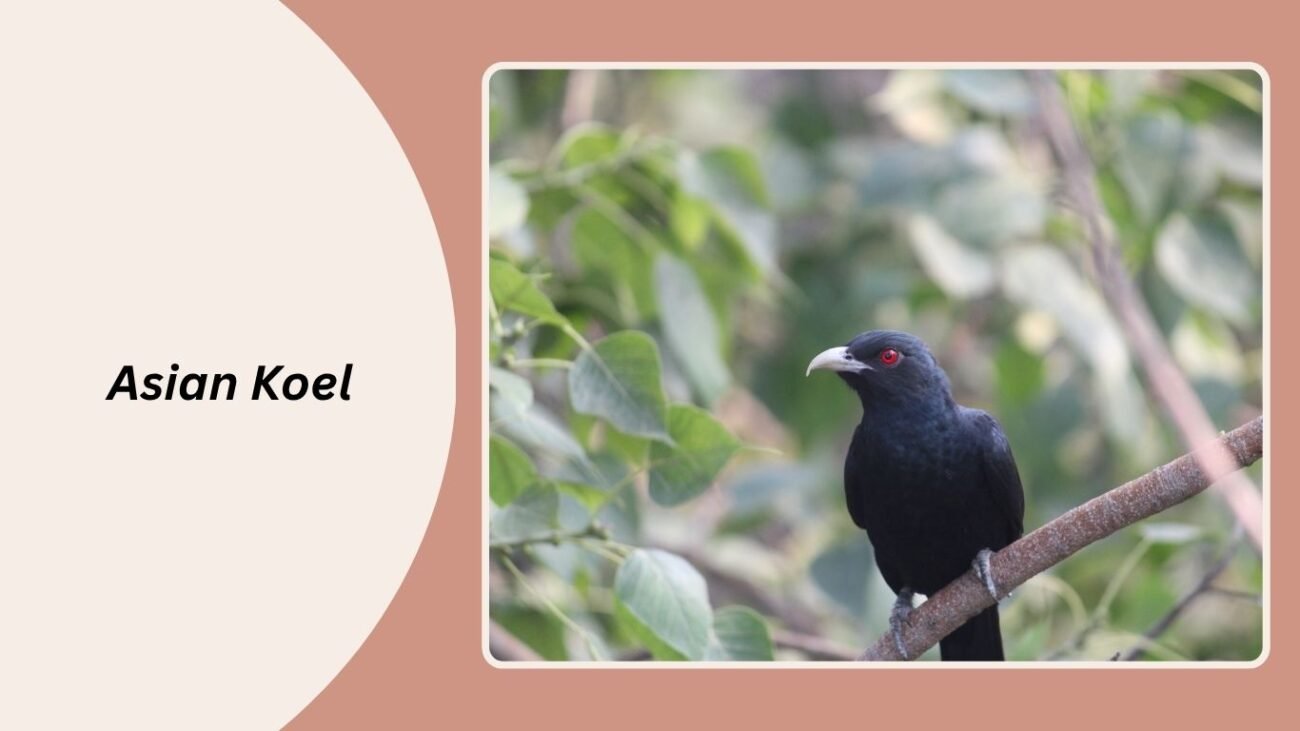
The Asian Koel is a large, long-tailed cuckoo species widely found in South and Southeast Asia. It’s known for its loud, repetitive “koo-oo” calls, especially during the breeding season. The male and female look distinctly different, making this species sexually dimorphic.
Identification
- Male: Glossy bluish-black plumage
- Female: Brown with white spots and streaks
- Bright red eyes in both sexes
- Long, broad tail with pale tips
- Body length: around 39–46 cm
- Strong feet and curved bill
Behavior
The Asian Koel is a brood parasite, often targeting nests of crows, especially the house crow. The female sneaks into the host nest and lays a single egg, usually removing one of the host’s eggs. The chick often outcompetes the host’s young but doesn’t eject them.
Habitat
Thrives in urban areas, gardens, farmlands, and forests. Very adaptable and often seen in cities near fruiting trees.
Vocalization
Males produce loud, rising “koo-ooo” calls during the breeding season. Females make shrill, screechy “kik-kik-kik” sounds. Calling is most intense during dawn and early morning.
3. Pacific Koel (Eudynamys orientalis)
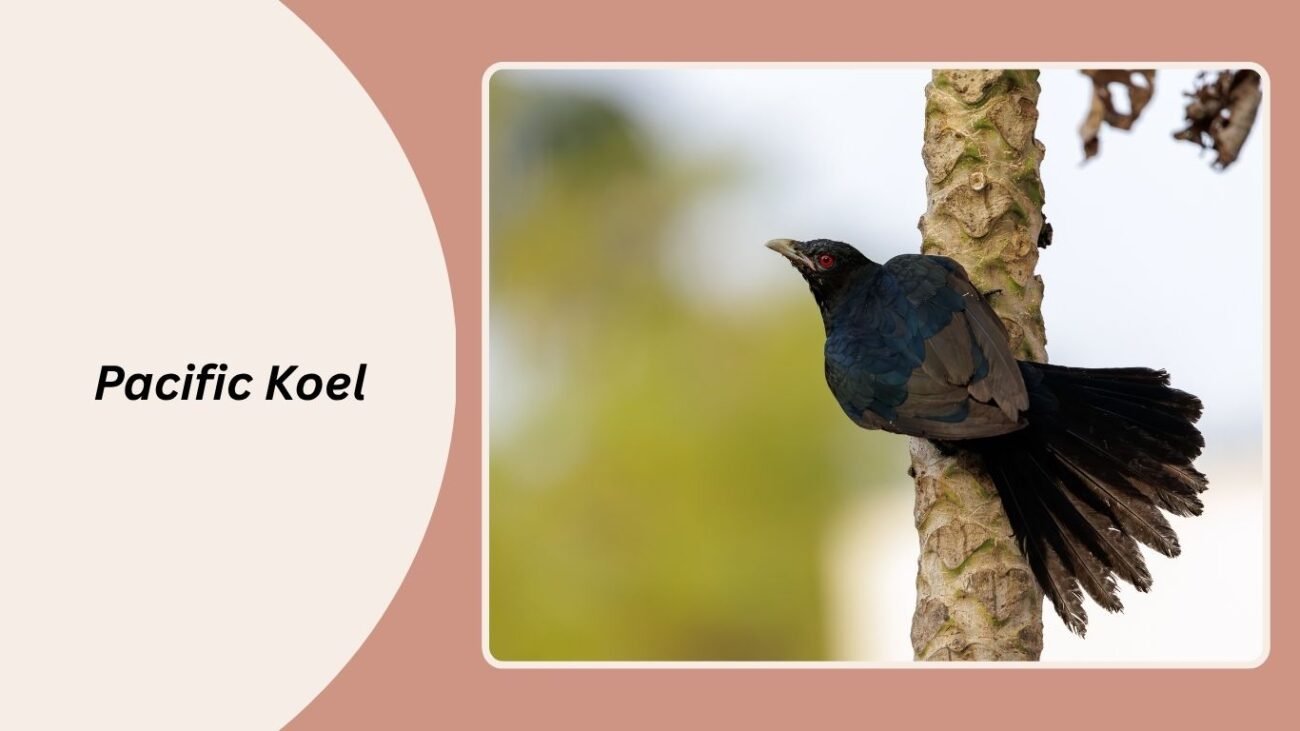
The Pacific Koel is closely related to the Asian Koel but is native to Australia, Indonesia, Papua New Guinea, and parts of the Pacific Islands. It is also a brood parasite and has adapted well to suburban environments.
Identification
- Male: Shiny black plumage with greenish gloss
- Female: Brown upperparts with white-spotted wings and streaked underparts
- Eye: Deep red
- Long tail with pale bars
- Slightly larger than the Asian Koel, reaching up to 46 cm in length
Behavior
Pacific Koels lay their eggs in the nests of honeyeaters, friarbirds, and other host species. The chicks grow rapidly and monopolize feeding by host parents. Adults are shy and secretive but become noisy and more visible during breeding months.
Habitat
Found in woodlands, rainforests, urban parks, and gardens—particularly in warmer coastal areas. Migratory in Australia, often arriving in spring.
Vocalization
Males have a loud, ascending “koo-ee” call repeated persistently. Their haunting calls often begin before dawn and are heard throughout the summer.
4. Black-billed Cuckoo (Coccyzus erythropthalmus)
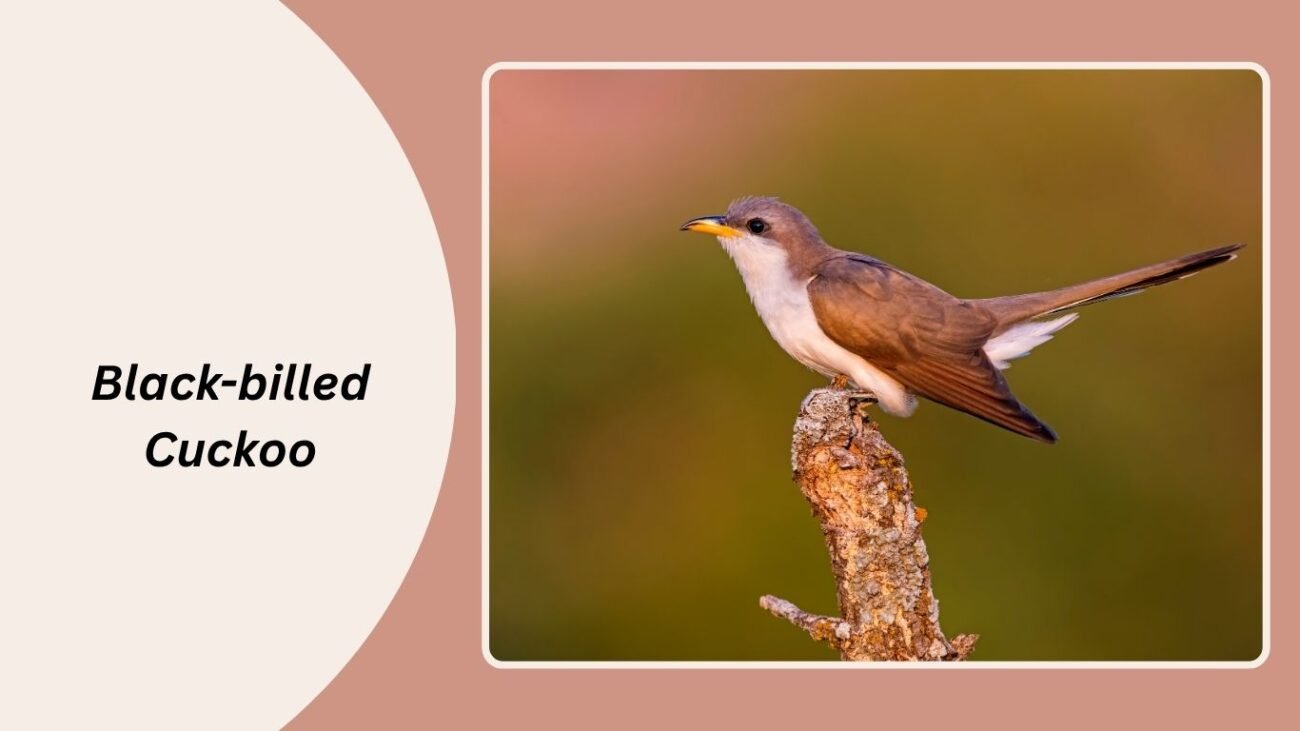
The Black-billed Cuckoo is a secretive bird found in North America, known for its soft cooing calls and preference for dense thickets. It’s more often heard than seen and is active during dawn and dusk.
Identification
- Slender body, around 28–30 cm long
- Plain brown upperparts and white underparts
- Distinct black bill, slightly curved
- Red ring around the eye
- Long tail with small white tips on outer feathers
Behavior
Feeds primarily on caterpillars, especially hairy ones like tent caterpillars. Builds its own nest and raises its young, unlike many other cuckoos. Often motionless in dense foliage.
Habitat
Prefers deciduous woodlands, shrubby edges, and wetlands. Especially common near water bodies with overgrown vegetation.
Vocalization
Known for a soft “cu-cu-cu” or “coo-coo-coo” sound, often repeated 5–10 times. Less noisy than other cuckoos and harder to detect.
5. Yellow-billed Cuckoo (Coccyzus americanus)
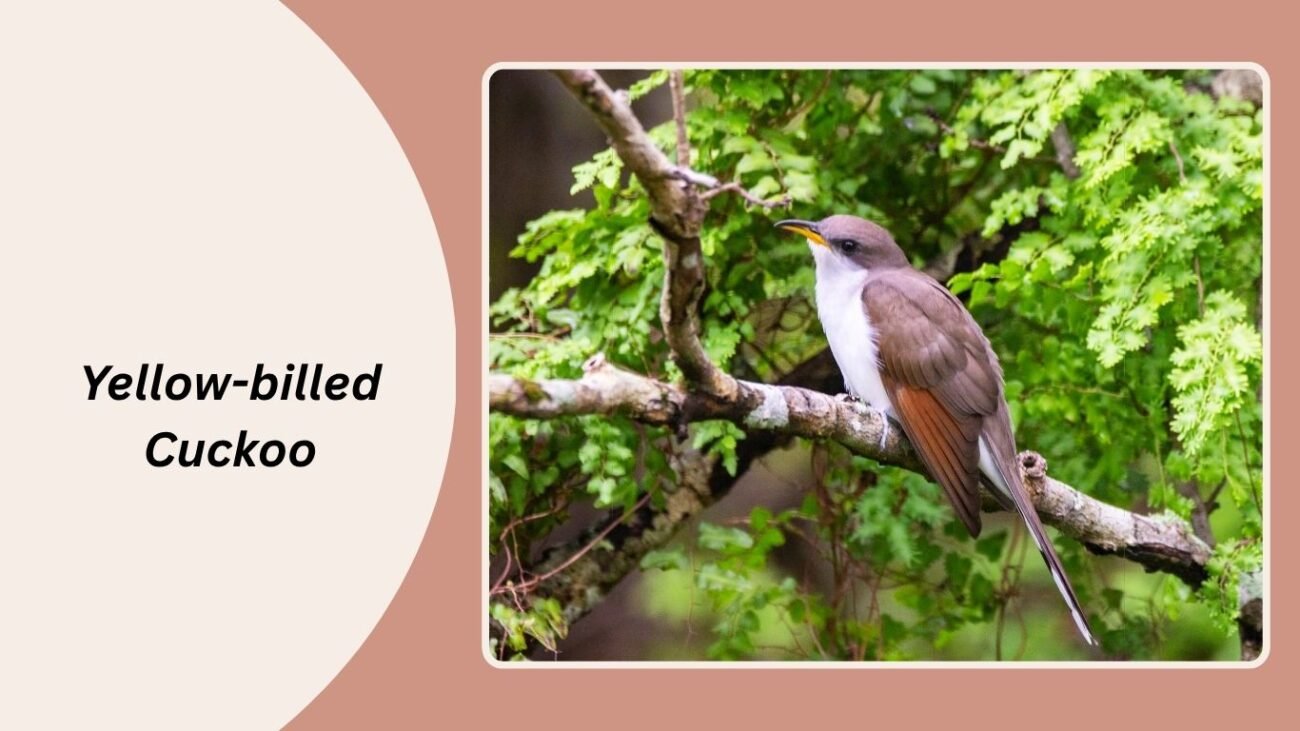
The Yellow-billed Cuckoo is another North American species, closely related to the black-billed cuckoo. It’s nicknamed the “rain crow” because its call often precedes storms.
Identification
- Length: 26–30 cm
- Slim body with long tail
- Brown upperparts and clean white underparts
- Yellow lower mandible; upper mandible is dark
- Large white spots on the underside of tail feathers
- Slightly decurved bill
Behavior
Not a brood parasite—builds its own nest and both parents feed the young. Feeds mainly on large insects, especially caterpillars. Can be elusive and quiet outside of breeding season.
Habitat
Found in wooded areas, especially riparian zones with willow, cottonwood, or alder trees. Also present in orchards and parks.
Vocalization
Distinct, hollow “kowlp kowlp kowlp” or “ka-ka-ka-ka-ka-ka-kow” calls, often accelerating at the end. Vocal during hot, humid days and before rain.
6. Mangrove Cuckoo (Coccyzus minor)
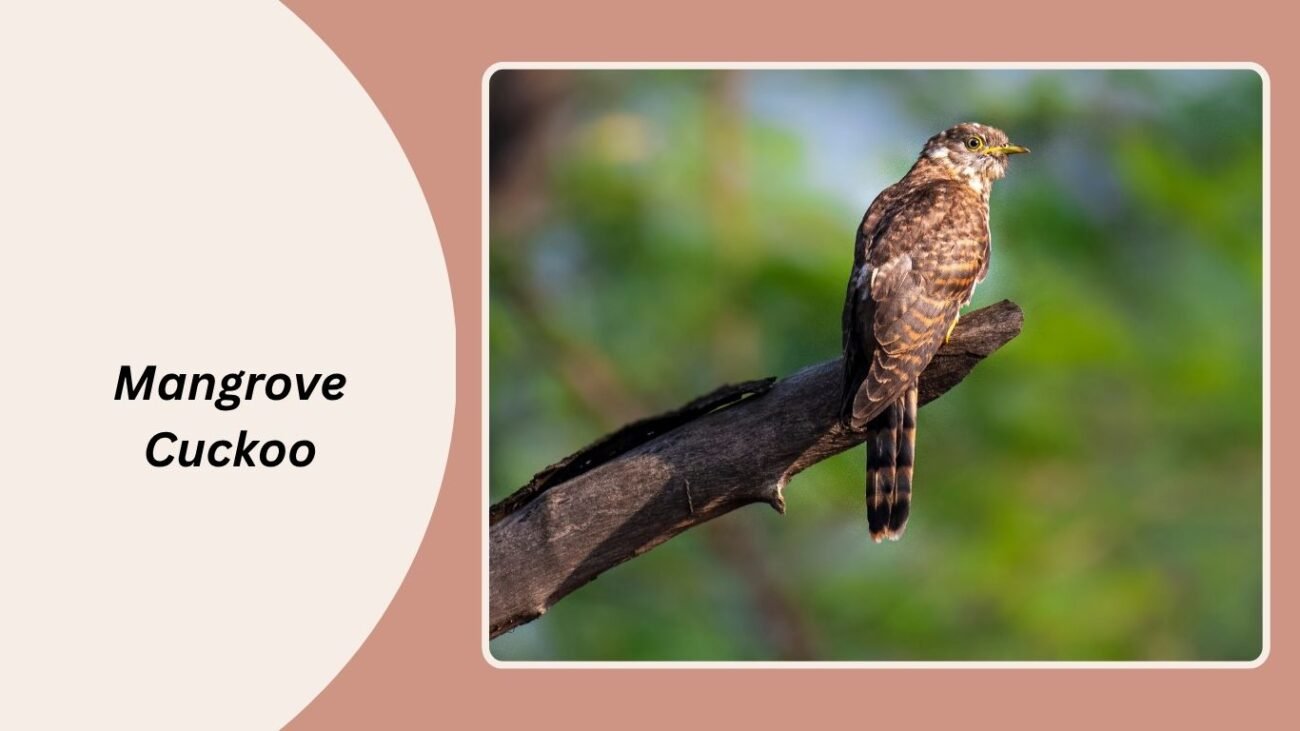
The Mangrove Cuckoo is a tropical bird native to coastal mangroves, especially in Florida, the Caribbean, and parts of Central America. It is shy and hard to spot due to its preference for dense mangrove forests.
Identification
- Body length: around 28–32 cm
- Buffy or tan underparts
- Grayish-brown upperparts
- Bold black mask through the eye
- Slightly curved bill with dark upper mandible and yellow lower mandible
- Long tail with white spots on the underside
Behavior
Feeds on insects, small lizards, and berries. Often perches quietly, making sudden flights between branches. Builds its own nest and raises young without parasitism.
Habitat
Strictly associated with mangrove forests, especially red mangrove stands. Occasionally found in nearby tropical scrub or coastal hammocks.
Vocalization
Call is a harsh, croaking “ka-ka-ka-ka-ka,” slower and lower-pitched than the yellow-billed cuckoo. Usually heard during the breeding season.
7. Greater Coucal (Centropus sinensis)
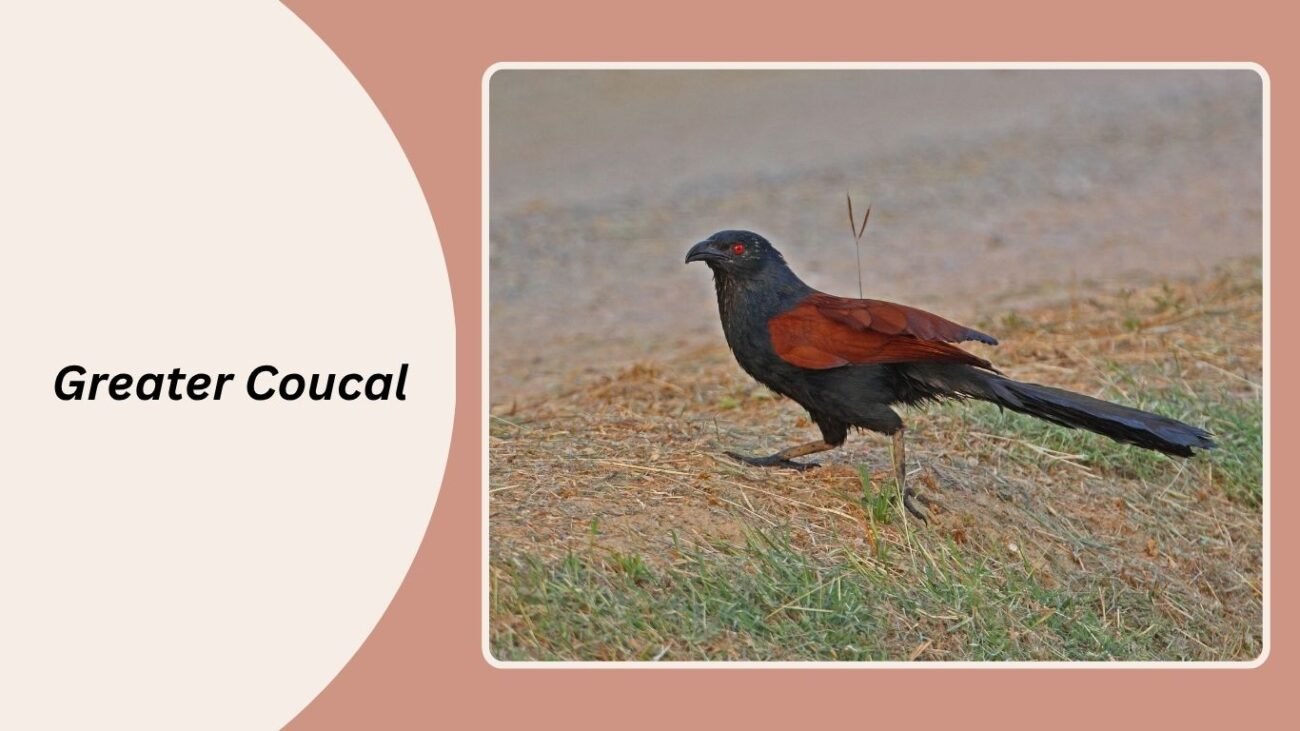
The Greater Coucal is a large, non-parasitic cuckoo native to South and Southeast Asia. Also known as the “Crow Pheasant,” it is often seen walking on the ground or flying with heavy wingbeats.
Identification
- Large body: 48–55 cm long
- Glossy black head and body
- Chestnut-brown wings
- Red eyes
- Long, broad black tail with greenish gloss
- Strong legs and thick curved beak
Behavior
Feeds on insects, snails, small reptiles, and even bird eggs. Unlike many cuckoos, it builds its own nest and rears its young. Known for moving slowly and silently through dense vegetation.
Habitat
Inhabits thick undergrowth, bamboo groves, gardens, and farmland edges. Common in both rural and semi-urban areas.
Vocalization
Famous for its deep, resonant “coop… coop… coop” calls, often heard in the early morning. The call is considered an omen in local folklore.
8. Lesser Coucal (Centropus bengalensis)
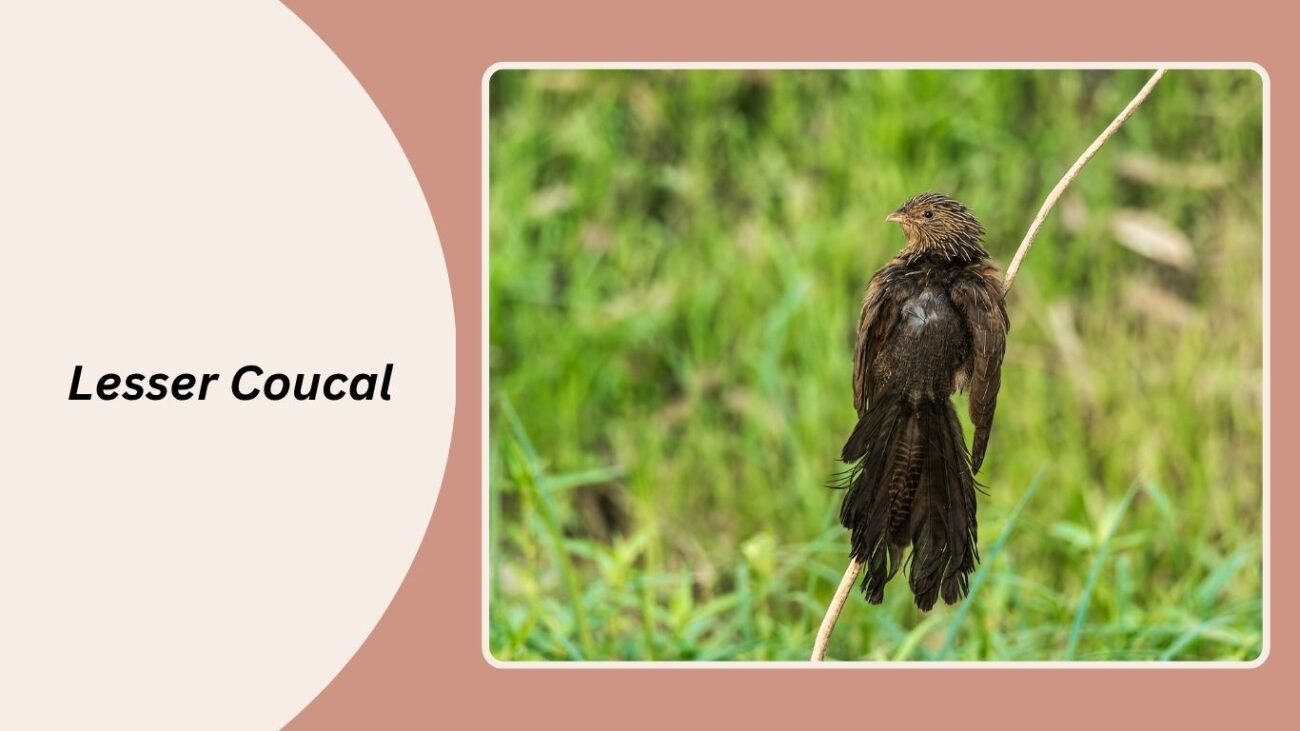
The Lesser Coucal is a smaller cousin of the Greater Coucal, found widely across South and Southeast Asia. Though similar in appearance, it prefers denser grasslands and has more secretive behavior.
Identification
- Size: about 36–40 cm long
- Glossy black head and body
- Reddish-brown wings
- Shorter tail compared to the Greater Coucal
- Eyes are reddish
- Juveniles have streaked plumage and duller tones
Behavior
Feeds on insects, small frogs, and snails. It builds its own nest in thick grass or shrubs and is monogamous. Tends to stay low in vegetation and rarely flies long distances.
Habitat
Prefers reed beds, grasslands, rice fields, and dense undergrowth. Avoids open areas and heavily forested zones.
Vocalization
Its call is a repeated, low-pitched “whoop-whoop-whoop,” softer and less echoing than the Greater Coucal.
9. Pheasant Coucal (Centropus phasianinus)
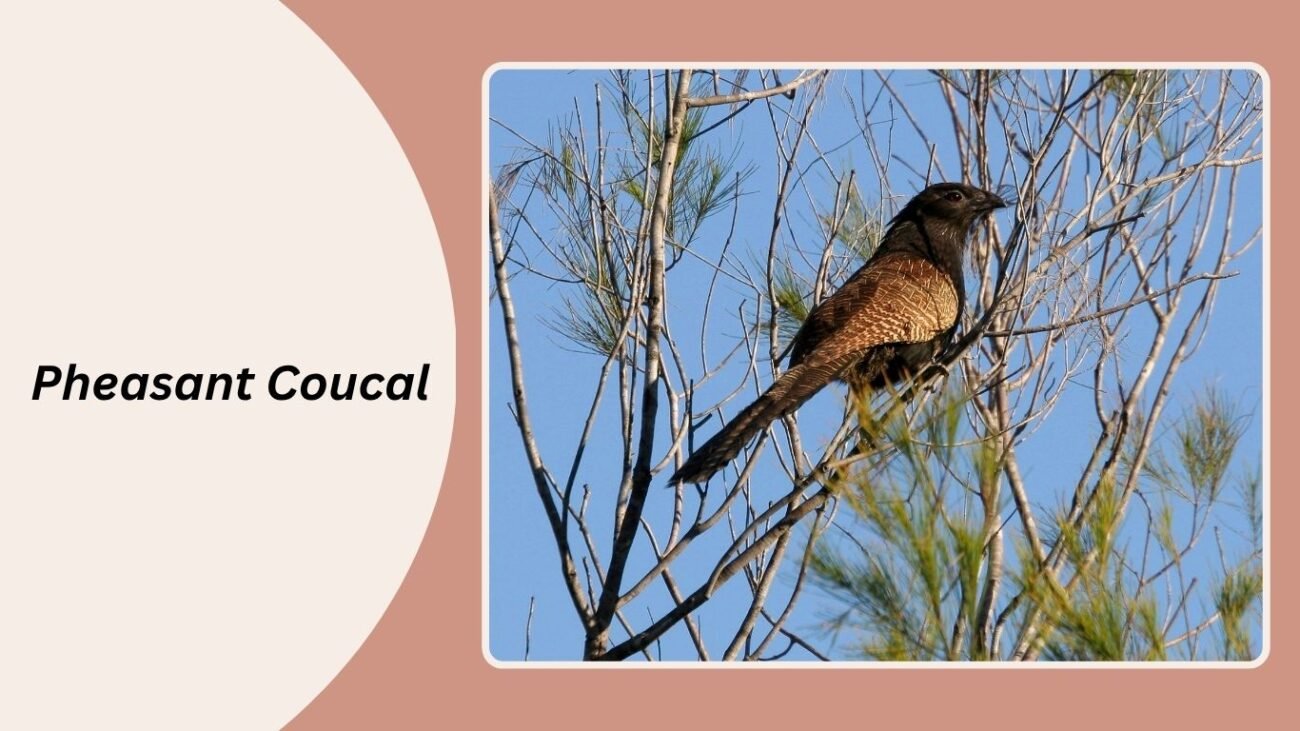
The Pheasant Coucal is a large ground-dwelling cuckoo native to Australia and New Guinea. It resembles a pheasant due to its long tail and terrestrial habits, hence the name.
Identification
- Large size: 50–60 cm long
- Breeding plumage: black head and body with chestnut wings and white-barred tail
- Non-breeding plumage: streaked brown with paler underparts
- Heavy bill and red eyes
- Long legs and tail adapted for walking
Behavior
Unusual for a cuckoo, it builds its own nest and raises its chicks. It often walks or runs through tall grass, hunting insects, frogs, and small reptiles.
Habitat
Found in grassy woodlands, sugarcane fields, and wetlands with dense cover. Prefers tropical and subtropical areas with tall vegetation.
Vocalization
A booming, descending “boo-boo-boo-boo” call, usually heard early in the morning or after rainfall. Males and females may call in duet during the breeding season.
10. Black Coucal (Centropus grillii)
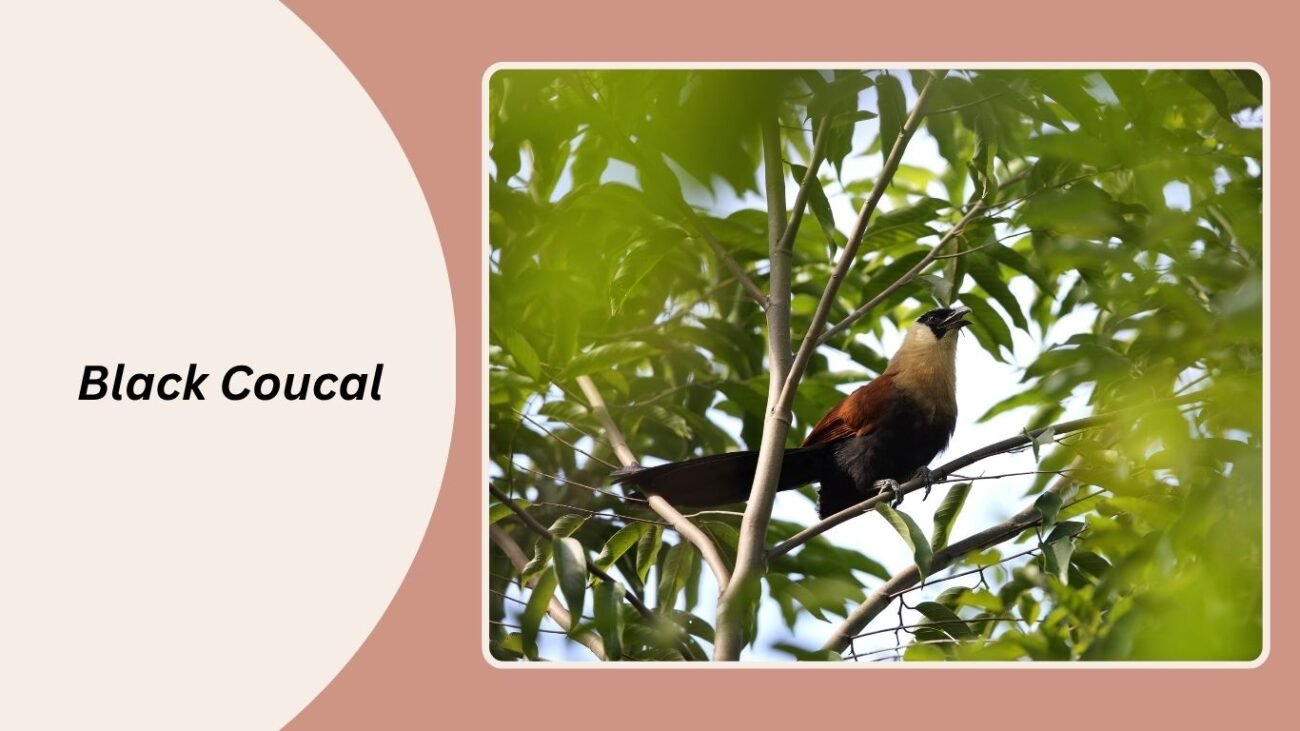
The Black Coucal is the only coucal species in Africa that exhibits seasonal dimorphism. It is found in sub-Saharan Africa and is known for its unusual breeding behavior where the male incubates the eggs.
Identification
- Breeding male: entirely glossy black
- Non-breeding plumage: brown with dark streaks
- Reddish eyes
- Tail is long and black with a metallic sheen
- Body size: about 36–38 cm
- Slender compared to other coucals
Behavior
Inverts typical cuckoo parenting roles—the male builds the nest, incubates the eggs, and raises the chicks. Feeds on insects, especially grasshoppers, and is often seen in grasslands during breeding season.
Habitat
Inhabits moist grasslands, floodplains, and seasonal wetlands. Strongly associated with tall grass habitats in sub-Saharan Africa.
Vocalization
Produces sharp “chik-chik-chik” or “puk-puk-puk” calls. During breeding season, the calls are more frequent and aggressive.
11. Senegal Coucal (Centropus senegalensis)
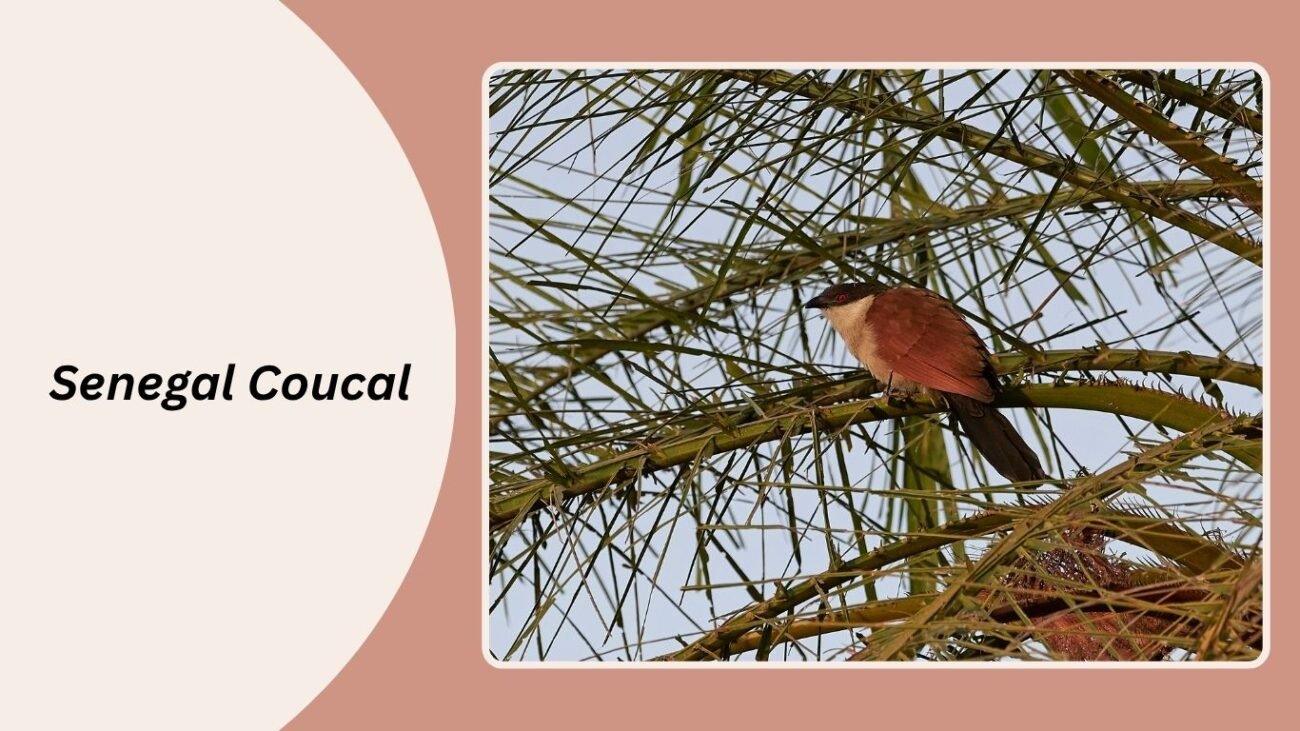
The Senegal Coucal is a common and widespread species found throughout sub-Saharan Africa. Unlike parasitic cuckoos, this bird builds a nest and raises its own young.
Identification
- Size: 40–43 cm
- Black head and back with a glossy green sheen
- Reddish-brown wings
- Creamy-white underparts
- Long, dark tail with faint barring
- Red eyes and strong feet
Behavior
Feeds on insects, small reptiles, and amphibians. Usually found alone or in pairs, walking through thick vegetation or perched low. Builds a bulky dome-shaped nest of grass.
Habitat
Found in savannahs, scrublands, bushy gardens, and agricultural fields. Tolerates semi-urban areas and is not shy around human habitation.
Vocalization
Call is a loud, bubbling “hoo-hoo-hoo” or “bou-bou-bou,” repeated rhythmically. Most vocal during dawn and dusk.
12. White-browed Coucal (Centropus superciliosus)
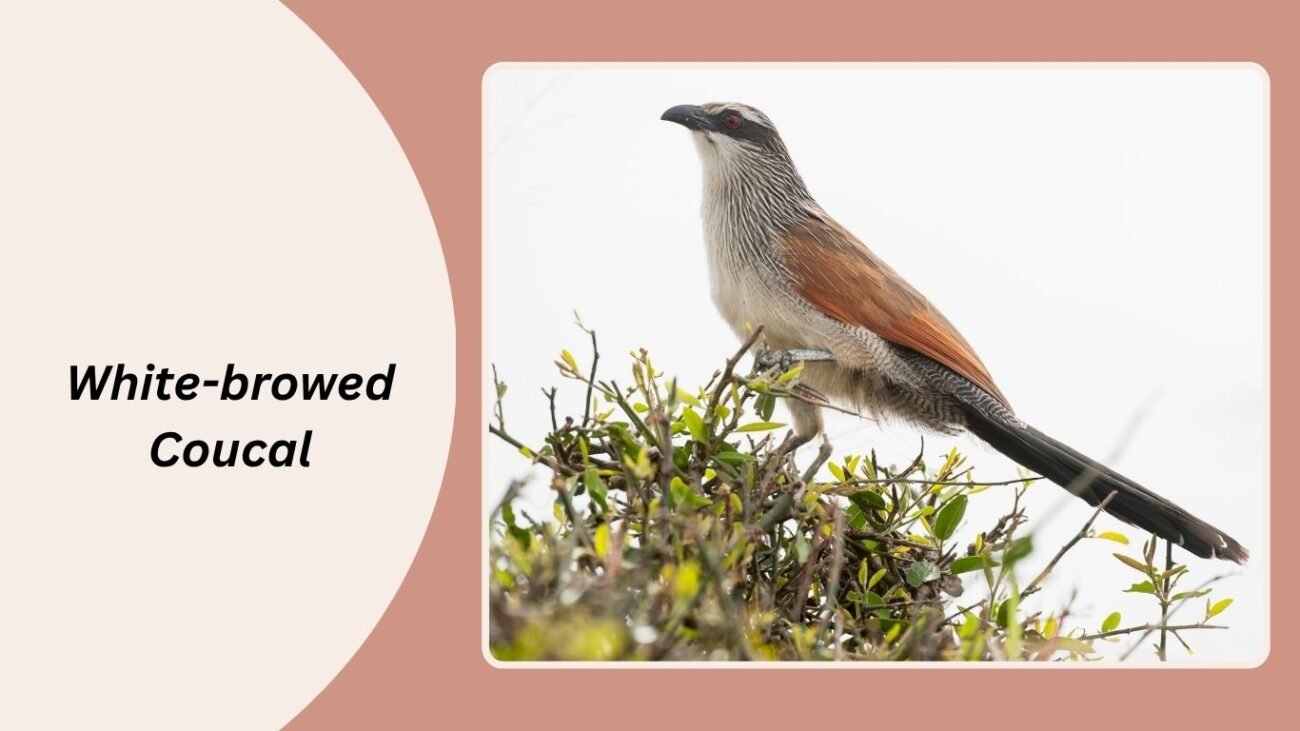
The White-browed Coucal is a striking African bird, easily recognized by the white streak above its eye. It’s often seen skulking through thick shrubs or flying low with heavy wingbeats.
Identification
- Length: 36–42 cm
- Distinct white eyebrow (supercilium)
- Blackish crown and nape
- Chestnut wings and back
- Creamy white underparts
- Dark greenish-black tail with faint barring
- Red eyes
Behavior
Feeds on insects, small vertebrates, and occasionally fruits. Builds its own nest and shares chick-rearing duties. Often solitary or in pairs, moving quietly through vegetation.
Habitat
Prefers bushy savannas, woodland edges, riverine thickets, and gardens. Often found near water sources in dry regions of East and southern Africa.
Vocalization
A slow, descending series of bubbling “coo-coo-coo” notes. The call is low-pitched and often heard in the early morning or after rain.
13. Burchell’s Coucal (Centropus burchellii)
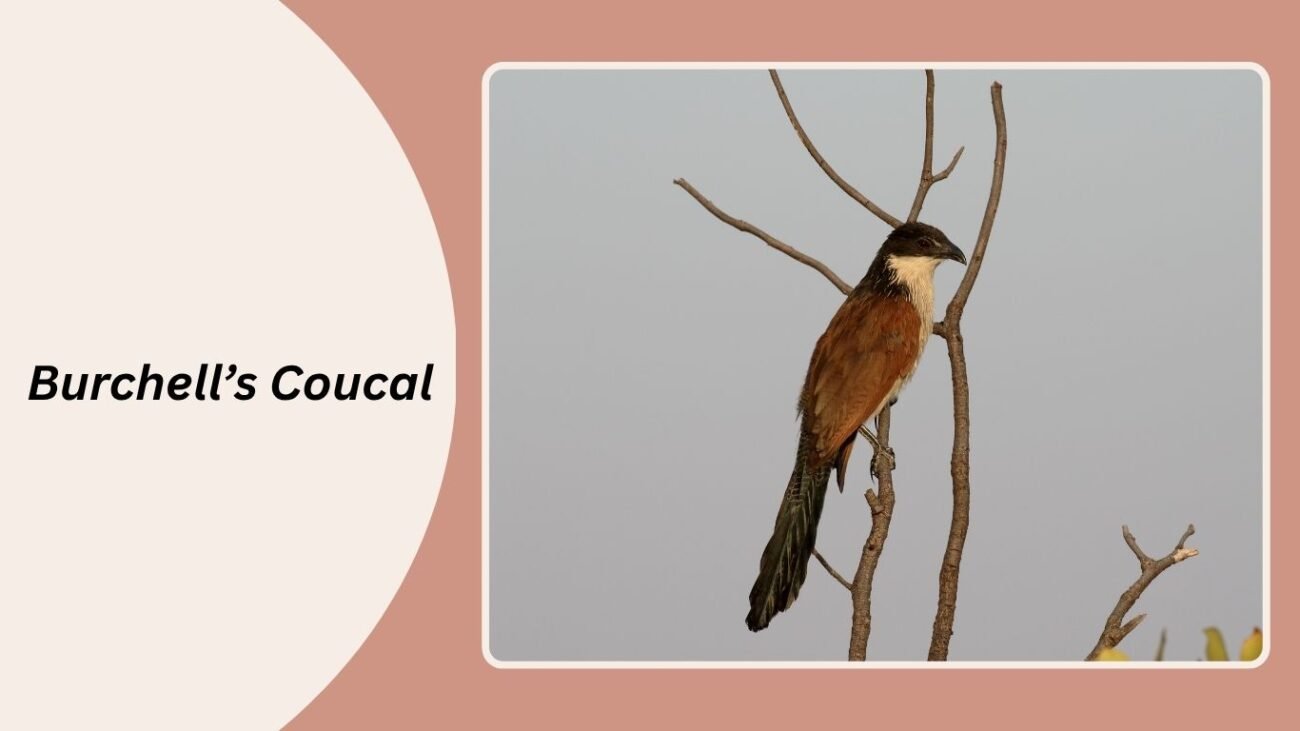
The Burchell’s Coucal is a southern African species with rich coloration and a deep, mournful call. It is sometimes considered a subspecies of the White-browed Coucal but is often treated separately due to regional variation.
Identification
- Length: about 40–43 cm
- Dark brown to black head and upper back
- Rich chestnut wings
- Creamy buff underparts
- Dark greenish tail with white tips
- Red eyes and heavy bill
- Less distinct eyebrow compared to White-browed Coucal
Behavior
Predatory in nature, feeding on insects, small birds, frogs, and lizards. Nests are hidden deep in thorny bushes. It is slow-moving and avoids flying unless disturbed.
Habitat
Found in dense scrub, thornveld, riparian bush, and reedbeds in southern Africa. Avoids very open or forested areas.
Vocalization
Famous for its haunting “boo-boo-boo” call, often likened to a soft, bubbling laughter. Calls are typically given at dawn or after rainfall.
14. Chestnut-winged Cuckoo (Clamator coromandus)
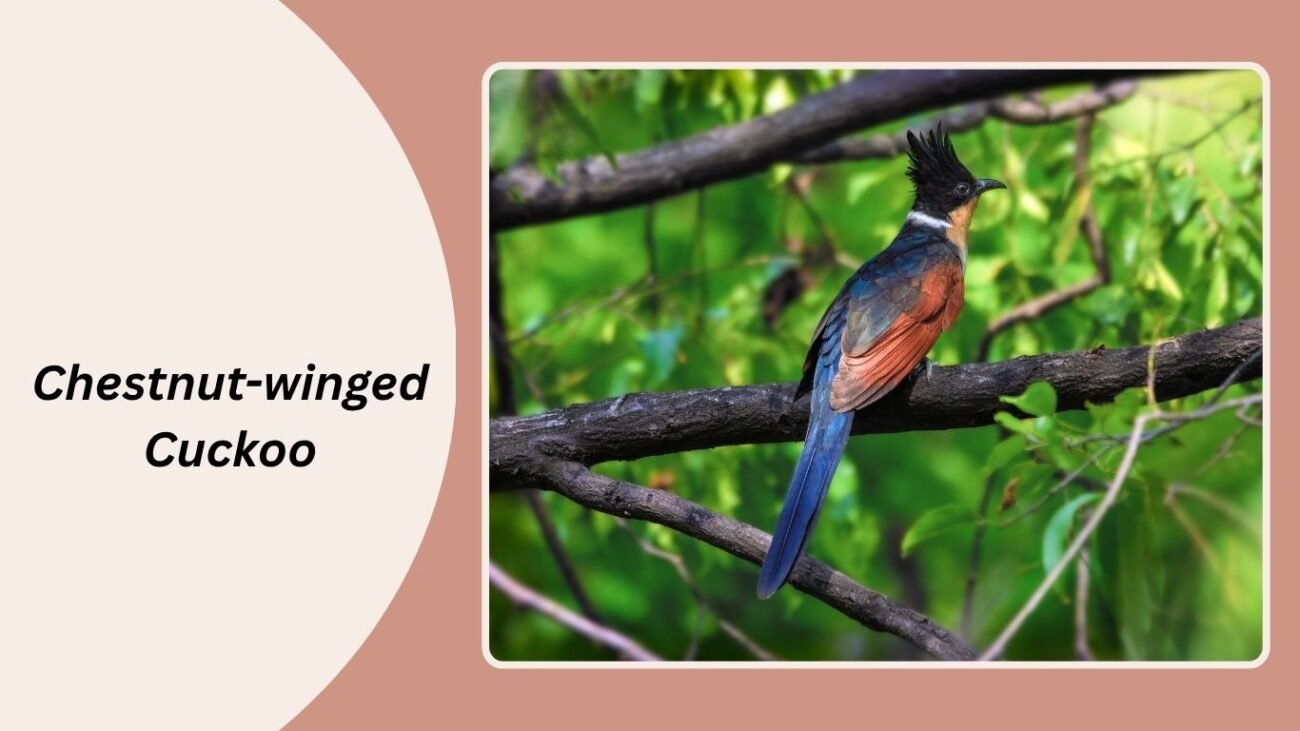
The Chestnut-winged Cuckoo is a striking and vocal species found in the Indian Subcontinent and Southeast Asia. It’s most easily recognized by its long crest and bold chestnut wings.
Identification
- Body length: 43–47 cm
- Blackish head with a long, backward-pointing crest
- Bright chestnut wings
- Glossy bluish-black back and upperparts
- White underparts and tail tips
- Slender black bill and red eyes
Behavior
A brood parasite that primarily targets babbler species for laying eggs. Migratory in northern parts of its range, often arriving just before the monsoon.
Habitat
Frequents open forests, forest edges, wooded valleys, and orchards. Seen perched high on branches or gliding between trees.
Vocalization
A piercing, whistling “pee-pee-yooo” call, often repeated in short bursts. Most vocal during breeding season and early mornings.
15. Pied Cuckoo / Jacobin Cuckoo (Clamator jacobinus)
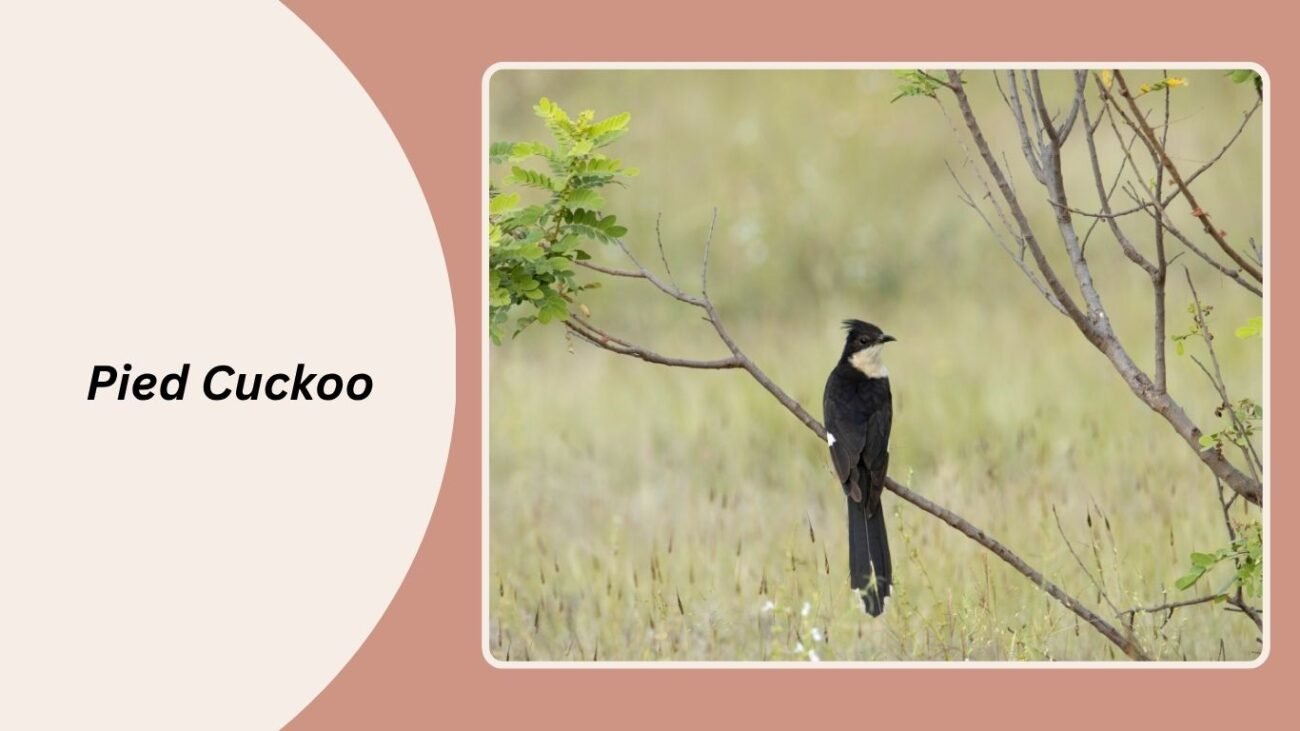
The Pied Cuckoo, also known as the Jacobin Cuckoo, is revered in Indian culture as a harbinger of the monsoon. Its distinct black-and-white plumage and loud call make it easily recognizable.
Identification
- Length: about 31–33 cm
- Black head, back, and wings
- White belly, rump, and wing patches
- Long tail with white tips
- Slightly crested appearance
- Red eyes and medium-length bill
Behavior
A brood parasite that mainly uses babblers and crows as host species. It arrives in India just before the monsoon and is active during this season.
Habitat
Inhabits open woodlands, farmlands, scrublands, and gardens. Prefers areas with scattered trees and low vegetation.
Vocalization
A repeated, sharp “pee-piu” or “wheet-wheet” call, often loud and far-carrying. The call is associated with the approach of rain in traditional Indian folklore.
16. Great Spotted Cuckoo (Clamator glandarius)
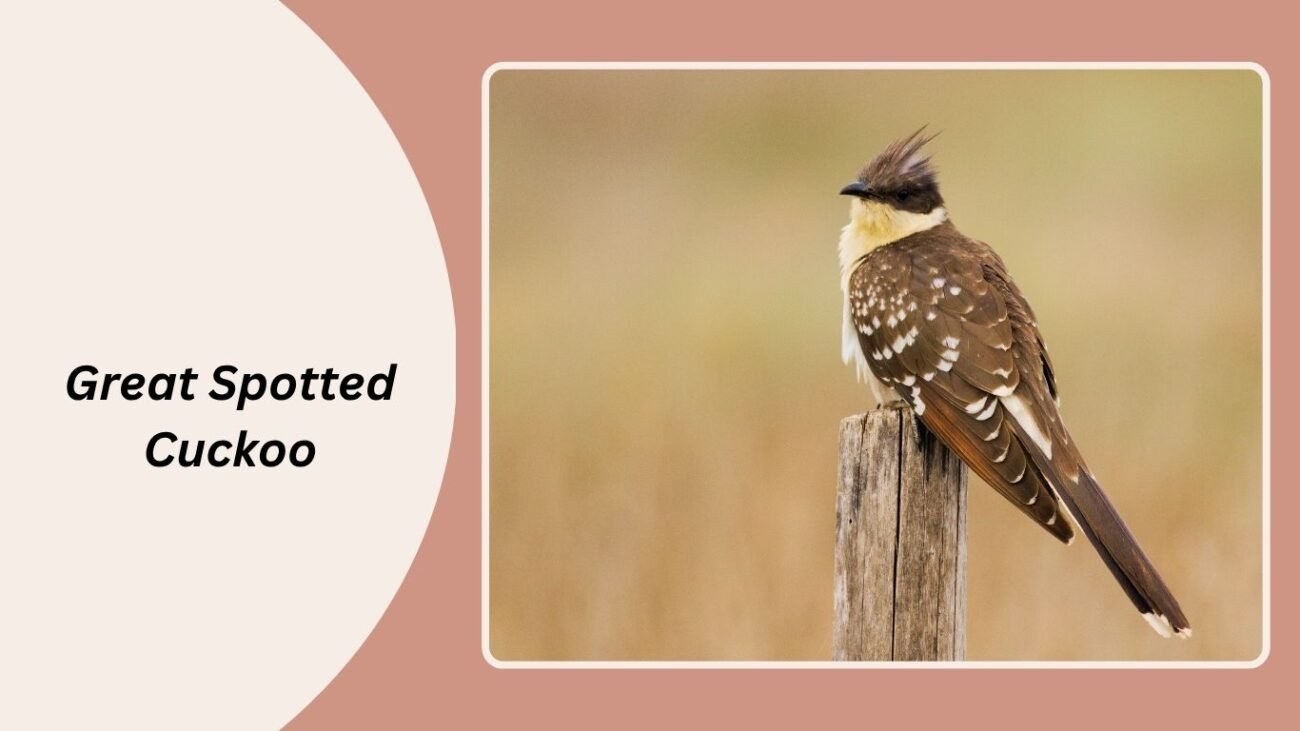
The Great Spotted Cuckoo is a large, elegant cuckoo found across southern Europe, Africa, and parts of the Middle East. It resembles a hawk in flight and is known for parasitizing magpie and crow nests.
Identification
- Length: 35–39 cm
- Grey head with a short crest
- Pale face and throat
- Brownish wings with white spotting
- Buff underparts
- Long graduated tail with white tips
- Yellow eyes and slender curved bill
Behavior
Brood parasite that primarily lays eggs in the nests of magpies, crows, and starlings. Unlike many cuckoos, the chicks do not always eject host chicks and sometimes coexist.
Habitat
Prefers open woodlands, semi-arid scrub, olive groves, and farmland. Often seen perched on telephone wires or flying in a straight glide.
Vocalization
A harsh, rapid “kree-kree-kree” or repeated “churr” calls. Males call more actively during the breeding season to attract mates.
17. Indian Cuckoo (Cuculus micropterus)
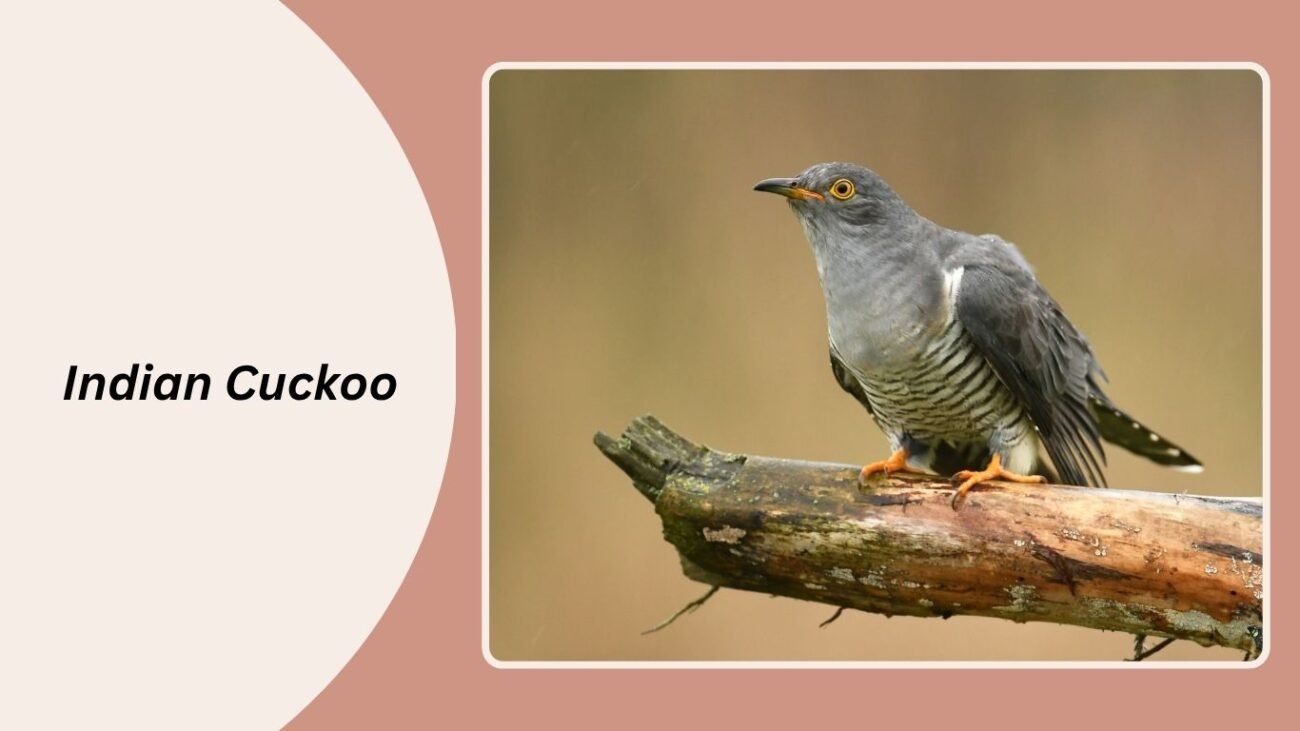
The Indian Cuckoo is widely distributed across South and Southeast Asia. It is shy and secretive, but its haunting call makes it easy to identify even when not seen.
Identification
- Medium size: about 32–34 cm
- Grey head, back, and wings
- Whitish underparts with strong horizontal black barring
- Yellow eye-ring and legs
- Long, rounded tail with white spots
- Resembles the Common Cuckoo but slightly darker
Behavior
A brood parasite that prefers nests of drongos, crows, and babblers. Females lay eggs mimicking host coloration. The young eject host eggs or chicks soon after hatching.
Habitat
Found in open forests, wooded hillsides, plantations, and village groves. Often hides in the upper canopy but may descend during feeding.
Vocalization
Famous for its loud, flute-like “boo-koo… boo-koo” call. The call is rhythmic and often repeated persistently throughout the day.
18. Himalayan Cuckoo (Cuculus saturatus)
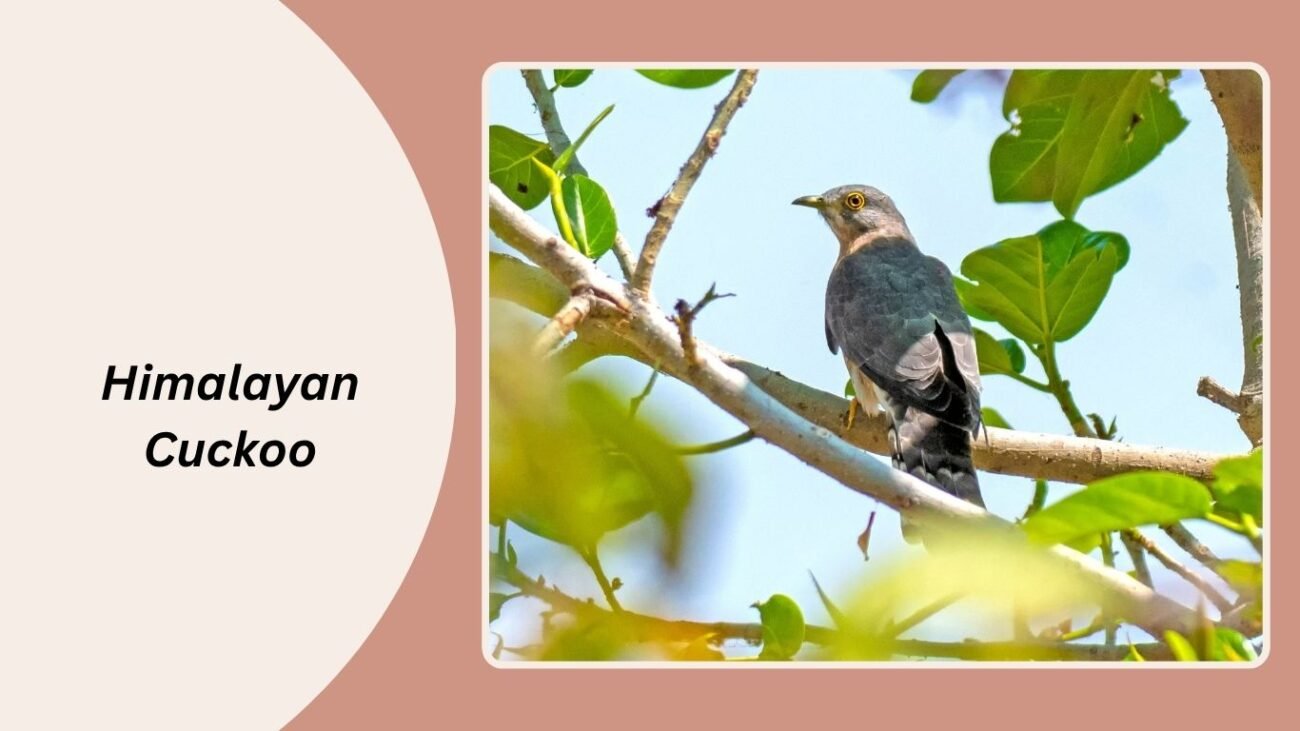
The Himalayan Cuckoo is a highland cousin of the Common Cuckoo, found in the Himalayas and nearby regions. It is migratory and often confused with other Cuculus species due to its similar appearance.
Identification
- Size: about 30–32 cm
- Slate-grey upperparts
- White underparts with fine black horizontal barring
- Yellow legs and eye-ring
- Long barred tail with white tips
- Slightly bulkier than Common Cuckoo
Behavior
Brood parasite, mainly targeting warblers and flycatchers. Known to lay eggs in sync with the host’s breeding cycle. The chick ejects the host’s eggs or young shortly after hatching.
Habitat
Breeds in temperate forests and hillsides, especially above 1500 meters. In winter, it migrates to lowland forests and open woodlands in Southeast Asia.
Vocalization
Distinctive two-note whistle: a fast “poo-poo” followed by a slower “pooo.” The call is softer and lower-pitched than that of the Common Cuckoo.
19. Lesser Cuckoo (Cuculus poliocephalus)
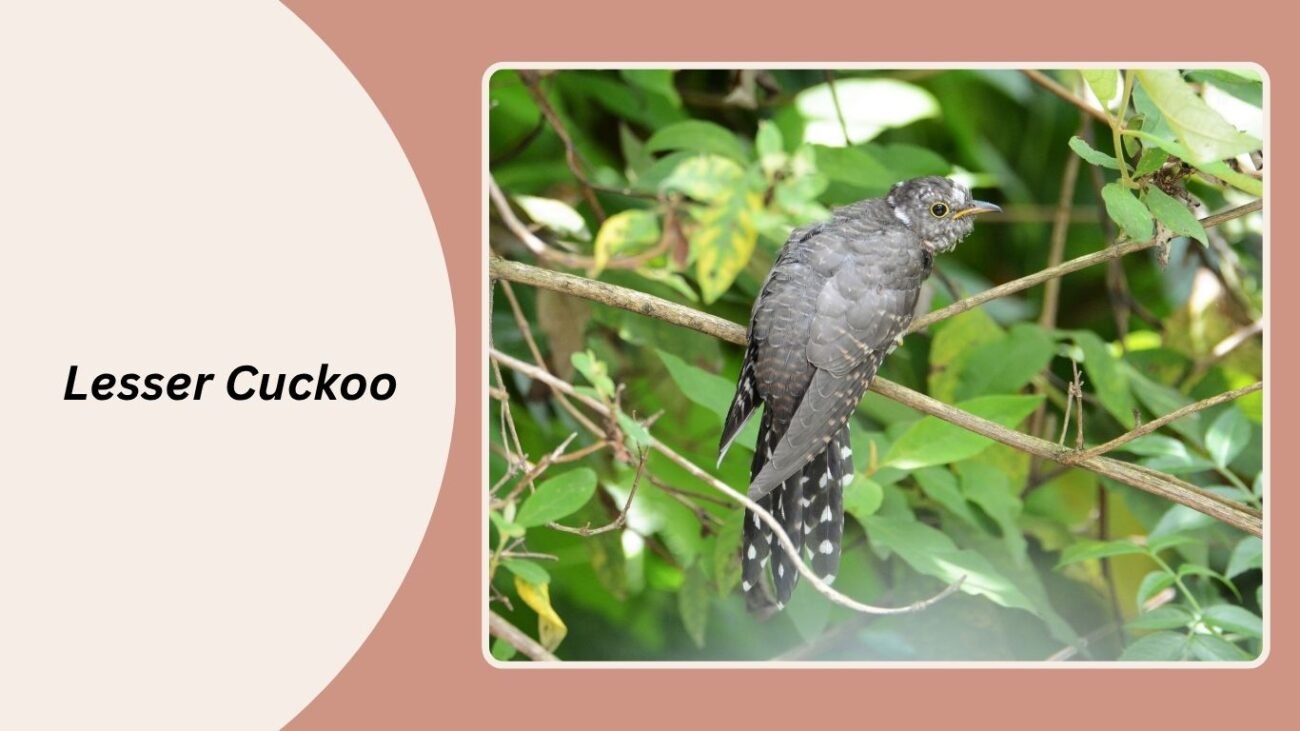
The Lesser Cuckoo is a smaller, fast-flying cuckoo species spread across Asia, especially from the Indian subcontinent to Japan. Its arrival in Japan is celebrated in classical poetry.
Identification
- Size: 27–29 cm
- Dark grey upperparts
- Pale underparts with neat black barring
- Long, narrow tail with white markings
- Slender yellow legs and feet
- Smaller and darker than the Common Cuckoo
Behavior
Brood parasite that mainly targets small birds like prinias and warblers. Rarely seen out in the open—more often heard during its breeding migration.
Habitat
Found in forest edges, bamboo groves, mountain valleys, and wooded gardens. Often stays high in the canopy or dense thickets.
Vocalization
A sweet, clear, and melodic “kyo-kyo-kyo” or “pee-pee-pee,” especially during summer breeding months. The call is repetitive and often heard at dusk or dawn.
20. Square-tailed Drongo-Cuckoo (Surniculus lugubris)
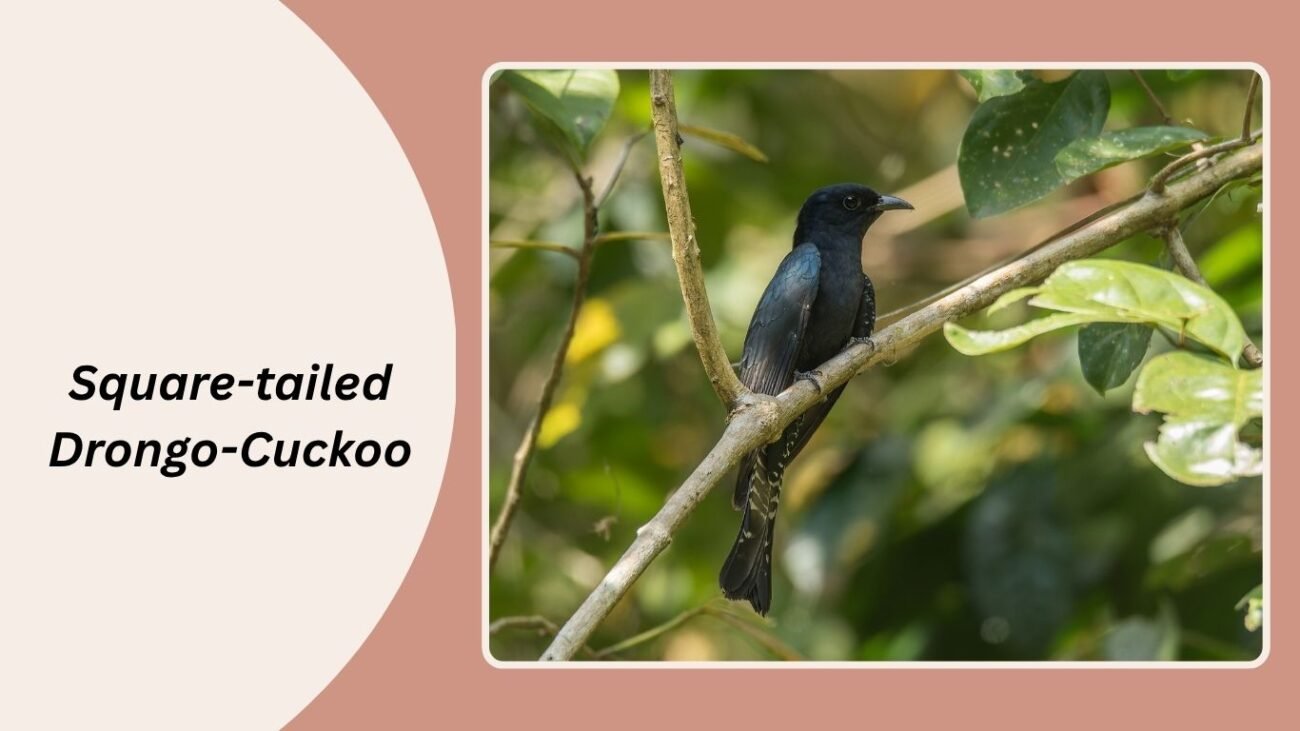
The Square-tailed Drongo-Cuckoo is a small, glossy black cuckoo that closely resembles a drongo, aiding its ability to blend in and parasitize hosts unnoticed.
Identification
- Size: around 23–25 cm
- Shiny black plumage with bluish gloss
- Red eyes and a slightly curved black bill
- Square-shaped tail with faint white edging
- Lacks the forked tail seen in true drongos
Behavior
Brood parasite, typically laying eggs in nests of small insectivorous birds like fantails and warblers. It mimics drongo behavior to avoid suspicion.
Habitat
Inhabits tropical and subtropical forests, forest edges, and dense secondary growth across South and Southeast Asia.
Vocalization
Produces a high-pitched, rising “whee-ooo” or “chee-wee.” Calls are usually brief and soft compared to other cuckoos.
21. Fork-tailed Drongo-Cuckoo (Surniculus dicruroides)
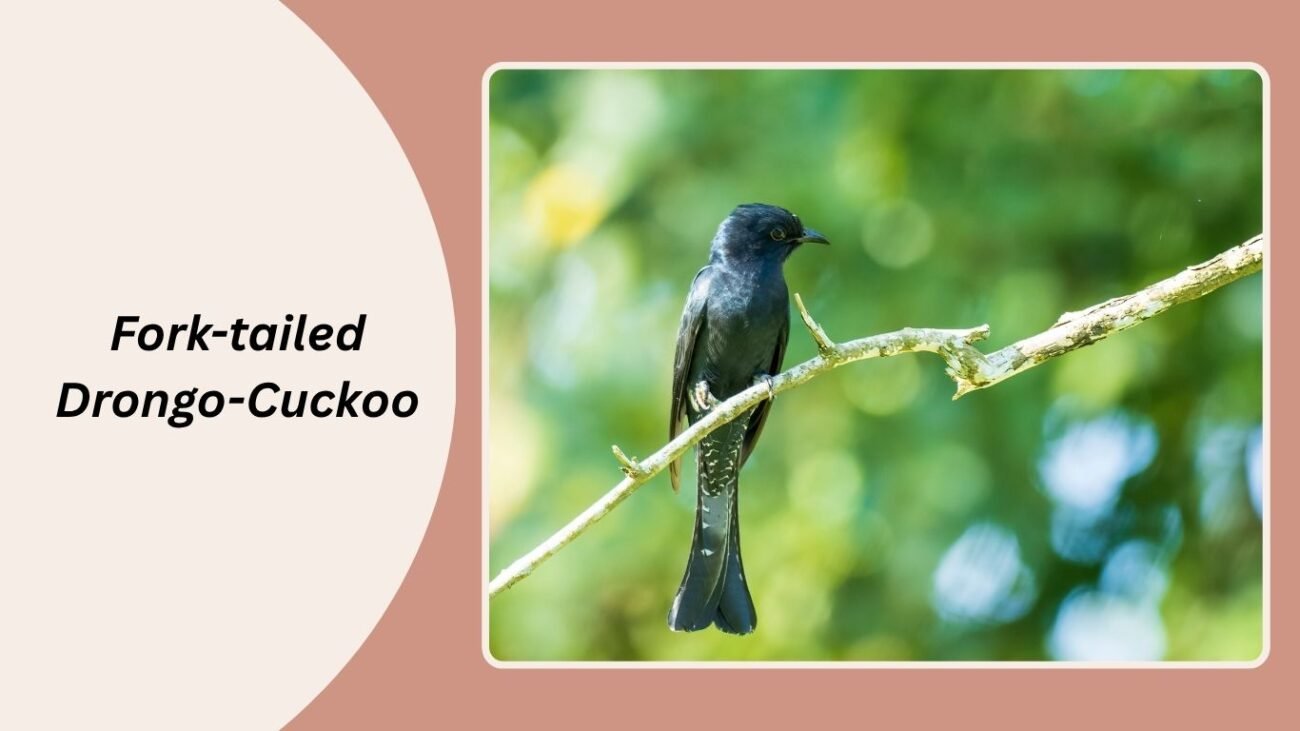
The Fork-tailed Drongo-Cuckoo is another drongo-like cuckoo species found in the Indian Subcontinent and Southeast Asia. It is slightly larger and more vocal than the square-tailed species.
Identification
- Length: 25–27 cm
- Entirely glossy black with a slight blue sheen
- Forked tail resembling a true drongo
- Red eyes and black legs
- Slender body with pointed wings
Behavior
Also a brood parasite, often laying eggs in nests of ioras, fantails, or warblers. Its mimicry of drongo behavior and appearance helps it access host nests undetected.
Habitat
Found in open forests, wooded gardens, and well-vegetated rural areas. Often seen perched motionless or flying with drongo-like agility.
Vocalization
Loud and varied “wheee-chik-chik” or “wheeu-wheeu,” sometimes mimicking other birds. More vocal and diverse in call than the Square-tailed Drongo-Cuckoo.
22. Banded Bay Cuckoo (Cacomantis sonneratii)
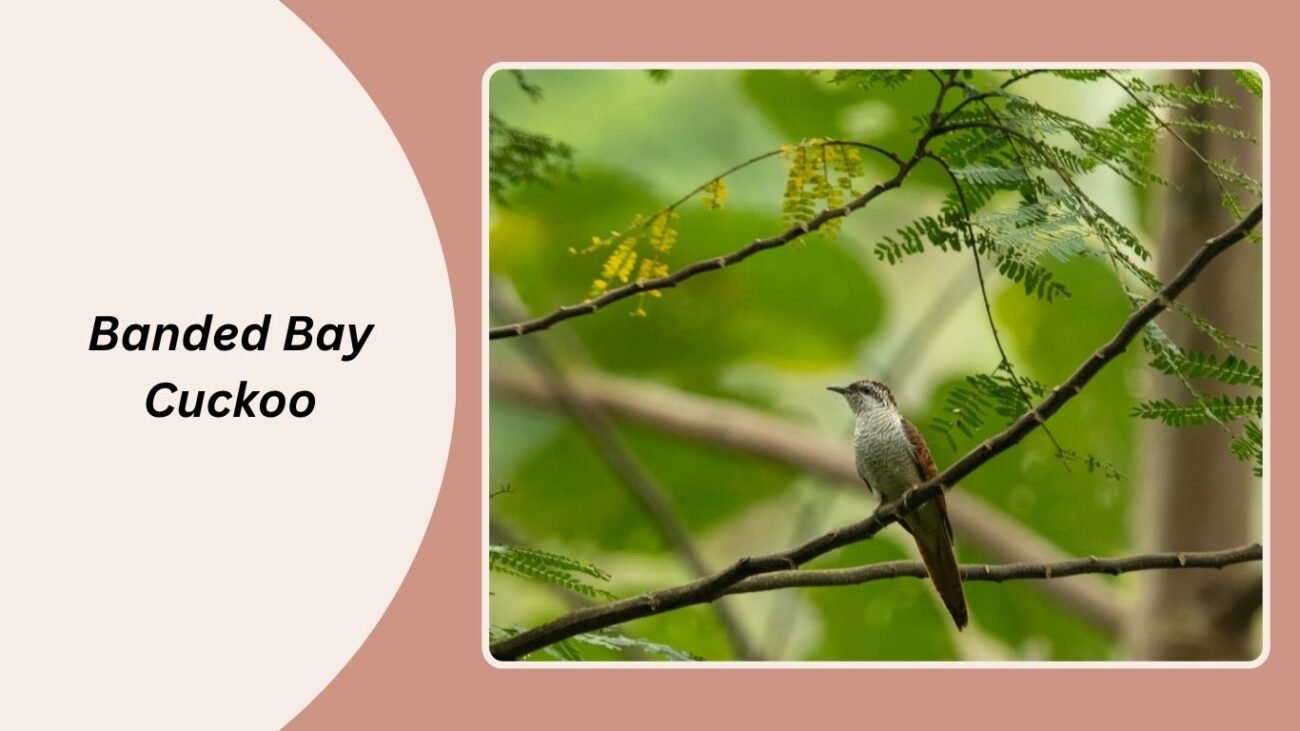
The Banded Bay Cuckoo is a small, beautifully marked cuckoo native to South and Southeast Asia. It is known for its soft, persistent calls and hidden lifestyle.
Identification
- Size: 22–24 cm
- Rich rufous-brown upperparts
- Underparts are pale with fine chestnut barring
- Long, rounded tail with white tips and barring
- Yellow eye-ring and slender black bill
Behavior
A brood parasite that often targets warblers, babblers, and prinias. Moves quietly through foliage and is more often heard than seen.
Habitat
Prefers scrub forests, bamboo thickets, plantations, and wooded gardens. Usually found at mid-canopy level.
Vocalization
Mournful, repeated “pee-pip-pee-pee” or “toot-too-too” call, often sounding flute-like. Most vocal during breeding months and before rainfall.
23. Plaintive Cuckoo (Cacomantis merulinus)
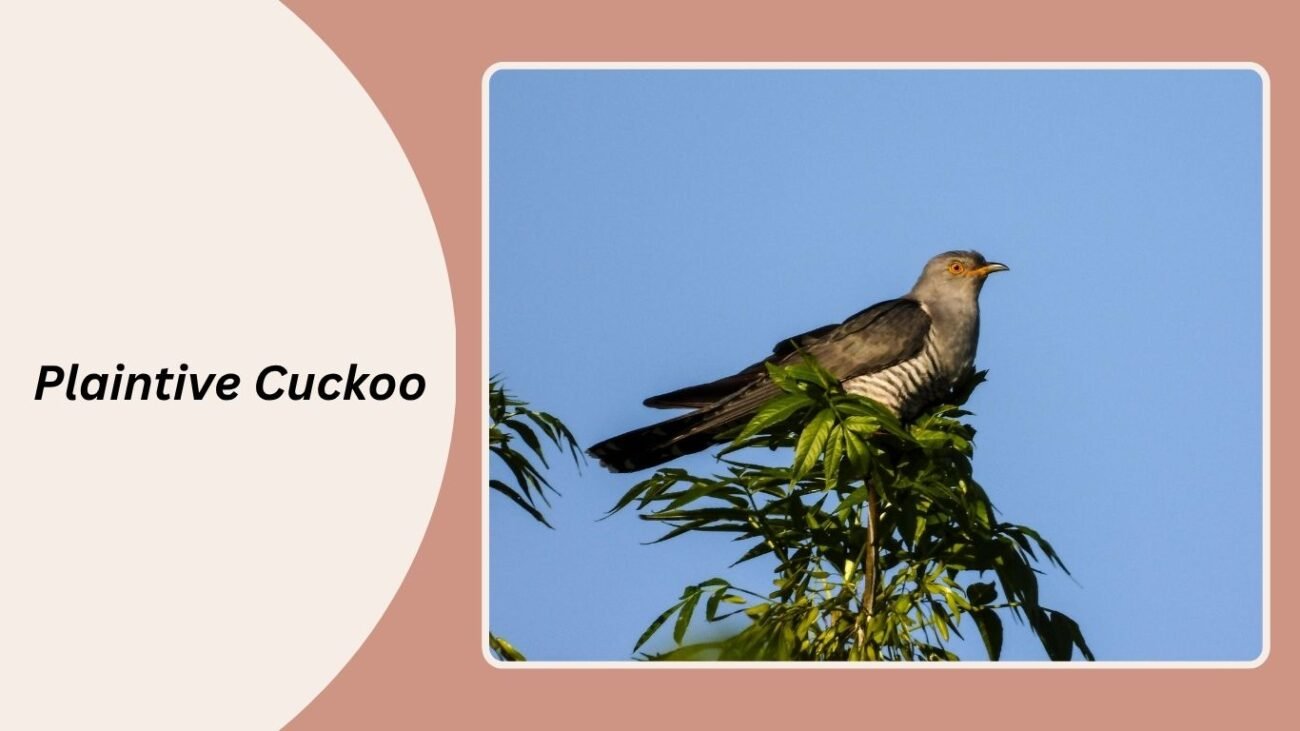
The Plaintive Cuckoo is a slender and vocal species widespread in Asia. It’s frequently found in urban and suburban areas and is easily recognized by its repeated high-pitched calls.
Identification
- Size: about 21–23 cm
- Males: Greyish head, rufous underparts, and olive-brown wings
- Females: Brown above with barred underparts and a whitish belly
- Long tail with white spots underneath
- Bright yellow eye-ring and legs
Behavior
Brood parasite, often targeting tailorbirds, prinias, and cisticolas. It lays its egg quickly and exits without disturbing the nest structure.
Habitat
Common in open woodlands, gardens, parks, and paddy fields. Well-adapted to semi-urban landscapes.
Vocalization
High-pitched, repetitive “whee-whee-whee” or “plee-plee-plee,” giving the bird its name. Vocal all year but most frequent during breeding seasons.
24. Rusty-breasted Cuckoo (Cacomantis sepulcralis)
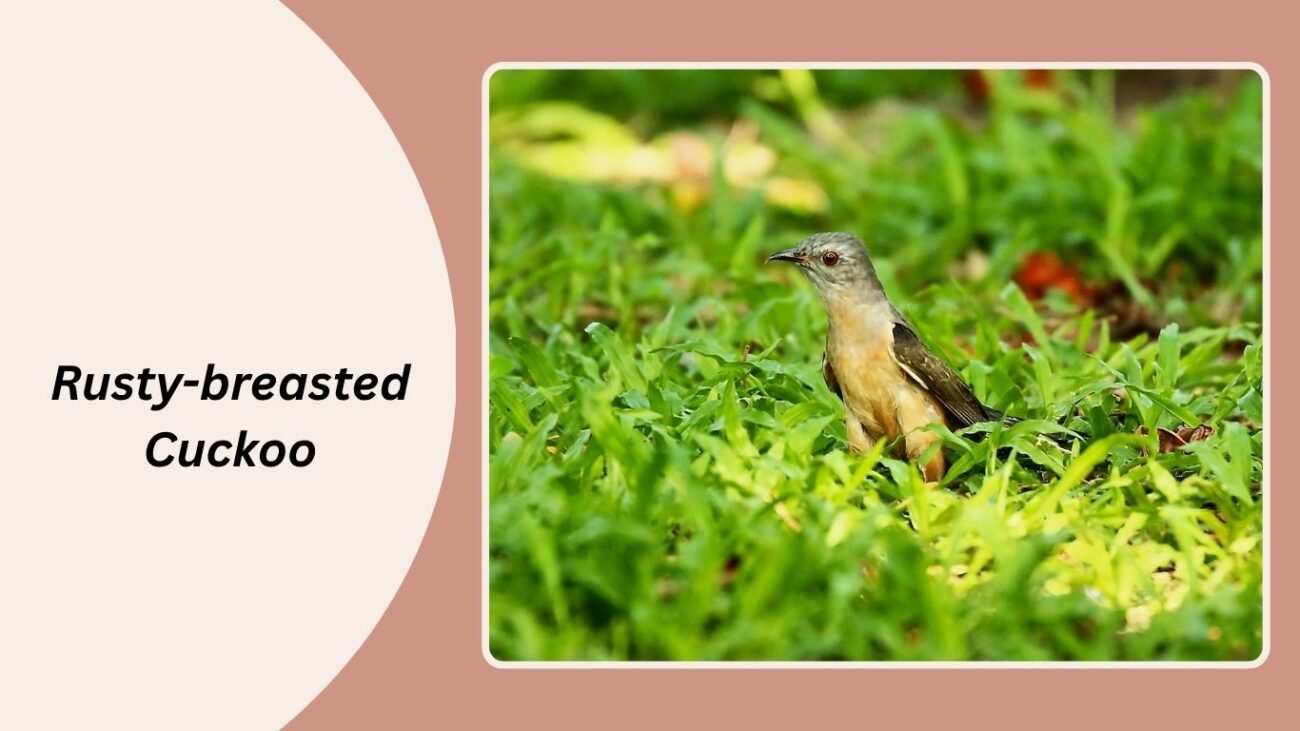
The Rusty-breasted Cuckoo is a small, secretive bird found in Southeast Asia. It closely resembles the Plaintive Cuckoo and was once considered a subspecies of it.
Identification
- Length: 20–22 cm
- Males: Grey head and upperparts, rusty-orange breast and flanks
- Females: Browner overall with barred underparts
- Long tail with white spots on the underside
- Yellow eye-ring and feet
Behavior
A brood parasite, commonly laying eggs in nests of tailorbirds, warblers, and prinias. It stays hidden in thick foliage and flies with quick, darting movements.
Habitat
Found in mangroves, forest edges, secondary forests, gardens, and plantations. Often close to water and lowland habitats.
Vocalization
A thin, high-pitched “whee-whee-whee” or “swee-swee-swee,” usually delivered in rapid, repeating phrases. Similar to the Plaintive Cuckoo but slightly softer.
25. Fan-tailed Cuckoo (Cacomantis flabelliformis)
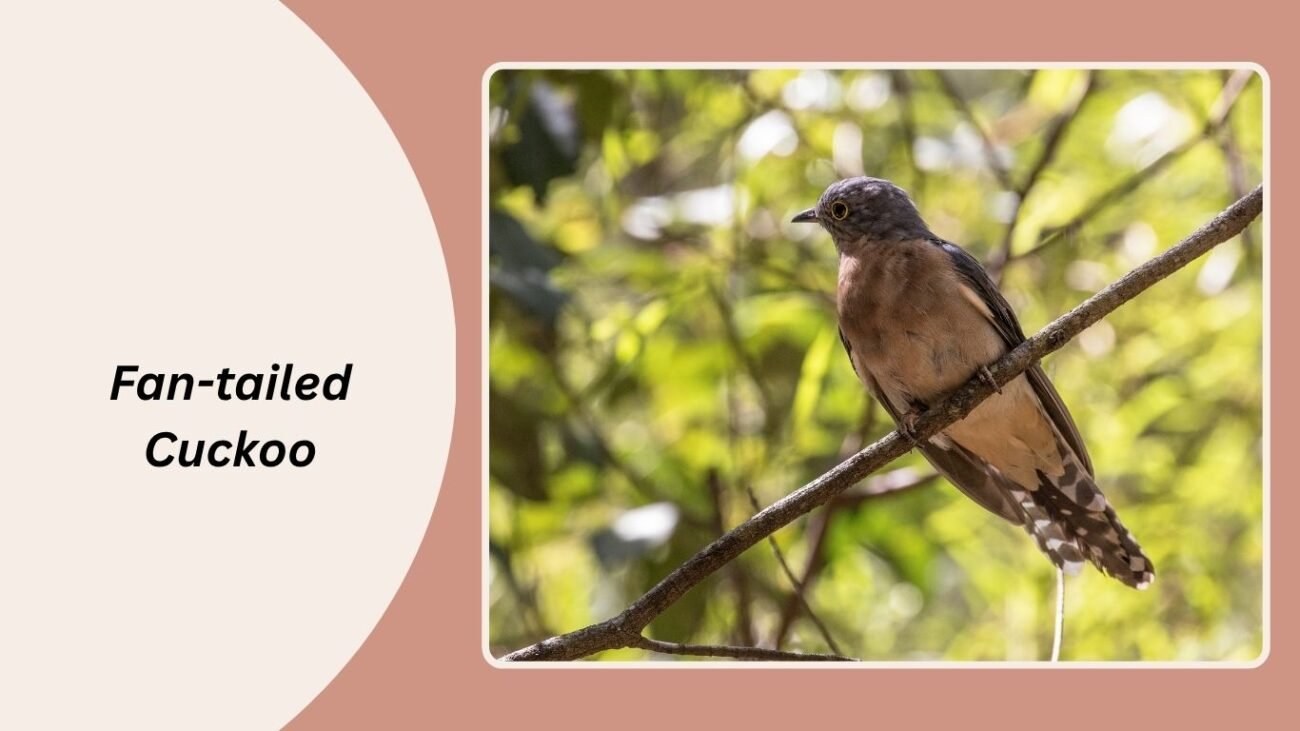
The Fan-tailed Cuckoo is a sleek, insect-eating cuckoo native to Australia and nearby islands. It is recognized for its bright eye-ring and fanned tail.
Identification
- Length: 25–27 cm
- Slate-grey head and back
- Bright yellow eye-ring
- Rufous breast and pale belly
- Long, rounded tail with bold white tips
- Slightly curved bill
Behavior
Brood parasite, laying eggs in nests of thornbills and fairy-wrens. Often perches silently before swooping to catch caterpillars or insects from leaves.
Habitat
Found in rainforests, eucalyptus woodlands, farmlands, and mountain ranges. Adapts well to different elevations.
Vocalization
A descending, whistling “pee-pew-pew-pew” sound, often repeated slowly. Calls year-round but increases during the breeding season.
26. Brush Cuckoo (Cacomantis variolosus)
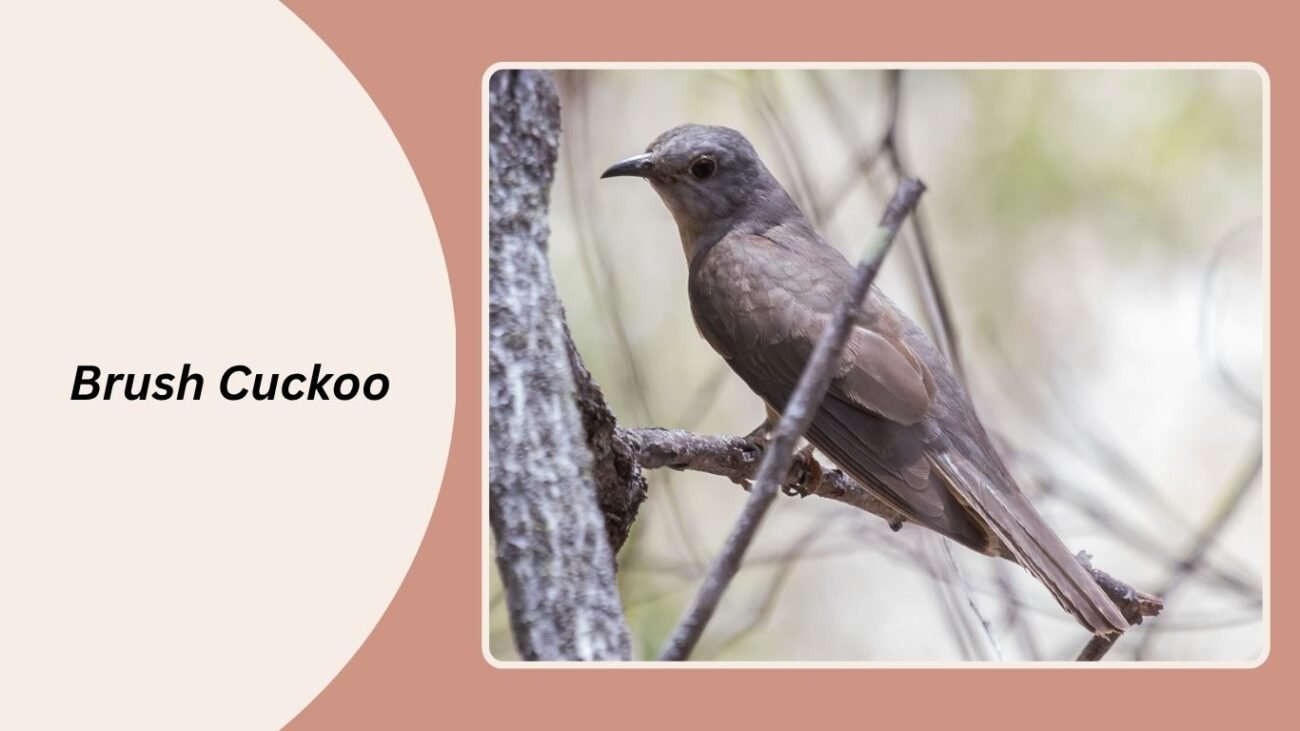
The Brush Cuckoo is a slender, secretive bird found in Australia, New Guinea, and parts of Southeast Asia. It varies slightly in appearance across its wide range, with several recognized subspecies.
Identification
- Length: 23–25 cm
- Grey-brown upperparts
- Pale underparts with faint barring on the breast
- Yellow eye-ring and legs
- Tail is long with white spots underneath
- Slender build and slightly curved bill
Behavior
A brood parasite that targets a variety of small birds such as fairy-wrens and thornbills. Very elusive and usually seen only in quick flight or brief perching.
Habitat
Lives in rainforests, mangroves, woodlands, and dense scrub. Commonly found in both coastal and inland areas.
Vocalization
High-pitched and repetitive “weet-weet-weet” or “pee-pit-pee-pit,” often echoing in thick forest. Calls mostly during the breeding season.
27. Horsfield’s Bronze Cuckoo (Chrysococcyx basalis)
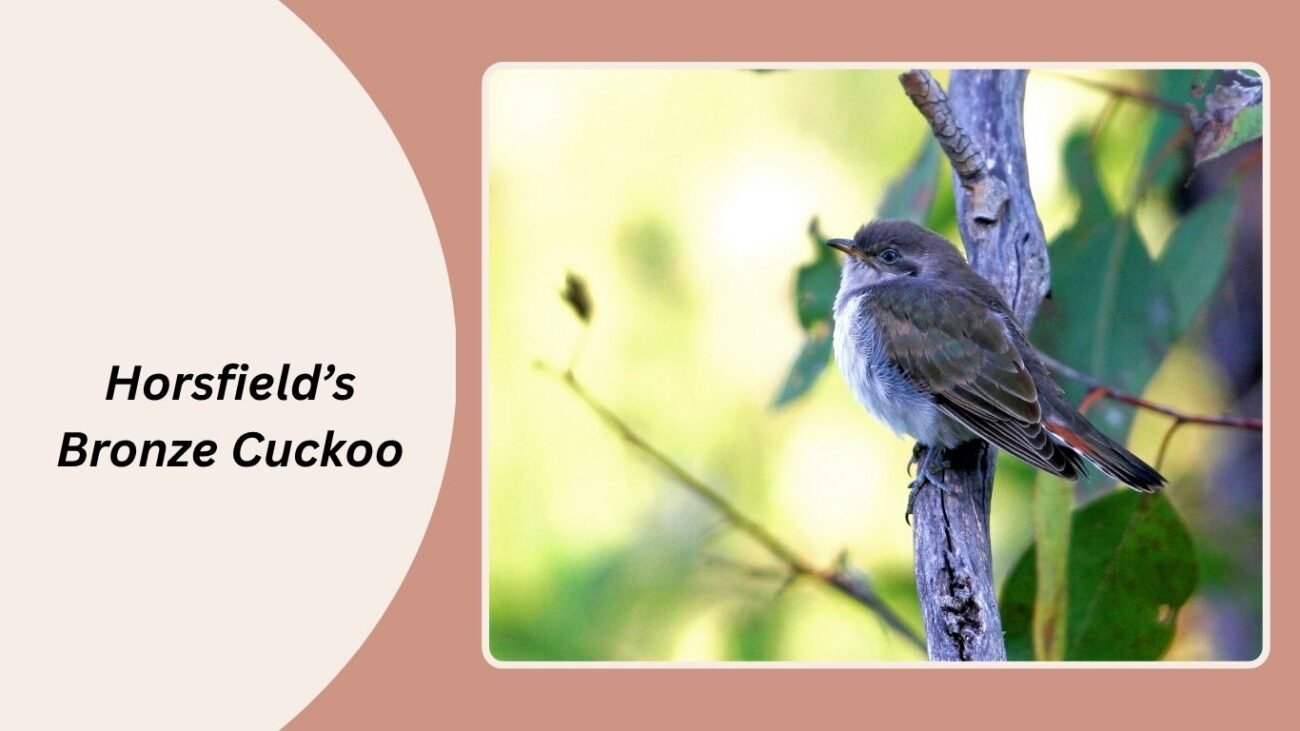
The Horsfield’s Bronze Cuckoo is a tiny, metallic-green cuckoo known for its fast flight and piercing calls. It is widespread in Australia and parts of Indonesia and Timor.
Identification
- Size: 16–18 cm (very small)
- Shiny bronze-green upperparts
- Pale underparts with bold dark barring
- Red eyes and dark slender bill
- Short tail with white spots underneath
Behavior
Brood parasite that mainly targets fairy-wrens and thornbills. Lays a single egg, often mimicking the color of host eggs. Quick and agile in flight, often moving alone.
Habitat
Found in open forests, heathlands, shrublands, and dry woodlands. Prefers open areas with scattered bushes.
Vocalization
Sharp, high-pitched, metallic “pee-pit-pee-pit” or trilling “tsee-tsee-tsee,” often repeated several times in a row. Loud for its size.
28. Little Bronze Cuckoo (Chrysococcyx minutillus)
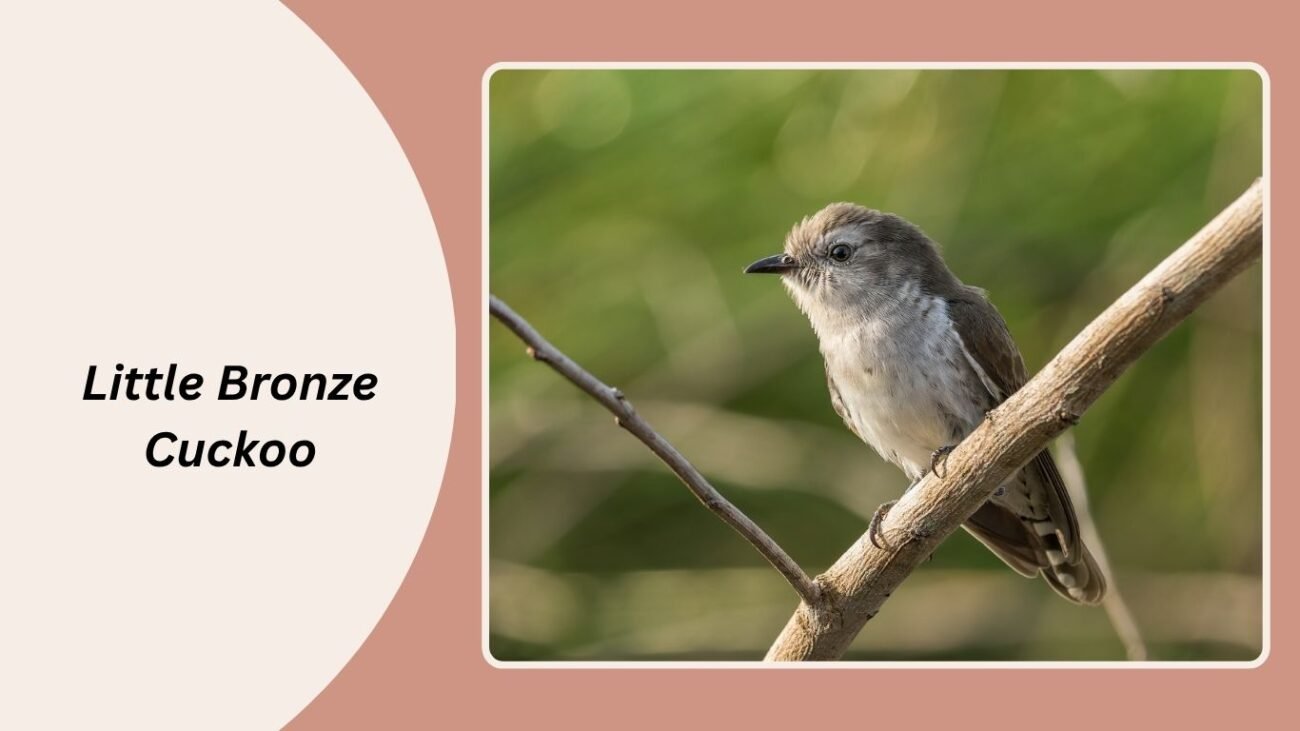
The Little Bronze Cuckoo is the world’s smallest cuckoo species, yet it has a loud, piercing call and brilliant plumage. Found in Southeast Asia, Australia, and New Guinea, it’s often active in the treetops.
Identification
- Size: 15–17 cm (very small)
- Glossy bronze-green upperparts
- Pale underparts with dark barring
- Red eyes with a red eye-ring
- Short tail with white spots beneath
- Male is brighter and glossier than the female
Behavior
A brood parasite that mainly targets gerygones and other small passerines. Frequently flits through branches searching for insects and caterpillars.
Habitat
Inhabits mangroves, rainforests, forest edges, and riverine woodlands. Common in tropical and subtropical lowlands.
Vocalization
A rapid, high-pitched series of “tsip-tsip-tsip” or “tsee-tsee-tsee,” often repeated in bursts. Calls are much louder than expected for its size.
29. Shining Bronze Cuckoo (Chrysococcyx lucidus)
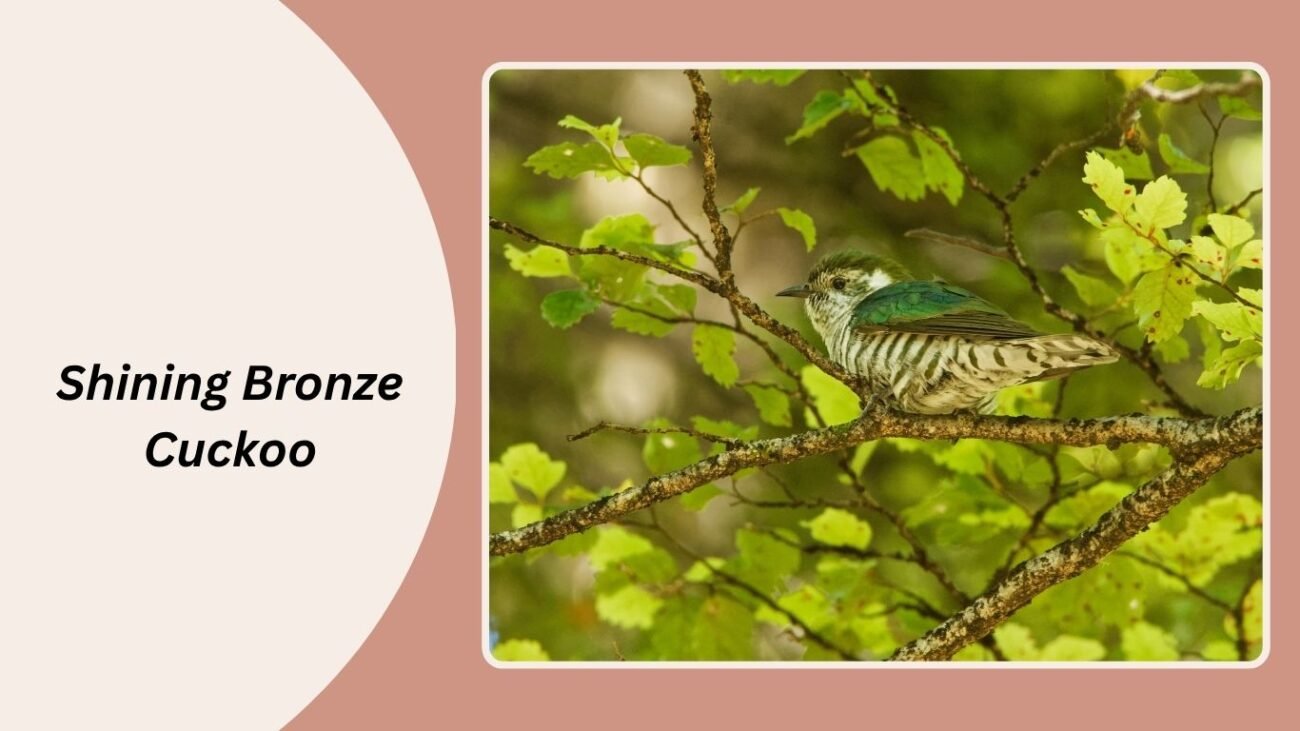
The Shining Bronze Cuckoo is a dazzling metallic-green bird native to New Zealand, Australia, and parts of Southeast Asia. It’s known for its iridescent feathers and seasonal migrations.
Identification
- Size: 16–18 cm
- Iridescent green upperparts that shine in sunlight
- Pale underparts with bold green barring
- Bright yellow eye-ring
- Short, rounded wings and tail
- Females are slightly duller than males
Behavior
Brood parasite, mainly targeting warblers and thornbills. Lays a single egg in the host’s nest, and the chick ejects any other eggs or young.
Habitat
Common in forests, eucalyptus woodlands, and gardens. Migrates between breeding grounds in New Zealand and wintering areas in Australia or Indonesia.
Vocalization
A soft, rising, whistled call: “see-u-see-u-see-u” or a descending “wee-you-wee-you.” Males call more frequently during breeding season.
30. Channel-billed Cuckoo (Scythrops novaehollandiae)
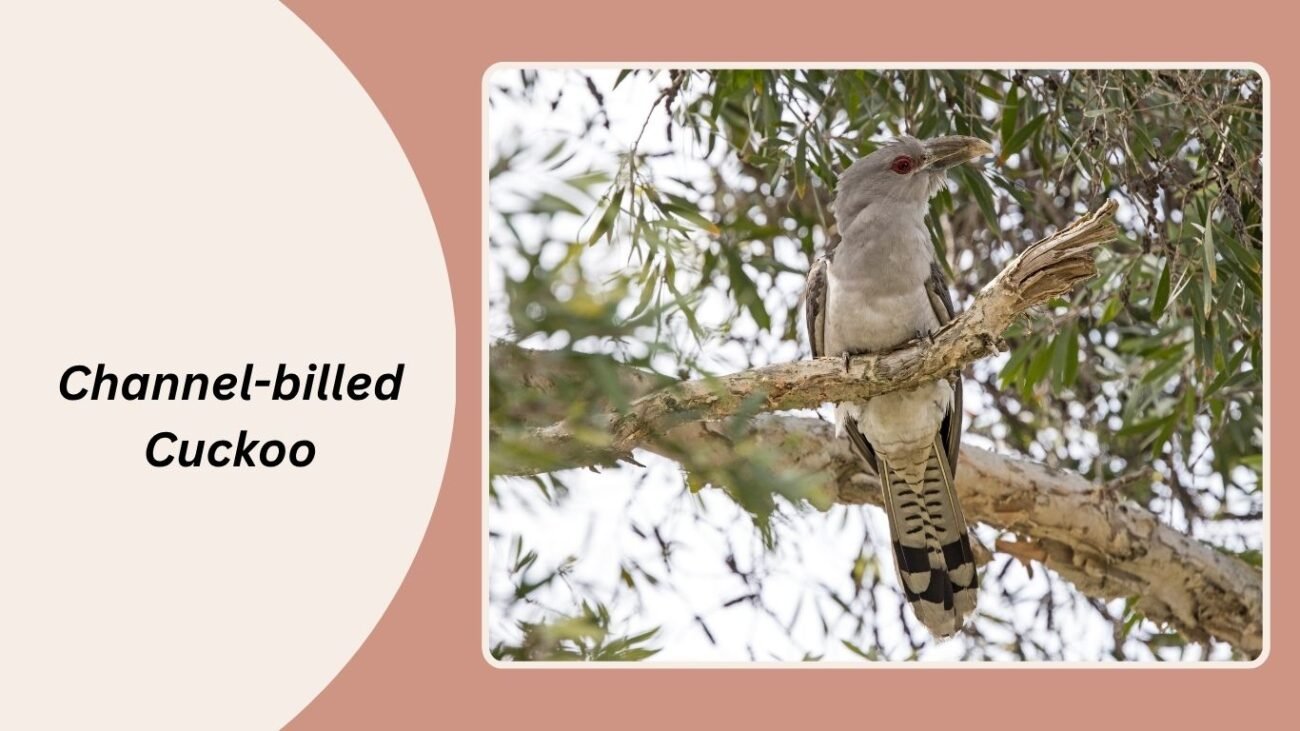
The Channel-billed Cuckoo is the largest parasitic cuckoo in the world, native to Australia, New Guinea, and Indonesia. Its massive bill and raucous call make it highly distinctive.
Identification
- Size: 58–65 cm (very large)
- Pale grey body with darker flight feathers
- Massive, downcurved pale yellow bill
- Red eyes with a bare patch of skin around them
- Long, barred tail
- Juveniles are browner with streaked underparts
Behavior
A brood parasite that typically lays its eggs in the nests of crows and currawongs. Despite its size, it relies on stealth and speed during egg-laying.
Habitat
Open woodlands, farmlands, parks, and urban areas with large trees. Migrates seasonally, especially to eastern Australia during the summer.
Vocalization
Harsh, screeching “kraa-awk” or gurgling “gaa-gaa-gaa,” often heard at night or early morning. One of the loudest and most jarring calls among cuckoos.
31. Long-tailed Cuckoo (Urodynamis taitensis)
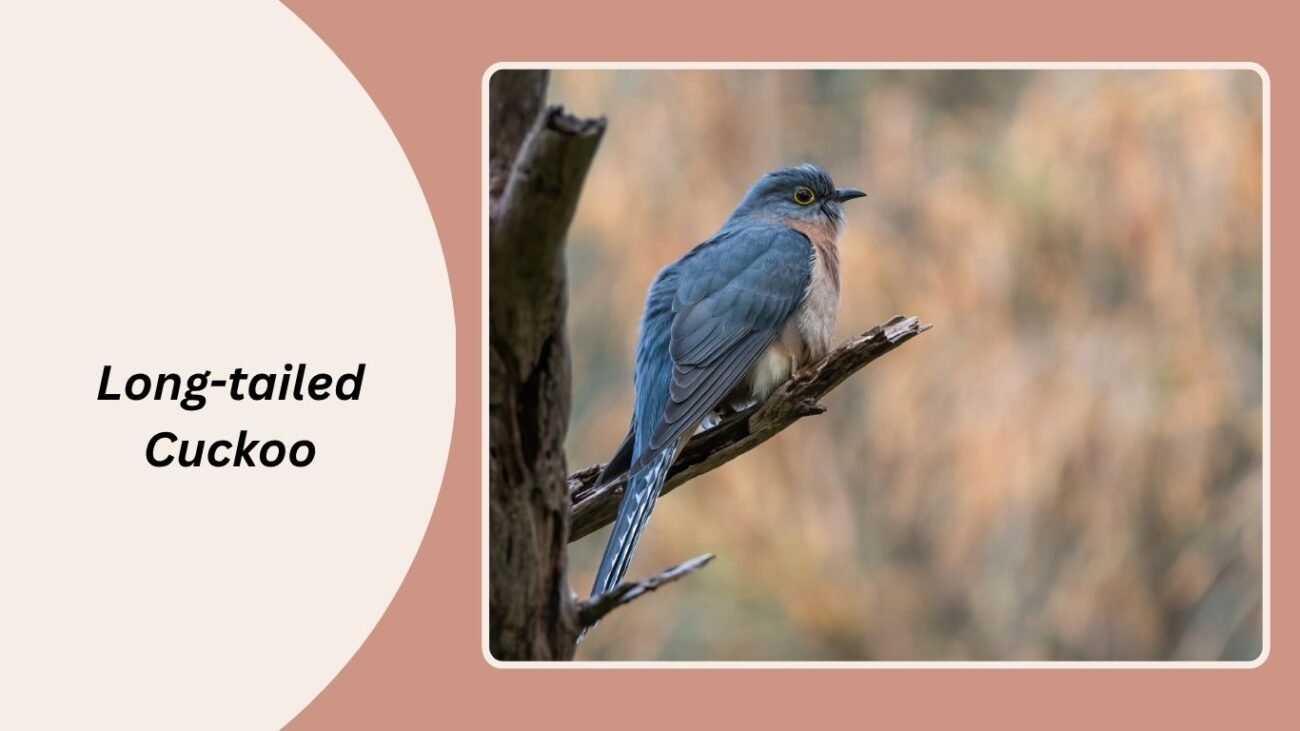
The Long-tailed Cuckoo is a migratory bird endemic to New Zealand for breeding, spending the rest of the year across Pacific islands. It’s elusive but noisy during the breeding season.
Identification
- Size: 39–42 cm including the long tail
- Brownish upperparts with streaks
- Pale underparts with dark longitudinal streaks
- Long tail with white tips and faint barring
- Slender curved bill and red eyes
Behavior
Brood parasite, laying eggs in the nests of whiteheads, yellowheads, and other native New Zealand birds. Very secretive and rarely seen outside of brief flight displays.
Habitat
Breeds in dense native forests in New Zealand. Winters in tropical forests on Pacific islands such as Fiji, Tonga, and Samoa.
Vocalization
Loud, high-pitched, descending whistle: “skeeow” or “weeah,” often repeated in long sequences. Most active at dawn and dusk during breeding months.
32. Large Hawk-Cuckoo (Hierococcyx sparverioides)
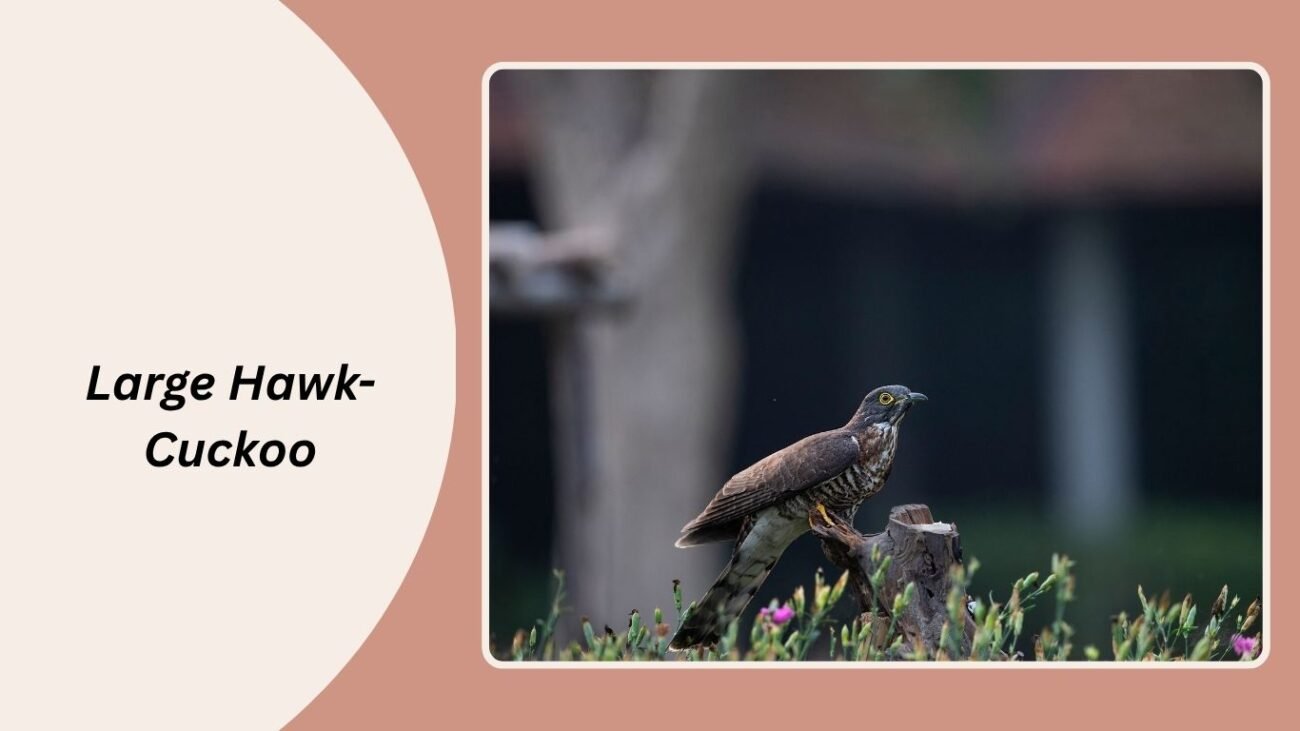
The Large Hawk-Cuckoo is a striking cuckoo species that mimics the appearance and flight of hawks, helping it evade detection while laying eggs. It is commonly found in the Himalayas and surrounding regions.
Identification
- Size: 38–42 cm
- Grey head and upperparts
- Whitish underparts with bold rufous barring
- Long, rounded tail with black and white bars
- Yellow eyes with bare orbital skin
- Flight and silhouette resemble a sparrowhawk
Behavior
Brood parasite, frequently targeting babblers and laughingthrushes. The chick often ejects host offspring shortly after hatching. Adults are stealthy and quick during egg-laying.
Habitat
Hill forests, wooded ravines, and open woodlands, often at elevations between 1000–2500 meters. Prefers cooler, mountainous regions.
Vocalization
Famous for its loud, repetitive call that sounds like “brain-fever… brain-fever… brain-fever!” The phrase is repeated in a rising tone, especially during spring and early summer.
33. Common Hawk-Cuckoo (Hierococcyx varius)
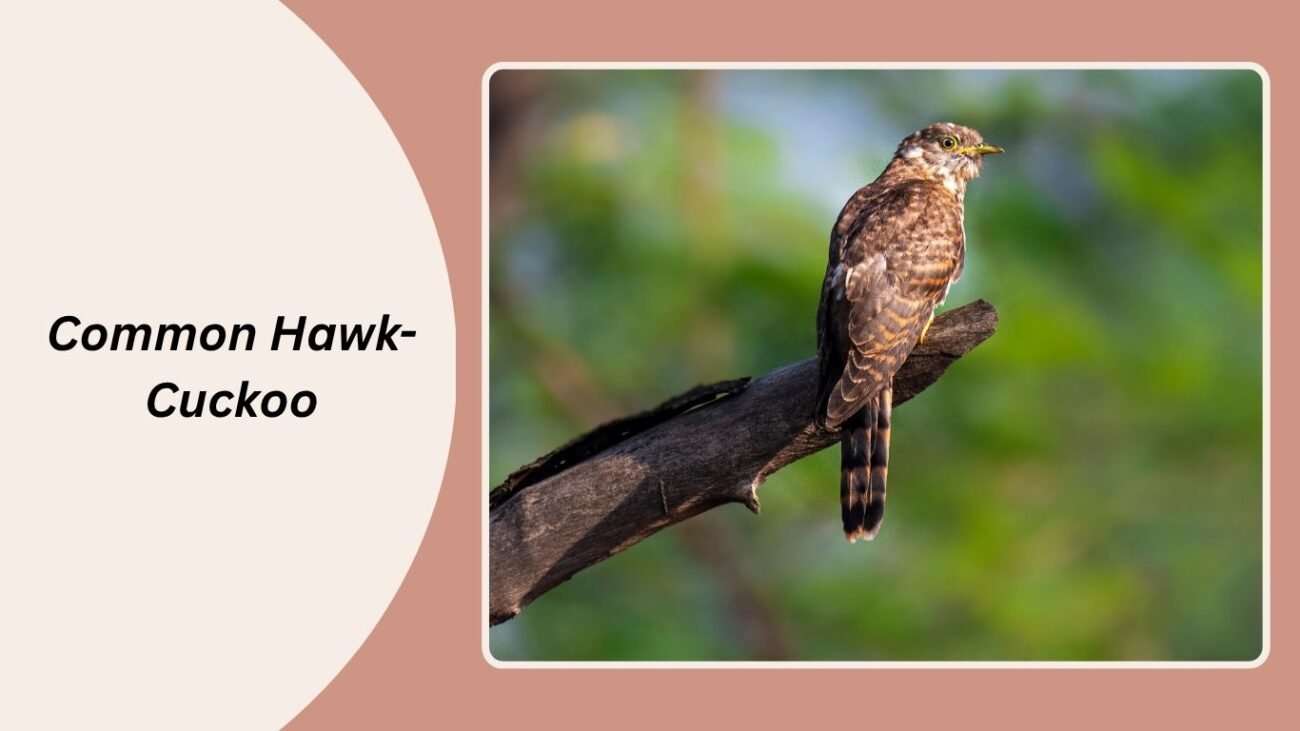
The Common Hawk-Cuckoo, widely known as the Brainfever bird in India, is named after its loud and persistent call. It mimics a hawk in appearance and behavior.
Identification
- Size: about 33–35 cm
- Grey upperparts
- Whitish underparts with strong horizontal brown barring
- Long tail with dark bars and a white tip
- Sharp yellow eyes and legs
- Strong resemblance to the Shikra (a small hawk)
Behavior
A brood parasite that lays eggs in nests of babblers and other small passerines. The chick hatches quickly and often evicts other eggs or nestlings.
Habitat
Found in dry deciduous forests, scrublands, gardens, and cultivated areas across the Indian subcontinent.
Vocalization
Extremely loud, repetitive “brain-fever, brain-fever,” gradually rising in pitch. Heard most commonly in the early morning and late evening during the breeding season.
34. Green-billed Malkoha (Phaenicophaeus tristis)
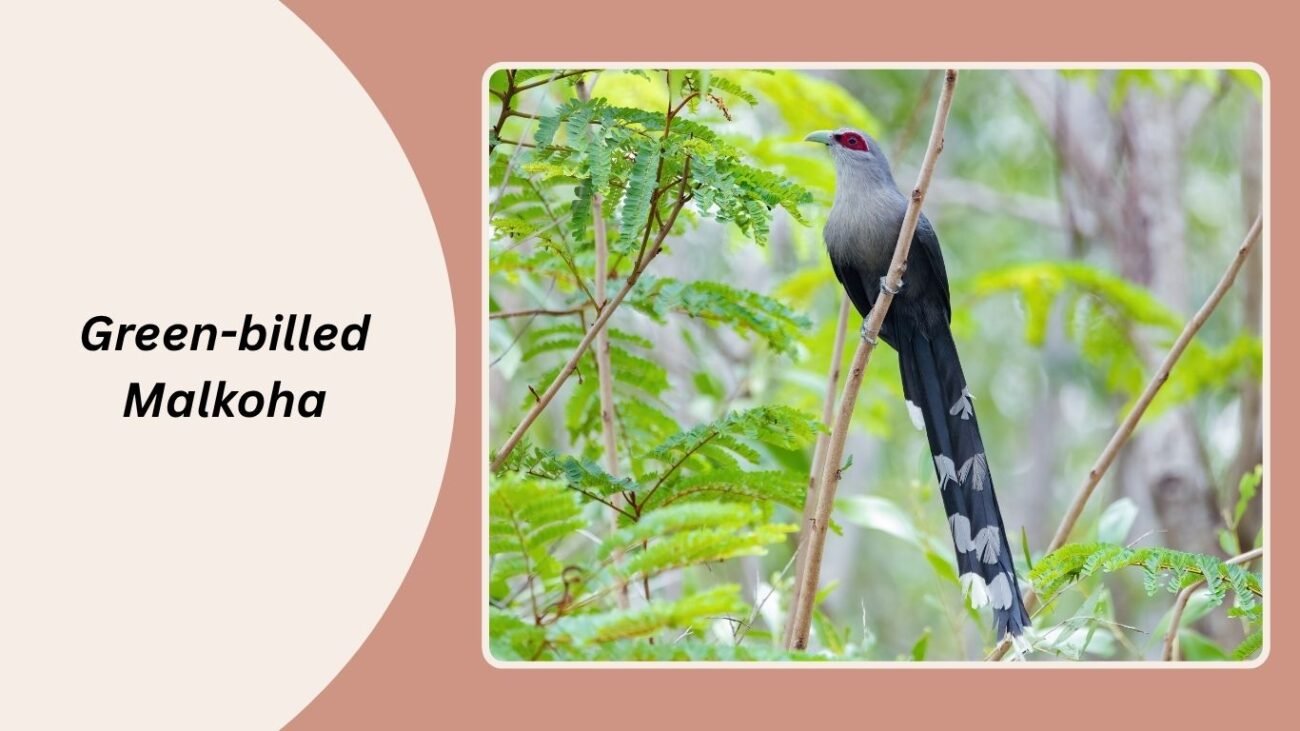
The Green-billed Malkoha is a striking, non-parasitic cuckoo species found across South and Southeast Asia. It’s known for its long tail, slow movements, and preference for dense foliage.
Identification
- Size: 50–60 cm (including tail)
- Glossy dark green upperparts
- Grey breast and belly
- Long graduated tail with white tips
- Pale green, curved bill
- Red facial skin around the eye
Behavior
Unlike most cuckoos, it builds its own nest and raises its chicks. Moves slowly and silently through trees while foraging for insects, caterpillars, and small reptiles.
Habitat
Dense forests, secondary woodlands, plantations, and forest edges. Prefers the mid and upper canopy.
Vocalization
Low-pitched “khok-khok-khok” or croaking sounds, often given in short bursts. Generally silent outside the breeding season.
35. Chestnut-breasted Malkoha (Phaenicophaeus curvirostris)
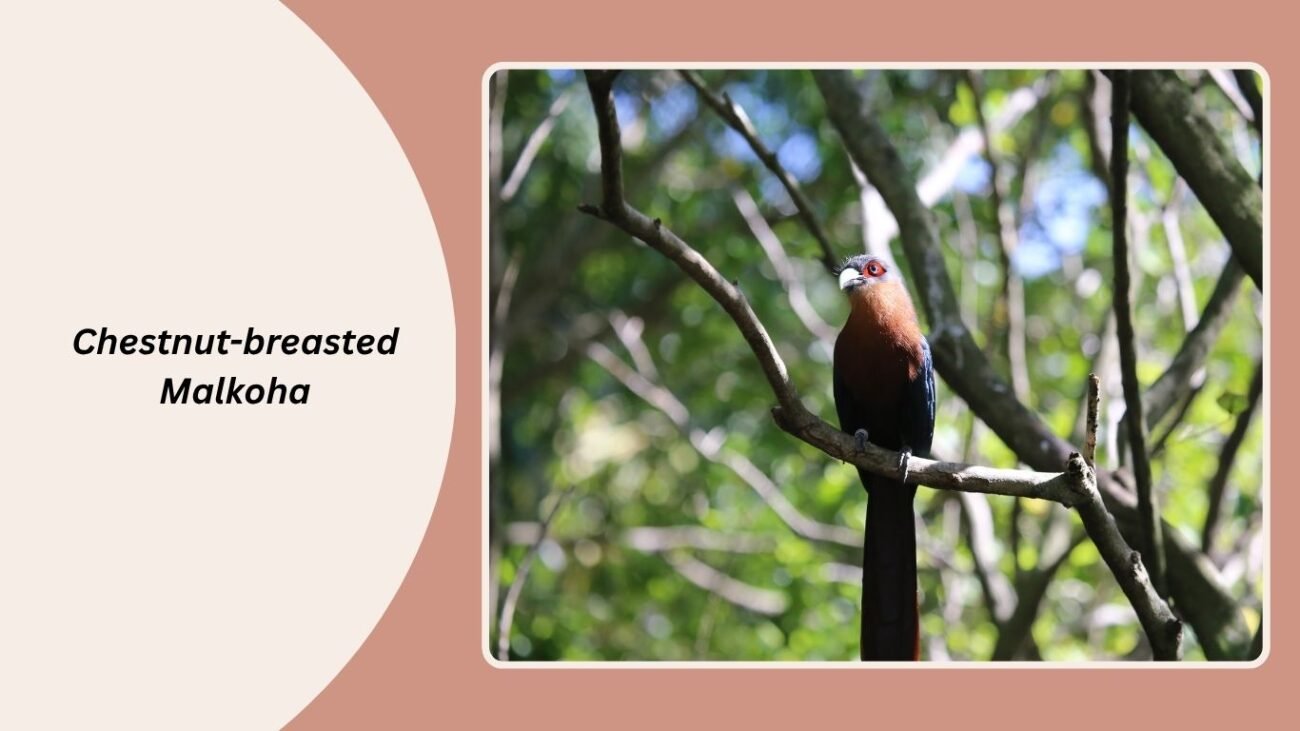
The Chestnut-breasted Malkoha is a colorful and large forest-dwelling cuckoo found in Southeast Asia. Like the Green-billed Malkoha, it is non-parasitic and raises its own young.
Identification
- Size: 42–48 cm
- Glossy dark green upperparts
- Rich chestnut-colored breast and belly
- White throat and pale blue facial skin around the eye
- Long tail with white-tipped feathers
- Strong, slightly curved pale bill
Behavior
Feeds on large insects, frogs, and small vertebrates. Moves slowly and deliberately through dense forest vegetation. Builds its own nest high in trees or bamboo clumps.
Habitat
Tropical rainforests, dense lowland forests, mangroves, and plantations. Typically stays hidden in thick foliage.
Vocalization
Soft, low chuckling or clucking calls: “cuk-cuk-cuk” or “kro-kro.” Less vocal compared to parasitic cuckoos.