






Doves are gentle, soft-voiced birds found in nearly every corner of the world. From the familiar Mourning Dove to the exotic Emerald Dove, these birds vary in size, color, and song, yet all share a peaceful presence. In this guide, you’ll discover 17 common dove species, each described with identification tips, behavior, habitat preferences, and unique color patterns to help you recognize and appreciate them in the wild or at home.
1. Mourning Dove

The Mourning Dove is one of the most widespread and easily recognized dove species in North America. Known for its soft, sorrowful cooing and graceful flight, this bird is a gentle presence in both rural and urban environments. Its sleek body, subtle colors, and distinctive sound make it a favorite among birdwatchers and backyard feeders.
Identification
- Slender body with a small head
- Long, pointed tail with white edges
- Soft gray-brown plumage
- Black spots on the wings
- Medium size (about 9–13 inches long)
Habitat
Mourning Doves are highly adaptable and found in open woodlands, farmland, grasslands, and suburban areas. They often perch on telephone wires, rooftops, or fence posts and are common visitors to bird feeders.
Behavior
These doves are peaceful, ground-feeding birds that forage for seeds. They often feed in pairs or small groups and are known for their fast, whistling takeoffs when startled. Mourning Doves are monogamous and may raise several broods each year. Their mournful call—a soft “coo-ah, coo, coo, coo”—is commonly heard at dawn and dusk.
Color Pattern
The overall coloring is soft and muted: light grayish-brown with subtle pink and blue tones. The long, tapered tail is outlined with white, especially noticeable in flight. Their understated beauty blends well into natural surroundings.
2. Eurasian Collared-Dove

The Eurasian Collared-Dove is a pale, medium-sized dove that has rapidly expanded its range across North America since its introduction in the 1980s. Recognizable by its black neck ring, it brings a calm presence to suburban neighborhoods and farmland.
Identification
- Pale grayish-tan body
- Narrow black crescent-shaped collar on the back of the neck
- Long, squared tail with white edges
- Dark eyes and slender black beak
- Size: about 12–14 inches long
Habitat
These doves thrive in suburban areas, agricultural lands, and small towns. They prefer open spaces with scattered trees and are often seen perched on utility poles or buildings.
Behavior
Eurasian Collared-Doves are often seen in pairs or small flocks. They feed mostly on seeds and grains, typically on the ground or at platform feeders. Their song is a distinctive, three-part cooing: “coo-COO-coo,” repeated rhythmically throughout the day.
Color Pattern
They have a smooth, pale gray to buff-colored body, with a slightly lighter belly. The black neck collar stands out clearly, especially on adult birds. Tail feathers show broad white tips in flight.
3. White-winged Dove

The White-winged Dove is a striking and slightly larger dove found primarily in the southern U.S., Mexico, and the Caribbean. Known for its bold wing markings and distinctive cooing, it’s especially common in desert and urban areas.
Identification
- Light brown to grayish body
- Prominent white stripe along the edge of each wing
- Blue skin around the eyes and a red eye ring
- Short, square-tipped tail
- Size: about 11 inches long
Habitat
White-winged Doves are found in deserts, scrublands, open woodlands, and urban environments. They are especially abundant where mesquite, saguaro, or fruiting trees are present and are frequent visitors to backyard feeders in the Southwest.
Behavior
These doves are strong, swift flyers and are often seen flying between roosting and feeding areas. They feed mostly on seeds, grains, and fruits. Their song is a slow, owl-like “who-cooks-for-you,” repeated throughout the breeding season.
Color Pattern
Their body is a soft brownish-gray, with bold white wing stripes visible both at rest and in flight. Blue skin around the eyes and reddish legs add subtle but beautiful contrast.
4. Rock Pigeon
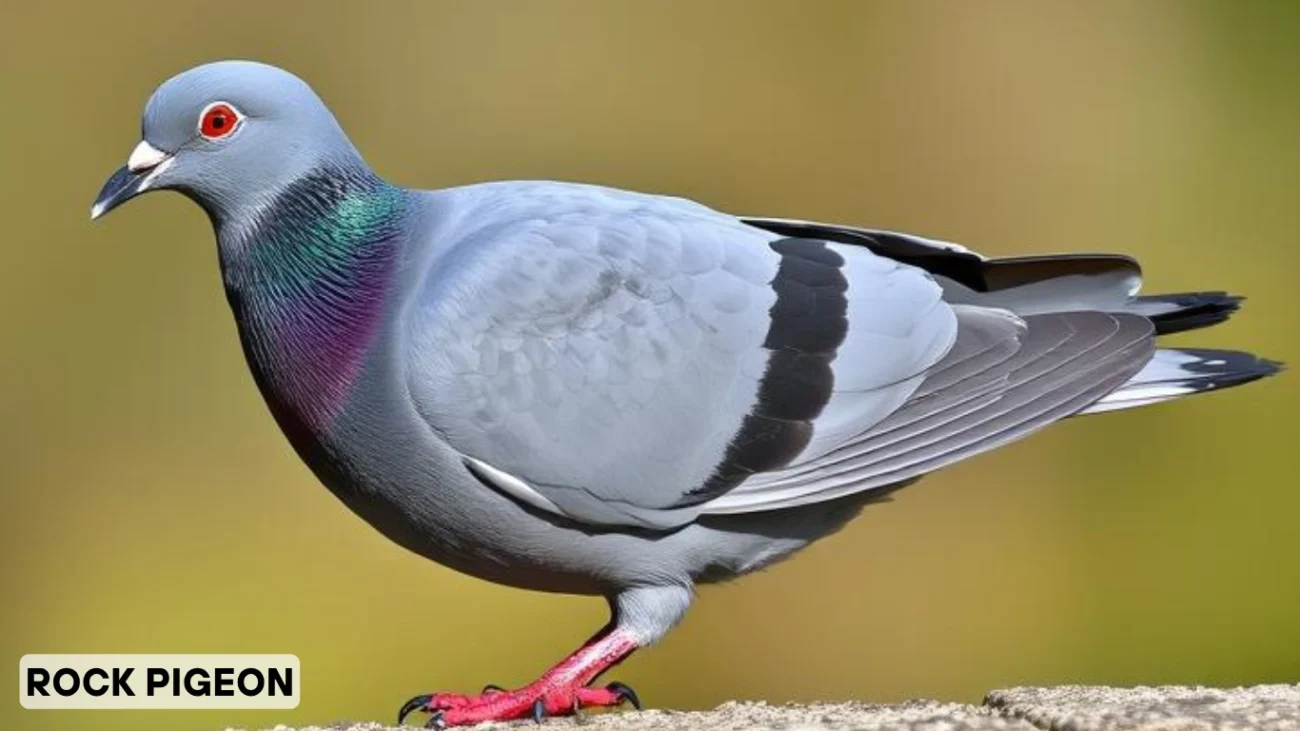
The Rock Pigeon, also known simply as the pigeon, is a familiar sight in cities and towns across the world. Originally native to Europe, North Africa, and western Asia, it has adapted remarkably well to urban environments, often seen flocking in public squares and rooftops.
Identification
- Plump body with short legs and neck
- Iridescent green and purple sheen on the neck
- Variable coloration, but typically gray with two black wing bars
- Short, rounded tail
- Size: about 12–14 inches long
Habitat
Rock Pigeons are common in urban areas, farmland, and coastal cliffs. They nest on building ledges, under bridges, and in barns—mimicking the cliffside habitats of their wild ancestors.
Behavior
Highly social birds, Rock Pigeons gather in flocks and are frequently seen feeding on sidewalks, streets, or plazas. They feed on grains, seeds, and food scraps. Their soft, guttural cooing is a constant background sound in cities.
Color Pattern
Though color varies widely, most have bluish-gray bodies with iridescent neck feathers, black wing bars, and a pale gray rump. Some show reddish, brownish, or entirely white plumage due to domestic breeding.
5. Inca Dove

The Inca Dove is a small, slender dove known for its scaly feather pattern and soft, cooing song. Native to the southwestern United States and Mexico, this quiet bird often blends into its surroundings with remarkable camouflage.
Identification
- Small, slender body
- Feathers have a scaly appearance—edges outlined in darker tones
- Long, narrow tail with white sides
- Pale brown to gray overall
- Size: about 6.5–8 inches long
Habitat
Inca Doves are commonly found in suburban gardens, dry scrublands, and desert towns. They prefer warm, dry climates and often roost close to buildings, trees, or shrubs.
Behavior
These doves forage quietly on the ground in small groups. Their flight is fast and direct, and when startled, they often take off with a distinctive whistling sound. Their call is a soft, repeated “coo-coo-coo,” often rising slightly in pitch.
Color Pattern
Inca Doves have an elegant tan-gray plumage with a scaly appearance created by dark edges on each feather. Their long tails flash white edges in flight, providing contrast to their otherwise muted tones.
6. Common Ground Dove

The Common Ground Dove is the smallest dove in North America, often overlooked due to its size and quiet nature. Despite its subtle coloring, it plays a vital role in warm-climate ecosystems, especially in the southern U.S., Mexico, and Central America.
Identification
- Very small and compact body
- Short, stubby tail
- Scaled pattern on the head and chest
- Reddish base on the beak and pink legs
- Size: around 5.5–7 inches long
Habitat
Common Ground Doves prefer open woodlands, scrub, farmland edges, and desert areas. They are ground-dwellers and are most often seen walking rather than flying, blending into dry soil and leaf litter.
Behavior
These doves are quiet and low-flying, often seen singly or in pairs. They feed almost entirely on small seeds found in grasses and weeds. When flushed, they fly low and swiftly, producing a whirring sound with their wings. Their song is a soft, hollow “woot-woot-woot” that increases in tempo.
Color Pattern
They have a warm, dusty brown plumage with fine dark scaling on the neck and chest. The underwings reveal a bright chestnut color in flight, which contrasts beautifully with their otherwise earthy tones.
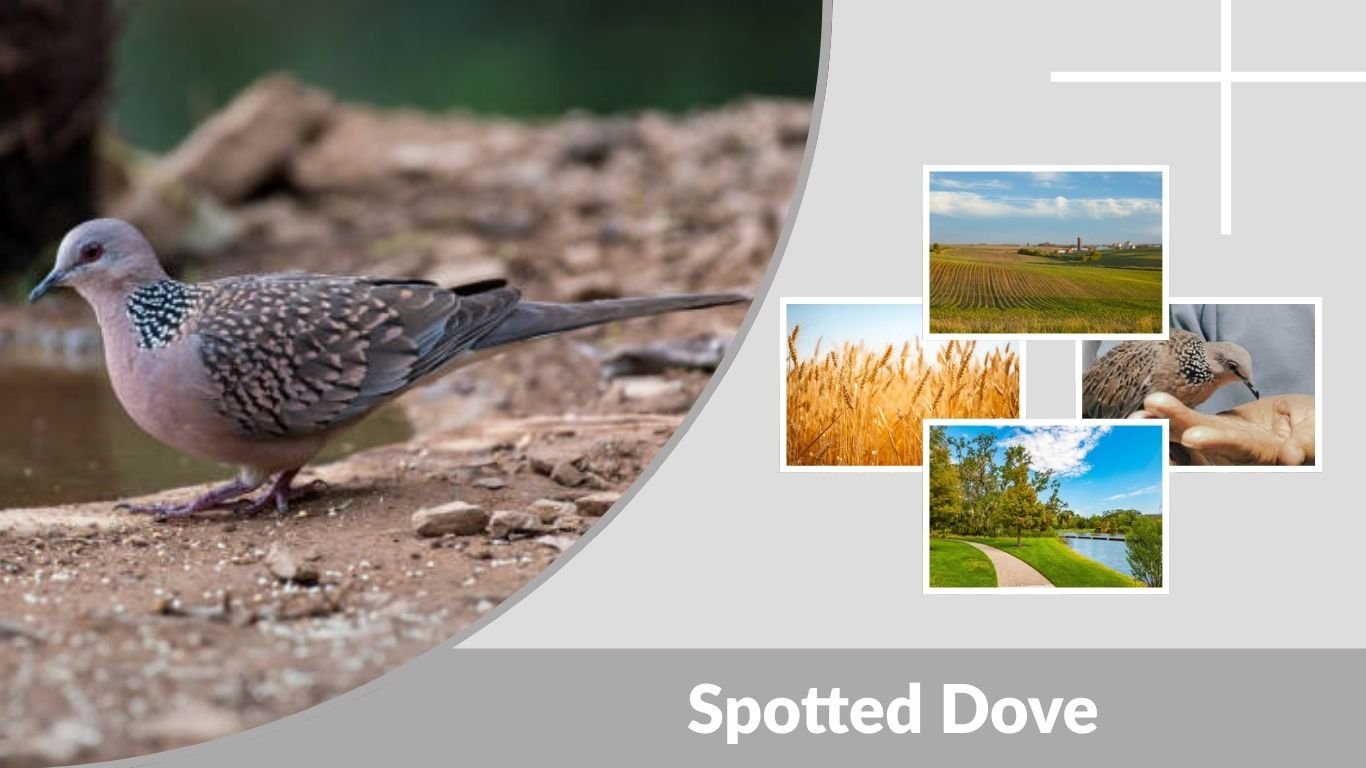
7. Spotted Dove

The Spotted Dove is a graceful and gentle bird native to Southeast Asia but now found in various parts of the world, including Hawaii, Australia, and the western United States. Its distinctive spotted neck pattern sets it apart from other doves.
Identification
- Medium-sized with long, graduated tail
- Pale brownish-gray body
- White-spotted black collar patch on the back and sides of the neck
- Pinkish legs and dark eyes
- Size: about 11–12 inches long
Habitat
Spotted Doves favor open woodlands, farmlands, gardens, and urban areas. They adapt well to suburban settings and are commonly seen perched on wires, rooftops, and in ornamental trees.
Behavior
These doves feed mostly on the ground, foraging for seeds and grains. They are often seen alone or in pairs and are relatively shy compared to urban pigeons. Their cooing is low, slow, and repetitive—often described as a rhythmic “coo-coo-croo.”
Color Pattern
Their plumage is soft brown with slightly pink tones on the breast and grayish hues on the back. The most striking feature is the black patch on the nape sprinkled with white spots, giving them their name. In flight, their long tails show white tips and pale edges.
8. Diamond Dove

The Diamond Dove is a small, elegant species native to Australia, often kept as a pet for its gentle nature and attractive appearance. Despite its delicate size, it’s known for its striking white spots and soft, soothing calls.
Identification
- Very small and slender body
- Pale gray to bluish-gray overall
- White spots on wings resembling tiny diamonds
- Red or orange eye-ring and pinkish legs
- Long, thin tail
- Size: about 7.5–8 inches long
Habitat
In the wild, Diamond Doves inhabit arid grasslands, savannas, and open scrub in Australia. In captivity or aviaries, they adapt well to human care but still prefer open, warm environments with access to perches and ground space.
Behavior
These doves are quiet and social, usually seen in pairs or small flocks. They forage mostly on the ground, eating tiny seeds and occasionally insects. Their soft, rhythmic cooing is continuous and peaceful, often used for bonding between pairs.
Color Pattern
Diamond Doves have soft gray plumage with a pale face and reddish eye-ring. Their wings are sprinkled with small white “diamond” spots bordered by black edges. The tail is long and dark with white tips, noticeable during flight or display.
9. Zebra Dove
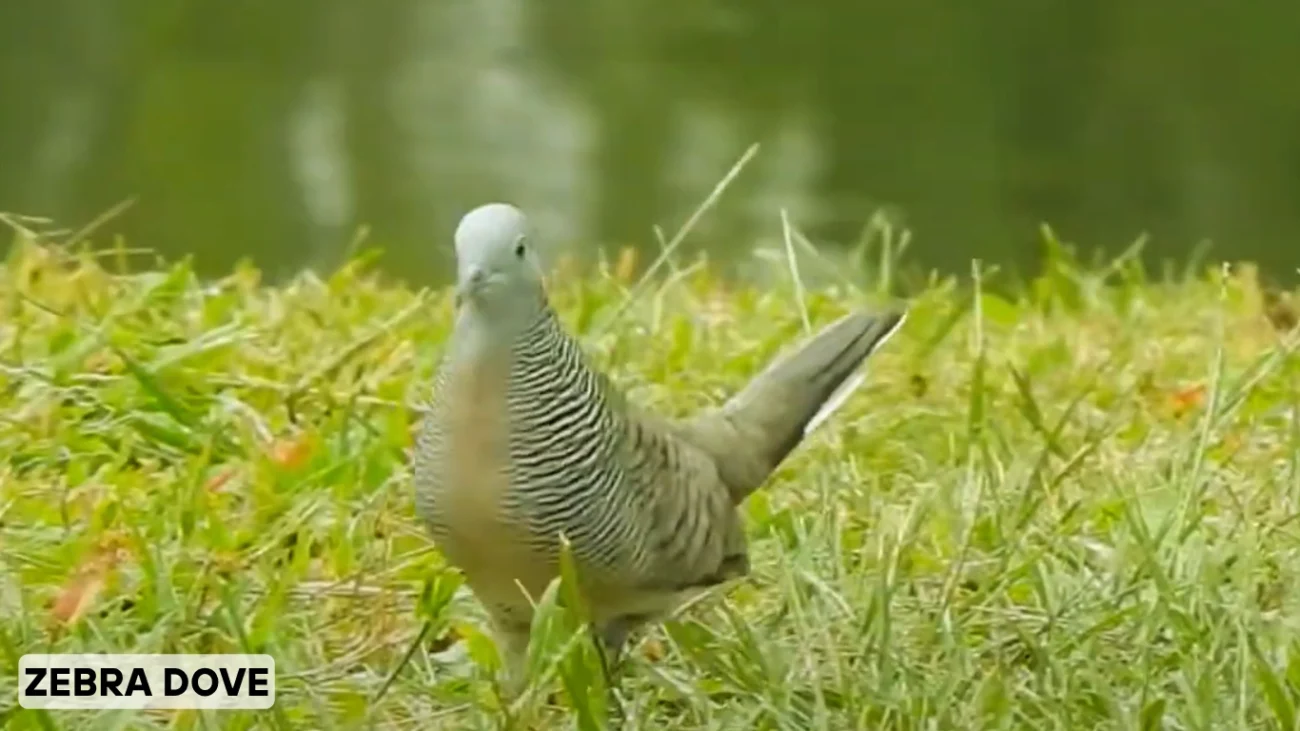
The Zebra Dove is a gentle, slender dove with finely striped plumage, commonly seen in Southeast Asia and the Pacific Islands. It has also been introduced to Hawaii and parts of the western United States, where it thrives in urban and rural areas.
Identification
- Slim, elongated body
- Pale brown to gray overall
- Black-and-white barring across neck, chest, and belly
- Pale face and blue-gray beak
- Long, narrow tail with white outer feathers
- Size: about 8–9 inches long
Habitat
Zebra Doves are typically found in open country, gardens, parks, and city streets. They are ground feeders and often stroll through lawns, driveways, and sidewalks in search of small seeds.
Behavior
These doves are tame and approachable, often seen walking rather than flying. They feed on fine seeds and occasionally small insects. Their song is a pleasant, stuttering coo—described as a series of soft, accelerating “coo-coo-coo” notes.
Color Pattern
Their plumage features delicate black-and-white stripes across the neck and underparts, giving them a “zebra” appearance. The upperparts are warm brown, blending well with dry, open ground. Their long tails show white edges during flight.
10. African Collared-Dove
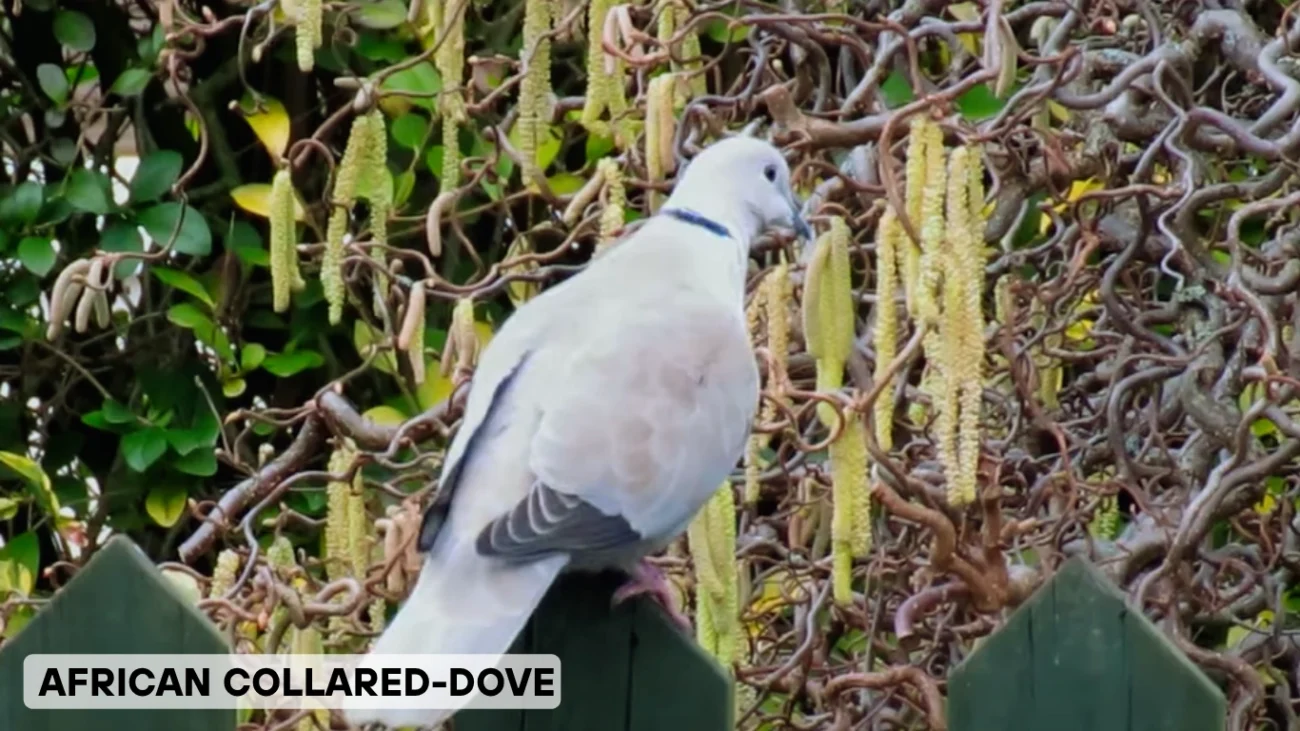
The African Collared-Dove, sometimes confused with the Eurasian Collared-Dove, is a calm and adaptable bird native to sub-Saharan Africa. It’s now found in parts of the Middle East and has also been domesticated in many regions due to its docile nature.
Identification
- Pale, sandy or cream-colored plumage
- Distinct narrow black collar around the nape
- Slightly rounded head with a pale face
- Red eyes with a subtle eye-ring
- Medium size (about 11–12 inches long)
Habitat
These doves inhabit dry savannas, farmlands, village edges, and gardens. They are well-adapted to arid climates and often nest near human settlements, where food and water are more readily available.
Behavior
African Collared-Doves are typically seen in pairs or small groups. They forage mostly on the ground, feeding on seeds, grains, and small insects. Their song is a soft, rhythmic “coo-coo-croo,” often repeated with slight variation during the breeding season.
Color Pattern
The plumage is soft beige to sandy brown, with a clean, pale underside. The black neck ring contrasts subtly against the light body, and their wings may show light gray tones in flight.
11. Laughing Dove
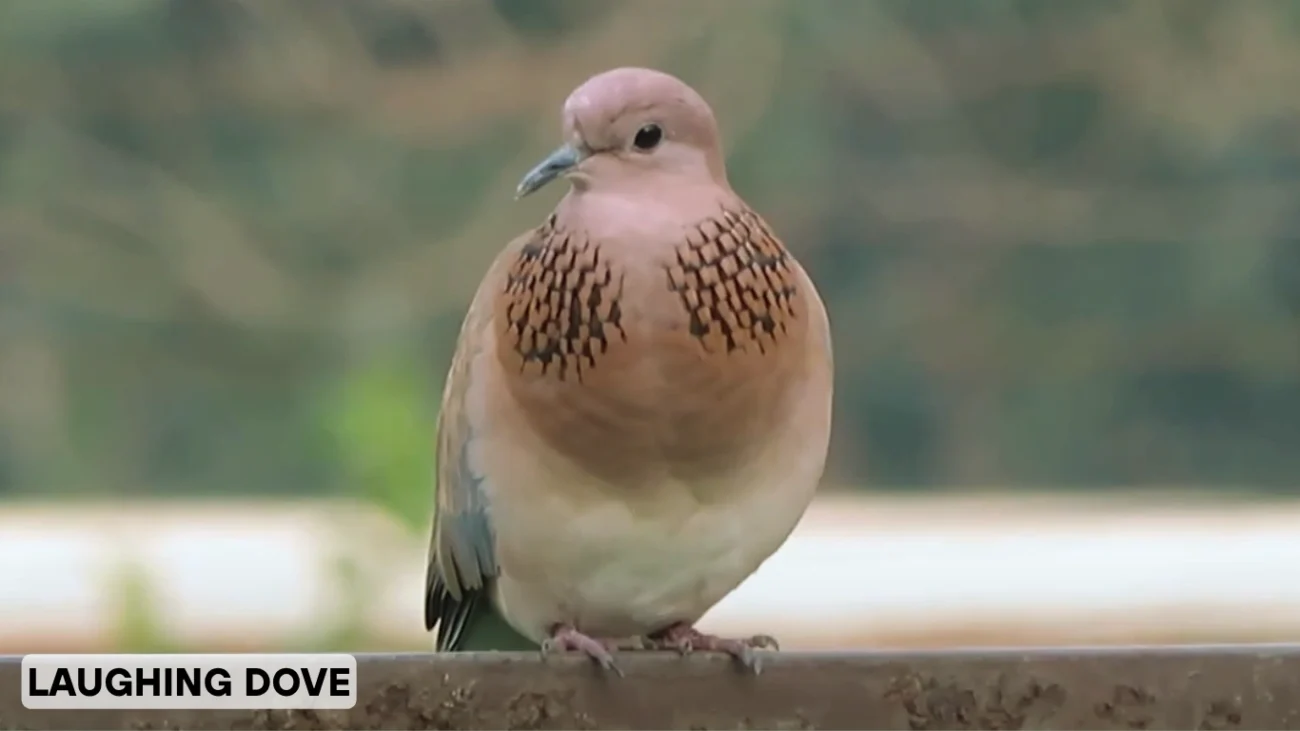
The Laughing Dove is a graceful and slender bird with warm-toned plumage and a distinctive chuckling call. Native to Africa and South Asia, it gets its name from its unique vocalization that sounds like a soft, bubbling laugh.
Identification
- Slim body with long tail
- Pinkish chest and face with bluish-gray wings
- Distinct scaly, speckled patch on the upper chest
- Small head and thin black bill
- Size: about 9–10 inches long
Habitat
Laughing Doves are commonly found in dry scrublands, gardens, villages, and agricultural lands. They prefer open areas with scattered bushes or trees and are frequent visitors to courtyards and rooftops.
Behavior
These doves feed quietly on the ground, searching for seeds and small invertebrates. They are usually seen alone or in pairs. Their song is a soft, repetitive bubbling “coo-coo-coo-ha-ha,” often likened to gentle laughter, especially during courtship.
Color Pattern
Their plumage is a warm mix of pinkish-tan, with blue-gray on the wings and neck. The upper chest has a mottled, scaly appearance, adding texture to their otherwise smooth and earthy coloration. The tail is long with white outer feathers noticeable during flight.
12. Ringed Turtle-Dove

The Ringed Turtle-Dove, also known as the Barbary Dove in captivity, is a domesticated dove species derived from the African Collared-Dove. It is commonly kept as a pet and is known for its calm demeanor and soft cooing.
Identification
- Pale cream or light tan body
- Distinct black ring around the back of the neck
- Small, rounded head and short, square tail
- Dark eyes with a fine eye-ring
- Size: about 10–12 inches long
Habitat
In the wild, they are rarely found in natural environments but may occur in urban and suburban areas where released or escaped birds survive. In captivity, they thrive in aviaries and domestic enclosures.
Behavior
Ringed Turtle-Doves are very tame and easygoing. They feed mainly on seeds and grains and prefer flat, open spaces to walk and forage. Their cooing is soft and pleasant—typically a slow, repeated “coo-COO-coo” heard throughout the day.
Color Pattern
Their plumage is pale ivory, buff, or light tan, with subtle gray shading on the wings. The signature black neck ring adds contrast and elegance. Selective breeding has led to variations in color including white, cinnamon, and fawn.
13. Pacific Emerald Dove

The Pacific Emerald Dove is a stunning tropical dove native to Southeast Asia and the Pacific Islands. Known for its jewel-toned wings and quiet, ground-feeding habits, it brings a flash of color to forest floors and dense undergrowth.
Identification
- Rich green wings with metallic emerald sheen
- Maroon to chestnut-colored body
- Pale gray head and pinkish-red legs
- White stripes on the face (above and below the eye)
- Size: about 9–10 inches long
Habitat
Pacific Emerald Doves inhabit rainforests, mangroves, and thick woodland areas. They prefer shaded, humid habitats where they forage on the ground among fallen leaves and low vegetation.
Behavior
These doves are shy and solitary, often seen walking quietly along forest trails. They feed on fallen fruits, seeds, and small insects. Their flight is fast and low, with strong wingbeats, and their call is a deep, mournful “coo-coo-coo,” often repeated slowly.
Color Pattern
Their most striking feature is the glossy green wing feathers that shimmer in sunlight. The contrasting reddish-brown body and pale face stripes make them easily distinguishable, especially in the dim light of the forest understory.
14. White-tipped Dove

The White-tipped Dove is a robust, ground-dwelling species native to the southern United States, Mexico, Central America, and parts of South America. It is named for the distinct white tips on its tail feathers, often visible during flight or display.
Identification
- Plump body with short neck
- Soft gray to brown upperparts and pale gray underparts
- White tips on the outer tail feathers
- Blue-gray skin around the eyes
- Size: about 9–11 inches long
Habitat
This dove favors dense woodlands, tropical forests, thickets, and secondary growth. It is also found along forest edges and in rural gardens. White-tipped Doves prefer areas with heavy ground cover for foraging and nesting.
Behavior
These doves are mostly solitary or seen in pairs. They walk quietly on the forest floor, feeding on seeds, berries, and insects. Their call is a low, hollow “whooo-oo” that echoes softly through thick vegetation, especially in the early morning and evening.
Color Pattern
Their body is soft brownish-gray with slight pinkish tones on the chest. The underwings flash a rusty-buff color in flight, and the white-tipped tail feathers stand out as a key identification mark. Their subtle beauty suits their shy, elusive nature.
15. Ruddy Ground Dove
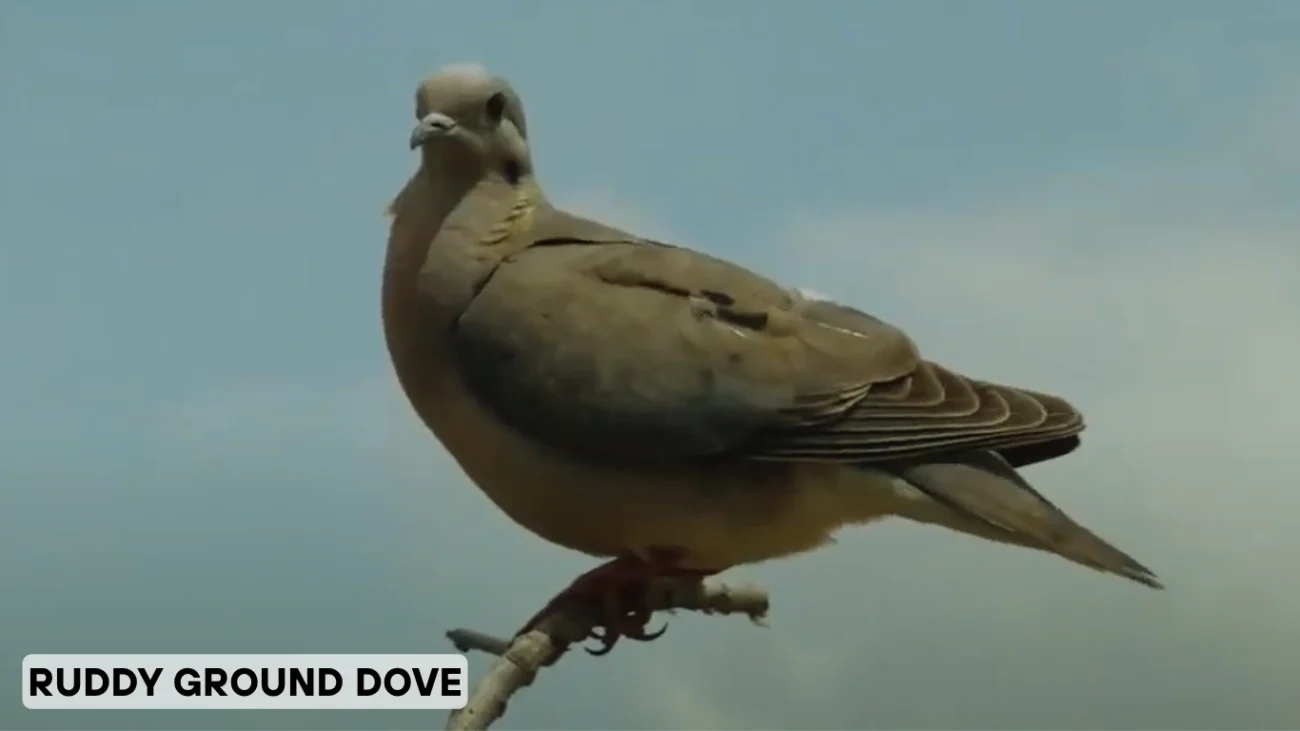
The Ruddy Ground Dove is a small, warm-toned dove native to Central and South America, and occasionally found in southern parts of the U.S. It’s known for its unassuming appearance and its habit of foraging quietly on dusty roads and dry fields.
Identification
- Small, compact body
- Males have reddish-brown (ruddy) plumage
- Females and juveniles are duller brown-gray
- Short tail and rounded wings
- Size: about 6–7 inches long
Habitat
Ruddy Ground Doves inhabit dry open areas, farmland, roadside edges, and rural villages. They are particularly common in regions with scattered shrubs and low vegetation.
Behavior
These doves are shy and often go unnoticed as they forage on the ground for seeds and small grains. When disturbed, they take off in a quick, fluttery flight. Their song is a series of short, mellow “coo” notes repeated in a soft rhythm, usually heard at dawn and dusk.
Color Pattern
Males show a reddish hue across the back and wings, while females are grayer and more subdued. Both sexes have dark spotting on the wings and a lighter belly. Their subtle earth-toned feathers allow them to blend easily with dry, dusty landscapes.
16. Blue Ground Dove
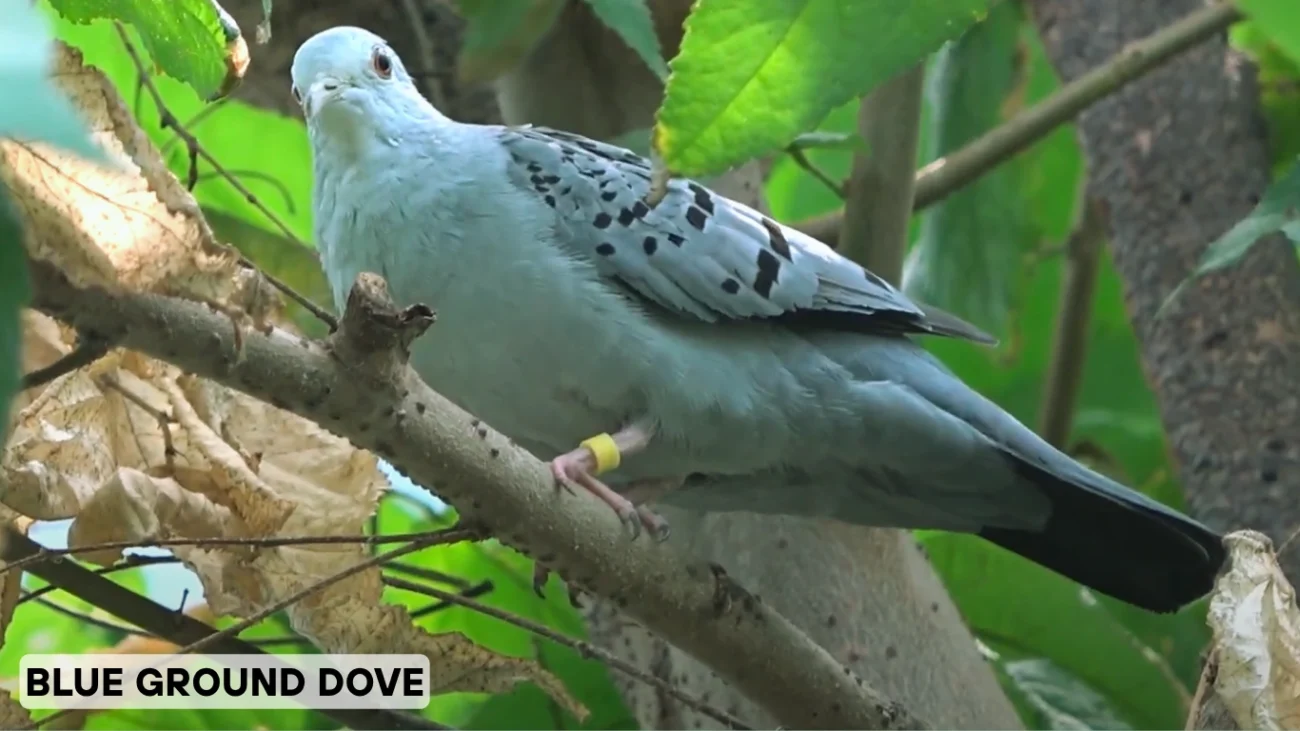
The Blue Ground Dove is a beautifully colored, tropical species found across Central and South America. True to its name, it spends much of its time on the ground, moving quietly through forest clearings and low brush.
Identification
- Males are soft blue-gray with darker blue flight feathers
- Females are cinnamon-brown with bluish wing patches
- Small head, compact body, and short tail
- Dark eyes with subtle facial markings
- Size: about 6.5–7.5 inches long
Habitat
Blue Ground Doves inhabit lowland forests, secondary growth, plantations, and woodland edges. They prefer shaded areas with leaf litter where seeds and insects are abundant.
Behavior
These doves are shy and elusive, typically seen alone or in pairs. They walk quietly on the forest floor, rarely flying unless startled. Their call is a gentle, rolling “coo-coo-coo,” often delivered from a hidden perch within thick vegetation.
Color Pattern
Males display smooth blue-gray plumage with rich cobalt tones on the wings and shoulders. Females are more subdued, with warm cinnamon tones and faint bluish markings. The soft contrast between males and females makes them easy to distinguish when spotted in pairs.
17. Gray-fronted Dove

The Gray-fronted Dove is a forest-dwelling bird from Central and South America, known for its calm demeanor and low-pitched, haunting coo. It’s more often heard than seen, quietly foraging on the forest floor beneath dense canopy.
Identification
- Stocky, medium-sized body
- Gray forehead and face with soft brown upperparts
- Pinkish breast and pale belly
- Red legs and a dull reddish eye ring
- Size: about 9–10 inches long
Habitat
This dove prefers humid tropical forests, dense woodland interiors, and shaded clearings. It favors undisturbed habitats and is rarely seen in open or urban areas.
Behavior
Gray-fronted Doves are solitary and secretive, often heard calling from deep within vegetation. They forage quietly for fallen seeds, fruit, and small insects. Their flight is quick and direct when flushed, and their vocalization is a deep, mournful “whooo…whooo,” repeated with long pauses.
Color Pattern
Their plumage is a soft blend of gray and earthy browns, with a gentle pinkish hue on the chest. The gray face and forehead contrast slightly with the warmer tones of the body, giving them a calm, subdued appearance that blends into the forest shadows.
FAQs
1. What’s the difference between a dove and a pigeon?
While “dove” and “pigeon” are often used interchangeably, doves are usually smaller and more slender, while pigeons tend to be larger and stockier. Both belong to the bird family Columbidae.
2. Why do doves coo?
Doves coo for communication—mainly to attract mates, defend territory, or signal presence. Each species has a unique vocal pattern used in different social or breeding contexts.
3. Do doves mate for life?
Yes, most dove species form strong pair bonds and often mate for life. They share nesting duties and raise multiple broods together during the breeding season.
4. What do doves typically eat?
Doves primarily eat seeds, grains, and fruits. Some species may also consume small insects or invertebrates, especially during breeding when extra protein is needed.
5. Can I attract doves to my backyard?
Absolutely. You can attract doves by providing flat platform feeders with seeds like millet or sunflower, keeping a clean water source nearby, and planting shrubs or trees for shelter and nesting.