Storks are large, long-legged birds found in many parts of the world. Some are white and black, others are dark and bald-headed. Many live near water, feeding on fish, frogs, or even snails. This guide covers 19 types of storks—from the well-known White Stork to rare ones like Storm’s Stork—sharing how they look, where they live, and how they survive in the wild.
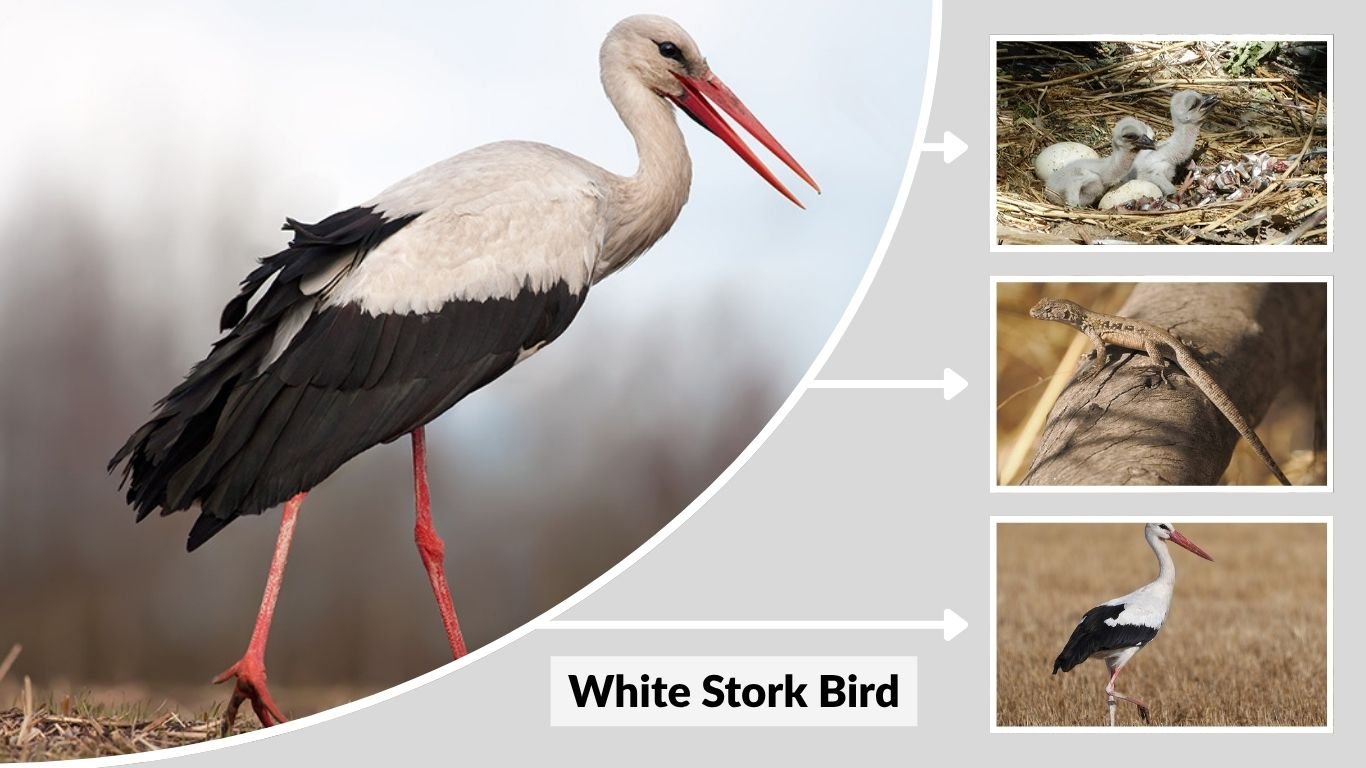
1. White Stork (Ciconia ciconia)

The White Stork is one of the most famous stork species, often seen in Europe, Asia, and parts of Africa. It’s known for nesting on rooftops, chimneys, and tall trees. Many people believe storks bring good luck or babies in folk tales.
Identification
- Large white bird with black wing feathers
- Long red legs and red pointed bill
- Wingspan: about 2 meters
- Stands around 100–115 cm tall
- Long neck and slow, steady flight with outstretched wings and legs
Behavior
White Storks are social during migration and nesting. They often live near farms and wetlands. They build large stick nests, which they return to year after year.
Habitat
Found in open fields, farmlands, wetlands, and towns. Often seen walking slowly while looking for food or gliding high in the sky.
Vocalization
Storks don’t sing. Instead, they make a clattering sound by snapping their bills, especially during mating or at the nest.
Let me know when you’re ready for the next one.
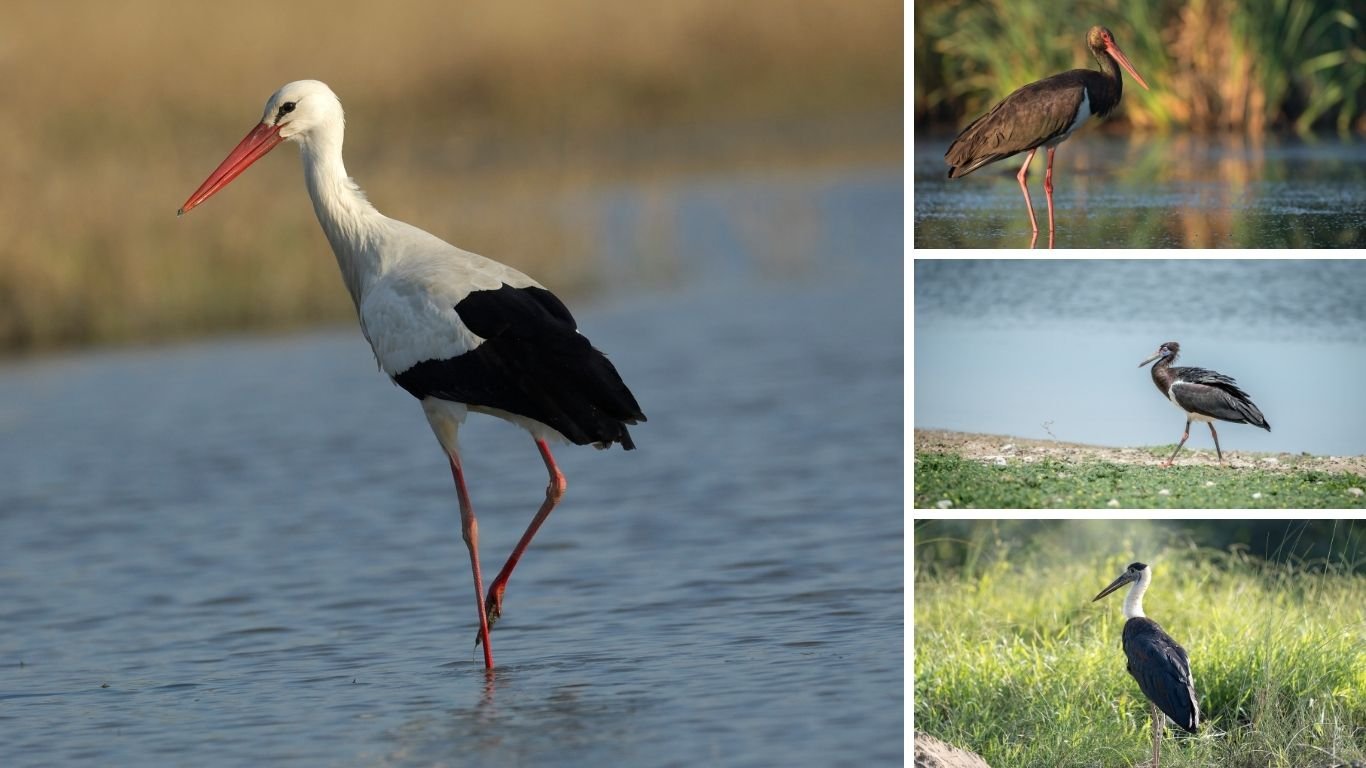
2. Black Stork (Ciconia nigra)

The Black Stork is a shy and quiet bird that lives mostly in forests and near rivers. Unlike the White Stork, it avoids people and prefers quiet places.
Identification
- Black body with green and purple shine in sunlight
- White belly
- Long red legs and red bill
- Slightly smaller than the White Stork
- Wingspan: about 1.8–2 meters
Behavior
Solitary or found in pairs, especially during nesting. Builds nests high in trees or cliffs. Flies with slow wingbeats and glides smoothly.
Habitat
Lives in forests, riversides, and wetlands. Avoids human areas. Migrates to Africa during winter.
Vocalization
Mostly silent. At the nest, it may make low hissing or bill-clattering sounds.
3. Abdim’s Stork (Ciconia abdimii)

The Abdim’s Stork, also called the white-bellied stork, is the smallest stork species. It is found in eastern and southern Africa and is known for its friendly nature and large flocks.
Identification
- Black body with a white belly
- Grey legs and red knees
- Blue skin near the eyes and red facial skin in breeding season
- Short red bill
- About 75–80 cm tall
Behavior
Very social. Found in flocks near grasslands and farms. Eats insects like locusts, especially after rain. Builds small stick nests in trees or on buildings.
Habitat
Open fields, savannas, and farmland. Often near water during breeding season.
Vocalization
Usually quiet, may hiss or clatter bill during breeding. Not very vocal.
4. Woolly-necked Stork (Ciconia episcopus)

The Woolly-necked Stork is a medium-sized stork known for its white, fluffy neck that looks like wool. It is found across parts of Asia and Africa and is often seen alone or in small groups near wetlands and rice fields.
Identification
- Glossy black body with purple-green sheen
- White neck and upper breast with fluffy feathers
- Long black legs and a strong black bill
- Stands around 85–92 cm tall
- Wings are broad and rounded
Behavior
Usually seen wading in shallow water or flying with slow, strong wingbeats. They feed on frogs, fish, crabs, and insects. Builds large nests high in trees, sometimes reusing the same nest year after year.
Habitat
Common in wetlands, rice paddies, riverbanks, and sometimes near villages or farmlands. Prefers open areas with water and tall trees for nesting.
Breeding
Breeds during the dry season or just after the rains. Builds a large stick nest in tall trees. Both parents take turns incubating the eggs and feeding the chicks.
5. Storm’s Stork (Ciconia stormi)

The Storm’s Stork is one of the rarest and most endangered storks in the world. It lives in deep, undisturbed rainforests in Southeast Asia and is very hard to spot.
Identification
- Black body with white belly and neck
- Yellow-orange facial skin with red legs
- Smaller than other storks—about 85–90 cm tall
- Dark, curved bill
- Slim and elegant appearance
Behavior
Very shy and solitary. Often hides in forested rivers or swampy areas. Hunts quietly for fish, frogs, and insects in slow-moving water. Flies low over water and glides silently.
Habitat
Found only in lowland tropical rainforests of Borneo, Sumatra, and Peninsular Malaysia. Needs clean, undisturbed rivers and wetlands to survive.
Conservation Status
Critically Endangered. Threatened by deforestation, logging, and drainage of wetlands. Fewer than 500 individuals are believed to be left in the wild. Protected in several national parks.
6. Oriental Stork (Ciconia boyciana)

The Oriental Stork looks very similar to the White Stork but is larger and rarer. It is found in East Asia and is a symbol of good fortune in some cultures.
Identification
- Large white body with black flight feathers
- Long red legs and long black bill
- No red skin around the eyes (unlike the White Stork)
- Wingspan: up to 2.2 meters
- Stands about 110–130 cm tall
Behavior
Feeds in wetlands and rice fields, walking slowly in shallow water. Eats fish, frogs, insects, and small animals. Flies with neck outstretched and wings flat. Often nests in tall trees or platforms.
Habitat
Lives in wetlands, lakes, marshes, and rice paddies. Found in eastern Russia, China, Korea, and Japan. Migrates to southern China and Vietnam in winter.
Conservation Status
Endangered. Threatened by wetland loss, pollution, and habitat destruction. Conservation programs in Japan and China have reintroduced captive-bred birds into the wild.
7. Maguari Stork (Ciconia maguari)

The Maguari Stork is a large and elegant stork native to South America. It prefers open wet fields and marshes and is often confused with the White Stork due to its similar appearance.
Identification
- White body with black flight feathers
- Long reddish-pink legs
- Greyish bill with a dark tip
- Bare red skin around the eyes
- Wingspan: about 1.5–1.7 meters
Behavior
Feeds mostly on fish, amphibians, and insects in shallow wetlands. Often seen walking alone or in pairs. Builds a large stick nest on the ground or in low vegetation.
Habitat
Widespread in wetlands, flooded grasslands, and savannas in countries like Brazil, Argentina, Paraguay, and Bolivia.
Breeding
Breeding season is during the wet months. Both parents share nest building, incubation, and chick feeding. Nests may be reused for several years.
8. Painted Stork (Mycteria leucocephala)

The Painted Stork is a colorful and social stork commonly found across the Indian Subcontinent and parts of Southeast Asia. It’s often seen in large groups near shallow lakes and wetlands.
Identification
- White body with pink tertial feathers (gives a “painted” look)
- Black flight feathers with white bars
- Long yellow down-curved bill
- Bare orange face and head
- Long reddish legs
- Wingspan: about 1.5–1.7 meters
Behavior
Feeds by sweeping its open bill side-to-side in shallow water to catch fish. Often seen in colonies, standing in rows while feeding. Flies in flocks with outstretched neck and legs.
Habitat
Prefers shallow lakes, marshes, flooded fields, and riverbanks. Often near human settlements, especially in India and Sri Lanka.
Breeding
Breeds in large colonies on trees, often with other waterbirds. Nest is made of sticks and lined with leaves. Both parents care for the chicks, which hatch after about a month.
9. Wood Stork (Mycteria americana)

The Wood Stork is the only stork that breeds in North America. It is large and bald-headed, often found in the southeastern United States, Central America, and parts of South America.
Identification
- White body with black flight feathers and tail
- Bald, dark grey head and neck
- Long, thick, down-curved grey bill
- Long black legs
- Wingspan: up to 1.8 meters
- Stands about 90–115 cm tall
Behavior
Feeds by feel—walking in shallow water and snapping its bill shut when it touches prey like fish or frogs. Often seen in flocks, especially during feeding or migration.
Habitat
Inhabits swamps, mangroves, flooded forests, and marshes. Needs shallow water for feeding and tall trees for nesting.
Breeding
Builds large platform nests in trees, often in colonies. Prefers areas with seasonal water levels to concentrate fish. Both parents incubate and feed the young. Breeding depends on water availability.
10. Yellow-billed Stork (Mycteria ibis)
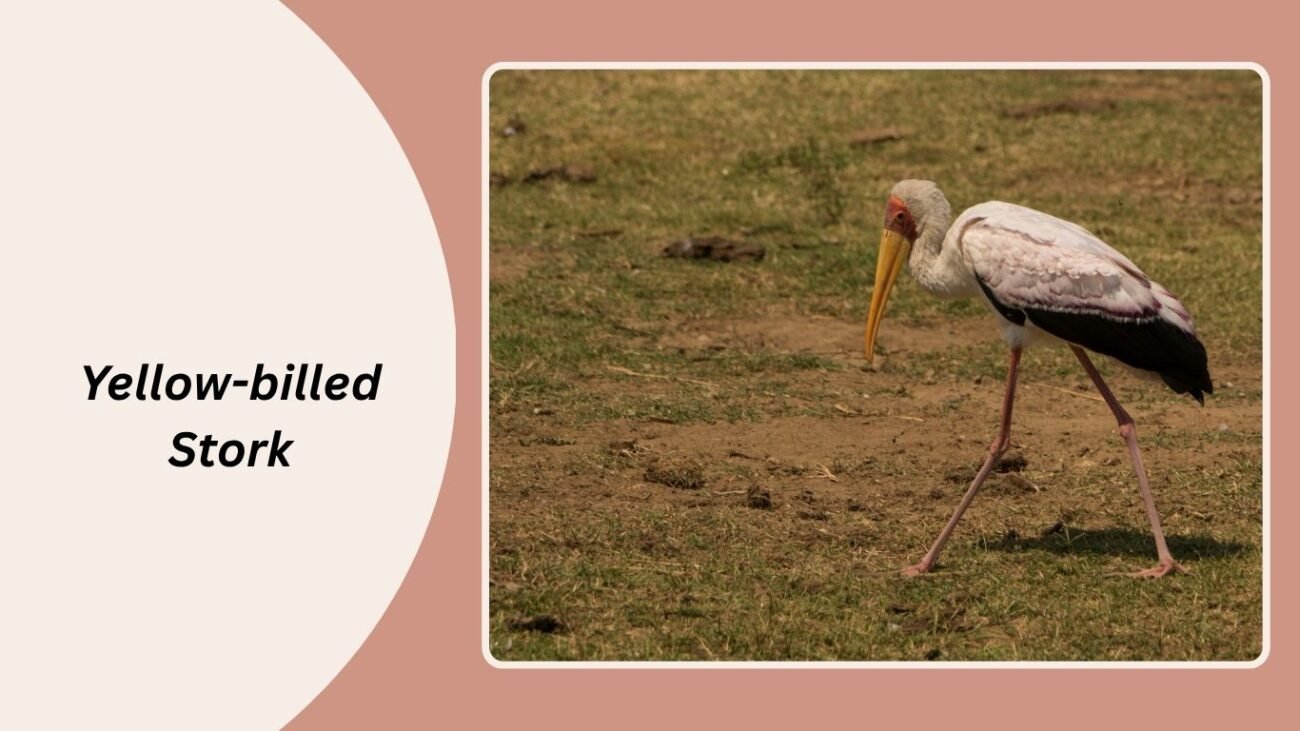
The Yellow-billed Stork is a graceful wading bird found across sub-Saharan Africa and parts of Madagascar. It’s often seen feeding in shallow water with other storks and herons.
Identification
- White body with black flight feathers
- Long, slightly down-curved yellow bill
- Bare red face and forehead
- Pinkish legs that turn bright red during breeding
- Wingspan: about 1.5–1.7 meters
Behavior
Feeds by sweeping its bill side to side in water to catch small fish and insects. Often walks slowly through shallow wetlands. Very social—feeds and nests in groups.
Habitat
Lives in freshwater lakes, marshes, riverbanks, and floodplains. Commonly seen in both protected wetlands and rural landscapes.
Breeding
Nests in colonies, usually with herons, spoonbills, and other waterbirds. Builds a large stick nest in trees or reed beds. Both parents care for eggs and chicks.
11. Milky Stork (Mycteria cinerea)

The Milky Stork is a rare and declining species found in parts of Southeast Asia. It looks similar to the Painted Stork but has cleaner white plumage and less pink coloring.
Identification
- Mostly white body with black flight feathers
- Slight pink wash on wings
- Long yellow bill
- Bare reddish face and legs
- Slightly smaller than Painted Stork, around 90–100 cm tall
Behavior
Feeds in tidal mudflats, mangroves, and freshwater wetlands. Hunts small fish, frogs, and crustaceans. Often solitary or in small groups, moving quietly through shallow water.
Habitat
Coastal mangroves, estuaries, riverbanks, and swamps in Malaysia, Sumatra, Borneo, and parts of Cambodia and Vietnam.
Conservation Status
Endangered. Threatened by habitat loss, pollution, and human disturbance. Protected in some areas but faces a serious decline in wild populations.
12. Jabiru (Jabiru mycteria)

The Jabiru is the largest flying bird in Central and South America. It is powerful, tall, and easily spotted near rivers and wetlands. Its name means “swollen neck” in a local Brazilian language.
Identification
- White body with a bare black head and neck
- Large red patch at the base of the neck
- Huge black, upturned bill—very thick and long
- Wingspan: up to 2.8 meters (the widest among storks)
- Stands around 120–140 cm tall
Behavior
Feeds by wading through shallow waters, catching fish, frogs, snakes, and even small turtles. Often seen alone or in pairs. Builds one of the biggest tree nests among birds, reused every year and added to.
Habitat
Found in wetlands, floodplains, riverbanks, and ponds across Brazil, Paraguay, Panama, and northern Argentina. Prefers wide open water areas.
Breeding
Builds a massive stick nest high in tall trees. Both parents care for the eggs and young. Pairs often stay together for life.
13. Saddle-billed Stork (Ephippiorhynchus senegalensis)

The Saddle-billed Stork is one of the most colorful and elegant storks in Africa. Its striking black and white plumage and large red-and-black bill make it easy to identify.
Identification
- White body with black wings and back
- Very long red and black bill with a yellow “saddle” at the base
- Yellow eyes (male) or brown eyes (female)
- Very long red legs
- Wingspan: up to 2.7 meters
Behavior
Feeds on fish, frogs, insects, and small reptiles. Uses its long bill to strike quickly. Often seen walking slowly through wetlands or standing motionless in water.
Habitat
Common in sub-Saharan Africa near rivers, lakes, swamps, and floodplains. Needs clean, undisturbed wetlands for feeding and nesting.
Breeding
Breeds in large stick nests built high in trees. Usually nests alone or in pairs, not in colonies. Both parents take turns caring for eggs and chicks.
14. Black-necked Stork (Ephippiorhynchus asiaticus)

The Black-necked Stork is a tall, striking bird found in the Indian Subcontinent, Southeast Asia, and Australia. It is the only stork species in Australia and is often seen alone or in pairs.
Identification
- White body with glossy black neck, head, and wings
- Long, straight black bill
- Males: dark eyes; Females: yellow eyes
- Long reddish-pink legs
- Wingspan: up to 2.3 meters
- Height: about 130–150 cm
Behavior
Feeds on fish, crabs, frogs, and small reptiles by stalking quietly through shallow water. Often seen standing still for long periods. Rarely forms flocks—usually alone or with a mate.
Habitat
Wetlands, riverbanks, swamps, marshes, and flooded fields. Found in India, Bangladesh, Myanmar, Thailand, and northern Australia.
Breeding
Nests high in trees using large sticks. Lays 2–4 eggs, and both parents share nesting duties. Very protective of nesting sites.
15. Lesser Adjutant (Leptoptilos javanicus)

The Lesser Adjutant is a large, bald-headed stork found in South and Southeast Asia. It is quieter and more solitary than its larger cousin, the Greater Adjutant.
Identification
- Mostly dark plumage with bare yellowish neck and head
- Long, thick yellowish bill
- Dull white belly
- Bald, wrinkled skin on head and neck
- Wingspan: about 2.1 meters
- Stands around 110–120 cm tall
Behavior
Feeds on fish, frogs, snakes, and carrion. Often seen alone or in pairs, walking slowly through wetlands or perched in trees. Less social and more secretive than other storks.
Habitat
Freshwater wetlands, mangroves, rice fields, and forested swamps in India, Nepal, Thailand, Cambodia, and Indonesia.
Breeding
Nests in tall trees, usually far from human disturbance. Builds large nests of sticks. Breeding colonies are small and scattered.
16. Greater Adjutant (Leptoptilos dubius)
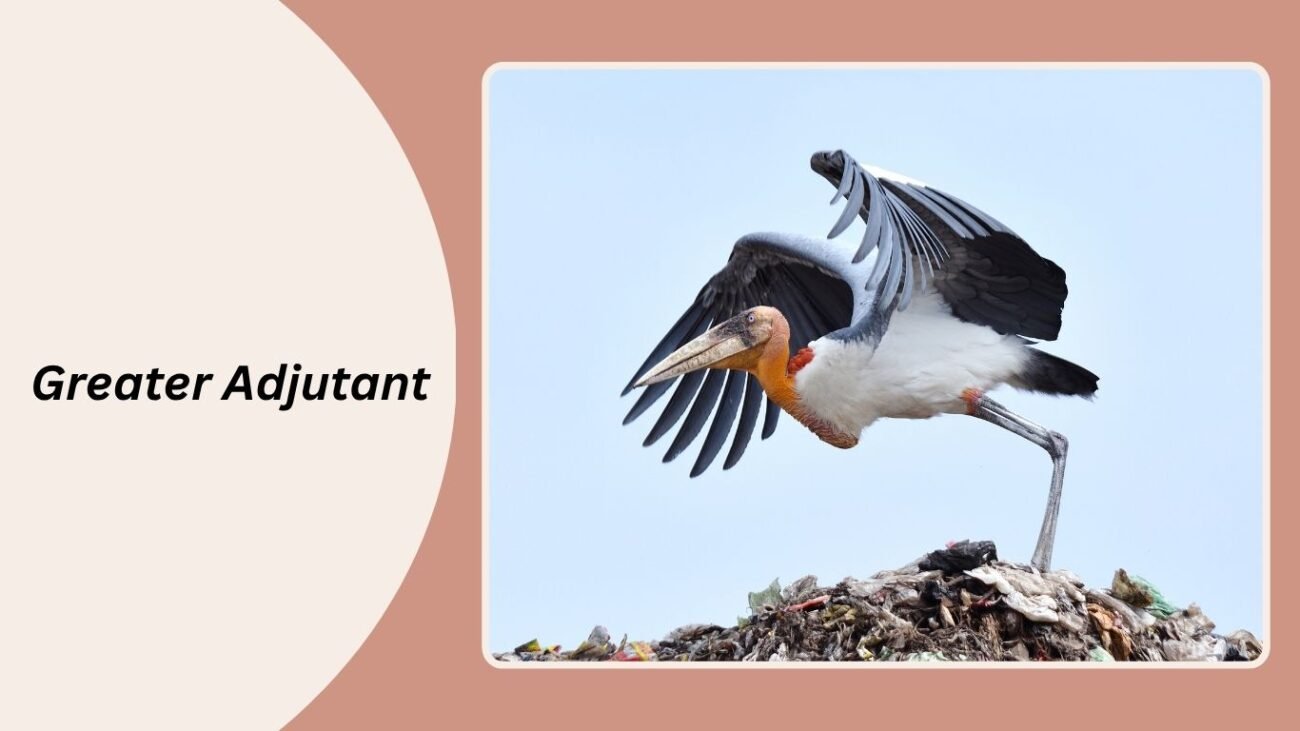
The Greater Adjutant is one of the world’s rarest storks and is found mainly in parts of India and Cambodia. It has a large, heavy body and a bald head, giving it a vulture-like look.
Identification
- Large, bulky body with dark wings and pale underparts
- Bald, pinkish head and neck
- Long, thick, yellowish bill
- Large, hanging pouch (gular sac) below the neck
- Wingspan: up to 2.5 meters
- Height: about 145–150 cm
Behavior
Feeds on carrion, garbage, and also hunts small animals in wetlands. Often seen near landfills or city outskirts. Walks slowly and heavily. Important scavenger species.
Habitat
Found in wetlands, garbage dumps, and dry grasslands. Once widespread, now limited to Assam (India) and a few protected areas in Cambodia.
Conservation Status
Endangered. Main threats are habitat loss, pollution, and disturbance near breeding sites. Protected in Assam, where small colonies are growing due to conservation efforts.
17. Marabou Stork (Leptoptilos crumenifer)
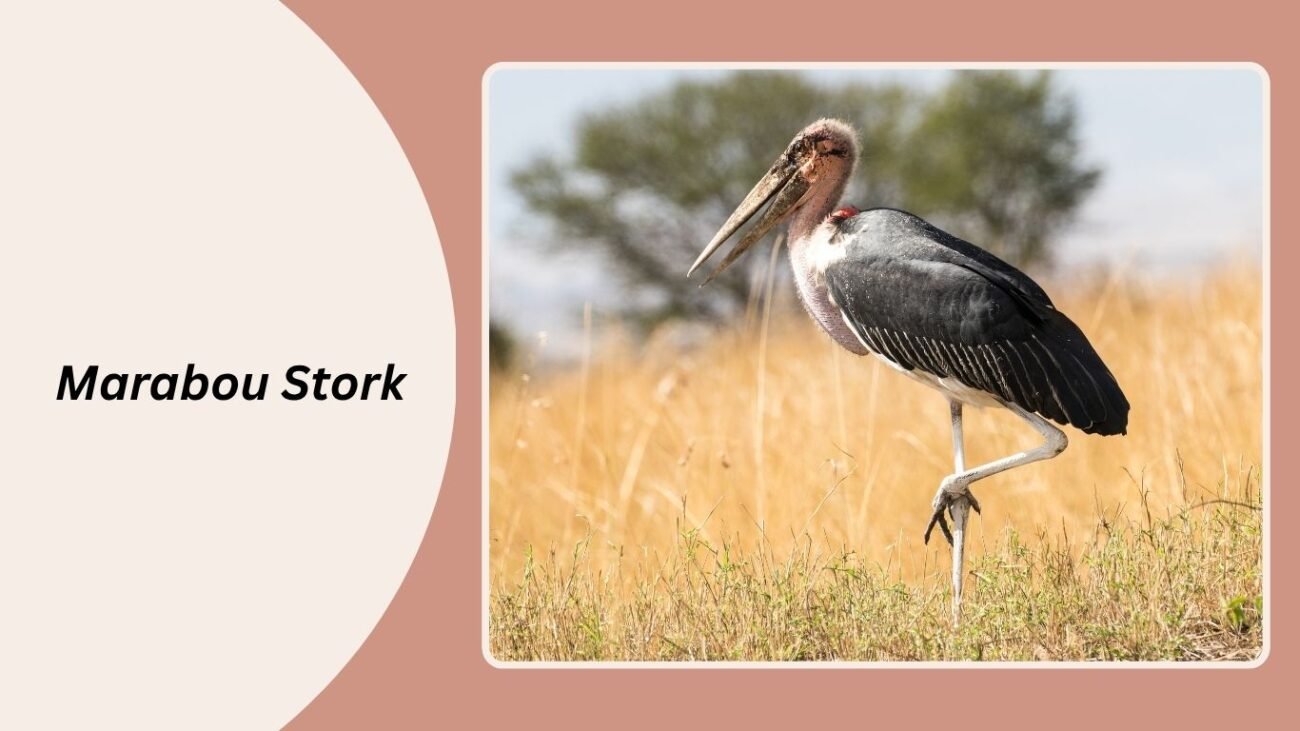
The Marabou Stork is a massive bird found across sub-Saharan Africa. Known as the “undertaker bird” due to its dark body, bald head, and scavenging habits, it plays a key role in cleaning the environment.
Identification
- Bare, pink head and neck
- Black back and wings, white belly
- Huge yellowish bill
- Large pink gular sac hanging from the throat
- Long, skinny legs
- Wingspan: up to 2.8 meters (one of the largest flying birds)
Behavior
Feeds mostly on carrion, dead animals, and garbage, but also eats fish, insects, and reptiles. Common near dumps, slaughterhouses, and wetlands. Often seen with vultures.
Habitat
Dry savannas, wetlands, riverbanks, and urban waste areas. Roosts in large flocks on trees or buildings near food sources.
Breeding
Nests in large colonies in tall trees. Builds huge stick nests reused yearly. Lays 2–3 eggs, with both parents caring for the chicks. Breeding is often timed with the dry season.
18. African Openbill (Anastomus lamelligerus)
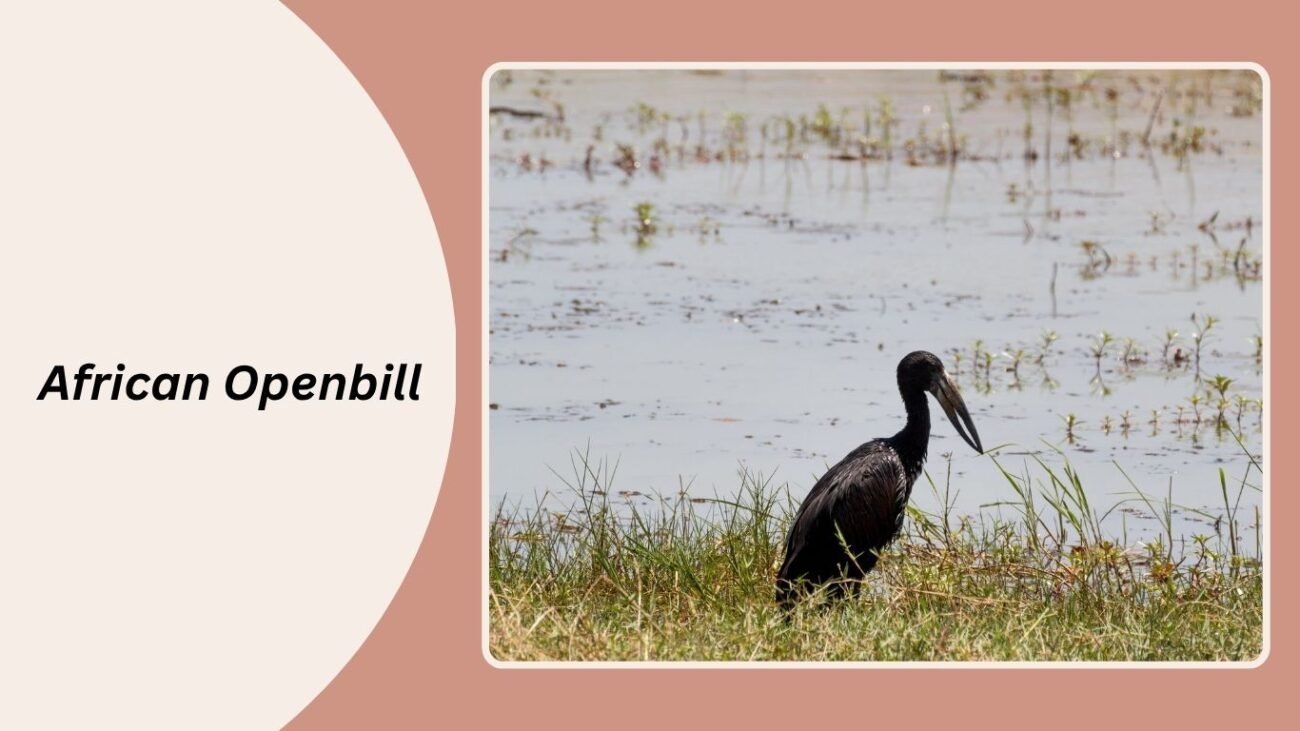
The African Openbill is a medium-sized stork found across sub-Saharan Africa. It gets its name from the gap between the upper and lower parts of its bill, which helps it catch snails—its favorite food.
Identification
- Dark brown to black plumage with a greenish or purplish sheen
- Long, slender legs and neck
- Unique open gap in the bill (more obvious in adults)
- Wingspan: about 1.5–1.7 meters
- Juveniles are duller and browner
Behavior
Specialized in feeding on aquatic snails and mussels. Uses its open bill to grip slippery shells. Often feeds in groups in shallow wetlands and flooded fields.
Habitat
Prefers freshwater wetlands, swamps, rivers, and floodplains. Common near lakes, ponds, and rice fields across Africa.
Breeding
Breeds in colonies, often with herons and ibises. Builds large stick nests in trees or reeds. Breeding is often tied to the rainy season when snails are plentiful.
19. Asian Openbill (Anastomus oscitans)
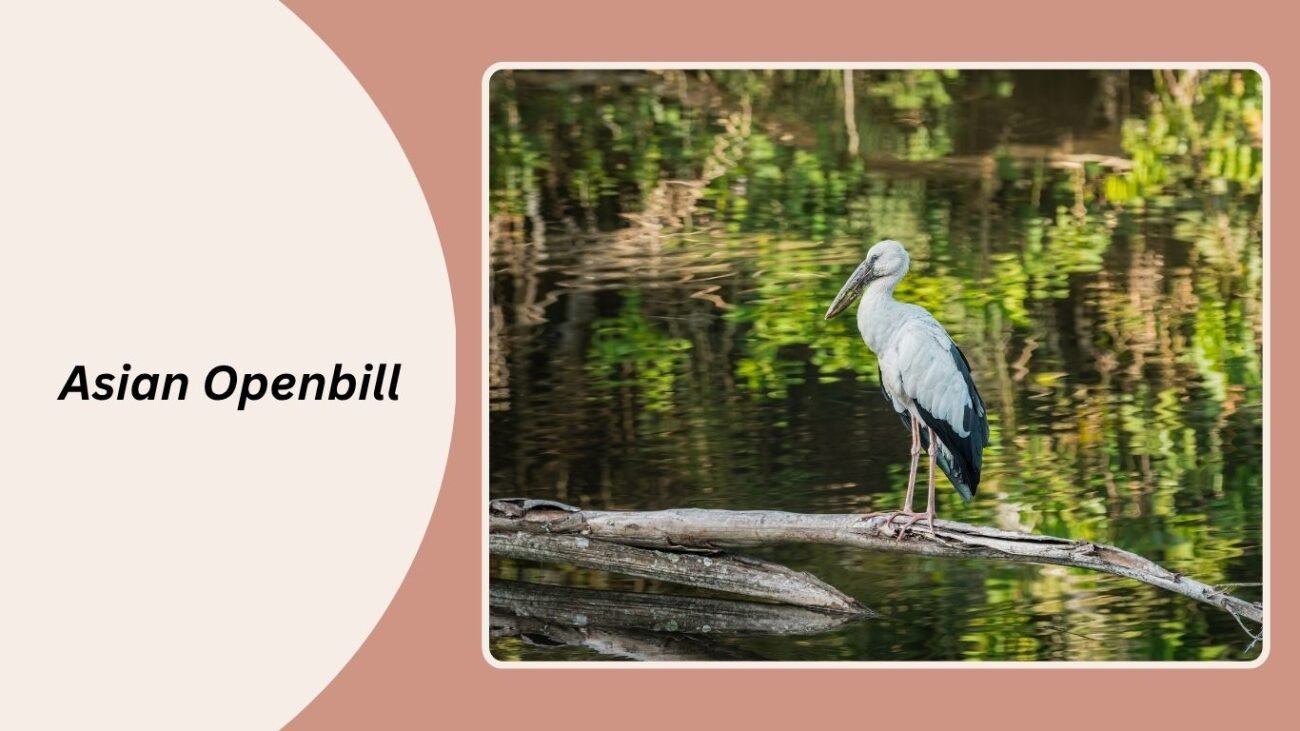
The Asian Openbill is a common stork in South and Southeast Asia. Like its African cousin, it has a distinct open gap in its bill, perfectly adapted for eating water snails.
Identification
- Greyish-white body with black flight feathers
- Long, open-billed beak with a noticeable gap
- Pinkish legs and greyish head
- Wingspan: 1.2–1.5 meters
- Appears white in flight with black wing edges
Behavior
Feeds mostly on snails, especially apple snails. Walks slowly through rice fields and shallow water. Often seen in large flocks, especially outside the breeding season.
Habitat
Widespread in wetlands, rice paddies, marshes, and irrigation canals in India, Sri Lanka, Bangladesh, Thailand, and Cambodia.
Breeding
Builds stick nests in tall trees, often in large colonies. Breeding season varies by region but usually aligns with the monsoon. Both parents care for the chicks.