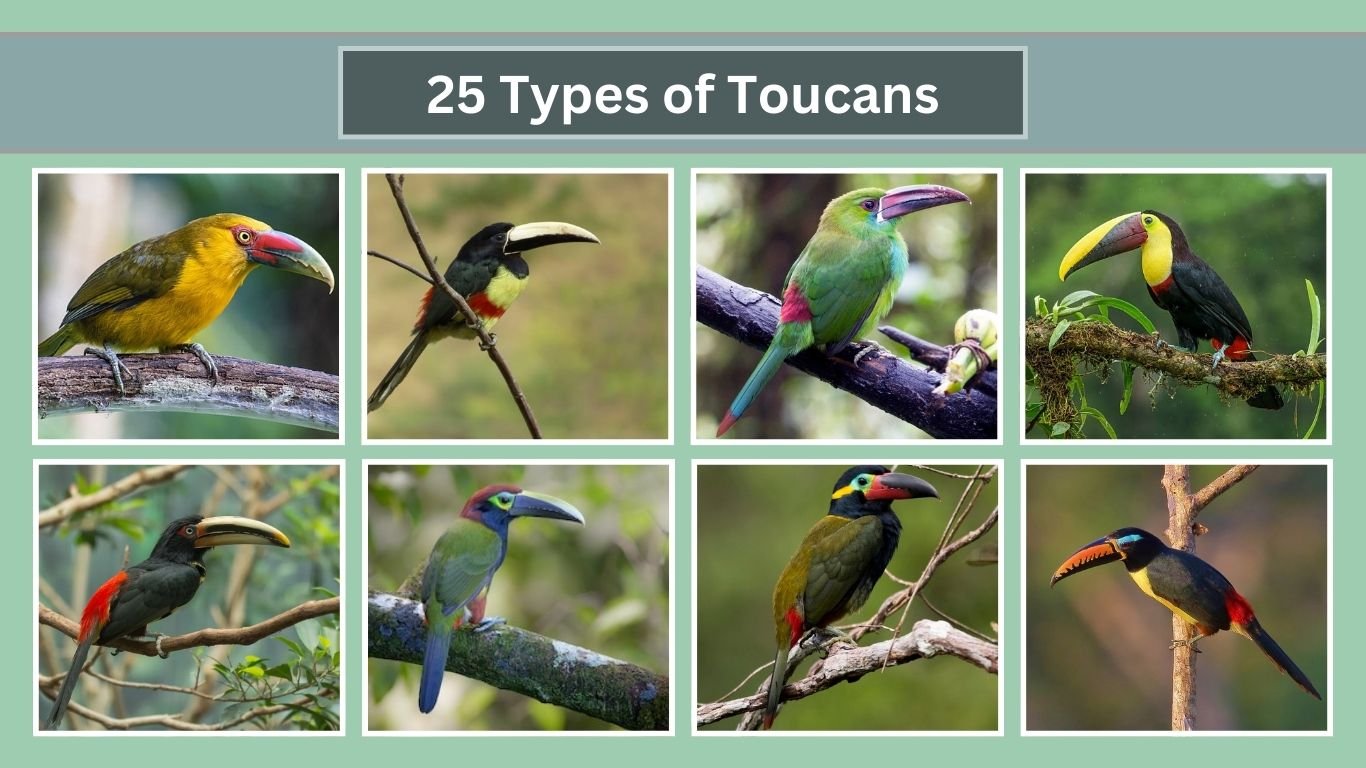
Toucans are among the most iconic tropical birds, instantly recognized by their oversized bills and vibrant colors. Found mainly in Central and South America, these birds play a vital role in rainforest ecosystems as seed dispersers. With their striking appearances and lively behaviors, toucans and araucarias represent a diverse family. In this article, we’ll explore 25 different types of toucans, highlighting their unique traits, habitats, diets, and fascinating lifestyles.
1. Keel-billed Toucan
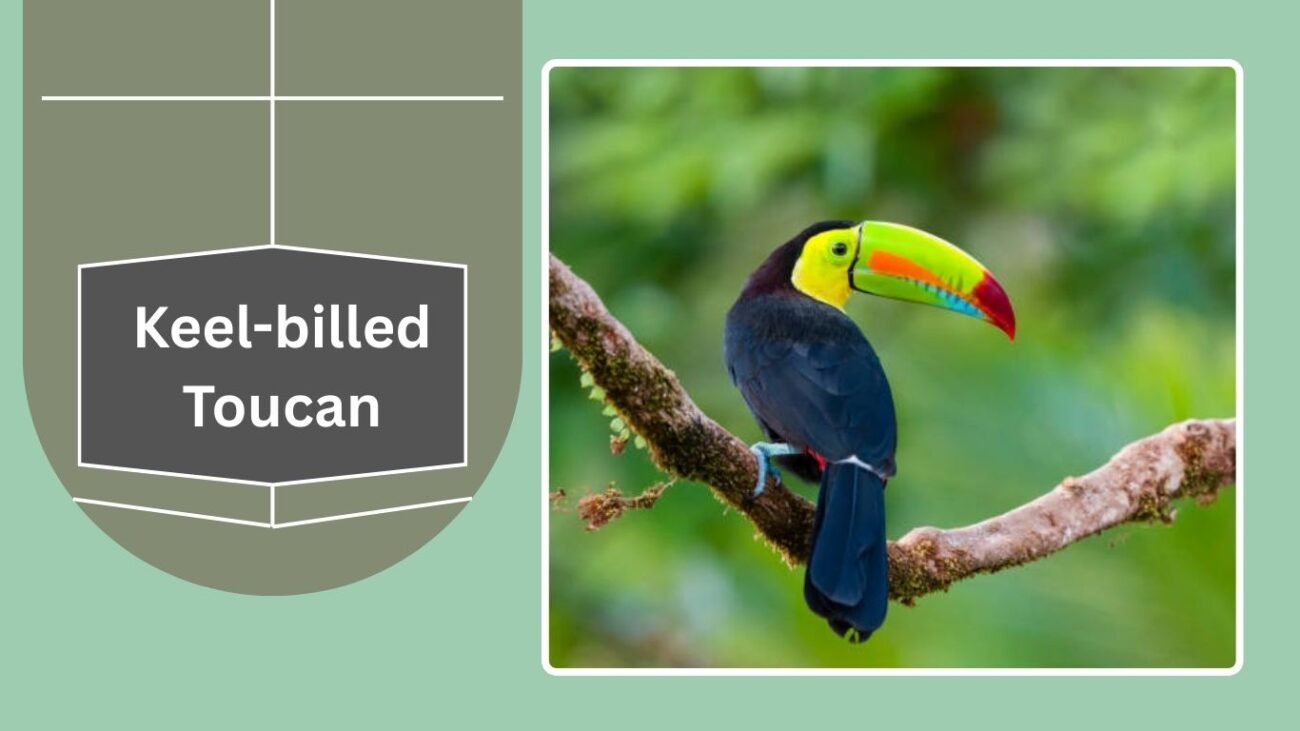
The Keel-billed Toucan (Ramphastos sulfuratus), also called the Rainbow-billed Toucan, is one of the most colorful and recognizable toucans in the world. Its oversized, multicolored bill makes it a favorite symbol of tropical wildlife. Found in Central and South America, it is often spotted in rainforest canopies and is known for its playful and social behavior.
Identification
- Medium-sized toucan, around 42–55 cm long
- Large, brightly colored bill with shades of green, orange, red, and blue
- Black body with a vibrant yellow throat and chest
- Red undertail coverts
- Light blue skin around the eyes
Habitat
The Keel-billed Toucan thrives in tropical and subtropical rainforests, from lowland areas to higher elevations. It is distributed from southern Mexico through Central America to northern Colombia and Venezuela.
Diet
This toucan primarily feeds on fruits but will also eat insects, lizards, eggs, and small birds. Its long bill allows it to reach fruit on branches too weak to support its weight.
Behavior
Keel-billed Toucans are highly social and often travel in small flocks. They are noisy birds with frog-like croaking calls that resonate through the forest. During mating, they engage in playful bill fencing and tossing fruits to each other.
2. Toco Toucan
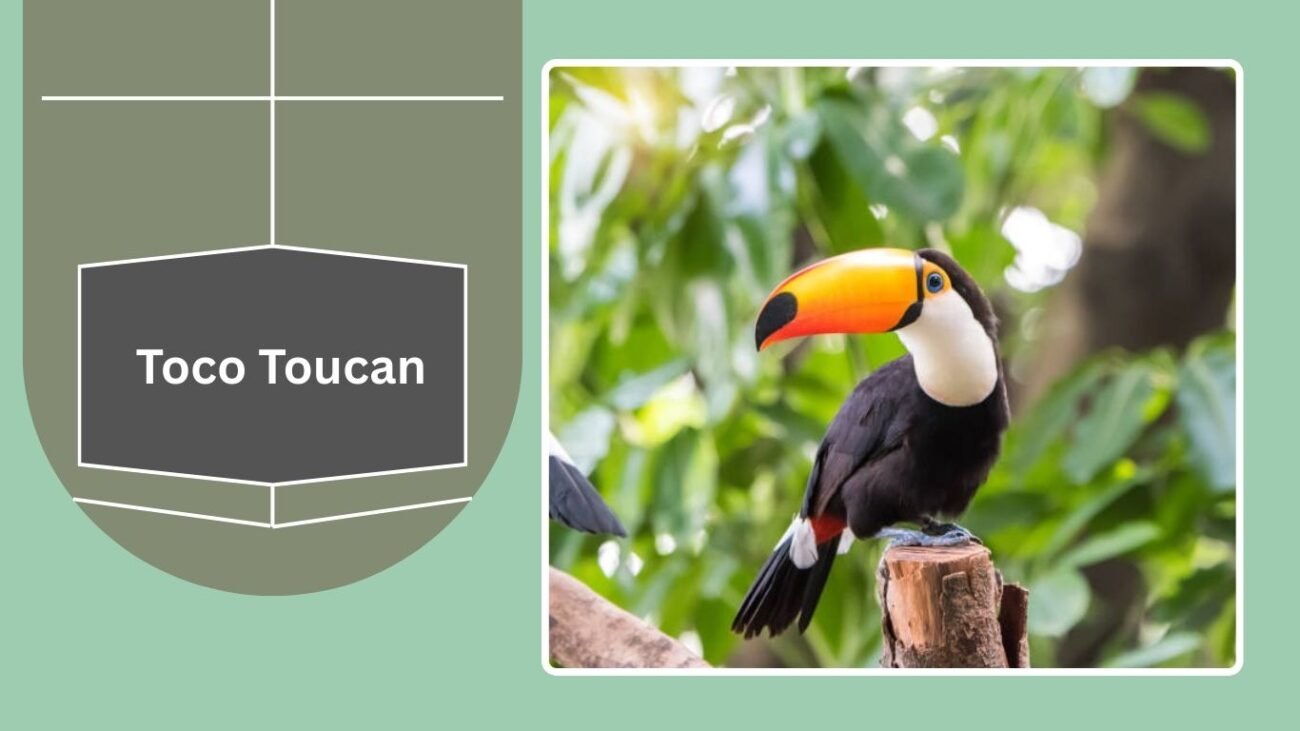
The Toco Toucan (Ramphastos toco) is the largest and most famous of all toucan species, instantly recognizable by its massive orange bill. It is often featured in advertisements, logos, and media as the classic symbol of toucans. Native to South America, it thrives in open woodlands and savannas, making it one of the most widely distributed toucans.
Identification
- Largest toucan, measuring about 55–65 cm in length
- Enormous bright orange bill with a black tip
- Glossy black body with a stark white throat and chest
- Blue skin around the eyes, encircled by an orange ring
- Short, square tail with red undertail coverts
Habitat
Unlike many toucans that live deep in rainforests, the Toco Toucan is adapted to a variety of habitats including open woodlands, savannas, river forests, and even plantations. It is found across Brazil, Paraguay, northern Argentina, and parts of Bolivia.
Diet
Their diet is predominantly fruit-based, but they also eat insects, small reptiles, and eggs. The long bill is an excellent tool for reaching fruit and for regulating body temperature in hot climates.
Behavior
Toco Toucans are usually seen in pairs or small groups. They have a loud croaking call and are known for their playful interactions. Despite their large bill, they are agile fliers and often hop through treetops with ease.
3. Channel-billed Toucan
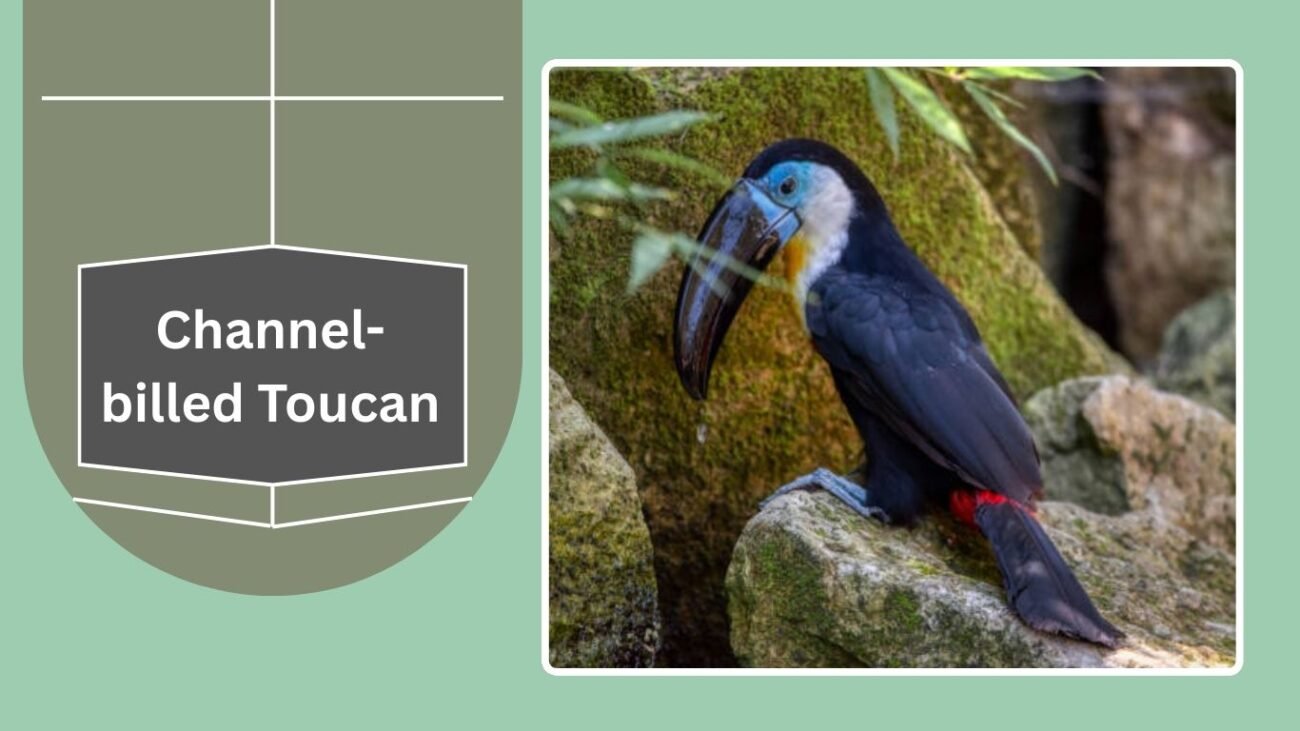
The Channel-billed Toucan (Ramphastos vitellinus) is a striking bird known for its large, dark bill and vibrant throat patch. It is one of the most widespread toucan species in South America and has several subspecies with slightly different coloration. This toucan plays a key role in forest ecology by dispersing seeds through its fruit-heavy diet.
Identification
- Medium to large toucan, about 48–61 cm long
- Black plumage with a bright yellow throat patch that may show an orange tint in some subspecies
- Large black bill with a narrow groove or “channel” along the sides
- Blue skin around the eyes, adding contrast to its dark feathers
- White or light-colored rump and undertail
Habitat
Channel-billed Toucans are found in tropical and subtropical forests across northern and central South America, including Venezuela, Brazil, the Guianas, Colombia, and Bolivia. They inhabit both lowland rainforests and higher elevation woodlands.
Diet
Their diet consists mostly of fruits, particularly figs, but they also eat insects, eggs, and small vertebrates. This makes them essential for seed dispersal, contributing to forest regeneration.
Behavior
They are active, social birds, often traveling in small groups. Their calls are loud and croaking, helping them communicate across dense forests. During breeding, they use tree cavities for nesting, with both parents sharing incubation and feeding duties.
4. White-throated Toucan
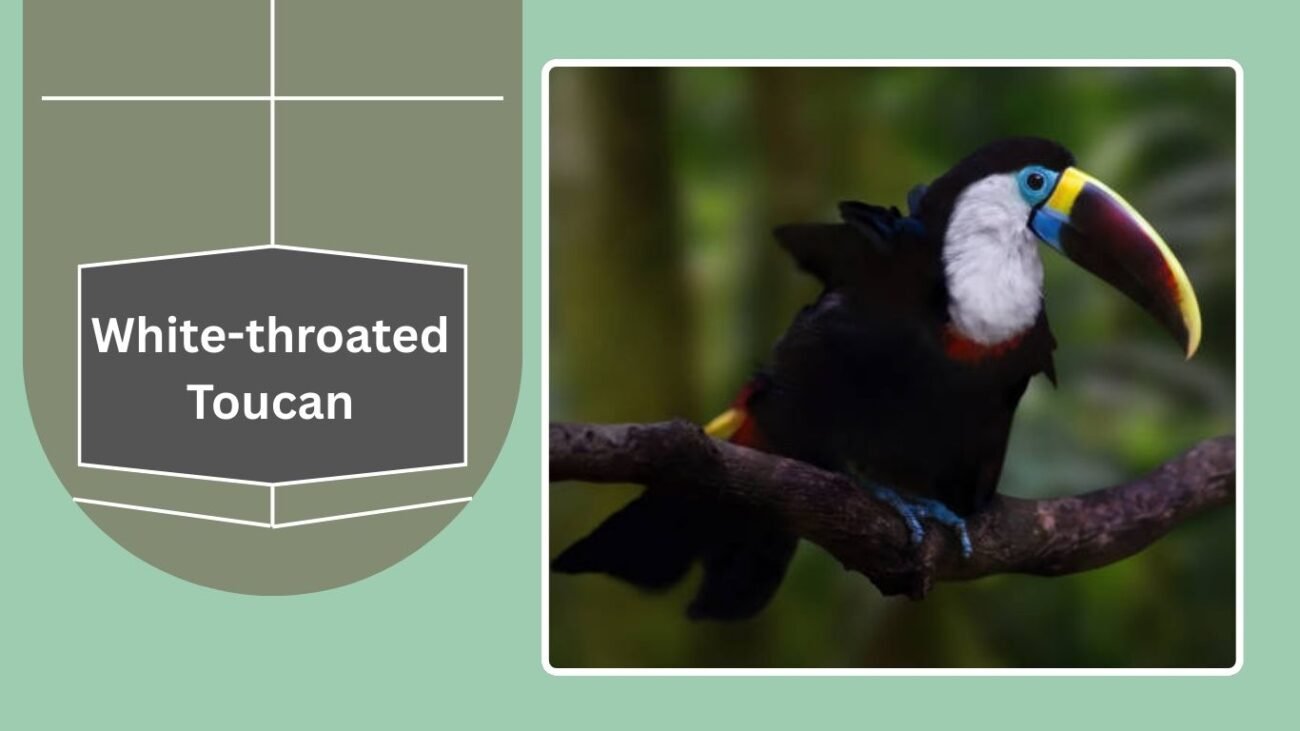
The White-throated Toucan (Ramphastos tucanus) is one of the most prominent members of the toucan family, known for its loud, echoing calls that can be heard across rainforests. It is often mistaken for the Channel-billed Toucan due to its similar appearance, but it can be distinguished by its pure white throat and slightly different bill structure.
Identification
- Large toucan, measuring about 50–61 cm in length
- Distinctive white throat and chest, contrasting with its black body
- Large black bill with a pale or yellowish base, depending on subspecies
- Blue skin around the eyes, adding brightness to its dark plumage
- Red undertail coverts, providing a splash of color when in flight
Habitat
White-throated Toucans are widely distributed in the Amazon Basin, found in Brazil, Peru, Ecuador, Colombia, and Venezuela. They prefer lowland rainforests but can also be found in forest edges and secondary growth areas.
Diet
Their diet is mainly frugivorous, with figs making up a significant portion. They also feed on insects, eggs, and small reptiles. Their long bill allows them to reach food that other animals cannot access, playing a vital role in seed dispersal.
Behavior
White-throated Toucans are highly vocal, producing a series of croaking, yelping calls that carry long distances. They are often seen in pairs or small flocks and move actively through the canopy. During nesting, the female lays eggs in tree cavities, and both parents help care for the chicks.
5. Chestnut-mandibled Toucan
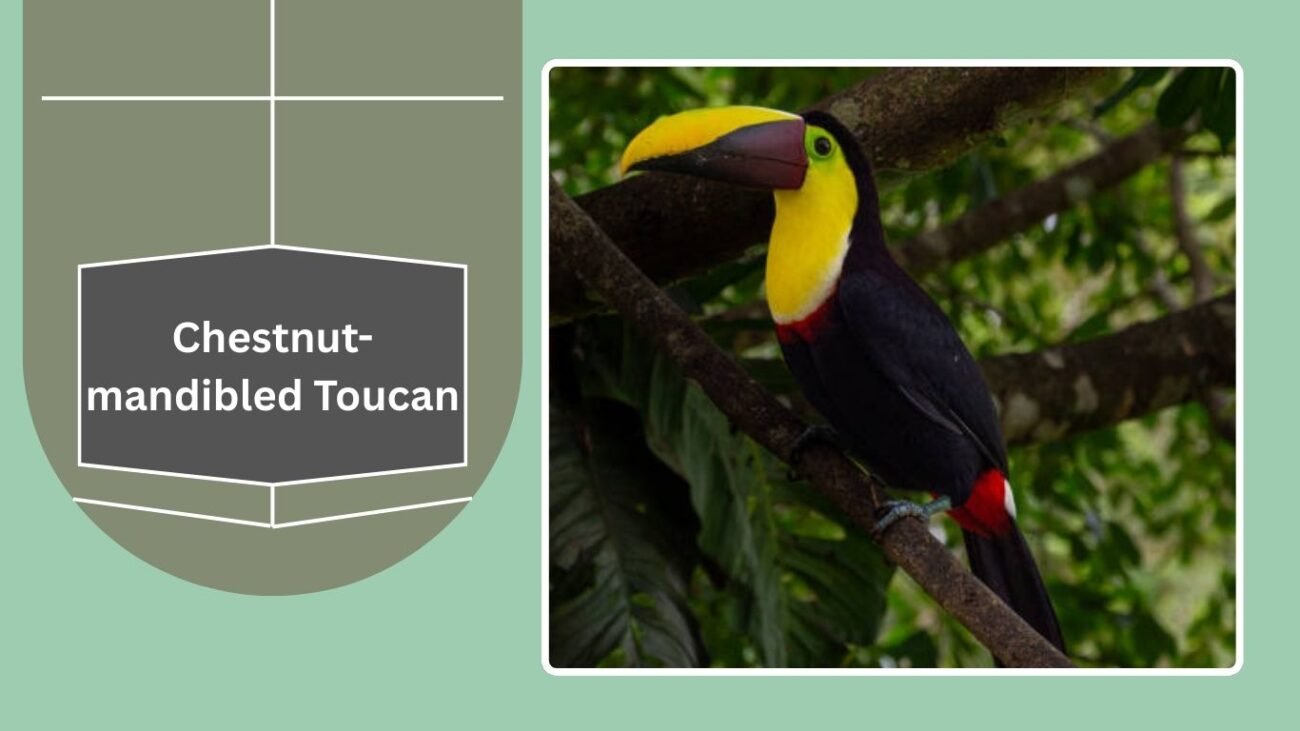
The Chestnut-mandibled Toucan (Ramphastos swainsonii), also called Swainson’s Toucan, is a large and colorful toucan native to Central and South America. It is closely related to the Yellow-throated Toucan and is known for its distinctive dark brown (chestnut-colored) upper bill, which contrasts beautifully with its yellow throat.
Identification
- Large toucan, measuring around 47–61 cm in length
- Bill is two-toned: upper mandible chestnut-brown, lower mandible yellow-green
- Black plumage with a bright yellow throat and chest
- Red undertail coverts
- Blue skin around the eyes, adding a striking highlight
Habitat
Chestnut-mandibled Toucans inhabit humid lowland rainforests, foothills, and forest edges. They are commonly found from Honduras and Nicaragua down through Costa Rica and Panama into northwestern Colombia and Ecuador.
Diet
Their diet consists mainly of fruits, particularly figs, but they also feed on insects, small lizards, and bird eggs. They are important seed dispersers, ensuring the growth of forest plants and trees.
Behavior
These toucans are social and are often seen in small groups moving through the canopy. Their calls are loud and frog-like, echoing through the rainforest. During the breeding season, they nest in tree cavities, where the female lays 2–4 eggs and both parents participate in rearing the chicks.
6. Yellow-throated Toucan
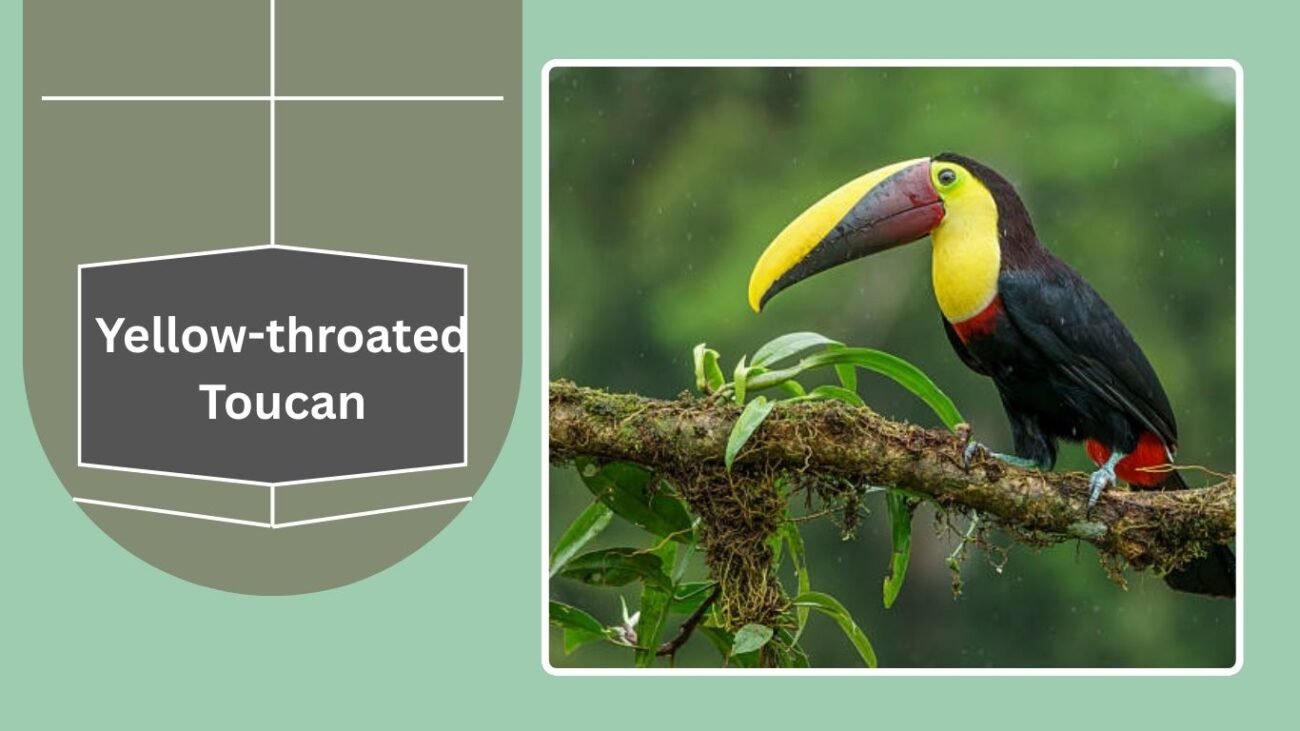
The Yellow-throated Toucan (Ramphastos ambiguus) is one of the largest toucans in the Americas, well known for its vibrant yellow throat and booming calls. It is closely related to the Chestnut-mandibled Toucan, and in some regions, the two are considered subspecies of the same species. Its powerful presence and striking appearance make it a key symbol of tropical forests.
Identification
- Large toucan, measuring about 50–60 cm in length
- Bright yellow throat and chest that contrast with its black body
- Massive two-toned bill, often black on the upper mandible and greenish-yellow on the lower
- Red undertail coverts
- Blue skin around the eyes, enhancing its tropical look
Habitat
Yellow-throated Toucans are found in humid lowland and montane forests from Honduras and Costa Rica down through Panama, Colombia, Venezuela, and into northern Ecuador. They prefer dense canopies of primary and secondary forests.
Diet
Their diet is mainly composed of fruits, particularly figs, but they also eat insects, frogs, lizards, eggs, and small birds. As with other toucans, they are critical seed dispersers in the ecosystems they inhabit.
Behavior
These toucans are noisy, with a loud croaking or yelping call that can be heard over a kilometer away. They are active during the day, moving in pairs or small groups, and they often engage in playful bill duels. For nesting, they use natural cavities in trees, with both parents sharing the responsibility of raising the young.
7. Ariel Toucan
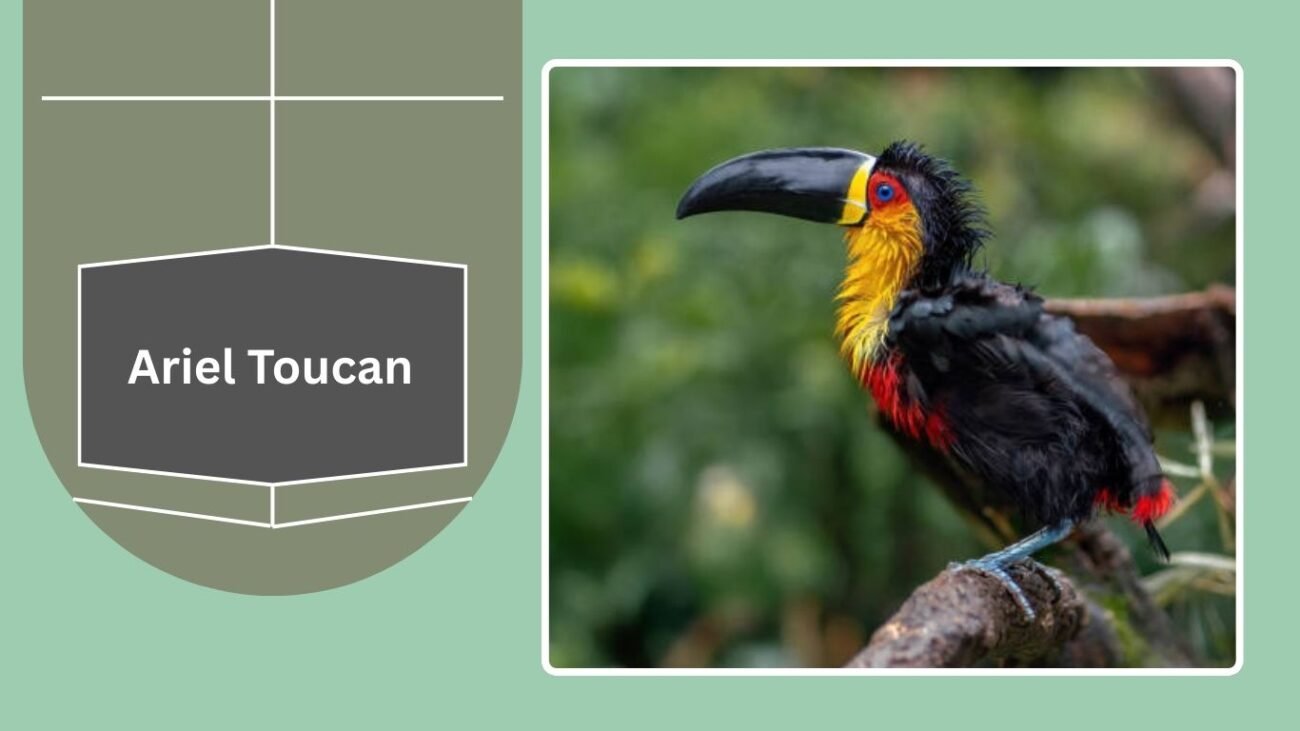
The Ariel Toucan (Ramphastos vitellinus ariel) is a beautiful subspecies of the Channel-billed Toucan, native to South America. It is admired for its strikingly colored bill and the bright orange-yellow hues on its throat. Its name is often linked to its elegant appearance and lively movements across the forest canopy.
Identification
- Medium to large toucan, about 48–55 cm in length
- Bill is mostly black with bright orange to yellow highlights near the base
- Glossy black plumage with a vibrant orange-yellow throat patch
- Blue skin around the eyes, giving a vivid contrast
- White rump and undertail with red undertail coverts
Habitat
The Ariel Toucan inhabits lowland rainforests, secondary forests, and wooded areas of eastern and southeastern Brazil. It is also found in nearby regions of Paraguay and northern Argentina.
Diet
Like most toucans, it feeds primarily on fruits but supplements its diet with insects, eggs, and small vertebrates. Its fruit consumption plays an essential role in dispersing seeds and supporting forest growth.
Behavior
Ariel Toucans are active, vocal birds that travel in pairs or small flocks. Their calls are loud, croaking sounds, often used to communicate within the dense canopy. They are agile and can hop skillfully between branches, using their long bill to reach fruits on delicate twigs.
8. Red-billed Toucan
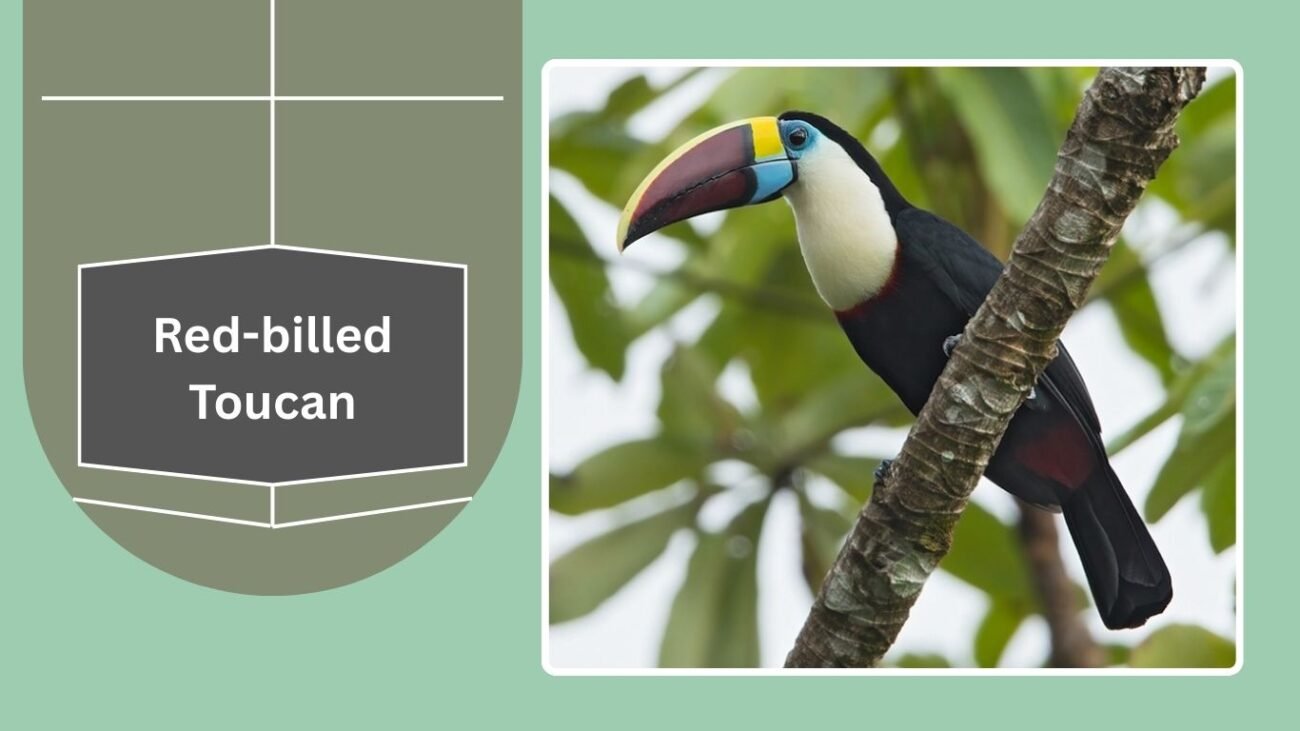
The Red-billed Toucan (Ramphastos tucanus cuvieri), also called Cuvier’s Toucan, is a striking bird recognized by its long, vivid reddish bill. It is sometimes treated as a subspecies of the White-throated Toucan but is distinct enough in appearance to be noted separately. Its bold coloration and loud calls make it a remarkable presence in South American forests.
Identification
- Large toucan, around 55–60 cm in length
- Long reddish-orange bill with a black base and tip
- Black plumage with a bright white throat and chest
- Red undertail coverts, visible in flight
- Bare blue skin around the eyes, adding brightness to its face
Habitat
This toucan is distributed across the northern Amazon Basin, particularly in Brazil, Colombia, Venezuela, Ecuador, and Peru. It thrives in lowland rainforests, riverine forests, and forest edges.
Diet
Its diet is mostly frugivorous, with figs and other tropical fruits as staples. It also consumes insects, eggs, and small vertebrates when fruit is scarce. The Red-billed Toucan is an important seed disperser in its habitat.
Behavior
The Red-billed Toucan is a highly vocal species, producing croaking and yelping calls that echo through the forest canopy. It is usually seen in pairs or small groups, actively moving between fruiting trees. Like other toucans, it nests in tree cavities, with both parents caring for the chicks.
9. Green-billed Toucan
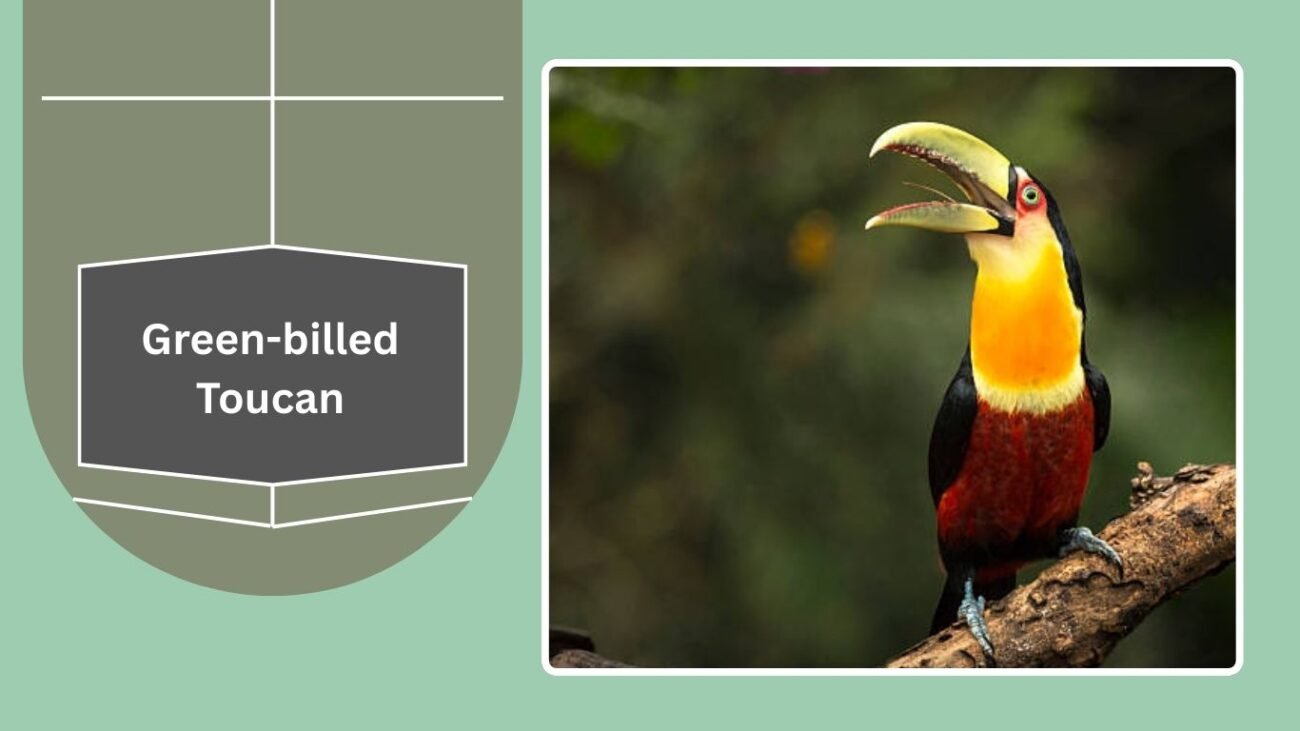
The Green-billed Toucan (Ramphastos dicolorus), also known as the Red-breasted Toucan, is a colorful species native to South America. It is easily recognized by its bright green bill and striking red breast, making it one of the most vibrant members of the toucan family.
Identification
- Medium-sized toucan, about 40–48 cm in length
- Distinctive bright green bill with a black line along the ridge
- Black plumage with a yellow throat and chest
- Prominent red patch on the lower breast and undertail
- Blue skin around the eyes, adding contrast to its face
Habitat
The Green-billed Toucan is found in the Atlantic Forest of southeastern Brazil, eastern Paraguay, and northeastern Argentina. It inhabits humid forests, forest edges, and wooded valleys, often staying in mid to upper canopy levels.
Diet
Fruits make up the majority of its diet, especially figs, but it also eats insects, eggs, and small vertebrates. Its feeding habits contribute greatly to seed dispersal and forest regeneration.
Behavior
This toucan is social and often travels in small flocks. Its calls are frog-like croaks that carry well through dense forest. During nesting, it chooses tree cavities, with both parents participating in incubation and feeding duties.
10. Guianan Toucanet
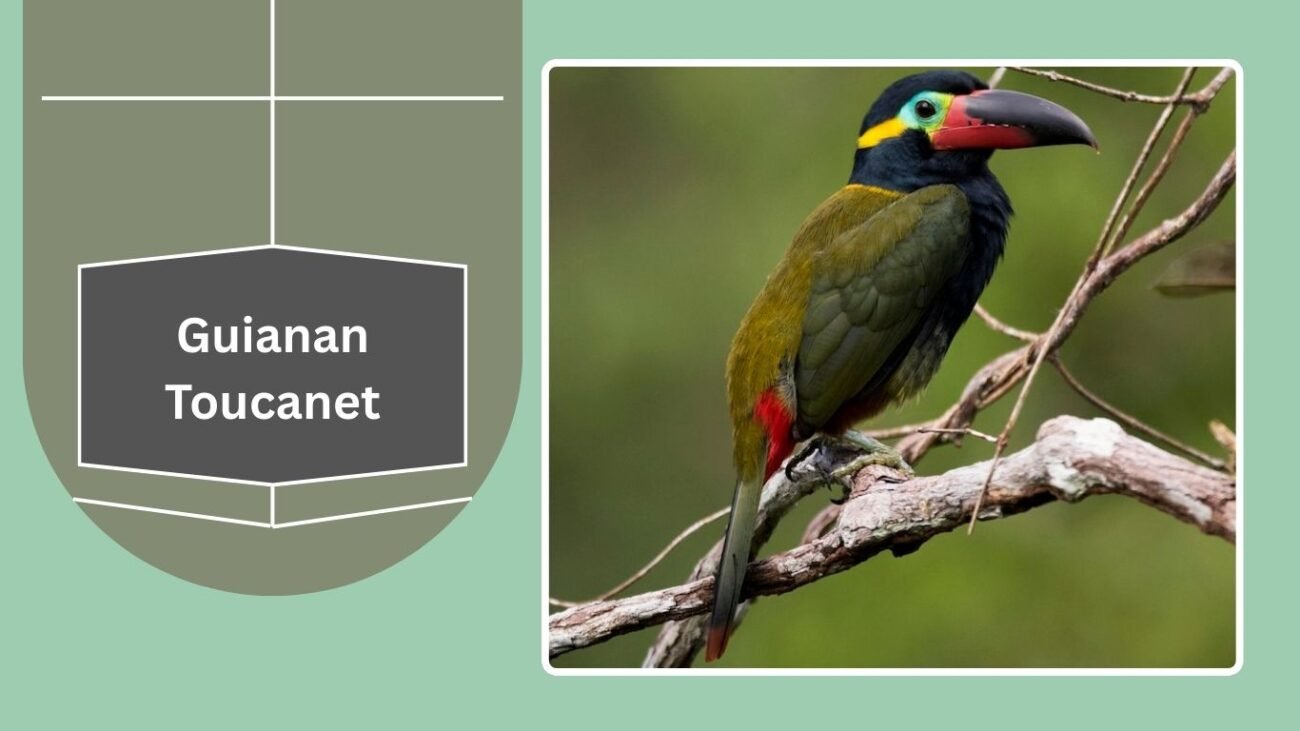
The Guianan Toucanet (Selenidera culik) is a smaller member of the toucan family, known for its compact size and vibrant colors. Unlike the larger toucans, toucanets are more secretive and often found in pairs rather than large groups. The Guianan Toucanet stands out with its green plumage and brightly colored bill.
Identification
- Small toucanet, measuring about 33–35 cm in length
- Predominantly green body with a yellow throat
- Black crown and nape contrasting with its bright plumage
- Distinctive yellow-and-red patterned bill
- Red undertail feathers, noticeable when in flight
Habitat
The Guianan Toucanet is found in the tropical forests of the Guiana Shield region, including Guyana, Suriname, French Guiana, and parts of northern Brazil. It prefers dense lowland and montane rainforests.
Diet
This species feeds mainly on fruits but will also eat insects, small lizards, and bird eggs when available. Like other toucans, it plays an important role in dispersing seeds throughout the forest.
Behavior
Guianan Toucanets are quieter than larger toucans and are often seen in pairs or small family groups. They move actively in the mid-canopy, hopping from branch to branch. Their calls are high-pitched whistles rather than the deep croaks of larger toucans.
11. Blue-throated Toucanet
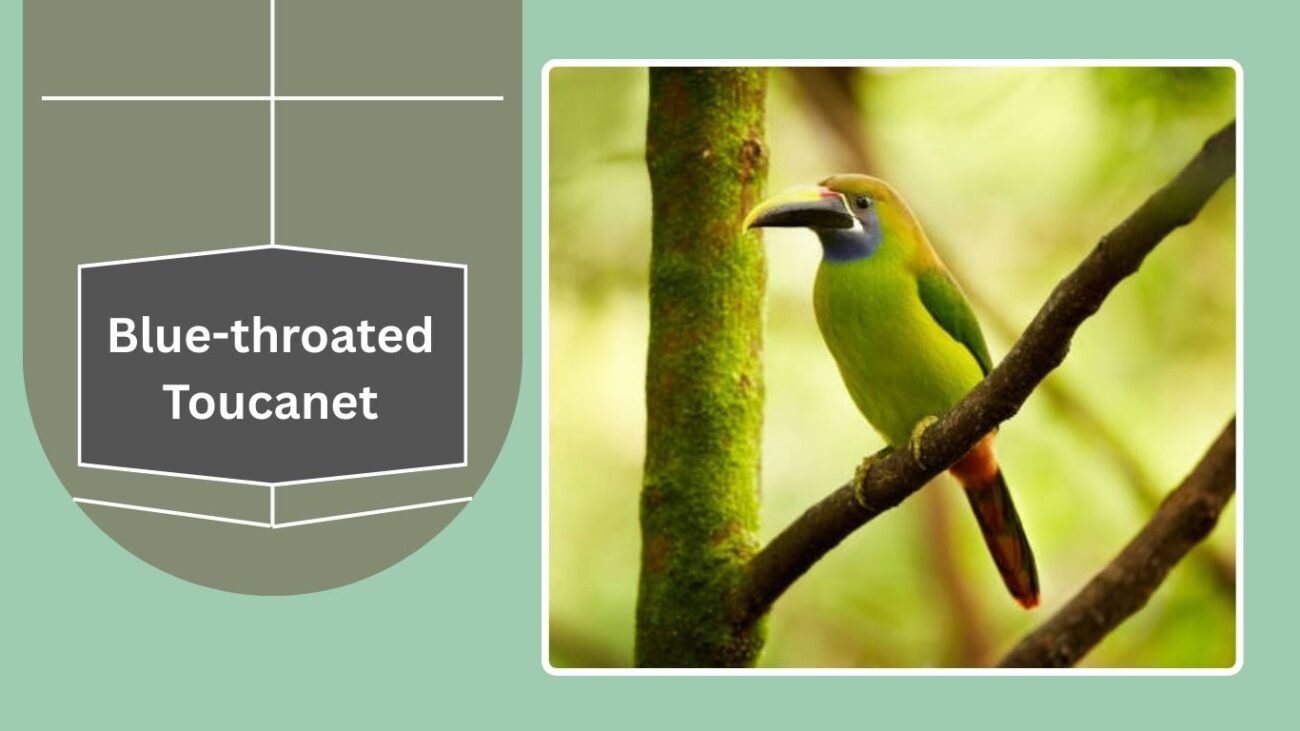
The Blue-throated Toucanet (Aulacorhynchus caeruleogularis) is a charming medium-sized toucanet, admired for its green plumage and distinctive blue throat patch. Unlike the larger toucans, it has a more delicate build and is often seen in smaller groups, moving quietly through the forest canopy.
Identification
- Medium-sized toucanet, about 30–35 cm in length
- Predominantly green body with a striking blue throat and cheeks
- Black bill with yellow highlights along the upper ridge
- Chestnut-colored undertail feathers
- Bare skin around the eyes, usually bluish
Habitat
This toucanet inhabits humid montane forests in Central America, particularly from Costa Rica to western Panama. It prefers mid- to high-elevation cloud forests and is commonly seen in the mid-canopy.
Diet
Its diet is mainly fruit-based, with figs and other small forest fruits as staples. It also consumes insects, eggs, and occasionally small vertebrates, helping maintain balance in the forest ecosystem.
Behavior
Blue-throated Toucanets are social birds, often traveling in pairs or small groups. Their calls are sharp, croaking notes that stand out in the quiet forest. During the breeding season, they nest in tree cavities, where both parents share incubation and chick-rearing duties.
12. Emerald Toucanet
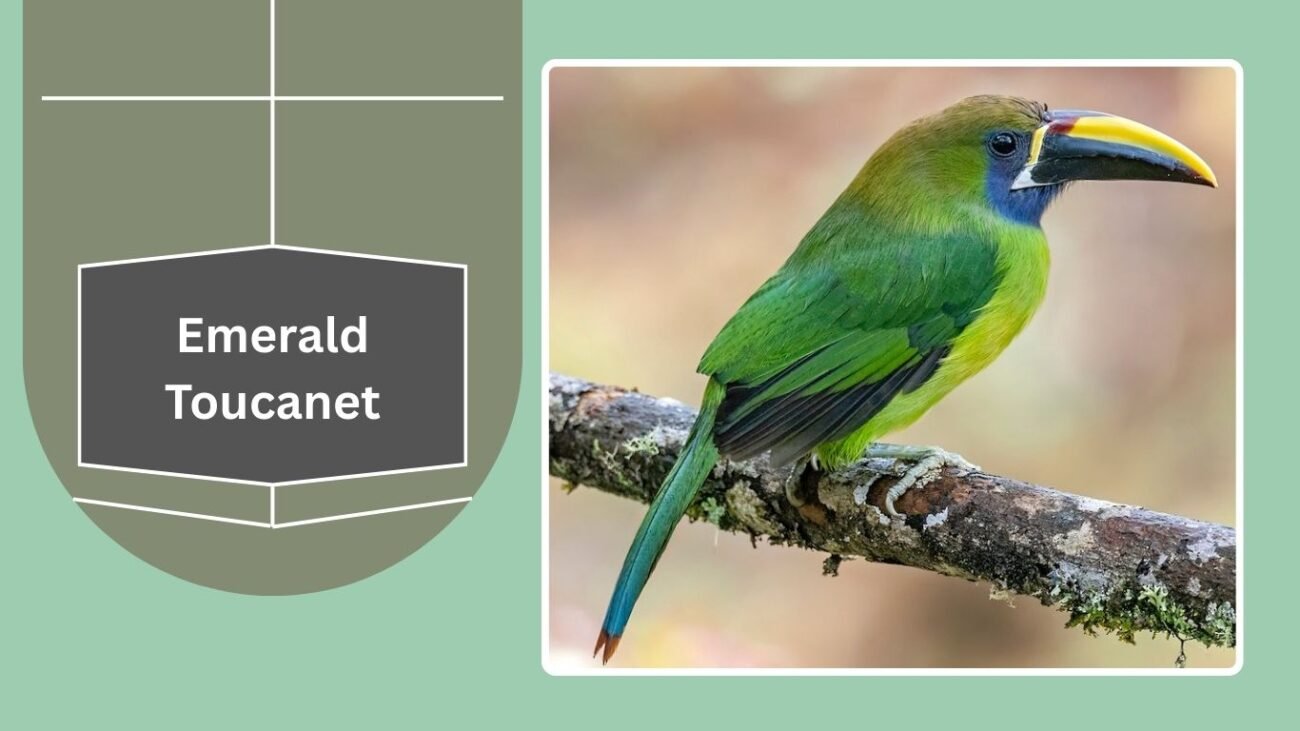
The Emerald Toucanet (Aulacorhynchus prasinus) is one of the most widespread and well-known toucanets, famous for its brilliant green plumage that blends perfectly with the forest canopy. Smaller and more discreet than the larger toucans, it is often found in pairs or small groups across Central and South America.
Identification
- Small to medium-sized toucanet, around 30–35 cm long
- Vivid emerald-green body with a pale blue patch on the throat and around the eyes
- Bill mostly black with yellow on the upper ridge and pale markings near the base
- Chestnut undertail feathers
- Compact and sleek appearance compared to larger toucans
Habitat
The Emerald Toucanet inhabits montane and cloud forests from Mexico through Central America and into northern South America. It prefers mid- to high-elevation forests, often between 1,000 and 3,000 meters.
Diet
This toucanet primarily feeds on fruits, including figs and berries, but also supplements its diet with insects, small lizards, and bird eggs. Its feeding helps with seed dispersal, making it important for forest ecology.
Behavior
Emerald Toucanets are relatively quiet compared to large toucans, producing sharp barking or croaking calls. They are agile and move easily among branches. During breeding, they nest in tree cavities, where both male and female share incubation and feeding duties.
13. Crimson-rumped Toucanet
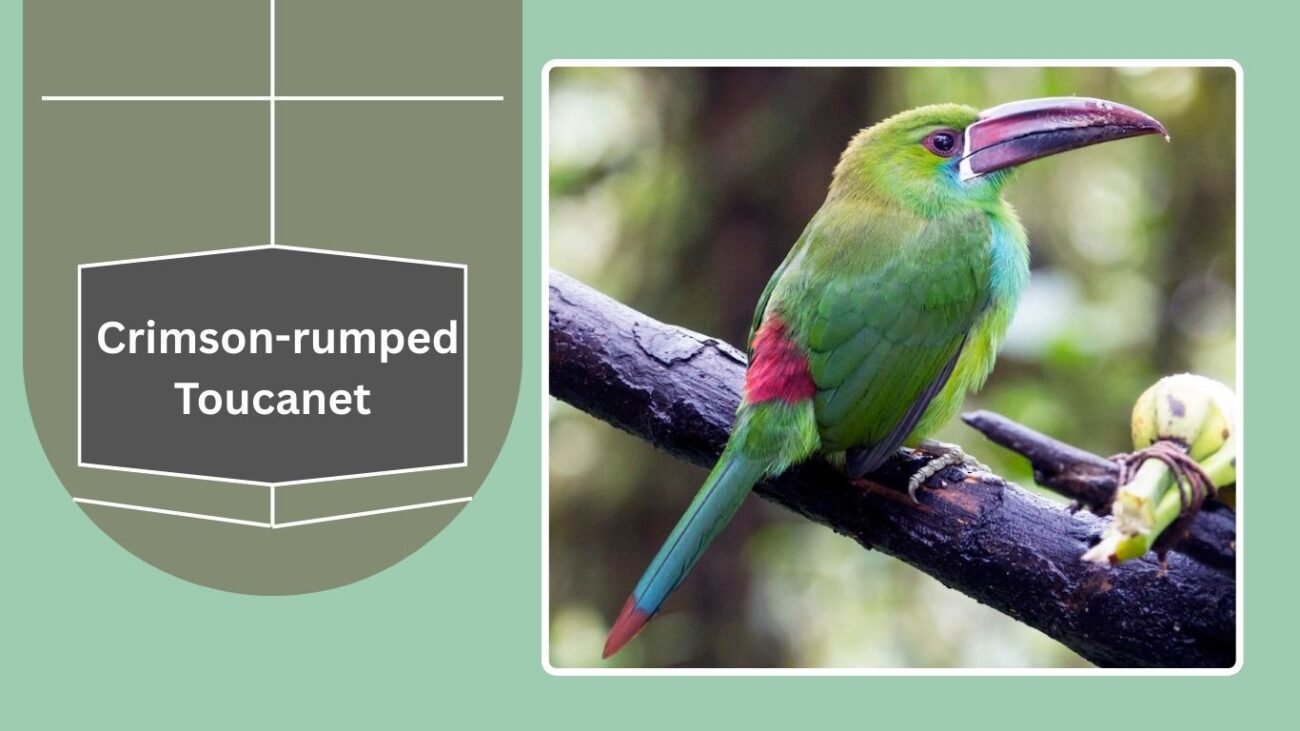
The Crimson-rumped Toucanet (Aulacorhynchus haematopygus) is a brightly colored toucanet named for its striking crimson-red rump, which contrasts beautifully with its otherwise green body. Native to the northern Andes, it is one of the more vibrant and distinctive toucanets found in montane forests.
Identification
- Medium-sized toucanet, measuring about 35–40 cm in length
- Predominantly emerald-green plumage
- Distinctive crimson-red rump and undertail
- Black bill with yellowish or whitish markings on the ridge
- Blue eye-ring and subtle blue highlights around the face
Habitat
This species inhabits humid montane forests and cloud forests along the Andes, particularly in Colombia, Ecuador, and western Venezuela. It generally prefers elevations between 1,000 and 2,400 meters.
Diet
Crimson-rumped Toucanets feed mostly on fruits, especially small berries and figs. They also consume insects, small reptiles, and eggs, making them opportunistic feeders that help with both pest control and seed dispersal.
Behavior
They are usually seen in pairs or small flocks, often foraging quietly in the mid-canopy. Their calls are harsh, croaking notes that echo through the forest. During breeding, they nest in tree cavities, with both parents involved in incubation and raising the chicks.
14. Groove-billed Toucanet
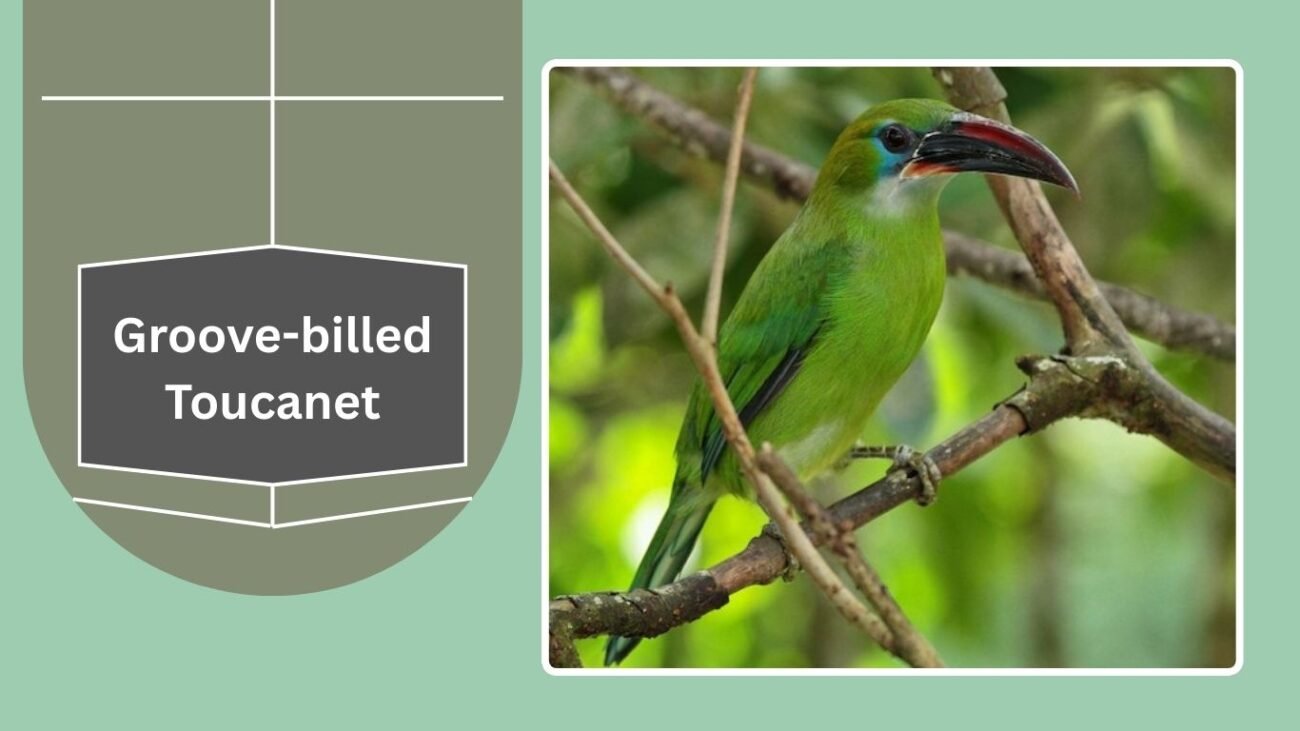
The Groove-billed Toucanet (Aulacorhynchus sulcatus) is a small yet distinctive member of the toucan family, named for the vertical grooves along its bill. Found mainly in northern South America, this toucanet is more secretive than its larger relatives and is often seen in pairs moving quietly through the canopy.
Identification
- Small to medium-sized toucanet, about 33–38 cm long
- Predominantly green plumage with a pale blue throat patch
- Bill is dark with noticeable vertical grooves along the sides
- Red undertail coverts
- Blue skin around the eyes, adding a striking highlight
Habitat
The Groove-billed Toucanet inhabits humid forests, forest edges, and montane woodlands in northern South America. Its range includes Venezuela, Colombia, Trinidad, and parts of Guyana.
Diet
Its diet is mainly fruit-based, including figs and berries, but it also eats insects, small reptiles, and bird eggs. Its feeding habits play a vital role in dispersing seeds across its forested habitat.
Behavior
This toucanet is more reserved than the larger toucans, often moving in pairs or small groups. Its calls are soft, croaking or barking notes that blend into the forest background. During the breeding season, it nests in tree cavities, with both parents sharing responsibilities of incubation and chick care.
15. Yellow-eared Toucanet
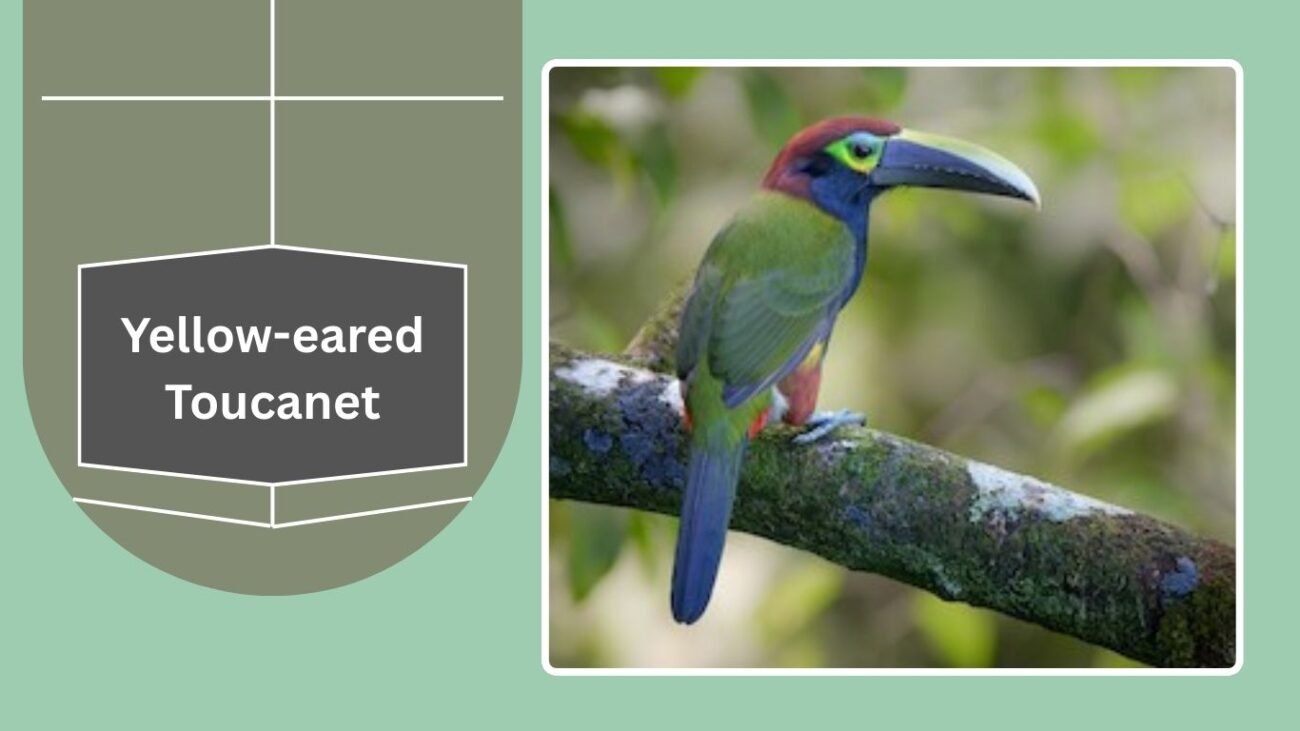
The Yellow-eared Toucanet (Selenidera spectabilis) is a striking and rare toucanet, notable for the bright yellow patch behind its eyes. Unlike the larger and more social toucans, this species is shy and often found alone or in pairs within dense rainforest habitats.
Identification
- Medium-sized toucanet, measuring about 35–40 cm in length
- Predominantly glossy black plumage with a green back and wings
- Distinctive yellow ear patch behind the eyes
- Chestnut-red undertail coverts
- Strong, pale bill with dark markings
Habitat
The Yellow-eared Toucanet inhabits humid lowland and montane forests in Central and northern South America. Its range includes Honduras, Nicaragua, Costa Rica, Panama, and parts of Colombia and Ecuador. It typically prefers elevations between 300 and 1,200 meters.
Diet
This toucanet primarily feeds on fruits but also consumes insects, small vertebrates, and eggs. Its role as a seed disperser is vital for maintaining rainforest biodiversity.
Behavior
Shyer than many other toucans, the Yellow-eared Toucanet is often observed in pairs or small groups. Its calls are high-pitched whistles rather than croaks, making them harder to detect in dense forests. During the breeding season, it nests in tree cavities, where both parents care for the chicks.
16. Spot-billed Toucanet
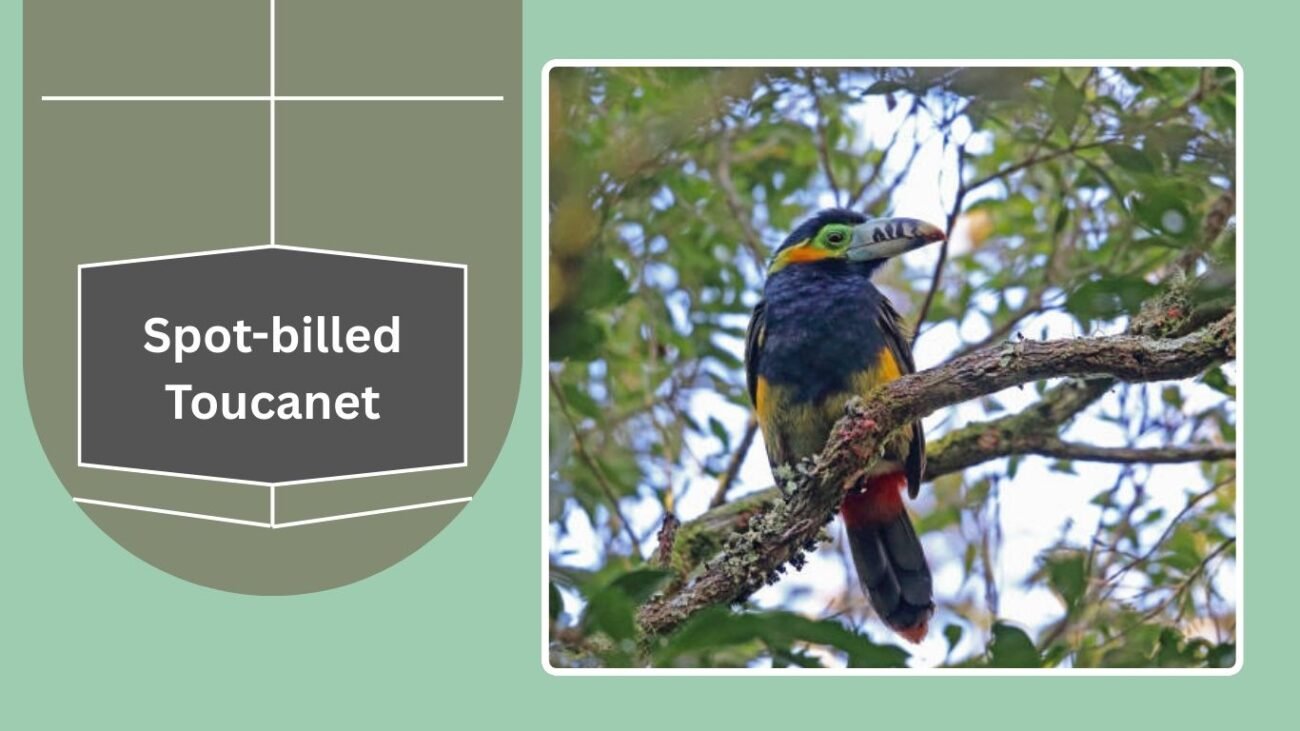
The Spot-billed Toucanet (Selenidera maculirostris) is a beautifully marked toucanet named for the distinct pale spots and markings on its bill. It is a forest-dwelling species of South America, admired for its colorful plumage and quiet presence in dense canopies.
Identification
- Small to medium-sized toucanet, about 33–36 cm in length
- Dark green body with a yellow throat and chest
- Bill dark with characteristic pale yellow or whitish spots and streaks
- Male has a black head and chestnut nape, while the female’s head is more brownish
- Bright blue skin around the eyes
Habitat
The Spot-billed Toucanet is found in the Atlantic Forest regions of southeastern Brazil, Paraguay, and northeastern Argentina. It prefers humid primary and secondary forests, especially at mid-elevations.
Diet
Its diet consists mainly of fruits such as figs and berries, but it also consumes insects, eggs, and small reptiles. As with other toucans, it plays an important role in spreading seeds and maintaining forest ecosystems.
Behavior
Spot-billed Toucanets are generally shy and less noisy than larger toucans. They are often seen in pairs or small groups moving quietly in the forest canopy. Their calls are short, soft whistles or clucks. Breeding pairs use natural tree cavities for nesting, sharing responsibilities of incubation and chick care.
17. Lettered Aracari
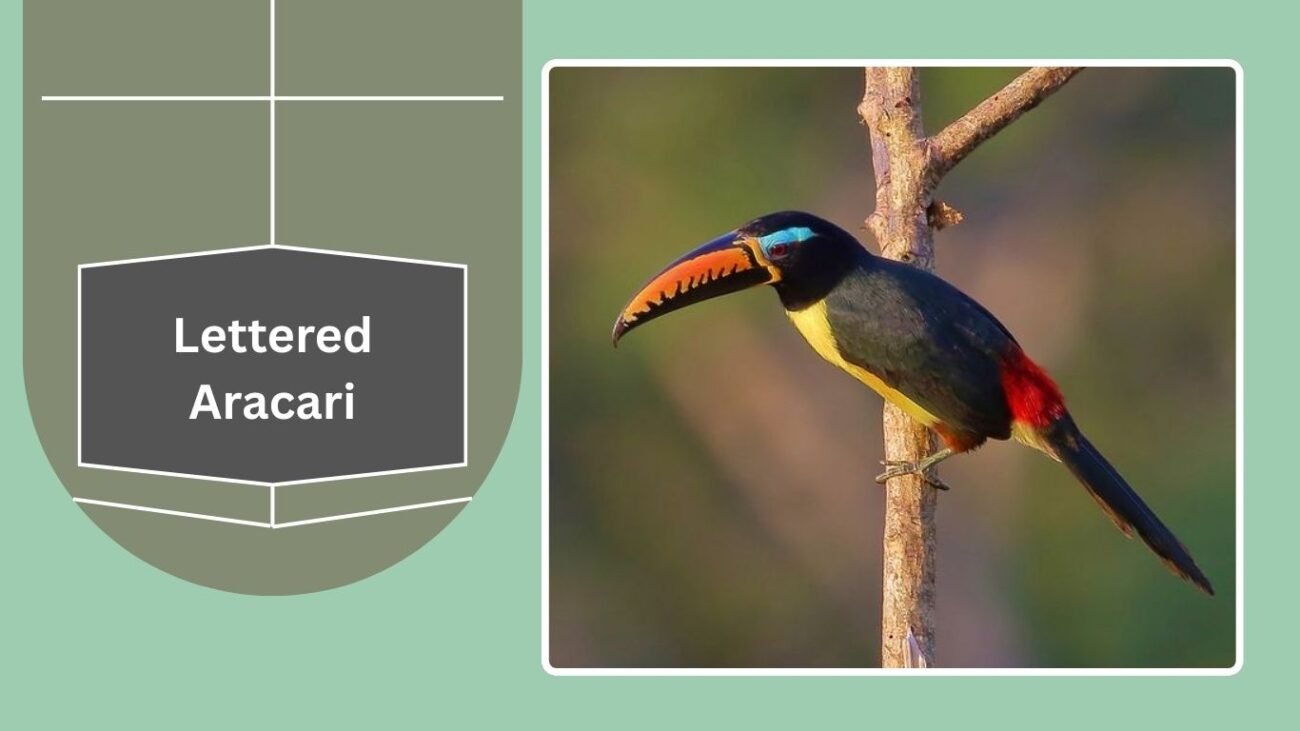
The Lettered Aracari (Pteroglossus inscriptus) is a small and colorful toucan species, named for the unique markings on its bill that resemble engraved letters. It is one of the most distinctive aracaris and is widely distributed across the Amazon Basin.
Identification
- Small aracari, about 30–33 cm in length
- Black head and upper body with a yellow chest and belly
- Chest features a bold black band across the middle
- Bill marked with pale yellow “letter-like” patterns against a dark background
- Red undertail coverts and rump, giving it a splash of color in flight
Habitat
The Lettered Aracari is found throughout the Amazon rainforest, including Brazil, Peru, Ecuador, Colombia, and Bolivia. It thrives in lowland tropical forests and is often seen along forest edges and riverbanks.
Diet
Its diet consists mostly of fruits, especially figs and berries. It also supplements with insects, small vertebrates, and eggs. Like other toucans, it is an essential seed disperser in its ecosystem.
Behavior
Lettered Aracaris are social birds, often moving in small flocks of 6–10 individuals. They are agile and active, hopping quickly among branches. Their calls are high-pitched and squeaky, unlike the deeper croaks of larger toucans. During nesting, they use tree cavities and may even share nesting trees with other aracari species.
18. Curl-crested Aracari
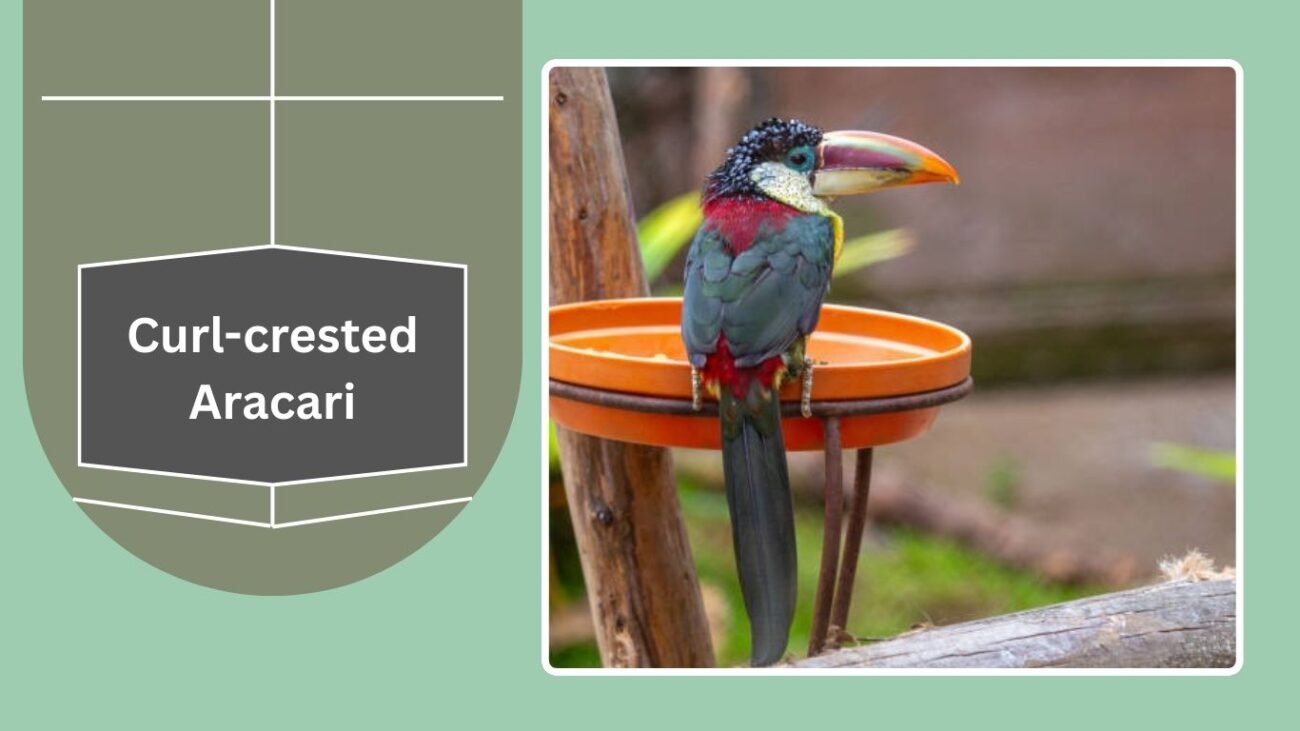
The Curl-crested Aracari (Pteroglossus beauharnaesii) is one of the most unusual and striking members of the toucan family, easily recognized by the curled, glossy feathers on its head. This unique feature, along with its vivid plumage and patterned bill, makes it stand out even among other colorful toucans.
Identification
- Medium-sized aracari, about 43–46 cm in length
- Distinctive curly, shiny black feathers covering the crown
- Bill pale yellow with dark markings and serrated edges
- Black upperparts with red and yellow underparts
- Bright red rump and undertail feathers
Habitat
The Curl-crested Aracari inhabits western Amazonian forests, particularly in Brazil, Peru, and Bolivia. It prefers lowland rainforests and is often seen along riverbanks and fruiting trees.
Diet
Its diet is primarily fruit-based, but it also consumes insects, small reptiles, and bird eggs. The species plays an important role in dispersing seeds across its rainforest habitat.
Behavior
This aracari is social and typically found in small flocks of 6–12 birds. They are active and noisy, often moving together in search of fruiting trees. Their calls are sharp, high-pitched notes, unlike the deeper croaks of larger toucans. Breeding pairs nest in tree cavities, with both parents sharing incubation duties.
19. Chestnut-eared Aracari
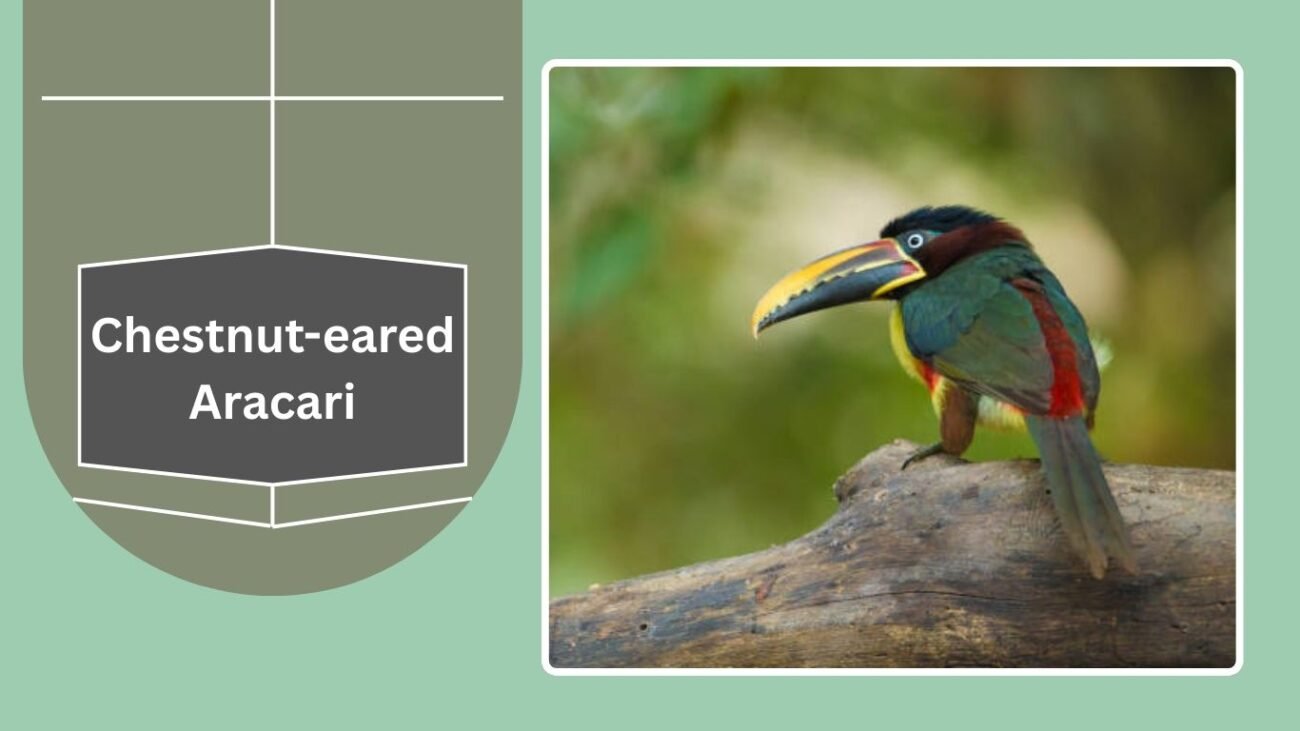
The Chestnut-eared Aracari (Pteroglossus castanotis) is a colorful and widespread toucan species, well-known for the chestnut-colored patches on the sides of its head and around the ears. It is one of the larger aracaris and is often seen in active groups foraging through South American forests.
Identification
- Medium to large aracari, about 43–48 cm in length
- Black head with distinctive chestnut-colored ear patches
- Yellow chest with a broad red band across the belly
- Black upperparts and wings with a red rump and undertail
- Large yellow bill with dark markings along the edges
Habitat
The Chestnut-eared Aracari is found across much of South America, from Venezuela and Colombia down through Brazil, Paraguay, Bolivia, and northern Argentina. It inhabits rainforests, gallery forests, and wooded savannas.
Diet
Its diet is primarily frugivorous, consisting of figs and a wide variety of fruits. However, it also feeds on insects, eggs, and small animals when available. Its role as a seed disperser is crucial to forest regeneration.
Behavior
This aracari is social and often travels in flocks of 6–12 individuals. They are active, noisy, and agile in the canopy, hopping from branch to branch in search of food. Their calls are harsh croaking notes. During breeding, they nest in tree cavities, with both parents caring for the chicks.
20. Ivory-billed Aracari
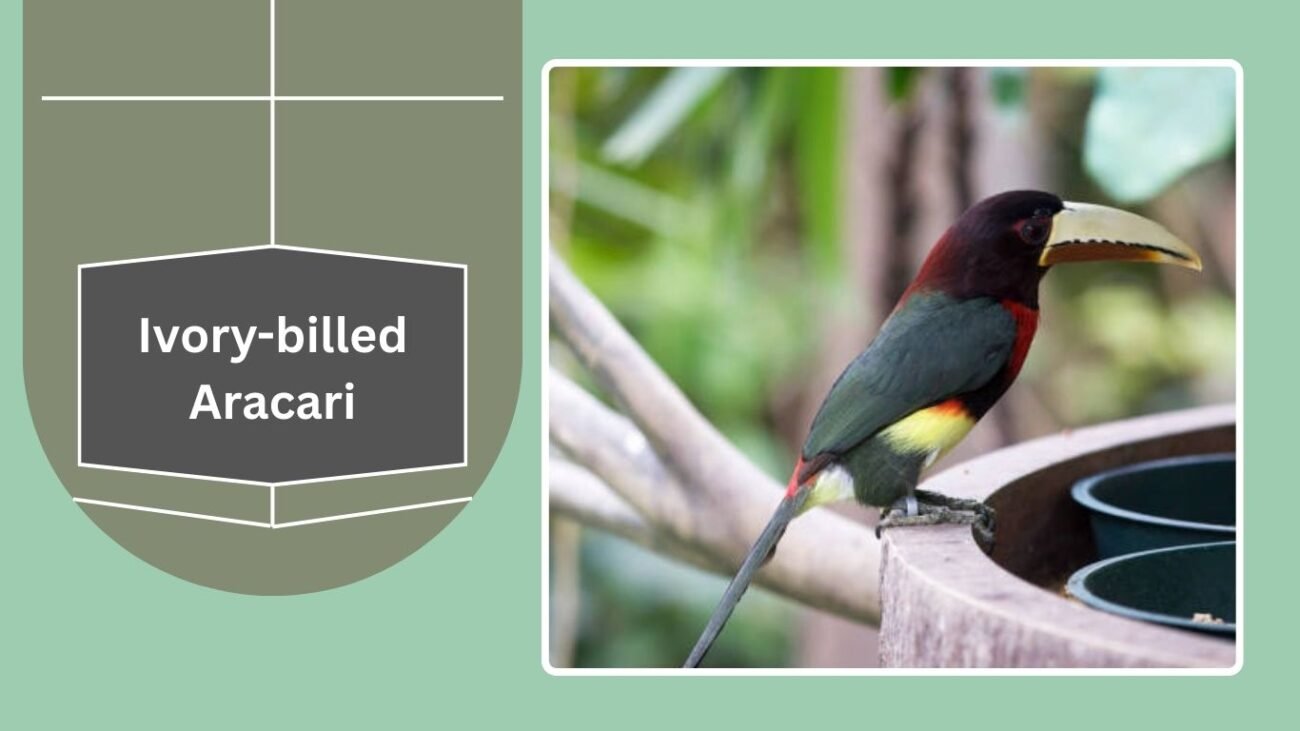
The Ivory-billed Aracari (Pteroglossus azara) is a striking toucan species named for its pale, ivory-colored bill. With its bold plumage patterns and active nature, it is one of the most attractive aracaris found in South America.
Identification
- Medium-sized aracari, about 41–43 cm in length
- Large pale ivory or yellowish bill with darker markings along the edges
- Black head and upperparts with a red rump
- Yellow chest with a broad black band across the middle
- Red belly and undertail coverts
Habitat
The Ivory-billed Aracari is distributed across northern and central South America, including Venezuela, Colombia, Ecuador, Peru, Bolivia, and western Brazil. It prefers tropical lowland forests, forest edges, and riverine woodlands.
Diet
Its diet is mainly fruit-based, with figs and berries as staples. It also eats insects, small reptiles, and eggs. Like other aracaris, it is an important disperser of seeds within its habitat.
Behavior
Ivory-billed Aracaris are usually seen in groups of 6–10 individuals, actively moving through the canopy. They are agile and vocal, with loud, high-pitched calls. Breeding pairs nest in tree cavities, where both parents share incubation and chick-rearing duties.
21. Black-necked Aracari
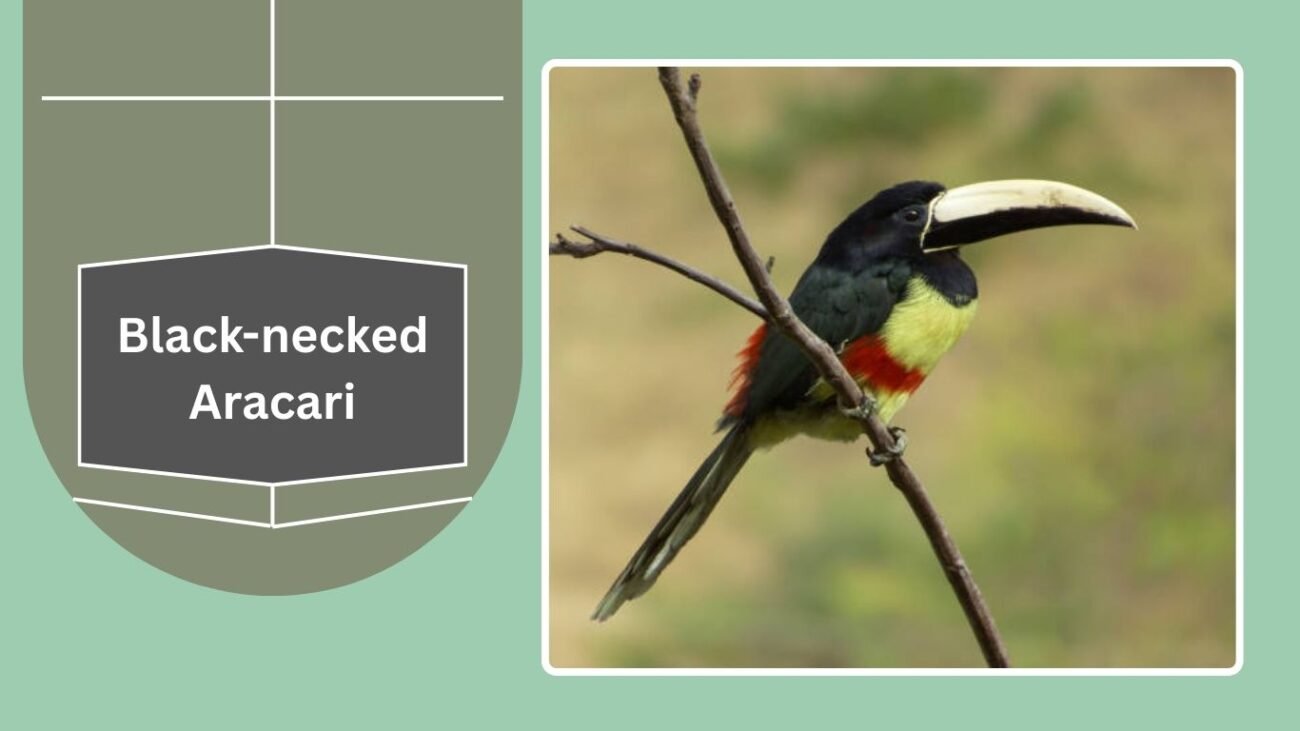
The Black-necked Aracari (Pteroglossus aracari) is a beautiful and widespread toucan species, easily recognized by its distinctive black neck and strikingly patterned plumage. It is one of the most common aracaris in the Amazon and plays a vital role in maintaining forest ecosystems through seed dispersal.
Identification
- Medium-sized aracari, about 41–48 cm in length
- Distinctive black head, neck, and upper breast
- Yellow chest crossed by a bold red band
- Black upperparts with a red rump and undertail
- Large yellowish bill with dark markings near the base and tip
Habitat
The Black-necked Aracari inhabits a wide range of lowland tropical forests, including the Amazon Basin of Brazil, Peru, Ecuador, Colombia, Venezuela, and Bolivia. It is also found in forest edges, riverine areas, and secondary growth.
Diet
Its diet consists mainly of fruits, particularly figs, but it also eats insects, small lizards, and bird eggs. This diverse feeding makes it a key species for dispersing seeds across the rainforest.
Behavior
Black-necked Aracaris are highly social, often traveling in groups of 6–12 individuals. They are noisy, active birds, hopping between fruiting trees and foraging in the canopy. Their calls are sharp, high-pitched notes that carry over long distances. Breeding pairs nest in tree cavities, with shared parental care of the young.
22. Many-banded Aracari
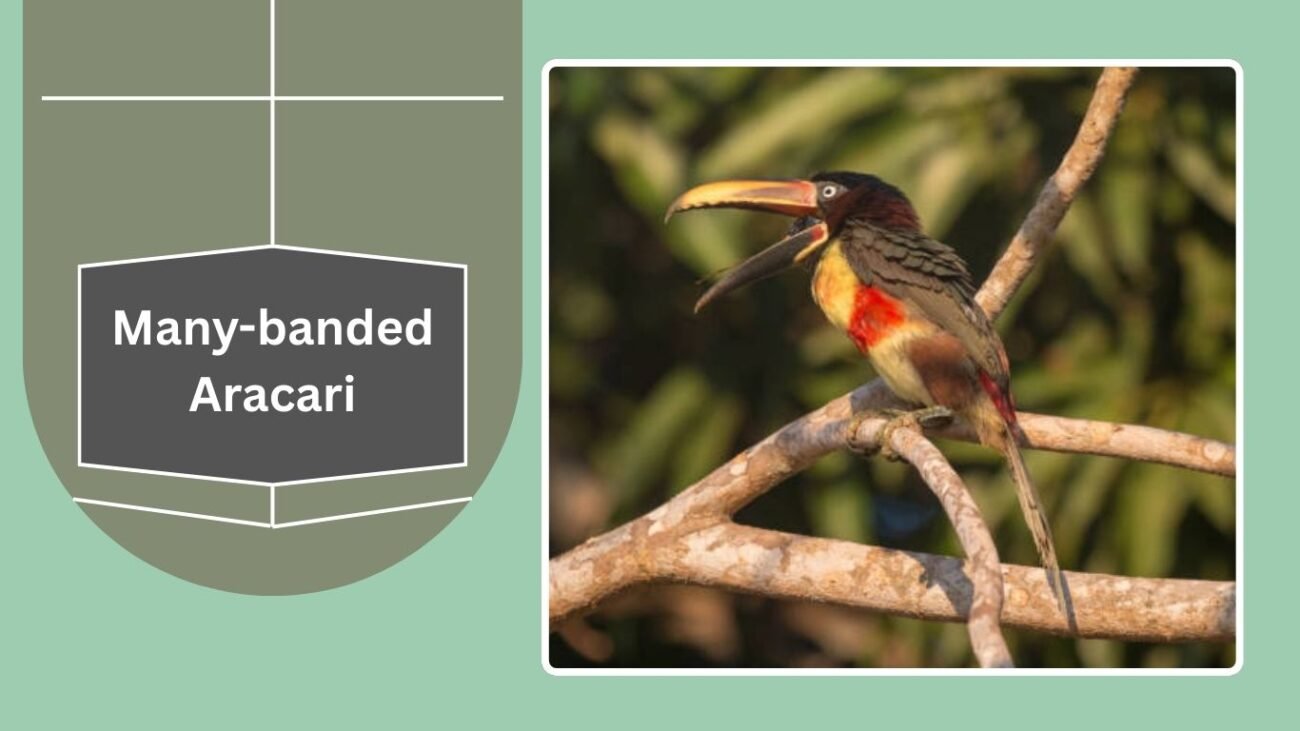
The Many-banded Aracari (Pteroglossus pluricinctus) is a vividly patterned toucan species named for the multiple colorful bands across its chest and belly. It is one of the more striking aracaris, with a combination of bold colors that make it stand out in the rainforest canopy.
Identification
- Medium-sized aracari, around 40–44 cm in length
- Black head and upperparts with a bright red rump
- Yellow chest crossed by multiple black and red bands
- Large pale bill with dark markings along the upper ridge
- Distinctive multicolored underparts make it easy to identify among aracaris
Habitat
The Many-banded Aracari inhabits lowland tropical forests of the western Amazon Basin, particularly in Ecuador, Peru, Colombia, and northwestern Brazil. It prefers riverine forests and areas with tall fruiting trees.
Diet
Its diet is largely frugivorous, with figs and other rainforest fruits forming the bulk of its food. It also eats insects, eggs, and small vertebrates when available, aiding in both pest control and seed dispersal.
Behavior
This aracari is highly social and often travels in flocks of 6–12 individuals. They are active and agile, hopping quickly through branches. Their calls are sharp and high-pitched, serving as contact signals within the group. Nesting occurs in tree cavities, where both parents raise the chicks together.
23. Collared Aracari
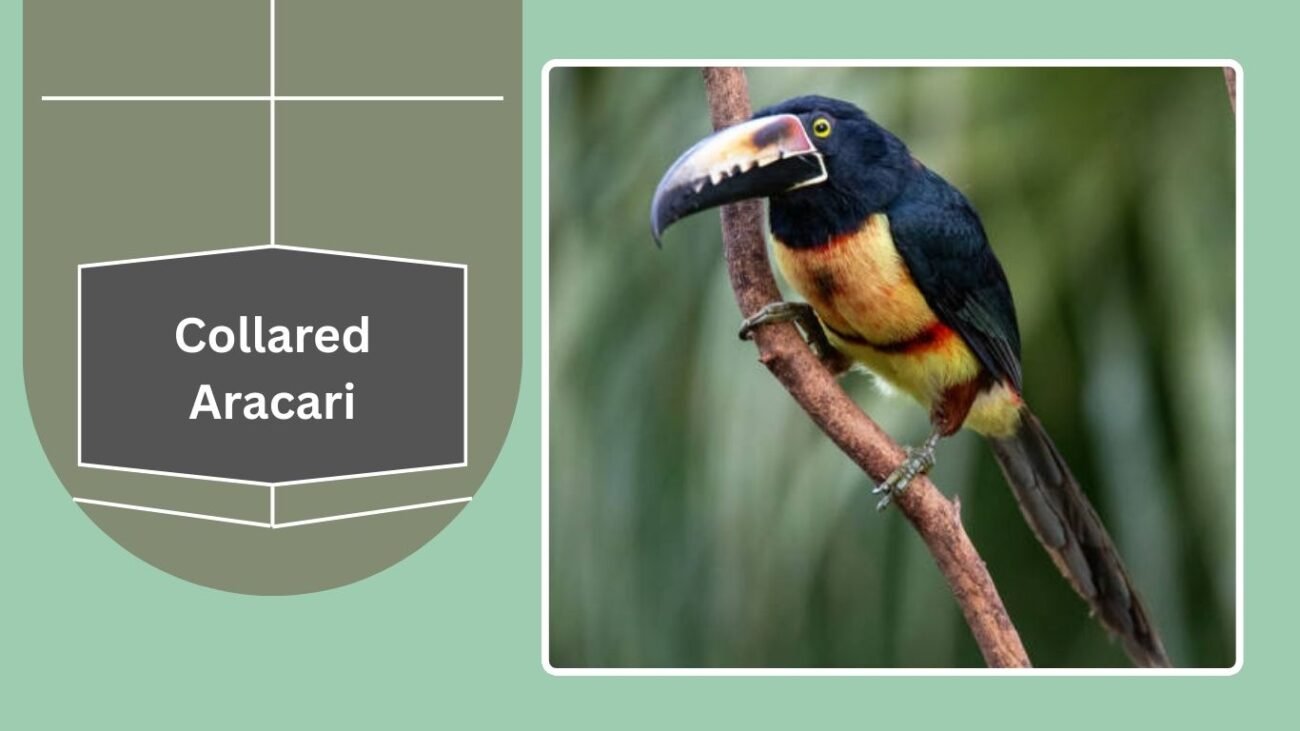
The Collared Aracari (Pteroglossus torquatus) is a colorful and widely distributed toucan species, easily identified by the black band, or “collar,” that runs across its yellow chest. Its playful nature and striking appearance make it one of the most recognizable aracaris in Central and South America.
Identification
- Medium-sized aracari, about 38–41 cm in length
- Black head and upperparts with a red rump
- Bright yellow chest marked with a bold black horizontal “collar”
- Large yellowish bill with dark markings on the upper ridge
- Belly often shows reddish or orange tones toward the lower part
Habitat
The Collared Aracari inhabits lowland forests, forest edges, and plantations from southern Mexico and Central America down into northern Colombia and Venezuela. It is often seen in mixed forest habitats and secondary growth.
Diet
Its diet consists mainly of fruits, especially figs, but it also eats insects, bird eggs, and small vertebrates. By consuming and dispersing seeds, it contributes significantly to forest regeneration.
Behavior
This aracari is highly social, often moving in flocks of 6–15 individuals. They are noisy and playful, frequently engaging in bill fencing and tossing fruit. Their calls are sharp, high-pitched squeaks that help maintain group cohesion. Breeding occurs in tree cavities, with both parents caring for the young.
24. Pale-mandibled Aracari
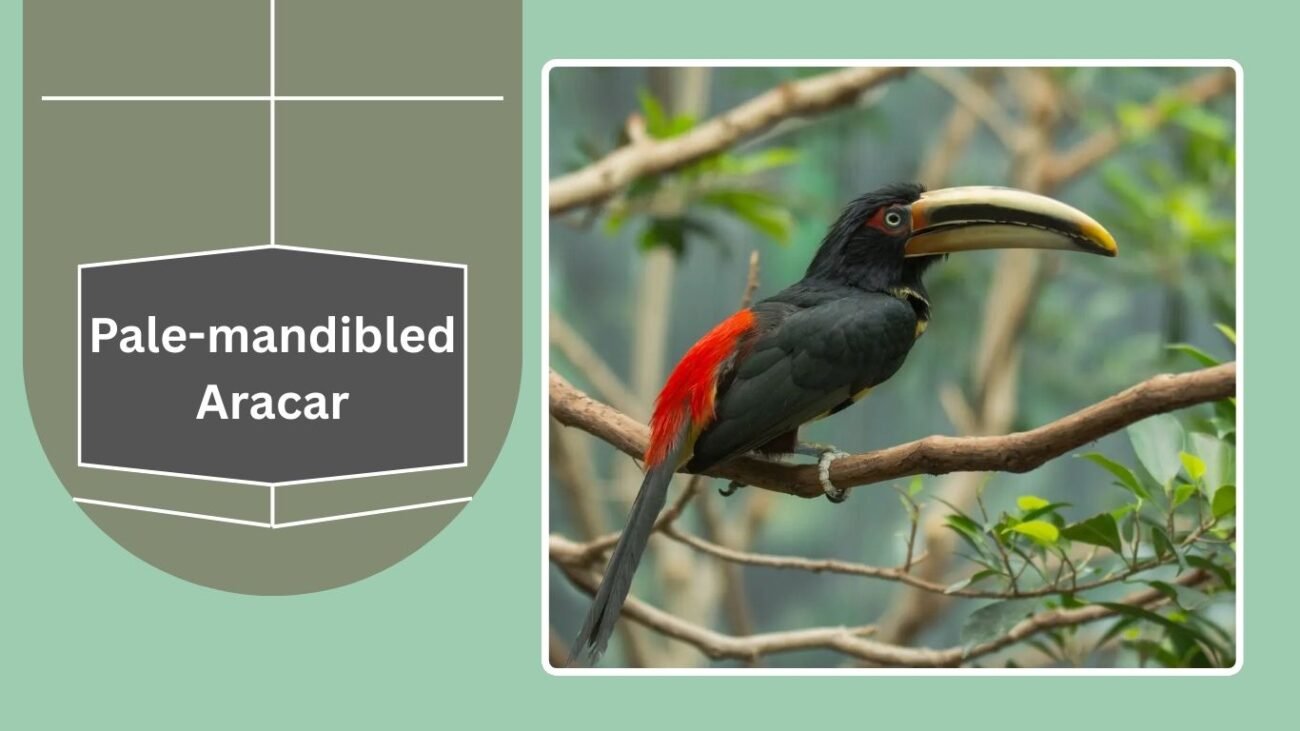
The Pale-mandibled Aracari (Pteroglossus erythropygius) is a striking aracari native to northwestern South America. It is closely related to the Collared Aracari but is distinguished by its paler-colored bill and slightly different plumage patterns. Its vivid colors and lively behavior make it a standout species in its range.
Identification
- Medium-sized aracari, about 41–43 cm in length
- Bill mostly pale yellowish-white with darker markings near the base and tip
- Black head and upperparts with a bright red rump
- Yellow chest marked by a bold black horizontal “collar”
- Belly with a reddish-orange band across the middle
Habitat
The Pale-mandibled Aracari is found in humid lowland and foothill forests of northwestern Ecuador and southwestern Colombia. It is usually observed in the mid- to upper canopy of primary and secondary forests.
Diet
Fruits form the majority of its diet, particularly figs and small berries. It also eats insects, eggs, and small vertebrates when available. Like other aracaris, it plays a crucial role in dispersing seeds across the forest.
Behavior
This aracari is gregarious, often traveling in groups of 6–10 individuals. It is active and vocal, producing high-pitched calls that help keep the flock together. During the breeding season, it nests in tree cavities, where both parents participate in incubation and chick care.
25. Saffron Toucanet
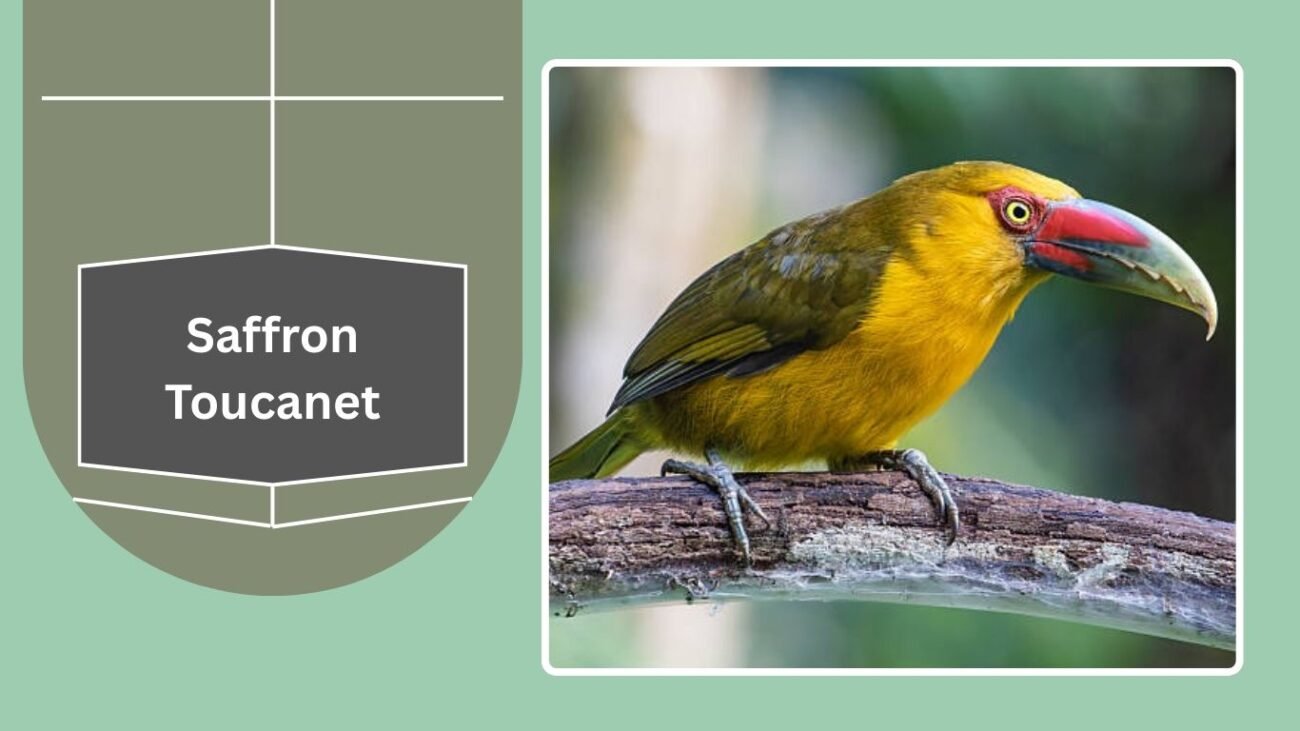
The Saffron Toucanet (Pteroglossus bailloni) is a rare and beautiful toucanet, easily recognized by its golden-yellow plumage. Unlike the more colorful and patterned aracaris, this species has a uniform saffron hue, making it one of the most strikingly unique members of the toucan family.
Identification
- Medium-sized toucanet, about 35–36 cm in length
- Entire body covered in golden-yellow to saffron-colored plumage
- Bill is pale greenish with darker markings along the ridge
- Red undertail feathers provide contrast when in flight
- Blue skin around the eyes
Habitat
The Saffron Toucanet is found in the Atlantic Forest of southeastern Brazil, eastern Paraguay, and northeastern Argentina. It inhabits humid montane forests and wooded valleys, usually at mid-elevations.
Diet
This species feeds mainly on fruits, particularly figs, but also consumes insects, small vertebrates, and bird eggs when available. Its frugivory makes it an essential seed disperser in its ecosystem.
Behavior
The Saffron Toucanet is often observed in pairs or small family groups. It is less noisy than larger toucans, producing softer croaks and whistles. During breeding, it nests in tree cavities, with both parents sharing incubation and chick-rearing duties.