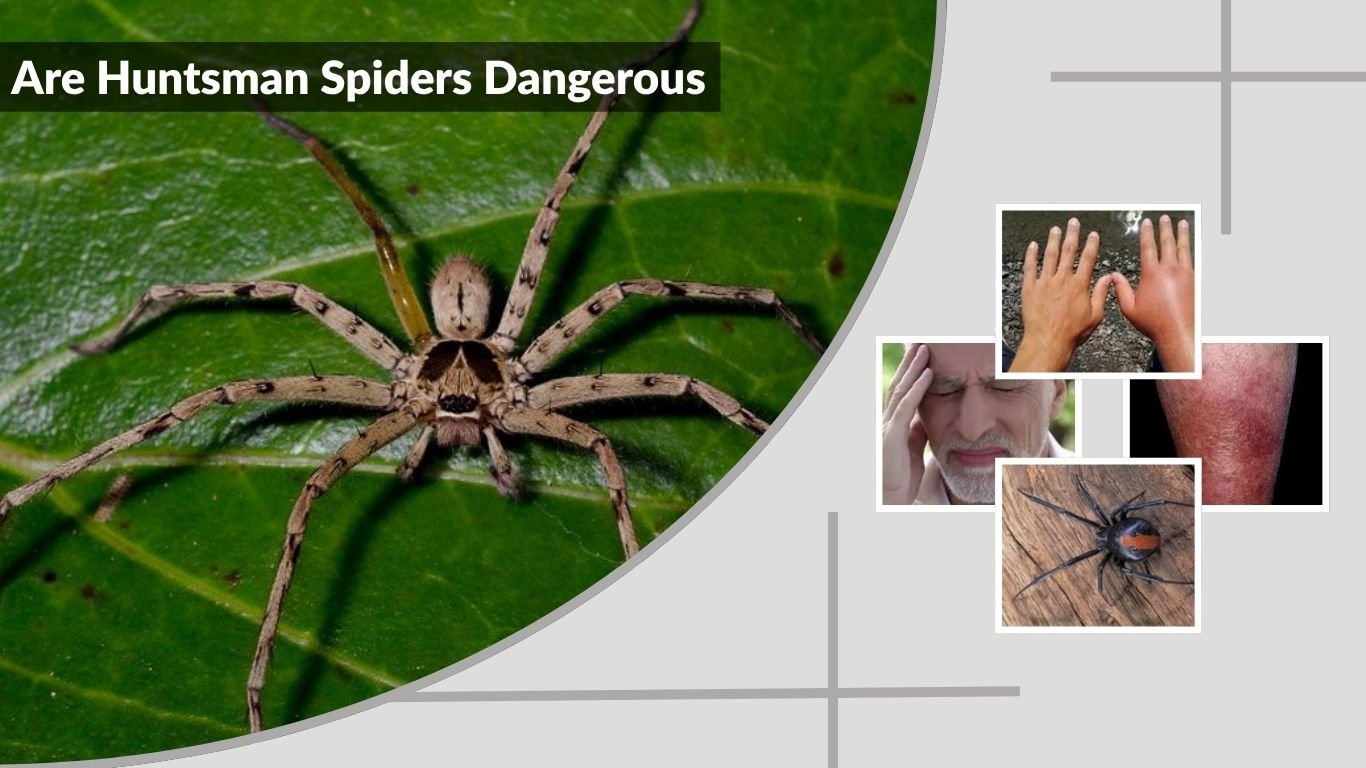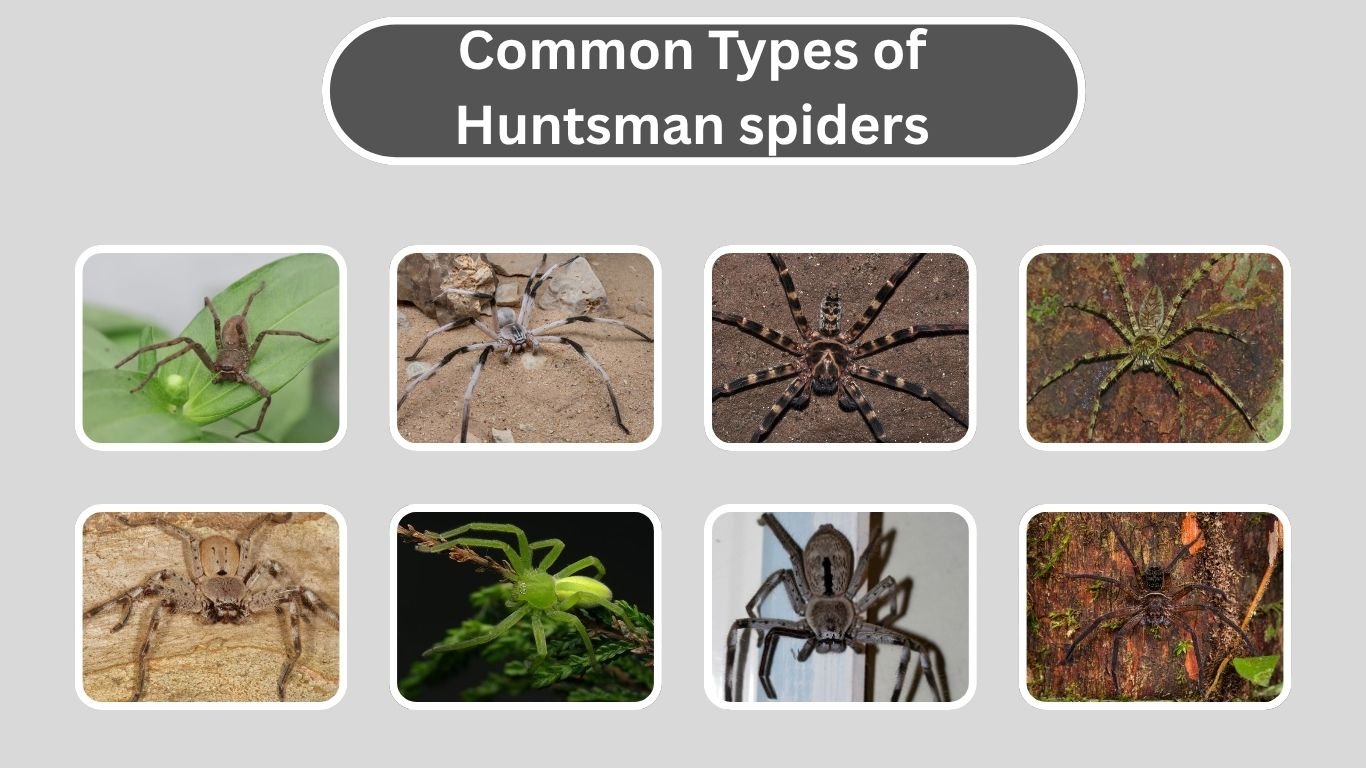
Huntsman spiders are fast, long-legged arachnids known for their incredible hunting skills and diverse appearances. Found in various habitats around the world, they range from leaf-mimicking masters of camouflage to giant cave-dwelling species with leg spans rivaling a dinner plate. In this guide, we’ll explore 25 fascinating types of huntsman spiders, complete with identification details and pictures to help you recognize these remarkable predators.
1. Giant Huntsman Spider
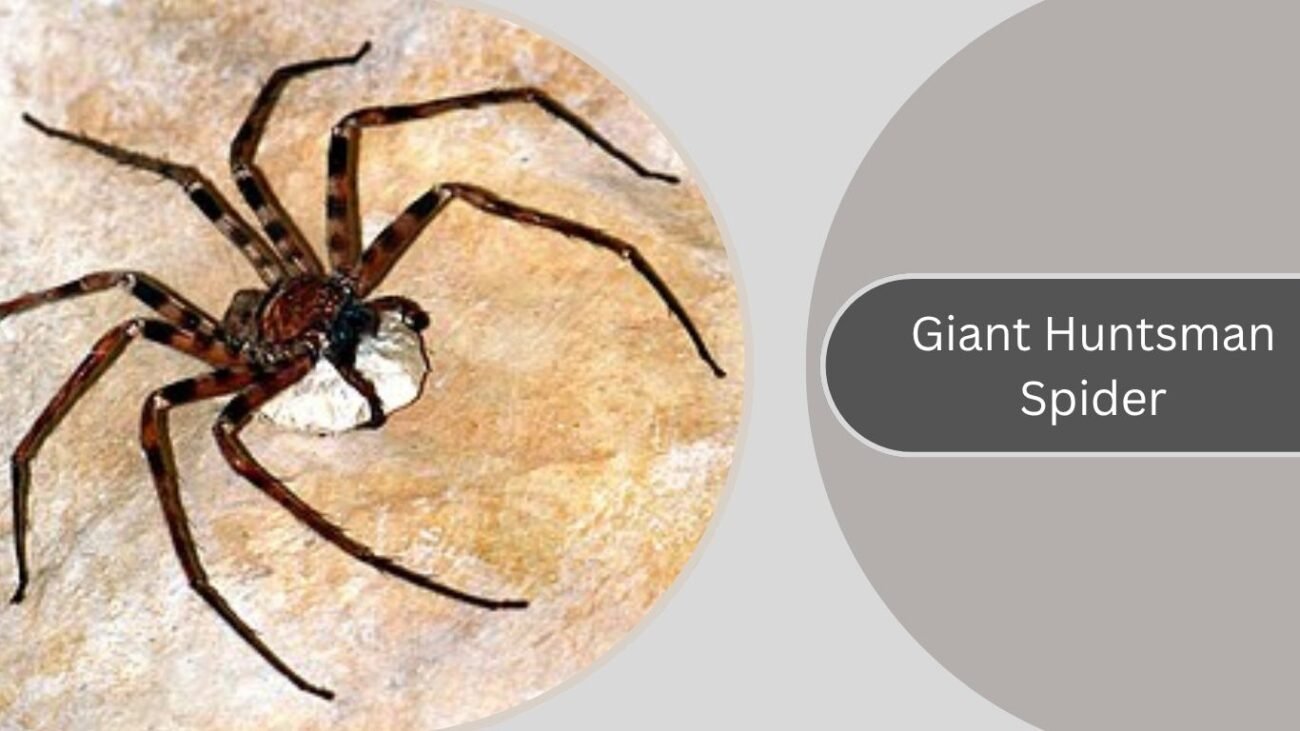
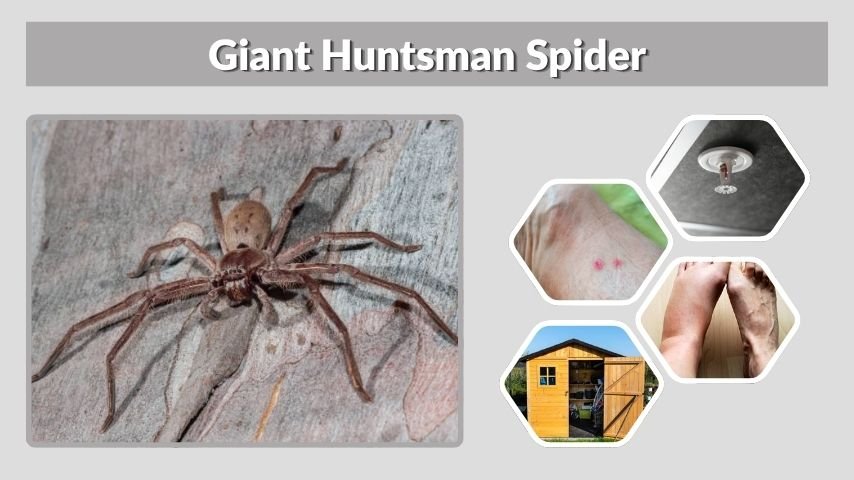
The giant huntsman spider is considered the largest species of huntsman in the world by leg span. Native to Laos, it is an impressive yet shy arachnid that prefers to live in caves and other dark, humid environments. Despite its intimidating size, it is not considered dangerous to humans, though its speed and appearance can be startling.
Identification
- Scientific Name: Heteropoda maxima
- Body Length: Up to 4.6 cm
- Leg Span: Up to 30 cm
- Color: Light brown with darker markings
- Distinct Feature: Extremely long legs with a crab-like stance
Habitat and Distribution
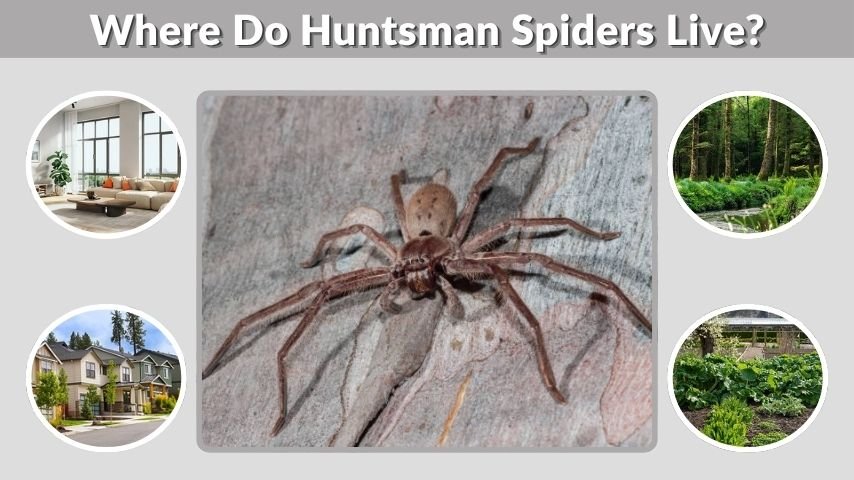
Found primarily in Laos, especially in cave systems where humidity and temperature remain stable.
Behavior and Diet
The giant huntsman is nocturnal, actively hunting insects, small reptiles, and other arthropods at night. It does not build webs, instead relying on speed and agility to capture prey.
2. Golden Huntsman
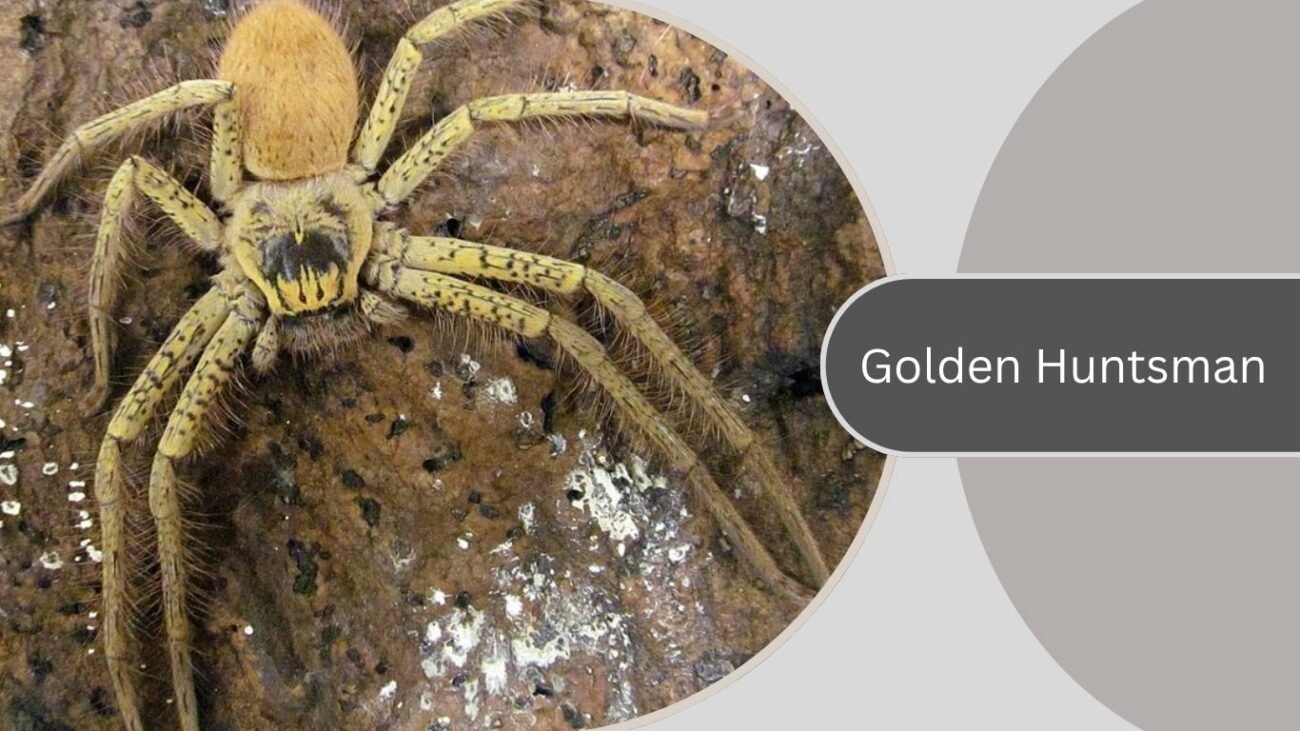
The golden huntsman is a striking spider known for its warm golden to yellow-brown coloration, which helps it blend into tree bark and dry foliage. Native to parts of Australia, it is often spotted in open forests and woodland areas. Though large, it is not aggressive and prefers to escape rather than confront humans.
Identification
- Scientific Name: Beregama aurea
- Body Length: Up to 3.5 cm
- Leg Span: Up to 15 cm
- Color: Golden yellow to light brown
- Distinct Feature: Smooth golden sheen across the body and legs
Habitat and Distribution
Primarily found in Queensland and parts of northern New South Wales, Australia, usually in wooded or bushy areas.
Behavior and Diet
Feeds on moths, beetles, and other insects, ambushing them from concealed positions. Mostly nocturnal and prefers to stay hidden during the day.
3. Sydney Huntsman
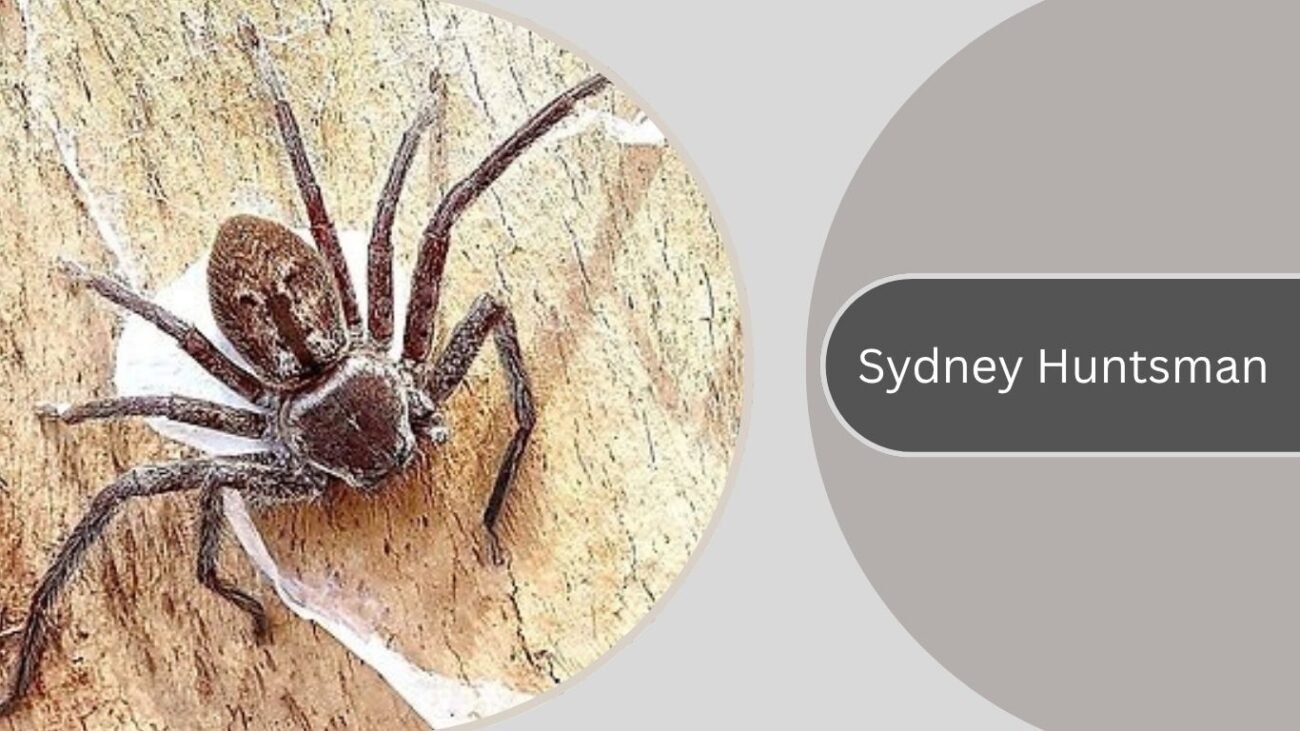
The Sydney huntsman is one of the largest and most commonly encountered huntsman species in eastern Australia. Recognized for its robust build and brown-gray coloring, it is often seen in homes seeking shelter, especially during warmer months.
Identification
- Scientific Name: Holconia immanis
- Body Length: 3–4 cm
- Leg Span: Up to 16 cm
- Color: Brown to gray with subtle banding on legs
- Distinct Feature: Thick, strong legs and a solid body shape
Habitat and Distribution
Widespread in New South Wales and surrounding areas, often found under bark, in sheds, and occasionally indoors.
Behavior and Diet
An active hunter that feeds on cockroaches, moths, and other household insects, making it beneficial for pest control. Generally calm but can move quickly when disturbed.
4. Flat Huntsman
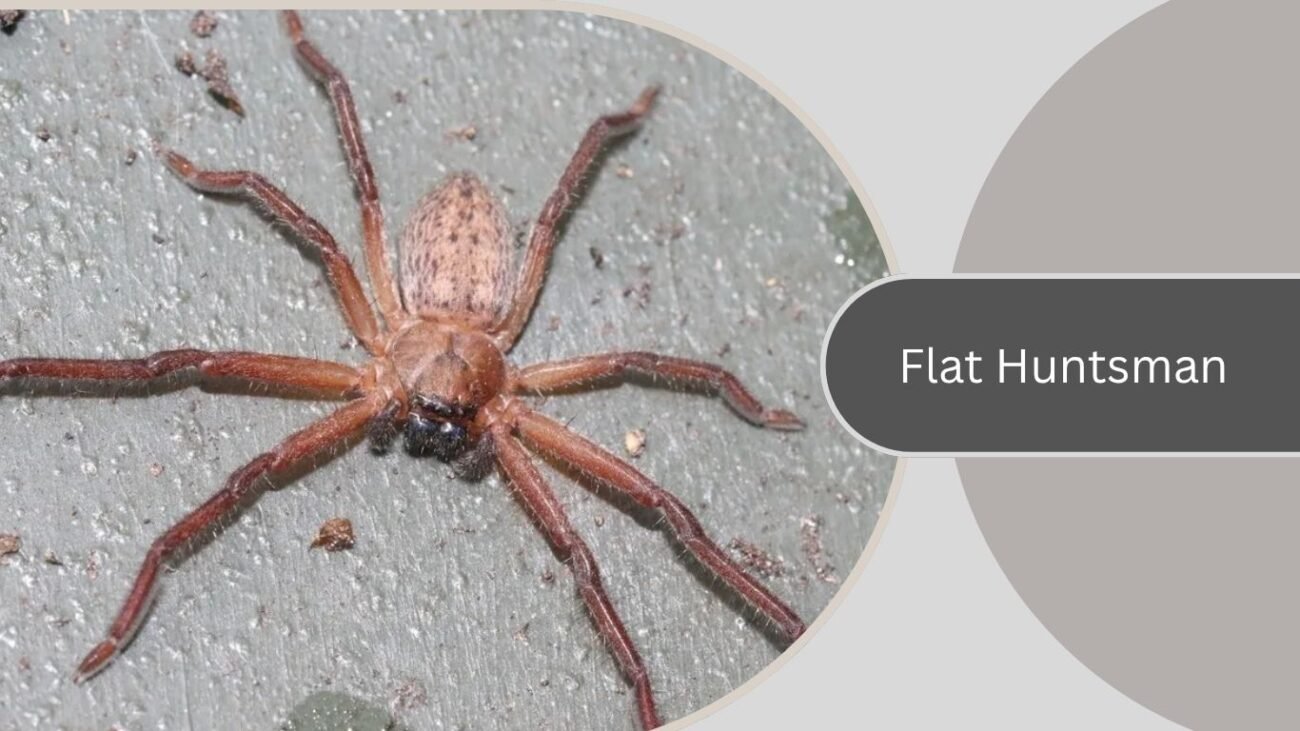
The flat huntsman, also known as the social huntsman, is well-adapted for slipping into narrow crevices thanks to its flattened body shape. This species is unique among huntsman spiders for its social behavior, as multiple individuals can often be found living together in large groups.
Identification
- Scientific Name: Delena cancerides
- Body Length: 2–3 cm
- Leg Span: Up to 9 cm
- Color: Light brown to gray with darker markings on the abdomen
- Distinct Feature: Flattened body ideal for hiding under bark and in tight spaces
Habitat and Distribution
Common in southern Australia and Tasmania, typically found beneath tree bark or inside roof spaces.
Behavior and Diet
Feeds on a variety of insects, often hunting in groups. Their communal nature helps protect against predators and increases hunting efficiency.
5. Brown Huntsman
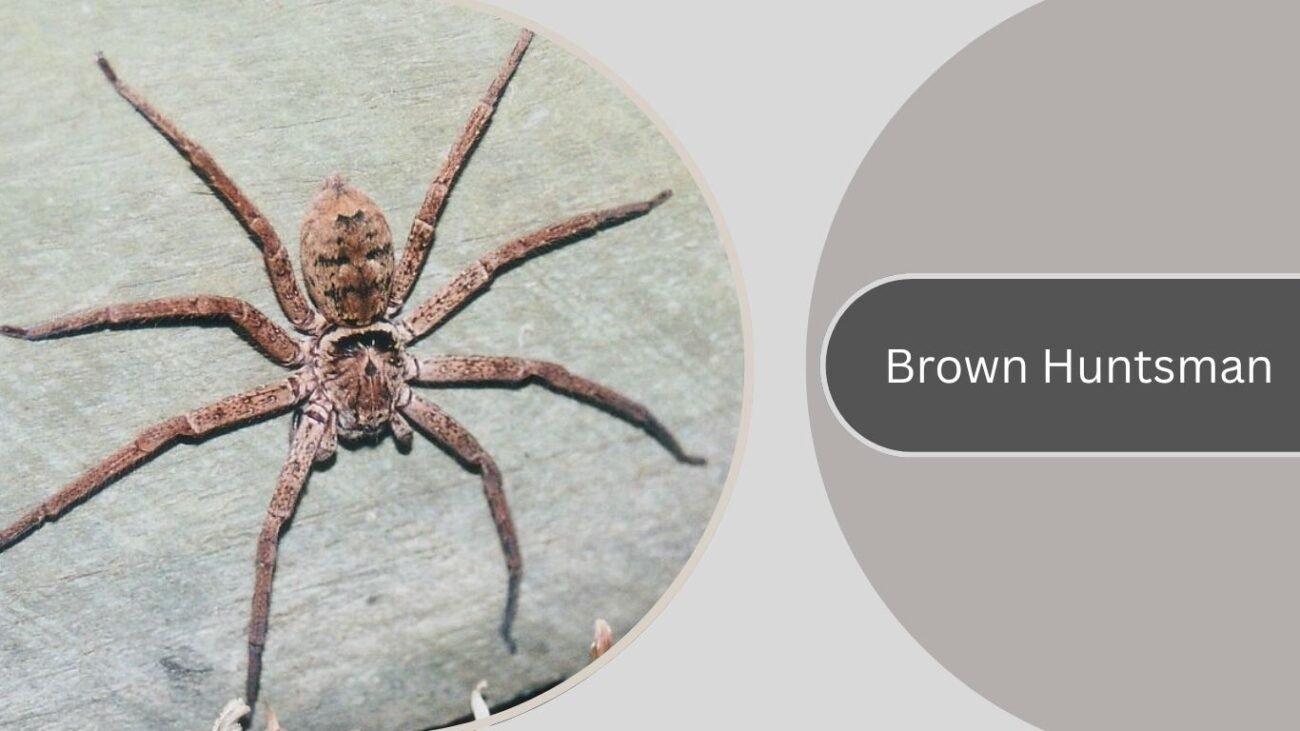
The brown huntsman is one of the most adaptable and widespread huntsman species, often venturing into human dwellings in search of food or shelter. Its earthy coloration helps it blend into bark, leaves, and household environments.
Identification
- Scientific Name: Heteropoda jugulans
- Body Length: 2–3 cm
- Leg Span: 7–10 cm
- Color: Reddish-brown to chocolate brown with faint patterns
- Distinct Feature: Slightly darker cephalothorax compared to abdomen
Habitat and Distribution
Found across eastern Australia, from forests to suburban homes, hiding in sheds, garages, and behind furniture.
Behavior and Diet
A fast-moving nocturnal hunter that preys on cockroaches, crickets, and other insects. Generally timid and will run from threats rather than attack.
6. Tropical Huntsman
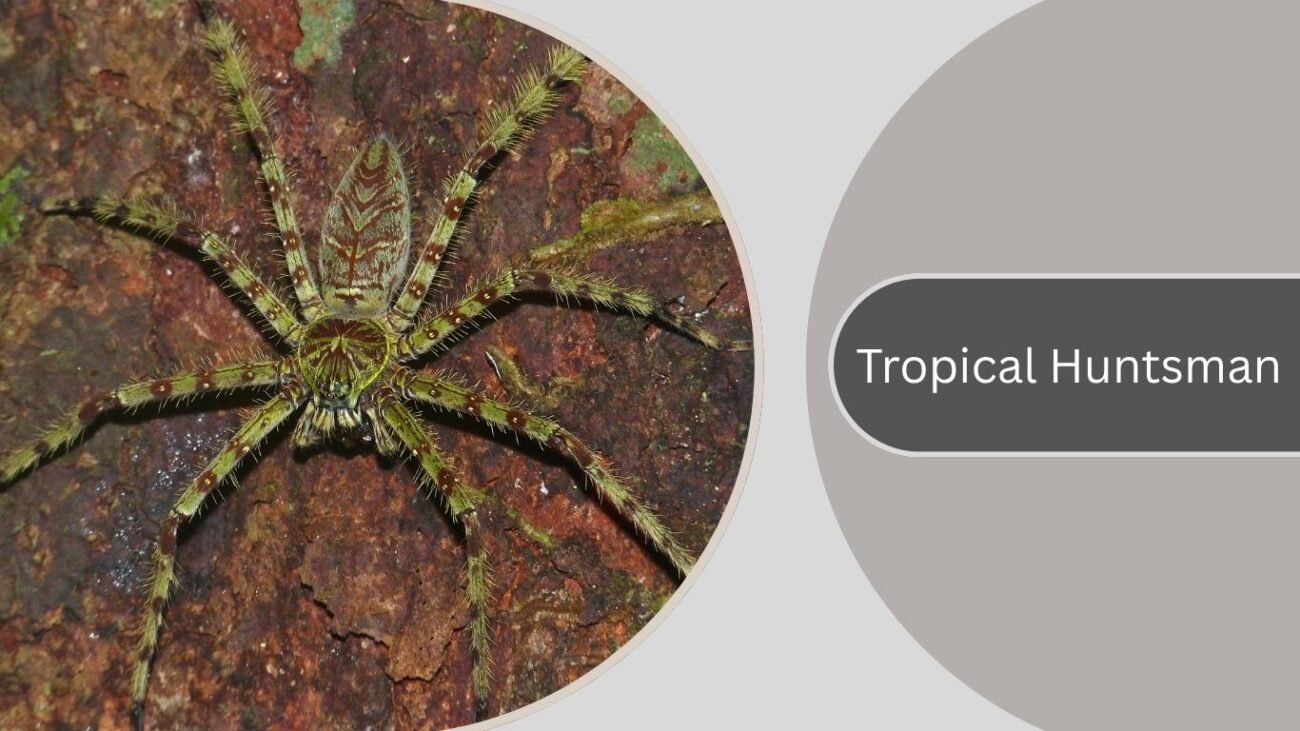
The tropical huntsman is a large, long-legged spider well-known for its widespread presence in warm, humid climates. It is sometimes referred to as the banana spider because it is frequently found in banana plantations and shipping crates. This species is one of the most globally distributed huntsman spiders.
Identification
- Scientific Name: Heteropoda venatoria
- Body Length: 2.5–3 cm
- Leg Span: 9–12 cm
- Color: Light brown to grayish-brown with darker patches
- Distinct Feature: Prominent dark eye region and long, slender legs
Habitat and Distribution
Native to Asia but now found worldwide in tropical and subtropical regions, often inside homes, warehouses, and greenhouses.
Behavior and Diet
Feeds on cockroaches, moths, and other large insects, making it a valuable natural pest controller. Mostly nocturnal and very fast-moving.
7. Badge Huntsman
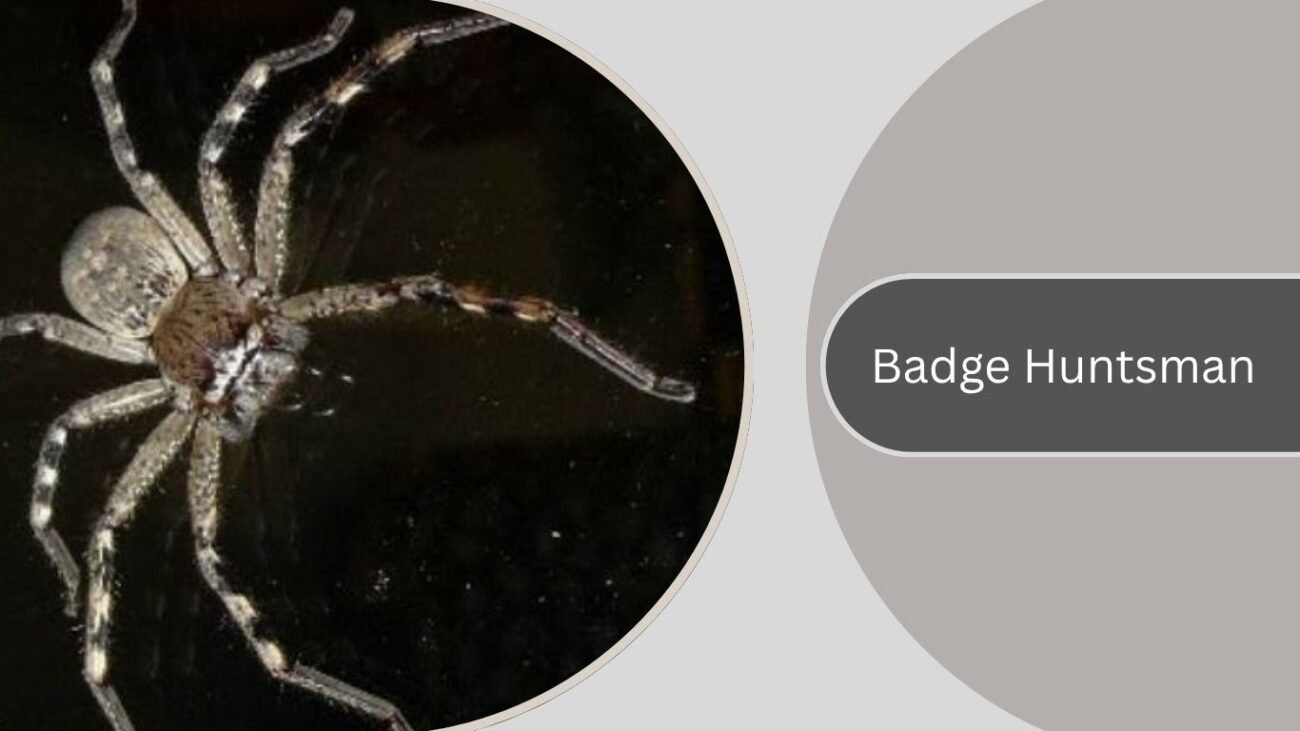
The badge huntsman gets its name from the distinctive, often colorful “badge” marking on the underside of its abdomen. This feature is most visible when the spider is in a defensive posture. It is a robust species that can appear intimidating due to its large size and bold markings.
Identification
- Scientific Name: Neosparassus spp.
- Body Length: 2–3 cm
- Leg Span: 7–9 cm
- Color: Light brown, gray, or yellowish with a unique ventral badge marking
- Distinct Feature: Distinctive badge-like patch on the underside of the abdomen
Habitat and Distribution
Common in Australia, especially in bushland, gardens, and around homes where they hunt for insects.
Behavior and Diet
Active hunters that rely on speed to catch prey. Generally not aggressive but will display their badge marking when threatened.
8. Bark Huntsman
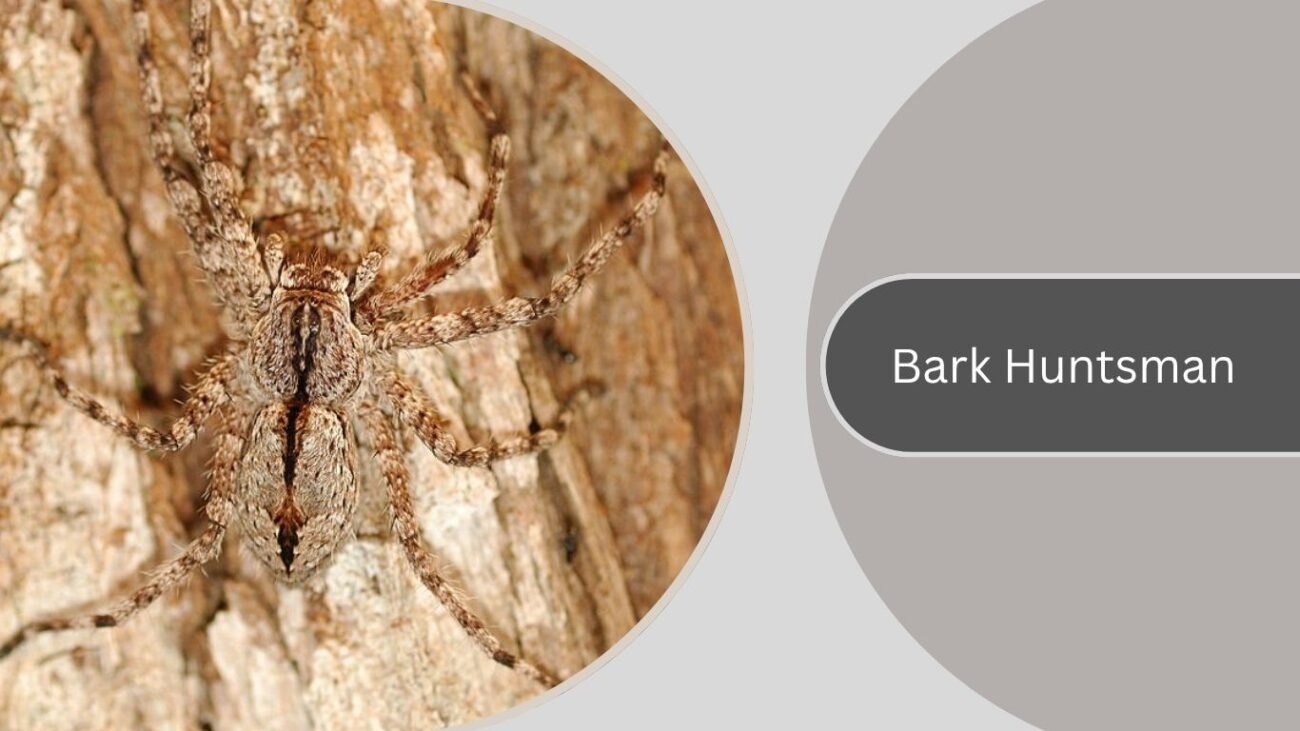
The bark huntsman is a large, flat-bodied spider that blends seamlessly into the rough texture of tree bark. This camouflage helps it avoid predators and ambush prey effectively. It is commonly spotted in forested areas but may also wander into rural homes.
Identification
- Scientific Name: Holconia flindersi
- Body Length: 2.5–3.5 cm
- Leg Span: 8–10 cm
- Color: Grayish-brown with mottled patterns resembling bark
- Distinct Feature: Flattened body and cryptic coloration for camouflage
Habitat and Distribution
Found mainly in eastern and southern Australia, particularly in eucalyptus forests and woodland habitats.
Behavior and Diet
Primarily nocturnal, hunting moths, beetles, and other insects from tree trunks. Uses camouflage to stay hidden during the day.
9. Wheel Huntsman
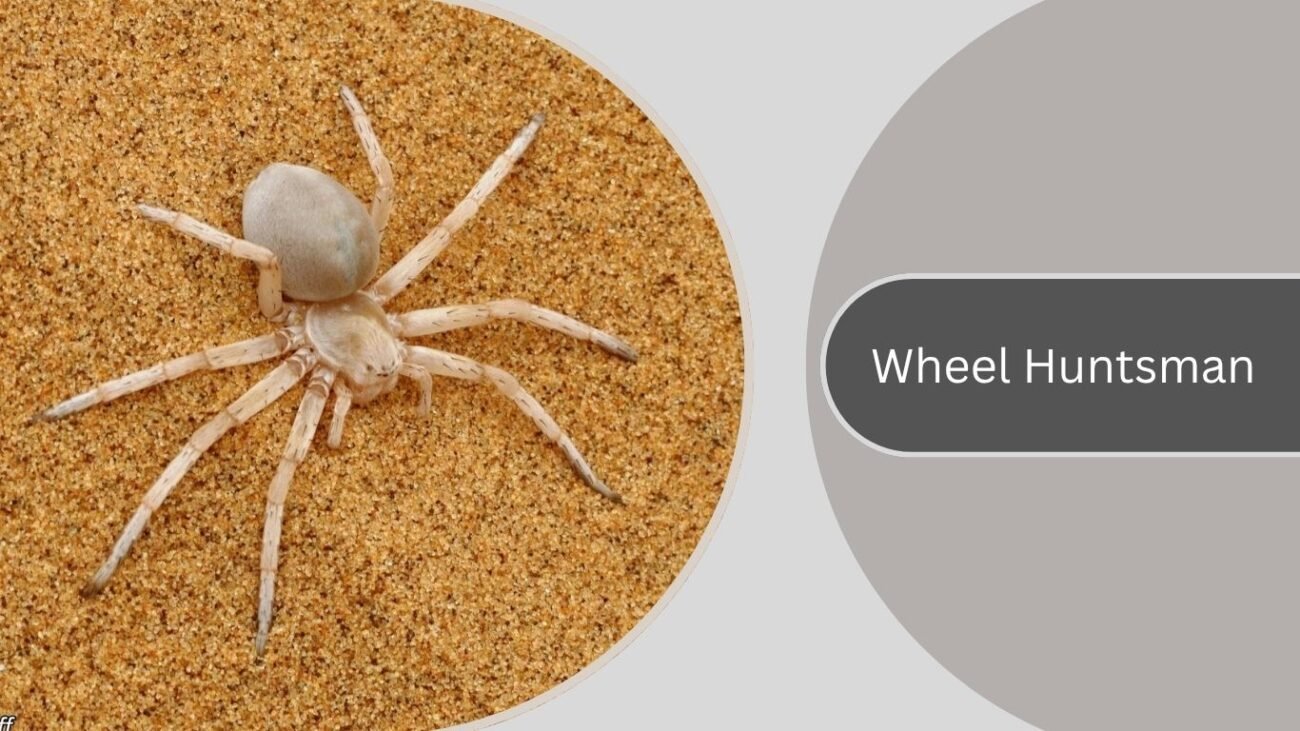
The wheel huntsman gets its name from the wheel-like arrangement of its long legs and the circular web-like patterns it sometimes rests on, though it does not spin a true web for hunting. Its large size and patterned body make it an impressive sight in the wild.
Identification
- Scientific Name: Heteropoda cervina
- Body Length: 2.5–3.5 cm
- Leg Span: 8–10 cm
- Color: Brown to reddish-brown with faint banding on legs
- Distinct Feature: Long, evenly spread legs forming a wheel-like stance
Habitat and Distribution
Native to Australia, often found in forests, woodlands, and sometimes inside rural houses or sheds.
Behavior and Diet
A nocturnal hunter that relies on speed to ambush moths, beetles, and other insects. Often spotted resting flat against tree trunks during the day.
10. Shield Huntsman
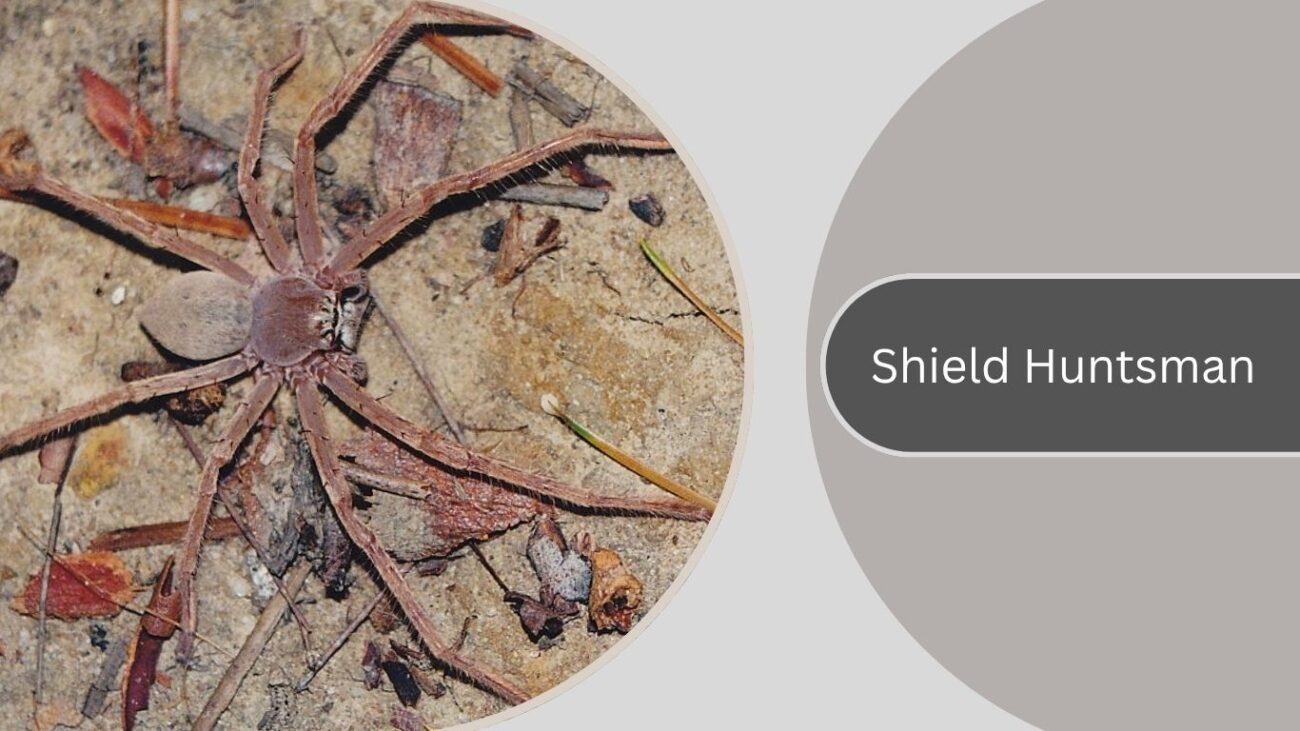
The shield huntsman is named for the distinctive shield-shaped pattern on its carapace. It is one of the more striking huntsman species due to its bold markings and sturdy build.
Identification
- Scientific Name: Neosparassus diana
- Body Length: 2.5–3 cm
- Leg Span: 7–9 cm
- Color: Light brown, gray, or yellowish with dark shield marking on carapace
- Distinct Feature: Prominent shield-like marking on the upper body
Habitat and Distribution
Common in eastern Australia, living under bark, in foliage, and sometimes near houses.
Behavior and Diet
Feeds on a variety of insects, ambushing them with quick bursts of speed. When threatened, it may raise its front legs to appear larger.
11. Lichen Huntsman
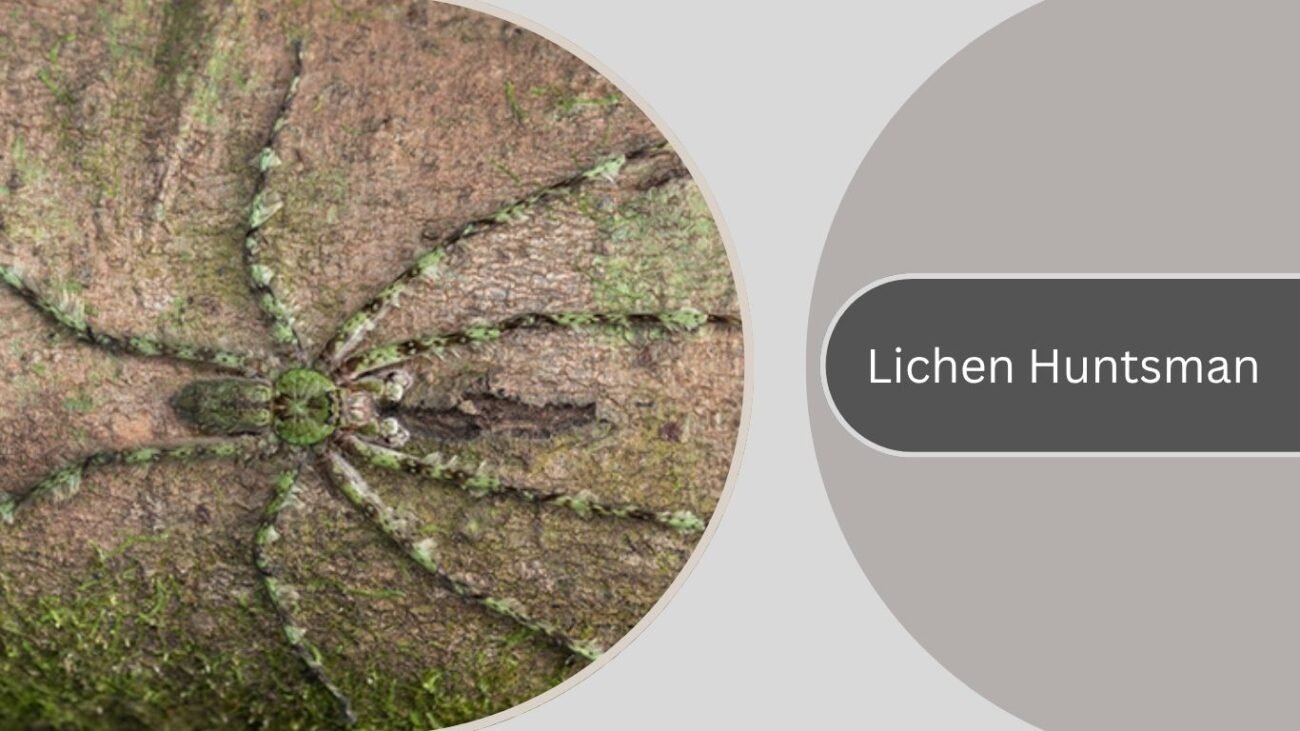
The lichen huntsman is a master of disguise, with a mottled body pattern that closely resembles lichen-covered bark. This camouflage makes it almost invisible in its natural habitat, helping it avoid predators and sneak up on prey.
Identification
- Scientific Name: Pandercetes gracilis
- Body Length: 1.5–2.5 cm
- Leg Span: 5–7 cm
- Color: Greenish-gray to brown with irregular mottling
- Distinct Feature: Exceptional camouflage resembling lichen or moss
Habitat and Distribution
Found in northern Australia, Papua New Guinea, and Southeast Asia, usually on lichen-covered tree trunks and rocks.
Behavior and Diet
Ambushes small insects and other arthropods by blending in with its surroundings, remaining motionless until prey approaches.
12. Rainforest Huntsman
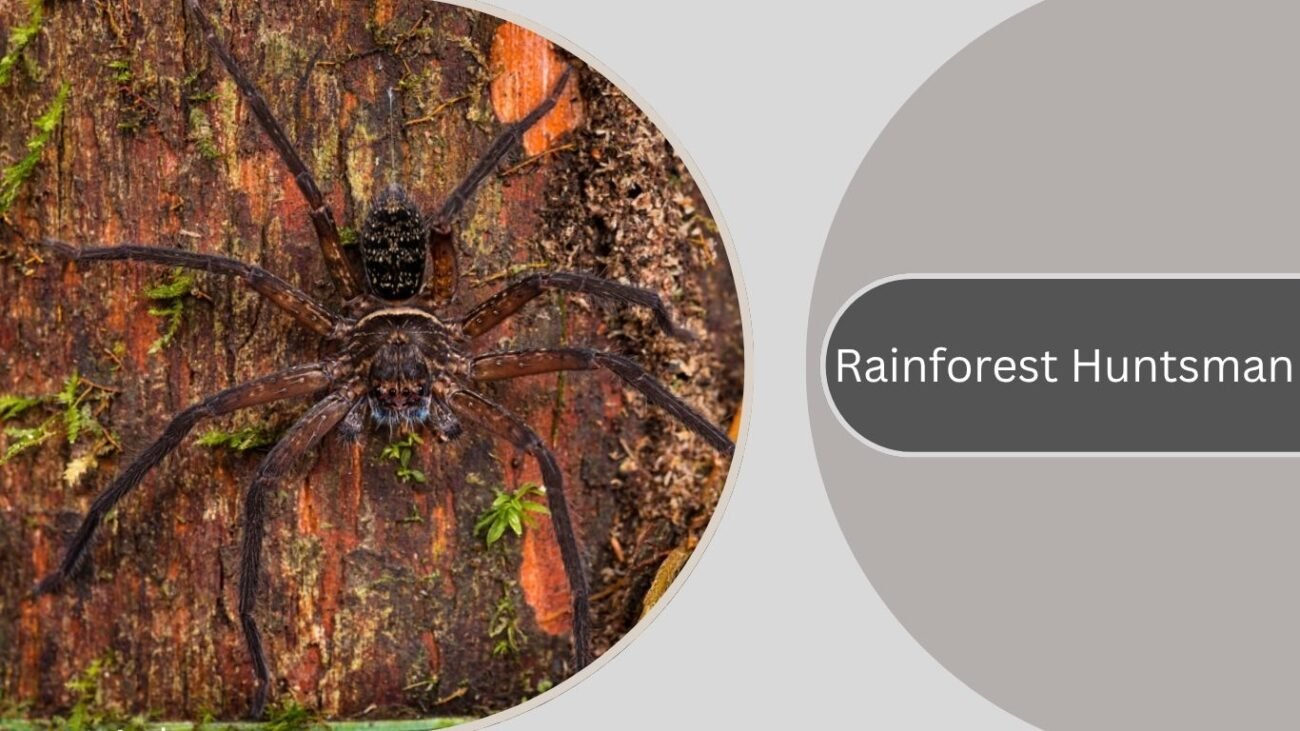
The rainforest huntsman thrives in the dense, humid environments of tropical and subtropical rainforests. It is agile and quick, making it an efficient predator in the lush forest understory.
Identification
- Scientific Name: Heteropoda jugulans
- Body Length: 2–3 cm
- Leg Span: 7–9 cm
- Color: Brown with darker markings on the abdomen and legs
- Distinct Feature: Slender body adapted for moving through dense vegetation
Habitat and Distribution
Common in the rainforests of eastern Australia and nearby islands, often hiding under leaves or loose bark.
Behavior and Diet
Hunts flying and crawling insects at night, using quick bursts of speed to capture prey without spinning webs.
13. Rock Huntsman
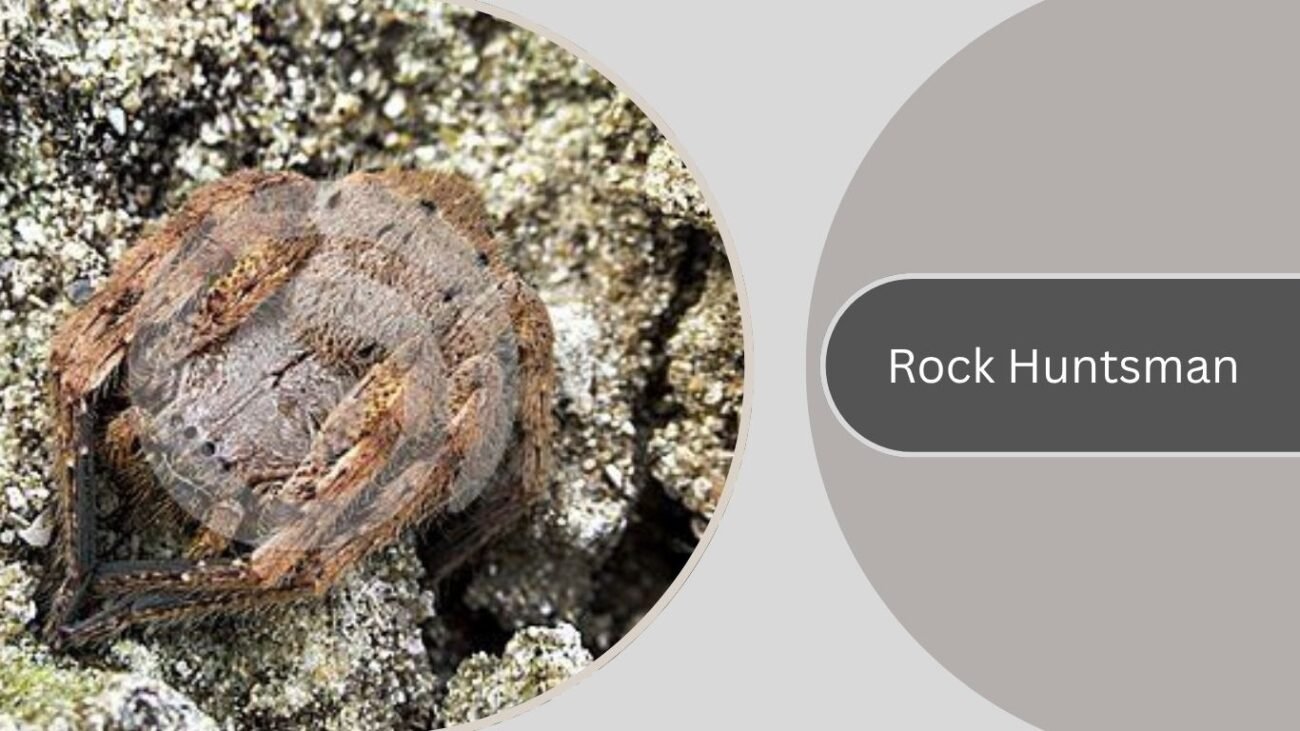
The rock huntsman is a robust species that prefers rocky habitats, where its mottled coloring allows it to blend seamlessly with stone surfaces. It is often found in dry, open areas where it hides in rock crevices during the day.
Identification
- Scientific Name: Isopeda vasta
- Body Length: 2.5–3.5 cm
- Leg Span: 7–9 cm
- Color: Grayish-brown with darker mottling for camouflage
- Distinct Feature: Broad, sturdy legs and rock-like coloration
Habitat and Distribution
Found across much of Australia, particularly in rocky outcrops, dry forests, and scrublands.
Behavior and Diet
Feeds on beetles, moths, and other insects, emerging at night to hunt. Its flattened body helps it squeeze into tight cracks between rocks.
14. Peppermint Huntsman
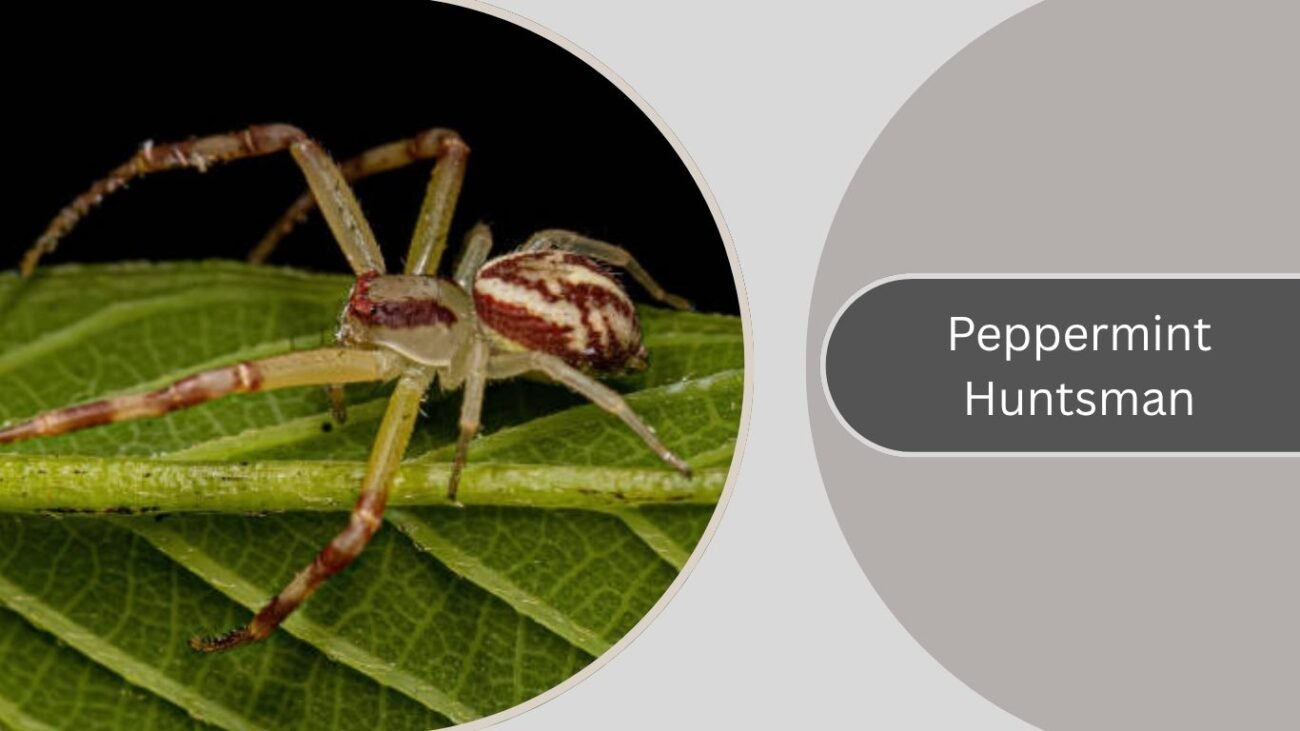
The peppermint huntsman is known not just for its appearance but also for the subtle peppermint-like odor it can release when threatened. It is a large and fast-moving spider that occasionally enters homes.
Identification
- Scientific Name: Heteropoda mentis
- Body Length: 2.5–3.5 cm
- Leg Span: 8–10 cm
- Color: Light to dark brown with subtle body markings
- Distinct Feature: Can emit a peppermint scent as a defense mechanism
Habitat and Distribution
Common in parts of eastern Australia, living under bark, in sheds, and sometimes indoors.
Behavior and Diet
A nocturnal hunter that captures cockroaches, moths, and other insects. When disturbed, it may flee quickly or display its front legs defensively.
15. Tree Huntsman
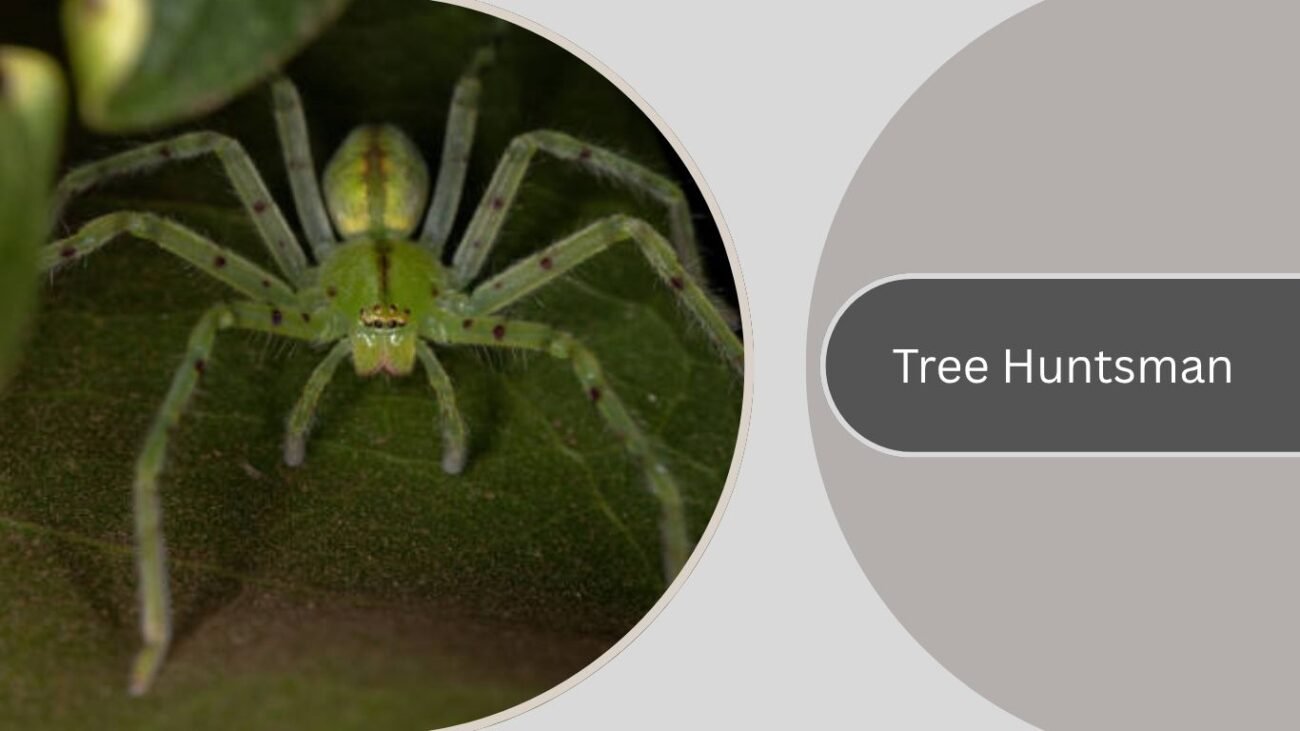
The tree huntsman is a slender, agile species well-adapted to life among branches and foliage. Its coloration and body shape allow it to move swiftly and blend into the bark and leaves of its arboreal habitat.
Identification
- Scientific Name: Pandercetes gracilis
- Body Length: 1.5–2.5 cm
- Leg Span: 5–7 cm
- Color: Brown or greenish-brown with fine mottling
- Distinct Feature: Slim body and legs suited for tree-dwelling life
Habitat and Distribution
Found in northern Australia, Papua New Guinea, and Southeast Asia, especially in dense forests and woodland areas.
Behavior and Diet
Hunts moths, beetles, and other small insects by ambushing them from tree trunks or leaves, often remaining motionless for long periods before striking.
16. Sand Huntsman
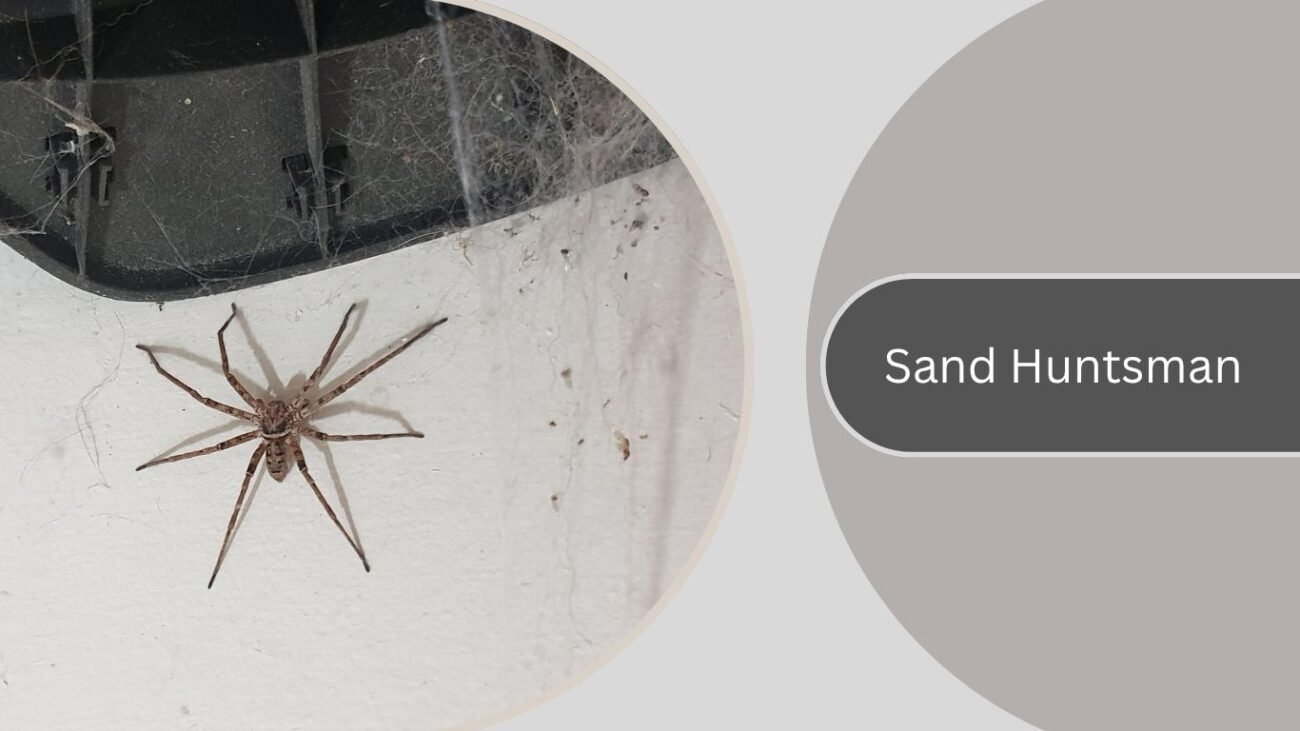
The sand huntsman is adapted to arid and semi-arid environments, with coloring that matches the sandy soils it inhabits. Its strong legs and speed make it an effective predator on open ground.
Identification
- Scientific Name: Olios spp.
- Body Length: 2–3 cm
- Leg Span: 6–8 cm
- Color: Pale yellow to sandy brown
- Distinct Feature: Sandy coloration for camouflage in desert and dune habitats
Habitat and Distribution
Found in inland Australia, particularly in deserts, sandy woodlands, and spinifex grasslands.
Behavior and Diet
Hunts ants, beetles, and other ground-dwelling insects, often chasing them across open sand rather than ambushing from a fixed position.
17. Coastal Huntsman
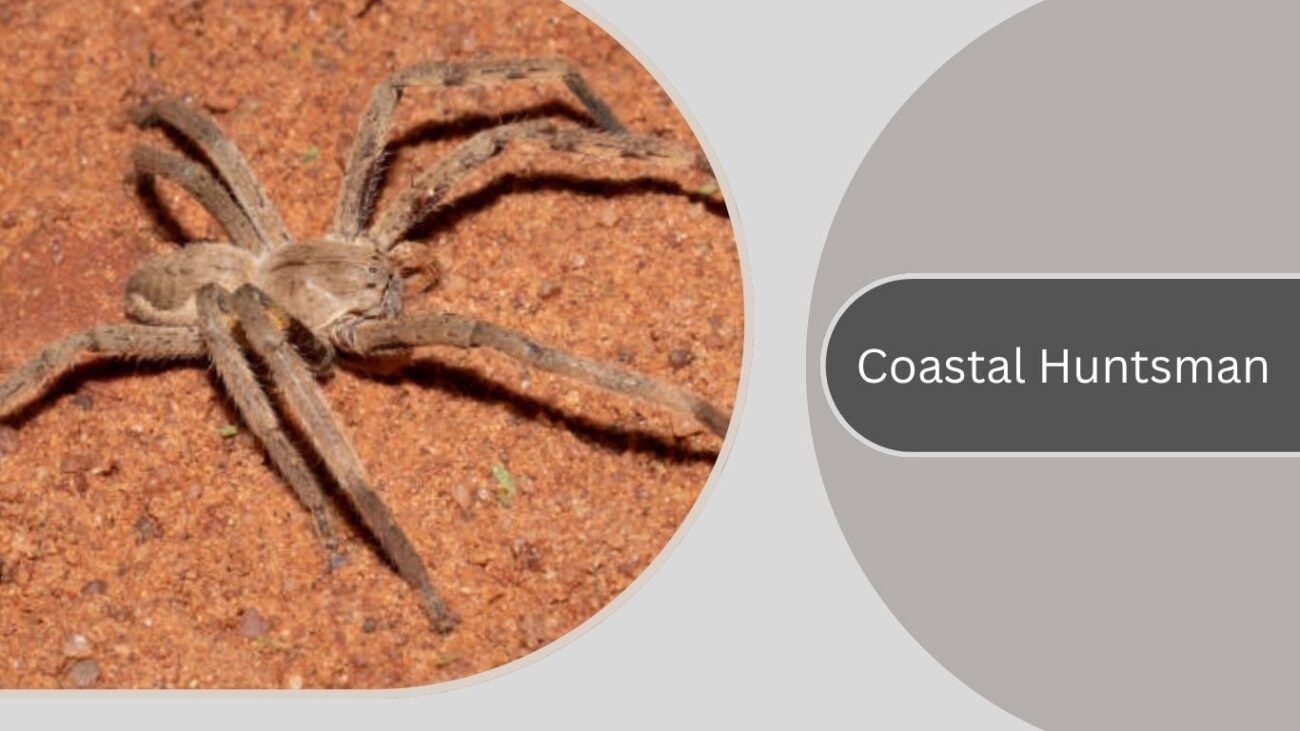
The coastal huntsman is a medium-to-large species commonly found along coastal regions, where it shelters in vegetation, under bark, and even around seaside structures. Its adaptability allows it to thrive near human habitation as well as in natural habitats.
Identification
- Scientific Name: Heteropoda jugulans
- Body Length: 2–3 cm
- Leg Span: 7–9 cm
- Color: Light to medium brown with faint mottling
- Distinct Feature: Adapted to both natural coastal vegetation and man-made shelters
Habitat and Distribution
Common along eastern Australia’s coastlines, from beaches and dunes to coastal forests.
Behavior and Diet
Feeds on moths, beetles, and various insects active in coastal areas. Often hunts near artificial lights at night, taking advantage of insect gatherings.
18. Grey Huntsman
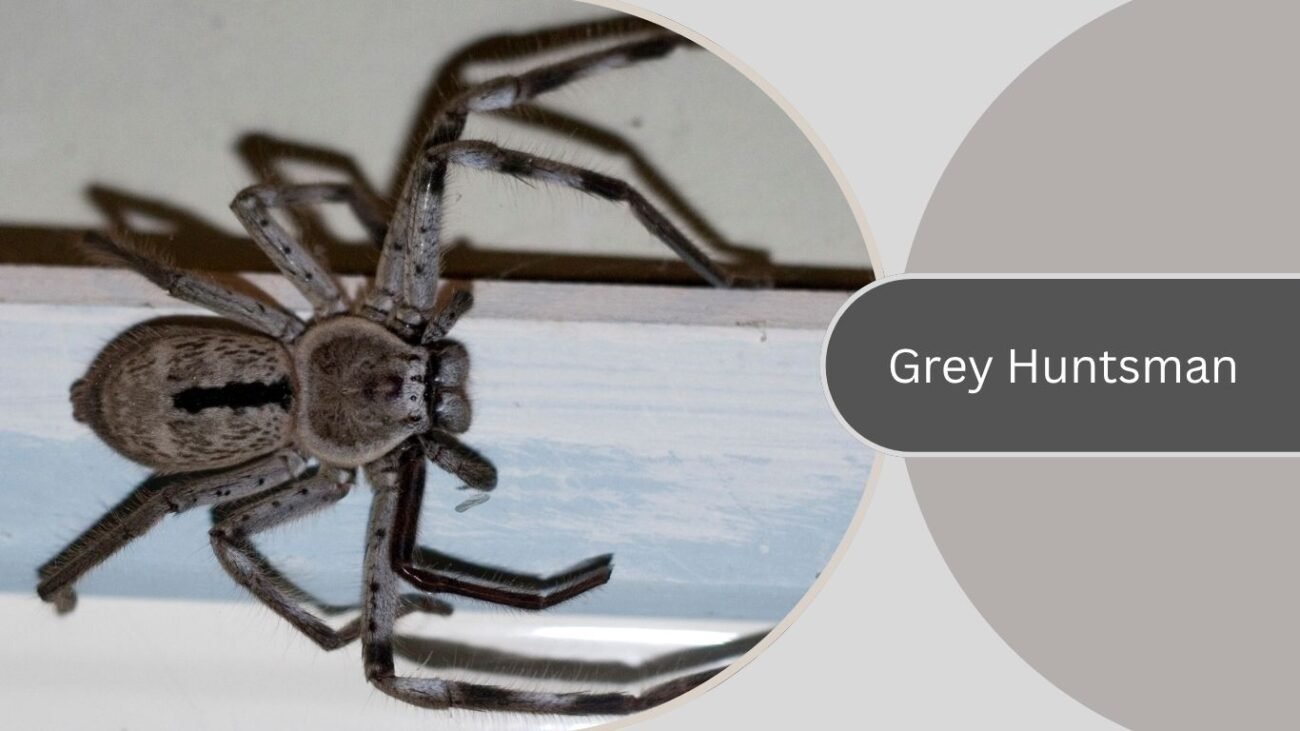
The grey huntsman is a broad, strong-legged spider with a uniform gray coloring that helps it blend into bark and stone surfaces. It is generally calm in temperament but can move rapidly when disturbed.
Identification
- Scientific Name: Isopeda montana
- Body Length: 2.5–3.5 cm
- Leg Span: 7–9 cm
- Color: Uniform gray with little to no distinct pattern
- Distinct Feature: Solid gray coloration for effective camouflage
Habitat and Distribution
Found in various parts of Australia, especially in rocky forests and mountainous areas.
Behavior and Diet
A nocturnal predator of beetles, crickets, and other insects. Often seen resting flat against stone walls or tree trunks during the day.
19. Mountain Huntsman
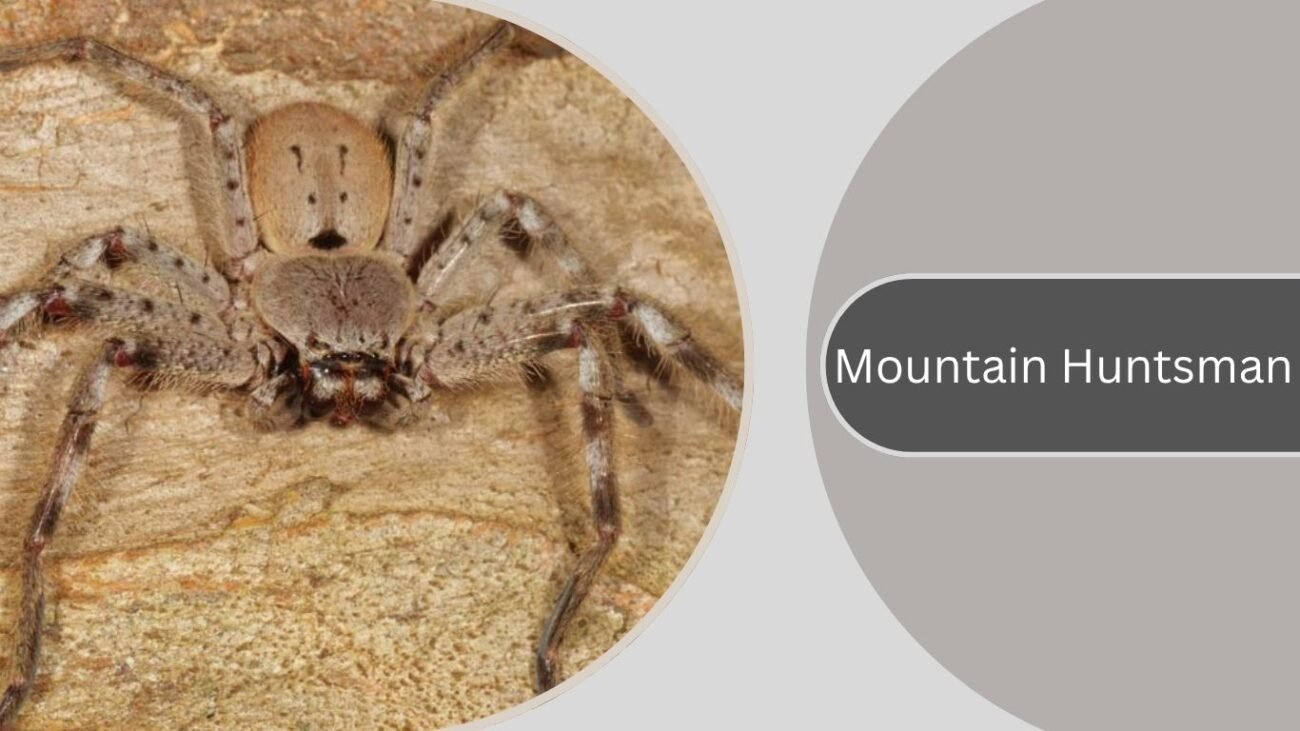
The mountain huntsman is a hardy species adapted to cooler, high-altitude environments. Its sturdy build and muted coloring help it survive in rocky forests and alpine woodlands where temperatures can drop significantly.
Identification
- Scientific Name: Isopeda queenslandica
- Body Length: 2.5–3.5 cm
- Leg Span: 7–9 cm
- Color: Grayish-brown with faint mottled patterns
- Distinct Feature: Adapted to colder, mountainous climates
Habitat and Distribution
Found in elevated regions of Queensland and other mountainous parts of eastern Australia, often sheltering under bark or within rock crevices.
Behavior and Diet
Hunts beetles, moths, and other insects at night. Uses its speed and camouflage to remain undetected by both predators and prey.
20. Northern Green Huntsman
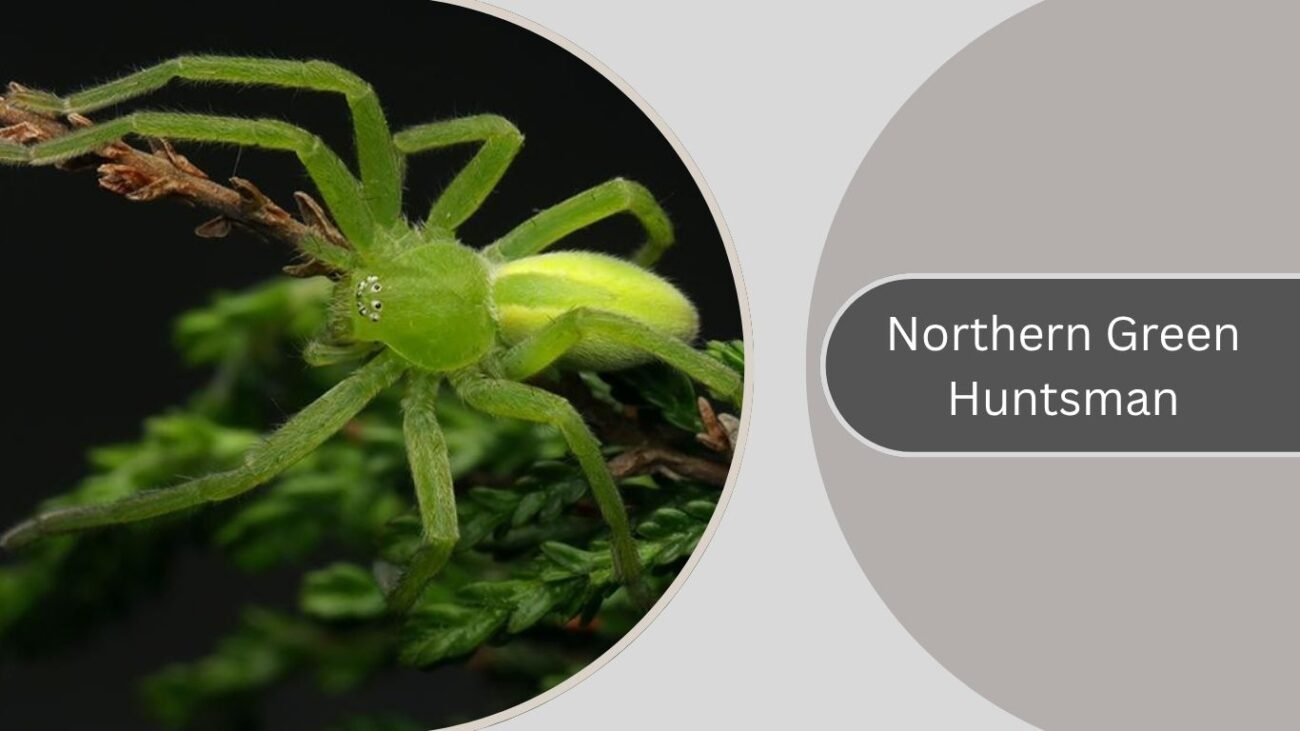
The northern green huntsman is an eye-catching species with bright green coloring, making it stand out among huntsman spiders. Its vibrant appearance helps it blend into leafy vegetation in its tropical habitat.
Identification
- Scientific Name: Micrommata virescens
- Body Length: 1–2 cm
- Leg Span: 4–6 cm
- Color: Vivid green with lighter underparts
- Distinct Feature: Bright green camouflage for foliage-dwelling
Habitat and Distribution
Found in tropical and subtropical northern Australia, often in rainforests, gardens, and dense shrubbery.
Behavior and Diet
Ambushes small insects from leaves and stems, relying on stillness and green camouflage to remain invisible until it strikes.
21. Tropical Green Huntsman
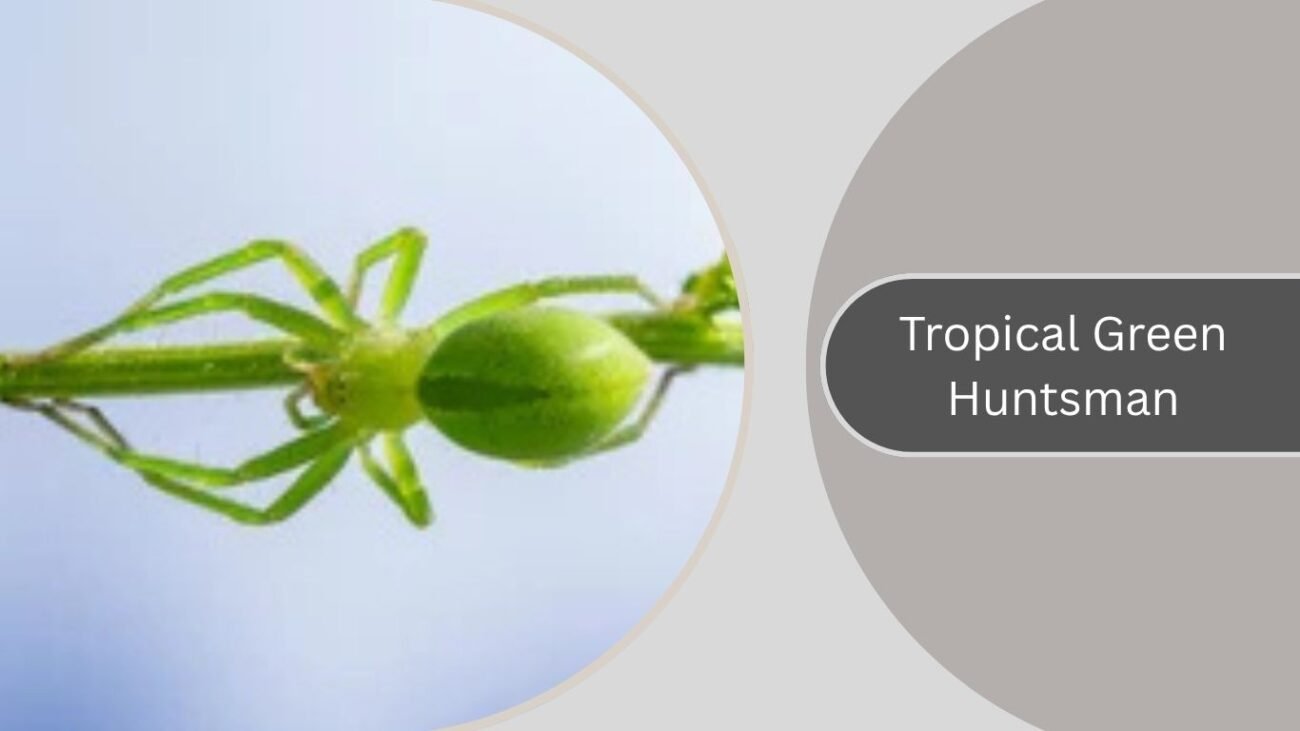
The tropical green huntsman is a vibrant, foliage-dwelling spider with striking green coloration that allows it to blend perfectly into tropical vegetation. It is agile and well-suited to life in humid, dense forests.
Identification
- Scientific Name: Micrommata darlingi
- Body Length: 1–2 cm
- Leg Span: 4–6 cm
- Color: Bright green with subtle yellowish or pale markings
- Distinct Feature: Leaf-like appearance for camouflage among greenery
Habitat and Distribution
Found in northern Australia, Southeast Asia, and parts of Papua New Guinea, mainly in rainforests and tropical gardens.
Behavior and Diet
Hunts small flying insects by patiently waiting on leaves and ambushing them when they land nearby. Prefers hunting during daylight hours.
22. Cave Huntsman
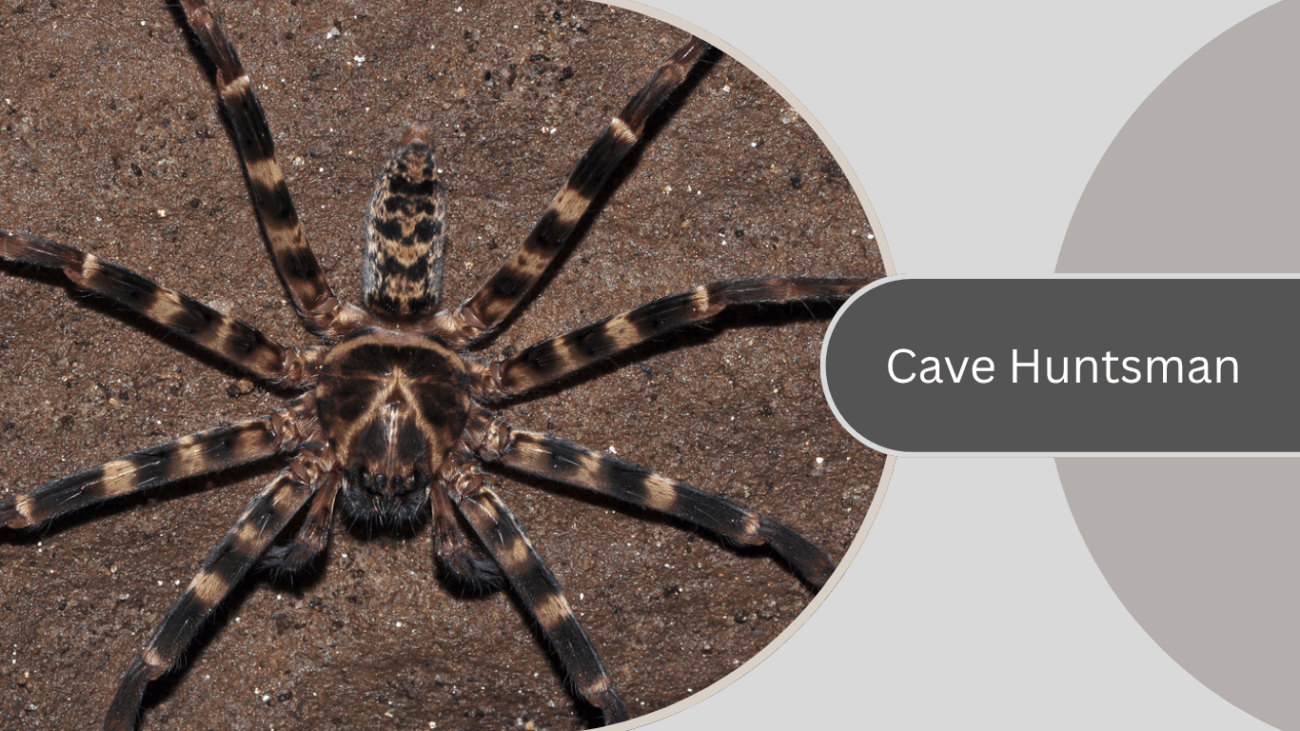
The cave huntsman is a large, long-legged spider adapted to life in dark, sheltered spaces. Its pale coloration helps it remain hidden in low-light environments such as caves, crevices, and abandoned structures.
Identification
- Scientific Name: Heteropoda simplex
- Body Length: 2.5–3.5 cm
- Leg Span: 8–10 cm
- Color: Pale beige to light brown with faint markings
- Distinct Feature: Light body adapted to low-light habitats
Habitat and Distribution
Found in Southeast Asia and northern Australia, inhabiting caves, rock overhangs, and shaded forest areas.
Behavior and Diet
Active at night, preying on moths, cave crickets, and other insects. Often remains motionless on cave walls during the day, relying on camouflage for protection.
23. Desert Huntsman
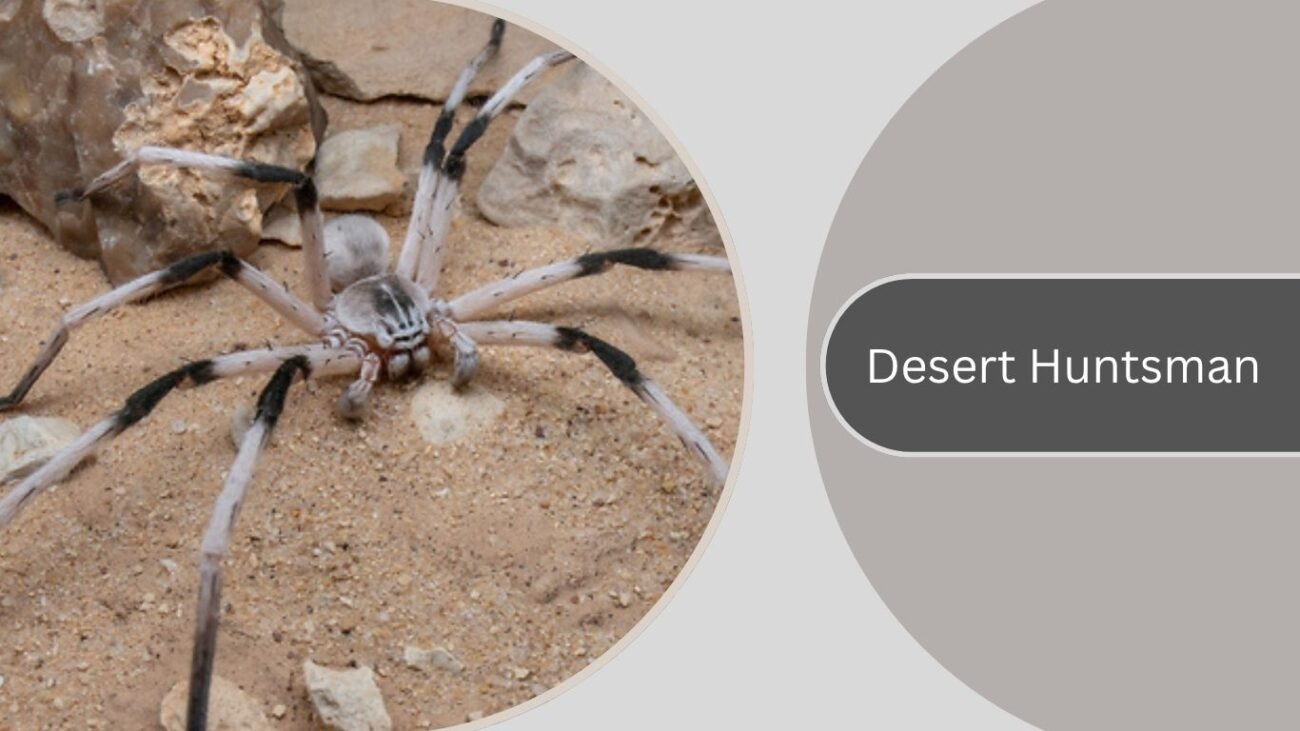
The desert huntsman is a hardy species adapted to survive in hot, arid environments. Its sandy coloration allows it to blend seamlessly with desert soils, making it an efficient ground-dwelling predator.
Identification
- Scientific Name: Olios giganteus
- Body Length: 2.5–3.5 cm
- Leg Span: 8–10 cm
- Color: Pale yellow to light sandy brown
- Distinct Feature: Camouflage perfectly matched to desert terrain
Habitat and Distribution
Found in arid and semi-arid regions of Australia, as well as desert environments in parts of Africa and the Middle East.
Behavior and Diet
Hunts ants, beetles, and other insects on the ground, often pursuing prey in short bursts of speed rather than ambushing from cover.
24. Spotted Huntsman
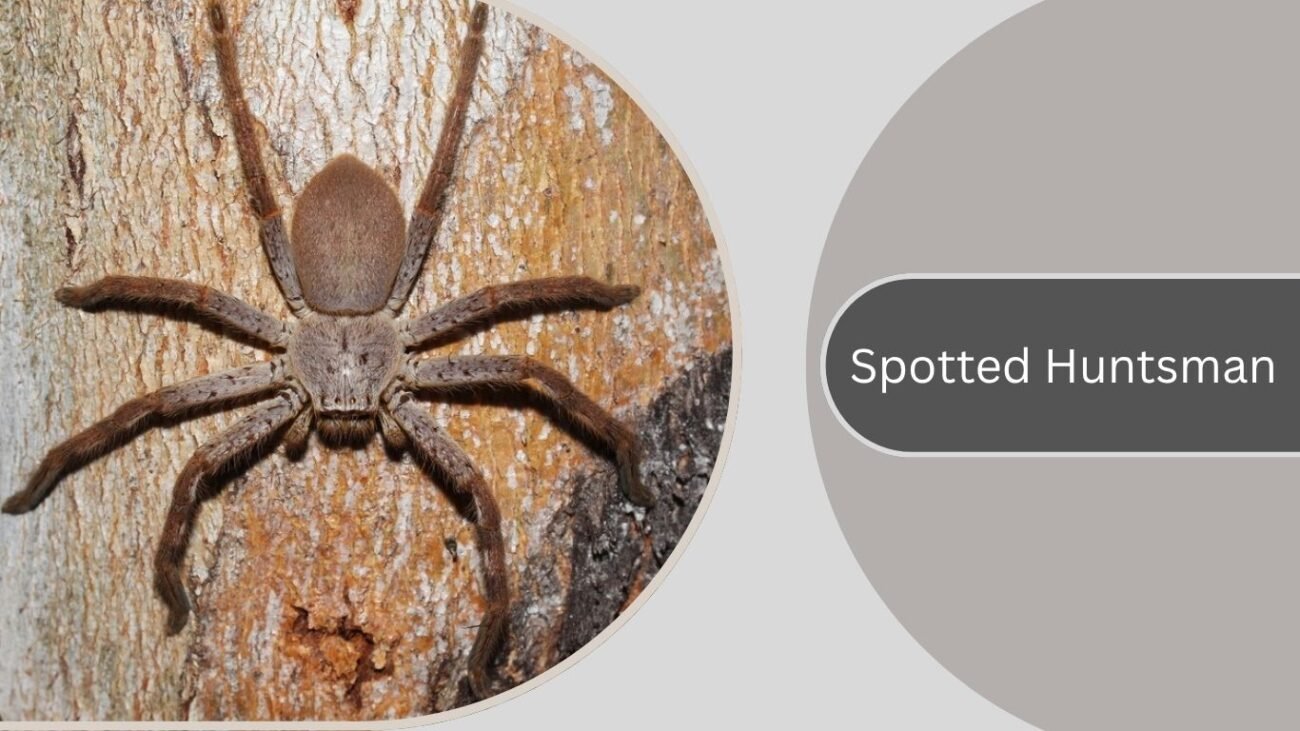
The spotted huntsman is recognized by the distinctive spots and patterns across its body and legs. These markings help it blend into dappled light environments, such as forest floors and leaf litter.
Identification
- Scientific Name: Neosparassus calligaster
- Body Length: 2–3 cm
- Leg Span: 7–9 cm
- Color: Brown or tan with dark spots and mottling
- Distinct Feature: Dark spots and patterns on the legs and body
Habitat and Distribution
Common in eastern and northern Australia, especially in woodlands, gardens, and grassy areas.
Behavior and Diet
An active nocturnal hunter that captures moths, beetles, and grasshoppers. Uses its spotted camouflage to remain hidden from both predators and prey.
25. Leaf Huntsman
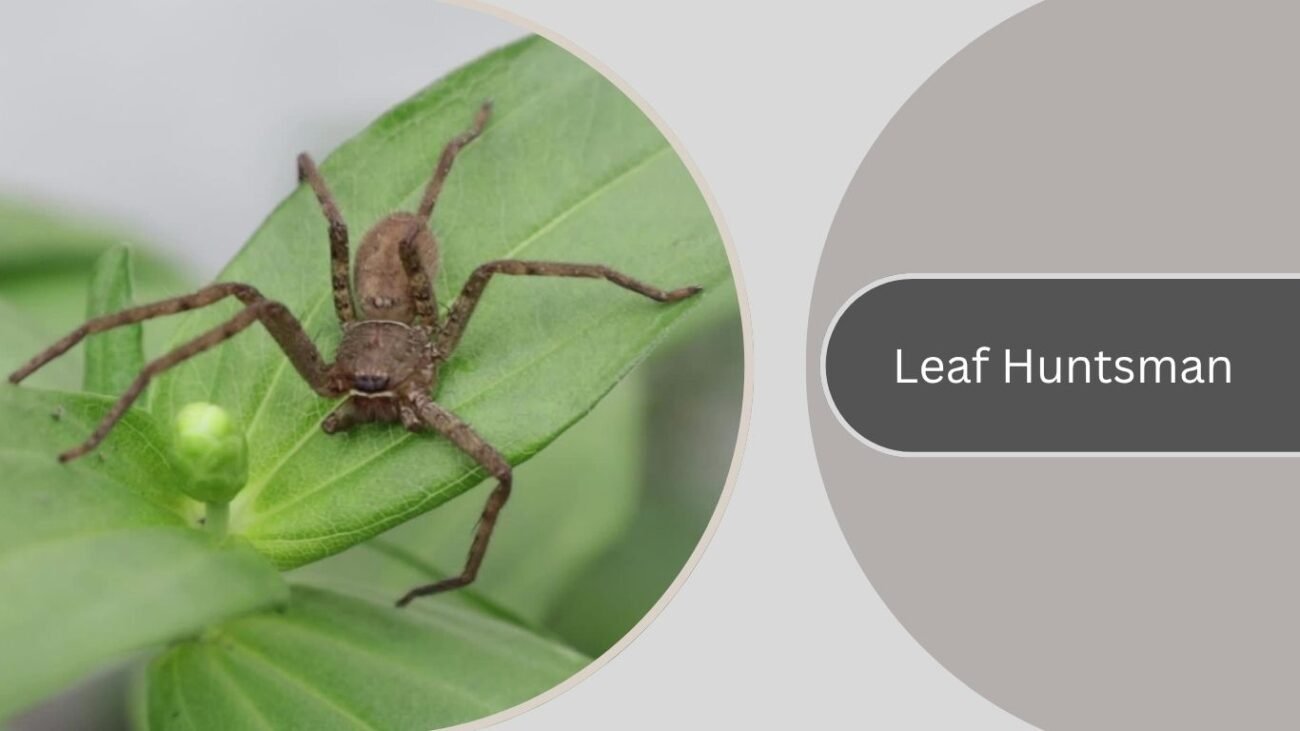
The leaf huntsman is a beautifully camouflaged species that mimics the color and texture of dried or living leaves. This disguise helps it remain undetected in its leafy environment, both from predators and unsuspecting prey.
Identification
- Scientific Name: Pandercetes gracilis
- Body Length: 1.5–2.5 cm
- Leg Span: 5–7 cm
- Color: Brown, greenish-brown, or mottled to resemble leaves
- Distinct Feature: Leaf-like body shape and mottled pattern for perfect foliage camouflage
Habitat and Distribution
Found in northern Australia, Papua New Guinea, and Southeast Asia, typically in forests, gardens, and areas with dense vegetation.
Behavior and Diet
Ambushes insects from leaves or branches, remaining still for long periods until prey comes close. Prefers hunting in the early morning or late evening when insect activity is high.