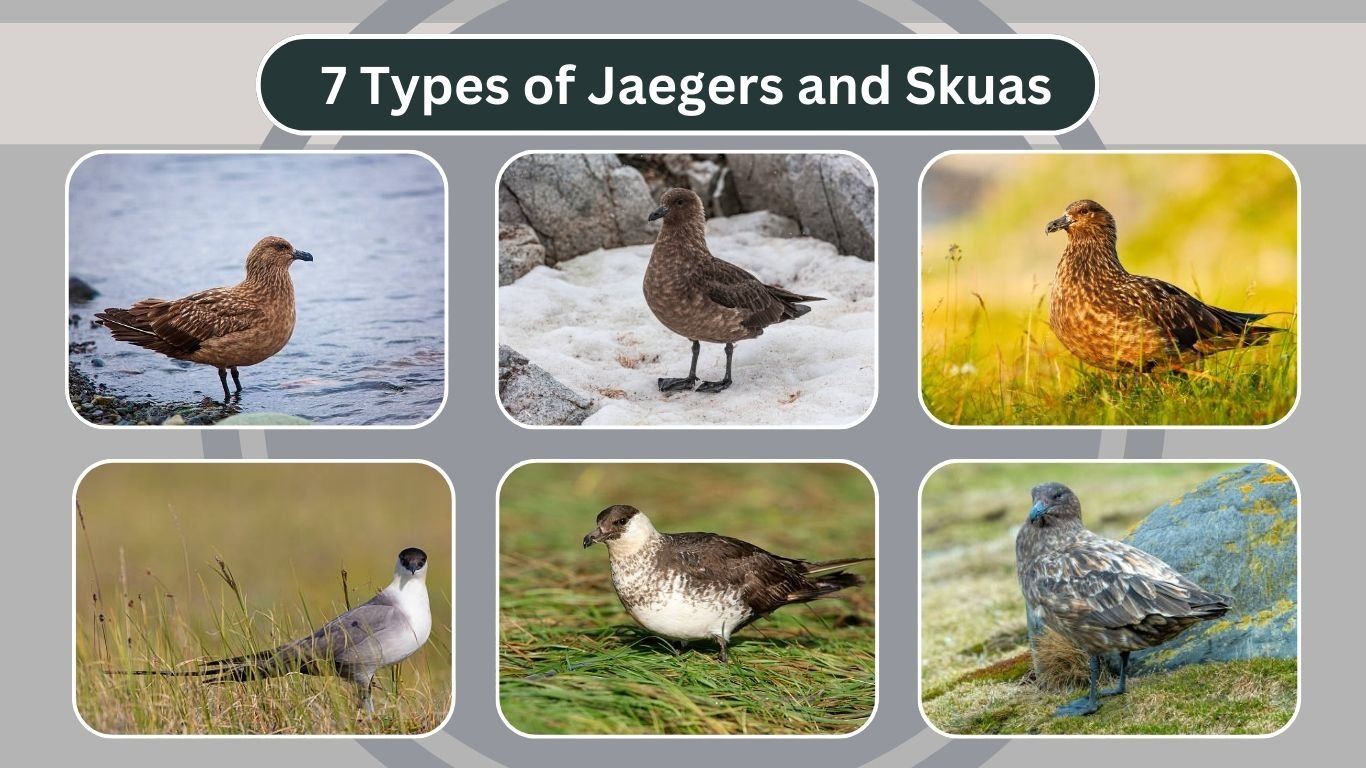
Jaegers and skuas are fierce seabirds known for their strength, agility, and bold behavior. Found from the Arctic tundra to the Southern Ocean, these birds are masters of survival, often earning the nickname “pirates of the seas” for their habit of stealing food from other seabirds. While jaegers are more slender and agile, skuas are stocky and powerful, dominating seabird colonies across the globe. In this guide, we’ll explore 7 types of jaegers and skuas, highlighting their identification, habitats, and remarkable behaviors.
1. Pomarine Jaeger
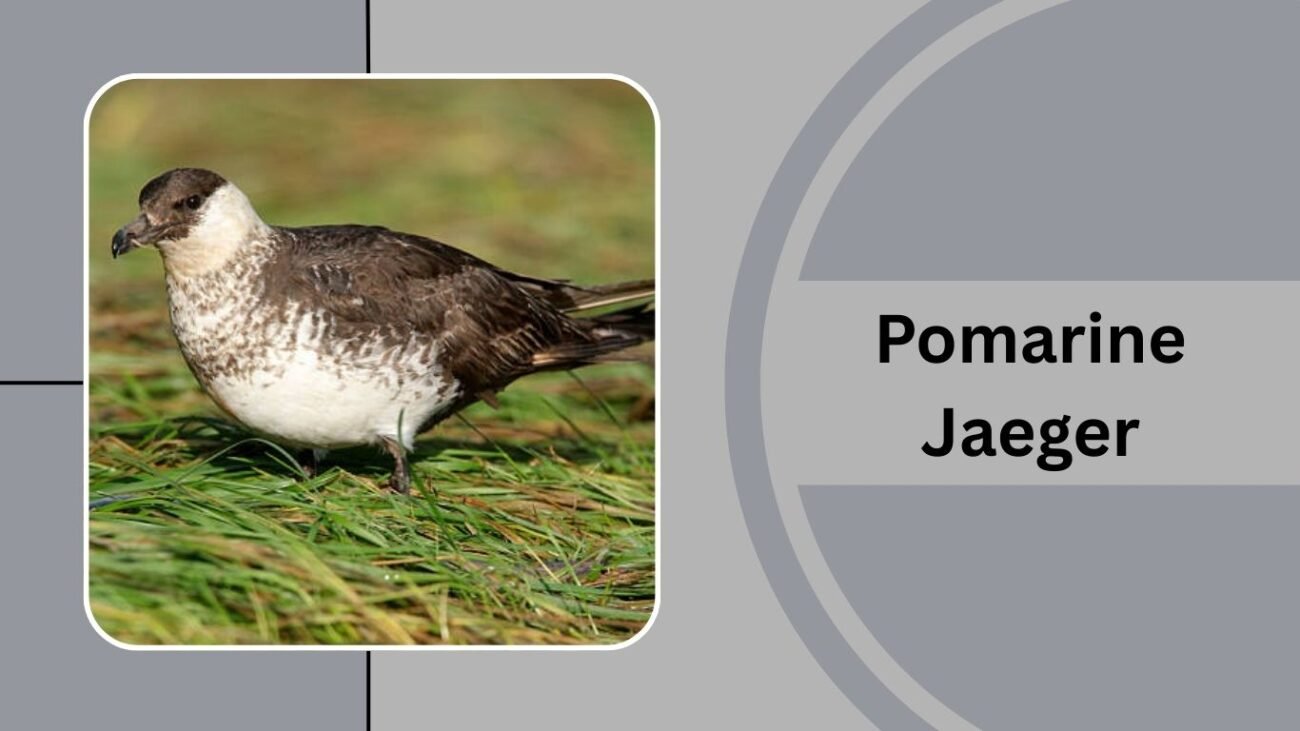
The Pomarine Jaeger (Stercorarius pomarinus) is the largest of the three jaeger species, known for its powerful build and long spoon-shaped central tail feathers in breeding plumage. It is a skilled aerial pirate, often chasing gulls and terns to steal their catch.
Identification
- Size: 18–25 inches (46–64 cm) long
- Wingspan: 45–53 inches (115–135 cm)
- Color: Two morphs—dark (mostly brownish-black) and light (brown back with pale underparts); breeding adults have elongated spoon-shaped central tail feathers
- Bill: Strong, hooked, with a yellow base and dark tip
- Legs: Black
Habitat and Range
They breed in the Arctic tundra across Eurasia and North America, nesting near wetlands and coasts. In winter, Pomarine Jaegers migrate far offshore, spending most of their time over tropical and subtropical oceans worldwide.
Behavior and Diet
Pomarine Jaegers are kleptoparasitic, harassing gulls, terns, and other seabirds to force them to drop food. They also hunt lemmings, small birds, fish, and carrion. Their aggressive, acrobatic flight makes them one of the most formidable seabirds.
2. Parasitic Jaeger
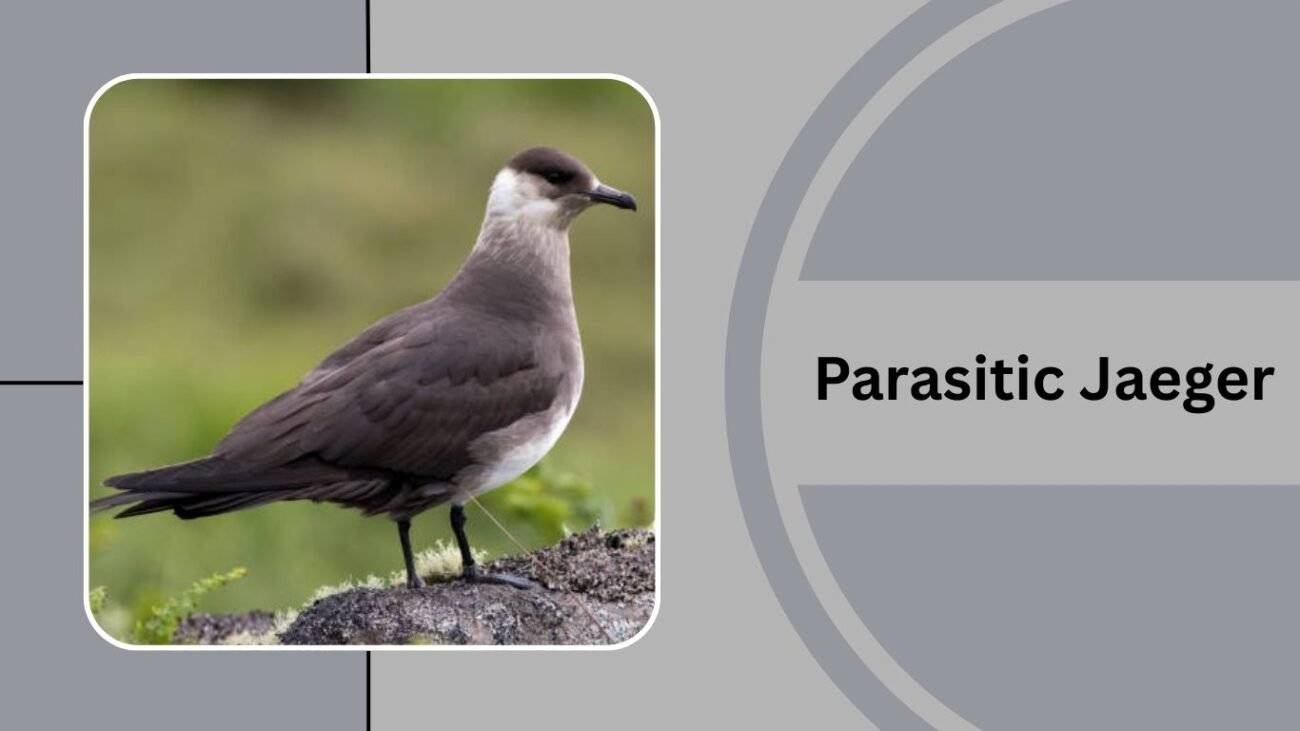
The Parasitic Jaeger (Stercorarius parasiticus) is a medium-sized jaeger, smaller than the Pomarine but more slender and agile. It is notorious for chasing terns, gulls, and other seabirds mid-air to snatch their food.
Identification
- Size: 16–20 inches (41–50 cm) long
- Wingspan: 42–46 inches (107–118 cm)
- Color: Occurs in three morphs—light (brown back, pale belly), dark (uniformly dark brown), and intermediate; breeding adults have long, pointed central tail feathers
- Bill: Dark with pale base
- Legs: Black
Habitat and Range
They breed in the Arctic tundra of Eurasia and North America, often nesting near wetlands. In winter, they migrate far south over open oceans, reaching South America, Africa, and Australasia.
Behavior and Diet
Parasitic Jaegers are expert kleptoparasites, chasing smaller seabirds to steal their catches. They also hunt fish, insects, and small birds, especially during the breeding season. Their high-speed chases over water make them exciting to watch.
3. Long-tailed Jaeger
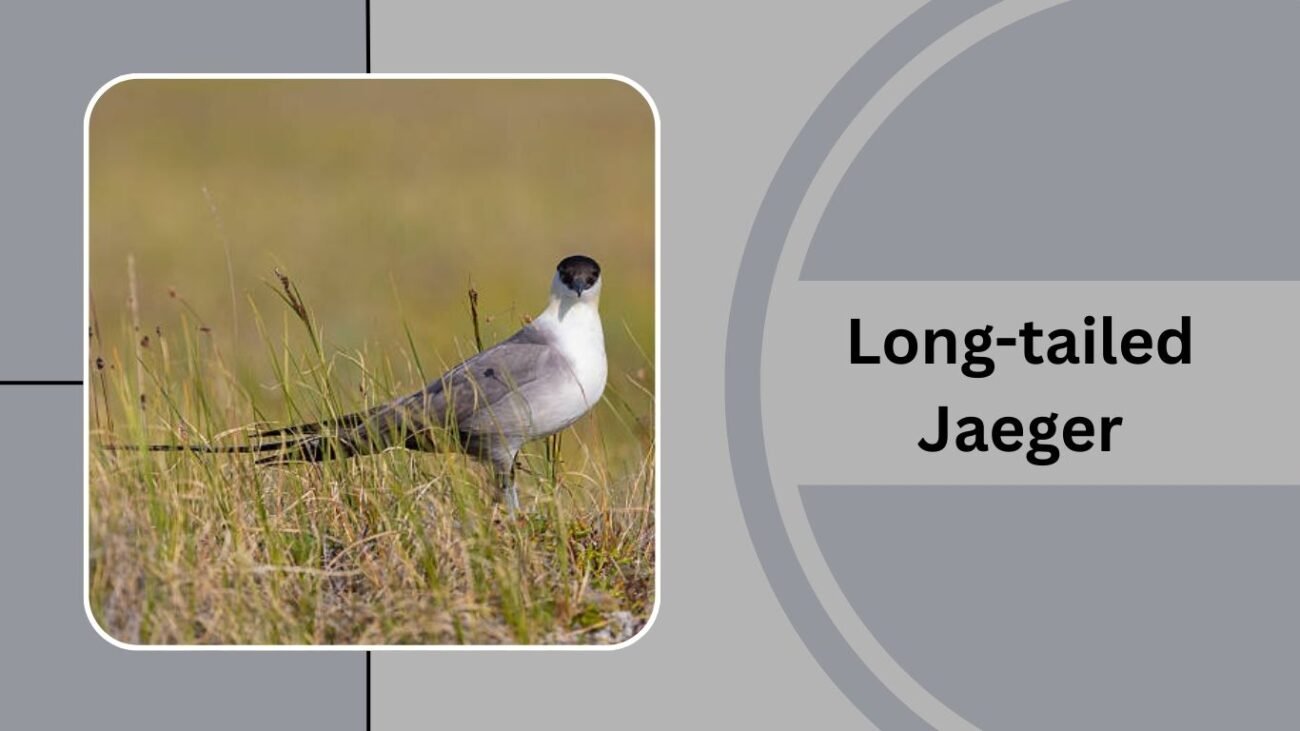
The Long-tailed Jaeger (Stercorarius longicaudus) is the smallest and most elegant of the jaegers, recognized by its slim build and extremely long central tail feathers in breeding plumage.
Identification
- Size: 15–20 inches (38–50 cm) long
- Wingspan: 40–46 inches (102–117 cm)
- Color: Light morph shows gray back, white underparts, and black cap; dark morph mostly brown; breeding adults have very long central tail streamers
- Bill: Slender, black
- Legs: Black
Habitat and Range
They breed in the high Arctic tundra, often in dry, open areas with sparse vegetation. In winter, they migrate long distances, spending months far offshore over tropical and subtropical oceans.
Behavior and Diet
Unlike other jaegers, Long-tailed Jaegers rely more on hunting than food stealing. They feed on lemmings, small birds, and insects during breeding, while at sea they catch fish and invertebrates. Their graceful, tern-like flight makes them one of the most striking seabirds.
4. Great Skua
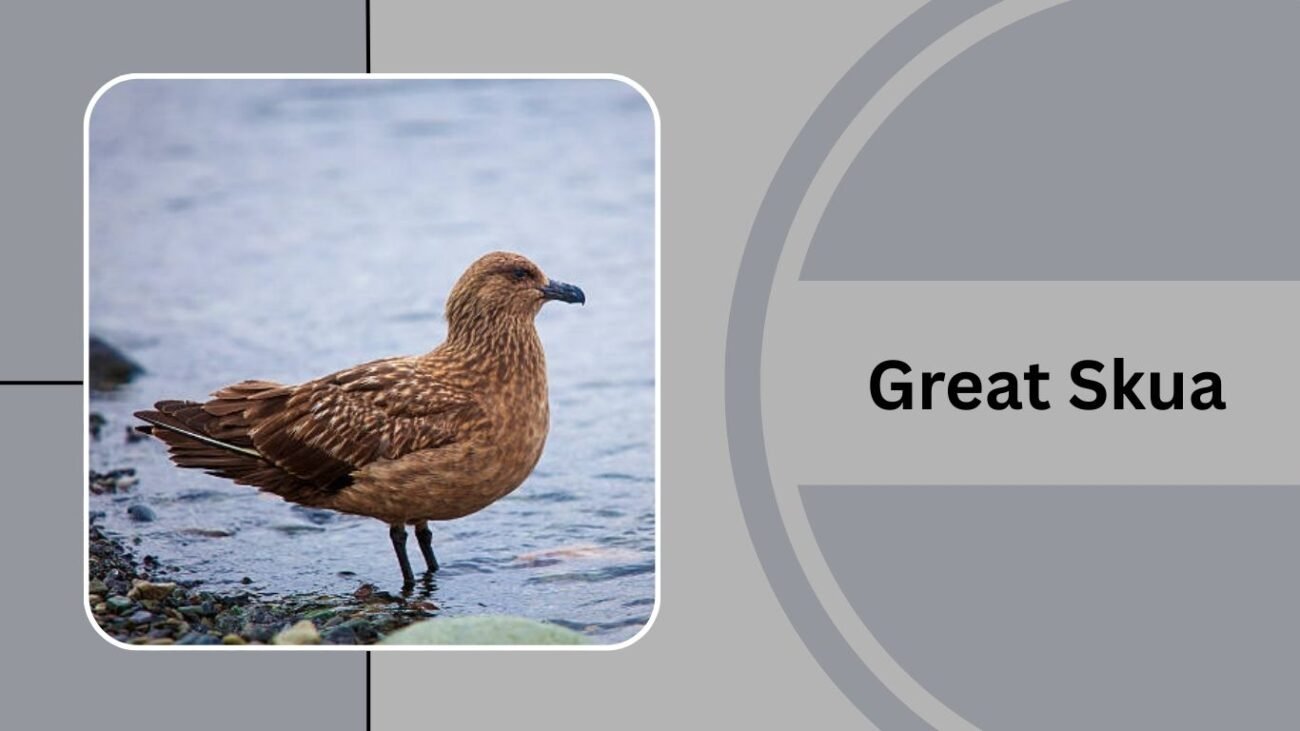
The Great Skua (Stercorarius skua) is a powerful, bulky seabird often called the “pirate of the seas.” It is the largest skua species in the North Atlantic and is feared for its aggressive behavior toward other seabirds.
Identification
- Size: 20–24 inches (50–61 cm) long
- Wingspan: 50–60 inches (127–152 cm)
- Color: Uniformly dark brown with pale mottling; broad wings with conspicuous white wing patches
- Bill: Strong, hooked, dark gray to black
- Legs: Black, sturdy
Habitat and Range
They breed in the North Atlantic, particularly in Scotland, Iceland, and Norway. In winter, they disperse widely across the North Atlantic, reaching as far south as the Mediterranean and West Africa.
Behavior and Diet
Great Skuas are aggressive predators and scavengers. They feed on fish, carrion, seabird eggs, and chicks, and are notorious for attacking puffins, gulls, and even other skuas to steal food. Their sheer strength allows them to dominate many other seabirds.
5. South Polar Skua
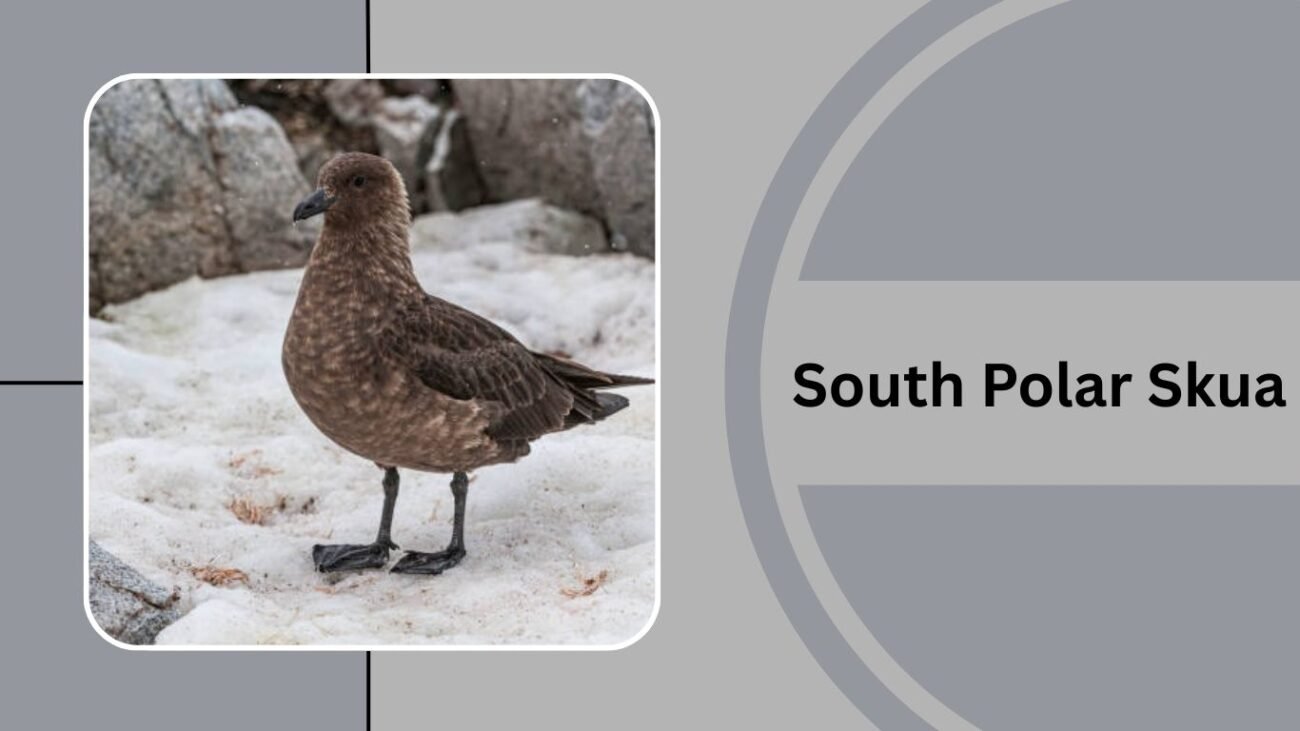
The South Polar Skua (Stercorarius maccormicki) is a fierce seabird of the Southern Ocean, often seen near Antarctica. It is highly aggressive during the breeding season and is known for raiding penguin colonies.
Identification
- Size: 20–22 inches (53–58 cm) long
- Wingspan: 52–54 inches (132–138 cm)
- Color: Uniformly dark brown to lighter mottled brown; white wing flashes visible in flight
- Bill: Heavy, dark, hooked
- Legs: Black
Habitat and Range
They breed along the Antarctic coast and offshore islands. After breeding, they migrate northward across oceans, reaching as far as North America, Africa, and the Pacific Islands.
Behavior and Diet
South Polar Skuas are formidable predators and scavengers. They prey on penguin eggs and chicks, fish, and carrion, while also stealing food from other seabirds. Their aggressive defense of nesting territories makes them feared by intruders.
6. Brown Skua
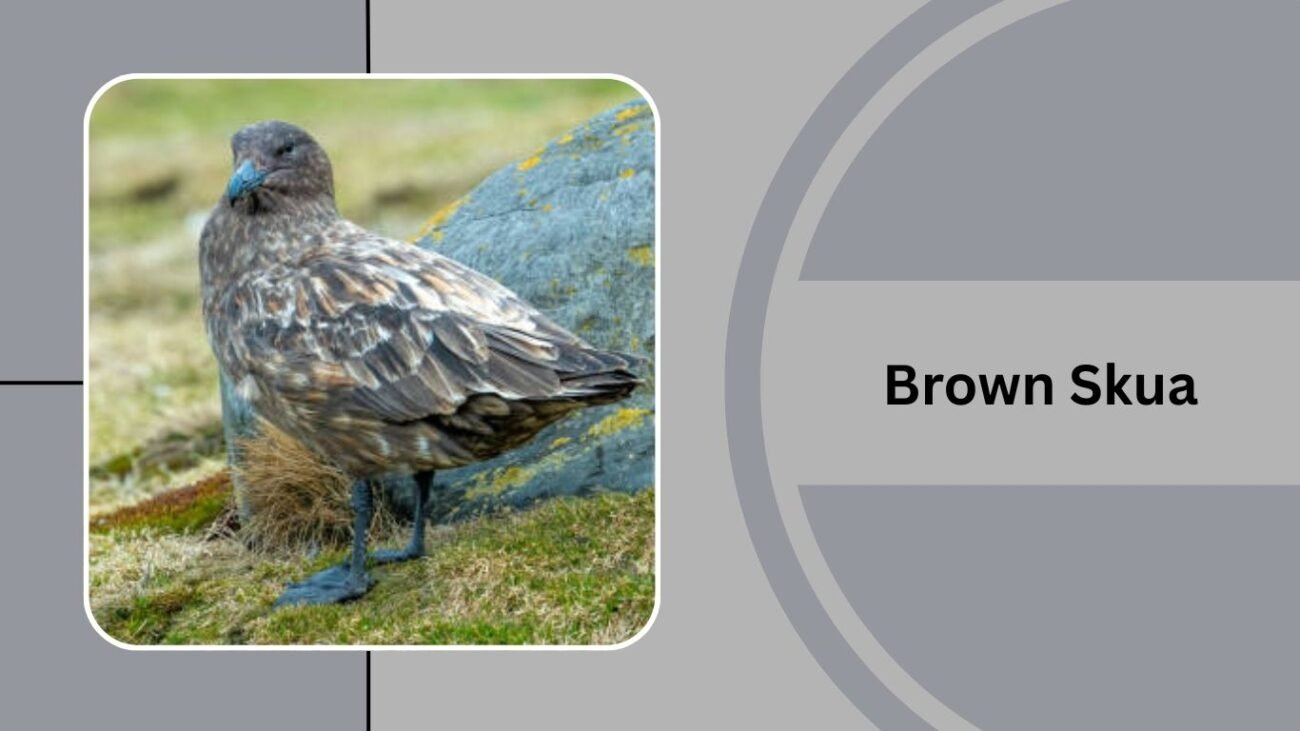
The Brown Skua (Stercorarius antarcticus) is a large, robust seabird of the southern oceans. It is often difficult to distinguish from the South Polar Skua but generally bulkier and slightly lighter in plumage.
Identification
- Size: 21–23 inches (53–58 cm) long
- Wingspan: 52–58 inches (132–147 cm)
- Color: Dark brown overall with pale streaking; broad white patches on wings visible in flight
- Bill: Stout, hooked, dark gray-black
- Legs: Black, powerful
Habitat and Range
They breed on sub-Antarctic islands, including the Falklands, South Georgia, and Kerguelen Islands. In winter, they disperse widely across the southern oceans.
Behavior and Diet
Brown Skuas are aggressive hunters and scavengers. They feed on fish, carrion, penguin chicks, and eggs, and frequently harass other seabirds to steal their prey. Known for their fearless defense, they will dive-bomb intruders near nests.
7. Chilean Skua
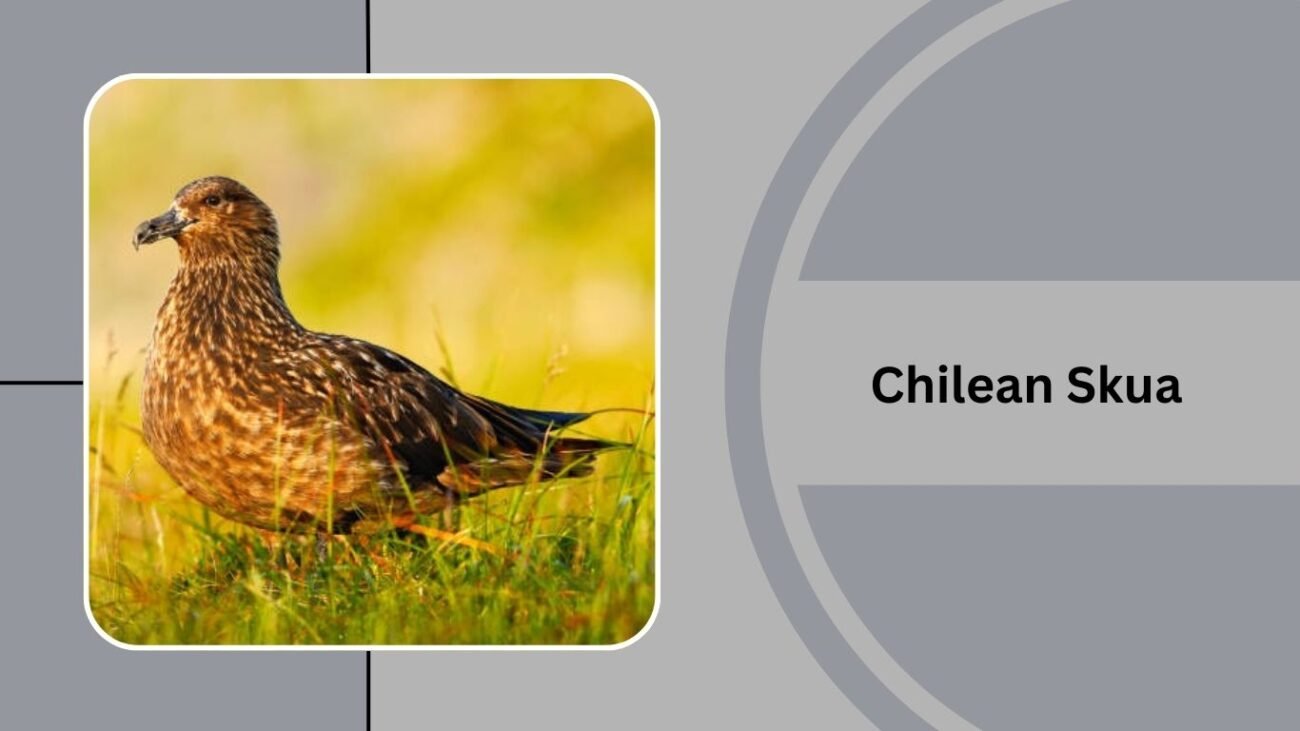
The Chilean Skua (Stercorarius chilensis), also called the Cinnamon Skua, is a powerful seabird native to South America. It is slightly paler than the Brown Skua and is widespread along the southern coasts of Chile and Argentina.
Identification
- Size: 21–24 inches (54–61 cm) long
- Wingspan: 53–58 inches (135–147 cm)
- Color: Brown with cinnamon tones, especially on the underparts; broad white wing flashes
- Bill: Large, hooked, dark gray to black
- Legs: Black
Habitat and Range
They breed along the coasts and islands of southern South America, particularly in Chile, Argentina, and Tierra del Fuego. In winter, they migrate northward along the Pacific and Atlantic coasts of South America.
Behavior and Diet
Chilean Skuas are aggressive seabirds, preying on fish, penguin chicks, and carrion. They are also kleptoparasitic, often attacking gulls, terns, and cormorants to force them to drop food. Their strong, direct flight makes them powerful aerial hunters.
FAQs
What is the main difference between jaegers and skuas?
Jaegers are generally smaller, more slender seabirds that breed in the Arctic and spend winters at sea, while skuas are larger, stockier, and found mainly in the Southern Hemisphere. Both share kleptoparasitic behavior but differ in size and distribution.
Why are skuas called “pirates of the seas”?
Skuas often chase and attack other seabirds, such as gulls, puffins, and terns, to steal their food. This aggressive food-stealing habit earned them the nickname “pirates of the seas.”
Do jaegers and skuas migrate long distances?
Yes, both groups are long-distance migrants. Jaegers travel from Arctic breeding grounds to tropical oceans, while skuas migrate between Antarctic or sub-Antarctic breeding areas and warmer northern waters during winter.
What do jaegers and skuas eat?
Their diet includes fish, seabird eggs, chicks, carrion, and sometimes small mammals like lemmings. They are also skilled kleptoparasites, stealing food mid-air from gulls and terns.
Are jaegers and skuas dangerous to humans?
While they are not generally a threat to people, both jaegers and skuas are highly protective of their nests. If humans approach breeding colonies, these birds may dive-bomb intruders to drive them away.