










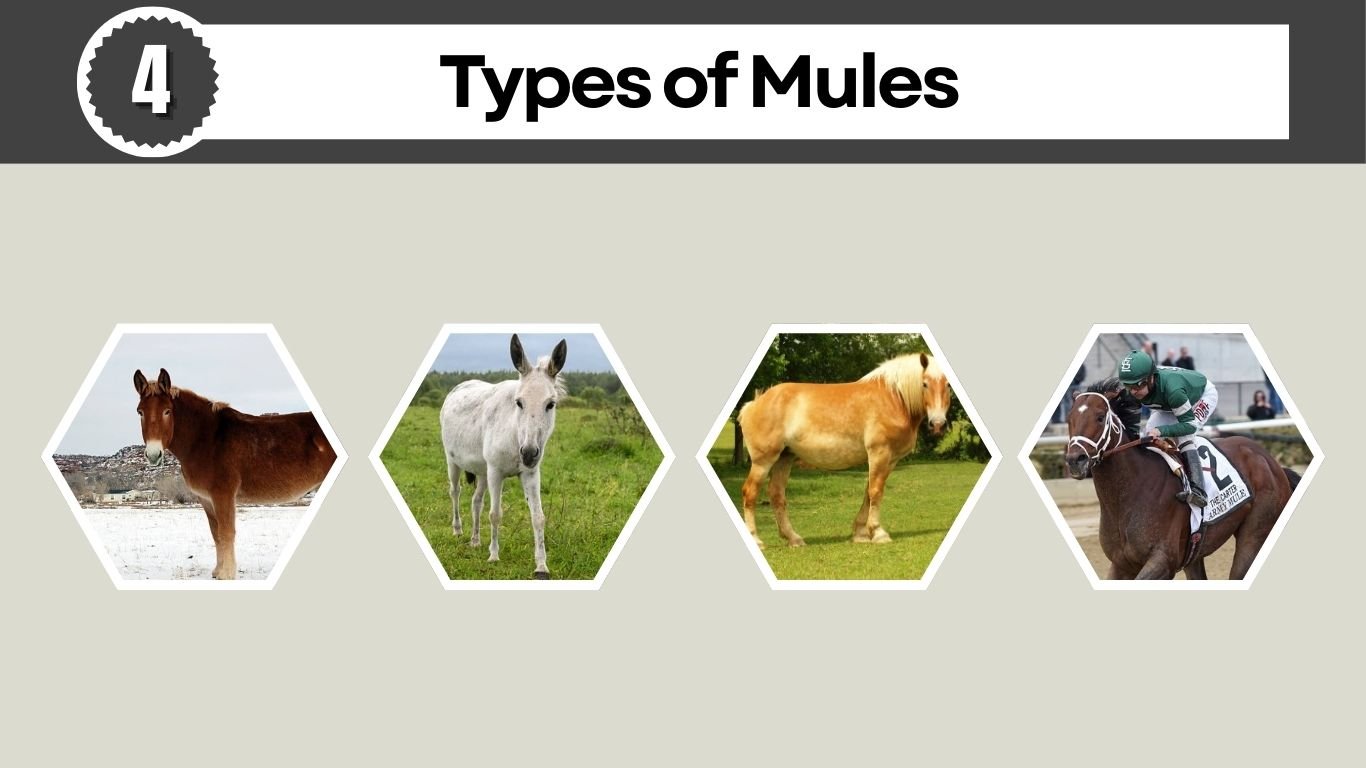
Mules are remarkable hybrid animals known for their strength, intelligence, and endurance. Created by crossbreeding a horse and a donkey, mules inherit the best traits of both species. While all mules share similar characteristics, there are distinct types that vary in size, strength, and temperament. From the hardworking draft mule to the speedy race mule, each type of mule is bred for specific tasks. In this article, we’ll explore the different types of mules and their unique traits, helping you understand their roles and uses.
1. Standard Mule
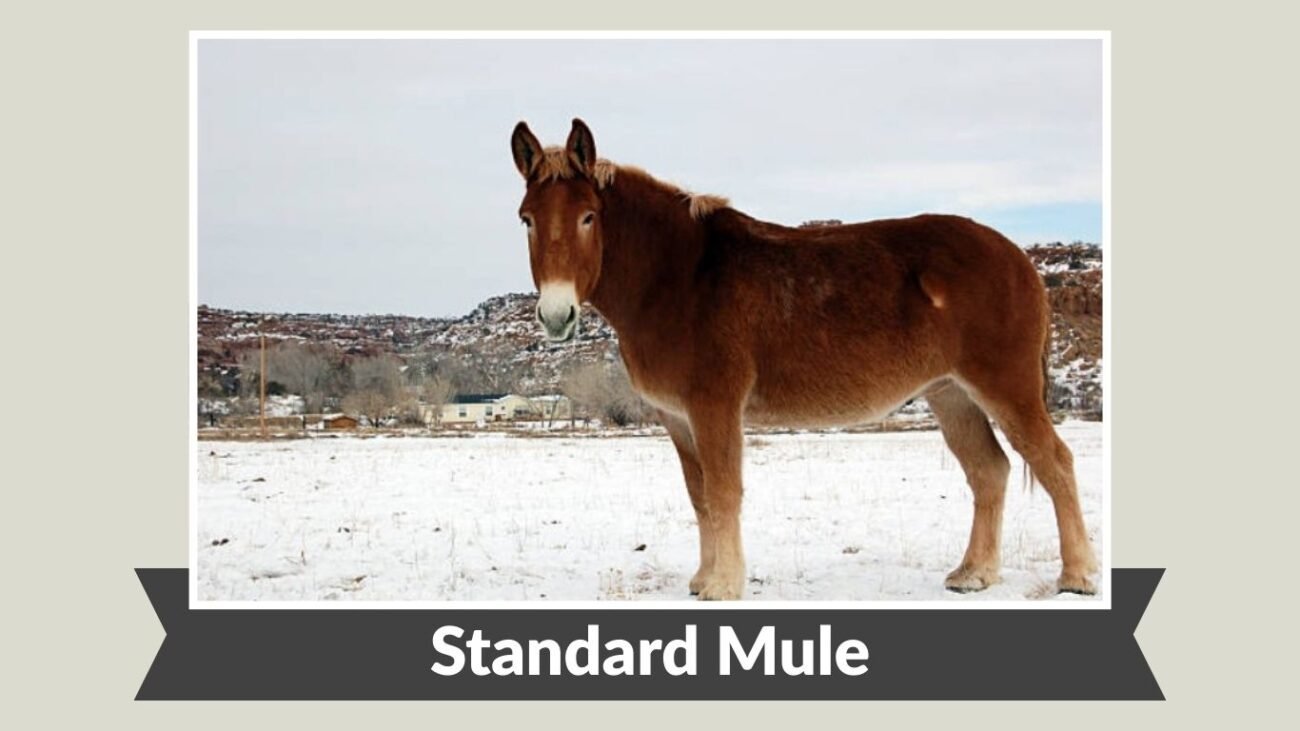
A Standard Mule is the most common type of mule, often bred for a variety of tasks including work and leisure. These mules are the offspring of a horse (mare) and a donkey (jack). Their size and temperament are ideal for heavy labor, making them a popular choice for farming, packing, and even light transportation. Standard mules are strong, intelligent, and have the endurance of a donkey combined with the strength and size of a horse.
Identification
- Size: Generally between 12 to 16 hands (48 to 64 inches tall at the shoulder).
- Build: Robust and muscular, with a combination of horse and donkey features.
- Coat: Varies in color, commonly shades of brown, gray, black, or white.
- Ears: Longer than a horse’s, but not as long as a donkey’s.
- Tail: Shorter and less tufted than a donkey’s.
Behavior
Standard mules tend to be very intelligent and can be more independent than horses. They are known for their calm and steady nature but can also be stubborn when they don’t understand what is being asked of them. They have a reputation for being incredibly reliable and are often used in difficult environments like mountainous terrains.
Strengths
Standard mules are known for their exceptional stamina and ability to perform physical tasks over long periods. Their hardiness makes them suitable for various tasks, from working on farms to carrying heavy loads in rugged landscapes. They also have a more resistant immune system compared to horses.
Uses
These mules are versatile and can be used for various purposes:
- Work: Plowing, hauling, and other farm work.
- Packing: They are often used as pack animals in mountainous regions.
- Riding: Some standard mules are trained for leisure riding, though they are less commonly used for this purpose than horses.
Care and Maintenance
Taking care of a standard mule is similar to caring for both horses and donkeys, with a focus on hoof care, regular feeding, and maintaining proper vaccinations. Due to their intelligence, it is important to keep them engaged to prevent boredom, which can lead to stubbornness. Proper training and consistent handling are key to building a good working relationship.
2. Miniature Mule

A Miniature Mule is a smaller version of the standard mule, typically bred by crossing a miniature horse with a donkey. Despite their smaller size, these mules share many of the same characteristics as their larger counterparts, such as intelligence, strength, and stamina. Miniature mules are often used as pets, companions, or for light work around the farm or homestead.
Identification
- Size: Typically under 14 hands (56 inches) tall at the shoulder.
- Build: Compact and sturdy, with a body similar to that of larger mules but on a smaller scale.
- Coat: Coat colors can vary, including shades of brown, gray, black, and even pinto.
- Ears: Long, mule-like ears that are one of their defining features.
- Tail: Similar to a horse’s tail but often more slender.
Behavior
Miniature mules tend to have a gentle and calm temperament. Like other mules, they inherit the intelligence of donkeys, making them easy to train, although they can show some stubbornness. They are social animals and enjoy human interaction, making them popular pets for those with limited space. However, they can be independent and strong-willed, requiring consistent training.
Strengths
Although smaller in stature, miniature mules are still incredibly strong for their size. They are hardy animals, able to carry small loads and perform tasks that require agility. Their compact size makes them more versatile for tasks in smaller spaces or areas that would be difficult for larger mules or horses to navigate.
Uses
Miniature mules are often used for:
- Companion animals: Due to their friendly nature, they are kept as pets and companions.
- Cart pulling: They are sometimes trained to pull small carts or wagons, particularly for children or light work.
- Therapeutic animals: Some miniature mules are used in therapeutic riding programs due to their gentle temperament.
Care and Maintenance
Caring for a miniature mule involves the same considerations as standard mules, but with special attention given to their smaller size. Regular hoof trimming, proper feeding, and vaccinations are essential. They should be kept in a safe, enclosed area, as their small size can make them more vulnerable to larger animals. Social interaction and mental stimulation are also important to prevent boredom.
3. Draft Mule
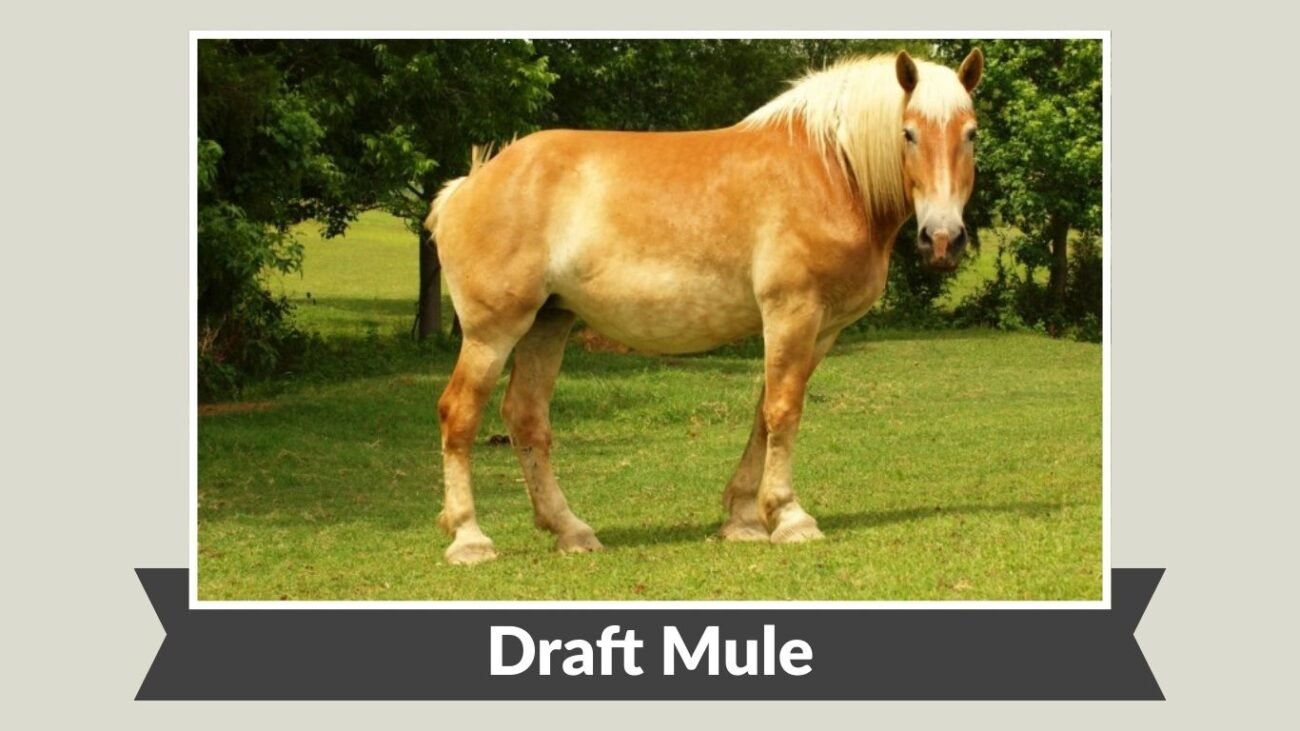
A Draft Mule is a type of mule specifically bred for heavy work, much like draft horses. These mules are created by crossing a draft horse with a donkey, resulting in a mule that combines the strength and size of a draft horse with the stamina and intelligence of a donkey. Draft mules are primarily used for farm work, hauling, and other labor-intensive tasks that require significant physical strength.
Identification
- Size: Typically 14 to 17 hands (56 to 68 inches) tall at the shoulder.
- Build: Large and muscular, similar to draft horses, with a robust body designed for pulling heavy loads.
- Coat: Varies widely, but usually in solid colors like bay, black, brown, or gray.
- Ears: Longer than a horse’s, characteristic of all mules.
- Tail: Shorter and more streamlined compared to donkeys or horses.
Behavior
Draft mules are known for their calm and patient demeanor. They are highly dependable and can work long hours without tiring easily. Like other mules, they can be more independent and stubborn than horses, but they are very intelligent and quickly learn commands and routines. Draft mules are often described as “easy keepers,” meaning they require less food than horses while still performing heavy tasks efficiently.
Strengths
Draft mules are incredibly strong and are especially valued for their ability to perform difficult tasks over long periods. Their stamina is one of their standout qualities, enabling them to pull heavy loads, work in rough terrain, and perform other physically demanding jobs. They also have a resistance to many common horse diseases, making them hardier than horses in certain conditions.
Uses
Draft mules are primarily used for:
- Farm work: They are ideal for plowing, hauling, and other labor-intensive tasks on farms.
- Logging: Due to their size and strength, draft mules are often used in logging operations, where they can pull heavy logs through rugged terrain.
- Transportation: In some rural areas, draft mules are still used for transporting goods, especially in places where vehicles cannot easily reach.
Care and Maintenance
Caring for a draft mule is similar to caring for other mules, but their larger size requires additional consideration. Regular hoof care is critical, as is providing them with a proper diet to maintain their muscle mass. They may need more space than smaller mules due to their size, and their exercise routine should focus on maintaining strength and stamina. Regular grooming is also necessary to keep their coat in good condition.
4. Race Mule

A Race Mule is a specially bred mule designed for speed and agility, often used in racing events and competitive tasks. These mules are typically bred from fast, energetic horse breeds and a donkey, resulting in a hybrid that combines the best qualities of both parents. Although mules are generally known for their strength and endurance, race mules are prized for their quickness and athleticism.
Identification
- Size: Typically 12 to 15 hands (48 to 60 inches) tall at the shoulder.
- Build: Lean, muscular, and built for speed, with a streamlined body ideal for running.
- Coat: Coat colors can vary but are often lighter shades like brown, gray, or black, similar to their horse parent.
- Ears: Mule-like ears, longer than a horse’s but shorter than a donkey’s.
- Tail: Slightly longer than a standard mule’s, suited for motion while running.
Behavior
Race mules tend to have a high energy level, similar to the fast horse breeds from which they are descended. They are known for their competitive spirit and enthusiasm during races. Though intelligent and trainable, race mules can be a bit more spirited and require strong guidance to maintain control. Their athleticism makes them natural competitors, but it’s important to engage them in activities that channel their energy.
Strengths
Race mules are valued for their speed, agility, and stamina. They may not have the same endurance as draft mules, but they can outrun many other types of mules due to their lighter build and quick reflexes. Their combination of horse and donkey genes gives them an advantage in races, where both speed and resilience are required.
Uses
Race mules are used primarily for:
- Racing: These mules are specifically bred for competitive mule races, a popular event in certain rural and agricultural areas.
- Competitive events: Race mules may participate in other competitions that test their speed and agility, like obstacle courses or timed tasks.
- Training: Their athletic nature makes them ideal for training in various equestrian disciplines.
Care and Maintenance
Caring for race mules requires attention to their physical needs, especially since they are bred for speed. They should receive regular exercise to maintain their muscle tone and stamina. Their diet needs to be high in energy to support their active lifestyle, and regular hoof care is critical. Race mules also benefit from being mentally stimulated with training and challenges that match their energetic personalities.
FAQs
What is the difference between a mule and a donkey?
Mules are hybrids born from the mating of a male donkey (jack) and a female horse (mare). Donkeys, on the other hand, are a separate species with their own distinct characteristics. While both mules and donkeys are strong and intelligent, mules typically have greater strength and endurance due to their horse lineage.
Can mules reproduce?
Mules are generally sterile and cannot reproduce. This is because mules have an odd number of chromosomes, making it impossible for them to produce viable eggs or sperm. While donkeys and horses can reproduce to create mules, mules cannot reproduce themselves.
What are mules used for?
Mules are versatile animals used for various tasks, including farm work, packing, transportation, and racing. Their strong work ethic and stamina make them ideal for labor-intensive tasks, while their intelligence and calm nature make them excellent companions for humans.
Are mules easier to train than horses?
Mules are often considered more intelligent and easier to train than horses. While they may have a stubborn streak, their intelligence allows them to learn tasks quickly. Mules are known for their problem-solving abilities and tend to be more patient and reliable than horses.
How long do mules live?
Mules have a lifespan similar to that of horses, typically living between 25 to 30 years. However, with proper care, some mules have been known to live even longer. Regular veterinary checkups, a healthy diet, and proper living conditions contribute to their longevity.


