











Parrotlets are among the smallest members of the parrot family, often called “pocket parrots” for their miniature size and bold personalities. Despite being tiny, these birds are full of charm, intelligence, and energy. Found across Central and South America, parrotlets vary in color, behavior, and habitat, making each type unique. In this guide, we’ll explore 19 types of parrotlets, from the popular Pacific Parrotlet to the rare Rusty-Faced Parrotlet, covering their identification, habitat, and personality traits.
1. Pacific Parrotlet

The Pacific Parrotlet (Forpus coelestis) is one of the most popular and well-known parrotlets, loved for its small size, playful personality, and striking colors. Native to South America, especially Ecuador and Peru, these tiny birds are often called “pocket parrots” because of their miniature build and big-parrot attitude. Despite their small stature, Pacific Parrotlets are confident, curious, and can form very strong bonds with their owners.
Identification
- Size: About 4.5 to 5.5 inches long
- Weight: 25 to 30 grams
- Male: Bright green body, blue streaks on wings, and rump
- Female: Mostly green with subtle blue or no visible blue
- Beak: Small, pale horn-colored
Natural Habitat
Pacific Parrotlets thrive in dry forests, savannas, and scrublands of western Ecuador and northwestern Peru. They are usually found in small flocks and prefer areas with shrubs and scattered trees where food is abundant.
Behavior and Personality
These birds may be tiny, but they carry a bold and sassy personality. They are intelligent, playful, and enjoy climbing, chewing, and exploring. They can be territorial at times and need plenty of toys to keep them busy. Unlike larger parrots, Pacific Parrotlets are relatively quiet, making them suitable for apartment living.
Care in Captivity
In captivity, they need a spacious cage, a balanced diet of pellets, fresh vegetables, fruits, and seeds, and daily interaction with humans to stay tame and happy. Without regular socialization, they may become feisty or nippy.
2. Green-Rumped Parrotlet

The Green-Rumped Parrotlet (Forpus passerinus) is one of the smallest parrotlets and is widely found in the wild across South America. Known for its gentle nature and adaptability, this species is often seen in open woodlands and grassy savannas. It is popular among bird enthusiasts for its calm temperament and ease of care compared to some other parrotlet types.
Identification
- Size: Around 4.5 inches
- Weight: 22 to 25 grams
- Male: Green body with a blue patch on wings and rump
- Female: Lacks strong blue coloration, mostly plain green
- Distinguishing Feature: Smaller size and lighter build compared to other parrotlets
Natural Habitat
They are native to Venezuela, Trinidad, Guyana, and parts of northern Brazil. These birds prefer semi-open habitats such as pastures, scrublands, and forest edges, where they forage in small groups.
Behavior and Personality
Green-Rumped Parrotlets are social and gentle, often less aggressive than Pacific Parrotlets. They thrive in flocks and enjoy foraging for seeds and grasses. They can be shy but warm up quickly with regular interaction.
Care in Captivity
They need a diet rich in seeds, leafy greens, and fresh fruits. A medium-sized cage with perches and toys is ideal, along with daily out-of-cage time for exercise.
3. Spectacled Parrotlet

The Spectacled Parrotlet (Forpus conspicillatus) is named for the distinctive ring of feathers around its eyes, giving it a “spectacled” look. It is a charming little bird, loved for its playful nature and striking features.
Identification
- Size: 5 inches
- Weight: 25 to 28 grams
- Male: Green body with vivid blue on wings and rump, bold eye-rings
- Female: Green with duller or no blue, eye-rings less pronounced
- Special Feature: White or pale feathered eye-rings that resemble spectacles
Natural Habitat
Native to Colombia, Venezuela, and northern South America, they inhabit forest edges, open lands, and agricultural areas, often moving in small flocks.
Behavior and Personality
Spectacled Parrotlets are energetic, intelligent, and slightly more vocal than other species. They enjoy climbing and are curious explorers. They bond strongly with their human companions when socialized well.
Care in Captivity
They require a cage with climbing opportunities, swings, and chewable toys. A diet of fresh fruits, vegetables, seeds, and high-quality pellets is essential.
4. Yellow-Faced Parrotlet

The Yellow-Faced Parrotlet (Forpus xanthops) is one of the rarest and most visually striking species, recognized by its vivid yellow facial markings. It is found mainly in northern Peru and has a limited natural range, making it highly valued by bird enthusiasts.
Identification
- Size: Around 5.5 inches
- Weight: 28 to 32 grams
- Male: Bright yellow face with green body, blue patches on wings
- Female: Green overall with duller yellow on the face, less blue on wings
- Unique Feature: Distinct yellow mask on the face
Natural Habitat
These parrotlets inhabit dry forests and scrublands of northern Peru. They prefer areas near rivers and valleys where food sources such as seeds, fruits, and blossoms are plentiful.
Behavior and Personality
Yellow-Faced Parrotlets are active, bold, and inquisitive. In the wild, they move in small groups, feeding and socializing throughout the day. In captivity, they can be very playful and affectionate but may also display territorial behavior if not properly socialized.
Care in Captivity
They require a varied diet of seeds, fruits, and vegetables, along with plenty of fresh water. A large cage with enrichment such as branches, toys, and climbing structures is essential to keep them healthy and engaged.
5. Mexican Parrotlet

The Mexican Parrotlet (Forpus cyanopygius) is a charming species native to western Mexico. It is slightly larger than some other parrotlets and is known for its strong blue markings, which make it particularly attractive.
Identification
- Size: 5 to 6 inches
- Weight: 30 to 35 grams
- Male: Green body with intense blue on wings, rump, and back
- Female: Lighter green with minimal blue tones
- Key Feature: Brighter and more extensive blue compared to other species
Natural Habitat
This species thrives in dry forests, scrublands, and semi-arid regions of western Mexico. They are often seen in flocks, sometimes mixing with other small parrots while foraging for seeds, fruits, and blossoms.
Behavior and Personality
Mexican Parrotlets are social and lively. They often display playful antics, enjoy climbing, and love to interact with their flock members or human companions. They are intelligent and may learn simple tricks if trained with patience.
Care in Captivity
They need a balanced diet, including fresh greens, pellets, and fruits. A wide cage with perches, chew toys, and opportunities for daily flight time will keep them active and content.
6. Sclater’s Parrotlet

Sclater’s Parrotlet (Forpus sclateri) is a less commonly known species that inhabits parts of South America, particularly in regions of Colombia and northern Brazil. It is admired for its compact size and subtle yet beautiful coloration.
Identification
- Size: Around 5 inches
- Weight: 25 to 28 grams
- Male: Bright green with bluish tones on wings and rump
- Female: Greener overall with duller blue or no blue visible
- Distinctive Trait: Slightly paler green shade compared to related species
Natural Habitat
These parrotlets prefer forest edges, grasslands, and lightly wooded areas. They are often found in pairs or small groups, foraging for seeds and berries.
Behavior and Personality
Sclater’s Parrotlets are lively, alert, and social. While they can be shy initially, they quickly warm up and become playful companions. Their natural curiosity drives them to explore new objects and environments, making them highly engaging pets when properly cared for.
Care in Captivity
They require a well-rounded diet of seeds, pellets, leafy greens, and fruits. A cage with climbing structures, ropes, and safe chewable items will help keep them mentally stimulated.
7. Tepui Parrotlet

The Tepui Parrotlet (Nannopsittaca panychlora) is a rare and unique species that inhabits the highland regions of Venezuela. Unlike most parrotlets, it belongs to a different genus (Nannopsittaca), which makes it stand out among its relatives.
Identification
- Size: Around 5 inches
- Weight: 23 to 26 grams
- Male & Female: Primarily green with paler underparts, faint bluish tones on wings
- Key Feature: More uniform coloration, lacking the distinct blue patches seen in other parrotlets
Natural Habitat
These birds live in the Tepui mountains of Venezuela, an environment known for its isolated plateaus and unique ecosystems. They are adapted to higher elevations and often form small flocks.
Behavior and Personality
Tepui Parrotlets are active and somewhat elusive in the wild. They enjoy socializing in groups, feeding on seeds, fruits, and blossoms. Due to their rarity, little is known about their behavior in captivity, but they are thought to be gentle and less aggressive than some related species.
Care in Captivity
Extremely rare in aviculture, but if kept, they would require a diet of fresh greens, seeds, and fruits, along with an enriched environment that mimics natural conditions as much as possible.
8. Riparian Parrotlet

The Riparian Parrotlet (Forpus crassirostris) is a fascinating bird with a thicker bill compared to most parrotlets, giving it a distinct appearance. It is found mainly in the Amazon basin and thrives in areas near rivers and wetlands.
Identification
- Size: About 5.5 inches
- Weight: 28 to 32 grams
- Male: Green body with strong blue on wings and rump
- Female: Lighter green with very little or no blue coloring
- Special Feature: Noticeably thicker, stronger bill
Natural Habitat
As the name suggests, Riparian Parrotlets are commonly found along riverbanks, floodplains, and wet forests in countries such as Peru, Brazil, and Colombia. They are well adapted to humid environments and feed on seeds, fruits, and blossoms from riverside plants.
Behavior and Personality
They are social and usually move in small flocks. Their powerful beaks allow them to crack harder seeds than many other parrotlet species. They are lively and curious, often seen climbing and foraging actively.
Care in Captivity
These birds need a diet that includes seeds, pellets, fruits, and vegetables, with plenty of safe items to chew for beak health. A spacious cage and regular playtime outside the cage are essential for keeping them content.
9. Blue-Winged Parrotlet

The Blue-Winged Parrotlet (Forpus xanthopterygius) is one of the most widespread parrotlet species in South America, admired for its striking blue wing feathers. It is also one of the most studied and recognized types due to its wide range.
Identification
- Size: 5 to 6 inches
- Weight: 28 to 33 grams
- Male: Green body with vibrant blue on wings, rump, and sometimes head
- Female: Green overall with lighter blue or no blue at all
- Defining Trait: Bold blue patches across the wings
Natural Habitat
They are distributed across Brazil, Bolivia, Paraguay, and Argentina. These parrotlets inhabit savannas, open woodlands, and forest edges, often in flocks that forage for seeds, berries, and flowers.
Behavior and Personality
Blue-Winged Parrotlets are bold, active, and playful. In the wild, they are known for their flocking behavior, producing constant chatter while flying and foraging. As pets, they can be affectionate and interactive, provided they receive daily attention.
Care in Captivity
They need a varied diet with fruits, vegetables, seeds, and pellets. Their active nature requires a cage with climbing toys, perches, and time outside the cage to exercise and interact with people.
10. Turquoise-Winged Parrotlet

The Turquoise-Winged Parrotlet (Forpus spengeli) is a rare species that lives in restricted areas of northern Colombia. It is admired for its subtle yet beautiful turquoise wing patches, which give it its name.
Identification
- Size: Around 5 inches
- Weight: 25 to 29 grams
- Male: Green plumage with noticeable turquoise-blue patches on wings and rump
- Female: Mostly green with faint or absent turquoise coloring
- Unique Feature: Soft turquoise tones compared to the darker blue seen in related species
Natural Habitat
Turquoise-Winged Parrotlets are native to the lowland forests and dry scrublands of northern Colombia. Their limited range makes them more vulnerable to habitat disturbance.
Behavior and Personality
They are social and usually found in pairs or small groups, flying swiftly in flocks and foraging for seeds and fruits. Compared to other parrotlets, they tend to be quieter and less aggressive, though still playful and curious.
Care in Captivity
Due to their rarity, they are not commonly seen in aviculture. If kept, they require a proper diet of seeds, fruits, leafy greens, and safe chewable toys, along with a spacious cage to allow movement.
11. Black-Winged Parrotlet

The Black-Winged Parrotlet (Forpus xanthopterygius crassirostris) is a striking subspecies of the Blue-Winged Parrotlet, noted for its darker feather markings and robust build. It is native to parts of the Amazon basin.
Identification
- Size: 5.5 to 6 inches
- Weight: 30 to 34 grams
- Male: Green body with dark blue or black shading on wings
- Female: Greener overall with softer, less distinct wing colors
- Distinguishing Feature: Darker wing coloration, giving it a bold appearance
Natural Habitat
These parrotlets thrive in the Amazon rainforest and nearby river valleys, especially in Peru, Ecuador, and Brazil. They are often seen in medium-sized flocks, moving between feeding and nesting sites.
Behavior and Personality
Black-Winged Parrotlets are bold, energetic, and highly social. They often communicate through sharp calls and are quick to adapt to different environments. They display strong bonding behavior both in the wild and in captivity.
Care in Captivity
Their care includes a balanced diet of fruits, vegetables, grains, and pellets, as well as enrichment through toys and climbing opportunities. They thrive with daily human interaction and plenty of exercise.
12. Dusky-Billed Parrotlet
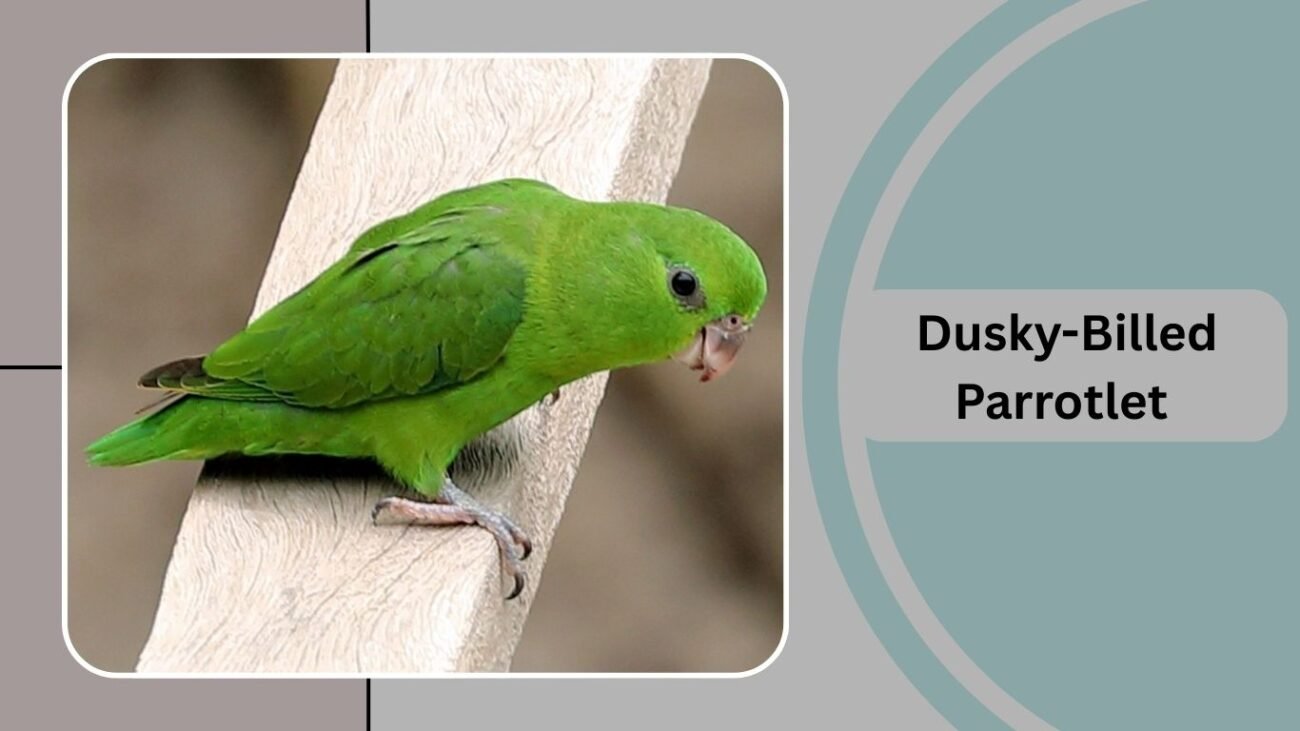
The Dusky-Billed Parrotlet (Forpus modestus) is a small parrotlet species recognized for its darker, dusky-colored beak. Found mainly in the Amazon basin, it is a hardy bird adapted to humid lowland forests.
Identification
- Size: 5 to 5.5 inches
- Weight: 27 to 30 grams
- Male: Green body with subtle blue on wings and rump, dusky-colored bill
- Female: Mostly green, less visible blue, also with darker bill
- Unique Feature: Characteristic dusky or grayish bill compared to lighter-billed parrotlets
Natural Habitat
Native to Peru, Ecuador, Colombia, and Brazil, this species lives in the Amazon rainforest, along rivers, and in forest clearings. They are often spotted in flocks foraging on seeds, fruits, and flowers.
Behavior and Personality
Dusky-Billed Parrotlets are curious and social, often forming tight-knit flocks. They can be shy at first but become playful and interactive with regular human contact. Their slightly quieter nature makes them a bit calmer than some other parrotlets.
Care in Captivity
They thrive on a mixed diet of fruits, leafy greens, pellets, and seeds. They need a spacious cage with branches, perches, and chewable toys for mental and physical stimulation.
13. Gray-Cheeked Parrotlet

The Gray-Cheeked Parrotlet (Forpus coelestis cyanophanes) is a charming species known for the soft gray shading on its cheeks, which distinguishes it from other parrotlets. It is a subspecies of the Pacific Parrotlet, found mainly in western Ecuador.
Identification
- Size: 5 inches
- Weight: 26 to 29 grams
- Male: Bright green with blue on wings and rump, noticeable gray shading on cheeks
- Female: Lighter green overall with softer gray cheek tones, minimal blue
- Special Feature: Distinct gray cheek feathers giving a unique facial pattern
Natural Habitat
They inhabit dry forests, scrublands, and agricultural areas in Ecuador. They are often seen in small groups feeding on seeds, berries, and blossoms.
Behavior and Personality
Gray-Cheeked Parrotlets are lively, affectionate, and intelligent. They are known to mimic small sounds and enjoy socializing with their human companions. Compared to some species, they are gentle but still display the classic bold parrotlet personality.
Care in Captivity
They require a varied diet, including pellets, fresh fruits, and vegetables, with toys and perches to keep them entertained. Regular interaction is essential to maintain their affectionate nature.
14. Lilac-Tailed Parrotlet

The Lilac-Tailed Parrotlet (Forpus cyanopygius insularis) is a striking subspecies that stands out due to the beautiful lilac or violet tones on its tail feathers. It is mainly found in western Mexico, particularly in coastal regions.
Identification
- Size: About 5.5 inches
- Weight: 28 to 32 grams
- Male: Green plumage with noticeable lilac or violet shades on the tail and rump
- Female: Greener overall with lighter or minimal lilac coloring
- Distinctive Trait: Violet-lilac shading on the tail feathers
Natural Habitat
This parrotlet inhabits dry forests, scrublands, and coastal lowlands. It forages in flocks, feeding on seeds, fruits, and blossoms, often moving between trees and shrubs in search of food.
Behavior and Personality
Lilac-Tailed Parrotlets are lively and playful. In the wild, they often chatter constantly within their flocks. In captivity, they are energetic and bond well with their owners if given attention, though they can become territorial if neglected.
Care in Captivity
They thrive on a diet of fresh greens, fruits, seeds, and pellets. They need a spacious cage and enrichment such as chew toys and climbing branches to channel their high energy.
15. Brown-Winged Parrotlet
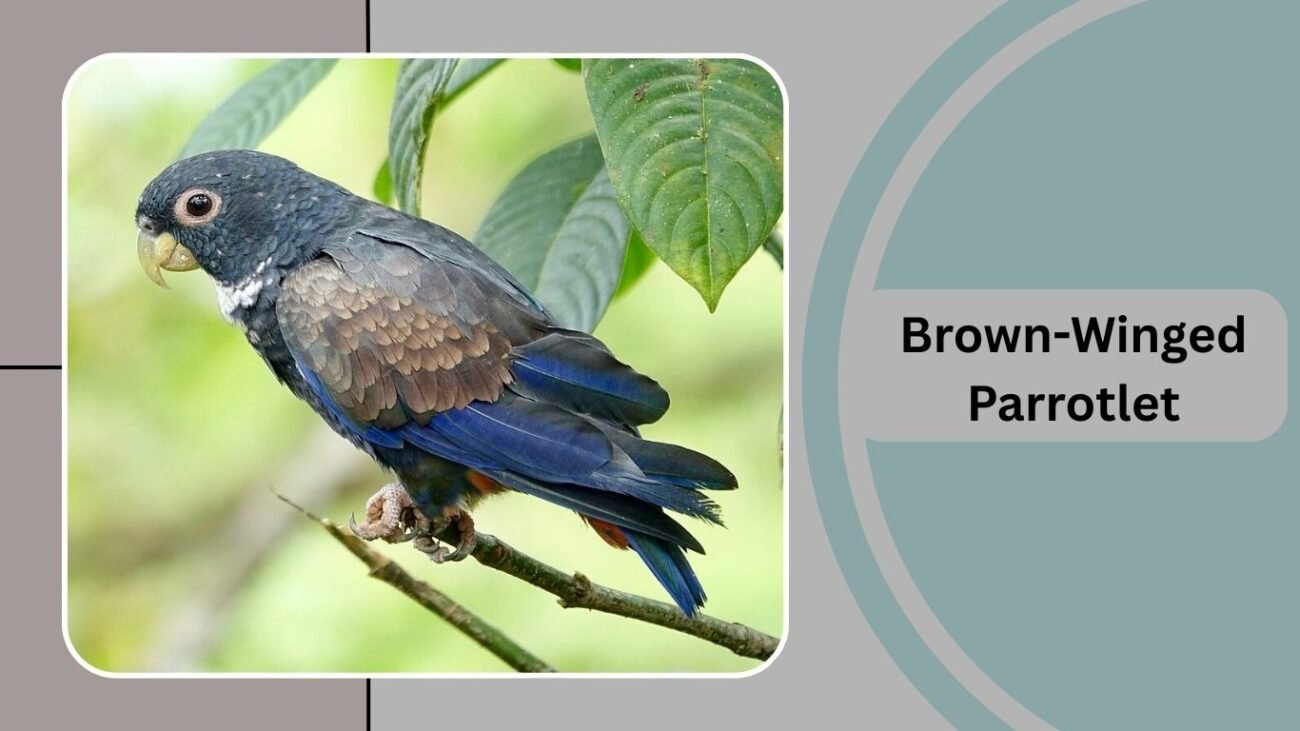
The Brown-Winged Parrotlet (Forpus xanthopterygius spengeli) is known for its darker, brown-tinged wings, which give it a unique look compared to the brighter blue or turquoise seen in other parrotlets.
Identification
- Size: Around 5.5 to 6 inches
- Weight: 30 to 34 grams
- Male: Green body with darker brownish shading on wings and blue rump
- Female: Lighter green with duller wing coloration
- Special Feature: Distinctive brownish wash across the wings
Natural Habitat
Native to Colombia and northern South America, they are often found in open forests, savannas, and along forest edges. They usually travel in small flocks, foraging for seeds and berries.
Behavior and Personality
Brown-Winged Parrotlets are confident, active, and social. They enjoy flying in groups and can be slightly louder than other parrotlet species, often engaging in constant chatter. In captivity, they bond well with caretakers but require regular handling to stay tame.
Care in Captivity
Their care includes a diet rich in leafy greens, fruits, vegetables, and seeds. They need a large cage with plenty of climbing space and stimulating toys to prevent boredom.
16. Scarlet-Shouldered Parrotlet

The Scarlet-Shouldered Parrotlet (Touit huetii) is a rare and unique member of the parrotlet family, belonging to the Touit genus instead of Forpus. It is admired for the bright scarlet patches on its wings, which stand out beautifully against its green plumage.
Identification
- Size: 6 to 6.5 inches
- Weight: 32 to 36 grams
- Male & Female: Predominantly green with bold scarlet patches on shoulders, dark wings, and hints of blue on the tail
- Unique Trait: Striking red shoulders not present in most other parrotlets
Natural Habitat
These birds are found in the Amazon basin, including Brazil, Colombia, and Venezuela. They prefer dense, humid forests and are often seen high in the canopy, making them less visible than ground-level foraging species.
Behavior and Personality
Scarlet-Shouldered Parrotlets are more elusive than other parrotlets, often living in small flocks that move swiftly through the forest canopy. They are energetic and strong fliers, spending much of their time foraging for fruits, seeds, and blossoms.
Care in Captivity
Extremely rare in aviculture, they are seldom kept as pets. If kept, they require a very large aviary space, natural branches, and a diet of varied fruits, seeds, and greens.
17. Madeira Parrotlet

The Madeira Parrotlet (Forpus xanthopterygius vividus) is a colorful and attractive parrotlet native to the Madeira River region in Brazil. It is often considered a subspecies of the Blue-Winged Parrotlet but has distinct local traits.
Identification
- Size: About 5.5 inches
- Weight: 28 to 32 grams
- Male: Green body with vivid blue on wings, rump, and tail; brighter tones than other subspecies
- Female: Green overall, softer coloration with minimal blue
- Distinctive Feature: Brighter, more vivid coloration compared to other Blue-Winged types
Natural Habitat
They inhabit river valleys, open forests, and savannas near the Madeira River basin. They often travel in medium-sized flocks, foraging for seeds, grasses, and wild fruits.
Behavior and Personality
Madeira Parrotlets are lively, talkative, and playful. They are highly social within flocks and display strong pair-bonding behavior. In captivity, they can form close attachments with their caretakers when given daily interaction.
Care in Captivity
Their care involves a balanced diet of fresh greens, vegetables, fruits, and formulated pellets. They also need toys, perches, and out-of-cage time to prevent boredom and maintain their curious, active nature.
18. Hellmayr’s Parrotlet
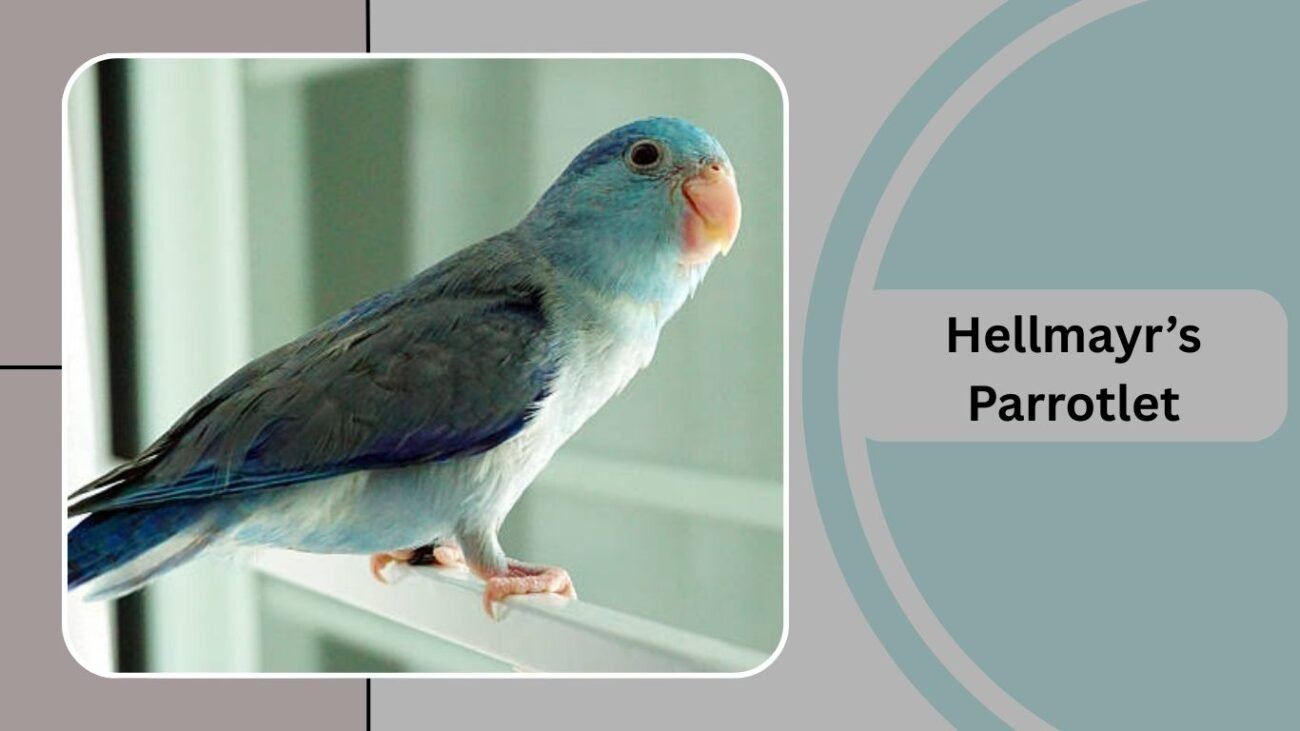
Hellmayr’s Parrotlet (Forpus xanthopterygius flavissimus) is a little-known parrotlet, considered a localized subspecies of the Blue-Winged Parrotlet. It is native to certain regions of South America and is admired for its slightly brighter yellow-green tones.
Identification
- Size: Around 5 inches
- Weight: 26 to 30 grams
- Male: Green plumage with vivid blue on wings and rump, slightly more yellowish tint overall
- Female: Greener and softer in tone with little to no blue coloring
- Distinctive Trait: Yellowish-green wash across body feathers, giving a brighter look
Natural Habitat
This parrotlet is found in small populations across Brazil and neighboring areas. It prefers open woodlands, scrublands, and agricultural regions where seeds and grasses are abundant.
Behavior and Personality
Hellmayr’s Parrotlets are sociable, often moving in small, noisy flocks. They have a lively, playful character and display strong pair bonding. In comparison to other parrotlets, they may be slightly quieter, though still energetic and curious.
Care in Captivity
They require a nutritious diet of fruits, leafy vegetables, seeds, and pellets. To stay active, they need a cage equipped with branches, chew toys, and daily interaction with caretakers.
19. Rusty-Faced Parrotlet

The Rusty-Faced Parrotlet (Forpus ruficeps) is one of the rarest and most distinctive parrotlets, known for the reddish or rusty-colored markings on its face. Its unique appearance makes it stand out among other species.
Identification
- Size: About 5.5 inches
- Weight: 28 to 32 grams
- Male: Green body with rusty or reddish wash on face and forehead, faint blue on wings
- Female: Green overall with lighter, less pronounced facial coloring
- Unique Feature: Reddish-brown facial tint not seen in other parrotlets
Natural Habitat
Endemic to northern Peru, this parrotlet inhabits dry forests, river valleys, and foothills where vegetation provides seeds, grasses, and fruit. Its limited range makes it particularly vulnerable to habitat loss.
Behavior and Personality
Rusty-Faced Parrotlets are active, curious, and usually found in small groups. They communicate with soft chattering calls and show strong bonding behavior between pairs.
Care in Captivity
Rarely kept in aviculture, but if kept, they need a balanced diet of greens, fruits, seeds, and pellets, along with wide space to fly and climb. Their rarity makes them more suited to conservation than household pets.


