











Rats are incredibly adaptable creatures with dietary habits that shift depending on their environment, species, and access to food. Understanding what rats eat is useful whether you own pet rats, want to deter wild rats, or need to know which foods work best for traps. This guide also covers a highly searched safety concern—what to do if a dog eats rat poison—so you have practical, reliable information in one place.
Understanding the General Diet of Rats

Are Rats Omnivores?
Yes—rats are true omnivores. They can consume both plant and animal-based foods, which is one reason they thrive in urban and natural environments alike. Their teeth grow continuously, so rats naturally gnaw on almost anything they encounter. This gnawing behavior helps them access food sources, open packaging, and build nests.
Core Foods Rats Commonly Eat
Rats tend to eat whatever is most abundant and calorie-rich around them. Their primary foods include:
- Seeds and grains
- Fruits and vegetables
- Human food scraps
- Meat, eggs, and insects
- Nuts, plants, and roots
In cities, rats frequently depend on garbage, compost, storehouses, and kitchens for daily nutrition.
What Rats Like to Eat the Most

High-Attraction Foods (Best for Traps)
Some foods are universally irresistible to rats because they offer a strong scent and high caloric density. These include:
- Peanut butter (top choice)
- Bacon or fatty meats
- Nuts and seeds
- Chocolate
- Sweet fruits like bananas or berries
These foods are often used successfully in snap traps and live traps because they are sticky, aromatic, and hard for rats to remove quickly.
Why These Foods Work for Catching Rats
Rats rely heavily on their sense of smell, and strong scents can draw them from several meters away. High-fat foods give rats concentrated energy, encouraging them to return repeatedly. Sticky foods like peanut butter force rats to linger longer at the trap, increasing the success rate.
What Pet Rats Eat

Staple Foods for Domesticated & Fancy Rats
Pet rats thrive when fed a balanced and controlled diet. The foundation should be high-quality commercial rat blocks or pellets, which deliver balanced nutrients without excessive fat or sugar. Supplement these with whole grains, cooked pasta, oats, and occasional lean protein such as scrambled eggs or boiled chicken.
Fruits and vegetables are also essential—apples, peas, carrots, broccoli, and leafy greens offer vitamins and hydration. Rotate produce to avoid digestive issues.
Foods Pet Rats Should Avoid
While rats can eat a wide range of foods, some are toxic or unsafe:
- Chocolate (dangerous for rats)
- Raw beans and raw sweet potatoes
- Blue cheese
- Carbonated drinks
- Sugary, salty, or fatty snacks
Also avoid citrus for male rats due to potential kidney issues.
Treats Pet Rats Love
Treats should make up only a small part of their diet, but popular favorites include tiny fruit pieces, oats, plain popcorn, cooked lentils, and dried mealworms. Treats can support training and bonding when offered sparingly.
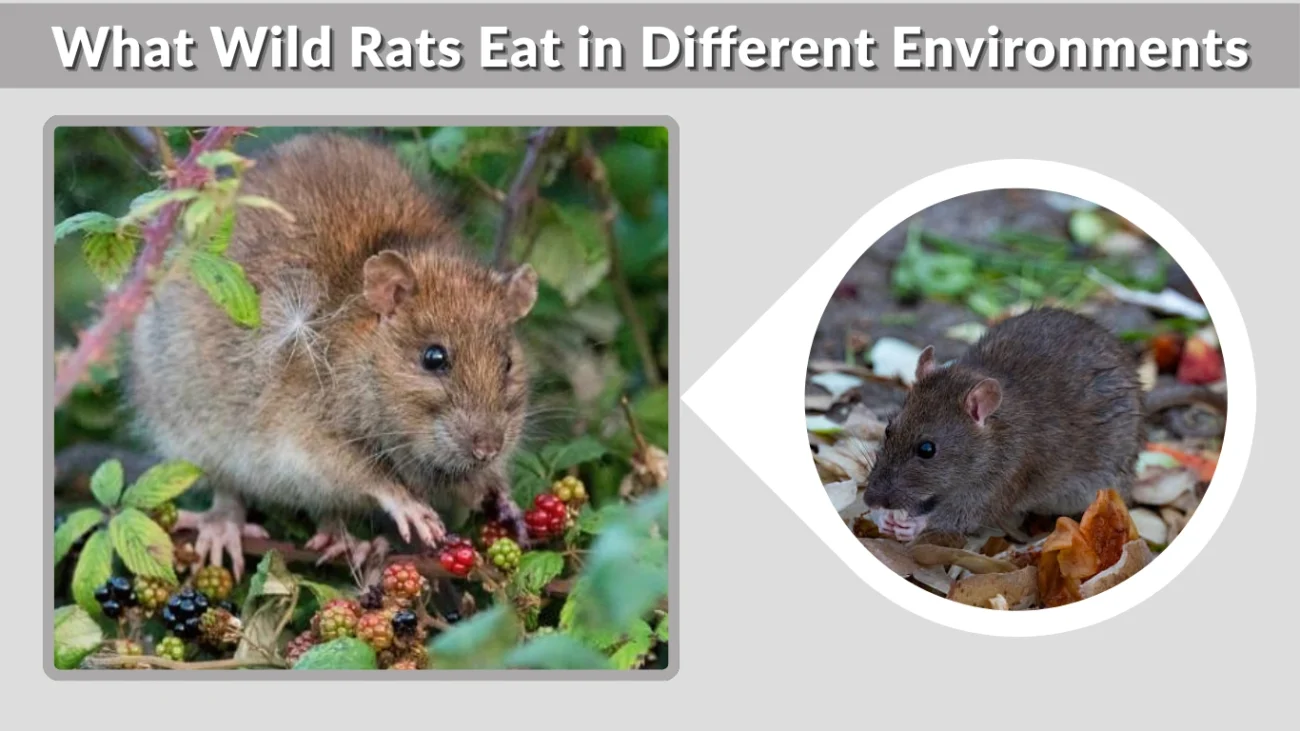
What Wild Rats Eat in Different Environments
What Rats Eat in Houses & Attics
When rats invade homes, attics, or garages, they target high-calorie, easy-to-access foods. Common items include:
- Cereal, rice, and grains
- Pet food
- Nuts, seeds, and bird feed
- Fruits, bread, and candy
- Stored pantry goods
While insulation and wiring aren’t actual food, rats chew these materials to keep their teeth short or create nesting spaces.
What Rats Eat Outside in Nature
In natural habitats, rats follow more seasonal food patterns. They forage for seeds, grasses, insects, small animals, carrion, and fruits. Urban rats often scavenge human garbage, while forest-dwelling rats may rely heavily on nuts, acorns, fungi, and plant shoots.
What Rats Eat in Winter
Winter creates food scarcity, forcing rats to rely on stored foods or invade buildings. Rats may consume dried grains, root vegetables, compost, and whatever scraps they find indoors. Their increased winter hunger makes them more likely to take bait or chew through packaging.
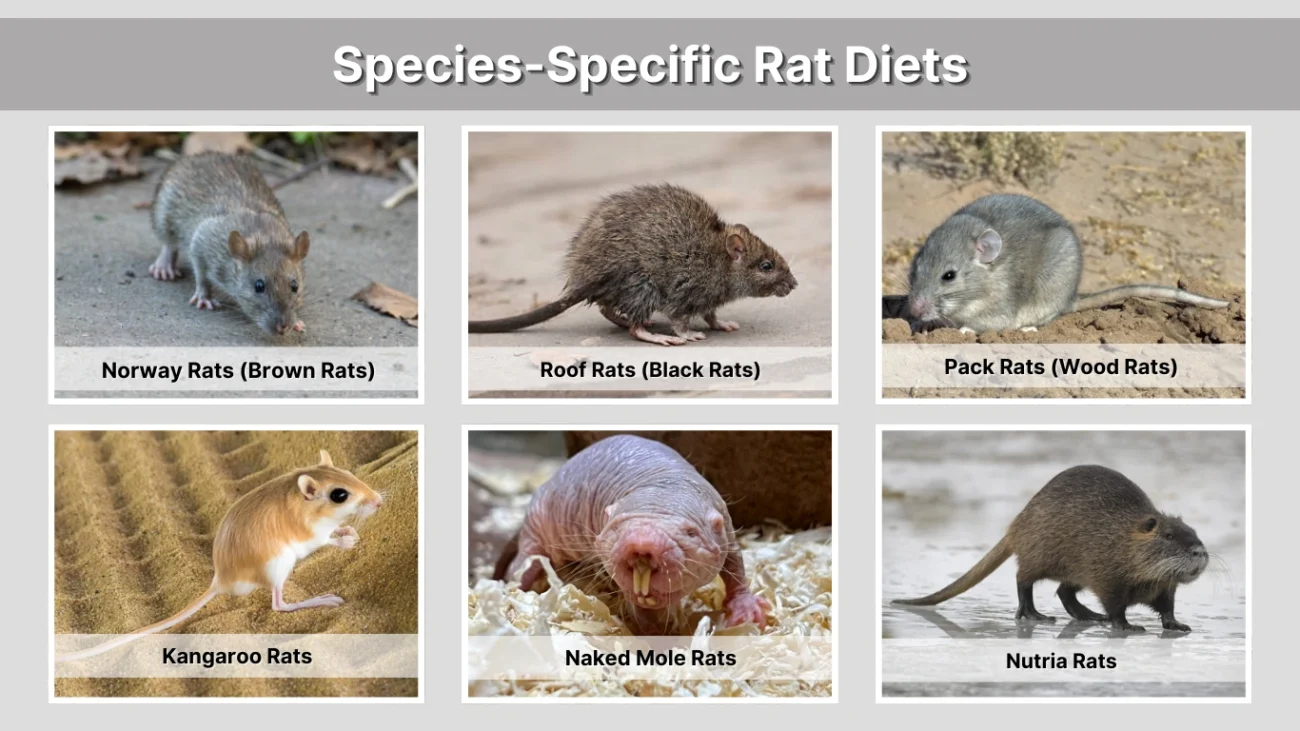
Species-Specific Rat Diets
Norway Rats (Brown Rats)
Norway rats prefer grains and proteins but will eat nearly anything. They commonly consume meats, fish, garbage, seeds, and pet food. Because they dwell near the ground, they often raid kitchens, barns, and sewers.
Roof Rats (Black Rats)
Roof rats favor fruits, nuts, and plant-based foods. Living in trees, attics, and rooftops, they often raid gardens, orchards, and stored seeds. Their lighter build makes them agile climbers.
Pack Rats (Wood Rats)
Pack rats consume leaves, seeds, flowers, and cactus parts, depending on the region. They are famous for collecting shiny objects, though these are not food—just nesting materials.
Kangaroo Rats & Desert Rats
These small desert rodents survive almost entirely on dry seeds. Their bodies extract moisture from food, allowing them to live without drinking water. They store seeds in underground caches for harsh seasons.
Naked Mole Rats
Naked mole rats feed on underground tubers and roots. Their colonies often share single large tubers for long periods.
Nutria Rats
Nutria (often misidentified as giant rats) eat aquatic plants, reeds, grasses, and roots in wetlands.
Predators That Eat Rats
Rat Snakes, Black Rat Snakes & Eastern Rat Snakes
Many predators rely heavily on rats as a food source, especially rat snakes. These snakes hunt rodents by scent and movement, helping control rat populations in forests, farms, and rural properties.
- Rat snakes consume rats, mice, birds, and eggs.
- Black rat snakes add small lizards and young birds to their diet.
- Eastern rat snakes prefer small mammals but will opportunistically eat amphibians.
Their predatory behavior is beneficial for ecological balance and reduces rat infestations naturally.
Other Animals That Eat Rats
Aside from snakes, many other animals prey on rats, including owls, hawks, foxes, ferrets, and domestic cats. Even possums occasionally eat rats, particularly dead ones. These predators help regulate rodent numbers in both natural and suburban areas.
What Rats Eat in Unusual Situations
In the Desert
Desert-dwelling rats, such as kangaroo rats and pack rats, rely heavily on dry seeds, grasses, and hardy plants capable of storing moisture. Their physiology allows them to survive without drinking free-standing water, extracting hydration solely from food. This makes them uniquely adapted compared to typical urban rats.
In Minecraft (Game Reference)
In the popular game Minecraft, rats don’t naturally exist in the base game but appear in certain mods. Depending on the mod, they may eat items such as cheese, cake, bread, or crops. This small detail can help players designing farms or interacting with modded wildlife.
Foods Rats Eat vs. Mice Eat (Comparison Table)

| Feature | Rats | Mice |
| Preferred Foods | Grains, fruits, meat scraps | Seeds, grains, plant materials |
| Appetite Size | Larger | Smaller |
| Food Storage | Occasional hoarding | Frequent hoarding |
| Behavior | Opportunistic feeders | Nibblers, selective |
This comparison helps distinguish behavior when identifying which rodent you might be dealing with.
Vegetables, Plants & Insects Rats Commonly Eat
Safe Vegetables Rats Consume
Rats enjoy vegetables such as carrots, peas, sweet corn, squash, spinach, and broccoli. These foods offer fiber, antioxidants, and hydration. Wild rats may eat garden vegetables straight from the plant, often causing damage to crops.
Plants Rats Damage in Gardens
Rats can chew through stems, fruits, seeds, roots, and even the bark of young trees. Home gardens often attract rats due to their supply of nuts, berries, compost, and fallen fruit. Roof rats in particular are notorious for fruit-related damage.
Insects Rats Hunt
Rats will opportunistically eat insects like beetles, cockroaches, worms, and ants. In urban environments, roaches and beetles become convenient protein sources. This habit also helps some rat populations thrive even when plant-based food is scarce.
What Rats Like to Eat for Traps (Table Section)
| Bait Type | Why It Works | Best Use |
| Peanut butter | Strong smell, sticky | Snap traps & live traps |
| Bacon | High fat & aroma | Outdoor or garage traps |
| Nuts & seeds | Natural rodent food | Bucket traps |
| Chocolate | Sweet, irresistible | Indoor traps |
| Fruit pieces | Moisture-rich scent | Live traps |
Using the right bait dramatically improves your trapping success, especially where rats have many competing food sources.
Emergency Guide — What To Do if a Dog Eats Rat Poison
First 5 Steps to Take Immediately
- Call a veterinarian or emergency animal hospital right away.
- Bring the poison packaging to identify ingredients.
- Do not induce vomiting unless instructed by a vet.
- Keep your dog calm and restrict movement.
- Monitor for symptoms such as weakness, bleeding, vomiting, or seizures.
Poison Types and Their Symptoms
Rat poisons vary widely, and the symptoms a dog may experience depend on the active ingredient:
- Anticoagulants: Cause internal bleeding, bruising, coughing up blood, pale gums.
- Bromethalin: Causes neurological symptoms—tremors, seizures, paralysis.
- Cholecalciferol (Vitamin D3-based): Leads to kidney failure, excessive thirst, vomiting.
Because symptoms can be delayed, treatment must begin before outward signs appear whenever possible.
Why Rapid Response Is Critical
Rat poisons are designed to be lethal in small doses, and dogs are often attracted to their flavor. Internal damage may begin within hours, even if the dog seems normal. Vets may use vitamin K therapy, activated charcoal, intravenous fluids, anti-seizure medication, or hospitalization depending on the poison type. The faster treatment begins, the higher the chance of full recovery.
When to Go to Emergency Vet Care
Any suspected ingestion is an emergency—never wait for symptoms to appear. If the dog ate poison recently, the vet may be able to remove toxins before they absorb. If more time has passed, blood tests and aggressive treatment may be required. Immediate action can prevent life-threatening complications.
What To Do if You Accidentally Eat Rat Droppings
Immediate Response
If rat droppings are accidentally ingested, rinse your mouth, spit thoroughly, and drink clean water. Avoid swallowing further saliva until the mouth is clean.
Potential Diseases
Rat feces may carry Salmonella, Leptospira, or Hantavirus, depending on the species. Seek medical advice—especially if symptoms like fever, vomiting, or stomach cramps develop. Early intervention helps reduce risk of infection.
FAQs
What do rats eat in winter?
Rats depend heavily on stored food sources, pantry items, and indoor scraps. Winter scarcity drives them into homes, attics, and garages seeking warmth and calories.
What attracts rats the most?
High-fat foods such as peanut butter, bacon, chocolate, and nuts produce strong scents that rats find irresistible.
Do rats eat insects or other animals?
Yes. Wild rats often eat insects, small animals, eggs, and carrion when plant-based foods are limited.
Are rats picky eaters?
Not at all—rats are survival-driven and highly adaptable, meaning they eat nearly anything available.
What should pet rats never eat?
Avoid chocolate, raw beans, blue cheese, carbonated drinks, and high-sugar snacks, as these can be harmful or toxic.


