











Ostriches, the world’s largest birds, are famous for their size, speed, and survival skills in harsh African landscapes. Despite living in dry and hot regions, they thrive on a surprisingly diverse diet. These flightless birds eat both plants and small animals, adapting to whatever food their environment provides. In this article, we’ll explore what ostriches eat in the wild, in captivity, and how their diet changes as they grow.
Ostrich Diet Overview

Omnivorous Feeding Behavior
Ostriches are omnivores, meaning they eat both plant and animal matter. Their diet mainly includes grass, seeds, roots, flowers, fruits, and small insects. Unlike strict herbivores, ostriches take advantage of any available food source, especially during dry seasons. This adaptability makes them one of the most resilient species in the African savanna and desert regions.
Their feeding pattern depends heavily on the time of year and rainfall. During the wet season, they graze on fresh grass and green shoots. In the dry season, they switch to seeds, dry leaves, and roots — anything that provides nutrients and moisture.
Adaptation to Harsh Environments
Ostriches have evolved to survive in extreme climates where food and water are scarce. Their long necks help them spot edible plants and small animals from a distance. They often roam vast areas to find food, sometimes covering miles each day. With a digestive system designed to process tough plant material, ostriches can extract water from vegetation and survive for long periods without drinking.
What Do Ostriches Eat in the Wild
Typical Foods in Natural Habitats
In the wild, ostriches eat whatever the land offers. Their diet includes grass, roots, leaves, flowers, seeds, berries, and insects. They also eat small reptiles or rodents when available. These sources provide the nutrients, fats, and proteins they need to stay healthy.
Ostriches graze mainly during the early morning and late evening, when the air is cooler and insects are active. In between, they rest and digest their food under shade. Because they have no teeth, ostriches rely on small stones in their stomachs to grind and break down food for digestion.
Feeding Behavior in the Savanna and Desert
Ostriches living in the savannas feed mostly on green plants, fruits, and insects, which are abundant in the rainy season. In contrast, desert ostriches adapt by eating dry seeds, tough shrubs, and succulents, which provide both nutrients and water. Their keen eyesight helps them locate food from far away, even in vast open plains.
Interestingly, ostriches also help the ecosystem by spreading plant seeds through their droppings, contributing to vegetation growth in arid regions.
What Do Ostriches Eat in Captivity
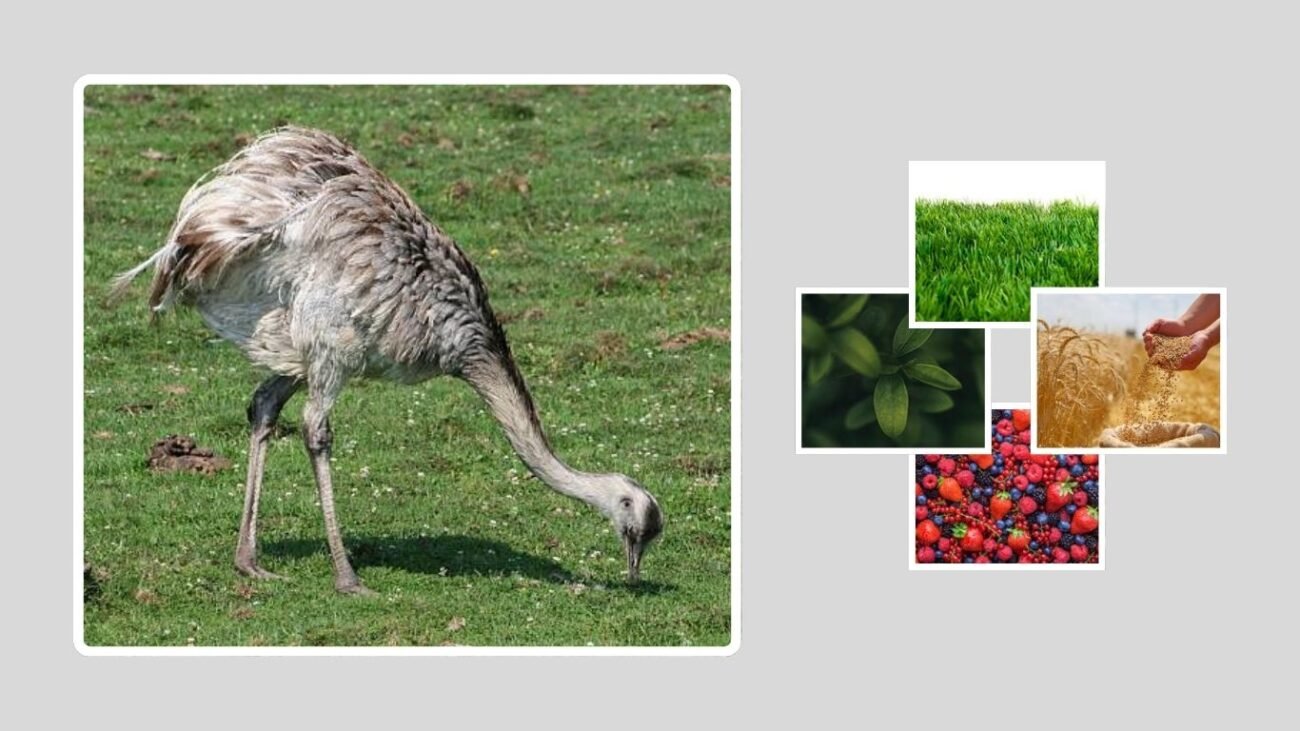
Farm and Zoo Diets
Ostriches raised on farms or kept in zoos are given a carefully balanced diet to ensure proper health and egg production. Their feed typically includes grains like corn, wheat, and barley, along with alfalfa, soybeans, and commercial pellets rich in vitamins and minerals. Farmers often add calcium supplements to strengthen eggshells and protein feeds to support muscle development.
In zoos, their diet mimics what they would find in the wild but in controlled portions. Caretakers often provide vegetables, greens, fruits, and small amounts of animal protein. Regular feeding ensures they receive enough nutrition without overindulgence, as overweight ostriches can suffer leg problems.
Comparison: Wild vs. Captive Diet
Although both wild and captive ostriches eat a mix of plant and animal foods, the variety and availability differ significantly. Wild ostriches must adapt to what nature provides, while captive birds enjoy a steady diet designed for balanced nutrition.
| Environment | Main Foods | Supplements |
| Wild | Grass, seeds, insects, roots | Pebbles, natural minerals |
| Captivity | Corn, wheat, alfalfa pellets | Protein feed, vitamins |
This controlled diet helps captive ostriches grow faster, stay healthy, and live longer than many of their wild counterparts.
What Do Baby Ostriches Eat
First Foods After Hatching
Baby ostriches, also called chicks, start feeding within two to three days after hatching. In the wild, they eat soft green plants, tiny seeds, insects, and small stones. These stones help their digestive systems grind food since ostriches have no teeth. Chicks often learn what to eat by mimicking adult ostriches, following their parents as they forage.
Their diet is rich in protein, which helps them grow quickly. Within just a few months, chicks can reach over half their adult size, thanks to their nutrient-dense diet.
Feeding in Captivity
In captivity, chicks are given a special starter feed — a finely ground mix of grains, proteins, vitamins, and minerals. This feed supports rapid bone and muscle growth. Farmers gradually introduce chopped greens, vegetables, and small pebbles to prepare them for adult diets. Clean water and regular feeding schedules are essential for healthy development.
Plant and Fruit Diet
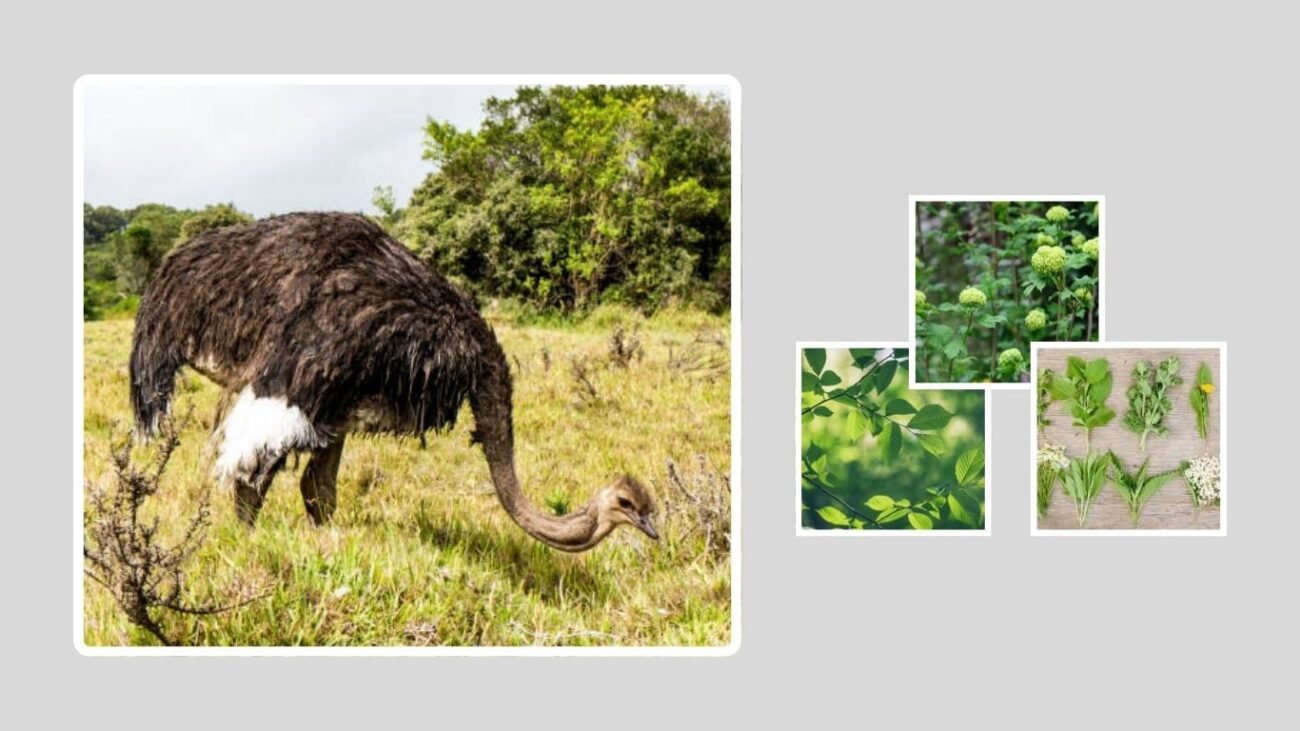
Plants Ostriches Commonly Eat
Plants make up the majority of an ostrich’s diet. They prefer grass, shrubs, wild herbs, and leaves from acacia trees. These provide fiber, which supports healthy digestion and maintains gut function. In dry seasons, ostriches rely more on roots and dry plant stems, which store water and nutrients underground.
Fruits and Seeds
Ostriches enjoy eating fruits when available. They particularly like berries, figs, and melons, which are rich in water and sugar. In some regions, ostriches feed on wild fruit that falls from trees, helping spread seeds naturally. Seeds are also a major energy source — they’re small but packed with carbohydrates that sustain energy for long runs and migrations.
Animal and Insect Foods
Insects and Small Creatures
Although ostriches mainly eat plants, they also consume insects and small animals for extra protein. In the wild, they peck at locusts, grasshoppers, beetles, and termites found among dry grass and soil. Occasionally, they eat small reptiles, frogs, and tiny rodents when food is scarce. This opportunistic behavior ensures a balanced diet that supports muscle growth and energy during long runs.
Even though they are not hunters, ostriches have quick reflexes and sharp eyesight, allowing them to spot and catch moving prey easily. Their beaks are strong but not designed for tearing flesh; instead, they swallow smaller animals whole, relying on their digestive system to break everything down.
How Ostriches Digest Their Food
Why Ostriches Swallow Stones
One of the most fascinating facts about ostriches is their habit of swallowing small stones or pebbles. Since they don’t have teeth, these stones help grind up food inside a specialized stomach organ called the gizzard. The gizzard acts like a natural mill, crushing hard seeds and plant fibers that would otherwise be difficult to digest.
Digestive System Adaptations
Ostriches have an extremely efficient digestive system. After food passes through the gizzard, nutrients are absorbed along their long intestines. They also extract moisture from dry plants, which helps them survive in environments with limited water. In fact, ostriches can live for several days without drinking, relying solely on the moisture found in leaves, roots, and fruits.
What Do Ostriches Eat and Drink
Ostriches obtain most of their water from the vegetation they consume, such as succulents and fruits. However, when water sources like rivers or puddles are available, they will drink directly. Unlike many desert animals, they are not entirely water-independent — but their kidneys conserve fluids efficiently, allowing them to endure long dry spells.
Their feeding and drinking patterns often align with the cooler hours of the day, helping them maintain hydration and avoid heat stress. This routine reflects how perfectly adapted ostriches are to life in arid climates.
Regional Diet Differences

Desert and North African Ostriches
In dry desert regions, ostriches mainly eat succulents, dry seeds, thorny shrubs, and hardy grasses. The moisture stored in these plants helps them stay hydrated.
Meanwhile, North African ostriches — often found in semi-arid zones — enjoy more variety, feeding on acacia leaves, small berries, and desert fruits. Their ability to adapt their diet based on location is one reason the species thrives across such a wide range of African ecosystems.
Ostrich Diet in Video Games (Informational Section)
Ostriches also appear in several popular video games, where their diets are often simplified for gameplay.
- In Minecraft, ostriches are typically decorative mobs and do not require feeding.
- In Conan Exiles, players can feed baby ostriches insects and plant fiber to raise them.
- In Mo’ Creatures or Mini World, ostriches eat seeds or fruit-like items.
These versions, while fictional, are inspired by real ostrich behavior — reflecting their omnivorous nature.
Fun Feeding Facts
- Ostriches can survive for days without direct water sources, absorbing moisture from plants.
- They sometimes swallow shiny objects like coins or glass pieces, mistaking them for pebbles.
- Their long necks help them reach high plants and spot food from over 10 feet away.
- Each ostrich can eat up to 1.5 kilograms (3.3 pounds) of food daily.
- Their digestive system is so efficient that almost no nutrients are wasted.
FAQs
What do ostriches mainly eat?
Ostriches mainly eat plants, seeds, grasses, and fruits, along with small insects and reptiles. Their omnivorous diet allows them to survive in a wide range of environments, from grasslands to deserts, using whatever food is available.
Do ostriches eat meat?
Yes, but only occasionally. Ostriches are not predators but will eat insects, small reptiles, or rodents when plant food is scarce. This extra protein supports muscle health and energy during harsh seasons.
What do baby ostriches eat on farms?
Baby ostriches, or chicks, are given high-protein starter feed in farms and zoos. This mix includes ground grains, vitamins, and minerals to ensure healthy growth. As they mature, they start eating chopped greens and small stones to aid digestion.
Do ostriches drink water every day?
Not always. Ostriches can go for several days without drinking, extracting water from plants and fruits. When water is available, they drink deeply, storing enough fluids to sustain them during dry periods.
Why do ostriches swallow stones?
Ostriches swallow small stones to help digest food. These stones, stored in their gizzard, grind hard seeds and plant matter into smaller pieces, making digestion easier. It’s a natural replacement for chewing since ostriches have no teeth.


