











Shrews are tiny, fast-moving mammals known for their high metabolism, constant activity, and sharp hunting abilities. Found in diverse habitats around the world—from forests and grasslands to mountains and wetlands—these insectivores play a crucial role in controlling invertebrate populations. Despite their small size, shrews are fierce predators that rely on keen senses to survive. This list highlights 21 different shrew species and their unique characteristics.
1. Eurasian Common Shrew

The Eurasian common shrew (Sorex araneus) is one of the most widespread and recognizable shrew species across Europe and parts of Asia. Known for its high metabolism and constant activity, this tiny insectivore plays an essential role in controlling invertebrate populations in forests, grasslands, and wetlands.
Identification
- Very small body with a pointed snout
- Fur ranges from brown to dark gray with a paler underside
- Tiny eyes and small, rounded ears hidden in the fur
- Long, narrow tail measuring about half the body length
- Sharp, needle-like teeth adapted for insect hunting
Habitat
The Eurasian common shrew inhabits forests, meadows, wetlands, hedgerows, and gardens across Europe and northern Asia. It prefers moist environments with dense ground cover, which provides protection and plentiful prey. They often create tunnel systems in leaf litter or beneath vegetation.
Behaviors
This species is active both day and night, driven by its fast metabolism that requires nearly constant feeding. It is solitary and highly territorial, using scent marking to defend its area. Despite poor vision, it navigates effectively using touch and smell. The shrew is quick, agile, and constantly on the move.
Diet
Eurasian common shrews feed primarily on insects, spiders, worms, and other small invertebrates. They may also consume small amphibians or carrion when available. Due to their rapid metabolism, they must eat frequently and may consume their body weight in food daily.
2. American Pygmy Shrew

The American pygmy shrew (Sorex hoyi) is one of the smallest mammals in North America and the world. Despite its tiny size, it is an energetic predator with a remarkably high metabolism, requiring near-constant feeding to survive.
Identification
- Extremely small body, often weighing less than 3 grams
- Reddish-brown to gray fur with a paler underside
- Very long, pointed snout
- Tiny eyes and small, rounded ears
- Slender tail nearly as long as its body
Habitat
American pygmy shrews inhabit forests, wetlands, mossy areas, and boreal woodlands across Canada and the northern United States. They prefer cool, moist environments with abundant ground cover, where they can forage beneath leaves, logs, and vegetation.
Behaviors
These shrews are solitary, fast-moving, and active both day and night. They rely heavily on their sense of touch and smell rather than eyesight. Their rapid movements and constant searching for prey are essential to meeting their extreme energy demands. They often use tunnels created by other small animals.
Diet
Their diet consists mainly of insects, larvae, spiders, and small invertebrates. Due to their exceptionally high metabolism, they must feed every few hours and may eat close to their body weight daily.
3. Northern Short-Tailed Shrew

The northern short-tailed shrew (Blarina brevicauda) is a robust and powerful shrew species native to North America. Known for its venomous bite—one of the few mammals with this trait—it is an efficient predator in forest and grassland ecosystems.
Identification
- Stocky body with dense, dark gray to black fur
- Very short tail, only about one-quarter of body length
- Long, pointed snout and tiny, hidden ears
- Strong forelimbs adapted for digging
- Larger and heavier than many other shrew species
Habitat
This species inhabits forests, meadows, wetlands, and shrublands across the northeastern United States and southeastern Canada. It prefers moist soils rich in leaf litter and vegetation, where it can hunt and tunnel underground.
Behaviors
Northern short-tailed shrews are active year-round and both day and night. They use a form of rudimentary echolocation to navigate tunnels. Highly aggressive hunters, they subdue prey with venomous saliva delivered through specialized teeth. They create extensive burrow systems and are solitary except during breeding season.
Diet
Their diet includes insects, worms, snails, small amphibians, and even small mammals. They also eat seeds and fungi when other foods are scarce. Their venom allows them to immobilize larger prey and store it for later consumption.
4. Southern Short-Tailed Shrew

The southern short-tailed shrew (Blarina carolinensis) is a small, secretive insectivore native to the southeastern United States. Similar to its northern relative, it possesses venomous saliva that aids in subduing prey.
Identification
- Small, stocky body with soft gray to dark brown fur
- Very short tail, typically less than one-quarter of body length
- Long, narrow snout and tiny, concealed ears
- Strong front limbs adapted for digging
- Slightly smaller than the northern short-tailed shrew
Habitat
This species inhabits forests, marshes, fields, and thick ground vegetation throughout the southeastern U.S. It prefers moist soils rich in leaf litter, where it can tunnel and hunt. It often uses burrows created by rodents or natural ground crevices.
Behaviors
Southern short-tailed shrews are solitary, active year-round, and frequently hunt both day and night. They are aggressive and secretive, spending much of their time underground or beneath debris. Their venomous bite helps them capture prey larger than themselves, which they sometimes store for later.
Diet
Their diet includes insects, earthworms, centipedes, snails, and small vertebrates. They may also consume plant material, seeds, and fungi when prey is scarce. Their high metabolism requires nearly constant feeding to maintain energy levels.
5. Desert Shrew

The desert shrew (Notiosorex crawfordi) is a small, hardy shrew adapted to the arid environments of the southwestern United States and northern Mexico. Despite living in harsh, dry habitats, it thrives by being highly efficient and nocturnal.
Identification
- Small, slender body with grayish-brown fur
- Long, pointed snout and tiny eyes
- Narrow, delicate limbs suited for quick movements
- Tail about half the body length
- Fur coloration blends well with sandy environments
Habitat
Desert shrews inhabit deserts, scrublands, grasslands, and rocky areas. They prefer dry, sandy soils where they can shelter under rocks, logs, or within rodent burrows. Their range includes Arizona, New Mexico, Texas, and northern Mexico, especially in regions with scattered vegetation.
Behaviors
These shrews are mostly nocturnal, avoiding daytime heat. They move quickly and use their strong sense of smell to locate prey. Desert shrews conserve water by producing concentrated urine and obtaining moisture primarily from food. They are solitary and occupy small but well-defended territories.
Diet
Their diet includes insects, spiders, beetles, larvae, and other small invertebrates. They may also consume small lizards or scavenged material occasionally. Their high metabolism requires frequent feeding, even in challenging desert conditions.
6. Water Shrew
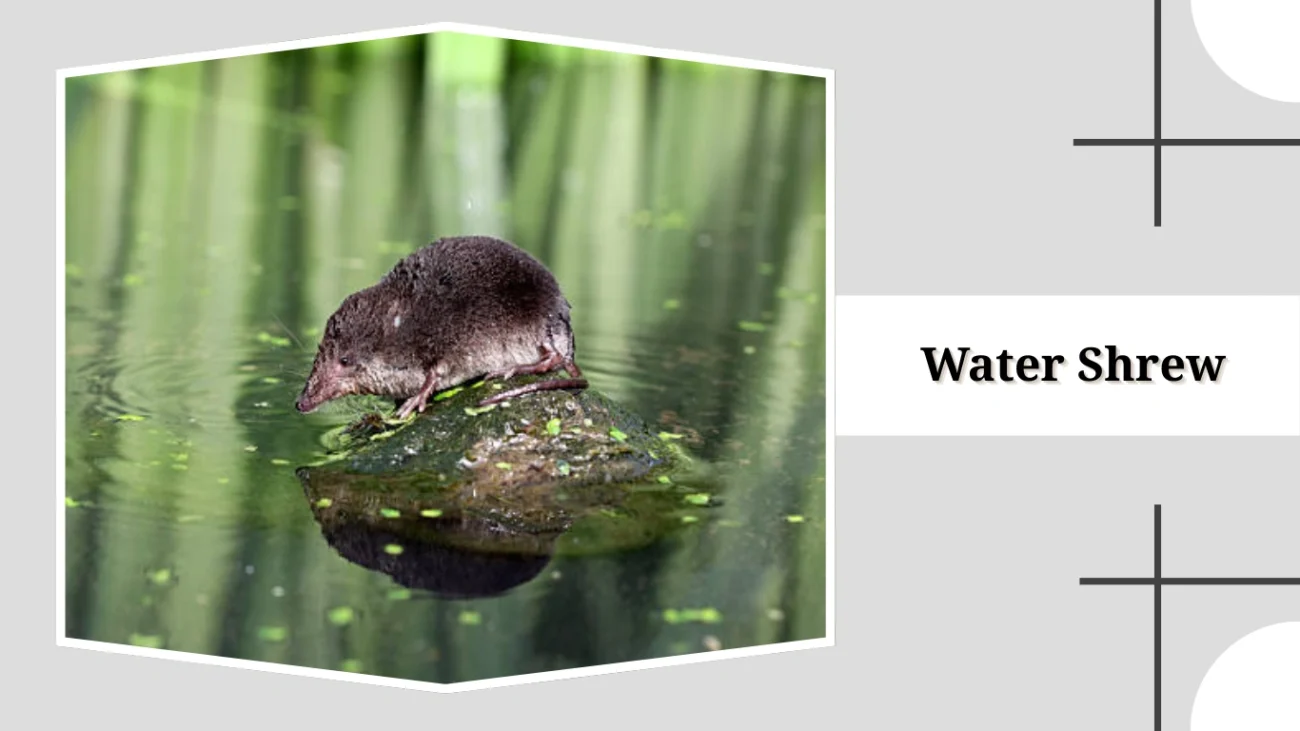
The water shrew (Sorex palustris) is a remarkable semi-aquatic shrew found in North America. Known for its ability to dive and forage underwater, it is one of the few shrew species adapted to a life closely tied to streams and wetlands.
Identification
- Medium-sized shrew with dark brown to black fur
- Silvery underbelly creating strong color contrast
- Hind feet fringed with stiff hairs for swimming
- Long, pointed snout and small eyes
- Tail relatively long and often bi-colored
Habitat
Water shrews live near streams, ponds, marshes, and forested wetlands throughout the northern United States and Canada. They prefer cool, clean water sources with abundant aquatic vegetation, logs, and rocks that offer shelter and rich feeding grounds.
Behaviors
These shrews are excellent swimmers and divers, often plunging underwater to catch prey. Tiny air bubbles trapped in their fur give them buoyancy and insulation while submerged. They are active both day and night, highly territorial, and capable of rapid movements both in water and on land.
Diet
Their diet includes aquatic insects, small fish, tadpoles, crustaceans, worms, and terrestrial invertebrates. They rely on both sight and touch, along with rapid reflexes, to catch prey underwater. Their semi-aquatic diet sets them apart from many other shrew species.
7. Alpine Shrew

The alpine shrew (Sorex alpinus) is a rare and elusive species found throughout the mountainous regions of central and southern Europe. Well adapted to cold, high-altitude environments, it thrives in rocky terrain and dense alpine vegetation.
Identification
- Small shrew with slate-gray to black fur
- Long, pointed snout and small, hidden ears
- Tail about half the body length
- Slender body suited for navigating rocky crevices
- Contrast between darker back and lighter underside
Habitat
Alpine shrews inhabit high-altitude forests, grasslands, rocky slopes, and alpine meadows. They favor moist environments near streams, mossy rocks, and dense vegetation. Their range includes the Alps, Carpathians, Balkans, and other mountain systems.
Behaviors
These shrews are secretive, fast-moving, and primarily nocturnal. They rely on a keen sense of smell and touch to locate prey among rocks and vegetation. Adapted to cold climates, they remain active year-round and often take shelter in rock piles or abandoned burrows.
Diet
Their diet includes insects, larvae, spiders, earthworms, and other small invertebrates. They may also eat soft plant material occasionally. Due to their fast metabolism, alpine shrews must feed frequently to maintain body heat in cold environments.
8. Asian House Shrew
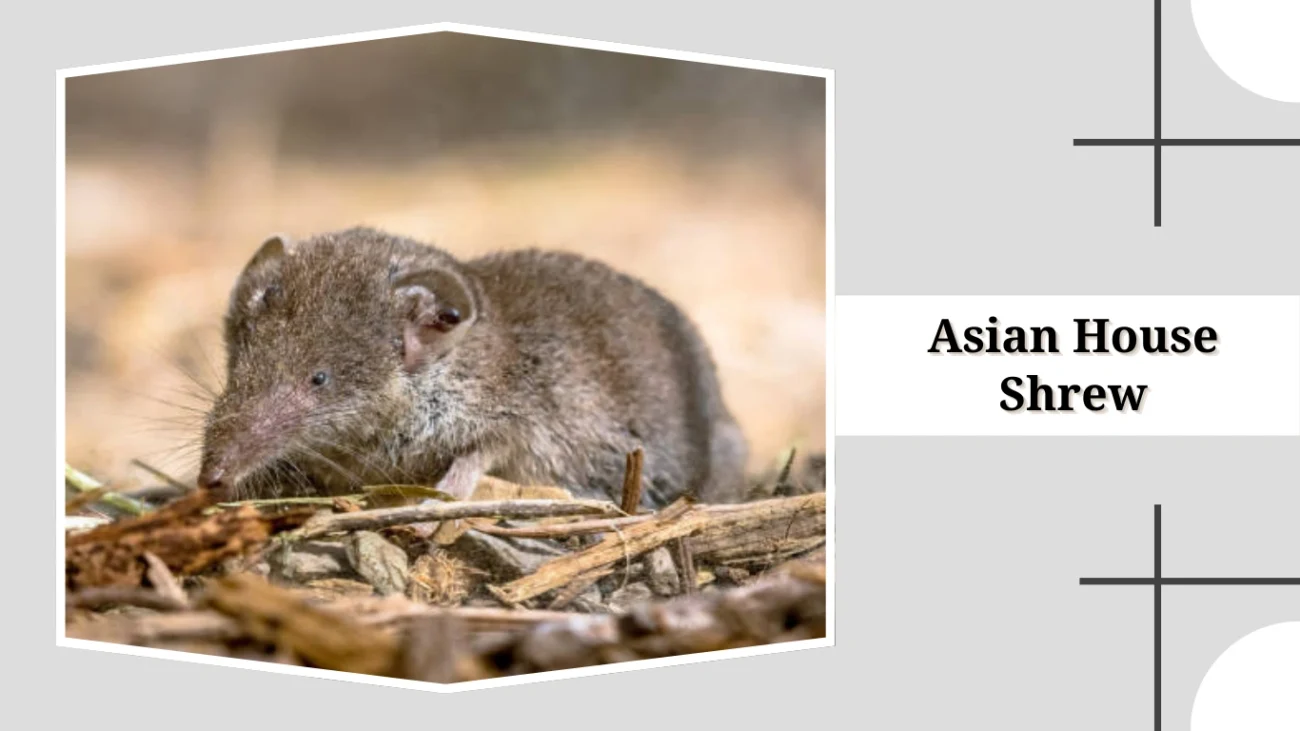
The Asian house shrew (Suncus murinus) is a widespread and adaptable species commonly found in South and Southeast Asia. Often living close to human settlements, it is known for controlling insect populations but can sometimes be considered a pest.
Identification
- Medium-sized shrew with coarse gray or brown fur
- Long, pointed snout and small, rounded ears
- Slender body with a long, tapering tail
- Larger and more robust than many shrew species
- Sharp, narrow teeth suited for insect consumption
Habitat
Asian house shrews inhabit urban areas, villages, farmlands, forests, and grasslands. They frequently live inside homes, warehouses, barns, and other structures. Their adaptability allows them to thrive in diverse climates and environments.
Behaviors
This species is mostly nocturnal and highly active. Asian house shrews move quickly and forage around buildings and fields. They are aggressive when threatened and may emit loud squeaks. Social behavior varies, but they often compete for territory within human-inhabited areas.
Diet
Their diet includes insects, worms, spiders, small vertebrates, and household scraps. They may also feed on grains and stored foods, which sometimes makes them pests. Their role in controlling insects often benefits local ecosystems and agriculture.
9. European Water Shrew

The European water shrew (Neomys fodiens) is a semi-aquatic shrew species found across Europe and parts of Asia. Known for its venomous bite and expert swimming abilities, it thrives near freshwater habitats.
Identification
- Medium-sized shrew with dense black or dark brown fur
- Silvery-white underside creating a sharp contrast
- Hind feet fringed with stiff hairs for efficient swimming
- Long, pointed snout and small eyes
- Tail two-toned, often darker above and lighter below
Habitat
European water shrews inhabit rivers, streams, ponds, canals, marshes, and wetlands. They prefer clean, cool freshwater environments with abundant vegetation, overhanging banks, and cover such as rocks or logs.
Behaviors
These shrews are skilled swimmers and divers, using rapid movements to pursue underwater prey. Their venomous saliva helps immobilize larger prey, making them effective predators. They are mostly nocturnal but may also forage during the day. Territorial and solitary, they actively defend their feeding areas.
Diet
Their diet includes aquatic insects, larvae, worms, crustaceans, tadpoles, and small fish. They may also consume terrestrial invertebrates. Their semi-aquatic nature and carnivorous diet differentiate them from many other shrew species.
10. Cinereus Shrew

The cinereus shrew (Sorex cinereus), also known as the masked shrew, is one of the most widespread shrew species in North America. Its adaptability and small size allow it to thrive in a wide range of habitats.
Identification
- Very small body with grayish-brown to dark brown fur
- Distinct darker mask-like coloration around the eyes
- Long, narrow snout and tiny ears
- Tail about half the body length
- Lightweight and slender build
Habitat
Cinereus shrews inhabit forests, grasslands, tundra, wetlands, and suburban areas. They prefer moist environments with dense ground cover, such as leaf litter, moss, or grasses. Their range extends across Alaska, Canada, and much of the northern United States.
Behaviors
These shrews are active both day and night, constantly foraging due to their rapid metabolism. They are solitary and territorial, using scent marking to defend their space. Cinereus shrews often use tunnels created by other small mammals and can move quickly through thick vegetation.
Diet
Their diet includes insects, spiders, worms, larvae, and other small invertebrates. They occasionally eat small amphibians or carrion. Like other shrews, they must feed frequently, consuming a significant portion of their body weight daily.
11. Arctic Shrew

The Arctic shrew (Sorex arcticus) is a hardy species adapted to the cold northern regions of North America. Its striking three-toned coloration makes it one of the more visually distinctive shrews.
Identification
- Medium-sized shrew with a unique tricolored coat
- Dark brown back, tan sides, and pale belly
- Long, pointed snout and tiny ears
- Tail roughly half the body length
- Slender body well-suited for dense vegetation
Habitat
Arctic shrews inhabit boreal forests, tundra edges, wetlands, and grassy meadows. They prefer moist habitats with thick vegetation, moss, or sedges. Their range extends across Alaska, Canada, and the northern United States.
Behaviors
They are solitary, territorial, and active both day and night. Arctic shrews are fast-moving and skilled at navigating dense grasses and wetlands. Their high metabolism requires near-constant feeding. They often use shallow burrows or tunnels made by rodents for shelter.
Diet
Their diet consists of insects, spiders, worms, small crustaceans, and larvae. They may also scavenge when necessary. Their feeding habits help maintain insect balance in northern ecosystems.
12. Trowbridge’s Shrew

Trowbridge’s shrew (Sorex trowbridgii) is a small, forest-dwelling shrew found along the Pacific Coast of North America. It thrives in moist, cool habitats with dense vegetation.
Identification
- Small shrew with dark brown to blackish fur
- Pale underside providing subtle contrast
- Long, pointed snout with tiny, hidden ears
- Tail slightly shorter than body length
- Slender, lightweight body for navigating thick undergrowth
Habitat
This species inhabits coastal forests, conifer woodlands, and moist understory environments from California to British Columbia. It prefers areas with abundant logs, leaf litter, and ground cover that supply shelter and foraging opportunities.
Behaviors
Trowbridge’s shrew is active year-round and both day and night. It is solitary and territorial, using scent to define its range. It moves quickly through dense vegetation, relying on smell and touch to locate prey. It often uses tunnels created by other small mammals.
Diet
Its diet includes insects, spiders, worms, beetle larvae, and other small invertebrates. It must feed frequently to meet its high metabolic demands and plays an important role in controlling forest insect populations.
13. Merriam’s Shrew

Merriam’s shrew (Sorex merriami) is a small, adaptable shrew found throughout the western United States. It thrives in open, arid, and semi-arid habitats, making it distinct from many moisture-loving shrew species.
Identification
- Small shrew with light brown to grayish fur
- Slender, pointed snout and tiny, hidden ears
- Tail about half the body length
- Narrow body adapted for quick movement
- Fur often blends with dry, sandy surroundings
Habitat
Merriam’s shrews inhabit deserts, shrublands, grasslands, and open woodlands. They are commonly found in sagebrush ecosystems and rocky slopes. Their range extends across states like Nevada, Utah, California, Oregon, and surrounding regions.
Behaviors
These shrews are active both day and night, although they avoid extreme daytime heat. Fast and agile, they move through vegetation and loose soil in search of prey. They use burrows created by rodents for shelter and maintain small, well-defined territories.
Diet
Their diet includes insects, spiders, beetles, larvae, and other small invertebrates. They may occasionally consume seeds or plant matter when prey is limited. Their feeding habits help regulate insect populations in dry, open habitats.
14. Crawford’s Shrew
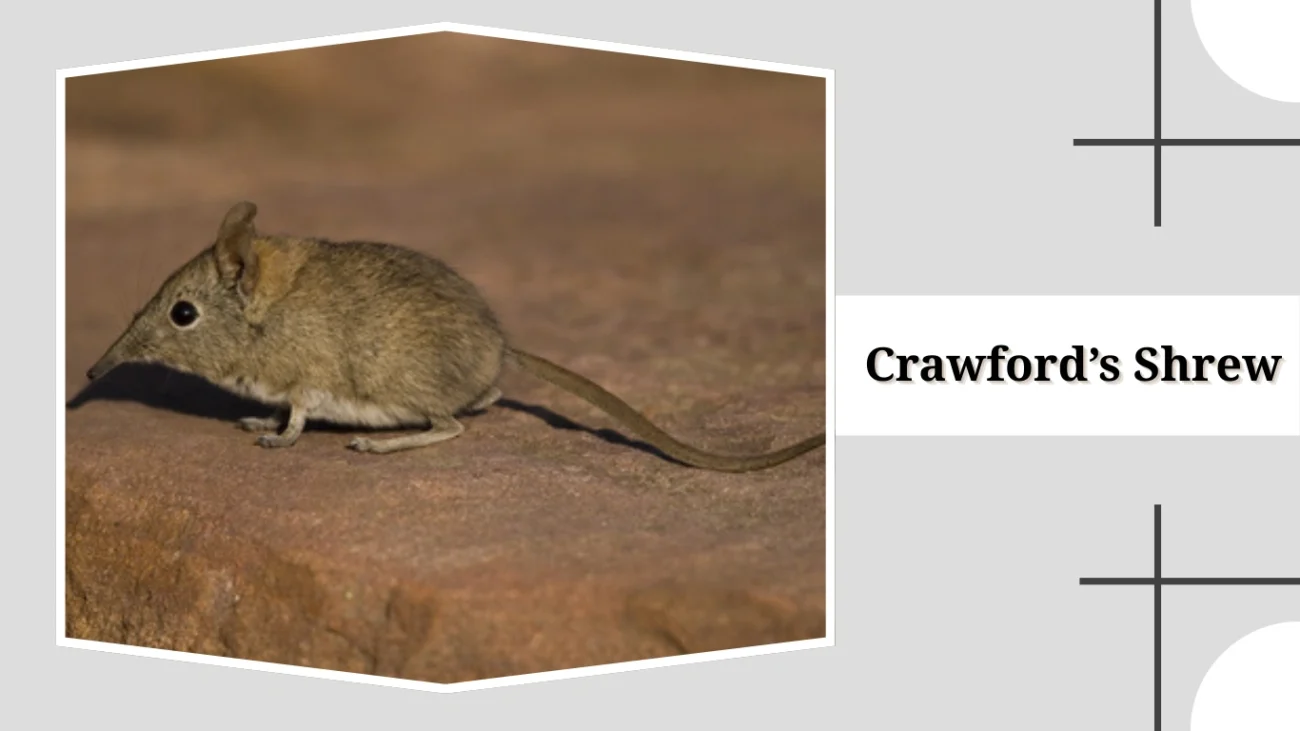
Crawford’s shrew (Sorex crawfordi) is a small, lesser-known shrew species native to the central United States. It inhabits a variety of open and semi-open habitats where ground cover is sufficient for foraging and shelter.
Identification
- Small body with grayish to brownish fur
- Long, narrow snout and tiny eyes
- Tail about half the body length
- Lightweight build suited for quick movement
- Fur color often blends with dry grass and soil
Habitat
Crawford’s shrews inhabit grasslands, prairies, open woodlands, and shrublands. They prefer areas with dense ground vegetation, leaf litter, or loose soil. Their range includes Kansas, Oklahoma, Texas, and surrounding regions.
Behaviors
These shrews are active year-round and both day and night. They are solitary and territorial, using scent to mark boundaries. Quick and secretive, they forage mostly under cover and may use rodent burrows for protection. Their small size allows them to move efficiently through dense ground debris.
Diet
Their diet includes insects, worms, beetles, spiders, and larvae. They must eat frequently due to their fast metabolism and play an important role in controlling invertebrate populations in grassland ecosystems.
15. Dusky Shrew

The dusky shrew (Sorex monticolus) is a widespread species found throughout western North America. It thrives in a variety of cool, moist habitats and is known for its adaptability across different elevations.
Identification
- Small shrew with dark brown to grayish fur
- Long, pointed snout and tiny, hidden ears
- Tail about half the body length
- Slightly stockier build than some related species
- Subtle contrast between back and underside
Habitat
Dusky shrews inhabit forests, meadows, wetlands, and mountainous areas from Alaska to California and the Rocky Mountains. They prefer cool, moist environments with ample ground cover such as moss, logs, and dense vegetation.
Behaviors
They are active year-round and forage both day and night. Dusky shrews are solitary and territorial, using scent marking to defend their range. They move rapidly through underbrush and often use tunnels created by rodents for shelter and hunting.
Diet
Their diet includes insects, spiders, worms, beetle larvae, and other small invertebrates. They may occasionally consume plant material. Their constant foraging helps regulate insect populations in forest and alpine ecosystems.
16. Montane Shrew

The montane shrew (Sorex montanus) is a small, alpine-adapted shrew native to the mountainous regions of western North America. It thrives in cool, moist environments with dense vegetation and rocky terrain.
Identification
- Small shrew with gray to dark brown fur
- Long, pointed snout and tiny ears hidden within the fur
- Tail roughly half the length of the body
- Slender body suited for rapid movement through dense cover
- Slight contrast between back and underside
Habitat
Montane shrews inhabit coniferous forests, alpine meadows, rocky slopes, and riparian zones. They prefer cool, moist environments at higher elevations and often shelter among rocks, logs, moss, and thick vegetation.
Behaviors
These shrews are solitary and highly active, foraging day and night to satisfy their high metabolic needs. They move quickly and use burrows, natural crevices, and rodent tunnels for shelter. Montane shrews rely on smell and touch to locate prey in dense ground cover.
Diet
Their diet includes insects, spiders, worms, larvae, and other small invertebrates. They may occasionally consume small amphibians or plant matter. Their foraging activity contributes to insect population control in mountain ecosystems.
17. Smoky Shrew
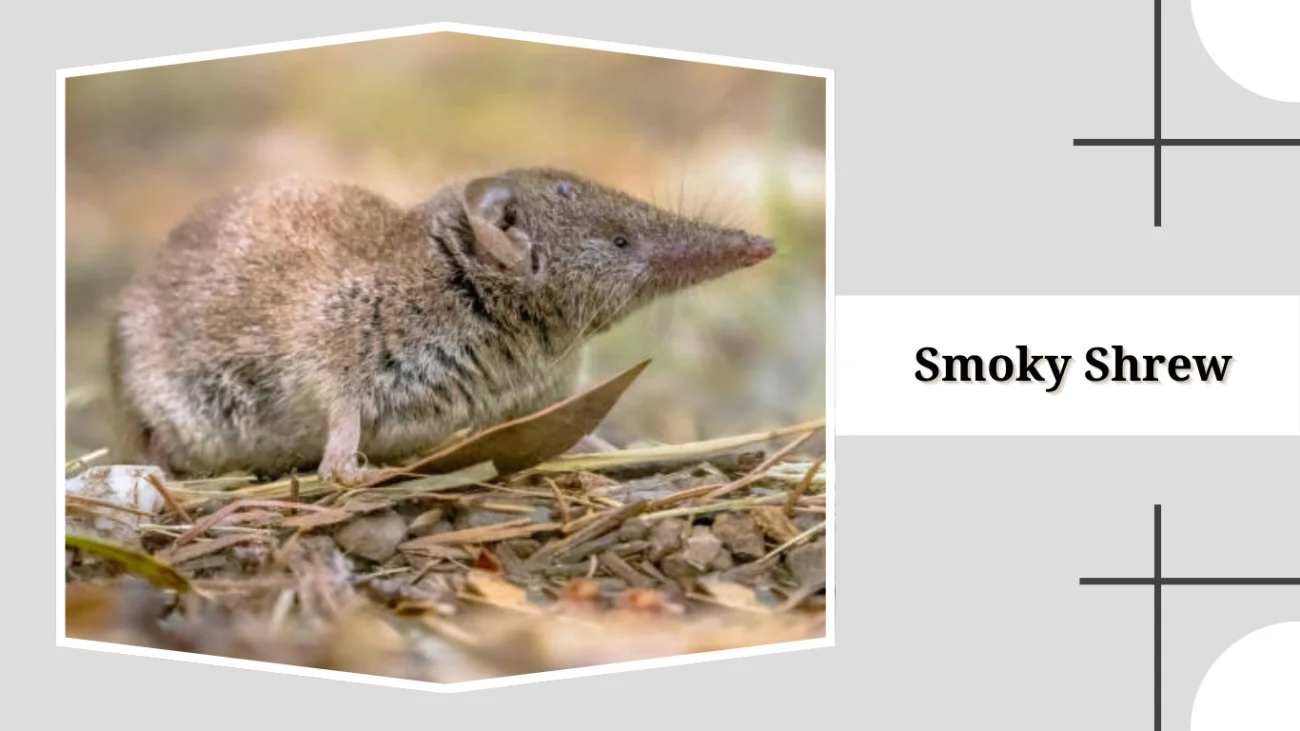
The smoky shrew (Sorex fumeus) is a small, secretive shrew found in the eastern United States. Named for its smoky-gray fur, it occupies cool, moist habitats with dense ground cover.
Identification
- Small shrew with soft, smoky-gray to brownish fur
- Long, pointed snout and tiny, hidden ears
- Tail about half the body length
- Slender body adapted for fast ground movement
- Subtle contrast between back and lighter underside
Habitat
Smoky shrews inhabit forests, wetlands, mossy areas, and cool ravines across the Appalachian Mountains and northeastern U.S. They prefer moist soil, heavy leaf litter, and areas rich in logs, rocks, and vegetation for cover.
Behaviors
These shrews are solitary and active year-round, foraging both day and night. They use their strong sense of smell and touch to detect prey among leaves and debris. Smoky shrews move quickly and rely heavily on ground cover for protection from predators.
Diet
Their diet includes insects, spiders, worms, millipedes, larvae, and other small invertebrates. They help maintain balance in forest ecosystems by consuming large amounts of insects and soil-dwelling organisms.
18. Chinese Highland Shrew

The Chinese highland shrew (Sorex excelsus) is a small, mountain-dwelling shrew found in the high-altitude regions of China. Adapted to cool, rugged environments, it thrives in areas with dense vegetation and rocky terrain.
Identification
- Small body with dark gray to brown fur
- Long, pointed snout and very small ears
- Tail about half the body length
- Slender, agile body suited for mountain habitats
- Slight contrast between dorsal and ventral fur
Habitat
This species inhabits high-altitude forests, alpine meadows, and shrublands in central and western China. It prefers moist areas with abundant ground cover such as rocks, moss, and leaf litter. It often shelters in crevices, burrows, or dense vegetation.
Behaviors
Chinese highland shrews are solitary and highly active, foraging both day and night. They move rapidly through rocky and vegetated terrain, relying on their keen sense of smell to locate prey. Their tolerance of cold temperatures allows them to remain active year-round.
Diet
Their diet consists mainly of insects, spiders, worms, and larvae. They may also consume small invertebrates found in alpine soils. Their feeding habits help regulate insect populations in high-altitude ecosystems.
19. Himalayan Shrew

The Himalayan shrew (Sorex thibetanus) is a small insectivorous mammal native to the mountainous regions of the Himalayas. Well adapted to cold and rugged terrain, it thrives in forested and alpine environments.
Identification
- Small shrew with dark brown to grayish fur
- Long, pointed snout and tiny ears hidden in the fur
- Tail roughly half the body length
- Slender body adapted for rapid movement
- Subtle contrast between back and pale underside
Habitat
Himalayan shrews inhabit alpine meadows, temperate forests, shrublands, and rocky slopes across Nepal, Bhutan, Tibet, and northern India. They prefer cool, moist environments with dense vegetation, mossy ground, and abundant cover.
Behaviors
These shrews are active day and night and remain active year-round, even in snowy environments. They move quickly through ground vegetation, using their sharp sense of smell and touch to locate prey. Himalayan shrews typically use natural crevices and rodent burrows for shelter.
Diet
Their diet includes insects, larvae, worms, spiders, and other small invertebrates. Due to their high metabolism, they must feed frequently to maintain energy levels, playing an important role in regulating soil and leaf-litter insect populations in mountain ecosystems.
20. Bicolored Shrew

The bicolored shrew (Crocidura leucodon) is a widespread species found across Europe and parts of Western Asia. Its sharply contrasting fur pattern makes it easy to distinguish from many other shrew species.
Identification
- Small shrew with distinctly two-toned fur
- Dark brown to gray upper body
- White or pale underside with a sharp dividing line
- Pointed snout and small, rounded ears
- Tail about half the body length, slightly bicolored
Habitat
Bicolored shrews inhabit grasslands, forests, farmlands, and suburban areas. They prefer environments with abundant ground cover such as hedges, stone walls, leaf litter, and grassy areas. They are commonly found near human settlements and agricultural fields.
Behaviors
These shrews are mostly nocturnal and solitary, using scent to mark and defend territories. They move rapidly through vegetation and underground tunnels, relying on smell and touch to locate prey. Active year-round, they remain busy even during colder months.
Diet
Their diet consists of insects, worms, spiders, beetle larvae, and other small invertebrates. They may occasionally consume seeds or carrion. Their active foraging helps maintain insect balance in rural and suburban ecosystems.
21. Giant Shrew

The giant shrew (Crocidura olivieri) is one of the largest shrew species in the world, native to sub-Saharan Africa. Despite its size, it shares the same rapid metabolism and constant activity characteristic of all shrews.
Identification
- Large shrew with dark brown to grayish fur
- Long, pointed snout and small, rounded ears
- Sturdy body with a relatively long tail
- Noticeably larger than most shrew species
- Strong limbs suited for digging and fast movement
Habitat
Giant shrews inhabit forests, savannas, wetlands, farmlands, and urban edges across central and eastern Africa. They prefer moist areas with dense vegetation, leaf litter, or loose soil for foraging and shelter. They often use natural burrows or ground crevices.
Behaviors
These shrews are active both day and night, moving quickly and searching constantly for prey. They are solitary and territorial, using scent glands to mark boundaries. Giant shrews are vigorous diggers and can navigate through dense vegetation and loose soil with ease.
Diet
Their diet includes insects, worms, spiders, snails, small vertebrates, and carrion. They frequently consume large quantities of invertebrates due to their fast metabolism, playing an important role in regulating insect and soil organism populations in African ecosystems.
FAQs
What do shrews eat?
Shrews are primarily insectivores, feeding on insects, spiders, worms, larvae, and other small invertebrates. Some species also consume small vertebrates, carrion, seeds, or plant material. Due to their extremely fast metabolism, shrews must eat frequently—often consuming their own body weight in food each day.
Are shrews dangerous to humans?
Most shrews are harmless to humans. A few species, such as the northern short-tailed shrew, have venomous saliva used to subdue prey, but their bite is generally not dangerous to people. Shrews avoid human contact and are too small to pose any real threat.
Where do shrews live?
Shrews live in a wide variety of habitats, including forests, grasslands, wetlands, deserts, mountains, agricultural fields, and even human settlements. They prefer areas with dense ground cover—such as leaf litter, moss, rocks, or vegetation—where they can find prey and hide from predators.
Why do shrews eat so much?
Shrews have one of the fastest metabolisms of any mammal. Their tiny bodies lose heat quickly, requiring them to eat almost constantly to maintain their energy levels. Without frequent meals, many shrews can survive only a few hours before becoming dangerously weak.
How do shrews hunt their prey?
Shrews rely on their keen sense of smell and touch to locate prey, since their eyesight is poor. They use quick movements to capture insects and other small animals. Some species even produce venomous saliva that helps immobilize larger prey, making it easier to consume or store for later.


