










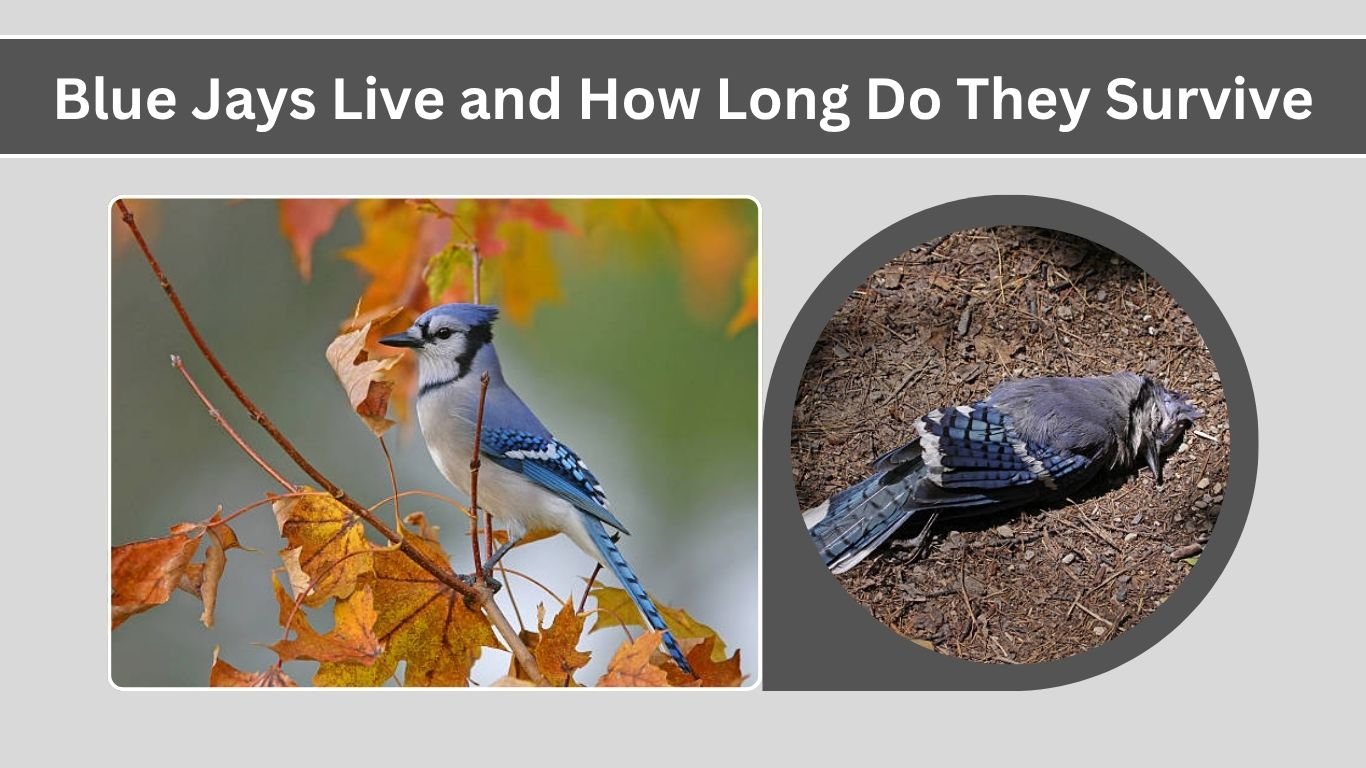
Blue jays are among the most recognizable birds in North America, admired for their bright blue feathers, noisy calls, and intelligent behavior. They are a common sight in forests, parks, and suburban backyards, often drawing attention at bird feeders. People frequently ask two main questions about them: where do blue jays live, and how long do they live? This guide explores their habitats, social behavior, and lifespan in both the wild and captivity.
Where Do Blue Jays Live?
Blue jays (Cyanocitta cristata) are native to eastern and central North America, making them one of the most familiar birds in the region. Their range extends from southern Canada down through the United States, including Florida, Texas, and much of the Midwest and East Coast.
These birds thrive in a variety of environments, from dense forests to urban neighborhoods. They are particularly common in oak woodlands because they rely heavily on acorns as a food source. However, their adaptability allows them to live comfortably near people, often frequenting bird feeders and city parks.
Although blue jays are primarily an eastern species, occasional sightings have been reported farther west, including parts of Washington State and even California, though these are rare.
Habitats of Blue Jays
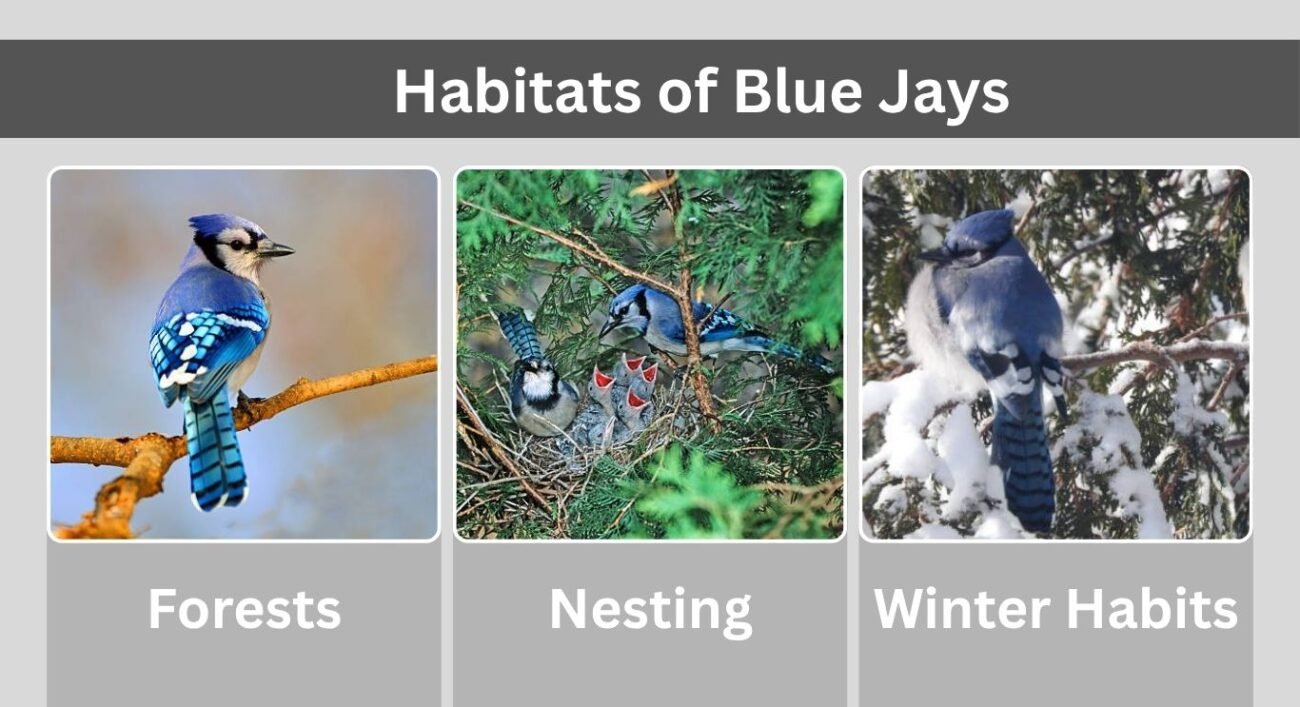
Blue jays are highly adaptable and occupy a wide range of habitats.
- Forests: They prefer deciduous and mixed woodlands, especially areas rich in oak and beech trees.
- Suburbs and Cities: Blue jays are commonly seen in backyards, often visiting bird feeders stocked with seeds and peanuts.
- Winter Habits: While many remain in their home territory year-round, some blue jays migrate south in winter, especially when food is scarce. Unlike geese or swans, their migrations are irregular and not fully understood.
- Nesting: Blue jays build nests in trees, typically in forks or dense branches. Occasionally, they will use large birdhouses if they resemble their preferred natural sites.
Their ability to thrive in both wild and suburban habitats explains why they are among the most familiar and studied backyard birds in North America.
Do Blue Jays Live in Groups?

Yes, blue jays are social birds, often seen in family groups or small flocks. During the breeding season, they form pairs, but outside of this period, they often travel together. In fall and winter, larger flocks may form, sometimes resembling migratory movements.
Blue jays are also known for their complex communication system. Their loud “jay jay” call is used to signal danger or establish territory. They are highly cooperative in defending against predators, with groups sometimes mobbing owls, hawks, or cats to drive them away.
This social behavior gives blue jays an advantage in survival, as group living provides better protection from predators and increases foraging efficiency.
How Long Do Blue Jays Live?
Blue jays live longer than many other common songbirds, but their lifespan depends heavily on environment and threats.
- In the wild: The average lifespan is around 7 years, though many only survive 2–4 years due to predation, disease, or accidents.
- In captivity: With regular food and protection from predators, blue jays can live 20–26 years, nearly three times their wild lifespan.
- Longest recorded wild blue jay: Over 17 years, according to banding studies.
The main threats to their survival in the wild include hawks, owls, snakes, cats, and environmental hazards such as harsh winters or food shortages.
Seasonal Life of Blue Jays

Blue jays are year-round residents across most of their range, but their seasonal behaviors change noticeably between summer and winter.
- Summer: Blue jays are busy raising young during the breeding season. They become highly territorial, with pairs aggressively defending nests. They build cup-shaped nests in trees using twigs, grass, and mud, often 10–25 feet above the ground. Both parents share feeding duties for the chicks.
- Fall: Blue jays are known for caching acorns and seeds. They hide food in the ground or under leaves, sometimes miles away from where they found it. This behavior not only ensures survival during winter but also helps with forest regeneration, as forgotten acorns may sprout into trees.
- Winter: Unlike true migratory birds, blue jays are partial migrants. Some stay in their breeding territory, while others move south. These movements are unpredictable, making blue jays a fascinating study subject for ornithologists. During winter, they often join larger flocks for protection.
- Spring: As days grow longer, they establish breeding territories and return to nesting activities. Their calls become more frequent as pairs strengthen their bonds.
Key Takeaways
- Blue jays live in eastern and central North America, including Canada, the U.S., Florida, and Texas.
- They thrive in a variety of habitats, from oak forests to suburban backyards.
- They are social birds, often traveling in groups and using complex vocalizations.
- Their lifespan averages 7 years in the wild, though some can reach 17 years; in captivity, they can live 20–26 years.
- Seasonal behavior includes nesting in summer, caching food in fall, flocking in winter, and reestablishing territories in spring.
FAQs
Where do blue jays usually live?
Blue jays inhabit eastern and central North America, ranging from southern Canada through the eastern United States and into Florida and Texas. They live in forests, suburban areas, city parks, and backyards. They are less common in the western U.S., though rare sightings occur.
How long do blue jays live in the wild?
In the wild, blue jays generally live about 7 years, though many do not survive past 2–4 years due to predators such as hawks, owls, cats, and snakes. However, some individuals have been recorded living over 17 years, showing their resilience under favorable conditions.
How long do blue jays live in captivity?
In captivity, where food and shelter are guaranteed, blue jays can live between 20 and 26 years. Their long lifespan is due to reduced threats from predators, stable diets, and veterinary care. However, in many regions it is illegal to keep blue jays as pets without special permits.
Do blue jays live in groups?
Yes, blue jays are social and cooperative. They often travel in family groups or small flocks and may form larger flocks in winter. They communicate through a wide range of calls, sometimes mimicking hawks, and they work together to mob predators that threaten their nests or flock.
Do blue jays migrate in winter?
Blue jays are partial migrants. Some populations remain in their home territory all year, while others move south during winter. Their migration patterns are not consistent, which makes them unpredictable. This partial migration helps balance survival strategies with food availability.


